

Siding Replacement in Shelby Township: A Homeowner's Guide
Considering siding replacement in Shelby Township? Learn about material options, costs, Michigan-specific installation requirements, and what to expect from licensed contractors.
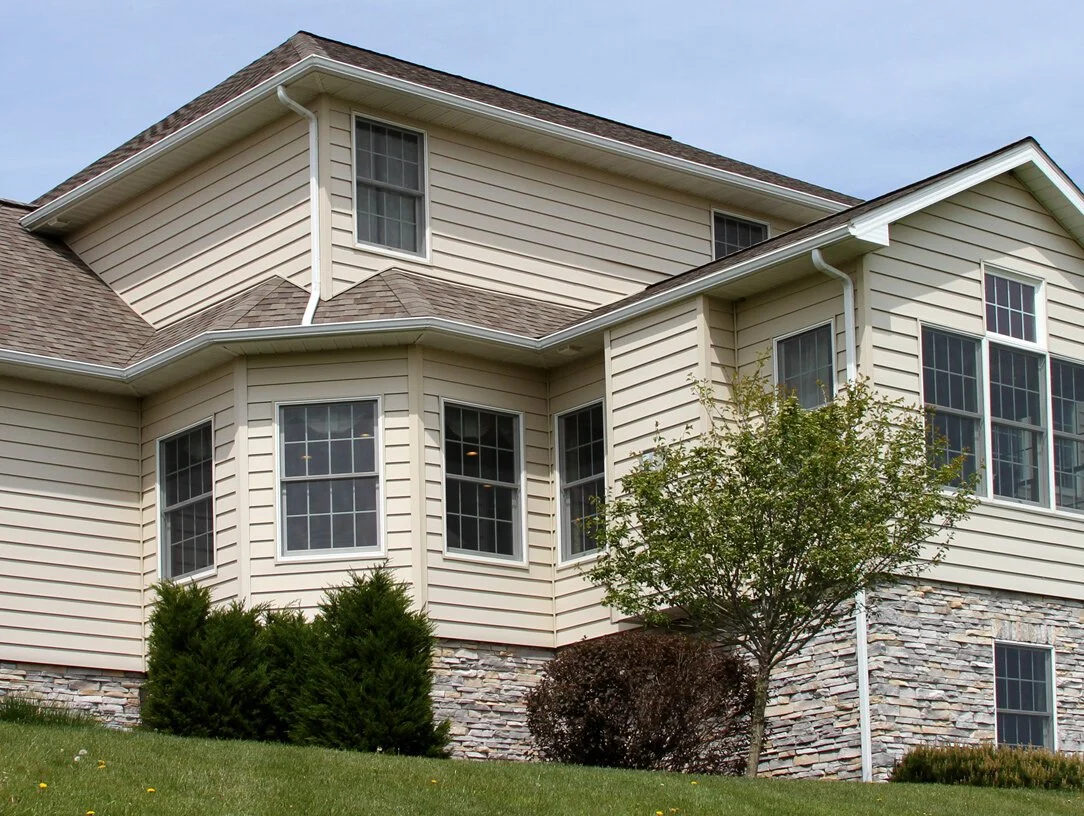
If you're a homeowner in Shelby Township, you've probably noticed how Michigan's weather puts your home's exterior through the wringer. Between freeze-thaw cycles that crack and warp materials, summer storms that peel back loose panels, and the relentless humidity that breeds mold behind poorly installed siding, your home's protective shell takes a beating year after year.
Siding replacement isn't just about curb appeal—though that matters when you're trying to maintain property values in a competitive Macomb County market. It's about protecting your investment from water intrusion, improving energy efficiency during brutal Michigan winters, and avoiding the kind of structural damage that turns a $12,000 siding project into a $30,000 nightmare involving rotted sheathing and mold remediation.
We've been installing house siding in Detroit and surrounding communities since 1988, and we've seen what works in Southeast Michigan—and what fails spectacularly. This guide walks you through everything you need to know about replacing siding on your Shelby Township home, from recognizing when it's time to act to choosing materials that can actually handle what Michigan throws at them.
Signs Your Shelby Township Home Needs New Siding
Most homeowners wait too long. They see a cracked panel or two, notice some fading, and figure it's cosmetic. Then they get water in the basement, or their heating bills spike, or they pull back a corner of siding during a gutter repair and find black mold growing on the sheathing.
Here's what actually tells you it's time to replace your siding—not just patch it:
Visible Damage You Can't Ignore
Warping, buckling, or loose panels: Vinyl siding that's warped from heat exposure or buckled from improper nailing won't lie flat again. You'll see waves running across sections of your home, especially on south and west-facing walls that take the brunt of summer sun. Loose panels that rattle in the wind indicate failed fasteners or deteriorated nailing strips.
Cracks, holes, or impact damage: Michigan hailstorms don't mess around. A single severe storm can crater vinyl siding or crack fiber cement panels. Small cracks become water entry points that rot the wood sheathing underneath. If you're seeing multiple damaged panels after a storm, it's worth having a professional assess whether you're looking at isolated repairs or system-wide failure. We cover this extensively in our guide on fixing wind and hail damaged siding in Macomb County.
Rotting or soft spots: This applies mainly to wood siding, but also to the sheathing behind any siding type. Press on your siding with your thumb near corners, window trim, and anywhere water might collect. If it feels spongy or your thumb goes through, you've got rot. That's not a siding problem anymore—it's a structural problem.
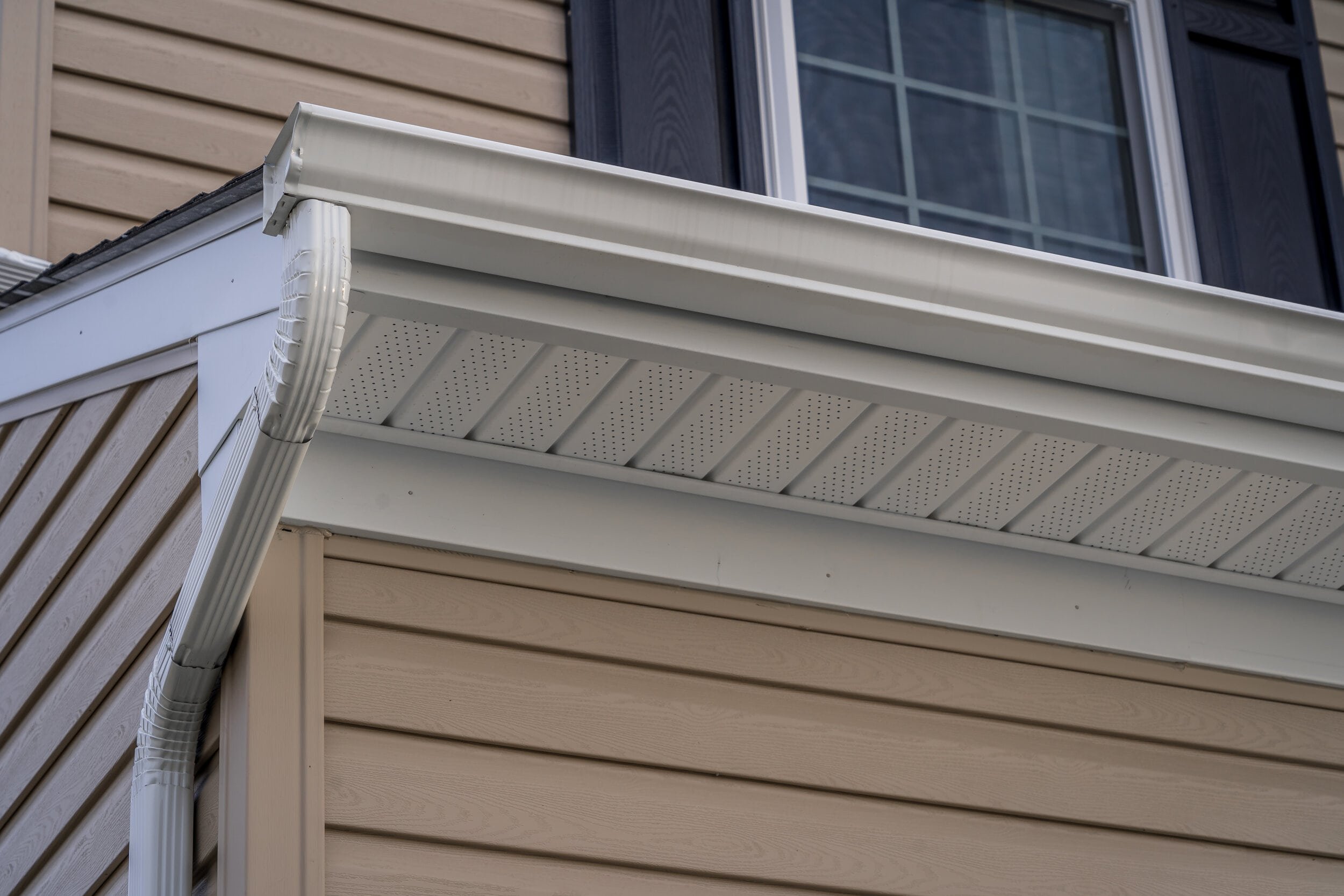
Energy Efficiency Red Flags
Skyrocketing heating or cooling bills: If your energy costs have climbed steadily over the past few years and your HVAC system checks out fine, your building envelope is leaking. Old siding with deteriorated seams, failed caulking, and gaps around windows creates air infiltration that makes your furnace work overtime. This is especially noticeable in older Shelby Township homes built in the 1970s and 80s when energy codes were less stringent.
Drafts near exterior walls: Stand near an exterior wall on a windy winter day. If you feel cold air movement, your siding system isn't doing its job. The problem often isn't the siding itself but the lack of proper house wrap or deteriorated insulation behind it.
Interior condensation or frost on walls: This is a serious sign. When warm interior air meets cold exterior temperatures through inadequate insulation and air sealing, you get condensation. In winter, you might even see frost forming on interior wall surfaces. This creates perfect conditions for mold growth inside your walls. If you're dealing with this, you need to address both your insulation services in Southeast Michigan and your siding simultaneously.
Age-Related Deterioration
Fading or discoloration: Vinyl siding that's faded from deep blue to pale gray or from forest green to lime has lost its UV protection. While fading is cosmetic, it indicates the material has degraded. Faded vinyl becomes brittle and cracks more easily, especially during freeze-thaw cycles.
Peeling paint on wood or fiber cement: If you have painted siding that's peeling extensively, you're looking at either a moisture problem or paint failure. Either way, you need to address it before water penetrates the substrate. James Hardie fiber cement can be repainted, but if the original factory finish is failing across large areas, replacement might be more cost-effective than scraping and repainting.
Siding installed 20+ years ago: Most vinyl siding carries a 20-30 year warranty, but that doesn't mean it performs optimally for that long. Older vinyl formulations become brittle and crack. Wood siding needs repainting every 5-7 years; if that hasn't happened, it's probably deteriorating. Fiber cement from the 1990s may not have the same moisture resistance as modern formulations.
Michigan-Specific Concern: Shelby Township sits in a freeze-thaw zone that cycles between freezing and thawing 40-60 times per winter. Water that gets behind siding expands when it freezes, pushing panels away from the sheathing and cracking brittle materials. This accelerates failure compared to homes in more stable climates.
Storm Damage Assessment
After a severe storm, walk your property and document any visible damage with photos. Look for:
- Dents or cracks from hail impact
- Panels torn loose by high winds
- Debris impact damage (tree branches, etc.)
- Displaced trim or corner posts
If you suspect storm damage, contact your insurance company before making repairs. Many homeowners policies cover siding replacement when weather causes the damage. We work with insurance adjusters regularly and can help document the extent of damage for your claim.
Siding Material Options for Michigan Homes
Not all siding performs equally in Michigan's climate. What works in Arizona or North Carolina might fail spectacularly here. After 35+ years installing exterior services in Detroit and Macomb County, we've seen which materials hold up and which don't.
Vinyl Siding: The Practical Choice
Pros: Vinyl dominates the Michigan market for good reasons. It's affordable ($3-$8 per square foot installed), requires virtually no maintenance, won't rot or attract insects, and modern formulations resist fading and cracking much better than older products. Quality vinyl from manufacturers like CertainTeed or GAF includes impact modifiers that help it survive hail and freeze-thaw cycles.
Cons: Vinyl can crack in extreme cold if it's struck hard. Lower-grade vinyl fades noticeably over 10-15 years. It's also not as rigid as fiber cement, so it can look slightly wavy on older homes with uneven wall surfaces. And while it's marketed as "maintenance-free," you still need to wash it annually to prevent mildew growth.
Best for: Budget-conscious homeowners who want a 20-30 year solution without ongoing maintenance. Works well on ranch homes, Colonials, and newer construction throughout Shelby Township and Sterling Heights.
Michigan performance: Good, if properly installed. The key is leaving expansion gaps at seams and trim. Vinyl expands and contracts significantly with temperature swings. Installers who nail panels too tight create buckling when the material expands in summer heat. We see this constantly on DIY jobs and quick-flip contractor work.

James Hardie Fiber Cement: The Premium Standard
Pros: Fiber cement is the most durable siding material available for residential use. It won't rot, warp, crack, or burn. It holds paint exceptionally well—factory finishes carry 15-year warranties and typically last 20-25 years before needing repainting. It's dimensionally stable, meaning it doesn't expand and contract like vinyl. And it adds genuine curb appeal; fiber cement looks like real wood without the maintenance headaches.
Cons: Cost is the main barrier. James Hardie runs $8-$14 per square foot installed, roughly double the price of quality vinyl. It's also heavy, requiring experienced installers who understand proper flashing and fastening techniques. And while it's marketed as low-maintenance, it does require repainting eventually—though far less frequently than wood.
Best for: Homeowners planning to stay long-term who want the best performance and appearance. Ideal for historic homes in Grosse Pointe or upscale properties in Rochester Hills where aesthetics matter. Also smart for homes with challenging sun exposure that would fade vinyl quickly. Our team specializes in James Hardie siding installation in Metro Detroit and holds manufacturer certification.
Michigan performance: Excellent. Fiber cement handles freeze-thaw cycles better than any other siding material. It's also highly resistant to moisture penetration when properly installed with the right flashing details. We've seen 20-year-old James Hardie installations that still look nearly new.
LP SmartSide Engineered Wood: The Middle Ground
Pros: LP SmartSide offers the authentic look of wood with better moisture resistance than natural wood, thanks to its engineered strand construction and resin treatment. It costs less than James Hardie ($6-$10 per square foot installed) while offering better aesthetics than vinyl. It's also easier to cut and install than fiber cement, which can reduce labor costs.
Cons: It's still wood-based, so it requires repainting every 8-12 years to maintain the warranty. It's more susceptible to moisture damage than fiber cement if water gets behind it. And while it's treated to resist insects and rot, it's not immune—especially if the factory finish is compromised by improper installation or impact damage.
Best for: Homeowners who want the look of wood without the full cost of fiber cement. Works particularly well for accent walls, gables, or mixed-material designs where you pair it with brick or stone.
Michigan performance: Good, with caveats. Proper installation is critical. Water intrusion behind LP SmartSide can cause swelling and delamination. We always use house wrap rated for engineered wood and pay extra attention to flashing around windows and doors. When installed correctly, it performs well in Michigan's climate.
Material Comparison for Freeze-Thaw Performance: Michigan's freeze-thaw cycles are brutal on exterior materials. Fiber cement handles them best, followed by quality vinyl with impact modifiers. Engineered wood performs well if moisture is kept out. Traditional wood siding without proper maintenance deteriorates quickly. Aluminum siding (common on 1960s-70s homes) develops stress cracks and dents that accelerate corrosion.
What About Aluminum or Steel Siding?
You'll still see aluminum siding on older homes throughout Shelby Township and Clinton Township. It was popular from the 1950s through the 1980s. While it's durable in some ways—it won't rot or burn—it dents easily, fades significantly, and develops chalky oxidation that requires frequent cleaning or repainting.
Steel siding offers better dent resistance but costs more than vinyl while offering fewer aesthetic options. We rarely recommend metal siding for residential applications in Southeast Michigan unless you're matching an existing installation or have specific architectural requirements.
What Siding Replacement Actually Costs in Shelby Township
Let's talk real numbers. We break down pricing extensively in our siding replacement cost guide for Michigan, but here's what you need to know for Shelby Township specifically.
Price Ranges by Material (2026)
| Material | Cost per Sq Ft Installed | Typical 2,000 Sq Ft Home |
|---|---|---|
| Vinyl (standard grade) | $3-$6 | $6,000-$12,000 |
| Vinyl (premium grade) | $6-$8 | $12,000-$16,000 |
| LP SmartSide | $6-$10 | $12,000-$20,000 |
| James Hardie | $8-$14 | $16,000-$28,000 |
These ranges include removal of existing siding, installation of house wrap, new siding, trim, and basic flashing. They assume a relatively straightforward installation on a single-story or two-story Colonial-style home without extensive architectural details.
What Drives Cost Variations
Home size and complexity: A simple 1,500 square foot ranch costs less per square foot than a 2,500 square foot two-story with dormers, bay windows, and multiple roof lines. Every corner, window, door, and architectural detail adds labor time.
Existing siding removal: Removing one layer of vinyl is straightforward. Removing three layers of old siding plus rotted sheathing that needs replacement can add $2,000-$5,000 to the project. Many older Shelby Township homes have multiple siding layers installed over decades—we've seen homes with aluminum over wood over original cedar shingles.
Sheathing repairs: If we find rotted or damaged OSB or plywood sheathing during removal, it needs replacement before new siding goes on. This is common around windows, doors, and anywhere gutters have overflowed. Budget $50-$80 per sheet of 4x8 OSB plus labor.
Insulation upgrades: Many homeowners add foam board insulation or house wrap with insulating properties during siding replacement. This improves energy efficiency but adds $1-$3 per square foot to the project. Given Michigan heating costs, it's often worth it.
Trim and detail work: Replacing window trim, corner boards, and fascia boards adds cost but often makes sense when you're already replacing siding. Fresh trim eliminates future painting and creates a cohesive finished look. Budget $500-$2,000 depending on how much trim needs replacement.

Hidden Costs to Budget For
Permit fees: Shelby Township requires building permits for siding replacement. Permit costs typically run $150-$400 depending on project scope. Reputable contractors include this in their estimates and handle the permit application. If a contractor suggests skipping the permit to "save money," walk away—that's a red flag.
Color upgrades: Standard vinyl colors cost less than premium or custom colors. If you want a specific shade that requires special ordering, expect to pay 10-15% more for materials.
Gutter replacement: Since gutters get removed during siding installation, it's often the right time to replace them if they're old or damaged. Seamless gutters in Detroit, MI and surrounding areas typically cost $6-$12 per linear foot installed. We detail this further in our gutter installation cost guide for Metro Detroit.
Window replacement: If your windows are old and inefficient, replacing them during a siding project makes sense. You'll save on labor costs since the siding crew is already working around each window opening. Our Detroit window experts can coordinate window and siding replacement to minimize disruption and maximize efficiency. For more on window options, see our comparison of double-pane vs triple-pane windows in Michigan.
ROI and Home Value Impact
Siding replacement typically recoups 75-85% of its cost when you sell your home, according to Remodeling Magazine's Cost vs. Value Report. In Shelby Township's competitive real estate market, fresh siding can be the difference between a home that sits for months and one that sells in the first week.
Beyond resale value, consider the energy savings. Replacing old siding with new materials plus proper insulation can reduce heating costs by 15-25% in a typical Michigan home. Over a 20-year lifespan, that adds up to thousands in savings.
We explore this topic in depth in our guide on the best home renovation projects for Michigan homes in 2026.
The Installation Process: What to Expect
Understanding the installation process helps you evaluate contractor proposals and know what questions to ask. Here's how a professional siding replacement should unfold:
Initial Inspection and Estimate
A thorough contractor will spend 45-90 minutes examining your home. They'll measure all wall surfaces, note architectural details, check for obvious damage or rot, and discuss your material preferences and budget. They should ask about your timeline, whether you're planning other exterior work (windows, doors, roofing), and any specific concerns you have.
The written estimate should specify:
- Exact material brand and product line (e.g., "CertainTeed Monogram vinyl siding" not just "vinyl siding")
- Square footage being covered
- Removal and disposal of existing siding
- House wrap type and installation method
- Trim and flashing details
- Warranty coverage (material and labor)
- Project timeline
- Payment schedule
Vague estimates that lump everything into a single line item make it impossible to compare contractors fairly. Demand specifics.
Preparation and Removal
Before installation begins, the crew protects landscaping, driveways, and entryways with tarps and plywood. They'll move outdoor furniture, grills, and anything else near the house.
Siding removal generates substantial debris. A 2,000 square foot home produces 1-2 tons of old siding, trim, and fasteners. Professional crews use dump trailers or dumpsters and clean up daily—you shouldn't have debris scattered across your yard for weeks.
During removal, we inspect the sheathing. This is when hidden problems surface: rotted wood, missing or damaged house wrap, insulation gaps, or previous repairs done incorrectly. Honest contractors document these issues with photos and discuss repair options before proceeding.
House Wrap and Moisture Barrier Installation
This step is critical and often rushed or skipped by low-bid contractors. Proper house wrap (Tyvek, Typar, or equivalent) creates a weather-resistant barrier that allows moisture vapor to escape while preventing bulk water intrusion.
The house wrap must be installed with proper overlap (typically 6 inches at seams), taped at all joints, and integrated with window and door flashing. Corners, penetrations, and transitions require special attention. This is where water intrusion happens when installation is sloppy.
In Michigan's climate, we also recommend adding a rainscreen gap behind the siding using furring strips or a drainage mat. This creates an air space that allows any moisture that gets behind the siding to drain out and dry. It's not required by code, but it dramatically improves long-term performance.
Siding Installation
Professional installation follows manufacturer specifications exactly. For vinyl siding, this means:
- Nailing in the center of slots, not at either end
- Leaving 1/32" gap between nail head and siding to allow for expansion
- Maintaining proper overlap at seams
- Using corrosion-resistant fasteners
- Installing starter strips level and straight
For fiber cement, the requirements are different: nails must be driven flush (not overdriven), joints must be caulked, and all cut edges must be sealed with approved primer. Fiber cement is less forgiving than vinyl—improper installation voids the warranty and leads to premature failure.
The crew works from bottom to top, ensuring each course is level before proceeding. They cut precisely around windows, doors, outlets, and other penetrations. Quality installations include proper flashing above every window and door to direct water away from openings.
Trim and Finishing Details
After the field siding is installed, the crew adds corner posts, window trim, door trim, and any decorative elements. This is where craftsmanship shows. Tight, clean joints and properly mitered corners separate professional work from hack jobs.
All trim joints should be caulked with paintable, flexible exterior caulk. Gaps around windows and doors get sealed. Any penetrations (dryer vents, electrical boxes, hose bibs) are flashed and sealed.
Final Inspection and Cleanup
Before we call a project complete, we walk the entire house with the homeowner, checking for any missed details or concerns. We verify that all trim is secure, caulking is complete, and the site is clean.
Professional crews remove all debris, sweep driveways and sidewalks, and restore landscaping protection. You shouldn't find nails in your lawn or siding scraps in your bushes weeks later.
Timeline Expectations
A typical single-family home takes 5-10 days from start to finish, depending on size, complexity, and weather. That includes removal, any necessary repairs, and installation. Larger homes or those with extensive architectural detail can take 2-3 weeks.
Weather delays are common in Michigan. We don't install siding in rain, snow, or when temperatures are below freezing (for vinyl) or below 40°F (for fiber cement). This is for quality reasons—materials don't perform properly in extreme cold, and moisture during installation can cause problems down the road.
Choosing the Right Contractor in Macomb County
The contractor you choose matters more than the material you select. Excellent materials installed poorly fail quickly. Average materials installed expertly last decades. Here's how to separate legitimate professionals from the contractors who'll take your deposit and disappear (yes, it happens regularly in Southeast Michigan).
Non-Negotiable Requirements
Michigan Residential Builder's License: This is required by state law for any project over $600. The license number should appear on all estimates and contracts. You can verify licenses at michigan.gov/lara. Unlicensed contractors can't pull permits, can't offer legitimate warranties, and leave you with zero recourse when problems arise.
General Liability Insurance: Minimum $1 million coverage. Ask for a certificate of insurance and verify it's current. This protects you if the crew damages your property or if someone gets hurt on your property during the project.
Workers' Compensation Insurance: This protects you from liability if a crew member gets injured while working on your home. Contractors who don't carry workers' comp are exposing you to serious financial risk.
Manufacturer Certifications That Matter
Certifications indicate specialized training and give you access to enhanced warranties. For siding, look for:
- James Hardie Preferred Contractor: Requires training on proper fiber cement installation techniques and gives you access to 30-year warranties instead of standard 15-year coverage.
- CertainTeed Master Craftsman or SELECT ShingleMaster: While these are primarily roofing credentials, contractors who hold them typically demonstrate higher overall craftsmanship standards. NEXT Exteriors holds CertainTeed Master Shingle Applicator status, the highest credential available in roofing.
- LP SmartSide Preferred Contractor: Training on engineered wood installation and access to 5/50 warranty (5 years labor, 50 years material).
These certifications aren't marketing fluff. They require documented training, passing exams, and maintaining quality standards. Manufacturers audit certified contractors and can revoke credentials for poor workmanship.
Red Flags to Avoid
Requires full payment upfront: Legitimate contractors ask for a deposit (typically 25-33%) with the balance due upon completion. Anyone demanding full payment before starting work is either desperate for cash flow or planning to disappear with your money.
Doesn't pull permits: "We can skip the permit to save you money" is code for "I'm not licensed and don't want the township inspecting my work." Permits exist to protect you. Inspectors catch problems before they're hidden behind finished surfaces.
Pressure tactics: "This price is only good if you sign today" or "I have materials left over from another job" are classic high-pressure sales techniques. Professional contractors give you time to review proposals, check references, and make informed decisions.
No physical address: Contractors who operate from a P.O. box or only provide a cell phone number are hard to track down when problems arise. Established companies have physical offices, signage on trucks, and a verifiable business presence.
Suspiciously low bids: If one estimate is 30-40% lower than others, there's a reason. They're either cutting corners on materials, skipping critical steps like house wrap, planning to upsell you later, or won't be around to honor warranties.
Questions to Ask Before Hiring
- How long have you been in business, and how many siding projects do you complete annually? Experience matters. A company that's been operating in Southeast Michigan for 10+ years and completes 50+ siding projects per year has proven systems and staying power.
- Can I see examples of completed projects in Shelby Township or nearby communities? Local references let you see how work holds up in Michigan's climate and talk to homeowners about their experience.
- What's included in your warranty, and who honors it? Manufacturer warranties cover materials. Labor warranties come from the contractor. Get both in writing. A 5-year labor warranty is standard; 10 years is better.
- How do you handle unexpected issues like rotted sheathing? Problems surface during removal. Contractors should document issues with photos, explain options, and provide written change orders before proceeding with additional work.
- Who will be on-site managing the project? Knowing who to contact with questions or concerns prevents communication breakdowns. Project managers should be accessible by phone during business hours.
- What's your cleanup and disposal process? Daily cleanup and proper disposal should be standard. You shouldn't have debris scattered across your property for weeks.
Why Local Matters
National franchises and big-box store contractors often subcontract work to local crews. You're paying franchise fees and corporate overhead while getting the same local installer you could hire directly.
Local contractors understand Michigan building codes, know which materials perform in our climate, and have relationships with local suppliers for quick material replacement if needed. They also depend on local reputation—they can't afford to do shoddy work and disappear.
NEXT Exteriors has been based in Mount Clemens since 1988, serving Macomb, Oakland, and St. Clair counties. We're not a franchise. We employ our own crews. And we're not going anywhere—we've been protecting Michigan homes for 35+ years and plan to be here for 35 more.
Ready to Get Started?
NEXT Exteriors has been protecting Michigan homes since 1988. Get a free, no-pressure estimate from a team that shows up on time and does the job right. We're licensed, insured, and carry manufacturer certifications from James Hardie, CertainTeed, LP SmartSide, and other leading brands.
Get Your Free QuoteOr call us: (844) 770-6398
Other Services from NEXT Exteriors
While siding replacement is our focus here, we're a full-service exterior contractor. If you're planning siding work, it's often the right time to address other exterior needs:
Our Detroit roofing services include everything from minor repairs to complete tear-offs and replacements. We hold CertainTeed Master Shingle Applicator status, the highest credential in the roofing industry. If your roof is nearing the end of its lifespan, replacing it before or during siding work prevents having to work around new siding later. For homes in Chesterfield Township specifically, we've written extensively about whether to repair or replace your roof.
We're also Southeast Michigan's go-to painting professionals, working exclusively with Sherwin-Williams products. If you're replacing siding on only part of your home or adding fiber cement that needs painting, we coordinate painting with siding installation for a seamless finish. Our exterior painting services cover everything from trim and shutters to full-house repaints.
For homeowners concerned about visual appeal and planning multiple exterior updates, check out our analysis of what changes a home's look most in siding before-and-after projects.
Frequently Asked Questions
Most single-family homes take 5-10 days from start to finish, including removal of old siding, any necessary sheathing repairs, and installation of new siding and trim. Larger homes or those with complex architectural details (multiple dormers, bay windows, extensive trim work) can take 2-3 weeks. Weather delays are common in Michigan—we don't install in rain, snow, or extreme cold, which can extend timelines during winter and early spring.
Technically yes, but we rarely recommend it. Installing over existing siding hides potential problems like rotted sheathing, moisture damage, or insulation gaps. It also creates an uneven surface that can telegraph through the new siding, creating a wavy appearance. Michigan building codes limit you to two layers of siding total. If your home already has two layers, removal is required. The small savings from skipping removal aren't worth the risk of hidden damage and reduced performance.
Late spring through early fall (May through October) offers the most consistent weather for siding installation. Vinyl siding becomes brittle below 40°F, making it prone to cracking during cutting and installation. Fiber cement requires temperatures above 40°F for proper caulking and sealing. That said, we install year-round when weather permits. Fall is often ideal—temperatures are moderate, humidity is lower, and contractors are less booked than during peak summer months.
Siding itself provides minimal insulation—its primary job is weather protection. However, siding replacement gives you the opportunity to add insulation that dramatically improves energy efficiency. Foam board insulation (typically 1/2" to 1" thick) installed behind new siding can add R-3 to R-6 to your wall assembly. Combined with proper air sealing and upgraded house wrap, this can reduce heating costs by 15-25% in a typical Michigan home. The energy savings often pay for the insulation upgrade within 5-7 years.
If damage is isolated to one or two panels from a specific incident (storm damage, impact from a ladder, etc.) and the rest of your siding is in good condition, repair makes sense. However, if you're seeing widespread issues—multiple cracked or warped panels, fading across large areas, or damage on multiple sides of the home—replacement is usually more cost-effective. Also consider age: if your siding is 20+ years old, repairing a few panels now means you'll likely face more repairs soon. Replacing everything gives you decades of maintenance-free performance and consistent appearance.
Yes, we work with several financing partners to offer flexible payment options for qualified homeowners. This includes 0% interest promotional periods and extended payment plans. Siding replacement is a significant investment, and we understand that spreading payments over time makes projects more manageable. Contact us for current financing offers and to discuss options that fit your budget.
Vinyl siding requires the least maintenance—annual washing with a garden hose or pressure washer (on low setting) to remove dirt, pollen, and mildew. Inspect caulking around windows and doors every few years and re-caulk as needed. James Hardie fiber cement needs the same washing plus repainting every 15-25 years depending on sun exposure and climate. LP SmartSide requires repainting every 8-12 years to maintain warranty coverage. All siding types benefit from keeping gutters clean and trimming vegetation away from the house to prevent moisture accumulation and pest access.
Fixing Wind & Hail Damaged Siding in Macomb County: Repair Costs
Real costs and contractor insights for wind and hail damaged siding repair in Macomb County. Learn what insurance covers, repair vs. replacement decisions, and what to expect.
We get the call every spring and after every major summer storm: "I think I have hail damage on my siding, but I'm not sure if it's bad enough to fix." Or, "Half my siding is cracked after last night's wind. What's this going to cost me?"
After 35+ years fixing storm-damaged homes across Macomb County—from Sterling Heights to Clinton Township—we've seen every variation of wind and hail damage you can imagine. And we've learned that the homeowners who understand what they're looking at, what repair actually costs, and how insurance plays into it make better decisions and get better outcomes.
This isn't a sales pitch. It's the straight answer to the question we hear most often after storms roll through Southeast Michigan: What's this going to cost me, and do I really need to fix it?
Understanding Wind & Hail Damage in Macomb County
Southeast Michigan gets hit harder by severe weather than most homeowners realize. According to National Weather Service data, Macomb County averages 15-20 severe thunderstorm events per year, with wind gusts exceeding 60 mph and hail ranging from pea-size to golf ball-size. That's not catastrophic tornado-alley frequency, but it's enough to do real damage to siding over time.
The problem isn't always the single big storm. It's the cumulative effect. A moderate hailstorm in June cracks a few vinyl panels. Wind in September loosens the J-channel. By the following spring, water's getting behind the siding, and what started as a $400 repair is now a $3,500 replacement on one full wall.
How Wind Damages Siding
Wind doesn't usually rip siding clean off a house—not unless you're dealing with tornadic conditions or a truly terrible installation. What wind does is exploit weak points:
- Loose nailing: If the installer didn't leave proper expansion gaps or over-nailed the panels, wind gets under the edge and starts lifting.
- Deteriorated trim: The J-channel, corner posts, and starter strips are the anchors. When they fail, wind peels panels back like opening a can.
- End-of-life brittleness: Vinyl siding older than 20 years gets brittle. A gust that wouldn't phase new siding can crack aged panels clean through.
We see this constantly in the older neighborhoods around Warren and Roseville—1970s and '80s vinyl that's been through 30+ Michigan winters. The material just doesn't have the flexibility it once did.
How Hail Damages Siding
Hail impact depends on three variables: hail size, wind speed during the storm, and what your siding is made of. Quarter-inch hail won't do much. Inch-and-a-half hail driven by 50 mph winds? That's a different story.
Vinyl siding dents and cracks. Fiber cement like James Hardie can chip or fracture if hit hard enough, though it's significantly more impact-resistant than vinyl. Engineered wood products absorb impacts better than vinyl but can suffer surface damage that exposes the substrate to moisture.
The tricky part: hail damage isn't always obvious from the ground. We've inspected homes where the north-facing wall looked fine, but the south and west exposures—where the storm hit hardest—had 40+ impact points per panel.

What Storm Damage Actually Looks Like on Your Siding
If you've never dealt with storm damage before, it's easy to miss. Here's what we look for when we inspect a home after a severe weather event in Macomb County:
Visual Indicators of Wind Damage
- Panels pulled away from the wall: You'll see gaps at the seams, especially near corners or around windows.
- Cracked or missing pieces: Wind stress concentrates at the ends of panels. Look for cracks radiating from nail holes or corners snapped clean off.
- Loose or missing trim: J-channel, corner posts, or fascia boards that have shifted or blown off entirely.
- Wavy appearance: If panels aren't sitting flat against the wall anymore, wind has compromised the nailing pattern or the substrate.
Hail Impact Patterns and Denting
Hail damage shows up differently depending on the material:
- Vinyl: Round dents, often with a white "stress mark" around the impact point. Severe hits crack the panel outright.
- Fiber cement: Chips, divots, or spiderweb cracks. Less common than vinyl damage, but when it happens, it's usually structural.
- Engineered wood: Surface pitting or compression. The damage might not look severe, but if the protective coating is breached, moisture intrusion becomes a problem fast.
One thing homeowners miss: check your soffits, fascia, and trim. Hail doesn't just hit the siding. We routinely find damaged gutters, dented downspouts, and cracked soffit panels that need attention. For more on how soffit and fascia work with siding systems, we've covered that in detail elsewhere.
Hidden Damage Behind the Surface
This is where things get expensive if you wait too long. A cracked panel might look like a cosmetic issue, but if water's getting behind it, you're dealing with:
- Soaked insulation (which loses R-value and promotes mold)
- Rotting sheathing or studs
- Interior water stains or drywall damage
We've pulled siding off homes in Shelby Township where the exterior damage looked minor, but the wall cavity was soaked and the OSB sheathing was delaminating. That's a $6,000+ problem that started as a $300 repair.
Contractor Truth: If you can see daylight through a crack in your siding, or if you can slide a business card behind a panel, water is getting in. Don't wait for the next rainstorm to confirm it.
Repair vs. Full Replacement: The Decision Tree
The question we get asked most: "Can you just fix the damaged section, or do I need to replace everything?"
The answer depends on four factors: the extent of the damage, the age of your siding, whether we can match the material, and what your insurance will cover. Here's how we think through it:
When Spot Repairs Make Sense
If the damage is localized (one wall, a few panels) and your siding is less than 10 years old, spot repairs are usually the right call. We can:
- Replace individual cracked or dented panels
- Re-secure loose sections with proper nailing techniques
- Replace damaged trim and J-channel
Cost range: $300–$1,200 for small repairs (2–10 panels), depending on material and accessibility.
The catch: matching existing siding. Vinyl fades over time. A brand-new "Desert Tan" panel installed next to 8-year-old faded siding is going to look noticeably different. Fiber cement and engineered wood are easier to match if you're painting anyway, but discontinued product lines are a real problem.
We keep a database of discontinued siding profiles and colors, and we work with suppliers who stock legacy materials, but there's no guarantee. If we can't get a match, you're looking at replacing an entire wall section to keep the appearance consistent.
When You Need Full Panel or Wall Replacement
If the damage covers more than 30% of a wall, or if your siding is 15+ years old and showing other signs of wear (fading, brittleness, previous repairs), full replacement starts making more sense—both financially and functionally.
Here's why: insurance adjusters know the matching problem. If they write an estimate for 15 panels but the contractor can't match the color, the claim gets supplemented to cover the full wall. At that point, you're already most of the way to a full-house replacement cost, and it makes sense to upgrade everything.
Cost range: $4,500–$9,000 for one full wall replacement (vinyl). $8,000–$15,000 for a full wall in fiber cement.
Age and Warranty Considerations
Most vinyl siding carries a 20–30 year warranty, but read the fine print. The warranty covers manufacturing defects, not storm damage. And it's prorated—if your siding is 15 years old, you're getting 50% coverage at best, and only on material cost, not labor.
Fiber cement warranties (like James Hardie's) are more robust, often covering 30 years non-prorated for material defects, but again, storm damage isn't a defect. For more on what siding warranties actually cover, we've broken that down in another post.
If your siding is approaching the end of its warranty period and you're facing significant storm damage, it's often smarter to replace the whole house and reset the clock with a new warranty and modern materials.
Real Repair Costs for Macomb County Homeowners
Let's talk numbers. These are real-world costs based on projects we've completed across Macomb County in 2025 and early 2026. Your actual cost will vary depending on material, accessibility, and whether you're dealing with additional substrate damage.
Small Repairs (2–5 Panels)
Vinyl siding: $300–$600
Fiber cement: $500–$900
Engineered wood: $450–$800
This assumes straightforward panel replacement with no substrate damage. If we need to replace sheathing or insulation, add $200–$500 depending on the extent.
Medium Damage (One Wall Section, 20–40 Panels)
Vinyl siding: $1,800–$3,500
Fiber cement: $3,200–$6,000
Engineered wood: $2,800–$5,200
This range includes material, labor, trim replacement, and any necessary flashing or moisture barrier upgrades. If you're in an older home with no house wrap behind the siding, we'll recommend adding it during the repair—that adds $400–$800 but dramatically improves long-term durability.
Extensive Damage Requiring Full Replacement
Vinyl siding (full house, 1,800 sq ft): $8,500–$14,000
Fiber cement (full house, 1,800 sq ft): $16,000–$26,000
Engineered wood (full house, 1,800 sq ft): $13,000–$22,000
Full replacements include removal of old siding, installation of house wrap if needed, new siding, all trim, soffit, fascia, and cleanup. For more detailed pricing on James Hardie siding costs in Southeast Michigan, we've written a comprehensive breakdown.
Insurance Coverage Scenarios
If you have a standard homeowner's policy with wind and hail coverage (and most do), your insurance will typically cover storm damage minus your deductible. Common deductibles in Macomb County run $500–$2,500.
Here's how it plays out:
- Small damage ($800 repair cost, $1,000 deductible): You're paying out of pocket. Not worth filing a claim.
- Medium damage ($4,200 repair cost, $1,000 deductible): Insurance covers $3,200. Worth filing.
- Extensive damage ($18,000 replacement cost, $2,500 deductible): Insurance covers $15,500. Absolutely file.
One critical point: insurance pays for "like kind and quality" replacement. If your damaged siding is vinyl, they'll cover vinyl replacement. If you want to upgrade to fiber cement, you'll pay the difference out of pocket. We've helped homeowners in Clinton Township and Sterling Heights navigate this exact scenario—using the insurance payout as a down payment on a full James Hardie upgrade.
| Damage Level | Typical Repair Cost (Vinyl) | Typical Repair Cost (Fiber Cement) | Insurance Coverage (after $1,000 deductible) |
|---|---|---|---|
| Small (2–5 panels) | $300–$600 | $500–$900 | Usually not worth filing |
| Medium (one wall) | $1,800–$3,500 | $3,200–$6,000 | $800–$5,000 covered |
| Extensive (full house) | $8,500–$14,000 | $16,000–$26,000 | $7,500–$25,000 covered |
Working With Insurance After Storm Damage
We've worked with hundreds of insurance claims across Macomb, Oakland, and St. Clair counties. The process isn't complicated, but there are steps that matter if you want full coverage and a smooth experience.
Documentation Process
Start here, immediately after the storm:
- Take photos. Lots of them. Close-ups of every dent, crack, and missing panel. Wide shots showing the overall affected area. Photos of debris in your yard (tree limbs, hail accumulation) that corroborate the storm's severity.
- Note the date and time. Check local weather reports to confirm hail size and wind speeds. The National Weather Service archives this data, and it's helpful if the adjuster questions the cause of damage.
- Don't make temporary repairs without documenting first. If you need to tarp a section to prevent water intrusion, that's fine—but photograph the damage before you cover it.
What Adjusters Look For
Insurance adjusters in Michigan see a lot of storm damage claims. They know what wind and hail damage looks like, and they know what pre-existing wear looks like. Here's what they're assessing:
- Impact consistency: Hail damage shows a pattern—random dents across exposed surfaces. If the damage is concentrated in one spot or looks like it came from a single impact, they'll question it.
- Age and condition: If your siding is 25 years old, brittle, and faded, they'll argue that some of the cracking is age-related, not storm-related. This is where having a contractor's assessment helps—we can differentiate between storm damage and wear.
- Matching the claim to the storm: If you file a claim three months after a storm, the adjuster will ask why you waited. File within 48–72 hours if possible.
We've worked with adjusters who are reasonable and ones who lowball every estimate. If you get an initial estimate that seems off, you have the right to request a re-inspection or bring in an independent contractor's estimate (which we provide for free). For more on what hail damage looks like and when insurance helps, we've covered that in a separate post.
Common Coverage Gaps
Here's where homeowners get surprised:
- Cosmetic damage clauses: Some policies exclude purely cosmetic damage (dents that don't affect function). Read your policy. If your siding is dented but not cracked, you might not be covered.
- Matching limitations: If the adjuster writes an estimate for 10 panels but we can't match the color, the insurance company should cover the cost to replace the full wall for consistency. But some policies cap this. Push back if needed.
- Depreciation: Actual Cash Value (ACV) policies pay out based on depreciated value, not replacement cost. If your siding is 15 years old, you might only get 50% of the replacement cost upfront, with the rest paid after the work is done. Replacement Cost Value (RCV) policies are better—they pay full replacement cost minus the deductible.
If you're unsure what your policy covers, call your agent before filing. And if you need help interpreting an adjuster's estimate, we're happy to walk you through it—no charge, no obligation.
Material-Specific Repair Considerations
Not all siding repairs are created equal. The material on your house dictates how we approach the fix, what it costs, and how long it lasts.
Vinyl Siding Repairs
Vinyl is the most common siding in Macomb County, and it's the easiest to repair—if we can match the profile and color. The process:
- Remove the damaged panel by unlocking it from the panel below (using a zip tool)
- Slide in the new panel, lock it into place, and nail it to the wall with proper spacing (we leave 1/32" gap for expansion)
- Reinstall the panel above
The challenge: Vinyl fades. A lot. UV exposure breaks down the pigment, especially on south- and west-facing walls. If your siding is more than 5 years old, a new panel is going to look noticeably brighter. We can sometimes "weather" a new panel by leaving it in the sun for a few weeks before installation, but it's not perfect.
If matching is impossible, we'll recommend replacing the full wall or using the mismatch as an accent (e.g., replacing the damaged section with a complementary color and calling it a design choice). Sounds silly, but we've done it successfully on several homes in Warren.
James Hardie Fiber Cement Repairs
Fiber cement is tougher than vinyl, but when it does get damaged, the repair is more involved. Hardie boards are nailed directly to the sheathing, often with caulked seams. Removing a damaged board without cracking adjacent boards requires care.
The process:
- Cut out the damaged section (we use an oscillating tool to avoid vibration damage to surrounding boards)
- Install the new board with stainless steel nails (galvanized nails will rust and stain)
- Caulk seams and prime/paint to match
The advantage: Fiber cement is painted, so matching is easier. We can repaint the entire wall if needed, and the color will be perfect. If you're looking at a larger James Hardie repair or considering an upgrade, our Detroit siding company specializes in fiber cement installations.
Cost: Expect to pay 40–60% more for fiber cement repairs than vinyl, but the longevity and durability make it worth it.
Engineered Wood Products (LP SmartSide, etc.)
Engineered wood sits between vinyl and fiber cement in terms of cost and durability. It's more impact-resistant than vinyl but not as bulletproof as Hardie. Storm damage usually shows up as surface gouges, splintering, or coating breaches.
The critical issue: moisture intrusion. If the protective coating is compromised and water gets into the wood substrate, you'll see swelling, delamination, and rot within a year. We don't mess around with "cosmetic" damage on engineered wood—if the coating is breached, we replace the board.
Matching is easier than vinyl (engineered wood is also painted), but discontinued profiles can be a problem, just like with any siding.

When to Call a Contractor vs. DIY
Some homeowners can handle small siding repairs. Most shouldn't try. Here's how to know which category you're in.
Safety Considerations
If the damage is above the first story, hire a contractor. Period. We see DIY ladder accidents every year, and the risk isn't worth the $400 you'll save. Even on single-story homes, working on a ladder while handling 12-foot siding panels is awkward and dangerous if you're not used to it.
Warranty Implications
Most siding warranties require professional installation. If you DIY a repair and it fails, or if improper installation causes water intrusion that damages adjacent panels, your warranty is void. If your siding is less than 10 years old and still under warranty, don't touch it yourself—call a licensed contractor.
Matching Existing Materials
This is where most DIY repairs fall apart. You buy a box of "Almond" vinyl siding from the big-box store, install it, and it looks nothing like the 10-year-old "Almond" siding already on your house. Now you've got a patchwork look that hurts resale value.
Professional contractors have access to distributor networks, legacy product databases, and relationships with manufacturers. We can source discontinued profiles and colors that aren't available retail. If we can't get an exact match, we'll tell you upfront and recommend alternatives.
When DIY Makes Sense
If you're handy, the damage is minimal (1–2 panels), the siding is less than 3 years old (so matching is easier), and it's on the first story, go for it. Buy a zip tool, watch a few YouTube videos from reputable sources, and take your time.
But if any of the following apply, call a pro:
- The damage is above the first story
- You're not sure what's causing the damage (could be a substrate issue)
- The siding is more than 5 years old (matching problems)
- The repair involves trim, J-channel, or flashing (easy to mess up)
- You've never worked with siding before
We've fixed a lot of DIY repairs gone wrong. It's always more expensive to fix a bad repair than it would have been to hire a contractor in the first place.
Ready to Get Started?
NEXT Exteriors has been protecting Michigan homes since 1988. Whether you're dealing with storm damage, planning a full siding upgrade, or just need an honest assessment, we'll give you straight answers and fair pricing. No pressure, no gimmicks—just solid work from a team that's been doing this for 35+ years.
Get Your Free QuoteOr call us: (844) 770-6398
Related Services: Beyond siding repairs, NEXT Exteriors offers comprehensive exterior services in Detroit and Southeast Michigan, including professional roofing, energy-efficient window replacement, top-rated insulation services, seamless gutter installation, and exterior painting with Sherwin-Williams products. We're your one-stop solution for protecting and improving your home's exterior.
Frequently Asked Questions
File within 48–72 hours if possible. Most insurance policies don't have a strict deadline, but prompt filing establishes a clear connection between the storm and the damage. If you wait weeks or months, adjusters may question whether the damage is storm-related or the result of normal wear. Document the damage with photos immediately after the storm, even if you don't file right away.
Yes, but you'll pay the difference. Insurance covers "like kind and quality" replacement—if your damaged siding is vinyl, they'll pay for vinyl replacement. If you want to upgrade to fiber cement like James Hardie, you can use the insurance payout as a down payment and cover the upgrade cost out of pocket. We help homeowners in Macomb County do this regularly, especially when the existing siding is 15+ years old and nearing the end of its lifespan anyway.
This is common with vinyl siding that's more than 5–7 years old due to UV fading and discontinued product lines. If an exact match isn't available, you have three options: (1) replace the entire wall section so the color is consistent, (2) use a complementary color as an intentional accent, or (3) if the mismatch is minor, accept it knowing it will fade and blend over time. Your insurance should cover the cost of replacing the full wall if matching is impossible—push back if they try to limit coverage to just the damaged panels.
Cosmetic damage (minor dents with no cracks) won't compromise your home's weather protection. Functional damage includes cracks, holes, gaps, or panels that have pulled away from the wall—anything that allows water or air infiltration. If you can see daylight through a crack, slide a business card behind a panel, or notice interior moisture/drafts near the damaged area, it's functional damage that needs repair. When in doubt, have a licensed contractor inspect it. We offer free assessments and can tell you immediately whether the damage is cosmetic or structural.
No. Siding warranties cover manufacturing defects, not storm damage, so hail damage doesn't void the warranty—it's simply not covered by it. Your homeowner's insurance covers storm damage. However, if you attempt a DIY repair or hire an unlicensed contractor and that work causes additional problems, you could void the warranty on the surrounding undamaged siding. Always use a licensed, insured contractor for repairs to protect your warranty coverage on the rest of your siding.
Small repairs (2–5 panels) usually take 2–4 hours. A full wall replacement takes 1–2 days. Complete house re-siding takes 5–10 days depending on size, material, and weather. The bigger variable is often lead time—after a major storm, contractors get backed up with claims work. If you call us right after a storm, we'll give you an honest timeline. We don't overbook, and we don't leave jobs half-finished to chase the next one.
If your siding is 20+ years old, replacement usually makes more sense than repair—even if the storm damage is limited to one section. Here's why: vinyl siding that old is brittle and faded, matching is nearly impossible, and you're likely to face more repairs in the next few years as other sections fail. Use the insurance payout from the storm damage as a down payment on a full replacement with modern, more durable materials. You'll get better energy efficiency, improved curb appeal, and a fresh warranty. We've helped dozens of homeowners in Sterling Heights and Clinton Township make this decision, and most are glad they upgraded rather than patching old siding.
Siding Installation in Sterling Heights: Day by Day
See exactly what happens during a professional siding installation in Sterling Heights. Day-by-day breakdown from a Michigan contractor with 35+ years of experience.

You've picked your siding. You've signed the contract. Now you're wondering: what actually happens when the crew shows up?
After 35 years installing house siding in Detroit and across Macomb County, we've done this enough times to tell you exactly what to expect — day by day, hour by hour. No surprises, no vague timelines, just the real sequence of events from a crew that's done hundreds of siding jobs in Sterling Heights alone.
This isn't a sales pitch. It's a jobsite walkthrough. Whether you're replacing vinyl on a 1970s ranch or upgrading to James Hardie on a brick Colonial, the process follows the same fundamental steps. Understanding what happens (and why) helps you know what's normal, what's not, and when to ask questions.
Before the Crew Arrives: Pre-Installation Prep
The work starts before anyone swings a hammer. Here's what happens in the 1-2 weeks leading up to installation day:
Material Delivery and Staging
Your siding gets delivered 2-3 days before the crew arrives. For a typical Sterling Heights home (1,800-2,200 square feet), expect a pallet or two of fiber cement panels or vinyl siding, plus boxes of trim, corner posts, J-channel, and fasteners. We stage materials in your driveway or garage to keep them dry and accessible.
If you're getting James Hardie or LP SmartSide, those panels are heavy — 2.3 pounds per square foot for HardiePlank. That means careful handling and a crew strong enough to move material all day without rushing.
Permits and Inspections
Sterling Heights requires a building permit for full siding replacement. We pull that permit before work starts — it's part of our scope. The city inspector will typically visit once during installation (usually after housewrap goes up) and once at completion. You don't need to be home for these visits, but we'll let you know when they're scheduled.
Property Protection Measures
Professional crews protect your property before they start tearing anything off. That means:
- Tarps over landscaping beds and shrubs near the house
- Plywood or tarps on concrete patios and walkways to catch debris
- Magnetic sweepers for nails (critical if you have kids or pets)
- Drop cloths inside if we're accessing your attic or basement
We also coordinate with you about driveway access, where the dumpster goes, and whether we need to move patio furniture or grills.

Day 1: Removal and Inspection
This is the loud day. Expect noise, debris, and a dumpster filling up fast.
Old Siding Removal Process
We start at the top of the house and work down. Vinyl siding unzips — literally. You unlock each panel from the one below it using a zip tool, then pull it off the nails. Aluminum siding gets pried off more aggressively. Wood siding requires careful removal to avoid damaging the sheathing underneath.
The goal isn't just speed — it's preserving what's behind the siding. If your sheathing is original plywood or OSB from the 1970s or 1980s, we don't want to punch holes in it or crack edges. Careful removal means fewer repairs later.
On Sterling Heights homes with brick on the front and siding on the sides and back (a common setup), we're extra cautious where siding meets brick. Those transitions often hide old caulk, flashing, or trim that's been painted over multiple times.
Sheathing Inspection
Once the old siding is off, we see what's really going on. This is where hidden problems show up:
- Water damage around windows: Common on north-facing walls where ice dams or wind-driven rain got behind old flashing
- Rot at the bottom courses: Especially if old siding was installed too close to grade or if gutters in Detroit were leaking for years
- Missing or damaged housewrap: Older homes often have tar paper or nothing at all
- Insect damage: Carpenter ants love wet wood, and Sterling Heights has plenty of mature trees that host them
We document everything with photos and walk you through any issues that need repair before new siding goes on. This isn't upselling — it's building science. You can't put new siding over rotten sheathing and expect it to last.
Michigan Reality Check: About 40% of the Sterling Heights homes we work on need at least some sheathing repair. It's not a failure of the old siding — it's 30-50 years of freeze-thaw cycles, ice dams, and moisture working its way into places it shouldn't be. Budget $500-$1,500 for substrate repairs on a typical project.
Damage Assessment and Repairs
If we find rot or damage, we cut out the bad sections and replace them with new OSB or plywood that matches the thickness of your existing sheathing. We don't patch with mismatched materials or skip steps. The new sheathing gets fastened to studs, sealed at seams, and integrated with the surrounding substrate so it performs as one continuous layer.
Day 1 typically wraps up with all old siding removed, sheathing inspected, and any emergency repairs completed. We tarp the house overnight if rain is in the forecast. Your home is weather-tight, but it looks rough. That's normal.
Day 2-3: Housewrap, Flashing, and Substrate Work
This is the most important phase of the entire project — and the part most homeowners never see once it's covered up. What happens behind the siding determines whether your new siding lasts 20 years or starts failing in 5.
Weather Barrier Installation
We install a weather-resistant barrier (WRB) over the entire sheathing surface. For most Sterling Heights projects, we use Tyvek HomeWrap or a similar product rated for Michigan's climate. This layer stops wind-driven rain from reaching the sheathing but still allows water vapor to escape from inside the wall cavity.
The installation sequence matters:
- Start at the bottom and work up, overlapping each course by 6 inches
- Tape all seams with manufacturer-approved tape (not duct tape, not painter's tape)
- Wrap corners and integrate with existing brick or stone
- Leave the top course loose until after window flashing is installed
On homes where we're also replacing windows in Detroit, the WRB integrates directly with the window flashing system. This creates a continuous drainage plane that sheds water down and out, never allowing it to pool or wick back toward the sheathing.

Window and Door Flashing
Every window and door opening gets flashed before siding goes on. We use a specific sequence:
- Sill pan: A pre-formed or taped pan at the bottom of the opening that catches any water that gets past the window and directs it out
- Side flashing: Strips that run up the sides of the opening, lapped over the sill pan
- Head flashing: A strip across the top that laps over the side flashing and tucks under the WRB above
This isn't optional. Michigan gets wind-driven rain from every direction, especially during spring and fall storms. Flashing is your first line of defense against water intrusion, and it has to be done right or you'll have problems within a few years.
Substrate Repairs and Reinforcement
Any remaining sheathing repairs get completed during this phase. We also reinforce areas that will carry extra load — like where we're installing heavy fiber cement siding over old vinyl. If your original sheathing is 7/16-inch OSB and we're installing James Hardie (which weighs significantly more than vinyl), we may add blocking or furring strips to provide adequate fastening surface.
By the end of Day 3, your house is wrapped, flashed, and ready for siding. It's weathertight and structurally sound. This is the phase where a city inspector typically shows up to verify that everything meets code before we cover it up.
Day 4-5: Siding Installation
Now the house starts looking like a house again. Siding installation is methodical, precise, and surprisingly fast once the prep work is done right.
Starting Course and Corner Posts
We install corner posts first. These vertical trim pieces define the edges of each wall and provide a stopping point for siding panels. On fiber cement jobs, we use James Hardie or LP SmartSide corner trim that matches the siding profile. On vinyl jobs, we use color-matched PVC corners.
Next comes the starter strip — a narrow piece of trim that runs along the bottom edge of the wall, just above the foundation. The first course of siding locks into this starter strip, establishing the baseline for everything above it. If the starter strip isn't level, every course above it will be off. We check level every 10 feet and adjust as needed.
Panel Installation Technique
Siding goes on from bottom to top, one course at a time. Each panel locks into the one below it (on vinyl and some engineered wood products) or overlaps it (on fiber cement lap siding).
The fastening pattern depends on the material:
- Vinyl siding: Nails go in the center of the slot, not tight against the panel. Vinyl expands and contracts with temperature changes, so it needs room to move. We leave about 1/32 inch of space between the nail head and the siding.
- James Hardie: Nails go through the face of the panel, 1 inch from the top edge, spaced every 16 inches on center. We use stainless steel or hot-dipped galvanized nails to prevent rust stains.
- LP SmartSide: Similar to Hardie, but with slightly different fastening requirements depending on the profile. We follow the manufacturer's installation manual exactly — it's part of maintaining the warranty.
Every few courses, we step back and check for level, plumb, and consistent reveal (the amount of each panel that's visible). On Sterling Heights homes with brick fronts, we pay extra attention to where siding meets brick to ensure a clean, professional transition.
Expansion Gaps for Michigan Freeze-Thaw
Michigan temperatures swing from -10°F in January to 95°F in July. That's a 105-degree range, and it makes materials expand and contract significantly. We leave expansion gaps at all vertical transitions — corners, J-channels around windows, and anywhere two pieces of siding meet end-to-end.
For vinyl, that's typically 1/4 inch in summer, 3/8 inch in winter. For fiber cement, the gaps are smaller but still critical. Skip this step, and you'll see buckling, warping, or cracked panels within a few years. We've repaired enough bad siding jobs to know: how long siding lasts in Michigan depends as much on installation quality as material choice.
Why Sterling Heights Homes Need Extra Attention: Many Sterling Heights neighborhoods were built in the 1960s-1980s with brick fronts and aluminum or vinyl siding on the sides and back. When we replace that siding, we're often working around original brick that's settled slightly over 40-50 years. That means careful scribing, custom trim work, and sometimes shimming to ensure new siding sits plumb even if the brick isn't perfectly level anymore.
Day 6: Trim, Soffit, and Final Details
The last day is all about finishing touches — the details that separate a professional job from a hack job.
J-Channel and Trim Work
J-channel is the trim piece that runs around windows, doors, and other openings. It creates a pocket for siding panels to slide into, giving a clean finished edge. We install J-channel after the siding is mostly up, cutting and fitting each piece to match the exact dimensions of the opening.
On fiber cement jobs, we use color-matched trim boards instead of J-channel. These get caulked and painted (if needed) to create a seamless transition between siding and windows.
Soffit and Fascia Coordination
If your project includes soffit and fascia replacement (common when we're also doing roofing services in Detroit), that work happens now. Soffit panels fit into channels along the fascia board and the wall, providing ventilation for your attic while keeping pests out.
Proper soffit venting is critical in Michigan. Without it, your attic overheats in summer and traps moisture in winter — both of which shorten the life of your roof and drive up energy bills. We make sure soffit vents align with attic insulation in Metro Detroit to maintain continuous airflow from eave to ridge.
Caulking and Sealing
Every penetration, transition, and seam gets sealed. We use paintable acrylic caulk for most applications, switching to polyurethane or silicone for areas that see heavy water exposure (like where siding meets a deck or porch).
Caulking isn't just cosmetic — it's a secondary line of defense against water intrusion. We seal:
- All corners and vertical seams
- Around windows and doors
- Where siding meets brick, stone, or other materials
- Around electrical outlets, light fixtures, and hose bibs
- At the top of the wall where siding meets soffit
We don't caulk the bottom edge of siding panels — that needs to stay open to allow any water that gets behind the siding to drain out.

Final Walkthrough and Cleanup
Before we pack up and leave, we do a detailed walkthrough with you. This is your chance to ask questions, point out anything that doesn't look right, and understand how to maintain your new siding.
Inspection Checklist
We check:
- All panels are straight, level, and properly fastened
- Corners and trim are tight and caulked
- No gaps, buckling, or visible fasteners (except on fiber cement)
- All penetrations are sealed
- Soffit vents are clear and unobstructed
- Color and finish are consistent across the entire house
If you spot something during the walkthrough, we fix it before we leave. No callbacks, no waiting. We're already here with tools and materials — it's faster to handle it now.
Cleanup Standards
Professional cleanup means:
- All old siding, nails, and debris removed from the property
- Dumpster hauled away (usually within 24 hours)
- Magnetic sweep of the entire yard and driveway for nails
- Landscaping tarps removed and plants checked for damage
- Walkways and driveways swept clean
We leave your property cleaner than we found it. That's not marketing talk — it's a standard we've held since 1988.
Warranty Documentation
You'll get two warranties: one from the manufacturer (typically 25-50 years for materials) and one from NEXT Exteriors for labor and installation (we offer a 10-year workmanship warranty). We provide both in writing, along with care and maintenance instructions specific to your siding material.
If you're getting LP SmartSide or James Hardie, we also register your warranty with the manufacturer. This is required to activate the full coverage, and we handle it as part of our service.
What Makes Sterling Heights Installations Different
Sterling Heights has a distinct housing stock that affects how we approach siding projects.
Brick Colonial Considerations
A huge percentage of Sterling Heights homes are brick Colonials — brick on the front, siding on the sides and back. When we're replacing siding on these homes, the transition between brick and siding is critical. We custom-cut trim pieces to match the brick edge, seal the joint with high-quality caulk, and make sure the siding doesn't trap water against the brick.
Brick doesn't move much, but siding does. We account for that differential movement in how we detail the transition. Done right, it's invisible. Done wrong, you get gaps, water intrusion, and damaged brick mortar.
Local Climate Factors
Sterling Heights is far enough from Lake St. Clair that you don't get the same lake-effect snow as communities right on the water, but you still get plenty of freeze-thaw cycles — often 40-60 per winter. That cycling is brutal on siding, especially at seams, corners, and anywhere water can get trapped.
We also see significant summer storm damage in Sterling Heights. High winds, hail, and heavy rain can crack fiber cement, dent aluminum, or rip vinyl panels loose. If you're replacing siding after storm damage, we coordinate with your insurance adjuster to make sure the scope matches what actually needs to be done — not just what the adjuster thinks is "good enough."
Common Home Styles in the Area
Sterling Heights has a mix of:
- 1960s-1970s ranches: Single-story, often with low-slope roofs and minimal eave overhang. These homes need careful attention to water management because there's less roof overhang to protect the siding.
- 1980s-1990s Colonials: Two-story, brick front, vinyl or aluminum sides. Often have complex rooflines with multiple gables and dormers that require custom flashing.
- 2000s+ builds: Larger homes with mixed materials — stone, brick, siding, and sometimes stucco. These require coordination between multiple trades and careful material transitions.
We've worked on all of them. The process is the same, but the details change based on the home's age, style, and condition.
Cost Reality: What to Budget for Siding in Sterling Heights
Let's talk numbers. Siding costs vary based on material, house size, and complexity, but here's what we typically see in Sterling Heights:
Material Cost Ranges
- Vinyl siding: $4-$7 per square foot installed. Budget $7,000-$14,000 for a typical 1,800-2,000 square foot home (siding area, not total square footage).
- LP SmartSide: $8-$11 per square foot installed. Budget $14,000-$22,000 for the same size home.
- James Hardie: $10-$14 per square foot installed. Budget $18,000-$28,000 for a full replacement.
These ranges include labor, materials, housewrap, flashing, trim, and disposal. They don't include substrate repairs, which add $500-$2,000 depending on what we find when the old siding comes off.
Labor Considerations
Labor is typically 40-50% of the total project cost. That includes removal, prep, installation, and cleanup. We don't cut corners on labor — we pay our crews well because skilled installers are worth it. A crew that knows how to flash windows correctly, maintain proper fastening patterns, and work efficiently saves you money in the long run by preventing callbacks and warranty claims.
Hidden Costs to Plan For
Beyond the base siding cost, budget for:
- Substrate repairs: $500-$2,000 (very common on homes 30+ years old)
- Trim upgrades: $1,000-$3,000 if you're replacing old wood trim with PVC or fiber cement
- Soffit and fascia: $2,000-$5,000 if those need replacement too
- Paint (for fiber cement): $2,000-$4,000 if you're going with primed-only siding and painting on-site
- Permit fees: $100-$300 depending on project size
We provide detailed estimates that break out every line item. No surprises, no hidden fees. If we find additional work during demolition, we document it with photos and get your approval before proceeding.
Signs Your Sterling Heights Home Needs New Siding
Not sure if it's time to replace your siding? Here's what we look for during inspections:
Visual Damage Indicators
- Cracks or holes: Common on fiber cement and vinyl after hail storms or impact damage
- Warping or buckling: Usually means the siding was installed too tight or moisture is trapped behind it
- Fading or chalking: Normal after 15-20 years on vinyl, but it means the material is degrading
- Loose or missing panels: Wind damage or failed fasteners
- Rot or soft spots: On wood or engineered wood siding, this is a red flag for water intrusion
Energy Efficiency Red Flags
If your energy bills have crept up over the past few years and you can't explain why, your siding might be part of the problem. Gaps, cracks, and failed housewrap let air leak in and out, forcing your HVAC system to work harder. Pairing new siding with upgraded insulation services in Southeast Michigan can cut heating and cooling costs by 15-25%.
Age and Material Factors
- Vinyl siding: Typically lasts 20-30 years in Michigan. If yours is 25+ years old, it's worth evaluating replacement even if it looks okay.
- Aluminum siding: Lasts 30-40 years but dents easily and fades over time. Most homes with original aluminum from the 1970s-1980s are due for replacement.
- Wood siding: Lasts 15-25 years depending on maintenance. If it hasn't been painted in 5+ years, expect rot and water damage.
- Fiber cement: Lasts 50+ years if installed correctly. If you have cracking or damage, it's usually an installation issue, not material failure.
We offer free inspections for Sterling Heights homeowners. We'll look at your siding, check for damage, and give you an honest assessment of whether you need replacement now, in a few years, or not at all. No pressure, no sales pitch — just straight talk from someone who's been doing this since 1988.
Ready to Get Started?
NEXT Exteriors has been protecting Michigan homes since 1988. Get a free, no-pressure estimate from a team that shows up on time and does the job right — from exterior services in Detroit to specialized painting professionals in Southeast Michigan.
Get Your Free QuoteOr call us: (844) 770-6398
Frequently Asked Questions
Most full-house siding replacements take 5-7 working days for a typical 1,800-2,200 square foot home. This includes removal, substrate inspection and repairs, housewrap and flashing installation, siding installation, trim work, and cleanup. Larger homes or complex projects with multiple materials can take 8-10 days. Weather delays can extend the timeline — we don't install siding in rain or when temperatures drop below 40°F for fiber cement products.
You don't need to be home for the entire installation, but we recommend being available for the initial walkthrough (Day 1), any mid-project discussions about substrate repairs or changes, and the final walkthrough. We'll schedule these in advance. Our crews are respectful, professional, and background-checked — you can trust them to work on your property whether you're home or not.
We document it with photos, explain what needs to be repaired and why, and provide a cost estimate for the additional work. We don't proceed with repairs until you approve the scope and price. Most substrate repairs add $500-$1,500 to the project. We handle repairs immediately so the project stays on schedule — we don't leave and come back later. All repair work is included in our 10-year workmanship warranty.
Yes, but with limitations. Vinyl siding can be installed in cold weather, but it requires leaving larger expansion gaps and using cold-weather installation techniques. Fiber cement (James Hardie, LP SmartSide) should not be installed when temperatures are below 40°F or expected to drop below freezing within 24 hours of installation — the caulk and paint won't cure properly. We typically schedule fiber cement projects for April-November in Southeast Michigan. Winter is a great time for planning and estimates, with installation scheduled for spring.
We cover plants and landscaping beds with tarps, place plywood or tarps on concrete surfaces to catch debris, and use magnetic sweepers to collect nails from the yard and driveway. We move or protect outdoor furniture, grills, and decorations. At the end of each day, we clean up debris and make sure the site is safe. If any plants are damaged during the project, we repair or replace them at our expense — though in 35 years, we've gotten pretty good at avoiding damage in the first place.
The difference is in the details most homeowners never see: proper flashing at every window and door, manufacturer-approved fastening patterns, correct expansion gaps for Michigan's temperature swings, high-quality housewrap installed and taped correctly, and substrate repairs done right instead of covered up. Cheap contractors skip these steps to save time and money. We don't. We've been doing this since 1988, we're a CertainTeed Master Shingle Applicator, and we have an A+ BBB rating because we do the work right the first time. Our 10-year workmanship warranty backs that up.
Yes. We pull all required permits before work starts, coordinate with the city inspector for required inspections (typically one during installation and one at completion), and provide you with copies of all approved permits and inspection reports. Permit fees are included in our estimates. You don't need to visit city hall or deal with any paperwork — we handle it all as part of our service.
James Hardie Siding Cost in Bloomfield Hills: 2026 Guide
Real James Hardie siding costs for Bloomfield Hills homes. Material prices, labor rates, and what affects your total. From a Michigan contractor with 35+ years experience.
If you're researching James Hardie siding for your Bloomfield Hills home, you already know it's the premium choice. What you probably don't know is what it actually costs — and why the number you'll get from one contractor can be $15,000 different from another.
We've been installing house siding in Detroit and Oakland County since 1988. We're a James Hardie Elite Preferred contractor, which means we've done this enough times to know what drives the price up, what's negotiable, and what corners you absolutely should not cut.
This guide breaks down real 2026 costs for James Hardie installations in Bloomfield Hills — material prices, labor rates, and the factors that affect your total. No sales pitch. Just the numbers and the context you need to budget properly.
What James Hardie Siding Actually Costs in Bloomfield Hills
Let's start with the baseline numbers for 2026. These are what we're seeing across Oakland County right now, and they're consistent with what other reputable contractors are charging.
Material Costs
James Hardie fiber cement siding material runs $3.50 to $5.50 per square foot for HardiePlank lap siding, which is the most common product. That's just the siding boards — no trim, no accessories, no underlayment.
If you're looking at HardieShingle (the shake-style siding) or HardiePanel (vertical board siding), add another $1 to $2 per square foot to those material costs. Premium colors and custom textures can push material costs even higher.
Labor Costs in Oakland County
Installation labor for James Hardie in Bloomfield Hills typically runs $4 to $7 per square foot. That includes removal of existing siding, house wrap installation, fastening the new siding according to James Hardie's specifications, and caulking.
Labor costs in Bloomfield Hills run on the higher end of that range for a few reasons: larger homes with more architectural detail, stricter permit requirements, and the reality that experienced crews who know how to install fiber cement properly charge what they're worth.
Total Installed Cost
When you add material, labor, trim, soffit, fascia, and disposal of old siding, most Bloomfield Hills homeowners should budget $12 to $18 per square foot installed for a complete James Hardie siding replacement.
For a typical 2,500-square-foot home (which in siding terms usually means 2,000 to 2,200 square feet of actual siding coverage after you subtract windows, doors, and garage), you're looking at $24,000 to $39,600 for a full replacement.
Quick Reference: 2026 Bloomfield Hills James Hardie Costs
- Material only: $3.50–$5.50/sq ft
- Labor: $4–$7/sq ft
- Total installed: $12–$18/sq ft
- Typical 2,500 sq ft home: $24,000–$39,600
If you're also considering vinyl siding, our guide on vinyl siding vs. fiber cement in Michigan weather breaks down the long-term cost comparison — spoiler: James Hardie usually wins over 30 years.
Why James Hardie Costs More (And Why Michigan Homeowners Choose It Anyway)
James Hardie costs about 40% to 60% more than quality vinyl siding. If you're comparing quotes, that gap is real and it's not going away. Here's what you're actually paying for.
Material Composition and Durability
James Hardie fiber cement is made from sand, cement, and cellulose fibers. It's heavy, dense, and engineered to handle freeze-thaw cycles that destroy other siding materials. Unlike vinyl, it won't crack in January when it's 5 degrees out. Unlike wood, it won't rot when spring humidity sits at 80% for weeks.
The product is non-combustible, which matters for insurance rates. It's also dimensionally stable — it doesn't expand and contract with temperature swings the way vinyl does, which means fewer fastener problems and less buckling over time.

Warranty Coverage
James Hardie backs their product with a 30-year non-prorated warranty that covers the product and the finish. The warranty is transferable, which adds resale value. If you sell your Bloomfield Hills home in 10 years, the new owner gets the remaining 20 years of coverage.
Compare that to vinyl siding warranties, which are often prorated after year 10 and rarely transferable without restrictions.
Performance in Michigan Freeze-Thaw Cycles
Michigan winters are brutal on exterior materials. We get 60 to 80 freeze-thaw cycles per season in Southeast Michigan. That constant expansion and contraction is what causes vinyl to crack, wood to split, and cheap fiber cement to delaminate.
James Hardie is engineered specifically for climate zones like ours. Their HZ10 product line is rated for freeze-thaw, high humidity, and wind-driven rain — all of which we get in Oakland County. We've seen 20-year-old James Hardie installations that still look solid, with no warping, no cracking, and minimal fading.
ROI and Resale Value in Bloomfield Hills
Bloomfield Hills is a premium market. Buyers here expect quality materials, and they notice when a home has vinyl siding versus fiber cement. According to Remodeling Magazine's 2025 Cost vs. Value report, fiber cement siding recoups about 75% to 85% of its cost at resale in upscale markets — significantly better than vinyl.
If you're planning to sell within 5 to 10 years, James Hardie is a smart investment. If you're staying long-term, it's one less thing you'll ever have to replace. For more on how siding choices affect resale value, check our post on top mistakes homeowners make when choosing siding in Michigan.
What Affects Your James Hardie Siding Cost in Bloomfield Hills
Two identical 2,500-square-foot homes can have James Hardie installation costs that differ by $10,000 or more. Here's what drives those differences.
Home Size and Architectural Complexity
Square footage is the starting point, but architectural detail is what really affects labor costs. A simple ranch with minimal trim and no gables is straightforward. A Tudor with multiple rooflines, dormers, and decorative trim work takes twice as long to side properly.
Bloomfield Hills has a lot of Colonials, Tudors, and custom builds with complex rooflines. That means more cuts, more corners, more flashing details, and more labor hours. If your home has bay windows, turrets, or extensive stonework that requires careful integration, expect to be on the higher end of the cost range.
Existing Siding Removal and Disposal
If you have old siding that needs to come off, that's an additional cost. Vinyl removal is relatively quick — usually $1 to $2 per square foot. Wood siding or old aluminum takes longer and costs more, especially if there's rot or structural damage underneath that needs repair.
Disposal fees in Oakland County run about $400 to $800 for a full truckload, depending on the landfill and the material type. Some contractors include this in their quote; others list it as a separate line item. Make sure you know which you're getting.
Trim, Soffit, and Fascia Work
James Hardie trim boards are a common upgrade. They're more expensive than vinyl or wood trim, but they match the durability of the siding and eliminate the need to paint trim every few years. Budget $8 to $15 per linear foot for James Hardie trim installation.
If your soffit and fascia are in rough shape, replacing them at the same time makes sense. Aluminum soffit and fascia run about $6 to $10 per linear foot installed. If you're also addressing gutter issues, our guide on seamless gutter systems in Metro Detroit covers how to coordinate siding and gutter work for maximum efficiency.
Color Selection and Custom Profiles
James Hardie offers a wide range of colors through their ColorPlus Technology, which is a baked-on finish applied at the factory. Standard colors are included in the base material cost. Custom colors or special-order profiles can add 10% to 20% to material costs and extend lead times by several weeks.
If you're trying to match a specific aesthetic or comply with HOA requirements, factor in extra time and cost for custom options. For color inspiration tailored to Michigan homes, see our post on the best siding colors for Michigan homes in 2026.
The Bloomfield Hills Factor: Why Costs Run Higher Here
Bloomfield Hills isn't like Sterling Heights or Warren. The expectations are different, the homes are bigger, and the permit process is more involved.
Permit requirements: Bloomfield Hills requires building permits for siding replacement, and the inspection process is thorough. Permit fees run $200 to $500 depending on project scope. Some contractors include this in their quote; others pass it through as a separate charge.
HOA and historic district requirements: Many Bloomfield Hills neighborhoods have HOA design guidelines that dictate acceptable siding materials, colors, and installation methods. If you're in a historic district, you may need additional approvals. This can add weeks to the timeline and require documentation that less experienced contractors aren't prepared to provide.
Larger home footprints: The median home size in Bloomfield Hills is significantly larger than surrounding communities. More square footage means higher material and labor costs, but it also means economies of scale — the per-square-foot cost on a 4,000-square-foot home is usually lower than on a 1,500-square-foot home.
James Hardie Product Lines: What's Available and What It Costs
James Hardie makes several product lines, each designed for different aesthetic goals. Here's what's available and how the costs compare.
HardiePlank Lap Siding
This is the most popular James Hardie product. It mimics traditional wood clapboard and comes in widths from 5.25 inches to 12 inches. Most Bloomfield Hills installations use 7.25-inch or 8.25-inch exposure.
Cost: $3.50 to $5.00 per square foot for material. Installed cost: $12 to $16 per square foot.
HardiePlank works well on Colonials, Capes, and ranch-style homes. It's straightforward to install, which keeps labor costs reasonable, and it delivers a clean, classic look that fits most architectural styles.
HardieShingle Siding
This product replicates cedar shingles or shakes. It's popular for gable ends, accent walls, or full-home applications on Craftsman and Cottage-style homes.
Cost: $5.00 to $6.50 per square foot for material. Installed cost: $14 to $18 per square foot.
HardieShingle takes longer to install than lap siding because each piece is smaller and requires more cuts and fasteners. If you're using it as an accent on gables or dormers, it's a great way to add visual interest without blowing the budget.
HardiePanel Vertical Siding
Vertical board siding is less common but works beautifully on modern farmhouse designs, contemporary homes, and board-and-batten applications.
Cost: $4.00 to $5.50 per square foot for material. Installed cost: $13 to $17 per square foot.
HardiePanel comes in 4-foot-by-8-foot or 4-foot-by-10-foot sheets, which makes installation faster than lap siding on large, uninterrupted wall sections. If you're building new or doing a full remodel, this can be a cost-effective option.
Trim and Accent Options
James Hardie also makes trim boards, corner boards, and soffit panels. These are often used in combination with lap siding to eliminate wood trim that would otherwise need regular painting.
Cost: $8 to $15 per linear foot installed for trim boards, depending on width and profile.
Using James Hardie trim adds upfront cost, but it eliminates the need to repaint trim every 5 to 7 years. Over a 30-year period, that's a significant maintenance savings.
Real Project Examples: What Bloomfield Hills Homeowners Actually Paid
Here are three real projects we completed in Bloomfield Hills and surrounding Oakland County communities in 2025. These give you a sense of what different home styles and scopes actually cost.
Example 1: 2,400 sq ft Colonial — Full Replacement
Scope: Remove existing vinyl siding, install house wrap, install HardiePlank 7.25-inch lap siding in Arctic White, replace all trim with James Hardie trim boards, replace soffit and fascia.
Total cost: $34,800 ($14.50 per square foot)
This was a straightforward job on a well-maintained Colonial with minimal architectural complexity. The homeowner chose a standard color, which kept material costs down. Labor was on the lower end because the existing siding came off cleanly and there was no rot repair needed.
Example 2: 3,800 sq ft Tudor — Partial Replacement with Trim Upgrades
Scope: Replace siding on three sides of the home (front, sides; back retained existing brick), install HardiePlank 8.25-inch lap siding in Evening Blue, install HardieShingle on gable ends, replace all wood trim with James Hardie trim, custom color match for trim boards.
Total cost: $52,400 ($16.50 per square foot for sided area)
This project was more complex. The Tudor had multiple gables, decorative trim details, and a custom color that required special ordering. The homeowner also wanted HardieShingle accents on the gables, which added labor time. The brick on the back of the home reduced the total siding area, but the architectural complexity pushed the per-square-foot cost higher.
Example 3: 2,000 sq ft Ranch — Lap Siding with Board and Batten Accents
Scope: Remove old wood siding, repair sheathing in two areas with rot damage, install house wrap and rigid foam insulation board, install HardiePlank 7.25-inch lap siding in Iron Gray, install HardiePanel vertical siding on front entry accent wall.
Total cost: $29,600 ($14.80 per square foot)
This ranch had some rot damage that required sheathing repair, which added about $1,200 to the project. The homeowner opted for a rigid foam insulation layer under the siding, which added R-value and cost but made sense given the home's age and lack of wall insulation. The vertical panel accent on the front entry added visual interest without significantly increasing labor costs.
Takeaway: Most Bloomfield Hills James Hardie projects fall in the $30,000 to $55,000 range for full-home replacements. Smaller homes or partial replacements can come in under $30,000. Larger homes with extensive trim work and custom details can exceed $60,000.
For homeowners comparing James Hardie to other premium siding options, our detailed breakdown of LP SmartSide vs. James Hardie siding in Michigan covers the performance and cost differences between the two most popular engineered siding products.
How to Get an Accurate Quote (And Red Flags to Watch For)
Getting an accurate James Hardie quote requires more than a phone call and a rough square footage estimate. Here's what a proper estimate should include and what to watch out for.
What a Proper Estimate Includes
A detailed James Hardie estimate should break down:
- Material costs: Siding, trim, house wrap, fasteners, caulk, flashing
- Labor costs: Removal, installation, cleanup
- Disposal fees: Old siding removal and landfill charges
- Permit costs: Building permit fees and inspection scheduling
- Warranty information: Both manufacturer warranty and contractor workmanship warranty
- Timeline: Start date, estimated completion, and weather contingencies
If a contractor gives you a single lump-sum number with no breakdown, ask for details. You're spending $30,000 to $50,000 — you deserve to know where that money is going.
Questions to Ask Contractors
Before you sign a contract, ask these questions:
- Are you a James Hardie Elite Preferred or Preferred contractor? This certification means the contractor has completed James Hardie training and meets installation standards. It's also required for certain warranty coverage.
- How many James Hardie installations have you completed in the last 12 months? You want a contractor who does this regularly, not someone who installs vinyl 90% of the time and fiber cement occasionally.
- What's included in your workmanship warranty? Most reputable contractors offer a 5- to 10-year workmanship warranty that covers installation defects. Make sure it's in writing.
- How do you handle rot or sheathing damage discovered during removal? This should be addressed upfront. Some contractors include a contingency allowance; others charge extra as needed. Know the policy before work starts.
- What's your payment schedule? Standard practice is a deposit at contract signing (usually 10% to 30%), a mid-project payment when materials are delivered, and final payment upon completion. Avoid contractors who want 50% or more upfront.
If you're evaluating multiple contractors, our guide on how to choose a contractor in Metro Detroit (written for gutters but applicable to any exterior work) covers the key questions to ask.
Red Flags to Watch For
Here are warning signs that a contractor may not be the right fit:
- Significantly lower bid than everyone else: If one quote is $10,000 less than the others, there's a reason. They're either cutting corners, using subpar materials, or planning to upsell you once work starts.
- No written contract: Every James Hardie installation should have a detailed written contract that specifies materials, scope, timeline, and payment terms. No exceptions.
- Pressure to sign immediately: "This price is only good today" is a sales tactic, not a legitimate business practice. A reputable contractor will give you time to review the proposal and compare options.
- No proof of insurance: Any contractor working on your Bloomfield Hills home should carry general liability insurance and workers' compensation coverage. Ask for certificates and verify them with the insurance company.
- No local references: If a contractor can't provide references from recent projects in Oakland County, that's a red flag. You want someone who knows local building codes, permit processes, and weather conditions.
Financing Options
Most homeowners don't have $35,000 sitting around for a siding project. Financing options include:
- Home equity line of credit (HELOC): Usually the lowest interest rate if you have equity in your home.
- Contractor financing: Many contractors offer financing through third-party lenders. Rates vary, but promotional 0% APR offers are common for qualified buyers.
- Personal loans: Higher interest rates than HELOCs but no collateral required.
- Credit cards: Only makes sense if you can pay it off quickly or have a 0% introductory rate.
If you're exploring financing, our post on roof replacement financing options in Clinton Township covers strategies that apply equally to siding projects.
Ready to Get Started?
NEXT Exteriors has been protecting Michigan homes since 1988. We're a James Hardie Elite Preferred contractor with hundreds of installations across Oakland County. Get a free, no-pressure estimate from a team that shows up on time and does the job right.
Get Your Free QuoteOr call us: (844) 770-6398
Other Services from NEXT Exteriors
Beyond James Hardie siding, we offer a full range of exterior services in Detroit and Southeast Michigan. If your home needs Detroit roofing services, we're CertainTeed Master Shingle Applicators with 35+ years of experience. We also specialize in window replacement, insulation upgrades, seamless gutter installation, and exterior painting using Sherwin-Williams products exclusively. Whether you're planning a single project or a complete exterior renovation, we can handle it all with the same attention to detail and old-school craftsmanship.
Frequently Asked Questions
James Hardie fiber cement siding typically lasts 30 to 50 years in Michigan's climate when properly installed and maintained. The product is engineered to handle freeze-thaw cycles, humidity, and temperature swings that cause other siding materials to fail. The ColorPlus finish is warrantied for 15 years and usually lasts 20+ years before needing a repaint. We've seen 25-year-old James Hardie installations in Southeast Michigan that still look solid with no structural issues.
For most Bloomfield Hills homeowners, yes. James Hardie costs 40% to 60% more upfront than quality vinyl, but it lasts twice as long, requires less maintenance, and adds more resale value. Vinyl siding typically needs replacement after 20 to 25 years and can crack in Michigan winters. James Hardie won't crack, won't rot, and won't need repainting for decades. If you're planning to stay in your home long-term or you're in a premium market where buyers expect quality materials, the investment makes sense.
Technically yes, but we don't recommend it unless you have professional carpentry experience. James Hardie requires specific installation techniques — proper fastener placement, correct clearances, flashing details, and caulking — that affect both performance and warranty coverage. If the installation doesn't meet James Hardie's specifications, you void the warranty. Labor represents about 40% to 50% of the total project cost, so DIY could save money, but the risk of improper installation and voided warranty usually isn't worth it for a $30,000+ investment.
Most full-home James Hardie installations in Bloomfield Hills take 7 to 14 days, depending on home size, architectural complexity, and weather. A straightforward 2,000-square-foot ranch might be done in a week. A 4,000-square-foot Tudor with multiple gables and extensive trim work could take two weeks or more. We typically schedule removal and prep work first (1 to 2 days), then installation (5 to 10 days), then final trim and caulking (1 to 2 days). Weather delays are common in Michigan — rain, extreme cold, or high winds can pause work for safety and quality reasons.
Not if you choose James Hardie ColorPlus Technology, which is a baked-on finish applied at the factory. ColorPlus comes with a 15-year warranty and typically lasts 20+ years before needing a repaint. If you choose primed-only James Hardie (which is less common now), you'll need to paint it within 180 days of installation and repaint every 10 to 15 years. Most Bloomfield Hills homeowners opt for ColorPlus to eliminate the maintenance hassle.
Very little. You should rinse the siding with a garden hose once or twice a year to remove dirt and pollen. Check caulking around windows, doors, and trim joints every few years and re-caulk as needed. Inspect for any damage after severe storms. That's about it. Unlike wood siding, James Hardie doesn't need staining, sealing, or regular painting. Unlike vinyl, it doesn't get brittle or crack over time. The low maintenance requirement is one of the biggest selling points for busy homeowners.
Yes, especially in premium markets like Bloomfield Hills. Fiber cement siding typically recoups 75% to 85% of its cost at resale according to Remodeling Magazine's Cost vs. Value report. Buyers in upscale neighborhoods expect quality materials, and James Hardie signals that the home has been well-maintained. The transferable warranty is also a selling point — it gives buyers confidence that they won't need to replace the siding for decades. If you're planning to sell within 5 to 10 years, James Hardie is one of the best exterior investments you can make.
Vinyl Siding Maintenance: A Guide for Michigan Weather
Learn how to maintain vinyl siding through Michigan's freeze-thaw cycles, ice storms, and summer heat. Expert tips from a licensed contractor with 35+ years of experience.
I've been installing and repairing siding across Southeast Michigan since 1988, and I can tell you this: vinyl siding is one of the most durable, low-maintenance exterior options you can put on a Michigan home. But "low-maintenance" doesn't mean "no maintenance." Michigan's weather — those brutal freeze-thaw cycles, lake-effect snow dumps, summer UV hammering, and wind-driven rainstorms — puts stress on every exterior surface. Vinyl siding holds up remarkably well, but only if you understand what it needs and when.
This isn't a generic siding maintenance article pulled from some national home improvement site. This is what we've learned from 35+ years of working on homes in Sterling Heights, Royal Oak, Grosse Pointe Farms, and across Macomb, Oakland, and St. Clair counties. We've seen what happens when homeowners stay on top of maintenance — and what happens when they don't. If you want your vinyl siding to last 30+ years and keep protecting your home, here's what you need to know.
Why Michigan Weather Is Uniquely Hard on Vinyl Siding
Vinyl siding is engineered to expand and contract with temperature changes. That's how it survives. But Michigan throws temperature swings at your siding that most other climates don't see. We regularly go from -10°F winter nights to 35°F afternoons during January thaws, then back down again. That's a 45-degree swing in 12 hours. Vinyl expands and contracts with every cycle.
Here's what that does: if your siding wasn't installed with proper expansion gaps (we'll get to that later), those panels can buckle, warp, or crack. If the nails were driven too tight, the panels can't move freely, and you'll see rippling or pulling away from the house. This is why house siding in Detroit and across Southeast Michigan needs to be installed by someone who understands building science, not just someone who can swing a hammer.
Michigan-Specific Siding Stressors:
- Freeze-thaw cycles: We average 60-80 freeze-thaw cycles per winter in Southeast Michigan. Each cycle causes expansion and contraction.
- Lake-effect snow and ice: Heavy snow loads against siding, ice buildup at the foundation line, and ice dams can force water behind panels.
- Summer UV exposure: Michigan summers hit 85-95°F regularly. UV radiation breaks down lower-quality vinyl over time, causing fading and brittleness.
- Wind-driven rain: Our spring and fall storms bring sustained winds that drive rain horizontally into siding seams. Proper installation and caulking are critical.
We've also got the humidity factor. Michigan summers are humid. That moisture gets trapped behind siding if there's no proper ventilation or if the house wrap was installed incorrectly. Mold and mildew love that environment. That's why you'll see green or black streaks on north-facing siding or shaded areas — it's not the siding failing, it's organic growth feeding on moisture and dirt.
Spring Maintenance Checklist (Post-Winter Recovery)
Spring is when you find out how your siding held up through winter. As soon as the snow melts and temperatures stay consistently above freezing, walk the perimeter of your house and do a visual inspection. Here's what you're looking for:
Inspect for Winter Damage
Check every side of the house, starting at the foundation and working up. Look for:
- Cracked or broken panels: Usually caused by impact (falling ice, tree branches) or extreme cold making brittle vinyl snap.
- Warped or buckled panels: Sign of improper installation or moisture infiltration behind the siding.
- Loose panels: If you can lift a panel edge away from the house, it's not locked in properly. Wind will get behind it and cause more damage.
- Gaps around windows and doors: Caulk shrinks and cracks in cold weather. Any gap is a water entry point.
If you find any of these issues, don't wait. Water getting behind your siding will rot the sheathing, ruin insulation, and create mold problems inside your walls. That's when a small repair turns into a $5,000+ problem. Our siding repair vs replacement guide for Southeast Michigan walks through when you can fix a few panels and when you're looking at a bigger project.
Clean Mold and Mildew
Michigan's spring humidity kicks mold growth into high gear. You'll see it on north-facing walls, under eaves, and anywhere that doesn't get direct sun. Here's how to clean it properly:
What you need:
- Garden hose with spray nozzle
- Soft-bristle brush (never use wire brushes — they scratch vinyl)
- Bucket with cleaning solution: 70% water, 30% white vinegar (or use a commercial vinyl siding cleaner)
Process:
- Rinse the siding with your hose to remove loose dirt and debris.
- Dip your brush in the cleaning solution and scrub the siding in a circular motion, working from bottom to top. (Yes, bottom to top — if you start at the top, dirty water runs down and stains the clean sections.)
- Rinse thoroughly with the hose, working from top to bottom this time.
- Let it air dry. Don't wipe it — you'll just smear dirt around.
If you've got stubborn mold that won't come off with vinegar, you can use a 1:10 bleach-to-water solution. But be careful — bleach can damage plants and landscaping. Cover anything near the foundation before you spray.
Pro Tip: If mold keeps coming back in the same spots year after year, that's a sign of a moisture problem behind the siding. You might have a roof leak, failed flashing, or inadequate attic ventilation. Our top-rated insulation contractor team in Detroit can assess whether poor ventilation or insulation is contributing to moisture buildup.
Check Caulk and Trim
Walk around the house and inspect every seam where siding meets trim, windows, doors, or corners. Caulk is your first line of defense against water infiltration. If it's cracked, shrunk, or missing, scrape out the old caulk and replace it with a high-quality exterior-grade siliconized acrylic caulk. Don't use cheap latex caulk — it won't last a Michigan winter.
Pay special attention to:
- Window and door frames
- J-channel around openings
- Corner posts
- Where siding meets the soffit or fascia
If you're noticing extensive caulk failure, that's often a sign the original installation cut corners. We see this a lot on homes where the previous contractor used the cheapest materials and rushed the job. Sometimes the best fix is a professional exterior trim repair and full replacement to address underlying issues.
Summer and Fall Maintenance Tasks
Power Washing: Do It Right or Don't Do It
A lot of homeowners think power washing vinyl siding is a quick, easy way to make it look new again. And it can be — if you do it correctly. But I've seen too many DIY power washing jobs that forced water behind the siding, soaked the insulation, and created mold problems inside the walls.
Power washing rules for vinyl siding:
- Use low pressure: 1,500 PSI or lower. Anything higher can crack panels or force water behind them.
- Spray at a downward angle: Never aim the spray upward or directly at panel seams. Water should run down and off the siding, not up and behind it.
- Keep the nozzle at least 12 inches away: Too close and you'll damage the vinyl surface.
- Work in sections: Wet a section, scrub if needed, rinse, move on. Don't let cleaning solution dry on the siding.
If you're not comfortable with a power washer, hire someone who knows what they're doing. A professional cleaning costs $200-400 for most homes in Sterling Heights or Royal Oak — a lot less than repairing water damage.
Inspect for Fading and UV Damage
Summer is when UV exposure does its work. Walk around your house in full daylight and look at the south- and west-facing walls. If you're seeing significant fading or chalky residue when you rub the siding, that's UV degradation. Lower-quality vinyl will fade faster — usually within 10-15 years. Higher-quality vinyl with UV inhibitors (like CertainTeed Cedar Impressions or premium GAF siding) can last 30+ years without noticeable fading.
Fading isn't just cosmetic. As vinyl breaks down from UV exposure, it becomes brittle. Brittle vinyl cracks more easily in cold weather. If your siding is 20+ years old and showing significant fading, it's worth having a professional assess whether you're approaching replacement time. Our article on what fade resistance means for siding explains the science behind UV damage and how material quality matters.
Gutter Maintenance Connection
Your gutters and siding work as a system. If your gutters are clogged, overflowing water runs down your siding, saturates the soil at the foundation, and can seep behind the bottom courses of siding. That's how you get rot in the rim joist and bottom wall plates.
Clean your gutters at least twice a year — once in late spring after trees finish dropping seeds and pollen, and once in late fall after the leaves come down. While you're up there, check that downspouts are directing water at least 6 feet away from the foundation. If water pools near your foundation, it's going to find a way into your basement or crawl space.
We cover this in detail in our guide to ice dams and gutter damage in Michigan winters, but the short version is: gutters and siding are partners. Neglect one and you'll pay for it with the other.
If your gutters are old, sagging, or constantly clogging, consider upgrading to seamless gutters in Detroit, MI. They're custom-fit to your roofline, have fewer seams (fewer leak points), and handle Michigan's heavy rain and snow loads better than sectional gutters.
Prepare for Winter
Before the first freeze, do a final walk-around. Make sure:
- All repairs from spring are complete
- Caulk is in good shape
- Gutters are clean and downspouts are clear
- No debris (leaves, branches) is trapped behind siding or in corners
- Outdoor faucets are drained and covered (leaking faucets freeze and burst, and water runs down your siding)
This is also a good time to check your attic insulation and ventilation. Ice dams form when warm air from your attic melts snow on the roof, and that meltwater refreezes at the eaves. Ice dams push water under shingles and behind siding. Proper attic insulation and ventilation prevent ice dams. If you've had ice dam problems in the past, talk to our Detroit insulation contractor team about adding insulation or improving attic airflow.
When to Call a Professional: Signs Your Siding Needs Repair
Most vinyl siding maintenance is DIY-friendly. But there are times when you need to call a licensed contractor. Here's when:
Warping and Buckling
If you see panels that are wavy, buckled, or pulling away from the house, that's a structural issue. It usually means one of three things:
- The siding was nailed too tight during installation (panels can't expand and contract)
- There's moisture behind the siding causing the sheathing to swell
- The house has settled and shifted, pulling the siding out of alignment
You can't fix this with caulk or cleaning. The panels need to be removed, the underlying issue addressed, and new panels installed correctly. This is why choosing a best house siding company in Detroit with actual building science knowledge matters — not just the cheapest bid.
Cracks and Holes
Small cracks (under 2 inches) can sometimes be patched with vinyl siding repair kits. But if you've got multiple cracks, large holes, or cracks that keep reappearing, you're better off replacing the damaged panels. Vinyl siding panels are designed to overlap and interlock. If one panel is compromised, it's not protecting the ones around it.
We keep common siding profiles and colors in stock for quick repairs. If your siding is 15+ years old, though, the color might not match perfectly — vinyl fades over time. Sometimes a repair stands out more than you'd like. That's when homeowners start thinking about full replacement.
Water Infiltration Signs
If you see any of these, you've got water getting behind your siding:
- Peeling paint on interior walls near exterior walls
- Musty smell in rooms along exterior walls
- Visible mold or mildew inside the house
- Soft or spongy spots when you press on the siding
- Staining or discoloration on the siding that doesn't wash off
Water behind siding is an emergency. It rots wood framing, destroys insulation, and creates health hazards from mold. Don't wait. Call a licensed contractor immediately. We've seen situations where homeowners ignored these signs for a year or two, and what should have been a $2,000 siding repair turned into a $15,000 wall reconstruction.
Real Example from a Sterling Heights Project: We had a homeowner call us because they noticed a musty smell in their master bedroom. Turned out a poorly installed window was leaking water into the wall cavity every time it rained. The siding looked fine from the outside, but when we removed a few panels, the OSB sheathing was black with mold and the studs were starting to rot. We had to replace 40 square feet of sheathing, treat for mold, and reinstall siding. Total cost: $4,200. If they'd called when they first noticed the smell (about 6 months earlier), it would have been a $600 window flashing repair.
Persistent Mold Growth
If you're cleaning mold off your siding every spring and it keeps coming back in the same spots, that's not a siding problem — it's a moisture problem. Mold needs moisture to grow. If it's growing on your siding, moisture is coming from somewhere: a roof leak, failed flashing, clogged gutters, or poor attic ventilation.
A professional can diagnose the source. Sometimes it's as simple as extending a downspout. Sometimes it's a bigger issue like inadequate attic insulation letting warm, moist air condense on the underside of your roof deck. Either way, you need to fix the source, not just keep scrubbing the symptom.

Cost Reality: Maintenance vs. Replacement
Let's talk numbers. Michigan homeowners are practical people. You want to know what things cost and whether you're spending money wisely.
Annual Maintenance Costs
If you do the work yourself:
- Cleaning supplies (vinegar, brushes, hose attachments): $30-50/year
- Caulk and touch-up materials: $20-40/year
- Total DIY annual maintenance: $50-90
If you hire professionals:
- Professional cleaning (power washing): $200-400 for a typical 2,000 sq ft home
- Caulking and minor repairs: $150-300
- Annual inspection: Often free if you're a past customer or considering future work
Repair Costs for Common Issues
Based on what we charge in Southeast Michigan (prices as of 2026):
- Replace 1-3 damaged panels: $200-400 (depends on accessibility and whether we have matching material in stock)
- Re-caulk all windows and doors: $300-500
- Replace corner posts or J-channel: $400-800
- Repair water damage (replace sheathing, treat mold, reinstall siding): $1,500-5,000+ depending on extent of damage
Compare that to full siding replacement: $8,000-18,000 for a typical 2,000 sq ft Michigan home, depending on material choice (standard vinyl vs. premium insulated vinyl vs. fiber cement). Our detailed breakdown of siding replacement cost in Michigan for 2026 covers what drives pricing and where you can save money without compromising quality.
When Replacement Makes More Financial Sense
Here's the decision matrix we walk homeowners through:
Consider replacement if:
- Your siding is 25+ years old and showing widespread fading, brittleness, or cracking
- You're facing repair costs over $3,000-4,000 (at that point, you're paying 25-40% of replacement cost for a partial fix)
- You're planning to sell in the next 2-3 years (new siding has strong ROI for resale — typically 70-80% return in Southeast Michigan)
- Your energy bills are high and you have no insulation behind your siding (upgrading to insulated vinyl or fiber cement with proper house wrap can cut heating costs 15-25%)
- You're tired of constant maintenance and want a more durable material like fiber cement
Stick with repairs if:
- Your siding is less than 15 years old and damage is localized
- The underlying structure (sheathing, framing) is in good shape
- You're not planning to sell soon and the siding is still doing its job (keeping water out)
- You're on a tight budget and need to spread costs over time
We've seen homeowners agonize over this decision. Our approach: we'll give you an honest assessment. If your siding has 10 more good years in it, we'll tell you that and recommend repairs. If it's time to replace, we'll explain why and show you options at different price points. We've been doing this since 1988 — we're not here to upsell you. We're here to protect your home.
If you're weighing repair vs replacement, our exterior siding repair guide for Metro Detroit walks through the decision process in detail.
How Proper Installation Reduces Maintenance Needs
Here's something most homeowners don't realize: 80% of siding problems we fix are caused by improper installation, not material failure. Vinyl siding is engineered to last 30-40 years in Michigan's climate — if it's installed correctly.
The Critical Details Most Contractors Skip
Nailing technique: Vinyl siding panels have elongated nail slots, not round holes. That's intentional. The panel needs to move as it expands and contracts. The nail should be centered in the slot and driven so the head sits 1/32" away from the nailing flange — not tight against it. If you nail it tight, the panel can't move, and it will buckle or crack.
We've seen entire houses where every panel was nailed too tight. The homeowner called us because their 5-year-old siding was rippling and warping. We had to remove and reinstall the entire job. That's a $12,000 mistake that could have been avoided if the original contractor understood basic building science.
Expansion gaps: Vinyl siding expands and contracts up to 1/2" over a 12-foot length when temperatures swing from 0°F to 100°F. (And yes, we see those temperature ranges in Michigan — it's not uncommon to have -5°F in January and 95°F in July.) Every panel needs a 1/4" gap where it meets trim, J-channel, or corner posts. No gap means the panel has nowhere to expand, so it buckles.
House wrap and flashing: Siding is your second line of defense against water. The first line is the weather-resistant barrier (house wrap like Tyvek) and proper flashing around windows, doors, and penetrations. If the house wrap is installed wrong — tears, gaps, improper overlaps — water will get behind your siding and you'll have rot and mold problems no matter how good the siding is.
We see this constantly on new construction and quick-flip renovations. The crew slaps up house wrap without taping seams, doesn't flash the windows properly, and rushes the siding installation. Two years later, the homeowner is dealing with water damage.
What We Do Differently: Every NEXT Exteriors siding job includes a full inspection of the existing sheathing and structure before we install anything. If we find rot, we replace it. If the house wrap is damaged, we replace it. We tape every seam, flash every opening, and install siding with proper expansion gaps and nailing technique. It takes longer. It costs a bit more. But your siding will last 30+ years instead of needing repairs in 5.
Quality Materials vs. Builder-Grade Vinyl
Not all vinyl siding is created equal. Builder-grade vinyl (the stuff used on most new construction and low-bid jobs) is thin (.040"-.042"), has minimal UV inhibitors, and starts fading and chalking within 10-15 years. Premium vinyl (like CertainTeed Monogram or GAF WeatherSide) is thicker (.044"-.046"), has better UV protection, and includes fade-resistant pigments that keep their color 25+ years.
The price difference? About 20-30% more for premium vinyl. The lifespan difference? 10-15 extra years of performance. For a typical Michigan home, that's the difference between replacing your siding at year 20 vs. year 35. The math is pretty clear.
We also install fiber cement siding (James Hardie, LP SmartSide) for homeowners who want even more durability. Fiber cement doesn't expand and contract like vinyl, resists impact damage better, and holds paint longer. It costs more upfront, but for a forever home, it's worth considering. Our comparison of LP SmartSide vs James Hardie siding for Michigan homes breaks down the pros and cons of each.
If you're in the research phase and want to understand why fiber cement often outperforms vinyl in Michigan's climate, read our article on why fiber cement siding in Metro Detroit outperforms vinyl.
Why Credentials Matter
NEXT Exteriors is a CertainTeed Master Shingle Applicator — the highest credential in roofing. We've also completed manufacturer training for siding installation from CertainTeed, GAF, James Hardie, and LP. That training covers installation standards, material handling, and building science principles that most contractors never learn.
We're not saying this to brag. We're saying it because credentials matter. A contractor who's been trained by the manufacturer knows how the product is engineered to perform. They know the warranty requirements. They know the details that prevent callbacks and failures.
When you hire a contractor for siding (or roofing, windows, or any exterior work), ask about their credentials. Are they manufacturer-certified? Do they carry a Michigan Residential Builder's License? Are they BBB accredited? Do they have liability insurance and workers' comp? If the answer to any of those is "no," keep looking.
We've been serving Southeast Michigan since 1988, we hold a Michigan Residential Builder's License, and we've maintained an A+ BBB rating since 2006. We're not the cheapest option — but we're the option that does it right the first time. And when it comes to protecting your home from Michigan weather, that's what matters.
Ready to Get Started?
NEXT Exteriors has been protecting Michigan homes since 1988. Whether you need a maintenance inspection, siding repair, or full replacement, we'll give you an honest assessment and a fair price. No pressure, no gimmicks — just straight talk from a team that's been doing this for 35+ years.
Get Your Free QuoteOr call us: (844) 770-6398
Frequently Asked Questions
At minimum, clean your vinyl siding once a year — ideally in spring after winter weather has passed. If you have a lot of trees near your house or live in a humid area, you might need to clean it twice a year (spring and fall) to prevent mold and mildew buildup. North-facing walls and shaded areas typically need more frequent cleaning because they stay damp longer.
You can power wash vinyl siding safely if you follow the right technique: use 1,500 PSI or lower, spray at a downward angle (never upward), and keep the nozzle at least 12 inches from the siding. The biggest risk is forcing water behind the panels, which can soak insulation and cause mold. If you're not experienced with a power washer, hire a professional — the cost of a proper cleaning ($200-400) is much less than repairing water damage.
Warping and buckling are almost always caused by improper installation. The most common culprit: nails driven too tight. Vinyl siding needs to move as it expands and contracts with temperature changes. If the panels are nailed tight against the house, they can't move, so they buckle. Other causes include insufficient expansion gaps at corners and trim, or moisture behind the siding causing the sheathing to swell. This isn't something you can fix with DIY repairs — you need a professional to remove the affected panels, address the underlying issue, and reinstall correctly.
High-quality vinyl siding, properly installed, should last 30-40 years in Michigan. Builder-grade vinyl typically lasts 20-25 years before you see significant fading, brittleness, or cracking. The key factors are material quality (thickness, UV inhibitors) and installation technique (proper nailing, expansion gaps, flashing). Michigan's freeze-thaw cycles and UV exposure are hard on siding, so investing in premium materials and professional installation pays off in longevity.
If your siding is less than 15 years old and the damage is localized (a few cracked panels, isolated warping), repair is usually the right call. If your siding is 25+ years old, showing widespread fading or brittleness, or you're facing repair costs over $3,000-4,000, replacement makes more financial sense. Also consider replacement if you're planning to sell soon (new siding has strong ROI) or if you want to upgrade to a more durable material like insulated vinyl or fiber cement. A licensed contractor can assess your specific situation and give you an honest recommendation.
Mold prevention comes down to moisture control. Keep your gutters clean so water doesn't overflow onto siding. Trim trees and bushes away from the house so air can circulate and siding can dry after rain. Make sure downspouts direct water at least 6 feet away from the foundation. If you have persistent mold in the same spots every year, that's a sign of a bigger moisture problem — possibly a roof leak, failed flashing, or inadequate attic ventilation. Address the moisture source, not just the symptom.
No — one of the main benefits of vinyl siding is that the color goes all the way through the material. You never have to paint it. If your vinyl siding has faded significantly and you want to change the color, you can paint it with special vinyl-safe paint, but it's a lot of work and the paint will need maintenance (repainting every 7-10 years). For most homeowners, if your vinyl has faded to the point where you're considering painting, you're better off replacing it with new siding that will last another 30 years without maintenance.