

How Long Does Siding Last in Michigan Climate? | NEXT Exteriors

If you're a homeowner in Southeast Michigan, you already know what our climate does to exterior materials. The freeze-thaw cycles start in November and don't quit until April. Lake-effect snow piles up against north-facing walls. Summer storms bring wind-driven rain and hail. And the humidity? It finds every gap in your building envelope.
So when someone asks "how long does siding last," the honest answer is: it depends on the material, the installation quality, and how well you maintain it. We've been installing house siding in Detroit and the surrounding counties since 1988, and we've seen vinyl siding fail in 15 years and fiber cement still looking sharp after 40. The difference isn't luck — it's understanding what Michigan weather demands from your siding and choosing materials and contractors accordingly.
This guide breaks down real-world siding lifespan by material type, explains what Michigan's climate actually does to siding over time, and shows you how to get the most years out of whatever you install. No sales pitch — just what we've learned from 35+ winters on jobsites across Macomb, Oakland, and St. Clair counties.
Siding Lifespan by Material Type in Michigan
Let's start with the numbers. These are real-world lifespans we've observed on Michigan homes, not manufacturer claims based on ideal conditions. Your mileage will vary depending on exposure, maintenance, and installation quality.
Vinyl Siding: 20-40 Years
Vinyl is the most common siding in Southeast Michigan for good reason — it's affordable, low-maintenance, and performs well if installed correctly. CertainTeed and Norandex are the brands we see most often, and quality varies significantly by product line.
Premium vinyl siding with a .046" or thicker profile will typically last 30-40 years in Michigan. Budget vinyl at .040" or thinner? You're looking at 20-25 years before fading, warping, or cracking becomes obvious. The difference comes down to UV stabilizers, impact resistance, and how well the material handles thermal expansion during our temperature swings.
We've replaced plenty of vinyl siding on 1990s ranch homes in Sterling Heights and Clinton Township that was installed during the first vinyl boom. The cheap stuff from that era is brittle and faded. The better products from CertainTeed's Monogram line are still holding up fine.
Michigan-Specific Issue: Vinyl siding expands and contracts with temperature changes. If it's nailed too tight or installed in cold weather without proper spacing, it will buckle when summer heat hits. We see this constantly on DIY jobs and work done by crews who don't understand thermal movement.
Fiber Cement (James Hardie): 30-50 Years
Fiber cement is the most durable siding option for Michigan homes. James Hardie is the brand most homeowners recognize, and for good reason — their ColorPlus finish technology holds up better than any field-applied paint we've tested.
Properly installed James Hardie siding will last 40-50 years in our climate. It doesn't warp, rot, or crack from freeze-thaw cycles. It's not affected by woodpeckers (a real problem in wooded areas around Lake Orion and Rochester Hills). And it won't melt when the sun reflects off low-E windows — another issue we've seen with vinyl.
The tradeoff is cost and installation complexity. Fiber cement is heavier, requires specialized cutting tools, and must be installed with proper flashing and clearances to avoid moisture issues. A bad fiber cement installation will fail faster than good vinyl.

Engineered Wood (LP SmartSide): 25-40 Years
LP SmartSide has come a long way since the days when engineered wood siding had moisture problems. Modern LP products use treated wood strands with a proprietary resin system that resists rot and termites better than natural wood.
In Michigan, we're seeing LP SmartSide installations from the early 2000s still performing well — no rot, no delamination, minimal fading if the finish is maintained. Expected lifespan is 30-40 years with proper maintenance, which includes repainting every 10-15 years depending on exposure.
LP SmartSide gives you the look of real wood at a fraction of the cost of cedar, and it's significantly more stable in our climate. But it's not maintenance-free like vinyl or fiber cement. You need to stay on top of caulking, touch-ups, and repainting to hit that 40-year mark.
Real-World Factors That Shorten or Extend Lifespan
Material choice is only part of the equation. Here's what actually determines how long your siding lasts in Michigan:
- Exposure: South and west-facing walls take more UV damage. North walls get more moisture from snow accumulation and lack of sun exposure.
- Ventilation: Siding needs an air gap behind it. Vinyl over foam board with no ventilation traps moisture and fails early.
- Flashing: Water management around windows, doors, and trim determines whether moisture gets behind the siding. Poor flashing = early failure.
- Maintenance: Even low-maintenance materials need occasional cleaning and inspection. Ignoring small issues leads to big problems.
- Installation timing: Vinyl installed in January will behave differently than vinyl installed in July. Temperature matters for expansion gaps.
What Michigan Weather Does to Siding
Let's talk about what actually happens to siding materials when they're exposed to Southeast Michigan's climate for 20, 30, or 40 years. This isn't abstract — this is what we see when we tear off old siding on homes in Troy, Warren, and Shelby Township.
Freeze-Thaw Cycles and Moisture Infiltration
Michigan gets 40-60 freeze-thaw cycles every winter. Water gets into small cracks or behind poorly flashed trim, freezes, expands, and makes the crack bigger. Repeat this for 20 years and you've got serious problems.
Vinyl siding is mostly immune to this because it doesn't absorb water. Fiber cement is engineered to handle it. But wood-based products (even treated engineered wood) will eventually show damage if water finds a way in. This is why proper installation with housewrap, flashing, and drainage planes is non-negotiable in our climate.
We've seen beautiful brick Colonials in Grosse Pointe Farms with wood trim that's rotted out because the flashing was wrong. The siding itself was fine — the water management system failed.
Lake-Effect Snow and Ice Buildup
If you're within 30 miles of Lake St. Clair or Lake Huron, you know what lake-effect snow does. It piles up against north and east-facing walls, sometimes 3-4 feet deep, and sits there for weeks.
That constant contact with snow creates moisture problems, especially if your attic insulation in Metro Detroit isn't adequate and heat is escaping through the walls. The snow melts, refreezes, and creates ice dams at the base of the wall. Water backs up behind the siding, and you've got rot or mold by spring.
This is also why seamless gutters in Detroit, MI need to be properly sized and sloped. Overflowing gutters dump water right onto your siding during freeze-thaw events, accelerating wear.
Summer Storms, UV Exposure, and Humidity
Michigan summers are humid. We're talking 70-90% humidity for weeks at a time. That moisture vapor is constantly trying to move through your walls, and if your siding installation doesn't allow it to escape, you'll trap moisture inside the wall cavity.
UV exposure is also significant, especially on south and west-facing walls. Vinyl siding without good UV stabilizers will fade and become brittle. We've seen vinyl on 15-year-old homes in direct sun exposure that's chalky and cracking, while the same product on shaded walls looks new.
Summer storms bring wind-driven rain that finds every gap in your siding. If the flashing around your Detroit window installation isn't right, water gets in. If the J-channel isn't caulked properly, water gets in. Michigan storms test every detail of your siding job.
Real Talk: We've replaced siding on homes where the original installation looked fine from the street but was a disaster behind the scenes. No housewrap. No flashing. Vinyl nailed directly to OSB sheathing. It lasted 12 years before the OSB rotted out. Don't let this be your house.
Wind-Driven Rain and Hail Damage
Southeast Michigan gets severe thunderstorms with straight-line winds and hail. We're not talking tornado-level destruction, but 60 mph winds and quarter-sized hail will damage siding, especially vinyl.
Wind-driven rain is the bigger long-term issue. Rain coming straight down isn't a problem — rain coming sideways at 40 mph finds every seam, every gap, every poorly caulked corner. This is why proper overlap, J-channel installation, and trim details matter so much.
Hail damage is obvious on cars but harder to spot on siding. Vinyl gets dimpled. Fiber cement can crack if hit hard enough. If you've had a severe storm, it's worth getting a professional inspection — your homeowner's insurance might cover replacement if there's documented damage.
Installation Quality Matters More Than Material
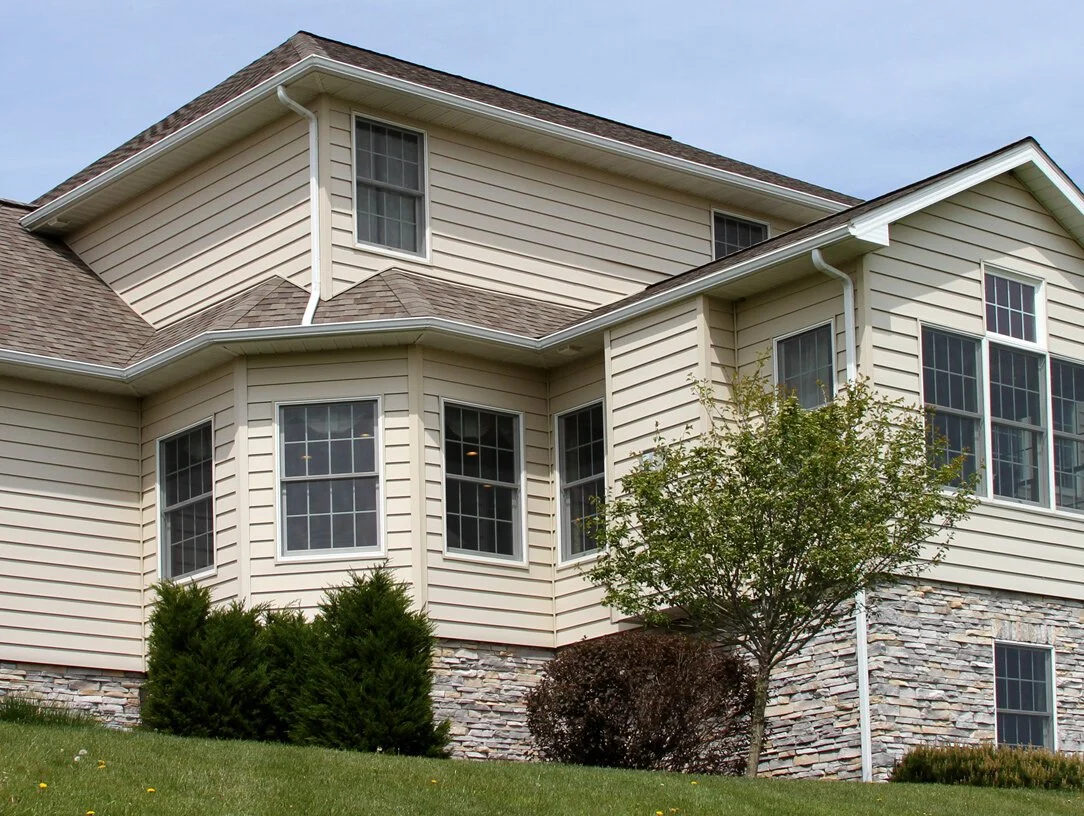
Here's the truth that most siding salespeople won't tell you: the quality of the installation matters more than the brand of siding you choose. Premium James Hardie siding installed wrong will fail faster than budget vinyl installed correctly.
We've been doing this for 35+ years, and the difference between a siding job that lasts 20 years and one that lasts 40 comes down to these details.
Proper Flashing and Water Management
Flashing is the metal or plastic material that directs water away from vulnerable areas — around windows, doors, corners, and where the siding meets the roof in Detroit roofing projects. Good flashing is invisible and keeps water out. Bad flashing (or no flashing) lets water in, and you won't know until you've got rot.
Every window and door needs step flashing integrated with the housewrap. Every outside corner needs flashing behind the trim. The bottom of the wall needs a starter strip and kickout flashing to direct water away from the foundation. These aren't optional details — they're how you keep water out of your walls for 30+ years.
We see DIY siding jobs and low-bid contractor work all the time where the flashing is wrong or missing entirely. It looks fine for 5 years. Then the OSB sheathing starts to rot, and suddenly you're looking at a $15,000 repair instead of a $500 fix.
Ventilation Behind Siding
Siding needs to breathe. Moisture vapor moves through your walls from inside to outside (especially in winter when you're heating your home). If that moisture can't escape, it condenses behind the siding and causes rot, mold, and premature failure.
This is why we install furring strips or use a rainscreen system behind fiber cement and engineered wood. It creates an air gap that allows moisture to escape and keeps the back of the siding dry. Vinyl siding has built-in drainage channels, but only if it's not installed tight against foam board with no ventilation path.
The worst installations we see are vinyl over foam insulation with no air gap and no housewrap. The foam traps moisture, the vinyl traps it further, and the sheathing rots. We've torn off siding on 10-year-old homes where the OSB looked like it had been underwater.
Fastener Placement and Thermal Expansion
This is where a lot of inexperienced crews get it wrong. Vinyl siding expands and contracts significantly with temperature changes — up to 1/2" on a 12-foot panel. If you nail it tight, it will buckle when it expands. If you don't center the nails in the slots, it can't move properly.
The correct way to install vinyl siding is to leave a 1/16" gap between the nail head and the siding, center the nail in the slot, and never nail through the face of the panel. Every panel needs proper overlap and expansion gaps at corners and trim.
Fiber cement and engineered wood have different fastener requirements — they need to be face-nailed with specific nail patterns and clearances. The manufacturer's installation manual is not a suggestion. It's the difference between a warranty claim and a 40-year installation.
Why Cheap Installation Fails Early
We get calls every year from homeowners who went with the lowest bid and now have siding problems. The pattern is always the same: the crew was fast, the price was low, and the job looked fine when they left. Five years later, panels are buckling, corners are separating, and water is getting in.
Cheap installation skips the details. No housewrap. Minimal flashing. Nails driven too tight. Corners cut (literally and figuratively). The material cost is the same whether you install it right or wrong — the labor cost is where corners get cut.
A proper siding installation from a Detroit siding company with a Michigan Residential Builder's License takes time. We're not the fastest crew on the block, but our jobs don't come back with problems.
Signs Your Siding Is Failing
Siding doesn't fail overnight. You get warning signs — sometimes years before it becomes an emergency. Here's what to watch for on your Michigan home.
Warping, Buckling, or Loose Panels
Vinyl siding that's warped or buckled is usually a sign of improper installation — nails driven too tight, panels installed in cold weather without expansion gaps, or heat from window reflections causing localized melting.
Loose panels mean the nails have pulled out or the panel wasn't properly locked into the one below it. This happens with wind damage or when the siding was installed over uneven sheathing without furring strips to create a flat surface.
Fiber cement that's warping is a sign of moisture problems — either water getting behind the siding or the panels weren't properly primed and sealed before installation.
Fading, Chalking, or Cracking
All siding fades over time, but severe fading or chalking (a powdery residue when you rub the surface) means the UV stabilizers in the material have broken down. This is common on south and west-facing walls with cheap vinyl.
Cracking is more serious. Vinyl cracks when it becomes brittle from UV exposure or impact damage (hail, baseballs, lawn equipment). Fiber cement cracks from improper fastening, impact, or settling of the house. Engineered wood cracks from moisture infiltration or poor finish maintenance.
A few small cracks aren't an emergency, but they're entry points for water. Get them caulked and monitor for expansion.
Water Stains or Mold Behind Siding
If you see water stains on the interior walls near windows or corners, water is getting behind your siding. If you see mold or mildew on the exterior near the foundation or under eaves, you've got a drainage or ventilation problem.
Pull back a corner of siding (carefully) and check the housewrap and sheathing. If the housewrap is wet or the OSB is dark and spongy, you've got a water management failure that needs immediate attention.
This is also a good time to check your insulation services in Southeast Michigan — inadequate insulation can cause condensation inside walls that looks like a siding leak but is actually a building science problem.
Rising Energy Bills
Failing siding doesn't insulate well. If your heating bills have been creeping up and you've ruled out furnace issues and energy-efficient windows in Southeast Michigan, your siding might be the culprit.
Air leaks around windows, doors, and corners let cold air in during winter and hot air in during summer. Your HVAC system works harder to compensate, and your bills go up.
A blower door test can pinpoint air leaks, but a visual inspection often reveals obvious gaps, separated corners, or missing caulk that's letting air through.
How to Maximize Siding Lifespan in Michigan
Even the best siding needs maintenance. Here's how to get the most years out of your investment.
Regular Inspection Schedule
Walk around your house twice a year — spring and fall. Look for loose panels, separated corners, missing caulk, and any signs of water damage. Check the areas around windows, doors, and where the siding meets the roof.
After severe storms (high winds, hail), do another inspection. Look for dents, cracks, or panels that have blown loose. Document any damage with photos for insurance purposes.
If you're not comfortable on a ladder or your home is two stories, hire a professional for an annual inspection. It's cheaper than replacing rotted sheathing.
Cleaning and Maintenance Tips
Vinyl siding should be washed once a year to remove dirt, mildew, and pollen. Use a garden hose with a soft brush or a pressure washer on low setting (under 1500 PSI). Don't spray upward under the panels — you'll force water behind the siding.
Fiber cement and engineered wood need periodic repainting or restaining depending on the product. James Hardie ColorPlus doesn't need repainting for 15+ years, but field-painted fiber cement needs a fresh coat every 10-12 years. LP SmartSide with factory finish can go 15 years; field-painted LP needs repainting every 8-10 years.
Check caulk around windows, doors, and trim every few years. Caulk dries out and cracks, creating water entry points. Re-caulk as needed with a high-quality exterior sealant.
Addressing Minor Issues Before They Spread
Small problems become big problems if you ignore them. A single cracked panel can let water into the wall cavity, causing rot that spreads to adjacent areas. A loose corner can catch wind and tear off an entire section of siding.
Replace damaged panels as soon as you notice them. Keep a few spare panels in your garage (or get them from your contractor) so you can make quick repairs without waiting for a color match.
Fix flashing issues immediately. If you see water stains or evidence of leaks, don't wait until spring. Water damage accelerates fast in Michigan's freeze-thaw cycles.
When to Call a Contractor
Some siding repairs are DIY-friendly — replacing a single vinyl panel, re-caulking trim, cleaning mildew. But if you're seeing widespread damage, water infiltration, or structural issues, call a licensed contractor.
We're happy to do inspections and give you an honest assessment. Sometimes it's a simple fix. Sometimes it's time for a full replacement. Either way, you'll know what you're dealing with and can plan accordingly.
If you're in Macomb County, Oakland County, or St. Clair County and need a second opinion on your siding, we've been doing this since 1988. We'll tell you what's wrong, what it'll cost to fix, and how long it'll last. No pressure, no gimmicks — just straight answers from a crew that's seen it all.
Cost vs. Lifespan: What Makes Sense for Michigan Homes
Let's talk money. Siding is a significant investment, and Michigan homeowners want to know they're getting value. Here's how to think about cost versus lifespan for different materials.
Upfront Cost vs. Total Cost of Ownership
Vinyl siding costs $4-8 per square foot installed. Fiber cement costs $8-12 per square foot. Engineered wood is in the middle at $6-10 per square foot. Those are 2026 prices for quality materials and professional installation in Southeast Michigan.
But total cost of ownership includes maintenance, repainting, and eventual replacement. Vinyl is low-maintenance but needs replacement in 25-30 years. Fiber cement needs minimal maintenance and lasts 40-50 years. Engineered wood needs repainting every 10-15 years but lasts 30-40 years.
Run the numbers over 40 years and fiber cement often comes out ahead despite the higher upfront cost. Vinyl is still the best value if you're on a tight budget or planning to sell in 10-15 years.
ROI for Different Siding Materials
Siding replacement typically returns 70-80% of its cost in increased home value, according to Remodeling Magazine's Cost vs. Value report. That's one of the better returns for exterior projects.
Premium materials like James Hardie don't always return more than vinyl in terms of resale value, but they do help homes sell faster and appeal to buyers who value quality and low maintenance. In higher-end markets like Bloomfield Hills or Grosse Pointe, fiber cement is expected. In middle-market areas like Warren or Sterling Heights, quality vinyl is perfectly acceptable.
If you're planning to stay in your home for 20+ years, choose the material that makes sense for your budget and maintenance preferences. If you're selling in 5 years, go with vinyl or a budget-friendly fiber cement option and put the savings toward other projects.
Budget-Friendly vs. Premium Options
Budget vinyl siding from a big-box store will cost less upfront but won't last as long or look as good as premium vinyl from CertainTeed or Norandex. The difference is material thickness, UV stabilizers, and color retention technology.
Premium vinyl costs 20-30% more than budget vinyl but lasts 50% longer. That's a good trade-off if you're staying in the house. If you're flipping or selling soon, budget vinyl makes more financial sense.
Fiber cement is always a premium option. There's no "budget" fiber cement — it's all relatively expensive. But the durability and low maintenance justify the cost for most long-term homeowners.
Engineered wood sits in the middle. LP SmartSide with factory finish is a great value — you get the look of wood with better durability than natural cedar at a fraction of the cost.
Our Recommendation: If budget allows, go with fiber cement on the front of the house (where curb appeal matters most) and premium vinyl on the sides and back. This gives you the best of both worlds — durability where it's visible, value where it's not.
Other Services from NEXT Exteriors
While you're thinking about siding, it's worth considering other exterior services in Detroit that can extend the life of your home and improve energy efficiency. Proper insulation contractor services in Detroit reduce heat loss through walls, which means less moisture movement and fewer condensation problems behind your siding.
If your siding is failing because of ice dams or gutter overflow, upgrading to seamless gutters in Detroit, MI can solve the root cause. And if your roof is nearing the end of its life, coordinating a roof replacement with your siding project saves money on scaffolding and labor — check out our professional roofing in Southeast Michigan services.
Finally, if you're replacing siding, it's the perfect time to upgrade to energy-efficient windows in Southeast Michigan or refresh your home's exterior with professional exterior painting in Detroit using Sherwin-Williams products. We coordinate all these services to minimize disruption and maximize value.
Ready to Get Started?
NEXT Exteriors has been protecting Michigan homes since 1988. Get a free, no-pressure estimate from a team that shows up on time and does the job right.
Get Your Free QuoteOr call us: (844) 770-6398
Frequently Asked Questions
Quality vinyl siding lasts 25-40 years in Michigan's climate, depending on the thickness of the material, UV stabilizers, and installation quality. Premium vinyl with a .046" or thicker profile typically lasts 30-40 years, while budget vinyl at .040" or thinner may only last 20-25 years before fading, warping, or cracking becomes noticeable. Proper installation with correct expansion gaps and fastener placement is critical for longevity.
Yes, if you're planning to stay in your home long-term. Fiber cement like James Hardie lasts 40-50 years in Michigan's climate with minimal maintenance, doesn't warp or rot from freeze-thaw cycles, and holds up better to wind, hail, and UV exposure than vinyl. The upfront cost is 50-100% higher than vinyl, but the total cost of ownership over 40 years is often lower when you factor in replacement and maintenance costs. For homeowners planning to sell within 10 years, vinyl may offer better value.
The most common causes of early siding failure in Michigan are improper installation (nails driven too tight, missing flashing, no ventilation behind siding), water infiltration from poor flashing around windows and doors, and moisture trapped behind siding due to inadequate drainage or housewrap. Freeze-thaw cycles accelerate damage once water gets into cracks or behind panels. Cheap materials with poor UV stabilizers also fail early from sun exposure and brittleness.
Replace your siding when you see widespread warping, cracking, or loose panels; water stains or mold on interior walls near windows or corners; severe fading or chalking that indicates UV breakdown; or rot in the sheathing behind the siding. A few damaged panels can be replaced individually, but if more than 30% of your siding shows damage or you're seeing water infiltration, full replacement is usually more cost-effective than piecemeal repairs.
It's possible but not recommended. Installing new siding over old siding (called re-siding) saves labor costs but traps moisture, hides potential rot or structural issues, and reduces the lifespan of the new siding because it can't breathe properly. In Michigan's climate with freeze-thaw cycles and high humidity, proper ventilation and water management are critical. We always recommend removing old siding, inspecting and repairing the sheathing, installing fresh housewrap and flashing, and then installing new siding correctly.
Siding replacement costs $4-8 per square foot for vinyl, $6-10 per square foot for engineered wood like LP SmartSide, and $8-12 per square foot for fiber cement like James Hardie. For a typical 2,000 square foot Michigan home, expect to pay $8,000-16,000 for vinyl, $12,000-20,000 for engineered wood, and $16,000-24,000 for fiber cement. Prices vary based on material quality, complexity of the job, and whether old siding removal and sheathing repair are needed. Get multiple quotes from licensed contractors and compare not just price but also warranty, installation methods, and references.
Yes, all siding needs some maintenance. Vinyl should be washed annually to remove dirt and mildew, and caulk around trim should be checked every few years. Fiber cement with factory finish (like James Hardie ColorPlus) needs minimal maintenance but should be inspected annually for cracks or damage. Engineered wood and field-painted fiber cement need repainting every 8-15 years depending on exposure and finish quality. Regular inspections after storms and addressing minor damage quickly will extend the life of any siding material.