

How to Spot Siding Damage After a Michigan Winter
By NEXT Exteriors
•
February 19, 2026
•
10 min read
We're writing this in mid-February, and if you're a homeowner in Sterling Heights, Troy, or anywhere across Macomb County, you already know what kind of beating your house has taken. Michigan winters don't mess around. Between the freeze-thaw cycles that never seem to quit, ice dams backing up under your shingles, and wind-driven snow finding every weak point in your exterior, your siding has been through a war.
Here's the thing: most siding damage doesn't announce itself with a loud crack or a panel flying into the yard. It starts quiet. A hairline crack here. A bit of moisture getting behind a seam there. By the time you notice water stains on your interior walls or your heating bills climbing, you're looking at expensive repairs that could've been caught early.
We've been doing house siding in Detroit and across Southeast Michigan since 1988. That's 35+ winters of seeing what works, what fails, and what homeowners miss during their spring walk-arounds. This guide walks you through exactly what to look for, why Michigan's climate is uniquely brutal on siding, and when it's time to call someone who knows what they're doing.
Understanding How Michigan Winters Attack Your Siding
Before you start circling your house with a clipboard, it helps to understand the enemy. Michigan's climate is a perfect storm for siding failure, and it's not just about the cold.
Freeze-Thaw Cycles: The Silent Killer
Here's what happens: during the day, temperatures climb above freezing. Any moisture that's worked its way into cracks, seams, or behind your siding starts to thaw. At night, it freezes again. Water expands when it freezes — about 9% by volume. That expansion force is enough to crack concrete, split wood, and push vinyl siding panels apart at the seams.
Southeast Michigan averages 40-60 freeze-thaw cycles per winter. That's 40-60 times your siding is being tested at its weakest points. If there's a hairline crack from last summer's hailstorm or a poorly sealed seam from a rushed installation, this cycle will find it and make it worse.
Ice Dams and Runoff
Ice dams form when heat escaping through your roof melts snow. The water runs down to the cold eaves, refreezes, and backs up under your shingles. But here's what most homeowners don't think about: when that ice finally melts in the spring thaw, all that water has to go somewhere. It runs down your walls, often behind your siding, saturating insulation and rotting sheathing before you ever see a stain inside.
We see this constantly in homes with poor attic insulation in Metro Detroit — the roof problem creates a siding problem, and homeowners don't connect the dots until they're dealing with mold.
Wind-Driven Snow and Moisture Penetration
Lake-effect storms don't just dump snow — they drive it sideways. Wind pushes moisture into every gap, crack, and unsealed joint. North-facing walls and corners take the worst of it. If your siding wasn't installed with proper overlap, flashing, and sealant, wind-driven moisture will find its way behind the panels.
UV Exposure and Temperature Swings
Winter sun reflecting off snow creates intense UV exposure, especially on south-facing walls. Combine that with temperature swings from 10°F at night to 40°F during the day, and materials expand and contract constantly. Vinyl siding becomes brittle in extreme cold. Caulk and sealants lose flexibility. Fasteners work loose.

Visual Inspection Checklist — What to Look For
Grab a notepad, your phone for photos, and pick a day when it's dry and above 40°F. You want good light and safe footing. Walk the entire perimeter of your house — don't skip the back or sides just because "nobody sees them." Damage doesn't care about curb appeal.
Cracks, Splits, and Holes
Look for any visible breaks in the siding surface. Vinyl can crack from impact (tree branches, hail, ice falling from the roof). Fiber cement can develop hairline cracks from moisture infiltration or improper fastening. Wood siding splits along the grain. Even small cracks are entry points for water.
What to do: Mark each crack with painter's tape and photograph it. Measure it if you can — a 1-inch crack needs attention, but a 6-inch crack needs immediate repair.
Warping, Buckling, or Loose Panels
Stand back and look at your siding from an angle, not straight on. Warped panels will catch light differently. Run your hand along horizontal seams — you should feel a smooth, flat surface. If panels are raised, buckled, or you can slide your fingers behind them, something's wrong.
Warping usually means one of two things: the siding was installed too tight (no room for thermal expansion) or there's moisture behind it causing the material to swell.
Fading or Discoloration Patterns
Uneven fading isn't just cosmetic. If you see streaking, dark spots, or areas where the color has changed, it often indicates water running down the wall. Check these areas more closely for hidden damage. Algae and mildew growth show up as dark streaks and mean moisture is present.
Gaps Around Windows, Doors, and Trim
Inspect every joint where siding meets trim, window frames, door frames, and corners. Look for gaps wider than 1/8 inch. Check if caulk is cracked, peeling, or missing entirely. These gaps are direct pathways for water and air infiltration.
Pay special attention to the bottom edge of windows — ice and snow pile up here, and if the flashing or sealant has failed, water gets in.
Peeling Caulk or Sealant
Caulk has a lifespan, and Michigan weather accelerates its breakdown. Run your finger along caulk lines — it should be firm and adhered. If it's crumbly, pulling away from the surface, or you can peel it off easily, it's failed. That's a problem waiting to get worse.
Water Stains or Mold Growth
Look for dark streaks, green or black spots, or areas where the siding looks "dirty" even after rain. This is biological growth, and it means moisture is staying on the surface too long — either because the siding isn't draining properly or because there's a leak behind it.
Also check your foundation line. If you see water stains or efflorescence (white chalky deposits) on the foundation near the bottom of your siding, water is running down the wall and pooling.
Pro Tip: Take photos of everything, even if it doesn't look like a big deal. If you end up filing an insurance claim for storm damage, documentation matters. Date-stamp your photos and note the location on your house.
Material-Specific Damage Patterns
Not all siding fails the same way. What you're looking for depends on what's on your house. Here's what we see most often across Southeast Michigan, broken down by material.
Vinyl Siding: Brittleness, Cracking, and Warping
Vinyl is everywhere in Michigan because it's affordable and low-maintenance. But it has weaknesses. In extreme cold (below 10°F), vinyl becomes brittle. A branch falling on it or even a hard knock can crack it. We've seen panels shatter from nothing more than someone leaning a ladder against the house on a cold January morning.
Warping happens when vinyl is installed too tight. The material needs room to expand and contract with temperature swings — up to 1/2 inch over a 12-foot panel. If the installer nailed it tight or used the wrong fasteners, the panels buckle when temperatures rise.
Look for: Cracks at corners and edges, panels that have pulled away from the house, warping on south and west-facing walls (most sun exposure), and loose or missing panels after windstorms.
Fiber Cement (James Hardie): Edge Cracking and Moisture Absorption
Fiber cement is tough — way more durable than vinyl — but it's not invincible. The most common failure point is at cut edges. When James Hardie or other fiber cement siding is cut on-site, those raw edges need to be sealed with primer and paint. If the installer skipped that step (and some do), moisture wicks into the edge, the material swells, and you get cracking.
We also see problems around fasteners. If nails are driven too deep, they crack the board. If they're not deep enough, the board can move and crack around the nail hole over time.
Look for: Hairline cracks around windows and doors (high-stress areas), cracking or swelling at horizontal seams, paint peeling at cut edges, and nail pops (fasteners backing out).
Engineered Wood (LP SmartSide): Swelling, Delamination, and Paint Failure
LP SmartSide has come a long way, and the modern product is far better than the engineered wood siding from the 1990s that failed catastrophically. But it's still wood-based, which means moisture is the enemy.
If water gets behind the siding or if the factory finish is compromised, the material can swell. Delamination — where the layers of the engineered wood separate — shows up as bubbling or flaking on the surface. Paint failure happens when moisture gets trapped under the finish.
Look for: Swelling at the bottom edges (where snow piles up), bubbling or flaking paint, soft spots when you press on the siding, and dark staining around fasteners.
Older Aluminum or Wood Siding
If your home was built before 1990, you might have aluminum or original wood siding. Aluminum dents easily and can corrode at seams and fasteners. Wood siding rots, especially at the bottom edges and around windows. Both materials are often at the end of their lifespan by now.
Look for: Dents and corrosion on aluminum, rot and insect damage on wood (probe with a screwdriver — if it sinks in easily, you've got rot), peeling paint, and gaps where boards have shrunk or warped.
Hidden Damage You Can't See From the Curb
Here's where it gets serious. The damage you can see from outside is often just the symptom. The real problem is what's happening behind the siding — in your wall cavities, insulation, and sheathing.
Moisture Behind Siding: Insulation Saturation and Sheathing Rot
If water is getting behind your siding (through cracks, failed caulk, or ice dam runoff), it's soaking your insulation and rotting your OSB or plywood sheathing. You won't see this until you remove the siding or until you notice interior problems: water stains on ceilings or walls, musty odors, or mold growth.
Saturated insulation loses its R-value. If you've noticed your heating bills climbing over the past few winters, moisture in your walls might be why. This is especially common in older homes where the original Detroit insulation services weren't up to modern standards.
Ice Dam Damage at Roofline Transitions
The transition between your roof and your siding — the area around your fascia, soffit, and frieze board — is a high-risk zone. Ice dams push water up under the shingles and down behind the siding. If the flashing wasn't installed correctly or if it's deteriorated, water runs straight into your wall cavities.
We see this constantly on homes with Detroit roofing services that didn't include proper ice and water shield or where the siding installer didn't coordinate with the roofer on flashing details.
Fascia and Soffit Deterioration
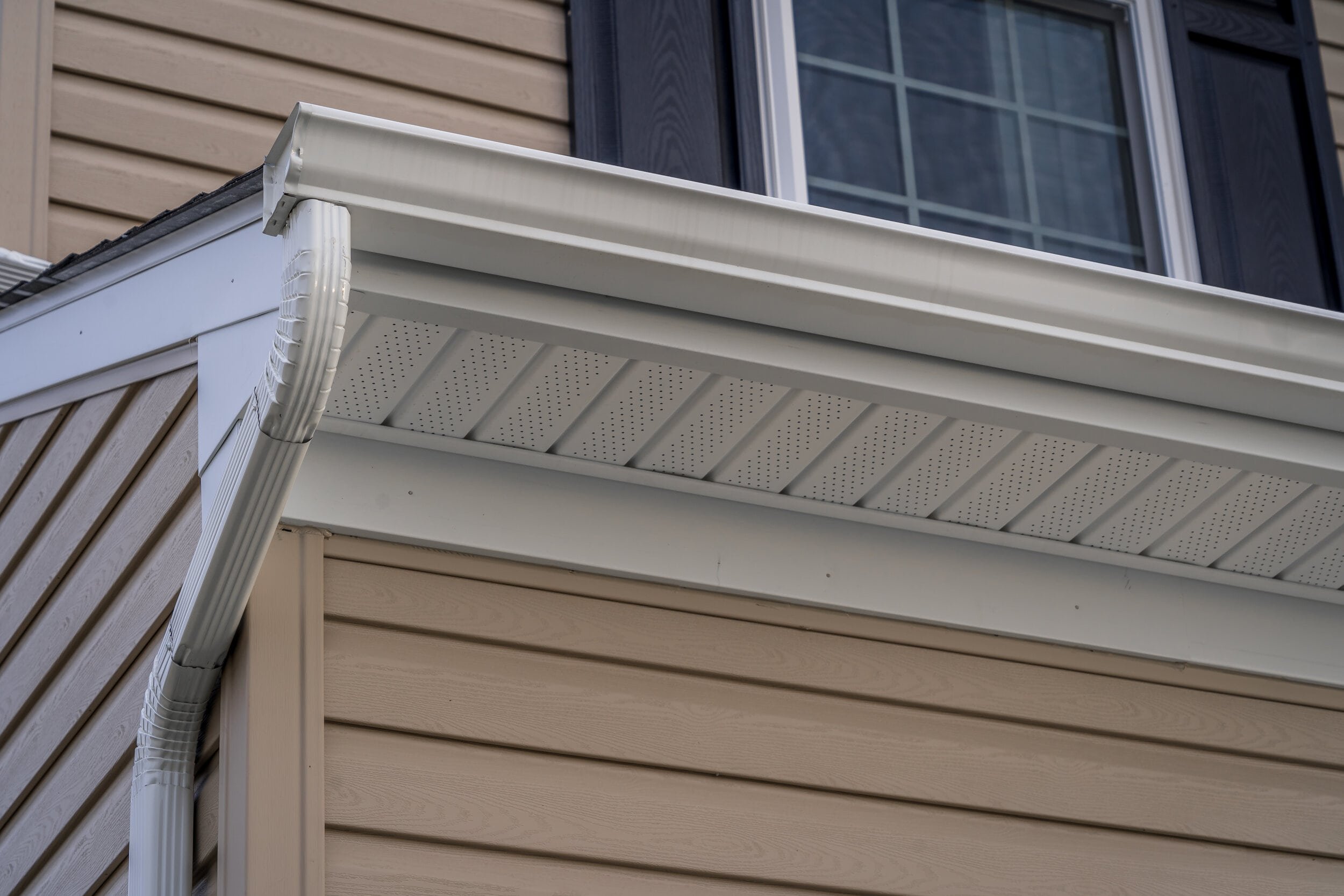
Your fascia (the board behind your gutters) and soffit (the underside of your roof overhang) are wood or wood-composite in most Michigan homes. If your seamless gutters in Detroit, MI are clogged or leaking, water runs down the fascia and rots it from behind. You won't see it until the board is so soft it's falling apart.
Check for: Peeling paint on fascia, sagging soffit panels, water stains on soffit, and visible rot when you press on the wood.
Foundation-Level Splash Damage
The bottom two feet of your siding takes abuse from snow melt, rain splash, and soil contact. If your grading isn't right (soil should slope away from the house) or if your downspouts dump water right at the foundation, moisture wicks up into the siding.
This is where we see the most rot on wood and engineered wood siding. On vinyl, it shows up as mold growth and deterioration of the bottom J-channel.
When DIY Inspection Isn't Enough
You can catch a lot with a careful walk-around, but there are limits to what a homeowner can assess safely and accurately. Here's when you need to bring in a professional.
Signs You Need a Professional Assessment
Interior water stains or mold: If you're seeing damage inside, the exterior problem is already serious.
Multiple areas of damage: One cracked panel is a repair. Ten cracked panels suggest a systemic problem — poor installation, material failure, or structural issues.
Soft spots or rot: If you press on your siding and it feels spongy or if a screwdriver sinks in easily, you've got rot. You need to know how far it extends.
Storm damage: If a recent storm (high winds, hail, falling tree limbs) caused visible damage, there's likely hidden damage too. A professional inspection documents everything for your insurance claim.
Older siding (15+ years): If your siding is approaching the end of its expected lifespan, a professional can tell you whether you're looking at repairs or replacement.
What a Contractor Inspection Includes
When we do a siding inspection, we're not just looking at the surface. We're checking:
Siding condition and attachment
Flashing around windows, doors, and roof transitions
Caulk and sealant integrity
Soffit, fascia, and trim condition
Moisture intrusion (we use moisture meters to check behind the siding in suspect areas)
Insulation condition (if accessible)
Gutter function and drainage (because gutter problems cause siding problems)
We document everything with photos and notes. If you're filing an insurance claim, this documentation is critical.
Insurance Claims and Documentation
If your damage is from a covered event (windstorm, hail, falling tree), your homeowner's insurance should cover repairs. But you need documentation: dated photos, a professional inspection report, and repair estimates.
File your claim as soon as you discover damage. Delays can hurt your case. And be specific — "some siding damage" doesn't cut it. "12 vinyl panels cracked on north wall, soffit damage at northwest corner, water intrusion behind siding in two locations" does.
Cost Reality: Repair vs. Replacement
Here's the hard truth: sometimes repair doesn't make sense. If you're looking at extensive damage, if your siding is old, or if you're dealing with a material that's known to fail (like certain engineered wood products from the '90s), replacement might be the smarter financial move.
Vinyl siding repair in Southeast Michigan typically runs $300-$800 for minor damage (a few panels). Fiber cement repair is $500-$1,200 depending on extent. But if you need scaffolding, if the damage is widespread, or if we find hidden moisture damage, costs climb fast.
Full siding replacement on an average Michigan home (1,800-2,200 sq ft) ranges from $8,000-$18,000 depending on material. That sounds like a lot, but if you're facing $4,000 in repairs on 20-year-old siding that's going to need replacement in five years anyway, replacement makes more sense.
We walk homeowners through this decision all the time. It's not about upselling — it's about making the smart financial call based on the actual condition of your house. That's part of what we mean by changing contractor culture.
Preventing Future Winter Damage
Once you've addressed existing damage, the next question is: how do I keep this from happening again? The answer isn't just about the siding itself — it's about how your entire exterior system works together.
Proper Installation Matters: Ventilation, Flashing, and Fastening
Most siding failures trace back to installation mistakes. Vinyl installed too tight. Missing or improper flashing around windows. Fasteners driven at the wrong angle or spacing. No housewrap or improper overlap on the housewrap seams.
If you're replacing siding, hire someone who knows Michigan building codes and follows manufacturer specs. CertainTeed, James Hardie, and LP all have detailed installation manuals. A good contractor follows them. A bad one wings it.
Ventilation matters too. Your walls need to breathe. If moisture gets trapped inside the wall cavity (from interior humidity or exterior infiltration), it has to escape. Proper ventilation and a good housewrap system allow that to happen without damaging the siding or sheathing.
Gutter Maintenance Connection
Your gutters and siding are a team. If your gutters are clogged, overflowing, or pulling away from the fascia, water runs down your siding instead of away from the house. That's how you get rot, mold, and foundation problems.
Clean your gutters twice a year — spring and fall. Check that downspouts extend at least 4-6 feet from the foundation. If you're dealing with chronic clogging, consider gutter guards or upgrading to larger 6-inch seamless gutters in Detroit.
Insulation and Air Sealing
Ice dams form because heat escapes through your roof. That heat comes from your attic, which gets warm because heat escapes through your ceiling. The solution isn't just more insulation — it's air sealing.
Seal air leaks around recessed lights, plumbing penetrations, attic hatches, and ductwork. Then add insulation to bring your attic up to R-49 or R-60 (Michigan code minimum is R-49, but more is better). This keeps your roof cold, prevents ice dams, and protects your siding from runoff damage.
We work with homeowners on this constantly through our top-rated insulation services in Detroit. Fixing the siding without fixing the attic is like bailing water out of a sinking boat without plugging the hole.
Material Selection for Michigan Climate
If you're replacing siding, choose a material that's proven in Michigan's climate. Vinyl works if it's quality product (0.044-inch thickness or better) and properly installed. James Hardie fiber cement is excellent — it's engineered for freeze-thaw cycles and doesn't rot. LP SmartSide performs well if maintained.
Avoid the cheapest option just to save money. Thin vinyl (0.035-inch or less) won't hold up. Budget fiber cement from unknown manufacturers often lacks the freeze-thaw durability of James Hardie. And older engineered wood products (pre-2010) have a track record of failure.
We install CertainTeed, James Hardie, and LP SmartSide because they're proven in Michigan and backed by real warranties. That matters when you're making a 20-30 year investment.
Related Services: Protecting your home's exterior is about more than just siding. NEXT Exteriors offers comprehensive exterior services in Detroit, including window replacement in Detroit and exterior painting in Southeast Michigan with Sherwin-Williams products. A complete exterior system works together — roof, siding, windows, gutters, and insulation all play a role in keeping your home protected.
Ready to Get Started?
NEXT Exteriors has been protecting Michigan homes since 1988. Get a free, no-pressure estimate from a team that shows up on time and does the job right.
Or call us: (844) 770-6398
Frequently Asked Questions
How long does vinyl siding typically last in Michigan?
+
Quality vinyl siding should last 20-30 years in Michigan if properly installed and maintained. Cheaper vinyl (under 0.040-inch thickness) often shows problems in 10-15 years — fading, cracking, and warping. The lifespan depends heavily on installation quality, material thickness, and exposure (south and west-facing walls age faster due to UV exposure). Regular inspections and prompt repairs extend the life significantly.
Can I replace just a few damaged siding panels, or do I need to replace entire walls?
+
It depends on the extent of damage and the age of your siding. If damage is limited to a few panels and your siding is relatively new (under 10 years), replacing individual panels usually works fine. The challenge is color matching — siding fades over time, so new panels may not match perfectly. If your siding is older or if damage is widespread, replacing entire walls or the whole house often makes more sense both aesthetically and financially. We assess this on a case-by-case basis during inspections.
What's the difference between fiber cement and vinyl siding for Michigan winters?
+
Fiber cement (like James Hardie) is significantly more durable than vinyl. It doesn't crack from cold temperatures, doesn't warp from heat, and is far more impact-resistant. It's also non-combustible and doesn't support mold growth. The tradeoff is cost — fiber cement typically runs 50-70% more than quality vinyl. It also requires painting every 10-15 years, whereas vinyl is color-through. For Michigan's freeze-thaw cycles, fiber cement performs better long-term, but vinyl is a solid choice if properly installed and maintained. We help homeowners weigh the upfront cost against long-term value based on their specific situation and budget.
Will homeowner's insurance cover siding damage from winter storms?
+
It depends on the cause of damage and your policy. Most homeowner's insurance covers damage from wind, hail, falling trees, and ice dams (if the ice dam resulted from a sudden event, not poor maintenance). Damage from gradual wear, lack of maintenance, or freeze-thaw cycles over time typically isn't covered — that's considered normal wear and tear. The key is documentation: take photos immediately after discovering damage, note the date, and file your claim promptly. A professional inspection report strengthens your claim significantly. We work with insurance adjusters regularly and can help document damage properly.
How do I know if moisture is behind my siding without removing it?
+
Professional contractors use moisture meters to detect elevated moisture levels behind siding without removing panels. We probe at seams, corners, and suspect areas (around windows, below gutters, at the foundation line). Signs that suggest hidden moisture include: water stains on interior walls or ceilings, musty odors inside the house, visible mold or mildew on the siding exterior, warped or buckled panels, peeling paint on fiber cement or wood siding, and soft spots when you press on the siding. If you suspect moisture intrusion, don't wait — the longer it sits, the more expensive the repair becomes.
What's the best time of year to replace siding in Michigan?
+
Late spring through early fall (May through October) is ideal for siding installation in Michigan. You need temperatures consistently above 40°F for proper caulk and sealant adhesion, and vinyl siding shouldn't be installed below 40°F because it's brittle and prone to cracking. That said, we work year-round on emergency repairs and can do installations in winter if necessary — we just take extra precautions with material handling and storage. If you're planning a replacement, book in winter or early spring for a late spring/summer installation date. That's when contractors have availability and you avoid the fall rush.
How much does siding replacement cost in Southeast Michigan?
+
For an average Michigan home (1,800-2,200 square feet), vinyl siding replacement typically runs $8,000-$14,000 including removal of old siding, new housewrap, trim, and installation. Fiber cement (James Hardie) runs $14,000-$22,000 for the same house. LP SmartSide engineered wood falls in between at $11,000-$18,000. These are ballpark ranges — actual cost depends on your home's size, architectural complexity (lots of corners, windows, and trim details increase labor), material choice, and whether we find hidden damage during removal that needs repair. We provide detailed written estimates after a site visit so there are no surprises.