

Siding Colors That Boost Curb Appeal in Metro Detroit
By:
NEXT Exteriors
Published:
February 19, 2026
Read time:
12 minutes

After 35 years of installing siding across Southeast Michigan, I can tell you this with absolute certainty: color choice matters more than most homeowners realize. The right siding color doesn't just make your house look better from the curb—it directly impacts resale value, neighborhood perception, and how well your investment holds up against Michigan's brutal freeze-thaw cycles.
We've completed over 500 house siding projects in Detroit and the surrounding counties, and we've seen firsthand which colors age gracefully and which ones homeowners regret within three years. This isn't about trends you'll find in a national home magazine—this is about what actually works on brick Colonials in Troy, 1960s ranches in Sterling Heights, and historic homes in Grosse Pointe Farms.
Whether you're preparing to sell or planning to stay for decades, the color you choose today will define your home's exterior presence for the next 20-30 years. Let's talk about what works in Metro Detroit's unique climate and architectural landscape.
Why Siding Color Matters More in Michigan
Michigan's climate puts siding through hell. We're not talking about the gentle coastal weather that lets California homeowners get away with any color they want. Here, your siding endures:
40-60 freeze-thaw cycles per winter that stress material bonds and accelerate color fade
Lake-effect moisture from the Great Lakes that promotes mildew growth on north-facing walls
Intense summer UV exposure that bleaches poorly formulated pigments
Spring pollen storms that coat lighter colors in yellow-green film
When you're investing $12,000-$25,000 in a full exterior services project in Detroit, you need colors engineered to withstand these conditions—not just colors that look good in the showroom.
The Metro Detroit Factor: Our region's housing stock is dominated by brick-front Colonials and mid-century ranches. Your siding color must harmonize with existing brick tones (often red, brown, or painted white) and complement the roofing materials common in Detroit—typically charcoal, weathered wood, or estate gray architectural shingles.
Resale value is another critical consideration. In Oakland County communities like Bloomfield Hills and Rochester Hills, HOAs often have strict color guidelines. Even without formal restrictions, real estate agents consistently tell us that homes with neutral, broadly appealing siding colors sell 8-12% faster than those with polarizing choices.
We've seen homeowners in Royal Oak choose a trendy navy blue that looked stunning in 2020 but felt dated by 2024. Meanwhile, a well-executed warm gray on a Colonial in Lake Orion still looks fresh after a decade. That's the difference between following Instagram trends and understanding Michigan's regional aesthetic.

Classic Colors That Never Fail in Southeast Michigan
Let's start with the colors that have proven themselves over decades of Michigan winters. These aren't boring—they're strategic choices that deliver lasting curb appeal without risk.
Warm Grays and Greiges
This family of colors dominates new construction and remodels across Macomb and Oakland counties for good reason. Shades like CertainTeed's "Pewter" or James Hardie's "Aged Pewter" offer just enough warmth to avoid looking sterile while maintaining the clean, modern aesthetic that buyers expect.
Why they work here:
Complement both red brick and painted white brick common in Metro Detroit
Hide dirt and pollen better than pure white
Pair beautifully with charcoal or weathered wood roofing
Fade-resistant formulations from major manufacturers maintain color integrity for 15+ years
We installed LP SmartSide in "Oyster Shell" (a warm greige) on a 1970s Colonial in Clinton Township last spring. The homeowner's brick was a challenging orange-red tone that clashed with cooler grays. The warm undertones in Oyster Shell created a cohesive look that increased their home's perceived value by at least $15,000 according to their realtor.
Classic Whites and Soft Creams
White siding never goes out of style in Michigan, but there's a right way and a wrong way to do it. Bright white (like pure #FFFFFF) looks harsh against our overcast winter skies and shows every speck of dirt. Instead, look for soft whites with subtle undertones:
James Hardie "Arctic White" — a true white with just enough warmth to avoid looking sterile
CertainTeed "Linen" — a soft cream that reads as white but hides imperfections
LP SmartSide "Primed" with Sherwin-Williams "Alabaster" topcoat — our go-to for exterior painting projects in Southeast Michigan
White siding works particularly well on Colonials in historic neighborhoods like Grosse Pointe Farms, where traditional aesthetics are expected. Pair it with black or dark bronze shutters and a contrasting front door for a timeless look that photographs beautifully for resale listings.
Material Matters: Color performance varies dramatically by substrate. James Hardie's ColorPlus Technology bakes pigment through the entire fiber cement board, making it far more fade-resistant than vinyl. CertainTeed's vinyl siding uses proprietary fade-resistant technology that outperforms budget brands. If you're choosing white or light colors, invest in premium materials—they'll look better longer.
Warm Beiges and Tans
These earth tones remain popular in suburban Metro Detroit communities because they blend seamlessly with natural surroundings and complement the brown brick common in 1980s-90s construction.
Best performers:
CertainTeed "Natural Clay" — a medium tan with enough depth to hide dirt
James Hardie "Khaki Brown" — pairs beautifully with darker brown trim
LP SmartSide "Sierra" — a warm beige that works on ranches and two-stories alike
We completed a full siding replacement on a ranch in Shelby Township last fall using CertainTeed Cedar Impressions in "Natural Clay." The homeowner's brown brick foundation and weathered wood roof created a cohesive earth-tone palette that felt both traditional and updated. Their home sold in four days—the realtor specifically mentioned the siding in the listing description.
Modern Color Trends in Metro Detroit
While classic neutrals dominate, we're seeing homeowners in urban and inner-ring suburban communities embrace bolder, more contemporary color choices. Here's what's actually working in 2026—not what's trending on Pinterest.
Deep Charcoals and Slate Grays
Dark siding has exploded in popularity, especially in Royal Oak, Ferndale, and parts of Detroit's revitalized neighborhoods. When done right, it creates a striking, modern aesthetic that stands out without screaming for attention.
Critical considerations for dark colors in Michigan:
Heat absorption: Dark colors absorb more solar heat, which can stress lower-quality vinyl. Use fiber cement (James Hardie) or engineered wood (LP SmartSide) for best performance.
Fade risk: Cheap dark vinyl will chalk and fade to purple-gray within 5-7 years. Premium products with fade warranties are non-negotiable.
Contrast is essential: Dark siding needs bright white trim to avoid looking heavy. We typically use Sherwin-Williams "Extra White" on trim and soffits.
We recently installed James Hardie in "Iron Gray" on a Craftsman-style home in Lake Orion. Paired with white trim, a red front door, and natural wood accents, the dark siding created a magazine-worthy exterior that still felt appropriate for the neighborhood. The key was using ColorPlus Technology—the color will look identical in 15 years.
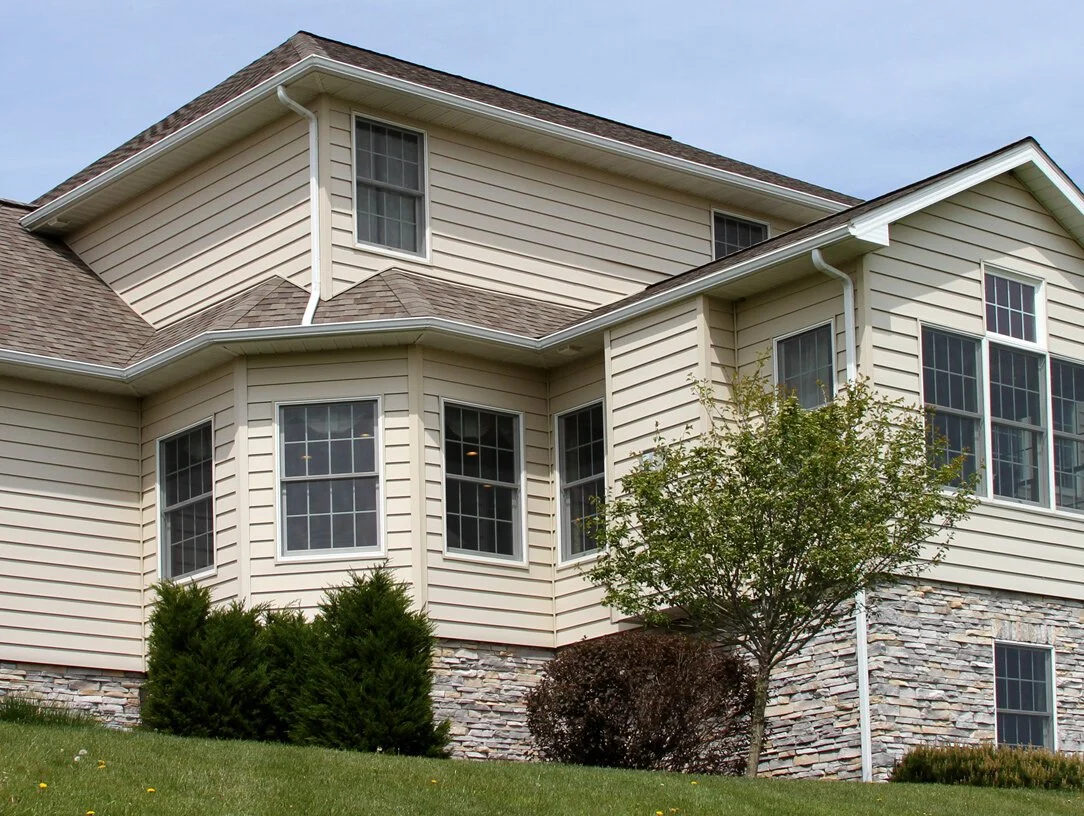
Sage Greens and Muted Olives
Green siding is having a moment, but not the forest green of the 1990s. Today's greens are softer, more sophisticated—think sage, moss, or weathered olive.
Why it works in Metro Detroit:
Complements Michigan's lush summer landscape
Pairs beautifully with natural wood and stone accents
Feels fresh without being trendy
Hides mildew and algae growth better than light colors
James Hardie's "Aged Pewter" with green undertones and CertainTeed's "Olive" are our most-requested green options. We installed the CertainTeed option on a 1960s ranch in Warren last summer—the homeowner wanted to update the home's dated yellow siding without going too bold. The muted olive created a sophisticated, organic look that felt both modern and timeless.
Two-Tone Combinations
Strategic use of two colors—typically a darker shade on the lower level and lighter on the upper—adds architectural interest and can make a home feel larger and more custom.
Rules for successful two-tone siding:
Use colors from the same family (two grays, two beiges) rather than contrasting hues
Divide at natural horizontal lines (between stories, at window lines)
Keep the darker color on the bottom to ground the home visually
Use consistent trim color (usually white) to unify the design
We're seeing this approach work particularly well on larger Colonials in Oakland County, where a single color can feel monotonous. A recent project in Troy used James Hardie "Monterey Taupe" on the first floor and "Cobble Stone" on the second—both warm grays that created subtle depth without looking busy.
How to Choose Colors That Last
Here's the process we walk homeowners through when they're paralyzed by color choice—and trust me, it happens on nearly every project.
Start With Your Fixed Elements
You're not starting with a blank canvas. Your home already has:
Roof color: This is expensive to change, so your siding must work with it. Charcoal roofs pair with almost anything. Weathered wood roofs look best with warm tones.
Brick or stone: If you have a brick front (common in Metro Detroit), your siding color must complement it. Red brick works with grays and whites. Brown brick needs warmer beiges or tans.
Foundation and trim: Existing foundation color and window frames influence your palette.
We recently worked with a homeowner in Chesterfield who fell in love with a cool blue-gray siding. Problem: their home had warm orange-red brick. We showed them side-by-side samples, and the clash was obvious. They pivoted to a warm greige that harmonized beautifully—and thanked us a year later.
Test Samples in Real Conditions
Never choose siding color from a 2-inch sample chip in a showroom. The same color looks completely different:
In Michigan's overcast winter light vs. bright summer sun
On a north-facing wall vs. south-facing
Next to your actual brick, roof, and trim
We provide large sample boards (at least 12" x 24") that homeowners can prop against their home's exterior and view at different times of day. This simple step prevents costly regrets.
Pro Tip: Use our home visualizer tool to upload a photo of your house and preview color options digitally. It's not perfect, but it's a fast way to eliminate colors that clearly won't work before ordering physical samples.
Understand Material-Specific Color Performance
Not all siding materials hold color equally. Here's what you need to know:
James Hardie Fiber Cement with ColorPlus Technology: Baked-on finish applied in a controlled factory environment. Industry-leading fade resistance. 15-year finish warranty. Best choice for dark colors and maximum longevity. Slightly higher upfront cost, but you'll never repaint.
LP SmartSide Engineered Wood: Factory-primed and ready for paint. We apply Sherwin-Williams exterior acrylic in the field. Excellent color options and customization. Requires repainting every 10-15 years depending on color and exposure. Great middle-ground option for homeowners who want flexibility.
CertainTeed Vinyl: Color is integrated through the material using fade-resistant technology. No painting required, ever. Excellent performance in light to medium tones. Dark colors (charcoal, navy) can fade over time even with premium formulations. Most budget-friendly option with good long-term value.
For a deep dive into material comparisons, see our full guide on choosing the best house siding in Detroit.
Consider Long-Term Maintenance Visibility
Some colors hide Michigan's seasonal grime better than others:
Best for hiding dirt: Medium grays, tans, and beiges
Shows dirt easily: Pure white, black, navy
Hides mildew/algae: Darker colors, greens
Shows pollen: White, light gray
If you have mature trees that drop sap or live near a busy road, factor this into your decision. A light color might require annual power washing, while a medium gray stays presentable with minimal maintenance.
Color Mistakes We Fix Every Year
After three decades in this business, we've seen every color mistake imaginable. Here are the ones we encounter most often—and how to avoid them.
Choosing Trendy Colors That Date Quickly
Remember when everyone wanted sage green vinyl in the late 1990s? Or that specific shade of yellow-beige that screamed "2005"? Color trends move faster than siding replacement cycles.
We had a homeowner in Sterling Heights who insisted on a trendy blue-green color in 2018. By 2023, they were calling us to re-side because they couldn't stand looking at it anymore—and every realtor they talked to said it was hurting their home's value. They spent $18,000 to fix a $0 mistake (choosing a timeless color from the start).
The fix: Choose colors with at least 20 years of proven staying power. If you want to express personality, do it with your front door, shutters, or landscaping—elements you can change for a few hundred dollars.
Ignoring Neighborhood Context
Your home doesn't exist in isolation. If every house on your street is a neutral earth tone and you go with bright yellow, you're not "expressing individuality"—you're hurting your resale value and annoying your neighbors.
We work with realtors regularly, and they're unanimous: homes that fit their neighborhood's aesthetic sell faster and for more money. You can still stand out—just do it with quality materials, meticulous installation, and subtle color choices that elevate rather than alienate.
Choosing Colors That Clash With Brick
This is the #1 mistake we see in Metro Detroit, where brick-front homes dominate. Homeowners fall in love with a siding color without considering how it interacts with their existing brick.
Common clashes:
Cool gray siding with warm orange-red brick (creates visual tension)
Beige siding with brown brick (too similar—no definition)
White siding with yellow-toned brick (makes the brick look dirty)
The solution: bring a brick sample to your color consultation, or better yet, have us come to your home with sample boards. We've done this hundreds of times and can spot problem pairings instantly.

Underestimating How Dark Colors Perform
Dark siding looks stunning in photos, but it comes with real trade-offs in Michigan's climate:
Heat absorption: Dark vinyl can warp on south-facing walls during hot summers. Use fiber cement or engineered wood instead.
Fade risk: Even premium dark colors will fade more than light colors over 15-20 years.
Shows imperfections: Every dent, scratch, or dirt streak is visible on dark surfaces.
We're not saying don't use dark colors—we install plenty of charcoal and navy siding. Just understand the commitment and choose materials engineered to handle it.
Cost Reality: Does Color Choice Affect Price?
Let's talk money. Most homeowners assume color is free—just pick what you like. Not quite.
Premium Color Upcharges
Manufacturers often charge more for certain colors:
James Hardie ColorPlus: Standard colors are included in base pricing. Premium and designer colors add $1,500-$3,000 to a typical project.
CertainTeed Vinyl: Most colors are standard, but specialty shades (deep blues, greens, dark grays) may add 5-10% to material costs.
LP SmartSide: Comes primed. Your paint color choice doesn't affect material cost, but premium Sherwin-Williams paints (which we exclusively use for exterior painting in Southeast Michigan) add $2-4 per square foot in labor and materials.
Long-Term Maintenance Costs
This is where color choice really impacts your wallet over time:
White and light colors: Show dirt and require more frequent cleaning. Budget for professional power washing every 2-3 years ($300-600 per session).
Dark colors on vinyl: May fade noticeably after 10-15 years, prompting earlier replacement. Fiber cement dark colors hold up much better.
Painted siding (LP SmartSide): Requires repainting every 10-15 years. Budget $5,000-$8,000 for a typical home. Dark colors may need repainting sooner due to UV exposure.
ROI Perspective: Neutral colors (grays, whites, beiges) typically return 70-80% of project cost in increased home value. Bold or polarizing colors may return only 50-60%. If you're planning to sell within 5 years, play it safe. If you're staying 15+ years, choose what you love—you'll be looking at it every day.
Budget-Friendly Options That Still Look Great
You don't need to spend top dollar to get good color performance:
CertainTeed Cedar Impressions vinyl in standard colors: Excellent fade resistance, realistic wood texture, and reasonable pricing ($8-12 per sq ft installed).
LP SmartSide primed + Sherwin-Williams Duration exterior paint: Mid-range option with excellent color customization ($10-14 per sq ft installed).
James Hardie with standard ColorPlus colors: Premium product, but standard colors avoid upcharges ($12-16 per sq ft installed).
For a detailed breakdown of siding costs across materials, check with our team—pricing varies significantly based on home size, complexity, and material choice.
When to Call a Professional
Color selection is part art, part science, and part local market knowledge. Here's when DIY research should transition to professional guidance:
You're Overwhelmed by Options
Manufacturers offer 30-50 color options per product line. Narrowing that down without experience is genuinely difficult. We've been doing this since 1988—we can eliminate 80% of options in the first conversation based on your home's style, existing features, and neighborhood context.
You're Preparing to Sell
Realtors know what sells in Metro Detroit, but they're not material experts. We work with dozens of agents across Macomb, Oakland, and St. Clair counties. We can recommend colors that maximize market appeal while ensuring the siding itself is installed to last through multiple ownership cycles.
Your Home Has Challenging Existing Features
Odd brick colors, multiple roof planes with different shingle colors, or historic architectural details require experienced color coordination. We've solved these puzzles hundreds of times.
You Want to See It Before Committing
Our process includes:
On-site consultation where we assess your home's current condition, architecture, and neighborhood
Large sample boards you can view on your actual home in real lighting conditions
Digital visualization using our home visualizer tool
Material recommendations based on your budget and performance expectations
This isn't a sales pitch—it's genuinely how we help homeowners avoid expensive regrets. We'd rather spend an extra hour on color selection than get a call three years later from an unhappy customer.
What Sets NEXT Exteriors Apart: We're not pushy. We don't upsell. We've been doing this since 1988 under Premier Builder Inc., and our reputation in Metro Detroit is built on honest guidance and quality work. We're CertainTeed Master Shingle Applicators and maintain an A+ BBB rating because we treat your home like it's ours. That includes helping you choose colors you'll love for decades.
Related Services Worth Considering
While you're thinking about siding color, it's worth evaluating your home's complete exterior system. Many homeowners bundle projects to save on labor costs and ensure a cohesive final look:
Window replacement in Detroit: New windows with updated trim colors can completely transform your home's appearance and energy efficiency.
Seamless gutters in Detroit, MI: Color-matched gutters in white, brown, or custom colors complete the exterior package.
Insulation upgrades in Detroit: If we're opening walls for siding replacement, it's the perfect time to upgrade wall insulation for better energy performance.
Roofing services in Detroit: Coordinating roof and siding replacement ensures perfect color harmony and maximizes your exterior investment.
We handle all of these services in-house, which means one point of contact, one timeline, and one warranty covering your entire exterior.
Ready to Choose the Perfect Siding Color?
NEXT Exteriors has been helping Metro Detroit homeowners make confident color decisions since 1988. Get a free consultation with large sample boards, digital visualization, and honest guidance—no pressure, no gimmicks.
Get Your Free Color Consultation
Or call us: (844) 770-6398
Frequently Asked Questions
What siding colors are most popular in Metro Detroit right now?
+
Warm grays and greiges dominate current installations across Macomb and Oakland counties, with shades like "Pewter," "Aged Pewter," and "Cobble Stone" leading the pack. We're also seeing increased demand for deep charcoals in urban areas like Royal Oak and Ferndale, and soft sage greens in suburban communities. Classic whites and beiges remain popular for traditional Colonials, especially in historic neighborhoods like Grosse Pointe. The key trend is moving away from stark, cool tones toward warmer neutrals that complement Michigan's natural landscape and existing brick homes.
How do I choose a siding color that won't look dated in 10 years?
+
Stick with colors that have proven staying power over multiple decades—think warm grays, soft whites, beiges, and tans rather than trendy blues, greens, or bold accent colors. Look at homes in established neighborhoods that still look fresh 15-20 years after construction; those colors (typically neutrals) have stood the test of time. Avoid colors that are heavily marketed as "new" or "trending"—by the time they're mainstream, they're already on their way out. If you want to express personality, do it through your front door color, shutters, or landscaping, which are inexpensive to change. Your siding is a 20-30 year commitment, so choose accordingly.
Does dark siding fade faster in Michigan's climate?
+
Yes, dark colors absorb more UV radiation and heat, which accelerates fading—but the degree of fade depends entirely on the material and manufacturing process. Cheap vinyl in dark colors will noticeably chalk and fade to purple-gray within 5-8 years. Premium vinyl with fade-resistant technology (like CertainTeed) performs better but still shows some fade over 15 years. James Hardie fiber cement with ColorPlus Technology offers the best fade resistance for dark colors because the finish is baked on in a controlled factory environment—it will look nearly identical in 15 years. If you're committed to dark siding, invest in premium materials with strong fade warranties, or you'll regret it.
How do I make sure my siding color works with my brick?
+
Start by identifying your brick's undertones—is it warm (orange-red, brown) or cool (gray, white-painted)? Warm brick pairs best with warm siding colors (beiges, tans, warm grays) while cool brick works with cooler grays and whites. Avoid choosing siding that's too similar in value to your brick—you need contrast for definition. The best approach is to get large sample boards (at least 12" x 24") and hold them directly against your brick in natural daylight. What looks good in the showroom often clashes on your actual home. We bring samples to every consultation specifically to avoid this common mistake, which can cost $15,000+ to fix.
What's the best siding color for hiding dirt and pollen in Michigan?
+
Medium-toned colors in the gray, tan, and beige families hide dirt most effectively. Pure white shows every speck of pollen (and we get a lot of it in Michigan springs), while black and navy show dust and water spots. Medium grays like "Pewter" or "Cobble Stone" are ideal—they're light enough to feel fresh but dark enough to hide seasonal grime. If you have mature trees that drop sap or live near a busy road, avoid the lightest and darkest extremes. Texture also matters; siding with a wood grain or cedar shake profile hides imperfections better than smooth surfaces.
Should I match my siding color to my roof or contrast it?
+
You want harmony, not matching. Your siding and roof should be in the same color temperature family (both warm or both cool) but different enough in value to create definition. For example, a charcoal roof pairs beautifully with light to medium gray siding—they're both cool-toned but provide contrast. A weathered wood (brown) roof looks best with warm beiges, tans, or warm grays. The mistake is trying to match too closely, which creates a flat, monotonous appearance. Since roofing replacement is expensive, choose your siding color to complement your existing roof unless you're replacing both simultaneously—which many Metro Detroit homeowners do to ensure perfect coordination.
How much does premium siding color cost compared to standard colors?
+
It depends on the manufacturer and material. For James Hardie fiber cement, standard ColorPlus colors are included in base pricing, while premium and designer colors add $1,500-$3,000 to a typical project. CertainTeed vinyl typically includes most colors at standard pricing, but specialty deep tones may add 5-10% to material costs. LP SmartSide comes primed, so your paint color choice doesn't affect material cost—but premium Sherwin-Williams exterior paints (which we exclusively use) add $2-4 per square foot. The real cost difference comes in long-term maintenance: premium fade-resistant colors maintain their appearance 2-3 times longer than budget options, saving you money over the siding's lifetime.