

Soffit & Fascia: The Overlooked Upgrade That Finishes Siding
By:
NEXT Exteriors
Published:
February 19, 2026
Reading time:
11 minutes
Walk through any neighborhood in Sterling Heights or Rochester Hills and you'll see plenty of homes with new siding. Some look sharp and professionally finished. Others look... incomplete. The difference usually comes down to two components most homeowners don't think about until it's too late: soffit and fascia.
We've been installing house siding in Detroit and across Southeast Michigan since 1988, and we've learned this: the trim work matters just as much as the siding itself. Soffit and fascia aren't just cosmetic details—they're functional components that protect your roof structure, control attic ventilation, and determine whether your home looks like a professional job or a quick flip.
Here's what 35 Michigan winters have taught us about these overlooked components, why they matter more than most contractors will tell you, and how to get them right.
What Soffit and Fascia Actually Do
Let's start with definitions, because most homeowners confuse these two or think they're the same thing.
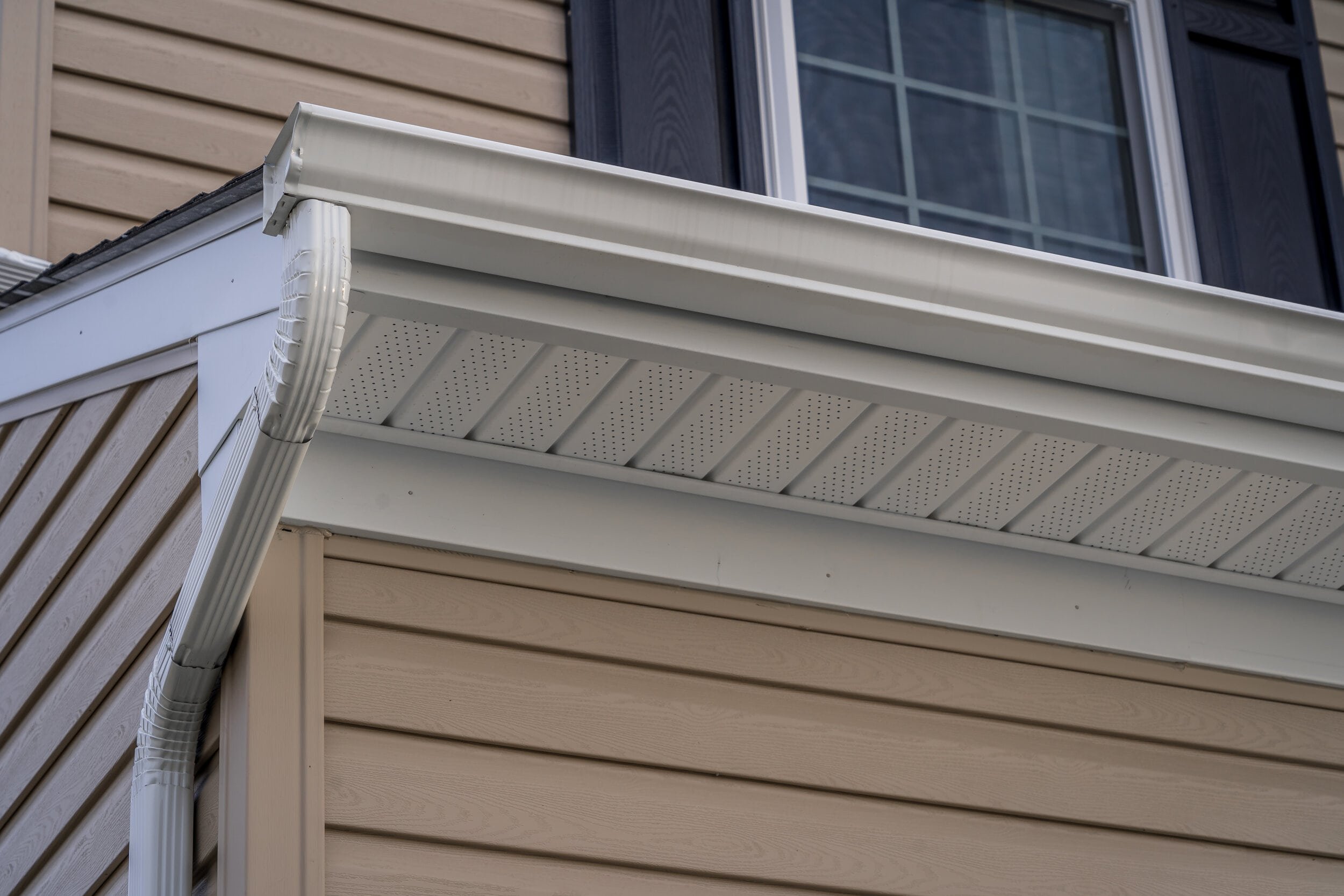
Fascia is the vertical board that runs along the edge of your roofline where the roof meets the outer walls. It's what your gutters attach to. Stand at the corner of your house and look up—that board running horizontally just below the roof edge is your fascia. It's typically 1x6 or 1x8 lumber covered with aluminum or vinyl trim, though some newer installations use composite materials.
Soffit is the horizontal surface underneath your roof overhangs. If you stand directly under your eaves and look up, you're looking at the soffit. It bridges the gap between the exterior wall and the fascia board, creating a finished ceiling under the roof overhang.
These components work together as a system. The fascia provides the mounting surface for your seamless gutters in Detroit, MI, protects the roof edge from water infiltration, and gives your roofline a clean, finished appearance. The soffit covers the exposed rafter tails, prevents pests from entering your attic, and—critically for Michigan homes—provides attic ventilation through perforated panels.
When we talk about replacing soffit and fascia as part of a Southeast Michigan home exterior services project, we're talking about both the structural boards behind the trim and the finished aluminum or vinyl covering. Both layers matter. A contractor who only wraps the existing fascia without checking the condition of the wood underneath is setting you up for problems down the road.
Why Michigan Homes Need Quality Soffit & Fascia
Michigan's climate is brutal on exterior trim. We get freeze-thaw cycles from November through March, ice dams on north-facing roofs, summer humidity that approaches 90%, and temperature swings of 60 degrees in a single week during spring. Soffit and fascia take the brunt of this abuse.
Freeze-Thaw and Water Damage
When snow melts on your roof, water runs down to the roof edge. If your fascia board isn't properly protected with trim and flashing, that water soaks into the wood grain. When temperatures drop overnight—which happens constantly in Michigan winters—that water freezes and expands. Over a few seasons, this cycle splits the wood, creates gaps, and allows water to penetrate behind your siding and into the wall cavity.
We see this most often on homes built in the 1980s and 1990s where contractors used standard pine fascia boards without proper drip edge flashing. The wood looks fine from the ground, but when we get up on the ladder during a Detroit roofing services inspection, we find soft, spongy wood that crumbles when you push on it.
Ice Dam Prevention Through Ventilation
Ice dams form when heat escapes from your attic, warms the roof deck, and melts snow. That meltwater runs down to the cold roof edge (the overhang that's not heated by the attic) and refreezes, creating a dam that backs water up under your shingles.
Proper soffit ventilation is your first line of defense. Perforated soffit panels allow cold air to enter the attic at the eaves. That air flows up through the attic space and exits through ridge vents or roof vents, keeping the roof deck cold and preventing the melt-freeze cycle that creates ice dams.
Michigan building code requires 1 square foot of net free ventilation area for every 150 square feet of attic space, with intake and exhaust vents balanced. Most of that intake comes from soffit vents. If your soffit panels are solid (non-vented) or if they're painted over or blocked by insulation installed by a top-rated insulation contractor in Detroit who didn't understand ventilation requirements, your attic can't breathe properly.
Real-world example: We replaced soffit and fascia on a 1970s Colonial in Grosse Pointe Farms last winter. The homeowner had been dealing with ice dams for years and had tried everything—roof raking, heat cables, even a new roof. The problem? The original soffit was solid wood with no ventilation. The attic was 30 degrees warmer than the outside air. We installed fully vented aluminum soffit, balanced the ventilation with ridge vents, and the ice dams disappeared. Sometimes the fix isn't more expensive—it's just getting the details right.
Pest Protection
Carpenter bees, wasps, squirrels, and bats all look for gaps in soffit and fascia to access your attic. A 1/4-inch gap at the fascia board is an open invitation. Once pests get into your attic, they chew through wiring, damage insulation, and create entry points for water.
Quality soffit and fascia installation creates a sealed barrier. The fascia trim wraps tight to the roof edge. The soffit panels fit snugly into channels in the fascia and the wall-mounted J-channel. There are no gaps, no loose corners, no openings for pests to exploit.
Energy Efficiency Impact
Poorly ventilated attics get hot in summer—often 150 degrees or more. That heat radiates down through your ceiling insulation and makes your air conditioner work harder. Proper soffit ventilation allows air circulation that moderates attic temperatures and reduces cooling loads.
In winter, good ventilation prevents moisture buildup in the attic. Warm, humid air from your living space rises into the attic. If that moisture can't escape through ventilation, it condenses on cold surfaces, soaks into insulation, and reduces its R-value. Over time, this moisture can rot roof decking and rafters.
Material Options: Aluminum vs. Vinyl vs. Wood
You have three main choices for soffit and fascia covering: aluminum, vinyl, and wood. Each has trade-offs. Here's what we've learned from thousands of installations across Macomb and Oakland counties.
Aluminum: The Michigan Standard
Aluminum is what we install on 80% of our projects, and for good reason. It's durable, doesn't rot, resists pests, and handles Michigan's temperature swings without warping or cracking. Aluminum soffit comes in vented and solid panels, typically .019-inch thickness for residential applications.
Pros:
Won't rot, warp, or split like wood
Handles freeze-thaw cycles without damage
Available in dozens of colors to match any siding
Can be painted if you want to change colors later
Vented panels provide excellent attic airflow
Typical lifespan: 30-50 years with minimal maintenance
Cons:
Can dent from hail or ladder impacts
Color fades slightly over decades (less noticeable with quality coatings)
Slightly higher material cost than vinyl
For most homes in Southeast Michigan, aluminum is the right choice. It performs well in our climate, matches the durability of quality siding installations in Detroit, and doesn't require ongoing maintenance.

Vinyl: Cost-Effective but Climate-Sensitive
Vinyl soffit and fascia costs less than aluminum and comes in a wide range of colors. It's popular for budget-conscious projects and works fine in moderate climates. But Michigan isn't a moderate climate.
Pros:
Lower material cost than aluminum
Won't dent from impacts
Color is molded through the material (no paint to chip)
Easy to work with during installation
Cons:
Expands and contracts significantly with temperature changes
Can crack in extreme cold (below 0°F)
Becomes brittle after 15-20 years of UV exposure
Difficult to paint if you want to change colors
Gaps can develop at seams as material expands/contracts
We install vinyl soffit when homeowners specifically request it for budget reasons, but we always explain the trade-offs. In Michigan, aluminum's stability across temperature extremes makes it worth the modest price difference for most projects.
Wood: For Historic Homes and Purists
Wood soffit and fascia—typically cedar or pine—is what you'll find on historic homes and high-end custom builds where authenticity matters. It looks beautiful when properly maintained, but it requires ongoing care.
Pros:
Authentic look for historic homes
Can be custom-milled to match original profiles
Accepts paint and stain beautifully
Repairable—damaged sections can be replaced individually
Cons:
Requires painting or staining every 5-7 years
Vulnerable to rot if moisture gets behind the paint
Carpenter bees and woodpeckers can damage it
Higher maintenance cost over the life of the home
We work with wood soffit and fascia on historic homes in areas like Royal Oak and Birmingham where maintaining architectural character is important. For these projects, we use premium cedar, apply proper primer and paint systems from our partnership with Southeast Michigan's go-to painting professionals, and educate homeowners about the maintenance schedule required to protect their investment.
Signs Your Soffit & Fascia Need Replacement
Most homeowners don't look up at their soffit and fascia until something obviously goes wrong. Here are the signs we watch for during exterior inspections—and what you should check for on your own home.
Peeling Paint or Visible Rot
If you have wood fascia boards with peeling paint, water is getting behind the paint film and into the wood grain. This is especially common on south and west-facing walls that get the most sun exposure. Once paint starts peeling, the wood underneath is vulnerable to rot.
Look closely at the bottom edge of the fascia board where it meets the soffit. If you see dark stains, soft spots, or areas where the wood looks spongy, you've got rot. This needs to be addressed before you install new siding or replace your roof—otherwise you're covering up a problem that will only get worse.
Gutters Pulling Away From the Fascia
If your gutters are sagging or pulling away from the house, the fascia board they're attached to is probably failing. Gutters are heavy when filled with water—a 20-foot section can hold 100+ pounds during a heavy rain. If the fascia board is rotted or the gutter hangers are pulling out, you'll see gaps between the gutter and the fascia.
This creates a cascade of problems. Water spills over the back of the gutter, runs down the fascia, soaks into the soffit, and eventually finds its way into your wall cavity. We've seen this cause extensive damage to wall sheathing, insulation, and even interior drywall in homes across Troy and Warren.
Gaps, Holes, or Pest Entry Points
Walk around your house and look up at the soffit. Do you see gaps at the corners? Holes where panels have come loose? Areas where the soffit doesn't meet the fascia tightly? These are entry points for pests.
Carpenter bees drill perfectly round 1/2-inch holes in wood fascia and soffit. Squirrels chew through deteriorated soffit panels to access attics. Wasps build nests in gaps between soffit panels. If you're seeing pest activity around your roofline, the soffit and fascia are probably compromised.
Water Stains on Exterior Walls
Water stains on your siding just below the soffit line indicate that water is getting past the soffit and running down the wall. This usually means the soffit-to-wall connection isn't properly sealed, or water is backing up behind the soffit due to ice dams or clogged gutters.
Left unaddressed, this water infiltration can rot wall sheathing and create conditions for mold growth inside wall cavities. It's one of those problems that looks minor from the outside but causes significant hidden damage over time.
Attic Ventilation Problems
If your attic is noticeably hot in summer or you're seeing condensation, frost, or ice buildup in winter, ventilation is inadequate. Check your soffit panels—are they vented (perforated) or solid? Are the vents blocked by insulation or debris?
Poor attic ventilation accelerates shingle aging, increases cooling costs, and contributes to ice dam formation. It's often overlooked during window replacement projects in Detroit and other exterior upgrades, but it's critical to the long-term health of your home.
The Right Way to Install Soffit & Fascia
Installation quality matters more than material choice. We've seen expensive aluminum soffit fail within five years because it was installed incorrectly, and we've seen budget vinyl installations last 20+ years because the contractor understood the details.
Proper Venting Calculations
Before we install soffit, we calculate the required net free ventilation area based on attic square footage. Michigan code requires 1 square foot of ventilation per 150 square feet of attic space, split evenly between intake (soffit) and exhaust (ridge or roof vents).
For a typical 1,500-square-foot ranch with a 1,500-square-foot attic, that's 10 square feet of total ventilation—5 square feet of soffit intake and 5 square feet of ridge or roof exhaust. Vented soffit panels provide about 9 square inches of net free area per linear foot, so we need roughly 80 linear feet of vented soffit to meet code.
Most contractors don't do this calculation. They just install whatever soffit the homeowner picks and call it done. Then homeowners wonder why they have ice dams or why their attic is an oven in July.
Flashing and Drip Edge Integration
The fascia board needs protection from water running off the roof edge. That protection comes from drip edge flashing—a metal strip that extends from under the shingles, over the top of the fascia, and down the face to create a drip line that directs water into the gutters.
When we replace fascia as part of a roof replacement in Metro Detroit, we remove the old drip edge, install new fascia boards (if the old ones are damaged), wrap the fascia with aluminum trim, and then install new drip edge that integrates with the fascia trim. This creates a continuous water barrier.
Contractors who skip the drip edge or install it incorrectly leave the fascia vulnerable to water infiltration. Over time, water wicks into the wood grain and starts the rot cycle.

Matching Siding Profiles and Colors
Soffit and fascia should complement your siding, not fight it. If you're installing James Hardie or LP SmartSide siding with a deep woodgrain texture, smooth aluminum soffit creates a visual disconnect. If you're going with vinyl siding in a specific color, your soffit and fascia should match or coordinate.
We keep a library of soffit and fascia samples in our Mount Clemens office so homeowners can see how different combinations look together. The goal is a cohesive appearance where the trim frames the siding and creates clean lines at the roofline.
Common Installation Mistakes
Here are the mistakes we see most often when we're called in to fix another contractor's work:
Wrapping rotten fascia boards: Covering bad wood with aluminum doesn't fix the problem—it just hides it. The rot continues underneath, the aluminum eventually sags, and gutters pull loose.
Installing solid soffit on homes that need ventilation: Some contractors use solid soffit because it's cheaper or because they don't understand building science. This creates ventilation problems that lead to ice dams and premature shingle failure.
Not allowing for thermal expansion: Vinyl expands and contracts significantly with temperature. If panels are installed too tightly in summer, they'll buckle when temperatures drop. If they're installed too loosely in winter, gaps open up in summer.
Improper fastening: Soffit panels need to be secured in the center of the nailing slots to allow for movement. Nails or screws driven too tightly restrict movement and cause panels to buckle or crack.
Blocking soffit vents with insulation: We see this constantly during insulation upgrades in Southeast Michigan. Well-meaning installers blow insulation into the attic and block the soffit vents, defeating the entire ventilation system.
Cost Reality: What to Expect in Southeast Michigan
Soffit and fascia replacement costs vary based on materials, home size, accessibility, and the condition of the underlying structure. Here's what we typically see for homes in Macomb, Oakland, and St. Clair counties.
Material Costs vs. Labor Costs
For a typical single-story ranch with 150 linear feet of fascia and soffit:
Aluminum soffit and fascia: $8-12 per linear foot for materials, $12-18 per linear foot installed. Total: $3,000-4,500 for the full job.
Vinyl soffit and fascia: $6-9 per linear foot for materials, $10-15 per linear foot installed. Total: $2,400-3,600 for the full job.
Wood soffit and fascia (cedar): $12-18 per linear foot for materials, $18-25 per linear foot installed (includes priming and painting). Total: $4,500-6,750 for the full job.
Two-story homes cost more due to the need for scaffolding or extended ladders. Homes with complex rooflines—multiple gables, dormers, or decorative trim—require more labor and material, which increases costs.
Labor typically represents 60-70% of the total cost. That's because installation requires precision, proper ventilation calculations, and integration with roofing and siding systems. Cheap labor usually means shortcuts—and shortcuts on soffit and fascia create problems that cost far more to fix than you saved upfront.
Why Cheap Fascia Fails in Michigan Winters
We get calls every spring from homeowners who hired the low bidder for soffit and fascia work and now have problems. Common issues include:
Fascia trim pulling away from the house because it wasn't fastened to solid wood
Soffit panels sagging because they weren't properly supported
Ventilation problems because solid soffit was installed instead of vented panels
Water damage because drip edge wasn't installed or was installed incorrectly
The lowest bid often means the contractor is cutting corners on materials, skipping steps like replacing rotten fascia boards, or hiring inexperienced crews. In Michigan's climate, those shortcuts show up fast.
When to Replace vs. Repair
Minor damage—a few cracked soffit panels, a small section of peeling paint on wood fascia—can often be repaired. But if you're dealing with widespread rot, multiple sections of damaged soffit, or fascia boards that are failing in several places, replacement makes more sense.
Here's our rule of thumb: if more than 30% of your soffit and fascia needs work, replace it all. Piecemeal repairs rarely match the color or texture of existing materials, and you'll end up with a patchwork appearance. Plus, if one section is failing, the rest is probably close behind.
Integrating Soffit & Fascia with Siding Projects
The most cost-effective time to replace soffit and fascia is when you're already doing a full siding replacement in Detroit or roof replacement in Southeast Michigan. The scaffolding or ladders are already in place, the crew is on site, and the trim work integrates seamlessly with the new siding or roofing.
We typically see a 15-20% cost savings when soffit and fascia replacement is bundled with a larger exterior project compared to doing it as a standalone job. Plus, you get a cohesive finished look—everything is new, everything matches, and you're not mixing old trim with new siding.
Ready to Get Started?
NEXT Exteriors has been protecting Michigan homes since 1988. Whether you need soffit and fascia replacement, complete siding installation, or a full exterior upgrade, we'll do the job right—no shortcuts, no surprises, just honest work from a crew that shows up on time. Get a free, no-pressure estimate from a team that understands Southeast Michigan homes.
Or call us: (844) 770-6398
Frequently Asked Questions About Soffit & Fascia
Should I replace soffit and fascia when I get new siding?
It depends on the condition of your existing soffit and fascia. If they're in good shape—no rot, proper ventilation, secure attachment—you can often leave them in place and just work around them. But if you're seeing any signs of damage, or if your soffit isn't vented (which is common on homes built before the 1980s), replacing them during a siding project makes sense. You'll save on labor costs since the scaffolding is already up, and you'll get a fully integrated, cohesive appearance. Our exterior services in Detroit include a thorough inspection so you know exactly what condition your trim is in before making a decision.
How do I know if my soffit is properly vented?
Look at your soffit panels from underneath. Vented soffit has small perforations or slots that allow air to pass through. Solid soffit has no openings. You need vented soffit along the entire perimeter of your home to provide adequate attic intake ventilation. If your attic is hot in summer, if you're seeing ice dams in winter, or if you notice condensation in your attic, inadequate soffit ventilation is often the culprit. Michigan building code requires balanced ventilation—intake at the soffits and exhaust at the ridge or roof vents—to prevent moisture problems and extend the life of your roof.
Can I paint aluminum soffit and fascia?
Yes, aluminum can be painted, which is one advantage it has over vinyl. If your aluminum soffit and fascia are faded or if you want to change colors, a quality exterior paint system will adhere well and last 10-15 years. The key is proper surface preparation—the aluminum needs to be cleaned, lightly sanded to create tooth for the paint, and primed with a bonding primer designed for metal. Our painting professionals in Southeast Michigan use Sherwin-Williams products specifically formulated for metal surfaces, which hold up well in Michigan's climate. Vinyl, by contrast, is difficult to paint successfully because it expands and contracts so much with temperature changes.
What causes fascia boards to rot?
Water infiltration is the primary cause. If your roof doesn't have proper drip edge flashing, water runs off the shingles and soaks into the top edge of the fascia board. If your gutters overflow or pull away from the fascia, water runs down the face of the board. If the aluminum or vinyl covering over the fascia isn't properly sealed, water gets behind it. Once water penetrates the wood grain, Michigan's freeze-thaw cycles accelerate the damage—water freezes, expands, splits the wood fibers, and creates more pathways for water to enter. Over time, the wood becomes soft and spongy. The fix is to remove the damaged fascia, install new treated lumber or composite boards, and protect them with proper flashing and trim.
How long does aluminum soffit and fascia last in Michigan?
Quality aluminum soffit and fascia, properly installed, typically lasts 30-50 years in Michigan. The aluminum itself doesn't rot or deteriorate, though the factory finish may fade slightly over decades. The limiting factor is usually the wood fascia boards underneath—if those weren't replaced when the aluminum was installed and they're rotting, you'll need to address that even if the aluminum covering is still in good shape. That's why we always inspect the condition of the underlying structure before wrapping fascia boards. Vinyl soffit and fascia typically lasts 20-30 years before UV exposure makes it brittle. Wood soffit and fascia can last 50+ years if properly maintained with regular painting, but most homeowners find the maintenance cost and effort isn't worth it compared to aluminum.
Should soffit and fascia match my siding color?
It's a matter of preference and architectural style. Most homes look best with soffit and fascia in a trim color—typically white or a light neutral—that contrasts with the siding. This creates definition and makes the roofline stand out. But some homeowners prefer a monochromatic look where the soffit, fascia, and siding are all the same color, which can make the house look larger and more cohesive. For traditional homes—Colonials, Cape Cods, ranch styles—white or off-white trim is classic and works with any siding color. For contemporary homes, matching or coordinating colors can create a sleek, modern appearance. We help homeowners visualize options using our home visualizer tool so you can see how different combinations will look on your actual house.
Can carpenter bees damage aluminum soffit and fascia?
No, carpenter bees can't drill through aluminum. They only bore into wood. That's one of the main advantages of aluminum soffit and fascia—it's completely pest-proof. Carpenter bees, woodpeckers, and squirrels can't damage it. If you have wood fascia or soffit and you're seeing carpenter bee activity (perfectly round 1/2-inch holes), replacing it with aluminum eliminates the problem. We see this frequently on older homes in Southeast Michigan where wood trim has been in place for decades. The bees return to the same spots year after year, creating more damage. Once we wrap the fascia with aluminum and replace wood soffit with aluminum panels, the bees move on—there's nothing left for them to bore into.