

Michigan Gutter Basics: Size, Pitch, Downspouts Explained
NEXT Exteriors
•
February 19, 2026
•
9 min read
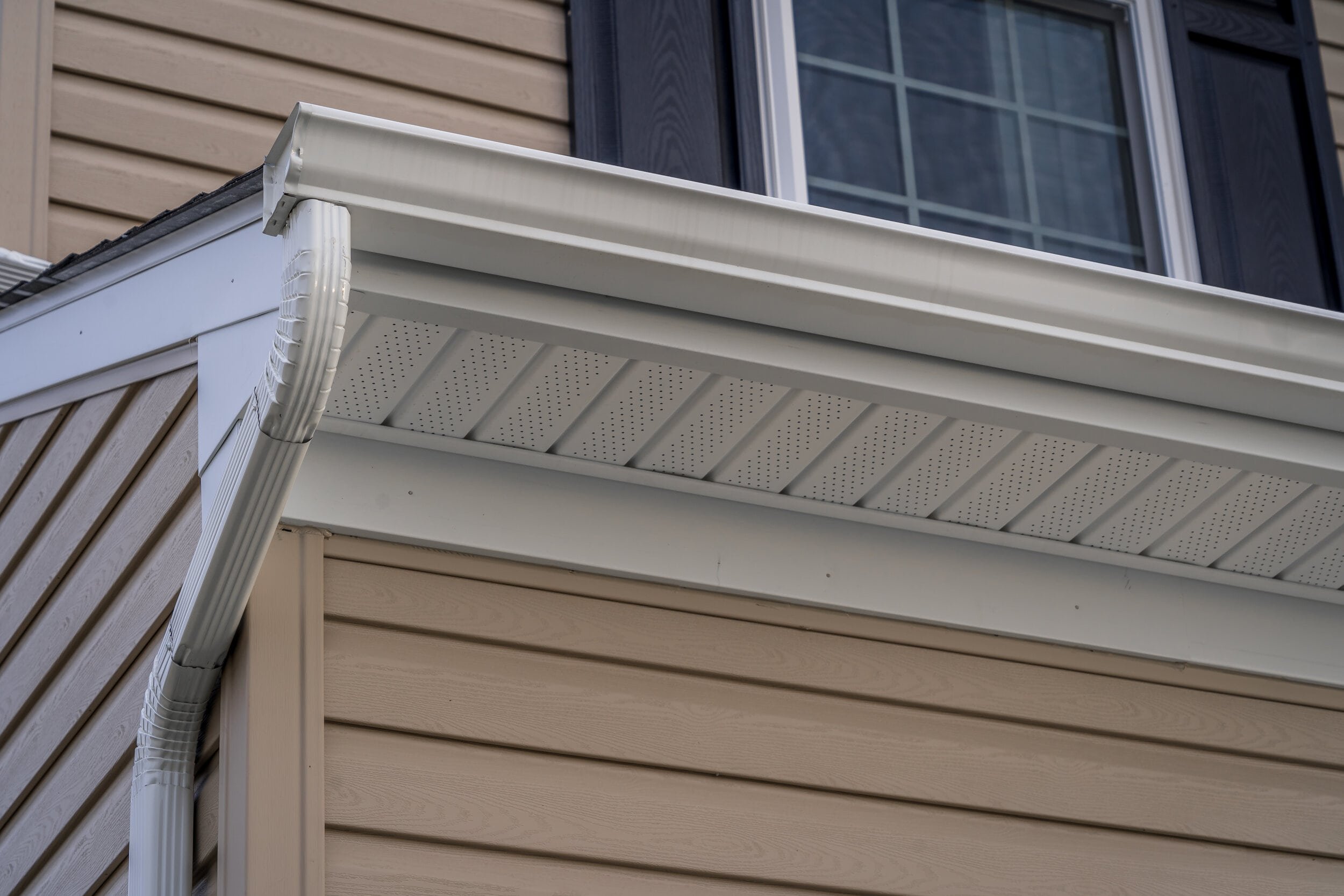
After 35 years installing seamless gutters in Detroit, MI and across Southeast Michigan, I can tell you this: most gutter problems don't come from the gutters themselves. They come from three fundamentals that got skipped during installation—size, pitch, and downspout placement.
Michigan's freeze-thaw cycles, lake-effect snow, and spring downpours create a perfect storm for gutter failure. A system that works fine in Georgia will fail here by March. The difference between a gutter that lasts 20 years and one that pulls away from your fascia in three winters comes down to understanding what actually matters in our climate.
This isn't about brand names or fancy coatings. It's about the building science fundamentals that keep water moving away from your foundation, prevent ice dams from tearing your fascia apart, and stop basement flooding before it starts.
Gutter Size—Why 5-Inch Is Standard (and When You Need 6-Inch)
Walk through any neighborhood in Sterling Heights or Rochester Hills and you'll see mostly 5-inch K-style gutters. That's the residential standard, and for most Michigan homes, it's the right choice. But "standard" doesn't mean it works for every situation.
Gutter sizing comes down to how much water your roof sheds during peak rainfall. In Southeast Michigan, we design for storms that dump 1.5 to 2 inches per hour—not uncommon during summer thunderstorms rolling off Lake St. Clair. Your gutter needs to handle that volume without overflowing.
The Math Behind Gutter Capacity
A 5-inch K-style gutter can handle approximately 1,200 square feet of roof area per downspout under typical Michigan rainfall conditions. That assumes proper pitch (we'll get to that) and adequate downspout spacing. If your roof has a steeper pitch—common on Colonial-style homes in Grosse Pointe Farms—water hits the gutter faster and harder, reducing effective capacity by 10-15%.
Here's when you need to consider 6-inch gutters:
Roof area exceeds 1,800 square feet per gutter run — Large ranch homes or homes with complex rooflines
Roof pitch is 8:12 or steeper — Water velocity overwhelms standard gutters
You have tall trees overhanging the roof — More debris volume requires larger capacity
Your home sits in a low spot — Poor drainage means gutters work harder
You're replacing old 6-inch gutters — The fascia is already sized for them
We installed 6-inch seamless gutters on a brick Colonial in Troy last spring. The homeowner had been dealing with overflow at the corners every storm. The problem wasn't the gutters—it was undersizing for a 2,400-square-foot roof with an 11:12 pitch. The upgrade solved it completely.
Michigan-Specific Consideration: Spring snowmelt can dump more water into your gutters than any rainstorm. A warm March day after heavy February snow creates runoff equivalent to 3-4 inches of rain in a few hours. If your gutters overflow during snowmelt, sizing is likely the issue.

Gutter Pitch—The Quarter-Inch Rule Everyone Gets Wrong
This is where most DIY installations fail and where plenty of contractors cut corners. Gutter pitch—the slope from the high end to the downspout—determines whether water flows or sits. Sitting water in Michigan winter? That's ice. Ice means weight. Weight means your gutters pull away from the fascia, and now you're calling someone like us to fix structural damage.
The Standard: Quarter-Inch Per 10 Feet
The building code standard is ¼ inch of slope for every 10 feet of gutter run. That's roughly 0.025 inches per foot—barely visible to the eye but critical for performance. Too little pitch and water pools. Too much and the gutter looks crooked, plus water moves so fast it overshoots the downspout opening.
Here's the problem: that quarter-inch rule assumes your fascia is perfectly level. On a 1960s ranch in Warren or Shelby Township, the fascia board has probably sagged a bit over 60 years. The roof sheathing might have settled. Your gutter installer needs to account for that, not just follow the fascia line.
How We Set Pitch Correctly
We use a laser level and chalk line to establish true pitch, independent of the fascia. Mark the high point, calculate drop to the downspout location, snap a line, and install to that line—not to the existing fascia curve. If the fascia is severely warped, we address that first as part of our Detroit roofing services, because you can't hang a proper gutter on bad substrate.
On longer runs—say 40 feet or more—we pitch from the center toward downspouts at both ends. This keeps pitch gradual and prevents the "ski slope" look some homeowners hate.
Winter Reality Check: When ice forms in a gutter with improper pitch, it doesn't just sit there. It expands. That expansion pushes against the fascia brackets, bending them outward. By spring, your gutters are sagging or detached. We see this every year in March and April across Macomb County.
Signs Your Pitch Is Wrong
Standing water visible in gutters after rain stops
Algae or moss growing inside the gutter channel
Overflow at corners or seams during moderate rain
Ice buildup in winter that doesn't drain during thaws
Gutters pulling away from fascia at the high end
Pitch problems don't fix themselves. If you're seeing these signs, the system needs adjustment or reinstallation. Trying to patch it with additional brackets just transfers stress to other weak points.
Downspout Placement and Sizing
A gutter is only as good as its ability to move water off the roof and away from the foundation. That's the downspout's job, and it's where we see the most shortcuts—both in placement and sizing.
The Downspout-to-Gutter Ratio
Standard residential practice: one downspout for every 30-40 feet of gutter, depending on roof area and rainfall intensity. In Southeast Michigan, we lean toward the conservative end—one downspout per 30 feet maximum, especially on homes with steep roofs or large overhangs.
Downspout size matters as much as quantity. Standard residential downspouts are 2x3 inches. For 5-inch gutters, that's adequate. For 6-inch gutters, you need 3x4-inch downspouts to match capacity. Undersized downspouts create a bottleneck—your gutters overflow even though they're properly sized and pitched.
Placement Strategy
Downspouts should discharge at least 6-10 feet away from the foundation. In Michigan's clay soil—common across Oakland and Macomb counties—water doesn't percolate quickly. It sits. It saturates. It finds its way into your basement through hydrostatic pressure against foundation walls.
We use solid extensions or underground drains to carry water to daylight or a dry well. Splash blocks alone don't cut it in Michigan. They work for the first season, then sink into the soil or get buried under mulch. Next spring, you've got water pooling at the foundation again.

Corner Downspouts vs. End Runs
Aesthetically, homeowners often prefer downspouts tucked into corners rather than running down the middle of a wall. We get it. But sometimes the roof geometry or gutter run length demands a mid-wall downspout for proper drainage. A competent installer will explain the trade-offs and give you options.
On homes where we're also handling house siding in Detroit, we can plan downspout placement to align with trim boards or corners, making them less visually intrusive. Coordination between trades matters—another reason to work with a full-service exterior contractor rather than a gutter-only crew.
Foundation Protection: More basement water problems in Southeast Michigan trace back to gutter and downspout failures than any other single cause. Proper gutter function isn't just about protecting your fascia—it's about protecting your foundation, your basement, and everything you've stored down there.
Material Choices That Hold Up in Michigan Weather
Material selection for gutters comes down to three factors: durability in freeze-thaw cycles, resistance to thermal expansion/contraction, and long-term maintenance requirements. Michigan weather tests all three harder than most climates.
Aluminum—The Residential Standard
Most residential gutters in Southeast Michigan are aluminum, and for good reason. It doesn't rust, it's lightweight (less stress on fascia), and it handles freeze-thaw cycles without cracking. Standard thickness is .027 or .032 inches—we use .032 for better rigidity and longer bracket spacing.
Aluminum's weakness is denting. Hail, falling branches, or a ladder leaned too hard can leave permanent dings. But for most homeowners, the trade-off is worth it. Aluminum gutters properly installed last 20-25 years in Michigan.
Steel—When You Need Extra Strength
Galvanized or galvalume steel gutters are stronger and more dent-resistant than aluminum. We use them on commercial projects or homes with heavy snow load concerns—think lake-effect snow zones near Lake St. Clair or homes with multiple roof valleys concentrating runoff.
Steel's downside: it's heavier (more stress on fascia and brackets) and it will eventually rust if the coating is compromised. Expect 15-20 years before corrosion becomes an issue, depending on maintenance.
Copper—The Premium Option
Copper gutters are beautiful, durable, and expensive. They develop a natural patina over time—green oxidation that protects the underlying metal. We've installed copper gutters on historic homes in Grosse Pointe Farms where aesthetics and longevity justify the cost. Expect 50+ years of service life.
Copper requires specialized soldering at seams and corners. It's not a DIY material, and not every gutter contractor has the skill set to work with it properly. If you're considering copper, make sure your installer has a portfolio of copper work—it's a different trade than aluminum.
Seamless vs. Sectional
Seamless gutters are formed on-site from a continuous coil, eliminating seams except at corners and downspout outlets. Fewer seams mean fewer leak points and cleaner appearance. Sectional gutters use pre-cut 10-foot lengths joined with connectors and sealant—more seams, more potential failure points.
In Michigan's freeze-thaw environment, seamless is the better choice. Ice expansion at seams is a common failure mode for sectional systems. Every spring we replace sectional gutters that have split at the seams after a tough winter. Seamless gutters in Detroit, MI and across Southeast Michigan simply perform better long-term.
Common Gutter Problems We Fix Every Spring
March and April are our busiest months for gutter repairs. Michigan winters reveal every installation shortcut and deferred maintenance issue. Here's what we see most often:
Ice Dam Damage
Ice dams form when heat escapes through your attic, melting snow on the roof. Meltwater runs down to the cold eaves, refreezes, and backs up under shingles. The ice also fills gutters, adding hundreds of pounds of weight. Brackets bend. Gutters pull away. Fascia boards rot.
The fix isn't better gutters—it's better attic insulation in Metro Detroit and proper ventilation. We address ice dams as part of a whole-house approach, because replacing gutters without fixing the attic just means you'll be replacing them again in five years.
Gutters Pulling Away From Fascia
This happens for three reasons: improper bracket spacing, bad fascia substrate, or ice/debris weight. Standard bracket spacing is 24 inches on center—we use 18 inches in Michigan for better snow load distribution.
If the fascia board itself is rotted or water-damaged, no amount of brackets will hold. We often discover fascia rot during gutter replacement, especially on homes with old roofing in Southeast Michigan where ice dams have been a chronic problem. The fascia gets replaced before new gutters go up.
Downspouts Draining at Foundation
Extensions get knocked off by lawnmowers, buried under mulch, or removed and never replaced. Water dumps right at the foundation. Clay soil saturates. Hydrostatic pressure builds. Basement walls crack or leak.
We install solid PVC extensions or bury 4-inch corrugated pipe to carry water at least 10 feet from the foundation. It's not glamorous work, but it prevents thousands in foundation and basement repairs down the road.

Clogs and Overflow
Leaves, shingle granules, and debris accumulate in gutters. When they clog, water overflows, defeating the entire purpose of the system. Gutter guards help but aren't foolproof—fine debris still gets through, and some guards create ice dam problems in winter.
We recommend twice-yearly cleaning—spring and fall—as the baseline. Homes with heavy tree coverage need more frequent attention. If you're not comfortable on a ladder, hire it out. Gutter cleaning is cheap compared to the water damage from a clogged system.
When to Call a Professional
Some gutter work is DIY-friendly—cleaning, minor bracket adjustments, resealing a small leak. But installation and major repairs require specialized tools, material knowledge, and an understanding of building science that most homeowners don't have.
Signs You Need Professional Help
Gutters are sagging or pulling away from the house — Structural issue requiring proper fastening and possibly fascia repair
Water overflows during moderate rain — Sizing, pitch, or downspout placement problem
Ice dams form every winter — Attic insulation and ventilation issue, not just a gutter problem
Basement floods after heavy rain — Downspout drainage inadequate or improperly placed
Gutters are 20+ years old — Likely nearing end of service life; replacement more cost-effective than repeated repairs
Visible rust, holes, or cracks — Material failure; patching is temporary at best
What a Proper Installation Includes
When you hire NEXT Exteriors for gutter work, here's what you're getting:
Site assessment including roof area calculation, pitch measurement, and drainage evaluation
Fascia inspection and repair if needed—we don't hang new gutters on bad substrate
Seamless gutter fabrication on-site for exact-fit runs with minimal seams
Proper pitch using laser level, not eyeballing or following sagging fascia
Hidden hangers or brackets at 18-inch spacing for Michigan snow loads
Downspouts sized to match gutter capacity with extensions to carry water away from foundation
Coordination with other exterior services in Detroit if you're doing roofing, siding, or trim work at the same time
We've been doing this since 1988. We know what works in Michigan weather and what fails. Our crews show up on time, work carefully around your landscaping, and clean up when the job's done. No drama. No surprises. Just solid work backed by our reputation and a real warranty.
Integrated Exterior Approach: Gutters don't exist in isolation. They interact with your roof, fascia, siding, and foundation drainage. That's why working with a full-service contractor like NEXT Exteriors—offering window replacement, exterior painting, and all other exterior services—makes sense. We see the whole system, not just one component.
Cost Reality for Southeast Michigan
Seamless aluminum gutter installation in Southeast Michigan typically runs $8-12 per linear foot installed, depending on home height, access difficulty, and downspout requirements. A typical 150-foot installation (average single-story ranch) costs $1,200-1,800.
Add $200-400 for fascia repairs if needed. Add $300-600 for underground drainage extensions. Premium materials like steel or copper cost significantly more—copper can run $25-40 per linear foot.
That's not cheap, but it's a fraction of what you'll spend fixing foundation damage, basement flooding, or rotted fascia and soffit from a failing gutter system. Done right, gutters are a 20-year investment. Done wrong, you're back at it in five years.
Ready to Get Started?
NEXT Exteriors has been protecting Michigan homes since 1988. Get a free, no-pressure estimate from a team that shows up on time and does the job right.
Or call us: (844) 770-6398
Frequently Asked Questions
How often should gutters be cleaned in Michigan?
+
Minimum twice per year—late spring after tree pollen and seed drop, and late fall after leaves come down. Homes with heavy tree coverage (especially oak, maple, or pine) should be cleaned 3-4 times annually. Neglecting cleaning leads to clogs, overflow, ice dam formation, and potential structural damage to fascia and soffit.
Do gutter guards really work in Michigan winters?
+
They reduce debris accumulation but aren't foolproof. Fine material like shingle granules and pine needles still get through most guards. Some mesh-style guards can trap ice and create mini ice dams in winter. Solid surface guards (where water flows over the edge) work better in freeze-thaw conditions but cost more. Guards reduce cleaning frequency but don't eliminate it entirely.
What causes gutters to pull away from the house?
+
Three main causes: improper bracket spacing (too far apart for Michigan snow loads), rotted fascia board that can't hold fasteners, or excessive weight from ice and debris. Standard 24-inch bracket spacing isn't enough in Michigan—we use 18 inches. If the fascia is compromised, it needs replacement before new gutters go up. Ice dams add hundreds of pounds of weight that no bracket system can handle indefinitely.
Should I replace gutters when I replace my roof?
+
If your gutters are 15+ years old or showing signs of failure (sagging, leaking, pulling away), yes—it's the most cost-effective time. The roof crew is already there with scaffolding and equipment. You avoid the risk of damaging old gutters during roof work. Plus, new drip edge and fascia flashing integrate better with new gutters. We coordinate gutter and roofing work all the time—it saves money and ensures proper integration between systems.
How do I know if my gutter pitch is correct?
+
After a rainstorm, check for standing water in the gutters within 15-20 minutes of rain stopping. Properly pitched gutters drain completely. If you see pools of water, algae growth, or debris accumulation in certain spots, the pitch is inadequate. You can also watch water flow during rain—it should move steadily toward downspouts without pooling or overflowing at seams.
Can I install gutters myself?
+
Sectional gutter installation is technically DIY-possible, but seamless gutters require specialized equipment (portable roll-forming machine) that contractors use. The bigger challenge is getting pitch, bracket spacing, and downspout placement correct. Mistakes lead to chronic problems—overflow, ice damage, foundation issues—that cost more to fix than professional installation would have cost upfront. For most homeowners, professional installation is the smarter investment.
Why do my gutters overflow only in certain spots?
+
Usually a localized clog (leaves, shingle granules, or a bird's nest) or a low spot in the gutter run where pitch reverses. Sometimes a downspout is partially blocked, causing backup. Check for debris first. If the gutter is clean, the pitch is wrong at that location—either the gutter has sagged or it was installed incorrectly. This requires re-pitching that section or adding a downspout to relieve the load.