

The Best Siding Colors for Michigan Homes in 2026

Here's what we've learned after installing siding on 500+ homes across Macomb, Oakland, and St. Clair counties: the color you choose matters just as much as the material itself. Not because of trends or Pinterest boards, but because Michigan's climate is brutal on exterior finishes, and some colors simply hold up better than others.
The wrong color on the wrong material can fade within five years, show dirt and algae growth from our humid summers, or cause heat-related expansion problems that lead to warping. The right color, paired with the right siding product, will look sharp for decades and add real value when you sell.
This isn't about what's "in style." It's about what works in Michigan — what holds color through freeze-thaw cycles, what hides the green algae bloom we get every June, what looks good against red brick on a 1960s Colonial in Sterling Heights, and what buyers actually want when they're shopping for homes in Rochester Hills or Grosse Pointe Farms.
We've been a Detroit siding company since 1988, and we're a CertainTeed 5-Star Contractor and a James Hardie Elite Preferred installer. That means we've seen what happens to every color, on every material, in every Michigan season. Let's walk through what actually works.
How Michigan Weather Affects Siding Color Performance
Michigan isn't kind to siding. We get UV exposure that rivals Southern states in summer, freeze-thaw cycles that crack weak materials in winter, humidity that feeds algae and mold, and lake-effect moisture that accelerates rot and paint failure. Your siding color choice has to account for all of it.
UV Exposure and Fade Rates
People assume Florida or Arizona are the worst for UV fade. They're not. Michigan gets intense summer sun — especially in open subdivisions without mature tree cover — and that UV exposure breaks down pigments in siding over time. Darker colors fade faster because they absorb more heat, which accelerates the breakdown of the color molecules in the finish.
This is where material quality matters. Cheap vinyl siding uses surface-applied pigments that fade within 3-5 years. Premium vinyl like CertainTeed's Monogram or Cedar Impressions uses color-through technology, where the pigment is baked into the entire panel. CertainTeed's fade resistance warranty covers color loss for up to 25 years on their top-tier products, and we've seen those warranties hold up in real-world Michigan conditions.
James Hardie fiber cement uses ColorPlus Technology — a baked-on finish applied in a controlled factory environment. It's not paint. It's a multi-coat system that resists UV fade better than any field-applied finish. We've installed James Hardie siding in Metro Detroit that's been up for 15+ years, and the color still looks factory-fresh.
Freeze-Thaw Cycles and Color Expansion
Dark colors absorb more heat. On a sunny February day when it's 20°F outside, a south-facing wall with dark siding can heat up to 60-70°F. Then the sun sets, and it drops back to 20°F. That thermal cycling causes expansion and contraction, and if the siding isn't installed correctly — with proper fastening and expansion gaps — it can warp, buckle, or pull loose from the wall.
This is a bigger issue with vinyl than fiber cement or engineered wood. Vinyl expands and contracts more than any other siding material. Dark vinyl siding (navy, charcoal, black) needs to be installed with extra care. We use stainless steel nails, leave proper expansion gaps at J-channels and trim, and never face-nail panels. A sloppy install on dark vinyl will show problems within one Michigan winter.
Fiber cement doesn't expand and contract nearly as much. James Hardie and LP SmartSide can handle dark colors without the same thermal movement issues. That's one reason we recommend fiber cement or engineered wood for homeowners who want deep, saturated colors like navy, forest green, or charcoal.
Moisture, Algae, and Dirt Visibility
Michigan summers are humid. We get algae growth on north-facing walls, green streaks under eaves, and dirt buildup from spring pollen and summer dust. Light colors show dirt more obviously, but they also reflect more light, which discourages algae growth. Dark colors hide dirt better but can show water stains and algae streaks more prominently because of the contrast.
Mid-tone colors — grays, taupes, soft blues — strike the best balance. They don't show every speck of pollen, but they also don't highlight algae streaks the way pure white or deep navy can.
The Most Popular Siding Colors in Southeast Michigan (And Why They Work)
We track every siding job we do. Here's what homeowners in Macomb, Oakland, and St. Clair counties are actually choosing — and why these colors make sense for Michigan homes.
Neutral Grays and Taupes
Gray is the most requested siding color in Southeast Michigan right now, and it's not just a trend. Gray works because it's neutral enough to pair with any roof color (charcoal, weathered wood, black), it hides dirt and algae better than white, and it has broad resale appeal. Buyers in Troy, Bloomfield Hills, and Rochester Hills expect modern, updated exteriors, and gray delivers that without being polarizing.
Popular shades: CertainTeed's "Granite Gray," James Hardie's "Iron Gray," and LP SmartSide's "Oyster Gray." These are mid-tone grays — not too light, not too dark — that work on Colonials, ranches, and modern farmhouse builds.
Taupe is the warmer alternative. It's gray with brown undertones, and it pairs beautifully with brick. If you have a 1970s brick Colonial in Sterling Heights or Clinton Township, taupe siding on the upper story or gables will complement the brick without clashing. It's softer than gray but still neutral enough for resale.
Classic Whites and Off-Whites
White siding never goes out of style in Michigan. It's traditional, it reflects heat (which helps with cooling costs in summer), and it works on every architectural style from historic Victorians in Lake Orion to Cape Cods in St. Clair Shores.
But pure white shows dirt. We usually recommend off-white or cream tones instead — colors like James Hardie's "Arctic White" or CertainTeed's "Natural Clay." These shades have just enough warmth to hide pollen and dust while still giving you that clean, crisp look.
White siding also pairs well with darker trim (black, charcoal, navy) for a high-contrast look that's popular on modern farmhouse-style homes. We've done dozens of jobs in Shelby Township and Chesterfield where homeowners go with white siding, black window trim, and a dark roof — it's a sharp, timeless combination.
Navy and Deep Blues
Navy is the most popular bold color we install. It's sophisticated, it pairs well with white trim and stone accents, and it works on both traditional and contemporary homes. We see it most often on newer builds and full exterior renovations where homeowners want something distinctive without being too loud.
Navy works best on fiber cement or engineered wood. As we mentioned earlier, dark vinyl can have thermal expansion issues. James Hardie's "Night Gray" (a deep blue-gray) and LP SmartSide's "Deep Ocean" are both excellent choices. They hold color well, they don't fade quickly, and they handle Michigan's temperature swings without warping.
One caution: navy siding shows water stains and algae more than lighter colors. If you have poor drainage, overhanging trees, or north-facing walls that don't get much sun, you'll need to clean the siding more often. Pairing navy siding with seamless gutters in Detroit, MI that channel water away from the walls will help prevent staining.
Earth Tones and Sage Greens
Earthy greens, soft browns, and sage tones are gaining traction, especially on homes with natural wood accents, stone foundations, or wooded lots. These colors blend with Michigan's landscape — they look at home next to oak trees, they complement natural stone, and they age gracefully.
LP SmartSide's "Sage" and CertainTeed's "Olive" are both solid choices. These aren't bright or trendy greens — they're muted, sophisticated tones that work well on Craftsman-style homes, ranches with wood shutters, and newer builds with mixed materials.
Earth tones also hide dirt exceptionally well. If you live near a gravel road, have mature trees that drop sap and leaves, or just don't want to pressure-wash your siding every spring, a soft green or brown will require less maintenance than white or light gray.
Colors That Hold Up Best Against Fade and Weather Damage
Not all siding colors are created equal when it comes to longevity. Here's what we've learned from decades of installs and callbacks.
Material-Specific Fade Resistance
Vinyl siding fades more than fiber cement or engineered wood, period. That doesn't mean vinyl is bad — it just means you need to choose the right product and the right color. Premium vinyl like CertainTeed's Monogram line uses color-through technology and UV inhibitors that slow fade rates. Cheap vinyl from big-box stores uses surface pigments that break down in 5-7 years.
If you're going with vinyl, stick to mid-tone colors (gray, taupe, beige) rather than dark or bright colors. Dark vinyl fades faster and has expansion issues. Bright colors (red, yellow, bright blue) fade noticeably within a few years, even on premium products.
Fiber cement holds color better than vinyl. James Hardie's ColorPlus finish is baked on in a factory-controlled environment with multiple coats and UV inhibitors. It's covered by a 15-year fade warranty, and we've seen it perform exactly as advertised. We have vinyl vs. fiber cement comparisons from real Michigan homes, and the fiber cement consistently looks better after 10+ years.
Engineered wood (LP SmartSide) also holds color well, especially with their SmartFinish pre-primed or pre-painted options. LP's factory finish is more durable than field-applied paint, and it comes with a 5-year labor and materials warranty if installed by a certified contractor like NEXT Exteriors.
Dark vs. Light: Heat Absorption and Expansion Concerns
Here's the rule: if you want a dark color (navy, charcoal, black, deep green), use fiber cement or engineered wood. Don't use vinyl unless you're working with a contractor who understands thermal expansion and installs it correctly.
Light colors (white, cream, light gray) work fine on vinyl, fiber cement, or engineered wood. They reflect heat, they don't expand as much, and they're less prone to warping or buckling in Michigan's temperature swings.
Mid-tone colors (medium gray, taupe, soft blue) are the safest choice for vinyl. They don't absorb as much heat as dark colors, they hide dirt better than light colors, and they have broad resale appeal.
Pro Tip: If you're replacing siding and windows at the same time, coordinate the colors before you order materials. We've done hundreds of siding and window replacement projects in Metro Detroit, and the homes that look best are the ones where the siding, trim, and window frames are chosen as a system, not as separate decisions.

Matching Siding Colors to Michigan Home Styles
Michigan has distinct architectural styles, and certain colors work better on certain home types. Here's what we recommend based on the most common styles we see in Southeast Michigan.
Brick Colonials (1950s-1970s)
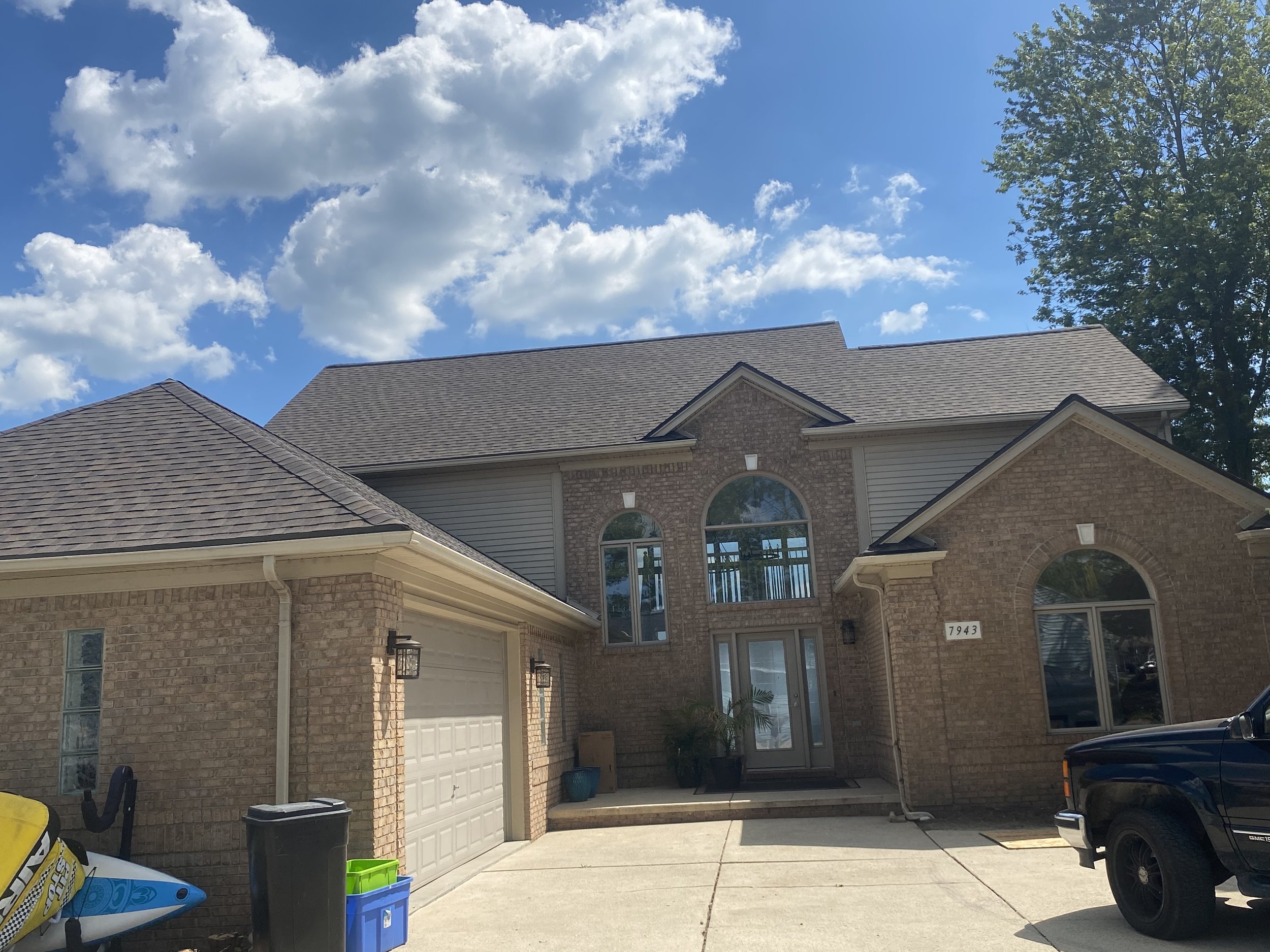
This is the most common home style in Macomb and Oakland counties. Two-story Colonial with brick on the first floor, siding on the upper story and gables. The brick is usually red, orange, or brown, and it's not going anywhere — replacing brick is expensive and rarely makes sense.
Your siding color needs to complement the brick, not compete with it. Here's what works:
- Gray or taupe: Neutral tones that pair with any brick color. Gray is cooler, taupe is warmer. Both work.
- Off-white or cream: Classic choice that lightens up the upper story and creates contrast with darker brick.
- Soft blue-gray: A subtle, sophisticated option that works especially well with red or orange brick.
Avoid: Pure white (too stark against aged brick), dark colors that make the upper story feel heavy, and any color that clashes with the brick undertones (e.g., cool gray with warm orange brick).
Ranch Homes (1960s-1980s)
Single-story ranches are everywhere in Sterling Heights, Warren, and St. Clair Shores. They're low-profile homes with horizontal lines, and the siding color can make or break the curb appeal.
Best colors for ranches:
- Medium gray: Modern, clean, and makes the home look updated without major structural changes.
- Navy or deep blue: Adds character and works well with white or black trim.
- Sage green or earth tones: Great for wooded lots or homes with natural stone accents.
Avoid: Colors that are too light (they make the home disappear into the lot) or too dark (they can make a low ranch feel even lower and heavier).
Modern Farmhouse and New Construction
Modern farmhouse is the dominant style for new builds in Shelby Township, Lake Orion, and Chesterfield. These homes mix siding with board-and-batten accents, stone or brick foundations, and often have metal roofs or dark asphalt shingles.
Popular color schemes:
- White siding with black trim and accents: High-contrast, clean, and very popular right now.
- Light gray siding with white trim: Softer than white/black but still modern.
- Navy or charcoal siding with white trim: Bold but timeless, works well with stone or brick accents.
We're also seeing more mixed-material exteriors — LP SmartSide lap siding on the main walls, board-and-batten in the gables, and stone or brick on the foundation. When you mix materials, keep the color palette simple: two colors maximum, plus trim.
Historic Districts and HOA Considerations
If you live in a historic district (parts of Mount Clemens, Grosse Pointe, or downtown Rochester), you may have restrictions on siding materials and colors. Historic commissions often require fiber cement over vinyl, and they may require specific color palettes that match the original architectural style.
HOAs in newer subdivisions also have color restrictions. Before you order siding, check your HOA covenants and get approval for your color choice. We've had jobs delayed because homeowners didn't realize their HOA required pre-approval for exterior changes.
What Siding Colors Do for Resale Value in Metro Detroit
If you're planning to sell within the next 5-10 years, your siding color matters. Here's what real estate agents and buyers actually care about in Southeast Michigan.
Safe Choices vs. Bold Statements
Neutral colors (gray, taupe, white, off-white) have the broadest appeal. They don't turn off buyers, they photograph well in listings, and they pair with any landscaping or roof color. If you want maximum resale value and minimal risk, go neutral.
Bold colors (navy, deep green, charcoal) can increase curb appeal and make your home stand out in a competitive market, but they also narrow your buyer pool. Some buyers love navy siding. Others hate it. If you're selling in a hot market where homes move fast, a bold color can work. If you're in a slower market or a price-sensitive area, neutral is safer.
Coordinating with Roofing, Trim, and Shutters
Your siding color doesn't exist in isolation. It needs to work with your roof, trim, shutters, front door, and foundation. Here's what we recommend:
- Dark roof (charcoal, black, weathered wood): Pair with light or mid-tone siding (white, gray, taupe). The contrast looks sharp and makes the home feel balanced.
- Light roof (tan, light gray): You have more flexibility. Light or mid-tone siding works well. Dark siding can work if the trim is light.
- Trim color: White trim is the safest choice. It works with any siding color. Black or dark gray trim is modern and works well with white, light gray, or navy siding. Avoid matching trim to siding — it flattens the look and reduces curb appeal.
We often coordinate siding projects with Detroit roofing services so homeowners can update both at once and ensure the colors work together. A new roof and new siding together can increase home value by 10-15% in the right market.
Real Estate Trends in Macomb, Oakland, and St. Clair Counties
Buyers in Oakland County (Bloomfield Hills, Rochester Hills, Troy) tend to prefer modern, updated exteriors. Gray siding, black or white trim, and clean lines sell well. Buyers in Macomb County (Sterling Heights, Clinton Township, Shelby Township) are more practical — they want low-maintenance siding that looks good and won't need replacing in 10 years. Buyers in St. Clair Shores and Grosse Pointe Farms lean traditional — white, cream, or light gray siding with classic trim and shutters.
If you're unsure what will sell in your specific neighborhood, ask a local real estate agent or look at recent sales comps. What colors are the recently sold homes using? That's your best indicator of what buyers in your area actually want.

How to Choose the Right Siding Color for Your Home
Here's the process we walk homeowners through when they're choosing siding colors.
Start with What's Not Changing
Look at the parts of your exterior that aren't changing: roof color, brick or stone, foundation, and any permanent architectural features. Your siding color needs to work with all of these. If you have red brick, don't choose a siding color that clashes with red. If you have a dark roof, don't choose siding that's too dark — the whole house will feel heavy.
Use a Digital Visualizer
Most manufacturers (James Hardie, CertainTeed, LP SmartSide) have online visualizer tools where you can upload a photo of your home and test different siding colors. It's not perfect — the colors on your screen won't match reality exactly — but it's a good way to narrow down your options before you order samples.
We also have a home visualizer tool on our site that lets you test colors and materials on different home styles. It's free, and it's a helpful starting point.
Order Physical Samples and Test Them in Michigan Light
Once you've narrowed it down to 2-3 colors, order physical samples. Manufacturers will send you small siding panels in your chosen colors. Take those samples outside and look at them in different lighting conditions — morning sun, afternoon sun, overcast days, and evening light.
Michigan light is different from Florida light or California light. We have more overcast days, more diffuse light in winter, and more intense sun in summer. A color that looks great in a showroom might look completely different on your house in February.
Hold the samples up against your brick, your roof shingles, and your existing trim. Do they work together? Do they create the look you want? If not, order different samples and try again.
Work with a Contractor Who Understands Local Preferences
We've installed siding on hundreds of homes across Southeast Michigan. We know what colors are popular in different neighborhoods, what colors hold up best in Michigan's climate, and what colors create problems (heat expansion, visible dirt, poor resale value). We're not going to push you toward a color you don't like, but we will tell you if a color choice is going to cause issues down the road.
If you're considering a bold color, we'll show you photos of similar homes we've done and explain the pros and cons. If you're on the fence between two neutrals, we'll tell you which one we see more often and which one tends to photograph better in real estate listings.
As a licensed contractor offering comprehensive exterior services in Detroit, we also coordinate siding with other projects — windows, doors, trim, gutters, and roofing — so everything works together visually and functionally.
Related Services: If you're updating your siding, it's often the right time to address other exterior issues. We also provide Detroit window replacement, attic insulation in Metro Detroit, and exterior painting in Southeast Michigan using Sherwin-Williams products exclusively.
Ready to Choose the Right Siding Color for Your Michigan Home?
NEXT Exteriors has been installing siding in Southeast Michigan since 1988. We're a CertainTeed 5-Star Contractor, a James Hardie Elite Preferred installer, and an LP SmartSide Pro contractor. We'll help you choose a color that works with Michigan's climate, matches your home's style, and holds its value for decades.
Get Your Free Siding QuoteOr call us: (844) 770-6398
Frequently Asked Questions
Dark colors (navy, charcoal, black, deep red) and bright colors (bright blue, yellow, red) fade faster than neutral tones, especially on vinyl siding. Dark colors absorb more UV radiation and heat, which accelerates pigment breakdown. If you want a dark color, use fiber cement (James Hardie) or engineered wood (LP SmartSide) with a factory-applied finish — they hold color much better than vinyl. Mid-tone neutrals (gray, taupe, beige) fade the slowest and are the safest choice for long-term color retention.
Your siding color should complement both, not match either one exactly. If you have brick (common on Michigan Colonials), choose a siding color that works with the brick undertones — gray or taupe for red or orange brick, off-white or cream for brown brick. Your roof color is usually neutral (charcoal, black, weathered wood), so it's easier to work around. The goal is balance: light siding with a dark roof creates contrast and makes the home feel proportional. Dark siding with a dark roof can make the house feel heavy unless you use light trim to break it up.
You can use dark colors on vinyl, but it requires a premium product and expert installation. Dark vinyl absorbs heat, which causes expansion and contraction. If it's not installed with proper fastening techniques and expansion gaps, it will warp or buckle. We only install dark vinyl from manufacturers like CertainTeed that engineer their products for thermal movement. For most homeowners, we recommend fiber cement or engineered wood for dark colors — they're more dimensionally stable and hold color better over time. If budget is a concern and you want dark siding, we'll walk you through the pros and cons of each material.
Gray — specifically mid-tone grays like CertainTeed's "Granite Gray" or James Hardie's "Iron Gray." Gray is neutral, modern, and works with any roof color or architectural style. It hides dirt better than white, it doesn't fade as quickly as dark colors, and it has broad resale appeal. We're also seeing a lot of requests for taupe (a warmer, brown-toned gray) and navy (especially on fiber cement). White and off-white are still popular on traditional homes, but gray dominates new construction and full exterior renovations.
Order physical samples from the manufacturer and test them on your house in different lighting conditions. Digital visualizers are helpful for narrowing down options, but they don't show you how the color will actually look in Michigan light. Hold the samples against your brick, roof shingles, and existing trim. Look at them in morning sun, afternoon sun, and overcast conditions. If you're still unsure, we can show you photos of similar homes we've done in your area, or we can drive you past completed projects in your neighborhood so you can see the color in real life.
It depends on your market and your buyer pool. In hot markets with high demand (parts of Oakland County, for example), a bold color like navy or deep green can increase curb appeal and help your home stand out. In slower markets or price-sensitive areas, neutral colors (gray, taupe, white) are safer because they appeal to the widest range of buyers. If you're planning to sell within 3-5 years, ask a local real estate agent what colors are selling well in your neighborhood. If you're staying in the home for 10+ years, choose the color you love — by the time you sell, trends will have shifted anyway.
Yes, but the effect is smaller than most people think. Light-colored siding reflects more sunlight and absorbs less heat, which can reduce cooling costs in summer by a few percent. Dark-colored siding absorbs more heat, which can slightly increase cooling costs but may also reduce heating costs in winter (though the effect is minimal because most heat loss happens through windows, doors, and attic insulation, not siding). The bigger energy factor is what's behind the siding — proper insulation, air sealing, and moisture barriers make a much bigger difference than color. If energy efficiency is a priority, focus on upgrading your attic insulation and replacing old, drafty windows before worrying about siding color.