

Siding Repair vs. Replacement: Southeast Michigan Guide
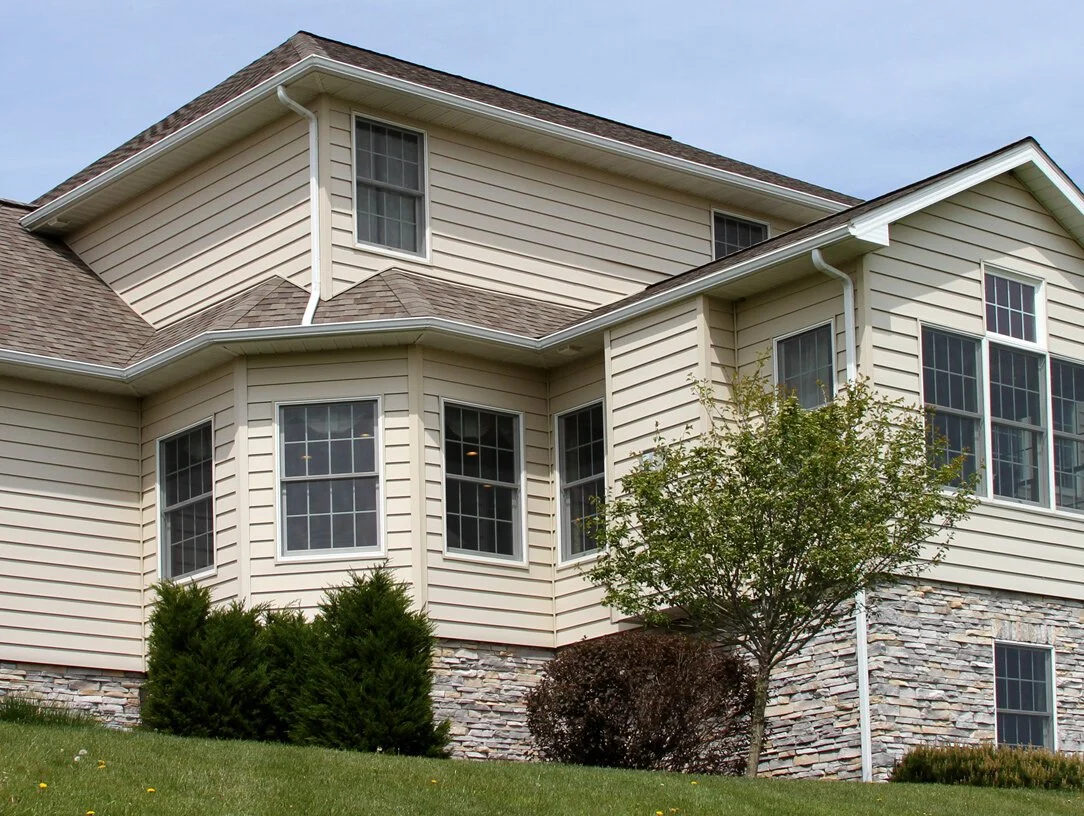
You're standing in your driveway in Sterling Heights, looking at a few cracked vinyl panels on the south side of your house. Or maybe you're in Rochester Hills noticing that the fiber cement siding is starting to show its age after 20 Michigan winters. The question hits you: do I patch this, or is it time to replace the whole thing?
It's not always obvious. And in Southeast Michigan, where freeze-thaw cycles can turn a small crack into a major problem in one season, making the wrong call can cost you thousands down the road.
After 35 years installing and repairing house siding in Detroit and across Macomb, Oakland, and St. Clair counties, we've seen every scenario. We've done the $400 repair that bought a homeowner five more years. We've also seen the $2,000 in repairs that should have been a $12,000 replacement from the start.
This guide walks you through the decision. No sales pitch — just the factors that matter, the costs you'll actually face, and the signs that tell you which direction to go.
When Siding Repair Makes Sense
Siding repair is the right move when damage is isolated, recent, and doesn't indicate a larger pattern. Here's what that looks like in practice:
Isolated Panel Damage
A single cracked vinyl panel from a baseball or hail strike. A few boards of fiber cement that took a direct hit from a falling branch. If the damage is confined to one area and the rest of your siding is in good shape, a targeted exterior siding repair in Metro Detroit makes financial sense.
We can usually match existing materials if your siding is less than 15 years old. Vinyl color matching gets trickier after that due to UV fading, but it's still possible in many cases.
Minor Storm Damage
Southeast Michigan gets its share of summer storms. If you've got a few panels that blew off or cracked from wind-driven debris, and the underlying house wrap and sheathing are intact, repair is straightforward.
Timeline matters here. A repair we can complete in a day or two costs a fraction of full replacement and gets your home weather-tight immediately. That's especially important if you're dealing with an insurance claim and need documentation of prompt mitigation.
Small Holes or Punctures
Holes from old satellite dishes, electrical work, or exterior light fixtures can usually be patched or covered with a replacement section. If the hole is in a high-visibility area, we'll often replace the full panel to avoid a visible patch.
The 30% Rule: If less than 30% of your siding shows damage and it's concentrated in one or two areas, repair is almost always more cost-effective than replacement. Once you cross 40-50% damaged area, the math shifts toward full replacement.
Material Availability
One practical consideration: can we get matching material? Vinyl siding manufacturers change product lines every few years. If your siding is 20+ years old, finding an exact match might be impossible. In those cases, we sometimes repair a less-visible side of the house with a close (but not perfect) match, or we discuss replacement options.
Fiber cement products like James Hardie and LP SmartSide have more consistent product lines, making repairs easier even on older installations.
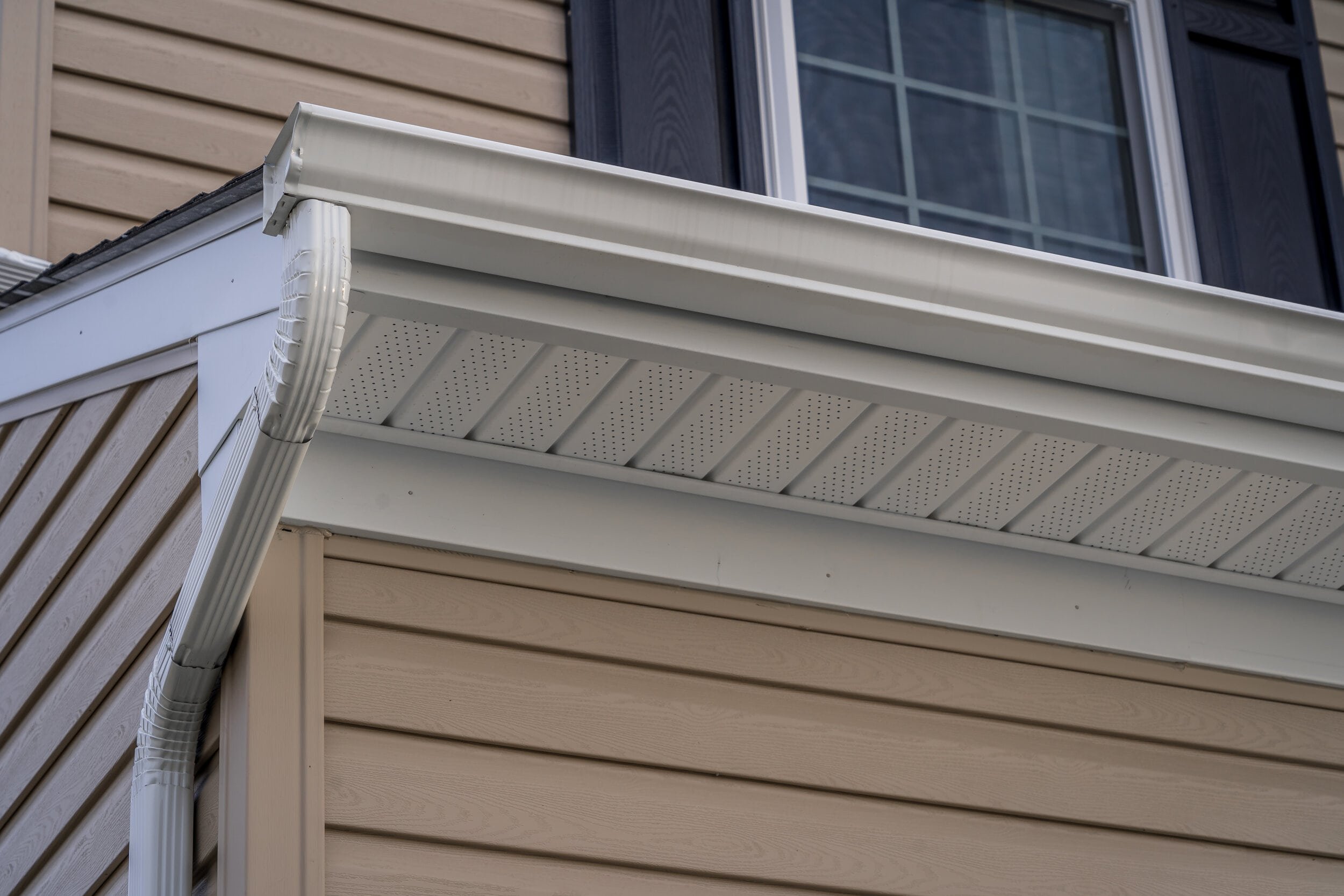
When Full Siding Replacement Is the Right Call
Some situations don't make sense to patch. Here's when we recommend full replacement:
Widespread Cracking or Warping
When you see cracks on multiple walls, warping across large sections, or panels pulling away from the house in different areas, that's a pattern failure. It usually means the siding has reached the end of its service life, or it was installed incorrectly from the start.
Vinyl siding that's become brittle and cracks easily when you touch it has degraded from UV exposure. You can't repair your way out of that. The material has failed.
Age-Related Deterioration
Vinyl siding typically lasts 20-30 years in Michigan. Fiber cement (James Hardie, LP SmartSide) can go 30-50 years if installed correctly. Engineered wood products fall somewhere in between at 25-35 years.
If your siding is approaching or past these ranges and showing any signs of damage, replacement is the smarter investment. Repairs on old siding are temporary fixes on a failing system.
Moisture Intrusion and Hidden Damage
This is the big one. If you've got water stains on interior walls, soft spots when you press on the siding, or visible mold growth, the problem isn't just the siding — it's what's happening behind it.
When moisture gets past the siding and into the sheathing or wall cavity, you're looking at structural damage. At that point, you need to remove the siding to assess and repair the underlying materials. Once you're doing that, replacing the siding makes more sense than trying to reinstall old, potentially compromised panels.
We see this often in older homes in Troy and Warren where the original house wrap has failed or was never installed properly. Modern exterior services in Detroit include proper moisture barriers that weren't standard 30+ years ago.
Energy Efficiency Upgrades
If your heating bills are climbing and you're feeling drafts, old siding might be part of the problem. Replacement gives you the opportunity to add or upgrade insulation, install a modern weather barrier system, and seal air leaks.
Insulated vinyl siding or fiber cement over properly installed rigid foam can make a measurable difference in energy performance. That's especially valuable in Michigan's climate extremes. Pairing siding replacement with top-rated insulation contractor services in Detroit can dramatically improve your home's thermal envelope.
Pre-Sale Home Preparation
If you're preparing a home for sale in Grosse Pointe Farms or Bloomfield Hills, curb appeal matters. Patched siding with mismatched colors signals deferred maintenance to buyers. Fresh siding signals a well-maintained home and often returns 75-85% of its cost in increased sale price.
Realtors know this. We work with several in the area who specifically recommend siding replacement before listing because it moves homes faster and at better prices.
What Michigan Weather Does to Your Siding
Michigan's climate is tough on exterior materials. Understanding how weather causes damage helps you make smarter repair-or-replace decisions.
Freeze-Thaw Cycles
This is the killer in Southeast Michigan. Water gets into small cracks or behind siding panels. It freezes, expands, and makes the crack bigger. It thaws, more water gets in, and the cycle repeats.
A hairline crack in November can be a gaping hole by March. Vinyl becomes brittle in cold temperatures, making it more susceptible to impact damage. Fiber cement is more resistant to freeze-thaw damage, but if water gets behind it and reaches the sheathing, you've got problems.
This is why we always check for proper flashing around Detroit window installations during siding inspections. Windows are common entry points for water that eventually damages siding and sheathing.
Ice Dam-Related Damage
Ice dams form when heat escapes through your attic, melts snow on the roof, and the water refreezes at the eaves. That ice can back up under shingles and run down behind your siding at the roofline.
We see this frequently in older homes in Clinton Township and Shelby Township where attic insulation is inadequate. The siding damage is a symptom; the cause is poor attic insulation in Metro Detroit.
If you're replacing siding due to ice dam damage, address the attic insulation at the same time or the problem will come back.
UV Degradation and Summer Heat
Michigan summers aren't as brutal as southern states, but UV exposure still breaks down siding materials over time. Dark-colored vinyl fades and becomes chalky. The south and west sides of your home take the most UV damage.
Heat also causes expansion and contraction. Vinyl siding installed too tightly in summer can buckle. Installed too loosely in winter can rattle and pull away from fasteners. Proper installation accounts for seasonal movement.
Wind-Driven Rain
Lake-effect weather systems bring wind-driven rain that can force water behind siding if it's not properly overlapped and sealed. This is especially common on gable ends and around dormers.
Seamless gutters in Detroit, MI play a role here too. Overflowing or poorly positioned gutters dump water directly onto siding, accelerating deterioration.

Material-Specific Repair vs. Replace Guidelines
Different siding materials age differently and have different repair thresholds.
Vinyl Siding
Vinyl is the most common siding in Southeast Michigan for good reason: it's affordable, low-maintenance, and performs well in our climate when installed correctly.
Repair makes sense when:
- Damage is isolated to a few panels
- The siding is less than 15 years old and we can find matching material
- The color hasn't faded significantly (south and west sides fade faster)
- The panels aren't brittle or cracking from age
Replace when:
- Multiple panels are cracked or warped across different walls
- The vinyl has become brittle and cracks easily
- Severe fading or chalking across large areas
- The siding is 25+ years old
We've written extensively about vinyl siding vs. fiber cement in Michigan weather if you're considering an upgrade during replacement.
Fiber Cement (James Hardie, LP SmartSide)
Fiber cement is the most durable siding option for Michigan homes. It resists moisture, doesn't rot, won't warp from temperature swings, and holds paint exceptionally well.
Repair makes sense when:
- Individual boards are damaged from impact
- Caulking or trim pieces need replacement (common maintenance)
- Paint touch-ups are needed in isolated areas
Replace when:
- Multiple boards show edge swelling from moisture intrusion (indicates installation or flashing failure)
- Widespread paint failure (usually means it's time to either repaint the whole house or replace with pre-finished product)
- The siding is 40+ years old and showing multiple issues
Fiber cement repairs are often easier than vinyl because individual boards can be removed and replaced without disturbing surrounding material. We work with both James Hardie siding installers in Metro Detroit specifications and LP SmartSide installation standards regularly.
Engineered Wood
Products like LP SmartSide have improved dramatically over the years, but older engineered wood siding (especially pre-2000s products) had moisture resistance issues.
Repair makes sense when:
- Damage is minor and limited to a few boards
- The product is modern (post-2010) with good moisture resistance
- Regular maintenance (painting, caulking) has been kept up
Replace when:
- You see widespread swelling, delamination, or rot
- The siding is older-generation engineered wood with known moisture issues
- Paint is failing in multiple areas (indicates moisture intrusion)
Aluminum and Steel Siding
Common on 1960s-1980s homes in Warren and St. Clair Shores. Durable but prone to denting and fading.
Repair makes sense when:
- A few panels are dented or damaged
- You can find matching material (getting harder)
- The overall condition is still good
Replace when:
- Severe fading or chalking across most of the house
- Multiple dents or damage across different walls
- You want better energy efficiency (aluminum and steel have poor insulation value)

Real Cost Breakdown: Repair vs. Replacement in 2026
Let's talk numbers. These are real-world costs for Southeast Michigan in 2026, based on actual projects we've completed.
Typical Siding Repair Costs
- Single panel replacement (vinyl): $150-$300 including labor and materials
- Small section repair (3-5 panels): $400-$800
- Fiber cement board replacement (individual boards): $200-$400 per board depending on size and accessibility
- Storm damage repair (5-10 panels): $800-$1,500
- Corner trim or J-channel replacement: $300-$600 depending on length
These costs assume we can match existing materials. If custom color matching or special-order materials are needed, costs go up.
Full Siding Replacement Costs
For a typical 1,500-2,000 square foot home in Southeast Michigan:
- Vinyl siding (mid-grade): $8,000-$14,000
- Vinyl siding (premium insulated): $12,000-$18,000
- Fiber cement (James Hardie, LP SmartSide): $15,000-$25,000
- Engineered wood: $12,000-$20,000
These ranges include removal of old siding, new house wrap, installation, trim, and cleanup. They don't include repairs to underlying sheathing (if needed) or window/door trim upgrades.
For more detailed cost breakdowns, see our post on siding replacement cost in Michigan with real project numbers.
Hidden Costs to Consider
When comparing repair vs. replacement, factor in these often-overlooked costs:
Sheathing repairs: If we find rotted or damaged OSB or plywood when removing old siding, that needs to be replaced. Budget $200-$400 per 4x8 sheet including labor.
Window and door trim: Old trim often doesn't work with new siding profiles. Upgrading trim adds $100-$300 per opening.
Paint (for fiber cement): If you're installing raw fiber cement, add $3,000-$6,000 for professional painting. Pre-finished products cost more upfront but eliminate this expense.
Permit fees: Most municipalities in Southeast Michigan require permits for full siding replacement. Budget $150-$400 depending on location.
Color matching for repairs: If your siding has faded significantly, we might need to replace an entire wall section to avoid obvious color differences. This turns a small repair into a larger project.
ROI Considerations
According to Remodeling Magazine's 2025 Cost vs. Value report, siding replacement in the Midwest returns about 75-80% of its cost when you sell. That's one of the better returns for exterior projects.
Repairs don't add value the same way, but they prevent value loss from visible damage and deferred maintenance.
If you're planning to sell within 2-3 years and your siding is showing age, replacement often makes more sense than multiple repairs. If you're staying in the home long-term, strategic repairs can extend the life of good siding by 5-10 years.
Signs You Need a Professional Assessment
Some situations are obvious — a baseball through a panel is a straightforward repair. Others require professional evaluation. Here's when to call in a licensed contractor:
Multiple Problem Areas
If you're seeing damage on more than one side of the house, or in different types (cracks, warping, discoloration), that suggests a pattern issue. A professional can determine if it's installation failure, material failure, or underlying moisture problems.
Water Stains or Interior Damage
Any time you see water stains on interior walls near exterior siding, or you notice soft spots when you press on the siding from outside, you've got moisture intrusion. This requires investigation behind the siding to assess sheathing and framing condition.
Age Uncertainty
If you don't know how old your siding is, a contractor can usually estimate based on product type, installation methods, and condition. This helps determine if you're dealing with end-of-life failure or premature damage.
Insurance Claims
Storm damage claims require documentation. A professional inspection provides the detailed assessment and photos insurance companies need. We work with adjusters regularly and know what documentation they require.
Buying or Selling a Home
If you're buying a home in Lake Orion or Royal Oak and the inspection report mentions siding concerns, get a specialist to assess it. Home inspectors note problems but don't usually provide repair vs. replace recommendations or cost estimates.
If you're selling, a pre-listing siding assessment can help you make smart decisions about what to fix before listing.
What a Proper Siding Inspection Includes: We check for visible damage, test panels for brittleness, look for signs of moisture intrusion, examine flashing around windows and doors, check trim and corner pieces, assess color fading and UV damage, and probe suspected problem areas to check sheathing condition. You get a written report with photos, repair recommendations, and cost estimates for both repair and replacement options.
Working with NEXT Exteriors
We've been doing this work in Southeast Michigan since 1988. We're a siding company serving Macomb County, Michigan and the surrounding areas with one goal: honest assessments and quality work.
When we inspect your siding, we'll tell you if a $600 repair will solve the problem or if you're looking at replacement. We don't upsell. If you can get five more years out of your current siding with a targeted repair, we'll tell you that.
We're also a licensed Detroit roofing services contractor, which matters when siding damage is related to roof issues or when you're considering coordinating both projects for efficiency.
Our crew shows up on time, works carefully, and cleans up every day. We pull permits, follow Michigan building codes, and back our work with real warranties. You can see examples of our projects in our project gallery.
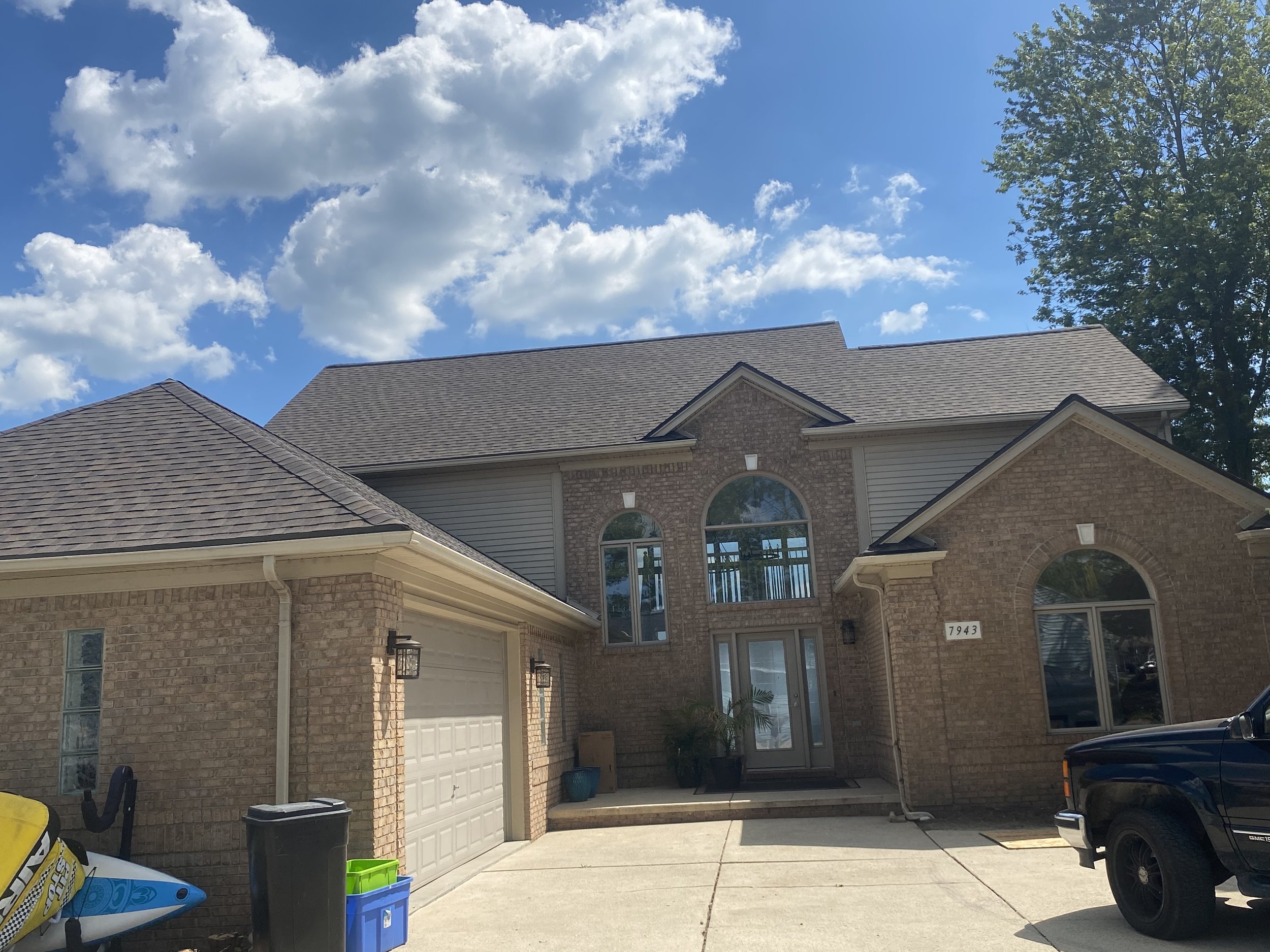
Making the Decision
Here's a simple decision framework based on what we've covered:
Choose repair if:
- Damage affects less than 30% of your siding
- Damage is isolated to one or two areas
- Your siding is less than 15 years old (vinyl) or 25 years old (fiber cement)
- We can match existing materials
- There's no evidence of moisture intrusion or underlying damage
- You plan to stay in the home 5+ years and the repair will extend siding life
Choose replacement if:
- Damage affects more than 40-50% of your siding
- Your siding is near or past its expected lifespan
- You see signs of moisture intrusion or underlying damage
- Multiple repairs would cost more than 40% of replacement cost
- You're preparing to sell and curb appeal matters
- You want to upgrade energy efficiency
- Material matching is difficult or impossible
Sometimes the decision isn't clear-cut. That's when professional assessment helps. We can show you exactly what you're dealing with and walk through the cost-benefit analysis of each option.
We also offer home visualization tools so you can see what different siding options would look like on your actual house before making a decision.
For homeowners considering multiple improvements, we often coordinate siding and window replacement together in Metro Detroit for efficiency and better results.
We've also documented top mistakes homeowners make when choosing siding in Michigan to help you avoid common pitfalls.
Ready to Get Started?
NEXT Exteriors has been protecting Michigan homes since 1988. Get a free, no-pressure estimate from a team that shows up on time and does the job right. We'll assess your siding, explain your options, and give you honest recommendations — repair or replacement.
Get Your Free QuoteOr call us: (844) 770-6398
Frequently Asked Questions
Quality vinyl siding lasts 20-30 years in Michigan's climate when properly installed. The south and west sides of your home typically show wear first due to UV exposure. Factors that affect lifespan include installation quality, product grade, color (darker colors fade faster), and maintenance. Premium vinyl products with UV inhibitors can last toward the upper end of that range, while builder-grade vinyl might show significant wear by year 20.
It depends on the extent of damage and color matching. For isolated damage (a few panels), we can often replace just the damaged section. However, if your siding has faded significantly from UV exposure, new panels will be noticeably different in color. In those cases, replacing an entire wall section from corner to corner gives a better visual result. For fiber cement, individual board replacement is usually easier and less noticeable than with vinyl.
Repairing means fixing specific damaged areas — replacing individual panels, boards, or sections while leaving the rest of your existing siding in place. Residing (or replacement) means removing all existing siding and installing new siding across the entire house. Repair is appropriate for isolated damage on otherwise sound siding. Residing is necessary when damage is widespread, the siding has reached the end of its lifespan, or you're upgrading to better materials or improved energy efficiency.
Siding repair costs vary based on damage extent and material type. Single vinyl panel replacement typically runs $150-$300. Small section repairs (3-5 panels) cost $400-$800. Fiber cement board replacement ranges from $200-$400 per board. Storm damage repairs affecting 5-10 panels typically cost $800-$1,500. These estimates assume we can match existing materials. Custom color matching or special-order materials increase costs. For accurate pricing on your specific situation, a professional assessment is the best approach.
James Hardie fiber cement costs roughly 50-80% more than quality vinyl siding, but it lasts significantly longer (30-50 years vs. 20-30 years) and requires less maintenance. It resists moisture better, won't warp from temperature changes, holds paint exceptionally well, and provides better fire resistance. For homeowners planning to stay in their homes long-term, the durability and low maintenance often justify the higher upfront cost. For those planning to sell within 5-10 years, vinyl might make more financial sense. We've written a detailed comparison of LP SmartSide vs. James Hardie for Michigan homes that covers the cost-benefit analysis in depth.
It depends on the cause of damage. Most homeowners insurance policies cover sudden, accidental damage from storms (hail, wind, falling trees) but not gradual wear, age-related deterioration, or maintenance issues. If storm damage is suspected, document it with photos and contact your insurance company promptly. We work with insurance adjusters regularly and can provide the detailed damage assessment and repair estimates they require. Keep in mind that filing a claim may affect your premiums, so for minor damage, paying out-of-pocket might make more sense.
If your siding is visibly damaged, badly faded, or shows signs of deferred maintenance, replacement before listing usually makes financial sense. Fresh siding dramatically improves curb appeal and signals to buyers that the home has been well-maintained. According to industry data, siding replacement typically returns 75-80% of its cost in increased sale price in the Midwest market. If your siding is in decent shape with only minor issues, targeted repairs might be sufficient. Realtors we work with in Southeast Michigan often recommend siding replacement specifically because it helps homes sell faster and at better prices.