

Vinyl Siding vs Fiber Cement: Michigan Weather Test

We've been installing siding in Southeast Michigan since 1988. That's 37 winters. Hundreds of freeze-thaw cycles. Countless lake-effect snowstorms. And more than 500 homes that have taught us exactly what works here — and what doesn't.
So when homeowners in Troy, Rochester Hills, or Shelby Township ask us whether they should choose vinyl or fiber cement siding, we don't pull out a sales pitch. We pull out weather data and project photos.
Because here's the truth: both materials can work in Michigan. But they perform very differently in our climate. One handles our freeze-thaw cycles better. The other resists summer storms with less maintenance. And if you're spending $15,000 to $30,000 on new siding, you need to know which one makes sense for your home.
This isn't a generic comparison. This is what we've learned from decades of installing, repairing, and replacing both vinyl and fiber cement siding across Macomb, Oakland, and St. Clair counties.
How Michigan Weather Destroys Siding
Before we compare materials, you need to understand what we're comparing them against. Michigan doesn't just test siding — it tortures it.
Freeze-Thaw Cycles: The Real Killer
Southeast Michigan averages 50 to 70 freeze-thaw cycles every winter. That's 50 to 70 times the temperature crosses the 32°F threshold, causing moisture to freeze, expand, thaw, and contract.
For siding, this means:
- Moisture infiltration: Snow melts during the day, seeps behind siding, then freezes at night and expands.
- Material stress: Every freeze-thaw cycle puts stress on fasteners, seams, and the material itself.
- Paint failure: On painted materials (like fiber cement), this cycle accelerates paint cracking and peeling.
We see the damage every spring. Cracked vinyl panels. Warped fiber cement boards. Loose trim. It's predictable, and it's why proper installation matters so much in our climate.
Lake-Effect Snow and Ice Accumulation
If you're near Lake St. Clair or within 30 miles of the Great Lakes, you know what lake-effect snow does. Heavy, wet snow that clings to vertical surfaces. Ice dams that back up under siding. Wind-driven precipitation that finds every gap.
This isn't just an aesthetic problem. When snow accumulates against siding and melts, it creates sustained moisture contact — exactly what you don't want with any cladding material.
Summer Heat, UV, and Storms
Michigan summers aren't gentle either. We get:
- High UV exposure: Especially on south- and west-facing walls, which can fade or degrade certain siding materials.
- Thermal expansion: Summer temps can hit 90°F+, causing materials to expand. Then they contract again at night. Repeat for three months.
- Severe storms: Hail, high winds (50+ mph gusts), and driving rain that tests wind resistance and water intrusion barriers.
The bottom line? Michigan weather demands siding that can handle temperature swings from -10°F to 95°F, resist moisture intrusion, and stay dimensionally stable through it all. Not every material can.
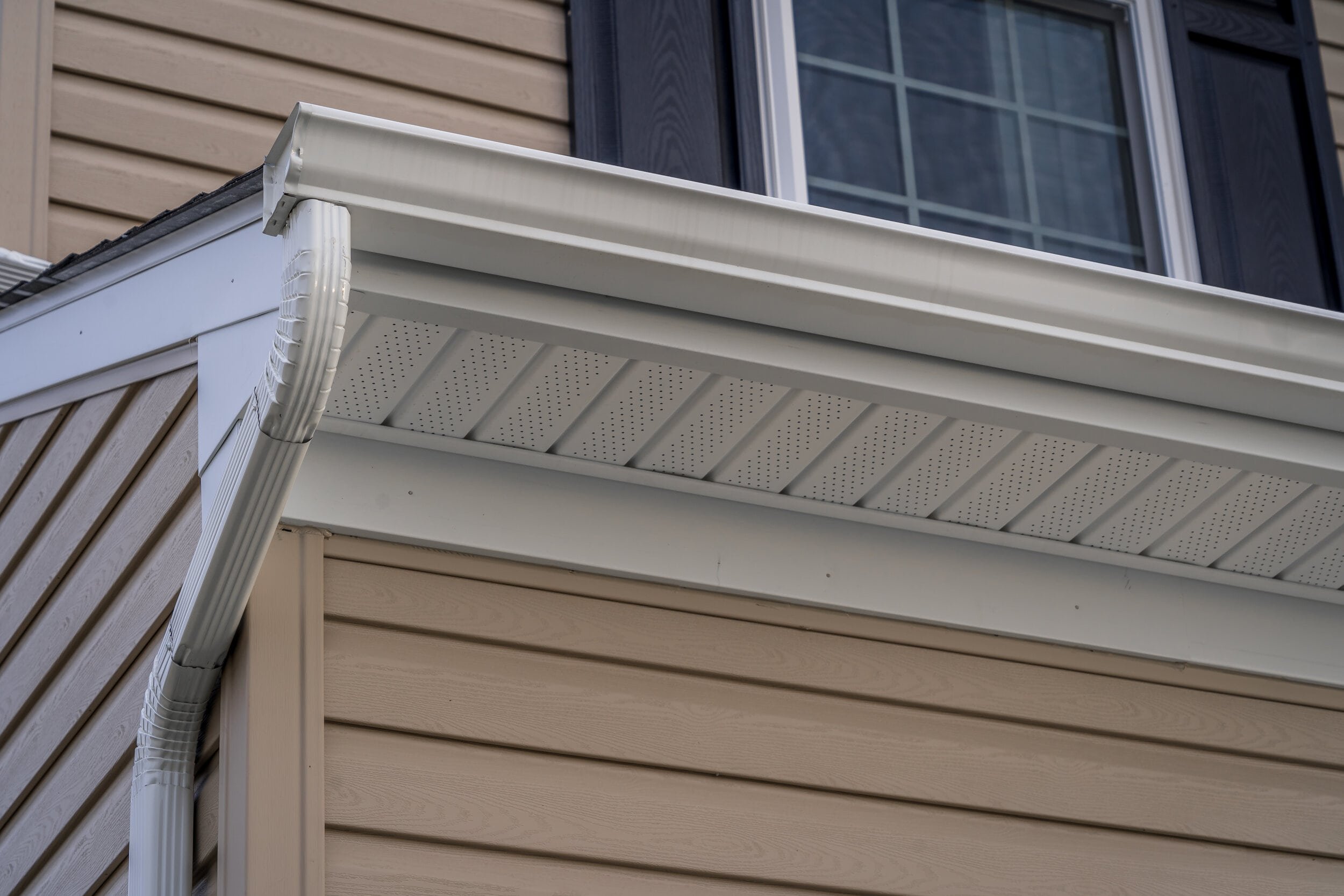
Vinyl Siding in Michigan: The Reality
Vinyl siding is the most popular choice in Southeast Michigan, and for good reason. It's affordable, low-maintenance, and when installed correctly, it performs well in our climate. But it's not perfect.
Here's what 35+ years of vinyl installations have taught us.
Cold Weather Brittleness and Cracking
Vinyl gets brittle in cold weather. Below 20°F, it loses flexibility. That's why we see cracked panels after harsh winters — especially on homes where the siding was installed improperly or where it's been hit by ice, ladders, or lawn equipment.
Quality matters here. Premium vinyl from manufacturers like CertainTeed or GAF uses higher-grade PVC with better impact resistance. Cheap vinyl? It cracks easier and fades faster.
We've replaced plenty of budget vinyl that cracked after 10 years. The good stuff? We've seen it last 30+ years without major issues.
Thermal Expansion and Contraction
Vinyl expands and contracts more than most siding materials — up to 1/2 inch over a 12-foot panel when temperatures swing from winter to summer.
That's why proper installation is critical. Every panel needs:
- Correct nailing: Nails centered in the slots, not driven tight. Vinyl needs room to move.
- Expansion gaps: 1/4 inch at corners, J-channels, and trim pieces.
- Proper overlap: Panels must overlap correctly to allow movement without creating gaps.
When we see wavy, buckled vinyl siding, 90% of the time it's because someone nailed it too tight or didn't leave expansion gaps. The material is fine — the installation wasn't.
Our team at NEXT Exteriors' Detroit siding division has been installing vinyl the right way for decades. We follow manufacturer specs to the letter, because we know what happens when you don't.
Wind Resistance in Michigan Storms
Properly installed vinyl siding can handle Michigan's wind. Most premium vinyl is rated for wind speeds up to 110 mph when installed per manufacturer guidelines.
But here's the catch: that rating assumes perfect installation. If the nailing is wrong, the starter strip isn't level, or the panels aren't locked together correctly, wind can get under the siding and rip it off.
We've done storm damage repairs after every major windstorm in Southeast Michigan. The homes that lose siding? Almost always poor installation, not poor material.
Lifespan and Maintenance
In Michigan, quality vinyl siding lasts 25 to 35 years with minimal maintenance. You'll need to:
- Wash it occasionally: Power wash (low pressure) every few years to remove dirt, mildew, and pollen.
- Inspect after storms: Check for cracks, loose panels, or wind damage.
- Replace damaged panels: Individual panels can be replaced without redoing the whole wall.
Vinyl doesn't need painting, doesn't rot, and resists insects. For most Michigan homeowners, that's a huge advantage.
Cost Reality
Vinyl is the most budget-friendly option. For a typical 2,000-square-foot Michigan home, expect:
- Standard vinyl: $8,000 to $12,000 installed
- Premium vinyl (CertainTeed, GAF): $12,000 to $18,000 installed
That includes tear-off, insulation board (if needed), and proper trim details. If your home has complex architecture — multiple gables, bay windows, stone or brick accents — add 20% to 30%.
For homeowners in Warren, Clinton Township, or Sterling Heights looking for a reliable, affordable siding upgrade, vinyl is hard to beat. We've installed it on hundreds of homes, and when done right, it performs.
Pro Tip: Don't cheap out on vinyl quality to save $2,000. The difference between budget vinyl and premium vinyl is massive in Michigan's climate. Spend the extra money — it'll last twice as long and look better doing it.
Fiber Cement in Michigan: What We've Learned
Fiber cement siding — brands like James Hardie, LP SmartSide, and CertainTeed — has grown in popularity over the past 15 years. It's durable, fire-resistant, and gives you the look of wood without the rot.
But it's not a magic bullet. In Michigan, fiber cement has specific strengths and weaknesses you need to understand before you commit.
Freeze-Thaw Performance
Fiber cement handles freeze-thaw cycles better than you'd expect — but only if it's installed correctly and kept sealed.
The material itself is dimensionally stable. It doesn't expand and contract like vinyl. But it can absorb moisture if the edges aren't sealed or if the paint fails. Once moisture gets in and freezes, you'll see edge cracking, spalling, and paint failure.
We've seen this on older fiber cement installations where the paint wasn't maintained. After 10 to 15 years, if the paint starts peeling and moisture gets in, freeze-thaw damage accelerates fast.
The fix? Keep it painted. Touch up any chips or cracks immediately. Don't let water sit against the boards.
Moisture Absorption and Painting Requirements
Fiber cement is porous. It needs paint or a factory finish to protect it from moisture. In Michigan's wet climate, that means:
- Factory-finished is better: James Hardie's ColorPlus finish is baked on and comes with a 15-year warranty. It performs better than field-applied paint.
- Field-painted needs maintenance: If you paint it yourself or have it painted on-site, expect to repaint every 10 to 15 years.
- Edge sealing is critical: Every cut edge must be sealed with paint or primer before installation. Skip this, and moisture will wick in.
This is where vinyl has an advantage. Vinyl is through-color — no painting, no edge sealing, no maintenance. Fiber cement requires more attention.
Installation Requirements for Cold Climates
Installing fiber cement in Michigan is more labor-intensive than vinyl. Here's why:
- It's heavy: Fiber cement weighs 2.5 to 3 pounds per square foot. You need proper fasteners and, in some cases, additional structural support.
- It requires specialized cutting: You can't cut it with a knife like vinyl. You need shears or a saw with a carbide blade, and cutting creates silica dust (respirators required).
- It needs proper clearances: Fiber cement must be kept at least 6 inches above grade and 2 inches above rooflines, decks, and concrete. Moisture contact = problems.
- Fastener placement matters: Nails or screws must be placed correctly (typically 3/4 inch from edges, 1 inch from ends) to prevent cracking.
Because of this, fiber cement installation costs more. You're paying for skilled labor, specialized tools, and more time on the job.
At NEXT Exteriors, we've installed fiber cement on dozens of homes across Southeast Michigan. We know the installation details that prevent long-term problems, and we don't cut corners.
Durability and Lifespan
When properly installed and maintained, fiber cement can last 40 to 50 years in Michigan. It's one of the most durable siding materials available.
It resists:
- Fire: Fiber cement is non-combustible. Some insurance companies offer discounts for homes with fiber cement siding.
- Insects: Termites and carpenter ants can't eat it.
- Impact: It's harder to dent or crack than vinyl (though it can crack if hit hard enough).
- Rot: It won't rot like wood, even in prolonged moisture exposure.
But again — it needs paint maintenance. If you let the paint fail, moisture will get in, and you'll see problems.
Cost Comparison
Fiber cement costs significantly more than vinyl. For the same 2,000-square-foot Michigan home:
- James Hardie (factory-finished): $18,000 to $28,000 installed
- LP SmartSide or CertainTeed fiber cement: $16,000 to $24,000 installed
That's 50% to 80% more than premium vinyl. You're paying for material cost, labor intensity, and long-term durability.
Is it worth it? For some homeowners, yes. If you want the look of wood, plan to stay in the home long-term, and don't mind occasional paint touch-ups, fiber cement is a great choice.
For others — especially those on a tighter budget or planning to sell in 5 to 10 years — vinyl makes more sense.

The Verdict: Which Works Better Here
After thousands of installations across Southeast Michigan, here's our honest take on vinyl siding vs fiber cement in Michigan weather.
Performance Comparison
| Factor | Vinyl Siding | Fiber Cement |
|---|---|---|
| Freeze-Thaw Resistance | Good (if installed correctly) | Excellent (if painted/sealed) |
| Cold Weather Performance | Can become brittle below 20°F | Stable in all temps |
| Moisture Resistance | Excellent (non-porous) | Good (requires paint barrier) |
| Wind Resistance | Good (110 mph rated) | Excellent (130+ mph rated) |
| Maintenance | Minimal (wash occasionally) | Moderate (repaint every 10-15 years) |
| Lifespan in Michigan | 25-35 years | 40-50 years |
| Cost (2,000 sq ft home) | $8,000 - $18,000 | $16,000 - $28,000 |
| Installation Complexity | Moderate | High |
Best Use Cases for Vinyl
Choose vinyl siding if:
- Budget is a primary concern: Vinyl delivers excellent value for the cost.
- You want low maintenance: No painting, no sealing, just occasional washing.
- Your home has standard architecture: Ranch homes, Colonials, and typical suburban layouts are perfect for vinyl.
- You're planning to sell in 5-15 years: Vinyl offers great ROI without the higher upfront cost of fiber cement.
We install vinyl on the majority of homes in Macomb County, St. Clair Shores, and Chesterfield. It works, it lasts, and homeowners are happy with it.
Best Use Cases for Fiber Cement
Choose fiber cement if:
- You want maximum durability: Fiber cement outlasts vinyl by 10 to 20 years.
- You prefer the look of wood: Fiber cement can mimic wood grain and takes paint beautifully.
- Your home is in a high-wind area: Near the lakes or in exposed areas, fiber cement's wind resistance is superior.
- You're staying long-term: The higher upfront cost pays off over decades.
- You want fire resistance: Non-combustible siding can lower insurance premiums.
We've installed fiber cement on historic homes in Grosse Pointe Farms, upscale properties in Bloomfield Hills, and lakefront homes in Lake Orion. When homeowners want the best and are willing to invest, fiber cement is the answer.
What We Install Most Often (and Why)
Honestly? About 70% of our siding projects are vinyl, 25% are fiber cement, and 5% are engineered wood or other materials.
Vinyl wins on cost, ease of installation, and low maintenance. For most Michigan homeowners, it's the smart choice.
But when clients want something more durable, more fire-resistant, or closer to the look of traditional wood siding, we recommend fiber cement — and we install it right.
Both materials work in Michigan. The question isn't which one is "better" — it's which one is better for your home, your budget, and your goals.
Our Recommendation: If you're replacing siding on a typical Michigan home and want the best balance of cost, performance, and longevity, go with premium vinyl from CertainTeed or GAF. If budget allows and you want maximum durability, James Hardie fiber cement is worth the investment.
Signs Your Siding Is Failing
Whether you have vinyl, fiber cement, or something else, Michigan weather will eventually take its toll. Here's how to know when it's time to repair or replace.
Visual Inspection Checklist
Walk around your home and look for:
- Cracks or holes: Any visible damage lets moisture in. Replace damaged panels immediately.
- Warping or buckling: Usually caused by poor installation (vinyl nailed too tight) or moisture behind the siding.
- Fading or discoloration: Severe fading indicates UV damage. On fiber cement, check for paint peeling or chipping.
- Loose or missing panels: Wind damage or failed fasteners. Repair before water gets behind the siding.
- Mold or mildew: Dark spots, especially near the foundation or under eaves, indicate moisture problems.
- Rot around windows or doors: If trim is rotting, moisture is getting in. Check the siding and flashing.
When to Repair vs. Replace
Repair if:
- Damage is localized (one or two panels)
- The siding is less than 15 years old
- The rest of the siding is in good condition
Replace if:
- Damage is widespread (multiple walls)
- The siding is 25+ years old
- You're seeing rot, mold, or structural issues behind the siding
- Energy bills are climbing (poor insulation, air leaks)
Not sure? Get a free inspection from NEXT Exteriors. We'll tell you honestly whether you need a repair or a full replacement — no pressure, no gimmicks.
Storm Damage Indicators
After a major storm, check for:
- Dents or dings: Hail can dent vinyl and crack fiber cement.
- Blown-off panels: High winds can rip siding off if it wasn't installed correctly.
- Water intrusion: Check your attic and basement for new leaks. If water got behind the siding, you may have hidden damage.
If you suspect storm damage, document it with photos and contact your insurance company. We work with homeowners on insurance claims regularly and can provide detailed damage assessments.
Our team also handles Detroit roofing services, so if your roof and siding both took a hit, we can assess and repair both in one project.

Other Services from NEXT Exteriors
Siding is just one part of protecting your Michigan home. At NEXT Exteriors, we offer a full range of exterior services in Detroit and throughout Southeast Michigan.
If you're upgrading your siding, it's often the perfect time to address other exterior needs:
- Window replacement: Old windows leak air and drive up energy costs. We install energy-efficient double-hung, casement, and bay windows that perform in Michigan's climate.
- Seamless gutters: Properly functioning gutters protect your foundation and prevent water damage. We custom-fabricate seamless gutters on-site for a perfect fit.
- Insulation services: Upgrading insulation in your attic, walls, or basement can cut heating costs by 20% to 40%. We install spray foam, blown-in, and batt insulation.
- Exterior painting: If you're keeping your current siding or have fiber cement that needs a refresh, we're Sherwin-Williams exclusive contractors with the skills to do it right.
Every project is backed by our Michigan Residential Builder's License, decades of experience, and a commitment to doing the job right the first time.
Ready to Get Started?
NEXT Exteriors has been protecting Michigan homes since 1988. Get a free, no-pressure estimate from a team that shows up on time and does the job right.
Get Your Free QuoteOr call us: (844) 770-6398
Frequently Asked Questions
Vinyl can crack in extreme cold (below 20°F), especially if it's low-quality material or if it's been impacted by ice, ladders, or debris. Premium vinyl from manufacturers like CertainTeed or GAF is more impact-resistant and handles Michigan winters better. Proper installation also matters — vinyl needs room to expand and contract, so nailing it too tight increases the risk of cracking. We've seen quality vinyl last 30+ years in Michigan without cracking issues.
It depends on your priorities. Fiber cement costs 50% to 80% more than vinyl but lasts 40 to 50 years compared to vinyl's 25 to 35 years. It's more fire-resistant, more durable, and gives you the look of wood without the rot. If you're staying in your home long-term, want maximum durability, and don't mind occasional paint maintenance, fiber cement is worth it. If budget is tight or you're planning to sell within 10 years, vinyl offers better value.
In Michigan's climate, quality vinyl siding lasts 25 to 35 years with minimal maintenance. Fiber cement lasts 40 to 50 years if properly painted and maintained. Both require proper installation to reach those lifespans. Budget vinyl may only last 15 to 20 years, especially if exposed to harsh freeze-thaw cycles. We've replaced plenty of cheap vinyl after just 10 years, but we've also seen premium vinyl and fiber cement perform beautifully for decades.
Yes, and we do it often. A common approach is to use fiber cement on highly visible areas (front facade, around the entry) for curb appeal, and vinyl on the sides and back to save money. You can also use fiber cement for accent features (gables, dormers, trim) and vinyl for the main body of the house. Just make sure the transition details are done right so water doesn't get in at the seams. We've installed mixed-material siding on dozens of Michigan homes — it works well if planned correctly.
Vinyl siding typically comes with a lifetime limited warranty on the material, but it usually doesn't cover labor, fading beyond a certain percentage, or damage from improper installation. Fiber cement warranties vary — James Hardie offers a 30-year non-prorated warranty on the product and a 15-year warranty on their ColorPlus factory finish. The key word is "limited" — most warranties don't cover damage from Michigan's freeze-thaw cycles, hail, wind, or improper installation. That's why choosing an experienced contractor matters. We stand behind our work and handle warranty claims when they're legitimate.
Not always, but it's a smart time to consider it. When we remove old siding, we can inspect the wall cavity and see if your insulation is adequate. Many older Michigan homes have little to no wall insulation, which drives up heating costs. Adding insulation board or upgrading to spray foam insulation during a siding project can improve energy efficiency significantly. We offer full insulation services and can give you an honest assessment of whether it's worth doing at the same time.
Ask to see their Michigan Residential Builder's License. Ask for references and photos of completed projects. For vinyl, check that they're leaving expansion gaps, nailing in the center of slots (not tight against the house), and using proper starter strips. For fiber cement, make sure they're sealing cut edges, maintaining proper clearances from grade and rooflines, and following manufacturer fastener specs. A good contractor will explain the process, show you the materials they're using, and answer your questions. At NEXT Exteriors, we've been doing this since 1988 — we're happy to walk you through every step.