

Siding Replacement Cost Michigan 2026: Real Project Numbers
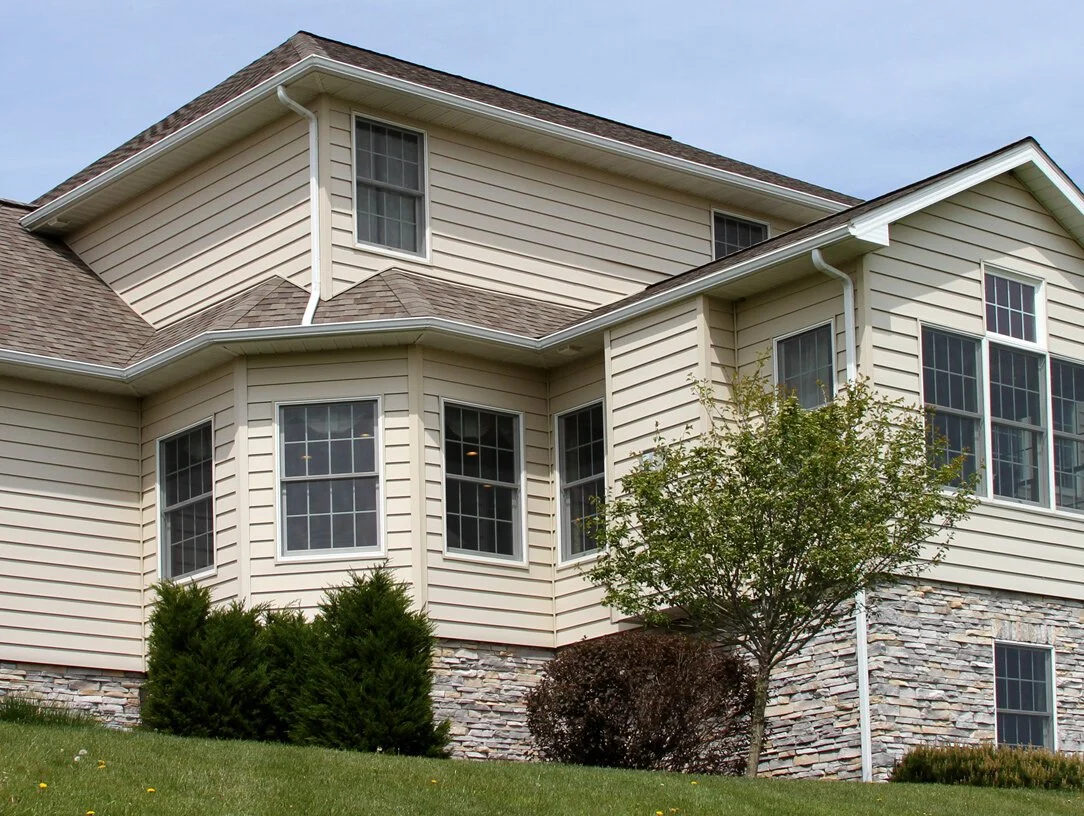
Here's the straight answer: a full siding replacement on a typical 1,800-square-foot home in Southeast Michigan costs between $8,500 and $22,000 in 2026. That's a wide range because material choice, home complexity, and the condition of what's underneath the old siding all drive the final number.
We've been doing house siding in Detroit and across Macomb, Oakland, and St. Clair counties since 1988. We've replaced siding on brick Colonials in Grosse Pointe Farms, 1960s ranches in Sterling Heights, and historic homes in Royal Oak. After 35 years and 500+ projects, we know what siding jobs actually cost—and what makes some quotes $5,000 higher than others.
This isn't a sales pitch. It's the breakdown we wish more homeowners had before they started calling contractors. Michigan's freeze-thaw cycles, lake-effect moisture, and summer storms are hard on siding. A bad installation—or cheap materials—will show up in two winters. A good one will protect your home for 30 years.
What Siding Replacement Actually Costs in Michigan (2026)
Let's start with real numbers from projects we've completed in the last year. These are actual invoices from homes across Southeast Michigan, not national averages from a website that's never touched a nail gun.
Vinyl Siding
Vinyl is the most common choice for Michigan homeowners, and for good reason: it handles freeze-thaw cycles well, doesn't rot, and costs less upfront than fiber cement or engineered wood.
Typical cost range: $8,500–$14,000 for a 1,800-square-foot home (about 1,600 square feet of siding after accounting for windows and doors).
That includes removal of old siding, house wrap installation, trim work, and mid-grade vinyl like CertainTeed Monogram or Mastic Ovation. If you go with builder-grade vinyl, you'll save $1,500–$2,500. If you step up to premium vinyl with deeper profiles and better color retention, add $2,000–$3,500.
We installed CertainTeed Cedar Impressions (a vinyl shake profile) on a 2,200-square-foot Colonial in Rochester Hills last fall. Total cost: $16,800. That included all trim, soffit, and fascia replacement. The homeowner wanted the look of cedar shake without the maintenance, and this was the right call for their budget.
Fiber Cement Siding (James Hardie)
Fiber cement is the premium option. It's heavy, durable, and holds paint better than anything else. James Hardie is the brand everyone knows, and it's what we install most often when homeowners want fiber cement.
Typical cost range: $15,000–$22,000 for the same 1,800-square-foot home.
That's roughly 60–75% more than vinyl. But fiber cement lasts 50+ years, resists woodpecker damage (a real problem in Oakland County), and adds more to resale value than vinyl. The labor cost is higher because fiber cement is heavier and requires more precise cutting and nailing.
We did a full James Hardie HardiePlank installation on a 1,900-square-foot ranch in Shelby Township last spring. Final cost: $19,400. That included ColorPlus pre-finished siding (which comes with a 15-year warranty on the paint), all trim, and new aluminum-wrapped fascia. The homeowner had rotted wood siding that was letting moisture into the walls. Fiber cement solved that permanently.
Engineered Wood Siding (LP SmartSide)
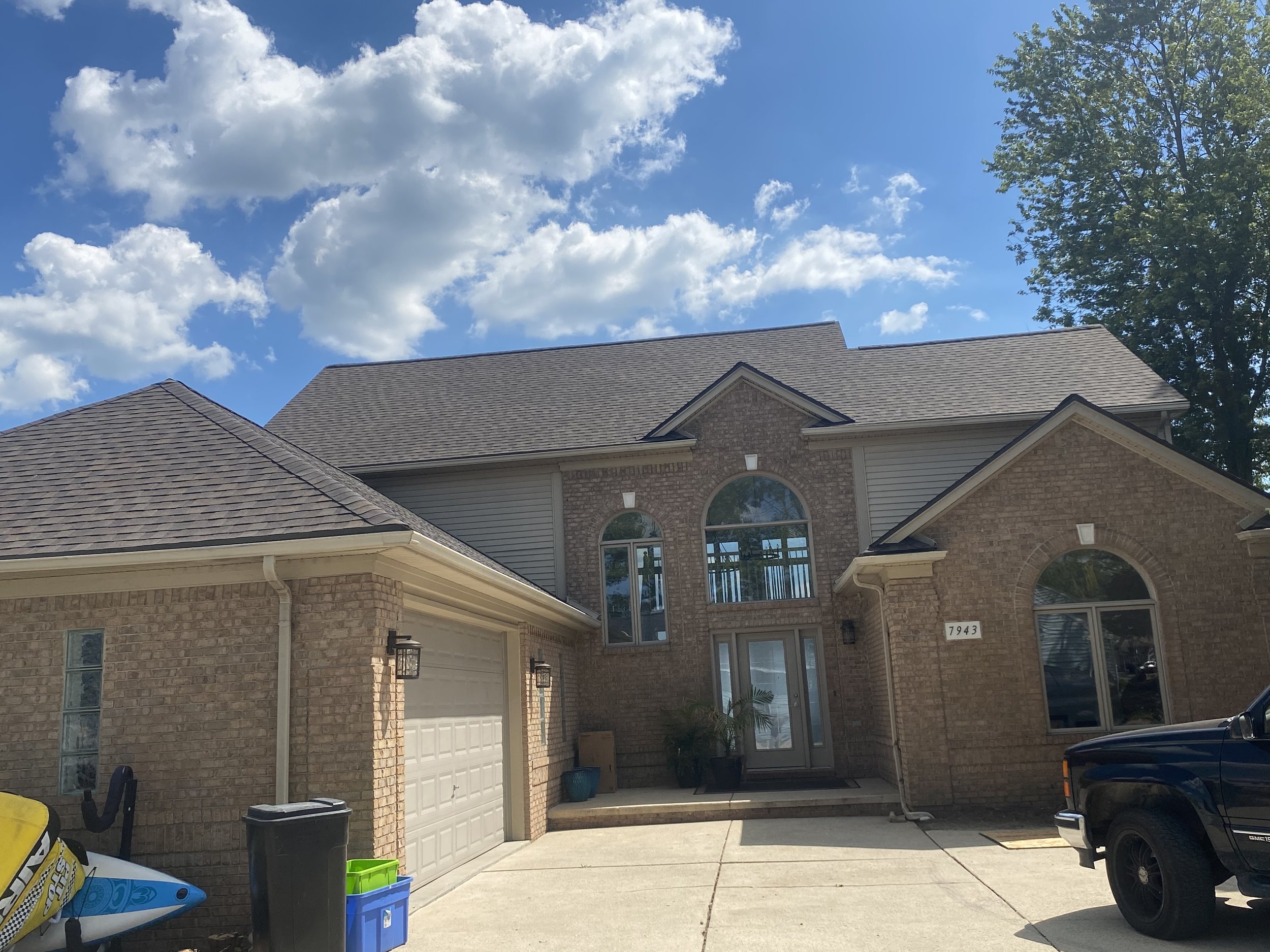
LP SmartSide is treated wood composite—looks like real cedar, costs less than fiber cement, and performs well in Michigan's climate. It's a middle-ground option that's grown in popularity over the last five years.
Typical cost range: $12,000–$18,000 for a 1,800-square-foot home.
LP SmartSide comes pre-primed, so you'll need to paint it (or pay extra for pre-finished). It's lighter than fiber cement but heavier than vinyl, and it handles moisture better than natural wood. We see it most often on homes where the owner wants the texture and look of wood but doesn't want to deal with cedar's maintenance.
Last summer, we replaced the siding on a 2,000-square-foot Cape Cod in Lake Orion with LP SmartSide lap siding. Cost: $14,600, including trim and soffit. The homeowner painted it with Sherwin-Williams Emerald Exterior (we're Southeast Michigan painting professionals and use Sherwin-Williams exclusively). Two years later, it still looks great.
Quick comparison: For a 1,800-square-foot Michigan home in 2026:
- Vinyl siding: $8,500–$14,000
- LP SmartSide: $12,000–$18,000
- James Hardie fiber cement: $15,000–$22,000
What Drives the Price of a Siding Job
If you're comparing quotes and one contractor is $4,000 lower than the others, here's what's probably missing. These are the variables that separate a $10,000 job from a $16,000 job on the same house.
Material Quality and Brand
Not all vinyl siding is the same. Builder-grade vinyl (0.040-inch thickness) costs about $1.50 per square foot. Premium vinyl (0.046-inch thickness with better color retention and wind resistance) costs $2.50–$3.50 per square foot. That's a $1,600–$3,200 difference on a typical home.
Same goes for fiber cement. James Hardie costs more than generic fiber cement brands, but the warranty, the ColorPlus finish, and the performance in Michigan winters justify the price. We've seen cheap fiber cement crack after one freeze-thaw cycle. James Hardie doesn't.
Home Size and Complexity
Square footage is the obvious factor, but complexity matters more than most homeowners realize. A simple ranch with four walls and minimal trim is straightforward. A two-story Colonial with bay windows, multiple gables, and decorative trim takes twice as long and requires more material waste from cuts.
We charge by the square foot, but we adjust for complexity. A 1,800-square-foot ranch might take three days. A 1,800-square-foot Victorian with turrets and fish-scale shingles might take seven days. Labor cost scales with time, not just material.
Prep Work and Substrate Repair
This is the hidden cost that catches homeowners off guard. When we pull off old siding, we find rotted sheathing, damaged house wrap, or framing that needs repair. On homes built in the 1960s–1980s, we find this on 60% of jobs.
Replacing a 4x8 sheet of OSB sheathing costs about $120 in material and labor. If we find three or four bad sheets, that's $400–$500 added to the quote. If the framing around a window is rotted, that's another $200–$400 depending on the extent.
Good contractors include a line item for "unforeseen repairs" or price it in after an inspection. Bad contractors give you a low quote, then hit you with change orders once the old siding is off. We walk the house before quoting and flag likely problem areas based on what we see from the outside.
Trim, Soffit, and Fascia Replacement
Siding doesn't exist in isolation. Trim around windows and doors, soffit under the eaves, and fascia along the roofline all tie into the siding system. If your trim is rotted or your fascia is sagging, replacing it at the same time as the siding makes sense—you're already paying for scaffolding and labor.
Replacing all trim, soffit, and fascia on a typical Michigan home adds $2,500–$5,000 to the total cost. That's aluminum-wrapped or vinyl trim that won't rot. If you skip it and your old trim fails two years later, you'll pay more to have someone come back and replace it separately.

Insulation Upgrades
If you're replacing siding, it's the best time to add insulation. We offer top-rated insulation contractor services in Detroit, and we can install foam board or insulated house wrap behind the new siding. This adds R-value to your walls and reduces drafts.
Foam board (½-inch or 1-inch) costs about $1.50–$2.50 per square foot installed. For a 1,600-square-foot siding job, that's $2,400–$4,000. It's not cheap, but the energy savings and comfort improvement are real. We've done this on dozens of homes in Clinton Township and Troy—homeowners notice the difference the first winter.
If you're curious about how much insulation your siding adds, we wrote a detailed breakdown here: How Much Insulation Does New Siding Add?
Vinyl vs. Fiber Cement vs. Engineered Wood: Cost Reality
Let's compare these three materials head-to-head on the factors that actually matter to Michigan homeowners: upfront cost, lifespan, maintenance, and how they perform in our climate.
| Material | Upfront Cost | Lifespan | Maintenance | Michigan Performance |
|---|---|---|---|---|
| Vinyl | $8,500–$14,000 | 25–40 years | Wash once a year | Handles freeze-thaw well, can crack in extreme cold if low-quality |
| LP SmartSide | $12,000–$18,000 | 30–50 years | Repaint every 10–15 years | Treated for moisture, resists rot better than natural wood |
| James Hardie | $15,000–$22,000 | 50+ years | Repaint every 15–20 years (or use ColorPlus pre-finished) | Best in class—resists moisture, woodpeckers, fire, and impact |
Vinyl: Best Value for Most Homeowners
If you're planning to stay in your home for 10–20 years and want low maintenance, vinyl is hard to beat. Mid-grade vinyl from CertainTeed or Mastic costs half what fiber cement does, requires no painting, and handles Michigan winters without issue.
The knock on vinyl is that it doesn't add as much resale value as fiber cement. Realtors in Bloomfield Hills and Grosse Pointe will tell you buyers prefer fiber cement or wood. But in Sterling Heights, Warren, or Chesterfield, vinyl is the norm and buyers don't penalize you for it.
LP SmartSide: The Middle Ground
LP SmartSide gives you the look of wood without the rot issues. It's treated with zinc borate to resist moisture and insects, and it's engineered to expand and contract less than natural wood. That matters in Michigan, where temperature swings from -10°F to 90°F are common.
The downside is paint. You'll need to repaint every 10–15 years, which costs $3,000–$6,000 depending on the size of your home. Factor that into your long-term cost.
James Hardie: Premium Performance
Fiber cement is the most durable siding material you can buy. It won't rot, won't burn, and won't get destroyed by woodpeckers (a real problem in wooded areas of Oakland County). It also holds paint better than anything else—Hardie's ColorPlus finish comes with a 15-year warranty.
The upfront cost is high, but if you're planning to stay in your home for 20+ years, the cost-per-year is competitive with vinyl. And if you're selling, fiber cement adds more to resale value than vinyl or LP SmartSide.
We install all three materials, and we're honest about which one makes sense for your situation. If you're in a starter home and plan to sell in five years, vinyl is the smart call. If you're in your forever home and want to never think about siding again, James Hardie is worth the investment.
Hidden Costs Homeowners Don't Expect
Every siding job has costs beyond the material and labor. Some contractors include these in their quotes; others don't. Here's what to watch for.
Rotted Sheathing and Framing Repairs
This is the big one. On homes built before 1990, we find moisture damage behind the old siding on more than half of jobs. Sometimes it's just the sheathing (the OSB or plywood layer under the siding). Sometimes it's the framing studs around windows or at the corners of the house.
Replacing sheathing costs $80–$120 per 4x8 sheet installed. Replacing a rotted window frame costs $200–$400. On a bad job, we've replaced $2,000 worth of sheathing and framing. On most jobs, it's $400–$800.
If a contractor gives you a quote without inspecting the house, they can't know what's underneath. That's a red flag. We always walk the property, look for water stains, check for soft spots, and flag likely problem areas before we quote.
Window and Door Trim Replacement
Old wood trim around windows and doors rots faster than siding because it's exposed to more water. If your trim is cracked, soft, or painted over ten times, replacing it with aluminum-wrapped or vinyl trim is the right move.
Trim replacement costs $150–$300 per window or door, depending on size and complexity. For a house with 12 windows and 2 doors, that's $2,100–$4,200. It's not cheap, but it's permanent—aluminum-wrapped trim won't rot.
Permit Fees
Most Michigan municipalities require a building permit for siding replacement. Permit costs range from $50 in small townships to $300+ in cities like Royal Oak or Birmingham. We handle permits as part of our service, but some contractors don't include the cost in their initial quote.
A permit also means an inspection, which is a good thing. It ensures the work is done to code and the house wrap, flashing, and trim details are correct. Skipping the permit saves $100 upfront but costs you if something goes wrong and your insurance won't cover it.
Disposal and Dumpster Costs
Old siding has to go somewhere. We rent dumpsters for every job, and disposal costs $400–$800 depending on the amount of material and the dump fees in your area. Some contractors include this; others add it as a line item.
If a quote seems suspiciously low, ask if disposal is included. If it's not, add $500–$800 to the total.
Color and Texture Upgrades
Standard vinyl comes in 8–10 colors. Premium colors (darker shades, custom blends) cost 10–15% more. Textured profiles (Dutch lap, beaded, board-and-batten) also cost more than smooth lap siding.
If you want a specific look—say, a dark gray board-and-batten with contrasting trim—budget an extra $1,500–$3,000. It's worth it if aesthetics matter to you, but know it's not included in base pricing.

When Cheap Siding Jobs Cost More
We fix bad siding jobs every spring. Homeowners call us because their new siding is buckling, water is getting behind it, or the corners are pulling apart. Almost always, the original contractor cut corners to hit a low price.
Here's what cheap siding jobs skip—and why it matters in Michigan.
No House Wrap or Moisture Barrier
House wrap (like Tyvek or Typar) is the water-resistant layer that goes between the sheathing and the siding. It lets moisture vapor escape from inside the walls while blocking liquid water from outside. It's required by Michigan building code, but some contractors skip it to save $500–$800.
Without house wrap, water gets into your walls during rain or snow melt. In Michigan's freeze-thaw climate, that water freezes, expands, and damages the sheathing and framing. We've seen homes with mold, rotted studs, and buckled drywall—all because the contractor didn't install house wrap.
If a quote doesn't mention house wrap, ask. If the answer is "we don't need it," find another contractor.
Improper Flashing Around Windows
Flashing is the metal or plastic trim that directs water away from windows, doors, and corners. It's cheap (about $5 per window), but it takes time to install correctly. Bad contractors skip it or do it wrong.
We see this most often around windows. Water runs down the siding, hits the window, and seeps behind the trim. Over a few years, the window frame rots. By the time the homeowner notices, they need a new window—$800–$1,200—on top of fixing the siding.
Proper flashing is part of every job we do. It's not optional.
Skipped Trim and Corner Details
Corners, J-channels around windows, and starter strips at the bottom of the wall are small details that add up. Cheap contractors use fewer fasteners, skip the corner posts, or don't caulk the seams. The siding looks fine for a year, then it starts pulling apart.
We use vinyl or aluminum corner posts on every job, and we caulk every seam with high-quality exterior caulk. It takes an extra half-day of labor, but the siding stays tight for decades.
What We Fix Every Spring in Macomb County
After a Michigan winter, we get calls from homeowners whose siding is failing. Common issues:
- Buckling or warping: Usually caused by nailing the siding too tight. Vinyl needs room to expand and contract with temperature changes. If it's nailed flush, it buckles when it heats up in summer.
- Water stains inside the house: Missing house wrap or bad flashing. Water gets behind the siding and into the walls.
- Loose corners or trim: Not enough fasteners or cheap corner posts that split in the cold.
- Cracked or split panels: Low-quality vinyl that can't handle Michigan's temperature swings.
Fixing these issues costs $1,500–$5,000 depending on the extent. That's on top of what the homeowner already paid for the bad job. It's cheaper to hire a good contractor the first time.
If you're dealing with siding damage right now, we wrote a guide on what to look for: How to Spot Siding Damage After a Michigan Winter.
Signs Your Home Needs Siding Replacement
Not every siding issue requires a full replacement. Sometimes a repair is enough. But if you're seeing multiple signs from this list, it's time to start getting quotes.
Visible Warping, Cracking, or Holes
If your siding is warped, cracked, or has holes (from woodpeckers, hail, or impact), water is getting in. One or two damaged panels can be replaced. If it's widespread, replacement is the better option.
Paint That Won't Stay On
If you've repainted your wood siding twice in the last five years and the paint keeps peeling, the wood underneath is rotting. Moisture is getting into the wood, and no amount of paint will fix it. Time to replace.
Moisture Inside Walls
Water stains on interior walls, peeling paint on the inside, or mold in the corners are all signs that water is getting through the siding. This is serious—it means your house wrap or flashing is failing, and the longer you wait, the more expensive the repair gets.
Skyrocketing Energy Bills
If your heating or cooling bills have gone up significantly and you haven't changed your thermostat habits, your siding might be the problem. Gaps, cracks, or missing insulation behind the siding let conditioned air escape.
We've seen this on older homes with no house wrap or minimal wall insulation. Replacing the siding and adding foam board or insulated house wrap can cut heating costs by 15–25%. We also offer insulation services in Southeast Michigan that pair well with siding replacement.
Age of Existing Siding
Vinyl siding lasts 25–40 years. Wood siding lasts 20–30 years if maintained. Fiber cement lasts 50+ years. If your siding is approaching the end of its expected lifespan and showing any of the signs above, replacement is the smart move.
We also handle other exterior services in Detroit and Southeast Michigan, including roofing, windows, and gutters. If your siding needs replacement, it's worth checking the rest of your exterior at the same time.
How to Get an Accurate Siding Estimate
Not all estimates are created equal. Here's how to make sure you're comparing apples to apples when you get quotes from contractors.
What to Ask Contractors
When you call for an estimate, ask these questions:
- What brand and thickness of siding are you quoting? "Vinyl siding" isn't specific enough. CertainTeed Monogram is different from generic builder-grade vinyl.
- Does the quote include house wrap? It should. If it doesn't, add $500–$800.
- Does the quote include trim, soffit, and fascia replacement? If your trim is old, replacing it at the same time saves money.
- What happens if you find rotted sheathing? Good contractors include a line item for unforeseen repairs or price it in after an inspection.
- Is disposal included? Dumpster rental and disposal costs $400–$800. Make sure it's in the quote.
- What's your warranty? Material warranties vary by brand. Labor warranties should be at least 5 years.
Red Flags in Quotes
Watch out for these warning signs:
- Quotes that are 30%+ lower than others: They're either skipping steps (house wrap, flashing, trim) or using cheap materials.
- No mention of house wrap or flashing: Required by code and critical for long-term performance.
- Pressure to sign immediately: Good contractors don't need to pressure you. Take time to compare quotes.
- No written estimate: If it's not in writing, it doesn't count. Get everything documented.
- No license or insurance: Michigan requires a Residential Builder's License for siding work. Ask to see it. Also ask for proof of liability and workers' comp insurance.
NEXT Exteriors' Process
Here's how we handle estimates:
- Site visit: We walk your property, measure the house, check for damage, and look for signs of moisture issues or rotted framing.
- Material selection: We show you samples of vinyl, fiber cement, and engineered wood. We explain the pros and cons of each and help you pick what fits your budget and goals.
- Written estimate: We provide a detailed, line-item estimate that includes material brand and specs, labor, house wrap, flashing, trim work, disposal, and permits. No surprises.
- Timeline: We give you a realistic timeline based on our current schedule and the scope of the job. Most siding jobs take 5–10 days depending on size and complexity.
- Warranty: All our work comes with a 5-year labor warranty. Material warranties vary by brand (CertainTeed, James Hardie, LP SmartSide all have different terms).
We've been doing this since 1988. We're not the cheapest, but we're fair, and we do the job right. If you're ready to get started, you can request a free quote here.
We also specialize in Detroit roofing services, window replacement, and seamless gutters in Detroit, MI. If your home needs more than just siding, we can handle it all in one project.

Ready to Get Started?
NEXT Exteriors has been protecting Michigan homes since 1988. Get a free, no-pressure estimate from a team that shows up on time and does the job right.
Get Your Free QuoteOr call us: (844) 770-6398
Frequently Asked Questions About Siding Replacement Costs in Michigan
For a 2,000-square-foot house in Michigan, expect to pay $9,500–$16,000 for vinyl siding, $13,500–$20,000 for LP SmartSide engineered wood, or $17,000–$25,000 for James Hardie fiber cement. The final cost depends on material choice, home complexity, trim replacement, and any substrate repairs needed. These ranges include removal of old siding, house wrap, labor, and disposal.
Painting is cheaper upfront—$3,000–$6,000 for a typical Michigan home—but it's only a temporary fix if the siding is damaged, rotting, or failing. If your wood siding is in good structural condition and you just want a color refresh, painting makes sense. But if you're seeing cracks, warping, moisture damage, or paint that won't stay on, replacement is the better long-term investment. You'll spend more now but avoid repeated painting costs every 5–7 years.
Fiber cement (James Hardie) and quality vinyl siding both perform well in Michigan winters. Fiber cement resists freeze-thaw damage, doesn't rot, and holds up to ice, snow, and moisture better than any other material. Vinyl handles temperature swings well and doesn't crack if you choose mid-grade or premium thickness (0.044-inch or thicker). Avoid cheap vinyl and natural wood—cheap vinyl cracks in extreme cold, and wood rots when exposed to Michigan's wet springs and freeze-thaw cycles.
Most siding replacement projects in Southeast Michigan take 5–10 days depending on the size of the home, material choice, and weather. A simple 1,800-square-foot ranch with vinyl siding might take 5 days. A two-story Colonial with fiber cement, trim replacement, and substrate repairs might take 10–12 days. Weather delays are common in Michigan—rain, extreme heat, or cold can push the timeline back a day or two.
Yes, most Michigan municipalities require a building permit for siding replacement. Permit costs range from $50 in smaller townships to $300+ in cities like Royal Oak, Troy, or Birmingham. The permit ensures the work meets building code requirements for house wrap, flashing, and proper installation. Skipping the permit can cause problems if you sell the house or file an insurance claim. We handle all permits as part of our service.
Yes, siding replacement is one of the best ROI home improvements. According to Remodeling Magazine's Cost vs. Value Report, siding replacement recoups 70–80% of its cost at resale in the Midwest. Fiber cement adds more value than vinyl, especially in higher-end markets like Bloomfield Hills or Grosse Pointe. But even vinyl siding improves curb appeal, energy efficiency, and buyer confidence—all of which help your home sell faster and for more money.
Yes, but it's not ideal. Vinyl siding becomes brittle below 40°F and can crack during cutting or installation. Fiber cement and LP SmartSide can be installed in colder temperatures, but caulk and adhesives don't cure properly below freezing. We install siding year-round in Michigan, but we avoid days when temperatures drop below 35°F. Late fall and early spring are the best times—mild weather, less rain, and shorter lead times than summer.