

Best Home Renovation Projects Siding Michigan 2026

After 35 years running exterior projects across Southeast Michigan, I've watched homeowners wrestle with the same question every spring: which renovation actually moves the needle? Not what looks good in a magazine. Not what your neighbor just did. What delivers real value for a Michigan home—better comfort, lower energy bills, protection against our freeze-thaw cycles, and solid return when you sell.
The answer depends on your home's condition and your timeline, but if I had to rank the best home renovation projects siding Michigan homeowners should prioritize in 2026, here's what the data and our project history tell us. This isn't theory. It's what we've seen work in Sterling Heights, Bloomfield Hills, Rochester Hills, and hundreds of other homes across Macomb, Oakland, and St. Clair counties.
Let's break down the exterior projects that actually earn their keep—and the ones that might not be worth the investment yet.
Why Siding Leads Michigan's Best Home Renovation Projects
Siding isn't glamorous, but it's the single most impactful exterior upgrade for most Michigan homes. Here's why: your siding is the first line of defense against lake-effect snow, ice, wind-driven rain, and the relentless freeze-thaw cycles that crack, warp, and rot inferior materials. When siding fails, moisture gets behind it. When moisture gets behind it, you're looking at sheathing rot, mold in wall cavities, and insulation that's lost half its R-value.
We work with homeowners across Metro Detroit who've lived with vinyl siding installed in the 1980s or 1990s—brittle, faded, cracked along the bottom courses where snow piles up. That siding did its job for 25 years, but it's done now. The question isn't whether to replace it. The question is what to replace it with.
Fiber Cement vs. Vinyl: The Real Performance Gap
Vinyl siding remains the most common choice in Southeast Michigan because it's affordable and low-maintenance. A quality vinyl product like CertainTeed Monogram or Norandex Sagebrush will run $8,000–$14,000 for a typical 1,800-square-foot ranch, installed. It won't rot, it won't need painting, and if installed correctly with proper underlayment and flashing, it'll protect your home for 20–30 years.
But fiber cement—James Hardie, LP SmartSide, or CertainTeed's fiber cement line—outperforms vinyl in almost every measurable way. It's denser, so it resists impact better (hail, flying debris during summer storms). It holds paint longer. It doesn't expand and contract as much with temperature swings, which means fewer gaps and better air sealing. And it looks like real wood siding, which matters when you're trying to sell a Colonial in Grosse Pointe Farms or a Craftsman in Royal Oak.
The cost difference is real: fiber cement typically runs $18,000–$28,000 for the same 1,800-square-foot home. But the ROI is there. According to Remodeling Magazine's 2025 Cost vs. Value report, fiber cement siding recoups about 75% of its cost at resale in the Midwest, compared to 68% for vinyl. More importantly, it lasts 40–50 years with minimal maintenance—just a repaint every 12–15 years.
We install both, and we're honest about the tradeoffs. If you're planning to sell in 3–5 years and the existing siding is failing, vinyl makes sense. If you're staying put for a decade or more, fiber cement is the better long-term play. Our house siding in Detroit specialists can walk you through samples, show you completed projects in your neighborhood, and give you a straight answer on what fits your budget and timeline.
Michigan-Specific Consideration: Freeze-thaw cycles are harder on siding than almost anywhere else in the country. Water gets into seams, freezes, expands, and cracks the material. Fiber cement's dimensional stability means it handles this better than vinyl, which can become brittle in extreme cold and warp in summer heat. If you're in Lake Orion or Chesterfield near the water, where humidity and temperature swings are more pronounced, fiber cement is worth the premium.

Roofing: The Foundation of Exterior Renovation Value
If your roof is past its service life—or if you've had leaks, missing shingles, or ice dam damage—roofing jumps to the top of the priority list. Everything else depends on a watertight roof. No amount of new siding, windows, or insulation will help if water is coming in from above.
Michigan roofs take a beating. We get heavy snow loads (30–40 pounds per square foot in a typical winter), ice dams from poor attic ventilation, summer storms with straight-line winds that lift shingles, and UV exposure that degrades asphalt over time. A quality architectural shingle roof—CertainTeed Landmark, GAF Timberline HDZ, or Owens Corning Duration—will last 25–30 years if installed correctly. The key phrase is "if installed correctly."
What Makes a Roof Installation Worth the Money
We're a CertainTeed Master Shingle Applicator, which is the highest certification in roofing. That's not marketing fluff—it means we've completed hundreds of roofs to manufacturer specifications, passed third-party inspections, and maintain the credentials to offer extended warranties that most contractors can't. When we install a roof, you're getting:
- Proper ventilation: Intake vents at the soffits, exhaust vents at the ridge. Without this, your attic overheats in summer and traps moisture in winter, which leads to ice dams and premature shingle failure.
- Ice and water barrier: Applied at eaves, valleys, and around penetrations (chimneys, vents, skylights). This is code in Michigan, but we see it skipped or poorly installed on DIY jobs and low-bid contractor work.
- Starter shingles: Not just cut-up three-tabs. Real starter strips at the eaves and rakes to prevent wind uplift.
- Proper flashing: Step flashing at walls, counter-flashing at chimneys, valley flashing that's wide enough and installed in the right sequence.
A roof replacement in Southeast Michigan typically runs $8,000–$16,000 for a 2,000-square-foot home with a standard gable or hip roof. If you've got multiple valleys, dormers, or a steep pitch (8/12 or steeper), expect the higher end of that range. Complex roofs cost more because they take more time, more material, and more skill to do right.
ROI on roofing is strong: you'll recoup about 60–65% of the cost at resale, but more importantly, you're protecting the single largest investment most people ever make. A leaking roof can cause $10,000+ in interior damage in a single winter. Our Detroit roofing services include free attic inspections to check for ventilation issues, moisture damage, and insulation problems that most homeowners don't know exist until it's too late.
Ice Dams: The Problem Most Roofers Won't Talk About
Ice dams aren't a roofing problem—they're an attic problem. When your attic is too warm (from poor insulation or air leaks), heat escapes through the roof deck, melts snow on the upper roof, and the water refreezes at the eaves where the roof is cold. The ice builds up, backs up under shingles, and leaks into your walls and ceilings.
We've written about this before in our post on attic moisture and ventilation, but the short version: fixing ice dams means fixing your attic. More insulation (R-49 to R-60 in Michigan), better air sealing (around can lights, plumbing penetrations, attic hatches), and proper ventilation (1 square foot of vent area per 150 square feet of attic floor). A new roof won't solve ice dams if the attic is still bleeding heat.
Window Replacement: Energy Savings That Actually Show Up
Windows are the third-highest ROI exterior project for Michigan homes, and they're often the most noticeable upgrade in terms of comfort. If you've got original single-pane windows from the 1960s or 1970s, or even early double-pane units with broken seals (you'll see condensation between the panes), you're losing a lot of heat in winter and a lot of cool air in summer.
Modern double-pane windows with low-E coatings and argon gas fill will have a U-factor around 0.27–0.30, which is what you want for Michigan's climate. U-factor measures how much heat passes through the window—lower is better. For comparison, a single-pane window has a U-factor around 1.0. That's a 70% improvement in thermal performance.
Double-Hung vs. Casement: What Works Better in Michigan
Double-hung windows are the standard in most Michigan homes—two sashes that slide up and down, easy to clean from inside, classic look. They're fine. But casement windows (the kind that crank out like a door) actually seal tighter when closed because the sash compresses against the frame. That means less air leakage, which means better energy performance and fewer drafts.
We install both, and the choice usually comes down to aesthetics and how the home is used. Casements work great in kitchens (over sinks where you want maximum ventilation) and in bedrooms where you want the tightest seal. Double-hungs work better on upper floors where you want the option to open top or bottom for airflow, and in historic districts where casements would look out of place.
Window replacement costs vary widely based on size, style, and material (vinyl, fiberglass, or wood-clad), but expect $600–$1,200 per window installed for quality vinyl or fiberglass units. A whole-house window replacement (15–20 windows) typically runs $12,000–$20,000. You'll recoup about 70% of that at resale, and you'll see real reductions in your heating and cooling bills—usually 10–15% annually, which adds up over 20–30 years.
Our Detroit window experts can measure, quote, and install windows that meet Michigan's energy code requirements (U-factor ≤ 0.32 for most residential applications). We work with Pella, Andersen, and Marvin, and we're honest about where you can save money (vinyl is fine for most applications) and where it's worth spending more (wood-clad for curb appeal in high-end neighborhoods).
Insulation Upgrades: The Hidden ROI Winner
Insulation doesn't show up in curb appeal photos, but it's the single best investment for long-term comfort and energy savings. Most Michigan homes built before 2000 are under-insulated by modern standards. Attics should have R-49 to R-60. Walls should have R-20 to R-21 (if you're doing a gut renovation or siding replacement where you can add exterior foam). Basements and crawl spaces should have R-15 to R-19 on the walls.
The reality: most homes we inspect have R-19 to R-30 in the attic, R-11 to R-13 in the walls (if they have wall insulation at all), and nothing in the basement. That's leaving money on the table every month.
Blown-In vs. Spray Foam: What's Worth It
For attics, blown-in fiberglass or cellulose is the most cost-effective option. We can add 10–12 inches of blown-in insulation (bringing you from R-19 to R-49) for $1.50–$2.50 per square foot. For a 1,200-square-foot attic, that's $1,800–$3,000. You'll see a 15–25% reduction in heating and cooling costs, which pays back the investment in 5–8 years.
Spray foam is more expensive—$3–$5 per square foot for closed-cell foam—but it's worth it in specific applications: rim joists (the gap between your foundation and first-floor framing), crawl spaces, and cathedral ceilings where you can't add blown-in insulation. Closed-cell spray foam is also an air barrier, which means it stops air leakage as well as heat loss. That's huge in Michigan, where air leakage is often a bigger problem than insulation levels.
We're Detroit's top-rated insulation contractor for a reason: we do the building science right. We don't just blow insulation into an attic and call it done. We air-seal first (around can lights, plumbing stacks, attic hatches), then insulate, then verify ventilation is still adequate. Skipping any of those steps leads to moisture problems, ice dams, and mold.
Real-World Example: We insulated a 1965 ranch in Clinton Township last fall—added R-30 of blown-in cellulose to bring the attic from R-19 to R-49, and spray-foamed the rim joists. Total cost: $3,200. The homeowner's gas bill dropped from $280/month in January to $180/month the following January. That's $1,200/year in savings, which means the project pays for itself in under three years. And the house is noticeably more comfortable—no more cold floors in winter, no more hot upstairs bedrooms in summer.
Gutters and Exterior Painting: The Finishing Touches
Gutters and exterior painting don't have the same ROI as siding or roofing, but they're critical for protecting the work you've already done. Gutters channel water away from your foundation, which prevents basement flooding, foundation settlement, and soil erosion. Exterior paint protects wood trim, fascia, and soffits from rot and insect damage.
Seamless Gutters: Sizing and Pitch Matter
Most Michigan homes need 6-inch gutters, not the 5-inch gutters that were standard 30 years ago. Why? Because we get heavy rain in spring and summer—2–3 inches in an hour during severe storms—and 5-inch gutters can't handle that volume on a typical roof. They overflow, which defeats the entire purpose.
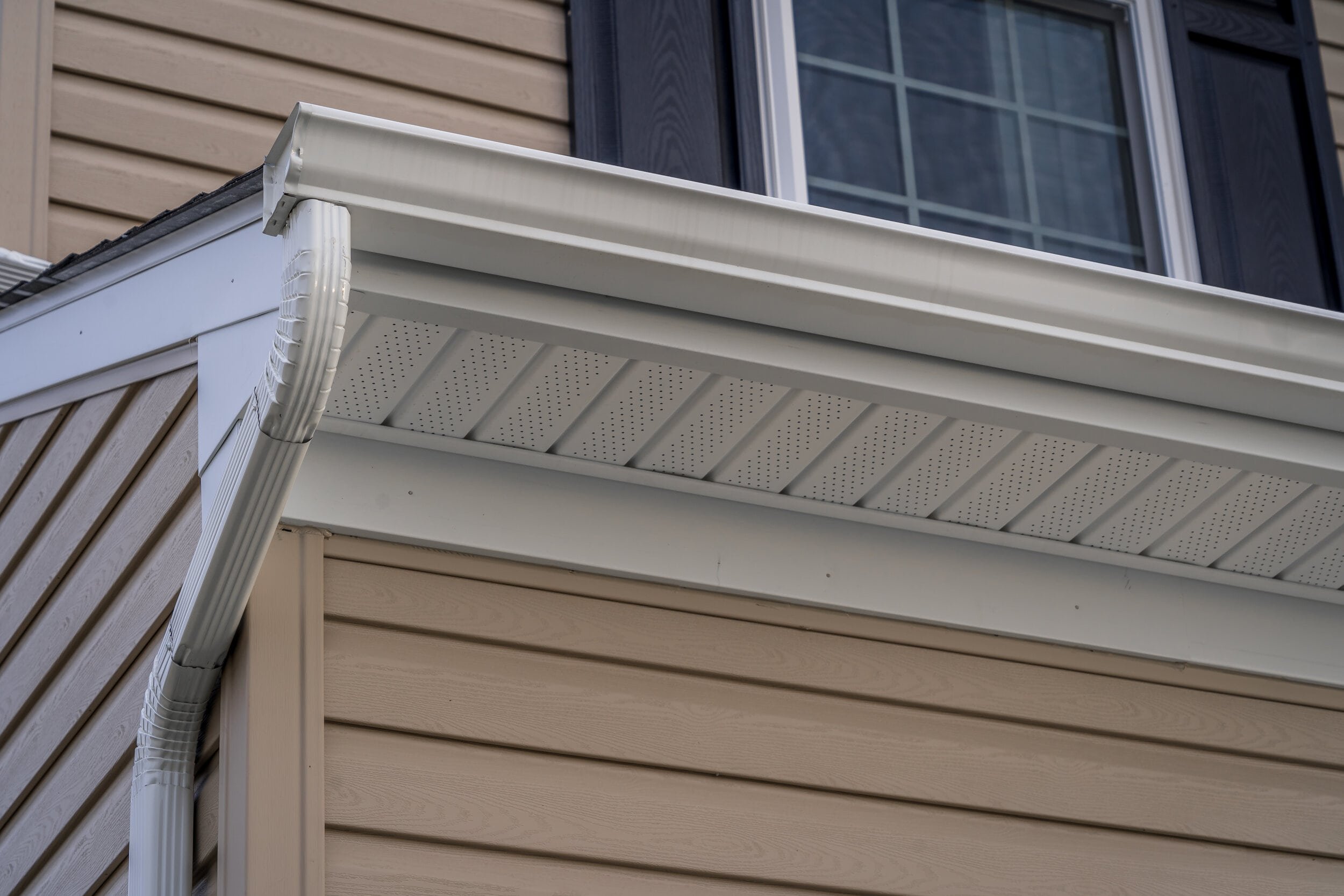
We install seamless aluminum gutters sized correctly for your roof area and pitched properly (1/4 inch per 10 feet toward the downspouts). We also make sure downspouts discharge at least 6 feet from the foundation, either through buried drain lines or splash blocks. This isn't complicated, but it's often done wrong by contractors who don't understand drainage.
Gutter installation typically runs $6–$12 per linear foot installed, depending on whether you need gutter guards, how many downspouts are required, and whether we're removing old gutters first. For a typical 1,800-square-foot home, expect $1,200–$2,400 for a complete gutter system. Our seamless gutters in Detroit, MI come with a workmanship warranty and are installed by crews who've been doing this for 10+ years.
We've also written extensively about how clogged gutters cause basement problems and the basics of gutter sizing and pitch if you want to dive deeper.
Exterior Painting: Sherwin-Williams and Long-Term Protection
We're a Sherwin-Williams exclusive contractor, which means we use their Duration, Emerald, and SuperPaint lines for all exterior painting. These aren't the cheapest paints, but they're formulated for extreme weather—UV resistance, mildew resistance, and flexibility to handle Michigan's temperature swings without cracking or peeling.
Exterior painting costs vary based on surface area, prep work (scraping, sanding, priming), and how many coats are needed, but expect $3,000–$8,000 for a typical two-story home. Paint lasts 7–10 years on wood siding, 10–12 years on fiber cement, and 12–15 years on properly prepped trim and fascia.
Our Southeast Michigan painting professionals prep surfaces correctly (which is 80% of the work), use proper primers, and apply two coats of finish paint. We don't cut corners, which is why our paint jobs last longer than the industry average.
Cost Reality: What These Projects Actually Cost in Southeast Michigan
Let's talk numbers. Here's what these projects cost in 2026 for a typical Michigan home, based on our project history and current material costs:
- Vinyl Siding: $8,000–$14,000 (1,800 sq ft home)
- Fiber Cement Siding: $18,000–$28,000 (1,800 sq ft home)
- Roof Replacement: $8,000–$16,000 (2,000 sq ft roof, architectural shingles)
- Window Replacement: $12,000–$20,000 (15–20 windows, vinyl or fiberglass)
- Attic Insulation (Blown-In): $1,800–$3,000 (1,200 sq ft attic, R-19 to R-49)
- Spray Foam Insulation (Rim Joists): $1,200–$2,000 (typical basement perimeter)
- Seamless Gutters: $1,200–$2,400 (complete system, 6-inch aluminum)
- Exterior Painting: $3,000–$8,000 (two-story home, trim and siding)
These are real-world costs for quality work done right. You can find cheaper quotes, but cheaper usually means shortcuts: unlicensed labor, inferior materials, or skipped steps that lead to callbacks and warranty claims. We've been in business since 1988, we carry a Michigan Residential Builder's License, and we're BBB A+ Accredited. Our crews show up on time, work carefully, and clean up every day. That's worth something.
Financing and Budget Planning
Most homeowners don't have $20,000–$40,000 sitting around for exterior renovations. That's normal. We work with financing partners who offer competitive rates and flexible terms. We also help prioritize: if your roof is leaking, that comes first. If your siding is failing but the roof is fine, we can phase the work—siding this year, windows next year, insulation the year after.
The key is to have a plan. Don't wait until something fails catastrophically and you're forced into emergency repairs at peak season when prices are highest and availability is lowest. Get a free inspection, get a realistic quote, and budget for the work over 2–3 years if needed.
When to Call a Contractor vs. DIY
I respect homeowners who want to do their own work. I started this business swinging a hammer on job sites. But there are projects where DIY makes sense and projects where it doesn't.
DIY-Friendly Projects:
- Gutter cleaning and minor gutter repairs
- Exterior painting (if you have the time, tools, and patience for proper prep)
- Caulking and weatherstripping around windows and doors
- Installing gutter guards
Call a Licensed Contractor For:
- Roofing: Safety risk, building code requirements, warranty issues if not installed to manufacturer specs
- Siding: Proper flashing, water management, and air sealing require training and experience
- Window replacement: Incorrect installation voids warranties and leads to air leakage and water intrusion
- Spray foam insulation: Requires specialized equipment and training; improper application can cause moisture problems
Michigan requires permits for most exterior work—roofing, siding, window replacement, and structural repairs. Permits aren't bureaucratic hassle; they're quality control. A building inspector verifies that the work meets code, which protects you when you sell the home and protects future owners from shoddy work.
We pull permits for every job that requires them, and we schedule inspections. That's part of being a licensed contractor. If someone offers to skip permits to save money, walk away. You're not saving money—you're taking on liability.
Ready to Get Started?
NEXT Exteriors has been protecting Michigan homes since 1988. Whether you're planning a complete exterior renovation or just need a roof inspection, we'll give you a straight answer on what your home needs and what it'll cost. No pressure, no gimmicks—just honest work and fair pricing.
Get Your Free QuoteOr call us: (844) 770-6398
Looking for more information on specific projects? Check out our guides on why fiber cement siding outperforms vinyl in Metro Detroit, roof repair vs. replacement for Michigan homes, and real 2026 window replacement costs in Metro Detroit. We've also published detailed posts on what siding warranties actually cover and the top mistakes homeowners make when choosing siding in Michigan.
For a complete overview of everything we offer—from roofing and siding to insulation and painting—visit our exterior services in Detroit page. You can also explore our project gallery to see completed work across Southeast Michigan, or use our home visualizer to preview siding and roofing options on a home similar to yours.
Frequently Asked Questions
Late spring through early fall (May through October) is ideal. Siding materials—especially vinyl—need to be installed within a specific temperature range (40°F to 90°F) to ensure proper expansion and contraction. Fiber cement can be installed in cooler weather, but caulking and flashing work better when it's dry and above freezing. We work year-round, but summer and fall are the most predictable for scheduling and weather delays.
For a typical 1,800-square-foot home, expect 5–7 days for vinyl siding and 7–10 days for fiber cement. This includes removing old siding, inspecting and repairing sheathing if needed, installing housewrap and flashing, and installing new siding and trim. Complex homes with multiple stories, bay windows, or decorative details take longer. We'll give you a realistic timeline upfront and keep you updated if weather or unexpected repairs change the schedule.
Not necessarily, but it's a good opportunity to upgrade. When we remove old siding, we can inspect the wall cavities and add exterior foam board insulation (1–2 inches of rigid foam) before installing new siding. This increases your wall R-value from R-13 to R-18 or R-20, reduces thermal bridging through studs, and improves air sealing. It adds $2–$4 per square foot to the project cost, but it's much cheaper to do during a siding replacement than as a standalone project. We cover this in detail in our post on how much insulation new siding adds.
Age is the first indicator: if your roof is 20+ years old, replacement is usually the better investment. If it's younger but you're seeing widespread issues—curling shingles, missing granules, leaks in multiple areas, or sagging sections—replacement is likely necessary. Limited damage (a few missing shingles from a storm, isolated leak around a chimney) can often be repaired. We offer free roof inspections and we'll give you an honest assessment. Our article on roof repair vs. replacement walks through the decision process in detail.
Remodeling Magazine's 2025 Cost vs. Value report shows fiber cement siding recoups about 75% of its cost at resale in the Midwest, compared to 68% for vinyl. But ROI isn't just about resale—it's about longevity and maintenance costs. Fiber cement lasts 40–50 years with minimal maintenance (just repainting every 12–15 years). Vinyl lasts 20–30 years and doesn't require painting, but it's more prone to impact damage and fading. If you're staying in the home long-term, fiber cement's durability and appearance make it the better value. If you're selling soon, vinyl delivers solid ROI at a lower upfront cost.
Technically yes, but we don't recommend it. Installing new siding over old siding traps moisture, hides rot and insect damage, and creates an uneven surface that affects the new siding's appearance and performance. It also voids most manufacturer warranties. The right approach: remove old siding, inspect and repair sheathing, install new housewrap and flashing, then install new siding. This costs more upfront, but it's the only way to ensure the new siding performs as designed and lasts its full service life.
Yes. We work with financing partners who offer competitive rates and flexible terms for homeowners who want to spread the cost over time. We can also help you phase larger projects—for example, replacing your roof this year and your siding next year—to make the work more manageable financially. Contact us for details on current financing options and to discuss a payment plan that fits your budget.