

Board and Batten Siding for Modern Homes in Metro Detroit
Why board and batten siding works perfectly for modern homes in Metro Detroit. Material options, installation tips, and real costs from a licensed Michigan contractor.

Board and batten siding is having a moment in Metro Detroit, and it's not hard to see why. Drive through Bloomfield Hills or Rochester Hills and you'll spot clean vertical lines punctuating modern farmhouse builds and contemporary renovations. The look is crisp, architectural, and distinctly different from the horizontal lap siding that's dominated Michigan neighborhoods for decades.
But board and batten isn't just about aesthetics. As a Detroit siding company that's been installing exterior cladding since 1988, we've watched this style evolve from a niche accent to a legitimate full-home siding option — one that performs surprisingly well in Michigan's freeze-thaw cycles when installed correctly.
The vertical orientation sheds water better than horizontal styles. The shadow lines add dimension without fussy details. And with modern materials like fiber cement and engineered wood, you get the traditional board and batten look with performance specs that make sense for Southeast Michigan weather.
If you're considering board and batten for a remodel or new construction project in Metro Detroit, here's what you actually need to know — from material choices to installation requirements to real costs.
Why Board and Batten Works for Modern Metro Detroit Homes
Board and batten's appeal starts with its clean, vertical lines. In modern architecture, where simplicity and bold geometry matter, those vertical panels create visual height and a contemporary edge that traditional lap siding can't match. It's why you see it on modern farmhouses, mid-century renovations, and new builds aiming for a Scandinavian or minimalist aesthetic.
But beyond looks, board and batten has functional advantages in Michigan's climate. The vertical orientation means water runs straight down rather than pooling behind horizontal seams. That matters during spring thaw cycles when ice dams melt and refreeze, or during summer storms that hit Sterling Heights and Warren with sideways rain.
The battens — the narrow vertical strips that cover the seams between wider boards — create natural drainage channels. When installed with proper flashing and a rainscreen gap behind the siding, moisture that gets past the surface layer drains down and out rather than sitting against your sheathing. That's critical in Michigan, where humidity swings and freeze-thaw cycles can turn minor moisture intrusion into rot or mold problems.
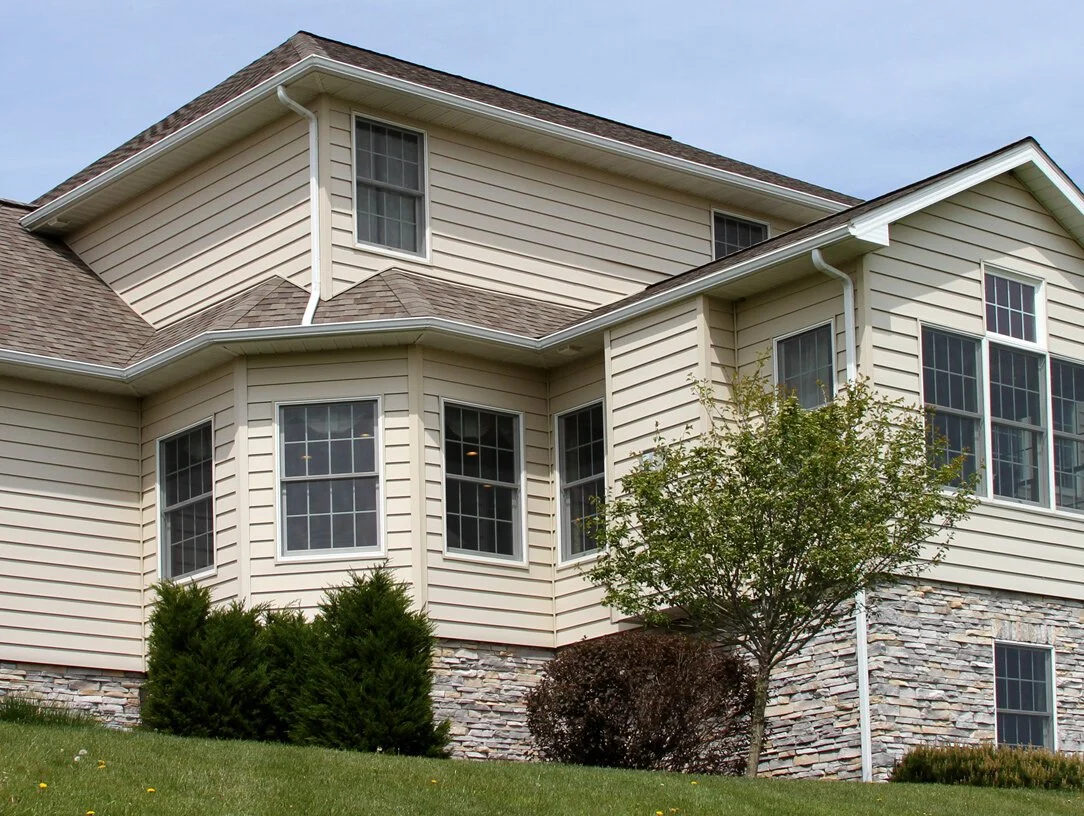
The other advantage: board and batten hides imperfections better than horizontal siding. If your home's framing isn't perfectly level — common in older Detroit-area homes or additions built in the 1970s and '80s — vertical siding won't telegraph those inconsistencies the way horizontal lap siding does. The vertical lines draw the eye up, not across, so minor waviness in the wall plane becomes less noticeable.
From a design perspective, board and batten also pairs well with other materials. We've installed it as an accent on gable ends while keeping traditional lap siding on the main walls. We've combined it with brick on Colonials in Grosse Pointe Farms. And we've used it full-coverage on modern builds in Lake Orion where homeowners wanted a bold, contemporary look.
Material Options: What Actually Works in Michigan Weather
Not all board and batten siding is created equal, especially when you're dealing with Michigan's weather extremes. You've got three main material choices: fiber cement, engineered wood, and vinyl. Each has trade-offs in durability, cost, and aesthetics.
Fiber Cement (James Hardie)
James Hardie fiber cement is the gold standard for board and batten in Michigan. It's dimensionally stable through freeze-thaw cycles, won't rot or warp, and holds paint exceptionally well. Hardie's HardiePlank vertical siding comes pre-primed or pre-finished in their ColorPlus line, which carries a 15-year finish warranty.
The material itself is a mix of cement, sand, and cellulose fibers. It's heavy — about 2.3 pounds per square foot — which means it requires proper fastening and structural support, but that weight also translates to durability. We've seen Hardie installations in Metro Detroit that are 20+ years old and still look sharp, with minimal fading or cracking.
Hardie's board and batten system uses 8.25-inch or 12-inch boards with 1.25-inch or 2.5-inch battens. The reveal (the exposed width of each board) is customizable, which gives you flexibility in the final look. For modern homes, wider boards with narrow battens create a cleaner, less busy aesthetic. For farmhouse styles, narrower boards with wider battens lean more traditional.
The downside: fiber cement is expensive. Material and labor combined, you're looking at $10–$14 per square foot installed in Southeast Michigan, depending on the complexity of the job. But the longevity and low maintenance make it a solid investment if you're planning to stay in the home long-term.
Engineered Wood (LP SmartSide)
LP SmartSide is engineered wood treated with zinc borate for rot and termite resistance, then finished with a proprietary SmartGuard coating. It's lighter than fiber cement, easier to cut and install, and costs less — typically $7–$10 per square foot installed.
LP's board and batten line includes pre-finished panels and trim, which speeds up installation. The texture is more wood-like than fiber cement, which some homeowners prefer for a natural look. The finish warranty is 5 years for the factory coating, though you can extend that with proper maintenance and repainting.
The catch: engineered wood isn't as dimensionally stable as fiber cement in Michigan's humidity swings. We've seen some LP installations develop minor cupping or edge swelling after a few years, especially on south- and west-facing walls that take the brunt of summer sun and rain. Proper installation with adequate clearance from grade and good flashing details mitigates most of these issues, but it's not as bulletproof as Hardie.
That said, LP SmartSide is a solid mid-tier option if you want the board and batten look without the fiber cement price tag. It performs well when installed correctly, and NEXT Exteriors has completed dozens of LP jobs across Macomb and Oakland counties with excellent results.
Vinyl Board and Batten
Vinyl board and batten exists, and it's the most affordable option — $4–$7 per square foot installed. But it's also the least convincing aesthetically. Vinyl can't replicate the depth and shadow lines of real board and batten because the battens are molded onto the panel surface rather than applied as separate pieces.
Vinyl also expands and contracts significantly with temperature changes. In Michigan, where we swing from sub-zero winters to 90-degree summers, that movement can cause vinyl to warp, buckle, or pull away from fasteners if it's not installed with proper expansion gaps. The color is molded into the material, so it won't peel, but it will fade over time — especially darker colors.
We don't recommend vinyl board and batten for modern homes where the aesthetic is a key selling point. It reads as budget siding, and it won't hold up visually or structurally the way fiber cement or engineered wood will. If cost is the primary concern, consider using real board and batten on accent areas (like gable ends) and a less expensive horizontal siding on the main walls.
Installation Considerations for Southeast Michigan
Board and batten installation isn't plug-and-play. It requires careful attention to flashing, fastening, and moisture management — especially in Michigan, where ice dams, wind-driven rain, and freeze-thaw cycles test every seam and joint.
The first requirement: a proper drainage plane behind the siding. We install a rainscreen gap using furring strips or a vented mat product. This creates a 1/4-inch to 3/8-inch air space between the siding and the weather-resistant barrier (WRB). Air moves up through this gap, drying out any moisture that gets past the siding. Without it, you're trapping moisture against the sheathing, which leads to rot and mold — a common problem we see when fixing DIY or poorly done contractor jobs.

Flashing is critical around windows, doors, and trim. Every penetration needs head flashing that directs water out and away. We use peel-and-stick flashing membrane at vulnerable spots — window sills, bottom edges, inside and outside corners. Michigan building codes require flashing at all horizontal joints and penetrations, and inspectors in Oakland and Macomb counties will flag missing or improper flashing.
Fastening also matters. Fiber cement requires corrosion-resistant nails or screws driven into studs, not just sheathing. Hardie specifies blind nailing (fastening through the top edge of each board so the batten covers the nail heads) or face nailing with color-matched siding nails. Over-driving fasteners cracks fiber cement; under-driving leaves the siding loose. We use pneumatic nailers with depth stops to get consistent fastening across the entire job.
For engineered wood, LP SmartSide requires 6-inch on-center fastening at panel edges and 12-inch on-center in the field. Fasteners must penetrate studs by at least 1.5 inches. We also leave a 1/8-inch gap between panels to allow for expansion — critical in Michigan's temperature swings.
The bottom edge of the siding needs clearance from grade and horizontal surfaces. Hardie and LP both specify a minimum 6-inch clearance from soil, 2 inches from hard surfaces like concrete, and 1 inch from roof surfaces. This prevents wicking moisture up into the siding, which accelerates rot and finish failure.
Finally, caulking and paint. Fiber cement and engineered wood need paint or stain to protect the substrate. We use Sherwin-Williams Duration or Emerald for exterior painting in Southeast Michigan — both hold up well in Michigan weather and carry solid warranties. All seams, joints, and cut edges get caulked with paintable, flexible sealant to keep water out.
Cost Reality: What Board and Batten Actually Costs in Metro Detroit
Board and batten costs more than standard horizontal lap siding — both in materials and labor. The vertical orientation requires more cuts, more fastening, and more careful alignment. Battens add another layer of work. And the materials themselves (especially fiber cement) aren't cheap.
Here's what you're looking at for a typical 2,000-square-foot home in Metro Detroit:
Fiber Cement (James Hardie): $20,000–$28,000 installed. This includes materials, labor, trim, flashing, and finish paint. High-end projects with complex details, custom colors, or difficult access can push closer to $30,000+.
Engineered Wood (LP SmartSide): $14,000–$20,000 installed. LP's lower material cost and easier installation bring the total down, but you're still paying for quality materials and proper installation.
Vinyl Board and Batten: $8,000–$14,000 installed. The lowest upfront cost, but also the lowest long-term value and aesthetic quality.
These numbers assume full-home coverage. If you're using board and batten as an accent — say, on gable ends or a single feature wall — costs drop proportionally. We've done accent installations for $3,000–$6,000 depending on square footage and complexity.
Labor accounts for about 50–60% of the total cost. Board and batten takes longer to install than horizontal siding because of the vertical alignment, batten application, and increased fastening requirements. A skilled crew can install 300–400 square feet of fiber cement board and batten per day; horizontal lap siding goes faster at 500–600 square feet per day.
Material costs vary by product line and availability, but here are rough numbers for Metro Detroit in 2026:
- James Hardie fiber cement boards and battens: $3.50–$5.00 per square foot (material only)
- LP SmartSide engineered wood boards and battens: $2.50–$3.50 per square foot (material only)
- Vinyl board and batten panels: $1.50–$2.50 per square foot (material only)
Add in trim, flashing, fasteners, caulk, and paint, and material costs increase by 20–30%. Then factor in labor, permits, and waste, and you arrive at the installed price ranges above.
Is it worth it? That depends on your goals. If you're renovating a modern home in Bloomfield Hills or Rochester Hills and want a distinctive, high-end look, fiber cement board and batten delivers. The ROI on curb appeal and home value is real — well-executed siding upgrades typically return 70–80% of their cost at resale in Southeast Michigan's competitive housing market.
If you're budget-conscious but still want the board and batten aesthetic, LP SmartSide offers a solid middle ground. It looks good, performs well when installed correctly, and costs significantly less than Hardie.
For more details on what different house siding in Detroit options cost, including comparisons between vinyl, fiber cement, and engineered wood, check out our full siding replacement cost breakdown.
Design Flexibility: Making Board and Batten Work for Your Home
One of board and batten's strengths is its versatility. It works on modern farmhouses, contemporary builds, mid-century renovations, and even traditional Colonials when used as an accent. The key is matching the scale, color, and application to your home's architecture.
Full-Home vs. Accent Applications
Full-home board and batten creates a bold, cohesive look. It works best on simpler architectural styles — modern boxes, gable-front farmhouses, A-frames — where the vertical lines complement the overall geometry. On more complex homes with multiple roof lines, dormers, and varied wall planes, full-coverage board and batten can feel busy.
Accent applications are more common in Metro Detroit. We'll install board and batten on gable ends while using horizontal lap siding on the main walls. Or we'll clad a single feature wall — the front facade, a garage wall, a covered porch — in board and batten to create visual interest without overwhelming the design.
Mixing siding styles requires careful detailing at transitions. We use trim boards or color breaks to separate board and batten sections from horizontal siding, creating clean lines that look intentional rather than patchwork.
Color and Finish Options
Board and batten looks sharp in both light and dark colors, but the choice affects the overall vibe. White, off-white, and light gray create a clean, Scandinavian-inspired modern look. These colors also reflect heat, which helps with energy efficiency on south- and west-facing walls.
Dark colors — charcoal, navy, black, deep green — add drama and contemporary edge. They're popular on modern farmhouses and mid-century renovations in Southeast Michigan. The downside: dark colors absorb heat and can accelerate finish degradation on fiber cement and engineered wood. We recommend using high-quality paint with UV inhibitors (like Sherwin-Williams Duration or Emerald) and planning for repainting every 8–10 years rather than 12–15.
Two-tone schemes work well with board and batten. We've done projects where the main walls are light gray horizontal siding and the gable ends are dark charcoal board and batten. Or white board and batten with black battens for high contrast. The vertical lines of board and batten make color transitions feel intentional and architectural.
For homeowners working with Southeast Michigan painting professionals, Sherwin-Williams offers excellent exterior color palettes that hold up in Michigan weather. Popular choices for board and batten include Alabaster (white), Repose Gray (light neutral), Iron Ore (charcoal), and Naval (deep blue).
Pairing Board and Batten with Other Materials
Board and batten plays well with brick, stone, metal, and wood trim. On brick Colonials common in Grosse Pointe and Royal Oak, we've used board and batten on upper gables while keeping the brick on the first floor. The contrast between the vertical siding and horizontal brick courses creates visual interest without clashing.
Stone or brick accents on foundations, chimneys, or entry walls also pair nicely with board and batten. The natural texture of stone balances the clean lines of the siding.
Metal roofing is another common pairing in modern and farmhouse designs. The vertical lines of board and batten echo the vertical seams of standing-seam metal roofs, creating a cohesive look. For homeowners considering Detroit roofing services, metal roofs and board and batten siding are a natural combination for modern builds.

Signs Your Home Is Ready for Board and Batten Siding
Board and batten isn't the right choice for every home or every homeowner. Here's when it makes sense:
Your Existing Siding Is Failing
If your current siding is cracked, warped, rotting, or showing signs of moisture damage, it's time for a replacement. Board and batten is a solid option if you're looking to update the aesthetic while solving the performance issues. We've replaced failing vinyl, aluminum, and wood siding with fiber cement board and batten on dozens of homes across Macomb and Oakland counties.
You're Renovating for a Modern or Farmhouse Look
Board and batten is one of the fastest ways to shift a home's aesthetic from traditional to modern or farmhouse. If you're doing a whole-home renovation and want a fresh, contemporary look, board and batten delivers. It's especially effective on simple gable-front or box-shaped homes where the vertical lines enhance the architecture.
You Want Low-Maintenance, Long-Lasting Siding
Fiber cement and engineered wood board and batten require minimal maintenance compared to wood siding. No scraping, no frequent repainting, no rot. If you're tired of dealing with high-maintenance siding and want something that looks good for 15–20 years with minimal upkeep, board and batten is worth considering.
You're Adding an Accent Wall or Feature
If you don't want to commit to full-home board and batten, using it as an accent is a lower-risk, lower-cost option. Gable ends, garage walls, covered porches, and entry facades are all good candidates. The vertical lines add visual interest without overwhelming the design.
You Value Curb Appeal and Resale Value
In Metro Detroit's competitive real estate market, curb appeal matters. Board and batten siding — especially fiber cement — signals quality and modern design. Homes with updated, well-maintained exteriors sell faster and for higher prices. If you're planning to sell in the next 5–10 years, a board and batten upgrade can pay off at closing.
For homeowners unsure whether board and batten is the right choice, NEXT Exteriors offers free consultations and project estimates. We'll walk your property, discuss your goals, and provide honest recommendations based on your home's architecture, budget, and long-term plans. You can also explore our home visualizer tool to see what different siding styles and colors look like on your home before committing.
Other Exterior Services to Consider: If you're upgrading your siding, it's often a good time to address other exterior needs. NEXT Exteriors offers comprehensive exterior services in Detroit, including window replacement, seamless gutters, and attic insulation to improve energy efficiency and protect your home from Michigan weather.
Ready to Get Started?
NEXT Exteriors has been protecting Michigan homes since 1988. Get a free, no-pressure estimate from a team that shows up on time and does the job right.
Get Your Free QuoteOr call us: (844) 770-6398
Frequently Asked Questions About Board and Batten Siding in Metro Detroit
Yes, board and batten typically costs 15–30% more than horizontal lap siding due to increased labor and material requirements. The vertical orientation requires more precise alignment, additional fastening, and batten application, which adds time and cost. Fiber cement board and batten runs $10–$14 per square foot installed in Metro Detroit, compared to $7–$10 for horizontal fiber cement lap siding.
When installed correctly with proper flashing and a drainage plane, board and batten performs excellently in Michigan's freeze-thaw cycles. The vertical orientation sheds water and snow better than horizontal siding, reducing moisture intrusion. Fiber cement and engineered wood are dimensionally stable through temperature swings and resist rot, warping, and cracking better than traditional wood siding.
It's not recommended. Board and batten requires a flat, solid substrate and proper flashing to perform correctly. Installing over old siding traps moisture, creates an uneven surface, and voids most manufacturer warranties. We always remove existing siding, inspect and repair sheathing and framing as needed, install a weather-resistant barrier and rainscreen, and then apply the new board and batten. This ensures long-term performance and code compliance.
Fiber cement board and batten can last 30–50 years with proper installation and minimal maintenance. Engineered wood (LP SmartSide) typically lasts 25–30 years. Vinyl board and batten has a shorter lifespan — 15–25 years — and is more prone to fading, warping, and impact damage. The finish (paint or factory coating) will need refreshing every 10–15 years for fiber cement and engineered wood to maintain appearance and protection.
James Hardie fiber cement is the best choice for durability, dimensional stability, and long-term performance in Michigan weather. It resists rot, won't warp through freeze-thaw cycles, and holds paint exceptionally well. LP SmartSide engineered wood is a solid mid-tier option that costs less and installs easier while still offering good performance. Vinyl board and batten is the most affordable but doesn't match the aesthetic quality or longevity of fiber cement or engineered wood.
Absolutely. Board and batten works well as an accent on gable ends, feature walls, garage facades, or covered porches. This approach gives you the modern aesthetic of board and batten at a lower cost than full-home coverage. We often combine board and batten accents with horizontal lap siding on the main walls, using trim or color breaks to create clean transitions between the two styles.
Yes, eventually. Factory-finished fiber cement (like Hardie ColorPlus) carries a 15-year finish warranty but will need repainting after that to maintain protection and appearance. Field-painted fiber cement and engineered wood typically need repainting every 10–15 years depending on exposure, color choice, and paint quality. Using premium exterior paint like Sherwin-Williams Duration or Emerald extends the time between repaints. Vinyl board and batten doesn't require painting but will fade over time, especially in darker colors.
How to Choose the Right Siding for Your Michigan Home
Expert guidance on selecting siding that survives Michigan winters. Learn which materials work best for freeze-thaw cycles, ice, and lake-effect weather from a licensed contractor.
I've been installing siding in Southeast Michigan since 1988, and I can tell you this: what works in North Carolina or Arizona will fail here within five years. Michigan doesn't just test siding — it punishes it. Freeze-thaw cycles crack inferior materials. Lake-effect moisture rots improperly installed boards. Summer heat warps cheap vinyl like a potato chip left on the dashboard.
Choosing the right siding for your Michigan home isn't about picking the prettiest color from a brochure. It's about understanding how materials respond to 40-degree temperature swings in a single day, how moisture moves through wall assemblies during a January thaw, and why the cheapest bid usually costs you twice as much three winters later.
This guide walks you through the decision the way we approach it with our clients in Sterling Heights, Troy, and across Macomb County — starting with the weather reality, moving through material science, and ending with what actually matters when you're writing the check.
Why Michigan Weather Demands Different Siding Standards
Southeast Michigan sits in a climate zone that building scientists politely call "mixed-humid." What that really means: your siding needs to handle everything.
Winter brings freeze-thaw cycles that split materials from the inside out. Water gets into microscopic cracks, freezes, expands, and turns hairline fractures into full splits. We see this every March when homeowners in Rochester Hills call about siding that was "fine last fall" and is now buckled in three places.
Lake-effect weather dumps moisture into the air that doesn't just sit on surfaces — it drives into seams, behind trim boards, and through any gap in your moisture barrier. Vinyl siding installed without proper underlayment in Grosse Pointe Farms will have water running down the interior sheathing by the second winter.
Summer heat in Michigan is underestimated. We hit 90+ degrees with high humidity regularly. Cheap vinyl siding expands and contracts so much that fasteners pull through, seams open up, and panels warp. I've measured siding surface temperatures at 160°F on south-facing walls in July — that's enough to deform low-grade materials permanently.
The Michigan Reality: Your siding needs to survive 100+ freeze-thaw cycles per year, handle moisture from lake-effect systems, resist UV degradation during humid summers, and maintain structural integrity through temperature swings from -10°F to 95°F.
This is why our house siding in Detroit installations focus heavily on substrate preparation and moisture management — the siding itself is only half the system.
The Four Siding Materials That Actually Work in Michigan
After 35+ years installing siding across Southeast Michigan, four materials consistently perform. Everything else is either too expensive for most homeowners, too maintenance-intensive, or fails within a decade.
Vinyl Siding: The Practical Default
Vinyl gets a bad reputation because of the cheap builder-grade stuff installed on subdivisions in the 1990s. Modern premium vinyl — we're talking .046" thickness or higher — is a completely different product.
Pros:
- Never needs painting or staining
- Resists moisture infiltration when properly installed
- Handles freeze-thaw cycles without cracking (if it's quality material)
- Lowest upfront cost of durable options
- Wide color selection that won't fade (premium grades with UV inhibitors)
Cons:
- Can warp in extreme heat if south-facing and dark-colored
- Impact damage from hail or debris cracks panels
- Expansion/contraction requires proper fastening technique
- Cheapest grades look cheap and fail early
We install CertainTeed and Norandex premium vinyl regularly. Expect to pay $4.50–$7.50 per square foot installed for quality material with proper underlayment and trim work.
James Hardie Fiber Cement: The Durability Standard
James Hardie is what we recommend when clients want "install it and forget it for 30 years." It's a cement-based composite that's engineered specifically for freeze-thaw climates.
Pros:
- Virtually indestructible — resists impact, fire, moisture, insects, rot
- Dimensional stability in temperature extremes (minimal expansion/contraction)
- Can be painted any color; factory finish lasts 15+ years
- Increases home resale value more than vinyl
- 30-year non-prorated warranty
Cons:
- Requires repainting every 15–20 years (though it holds paint better than wood)
- Heavier material means more labor-intensive installation
- Higher upfront cost than vinyl
- Must be installed by certified contractors to maintain warranty
NEXT Exteriors is a James Hardie certified installer. We see this material perform flawlessly on homes in Lake Orion and Bloomfield Hills that face full northern exposure to lake-effect weather. Cost runs $8.50–$12.00 per square foot installed.
LP SmartSide Engineered Wood: The Middle Ground
LP SmartSide is treated engineered wood that offers a wood-grain aesthetic without the maintenance nightmare of real cedar. It's become increasingly popular with clients who want the look of wood siding but need Michigan-grade durability.
Pros:
- Authentic wood texture and appearance
- Treated for moisture, fungal decay, and termite resistance
- More impact-resistant than vinyl
- Accepts paint well; factory-primed options available
- 50-year limited warranty against rot and fungal decay
Cons:
- Requires painting/staining every 10–15 years
- More expensive than vinyl, less than fiber cement
- Edges must be sealed properly during installation to prevent moisture infiltration
- Heavier than vinyl, requires experienced installation
We've installed LP SmartSide on dozens of homes in Clinton Township and Shelby Township. When installed correctly with proper flashing and trim details, it performs beautifully. Expect $7.00–$10.00 per square foot installed.
For a detailed comparison, see our guide on LP SmartSide vs. James Hardie siding in Michigan.
Cedar and Natural Wood: When It Makes Sense
Real wood siding — cedar, redwood, pine — has a place in Michigan, but it's a narrow one. Historic homes in certain neighborhoods require it. Some homeowners simply want the aesthetic and are willing to commit to the maintenance.
Pros:
- Unmatched natural beauty and character
- Can be stained or painted in unlimited colors
- Repairable — individual boards can be replaced
- Required in some historic districts
Cons:
- Requires restaining or repainting every 3–7 years
- Susceptible to rot, insect damage, and fungal growth in Michigan's humid climate
- Expensive upfront and ongoing maintenance costs
- Can warp, split, or crack with moisture and temperature changes
We install cedar siding when clients understand the commitment. Cost runs $9.00–$15.00+ per square foot installed, plus ongoing maintenance expenses that add up quickly.
What to Look for in Michigan-Grade Siding
Material type matters, but so do the specifications within that material category. Here's what separates siding that lasts 30 years from siding that fails in 10.
Wind Rating and Impact Resistance
Michigan gets severe thunderstorms with straight-line winds exceeding 70 mph. Your siding needs to stay on the house.
Look for vinyl siding with a wind rating of at least 110 mph. Premium products like CertainTeed Monogram achieve ratings up to 200+ mph when installed per manufacturer specs. Fiber cement products like James Hardie are inherently wind-resistant due to their density and fastening requirements.
Impact resistance matters for hail. We see hail damage claims every summer in Macomb and Oakland counties. Fiber cement and engineered wood handle impacts far better than vinyl. If you're in a hail-prone area (check your homeowner's insurance claim history), factor this in.
Moisture Management and Vapor Permeability
Siding doesn't keep water out by itself — the entire wall assembly does. But the siding's ability to shed water and allow vapor to escape matters enormously in Michigan's climate.
Vinyl siding is non-porous, which is good for blocking liquid water but means moisture that gets behind it (and moisture always gets behind it) needs an escape route. That's why proper house wrap and drainage planes are non-negotiable.
Fiber cement and engineered wood are slightly vapor-permeable, which helps wall assemblies dry out after moisture events. James Hardie's ColorPlus finish is designed to breathe while repelling water.
We see moisture problems most often when contractors skip the house wrap, use cheap felt paper, or don't flash windows and doors correctly. The siding material is irrelevant if water is running down your sheathing.
Thermal Expansion and Contraction Properties
This is where cheap vinyl siding fails in Michigan. PVC expands and contracts significantly with temperature changes. Dark colors are worse — a dark vinyl panel can expand over half an inch on a 16-foot run when surface temps hit 150°F.
Quality vinyl siding accounts for this with elongated nail slots and installation guidelines that require leaving expansion gaps. When we install vinyl, we never face-nail through the material — nails go in the center of the slots, loose enough that panels can move.
Fiber cement has minimal thermal movement — it's one of its major advantages. LP SmartSide also performs well because the engineered wood structure resists dimensional changes better than solid wood.
Installation Truth: The best siding material installed incorrectly will fail faster than mediocre material installed properly. Thermal expansion gaps, proper fastening, flashing details, and substrate prep determine longevity more than brand names.
Warranty Coverage Specific to Climate
Read the warranty fine print. Many manufacturers void coverage if siding is installed in "extreme climates" or if specific installation requirements aren't met.
James Hardie's 30-year warranty is non-prorated and covers material defects even in harsh climates — but only if installed by a certified contractor following their specs. CertainTeed's Lifetime Limited Warranty on premium vinyl includes fade and hail coverage, but installation must meet their guidelines.
We provide warranty documentation for every project and follow manufacturer installation requirements precisely. If a problem occurs, you want the warranty to actually cover it.
The Real Cost of Siding in Southeast Michigan (2026)
Siding costs vary based on material, home size, architectural complexity, and current material availability. Here's what we're seeing in 2026 for a typical 2,000-square-foot two-story home in Metro Detroit.
Premium Vinyl Siding: $9,000–$15,000 installed
Includes quality material (.044" or thicker), house wrap, trim, soffit/fascia if needed. Lower end for simple ranch, higher for two-story with gables and complex trim.
James Hardie Fiber Cement: $17,000–$24,000 installed
Includes HardiePlank or HardieShingle, ColorPlus factory finish, house wrap, PVC trim, labor. Complexity and finish choices drive the range.
LP SmartSide Engineered Wood: $14,000–$20,000 installed
Includes LP SmartSide panels or lap siding, house wrap, trim, priming. Painting adds $3,000–$5,000 if not using pre-finished product.
Cedar or Natural Wood: $18,000–$30,000+ installed
Includes material, house wrap, trim, staining or painting. Ongoing maintenance costs add $2,000–$4,000 every 5–7 years.
These numbers assume average-condition substrate (sheathing in good shape, no major rot repair). If we find rotted sheathing, failed moisture barriers, or structural issues during tear-off, costs increase. We always inspect thoroughly before quoting.
For more detailed pricing breakdowns, see our post on siding replacement cost in Michigan for 2026.
Long-Term Maintenance Costs
Upfront cost is only part of the equation. Factor in what you'll spend over 30 years:
Vinyl: Minimal. Wash it once a year. Maybe replace a cracked panel every decade if you get unlucky with impact damage. Total maintenance over 30 years: under $500.
Fiber Cement: Repaint every 15–20 years. Professional exterior painting runs $4,000–$7,000 for a typical home. Total over 30 years: $4,000–$7,000.
Engineered Wood: Repaint or restain every 10–15 years. Slightly more maintenance than fiber cement due to edge sealing requirements. Total over 30 years: $6,000–$10,000.
Natural Wood: Restain or repaint every 3–7 years depending on exposure and product quality. Total over 30 years: $12,000–$24,000+.
When clients ask us what we'd put on our own homes, the answer depends on budget and priorities. For pure value and low maintenance, premium vinyl. For "set it and forget it" durability, James Hardie. For wood aesthetics without constant upkeep, LP SmartSide.
ROI and Resale Value
Siding replacement is one of the higher-ROI exterior improvements. According to recent Remodeling Magazine Cost vs. Value reports, siding replacement in the East North Central region (which includes Michigan) recoups 65–75% of cost at resale.
Fiber cement and engineered wood tend to return slightly more than vinyl in higher-end markets (Bloomfield Hills, Grosse Pointe, parts of Rochester Hills). In mid-range markets, quality vinyl performs just as well from an ROI perspective.
The bigger value is in preventing damage. Failing siding leads to water infiltration, insulation damage, mold, and structural rot. We've seen homes with $3,000 worth of siding damage turn into $25,000 remediation projects because the problem wasn't caught early.

Signs Your Current Siding Is Failing
Most homeowners wait too long to address siding problems. By the time it's "obviously bad," there's often hidden damage behind it. Here's what to watch for.
Visible Warping, Cracking, or Buckling
Warped or buckled vinyl siding means it was either installed incorrectly (face-nailed, no expansion gaps) or it's cheap material that couldn't handle Michigan's temperature swings. Either way, it's failing.
Cracked fiber cement or engineered wood usually indicates impact damage or improper installation (over-driven fasteners, inadequate clearance from grade). Small cracks turn into big cracks quickly once freeze-thaw cycles start working on them.
Wood siding that's cupping, splitting, or showing rot needs replacement. You can't "fix" rotted wood — you can only delay the inevitable.
Water Infiltration and Interior Damage
If you see water stains on interior walls, peeling paint near windows or corners, or musty smells in certain rooms, your siding system is leaking.
Common failure points: window and door flashing, corner boards, J-channel at roof intersections, and anywhere two different materials meet (brick to siding transitions, for example).
We find moisture problems during exterior siding repair in Metro Detroit calls all the time. The siding itself might look fine from the curb, but pull off a corner board and there's black mold on the sheathing.
Energy Bill Increases
Failing siding often means failing insulation and air sealing. If your heating bills have crept up over the past few winters and your HVAC system hasn't changed, your building envelope might be compromised.
Air leaks around windows and doors, gaps in siding seams, and missing or damaged house wrap all contribute to energy loss. Replacing siding gives you the opportunity to upgrade your insulation in Southeast Michigan at the same time — the wall cavities are already open.
When Repair vs. Replacement Makes Sense
If damage is localized (one wall, a section around a window, storm damage to a gable end), repair might be the right call — assuming we can match the existing material and color.
Vinyl siding from the past 10 years is often matchable. Discontinued colors or older profiles might not be. Fiber cement and engineered wood are easier to match if we know the product line.
If damage is widespread, the siding is 20+ years old, or we find substrate problems during inspection, full replacement is usually more cost-effective than piecemeal repairs.
We give honest assessments. If your siding has another 10 years in it and you just need a few boards replaced, we'll tell you that. If it's failing and you're throwing good money after bad with repairs, we'll tell you that too.
How NEXT Exteriors Approaches Siding Projects
We've been doing this since 1988, and our process hasn't changed much because it works. No shortcuts, no surprises, no "we found problems after we tore everything off" unless we genuinely found problems.
Proper Substrate Preparation
Before any siding goes up, we inspect and repair the substrate. Rotted sheathing gets replaced. Missing or damaged house wrap gets installed correctly. Flashing around windows and doors gets redone if it's questionable.
This is where cheaper contractors cut corners. They'll slap new siding over rotted sheathing and tell you it's fine. It's not fine. You're trapping moisture and rot behind $15,000 worth of new material.
We use Tyvek or equivalent house wrap on every job. It's a drainage plane and air barrier that keeps bulk water out while allowing vapor to escape. We tape seams, flash penetrations, and integrate it with window and door flashing per building code.
Moisture Barrier Installation
Michigan's building code requires a weather-resistant barrier behind all siding. We exceed code by using quality materials and following manufacturer installation specs exactly.
For fiber cement and engineered wood, we often use a rainscreen approach — furring strips that create a small air gap behind the siding. This allows any moisture that gets past the siding to drain and dry, dramatically extending the life of the wall assembly.
On homes with chronic moisture problems (north-facing walls, heavy tree cover, areas with poor drainage), a rainscreen system is worth every penny.
Attention to Trim and Flashing Details
The siding itself is the easy part. The hard part — the part that determines whether your siding lasts 15 years or 35 years — is the trim, flashing, and transition details.
Every window and door gets properly flashed with a sill pan, jamb flashing, and head flashing that integrates with the house wrap. Corner boards get caulked and sealed. J-channel at roof lines gets counterflashing so water can't run behind it.
We use PVC trim on most jobs now instead of wood. It doesn't rot, doesn't need painting (or takes paint beautifully if you want it painted), and handles moisture without issue. On James Hardie jobs, we use Hardie trim for a monolithic system.
If you're combining siding and window replacement together in Metro Detroit, the sequencing and integration of these systems is critical. Windows go in first, get flashed properly, then siding integrates with the window trim and flashing system.
Working with Other Exterior Systems
Siding projects often overlap with other exterior work. If your seamless gutters in Detroit, MI are failing, we coordinate gutter replacement with siding so the fascia is properly prepared and everything integrates cleanly.
If your Detroit roofing services need attention, we handle that first — you don't want to install new siding and then have a roofing crew tearing off shingles and potentially damaging the fresh siding.
When the project scope includes exterior painting in Southeast Michigan, we use Sherwin-Williams products exclusively. Their Duration and Emerald lines hold up to Michigan weather better than any other paint we've tested.
Our full range of exterior services in Detroit means you're working with one contractor, one timeline, one warranty. No coordination headaches between multiple trades.
Ready to Get Started?
NEXT Exteriors has been protecting Michigan homes since 1988. Get a free, no-pressure estimate from a team that shows up on time and does the job right.
Get Your Free QuoteOr call us: (844) 770-6398
Frequently Asked Questions
James Hardie fiber cement performs best in Michigan's freeze-thaw cycles due to its dimensional stability and moisture resistance. It doesn't expand or contract significantly with temperature changes, resists cracking from ice formation, and handles moisture without rotting. Premium vinyl (0.046" thickness or higher) is a close second and offers excellent value. LP SmartSide engineered wood also performs well when properly installed with sealed edges and adequate clearance from grade.
Lifespan depends on material and installation quality. Premium vinyl siding lasts 25–40 years. James Hardie fiber cement lasts 30–50 years with one or two repaints. LP SmartSide engineered wood lasts 25–35 years with proper maintenance. Natural wood siding lasts 15–30 years but requires significant ongoing maintenance. These numbers assume professional installation with proper moisture barriers, flashing, and substrate preparation. Cheap materials or poor installation can cut these lifespans in half.
We don't recommend it. Installing over existing siding prevents inspection of the substrate, traps moisture problems, adds weight to the wall assembly, and makes proper flashing integration nearly impossible. You're also adding another layer that future contractors will have to remove, increasing costs down the line. The only time we consider it is over flat, solid wood siding in excellent condition — and even then, we prefer full removal so we can verify the sheathing and moisture barrier are sound.
Thickness, quality of PVC resin, UV inhibitors, and manufacturing tolerances. Builder-grade vinyl is typically 0.040" thick or less, uses recycled PVC with inconsistent color, and has minimal UV protection — it fades, warps, and cracks within 10–15 years in Michigan. Premium vinyl (CertainTeed Monogram, Norandex Sagebrush, etc.) is 0.044–0.052" thick, uses virgin PVC with advanced UV inhibitors, and includes features like rigid foam backing for insulation and impact resistance. It costs 30–50% more upfront but lasts twice as long.
Not necessarily, but it's often the most cost-effective time to do it. When we remove siding, we expose the window rough openings and can properly flash new windows into the wall assembly. If your windows are 15+ years old, drafty, or showing seal failures, replacing them during a siding project saves on labor costs (we're already there with scaffolding and crews) and ensures perfect integration between the window flashing and new moisture barrier. If your windows are newer and performing well, we can work around them — but we'll inspect the existing flashing and upgrade it if needed.
Ask specific questions: How do they handle moisture barriers in freeze-thaw climates? What's their approach to flashing windows and doors? Do they leave expansion gaps for vinyl siding, and how much? Can they explain why house wrap matters in Michigan's mixed-humid climate? A contractor who's been working in Southeast Michigan for years will have detailed answers. Also check their credentials — James Hardie and LP SmartSide both require installer certification that includes climate-specific training. NEXT Exteriors has been installing siding in Michigan since 1988 and holds manufacturer certifications from all major siding brands.
A complete quote should include: removal and disposal of existing siding, inspection and repair of substrate (sheathing), installation of house wrap or weather-resistant barrier, new siding material, all trim (corners, J-channel, window/door trim), soffit and fascia if needed, flashing at all penetrations and transitions, caulking and sealants, and cleanup. At NEXT Exteriors, we also include a detailed material list, installation timeline, warranty information, and photos of similar completed projects. Be wary of quotes that seem too low — they often exclude critical items like house wrap, substrate repair, or proper trim work.
Siding and Window Replacement Together Metro Detroit
Why replacing siding and windows together saves money and solves moisture problems. Real costs, timing, and contractor insights for Southeast Michigan homes.

Here's a conversation we have almost weekly at NEXT Exteriors: A homeowner calls about replacing their siding. We come out for the estimate, and within five minutes of walking the exterior, we're pointing at the windows. "See that moisture stain below the sill? That flashing failed years ago. And look—your siding's pulling away right where the window trim meets the wall."
The homeowner didn't call about windows. But now they're wondering if they should tackle both projects at once. And the honest answer? In most cases across Southeast Michigan, yes—especially if your windows are more than 20 years old or showing signs of failure.
This isn't a sales pitch to upsell you. It's building science, project logistics, and cost reality. When you understand how house siding in Detroit and window replacement in Detroit interact—especially in Michigan's freeze-thaw climate—the case for doing both together becomes clear.
Why Combining Siding and Window Replacement Makes Sense
Let's start with the practical stuff. There are three main reasons homeowners in Sterling Heights, Troy, and Rochester Hills choose to replace siding and windows together—and only one of them is about money.
1. You Save on Labor and Mobilization Costs
Every exterior project has fixed costs: crew mobilization, equipment rental, permits, dumpster delivery, site protection. When you bundle siding and windows into one project, you pay those costs once instead of twice.
Here's what that looks like in real numbers for a typical 2,000-square-foot Michigan home:
- Siding only: $12,000–$18,000 (vinyl or fiber cement)
- Windows only: $8,000–$14,000 (12–15 windows, mid-range vinyl or fiberglass)
- Both separately: $20,000–$32,000
- Both together: $17,000–$27,000
The savings come from consolidated labor. Our crews are already scaffolded up. We're already wrapping the house, pulling trim, and working around every opening. Adding window installation into that workflow doesn't double the labor—it adds maybe 20–30%.
And you avoid paying twice for dumpsters, twice for permits, twice for site setup. That's $2,000–$4,000 in savings on average across Metro Detroit projects.
2. You Solve the Moisture Plane Problem Properly
This is the part most homeowners don't see until it's too late. Your siding and windows aren't separate systems—they're integrated layers in your home's moisture management strategy.
When we install new windows into old siding, we're cutting into an existing moisture barrier that's already compromised. We can flash the new windows correctly, but we're tying into a system that may have failed years ago. The result? Water still finds a way in, usually along the seams where new flashing meets old housewrap.
When we do both together, we rebuild the entire moisture plane from the sheathing out:
- New housewrap goes on first
- Windows get installed and flashed into fresh, intact material
- Siding integrates with the window flashing system as a unified assembly
This is how exterior services in Detroit should be done when you're serious about long-term performance. It's not just about keeping rain out—it's about managing Michigan's freeze-thaw cycles, ice damming meltwater, and the humidity that migrates through your walls in summer.

3. You Avoid Double Disruption
Let's be honest: having contractors at your house is disruptive. Trucks in the driveway, equipment noise, crews working around windows, kids and pets needing to stay inside. It's part of the deal, and good contractors (like us) minimize it as much as possible.
But doing two separate projects means going through that disruption twice. Twice the scheduling headaches. Twice the noise. Twice the cleanup. Twice the "can we use the front door today?" conversations.
One project, done right, over 7–10 days? Most homeowners tell us that's far easier to manage than two separate jobs stretched across different seasons.
The Real Cost Breakdown: What You'll Actually Pay
Let's get specific about pricing for siding and window replacement together in Metro Detroit. These numbers reflect what we see across Macomb County, Oakland County, and St. Clair County in 2026.
Vinyl Siding + Vinyl Windows (Budget-Friendly Option)
This is the most common combination for homeowners in Warren, Clinton Township, and St. Clair Shores who want solid performance without premium pricing.
- Siding: CertainTeed or Georgia-Pacific vinyl, 0.046" thickness, $6–$9 per square foot installed
- Windows: Quality vinyl double-hung or casement, dual-pane low-E, $450–$650 per window installed
- Total for 2,000 sq ft home + 15 windows: $17,000–$23,000
This setup works well in Michigan. Modern vinyl siding handles freeze-thaw cycles without cracking (as long as it's installed with proper expansion gaps), and quality vinyl windows perform efficiently down to -20°F, which covers most of our winter extremes.
James Hardie Siding + Fiberglass Windows (Premium Option)
For homeowners in Bloomfield Hills, Grosse Pointe, or Lake Orion who want maximum durability and curb appeal, this is the combination we recommend most often.
- Siding: James Hardie fiber cement (ColorPlus or primed), $10–$14 per square foot installed
- Windows: Fiberglass frames (Integrity, Marvin, or Pella), triple-pane options available, $700–$1,100 per window installed
- Total for 2,000 sq ft home + 15 windows: $26,000–$38,000
James Hardie is the gold standard for siding installation in Southeast Michigan—it won't rot, won't burn, and holds paint for decades. Pair it with fiberglass windows (which have the same thermal expansion rate as the glass itself), and you've got a system that'll outlast most mortgages.
Why the wide price range? It comes down to details: number of corners, window sizes, trim complexity, and whether you're doing full or partial replacement. A simple ranch with 12 windows costs less than a two-story Colonial with 20 windows and decorative trim. We price every job individually after a site visit—no ballpark guesses.
LP SmartSide + Mid-Range Windows (The Middle Ground)
LP SmartSide engineered wood siding offers a wood-look aesthetic with better moisture resistance than traditional wood. It's a popular choice in Shelby Township and Macomb for homeowners who want something between vinyl and fiber cement.
- Siding: LP SmartSide lap or panel, factory-primed, $8–$11 per square foot installed
- Windows: Vinyl or composite, dual-pane low-E, $500–$750 per window installed
- Total for 2,000 sq ft home + 15 windows: $20,000–$28,000
We've installed hundreds of LP SmartSide projects across Southeast Michigan. It performs well in our climate as long as it's painted and maintained. The factory primer helps, but you'll want to add a topcoat within a year of installation for maximum longevity.
The Technical Advantage: Proper Integration
Here's where building science matters more than marketing. When you replace siding and windows together, a competent contractor can integrate them into a single, continuous weather barrier. When you do them separately, you're hoping the second contractor can properly tie into the first contractor's work—and that rarely goes perfectly.
How Windows and Siding Must Work Together
Think of your exterior wall as a layered system, from inside to out:
- Interior drywall (vapor retarder in winter)
- Insulation (thermal barrier)
- Sheathing (structural layer, often OSB or plywood)
- Housewrap (air and water barrier)
- Windows (flashed and sealed into the housewrap)
- Siding (rain screen and UV protection)
The critical junction is where the window frame meets the housewrap. This is where water intrusion happens if the flashing details fail. And in Michigan, with our freeze-thaw cycles driving moisture deep into any available crack, those details matter more than in most climates.
When we do both projects together, here's the sequence:
- Strip old siding down to sheathing
- Inspect and repair any sheathing damage (common around old window openings)
- Install new housewrap with proper overlaps
- Install windows, integrating flashing tape into the housewrap in a shingle-lap pattern
- Install siding, with j-channel or trim details that shed water away from window frames
Every transition is fresh. Every seal is intact. No guesswork about what the previous contractor did or didn't do.
Michigan-Specific Considerations
Our climate makes proper integration even more critical. Here's what we see across Southeast Michigan:
Freeze-thaw cycling: Water that gets behind siding or into window flashing freezes, expands, and creates larger gaps. Over multiple seasons, small flashing errors become major leaks. Doing both projects together eliminates those weak points.
Ice dam meltwater: When ice dams form on your roof (common on homes with inadequate attic insulation in Metro Detroit), meltwater runs down the siding and pools at window sills. Proper flashing and sill pans are essential—and they're much easier to install correctly when you're doing both systems at once.
Wind-driven rain: Michigan gets plenty of it, especially during spring and fall storms. Siding alone won't stop wind-driven rain—it needs a properly detailed air barrier behind it, which includes correctly flashed window openings.
Material Combinations That Work in Michigan
Not every siding and window pairing makes sense. Here's what we've learned after 35+ years of Michigan installations.
Vinyl Siding + Vinyl Windows
Pros: Both materials expand and contract at similar rates in temperature swings. Affordable. Low maintenance. Good color retention on modern products (CertainTeed, GAF, Alside).
Cons: Won't give you the premium look of fiber cement or wood. Vinyl can become brittle after 25–30 years in UV exposure, though quality products last longer.
Best for: Budget-conscious homeowners in Warren, Sterling Heights, or Clinton Township who want reliable performance without premium pricing.
James Hardie Siding + Fiberglass Windows
Pros: Maximum durability. Fiber cement won't rot, warp, or burn. Fiberglass windows have the lowest thermal expansion rate of any frame material (matches the glass). Both materials hold paint exceptionally well.
Cons: Higher upfront cost. James Hardie requires professional installation—improper nailing or flashing voids the warranty. Heavier material means more labor.
Best for: Homeowners in Bloomfield Hills, Grosse Pointe Farms, or Rochester Hills who want a 30+ year solution and plan to stay in the home long-term.
LP SmartSide + Vinyl or Composite Windows
Pros: Engineered wood gives you a wood-grain aesthetic with better moisture resistance than traditional wood. Costs less than fiber cement. Takes paint well.
Cons: Requires painting (though factory primer helps). Not as durable as fiber cement in extreme moisture exposure. Needs regular maintenance to perform long-term.
Best for: Homeowners in Shelby Township, Macomb, or Lake Orion who want a wood look without the maintenance headaches of real cedar.
What about mixing premium siding with budget windows (or vice versa)? We see this sometimes—homeowners want James Hardie siding but choose builder-grade vinyl windows to save money. Our take: It's your house, your budget. But the windows are often the weak link in energy performance and curb appeal. If you're investing in premium siding, consider at least mid-range windows. The overall system performs better, and your resale value reflects it.
Timeline and Project Flow
One of the most common questions we get: "How long will this take?" For a combined siding and window replacement project in Metro Detroit, here's the realistic timeline.
Pre-Construction: 2–4 Weeks
- Initial consultation and estimate: 1–2 hours on-site
- Material selection and ordering: 1–2 weeks (windows often have longer lead times than siding)
- Permit acquisition: 1–2 weeks (varies by municipality—Troy and Rochester Hills are faster; Detroit can take longer)
Installation: 7–12 Days
For a typical 2,000-square-foot home with 12–15 windows:
- Day 1–2: Strip old siding, inspect sheathing, make any necessary repairs
- Day 3: Install housewrap and prepare window openings
- Day 4–5: Install windows, flash and seal all openings
- Day 6–10: Install siding, trim, and accessories (corners, j-channel, soffit/fascia if included)
- Day 11–12: Final inspection, caulking, cleanup
Weather can extend this timeline. We don't install siding or windows in rain, and we avoid days below 40°F for vinyl siding installation (it becomes too brittle to cut and nail properly). In Michigan, that means late spring through early fall are the ideal seasons for Detroit siding company projects.
What Happens First: Windows or Siding?
Windows go in first, always. Here's why:
The window frame needs to be flashed into the housewrap before siding goes up. The siding then laps over the window flashing (or integrates with j-channel around the window). If you installed siding first, you'd have to cut it back around every window opening, which compromises the weather barrier and looks terrible.
This is standard practice across the industry, but it's worth understanding because some homeowners worry about leaving windows exposed for a few days before siding goes up. Don't worry—properly flashed windows are weathertight on their own. The siding is additional protection, not the primary barrier.

Signs It's Time for Both Siding and Windows
Not every home needs both projects at once. But if you're seeing multiple symptoms from this list, it's time to have a licensed contractor evaluate your exterior as a complete system—not just individual components.
Moisture Stains Around Windows
Dark streaks, water stains, or discoloration on the siding directly below window sills? That's failed flashing. Water is getting past the window and running down behind the siding. You can replace the siding, but if the window flashing is still compromised, the problem comes back.
Drafts and Condensation
If you feel air leaks around your windows in winter, or you're getting condensation between the panes, the windows have failed. And if your siding is also old (20+ years), there's a good chance the housewrap and air barrier behind it are compromised too.
Replacing just the windows might reduce drafts, but you're not addressing the air leakage through the wall assembly. Do both, and you can properly air-seal the entire exterior.
Siding Pulling Away from Trim
Vinyl or fiber cement siding that's pulling away from window trim, corner boards, or j-channel? That's often a sign of moisture intrusion causing the substrate to swell or rot. When we pull that siding off, we frequently find water damage around the window openings—which means both the siding and the windows need attention.
Age of Materials
If your siding and windows were installed at the same time—common in tract homes built in the 1990s and early 2000s—they're likely reaching end-of-life together. Vinyl siding lasts 25–30 years. Vinyl windows last 20–25 years. If both are original to a 25-year-old home, replacing both now makes more sense than doing them separately over the next 5 years.
You're Planning to Sell Within 3–5 Years
New siding and windows are among the highest-ROI exterior improvements for resale value in Southeast Michigan. According to Remodeling Magazine's Cost vs. Value Report, vinyl siding replacement recoups about 69% of cost at resale, and window replacement recoups about 68%.
Do both together, and you're presenting a home with a completely refreshed exterior—no deferred maintenance, no mismatched materials, no obvious "we only fixed part of it" compromises. Realtors in Troy, Rochester Hills, and Grosse Pointe consistently tell us that homes with recently updated exteriors sell faster and closer to asking price.
Other Services from NEXT Exteriors
While siding and windows are the focus here, many of our Metro Detroit clients also address related exterior needs during the same project. If your home needs attention in multiple areas, bundling services can save time and money.
Our Detroit roofing services include full roof replacements using CertainTeed, GAF, and Owens Corning shingles—we're a CertainTeed Master Shingle Applicator, the highest credential in the roofing industry. If your roof is nearing the end of its life (15–20 years for most asphalt shingles), coordinating a roof replacement with siding and windows makes logistical sense.
We also handle seamless gutters in Detroit, MI, which often need replacement when siding comes off. Old gutters can hide fascia rot or improper drainage issues—problems we can fix properly when we're already working on the exterior envelope.
For homes with inadequate insulation (common in older Michigan homes), our insulation services in Southeast Michigan include attic insulation, spray foam, and wall insulation. Proper insulation works hand-in-hand with new windows and siding to reduce energy costs and improve comfort—especially during Michigan's temperature extremes.
Finally, if you're doing a full exterior refresh, our exterior painting professionals in Southeast Michigan can handle trim, doors, and accent details. We use Sherwin-Williams products exclusively, and we can coordinate painting with siding installation for a seamless finish.
Ready to Get Started?
NEXT Exteriors has been protecting Michigan homes since 1988. Get a free, no-pressure estimate from a team that shows up on time and does the job right.
Get Your Free QuoteOr call us: (844) 770-6398
Frequently Asked Questions
Yes, you can replace windows without touching the siding—and we do it regularly. The key is proper flashing integration. We cut back the existing siding around the window opening, install the new window with proper flashing tape and sealant, then reinstall or replace the trim. It works fine if your siding is in good condition and the underlying housewrap is still intact. But if your siding is old, damaged, or showing signs of moisture intrusion, you're better off doing both together.
Typical savings range from $2,000 to $4,000 on a full-house project in Metro Detroit. The savings come from consolidated labor, single mobilization, one permit fee, and one dumpster rental instead of two. The exact amount depends on your home's size and complexity, but most homeowners see 10–15% savings compared to doing the projects separately over different years.
Late spring through early fall (May through October) is ideal. We can work in colder weather, but vinyl siding becomes brittle below 40°F, and window sealants don't cure properly in freezing temperatures. We avoid working in rain or snow for obvious reasons. Summer is our busiest season, so if you want a July or August installation, book in early spring. Fall is often less crowded and still offers good weather across Southeast Michigan.
It depends on your municipality. Most cities in Macomb, Oakland, and St. Clair counties require permits for full siding replacement and window replacement. Some allow window replacement without a permit if you're not changing the opening size. We handle all permit acquisition as part of our service—it's included in your project cost. Permit fees typically run $100–$300 depending on the city and scope of work.
Quality vinyl windows typically last 20–25 years in Michigan's climate. Cheaper builder-grade windows may fail sooner, especially if the seals between the panes break down (causing condensation or fogging). Fiberglass windows last longer—30+ years—because the frame material doesn't expand and contract as much with temperature changes. If your windows are original to a home built in the late 1990s or early 2000s, they're likely nearing replacement age.
Yes, but the savings depend on what you're replacing. If you're going from single-pane windows and uninsulated siding to modern dual-pane low-E windows and insulated vinyl siding, you'll see noticeable reductions—often 15–25% on heating and cooling costs. If you're replacing relatively recent materials, the improvement will be smaller. The biggest energy gains come from proper air sealing during installation, which is easier to achieve when you're doing both projects together and can address the entire building envelope.
We address it immediately. Rot around window openings is common in older Michigan homes, especially where flashing failed years ago. When we strip the old siding, we inspect all sheathing and framing. If we find rot, we'll show you photos, explain what needs repair, and provide a cost estimate for the additional work. Most repairs involve replacing sections of OSB sheathing or rim joists—it's straightforward carpentry work that we handle in-house. We never cover up structural issues, and we document everything with photos for your records.
Spring Siding Inspection Checklist Michigan Homeowners
Essential spring siding inspection checklist for Michigan homeowners. Learn what to look for after winter damage and when to call a professional contractor.
If you're a Michigan homeowner, you already know what winter does to everything outside your house. The freeze-thaw cycles we get here in Southeast Michigan — especially in Macomb County, Oakland County, and St. Clair County — are brutal on siding. Water gets into tiny cracks, freezes, expands, and turns small problems into big ones by spring.
That's why every April or early May, we get calls from homeowners in Sterling Heights, Troy, and Rochester Hills who are suddenly noticing cracked panels, warped boards, or mysterious water stains inside their homes. Most of that damage didn't happen overnight. It's been building all winter, hidden under snow and ice.
This spring siding inspection checklist will walk you through exactly what to look for after a Michigan winter — and when it's time to call in a professional. We've been doing house siding in Detroit and across Southeast Michigan since 1988, so we've seen every type of winter damage you can imagine.
Why Michigan Spring Is Critical for Siding Inspections
Michigan doesn't just get cold in winter — we get the kind of weather that actively tries to destroy your siding. The freeze-thaw cycle is the real killer. When temperatures swing from 35°F during the day to 15°F at night (which happens constantly from January through March), any moisture trapped in or behind your siding expands and contracts.
Over one winter, that cycle can happen 40 to 60 times. Each time, it widens cracks, loosens fasteners, and pushes siding panels away from the wall. Add in ice dams from heavy snow loads, wind-driven rain, and the occasional winter storm that hits 50+ mph gusts, and you've got a recipe for siding failure.
By spring, the damage is done — but it's not always visible from the ground. That's why a systematic inspection matters. You're looking for early warning signs before they turn into water damage inside your walls, which is exponentially more expensive to fix.
Michigan-Specific Concern: Homes in Grosse Pointe Farms, Lake Orion, and other areas near the Great Lakes get extra moisture exposure from lake-effect snow and humidity. That moisture accelerates siding degradation, especially on north and west-facing walls.
The 8-Point Spring Siding Inspection Checklist
Here's what we check on every siding inspection — and what you should look for when you walk around your house this spring. Grab a notebook, your phone camera, and a ladder if you're comfortable using one (though you can spot most problems from the ground).
1. Check for Cracks and Splits
Walk the perimeter of your home and look for visible cracks, splits, or fractures in siding panels. Pay special attention to corners, seams, and areas around windows and doors where freeze-thaw stress concentrates. Vinyl siding cracks when it gets too cold and brittle. Fiber cement can crack if it wasn't installed with proper expansion gaps. Engineered wood splits when moisture gets trapped.
If you see cracks longer than 3 inches or multiple cracks in the same area, that's a red flag. One or two hairline cracks might be cosmetic, but widespread cracking means the material is failing.
2. Inspect for Warping and Buckling
Stand back from the wall and look at the siding from an angle. Does it look flat and even, or do you see waves, bulges, or panels that seem to pull away from the house? Warping usually means one of two things: improper installation (panels were nailed too tight) or moisture damage behind the siding.
Vinyl siding expands and contracts with temperature changes. If it was installed without enough room to move, it buckles. If you're seeing warping on a south-facing wall that gets full sun, that's often the cause. If it's on a shaded north wall, suspect moisture.

3. Examine Seams and Joints
Where siding panels overlap or meet trim pieces, look for gaps, separation, or missing caulk. These joints are supposed to be weather-tight. If you can see daylight through a seam, water can get in.
Check around windows, doors, and anywhere siding meets a different material (like brick, stone, or metal flashing). Missing or cracked caulk is easy to fix early, but if water's been getting in all winter, you might have rot or mold behind the siding.
4. Look for Color Fading or Chalking
Run your hand across the siding surface. If you see white, powdery residue on your fingers, that's chalking — a sign that UV rays are breaking down the siding's protective coating. Faded color isn't just cosmetic. Once the finish degrades, the material underneath becomes vulnerable to moisture, which leads to rot, mold, and structural failure.
This is especially common on south and west-facing walls that get the most sun exposure. If your siding is more than 15 years old and showing significant fading, it's nearing the end of its lifespan.
5. Check for Mold, Mildew, or Staining
Dark streaks, green or black growth, or discoloration can indicate moisture problems. Mold and mildew thrive in damp, shaded areas — typically on north-facing walls, under eaves, or near downspouts.
A little surface mildew you can wash off with a garden hose and mild detergent. But if you're seeing persistent staining or growth that comes back quickly, there's a moisture source you need to address. That could be a gutter problem, a roof leak, or failed flashing.
6. Inspect Behind Downspouts
Areas where gutters discharge water are high-risk zones for siding damage. If your downspouts dump water right at the foundation, splash-back can soak the lower siding panels. Over time, that causes rot, paint failure, and even foundation issues.
Look for erosion in the soil, staining on the siding, or soft spots in the material. If you're seeing damage here, you need to extend your downspouts at least 4-6 feet away from the house — and you might need to replace the damaged siding. Our seamless gutters in Detroit, MI service includes proper downspout placement to prevent this exact problem.
7. Test for Loose or Missing Panels
Gently press on siding panels to check if they move or feel spongy. Properly installed siding should be secure but not rigidly fastened — there needs to be room for thermal expansion and contraction.
If panels are loose, nails may have backed out over the winter (common with freeze-thaw cycles). If they feel soft or spongy, you've got moisture damage behind the siding, and that's a job for a professional.
8. Document and Photograph Damage
Take clear photos of any damage you find. Get close-ups of cracks, gaps, or stains, and also take wider shots that show where the damage is located on the house. This documentation is valuable if you're filing an insurance claim for storm damage, and it helps contractors give you accurate estimates.
Date-stamp your photos if possible. If you're comparing damage year over year, it's helpful to have a visual record of how things are progressing.
Material-Specific Inspection Points
Different siding materials fail in different ways. Here's what to watch for based on what's on your house.
Vinyl Siding
Vinyl is the most common siding in Michigan because it's affordable and low-maintenance. But it's not indestructible. Look for cracks (especially around fasteners), warping on south-facing walls, and fading. If your vinyl siding is more than 20 years old, it's likely becoming brittle and more prone to impact damage.
One thing we see a lot in Sterling Heights and Clinton Township: vinyl siding that was installed too tight. The installer didn't leave room for expansion, so the panels buckle when temperatures rise. That's a workmanship issue, not a material failure — and it's why proper installation matters.
Fiber Cement (James Hardie)
Fiber cement is incredibly durable, but it's not immune to problems. Check for cracks at the corners and edges, especially around windows and doors. Look for paint failure — fiber cement needs to be painted, and if the paint is peeling or blistering, moisture can get into the substrate.
Also check caulk joints. James Hardie siding requires caulking at butt joints and around trim. If that caulk fails, water gets behind the siding. We're James Hardie siding installers in Metro Detroit, and we see this issue most often on homes where the original installer skimped on prep work.
Engineered Wood (LP SmartSide)
LP SmartSide is treated to resist moisture, but it's still wood-based, so rot and swelling are the main concerns. Look for soft spots, discoloration, or areas where the finish is peeling. Check the bottom edges of panels — if water pools there, the material can swell and delaminate.
If you're comparing LP SmartSide vs. James Hardie siding, both are solid choices for Michigan, but each has different maintenance requirements.
When DIY Inspection Isn't Enough
You can spot a lot of problems from the ground with a good eye and some patience. But there are situations where you need a professional to dig deeper — literally.
Here's when to call a contractor:
- You're seeing interior water stains or mold. If there's visible damage inside your home, the siding failure is already advanced. You need to find the source before it gets worse.
- You suspect hidden moisture damage. Siding can look fine on the outside while the sheathing and insulation behind it are soaked. Professionals use moisture meters and infrared cameras to detect this.
- You're finding damage in multiple areas. One cracked panel is a repair. Cracks, warping, and staining across multiple walls means your siding is failing system-wide.
- Your siding is more than 20 years old. Even if it looks okay, it's worth having a professional assess whether you're nearing the end of its lifespan. Planning a replacement on your timeline is better than waiting for an emergency.
- You had ice dams this winter. Ice dams don't just damage roofs — they can force water behind siding and into wall cavities. If you had significant ice damming, get an inspection. You might have hidden damage.
At NEXT Exteriors, we offer free, no-pressure inspections. We'll walk your property, check for damage you might have missed, and give you an honest assessment of what needs to be done. Sometimes it's a $200 repair. Sometimes it's time for a full replacement. Either way, you'll know exactly where you stand.
What Professional Siding Inspections Include
When you hire a licensed contractor to inspect your siding, here's what you should expect:
Visual Inspection: We look at every wall, every corner, every seam. We're checking for the same things you are — cracks, warping, gaps — but we know what's normal wear and what's a structural problem.
Moisture Detection: We use infrared cameras and moisture meters to find water intrusion you can't see. Wet insulation and sheathing don't always show up on the surface, but they'll destroy your walls from the inside out if left unchecked.
Structural Assessment: We check the condition of the underlying sheathing, house wrap, and framing. Siding is just the outer layer. If the structure behind it is compromised, replacing the siding alone won't solve the problem.
Building Envelope Evaluation: Your siding, windows, roof, and insulation all work together as a system. We look at how they interact and whether there are weak points that are letting air and moisture through.
Written Report: You'll get a detailed report with photos, findings, and recommendations. If repairs are needed, we'll break down what's urgent, what can wait, and what it's going to cost.
Cost Reality: Repair vs. Replacement
Let's talk money, because that's what most homeowners want to know.
Minor Repairs: Replacing a few cracked vinyl panels, re-caulking seams, or fixing a small section of damaged fiber cement typically runs $300 to $800, depending on the extent of the damage and the material. If the underlying structure is sound, repairs are straightforward.
Moderate Repairs: If you're replacing an entire wall section, fixing moisture-damaged sheathing, or addressing multiple problem areas, expect $1,500 to $4,000. This usually involves removing siding, repairing the substrate, and reinstalling new material.
Full Replacement: For a typical 1,500 to 2,000 square-foot Michigan home, full siding replacement costs between $8,000 and $18,000, depending on the material you choose. Vinyl is on the lower end. James Hardie fiber cement is on the higher end. LP SmartSide falls in the middle.
Here's the calculation we walk homeowners through: If your siding is more than 15 years old and you're looking at $3,000+ in repairs, replacement often makes more sense. You're getting a fresh 20- to 50-year lifespan (depending on material), better energy efficiency, and improved curb appeal. If you're planning to sell in the next few years, new siding has one of the highest ROIs of any exterior upgrade.
For real-world pricing and project examples, check out our post on the best home renovation projects for siding in Michigan.
Preventing Future Winter Damage
Once you've addressed this spring's damage, here's how to minimize problems next winter.
Proper Installation Matters: The number one cause of premature siding failure is bad installation. Panels installed too tight, missing house wrap, improper flashing around windows — these are installer mistakes, not material failures. When you're hiring a contractor, ask about their installation process. At NEXT Exteriors, we follow manufacturer specs to the letter, because that's what makes siding last.
Insulation Reduces Freeze-Thaw Stress: Proper attic insulation in Metro Detroit keeps your home's interior heat from escaping through the walls and roof. That reduces the temperature swings your siding experiences, which means less expansion and contraction. It also prevents ice dams, which are a major source of winter damage.
Gutter Maintenance Is Critical: Clogged gutters overflow, and that water runs down your siding, soaks into seams, and freezes. Clean your gutters twice a year — once in late fall after the leaves drop, and once in early spring. If your gutters are old or constantly clogging, consider replacing them with a seamless gutter system that handles Michigan's heavy snow and rain.
Annual Inspections: Make siding inspection part of your spring routine, just like checking your roof or cleaning your furnace filter. Catching small problems early saves you thousands down the line.
Address Roof Issues Promptly: A lot of siding damage starts with roof problems. If you're seeing shingle damage, missing flashing, or signs of a leak, get it fixed. Water that gets past your roof will eventually find its way into your walls. Our Detroit roofing services include full inspections to catch problems before they cascade into siding and interior damage.
We also handle exterior painting in Southeast Michigan using Sherwin-Williams products exclusively, which is another layer of protection for your siding — especially if you have fiber cement or engineered wood that requires painted finishes.
Ready to Get Started?
NEXT Exteriors has been protecting Michigan homes since 1988. Whether you need a simple repair or a full siding replacement, we'll give you a free, no-pressure estimate and an honest assessment of what your home needs. Our crews show up on time, work carefully, and treat your property with respect.
Get Your Free QuoteOr call us: (844) 770-6398
Frequently Asked Questions
Early to mid-spring (April through May) is ideal. You want to wait until the snow has melted and temperatures are consistently above freezing, but you don't want to wait so long that minor damage turns into major problems. Inspecting in spring gives you time to schedule repairs before summer storms or next winter's freeze-thaw cycles make things worse.
It depends on the material and installation quality. Vinyl siding lasts 20-30 years in Michigan's climate. Fiber cement (like James Hardie) can last 30-50 years. Engineered wood (LP SmartSide) typically lasts 25-35 years. Proper installation, regular maintenance, and addressing damage early all extend lifespan. Cheap installation or deferred maintenance can cut those numbers in half.
Small cosmetic repairs — like replacing one or two cracked vinyl panels or re-caulking a seam — are DIY-friendly if you're handy. But if you're seeing widespread damage, warping, moisture stains, or anything that involves removing multiple panels, hire a licensed contractor. Siding installation requires specific techniques to maintain weather-tightness and structural integrity. A bad DIY repair can cause more damage than it fixes.
Warping and buckling are usually caused by improper installation — specifically, nailing panels too tight. Vinyl siding needs room to expand and contract with temperature changes. If it's fastened rigidly, it buckles when it heats up. Moisture damage behind the siding can also cause warping, especially with wood-based materials. If you're seeing widespread buckling, it's a sign of a bigger problem that needs professional attention.
It depends on the cause. Storm damage (wind, hail, falling trees) is typically covered. Gradual wear and tear, age-related deterioration, or damage from deferred maintenance usually isn't. If you suspect storm damage, document it with photos and contact your insurance company promptly. A professional inspection report can help support your claim. We work with insurance adjusters regularly and can provide the documentation they need.
If damage is isolated to one or two areas and your siding is less than 15 years old, repair usually makes sense. If you're seeing problems on multiple walls, your siding is more than 20 years old, or repair costs are approaching 30-40% of replacement cost, replacement is the smarter investment. A professional inspection will give you a clear answer based on your specific situation.
There's no single "best" material — it depends on your budget, maintenance preferences, and aesthetic goals. Vinyl is affordable and low-maintenance but can crack in extreme cold. Fiber cement (James Hardie) is incredibly durable and handles freeze-thaw cycles well, but it costs more upfront. Engineered wood (LP SmartSide) offers a wood-grain look with better moisture resistance than real wood. We walk homeowners through the pros and cons of each based on their specific needs. For a detailed comparison, check out our post on vinyl siding vs. fiber cement in Michigan weather.
Best Siding for Michigan Freeze Thaw Cycles | NEXT Exteriors
Michigan's freeze-thaw cycles destroy weak siding. Learn which materials survive 35+ winters from licensed contractors who've seen it all in Southeast Michigan.
After 35 years of installing siding across Southeast Michigan, we've seen what survives our winters and what doesn't. The difference isn't subtle — it's the gap between siding that looks great for 30 years and siding that starts warping, cracking, and leaking water into your walls after five.
Michigan's freeze-thaw cycles are brutal. We're not talking about a gradual winter freeze followed by a spring thaw. We're talking about 40 to 60 freeze-thaw cycles every single year — sometimes swinging from 10°F to 50°F in the span of three days. Water gets behind your siding, freezes, expands, thaws, and repeats. Over and over. Most siding materials can't handle it.
The best house siding in Detroit and across Southeast Michigan isn't just about curb appeal. It's about choosing materials and installation methods that account for the specific punishment our climate delivers. This isn't California. This isn't North Carolina. This is Michigan, and your siding better be ready for it.
Understanding Michigan's Freeze-Thaw Cycle
Let's get specific about what freeze-thaw actually means in Southeast Michigan. From November through March, temperatures regularly cross the 32°F threshold — sometimes multiple times in a single week. When it's 45°F on Tuesday and 18°F on Thursday, any moisture trapped behind your siding freezes solid.
Water expands about 9% when it freezes. That expansion creates pressure behind siding panels, around fasteners, and inside any cracks or gaps in the material. When it thaws, the water migrates deeper into the wall system. Then it freezes again. This cycle doesn't just happen once or twice — it happens dozens of times each winter in cities like Sterling Heights, Rochester Hills, and Grosse Pointe Farms.
Lake-effect moisture from the Great Lakes makes this worse. We're not dealing with dry cold. We're dealing with湿cold that puts moisture everywhere — condensation on sheathing, ice buildup behind panels, water wicking through porous materials. If your siding installation doesn't account for moisture management and thermal movement, you're going to have problems.
Michigan Climate Reality: Southeast Michigan averages 40-60 freeze-thaw cycles per winter. That's 40-60 opportunities for water to expand, crack materials, loosen fasteners, and compromise your home's envelope. The siding that survives isn't the cheapest — it's the most dimensionally stable and properly installed.
How Freeze-Thaw Cycles Destroy Siding
We've torn off thousands of square feet of failed siding in Macomb County and Oakland County. The failure patterns are consistent, and they're predictable if you understand the physics.
Vinyl Siding: Thermal Expansion and Brittleness
Vinyl expands and contracts dramatically with temperature changes. A 12-foot vinyl panel can expand or contract nearly half an inch between summer heat and winter cold. If it's nailed too tight or installed without proper clearance, it buckles. If it's too loose, it rattles and cracks.
The bigger problem is brittleness. Vinyl becomes brittle below 0°F. When it's -5°F in January and the wind slams a tree branch into your siding, cheap vinyl shatters. We've seen entire sections crack from nothing more than a hard freeze combined with minor impact. Quality vinyl — the thick, UV-stabilized stuff — handles this better, but it's still vulnerable.
Wood and Engineered Wood: Moisture Penetration
Traditional wood siding is beautiful, but it's a maintenance nightmare in Michigan unless you're religious about sealing and painting. Water gets into end cuts, knots, and grain patterns. It freezes, splits the wood fiber, and creates entry points for more water. Rot follows quickly, especially on north-facing walls that never fully dry out.
Engineered wood products like LP SmartSide solve most of these problems with treated substrates and factory-applied finishes, but installation still matters. If water gets behind the panels through poorly flashed windows or gaps around trim, you'll still get swelling and delamination.
Fastener Failure and Panel Movement
Freeze-thaw cycles don't just attack the siding material — they attack the fastening system. When water freezes around a nail or screw, it creates outward pressure. Over dozens of cycles, fasteners loosen. Panels start to move. Wind gets behind them. The whole system begins to fail from the attachment points outward.
We see this constantly on homes with vinyl siding installed without proper technique — nails driven too deep, panels locked in place without room for movement, fasteners placed in the wrong part of the slot. After five Michigan winters, those installations look terrible.
The Best Siding Materials for Michigan Winters
After installing every type of siding material available in Michigan's climate, we've learned what actually holds up. Here's the truth about the best siding for Michigan freeze-thaw cycles, based on performance we've witnessed across hundreds of projects.
Fiber Cement (James Hardie): The Gold Standard
Fiber cement siding is the most dimensionally stable material we install. It doesn't expand and contract like vinyl. It doesn't absorb water like wood. It's a cement-based composite that essentially ignores Michigan's temperature swings.
James Hardie siding is engineered specifically for freeze-thaw climates. The material has a moisture content of around 8-10% in normal conditions and barely budges when exposed to water. When it freezes, there's minimal expansion because there's minimal moisture absorption. This is why we see 20-year-old Hardie installations in Royal Oak and Birmingham that still look nearly perfect.
The HardiePlank lap siding we install comes with a 30-year non-prorated warranty. The factory-applied ColorPlus finish is baked on in a controlled environment and resists fading, chipping, and cracking far better than field-applied paint. It's not indestructible, but it's as close as you'll get for a siding material in Michigan.
Downsides: It's heavy, which means installation takes longer and requires experienced crews. It's also the most expensive option upfront. But when you factor in the lifespan and near-zero maintenance, the cost per year is competitive.
Engineered Wood (LP SmartSide): Moisture-Resistant Performance
LP SmartSide is treated wood strand composite with a proprietary SmartGuard process that includes zinc borate for rot and termite resistance. It's engineered to resist moisture penetration, which is critical in Michigan's freeze-thaw environment.
We've installed LP SmartSide on hundreds of homes in Shelby Township, Clinton Township, and across Macomb County. The material performs exceptionally well when properly installed with the correct moisture barriers and flashing details. It's lighter than fiber cement, easier to cut and work with, and costs less than Hardie while still delivering serious durability.
The factory-primed finish accepts paint beautifully, and LP's 50-year limited warranty (with a 5/50 prorate) gives homeowners real protection. The key is keeping water out of the wall system entirely — which brings us back to installation quality.
Downsides: It still requires painting every 10-15 years depending on exposure. It's not quite as dimensionally stable as fiber cement, though the difference is minor in real-world conditions.
Premium Vinyl: The Right Way to Do It
Not all vinyl siding is created equal. The thin, builder-grade vinyl you see on tract homes is not what we're talking about. Premium vinyl — .046" to .052" thick, with UV inhibitors and impact modifiers — can absolutely survive Michigan winters when installed correctly.
CertainTeed Monogram and other high-end vinyl products have proven themselves in our climate. The thicker gauge resists impact damage. The UV stabilizers prevent color fade and brittleness. The engineered locking systems account for thermal movement without creating gaps or buckling.
The critical factor is installation. Vinyl must be installed with proper clearance in the fastener slots, nails centered and driven just snug (not tight), and expansion gaps at all trim and corner posts. When we install premium vinyl correctly, it performs well for 20-25 years with zero maintenance beyond occasional washing.
Downsides: Even premium vinyl can crack in extreme cold if hit hard enough. It will fade over time, though quality products resist this well. And it's still vinyl — it doesn't have the substantive feel or curb appeal of fiber cement or engineered wood.
Material Comparison: Performance in Michigan
| Material | Freeze-Thaw Resistance | Lifespan | Maintenance | Cost Range |
|---|---|---|---|---|
| James Hardie Fiber Cement | Excellent | 30-50 years | Minimal | $15,000-$22,000 |
| LP SmartSide | Very Good | 25-40 years | Paint every 10-15 years | $12,000-$18,000 |
| Premium Vinyl (.046"+) | Good | 20-30 years | None | $7,000-$12,000 |
| Builder-Grade Vinyl | Poor | 10-15 years | None (until replacement) | $5,000-$8,000 |
*Costs based on typical 1,800-2,200 sq ft Michigan home with standard trim and removal of existing siding.
Installation Matters More Than Material
Here's the truth that most homeowners don't hear until it's too late: the best siding material in the world will fail in Michigan if it's installed wrong. We've torn off five-year-old James Hardie that was rotting because the installer skipped proper flashing. We've replaced premium vinyl that buckled because it was nailed too tight.
Installation quality is what separates professional exterior work from handyman jobs that look fine for two years and fail by year five.
Moisture Barrier Systems
Every siding installation in Michigan must include a proper weather-resistant barrier (WRB) behind the siding. We use house wrap products like Tyvek or ZIP System sheathing with taped seams. This layer sheds water that gets behind the siding and allows the wall to dry to the outside.
The WRB must be installed shingle-style — upper layers overlapping lower layers — so water flows down and out, never getting trapped. We see failed installations constantly where the house wrap was installed backwards, creating a water trap instead of a drainage plane.
Proper Fastening for Thermal Movement
Vinyl and engineered wood both move with temperature changes. Fasteners must allow this movement without creating stress points. For vinyl, this means nails centered in the oval slots, driven just snug against the mounting flange — not tight. The panel must be able to slide left and right as it expands and contracts.
For fiber cement and LP SmartSide, fasteners must be driven flush, not countersunk. Overdriving creates dimples that trap water and create stress cracks. We use specific fasteners rated for each material — hot-dipped galvanized or stainless steel nails for fiber cement, corrosion-resistant fasteners for treated wood products.
Flashing and Trim Details
Water entry happens at transitions — around windows, doors, corners, and where siding meets trim. Every one of these transitions needs proper flashing to direct water away from the wall system.
We install drip cap above windows, kick-out flashing where roof edges meet walls, and step flashing where siding meets brick or stone. These details aren't optional. They're the difference between a siding job that lasts 30 years and one that starts showing water damage after the first Michigan winter.
When we work on comprehensive exterior services in Detroit and surrounding areas, we coordinate siding with gutter systems and window installations to ensure every transition is properly sealed and flashed.

Cost Reality: What You'll Actually Pay in Southeast Michigan
Let's talk numbers. Michigan homeowners are practical — you want to know what this actually costs and whether it's worth it. Here's what we see on typical projects across Macomb, Oakland, and St. Clair counties.
Vinyl Siding Costs
For a standard 1,800-2,200 square foot two-story home, premium vinyl siding (including removal of old siding, house wrap, trim, and labor) runs $7,000 to $12,000. Builder-grade vinyl might come in at $5,000 to $8,000, but we don't recommend it for Michigan's climate.
Premium vinyl from CertainTeed or similar manufacturers adds about $1.50-$2.50 per square foot over cheap vinyl, but the performance difference is massive. You're buying thicker material, better UV resistance, and a product that won't become brittle in Michigan's cold snaps.
LP SmartSide Costs
LP SmartSide runs $12,000 to $18,000 for the same size home. You're paying more for the material itself, but installation labor is similar to vinyl. The factory priming saves time on the front end, though you'll need to paint it within a few years (most homeowners paint immediately for best appearance).
Factor in a full exterior paint job every 10-15 years at $4,000-$7,000, and your long-term cost is higher than vinyl but still less than fiber cement. The trade-off is better curb appeal than vinyl and easier workability than Hardie.
James Hardie Fiber Cement Costs
James Hardie is the premium option at $15,000 to $22,000 for a typical Michigan home. The material is more expensive, and installation takes longer because it's heavy and requires specific cutting and fastening techniques. We're CertainTeed Master Shingle Applicators, and we bring the same precision to fiber cement siding installation.
The ColorPlus factory finish adds about $2-$3 per square foot over primed Hardie, but it's worth it. The finish is baked on in a controlled environment and comes with a 15-year warranty against chipping, cracking, and fading. You're essentially buying a maintenance-free exterior for 15-20 years minimum.
ROI and Lifespan Analysis
When you calculate cost per year of service, the gap between materials narrows:
- Premium Vinyl: $10,000 ÷ 25 years = $400/year
- LP SmartSide: $15,000 + $12,000 in paint over 30 years ÷ 30 years = $900/year
- James Hardie: $18,000 ÷ 40 years = $450/year
Fiber cement and premium vinyl end up nearly identical in annual cost when you factor in lifespan. LP SmartSide costs more annually because of the painting requirement, but many homeowners prefer the look and feel over vinyl.
Resale value matters too. In desirable neighborhoods across Oakland County — Bloomfield Hills, Rochester Hills, Birmingham — fiber cement and engineered wood add more curb appeal than vinyl. If you're planning to sell within 10 years, that perception matters.
Michigan Contractor Insight: The cheapest siding option upfront is rarely the cheapest over 20 years. Factor in replacement timelines, maintenance costs, and energy efficiency. A $5,000 vinyl job that fails in 12 years costs more than a $15,000 Hardie job that lasts 40 years.
Signs Your Siding Is Failing the Freeze-Thaw Test
If your siding is struggling with Michigan's climate, you'll see specific warning signs. Don't ignore them — small problems become expensive problems fast when water gets into your wall system.
Warping and Buckling After Winter
If your vinyl siding looks wavy or buckled, especially on south and west-facing walls, it's either installed too tight or it's cheap material that can't handle thermal movement. This happens when panels are nailed in the center of the slot instead of allowing movement, or when expansion gaps at trim and corners are too small.
Warped fiber cement or engineered wood usually means water got behind the panels and caused swelling. Check your flashing around windows and doors — that's where water typically enters.
Cracks Near Fasteners
Cracks radiating from nail holes are a classic freeze-thaw failure pattern. Water gets around the fastener, freezes, and creates outward pressure that cracks the material. We see this on vinyl that's been over-driven (nailed too tight) and on fiber cement that was face-nailed instead of blind-nailed.
Once you have cracks, water intrusion accelerates. Those cracks get bigger every freeze-thaw cycle until the panel needs replacement.
Water Stains on Interior Walls
If you're seeing water stains on interior walls, especially near windows or on exterior walls, your siding system is compromised. Water is getting past the siding, through the WRB (or there isn't one), and into your wall cavities.
This is an emergency. Water in your walls means potential mold, rot, and structural damage. It also means your insulation is getting wet, which destroys its R-value and creates ice dam conditions in winter.
Loose or Missing Panels
Panels that rattle in the wind or have pulled away from the house indicate fastener failure. This happens when freeze-thaw cycles loosen nails, or when the wrong fasteners were used (like smooth-shank nails in fiber cement, which don't hold).
Wind-driven rain gets behind loose panels easily. Once water is behind your siding, it's only a matter of time before you have rot in your sheathing and framing.
Fading and Brittleness
Severe fading on vinyl siding isn't just cosmetic — it indicates UV degradation that makes the material brittle. Brittle vinyl cracks easily in cold weather. If your siding is noticeably faded and feels stiff or inflexible, it's nearing the end of its useful life.
Quality vinyl resists fading for 15-20 years. Cheap vinyl starts showing significant fade in 7-10 years. If you're seeing major color shift, you're probably due for replacement soon.
When to Call a Contractor
Don't wait until you have interior water damage. If you're seeing any of these signs — warping, cracks, loose panels, or fading — get a professional inspection. A qualified siding contractor in Southeast Michigan can assess whether you need spot repairs or full replacement.
We offer free inspections and estimates across our service area. We'll tell you honestly whether your siding can be repaired or if it's time for replacement. We've been doing this since 1988 — we're not here to sell you something you don't need.
Ready to Upgrade Your Siding?
NEXT Exteriors has been protecting Michigan homes from freeze-thaw damage since 1988. We install James Hardie, LP SmartSide, and premium vinyl with the attention to detail that makes siding last 30+ years in our climate. Get a free, no-pressure estimate from a team that shows up on time and does the job right.
Get Your Free QuoteOr call us: (844) 770-6398
Beyond siding, we offer comprehensive exterior services in Detroit and throughout Southeast Michigan, including professional exterior painting with Sherwin-Williams products. When your siding, trim, and paint are all handled by the same experienced crew, you get better integration and longer-lasting results.
Frequently Asked Questions
James Hardie fiber cement siding is the most durable option for Michigan's freeze-thaw cycles. It's dimensionally stable, resists moisture absorption, and doesn't expand or contract with temperature changes like vinyl or wood. We've seen 20+ year old Hardie installations across Southeast Michigan that still look nearly perfect. LP SmartSide engineered wood is a close second, offering excellent moisture resistance at a lower price point than fiber cement.
Premium vinyl siding (.046" thickness or greater) lasts 20-30 years in Michigan when properly installed. Builder-grade thin vinyl typically shows problems after 10-15 years — cracking, fading, and brittleness from freeze-thaw cycles. The key is using quality material and installing it with proper clearance for thermal expansion. Cheap vinyl becomes brittle below 0°F and cracks easily, especially on north-facing walls that never warm up in winter.
Properly installed fiber cement siding does not crack from cold weather or freeze-thaw cycles. The material is engineered to be dimensionally stable across extreme temperature ranges. Cracks in fiber cement are almost always installation-related — over-driven fasteners, lack of expansion gaps at butt joints, or impact damage. James Hardie specifically designs their products for freeze-thaw climates and includes installation training to prevent these issues. When we install Hardie siding, we follow their exact specifications to ensure the warranty remains valid and the siding performs as designed.
Fall is actually ideal for siding replacement in Michigan. Temperatures are moderate, crews can work comfortably, and you'll have new siding protecting your home before the first freeze-thaw cycle. We install siding year-round (fiber cement and LP SmartSide can be installed in temperatures as low as 40°F), but September through November offers the best working conditions. Spring is the busiest season for exterior contractors, so scheduling is easier in fall and you'll often get your project completed faster.
LP SmartSide is an engineered wood product (treated wood strands with resin binders), while James Hardie is fiber cement (cement, sand, and cellulose fibers). Both resist freeze-thaw damage well, but Hardie is more dimensionally stable and requires less maintenance. LP SmartSide costs about 20-30% less than Hardie and is lighter and easier to work with, but it requires repainting every 10-15 years. Hardie's ColorPlus finish is baked on and warrantied for 15 years against fading and chipping. We install both extensively in Southeast Michigan — the choice often comes down to budget and maintenance preferences. Read our detailed comparison of LP SmartSide vs James Hardie in Michigan conditions.
For a typical 1,800-2,200 square foot Michigan home, expect to pay $7,000-$12,000 for premium vinyl siding, $12,000-$18,000 for LP SmartSide, or $15,000-$22,000 for James Hardie fiber cement. These prices include removal of old siding, new house wrap, trim, soffit and fascia work, and professional installation. Costs vary based on home height, architectural complexity, trim details, and material selection. Homes with multiple gables, bay windows, or stone/brick accents cost more due to additional labor and flashing requirements. We provide detailed written estimates that break down material and labor costs so you know exactly what you're paying for.
Yes, we install fiber cement and engineered wood siding in winter as long as temperatures are above 40°F during installation. Vinyl siding becomes too brittle to work with safely below 40°F, so we avoid vinyl installations in deep winter. The bigger challenge is weather windows — you need consecutive dry days to remove old siding, install house wrap, and get new siding on before precipitation. We monitor forecasts closely and schedule winter projects during stable weather patterns. Most manufacturers specify minimum installation temperatures, and we follow those guidelines strictly to maintain warranty coverage.