

Vinyl Siding vs Fiber Cement in Michigan Weather | NEXT Exteriors
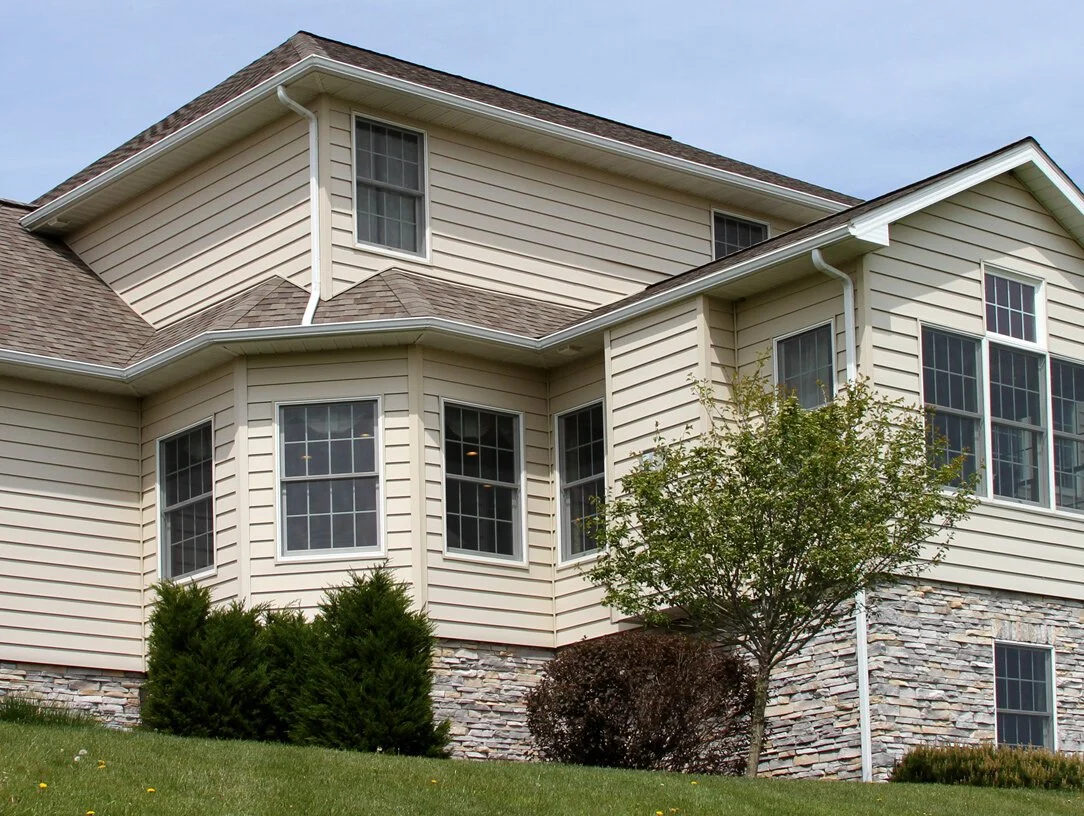
You're standing in your driveway in Sterling Heights, looking at the south side of your house. The vinyl siding you installed 15 years ago is starting to warp near the garage. A few panels cracked last winter when the temperature dropped to -8°F. Your neighbor just had James Hardie fiber cement installed, and they won't shut up about it. But it cost them nearly double what you paid for vinyl.
So which one actually holds up better in Michigan?
After 35 years installing house siding in Detroit and across Southeast Michigan, we've seen both materials tested by every weather condition this state can throw at them. Freeze-thaw cycles that crack foundations. Lake-effect snow that buries first-floor windows. Summer storms with 60 mph winds. We've repaired the failures, replaced the worn-out, and heard every homeowner regret story there is.
This isn't a sales pitch for one material over the other. It's an honest breakdown of how vinyl and fiber cement perform in Michigan's climate—what works, what fails, and what you need to know before you write a check to any Detroit siding company.
How Michigan Weather Tests Siding Materials
Michigan doesn't have weather—it has a stress test. If you want to know whether a siding material is actually durable, install it on a house in Macomb County and wait five years. The climate here exposes every weakness in a product.
Here's what siding faces in Southeast Michigan:
Freeze-Thaw Cycles (40-60 Per Winter)
This is the big one. When temperatures swing above and below 32°F—which happens constantly from November through March—moisture trapped in or behind siding expands as it freezes, then contracts as it thaws. Over and over. Most materials can handle a few cycles. Michigan throws 50+ at them every winter.
Vinyl becomes brittle in extreme cold. We've seen panels crack when a ladder leaned against them in January. Fiber cement, if not installed with proper clearances, can absorb moisture and experience edge swelling. Both materials need to be installed by someone who understands how they move.
Lake-Effect Snow and Ice Dam Pressure
Communities near Lake St. Clair—St. Clair Shores, Grosse Pointe Farms—get hammered with lake-effect snow. That means heavy snow loads sitting against siding for weeks, melting during the day, refreezing at night. Ice dams form along the roofline, and meltwater runs down behind the siding if the flashing isn't right.
This is where seamless gutters in Detroit, MI become critical. Properly functioning gutters prevent water from cascading down your siding and finding its way behind the material. We see rot behind both vinyl and fiber cement when gutters fail—it's not the siding's fault, it's poor water management.
Summer Heat, Humidity, and UV Exposure
July in Royal Oak can hit 95°F with 80% humidity. Dark-colored vinyl siding on a south-facing wall can reach 160°F in direct sun. At those temperatures, vinyl expands. If it's nailed too tight or doesn't have proper expansion gaps, it buckles. We've replaced entire walls of siding that looked like a washboard because the installer didn't account for thermal movement.
Fiber cement doesn't expand and contract nearly as much, but UV exposure will fade any paint finish over time. Quality paint systems—like the factory finishes on James Hardie ColorPlus or LP SmartSide FinishPro—hold up significantly better than field-applied paint.
Wind-Driven Rain and Storm Damage
Michigan gets severe thunderstorms with straight-line winds that can hit 70 mph. Wind-driven rain finds every gap in siding. Hail dents vinyl and can crack fiber cement if it's large enough. We've seen vinyl siding ripped off homes in Troy during summer storms because it wasn't fastened correctly.
Both materials need proper installation to resist wind. That means correct nailing patterns, proper overlap, and attention to corners, transitions, and penetrations. A good exterior services contractor in Detroit knows that the details matter more than the material.

Vinyl Siding: Performance in Michigan Conditions
Vinyl siding is polyvinyl chloride (PVC)—the same plastic used in plumbing pipes, but formed into thin panels with a textured finish. It's been the most popular siding in America for 40 years because it's affordable, low-maintenance, and comes in every color you can imagine.
But how does it actually hold up in Michigan?
Material Composition and Thermal Expansion
Vinyl expands and contracts with temperature changes more than almost any other siding material. A 12-foot panel can expand up to 1/2 inch between winter and summer. That's why vinyl has slotted nail holes and why you're supposed to leave a 1/4-inch gap at corners and trim.
Most vinyl siding failures we see aren't the material's fault—they're installation errors. Panels nailed too tight. No expansion gaps. Siding installed in cold weather when it's contracted, then buckling when summer heat expands it. A quality installer knows to nail in the center of the slot, not tight to the wall, and to leave room for movement.
Cold Weather Brittleness and Cracking
Here's the truth: vinyl gets brittle below 20°F. Not unusable, but brittle enough that impact can crack it. We've seen panels crack from:
- Ladders leaning against the house during winter roof work
- Snowblowers throwing chunks of ice against the foundation
- Kids throwing snowballs (seriously—it happens)
- Hail during a January ice storm
Higher-quality vinyl with thicker profiles and better impact modifiers holds up better. Cheap vinyl (0.040-inch thickness) cracks easier than premium vinyl (0.046-inch or thicker). If you're going with vinyl in Michigan, don't go with the cheapest option.
Wind Resistance and Attachment Methods
Vinyl siding is only as strong as its attachment to the house. The panels interlock, but they're not mechanically fastened to each other—they're nailed to the sheathing through a thin nailing hem. If the nails pull out or the hem tears, the panel comes off.
We've seen vinyl siding blow off during storms because:
- The installer used nails that were too short
- The sheathing was old and soft (common in 1960s ranch homes)
- The nailing pattern skipped studs
- The bottom course wasn't locked into the starter strip correctly
Quality vinyl from manufacturers like CertainTeed, GAF, or Mastic, installed correctly, can handle Michigan winds. But installation matters more than the brand name.
Realistic Lifespan in Southeast Michigan
Vinyl siding manufacturers will tell you their product lasts 30-40 years. In Michigan, here's what we actually see:
- Budget vinyl (builder-grade): 15-20 years before significant fading, cracking, or brittleness
- Mid-grade vinyl: 20-25 years with some color fade but still functional
- Premium vinyl (insulated, thicker profiles): 25-30 years if installed correctly
The first thing to go is usually the color. Dark colors fade faster. South and west-facing walls fade faster. By year 15, most vinyl has noticeably faded, even if it's still structurally sound.
Cost Analysis for Michigan Homes
As of 2026, here's what vinyl siding costs in Southeast Michigan for a typical 2,000-square-foot home (material and labor):
- Budget vinyl: $8,000-$12,000
- Mid-grade vinyl: $12,000-$16,000
- Premium insulated vinyl: $16,000-$22,000
That includes removal of old siding, new housewrap, trim, and installation. It doesn't include repairs to sheathing or framing if we find rot—which we do on about 30% of re-siding jobs.
Vinyl is the most affordable option upfront, and it requires almost no maintenance beyond occasional washing. No painting, no staining, no sealing. That's the appeal.
Michigan Reality Check: If you're planning to sell your home in 5-7 years and you're on a tight budget, vinyl makes sense. If you're staying in the house for 20+ years and you want something that holds its appearance longer, fiber cement is worth considering. We've had this conversation with homeowners in Clinton Township and Shelby Township a hundred times—it's about your timeline and your budget, not which material is "better."
Fiber Cement: How It Handles Michigan Extremes
Fiber cement siding—James Hardie, LP SmartSide, CertainTeed Weatherboards—is a composite material made of cement, sand, and cellulose fibers. It's denser, heavier, and more dimensionally stable than vinyl. It's also more expensive and requires more skill to install.
But in Michigan's climate, it has some real advantages.
Freeze-Thaw Resistance and Moisture Management
Fiber cement doesn't absorb water the way wood does, but it's not completely impervious either. Quality fiber cement (James Hardie, for example) is engineered to resist moisture penetration and handle freeze-thaw cycles without cracking or delaminating.
The key is proper installation. Fiber cement needs:
- A 6-inch clearance from grade (soil or concrete)
- A 2-inch clearance from rooflines and horizontal surfaces
- Sealed cut edges (field cuts need primer and paint)
- Proper flashing at windows, doors, and penetrations
When those details are ignored—and we see it ignored by contractors who don't specialize in fiber cement—moisture wicks into the material, and you get edge swelling, paint failure, and eventually rot in the sheathing behind it.
Installed correctly, fiber cement handles Michigan winters better than vinyl. We've seen 20-year-old James Hardie siding in Lake Orion that still looks tight and flat, with no warping or cracking.
Dimensional Stability Across Temperature Swings
Fiber cement expands and contracts about 1/10th as much as vinyl. That means fewer problems with buckling, fewer gaps at trim, and a more consistent appearance year-round. You don't see the wavy, rippled look that poorly installed vinyl gets after a few Michigan summers.
This stability also means fiber cement can be installed in cold weather (as long as the paint cures properly) without worrying about expansion issues when it warms up. Vinyl installed in January can buckle by July if the installer doesn't account for thermal movement.
Wind and Impact Resistance
Fiber cement is significantly more impact-resistant than vinyl. It won't crack from a ladder leaning against it. It won't dent from hail (though large hail can chip the paint). It's rated for higher wind speeds—James Hardie, for example, is rated up to 130 mph when installed per their specifications.
The trade-off is weight. Fiber cement weighs about 2.5 pounds per square foot, compared to 1 pound for vinyl. That means it requires more robust fastening—we use corrosion-resistant nails or screws driven into studs, not just sheathing. On older homes with questionable framing, that can be a consideration.
Long-Term Cost vs. Value
Fiber cement costs more upfront, but it holds its appearance longer and requires less frequent replacement. Here's the cost breakdown for a 2,000-square-foot home in Southeast Michigan (2026 pricing):
- James Hardie (primed, field-painted): $18,000-$24,000
- James Hardie ColorPlus (factory-finished): $22,000-$28,000
- LP SmartSide (primed or FinishPro): $16,000-$24,000
That's roughly 50-80% more than vinyl. But fiber cement typically lasts 30-50 years in Michigan with minimal maintenance. The factory-finished options (ColorPlus, FinishPro) come with 15-year warranties on the paint, compared to vinyl that starts fading in 10-12 years.
If you're planning to stay in the house long-term, the cost-per-year can actually be lower with fiber cement. If you're selling in a few years, vinyl makes more financial sense.

The Real Cost Comparison for Southeast Michigan
Let's break down what you're actually spending over the life of the siding, not just the initial installation. Michigan homeowners are practical—you want to know the total cost of ownership, not just the sticker price.
Material Costs (2026 Pricing)
For a typical 2,000-square-foot two-story home in Macomb or Oakland County:
| Material | Cost Range | Warranty |
|---|---|---|
| Budget vinyl | $8,000-$12,000 | Lifetime (prorated after 10 years) |
| Premium vinyl | $16,000-$22,000 | Lifetime (better fade protection) |
| Fiber cement (primed) | $18,000-$24,000 | 30-50 years (material) |
| Fiber cement (factory-finished) | $22,000-$28,000 | 30-50 years (material) + 15 years (finish) |
These prices include tear-off, disposal, new housewrap, trim, and installation by a licensed contractor. They don't include repairs to underlying structure—if we find rotted sheathing or framing (common in older homes), that's additional.
Installation Complexity and Labor
Vinyl is faster to install. An experienced crew can side a typical house in 3-5 days. Fiber cement takes 5-7 days because it's heavier, requires more precise cutting, and needs more attention to flashing and sealing.
That labor difference is baked into the cost, but it's worth understanding why fiber cement costs more—it's not just the material, it's the time and skill required to install it correctly. We've repaired fiber cement jobs from contractors who treated it like vinyl (no edge sealing, improper clearances, wrong fasteners), and the results are expensive to fix.
Maintenance Requirements Over 20 Years
Vinyl: Wash it once a year with a garden hose and mild detergent. That's it. No painting, no staining, no sealing. Total maintenance cost over 20 years: maybe $200 if you pay someone to pressure-wash it occasionally.
Fiber cement (primed, field-painted): You'll need to repaint every 10-15 years. For a 2,000-square-foot house, that's $4,000-$6,000 per paint job. Over 20 years, that's one repaint. Total maintenance cost: $4,000-$6,000.
Fiber cement (factory-finished): The factory finish (James Hardie ColorPlus, LP SmartSide FinishPro) lasts significantly longer—15-20 years before it needs repainting. You might get 20 years with no maintenance beyond washing. Total maintenance cost: $0-$4,000 depending on how long you wait to repaint.
Energy Efficiency and R-Value Reality
Let's be honest: neither vinyl nor fiber cement adds meaningful insulation to your home. Standard vinyl has an R-value of about 0.6. Fiber cement is around 0.4. Insulated vinyl (with foam backing) gets you to R-2 to R-3, which is better but still not significant compared to attic insulation in Metro Detroit (which should be R-49 to R-60).
If you want to improve your home's energy efficiency, invest in top-rated insulation services in Detroit, air-seal the attic and rim joists, and upgrade to energy-efficient windows in Southeast Michigan. Siding is about weather protection and curb appeal, not thermal performance.
Resale Value Impact in Metro Detroit Market
Both vinyl and fiber cement improve resale value compared to old, failing siding. But fiber cement typically adds slightly more value in higher-end markets—Bloomfield Hills, Rochester Hills, Grosse Pointe Farms—where buyers expect premium materials.
In more budget-conscious markets—Warren, Sterling Heights, parts of Macomb Township—vinyl is perfectly acceptable and won't hurt resale value. Buyers care more about condition and curb appeal than whether it's vinyl or fiber cement.
If you're prepping a house for sale, talk to your realtor. We work with realtors across Southeast Michigan, and the advice is usually the same: clean siding in good condition sells the house. The material matters less than the appearance.
Which Siding Works Best for Your Michigan Home?
There's no universal "best" answer. It depends on your house, your budget, your timeline, and what you value. Here's how we guide homeowners through the decision.
1960s Ranch Homes (Most Common in Macomb County)
These homes—single-story, 1,200-1,600 square feet, built with 2x4 framing and thin sheathing—are all over Clinton Township, Roseville, Warren, and Sterling Heights. They were built fast and cheap, and the sheathing is often soft or deteriorated.
Vinyl works well here because it's light, affordable, and doesn't stress the framing. We often find that the existing sheathing needs repair or replacement, and vinyl's lighter weight means we don't need to reinforce the structure.
If you go with fiber cement on a ranch, make sure the contractor checks the framing and sheathing first. We've had to add blocking or replace sheathing to handle the extra weight.
Brick Colonials (Oakland County Prevalence)
Two-story brick Colonials with siding on the upper level or gable ends are common in Troy, Rochester Hills, and Bloomfield Hills. The brick is typically in good shape, but the siding on the upper level takes a beating from sun and weather.
Fiber cement is a good match here because it complements the brick's durability and appearance. James Hardie's factory-finished options come in colors that pair well with brick, and the material's longevity matches the rest of the house.
Vinyl works too, especially premium insulated vinyl, but the color fade over 15-20 years can make the upper level look tired while the brick still looks solid.
Historic Districts and Architectural Considerations
If you're in a historic district—parts of Mount Clemens, downtown Royal Oak, older neighborhoods in Detroit—you may have restrictions on siding materials. Some districts require wood or fiber cement that mimics historic profiles. Vinyl, even high-quality vinyl, may not be allowed.
Fiber cement can be milled to match historic wood siding profiles (clapboard, shingle, board-and-batten), making it a good choice for historic homes where you want durability but need to maintain architectural character.
Budget-Conscious Decisions
If your budget is tight and you need to replace failing siding now, vinyl is the practical choice. It's affordable, it works, and it'll protect your home for 20+ years if installed correctly.
Don't let anyone shame you for choosing vinyl. It's the most popular siding in America for a reason—it delivers good value for the money. Just make sure you're working with a contractor who installs it right, not someone who's going to nail it tight and skip the expansion gaps.
When to Choose Vinyl vs. Fiber Cement
Choose vinyl if:
- Your budget is $8,000-$16,000 for a typical home
- You're planning to sell in 5-10 years
- You want zero maintenance beyond occasional washing
- Your home is a ranch or single-story with light framing
- You're in a neighborhood where vinyl is the norm
Choose fiber cement if:
- You're staying in the house 15+ years
- You want a material that holds its appearance longer
- You're willing to invest more upfront for lower long-term costs
- Your home is a Colonial, two-story, or has brick that you want to complement
- You're in a higher-end market where buyers expect premium materials
We install both. We're not here to push one over the other—we're here to help you make the right choice for your home and your situation. That's part of what it means to work with a trusted exterior contractor in Detroit.

Signs Your Current Siding Is Failing
How do you know when it's time to replace your siding? Here are the signs we look for during inspections across Macomb, Oakland, and St. Clair counties.
Warping, Buckling, or Loose Panels
If vinyl panels are warped, buckled, or pulling away from the house, that's a sign of improper installation (nailed too tight, no expansion gaps) or material failure. It won't get better—it'll get worse. Warped siding can't protect the sheathing underneath, and water will find its way in.
Fiber cement doesn't warp, but it can crack if it wasn't installed with proper clearances or if the house has settled and created stress points.
Moisture Intrusion and Rot Behind Siding
If you see water stains on interior walls, peeling paint inside the house, or soft spots when you push on the siding, you likely have moisture getting behind it. This is common around windows, doors, and where the siding meets the roofline.
Pull a piece of siding off (carefully) and look at the sheathing. If it's dark, soft, or crumbling, you have rot. That needs to be fixed before you install new siding, or you're just covering up a bigger problem.
Fading and Chalking
Vinyl fades. It's a fact of life in Michigan. If your siding has faded to the point where it looks washed out or chalky (run your hand across it—if white powder comes off, that's chalking), it's reached the end of its aesthetic life. It might still be functional, but it's not doing your home's curb appeal any favors.
Fiber cement with a quality factory finish fades much slower, but even it will eventually need repainting.
Increased Energy Bills
If your heating or cooling bills have crept up and you haven't changed your thermostat habits, failing siding could be part of the problem. Gaps, cracks, or loose panels let air infiltrate, making your HVAC system work harder.
That said, siding is only one piece of the energy efficiency puzzle. Before you blame the siding, check your attic insulation, air-seal the rim joists, and make sure your windows aren't leaking air.
When to Call a Contractor
If you're seeing any of these signs, it's time to get an inspection. We offer free, no-pressure estimates across Southeast Michigan. We'll look at your siding, check the sheathing, and give you an honest assessment of what needs to be done.
We're not going to tell you to replace your siding if it doesn't need replacing. We've been doing this since 1988—we don't need to scare you into a sale. If your siding is fine, we'll tell you. If it's failing, we'll explain why and give you options that fit your budget.
Beyond siding, we handle the full range of exterior services in Detroit—roofing, windows, gutters, insulation, and exterior painting. If your home needs more than just siding, we can handle it all in one project.
Ready to Get Started?
NEXT Exteriors has been protecting Michigan homes since 1988. Get a free, no-pressure estimate from a team that shows up on time and does the job right.
Get Your Free QuoteOr call us: (844) 770-6398
Frequently Asked Questions
Vinyl becomes more brittle below 20°F, which means it's more susceptible to cracking from impact—ladders, snowblowers, hail, or even kids throwing snowballs. Higher-quality vinyl with thicker profiles and better impact modifiers holds up better. Budget vinyl (0.040-inch thickness) is more prone to cracking than premium vinyl (0.046-inch or thicker). Proper installation also matters—panels nailed too tight or without expansion gaps are more likely to crack when temperatures swing.
Quality fiber cement (James Hardie, LP SmartSide) typically lasts 30-50 years in Michigan when installed correctly. The material itself is highly durable and resists freeze-thaw cycles, moisture, and impact better than vinyl. The factory-finished options (ColorPlus, FinishPro) come with 15-year paint warranties and can go 15-20 years before needing a repaint. Primed fiber cement that's field-painted will need repainting every 10-15 years. The key to longevity is proper installation—correct clearances, sealed edges, and proper flashing.
Insulated vinyl adds R-2 to R-3 of insulation value, which is a modest improvement but not a game-changer for energy efficiency. For context, your attic should have R-49 to R-60 of insulation in Michigan. The real benefits of insulated vinyl are improved impact resistance (the foam backing makes it less likely to dent or crack) and a flatter, more rigid appearance. If you're choosing between budget vinyl and insulated vinyl and the cost difference is reasonable, it's worth it. But don't expect dramatic energy savings—focus on attic insulation, air sealing, and windows for real efficiency gains.
Yes, but with some caveats. Fiber cement can be installed in cold weather as long as the temperature is above the paint manufacturer's minimum (usually 35-40°F) and the paint has time to cure properly. Vinyl is trickier—because it contracts in cold weather, it needs to be installed with extra attention to expansion gaps. If vinyl is installed when it's 20°F and contracted, it can buckle when it expands in summer heat. Experienced contractors know how to adjust for temperature, but many prefer to wait until spring. We install year-round, but we're selective about conditions and materials.
Lighter colors fade slower and absorb less heat, which means less thermal expansion and longer-lasting appearance. Dark colors—especially dark grays, blues, and browns—look great initially but will fade faster from UV exposure and can reach higher temperatures in summer sun, causing more expansion in vinyl. If you love dark colors, fiber cement with a factory finish (James Hardie ColorPlus, LP SmartSide FinishPro) holds color significantly better than vinyl. For vinyl, stick with mid-tones or lighter shades if you want the color to last 15+ years without noticeable fading.
Not necessarily, but it's a good time to evaluate it. If your siding is 15+ years old, faded, or showing signs of damage, it makes sense to do both projects together. You'll save on labor (the crew is already there with scaffolding and equipment), and you can coordinate the roof and siding colors for a cohesive look. We often recommend doing both if the siding is near the end of its life—it's more efficient than doing two separate projects a few years apart. If your siding is newer and in good shape, there's no need to replace it just because you're getting a new roof.
Both are excellent fiber cement products that perform well in Michigan. James Hardie is a cement-based product (cement, sand, cellulose fibers), while LP SmartSide is an engineered wood product with a moisture-resistant coating. James Hardie is denser and heavier, with slightly better fire resistance. LP SmartSide is lighter, easier to cut, and often costs a bit less. Both come with factory-finished options (ColorPlus for Hardie, FinishPro for LP) that carry 15-year paint warranties. The choice often comes down to installer preference and availability. We install both and recommend based on your home's specific needs and budget.