

How to Choose the Right Siding for Your Michigan Home
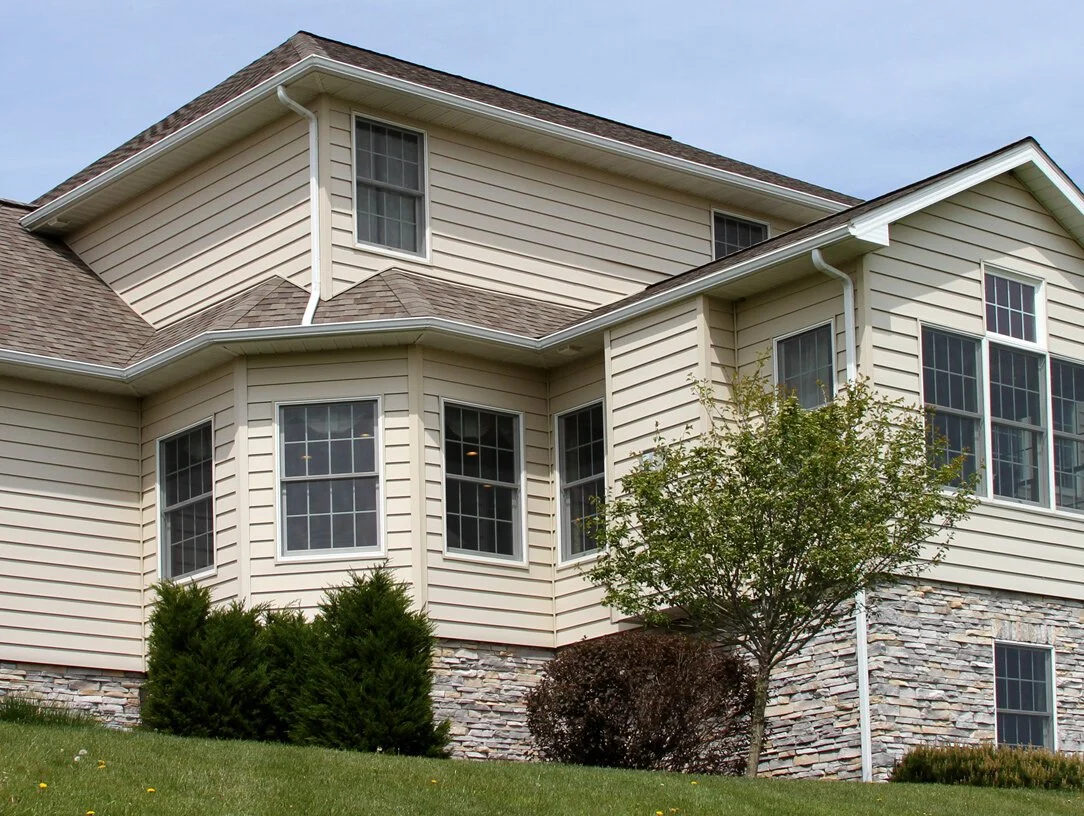
I've been installing siding in Southeast Michigan since 1988, and I can tell you this: what works in North Carolina or Arizona will fail here within five years. Michigan doesn't just test siding — it punishes it. Freeze-thaw cycles crack inferior materials. Lake-effect moisture rots improperly installed boards. Summer heat warps cheap vinyl like a potato chip left on the dashboard.
Choosing the right siding for your Michigan home isn't about picking the prettiest color from a brochure. It's about understanding how materials respond to 40-degree temperature swings in a single day, how moisture moves through wall assemblies during a January thaw, and why the cheapest bid usually costs you twice as much three winters later.
This guide walks you through the decision the way we approach it with our clients in Sterling Heights, Troy, and across Macomb County — starting with the weather reality, moving through material science, and ending with what actually matters when you're writing the check.
Why Michigan Weather Demands Different Siding Standards
Southeast Michigan sits in a climate zone that building scientists politely call "mixed-humid." What that really means: your siding needs to handle everything.
Winter brings freeze-thaw cycles that split materials from the inside out. Water gets into microscopic cracks, freezes, expands, and turns hairline fractures into full splits. We see this every March when homeowners in Rochester Hills call about siding that was "fine last fall" and is now buckled in three places.
Lake-effect weather dumps moisture into the air that doesn't just sit on surfaces — it drives into seams, behind trim boards, and through any gap in your moisture barrier. Vinyl siding installed without proper underlayment in Grosse Pointe Farms will have water running down the interior sheathing by the second winter.
Summer heat in Michigan is underestimated. We hit 90+ degrees with high humidity regularly. Cheap vinyl siding expands and contracts so much that fasteners pull through, seams open up, and panels warp. I've measured siding surface temperatures at 160°F on south-facing walls in July — that's enough to deform low-grade materials permanently.
The Michigan Reality: Your siding needs to survive 100+ freeze-thaw cycles per year, handle moisture from lake-effect systems, resist UV degradation during humid summers, and maintain structural integrity through temperature swings from -10°F to 95°F.
This is why our house siding in Detroit installations focus heavily on substrate preparation and moisture management — the siding itself is only half the system.
The Four Siding Materials That Actually Work in Michigan
After 35+ years installing siding across Southeast Michigan, four materials consistently perform. Everything else is either too expensive for most homeowners, too maintenance-intensive, or fails within a decade.

Vinyl Siding: The Practical Default
Vinyl gets a bad reputation because of the cheap builder-grade stuff installed on subdivisions in the 1990s. Modern premium vinyl — we're talking .046" thickness or higher — is a completely different product.
Pros:
- Never needs painting or staining
- Resists moisture infiltration when properly installed
- Handles freeze-thaw cycles without cracking (if it's quality material)
- Lowest upfront cost of durable options
- Wide color selection that won't fade (premium grades with UV inhibitors)
Cons:
- Can warp in extreme heat if south-facing and dark-colored
- Impact damage from hail or debris cracks panels
- Expansion/contraction requires proper fastening technique
- Cheapest grades look cheap and fail early
We install CertainTeed and Norandex premium vinyl regularly. Expect to pay $4.50–$7.50 per square foot installed for quality material with proper underlayment and trim work.
James Hardie Fiber Cement: The Durability Standard
James Hardie is what we recommend when clients want "install it and forget it for 30 years." It's a cement-based composite that's engineered specifically for freeze-thaw climates.
Pros:
- Virtually indestructible — resists impact, fire, moisture, insects, rot
- Dimensional stability in temperature extremes (minimal expansion/contraction)
- Can be painted any color; factory finish lasts 15+ years
- Increases home resale value more than vinyl
- 30-year non-prorated warranty
Cons:
- Requires repainting every 15–20 years (though it holds paint better than wood)
- Heavier material means more labor-intensive installation
- Higher upfront cost than vinyl
- Must be installed by certified contractors to maintain warranty
NEXT Exteriors is a James Hardie certified installer. We see this material perform flawlessly on homes in Lake Orion and Bloomfield Hills that face full northern exposure to lake-effect weather. Cost runs $8.50–$12.00 per square foot installed.
LP SmartSide Engineered Wood: The Middle Ground
LP SmartSide is treated engineered wood that offers a wood-grain aesthetic without the maintenance nightmare of real cedar. It's become increasingly popular with clients who want the look of wood siding but need Michigan-grade durability.
Pros:
- Authentic wood texture and appearance
- Treated for moisture, fungal decay, and termite resistance
- More impact-resistant than vinyl
- Accepts paint well; factory-primed options available
- 50-year limited warranty against rot and fungal decay
Cons:
- Requires painting/staining every 10–15 years
- More expensive than vinyl, less than fiber cement
- Edges must be sealed properly during installation to prevent moisture infiltration
- Heavier than vinyl, requires experienced installation
We've installed LP SmartSide on dozens of homes in Clinton Township and Shelby Township. When installed correctly with proper flashing and trim details, it performs beautifully. Expect $7.00–$10.00 per square foot installed.
For a detailed comparison, see our guide on LP SmartSide vs. James Hardie siding in Michigan.
Cedar and Natural Wood: When It Makes Sense
Real wood siding — cedar, redwood, pine — has a place in Michigan, but it's a narrow one. Historic homes in certain neighborhoods require it. Some homeowners simply want the aesthetic and are willing to commit to the maintenance.
Pros:
- Unmatched natural beauty and character
- Can be stained or painted in unlimited colors
- Repairable — individual boards can be replaced
- Required in some historic districts
Cons:
- Requires restaining or repainting every 3–7 years
- Susceptible to rot, insect damage, and fungal growth in Michigan's humid climate
- Expensive upfront and ongoing maintenance costs
- Can warp, split, or crack with moisture and temperature changes
We install cedar siding when clients understand the commitment. Cost runs $9.00–$15.00+ per square foot installed, plus ongoing maintenance expenses that add up quickly.
What to Look for in Michigan-Grade Siding
Material type matters, but so do the specifications within that material category. Here's what separates siding that lasts 30 years from siding that fails in 10.
Wind Rating and Impact Resistance
Michigan gets severe thunderstorms with straight-line winds exceeding 70 mph. Your siding needs to stay on the house.
Look for vinyl siding with a wind rating of at least 110 mph. Premium products like CertainTeed Monogram achieve ratings up to 200+ mph when installed per manufacturer specs. Fiber cement products like James Hardie are inherently wind-resistant due to their density and fastening requirements.
Impact resistance matters for hail. We see hail damage claims every summer in Macomb and Oakland counties. Fiber cement and engineered wood handle impacts far better than vinyl. If you're in a hail-prone area (check your homeowner's insurance claim history), factor this in.
Moisture Management and Vapor Permeability
Siding doesn't keep water out by itself — the entire wall assembly does. But the siding's ability to shed water and allow vapor to escape matters enormously in Michigan's climate.
Vinyl siding is non-porous, which is good for blocking liquid water but means moisture that gets behind it (and moisture always gets behind it) needs an escape route. That's why proper house wrap and drainage planes are non-negotiable.
Fiber cement and engineered wood are slightly vapor-permeable, which helps wall assemblies dry out after moisture events. James Hardie's ColorPlus finish is designed to breathe while repelling water.
We see moisture problems most often when contractors skip the house wrap, use cheap felt paper, or don't flash windows and doors correctly. The siding material is irrelevant if water is running down your sheathing.
Thermal Expansion and Contraction Properties
This is where cheap vinyl siding fails in Michigan. PVC expands and contracts significantly with temperature changes. Dark colors are worse — a dark vinyl panel can expand over half an inch on a 16-foot run when surface temps hit 150°F.
Quality vinyl siding accounts for this with elongated nail slots and installation guidelines that require leaving expansion gaps. When we install vinyl, we never face-nail through the material — nails go in the center of the slots, loose enough that panels can move.
Fiber cement has minimal thermal movement — it's one of its major advantages. LP SmartSide also performs well because the engineered wood structure resists dimensional changes better than solid wood.
Installation Truth: The best siding material installed incorrectly will fail faster than mediocre material installed properly. Thermal expansion gaps, proper fastening, flashing details, and substrate prep determine longevity more than brand names.
Warranty Coverage Specific to Climate
Read the warranty fine print. Many manufacturers void coverage if siding is installed in "extreme climates" or if specific installation requirements aren't met.
James Hardie's 30-year warranty is non-prorated and covers material defects even in harsh climates — but only if installed by a certified contractor following their specs. CertainTeed's Lifetime Limited Warranty on premium vinyl includes fade and hail coverage, but installation must meet their guidelines.
We provide warranty documentation for every project and follow manufacturer installation requirements precisely. If a problem occurs, you want the warranty to actually cover it.
The Real Cost of Siding in Southeast Michigan (2026)
Siding costs vary based on material, home size, architectural complexity, and current material availability. Here's what we're seeing in 2026 for a typical 2,000-square-foot two-story home in Metro Detroit.
Premium Vinyl Siding: $9,000–$15,000 installed
Includes quality material (.044" or thicker), house wrap, trim, soffit/fascia if needed. Lower end for simple ranch, higher for two-story with gables and complex trim.
James Hardie Fiber Cement: $17,000–$24,000 installed
Includes HardiePlank or HardieShingle, ColorPlus factory finish, house wrap, PVC trim, labor. Complexity and finish choices drive the range.
LP SmartSide Engineered Wood: $14,000–$20,000 installed
Includes LP SmartSide panels or lap siding, house wrap, trim, priming. Painting adds $3,000–$5,000 if not using pre-finished product.
Cedar or Natural Wood: $18,000–$30,000+ installed
Includes material, house wrap, trim, staining or painting. Ongoing maintenance costs add $2,000–$4,000 every 5–7 years.
These numbers assume average-condition substrate (sheathing in good shape, no major rot repair). If we find rotted sheathing, failed moisture barriers, or structural issues during tear-off, costs increase. We always inspect thoroughly before quoting.
For more detailed pricing breakdowns, see our post on siding replacement cost in Michigan for 2026.
Long-Term Maintenance Costs
Upfront cost is only part of the equation. Factor in what you'll spend over 30 years:
Vinyl: Minimal. Wash it once a year. Maybe replace a cracked panel every decade if you get unlucky with impact damage. Total maintenance over 30 years: under $500.
Fiber Cement: Repaint every 15–20 years. Professional exterior painting runs $4,000–$7,000 for a typical home. Total over 30 years: $4,000–$7,000.
Engineered Wood: Repaint or restain every 10–15 years. Slightly more maintenance than fiber cement due to edge sealing requirements. Total over 30 years: $6,000–$10,000.
Natural Wood: Restain or repaint every 3–7 years depending on exposure and product quality. Total over 30 years: $12,000–$24,000+.
When clients ask us what we'd put on our own homes, the answer depends on budget and priorities. For pure value and low maintenance, premium vinyl. For "set it and forget it" durability, James Hardie. For wood aesthetics without constant upkeep, LP SmartSide.
ROI and Resale Value
Siding replacement is one of the higher-ROI exterior improvements. According to recent Remodeling Magazine Cost vs. Value reports, siding replacement in the East North Central region (which includes Michigan) recoups 65–75% of cost at resale.
Fiber cement and engineered wood tend to return slightly more than vinyl in higher-end markets (Bloomfield Hills, Grosse Pointe, parts of Rochester Hills). In mid-range markets, quality vinyl performs just as well from an ROI perspective.
The bigger value is in preventing damage. Failing siding leads to water infiltration, insulation damage, mold, and structural rot. We've seen homes with $3,000 worth of siding damage turn into $25,000 remediation projects because the problem wasn't caught early.

Signs Your Current Siding Is Failing
Most homeowners wait too long to address siding problems. By the time it's "obviously bad," there's often hidden damage behind it. Here's what to watch for.
Visible Warping, Cracking, or Buckling
Warped or buckled vinyl siding means it was either installed incorrectly (face-nailed, no expansion gaps) or it's cheap material that couldn't handle Michigan's temperature swings. Either way, it's failing.
Cracked fiber cement or engineered wood usually indicates impact damage or improper installation (over-driven fasteners, inadequate clearance from grade). Small cracks turn into big cracks quickly once freeze-thaw cycles start working on them.
Wood siding that's cupping, splitting, or showing rot needs replacement. You can't "fix" rotted wood — you can only delay the inevitable.
Water Infiltration and Interior Damage
If you see water stains on interior walls, peeling paint near windows or corners, or musty smells in certain rooms, your siding system is leaking.
Common failure points: window and door flashing, corner boards, J-channel at roof intersections, and anywhere two different materials meet (brick to siding transitions, for example).
We find moisture problems during exterior siding repair in Metro Detroit calls all the time. The siding itself might look fine from the curb, but pull off a corner board and there's black mold on the sheathing.
Energy Bill Increases
Failing siding often means failing insulation and air sealing. If your heating bills have crept up over the past few winters and your HVAC system hasn't changed, your building envelope might be compromised.
Air leaks around windows and doors, gaps in siding seams, and missing or damaged house wrap all contribute to energy loss. Replacing siding gives you the opportunity to upgrade your insulation in Southeast Michigan at the same time — the wall cavities are already open.
When Repair vs. Replacement Makes Sense
If damage is localized (one wall, a section around a window, storm damage to a gable end), repair might be the right call — assuming we can match the existing material and color.
Vinyl siding from the past 10 years is often matchable. Discontinued colors or older profiles might not be. Fiber cement and engineered wood are easier to match if we know the product line.
If damage is widespread, the siding is 20+ years old, or we find substrate problems during inspection, full replacement is usually more cost-effective than piecemeal repairs.
We give honest assessments. If your siding has another 10 years in it and you just need a few boards replaced, we'll tell you that. If it's failing and you're throwing good money after bad with repairs, we'll tell you that too.
How NEXT Exteriors Approaches Siding Projects
We've been doing this since 1988, and our process hasn't changed much because it works. No shortcuts, no surprises, no "we found problems after we tore everything off" unless we genuinely found problems.
Proper Substrate Preparation
Before any siding goes up, we inspect and repair the substrate. Rotted sheathing gets replaced. Missing or damaged house wrap gets installed correctly. Flashing around windows and doors gets redone if it's questionable.
This is where cheaper contractors cut corners. They'll slap new siding over rotted sheathing and tell you it's fine. It's not fine. You're trapping moisture and rot behind $15,000 worth of new material.
We use Tyvek or equivalent house wrap on every job. It's a drainage plane and air barrier that keeps bulk water out while allowing vapor to escape. We tape seams, flash penetrations, and integrate it with window and door flashing per building code.
Moisture Barrier Installation
Michigan's building code requires a weather-resistant barrier behind all siding. We exceed code by using quality materials and following manufacturer installation specs exactly.
For fiber cement and engineered wood, we often use a rainscreen approach — furring strips that create a small air gap behind the siding. This allows any moisture that gets past the siding to drain and dry, dramatically extending the life of the wall assembly.
On homes with chronic moisture problems (north-facing walls, heavy tree cover, areas with poor drainage), a rainscreen system is worth every penny.
Attention to Trim and Flashing Details
The siding itself is the easy part. The hard part — the part that determines whether your siding lasts 15 years or 35 years — is the trim, flashing, and transition details.
Every window and door gets properly flashed with a sill pan, jamb flashing, and head flashing that integrates with the house wrap. Corner boards get caulked and sealed. J-channel at roof lines gets counterflashing so water can't run behind it.
We use PVC trim on most jobs now instead of wood. It doesn't rot, doesn't need painting (or takes paint beautifully if you want it painted), and handles moisture without issue. On James Hardie jobs, we use Hardie trim for a monolithic system.
If you're combining siding and window replacement together in Metro Detroit, the sequencing and integration of these systems is critical. Windows go in first, get flashed properly, then siding integrates with the window trim and flashing system.
Working with Other Exterior Systems
Siding projects often overlap with other exterior work. If your seamless gutters in Detroit, MI are failing, we coordinate gutter replacement with siding so the fascia is properly prepared and everything integrates cleanly.
If your Detroit roofing services need attention, we handle that first — you don't want to install new siding and then have a roofing crew tearing off shingles and potentially damaging the fresh siding.
When the project scope includes exterior painting in Southeast Michigan, we use Sherwin-Williams products exclusively. Their Duration and Emerald lines hold up to Michigan weather better than any other paint we've tested.
Our full range of exterior services in Detroit means you're working with one contractor, one timeline, one warranty. No coordination headaches between multiple trades.
Ready to Get Started?
NEXT Exteriors has been protecting Michigan homes since 1988. Get a free, no-pressure estimate from a team that shows up on time and does the job right.
Get Your Free QuoteOr call us: (844) 770-6398
Frequently Asked Questions
James Hardie fiber cement performs best in Michigan's freeze-thaw cycles due to its dimensional stability and moisture resistance. It doesn't expand or contract significantly with temperature changes, resists cracking from ice formation, and handles moisture without rotting. Premium vinyl (0.046" thickness or higher) is a close second and offers excellent value. LP SmartSide engineered wood also performs well when properly installed with sealed edges and adequate clearance from grade.
Lifespan depends on material and installation quality. Premium vinyl siding lasts 25–40 years. James Hardie fiber cement lasts 30–50 years with one or two repaints. LP SmartSide engineered wood lasts 25–35 years with proper maintenance. Natural wood siding lasts 15–30 years but requires significant ongoing maintenance. These numbers assume professional installation with proper moisture barriers, flashing, and substrate preparation. Cheap materials or poor installation can cut these lifespans in half.
We don't recommend it. Installing over existing siding prevents inspection of the substrate, traps moisture problems, adds weight to the wall assembly, and makes proper flashing integration nearly impossible. You're also adding another layer that future contractors will have to remove, increasing costs down the line. The only time we consider it is over flat, solid wood siding in excellent condition — and even then, we prefer full removal so we can verify the sheathing and moisture barrier are sound.
Thickness, quality of PVC resin, UV inhibitors, and manufacturing tolerances. Builder-grade vinyl is typically 0.040" thick or less, uses recycled PVC with inconsistent color, and has minimal UV protection — it fades, warps, and cracks within 10–15 years in Michigan. Premium vinyl (CertainTeed Monogram, Norandex Sagebrush, etc.) is 0.044–0.052" thick, uses virgin PVC with advanced UV inhibitors, and includes features like rigid foam backing for insulation and impact resistance. It costs 30–50% more upfront but lasts twice as long.
Not necessarily, but it's often the most cost-effective time to do it. When we remove siding, we expose the window rough openings and can properly flash new windows into the wall assembly. If your windows are 15+ years old, drafty, or showing seal failures, replacing them during a siding project saves on labor costs (we're already there with scaffolding and crews) and ensures perfect integration between the window flashing and new moisture barrier. If your windows are newer and performing well, we can work around them — but we'll inspect the existing flashing and upgrade it if needed.
Ask specific questions: How do they handle moisture barriers in freeze-thaw climates? What's their approach to flashing windows and doors? Do they leave expansion gaps for vinyl siding, and how much? Can they explain why house wrap matters in Michigan's mixed-humid climate? A contractor who's been working in Southeast Michigan for years will have detailed answers. Also check their credentials — James Hardie and LP SmartSide both require installer certification that includes climate-specific training. NEXT Exteriors has been installing siding in Michigan since 1988 and holds manufacturer certifications from all major siding brands.
A complete quote should include: removal and disposal of existing siding, inspection and repair of substrate (sheathing), installation of house wrap or weather-resistant barrier, new siding material, all trim (corners, J-channel, window/door trim), soffit and fascia if needed, flashing at all penetrations and transitions, caulking and sealants, and cleanup. At NEXT Exteriors, we also include a detailed material list, installation timeline, warranty information, and photos of similar completed projects. Be wary of quotes that seem too low — they often exclude critical items like house wrap, substrate repair, or proper trim work.