

James Hardie Siding Installers Metro Detroit | NEXT Exteriors

We've been installing James Hardie fiber cement siding in Southeast Michigan since before most homeowners knew what it was. Back in the early 1990s, vinyl was king and contractors looked at us sideways when we recommended this "concrete board" stuff. Fast forward three decades, and every third siding project in Sterling Heights, Rochester Hills, and Grosse Pointe involves James Hardie.
The reason? Michigan weather destroys everything else eventually. Vinyl cracks in our January cold snaps. Wood siding rots behind ice dams. Aluminum dents from hail and fades from UV exposure bouncing off snow. James Hardie fiber cement was engineered for exactly the punishment our climate delivers — freeze-thaw cycles, lake-effect moisture, summer storms that come out of nowhere.
But here's what most homeowners don't realize: the material is only half the equation. A bad James Hardie installation will fail just as spectacularly as cheap vinyl. We've torn off plenty of fiber cement jobs done by crews who didn't understand flashing details, moisture management, or proper fastener schedules. The siding looked fine from the curb — until water got behind it and turned the sheathing into mush.
This isn't a sales pitch. It's what 35 years of house siding installation in Detroit taught us about James Hardie, Michigan homes, and why installation quality matters more than the product name on the box.
Why James Hardie Dominates Michigan Siding Projects
James Hardie fiber cement siding is made from Portland cement, ground sand, and cellulose fibers. It's formed under high pressure and heat-cured to create a dimensionally stable board that won't expand, contract, or warp the way organic materials do. In building science terms, it has near-zero moisture movement — critical in a climate where your siding goes from 90°F and humid in July to -5°F and bone-dry in January.
The HardiePlank line (their lap siding) comes with a 30-year non-prorated warranty against cracking, rotting, and hail damage up to 1.25 inches in diameter. That's not marketing fluff — we've seen 20-year-old installations in Macomb County that still look sharp. No fade, no buckle, no rot around window trim where vinyl would have cracked or wood would have swelled.
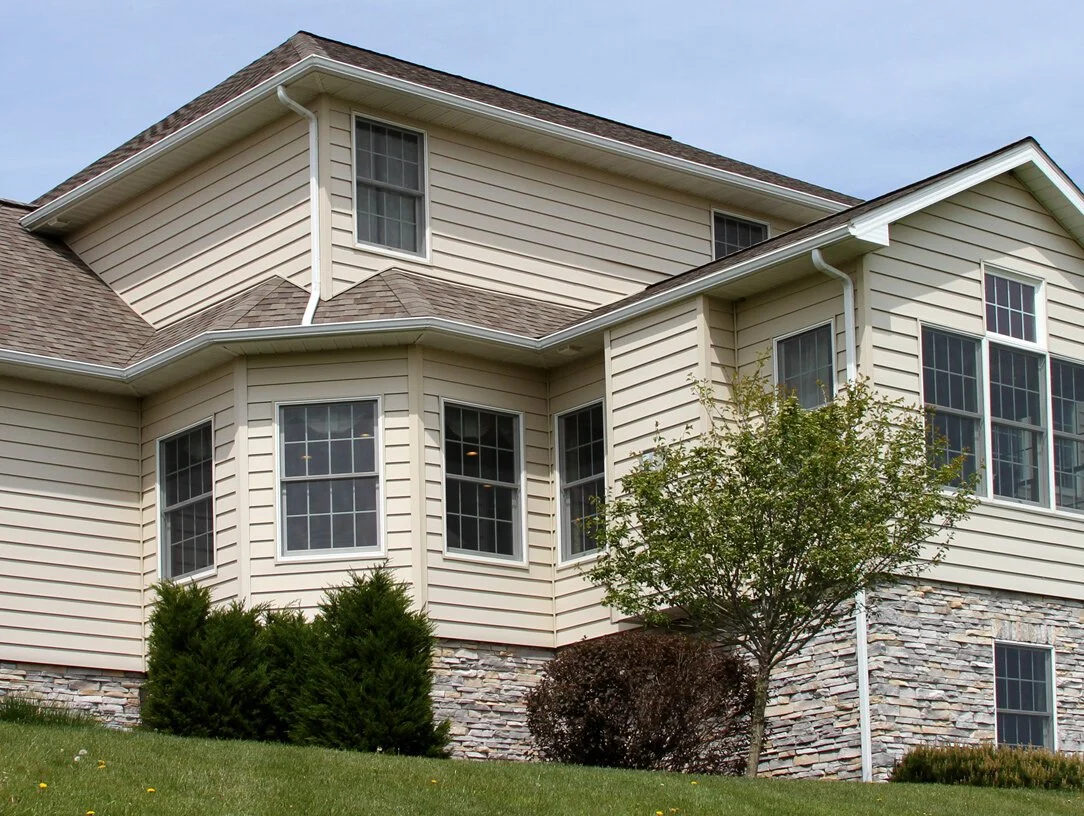
Here's why it works in Michigan:
- Freeze-thaw resistance: Fiber cement doesn't absorb water like wood or crack like brittle vinyl. When moisture does penetrate (and it will, through fastener holes or end cuts), the material doesn't swell or delaminate.
- Impact resistance: We get hailstorms every summer. James Hardie is rated for 1.25-inch hail without damage. Vinyl dents. Aluminum dents worse. Wood splits.
- Fire resistance: It's a Class A non-combustible material. Matters if you're near wooded areas or if your neighbor's grill gets too close to the property line.
- Dimensional stability: It doesn't expand and contract with temperature swings the way vinyl does. That means fewer gaps, less noise during temperature shifts, and trim that stays tight.
The downside? Weight. James Hardie is heavy — about 2.3 pounds per square foot for 5/16-inch HardiePlank. That means proper fastening into studs, not just sheathing. It also means more labor time, which drives up installation costs. But for homeowners planning to stay in their Sterling Heights ranch or Rochester Hills colonial for the next 20 years, it's the right call.
We also work with other premium siding materials through our exterior services in Detroit, including LP SmartSide engineered wood, but James Hardie remains the gold standard for durability in Michigan's climate.
What Separates Good Installers from Weekend Warriors
James Hardie publishes a Best Practices Installation Guide that's 60+ pages long. Most homeowners never see it. Most contractors skim it. We keep printed copies in every crew truck because the details in that manual are the difference between a 30-year installation and a callback in year five.
Here's what matters:
Moisture Barrier and Flashing
James Hardie requires a weather-resistive barrier (WRB) behind the siding — typically house wrap like Tyvek or a peel-and-stick membrane. But the real work is in the flashing details. Every window, every door, every penetration needs proper flashing tape and kick-out flashing at roof-to-wall transitions. We use Vycor or similar self-adhering flashing tape, applied shingle-style so water drains out, not in.
On brick-to-siding transitions (common on Michigan Colonials), we install a two-piece Z-flashing system that creates a capillary break. Skip this, and water wicks up from the brick into the fiber cement. Three years later, you've got rot in the wall cavity.
Fastener Schedule
James Hardie specifies fasteners every 16 inches on studs, with specific edge distances and depth requirements. Use a nail gun set too deep, and you crack the board. Set it too shallow, and the siding rattles in the wind. We use stainless steel ring-shank siding nails, not the cheap galvanized brads some crews use. Costs more. Doesn't rust out in ten years.
End Cuts and Caulking
Every cut edge on fiber cement siding needs to be sealed with James Hardie-approved caulk or touch-up paint. The factory edges are sealed; your cuts aren't. Water penetration through an unsealed end cut will wick into the board and cause edge swelling. We prime and paint every cut edge before installation. Takes extra time. Prevents callbacks.
Clearances
James Hardie requires a 6-inch clearance from finished grade to the bottom of the siding, and a 2-inch clearance from horizontal surfaces like decks or roof lines. This keeps splash-back and standing water away from the siding. On Michigan homes with shallow crawl spaces or low foundation walls, meeting that 6-inch clearance sometimes means regrading or adding a gravel drainage strip. Most homeowners don't want to hear it, but it's in the warranty.
Pro Tip: If a James Hardie installer doesn't mention flashing details or clearances during the estimate, they're either cutting corners or don't know the installation manual. Either way, find someone else.
Proper installation also ties into other exterior systems. If your seamless gutters in Detroit, MI are undersized or clogged, water overflows and runs down the siding. If your attic insulation in Metro Detroit is inadequate, ice dams form and water backs up behind the siding at the roofline. Siding doesn't exist in isolation — it's part of a building envelope system.
Real Cost Breakdown for Metro Detroit Homes
Let's talk numbers. James Hardie siding costs more than vinyl, less than custom millwork or natural stone. For a typical 2,000-square-foot Michigan ranch with standard trim and no complex architectural details, here's what we're seeing in 2026:
- Material cost: $8,000–$12,000 for James Hardie HardiePlank lap siding, trim boards, and corner boards. Includes house wrap, flashing tape, fasteners, and caulk.
- Labor cost: $10,000–$15,000 for removal of old siding, installation of new moisture barrier and flashing, James Hardie installation, trim work, and cleanup.
- Paint/finish: $3,000–$5,000 if you're using ColorPlus pre-finished siding (factory-applied finish with 15-year warranty). Add $2,000–$4,000 if you're field-painting with Sherwin-Williams exterior paint.
Total project cost: $21,000–$32,000 for a full siding replacement on a 2,000-square-foot home.
For a larger 2,800-square-foot Colonial with two stories, bay windows, and brick accents, add 30-40% to those numbers. Complex rooflines, dormers, and intricate trim details drive up labor hours.

What Drives the Cost?
Three things make James Hardie more expensive than vinyl:
- Material weight: Fiber cement is heavy. That means more labor time for handling, cutting, and installation. It also means more waste — you can't just toss scraps in a dumpster like vinyl. Disposal costs are higher.
- Specialized tools: Cutting fiber cement creates silica dust, which requires proper dust control equipment and respirators. We use shears and score-and-snap tools where possible, but complex cuts need a saw with dust extraction. Not every contractor has that equipment or knows how to use it safely.
- Installation precision: Vinyl is forgiving. You can fudge measurements, overlap seams, and hide mistakes. James Hardie isn't. Every cut needs to be exact. Every fastener needs to be placed correctly. Every flashing detail needs to be right. That precision takes time.
Is it worth it? For most homeowners in Shelby Township, Troy, or Lake Orion planning to stay in their home for 15+ years, yes. The material lasts longer, looks better, and holds resale value better than vinyl. For someone flipping a house or planning to move in five years, vinyl might make more financial sense.
If you're also considering a roof upgrade, bundling it with siding can save on setup and scaffolding costs. Our Detroit roofing services often coordinate with siding projects to maximize efficiency and minimize disruption.
Michigan-Specific Installation Challenges
Every region has quirks. In Michigan, we deal with:
Freeze-Thaw Cycles
Southeast Michigan averages 60-80 freeze-thaw cycles per winter. Water gets into cracks, freezes, expands, and pries things apart. That's why proper flashing and sealant details matter. We use polyurethane sealants rated for -40°F to +180°F. Cheap acrylic caulk cracks in two winters.
Ice Dam Zones
Homes with inadequate attic insulation develop ice dams — ridges of ice at the roof edge that trap meltwater. That water backs up under shingles and behind siding at the roofline. On James Hardie installations, we extend the house wrap up and over the top plate, then flash it to the roof underlayment. Creates a continuous moisture barrier. Costs an extra hour of labor. Prevents $5,000 in water damage repairs.
If you're dealing with ice dams, the real fix is better attic insulation and air sealing. Siding can't fix a thermal envelope problem.
Brick Transitions
Half the homes in Metro Detroit have brick on the first floor and siding on the second. That transition is a water entry point. We install a two-piece Z-flashing system: one leg tucks into the brick mortar joint, the other extends under the house wrap. Then we seal the top edge with polyurethane. Done right, it's invisible and bulletproof. Done wrong, it's a rot magnet.
Lake-Effect Moisture
Homes near Lake St. Clair or in St. Clair Shores deal with higher ambient humidity and wind-driven rain. We use heavier-gauge house wrap (Tyvek DrainWrap or similar) that creates a drainage plane behind the siding. Costs $200 more in materials. Worth every penny in coastal zones.
Historic District Requirements
Parts of Grosse Pointe, Birmingham, and Royal Oak have historic district regulations that dictate siding profiles, colors, and trim details. James Hardie offers several profiles that match traditional wood lap siding, but you need to get approval before ordering materials. We've navigated historic district reviews on dozens of projects — it's doable, but add 4-6 weeks to the timeline for approvals.
Proper window installation in Detroit also matters when you're re-siding. New siding often reveals gaps around old window frames that need flashing and sealing. We coordinate window and siding projects to ensure proper integration.
How to Vet Your James Hardie Installer
Not all James Hardie installers are equal. Here's how to separate the pros from the pretenders:
1. Verify James Hardie Preferred Contractor Status
James Hardie has a network of Preferred Contractors who've completed training and agree to follow installation best practices. It's not a guarantee of quality, but it's a baseline. Ask for proof. Check the James Hardie website to confirm the contractor is listed.
2. Check Michigan Builder's License
Every contractor doing siding work in Michigan needs a Residential Builder's License. Verify the license number through the State of Michigan's online database. We're licensed under Premier Builder Inc., license #2101163607. It's public record. If a contractor won't give you their license number, walk away.
3. Review Insurance and Bonding
Ask for certificates of insurance for both general liability and workers' compensation. Minimum $1 million in general liability coverage. Workers' comp protects you if someone gets hurt on your property. If a contractor says they're "insured" but won't provide certificates, they're not insured.
4. Inspect Past Projects
Ask to see completed James Hardie installations in Southeast Michigan, preferably within the past 2-3 years. Look for:
- Clean, consistent trim work with tight miters
- Proper clearance from grade and horizontal surfaces
- No visible fastener heads (should be flush, not overdriven)
- Smooth, consistent reveal (the exposed portion of each siding course)
- Proper flashing at windows, doors, and roof lines
If the contractor can't show you local work, that's a red flag.
5. Get Installation Details in Writing
The contract should specify:
- James Hardie product line and profile (HardiePlank, HardieShingle, etc.)
- House wrap brand and weight
- Flashing tape brand (Vycor, Grace, etc.)
- Fastener type (stainless steel ring-shank nails)
- Adherence to James Hardie Best Practices Installation Guide
- Warranty registration (James Hardie requires registration within 60 days of installation)
If the contract just says "install siding per manufacturer specs," push for specifics.
6. Ask About Dust Control
Cutting fiber cement creates silica dust, which is a respiratory hazard. OSHA requires dust control measures. Ask what tools and safety equipment the crew uses. We use shears for straight cuts and saws with HEPA dust extractors for complex cuts. Crews wear respirators. If a contractor says "we just cut it outside and it's fine," they're either ignorant or reckless.
Red Flag: If a contractor pressures you to sign the same day or offers a "discount if you sign now," walk away. Legitimate contractors don't use high-pressure sales tactics. We've been in business since 1988 because we don't play those games.
You can learn more about our approach and credentials on our story page, or browse completed projects in our gallery.
Signs Your Current Siding Is Failing
Not sure if you need new siding? Here's what to look for:
Visible Damage
- Cracks or splits: Common in vinyl after 15-20 years, especially on south and west exposures. UV degradation makes vinyl brittle.
- Warping or buckling: Indicates improper installation (nailed too tight) or moisture intrusion behind the siding.
- Rot or soft spots: Wood siding and trim. Poke it with a screwdriver. If it sinks in, you've got rot.
- Peeling paint: On wood or fiber cement. Indicates moisture intrusion or poor surface prep during the last paint job.
Water Intrusion
- Stains on interior walls: Near windows, doors, or corners. Indicates water getting behind the siding.
- Mold or mildew inside: Especially in wall cavities or attic spaces adjacent to exterior walls.
- Peeling wallpaper or bubbling paint: On interior walls near exterior walls. Sign of moisture migration.
Energy Efficiency Issues
- Drafts around windows and doors: Indicates gaps in the siding or failed caulking.
- High heating/cooling bills: Poor siding allows air infiltration, forcing your HVAC system to work harder.
- Ice dams in winter: Often a sign of inadequate attic insulation, but can also indicate siding and flashing failures at the roofline.
If you're seeing multiple signs, it's time to call a professional. We offer free inspections and honest assessments — if you don't need new siding, we'll tell you. You can request an estimate through our quote page.
Sometimes the issue isn't the siding itself but related systems. For example, failing gutters can cause water to cascade down siding and cause premature deterioration. We look at the whole exterior system, not just one component.
Why NEXT Exteriors for James Hardie
We're not the only James Hardie installer in Metro Detroit. But here's what sets us apart:
35+ Years in Southeast Michigan
We've been operating since 1988 under Premier Builder Inc. We've seen every type of Michigan home — brick Colonials in Grosse Pointe, 1960s ranches in Warren, modern builds in Rochester Hills. We know the local building quirks, the historic district requirements, the soil conditions that cause foundation settlement. That experience matters when you're flashing a brick-to-siding transition or dealing with a home that's settled 2 inches over 50 years.
CertainTeed Master Shingle Applicator
We hold the highest credential in roofing — CertainTeed Master Shingle Applicator status. That's relevant to siding because roof-to-wall transitions are critical water entry points. We understand how roofing, siding, and flashing integrate. Most siding-only contractors don't. That's why we can coordinate roof and siding projects seamlessly.
No-Pressure Estimates
We don't do high-pressure sales. We show up, inspect your home, explain what needs to be done, and give you a written estimate. No gimmicks, no "sign today for a discount," no fake urgency. If you want to think about it for a month, that's fine. The estimate doesn't expire.
Manufacturer Partnerships
We're authorized installers for James Hardie, CertainTeed, GAF, Owens Corning, and LP SmartSide. That means we have direct access to technical support, warranty backing, and factory training. If a detail in the installation manual is unclear, we can call the manufacturer's tech line. Most contractors can't.
BBB A+ Accredited Since 2006
We've held an A+ rating with the Better Business Bureau for 18 years. That's not marketing — it's a track record. We resolve issues, honor warranties, and stand behind our work.
5.0-Star Average Rating
Based on 87+ reviews across Google, Facebook, and industry platforms. Read them. They're from real homeowners in Clinton Township, Shelby Township, St. Clair Shores, and Bloomfield Hills. They'll tell you what it's like to work with us.
Community Involvement
We support Habitat for Humanity of Oakland County and LifeBUILDERS in Detroit. We believe in giving back to the communities we serve. That's not a marketing angle — it's who we are.
Ready to Get Started?
NEXT Exteriors has been protecting Michigan homes since 1988. Get a free, no-pressure estimate from a team that shows up on time and does the job right.
Get Your Free QuoteOr call us: (844) 770-6398
Frequently Asked Questions
James Hardie fiber cement siding typically lasts 30-50 years in Michigan's climate when properly installed and maintained. The material itself is warranted for 30 years against cracking, rotting, and hail damage. We've inspected 20-year-old installations that still look excellent with no structural degradation. The ColorPlus factory finish carries a 15-year warranty and can last 20+ years before needing repainting. In contrast, vinyl siding typically lasts 15-25 years in Michigan before UV degradation and freeze-thaw cycles cause brittleness and cracking.
Yes, but with limitations. James Hardie allows installation down to 40°F, but we typically don't install below 45°F because caulks and sealants don't cure properly in cold temperatures. The fiber cement itself isn't affected by cold, but moisture management becomes critical — any water that gets into wall cavities during installation can freeze before the building envelope is sealed. We prefer to schedule James Hardie installations between April and November in Southeast Michigan. If you need winter installation, we use cold-weather sealants and take extra precautions to protect open wall cavities overnight.
For most homeowners planning to stay in their home 10+ years, yes. James Hardie costs 30-50% more than quality vinyl upfront, but it lasts twice as long, holds color better, resists impact damage, and adds more resale value. In Michigan's harsh climate, vinyl becomes brittle and cracks after 15-20 years, especially on south and west exposures. James Hardie maintains structural integrity for 30-50 years. The return on investment shows up in lower maintenance costs, better curb appeal, and higher resale value. If you're flipping a house or planning to move in 5 years, vinyl might make more financial sense. For long-term homeowners, James Hardie is the better investment.
James Hardie offers two options: primed siding that you paint after installation, or ColorPlus pre-finished siding with factory-applied finish. ColorPlus comes with a 15-year finish warranty and typically lasts 20+ years before needing repainting. If you choose primed siding, you'll need to paint it within 180 days of installation (per warranty requirements). We use Sherwin-Williams Duration or Emerald exterior paints, which are specifically formulated for fiber cement and carry 15-25 year warranties. Field-painted siding typically needs repainting every 10-15 years depending on exposure and color choice. Dark colors fade faster than light colors in Michigan's UV exposure.
James Hardie is low-maintenance but not no-maintenance. Rinse it with a garden hose once or twice a year to remove dirt, pollen, and organic growth. For stubborn stains, use a soft-bristle brush and mild detergent — never use a pressure washer above 1,500 PSI or hold the nozzle closer than 12 inches, as high pressure can damage the finish. Inspect caulk joints annually and re-caulk any gaps or cracks using polyurethane sealant rated for exterior use. Check for damaged boards after severe storms — hail impacts or falling branches can crack fiber cement. Keep vegetation trimmed back at least 12 inches from the siding to prevent moisture accumulation. That's it. No painting, no scraping, no rot repairs if it's installed correctly.
James Hardie is fiber cement (cement, sand, cellulose fibers). LP SmartSide is engineered wood (wood strands, resin, wax). Both are excellent products, but they perform differently. James Hardie is heavier, more impact-resistant, and completely non-combustible. It doesn't absorb moisture or support mold growth. LP SmartSide is lighter, easier to cut, and looks more like natural wood with deeper grain texture. It's treated to resist moisture and rot, but it's still an organic material that can degrade over time if water gets behind it. In Michigan's climate, we see James Hardie lasting longer with less maintenance. LP SmartSide is a good choice if you want a wood aesthetic and plan to maintain it carefully. For most Metro Detroit homeowners, James Hardie is the safer long-term bet.
Siding itself has minimal insulating value — James Hardie has an R-value of about 0.5, which is negligible. However, a new siding installation gives us the opportunity to upgrade the building envelope. We remove old siding, inspect and repair sheathing, install a high-quality weather-resistive barrier, seal all penetrations, and ensure proper flashing around windows and doors. That air sealing and moisture management can significantly reduce drafts and heat loss. For even better energy performance, we can add rigid foam insulation behind the new siding, boosting the wall assembly's R-value by 5-10 depending on thickness. Combined with proper attic insulation and air sealing, new siding as part of a comprehensive envelope upgrade can cut heating and cooling costs by 15-25%.