

Siding Replacement Cost Michigan 2026: Real Numbers
What siding replacement actually costs in Michigan in 2026. Real pricing for vinyl, James Hardie, and LP SmartSide—from a contractor who's done 500+ Southeast Michigan projects.

If you're researching siding replacement cost in Michigan for 2026, you've probably already seen wildly different numbers online. Some sites say $6,000. Others say $40,000. Neither is wrong—but neither tells you what your house will actually cost.
We've been installing siding across Southeast Michigan since 1988. We've completed over 500 projects in Macomb, Oakland, and St. Clair counties—from brick Colonials in Grosse Pointe Farms to 1960s ranches in Sterling Heights. We know what siding costs here, what drives those costs, and what homeowners wish they'd known before they started.
This isn't a generic pricing guide pulled from national averages. This is what we actually charge, what our competitors charge, and what you should budget for a siding replacement in Michigan in 2026—broken down by material, home size, and the hidden costs that catch people off guard.
What Siding Replacement Actually Costs in Michigan (2026)
Here are the real numbers for a typical 1,500-square-foot single-story ranch home in Southeast Michigan. These prices include material, labor, removal of old siding, disposal, basic trim work, and standard prep. They do not include substrate repair, window replacement, or major structural work.
Vinyl Siding
$8,000–$16,000 for a 1,500 sq ft home
Vinyl remains the most popular choice in Michigan for good reason: it's affordable, low-maintenance, and performs well in our freeze-thaw climate when installed correctly. The range depends on quality tier—builder-grade vinyl (0.040–0.042" thick) sits at the lower end, while premium insulated vinyl (0.046" thick with foam backing) pushes toward the upper range.
We install a lot of CertainTeed Monogram and Mastic Ovation in the mid-tier range ($10,000–$13,000). These products offer solid warranties, good color retention, and hold up well against Michigan's summer storms and winter ice.
Fiber Cement (James Hardie)
$18,000–$32,000 for a 1,500 sq ft home
Fiber cement costs roughly double what vinyl costs, but it's not an apples-to-apples comparison. James Hardie siding is non-combustible, resists woodpecker damage, won't warp or buckle, and comes with a 30-year non-prorated warranty. It's the material we recommend when homeowners want the look of wood without the maintenance—or when they're in historic districts where HOAs require a more traditional aesthetic.
Labor costs are higher because fiber cement is heavier, requires specialized cutting tools, and takes longer to install. But if you're planning to stay in your home for 20+ years, the durability often justifies the upfront cost. Our house siding services in Detroit include full James Hardie installations with proper flashing, moisture barriers, and trim details that meet manufacturer specs.
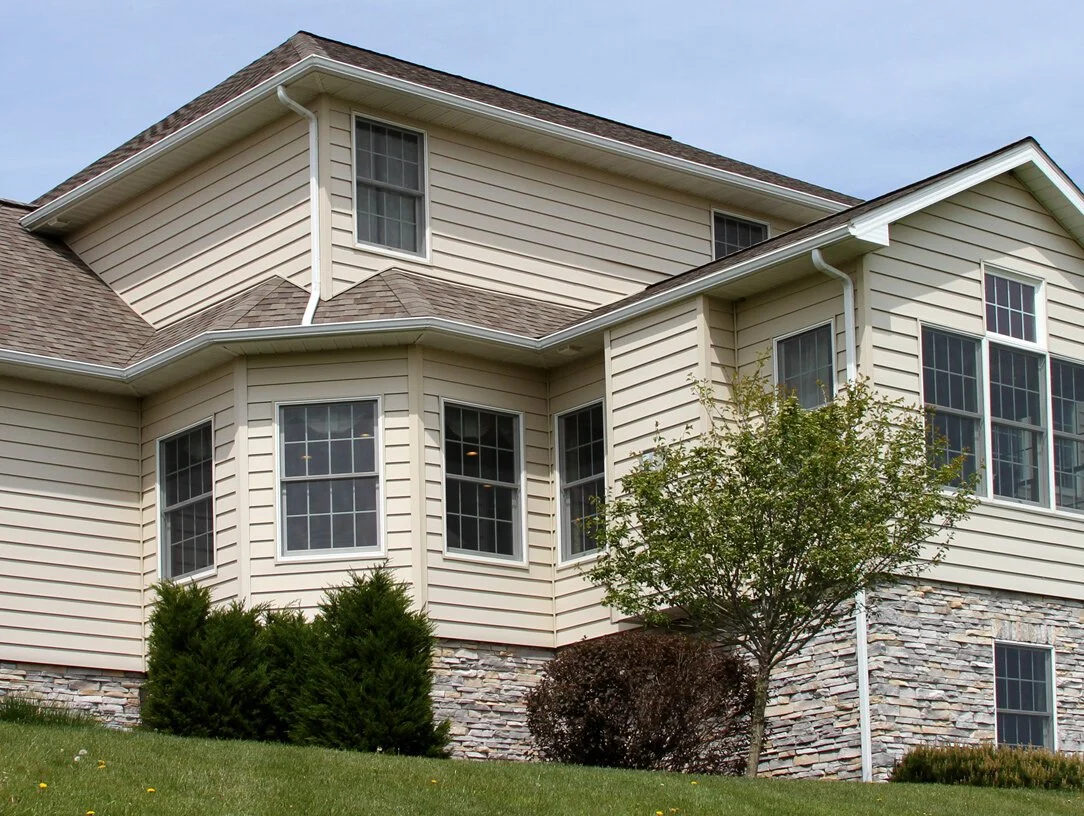
Engineered Wood (LP SmartSide)
$15,000–$28,000 for a 1,500 sq ft home
LP SmartSide sits between vinyl and fiber cement in both cost and performance. It's an engineered wood product treated with zinc borate for rot and termite resistance, with a factory-applied finish that lasts longer than field-painted wood. It's lighter than fiber cement, easier to cut, and offers a more authentic wood grain texture than vinyl.
We see LP SmartSide chosen most often by homeowners who want the look of cedar shakes or board-and-batten but don't want to repaint every 5–7 years. The 50-year limited warranty is transferable, which helps with resale value.
What Drives Siding Costs in Southeast Michigan
The material you choose is only part of the equation. Here's what actually moves the needle on your final invoice:
Home Size and Stories
A 2,500-square-foot two-story Colonial costs more than a 1,500-square-foot ranch—not just because of square footage, but because of scaffolding, safety equipment, and the time required to work at height. Second-story installations add 20–30% to labor costs.
Architectural Complexity
Homes with gables, dormers, bay windows, and multiple roof lines require more cuts, more trim work, and more attention to flashing details. A simple rectangular ranch is faster and cheaper to side than a Tudor Revival with decorative half-timbering.
Removal and Disposal
Tearing off old siding and hauling it to the landfill isn't free. Budget $1,000–$2,500 depending on the amount of material and disposal fees in your area. Some contractors include this in their quote; others break it out separately. Always ask.
Substrate Repair
This is where Michigan's freeze-thaw cycles come into play. Water gets behind old siding, freezes, expands, and damages the sheathing underneath. On homes built before the 1980s, we routinely find sections of rotted OSB or plywood that need replacement—especially on north-facing walls that never fully dry out.
Substrate repair isn't something you can quote over the phone. We don't know what's under your siding until we remove it. Expect to pay $3–$7 per square foot for sheathing replacement, depending on accessibility and extent of damage.
Trim, Soffit, and Fascia
Many homeowners replace siding and leave old, peeling trim in place. It looks unfinished. If your trim is wood and showing rot or paint failure, budget for aluminum-wrapped or PVC trim. This adds $2,000–$5,000 to most projects but dramatically improves curb appeal and eliminates future maintenance.
Insulation Upgrades
If you're already tearing off the old siding, it's the perfect time to add rigid foam insulation or upgrade your wall cavity insulation. This is especially relevant for older homes with minimal or settled insulation. Adding 1" of rigid foam board increases R-value and reduces thermal bridging, but it adds $1.50–$3.00 per square foot to the project.
Our top-rated insulation services in Detroit include spray foam, blown-in cellulose, and rigid foam installations that integrate seamlessly with siding replacements.
Vinyl vs. Fiber Cement vs. Engineered Wood: Cost and Performance
Let's break down what you're actually getting for your money with each material—not just upfront cost, but long-term performance in Michigan's climate.
Vinyl Siding: The Practical Choice
Cost: $8,000–$16,000 (1,500 sq ft)
Lifespan: 20–30 years
Maintenance: Wash annually, occasional caulk touch-ups
Warranty: Lifetime limited (non-prorated for 10–20 years, then prorated)
Vinyl handles Michigan winters well—it expands and contracts with temperature swings without cracking, and it doesn't absorb moisture. The key is proper installation: panels must be nailed loosely in the center of the slot to allow movement. We see a lot of vinyl failures caused by contractors who nail too tight or don't leave expansion gaps.
The biggest downside? Vinyl can fade over 15–20 years, especially darker colors. It can also crack if hit hard in cold weather (think: a ladder leaning against the house in January). But for most homeowners in Macomb and Oakland counties, vinyl offers the best balance of cost, performance, and ease of maintenance.
James Hardie Fiber Cement: The Long-Term Investment
Cost: $18,000–$32,000 (1,500 sq ft)
Lifespan: 30–50 years
Maintenance: Repaint every 10–15 years (ColorPlus pre-finished lasts 15+ years)
Warranty: 30-year non-prorated product warranty, 15-year finish warranty (ColorPlus)
Fiber cement is the material we install when homeowners want something that will outlast them. It's dimensionally stable—it won't warp, buckle, or rot. It's fire-resistant (Class A rating). And it's one of the few siding materials that actually increases home value in appraisals.
The catch: it requires repainting eventually, unless you opt for James Hardie's ColorPlus factory finish (which adds about 15% to material cost but extends the first repaint interval to 15+ years). And installation quality matters—improper flashing or failure to maintain clearance from grade can lead to moisture problems.
We're a CertainTeed Master Shingle Applicator, and we bring that same attention to detail to fiber cement installations. Proper moisture management isn't optional in Michigan.

LP SmartSide: The Middle Ground
Cost: $15,000–$28,000 (1,500 sq ft)
Lifespan: 25–40 years
Maintenance: Repaint every 10–12 years, inspect caulking annually
Warranty: 50-year limited, 5-year 100% labor coverage
LP SmartSide gives you the aesthetics of wood without the rot, warp, and insect issues of natural cedar. The factory finish (SmartFinish) is baked on and comes with a 5-year no-fade warranty. It's easier to work with than fiber cement, which means faster installation and slightly lower labor costs.
The trade-off? It's still a wood product, so it requires eventual repainting. And while it's treated for moisture and termite resistance, it's not as impervious as fiber cement. In Michigan's humid summers and wet springs, proper installation with adequate ventilation and drainage is critical.
We install a lot of LP SmartSide in Rochester Hills, Lake Orion, and Bloomfield Hills—areas where homeowners want a premium look without stepping all the way up to fiber cement pricing.
Hidden Costs Most Homeowners Don't Budget For
Here's what catches people off guard—the stuff that doesn't show up in the initial estimate but becomes necessary once the project starts.
Rotted Sheathing and Framing
Michigan's freeze-thaw cycles are brutal on homes with poor drainage or failed caulking. Water gets behind the siding, freezes, expands, and damages the OSB or plywood sheathing. Sometimes it goes deeper—into the studs and headers.
We can't see this until we remove the old siding. On a typical project, we find 50–200 square feet of damaged sheathing that needs replacement. At $3–$7 per square foot (material and labor), that's an additional $150–$1,400 most homeowners didn't plan for.
The good news: addressing it now prevents bigger problems later. The bad news: it's hard to budget for something you can't see yet.
Window Trim and Casing Upgrades
Old wood window trim often shows rot, peeling paint, or water damage. If you're installing new siding and leaving deteriorated trim in place, the finished product looks half-done.
Replacing window trim with PVC or aluminum-wrapped wood adds $75–$150 per window, depending on size and complexity. On a home with 12 windows, that's $900–$1,800. But it's worth it—new trim matches the fresh siding and eliminates a future maintenance headache.
If you're also considering window replacement in Detroit, doing it before or during the siding project saves money on trim work and ensures proper flashing integration.
Electrical Outlet Extensions
When you add foam board insulation or thicker siding, your electrical outlets and exterior lights sit recessed behind the new wall plane. Code requires outlet boxes to be flush with the finished surface.
Extending outlet boxes costs $30–$75 per outlet, depending on whether it's a simple extension ring or requires rewiring. Most homes have 4–8 exterior outlets and lights, so budget $200–$600 for this.
Permit Fees
Most municipalities in Southeast Michigan require a building permit for siding replacement. Permit costs vary by city—$50 in some townships, $300+ in others. We handle permit applications for our clients, but the fee is typically a separate line item.
Skipping the permit isn't worth it. If you sell the house and the buyer's inspector notices unpermitted work, it can kill the sale or force you to retroactively permit and inspect the work (which is more expensive and complicated).
Color Premiums and Custom Profiles
Standard colors (white, beige, gray) are included in base pricing. Custom or premium colors often carry a 10–15% upcharge. Specialty profiles—like scalloped shakes, board-and-batten, or Dutch lap—can add 20–30% to material costs.
If you want your home to stand out, these upgrades are worth it. Just know they're not included in the baseline quotes you see online.
When to Replace Siding in Michigan (Signs It's Time)
Siding doesn't fail overnight. It gives you warnings. Here's what to watch for—and when to call a contractor instead of trying to patch it yourself.
Warping, Buckling, or Loose Panels
Vinyl siding that buckles or pulls away from the house is usually a sign of improper installation (nailed too tight) or water intrusion behind the siding. If it's happening in multiple spots, replacement is more cost-effective than piecemeal repairs.
Moisture Intrusion and Mold
If you see mold or mildew on the inside of your exterior walls, or if your drywall feels damp near exterior corners, water is getting past the siding. This often happens around windows, doors, and roof-to-wall transitions where flashing has failed.
Don't ignore this. Moisture inside wall cavities leads to rot, mold, and structural damage. A siding replacement with proper moisture barriers and flashing solves the root cause.
Fading, Brittleness, or Cracking
Vinyl siding fades over time, especially on south- and west-facing walls that get the most sun. If the color has shifted noticeably or the material has become brittle (cracks when you press on it), it's near the end of its lifespan.
Brittle vinyl also cracks easily during Michigan winters. One hard freeze after a rainstorm, and you've got split panels that let water and wind through.
Rising Energy Bills
If your heating and cooling costs have crept up over the past few years—and you haven't changed your thermostat habits—air leakage around your siding could be the culprit. Old, poorly sealed siding lets conditioned air escape and drafts in.
A siding replacement with proper house wrap, flashing, and insulation can cut energy loss by 20–30%. Pair it with attic insulation upgrades and you'll see a noticeable difference in your utility bills.
Preparing to Sell
Curb appeal matters. Homes with fresh siding sell faster and for more money than homes with faded, damaged, or outdated siding. According to Remodeling Magazine's Cost vs. Value Report, siding replacement recoups 68–75% of its cost at resale in the Midwest—one of the better returns among exterior projects.
If you're working with a realtor in Troy, Warren, or St. Clair Shores who's pushing you to update the exterior before listing, they're not wrong. First impressions happen at the curb.
Related: If you're also dealing with roof issues, check out our guide on how long roofs last in Michigan. Replacing both at the same time often saves money on scaffolding and labor coordination.
How to Get Accurate Quotes (What We Do Differently)
Not all siding quotes are created equal. Some contractors give you a number over the phone based on square footage alone. Others show up, spend 10 minutes walking around your house, and hand you a one-page estimate with no details.
Here's what a real, accurate quote process looks like—and what you should expect from any contractor you're considering.
On-Site Inspection, Not Phone Estimates
We don't quote siding jobs over the phone. We can't see your substrate condition, flashing details, trim rot, or architectural complexity from a phone call. An accurate quote requires measuring your home, inspecting the current siding, checking for water damage, and understanding what you're trying to achieve.
Our inspections take 45–60 minutes. We measure every wall, photograph problem areas, and discuss material options based on your budget, aesthetic preferences, and how long you plan to stay in the home.
Itemized Pricing Breakdown
You should receive a written estimate that separates material costs, labor, removal, disposal, trim work, and any anticipated substrate repairs. This transparency lets you compare quotes accurately—and understand where your money is going.
If a competitor's quote is $5,000 cheaper, an itemized breakdown shows you why. Are they skipping house wrap? Using thinner vinyl? Not including trim replacement? You can't make an informed decision without this detail.
Material Spec Sheets and Warranty Details
We provide the exact product names, manufacturer spec sheets, and warranty terms in writing. You'll know whether you're getting CertainTeed Monogram or builder-grade vinyl, James Hardie ColorPlus or primed-only fiber cement, LP SmartSide with SmartFinish or bare substrate.
This matters because not all "fiber cement" or "vinyl siding" is the same. Product quality, thickness, and warranty coverage vary widely—and cheap material saves money upfront but costs more over the life of the siding.
Timeline and Crew Details
We tell you how long the project will take (typically 5–10 days for a full siding replacement, depending on size and complexity), what size crew we'll send, and what disruptions to expect.
Our crews show up on time, work carefully to minimize mess, and communicate daily about progress and any issues we find. That's part of our "changing contractor culture" approach—old-school reliability without the old-school runaround.
Licensing, Insurance, and References
We're licensed in Michigan (Residential Builder's License), carry full liability and workers' compensation insurance, and maintain an A+ rating with the BBB since 2006. We provide proof of insurance and references from recent projects in your area.
If a contractor won't provide a license number or proof of insurance, walk away. If someone gets hurt on your property and the contractor isn't insured, you're liable.
Our full range of exterior services in Detroit includes roofing, windows, gutters, insulation, and painting—all backed by the same licensing, insurance, and quality standards.

Pro Tip: If you're also dealing with gutter problems, read our post on gutter guards in Michigan. Replacing siding and gutters at the same time ensures proper integration and saves on scaffolding costs.
Ready to Get Started?
NEXT Exteriors has been protecting Michigan homes since 1988. Get a free, no-pressure estimate from a team that shows up on time and does the job right.
Get Your Free QuoteOr call us: (844) 770-6398
Frequently Asked Questions
Vinyl siding lasts 20–30 years in Michigan with proper installation and minimal maintenance. Fiber cement (James Hardie) lasts 30–50 years. Engineered wood (LP SmartSide) lasts 25–40 years. The key factors are installation quality, exposure to sun and moisture, and how well the siding was maintained. Michigan's freeze-thaw cycles and summer storms are hard on siding, so proper flashing, house wrap, and drainage details matter more here than in milder climates.
If you're planning to stay in your home for 20+ years, yes. James Hardie costs about double what vinyl costs upfront, but it lasts longer, requires less maintenance, and holds up better in Michigan's climate. It won't warp, crack, or rot, and it's one of the few siding materials that actually increases home value in appraisals. The ColorPlus factory finish extends the first repaint interval to 15+ years, which saves money over time. If you're selling in 5–7 years, vinyl offers better short-term ROI.
Yes, but with caveats. Vinyl siding becomes brittle below 40°F, so cutting and nailing it in freezing temperatures increases the risk of cracking. Fiber cement and LP SmartSide can be installed in colder weather, but caulking and sealants don't cure properly below 40°F. We typically install siding year-round but avoid the coldest weeks (late December through February) unless it's an emergency repair. Spring and fall are ideal—temperatures are moderate, and we're not racing against snow or extreme heat.
Most municipalities in Southeast Michigan require a building permit for siding replacement. Permit costs range from $50 to $300+ depending on the city or township. The permit process ensures the work meets building code and is inspected for proper installation. Skipping the permit can cause problems if you sell the house—buyers' inspectors often flag unpermitted work, which can delay or kill the sale. We handle permit applications for our clients as part of the project.
According to Remodeling Magazine's Cost vs. Value Report, siding replacement recoups 68–75% of its cost at resale in the Midwest. Vinyl siding replacement has the highest ROI (around 75%), while fiber cement sits closer to 68%. But ROI isn't the only factor—curb appeal, energy efficiency, and eliminating maintenance headaches all add value that doesn't show up in appraisal formulas. Homes with fresh siding sell faster and attract more buyers than homes with faded or damaged exteriors.
A typical 1,500-square-foot ranch takes 5–7 days from tear-off to completion with a crew of 3–4. A two-story Colonial or home with complex architecture can take 10–14 days. Weather delays, substrate repairs, and custom trim work can extend the timeline. We provide a realistic schedule upfront and communicate daily about progress. The goal is to work efficiently without rushing—proper installation takes time, and cutting corners to finish faster leads to problems later.
If your windows are old, drafty, or showing rot, yes. Replacing windows before or during siding installation allows us to integrate flashing and trim properly, which prevents water intrusion and improves energy efficiency. It also saves money—scaffolding and labor coordination costs are already covered, so adding windows to the project is more cost-effective than doing them separately later. If your windows are newer and in good shape, there's no need to replace them just because you're doing siding. We assess window condition during the initial inspection and provide honest recommendations.
Best Home Renovation Projects Siding Michigan | NEXT Exteriors
Discover the best home renovation projects for Michigan homes. Expert siding, roofing, and window upgrades from NEXT Exteriors. 35+ years serving Southeast Michigan.
If you're a Michigan homeowner thinking about exterior renovations, you're probably asking the same question we hear every week: Which projects actually pay off?
After 35 years installing house siding in Detroit and across Southeast Michigan, we've seen what works — and what doesn't. Michigan's brutal freeze-thaw cycles, lake-effect snow, and summer storms make exterior upgrades more than cosmetic. They're about protection, energy efficiency, and yes, resale value.
This isn't a generic renovation guide. We're talking about the best home renovation projects siding Michigan homeowners should prioritize based on real-world performance, cost recovery, and what buyers in Macomb, Oakland, and St. Clair counties actually care about when they're house hunting.
Siding Replacement — The ROI Champion
Let's start with the numbers. According to the 2024 Remodeling Magazine Cost vs. Value Report, vinyl siding replacement in the East North Central region (which includes Michigan) recoups about 68% of its cost at resale. Fiber cement siding — like James Hardie — sits around 62%.
But here's what those national averages miss: in Southeast Michigan's competitive housing market, fresh siding isn't just about recouping cost. It's about getting your home sold. Buyers in Sterling Heights, Rochester Hills, and Grosse Pointe Farms don't want to inherit someone else's deferred maintenance. They want move-in ready, and nothing says "this house has been cared for" like clean, uniform siding.
Why Siding Fails in Michigan Weather
Michigan's climate is uniquely hard on siding. We get freeze-thaw cycles that expand and contract materials dozens of times each winter. We get ice dams that force water up under shingles and behind siding. We get summer storms with wind-driven rain that finds every gap in your building envelope.
Old vinyl siding gets brittle and cracks. Wood siding warps, splits, and rots behind the paint. Aluminum dents and fades. If your siding is 20+ years old, it's not just ugly — it's probably letting moisture into your wall cavities, which means mold, rot, and higher heating bills.
Material Options for Michigan Homes
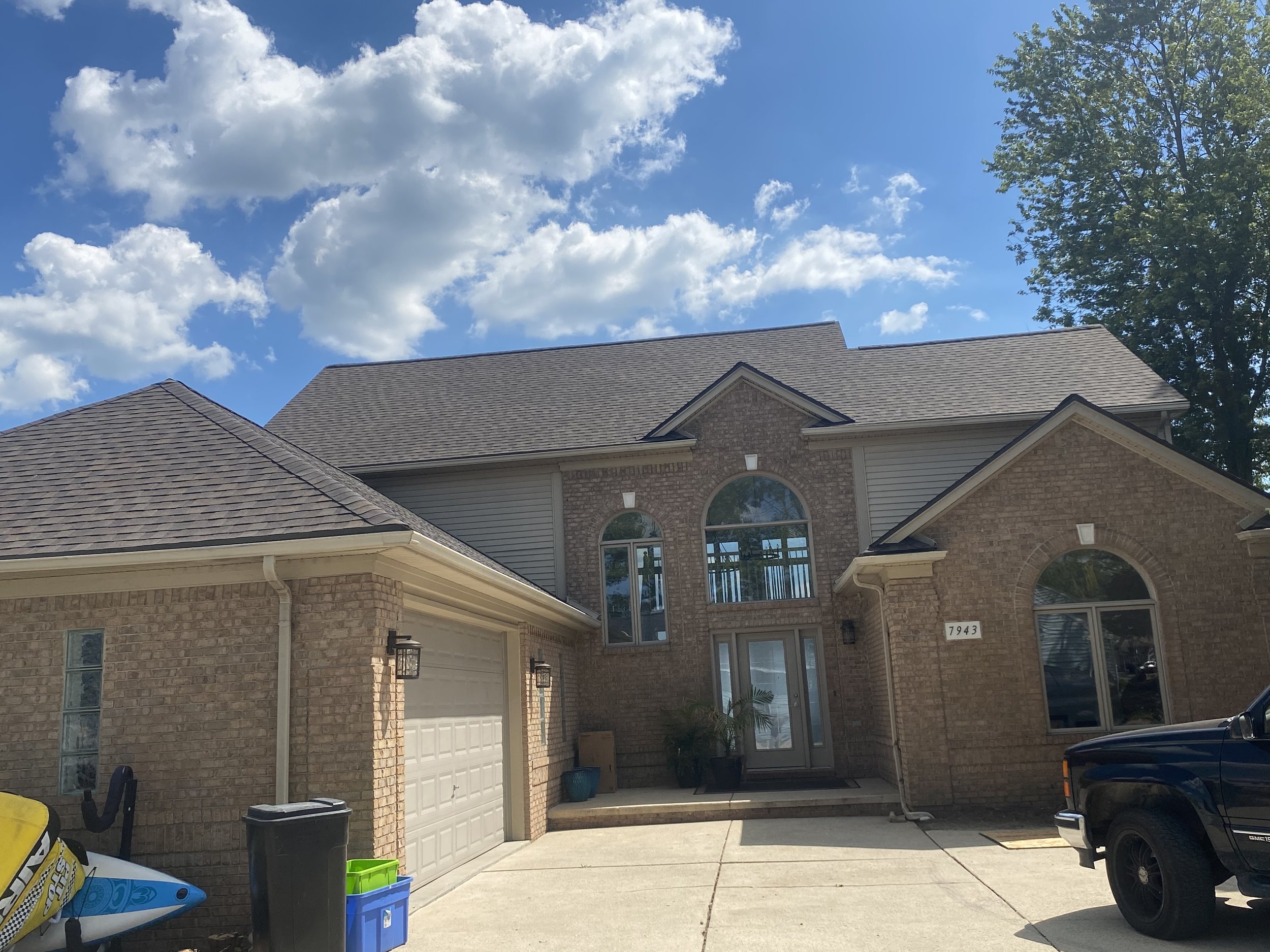
Vinyl siding is still the most popular choice in Michigan, and for good reason. Modern vinyl — especially premium lines from CertainTeed and GAF — has come a long way. It's low maintenance, affordable ($4,000–$12,000 for an average ranch), and holds up well in our climate if installed correctly. The key is proper flashing, a quality moisture barrier, and leaving room for thermal expansion.
James Hardie fiber cement is the upgrade. It's thicker, more impact-resistant, and won't warp or melt. It's also more expensive ($12,000–$20,000+ for the same ranch). But in historic districts like parts of Royal Oak or Lake Orion, where you want the look of wood without the maintenance, Hardie makes sense. We install it with stainless steel nails and leave proper clearances — fiber cement moves differently than vinyl.
LP SmartSide engineered wood is the middle ground. It's treated to resist moisture and insects, costs less than Hardie, and gives you a wood-grain texture that vinyl can't match. It's a solid choice for accent walls, gables, or board-and-batten siding in Michigan projects where you want that farmhouse aesthetic.
Our Detroit roofing services team often coordinates siding and roof replacements together — it saves on scaffolding costs and ensures your building envelope is sealed properly from top to bottom.
Roof Replacement — Protection First, Value Second
A new roof doesn't add curb appeal the way siding does. Most buyers won't notice your shingles unless they're visibly shot. But here's the thing: a roof in bad shape will kill a sale. Home inspectors flag it, buyers demand credits or walk away, and you end up replacing it anyway — but now you're negotiating from weakness.
In Michigan, asphalt shingle roofs last 18–25 years depending on quality, ventilation, and how many ice dams you've had. If your roof is 15+ years old, budget for replacement. If it's 20+, don't wait.
Architectural vs. 3-Tab Shingles
We've written a full breakdown on architectural vs. 3-tab shingles for Michigan weather, but here's the short version: architectural shingles are worth the extra $2,000–$4,000. They're thicker (two layers laminated together), more wind-resistant (110–130 mph ratings vs. 60–70 mph for 3-tab), and they look better. They also last longer — 25–30 years vs. 15–20 for 3-tab.
We install CertainTeed Landmark, GAF Timberline HDZ, and Owens Corning Duration shingles most often. All three perform well in Michigan. The difference comes down to color selection and warranty terms. As a CertainTeed shingle installer in Michigan with Master Shingle Applicator credentials, we can offer extended warranties that most contractors can't — up to 50 years on materials when paired with CertainTeed underlayment and accessories.
Michigan Roof Tip: If you're replacing your roof, upgrade your attic ventilation at the same time. Proper ridge and soffit vents prevent ice dams and extend shingle life. We see too many roofs fail early because the attic is a sauna in summer and an icebox in winter.
Storm Damage and Insurance Claims
Michigan gets hit with severe weather — hail in spring, high winds in fall, heavy snow in winter. If you've had storm damage, your homeowner's insurance may cover most or all of a roof replacement. We work with adjusters regularly and can help document damage during a professional roof inspection in Michigan. Don't leave money on the table.
Window Upgrades — Energy Savings That Show
Windows are expensive. A full window replacement on a 1,500-square-foot ranch in Southeast Michigan runs $8,000–$18,000 depending on the number of openings and what you're installing. ROI hovers around 70% nationally, but the real payoff is comfort and energy savings.
If your windows are original to a 1960s or 1970s home — and a lot of them are in Macomb and Oakland counties — you're heating the outdoors. Single-pane glass with aluminum frames has almost no insulation value. You get condensation, drafts, and ice buildup on the interior sill in January.

What to Look for in Michigan Windows
U-factor is the key spec. It measures how well a window insulates. Lower is better. For Michigan, you want a U-factor of 0.30 or less. Modern vinyl double-hung windows with Low-E glass and argon fill hit 0.27–0.30. That's a massive improvement over the 1.0+ U-factor of old single-pane windows.
Our Detroit window experts install double-hung, casement, sliding, and bay/bow windows depending on the home's style and the homeowner's needs. Casement windows seal tighter than double-hung (they compress against the frame when you crank them shut), which makes them a good choice for rooms that face prevailing winter winds.
We also make sure windows are flashed correctly into the water-resistive barrier. Poor window installation is one of the top causes of water intrusion in Michigan homes. The window itself might be great, but if it's not integrated into the building envelope properly, you'll get leaks.
Payback Period Reality
Energy savings from new windows are real but gradual. You might save $300–$600 per year on heating and cooling, depending on your home's size and how bad your old windows were. That's a 15–30 year payback on the windows alone. But factor in comfort (no more drafts), noise reduction, and the boost to resale value, and the math gets better.
If you're planning to sell within 3–5 years, prioritize windows that are visibly damaged, hard to operate, or in high-impact rooms (living room, primary bedroom). If you're staying 10+ years, replace them all and enjoy the comfort.
Insulation — The Hidden Value Driver
Nobody tours a house and says, "Wow, check out that attic insulation." But insulation is one of the smartest investments you can make in a Michigan home — especially if you're in an older house with minimal insulation or compressed batts that have lost their R-value.
Michigan's energy code (based on the 2021 International Energy Conservation Code) recommends R-49 to R-60 in attics for our climate zone. Most homes built before 1990 have R-19 to R-30 if they're lucky. That gap costs you hundreds of dollars a year in wasted energy.
Attic Insulation: Blown-In vs. Spray Foam
Blown-in fiberglass or cellulose is the most cost-effective way to hit R-49. It fills gaps around joists, covers wiring and ductwork, and settles into irregular spaces. We typically blow 16–18 inches of cellulose or fiberglass to reach R-49 in a Michigan attic. Cost: $1.50–$2.50 per square foot.
Spray foam is the premium option. Closed-cell spray foam adds R-6 to R-7 per inch, air-seals the attic, and adds structural rigidity. It's overkill for most attic floors, but it's ideal for cathedral ceilings, rim joists, and crawl spaces where you need both insulation and an air barrier. Cost: $3–$6 per square foot depending on thickness.
Our top-rated insulation contractor in Detroit team does energy audits to identify where you're losing heat. Often it's not just the attic — it's the basement rim joist, the walls around old windows, or gaps in the sill plate. We seal those leaks first, then add insulation where it matters most.
Ice Dam Prevention: If you get ice dams every winter, your attic is too warm. The fix isn't more shingles — it's better insulation and ventilation. We've helped dozens of homeowners in Clinton Township and Shelby Township solve chronic ice dam problems by air-sealing the attic floor and adding insulation. No more icicles, no more interior water damage.
Wall and Basement Insulation
If you're already doing siding, it's worth considering adding exterior rigid foam insulation behind the new siding. A 1-inch layer of rigid foam adds R-5 and reduces thermal bridging through the studs. It's not cheap, but it's the most effective way to insulate walls without tearing out drywall.
Basement insulation is another hidden value driver. Insulating rim joists and foundation walls makes the whole house more comfortable and reduces heating costs. Spray foam is ideal for rim joists (they're full of air leaks), and rigid foam or closed-cell spray works well on foundation walls.
What Michigan Homeowners Should Prioritize
So you've got a budget and a list of projects. What should you do first?
Here's the decision framework we walk homeowners through during free quote consultations:
1. Fix What's Broken or Dangerous First
If your roof is leaking, your siding is rotted, or your gutters are falling off, those aren't optional. Water damage compounds fast in Michigan. A $500 gutter repair now prevents a $5,000 fascia replacement next year.
Our seamless gutters in Detroit, MI service handles everything from simple repairs to full replacements with oversized 6-inch gutters for homes with steep roofs or heavy leaf coverage.
2. Prioritize Projects That Protect the Building Envelope
Roof, siding, windows, and insulation all work together to keep water and air where they belong. If your roof is 20 years old and your siding is failing, do both at once. You'll save on scaffolding and ensure the flashing details are done right.
3. Consider Your Timeline
Selling in the next 1–2 years? Focus on curb appeal: siding, front door, shutters, and a clean roof. Buyers notice those immediately.
Staying 5+ years? Invest in insulation and windows. You'll enjoy the comfort and energy savings, and you'll still recoup most of the cost at resale.
4. Budget for Quality, Not Just Price
We've been in business since 1988 because we don't cut corners. The cheapest siding bid in Warren might save you $2,000 upfront, but if the installer skips the moisture barrier or uses short nails, you'll pay for it in callbacks and repairs.
Our exterior services in Detroit include proper prep, quality materials from CertainTeed, James Hardie, and LP SmartSide, and crews that show up on time and clean up every day. We're not the cheapest, but we're fair — and we're still here to honor warranties 10 years later.
Signs You Need These Upgrades Now
Not sure if your home needs work? Here are the red flags we look for during inspections:
Siding
- Cracks, holes, or warping in vinyl or wood siding
- Fading or chalking (rub your hand on the siding — if it leaves a powdery residue, the finish is shot)
- Loose or missing panels after windstorms
- Moisture stains on interior walls near exterior corners
- Peeling paint on wood siding (means moisture is getting behind it)
Roofing
- Shingles curling, cupping, or missing granules
- Daylight visible through the roof decking from the attic
- Water stains on ceilings or in the attic after rain
- Sagging roofline (structural issue — call immediately)
- Your roof is 20+ years old (even if it looks okay, it's on borrowed time)
Windows
- Condensation between panes (seal failure — window needs replacement)
- Drafts you can feel with your hand on a windy day
- Difficulty opening or closing (wood frames swell, vinyl frames warp)
- Visible rot or water damage on the interior sill or casing
- Ice buildup on the inside of the glass in winter
Insulation
- Uneven temperatures between rooms (cold bedrooms, hot upstairs in summer)
- Ice dams forming on the roof every winter
- High heating bills compared to similar-sized homes
- Drafts from outlets, light switches, or baseboards
- Attic insulation is compressed, wet, or visibly inadequate (less than 10 inches deep)
If you're seeing multiple red flags, it's time to call a licensed contractor. We offer free inspections and written estimates with no sales pressure. You can also explore our project gallery to see completed jobs across Southeast Michigan.
Other Services to Consider
While you're planning exterior upgrades, don't overlook smaller projects that make a big difference. Fresh exterior painting from Southeast Michigan painting professionals using Sherwin-Williams products can transform a tired-looking home for $3,000–$8,000. We handle surface prep, caulking, priming, and two coats of premium paint that holds up in Michigan weather.
And if you want to see what different siding colors and styles would look like on your home before committing, check out our home visualizer tool — it's a free way to experiment with combinations and get a sense of what fits your home's architecture.
Ready to Get Started?
NEXT Exteriors has been protecting Michigan homes since 1988. Get a free, no-pressure estimate from a team that shows up on time and does the job right.
Get Your Free QuoteOr call us: (844) 770-6398
Frequently Asked Questions
Late spring through early fall (May through October) is ideal. Vinyl siding becomes brittle below 40°F, which makes it harder to cut and nail without cracking. We can install year-round if temperatures cooperate, but summer and early fall offer the most consistent conditions. Bonus: you're not dealing with snow or ice on scaffolding.
Most single-family homes take 5–10 days depending on size, complexity, and weather. A simple ranch might be done in a week. A two-story Colonial with multiple gables, bay windows, and detailed trim work could take two weeks. We'll give you a timeline during the estimate and keep you updated if anything changes.
It depends on your priorities. James Hardie fiber cement is more durable, fire-resistant, and holds paint better than vinyl. It's a great choice for historic homes, high-end neighborhoods, or homeowners who want a premium product and plan to stay long-term. But modern vinyl siding from CertainTeed or GAF performs well in Michigan and costs 40–50% less. We'll walk through both options during your consultation.
Technically, yes — but we don't recommend it. Installing over old siding hides potential rot, prevents proper moisture barrier installation, and creates an uneven surface that telegraphs through the new siding. We remove the old siding, inspect the sheathing, make any needed repairs, install a quality moisture barrier (like Tyvek or CertainTeed WinterGuard), and then install new siding correctly. It costs a bit more upfront, but it's the right way to do it.
In most Southeast Michigan communities, yes. Requirements vary by city, but roofing and siding typically require a building permit. As a licensed Michigan contractor, we pull permits for all our jobs and handle inspections. It protects you and ensures the work meets code. If a contractor offers to skip permits to "save money," that's a red flag.
For a complete exterior makeover — new roof, siding, windows, gutters, and insulation — budget $30,000–$70,000 for an average-sized home (1,500–2,500 sq ft). A basic vinyl siding and architectural shingle roof might be on the lower end. Premium materials like James Hardie siding, high-end windows, and spray foam insulation push toward the higher end. We provide detailed, itemized estimates so you know exactly what you're paying for.
We've been in business since 1988 under the same ownership (Premier Builder Inc.), we hold a Michigan Residential Builder's License, and we're a CertainTeed Master Shingle Applicator — the highest credential in roofing. We're BBB A+ accredited, we have a 5.0-star average rating across 87+ reviews, and we've completed over 500 projects in Southeast Michigan. More importantly, we show up on time, communicate clearly, and stand behind our work. No gimmicks, no pressure, just honest craftsmanship.
Best Home Renovation Projects Siding Michigan 2026
Discover the best home renovation projects for Michigan homes. Expert insights on siding, roofing, windows, and insulation from a licensed contractor with 35+ years experience.
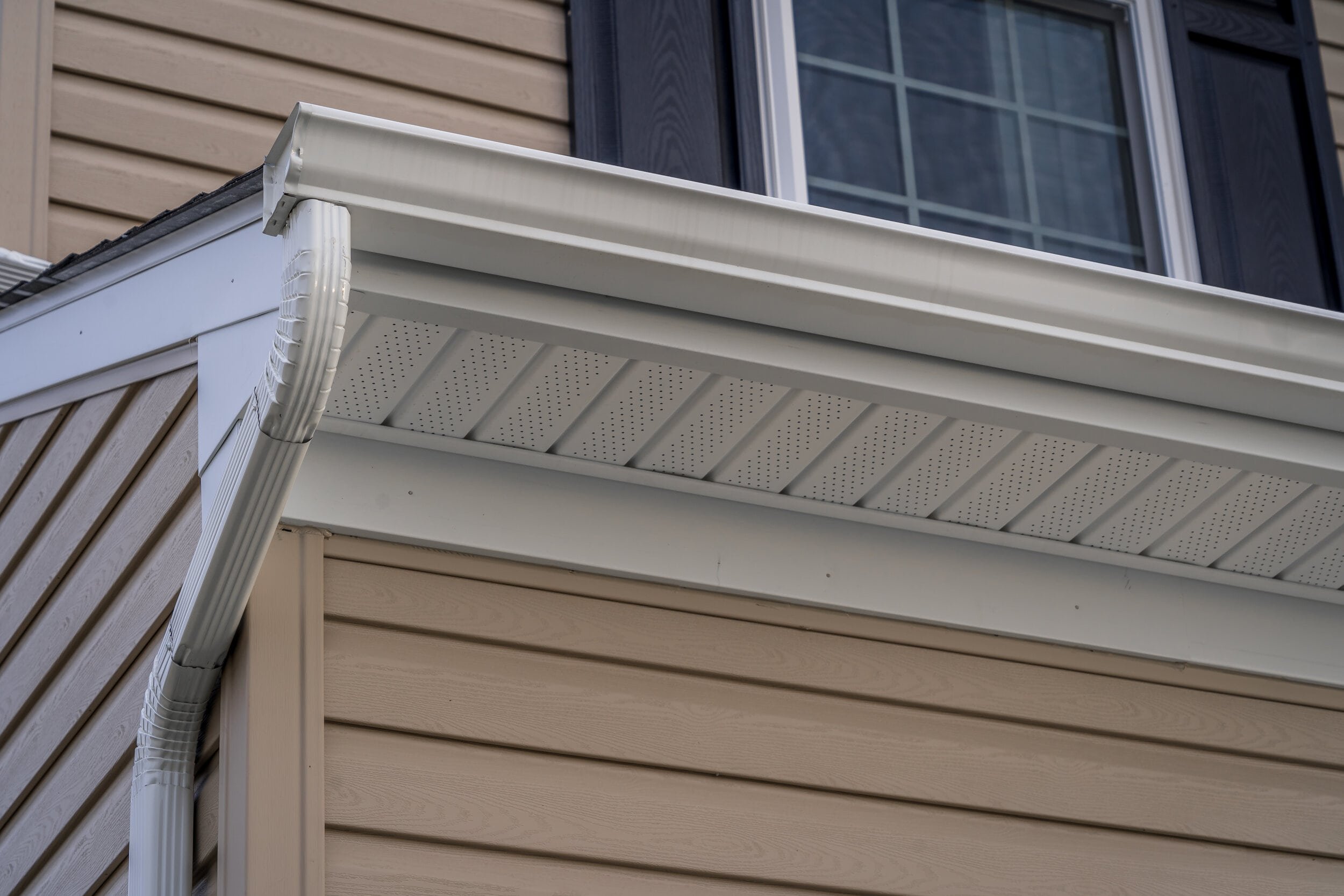
After 35 years of working on Michigan homes, I've seen every renovation trend come and go. But here's what hasn't changed: homeowners in Sterling Heights, Troy, and across Southeast Michigan want to know which projects actually deliver value—not just curb appeal, but real protection against our brutal freeze-thaw cycles, lower energy bills, and solid return on investment.
Let me be direct: siding replacement consistently ranks as one of the best home renovation projects in Michigan, but only when it's done right. And "right" means understanding how materials perform when temperatures swing from -10°F in January to 95°F in July, how moisture management prevents rot in our humid summers, and which upgrades actually move the needle on resale value versus contractor upsells.
This isn't a listicle. It's a contractor's honest breakdown of what works in Michigan—backed by building science, real project costs, and three decades of fixing other people's mistakes.
Why Siding Tops the List for Michigan Homes
According to Remodeling Magazine's 2026 Cost vs. Value Report, siding replacement delivers one of the highest ROIs for Midwest homes—typically recovering 75-85% of project costs at resale. But the real value isn't just resale. It's what happens between installation and the day you sell.
Michigan's climate is uniquely destructive. We don't just get cold winters—we get freeze-thaw cycles that repeat 40-50 times per season in Southeast Michigan. Water infiltrates tiny cracks, freezes, expands, and tears materials apart from the inside. That's why you see so many 1980s vinyl siding jobs with buckled panels and water damage behind the trim.
When we work on house siding in Detroit and surrounding areas, we're not just replacing what's visible. We're addressing the water management system that protects your sheathing, framing, and insulation.
Material Performance in Michigan Weather
Here's what actually matters when choosing siding for a Michigan home:
Vinyl Siding: Modern premium vinyl (0.046" thickness or higher) performs well in Michigan if properly installed with expansion gaps. The problem? Most installers don't leave adequate room for thermal expansion. When vinyl heats up in July sun, it expands. If it's nailed tight, it buckles. We see this constantly on south-facing walls in Rochester Hills and Bloomfield Hills—dark-colored vinyl installed without proper clearance.
Fiber Cement (James Hardie): This is the gold standard for Michigan durability. James Hardie's ColorPlus technology bonds paint at the factory level, creating a finish that withstands UV exposure and moisture far better than field-applied paint. It's dimensionally stable—meaning it doesn't expand and contract like vinyl—and it's non-combustible. The downside? Higher upfront cost ($12-16 per square foot installed in 2026) and more labor-intensive installation.
Engineered Wood (LP SmartSide): LP's treated strand technology creates a product that resists moisture, fungal decay, and termites better than traditional wood. It takes paint beautifully and offers the texture homeowners want without the maintenance of cedar. We've installed LP SmartSide on dozens of homes in Grosse Pointe Farms and Lake Orion—it performs exceptionally well in Michigan's humidity when paired with proper flashing and drainage.
Contractor Reality Check: The siding material matters less than the installation details. Proper house wrap, flashing around windows and doors, and correct fastener placement prevent 90% of siding failures we see. A cheap material installed correctly outlasts premium material installed wrong.
The Insulation Factor Nobody Talks About
Here's what separates smart renovations from cosmetic ones: insulation upgrades multiply the effectiveness of every other exterior improvement.
Michigan's 2021 Residential Code requires minimum R-values that most homes built before 2000 don't meet. We're talking R-49 to R-60 in attics, R-20 in walls, and R-30 in floors over unconditioned spaces. When we inspect homes in Clinton Township and Shelby Township, we routinely find attics with R-19 or less—barely half of current code.
The connection to siding? When you're already removing old siding, adding rigid foam insulation or upgrading wall cavities costs a fraction of what it would as a standalone project. We're talking about improving your wall assembly from R-13 (standard 2x4 construction with fiberglass batts) to R-20+ with minimal additional cost.
Where Insulation Delivers Real Returns
Attic Insulation: This is the single highest-ROI energy upgrade for Michigan homes. Heat rises, and in winter, your furnace is literally heating the outdoors through an under-insulated attic. Blown-in cellulose or fiberglass to R-60 typically costs $1.50-2.50 per square foot and pays for itself in 3-5 years through reduced heating costs.
Wall Cavity Upgrades: If you're replacing siding anyway, dense-pack cellulose in existing wall cavities adds R-13 to R-15 without tearing out interior drywall. It also air-seals better than traditional fiberglass batts, reducing drafts around outlets and baseboards.
Basement and Crawl Space: This is where moisture meets cold concrete, creating condensation, mold, and energy loss. Closed-cell spray foam on foundation walls creates both insulation (R-6 to R-7 per inch) and a vapor barrier. For Michigan homes with finished basements, this upgrade prevents that musty smell and keeps floors warmer.
Our top-rated insulation contractor in Detroit services often get bundled with siding projects because it's the logical time to address the entire building envelope, not just the visible layer.
Roofing Projects That Pay Off
Let's talk about roofs. Not the marketing version—the version you need to hear if you're spending $8,000-$25,000 on a replacement.
Michigan's roof systems face extreme stress. Lake-effect snow dumps 2-3 feet in 24 hours on homes near Lake St. Clair. Summer storms bring 60+ mph straight-line winds. Ice dams form when heat escapes through under-insulated attics, melting snow that refreezes at the eaves and backs water under shingles.
We've been providing Detroit roofing services since 1988, and here's what actually matters:
Shingle Quality Makes or Breaks Longevity
Not all architectural shingles are created equal. The difference between a builder-grade shingle and a premium product isn't just warranty length—it's material composition, wind rating, and algae resistance.
CertainTeed Landmark Series: These are our go-to for most residential projects. They carry a 130 mph wind rating (critical for Michigan storms), Class A fire rating, and StreakFighter algae resistance. As a CertainTeed Master Shingle Applicator in Michigan, we can offer extended warranties that standard installers can't.
GAF Timberline HDZ: GAF's LayerLock technology mechanically bonds shingle layers, creating exceptional wind resistance. The StainGuard Plus algae protection is factory-applied, not an afterthought. These shingles perform exceptionally well on steep-slope roofs common in Royal Oak and Troy.
Owens Corning Duration: SureNail technology improves nail pull-through resistance—a huge factor when installers are working fast. The integrated starter strip reduces installation errors at the eaves, where most wind damage begins.

Ice Dam Prevention: The Unsexy Upgrade That Matters
Ice dams aren't a roofing problem—they're an attic ventilation and insulation problem. When attic temperatures rise above freezing while outdoor temps stay below 32°F, you get melt-freeze cycles that create ice dams.
The fix isn't just better shingles. It's:
- Proper soffit and ridge ventilation: 1 square foot of net free ventilation area per 150 square feet of attic space (or 1:300 with vapor barrier)
- Air sealing: Stopping warm air from leaking into the attic through recessed lights, plumbing penetrations, and top plates
- Adequate insulation: R-49 minimum in Southeast Michigan climate zone
- Ice and water shield: Self-adhering membrane at eaves and valleys that creates a watertight barrier even when ice backs water up
We wrote an entire guide on why ice dams form in Michigan and how to stop them because this issue costs homeowners thousands in water damage every winter.
Window Replacement Reality Check
Window replacement is where homeowners get the most contradictory advice. Some contractors push whole-house replacement. Others say repair everything. Here's the truth: it depends on your home's age, window condition, and where you're losing the most energy.
Michigan is Climate Zone 5, which means ENERGY STAR requires windows with U-factors of 0.30 or less. Most windows installed before 2000 have U-factors of 0.40-0.50, meaning they're losing 30-40% more heat than modern units.
Which Windows Matter Most
Not every window in your home loses equal amounts of energy. North-facing windows see almost no solar gain but lose heat constantly in winter. South-facing windows gain solar heat but need low-E coatings to prevent summer overheating.
Our Detroit window experts typically recommend prioritizing:
- Basement windows: Often single-pane, these are massive heat sinks and security vulnerabilities
- North and west-facing windows: Take the brunt of winter winds and summer heat
- Failed seals: If you see condensation between panes, the insulating gas has leaked out and thermal performance is shot
Double-hung vs. Casement: Casement windows (crank-open style) seal tighter than double-hung because the sash compresses against the frame when closed. For Michigan's wind-driven rain, casements typically perform better. But double-hung windows fit the aesthetic of most Colonial and Cape Cod homes in Southeast Michigan.
Budget Strategy: Replace the worst-performing windows first (typically north-facing and basement), then upgrade others as budget allows. Strategic replacement beats whole-house mediocrity.
Gutter and Drainage Upgrades
Gutters don't get the attention of siding or roofing, but they're the unsung heroes of home protection. Poor drainage causes foundation settling, basement flooding, and erosion around your home's perimeter.
Michigan gets 30-35 inches of precipitation annually, with intense summer thunderstorms that dump 2-3 inches in an hour. Standard 5-inch K-style gutters can't handle that volume on larger roof planes. We routinely upgrade to 6-inch gutters on homes in Chesterfield and Macomb with steep roofs or multiple valleys.
Seamless vs. Sectional Gutters
Seamless gutters in Detroit, MI are formed on-site to exact measurements, eliminating joints where leaks typically develop. Sectional gutters have seams every 10 feet—each one a potential failure point.
The cost difference is minimal ($1-2 per linear foot), but the longevity difference is significant. Seamless aluminum gutters last 20-25 years in Michigan. Sectional gutters develop leaks in 10-15 years as sealant degrades through freeze-thaw cycles.

Proper Sizing and Slope
Gutters need 1/4 inch of slope per 10 feet to drain properly. Too flat, and water pools. Too steep, and water overshoots downspouts during heavy rain. We see improperly sloped gutters on almost every home we inspect—usually because the installer eyeballed it instead of using a level and measuring.
Downspout placement matters just as much. Water should discharge at least 6 feet from the foundation, ideally into underground drains that carry it to the street or a dry well. That cheap plastic splash block isn't cutting it—it just moves the problem 3 feet away from your foundation.
Cost vs. Value Breakdown
Let's talk real numbers for Southeast Michigan in 2026. These are actual project costs we're quoting, not national averages that don't account for Michigan labor rates or material availability.
Siding Replacement
- Vinyl siding (premium): $8,000-$14,000 for a 1,500 sq ft home
- Fiber cement (James Hardie): $18,000-$28,000 for the same home
- Engineered wood (LP SmartSide): $15,000-$24,000
ROI: 75-85% at resale, plus 15-20% reduction in heating/cooling costs with proper insulation upgrades.
Roofing Replacement
- Architectural shingles: $8,000-$16,000 for 2,000 sq ft roof (depending on pitch and complexity)
- Premium shingles (50-year warranty): $12,000-$22,000
ROI: 60-70% at resale, but prevents catastrophic water damage that costs 10x more to repair.
Window Replacement
- Vinyl double-hung: $450-$750 per window installed
- Fiberglass casement: $650-$950 per window installed
ROI: 70-75% at resale, plus 10-15% reduction in heating costs for whole-house replacement.
Insulation Upgrades
- Attic blown-in (to R-60): $1.50-$2.50 per sq ft
- Wall cavity dense-pack: $2.00-$3.50 per sq ft
- Basement spray foam: $3.50-$5.50 per sq ft
ROI: 100%+ through energy savings over 5-7 years.
Seamless Gutters
- 5-inch aluminum: $6-$10 per linear foot installed
- 6-inch aluminum: $8-$12 per linear foot installed
ROI: Prevents foundation damage worth $10,000-$50,000 in repairs.
Project Prioritization Framework: Fix what's actively failing first (leaking roof, rotted siding). Then upgrade what's costing you money (poor insulation, inefficient windows). Finally, improve what adds value (curb appeal upgrades, gutter guards).
Signs It's Time to Call a Contractor
DIY has its place. But exterior work in Michigan—where mistakes lead to ice dams, mold, and structural damage—isn't the place to learn on the job.
Siding Red Flags
- Warped or buckled panels: Sign of improper installation or moisture intrusion
- Loose or missing sections: Wind damage that exposes sheathing to water
- Fading or chalking: UV degradation that means material is at end of life
- Soft spots when you press on siding: Rot behind the facade
- Peeling paint on fiber cement: Moisture getting behind the siding
Roofing Red Flags
- Missing or damaged shingles: Especially after storms
- Granule loss: Check gutters—if they're full of granules, shingles are degrading
- Curling or cupping shingles: Sign of age or poor attic ventilation
- Daylight through roof boards: Visible from attic, means serious deterioration
- Sagging roof deck: Structural issue requiring immediate attention
Window Red Flags
- Condensation between panes: Failed seal, zero insulating value
- Difficult to open or close: Warped frames or failed hardware
- Drafts you can feel: Air infiltration costing you money every month
- Rotted sills or frames: Water damage that spreads to wall cavities
Gutter Red Flags
- Pulling away from fascia: Improper fastening or rotted fascia boards
- Standing water after rain: Improper slope
- Overflow during storms: Undersized or clogged gutters
- Soil erosion around foundation: Water not being directed away properly

How to Vet Contractors in Michigan
Michigan requires residential builders to be licensed. That's non-negotiable. Beyond that, look for:
- Michigan Residential Builder's License: Verify at michigan.gov/lara
- Insurance: General liability and workers' comp (ask for certificates)
- Manufacturer certifications: CertainTeed, GAF, James Hardie, etc.
- Local references: Not just testimonials—actual addresses you can drive by
- Written contracts: Scope, timeline, payment schedule, warranty details
- BBB rating: Look for A+ with history of resolving complaints
NEXT Exteriors has been licensed in Michigan since 1988, holds an A+ BBB rating since 2006, and maintains manufacturer partnerships with every major brand. We don't say that to brag—we say it because those credentials exist to protect you from fly-by-night operators who disappear when problems arise.
When you're researching exterior services in Detroit and Southeast Michigan, you should be comparing credentials, not just prices. The cheapest bid usually comes from the contractor who's cutting corners you won't see until it's too late.
Why NEXT Exteriors Approaches Renovations Differently
We're not in the business of selling you the most expensive option. We're in the business of solving problems that Michigan weather creates for your home.
That means sometimes we recommend roof repair instead of replacement. Sometimes we tell homeowners their siding has another 5-7 years before it needs replacing, even though we could sell them a new system today.
Our Southeast Michigan painting professionals will tell you if a full repaint is overkill—maybe you just need spot treatment and fresh caulking around trim.
This approach has kept us in business for 35+ years and earned us a 5.0-star average rating across 87+ reviews. We're not the biggest contractor in Southeast Michigan. We're the one your neighbor recommends after we finished their project on time, on budget, and without drama.
Ready to Get Started?
NEXT Exteriors has been protecting Michigan homes since 1988. Get a free, no-pressure estimate from a team that shows up on time and does the job right.
Get Your Free QuoteOr call us: (844) 770-6398
Frequently Asked Questions
Late spring through early fall (May-October) offers the best conditions. Siding materials need temperatures above 40°F for proper installation—vinyl becomes brittle in cold, and caulks won't cure properly. We can work in cooler weather, but summer and early fall are ideal. Bonus: scheduling in spring often means better availability and pricing before the summer rush.
Fiber cement (James Hardie, Allura) typically lasts 30-50 years in Michigan with minimal maintenance. Premium vinyl lasts 20-30 years if properly installed. The difference comes down to material stability—fiber cement doesn't expand/contract with temperature changes, and it's more resistant to impact damage from hail and wind-blown debris. Both require different maintenance: vinyl needs occasional cleaning, fiber cement may need repainting every 15-20 years depending on finish quality.
If both are near end-of-life, yes—it saves money on scaffolding, permits, and labor mobilization. It also lets us properly flash the roof-to-wall transition, which prevents the ice dam and water infiltration issues we see constantly in Southeast Michigan. However, if one system still has 10+ years of life left, there's no need to replace it early just for convenience. We'll give you an honest assessment of what actually needs replacement.
It depends on your roof area and pitch. Homes with steep roofs, multiple valleys, or large unbroken roof planes (40+ feet) benefit from 6-inch gutters because they handle volume better during Michigan's intense summer storms. A 2,500 sq ft ranch with a 4/12 pitch? Standard 5-inch gutters work fine. A two-story Colonial with a complex roofline? You'll likely see overflow with 5-inch gutters during heavy rain. We calculate gutter sizing based on roof square footage and local rainfall intensity—it's not a one-size-fits-all decision.
For whole-house replacement (15-20 windows), expect 15-20 years to break even through energy savings alone. That's why we don't push whole-house replacement unless windows are failing. Strategic replacement of the worst performers (north-facing, basement, failed seals) pays back in 7-10 years. The real value comes from comfort—eliminating drafts, reducing condensation, and lowering noise. If your windows are from the 1980s or earlier, replacement makes sense. If they're from the 2000s and still functioning, you're better off investing in insulation upgrades first.
Verify at michigan.gov/lara using the Department of Licensing and Regulatory Affairs (LARA) license search. Every residential builder working on projects over $600 must be licensed. Ask for their license number and check it yourself—don't just take their word. Also verify insurance (general liability and workers' comp) by asking for certificates. A legitimate contractor provides this documentation without hesitation. If they dodge the question or say "we're working on it," walk away.
A complete job includes: removal and disposal of old siding, inspection and repair of sheathing (if needed), installation of house wrap or weather barrier, new siding installation, trim and corner boards, caulking and sealing, and cleanup. What's often NOT included but should be discussed: soffit and fascia replacement, window trim upgrades, and insulation upgrades. Get a detailed written scope so you know exactly what's covered. At NEXT Exteriors, we walk through the entire scope during estimates so there are no surprises.
Contractors Siding Installation Michigan: What to Expect
From permits to cleanup, here's what actually happens during a professional siding installation in Michigan. NEXT Exteriors explains the full process, timeline, and what separates good work from shortcuts.

You've picked your siding. You've signed the contract. Now comes the part most homeowners worry about: what actually happens when the crew shows up?
After 35 years installing siding across Southeast Michigan — from brick Colonials in Grosse Pointe Farms to 1960s ranches in Sterling Heights — we've learned that the best projects start with clear expectations. Homeowners who know what's coming are calmer, more prepared, and happier with the finished product.
This guide walks you through the entire house siding installation in Detroit process, from the day before the crew arrives to the final walkthrough. No fluff. Just what actually happens when you hire contractors for siding installation in Michigan.
Before the Crew Arrives — Permits, Planning, and Prep
Good siding jobs start before anyone touches your house. Here's what should happen in the days leading up to installation.
Permits and Inspections
In most Michigan municipalities, replacing siding requires a building permit. Your contractor should handle this — it's part of what you're paying for. The permit ensures the work meets Michigan Residential Code requirements for exterior cladding, which includes proper fastening, moisture barriers, and fire-resistance ratings.
Some townships in Macomb and Oakland counties also require a final inspection after the work is complete. A licensed contractor knows the local requirements and schedules inspections at the right time. If someone tells you "we can skip the permit to save money," walk away. That's a liability you don't want.
Material Delivery and Staging
Siding materials typically arrive 1-3 days before installation begins. Expect pallets of siding panels, boxes of trim pieces, housewrap rolls, and fasteners. Most contractors stage materials in your driveway or along the side of the house.
If you're getting James Hardie fiber cement or LP SmartSide engineered wood, those materials are heavy. A two-story Colonial might require 40+ boxes of siding, each weighing 60-70 pounds. Make sure there's clear access to the staging area and that sprinkler heads or landscaping won't be damaged.
Homeowner Prep Checklist:
- Move vehicles out of the driveway and away from the house
- Clear patio furniture, grills, and planters from around the perimeter
- Trim bushes or shrubs within 3 feet of the house (or ask the crew to work around them)
- Remove wall-mounted items like hose reels, mailboxes, or light fixtures if they're in the way
- Let neighbors know there will be noise and activity
- Arrange for pets to be indoors or away from the work area
Weather Contingency Planning
Michigan weather doesn't care about your schedule. Rain, high winds, or temperatures below freezing can delay siding installation. Most contractors won't install siding if it's raining heavily (moisture trapped behind siding leads to rot) or if winds exceed 20-25 mph (panels can catch the wind and become dangerous).
Your contractor should communicate weather delays promptly. At NEXT Exteriors, we monitor forecasts closely and adjust schedules as needed. We'd rather push a project back a day than rush through it in bad conditions.
Day One — Removal and Inspection
The first day is loud, messy, and crucial. This is when you find out what's really under your old siding.
Old Siding Removal
Crews typically start at the top of the house and work down, removing siding panels, trim, and any old housewrap or building paper. Vinyl siding comes off in large sections. Aluminum siding requires more cutting and prying. Wood siding — especially if it's been painted multiple times — can be stubborn.
Expect noise. Pry bars, reciprocating saws, and hammers are the soundtrack of removal day. The crew will also remove any exterior trim around windows and doors that interferes with the new siding installation.
What Contractors Look For Underneath
Once the old siding is off, the sheathing is exposed. This is the plywood or OSB layer attached to the wall studs. A good contractor inspects every inch for:
- Rot or water damage: Common around windows, doors, and anywhere flashing failed
- Mold or mildew: Indicates moisture intrusion over time
- Loose or damaged sheathing: Needs to be re-fastened or replaced
- Missing or deteriorated housewrap: Older homes often have tar paper or nothing at all
- Insect damage: Carpenter ants and termites love wet wood
Michigan's freeze-thaw cycles are brutal on poorly installed siding. Water gets behind the siding, freezes, expands, and cracks the sheathing. We've seen homes in Royal Oak and Troy where the entire north-facing wall needed sheathing replacement because ice dams sent meltwater down behind the siding for years.
If rot or damage is found, the contractor should stop, document it with photos, and give you a price for repair before proceeding. Legitimate contractors don't hide this stuff — they show you the problem and explain the fix.
Dumpster Placement and Debris Management
A full siding tear-off generates a lot of waste. Most contractors bring a dumpster or trailer and park it as close to the house as possible. Crews toss old siding, trim, and damaged sheathing directly into the dumpster to keep the site clean.
At the end of each day, the crew should walk the property with a magnet roller to pick up nails and screws. This is especially important if you have kids or pets. A professional crew doesn't leave sharp debris in your yard.
The Installation Process — Step by Step
Once removal and repairs are complete, the real work begins. Here's how contractors for siding installation in Michigan should approach the job.
Moisture Barrier and Housewrap Installation
Before any siding goes up, the entire house gets wrapped in a weather-resistant barrier (WRB). This is typically a product like Tyvek HomeWrap or a similar breathable membrane. The housewrap sheds water that gets behind the siding while allowing water vapor from inside the house to escape.
Proper housewrap installation is critical in Michigan. The barrier must overlap correctly (upper sheets over lower sheets, like roof shingles) and be taped at all seams. Windows and doors get special flashing tape to direct water away from openings.
If your contractor skips the housewrap or uses cheap, non-breathable material, you're setting yourself up for moisture problems. We've torn off siding on homes in Clinton Township where the previous contractor used roofing felt instead of proper housewrap. The walls were soaked.
Starter Strips and J-Channel Placement
The starter strip is a narrow piece of trim installed at the bottom of the wall. The first row of siding panels locks into this strip. If the starter strip isn't level, every row above it will be crooked.
J-channel is installed around windows, doors, and at corners. It creates a pocket for the cut ends of siding panels to slide into, giving a clean, finished look. J-channel also directs water away from vulnerable areas.
Good contractors use a laser level or chalk line to ensure starter strips and J-channel are perfectly straight. Eyeballing it doesn't cut it.
Panel Installation Technique
Siding panels are installed from the bottom up, one row at a time. Each panel locks into the one below it and gets nailed through pre-punched slots at the top edge.
Here's where craftsmanship matters:
- Nailing: Nails go in the center of the slot, not at the edges. This allows the panel to expand and contract with temperature changes. Michigan sees 100°F swings from winter to summer — siding needs room to move. Nails should be snug but not tight. If you over-drive the nail, the panel can't move and will buckle.
- Expansion gaps: Panels need 1/4" to 3/8" of clearance at corners, J-channel, and trim. Without this gap, the siding will buckle when it expands in summer heat.
- Overlaps: Horizontal siding panels overlap by about 1". The overlap should face away from the most common wind direction (usually west or northwest in Michigan) to prevent wind-driven rain from getting behind the seam.
Vinyl siding is the most forgiving material — it's flexible and easy to work with. James Hardie fiber cement requires more precision. It's brittle, so cutting and fitting require skill. LP SmartSide engineered wood is somewhere in between — easier to cut than fiber cement but less forgiving than vinyl.

Window and Door Trim Details
Windows and doors are where water intrusion happens if the details aren't right. Each opening should have:
- Flashing tape applied to the housewrap before J-channel goes on
- J-channel cut at 45-degree angles at corners for a tight fit
- Drip cap or head flashing above windows to direct water away
- Proper clearance between the siding and the window frame (usually 1/4")
We've seen too many Michigan homes where contractors skipped the flashing tape or didn't miter the J-channel corners. Water finds those gaps every time, especially during heavy rain or snowmelt. If you're also considering window replacement in Detroit, coordinating siding and window installation ensures proper flashing and weatherproofing.
Why Corners and Transitions Matter in Michigan Weather
Outside corners get corner posts or corner trim. Inside corners get J-channel or inside corner trim. These transitions need to be tight and properly flashed. Michigan's wind-driven rain and snow will exploit any gap.
Where siding meets the roof, a contractor should install a kickout flashing to direct water into the gutters instead of behind the siding. This is especially important on two-story homes where the upper roof meets a lower wall. Without kickout flashing, water runs down the wall and soaks the sheathing. We've repaired dozens of homes in Shelby Township and Lake Orion where missing kickout flashing caused rot in the wall cavity.
Speaking of gutters, properly functioning seamless gutters in Detroit, MI are critical to protecting your new siding from water damage.
Timeline Reality — How Long Does Siding Installation Take?
Homeowners always want to know: how long will this take?
The honest answer: it depends on the size of your house, the complexity of the job, the weather, and what we find when the old siding comes off.
Typical Project Duration for Michigan Homes
Here are realistic timelines based on our experience across Southeast Michigan:
- Single-story ranch (1,200-1,500 sq ft): 3-5 days
- Two-story Colonial (2,000-2,500 sq ft): 5-7 days
- Large two-story or complex architecture (3,000+ sq ft): 7-10 days
These timelines assume good weather and no major surprises. If we find extensive rot or sheathing damage, add 1-3 days for repairs. If it rains for two days straight, the project stops until conditions improve.
Factors That Extend Timelines
- Weather delays: Rain, high winds, freezing temperatures
- Rot or structural repairs: Common on older homes, especially around windows and doors
- Custom trim or architectural details: Bay windows, dormers, complex rooflines
- Material delays: Special-order colors or trim pieces can take extra time to arrive
- Coordination with other trades: If you're also getting new energy-efficient windows in Southeast Michigan or exterior painting in Detroit, the timeline extends
What "Working Hours" Actually Means
Most siding crews work 7:00 AM to 4:00 PM, Monday through Friday. Some contractors work Saturdays to keep projects on schedule. Expect noise during those hours — saws, nail guns, and radio music are part of the deal.
At NEXT Exteriors, we communicate daily with homeowners. If we're running behind, you'll know why. If we're ahead of schedule, we'll tell you when we expect to finish. No surprises.
Cost Breakdown — What You're Actually Paying For
Siding installation isn't cheap, and homeowners deserve to know where their money goes. Here's the breakdown.
Material Costs
Siding material is the biggest variable in project cost:
- Vinyl siding: $3-$7 per square foot installed (most affordable, low maintenance, 20-30 year lifespan)
- Fiber cement (James Hardie): $8-$14 per square foot installed (premium durability, 30-50 year lifespan, fire-resistant)
- Engineered wood (LP SmartSide): $6-$10 per square foot installed (wood look, better moisture resistance than real wood)
These prices include materials, labor, and installation. A 2,000 sq ft home with vinyl siding might cost $8,000-$14,000. The same home with James Hardie could run $16,000-$28,000.
For more on material choices, see our guide on what siding protects against moisture and rot in Michigan.
Labor and Skill Premium
Labor accounts for 40-60% of the total project cost. Skilled siding installers earn that premium. Proper nailing, expansion gaps, flashing details, and trim work require experience. A crew that's been doing this for years works faster and makes fewer mistakes than a crew learning on the job.
You're also paying for insurance, workers' compensation, and licensing. A legitimate contractor carries general liability and workers' comp. If someone gets hurt on your property and the contractor isn't insured, you could be liable. Cheap bids often come from uninsured crews.
Disposal and Cleanup
Dumpster rental, debris removal, and site cleanup are part of the contract. Expect $500-$1,200 for disposal, depending on the size of the job and how much old siding comes off.
A professional crew cleans up daily. Nails, scraps, and debris don't pile up in your yard. At the end of the project, the site should look better than it did before we started.
Warranty Coverage
Good contractors offer a workmanship warranty (typically 5-10 years) in addition to the manufacturer's material warranty. CertainTeed, James Hardie, and LP SmartSide all offer limited lifetime warranties on their products, but those warranties only cover defects — not installation errors.
Ask your contractor: what does your workmanship warranty cover? If panels buckle, seams leak, or trim fails due to installation mistakes, who pays to fix it?
Why the Cheapest Bid Often Costs More
If one bid is 30-40% lower than the others, there's a reason. Common corners cut by low-bid contractors:
- No housewrap or cheap, non-breathable material
- Skipping flashing around windows and doors
- Using the cheapest grade of siding (thinner, less durable)
- No permits or inspections
- Inexperienced or unlicensed crews
- No insurance or warranty
You'll pay to fix those shortcuts later — usually within 3-5 years when panels start buckling, water leaks behind the siding, or the whole job needs to be redone. We've re-sided dozens of Michigan homes where the original contractor went cheap. It's expensive the second time around.
Signs of Quality Work vs. Shortcuts
Not all siding jobs are created equal. Here's how to tell the difference between quality craftsmanship and a rush job.
Proper Nailing Patterns and Spacing
Walk around your house during installation. Look at how the crew is nailing:
- Nails should be in the center of the nail slots, not at the edges
- Nails should be snug but not tight — you should be able to slide the panel side to side slightly
- Nail spacing should be consistent (typically 16" on center for vinyl, 8-12" for fiber cement)
If you see nails driven through the siding face (instead of through the nailing hem), that's a red flag. Face-nailing is sometimes necessary around windows or corners, but it should be minimal and properly sealed.
Expansion Gap Allowances for Michigan Temperature Swings
Michigan homes see extreme temperature swings. Vinyl siding can expand and contract up to 1/2" over a 12-foot length. Without proper expansion gaps, panels buckle and warp.
Check the gaps:
- At inside and outside corners: 1/4" minimum
- At J-channel around windows and doors: 1/4" minimum
- Where panels butt together (if applicable): 1/4" minimum
If the siding is tight against the trim with no gap, it will buckle when summer heat hits. We've seen this on homes in Warren and St. Clair Shores where contractors installed siding in cold weather and didn't account for expansion.
Flashing Around Windows and Doors
You can't always see the flashing once the siding is up, but you can ask to see it during installation. Proper flashing includes:
- Flashing tape applied to the housewrap before J-channel installation
- Drip cap or head flashing above windows
- Kickout flashing where siding meets the roof
- Step flashing where siding meets a roof slope
If your contractor can't show you the flashing or says "we don't need it," find a different contractor. Flashing is the difference between a siding job that lasts 30 years and one that rots in 10.
Trim Work and Finish Details
The difference between a good siding job and a great one is in the details:
- Corner trim should be plumb (perfectly vertical) and tight to the siding
- J-channel around windows should be mitered at 45-degree angles, not overlapped
- Soffit and fascia should be aligned and properly ventilated
- All seams should be tight with no gaps or buckling
Step back and look at the finished wall. Does it look clean and professional, or can you see wavy lines, gaps, or misaligned trim? Trust your eyes.
What to Inspect Before Final Payment
Before you write the final check, do a walkthrough with the contractor. Check:
- All siding panels are secure and properly locked together
- No visible gaps, buckling, or waviness
- Trim is tight and aligned
- All old siding, nails, and debris have been removed
- Gutters are clean and reattached (if they were removed)
- Landscaping is intact (or damage has been addressed)
If something isn't right, point it out. A good contractor will fix it before you pay the final invoice.
After Installation — Cleanup, Inspection, and Maintenance
The job isn't done when the last panel goes up. Here's what should happen after installation is complete.
Final Walkthrough Checklist
Your contractor should walk the property with you and point out:
- Where the siding ties into the roof, windows, and doors
- How to operate any vents or access panels
- What to watch for in the first year (settling, minor adjustments)
- How to clean and maintain the siding
This is also the time to ask questions. If you're not sure about something, speak up. A good contractor wants you to understand the work.
Warranty Registration
Most siding manufacturers require warranty registration within 30-90 days of installation. Your contractor should provide:
- Product documentation and warranty information
- Proof of purchase and installation date
- Instructions for registering the warranty online
If the contractor doesn't mention the warranty, ask for it. CertainTeed, James Hardie, and LP SmartSide all have online warranty registration portals.
First-Year Maintenance Tips
New siding is low maintenance, but it's not no maintenance. Here's what to do in the first year:
- Inspect after storms: Check for loose panels, damaged trim, or debris buildup
- Clean once a year: Use a garden hose and soft brush to remove dirt, pollen, and mildew. Avoid pressure washers on vinyl siding — they can force water behind the panels
- Check caulking: Any caulk around windows, doors, or trim should remain flexible. If it cracks, re-caulk with a high-quality exterior sealant
- Trim vegetation: Keep bushes and tree branches at least 12" away from the siding to prevent moisture buildup and damage
For more on keeping your siding looking fresh, see our post on does vinyl siding fade over time.
When to Call Your Contractor Back
Most issues show up in the first 6-12 months. Call your contractor if you notice:
- Panels buckling, warping, or pulling away from the wall
- Water stains on the interior walls (sign of a leak)
- Loose or missing trim
- Gaps opening up at seams or corners
- Unusual noises during high winds
A reputable contractor will come back and fix installation-related issues under the workmanship warranty. Don't wait — small problems become big problems if ignored.
NEXT Exteriors Covers More Than Siding: While you're upgrading your home's exterior, consider our full range of exterior services in Detroit, including roof replacement in Metro Detroit, attic insulation in Metro Detroit, and more. We coordinate all trades to minimize disruption and ensure every detail works together.
Ready to Get Started?
NEXT Exteriors has been protecting Michigan homes since 1988. Get a free, no-pressure estimate from a team that shows up on time and does the job right.
Get Your Free QuoteOr call us: (844) 770-6398
Frequently Asked Questions
A single-story ranch (1,200-1,500 sq ft) typically takes 3-5 days. A two-story Colonial (2,000-2,500 sq ft) takes 5-7 days. Larger or more complex homes can take 7-10 days. Weather delays, rot repairs, and custom trim work can extend the timeline. We communicate daily so you always know where the project stands.
Yes, most municipalities in Macomb, Oakland, and St. Clair counties require a building permit for siding replacement. Your contractor should handle the permit application and schedule any required inspections. Skipping the permit can lead to fines and complications when you sell your home.
Vinyl siding is the most affordable ($3-$7/sq ft installed), low maintenance, and lasts 20-30 years. Fiber cement (James Hardie) costs more ($8-$14/sq ft) but lasts 30-50 years, resists fire, and holds paint better. Engineered wood (LP SmartSide) offers a wood look with better moisture resistance than real wood, priced at $6-$10/sq ft. Your choice depends on budget, aesthetics, and long-term goals.
Look for proper nailing (nails in the center of slots, not over-driven), expansion gaps at corners and trim (1/4" minimum), flashing around windows and doors, and straight, aligned trim. Ask to see the housewrap and flashing during installation. If the contractor can't show you these details or gets defensive when you ask questions, that's a red flag.
Not if it's installed correctly. Vinyl siding expands and contracts with temperature changes — up to 1/2" over 12 feet. Proper installation includes expansion gaps at corners, trim, and J-channel, and nails placed in the center of slots so panels can move. If siding is nailed too tight or installed without gaps, it will buckle in summer heat. This is why hiring experienced contractors matters.
We stop, document the damage with photos, and give you a price for repair before proceeding. Rot is common around windows, doors, and anywhere water got behind the old siding. Michigan's freeze-thaw cycles make it worse. We replace damaged sheathing, treat any mold, and ensure the wall is structurally sound before installing new siding. Legitimate contractors don't hide this — we show you the problem and explain the fix.
Clean it once a year with a garden hose and soft brush to remove dirt, pollen, and mildew. Avoid pressure washers on vinyl — they can force water behind the panels. Trim bushes and tree branches at least 12" away from the siding. Check caulking around windows and doors annually and re-caulk if it cracks. Inspect after storms for loose panels or damaged trim. That's it — siding is low maintenance by design.
Contractors Siding Installation Michigan: What to Expect
Learn what professional siding installation looks like in Michigan—from prep work to cleanup. Real jobsite insights from NEXT Exteriors' 35+ years in Southeast Michigan.
We've been installing siding in Southeast Michigan since 1988, and here's what we've learned: the difference between a siding job that lasts 30 years and one that starts failing in five comes down to how the work gets done—not just what materials you choose.
When you hire house siding contractors in Detroit, you should know exactly what's happening at your home. Not vague promises about "quality work," but the actual process—what happens each day, what the crew is checking, and why certain steps matter in Michigan's climate.
This isn't a sales pitch. It's a walkthrough of what professional siding installation looks like when it's done right, based on 35+ years of jobsite experience across Macomb, Oakland, and St. Clair counties. Whether you're replacing vinyl siding on a 1960s ranch in Sterling Heights or upgrading to James Hardie on a Colonial in Rochester Hills, the fundamentals don't change.
Before the Crew Arrives: Pre-Installation Prep
Good siding jobs start before anyone shows up with a truck. Here's what should happen in the week leading up to installation.
Site Inspection and Material Delivery
A few days before installation, your contractor should walk the property again—not the initial estimate visit, but a pre-job inspection. We're looking at access points for equipment, where to stage materials, and any last-minute issues that might slow the crew down. Overgrown bushes near the foundation? Outdoor furniture that needs moving? Electrical lines too close to the work area?
Materials typically arrive 2-3 days before the crew. Vinyl siding needs to acclimate to outdoor temperature—especially important in Michigan where we see 40-degree temperature swings between morning and afternoon in spring and fall. James Hardie fiber cement doesn't need acclimation, but it's heavy, so we need clear staging areas close to the house.
Michigan-Specific Consideration: We won't start a siding job if temperatures are forecast to drop below 40°F or if heavy rain is expected within the first 48 hours. Vinyl becomes brittle in cold weather and cracks during installation. Moisture barriers need dry conditions to adhere properly. A reputable contractor will reschedule rather than rush a job in bad weather.
Permits and Inspections
Most municipalities in Southeast Michigan require permits for siding replacement. Your contractor should pull these—not you. In Macomb County, Oakland County, and St. Clair County, permit requirements vary by township, but the contractor's responsibility doesn't change.
At NEXT Exteriors, we handle all permit paperwork as part of our exterior services in Detroit and surrounding communities. We know which jurisdictions require mid-job inspections and which only need final sign-off. This matters because an inspector can shut down a job if the moisture barrier isn't installed correctly—and that costs you time and money.
What You Should Do as a Homeowner
Move anything within 10 feet of the house. Grills, patio furniture, potted plants, garden hoses—everything. The crew needs clear access to all walls, and debris will fall during tear-off.
Clear a path to electrical outlets. We'll need power for saws, compressors, and other tools. If your exterior outlets aren't working, let the contractor know before the crew arrives.
Talk to your neighbors. Siding installation is loud. Circular saws, pneumatic nail guns, and the sound of old siding hitting a dumpster carry. A quick heads-up to the people next door goes a long way.

Day One: Tear-Off and Inspection
The first day is all about removal and discovery. This is when you find out what's really behind your old siding.
Old Siding Removal
Vinyl siding comes off fast—usually a full single-story ranch can be stripped in a day. Aluminum siding takes longer because it's often nailed more aggressively. Wood siding is the slowest because crews have to work carefully to avoid damaging sheathing underneath.
We start at the top and work down. Siding overlaps like shingles, so removing it in reverse order prevents unnecessary damage to the house wrap or felt paper underneath. Corner trim, J-channel around windows, and soffit come off first, then the panels.
Everything goes into a dumpster or trailer. Responsible contractors don't leave piles of old siding in your yard overnight.
Sheathing Inspection: What We're Looking For
Once the old siding is off, we inspect every inch of sheathing. In Michigan homes built before 1980, you'll often find board sheathing (individual planks) instead of plywood or OSB. In homes from the 1980s-2000s, you'll see 7/16" OSB, which is prone to water damage if the old siding leaked.
Common problems we find:
- Rot around windows and doors: Old flashing fails, water gets behind the siding, and the wood rots. This is especially common on north-facing walls that don't get sun to dry out moisture.
- Water stains near the foundation: Splash-back from missing or clogged gutters soaks the bottom courses of siding and the sheathing behind it.
- Insect damage: Carpenter ants and termites love damp wood. If we find soft, spongy sheathing, there's usually an insect problem that needs addressing before new siding goes on.
- Missing or damaged house wrap: Older homes often have tar paper instead of modern synthetic house wrap. If it's torn or deteriorated, we replace it.
Any damaged sheathing gets replaced before we move forward. This isn't an upsell—it's a structural necessity. New siding can't be fastened to rotten wood, and covering up water damage just moves the problem down the road.
Why This Matters in Michigan: Our freeze-thaw cycles accelerate water damage. A small leak that might take 10 years to cause rot in a warmer climate can destroy sheathing in 3-4 Michigan winters. When water gets behind siding, freezes, expands, and then thaws repeatedly, it destroys wood fiber fast.
Moisture Barrier and Flashing Installation
Before any new siding goes up, we install a weather-resistant barrier (WRB). Most contractors use Tyvek or a similar synthetic house wrap. This layer is critical—it keeps wind-driven rain out while allowing water vapor from inside the house to escape.
We overlap seams by at least 6 inches and tape all joints with contractor-grade seam tape. The bottom edge laps over the foundation flashing. The top edge tucks under the drip edge at the roofline. Every penetration—outlets, dryer vents, hose bibs—gets sealed with flashing tape.
Window and door flashing is where most amateurs fail. We use a combination of adhesive flashing tape and metal flashing depending on the opening. The goal is to create a drainage plane that directs water down and out, not into the wall cavity.
If your home also needs window replacement in Detroit, we coordinate that work before siding installation. New windows get flashed into the WRB, then the siding integrates with the window trim. Doing it in the wrong order creates leak points.
The Installation Process: What Happens Each Day
Once the house is wrapped and flashed, siding installation moves fast—assuming the weather cooperates.
Starter Strips and Corner Posts
Siding installation starts at the bottom. We snap a level chalk line around the entire house, usually 1-2 inches above the foundation. The starter strip gets nailed along this line—it's a small J-shaped piece that the first course of siding locks into.
Corner posts go up next. Outside corners use a pre-formed corner channel. Inside corners use J-channel or a corner post depending on the siding profile. Everything gets checked for plumb with a 4-foot level. If corners aren't perfectly vertical, the siding panels won't fit right and you'll see gaps.
Panel Installation: Expansion Gaps Matter
Vinyl siding expands and contracts with temperature. A 12-foot panel can grow or shrink up to 3/8 inch between a 90°F summer day and a 0°F winter night. That's why proper fastening technique is non-negotiable.
Here's how we do it:
- Fasteners go in the center of the nail slot, not at the top or bottom. This allows the panel to move side-to-side as it expands and contracts.
- We don't nail tight. There should be about 1/32 inch of space between the nail head and the siding. Over-driven nails lock the panel in place, and it will buckle or warp.
- Fasteners are spaced 16 inches on center along studs, not random nailing into sheathing. Siding needs solid backing.
- Each panel overlaps the one below by about 1 inch. Too little overlap and wind-driven rain gets in. Too much overlap and the siding looks wavy.
James Hardie fiber cement doesn't expand like vinyl, but it's brittle, so we pre-drill nail holes and leave a 1/8-inch gap between panel ends. Hardie also requires specific nails—galvanized or stainless steel roofing nails, not the staples some contractors try to use.
Window and Door Trim Work
Trimming windows and doors is where craftsmanship shows. We install J-channel around each opening, mitered at the corners so water drains away from the frame. The siding panels slide into the J-channel, creating a clean, finished look with no exposed cut edges.
On homes with brick or stone accent walls, we use a combination of J-channel and metal flashing to transition between materials. The flashing tucks under the brick ledge and laps over the siding below.
Soffit, Fascia, and Ventilation
Soffit and fascia work happens near the end of the job. Vented soffit panels allow air to flow into the attic—critical for preventing ice dams in Michigan winters. We calculate the net free ventilation area (NFVA) to make sure there's enough intake to match the roof's exhaust vents.
If your home needs better attic ventilation, we often recommend combining siding work with attic insulation upgrades in Metro Detroit. Proper ventilation keeps your roof cold in winter (preventing ice dams) and your attic cooler in summer (reducing cooling costs).
Fascia covers the exposed ends of roof rafters. We typically use aluminum-wrapped fascia boards—they're maintenance-free and won't rot like wood. The fascia also provides backing for seamless gutters in Detroit, MI, so it needs to be solid and level.
Quality Checkpoints During Installation
Professional contractors don't wait until the end to check their work. Here's what we verify throughout the job.
Level and Plumb Verification
Every few courses, we check level. Siding that's even slightly off-level compounds as you go up—by the time you reach the soffit, panels won't fit properly and you'll see gaps. We use a 4-foot level and a laser level for long runs.
Corner posts and J-channel get checked for plumb. If they're leaning, the siding panels won't lock in correctly.
Fastener Spacing and Placement
We randomly inspect fastener placement throughout the job. Nails should be centered in the slot, not over-driven, and spaced consistently. This is where inexperienced crews cut corners—they nail too fast, miss studs, or drive fasteners too tight.
Weather Sealing Around Penetrations
Every time we cut siding for a vent, outlet, or fixture, we seal the opening. We use a combination of caulk and flashing tape depending on the penetration. The goal is to prevent water and air infiltration without trapping moisture inside the wall.
Ventilation Verification
Before we close up the soffit, we verify that attic ventilation isn't blocked. Insulation sometimes gets pushed into the soffit area during insulation installation, blocking airflow. We install baffles if needed to maintain a clear path from soffit to ridge vent.
Timeline: How Long Does Siding Installation Take?
Homeowners always ask: "How long will the crew be here?" The answer depends on house size, siding type, and weather.
Average Project Duration for Michigan Homes
- Single-story ranch (1,200-1,500 sq ft): 3-5 days
- Two-story Colonial (2,000-2,500 sq ft): 5-7 days
- Large two-story or complex architecture (3,000+ sq ft): 7-10 days
James Hardie fiber cement takes 20-30% longer than vinyl because it's slower to cut and install. LP SmartSide engineered wood falls somewhere in between.
Weather Delays and Contingencies
In Michigan, weather delays are inevitable. We don't work in heavy rain—moisture barriers need dry conditions. We don't install vinyl below 40°F—it becomes brittle. We don't work in high winds—loose panels become dangerous projectiles.
Spring and fall are the trickiest seasons. A warm, dry week can turn into three days of rain overnight. Summer is the most predictable, but even then, afternoon thunderstorms can shut down work for a few hours.
A good contractor builds weather contingency into the schedule and communicates delays promptly. We don't ghost you when it rains—we call or text to let you know the crew won't be there and when we expect to resume.
Multi-Story vs. Ranch Timeline Differences
Single-story homes are faster because there's no scaffolding setup. Two-story homes require staging—either scaffolding or pump jacks—which adds a day to the schedule. Homes with complex rooflines, dormers, or turrets take longer because every angle requires custom cuts and flashing details.
After Installation: Cleanup and Final Inspection
The job isn't done when the last panel goes up. Professional contractors finish with thorough cleanup and a walkthrough.
Site Cleanup Standards
At the end of each day, the crew should pick up major debris and secure materials. At the end of the job, we do a complete site cleanup:
- Dumpster or trailer removed with all old siding and construction waste
- Magnetic sweep of the yard to pick up nails and metal scraps
- Landscaping restoration if we damaged plants or grass during work
- Pressure washing of driveways and walkways to remove sawdust and debris
We also clean gutters if debris fell into them during installation. If your home needs new seamless gutters in Detroit, we coordinate that installation after siding is complete so the gutters mount to fresh, solid fascia.
Final Walkthrough Checklist
Before we ask you to sign off, we walk the property together. We're looking at:
- Siding alignment and appearance—no waves, no gaps
- Trim work around windows and doors—clean miters, no exposed cut edges
- Caulking around penetrations—smooth, consistent beads
- Soffit and fascia—straight, properly vented
- Cleanup completeness—no trash, no debris
If you spot anything that doesn't look right, we address it before leaving. This is your home—it should look as good as ours would.
Warranty Documentation
You should receive two types of warranty documentation:
- Manufacturer's warranty on the siding material itself (typically 25 years to lifetime depending on product)
- Contractor's workmanship warranty covering installation (we offer a 5-year workmanship warranty at NEXT Exteriors)
Keep these documents with your home records. If you sell the house, transferable warranties add value.
Maintenance Recommendations
Vinyl and fiber cement siding are low-maintenance, but not no-maintenance. We recommend:
- Annual inspection for cracks, loose panels, or failed caulk
- Washing once a year with a garden hose or pressure washer on low setting (high pressure can damage siding)
- Trimming vegetation away from the house—bushes and vines trap moisture against siding
- Checking caulk around windows and doors every 3-5 years and re-caulking as needed
If your siding is part of a larger exterior upgrade that included Detroit roofing services or exterior painting in Southeast Michigan, coordinate maintenance schedules so everything gets checked at the same time.
Signs You're Working With the Right Contractor
Not all contractors operate the same way. Here's how to tell if you've hired someone who does the job right.
They Show Up When They Say They Will
This sounds basic, but it's where many contractors fail. Professional crews arrive on time, work a full day, and communicate if delays happen. At NEXT Exteriors, we text or call the night before to confirm the next day's schedule. If weather forces a delay, you hear from us before you're standing in your driveway wondering where the crew is.
They Pull Permits and Handle Inspections
Contractors who skip permits are cutting corners. Permits aren't just bureaucracy—they ensure the work meets code and protects your home's resale value. If a contractor says "permits aren't necessary" or "we can save money by skipping that," walk away.
They Explain What They're Doing and Why
You shouldn't need a construction degree to understand what's happening at your house. Good contractors explain the process, point out issues when they find them, and give you options with honest pros and cons. We don't upsell—we educate.
They Protect Your Property
Tarps under work areas. Plywood over landscaping near the foundation. Careful handling of old siding to avoid denting your car or breaking windows. Professional crews treat your property like their own.
They Stand Behind Their Work
A workmanship warranty isn't just a piece of paper—it's a commitment. If something goes wrong with the installation (not the material, but the installation), the contractor fixes it. We've been in business since 1988 because we honor that commitment. If you call us five years after installation with a problem, we come back and make it right.
Ready to Get Started?
NEXT Exteriors has been protecting Michigan homes since 1988. Get a free, no-pressure estimate from a team that shows up on time and does the job right. We serve homeowners across Macomb County, Oakland County, and St. Clair County with honest pricing and old-school craftsmanship.
Get Your Free QuoteOr call us: (844) 770-6398
Frequently Asked Questions About Siding Installation in Michigan
Vinyl siding typically runs $6-10 per square foot installed, depending on quality and profile. James Hardie fiber cement costs $10-14 per square foot. LP SmartSide engineered wood falls in between at $8-12 per square foot. For an average 2,000 sq ft two-story home, expect total project costs between $12,000-$28,000 depending on material choice and whether you need sheathing repairs. These are 2026 prices for Southeast Michigan—costs vary by contractor and project complexity.
Vinyl siding should not be installed when temperatures are below 40°F—it becomes brittle and cracks during cutting and nailing. James Hardie fiber cement can be installed in colder weather (down to 25°F) but requires special handling. Most contractors in Michigan schedule siding work between April and October to avoid weather complications. If you need emergency siding repair in winter after storm damage, temporary weatherproofing is installed until spring when full replacement can happen safely.
If the existing house wrap (Tyvek or similar weather-resistant barrier) is intact, dry, and properly installed, it can stay. However, in Michigan homes built before 1990, you often find tar paper instead of modern synthetic wrap—and it's usually deteriorated. Any time we find torn, water-stained, or missing house wrap, we replace it. The cost to add new house wrap is $0.50-1.00 per square foot, and it's cheap insurance against moisture problems down the road.
You won't know until the old siding comes off. Signs of sheathing damage include soft, spongy wood when you press on it; dark water stains; visible rot or mold; and insect damage. In Michigan, the most common problem areas are around windows and doors (where flashing failed), near the foundation (from splash-back), and on north-facing walls (which stay damp longer). Damaged sheathing must be replaced before new siding goes on—it's not optional.
Vinyl is lighter, less expensive, and easier to install. It expands and contracts with temperature, so proper installation technique is critical in Michigan's climate. Fiber cement (James Hardie) is heavier, more expensive, and more durable. It doesn't expand like vinyl, resists impact damage better, and holds paint longer if you choose a painted finish. Both perform well in Michigan if installed correctly. Vinyl is the practical choice for most homeowners. Fiber cement is worth the upgrade if you want maximum durability and plan to stay in the house long-term.
If your windows are 20+ years old, drafty, or showing signs of seal failure (condensation between panes), yes—replace them before siding. New windows get flashed into the weather-resistant barrier, then the siding integrates with the window trim. Doing it in the wrong order creates leak points. You also save money on labor because the crew is already there with scaffolding set up. If your windows are newer and in good shape, you can leave them and just trim around them with the new siding.
Vinyl siding lasts 25-40 years in Michigan if installed correctly. Cheaper vinyl fades and becomes brittle faster—premium vinyl with UV inhibitors and thicker profiles lasts longer. James Hardie fiber cement lasts 30-50 years and often outlasts the house. LP SmartSide engineered wood lasts 25-35 years with proper maintenance. The key factor isn't just the material—it's the installation quality. Poor installation (wrong fastener placement, no expansion gaps, inadequate flashing) cuts lifespan in half regardless of material quality.