

Roofing Services in Romeo, MI: Storm Damage to Replacement
Expert roofing services in Romeo, MI from storm damage assessment to full replacement. CertainTeed Master Shingle Applicators serving Macomb County since 1988.

Romeo sits in northern Macomb County where lake-effect weather patterns from Lake St. Clair collide with open farmland, creating conditions that test every roof. We've been providing Detroit roofing services across Southeast Michigan since 1988, and Romeo homeowners face a specific set of challenges: sudden summer thunderstorms with hail, heavy snow loads in winter, and the kind of sustained winds that peel back shingles on older installations.
If you're reading this after a storm, you're likely wondering whether you need a repair or a full replacement — and how to navigate the insurance claim process without getting taken advantage of. This guide walks through the entire process, from initial damage assessment to final installation, based on three decades of work in Macomb County.
Understanding Storm Damage to Romeo Roofs
Not all storm damage is obvious from the ground. We've inspected hundreds of roofs in Romeo and surrounding communities where homeowners had no idea they were sitting on insurance-covered damage until a minor leak turned into a ceiling replacement project.
Hail Damage: The Hidden Threat
Michigan hailstorms — particularly the severe ones that roll through Macomb County in late spring and early summer — can compromise shingle integrity without creating visible holes. Hail impact bruises the asphalt mat underneath the granule surface. You won't see it from the driveway, but it shortens the roof's lifespan by years.
What we look for during inspections:
- Granule loss in concentrated areas — If you see dark spots where the black asphalt shows through, that's impact damage
- Dents on metal flashing, vents, or gutters — If your aluminum vents have dimples, your shingles took hits too
- Bruising on the shingle surface — Soft spots that feel different when you press on them (this requires getting on the roof safely)
- Cracked or split shingles — Hail can fracture shingles outright, especially on older roofs with brittle asphalt
Insurance adjusters look for a specific threshold of damage — typically 8-10 confirmed hail strikes per 100 square feet in a test area. We document this with photos showing quarter-sized reference points and detailed measurements.
Wind Damage Patterns
Romeo's open landscape means wind gusts hit roofs with less buffering than in densely built neighborhoods. Wind damage follows predictable patterns based on roof geometry and prevailing weather direction.
Common wind damage we see:
- Lifted or missing shingles on the northwest corner — Storms typically approach from the west and northwest in Michigan
- Creased shingles along the ridge — High winds create uplift that bends shingles backward, breaking the seal
- Torn or missing flashing — Metal flashing around chimneys and valleys can peel away in sustained winds
- Exposed nail heads — When shingles lift, nails that were covered become exposed, creating leak points
Wind damage often qualifies for insurance coverage if sustained winds exceeded your policy's threshold (typically 50-60 mph). We cross-reference storm dates with National Weather Service data to support claims.

Ice Dam Aftermath
Ice dams form when heat escapes through an under-insulated attic, melting snow on the upper roof. The water runs down to the cold eave, refreezes, and backs up under the shingles. By the time spring arrives, you've got water stains on ceilings and compromised decking.
Ice dam damage isn't always covered by insurance — it depends on whether the policy considers it "gradual damage" or a covered peril. But if the ice dam caused a sudden leak event (like a ceiling collapse), there's usually coverage. We've helped Romeo homeowners navigate this gray area dozens of times, and the key is documenting the timeline and severity.
If ice dams are a recurring issue, the real solution isn't just a new roof — it's addressing the attic insulation in Metro Detroit that's causing the heat loss in the first place. We coordinate both projects to solve the root cause.
When Damage Requires Replacement vs. Repair
Insurance companies prefer repairs. Contractors who chase storms often push for full replacements even when repairs would suffice. Here's the honest breakdown:
Repair is appropriate when:
- Damage is localized to one section (less than 25% of the roof)
- The roof is less than 10 years old and the shingles are still manufactured
- The decking underneath is sound with no water damage
- You can get a good color match with current shingle lines
Replacement makes sense when:
- Damage covers multiple roof planes or exceeds 30% of the surface
- The roof is 15+ years old and approaching end of life anyway
- Decking shows rot, sagging, or water damage requiring structural work
- Your shingle line has been discontinued and color matching is impossible
- You're selling the house and need a warranty that transfers to the buyer
We've turned down replacement jobs when a repair was the right call. That's not common in this industry, but it's how we've maintained an A+ BBB rating since 2006 and built a referral-based business in Macomb County.
The Insurance Claims Process for Romeo Homeowners
Most Romeo homeowners have never filed a roof claim. The process feels opaque, and there's a lot of bad advice circulating online. Here's what actually happens, step by step, based on working with hundreds of insurance adjusters across Southeast Michigan.
Step 1: Document the Damage Immediately
Take photos from the ground of any visible damage — missing shingles, dented gutters, damaged siding. Note the date and time of the storm. If you have interior damage (ceiling stains, water in the attic), photograph that too.
Do not attempt to get on your roof. Insurance companies and contractors both advise against this for liability reasons. Ground-level photos and interior evidence are sufficient to initiate a claim.
Step 2: Call Your Insurance Company
Report the claim within 48-72 hours of the storm. Ask these specific questions:
- Does my policy cover wind and hail damage? (Most do, but confirm)
- What's my deductible? (Typically $500-$2,500 depending on your policy)
- Will you send an adjuster, or do I need to get estimates first?
- What's the timeline for the adjuster visit?
- Does my policy include actual cash value or replacement cost coverage?
That last question is critical. Actual cash value (ACV) means the insurance company depreciates your roof based on age. Replacement cost coverage (RCV) pays for a new roof regardless of the old roof's age. Most policies are RCV, but the company typically issues an initial ACV payment, then the depreciation amount after the work is completed.
Step 3: Get a Professional Inspection Before the Adjuster Arrives
This is where homeowners often make a mistake — they wait for the adjuster's report and assume it's comprehensive. Adjusters work for the insurance company. They're not adversarial, but their job is to assess damage conservatively.
Having a licensed roofing contractor inspect the roof before the adjuster visit gives you an independent assessment. We provide a detailed report with photos, measurements, and a scope of work. When the adjuster arrives, you're not starting from zero — you're comparing two professional opinions.
We don't charge for insurance inspections in Romeo and surrounding areas. It's part of our service, and it ensures homeowners aren't leaving money on the table or accepting inadequate settlements.
Step 4: Meet with the Adjuster
Be present during the adjuster's inspection. Ask questions. If the adjuster says there's no damage but your contractor found hail strikes or wind damage, ask them to document why they're not counting it.
Adjusters use software (Xactimate is the industry standard) to calculate repair costs. The estimates are usually accurate for materials, but they sometimes lowball labor rates or miss ancillary damage (like damaged flashing, torn underlayment, or compromised decking).
If your contractor is present during the adjuster visit (we offer this service), we can point out damage in real time and ensure it's documented. This isn't adversarial — most adjusters appreciate working with contractors who know what they're looking at.
Pro tip: If the adjuster finds damage but the settlement seems low, your contractor can write a supplement — additional documentation showing damage or costs the initial estimate missed. Supplements are common and expected in the industry.
Step 5: Review the Settlement Offer
The insurance company will send a settlement letter outlining covered damage and the payout amount. Compare this with your contractor's estimate. If there's a significant gap (more than 10-15%), ask your contractor to review the adjuster's report and identify what was missed.
Common items insurance companies initially miss:
- Underlayment replacement (some policies cover it, some don't — depends on the damage extent)
- Drip edge and flashing replacement
- Decking repairs (if the adjuster didn't access the attic or see interior damage)
- Code upgrades required by Michigan building codes (like ice and water shield in valleys)
- Disposal and dump fees
We've successfully supplemented claims to add $2,000-$5,000 in coverage by documenting these items with photos and code references.
Step 6: Schedule the Replacement
Once the claim is approved, the insurance company typically issues a check for the ACV amount minus your deductible. The depreciation holdback (the difference between ACV and RCV) is paid after the work is completed and you submit proof of payment and completion certificates.
Don't sign a contract with a roofer who asks you to sign over the insurance check or offers to "cover your deductible." Both are red flags. The first is illegal in Michigan (you can't assign insurance proceeds without the company's consent), and the second is insurance fraud.
We walk Romeo homeowners through this process transparently. You pay your deductible, we complete the work, and then you submit our invoice and completion certificate to the insurance company for the final payment.
Roof Replacement Materials for Michigan Climate
Not all shingles perform the same in Michigan. We're CertainTeed Master Shingle Applicators — the highest credential in the roofing industry — and we've installed every major brand across Southeast Michigan. Here's what actually matters for Romeo homes.
Architectural Shingles: The Standard for Residential Roofing
Architectural shingles (also called dimensional or laminate shingles) are the default choice for 90% of residential replacements. They're thicker than 3-tab shingles, have better wind resistance, and carry longer warranties.
The brands we install most often:
- CertainTeed Landmark Series — Our most popular line. Class 4 impact rating available, lifetime warranty, excellent color retention. Wind resistance up to 130 mph with proper installation.
- GAF Timberline HDZ — Layered construction with StrikeZone nailing area for better wind performance. Good availability and competitive pricing.
- Owens Corning Duration Series — SureNail technology improves wind resistance. Slightly heavier than GAF, which some homeowners prefer for perceived durability.
All three perform well in Michigan. The differences come down to color options, warranty terms, and availability. We don't push one brand over another — we explain the trade-offs and let homeowners decide based on their priorities.
Wind and Impact Ratings
Romeo is in a moderate wind zone (Zone 2 per Michigan building code), which requires shingles rated for at least 110 mph winds. Most architectural shingles exceed this when installed correctly with six nails per shingle and proper starter strip.
Impact ratings matter if you're in a hail-prone area. Class 4 (the highest rating) means the shingle can withstand a 2-inch steel ball dropped from 20 feet without tearing. Insurance companies sometimes offer discounts for Class 4 installations — typically 5-10% off your premium.
We install CertainTeed's IR (Impact Resistant) line for homeowners who've had multiple hail claims or want maximum protection. The upcharge is about $15-20 per square (100 square feet), which pays for itself if it prevents one future claim.
Warranty Considerations
Shingle warranties are confusing by design. Here's what you need to know:
Manufacturer's warranty covers defects in the shingle itself — delamination, excessive granule loss, manufacturing errors. These are "lifetime" warranties, but "lifetime" is defined in the fine print (usually 50 years with prorated coverage after 10-15 years).
Workmanship warranty covers installation errors — leaks from improper flashing, blow-offs from inadequate nailing, etc. This comes from the contractor, not the manufacturer. Our standard workmanship warranty is 10 years, and we back it up with our 35+ years in business and A+ BBB rating.
Enhanced warranties are available through manufacturer certification programs. As CertainTeed Master Shingle Applicators, we can offer extended warranties (up to 50 years non-prorated on certain products) that cover both materials and labor. These require specific installation protocols and upgraded materials, which adds cost but provides peace of mind for homeowners planning to stay in the house long-term.
Color and Style Options for Romeo Homes
Romeo has a mix of architectural styles — brick Colonials, ranch homes, newer subdivisions with vinyl siding. Shingle color affects curb appeal and resale value, but it also impacts attic temperature.
Practical considerations:
- Dark colors (charcoal, black, dark brown) — Absorb more heat, which can raise attic temperatures by 10-15°F in summer. If your attic insulation is adequate, this isn't a problem. If it's not, you're fighting higher cooling costs.
- Medium colors (weathered wood, driftwood, gray blends) — Best balance of aesthetics and heat absorption. Most popular in Southeast Michigan.
- Light colors (tan, light gray, white) — Reflect more heat, which helps in summer but can increase ice dam risk in winter if your attic ventilation isn't properly balanced.
We bring color samples to every consultation and use CertainTeed's visualizer tool to show homeowners what different options look like on their specific house. Color choice is personal, but we flag potential issues (like dark shingles on a poorly ventilated attic) before they become problems.
The NEXT Exteriors Replacement Process
We've refined our installation process over 35 years to minimize disruption, protect your property, and deliver a roof that meets or exceeds manufacturer specs. Here's what happens from estimate to final cleanup.
Initial Inspection and Estimate
We start with a roof inspection — either from the ground using binoculars and drone photography, or by physically getting on the roof if access is safe. We're looking at shingle condition, flashing integrity, decking visibility from the attic, and overall roof geometry.
The estimate includes:
- Square footage and pitch calculations
- Material recommendations with pricing for each option
- Labor costs broken out separately
- Disposal and dump fees
- Any necessary decking repairs (estimated based on visible damage, finalized during tear-off)
- Warranty options
We don't do high-pressure sales. The estimate is good for 30 days, and we encourage homeowners to get multiple quotes. If you choose to work with us, we schedule the project based on weather and material availability — typically 2-4 weeks out during busy season (spring and fall).
Material Selection Consultation
Once you're ready to move forward, we schedule a material selection meeting. This is where we go through color samples, discuss warranty upgrades, and finalize any add-ons (like upgrading to Class 4 shingles or adding ridge vent if your current roof doesn't have adequate ventilation).
We also discuss logistical details:
- Where the dumpster will be placed (usually in the driveway, but we can coordinate street placement if needed)
- Crew arrival time (typically 7:30-8:00 AM)
- Expected project duration (most residential roofs are 1-2 days)
- How we protect landscaping, vehicles, and property
If you're coordinating other exterior services in Detroit — like siding or gutter replacement — we schedule those in sequence to minimize disruption.
Installation Timeline and Crew Protocols
Day 1 starts with material delivery and setup. We lay tarps around the perimeter to catch debris, set up the dumpster, and stage materials. The tear-off begins at the farthest point from the dumpster and works systematically across the roof.
Our crews follow strict protocols:
- Magnetic sweeps after every section to pick up nails and metal debris
- Decking inspection as each section is exposed — we photograph any rot or damage and get homeowner approval before replacing boards
- Ice and water shield in valleys, around chimneys, and along eaves (required by Michigan code in certain applications, recommended in all)
- Drip edge installation before underlayment on eaves, after underlayment on rakes (proper sequencing prevents water intrusion)
- Starter strip along all eaves and rakes — this prevents blow-offs and is required for warranty compliance
- Six-nail pattern on every shingle — manufacturer spec for wind resistance, not the four-nail shortcut some contractors use
Most Romeo homes are 1,500-2,500 square feet, which translates to 15-25 squares of roofing. A standard gable roof with moderate pitch takes our crew one full day from tear-off to final cleanup. Complex roofs with multiple valleys, dormers, or steep pitch may extend to two days.
Final Inspection and Cleanup
Before we leave the site, we do a final walkthrough with the homeowner. We inspect the roof from the ground, check all flashing details, verify proper shingle alignment, and run a final magnetic sweep of the entire property (driveway, lawn, landscaping beds).
We provide:
- Warranty documentation from the manufacturer
- Our workmanship warranty certificate
- Completion certificate for insurance claims
- Care and maintenance guidelines
If there's any question about the installation or materials, we address it before final payment. We've been in business since 1988 because we handle problems immediately, not after the check clears.
Cost Reality: What Romeo Homeowners Should Expect
Roofing costs vary based on size, pitch, material choice, and the extent of decking repairs. Here's the honest breakdown for Romeo and Macomb County as of 2026.
Price Ranges for Common Roof Sizes
These are installed prices including materials, labor, disposal, and standard warranties:
- 1,200-1,500 sq ft home (12-15 squares) — $6,500-$9,500
- 1,500-2,000 sq ft home (15-20 squares) — $8,500-$13,000
- 2,000-2,500 sq ft home (20-25 squares) — $11,000-$16,000
- 2,500-3,000 sq ft home (25-30 squares) — $14,000-$20,000
These assume standard architectural shingles (CertainTeed Landmark, GAF Timberline, or Owens Corning Duration), moderate pitch (4/12 to 8/12), and minimal decking repairs. Steeper pitch, complex geometry, or upgraded materials push the upper end of the range.
Factors That Affect Cost
Pitch: Anything steeper than 8/12 requires additional safety equipment and slows installation. Expect a 15-25% upcharge for steep-slope roofs (9/12 and above).
Decking repairs: We won't know the full extent until tear-off, but if we find rot or water damage, OSB or plywood replacement runs $75-$100 per sheet installed. Most roofs need 2-6 sheets replaced, adding $150-$600 to the final cost.
Complexity: Multiple valleys, dormers, skylights, and chimneys add labor time and flashing materials. A simple gable roof costs less per square than a hip roof with three dormers and two chimneys.
Material upgrades: Class 4 impact-resistant shingles add $15-$20 per square. Premium lines (like CertainTeed Grand Manor or GAF Camelot) can add $50-$100 per square. Synthetic underlayment (which we recommend for longevity) adds $200-$400 to the total project.
If you're also addressing related issues — like inadequate gutter installation in Southeast Michigan that's contributing to fascia rot — we can bundle those services and often save on mobilization costs.
Insurance Coverage Considerations
If insurance is covering the replacement, the settlement typically covers:
- Shingle removal and disposal
- New shingles (comparable quality to what was removed)
- Underlayment (if damaged)
- Flashing replacement (if damaged)
- Code-required upgrades (like ice and water shield)
What insurance usually doesn't cover:
- Upgrades to premium shingles (you pay the difference)
- Decking repairs from pre-existing rot (unless it's directly related to the storm event)
- Ventilation improvements (unless the old system was damaged)
- Your deductible
We provide a detailed breakdown showing what insurance covers versus out-of-pocket costs so there are no surprises.
Financing options: We work with several lenders who specialize in home improvement financing. Most Romeo homeowners qualify for 12-24 month same-as-cash terms, which spreads the deductible and any upgrades over time without interest if paid within the promotional period.
Signs You Need Professional Roofing Services
Not all roof problems announce themselves with a dramatic leak. Here's when to call for an inspection, even if you haven't had recent storm damage.
Visible Damage Indicators
- Curling or cupping shingles — Edges lift up or curl under, exposing the underlayment to UV and moisture
- Missing granules — Bare spots where the black asphalt shows through, or excessive granules in gutters and downspouts
- Cracked or broken shingles — Especially around roof penetrations (vents, chimneys, skylights)
- Sagging roof deck — Visible from the street or attic, indicates structural issues requiring immediate attention
- Damaged or missing flashing — Gaps around chimneys, vents, or where roof planes meet
Interior Warning Signs
- Water stains on ceilings or walls — Even small stains indicate active leaks that will worsen
- Mold or mildew in the attic — Suggests either a roof leak or ventilation problem (or both)
- Daylight visible through roof boards — If you can see light in the attic, water can get in
- Increased energy bills — Poor attic insulation or ventilation caused by roof deterioration
Age-Related Concerns
Architectural shingles last 20-30 years in Michigan depending on installation quality, ventilation, and weather exposure. If your roof is 15+ years old and showing any of the above symptoms, replacement is more cost-effective than ongoing repairs.
We've seen homeowners spend $1,500-$3,000 on patchwork repairs over 3-4 years when a full replacement would have cost $10,000-$12,000 and come with a warranty. The math doesn't work in favor of delaying once you're past the 15-year mark.
When to Call Immediately
Some situations require same-day or next-day response:
- Active leak with water coming through the ceiling
- Missing shingles after a storm (exposed underlayment won't last long)
- Visible structural sagging or damage
- Flashing that's completely detached or missing
We offer emergency tarping services for Romeo homeowners dealing with sudden damage. This prevents further water intrusion while we schedule a proper inspection and estimate.
For less urgent concerns — like age-related wear or minor granule loss — scheduling a free inspection during our regular business hours is fine. We'll assess the roof, provide an honest timeline for when replacement will be necessary, and help you budget accordingly.

Ready to Get Started?
NEXT Exteriors has been protecting Michigan homes since 1988. Get a free, no-pressure estimate from a team that shows up on time and does the job right.
Get Your Free QuoteOr call us: (844) 770-6398
Beyond roofing, we handle the full range of exterior projects that Romeo homeowners need — from house siding in Detroit to window replacement in Detroit. If you're planning multiple projects, we can coordinate them to minimize disruption and often reduce overall costs through bundled scheduling.
We also work closely with homeowners addressing energy efficiency concerns. A new roof is part of the solution, but if you're dealing with drafty rooms or high heating bills, the issue might involve windows, insulation, or air leaks that require a comprehensive approach. Our team can assess all of these factors during the initial inspection.
For homeowners in Sterling Heights, Shelby Township, and other Macomb County communities facing similar challenges, the principles outlined here apply across the region. Michigan weather doesn't respect city boundaries, and neither do the building science fundamentals that determine whether a roof performs for 20 years or fails in 10.
If you're comparing contractors, ask about their credentials. We're licensed in Michigan, CertainTeed Master Shingle Applicators, and BBB A+ accredited since 2006. We've completed over 500 projects across Southeast Michigan, and we're still here to honor every warranty we've ever issued. That continuity matters when you're making a 20-year investment in your home.
You can also explore our work through the project gallery or use the home visualizer to see how different shingle colors and styles look on homes similar to yours.
For those researching related topics, we've written extensively about material performance in Michigan conditions. Our guide on how long a roof should last in Michigan breaks down lifespan expectations for every major roofing material, and our analysis of vinyl siding vs. fiber cement in Michigan weather applies the same climate-specific thinking to exterior walls.
If you're also considering exterior painting — whether to refresh trim after a roof replacement or coordinate a full exterior update — our Southeast Michigan painting professionals use exclusively Sherwin-Williams products and follow the same no-shortcuts approach that defines all our work.
Frequently Asked Questions
Most residential roof replacements in Romeo take 1-2 days depending on size and complexity. A standard 20-square gable roof with moderate pitch is typically completed in one full day from tear-off to final cleanup. Complex roofs with multiple dormers, steep pitch, or extensive decking repairs may extend to two days. Weather delays can affect the timeline — we don't install shingles in rain or when temperatures are below 40°F, as adhesive strips won't seal properly.
Most Michigan homeowners insurance policies cover sudden storm damage from wind, hail, and falling debris. Coverage depends on your specific policy terms, deductible, and whether the damage meets the threshold for a covered claim. Gradual wear, age-related deterioration, and maintenance issues typically aren't covered. We provide free inspections and documentation to support insurance claims, and we work directly with adjusters to ensure all covered damage is identified and properly assessed.
Architectural shingles (also called dimensional or laminate shingles) are thicker, heavier, and more durable than 3-tab shingles. They're constructed from two or more layers of asphalt bonded together, which creates a dimensional appearance and improves wind resistance. Architectural shingles typically carry 25-30 year warranties (or "lifetime" warranties with prorated coverage), while 3-tab shingles are rated for 15-20 years. The cost difference is about $20-30 per square, but architectural shingles are the industry standard for residential replacements because they perform better in Michigan weather and increase resale value.
Repair is usually appropriate when damage is localized (less than 25% of the roof), the roof is less than 10-12 years old, and the underlying decking is sound. Replacement makes more sense when damage is widespread, the roof is 15+ years old, you're seeing multiple leak points, or the decking shows rot or structural issues. We provide honest assessments — if a repair will solve the problem and give you 5-10 more years of service, we'll recommend that over a premature replacement. Our goal is to solve the problem cost-effectively, not maximize project size.
Architectural shingles from CertainTeed, GAF, and Owens Corning all perform well in Michigan's freeze-thaw cycles when installed correctly. The key isn't just the shingle — it's the complete system: proper underlayment (we recommend synthetic for superior water resistance), ice and water shield in valleys and along eaves, adequate attic ventilation to prevent ice dams, and correct flashing details. Class 4 impact-resistant shingles offer additional protection against hail damage and may qualify for insurance discounts. Metal roofing is another excellent option for Michigan, though it costs 2-3 times more than architectural shingles.
If your roof is 15+ years old, shows visible wear, or has known issues, replacing it before listing usually increases sale price and speeds up the transaction. Buyers' lenders often require roof certification, and home inspectors flag aging roofs as negotiation points. A new roof with a transferable warranty removes a major objection and can return 60-80% of the replacement cost in increased sale price. If the roof is 10 years old or newer and in good condition, replacement probably isn't necessary — but a professional inspection and minor repairs can prevent deal-killing issues during the buyer's inspection period.
For a typical Romeo home (1,500-2,000 square feet, moderate pitch, standard architectural shingles), expect to invest $8,500-$13,000 for a complete replacement including materials, labor, disposal, and warranty. Larger homes (2,500-3,000 square feet) run $14,000-$20,000. Factors affecting cost include roof pitch (steep roofs cost more), complexity (dormers and valleys add labor time), decking repairs (rot or water damage), and material upgrades (Class 4 shingles or premium lines). We provide detailed written estimates with line-item pricing so you know exactly what you're paying for.
Exterior Trim & Fascia Repair in Farmington Hills, MI
Fascia damage can destroy your roof and siding. Learn what Michigan homeowners need to know about exterior trim and fascia repair from a licensed contractor.

You probably don't think about your fascia boards much. They're up there, behind your gutters, doing their job quietly. Until they're not. Then you've got gutters pulling away from the house, water staining your soffits, and maybe a family of squirrels moving into your attic through a hole you didn't know existed.
We've been doing exterior services in Detroit and the surrounding areas since 1988, and fascia damage is one of those problems that sneaks up on homeowners. By the time you notice it, there's usually rot behind the scenes. Michigan's freeze-thaw cycles don't do wood trim any favors, and neither does the way most homes were built in the '60s and '70s.
This guide covers what fascia and trim actually do, how to spot damage before it gets expensive, and what professional repair looks like in Farmington Hills and Southeast Michigan. No fluff—just what you need to know to make a smart decision.
What Fascia and Trim Actually Do (And Why They Fail in Michigan)
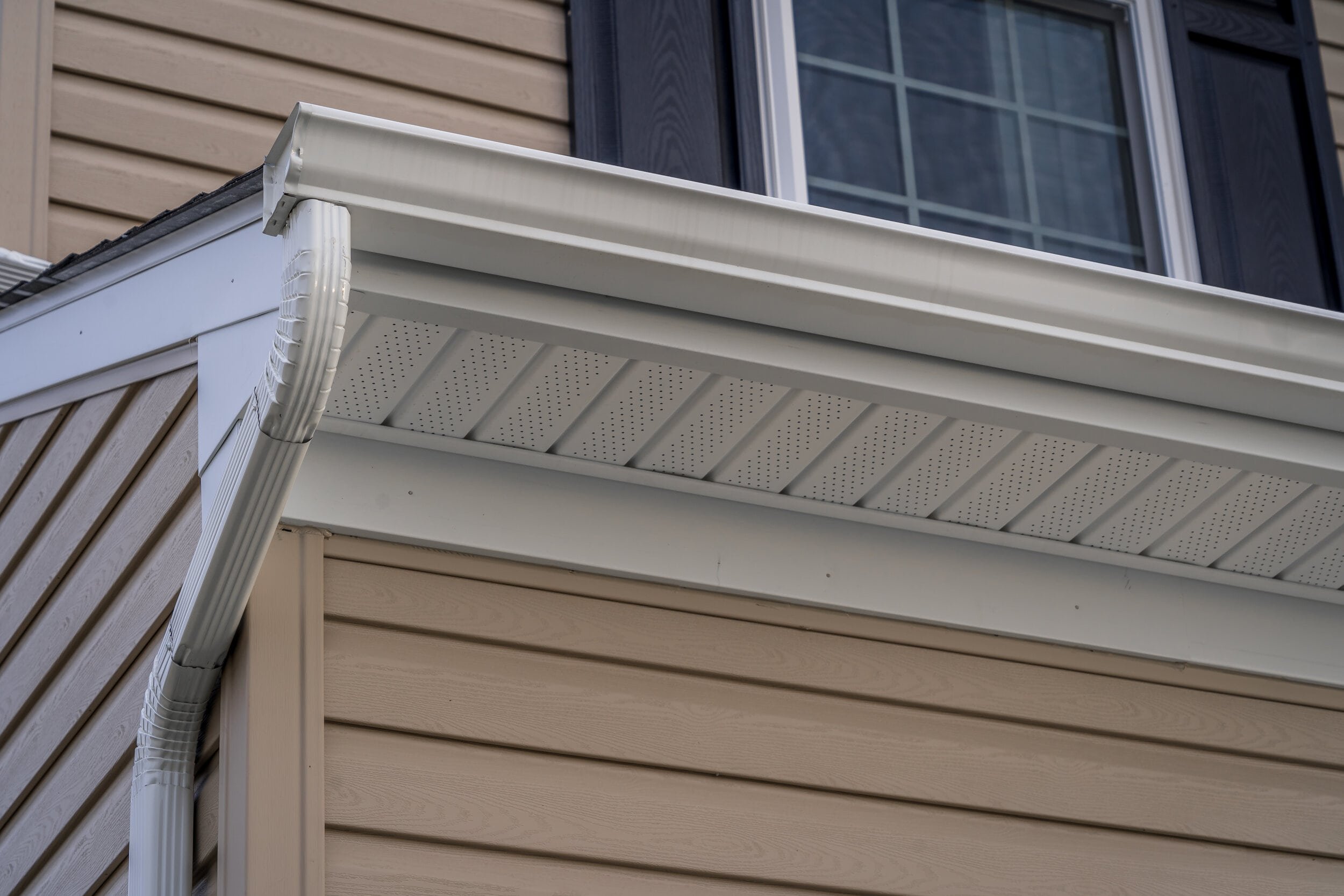
Fascia boards run horizontally along the edge of your roofline. They're the vertical boards your gutters attach to. Trim refers to the other exterior boards around windows, doors, corners, and rake edges. Both serve structural and aesthetic purposes, but fascia carries the heavier load—literally.
Here's what fascia does:
- Supports your gutter system. Without solid fascia, gutters sag, pull away, or dump water where you don't want it.
- Protects roof edges and rafters. Fascia seals the gap between your roof deck and the outside world, keeping water, pests, and wind-driven rain out of your attic.
- Provides a finished look. It's the visual transition between your roof and siding. When it's damaged, your whole house looks neglected.
In Michigan, fascia fails for a few predictable reasons. First, freeze-thaw cycles. Water gets into small cracks in the paint or wood grain, freezes, expands, and splits the board. Do that 30 times a winter for a decade, and you've got rot. Second, gutter overflow. If your gutters clog or your downspouts don't drain properly, water backs up and sits against the fascia. Wood fascia absorbs it like a sponge.
Third—and this is common in older Farmington Hills homes—the original builder used untreated pine or fir for fascia and didn't prime the back side before installation. That's the side you can't see, the one facing your roof deck. Water vapor from your attic condenses on it in winter, and the wood rots from the inside out. You don't see it until the gutter starts pulling away or you spot a dark stain on the soffit below.

We see this pattern constantly on ranch homes built in the '60s and '70s throughout Oakland County. The roof overhang is minimal, so the fascia gets hit with more weather. The original wood was cheap. And the paint job—if it was done at all—didn't include proper primer or back-priming. Twenty years later, the fascia is soft, the gutters are loose, and water is finding its way into the wall cavity behind your siding.
Signs Your Fascia or Trim Needs Repair
Most homeowners don't inspect their fascia regularly. Why would you? It's up there, out of sight. But there are clear warning signs that something's wrong, and catching them early saves you money.
Peeling or Bubbling Paint
Paint protects wood. When it starts peeling or bubbling, moisture is getting underneath. That means the wood is absorbing water, swelling, and starting to rot. If you see this on your fascia, don't just repaint it. The problem is deeper.
Gutters Pulling Away or Sagging
If your gutters are pulling away from the house, the fascia they're attached to is probably rotted. The screws or nails holding the gutter brackets have nothing solid to grip. You might think it's a gutter problem, but it's usually a fascia problem. We cover this in more detail in our post on spring siding inspection for Michigan homeowners, where we talk about checking all your exterior trim after winter.
Water Stains on Soffits
Soffits are the horizontal boards under your roof overhang. If you see dark stains, streaks, or discoloration, water is getting behind the fascia and running down. This usually means the fascia is compromised, and water is infiltrating the roof edge.
Visible Rot or Soft Spots
If you can reach your fascia with a ladder (safely—don't be a hero), press on it with your finger or a screwdriver. Solid wood should feel firm. If it's soft, spongy, or your screwdriver sinks in easily, that's rot. You need repair or replacement, not paint.
Wildlife Entry Points
Squirrels, raccoons, and birds love damaged fascia. It's an easy entry point to your attic. If you've got critters in your attic, check your fascia and soffits for holes or gaps. Animals don't create the problem—they just exploit it. But once they're in, they'll make it worse.
Pro Tip: Walk around your house twice a year—spring and fall—and look up. Bring binoculars if you need to. Look for peeling paint, sagging gutters, and stains. Most fascia damage is visible from the ground if you know what to look for. If you're not comfortable on a ladder, hire a licensed contractor to do a roof and fascia inspection. It's worth the $150-$300 to catch a $500 problem before it becomes a $5,000 problem.
Repair vs. Replacement: Making the Right Call
Not all fascia damage requires a full replacement. Sometimes you can spot-repair a section and get another 10-15 years out of it. Other times, patching is just kicking the can down the road, and you're better off replacing the whole run.
When Spot Repair Works
If the damage is localized—say, one 8-foot section near a downspout where water overflowed—and the rest of the fascia is solid, you can cut out the bad section and splice in new material. This works if:
- The rot is limited to one or two boards
- The surrounding fascia is still structurally sound
- You're using the same material (wood-to-wood, composite-to-composite)
- The cause of the damage has been fixed (gutter realignment, better flashing, etc.)
Spot repair is faster and cheaper. We can usually knock it out in a day, including priming and painting. But it only makes sense if the rest of your fascia isn't on borrowed time.
When Full Replacement Is Necessary
If your fascia is original to a 40-year-old house, and you're seeing damage in multiple spots, replacement is the smarter move. Here's why: wood fascia doesn't fail evenly. If one section is rotted, the rest is probably close behind. You'll end up doing piecemeal repairs every couple of years, which costs more in the long run than replacing it all at once.
Full replacement also gives you the chance to upgrade materials. Instead of going back with wood that'll need paint every 5-7 years, you can install composite or PVC trim that's rot-proof and low-maintenance. More on that in the next section.
Another factor: if you're already doing roof replacement in Metro Detroit or new gutters, it makes sense to replace the fascia at the same time. The materials are exposed, the crew is already there, and you're not paying for mobilization twice. We see this a lot in Farmington Hills—homeowners bundle fascia replacement with a roof or gutter project and save on labor.

The Right Materials for Michigan Weather
Fascia material matters. A lot. Michigan weather is brutal on exterior trim—freeze-thaw, humidity in summer, ice dams in winter, UV exposure. The material you choose determines how long your fascia lasts and how much maintenance you're signing up for.
Traditional Wood Fascia
Wood is still common, especially on older homes. It's easy to work with, takes paint well, and matches the original construction. But wood requires maintenance. You need to repaint every 5-7 years, and even with good paint, water will eventually find its way in.
If you're sticking with wood, use primed, paint-grade pine or cedar. Cedar is naturally rot-resistant, but it's pricier. Make sure the back side (the side facing your roof deck) is primed before installation. Most rot starts there, where you can't see it. And use a high-quality exterior primer and paint—Sherwin-Williams Duration or Emerald, for example. Cheap paint fails fast in Michigan.
Wood fascia makes sense if you're restoring a historic home in Birmingham or Farmington Hills and want to maintain authenticity. But for most homeowners, there are better options.
Composite and PVC Trim
Composite trim (like Azek or Versatex) and PVC trim are engineered to resist rot, insects, and moisture. They're made from cellular PVC, which means they won't absorb water. You can paint them, or buy them prefinished. They cost more upfront than wood, but they last 25-30 years with almost no maintenance.
We use Azek on a lot of projects in Southeast Michigan. It's stable in temperature swings, doesn't split or crack, and holds paint better than wood because it doesn't expand and contract as much. If you're replacing fascia, this is the material we'd recommend 9 times out of 10.
The only downside: it's not as rigid as wood, so you need solid blocking or backing to prevent flexing. A good installer knows this. A bad one will just nail it up and hope for the best. That's one reason to work with a licensed contractor who's done this before, not a handyman with a truck.
Aluminum Wrap Systems
Aluminum wrap (or capping) is when you cover existing wood fascia with thin aluminum coil. It's popular because it's cheap and fast. The fascia looks clean and white, and you don't have to paint it.
But here's the catch: aluminum doesn't fix rot. It just hides it. If the wood underneath is already compromised, wrapping it in aluminum is like putting a bandage on a broken bone. The rot continues, hidden from view, until the fascia collapses or the gutters fall off.
We don't recommend aluminum wrap unless the wood underneath is 100% solid. And even then, we'd rather see you invest in composite trim that won't rot in the first place. Aluminum wrap is a short-term cosmetic fix, not a long-term solution.
What Professional Fascia Repair Actually Involves
Fascia repair isn't just swapping out a board. Done right, it's a multi-step process that addresses the root cause of the damage, integrates properly with your roofing and gutter systems, and leaves you with a finished product that'll last.
Inspection and Damage Assessment
First, we inspect the entire fascia run, not just the obviously damaged section. We're looking for soft spots, water stains, loose gutter brackets, and signs of rot. We'll also check the soffit, the roof edge, and the flashing to see if water is getting in somewhere it shouldn't.
If there's rot, we need to know how far it extends. Sometimes it's just the fascia. Other times, it's spread to the rafter tails or the roof deck. That changes the scope of the repair.
Removal and Structural Repair
We remove the damaged fascia carefully, especially if the gutters are staying. If the rafter tails (the ends of your roof rafters) are rotted, we sister in new wood to restore structural support. This is common on older homes where the fascia was the only thing protecting the rafter ends from weather.
If the roof edge is compromised, we'll install new drip edge flashing. Drip edge directs water away from the fascia and into the gutter. A lot of older homes don't have it, which is why the fascia rotted in the first place. Adding it during repair prevents the same problem from happening again.
Installation of New Fascia
New fascia gets installed with corrosion-resistant fasteners—stainless steel or hot-dipped galvanized. We make sure it's level and properly aligned with the roof edge. If we're using composite trim, we leave expansion gaps at the joints to account for temperature changes. Wood doesn't need expansion gaps, but it does need proper sealing at the joints to prevent water infiltration.
Gutter Remount and Integration
Once the fascia is in, we remount the gutters. If the gutters are old or damaged, this is the time to replace them. New fascia with old, leaking gutters is a waste of money—the fascia will just rot again. We talk more about this in our guide to seamless gutters in Detroit, MI.
Gutters need to be sloped correctly (1/4 inch per 10 feet toward the downspout) and fastened into solid wood. If the fascia is composite, we use backing blocks or through-bolt the brackets to the rafter tails. This ensures the gutters won't pull away again.
Paint and Finish Work
If we're using wood fascia, we prime all six sides before installation. After it's up, we caulk the joints, spot-prime any exposed wood, and apply two coats of finish paint. We use Sherwin-Williams products exclusively—Duration for most projects, Emerald for premium jobs. Both hold up well in Michigan weather.
If we're using prefinished composite trim, there's no painting required. We just caulk the joints with a paintable, exterior-grade sealant. Clean, simple, done.
For homeowners looking at broader exterior upgrades, we also handle house siding in Detroit and window replacement in Detroit, so trim and fascia work often ties into larger projects.
Cost Reality: What to Expect in Southeast Michigan
Fascia repair costs vary based on the extent of the damage, the material you choose, and how accessible your roofline is. Here's what we see in Farmington Hills, Royal Oak, Birmingham, and the surrounding Oakland County area in 2026.
Spot Repair (One Section)
If you're replacing a single 8-10 foot section of fascia, expect to pay $300-$600, including labor and materials. That assumes wood fascia, basic paint, and no structural repairs to rafter tails. If we're splicing in composite trim or repairing rafter damage, add another $200-$400.
Full Fascia Replacement (Typical Single-Story Home)
For a single-story ranch home with 120-150 linear feet of fascia, full replacement runs $2,500-$5,000. That includes removal of old fascia, installation of new composite or wood fascia, priming and painting (if wood), and gutter remount. If you're upgrading to composite trim, you'll be on the higher end of that range.
Two-Story or Complex Rooflines
Two-story homes, or homes with multiple roof pitches and valleys, cost more because of accessibility and complexity. Expect $4,000-$8,000 for full fascia replacement on a typical two-story Colonial in Farmington Hills. Add another $1,000-$2,000 if we're also replacing soffits or repairing rafter tails.
Hidden Costs to Watch For
The biggest hidden cost is structural rot. If your rafter tails are rotted, or if the roof deck edge is compromised, that's carpentry work beyond simple fascia replacement. Budget an extra $500-$1,500 for structural repairs if your home is 30+ years old and the fascia has never been replaced.
Another cost: gutter replacement. If your gutters are old, leaking, or undersized, replacing them at the same time as the fascia makes sense. New seamless gutters run $8-$12 per linear foot installed. For a typical home, that's $1,200-$2,000.
Finally, if your fascia damage is tied to poor attic ventilation or ice dam issues, you'll want to address that too. We cover this in our post on Michigan storm season roof checklists. Fixing the fascia without fixing the ventilation is like bailing water out of a boat without plugging the leak.
Bundling Saves Money: If you're planning a roof replacement, new siding, or gutter installation in the next year or two, bundle the fascia work with that project. You'll save on mobilization, staging, and labor. We do this all the time—replace the roof, upgrade the fascia to composite, install new gutters, and the homeowner gets a 20-year exterior system for less than doing each project separately.
Financing and Payment
Most fascia projects don't require financing, but if you're bundling it with a larger project, we offer payment plans through third-party lenders. We don't push financing—if you can pay cash, great. But it's there if you need it.
We also work with insurance claims if your fascia damage is storm-related. Ice dams, wind damage, and falling tree limbs are often covered. We'll document the damage, provide photos and estimates, and work with your adjuster to get the claim approved. We've done this hundreds of times. It's part of the service.
Ready to Get Started?
NEXT Exteriors has been protecting Michigan homes since 1988. Get a free, no-pressure estimate from a team that shows up on time and does the job right.
Get Your Free QuoteOr call us: (844) 770-6398
Beyond fascia and trim, NEXT Exteriors offers comprehensive insulation services in Southeast Michigan to improve energy efficiency and comfort, as well as exterior painting in Southeast Michigan using Sherwin-Williams products exclusively. If you're upgrading your home's exterior, we handle it all under one roof—literally.
Frequently Asked Questions
Wood fascia lasts 15-25 years in Michigan if it's properly maintained—meaning repainted every 5-7 years and protected from gutter overflow. Composite or PVC fascia lasts 25-30+ years with minimal maintenance. The key variable is water exposure. If your gutters overflow regularly or you have ice dam issues, even the best fascia won't last as long.
No. Paint doesn't fix rot—it just hides it temporarily. Rotted wood continues to decay underneath the paint, and the problem gets worse. If your fascia is soft or spongy, it needs to be replaced. Painting over it is like putting a fresh coat of paint on a sinking ship. It might look better for a few months, but the structural problem remains.
Not always, but often it makes sense. If your soffits are damaged, stained, or made of the same old wood as your fascia, replacing both at once saves labor costs. You're already staging the house and working at height—might as well do it all. But if your soffits are vinyl or aluminum and in good shape, you can leave them alone and just replace the fascia. We've covered this in more detail in our siding before and after guide, which talks about how trim impacts curb appeal.
Fascia is the vertical board at the roof edge where gutters attach. Frieze board is the horizontal board between the top of your siding and the soffit. They're both trim, but they serve different functions. Frieze board is mostly decorative and protects the top edge of your siding. Fascia is structural—it supports gutters and protects the roof edge. Both can rot, but fascia failure is more serious because it affects your gutter system and roof drainage.
Usually not. Fascia replacement is considered maintenance and repair, not new construction. Most municipalities in Oakland County don't require a permit for trim replacement unless you're also doing structural work (like replacing rafter tails or roof framing). That said, permit requirements vary by city. We handle all permit research and applications if needed—it's part of our service. You don't need to call the building department yourself.
Three things: keep your gutters clean, maintain your paint, and fix ice dam issues. Clean gutters twice a year (spring and fall) to prevent overflow. Repaint wood fascia every 5-7 years with high-quality primer and paint. If you get ice dams in winter, improve your attic insulation and ventilation—ice dams cause more fascia damage than anything else in Michigan. We cover attic ventilation and insulation upgrades in our condensation on windows guide, which ties into overall home moisture management.
Technically yes, but it's a bad idea. Gutters need solid backing to stay in place. If your fascia is rotted or soft, the gutter brackets won't hold. The gutters will sag, pull away, or fall off entirely—usually during a heavy rainstorm when you need them most. If you're getting new gutters and your fascia is questionable, replace the fascia first. It's cheaper than replacing the gutters twice.
Window Replacement Options for Auburn Hills Homeowners
Auburn Hills homeowners: Learn which window replacement options work best for Michigan's climate. Double-hung, casement, sliding, bay—real costs and performance from a licensed contractor.

If you're an Auburn Hills homeowner researching window replacement, you're probably noticing the same thing we see on every job: Michigan winters don't give bad windows a pass. Drafts around the frames, condensation between panes, ice buildup on the interior sill, and heating bills that keep climbing—these aren't minor annoyances. They're symptoms of windows that can't handle the freeze-thaw cycles, temperature swings, and lake-effect weather that define Southeast Michigan.
After 35 years installing windows across Oakland County, we've learned that the right window replacement isn't about the flashiest features or the cheapest quote. It's about matching the window type, frame material, and energy performance to your home's architecture, your budget, and Michigan's climate demands. Auburn Hills has a mix of 1960s ranch homes, brick Colonials, and newer construction—each with different needs.
This guide walks through the window replacement options that actually perform in Southeast Michigan, what they cost, and how to choose the right fit for your Auburn Hills home. No sales pitch—just the information you need to make a decision you'll be comfortable with for the next 20 years.
Understanding Window Types for Michigan Homes
Walk through any Auburn Hills neighborhood and you'll see a mix of window styles—some chosen for aesthetics, some for function, and some because that's what the builder installed in 1972. Not every window type performs the same in Michigan's climate, and not every style fits every home.
Double-Hung Windows
This is the most common window type in Southeast Michigan, and for good reason. Both the upper and lower sash slide vertically, which makes them easy to clean from inside the house—a big advantage when you're on the second floor of a Colonial in January. They fit the architectural style of most traditional homes in Auburn Hills, from brick ranches to two-story Colonials.
The downside? The sliding mechanism creates more potential air leakage points than a casement window. If you're replacing old double-hung windows, you'll notice a significant improvement in energy efficiency, but they're not the tightest seal available. We typically recommend double-hung windows when aesthetics and home style are the priority, and when the homeowner wants familiar operation and easy maintenance.
Casement Windows
Casement windows swing outward on a hinge, operated by a crank mechanism. When closed, the sash presses against the frame, creating one of the tightest seals you can get in a residential window. For Michigan homeowners focused on energy efficiency and draft elimination, casements are hard to beat.
They're particularly effective on the north and west sides of Auburn Hills homes, where winter winds hit hardest. The crank mechanism also makes them easier to operate for homeowners with mobility concerns—no lifting or balancing required. The trade-off is aesthetics: casements don't always match the traditional look of older homes, and you can't install a window air conditioning unit in them. We see them most often in newer construction or as replacements in ranch-style homes where the modern look fits.
Sliding Windows
Sliding windows operate horizontally—one sash slides past the other. They're common in ranch homes and basements, where the wide, low profile fits the architecture. They're also typically the most budget-friendly option, which makes them appealing for homeowners replacing multiple windows at once.
The performance is middle-of-the-road. Sliding windows seal better than old double-hungs but not as tightly as casements. They're a practical choice when you're working within a tight budget and need to replace a lot of windows. For Auburn Hills homeowners with 1960s ranches, sliding windows often make sense—they match the existing style and keep costs manageable without sacrificing too much on energy efficiency.
Bay and Bow Windows
Bay and bow windows project outward from the house, creating interior space and adding architectural interest. A bay window typically has three panels (a large center window flanked by two angled side windows), while a bow window has four or more panels arranged in a gentle curve.
These are statement windows. They transform a room, add natural light, and create a focal point from the curb. The cost reflects that—bay and bow windows are significantly more expensive than standard flat windows, both in materials and installation labor. The structural work required to support the projection adds complexity.
We install bay and bow windows in Auburn Hills homes when homeowners are doing a major renovation or want to dramatically change a room's character. They work particularly well in living rooms and dining rooms of traditional homes. Just know that you're paying for aesthetics and space as much as performance. If your primary goal is energy efficiency and cost control, there are better options.

Material Options: Vinyl, Fiberglass, Wood-Clad
The frame material matters as much as the window type. Michigan's freeze-thaw cycles, summer humidity, and temperature extremes put stress on window frames. Some materials handle it better than others.
Vinyl Windows
Vinyl is the workhorse of window replacement in Southeast Michigan. The frames are made from PVC (polyvinyl chloride), which doesn't rot, warp, or require painting. They're low-maintenance, affordable, and perform well in Michigan's climate.
Quality matters with vinyl. Cheap vinyl windows can become brittle in extreme cold or warp in summer heat. We work with manufacturers like Pella, Andersen, and Marvin, whose vinyl windows use thicker extrusions and reinforced frames. These windows hold up to Michigan weather without the maintenance headaches of wood.
The aesthetic limitation is real—vinyl windows come in limited colors (mostly white, beige, and a few darker options), and they have a more utilitarian look than wood. For most Auburn Hills homeowners, that's a fair trade-off for durability and cost savings. If you're replacing windows on a brick Colonial and want a traditional look, vinyl is harder to justify. But for ranch homes, newer construction, or budget-conscious projects, vinyl delivers solid performance.
Fiberglass Windows
Fiberglass is the premium option. The frames are made from glass fibers and resin, creating a material that's stronger than vinyl, more thermally stable, and more dimensionally stable in temperature extremes. Fiberglass expands and contracts at nearly the same rate as glass, which reduces stress on the seal and extends the life of the window.
The thermal performance is excellent—fiberglass frames insulate better than vinyl or aluminum. For Auburn Hills homeowners serious about energy efficiency, fiberglass is worth considering, especially on the north and west exposures where heat loss is greatest.
The downside is cost. Fiberglass windows typically run 15-30% more than comparable vinyl windows. They're also less common, so not every contractor stocks or installs them. We use fiberglass when homeowners have the budget and prioritize long-term performance over upfront cost. For homes where windows are a significant part of the curb appeal—or for homeowners planning to stay in the house for 20+ years—fiberglass makes sense.
Wood-Clad Windows
Wood-clad windows have a wood interior (for aesthetics) and a vinyl or aluminum exterior (for weather protection). They offer the traditional look of wood on the inside without the maintenance burden of full wood windows.
These are popular in historic districts and upscale homes where the interior wood finish matters. The wood can be stained or painted to match trim and cabinetry, creating a cohesive look that vinyl can't replicate. The exterior cladding protects the wood from Michigan's weather, so you're not repainting or refinishing every few years.
Wood-clad windows are expensive—comparable to or more than fiberglass. They're also heavier, which can complicate installation. We recommend them when aesthetics are a primary concern and budget allows. For most Auburn Hills homeowners focused on performance and value, vinyl or fiberglass makes more sense. But if you're renovating a 1920s Colonial in a historic area, wood-clad windows might be the right call.
Energy Efficiency Ratings That Matter in Southeast Michigan
Window shopping gets confusing fast when you start comparing energy ratings. Manufacturers throw around U-factors, SHGC numbers, and Energy Star certifications. Here's what actually matters for Auburn Hills homeowners.
U-Factor: The Heat Loss Number
U-factor measures how well a window prevents heat from escaping. Lower numbers are better. In Michigan's Northern Zone climate, you want a U-factor of 0.30 or lower. Windows with U-factors in the 0.20-0.27 range represent high performance—these are triple-pane or high-quality double-pane windows with low-E coatings and argon or krypton gas fills.
For context, old single-pane windows have U-factors around 0.90-1.00. Even basic double-pane windows drop that to 0.40-0.50. The difference in heating costs is measurable. We've seen Auburn Hills homeowners cut heating bills by 15-25% after replacing old windows with modern, low-U-factor units, especially when combined with proper attic insulation.
Solar Heat Gain Coefficient (SHGC)
SHGC measures how much solar heat passes through the window. In Michigan, you generally want moderate SHGC values (0.30-0.40). Too low, and you lose beneficial solar heat gain in winter. Too high, and you get excessive heat in summer.
The orientation matters. South-facing windows benefit from higher SHGC (0.40-0.50) to capture winter sun. North-facing windows should have lower SHGC (0.25-0.35) to minimize heat loss without worrying about summer heat gain. Most Auburn Hills homes do fine with a balanced SHGC around 0.30 across all windows, but if you're optimizing for energy performance, orientation-specific choices make sense.
Energy Star Northern Zone Certification
Energy Star certifies windows for different climate zones. Michigan falls in the Northern Zone, which has the strictest requirements. To earn Energy Star certification for the Northern Zone, windows must have a U-factor of 0.30 or lower and SHGC of 0.42 or lower.
This certification is a useful shortcut. If a window is Energy Star Northern Zone certified, it meets the baseline performance standards for Michigan. You still want to compare specific U-factors and SHGC values between models, but the Energy Star label tells you the window is appropriate for our climate.
Michigan Contractor Tip: Don't obsess over tiny differences in U-factor. A window with a U-factor of 0.27 versus 0.29 won't make a noticeable difference in your heating bill. Focus on getting below 0.30, then prioritize proper installation. A 0.25 U-factor window installed poorly will perform worse than a 0.30 U-factor window installed correctly.
What Window Replacement Actually Costs in Auburn Hills
Window replacement costs vary based on window type, size, material, and installation complexity. Here's what Auburn Hills homeowners are actually paying in 2026, based on projects we've completed across Oakland County.
Double-Hung Windows
Standard vinyl double-hung windows (double-pane, low-E, argon fill) typically run $450-$750 per window installed for common sizes (30"x54" to 36"x60"). Premium vinyl or fiberglass double-hung windows range from $700-$1,200 installed. Wood-clad double-hung windows start around $1,000 and can exceed $1,500 for larger sizes or custom colors.
Casement Windows
Vinyl casement windows run $500-$850 installed for standard sizes. Fiberglass casements range from $750-$1,300. Wood-clad casements start around $1,100. Casements cost slightly more than double-hung windows due to the hardware and hinge mechanisms.
Sliding Windows
Sliding windows are typically the most affordable option. Vinyl sliders run $400-$700 installed for standard sizes. They're a good choice when you're replacing multiple windows and need to control costs without sacrificing too much performance.
Bay and Bow Windows
Bay and bow windows are significantly more expensive due to size, complexity, and structural requirements. A standard vinyl bay window (three panels, 8-10 feet wide) runs $2,500-$4,500 installed. Premium materials or custom sizes can push that to $5,000-$7,000. Bow windows (four or more panels) start around $3,000 and can exceed $8,000 for large, high-end installations.
Full-House Window Replacement
Most Auburn Hills homes have 12-20 windows. A full-house replacement with mid-grade vinyl windows typically runs $8,000-$18,000, depending on window count, sizes, and any structural repairs needed. Premium materials (fiberglass or wood-clad) push that range to $15,000-$30,000.
These numbers include removal of old windows, installation of new windows, insulation around the frames, interior and exterior trim work, and cleanup. They assume standard installation conditions—no structural damage, no custom sizes, no unusual access challenges.
Cost Reality: The cheapest quote isn't always the best value. We've fixed countless window installations where the previous contractor cut corners—skipped flashing, didn't insulate around the frame, or used undersized fasteners. A window installed wrong will leak air and water no matter how good the window itself is. When comparing quotes, ask about installation details, warranty coverage, and whether the contractor is licensed and insured.

Signs Your Auburn Hills Home Needs Window Replacement
Not every draft or condensation issue requires full window replacement. Sometimes repairs or adjustments solve the problem. But certain signs tell you it's time to replace, not repair.
Drafts You Can Feel
If you can feel air moving around the window frame—even when the window is closed and locked—the seal has failed or the frame has warped. This is common in older windows where the wood has deteriorated or the vinyl has become brittle. Weatherstripping and caulk can help temporarily, but if the frame itself is compromised, replacement is the long-term solution.
Condensation Between Panes
Condensation or fog between the glass panes means the seal has failed and moisture has entered the insulated glass unit. This can't be fixed—the entire sash needs replacement. In some cases, you can replace just the sash without replacing the entire window frame, which saves money. But if the windows are more than 15-20 years old, it's often more cost-effective to replace the whole unit rather than piecemeal repairs.
Difficulty Operating
Windows that stick, bind, or require force to open and close indicate frame warping or hardware failure. This is common in older wood windows that have absorbed moisture and swollen, or in vinyl windows that have warped from temperature extremes. If you're fighting with your windows every time you try to open them, replacement makes sense—especially for second-floor windows where operation is a safety issue.
Rising Energy Bills
If your heating bills have been climbing even though your furnace is running fine, your windows might be the culprit. Old windows with high U-factors and poor seals let heat escape, forcing your furnace to work harder. While improving attic insulation and maintaining your gutters also help control energy costs, windows are often the biggest source of heat loss in older Auburn Hills homes.
Visible Damage
Cracked glass, rotted wood frames, peeling paint, or water stains around the window indicate serious problems. These aren't cosmetic issues—they're structural failures that compromise your home's envelope. Water infiltration leads to mold, rot, and insulation damage. If you're seeing visible damage, don't wait. The longer you delay, the more expensive the repair becomes as water damage spreads to the surrounding wall structure.
Single-Pane Windows
If your Auburn Hills home still has original single-pane windows from the 1960s or 1970s, replacement should be a priority. Single-pane windows have terrible energy performance by modern standards (U-factors around 0.90-1.00). Even basic double-pane windows will cut your heat loss by 50% or more. The payback period on energy savings alone often justifies the investment, and you'll notice the comfort improvement immediately—less drafts, more consistent temperatures, quieter interior.
For Auburn Hills homeowners dealing with any of these issues, choosing the right window style is an important next step that affects both performance and curb appeal.
The Installation Process: What Auburn Hills Homeowners Should Expect
A window replacement project moves fast compared to other exterior work. Most homes can be completed in 2-4 days, depending on window count and any structural repairs needed. Here's what the process looks like when it's done right.
Pre-Installation: Measurement and Ordering
Accurate measurement is critical. We measure each window opening at least twice—width and height at three points (top, middle, bottom for width; left, center, right for height). Window openings in older homes are rarely perfectly square, so we order windows to fit the actual opening, not the nominal size.
Custom windows take 4-8 weeks to arrive, depending on the manufacturer and material. Standard sizes can sometimes be sourced faster, but don't expect next-day availability for quality windows. If a contractor is promising immediate installation with premium windows, be skeptical—they're either using stock windows that may not fit properly or they're not using the brands they claim.
Day 1: Removal and Prep
We remove the old windows from the interior when possible to minimize exterior damage and protect your landscaping. The old window, frame, and interior trim come out. We inspect the rough opening for rot, water damage, or structural issues. If the framing is solid, we clean the opening and prep it for the new window. If we find rot or damage, we repair it before proceeding—this adds time and cost, but it's not optional. Installing a new window in a compromised opening guarantees future problems.
The opening gets flashed properly—self-adhering membrane at the sill, flashing tape at the jambs and head. This is where many cheap installations fail. Proper flashing prevents water infiltration, which is the leading cause of window failure in Michigan. We've torn out countless windows installed without proper flashing, and the surrounding framing is always rotted.
Day 2-3: Installation and Finishing
The new window goes into the opening, gets leveled and squared, and is fastened according to manufacturer specifications. We use shims to ensure the window is plumb and level—if it's out of square, it won't operate correctly and the seal will fail prematurely. The gap between the window frame and the rough opening gets insulated with low-expansion foam or fiberglass, depending on the gap size.
Exterior trim and caulking come next. We match existing trim profiles when possible or upgrade to PVC trim that won't rot. Interior trim gets reinstalled or replaced, then caulked and painted. The goal is to leave the installation looking like the window was always there—no gaps, no rough edges, no visible fasteners.
Cleanup and Final Inspection
We clean up daily—old windows, debris, and packaging go into our dumpster, not your yard. After the final window is installed, we do a walkthrough with the homeowner, demonstrate operation, and review care and maintenance. We also provide warranty information for both the windows (manufacturer warranty) and the installation (our labor warranty).
Good contractors minimize disruption. We protect your floors, move furniture as needed, and contain dust. You'll have some inconvenience—windows will be open to the weather during installation, so we schedule around rain and extreme temperatures when possible. But a professional crew keeps the chaos under control.
Beyond windows, many Auburn Hills homeowners also benefit from complementary exterior services like roofing, siding, and exterior painting to complete the home's envelope upgrade.

Ready to Get Started?
NEXT Exteriors has been protecting Michigan homes since 1988. Get a free, no-pressure estimate from a team that shows up on time and does the job right.
Get Your Free QuoteOr call us: (844) 770-6398
Frequently Asked Questions
For pure energy efficiency, casement windows offer the tightest seal and best performance in Michigan winters. However, double-hung windows work well for most homes when properly installed with low-E coatings, argon fill, and quality frames. The "best" window depends on your home's architecture, your budget, and whether you prioritize energy savings or aesthetics. For Auburn Hills homes, we typically recommend Energy Star Northern Zone certified windows with U-factors below 0.30 regardless of style.
Quality vinyl windows typically last 20-30 years in Michigan's climate. Fiberglass windows can last 30-40 years or more. Wood-clad windows last 25-35 years with proper maintenance. The lifespan depends on material quality, installation quality, and exposure to weather. South and west-facing windows experience more UV and temperature stress, which can shorten lifespan slightly. Proper installation with correct flashing and insulation is as important as window quality—a premium window installed poorly won't last as long as a mid-grade window installed correctly.
Replacing all windows at once is more cost-effective—you get better pricing on materials and labor, and you only disrupt your home once. However, if budget is a constraint, phasing makes sense. Prioritize north and west-facing windows first (these lose the most heat), followed by any windows with visible damage or operational issues. The least urgent are south and east-facing windows in good condition. Just know that phasing means living with mismatched windows for a period, and you won't get the full energy savings until all windows are replaced.
In most cases, replacing existing windows with new windows of the same size and type does not require a permit in Auburn Hills. However, if you're changing the window size, altering the rough opening, or converting a window to a door (or vice versa), you'll need a permit. Structural changes, egress window installations, or work that affects the home's load-bearing structure also require permits. A licensed contractor will know when permits are required and can handle the permitting process. Always verify with the Auburn Hills Building Department if you're unsure.
Full-frame replacement removes the entire window unit including the frame, down to the rough opening. This allows inspection and repair of the framing, proper flashing installation, and maximum glass area in the new window. Insert (or retrofit) replacement installs a new window unit inside the existing frame. It's faster and less disruptive, but you lose some glass area and can't address hidden problems in the framing. For Michigan homes, we typically recommend full-frame replacement—it's the only way to ensure proper weatherproofing and address any rot or structural issues that may exist behind the old frame.
Yes, but the savings depend on what you're replacing. If you're replacing single-pane windows from the 1960s with modern double-pane, low-E windows, you can expect heating cost reductions of 15-25%. If you're replacing older double-pane windows (1990s-era) with modern high-efficiency windows, the savings will be more modest—maybe 5-10%. The biggest savings come from eliminating drafts and reducing heat loss through the glass. You'll also notice improved comfort—more consistent temperatures and fewer cold spots near windows. For Auburn Hills homes with old windows, the energy savings typically justify the investment over 10-15 years, and you get the comfort and curb appeal benefits immediately.
Look for a contractor with a valid Michigan Residential Builder's License, liability insurance, and workers' compensation coverage. Check their track record—how long have they been in business, and what do their reviews say? Ask for references and photos of completed projects in Auburn Hills or nearby communities. Get detailed written estimates that specify window brand, model, glass package, installation method, and warranty coverage. Be wary of contractors who pressure you to decide immediately or offer prices significantly lower than other quotes—quality installation costs money, and cheap quotes often mean cut corners. A good contractor will educate you about options, answer questions patiently, and provide a clear timeline and scope of work.
Siding Repair for Lakefront Homes in Grosse Pointe, MI
Lakefront siding faces unique challenges in Grosse Pointe. Learn what moisture, wind, and freeze-thaw cycles do to your home—and how to fix it right.
If you own a lakefront home in Grosse Pointe, you already know the view comes with a price. Lake St. Clair delivers constant moisture, wind-driven rain, and freeze-thaw cycles that put your siding through conditions most Michigan homes never see. We've been repairing siding on lakefront properties across Southeast Michigan since 1988, and the damage patterns are predictable—moisture intrusion behind the siding, warping from trapped water, paint failure on the lake-facing walls, and ice dam damage along the lower courses.
This isn't about cosmetic touch-ups. Lakefront siding repair requires understanding how water moves, how wind pressures work at different elevations, and which materials can actually survive constant exposure. Most contractors treat lakefront homes like any other job. That's why the repairs fail in three years. This guide walks through what we've learned from 35+ Michigan winters working on homes from Grosse Pointe Farms to St. Clair Shores—what breaks, why it breaks, and how to fix it so it stays fixed.
Why Lakefront Siding Fails Faster
Lakefront homes in Grosse Pointe face exposure levels that accelerate siding deterioration by years compared to inland properties. The primary culprit isn't the lake itself—it's the combination of constant moisture, wind pressure, and Michigan's brutal freeze-thaw cycling.
Lake St. Clair creates a microclimate. Humidity stays higher year-round, which means siding never fully dries out between rain events. When moisture gets behind the siding—and it always does, eventually—it stays there. That trapped moisture creates ideal conditions for rot in wood substrates, mold growth behind vinyl, and efflorescence on fiber cement.
Wind-driven rain is the bigger problem most homeowners don't see coming. Standard siding installation assumes water hits the wall and runs down. But lakefront wind pressures force water upward under laps, sideways through joints, and into nail holes. We've pulled off siding on lake-facing walls where the moisture barrier looked like it went through a car wash—completely saturated, with water stains running horizontally instead of vertically.
Michigan freeze-thaw reality: Grosse Pointe typically sees 40-50 freeze-thaw cycles per winter. Water trapped behind siding expands when it freezes, pushing fasteners out, cracking caulk joints, and separating laps. By spring, what looked fine in October has gaps you can see from the street.
The homes most vulnerable are the brick Colonials and mid-century ranches common in Grosse Pointe neighborhoods. Many were built in the 1950s and 1960s with minimal moisture barriers—just tar paper or nothing at all. When siding gets added or replaced without upgrading the weather protection underneath, you're just covering up a problem that's going to get worse.
For homeowners considering a full exterior upgrade, our Detroit siding company services include proper moisture barrier installation and ventilation strategies specifically designed for lakefront exposure. This isn't optional—it's the difference between a repair that lasts 5 years and one that lasts 25.
Common Siding Problems in Grosse Pointe Lakefront Homes
We see the same failure patterns on lakefront properties every season. Here's what breaks first and why:
Water Intrusion Behind Siding
This is the silent killer. You won't see it until the damage is extensive. Water gets behind siding through failed caulk joints, loose laps, or nail holes that weren't properly sealed. On lakefront homes, wind pressure drives water through openings that would stay dry on an inland property.
Signs of water intrusion: interior wall staining near windows, peeling paint on interior walls adjacent to exterior walls, musty odors in rooms facing the lake, or visible mold on the back side of siding when you pull a piece off. By the time you see interior damage, the sheathing underneath is often compromised.
Warping and Buckling from Moisture
Vinyl siding expands and contracts with temperature changes. When it's installed too tight—common on quick jobs—it can't move. Add trapped moisture from lakefront humidity, and the siding buckles, waves, or pulls away from the wall. We've measured expansion differences of over half an inch on 12-foot panels between winter and summer temperatures.
Fiber cement and engineered wood products handle temperature changes better, but they're not immune to moisture problems. James Hardie siding, for example, is designed to resist moisture absorption, but only if it's installed with proper clearances and flashing. Cut corners on the installation, and even premium materials fail.
Paint Failure and Fading
Lake-facing walls get hammered by UV exposure and moisture. Paint on wood siding typically lasts 7-10 years inland. On a lakefront home? You're looking at 4-6 years before you see chalking, fading, and peeling. The combination of sun, wind, and salt spray (yes, even on a freshwater lake—dissolved minerals act the same way) breaks down paint films faster.
If you're repainting lakefront siding every few years, the problem isn't the paint—it's moisture getting into the substrate. Our Southeast Michigan painting professionals use Sherwin-Williams products exclusively, but even premium paint fails if the underlying moisture problem isn't addressed first.
Ice Dam Damage to Lower Courses
Ice dams form when heat escaping through the roof melts snow, which refreezes at the eaves. That ice works its way up and under the siding at the roofline, pushing laps apart and forcing water behind the weather barrier. We see this most often on the north and east sides of lakefront homes, where snow accumulation is heaviest.
The fix isn't just repairing the siding—it's addressing the attic moisture and ventilation problems that cause ice dams in the first place. Our top-rated insulation contractor in Detroit services include attic assessments specifically designed to prevent ice dam formation.
Material Selection for Lakefront Durability
Not all siding materials are created equal when it comes to lakefront exposure. Here's what actually works in Grosse Pointe conditions:
James Hardie Fiber Cement: The Lakefront Standard
James Hardie fiber cement siding is engineered to resist moisture absorption, which makes it ideal for lakefront homes. The product is rated for high-moisture environments and carries a 30-year non-prorated warranty. We've installed James Hardie on dozens of lakefront properties in Grosse Pointe, and the performance difference compared to vinyl or wood is measurable.
Fiber cement doesn't warp, rot, or buckle from moisture exposure. It holds paint longer—typically 12-15 years before recoating is needed. The material is also non-combustible and rated for 130 mph wind zones, which matters when lake storms roll through. Our James Hardie siding installers in Metro Detroit are factory-certified, which means the installation meets manufacturer specs for moisture protection and wind resistance.
The downside: cost. James Hardie runs 30-50% more than vinyl. But on a lakefront home, where moisture exposure is constant, the additional investment pays back in longevity and reduced maintenance.
Vinyl Siding: Limitations Near Water
Vinyl siding is the most common product we see on Michigan homes, and it can work on lakefront properties—if it's installed correctly and the homeowner understands its limitations. Vinyl doesn't absorb moisture, which is good. But it also doesn't breathe, which means any water that gets behind it stays trapped.
The bigger issue is wind resistance. Standard vinyl siding is rated for 110 mph winds, which sounds adequate until you factor in lakefront gusts and the suction pressures that develop on upper stories. We've replaced vinyl siding on lakefront homes where entire sections pulled off during storms because the fastening wasn't adequate for the exposure.
If you're set on vinyl for budget reasons, upgrade to a thicker profile (0.046" minimum), use corrosion-resistant fasteners, and make sure the installer creates a proper drainage plane behind the siding. Our article on whether vinyl siding fades over time covers the UV exposure challenges specific to lakefront properties.
LP SmartSide Engineered Wood: A Middle Ground
LP SmartSide engineered wood siding offers better moisture resistance than traditional wood products, thanks to a proprietary treatment process that includes zinc borate for rot and fungal resistance. It's priced between vinyl and fiber cement, which makes it appealing for homeowners who want better performance than vinyl but can't stretch to James Hardie pricing.
The material holds paint well and offers a more authentic wood appearance than fiber cement. But it requires more maintenance than fiber cement—plan on repainting every 8-10 years—and it's more vulnerable to impact damage. On lakefront homes, we typically recommend LP SmartSide for protected walls (garage sides, courtyard walls) rather than direct lake exposure.
For a detailed comparison, see our breakdown of LP SmartSide vs. James Hardie siding for Michigan homes.
The Right Way to Repair Lakefront Siding
Lakefront siding repairs require more than just replacing damaged panels. If you don't address the underlying moisture and wind resistance issues, you'll be back in the same spot in a few years. Here's the process we follow on every lakefront repair job:
Step 1: Remove Damaged Siding and Inspect
Pull off the damaged siding and inspect the sheathing, moisture barrier, and framing underneath. On lakefront homes, we find water damage extending well beyond the visible siding damage in about 60% of cases. If the sheathing is soft, discolored, or shows mold growth, it needs to be replaced. There's no shortcut here—covering up rot with new siding just hides the problem.
Step 2: Address Structural Issues
Replace any rotted sheathing or framing. This is where costs can escalate if the damage is extensive, but it's non-negotiable. We've seen contractors try to "sister" new wood alongside rotted framing or just screw new siding into compromised sheathing. It doesn't work. The fasteners pull out, the siding sags, and you're back to square one.
Step 3: Install Proper Moisture Barriers
This is the most critical step for lakefront durability. We use a two-layer approach: a weather-resistant barrier (WRB) like Tyvek or ZIP System sheathing, followed by a drainage mat or furring strips to create an air gap behind the siding. The air gap allows moisture that gets past the siding to drain down and out, rather than sitting against the sheathing.
All seams get taped with manufacturer-approved tape. All penetrations—windows, doors, electrical boxes, hose bibs—get flashed with self-adhering membrane. This takes time, which is why quick contractors skip it. But on a lakefront home, proper flashing is the difference between a repair that lasts and one that fails.
Step 4: Create Ventilation Space
The air gap behind the siding isn't optional on lakefront homes. We typically use 3/8" drainage mat or 1x3 furring strips installed vertically over the moisture barrier. This creates a continuous path for water to drain and allows air circulation to dry out any moisture that gets in.
This approach is standard in commercial construction and high-performance residential builds, but it's still uncommon in typical siding jobs. It adds about 15% to material and labor costs, but it dramatically extends siding life in high-moisture environments.
Step 5: Install New Siding
Fasten the new siding according to manufacturer specs for high-wind zones. For vinyl, that means nails in the center of the slots, not driven tight—the siding needs to move. For fiber cement, it means corrosion-resistant fasteners driven flush but not overdriven, with proper clearances at all joints.
Pay special attention to corners, trim transitions, and anywhere two materials meet. These are the spots where water finds its way in. We use high-quality sealant rated for exterior moisture exposure—typically polyurethane or tripolymer products—and apply it generously at all joints.
Step 6: Seal and Finish
Caulk all joints, install trim, and ensure every edge is protected. On fiber cement and engineered wood, apply a quality primer and two coats of 100% acrylic latex paint. Our exterior painting services use Sherwin-Williams products exclusively—Duration or Emerald lines for lakefront exposure—because the paint film needs to handle constant moisture and UV without breaking down.
For homeowners interested in the complete process, our guide to what to expect during siding installation in Michigan covers timelines, crew size, and how we minimize disruption during repairs.
Cost Reality: What Lakefront Repairs Actually Run
Lakefront siding repairs cost more than inland jobs. The exposure requires better materials, more labor-intensive installation, and often structural repairs that weren't visible until the siding came off. Here's what to expect:
Spot Repairs vs. Full Replacement
Spot repairs—replacing a few damaged sections—typically run $800-$2,500 depending on material, access, and whether structural work is needed. But here's the reality: if one section failed from moisture intrusion, adjacent sections are often compromised too. We recommend pulling off enough siding to inspect the full extent of damage before committing to a repair-only approach.
Full siding replacement on a typical 2,000-square-foot lakefront home ranges from $15,000-$35,000 depending on material choice and the condition of the underlying structure. Vinyl siding sits at the lower end of that range. James Hardie fiber cement sits at the upper end. LP SmartSide falls in the middle.
Material Cost Differences
Here's what materials actually cost installed, per square foot, for lakefront homes in Grosse Pointe (2026 pricing):
- Vinyl siding: $6-$9 per square foot installed
- LP SmartSide: $9-$13 per square foot installed
- James Hardie fiber cement: $12-$16 per square foot installed
These numbers assume proper moisture barrier installation, furring strips or drainage mat, and high-wind fastening. If you're getting quotes significantly lower, ask what's being left out. The most common corners cut: no drainage plane, minimal flashing, and inadequate fastening for wind resistance.
Labor Considerations for Lakefront Access
Lakefront properties often have limited access, steep grades down to the water, and landscaping that complicates staging and material delivery. On some properties, we need to bring materials through the house or use smaller equipment because there's no yard access. This adds 10-20% to labor costs compared to a standard suburban lot.
Weather delays are also more common on lakefront jobs. We can't install siding in high winds or when rain is imminent—the moisture barrier needs to stay dry during installation. On an inland job, we might push through marginal weather. On a lakefront job, we wait. That extends timelines and sometimes requires multiple mobilizations.
Insurance claims: If storm damage triggered the need for repairs, document everything before repairs begin. Take photos of damaged siding, underlying moisture damage, and any structural issues. Most insurance policies cover sudden damage from wind or hail, but they won't cover deferred maintenance or gradual deterioration. Our team works with insurance adjusters regularly and can help document damage to support your claim.
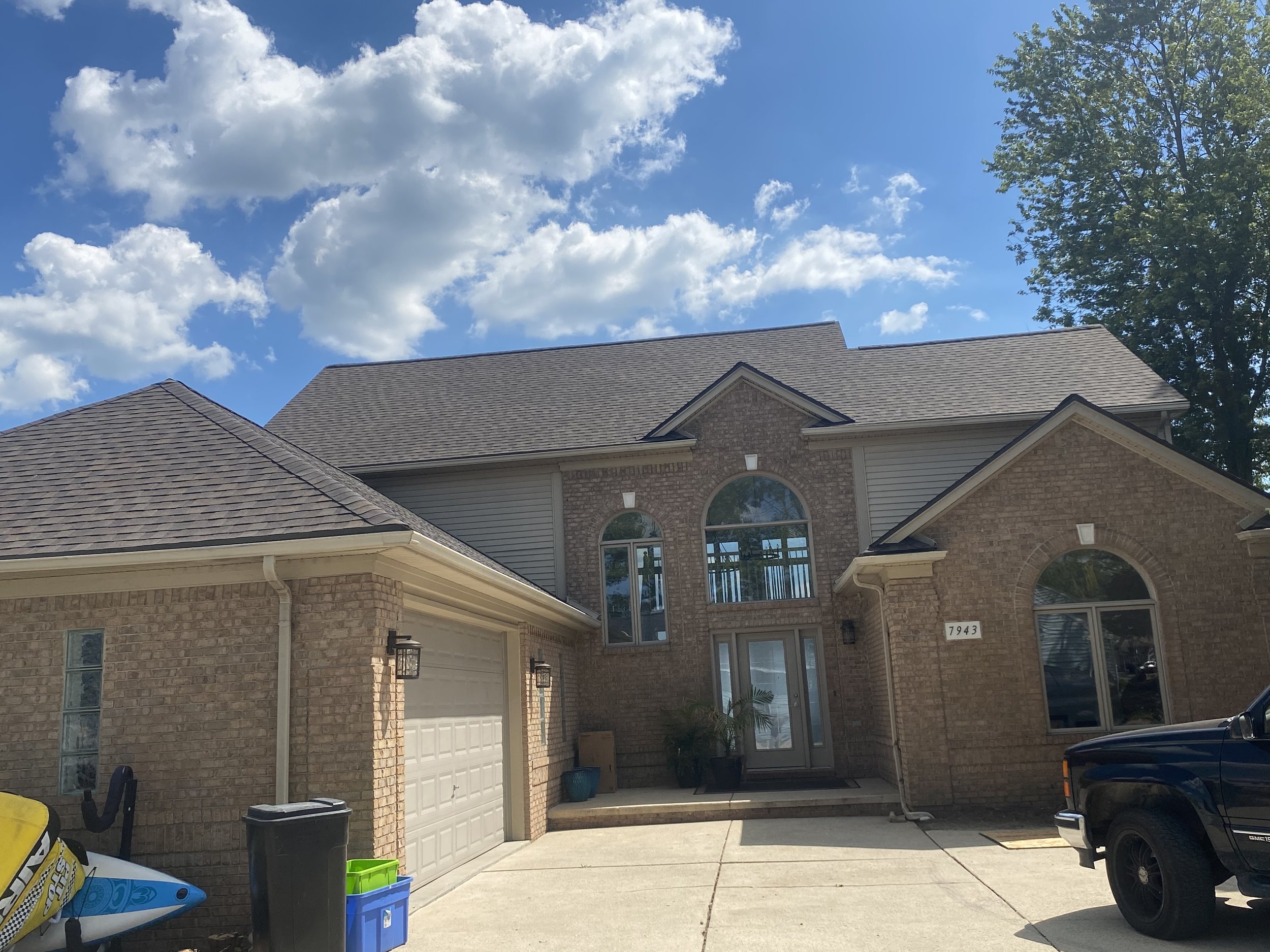
When to Call a Contractor
Don't wait until you see interior damage. By that point, the repair costs have usually doubled. Here are the signs that your lakefront siding needs professional attention:
- Visible gaps or separation: If you can see daylight between siding panels, or if laps have pulled apart, water is getting in.
- Warping or buckling: Siding that's no longer flat against the wall indicates trapped moisture or failed fasteners.
- Paint peeling or blistering: On wood or fiber cement, this usually means moisture is pushing through from behind.
- Soft spots or rot: Press on the siding near corners, windows, and trim. If it feels spongy or you can push through it, the substrate is compromised.
- Interior wall staining: Water stains on interior walls adjacent to exterior walls mean the moisture barrier has failed.
- Mold or mildew smell: If rooms facing the lake smell musty even with good ventilation, moisture is likely trapped in the walls.
- Increased energy bills: Drafts and heat loss often indicate gaps in the siding or failed insulation behind it.
For homeowners also dealing with roof issues—common on lakefront properties where wind and ice cause accelerated wear—our Detroit roofing services include storm damage assessments and insurance claim support. Many lakefront homes need coordinated roof and siding repairs after major weather events.
If you're upgrading windows at the same time—smart move, since proper window flashing ties directly into siding performance—our Detroit window experts can coordinate the installation to ensure all transitions are properly sealed.
Other Services from NEXT Exteriors
Beyond siding repair, NEXT Exteriors provides comprehensive exterior services in Detroit and throughout Southeast Michigan. Our seamless gutter installation in Detroit, MI is critical for lakefront homes, where proper water management prevents foundation issues and basement flooding. We also offer insulation services designed to prevent ice dams and reduce energy costs—both major concerns for lakefront homeowners dealing with wind exposure and temperature extremes.
Ready to Get Started?
NEXT Exteriors has been protecting Michigan homes since 1988. Get a free, no-pressure estimate from a team that shows up on time and does the job right.
Get Your Free QuoteOr call us: (844) 770-6398
Frequently Asked Questions
Siding lifespan on lakefront properties is typically 20-30% shorter than inland homes due to constant moisture exposure and wind stress. Vinyl siding lasts 15-20 years on a lakefront home versus 20-25 years inland. James Hardie fiber cement can reach 30-40 years on lakefront properties if properly installed and maintained. Wood siding requires repainting every 4-6 years and typically needs replacement after 20-25 years. The key factor isn't the siding material itself—it's whether the installation included proper moisture barriers and ventilation.
It depends on the extent of underlying damage and whether you can match the existing siding. If moisture intrusion is localized and the surrounding siding is still in good condition, spot repairs can work. But if the damage is widespread or the existing siding is discontinued, you'll struggle to get a good match. Color fading also makes it difficult to blend new sections with old. On lakefront homes where one wall failed, adjacent walls are often compromised too—we typically recommend pulling off enough siding to inspect the full extent of water damage before committing to a repair-only approach.
James Hardie fiber cement is the best performing material for direct lakefront exposure in Grosse Pointe. It resists moisture absorption, doesn't warp or rot, holds paint longer than wood, and carries a 30-year warranty. The material is rated for high-moisture environments and 130 mph wind zones. Vinyl siding can work if budget is a concern, but it requires more frequent inspection and maintenance. LP SmartSide engineered wood is a middle option that performs better than traditional wood but requires more upkeep than fiber cement. Avoid standard wood siding on lakefront properties unless you're committed to repainting every 4-6 years and replacing sections as they rot.
Spot repairs typically run $800-$2,500 depending on material, extent of damage, and whether structural repairs are needed. Full siding replacement on a 2,000-square-foot lakefront home ranges from $15,000-$35,000. Vinyl siding sits at the lower end, James Hardie fiber cement at the upper end. These prices assume proper moisture barrier installation, drainage plane creation, and high-wind fastening. Lakefront properties often cost 10-20% more than inland homes due to access challenges, weather delays, and the need for more robust moisture protection systems.
Most homeowners insurance policies cover sudden damage from wind, hail, or falling trees. They typically don't cover gradual deterioration from moisture exposure or deferred maintenance. If a storm damaged your siding, document everything before repairs begin—take photos of damaged siding, underlying water damage, and any structural issues. Get a professional inspection to distinguish between storm damage and pre-existing conditions. We work with insurance adjusters regularly and can help document damage to support your claim. Keep in mind that insurance typically covers "matching" repairs, but if your siding is discontinued, they may only pay for the damaged section, leaving you with a mismatch.
Regular inspection and maintenance are critical. Walk around your home twice a year—spring and fall—and look for gaps, warping, loose panels, or paint failure. Check caulk joints around windows, doors, and trim; recaulk any gaps before water gets in. Clean gutters and downspouts so water drains away from the foundation rather than running down the siding. Trim back vegetation so it doesn't hold moisture against the siding. Address ice dam issues by improving attic insulation and ventilation—ice dams cause significant siding damage on lakefront homes. Most importantly, don't ignore small problems. A $200 caulk joint repair today prevents a $5,000 structural repair in two years.
Permit requirements vary by municipality within Grosse Pointe. Most jurisdictions require permits for full siding replacement but not for minor repairs. If structural work is needed—replacing sheathing or framing—permits are typically required. Lakefront properties may have additional restrictions if they're in historic districts or protected shoreline zones. Your contractor should handle permit applications, but verify this upfront. Working without required permits can create problems when you sell the property or file insurance claims. NEXT Exteriors handles all permit coordination for our projects—we know the requirements in each Grosse Pointe municipality and ensure all work meets code.
Roof Replacement Cost for Beverly Hills, MI Homes: 2026
Real pricing for roof replacement in Beverly Hills, MI. From architectural shingles to premium systems, see what Michigan homeowners actually pay in 2026.
If you're a homeowner in Beverly Hills, MI, you already know that maintaining a property here means investing in quality. When it comes to roof replacement, that investment typically ranges from $8,500 to $22,000 for most homes in 2026, depending on size, materials, and complexity.
After 35+ years working on roofs across Oakland County — from the brick Colonials near Southfield Road to the sprawling ranches off 13 Mile — we've seen what Beverly Hills homeowners actually pay. This isn't about national averages or vague estimates. This is real pricing for Michigan homes, based on the materials that hold up to freeze-thaw cycles, ice dams, and summer storms.
At NEXT Exteriors, we've completed over 500 roofing projects in Southeast Michigan as a CertainTeed Master Shingle Applicator — the highest credential in the roofing industry. We're not here to upsell you. We're here to show you what a proper roof replacement costs, what drives that price, and how to avoid the contractors who cut corners.
What Beverly Hills Homeowners Actually Pay for Roof Replacement
Beverly Hills homes typically range from 1,800 to 3,500 square feet, which translates to roughly 18 to 35 roofing squares (one square = 100 square feet of roof surface). Here's what that means in real dollars for 2026:
| Home Size | Roof Squares | Architectural Shingles | Premium Shingles |
|---|---|---|---|
| 1,800 sq ft (ranch) | 18-22 squares | $8,500 - $12,000 | $11,500 - $15,500 |
| 2,400 sq ft (Colonial) | 24-28 squares | $11,500 - $15,500 | $15,000 - $19,500 |
| 3,000+ sq ft (larger homes) | 30-35 squares | $14,500 - $19,000 | $18,000 - $24,000 |
These numbers include full tear-off, disposal, ice and water shield in valleys and eaves, proper ventilation, and a crew that shows up on time. If someone quotes you significantly less, ask what they're leaving out — because in Michigan, shortcuts show up fast.
Most Beverly Hills homeowners choose architectural shingles from CertainTeed, GAF, or Owens Corning. They're the sweet spot between cost and performance, especially when you're dealing with Michigan's temperature swings. We covered the differences between 3-tab and architectural shingles in detail previously, but the short version: architectural shingles last longer, look better, and handle wind uplift better than basic 3-tabs.
What Drives Roof Replacement Costs in Oakland County
The price you pay isn't arbitrary. Here's what actually moves the number up or down:
Material Selection
Shingles aren't a commodity. A CertainTeed Landmark shingle costs more than a builder-grade option because it's engineered differently — better granule adhesion, stronger mat construction, and a warranty that means something. We're a CertainTeed Master Shingle Applicator, which means we can offer extended warranties that most contractors can't. That credential doesn't come easy — it requires years of proven installation quality and ongoing training.
For homeowners considering other exterior services in Detroit and surrounding areas, material quality matters across the board, whether it's roofing, siding, or windows.
Roof Complexity and Pitch
A simple gable roof on a ranch? Straightforward. A multi-level Colonial with dormers, valleys, and a steep pitch? That takes more time, more material waste, and more skill. Steeper roofs (8/12 pitch or higher) require additional safety equipment and slow down the installation. Every valley, chimney, and skylight adds labor.
Beverly Hills has a mix of architectural styles. The mid-century ranches near Beverly Park are typically easier to roof than the two-story Colonials closer to Southfield. That difference shows up in the estimate.
Removal and Disposal
Michigan building code allows up to two layers of shingles, but we almost always recommend full tear-off. Why? Because you can't inspect the decking with old shingles in the way. Water damage, rot, and failing plywood don't announce themselves until you pull the old roof off.
Disposal isn't cheap. A typical Beverly Hills roof generates 3 to 5 tons of debris. Dumpster rental, haul-away fees, and landfill costs add up. Any contractor who doesn't include this in the estimate is either padding the price elsewhere or planning to surprise you later.
Michigan Building Code Requirements
Oakland County requires permits for roof replacement. That's a good thing — it means an inspector verifies the work meets code. Permit fees typically run $150 to $300 depending on the municipality. If a contractor suggests skipping the permit to "save money," walk away. Unpermitted work can kill a home sale and void your homeowner's insurance if there's a claim.
Code also dictates ice and water shield requirements. In Michigan, that means a minimum of two courses along the eaves (roughly 6 feet up from the edge) to prevent ice dam damage. We typically extend that coverage in valleys and around penetrations because that's where leaks start during freeze-thaw cycles.
Michigan-Specific Reality: Ice dams aren't just a winter nuisance — they're a structural threat. When snow melts and refreezes at the eave, water backs up under the shingles. Without proper ice and water shield, that water finds its way into your attic, walls, and ceilings. We see this every spring in homes where the previous contractor skimped on underlayment.
Shingle Options and Pricing for Michigan Homes
Here's what we install most often in Beverly Hills, and why each option makes sense for different situations:
Architectural Shingles (Most Popular)
Brands: CertainTeed Landmark, GAF Timberline HDZ, Owens Corning Duration
Cost per square installed: $450 - $600
These are the workhorses. Dimensional profile, 25-30 year warranty, wind resistance up to 130 mph. They handle Michigan weather without drama. CertainTeed Landmark shingles, in particular, have a proven track record in freeze-thaw conditions. The algae-resistant granules also matter here — Oakland County's humidity and tree cover create ideal conditions for roof staining.
We've covered why we're a CertainTeed certified contractor before, and the same philosophy applies to roofing: manufacturer partnerships mean better warranties, better training, and better results.
Premium/Designer Shingles
Brands: CertainTeed Grand Manor, GAF Camelot II, Owens Corning Berkshire
Cost per square installed: $650 - $850
These mimic the look of slate or cedar shake but with the durability of asphalt. Thicker construction, deeper shadow lines, and longer warranties (up to 50 years). If you're in one of Beverly Hills' historic neighborhoods and want curb appeal that matches the architecture, these deliver. They're also heavier, which means your decking needs to be solid — another reason we always inspect before quoting.
Impact-Resistant Shingles
Brands: CertainTeed NorthGate (Class 4 impact rating)
Cost per square installed: $550 - $700
Michigan gets hail. Not as often as the Midwest, but when a summer storm rolls through with marble-sized hail, standard shingles take a beating. Class 4 impact-resistant shingles have a reinforced mat that absorbs impact without cracking. Some insurance companies offer premium discounts for these — worth asking your agent before you decide.
Hidden Costs Most Beverly Hills Homeowners Don't Expect
A roof replacement isn't just shingles. Here's what else you might need, and what it costs:
Decking Replacement
Cost: $75 - $125 per sheet (4x8 OSB or plywood)
You won't know how much decking needs replacing until the old roof comes off. Water damage around chimneys, valleys, and eaves is common in older Beverly Hills homes. We typically budget for 10-15% decking replacement on homes built before 1990. If your roof has had a leak, expect more.
Ice and Water Shield Upgrades
Cost: $150 - $300 per roll (covers 2 squares)
Code requires it at the eaves. We recommend it in valleys, around chimneys, and along any wall-to-roof transitions. It's cheap insurance against the most common leak points. If you've ever dealt with an ice dam, you know why this matters.
Ventilation Improvements
Cost: $300 - $800 depending on system
Attic ventilation isn't optional in Michigan. Proper intake (soffit vents) and exhaust (ridge vent or box vents) prevent heat buildup in summer and moisture accumulation in winter. Poor ventilation shortens shingle life and creates ice dams. We see this constantly in homes where the previous roofer just slapped shingles on without checking airflow.
Speaking of attic issues, if you're dealing with heat loss or ice dams, it's often an insulation problem as much as a roofing one. Warm air escaping into the attic melts snow on the roof, which refreezes at the eaves. Proper insulation and ventilation work together.
Drip Edge and Flashing
Cost: $3 - $5 per linear foot
Drip edge protects the fascia and directs water into the gutters. Flashing around chimneys, skylights, and walls needs to be done right or you'll have leaks. We use step flashing and counterflashing on chimneys — not the tar-and-pray method some contractors still use.
If your seamless gutters in Detroit, MI are old or damaged, a roof replacement is the perfect time to upgrade them. Old gutters can't handle the increased water flow from a new roof, and coordinating both projects saves you the cost of a second setup.
Permit Fees
Cost: $150 - $300
Non-negotiable in Oakland County. The permit ensures an inspector verifies the work. It also creates a paper trail that protects you during a home sale. Beverly Hills requires permits for all roofing work — no exceptions.
When to Replace Your Roof in Beverly Hills
Most asphalt shingle roofs in Michigan last 20-25 years if installed correctly. But age isn't the only factor. Here's what we look for during inspections:
Granule Loss
Check your gutters after a rain. If you're seeing a lot of granules (the gritty coating on shingles), the roof is aging out. Granules protect the asphalt mat from UV damage. Once they're gone, the shingles deteriorate fast. This is especially common on south-facing slopes that get the most sun exposure.
Curling or Cupping Shingles
Shingles should lie flat. If the edges are curling up or the centers are cupping down, the adhesive is failing. This happens with age, poor ventilation, or low-quality shingles. Curled shingles catch wind and blow off during storms.
Cracked or Missing Shingles
A few missing shingles after a windstorm? That's a repair. Widespread cracking, especially in multiple areas? That's a replacement. Michigan's freeze-thaw cycles are brutal on aging shingles. The asphalt becomes brittle, and cracks turn into leaks.
Ice Dam Damage
If you've had ice dams multiple winters in a row, there's likely hidden damage. Water that backs up under the shingles rots the decking and soaks the insulation. You might not see it from the ground, but it's there. We've torn off roofs in Beverly Hills that looked fine from the street but had 30% decking rot underneath.
Sagging or Soft Spots
This is a structural issue. If the roof line looks wavy or you can feel soft spots when walking on it, the decking is compromised. This needs immediate attention — it's not safe to wait.
Contractor Truth: Most Beverly Hills roofs fail at the transitions — valleys, chimneys, and wall flashing. That's where water concentrates, and that's where poor installation shows up first. If you're seeing stains on your ceiling near a chimney or dormer, don't wait. Small leaks become big problems fast in Michigan winters.
How to Get Accurate Pricing (Without the Sales Pressure)
Not all estimates are created equal. Here's what a legitimate roof replacement quote should include:
What a Proper Estimate Includes
- Detailed material list: Brand, product line, color, and quantity of shingles, underlayment, ice and water shield, flashing, and ventilation components.
- Square footage breakdown: Total roof area in squares, not just "we'll replace your roof."
- Tear-off and disposal: Explicitly stated, with dumpster and haul-away included.
- Decking inspection clause: A line item for potential decking replacement with a per-sheet price. Honest contractors know they can't quote decking until the old roof is off.
- Ventilation plan: Intake and exhaust specifications, not just "we'll add some vents."
- Warranty details: Both manufacturer warranty (on materials) and workmanship warranty (on installation). Our workmanship warranty is 10 years — that's how confident we are in our crews.
- Timeline: Start date, estimated completion (most Beverly Hills roofs take 2-3 days), and what happens if weather delays the job.
- Permit responsibility: Who's pulling the permit and what it costs.
If the estimate is a single number on a business card, you're not getting the full picture.
Red Flags in Contractor Quotes
- "We can start tomorrow": Quality contractors are booked 2-4 weeks out, especially in spring and fall. Immediate availability usually means they're desperate for work — and there's a reason for that.
- "We'll beat any price": Roofing isn't a race to the bottom. If someone undercuts everyone else by 30%, they're either cutting corners or planning to upsell you once the job starts.
- "You don't need a permit for this": Yes, you do. Oakland County requires permits for roof replacement. Period.
- "We can roof over the existing shingles": Code allows it, but it's almost always a bad idea. You can't inspect the decking, and the extra weight shortens the new roof's lifespan.
- No proof of insurance: Ask for a certificate of liability insurance and workers' comp. If they can't provide it, you're liable if someone gets hurt on your property.
We've seen homeowners in Sterling Heights, Royal Oak, and Birmingham get burned by low-ball quotes that turned into nightmare projects. The cheapest bid is rarely the best value.
Questions to Ask Before Signing
- What's your Michigan Residential Builder's License number? (Ours is on file with the state.)
- How long have you been installing this specific shingle brand?
- What's your process for handling decking rot when you find it?
- Who's responsible for cleanup, and what does that include?
- What happens if it rains mid-project?
- Can I see photos of recent projects in Beverly Hills or nearby?
- What's included in your workmanship warranty?
A good contractor answers these without hesitation. If you're getting vague responses or pushback, keep looking.
For homeowners tackling multiple exterior projects, understanding what window replacement actually costs in Michigan can help you budget for a full home refresh. Roof, windows, and siding often make sense to coordinate — you're already disrupting the exterior, and bundling projects can save on setup costs.
Ready to Get Started?
NEXT Exteriors has been protecting Michigan homes since 1988. Get a free, no-pressure estimate from a team that shows up on time and does the job right. We're CertainTeed Master Shingle Applicators, BBB A+ rated, and we've completed over 500 roofing projects across Southeast Michigan.
Get Your Free QuoteOr call us: (844) 770-6398