

Exterior Trim & Fascia Repair in Farmington Hills, MI

You probably don't think about your fascia boards much. They're up there, behind your gutters, doing their job quietly. Until they're not. Then you've got gutters pulling away from the house, water staining your soffits, and maybe a family of squirrels moving into your attic through a hole you didn't know existed.
We've been doing exterior services in Detroit and the surrounding areas since 1988, and fascia damage is one of those problems that sneaks up on homeowners. By the time you notice it, there's usually rot behind the scenes. Michigan's freeze-thaw cycles don't do wood trim any favors, and neither does the way most homes were built in the '60s and '70s.
This guide covers what fascia and trim actually do, how to spot damage before it gets expensive, and what professional repair looks like in Farmington Hills and Southeast Michigan. No fluff—just what you need to know to make a smart decision.
What Fascia and Trim Actually Do (And Why They Fail in Michigan)
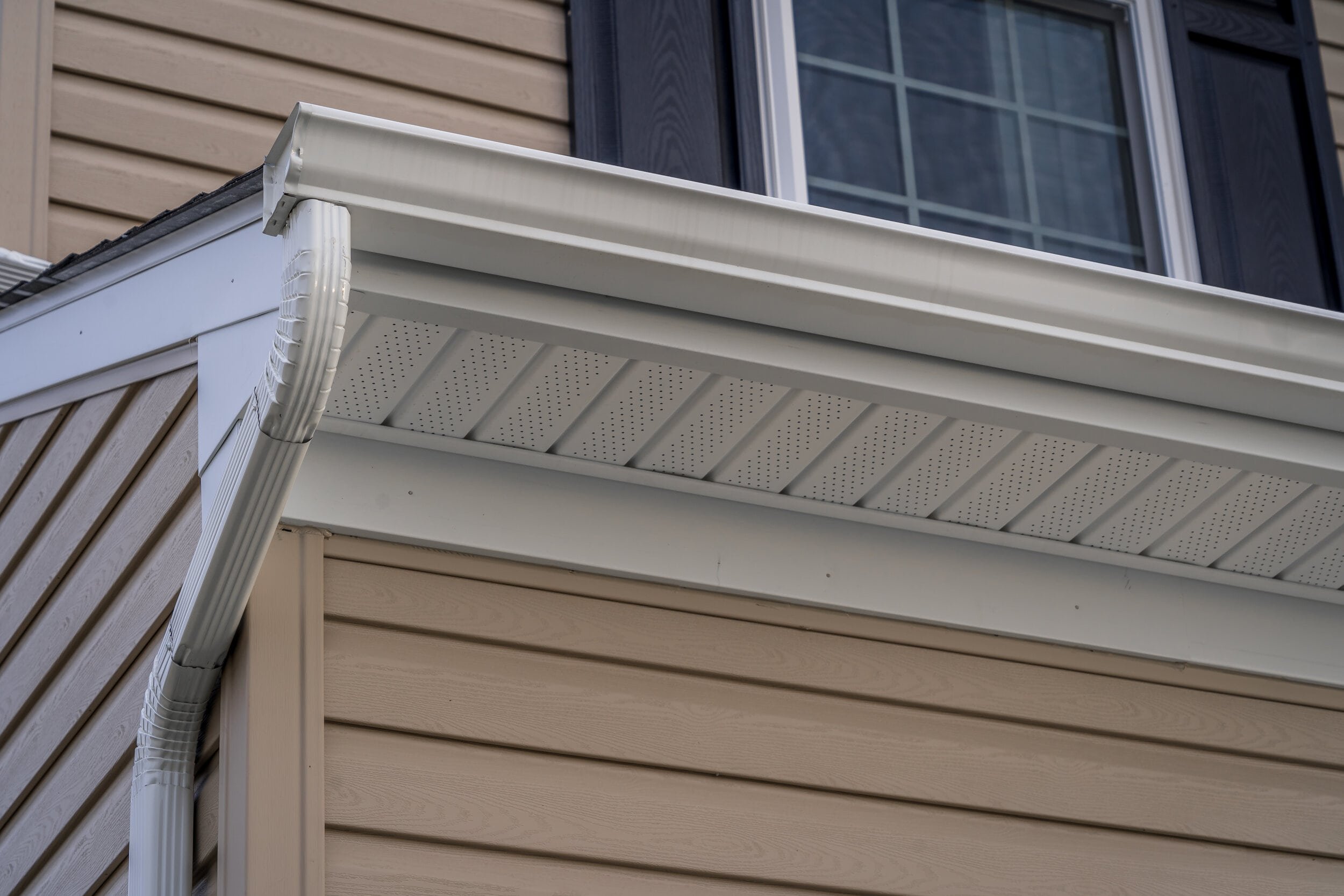
Fascia boards run horizontally along the edge of your roofline. They're the vertical boards your gutters attach to. Trim refers to the other exterior boards around windows, doors, corners, and rake edges. Both serve structural and aesthetic purposes, but fascia carries the heavier load—literally.
Here's what fascia does:
- Supports your gutter system. Without solid fascia, gutters sag, pull away, or dump water where you don't want it.
- Protects roof edges and rafters. Fascia seals the gap between your roof deck and the outside world, keeping water, pests, and wind-driven rain out of your attic.
- Provides a finished look. It's the visual transition between your roof and siding. When it's damaged, your whole house looks neglected.
In Michigan, fascia fails for a few predictable reasons. First, freeze-thaw cycles. Water gets into small cracks in the paint or wood grain, freezes, expands, and splits the board. Do that 30 times a winter for a decade, and you've got rot. Second, gutter overflow. If your gutters clog or your downspouts don't drain properly, water backs up and sits against the fascia. Wood fascia absorbs it like a sponge.
Third—and this is common in older Farmington Hills homes—the original builder used untreated pine or fir for fascia and didn't prime the back side before installation. That's the side you can't see, the one facing your roof deck. Water vapor from your attic condenses on it in winter, and the wood rots from the inside out. You don't see it until the gutter starts pulling away or you spot a dark stain on the soffit below.

We see this pattern constantly on ranch homes built in the '60s and '70s throughout Oakland County. The roof overhang is minimal, so the fascia gets hit with more weather. The original wood was cheap. And the paint job—if it was done at all—didn't include proper primer or back-priming. Twenty years later, the fascia is soft, the gutters are loose, and water is finding its way into the wall cavity behind your siding.
Signs Your Fascia or Trim Needs Repair
Most homeowners don't inspect their fascia regularly. Why would you? It's up there, out of sight. But there are clear warning signs that something's wrong, and catching them early saves you money.
Peeling or Bubbling Paint
Paint protects wood. When it starts peeling or bubbling, moisture is getting underneath. That means the wood is absorbing water, swelling, and starting to rot. If you see this on your fascia, don't just repaint it. The problem is deeper.
Gutters Pulling Away or Sagging
If your gutters are pulling away from the house, the fascia they're attached to is probably rotted. The screws or nails holding the gutter brackets have nothing solid to grip. You might think it's a gutter problem, but it's usually a fascia problem. We cover this in more detail in our post on spring siding inspection for Michigan homeowners, where we talk about checking all your exterior trim after winter.
Water Stains on Soffits
Soffits are the horizontal boards under your roof overhang. If you see dark stains, streaks, or discoloration, water is getting behind the fascia and running down. This usually means the fascia is compromised, and water is infiltrating the roof edge.
Visible Rot or Soft Spots
If you can reach your fascia with a ladder (safely—don't be a hero), press on it with your finger or a screwdriver. Solid wood should feel firm. If it's soft, spongy, or your screwdriver sinks in easily, that's rot. You need repair or replacement, not paint.
Wildlife Entry Points
Squirrels, raccoons, and birds love damaged fascia. It's an easy entry point to your attic. If you've got critters in your attic, check your fascia and soffits for holes or gaps. Animals don't create the problem—they just exploit it. But once they're in, they'll make it worse.
Pro Tip: Walk around your house twice a year—spring and fall—and look up. Bring binoculars if you need to. Look for peeling paint, sagging gutters, and stains. Most fascia damage is visible from the ground if you know what to look for. If you're not comfortable on a ladder, hire a licensed contractor to do a roof and fascia inspection. It's worth the $150-$300 to catch a $500 problem before it becomes a $5,000 problem.
Repair vs. Replacement: Making the Right Call
Not all fascia damage requires a full replacement. Sometimes you can spot-repair a section and get another 10-15 years out of it. Other times, patching is just kicking the can down the road, and you're better off replacing the whole run.
When Spot Repair Works
If the damage is localized—say, one 8-foot section near a downspout where water overflowed—and the rest of the fascia is solid, you can cut out the bad section and splice in new material. This works if:
- The rot is limited to one or two boards
- The surrounding fascia is still structurally sound
- You're using the same material (wood-to-wood, composite-to-composite)
- The cause of the damage has been fixed (gutter realignment, better flashing, etc.)
Spot repair is faster and cheaper. We can usually knock it out in a day, including priming and painting. But it only makes sense if the rest of your fascia isn't on borrowed time.
When Full Replacement Is Necessary
If your fascia is original to a 40-year-old house, and you're seeing damage in multiple spots, replacement is the smarter move. Here's why: wood fascia doesn't fail evenly. If one section is rotted, the rest is probably close behind. You'll end up doing piecemeal repairs every couple of years, which costs more in the long run than replacing it all at once.
Full replacement also gives you the chance to upgrade materials. Instead of going back with wood that'll need paint every 5-7 years, you can install composite or PVC trim that's rot-proof and low-maintenance. More on that in the next section.
Another factor: if you're already doing roof replacement in Metro Detroit or new gutters, it makes sense to replace the fascia at the same time. The materials are exposed, the crew is already there, and you're not paying for mobilization twice. We see this a lot in Farmington Hills—homeowners bundle fascia replacement with a roof or gutter project and save on labor.

The Right Materials for Michigan Weather
Fascia material matters. A lot. Michigan weather is brutal on exterior trim—freeze-thaw, humidity in summer, ice dams in winter, UV exposure. The material you choose determines how long your fascia lasts and how much maintenance you're signing up for.
Traditional Wood Fascia
Wood is still common, especially on older homes. It's easy to work with, takes paint well, and matches the original construction. But wood requires maintenance. You need to repaint every 5-7 years, and even with good paint, water will eventually find its way in.
If you're sticking with wood, use primed, paint-grade pine or cedar. Cedar is naturally rot-resistant, but it's pricier. Make sure the back side (the side facing your roof deck) is primed before installation. Most rot starts there, where you can't see it. And use a high-quality exterior primer and paint—Sherwin-Williams Duration or Emerald, for example. Cheap paint fails fast in Michigan.
Wood fascia makes sense if you're restoring a historic home in Birmingham or Farmington Hills and want to maintain authenticity. But for most homeowners, there are better options.
Composite and PVC Trim
Composite trim (like Azek or Versatex) and PVC trim are engineered to resist rot, insects, and moisture. They're made from cellular PVC, which means they won't absorb water. You can paint them, or buy them prefinished. They cost more upfront than wood, but they last 25-30 years with almost no maintenance.
We use Azek on a lot of projects in Southeast Michigan. It's stable in temperature swings, doesn't split or crack, and holds paint better than wood because it doesn't expand and contract as much. If you're replacing fascia, this is the material we'd recommend 9 times out of 10.
The only downside: it's not as rigid as wood, so you need solid blocking or backing to prevent flexing. A good installer knows this. A bad one will just nail it up and hope for the best. That's one reason to work with a licensed contractor who's done this before, not a handyman with a truck.
Aluminum Wrap Systems
Aluminum wrap (or capping) is when you cover existing wood fascia with thin aluminum coil. It's popular because it's cheap and fast. The fascia looks clean and white, and you don't have to paint it.
But here's the catch: aluminum doesn't fix rot. It just hides it. If the wood underneath is already compromised, wrapping it in aluminum is like putting a bandage on a broken bone. The rot continues, hidden from view, until the fascia collapses or the gutters fall off.
We don't recommend aluminum wrap unless the wood underneath is 100% solid. And even then, we'd rather see you invest in composite trim that won't rot in the first place. Aluminum wrap is a short-term cosmetic fix, not a long-term solution.
What Professional Fascia Repair Actually Involves
Fascia repair isn't just swapping out a board. Done right, it's a multi-step process that addresses the root cause of the damage, integrates properly with your roofing and gutter systems, and leaves you with a finished product that'll last.
Inspection and Damage Assessment
First, we inspect the entire fascia run, not just the obviously damaged section. We're looking for soft spots, water stains, loose gutter brackets, and signs of rot. We'll also check the soffit, the roof edge, and the flashing to see if water is getting in somewhere it shouldn't.
If there's rot, we need to know how far it extends. Sometimes it's just the fascia. Other times, it's spread to the rafter tails or the roof deck. That changes the scope of the repair.
Removal and Structural Repair
We remove the damaged fascia carefully, especially if the gutters are staying. If the rafter tails (the ends of your roof rafters) are rotted, we sister in new wood to restore structural support. This is common on older homes where the fascia was the only thing protecting the rafter ends from weather.
If the roof edge is compromised, we'll install new drip edge flashing. Drip edge directs water away from the fascia and into the gutter. A lot of older homes don't have it, which is why the fascia rotted in the first place. Adding it during repair prevents the same problem from happening again.
Installation of New Fascia
New fascia gets installed with corrosion-resistant fasteners—stainless steel or hot-dipped galvanized. We make sure it's level and properly aligned with the roof edge. If we're using composite trim, we leave expansion gaps at the joints to account for temperature changes. Wood doesn't need expansion gaps, but it does need proper sealing at the joints to prevent water infiltration.
Gutter Remount and Integration
Once the fascia is in, we remount the gutters. If the gutters are old or damaged, this is the time to replace them. New fascia with old, leaking gutters is a waste of money—the fascia will just rot again. We talk more about this in our guide to seamless gutters in Detroit, MI.
Gutters need to be sloped correctly (1/4 inch per 10 feet toward the downspout) and fastened into solid wood. If the fascia is composite, we use backing blocks or through-bolt the brackets to the rafter tails. This ensures the gutters won't pull away again.
Paint and Finish Work
If we're using wood fascia, we prime all six sides before installation. After it's up, we caulk the joints, spot-prime any exposed wood, and apply two coats of finish paint. We use Sherwin-Williams products exclusively—Duration for most projects, Emerald for premium jobs. Both hold up well in Michigan weather.
If we're using prefinished composite trim, there's no painting required. We just caulk the joints with a paintable, exterior-grade sealant. Clean, simple, done.
For homeowners looking at broader exterior upgrades, we also handle house siding in Detroit and window replacement in Detroit, so trim and fascia work often ties into larger projects.
Cost Reality: What to Expect in Southeast Michigan
Fascia repair costs vary based on the extent of the damage, the material you choose, and how accessible your roofline is. Here's what we see in Farmington Hills, Royal Oak, Birmingham, and the surrounding Oakland County area in 2026.
Spot Repair (One Section)
If you're replacing a single 8-10 foot section of fascia, expect to pay $300-$600, including labor and materials. That assumes wood fascia, basic paint, and no structural repairs to rafter tails. If we're splicing in composite trim or repairing rafter damage, add another $200-$400.
Full Fascia Replacement (Typical Single-Story Home)
For a single-story ranch home with 120-150 linear feet of fascia, full replacement runs $2,500-$5,000. That includes removal of old fascia, installation of new composite or wood fascia, priming and painting (if wood), and gutter remount. If you're upgrading to composite trim, you'll be on the higher end of that range.
Two-Story or Complex Rooflines
Two-story homes, or homes with multiple roof pitches and valleys, cost more because of accessibility and complexity. Expect $4,000-$8,000 for full fascia replacement on a typical two-story Colonial in Farmington Hills. Add another $1,000-$2,000 if we're also replacing soffits or repairing rafter tails.
Hidden Costs to Watch For
The biggest hidden cost is structural rot. If your rafter tails are rotted, or if the roof deck edge is compromised, that's carpentry work beyond simple fascia replacement. Budget an extra $500-$1,500 for structural repairs if your home is 30+ years old and the fascia has never been replaced.
Another cost: gutter replacement. If your gutters are old, leaking, or undersized, replacing them at the same time as the fascia makes sense. New seamless gutters run $8-$12 per linear foot installed. For a typical home, that's $1,200-$2,000.
Finally, if your fascia damage is tied to poor attic ventilation or ice dam issues, you'll want to address that too. We cover this in our post on Michigan storm season roof checklists. Fixing the fascia without fixing the ventilation is like bailing water out of a boat without plugging the leak.
Bundling Saves Money: If you're planning a roof replacement, new siding, or gutter installation in the next year or two, bundle the fascia work with that project. You'll save on mobilization, staging, and labor. We do this all the time—replace the roof, upgrade the fascia to composite, install new gutters, and the homeowner gets a 20-year exterior system for less than doing each project separately.
Financing and Payment
Most fascia projects don't require financing, but if you're bundling it with a larger project, we offer payment plans through third-party lenders. We don't push financing—if you can pay cash, great. But it's there if you need it.
We also work with insurance claims if your fascia damage is storm-related. Ice dams, wind damage, and falling tree limbs are often covered. We'll document the damage, provide photos and estimates, and work with your adjuster to get the claim approved. We've done this hundreds of times. It's part of the service.
Ready to Get Started?
NEXT Exteriors has been protecting Michigan homes since 1988. Get a free, no-pressure estimate from a team that shows up on time and does the job right.
Get Your Free QuoteOr call us: (844) 770-6398
Beyond fascia and trim, NEXT Exteriors offers comprehensive insulation services in Southeast Michigan to improve energy efficiency and comfort, as well as exterior painting in Southeast Michigan using Sherwin-Williams products exclusively. If you're upgrading your home's exterior, we handle it all under one roof—literally.
Frequently Asked Questions
Wood fascia lasts 15-25 years in Michigan if it's properly maintained—meaning repainted every 5-7 years and protected from gutter overflow. Composite or PVC fascia lasts 25-30+ years with minimal maintenance. The key variable is water exposure. If your gutters overflow regularly or you have ice dam issues, even the best fascia won't last as long.
No. Paint doesn't fix rot—it just hides it temporarily. Rotted wood continues to decay underneath the paint, and the problem gets worse. If your fascia is soft or spongy, it needs to be replaced. Painting over it is like putting a fresh coat of paint on a sinking ship. It might look better for a few months, but the structural problem remains.
Not always, but often it makes sense. If your soffits are damaged, stained, or made of the same old wood as your fascia, replacing both at once saves labor costs. You're already staging the house and working at height—might as well do it all. But if your soffits are vinyl or aluminum and in good shape, you can leave them alone and just replace the fascia. We've covered this in more detail in our siding before and after guide, which talks about how trim impacts curb appeal.
Fascia is the vertical board at the roof edge where gutters attach. Frieze board is the horizontal board between the top of your siding and the soffit. They're both trim, but they serve different functions. Frieze board is mostly decorative and protects the top edge of your siding. Fascia is structural—it supports gutters and protects the roof edge. Both can rot, but fascia failure is more serious because it affects your gutter system and roof drainage.
Usually not. Fascia replacement is considered maintenance and repair, not new construction. Most municipalities in Oakland County don't require a permit for trim replacement unless you're also doing structural work (like replacing rafter tails or roof framing). That said, permit requirements vary by city. We handle all permit research and applications if needed—it's part of our service. You don't need to call the building department yourself.
Three things: keep your gutters clean, maintain your paint, and fix ice dam issues. Clean gutters twice a year (spring and fall) to prevent overflow. Repaint wood fascia every 5-7 years with high-quality primer and paint. If you get ice dams in winter, improve your attic insulation and ventilation—ice dams cause more fascia damage than anything else in Michigan. We cover attic ventilation and insulation upgrades in our condensation on windows guide, which ties into overall home moisture management.
Technically yes, but it's a bad idea. Gutters need solid backing to stay in place. If your fascia is rotted or soft, the gutter brackets won't hold. The gutters will sag, pull away, or fall off entirely—usually during a heavy rainstorm when you need them most. If you're getting new gutters and your fascia is questionable, replace the fascia first. It's cheaper than replacing the gutters twice.