

Vinyl Siding vs Fiber Cement in Michigan Weather
Michigan contractor compares vinyl siding vs fiber cement for freeze-thaw cycles, ice dams, and lake-effect snow. Real performance data from 35+ years in Southeast Michigan.

If you're choosing between vinyl siding and fiber cement for your Michigan home, you're not just picking a color scheme. You're deciding which material can handle 35 winters of freeze-thaw punishment, lake-effect snow dumps, summer humidity that breeds mold, and wind-driven rain that finds every seam.
We've installed both materials on hundreds of homes across Macomb, Oakland, and St. Clair counties since 1988. We've come back to repair vinyl that cracked in February cold snaps. We've replaced fiber cement that absorbed moisture and split along the grain. And we've seen both materials perform beautifully when installed correctly and matched to the right home.
This isn't a sales pitch for one over the other. It's a breakdown of how each material actually behaves in Michigan conditions, what they cost in 2026, and which one makes sense for your specific situation. Whether you're upgrading a 1960s ranch in Sterling Heights or restoring a brick Colonial in Grosse Pointe Farms, the right choice depends on more than just the brochure.
Let's start with what Michigan weather actually does to siding — because understanding the problem is half the battle.
How Michigan Weather Tests Siding Materials
Southeast Michigan doesn't have the worst weather in the country, but it has some of the most punishing conditions for exterior materials. The combination of extreme temperature swings, high humidity, and persistent moisture creates a stress test that reveals every weakness in siding installation and material choice.
Freeze-Thaw Cycles: The Silent Killer
We get 80 to 100 freeze-thaw cycles every winter in Metro Detroit. That's 80 times the temperature crosses the freezing point, expanding and contracting everything on your home's exterior. Water that gets behind siding freezes, expands, and pushes materials apart. When it thaws, it seeps deeper. Repeat that 80 times, and you understand why poorly installed siding fails in five years instead of twenty-five.
Vinyl expands and contracts with temperature changes — up to half an inch on a 12-foot panel. Fiber cement moves much less, but it's not immune. If water gets trapped in the material and freezes, it can cause delamination or cracking along the edges.
Lake-Effect Snow and Ice Dams
When lake-effect snow piles up on your roof and melts from attic heat, the water runs down and refreezes at the eaves. Ice dams push water up under shingles and behind siding. If your gutter system isn't managing melt properly, that water finds its way into wall cavities.
Both vinyl and fiber cement need proper flashing and water-resistant barriers behind them. The siding itself is just the first line of defense. We see ice dam damage most often on north-facing walls and anywhere gutters are undersized or clogged.
Summer Heat and UV Exposure
Michigan summers aren't Arizona, but we still get stretches in the 90s with high humidity. Dark-colored siding on south and west exposures can reach 160°F in direct sun. Vinyl softens at high temperatures, which can lead to warping if it was installed too tight. Fiber cement doesn't warp, but the paint can fade or chalk if it's not a quality factory finish.
UV degradation is cumulative. After 15 years, lower-quality vinyl starts to look chalky and brittle. Premium vinyl with UV inhibitors and capstock technology holds up much better. Fiber cement with a baked-on factory finish like James Hardie ColorPlus maintains color longer than field-painted products.
Wind-Driven Rain from Great Lakes Storms
When storms roll off Lake Huron or Lake St. Clair, the wind doesn't just blow — it drives rain horizontally into every seam and joint. Properly installed siding with overlapping joints and sealed penetrations handles this fine. Sloppy installation lets water migrate behind the siding, where it rots sheathing and studs.
This is where our house siding installation process matters as much as the material choice. We use housewrap or rainscreen systems on every job, flash every window and door, and make sure J-channels and trim pieces shed water away from the wall, not into it.

Vinyl Siding Performance in Michigan Conditions
Vinyl siding is the most common exterior cladding in Southeast Michigan for a reason: it's affordable, low-maintenance, and when installed correctly with quality products, it lasts 25 to 30 years. But not all vinyl is created equal, and Michigan weather exposes the difference between builder-grade and premium products fast.
Thermal Expansion and Contraction
Vinyl moves. A lot. A standard 12-foot panel can expand up to half an inch between a zero-degree January night and an 85-degree July afternoon. That's why proper installation requires leaving a 1/4-inch gap at trim pieces and never nailing the panels tight. The nails go in the center of the slots, not driven flush, so the panel can slide as it expands and contracts.
When we see vinyl siding that's buckled or wavy, it's almost always because someone nailed it too tight or didn't leave expansion gaps. The material itself is fine — the installation wasn't.
Cold Weather Brittleness
Vinyl gets brittle when temperatures drop below 20°F. If you try to cut or handle it in cold weather without warming it first, it can crack. More relevant for homeowners: if something impacts the siding in winter — a ladder, a branch, a kid's hockey puck — it's more likely to crack than it would be in summer.
Premium vinyl products like CertainTeed Monogram or Mastic Ovation have impact modifiers and thicker profiles (0.046" to 0.052") that resist cold-weather cracking better than thin builder-grade vinyl (0.040" or less). We've installed both, and the difference in durability is measurable.
UV Resistance and Color Retention
Cheap vinyl fades. Good vinyl doesn't — at least not noticeably for 15 to 20 years. The difference is in the formulation. Premium vinyl uses titanium dioxide and UV stabilizers throughout the material, not just on the surface. Capstock technology adds a protective outer layer that's even more fade-resistant.
Dark colors fade faster than light colors on any material, vinyl included. If you're choosing a deep charcoal or navy, expect some color shift over time. Lighter grays, tans, and whites hold their color better in Michigan sun.
Moisture Resistance
Vinyl doesn't absorb water. It won't rot, warp from moisture, or support mold growth on its surface. This makes it a good choice for homes near water or in areas with persistent humidity. The caveat: vinyl is just a rain screen. It's not waterproof. Water will get behind it through seams, vents, and trim joints. That's why the water-resistant barrier and flashing details matter so much.
We install vinyl over Tyvek or a similar housewrap on every job, and we flash every penetration. The vinyl keeps most of the water out. The housewrap handles the rest.
Wind Rating and Storm Performance
Quality vinyl siding is rated for wind speeds up to 200 mph when properly installed. The key phrase is "properly installed." If the nails are driven too tight or the panels aren't locked together correctly, a strong gust can pull them loose. We've repaired vinyl siding after summer storms where the installer didn't follow the manufacturer's specs.
Our crews use the nailing schedule and fastener spacing specified by the manufacturer. It takes longer, but it's the difference between siding that stays put in a 60 mph gust and siding that ends up in your neighbor's yard.
Real-World Durability
In our experience across 500+ projects in Southeast Michigan, quality vinyl siding lasts 25 to 30 years with minimal maintenance. The first thing to fail is usually the caulk around windows and trim, not the siding itself. We've seen CertainTeed and Mastic products from the early 2000s that still look good — a little faded, maybe, but structurally sound.
Builder-grade vinyl from big-box stores? That's a different story. Thin profiles, poor color retention, and cracking within 10 to 15 years. You get what you pay for.

Fiber Cement Siding Performance in Michigan Conditions
Fiber cement siding — James Hardie, LP SmartSide, CertainTeed FiberCement — is the premium choice for homeowners who want the look of wood without the rot, or the durability of masonry without the weight. It costs more, takes longer to install, and requires more maintenance than vinyl. But in the right application, it's the best exterior cladding you can buy.
Dimensional Stability in Freeze-Thaw
Fiber cement doesn't expand and contract with temperature changes the way vinyl does. It's a composite of cement, sand, and cellulose fibers, and it moves very little across seasonal temperature swings. This makes it a good choice for homes where tight reveals and clean lines matter — historic restorations, modern designs, or anywhere you're trying to match existing masonry or trim details.
The downside: it's rigid. If the substrate moves — say, the sheathing swells from moisture or the framing settles — fiber cement can crack. Proper installation requires flat, stable sheathing and careful attention to fastener placement. We use corrosion-resistant siding nails and follow the manufacturer's nailing pattern to the letter.
Moisture Absorption and Freeze Damage Risk
Fiber cement absorbs a small amount of water — typically 10% to 15% by weight when fully saturated. In most conditions, this isn't a problem. The material dries out, and there's no damage. But if water gets trapped in the material and freezes before it can dry, you can get edge cracking or delamination.
This is most common on horizontal surfaces where water can pool — window sills, horizontal trim, or anywhere the siding is installed without proper slope for drainage. We see it on homes where the installer didn't seal cut edges or where the paint failed and allowed water to wick into the material.
James Hardie's HZ10 product line is formulated specifically for freeze-thaw climates. It has better moisture resistance than standard fiber cement and comes with a 30-year warranty against freeze-thaw damage. We use it on most of our Michigan projects.
Impact Resistance in Hail and Ice
Fiber cement is tough. It won't dent from hail, crack from a ladder leaning against it, or split when a branch falls on it. This makes it a good choice for homes with large trees nearby or in areas prone to hail damage. We've seen vinyl siding with dents and cracks after a severe hailstorm, while fiber cement on the same street looked untouched.
The caveat: fiber cement can crack if it's hit hard enough in the right spot. It's not indestructible. But it's significantly more impact-resistant than vinyl, wood, or aluminum.
Paint Retention and Warranty Coverage
Fiber cement can be field-painted or factory-finished. Field-painted products require repainting every 10 to 15 years, just like wood siding. Factory-finished products like James Hardie ColorPlus or LP SmartSide ExpertFinish come with a baked-on finish that's warranted for 15 years and typically lasts 20 to 25 years before needing a refresh.
The factory finish costs more upfront, but it saves you the cost and hassle of repainting. We recommend it for most homeowners unless you're planning to change colors or you're working with a historic color palette that requires custom matching.
For homeowners who do want to paint, we partner with Sherwin-Williams for exterior painting and use their Duration or Emerald lines for maximum durability on fiber cement substrates.
Real-World Durability
Quality fiber cement siding lasts 30 to 50 years in Michigan. We've seen James Hardie installations from the 1990s that still look great — no rot, no warping, minimal fading. The paint may need refreshing, but the substrate is solid.
The key is proper installation and maintenance. Fiber cement requires sealed cut edges, proper flashing, and periodic inspection of caulk joints and paint. If you skip those steps, you'll have problems. But if you do it right, it's the longest-lasting siding material short of brick or stone.
Cost Reality: Installation and Long-Term Value
Let's talk money. Vinyl and fiber cement are in different price brackets, and the gap is significant enough that it drives most homeowners' decisions. But cost isn't just the installation invoice — it's the total expense over the life of the material, including maintenance, energy performance, and resale value.
Vinyl Siding Costs in Southeast Michigan (2026)
For a typical 2,000-square-foot home in Macomb, Oakland, or St. Clair County, expect to pay:
- Builder-grade vinyl: $8,000 to $12,000 installed ($4 to $6 per square foot)
- Premium vinyl (CertainTeed Monogram, Mastic Ovation): $12,000 to $16,000 installed ($6 to $8 per square foot)
That includes removal of old siding, installation of housewrap, new vinyl siding, trim, soffit, and fascia. It does not include window or door replacement, structural repairs, or insulation upgrades.
The difference between builder-grade and premium vinyl is about $4,000 on an average home. For that extra cost, you get thicker panels, better color retention, longer warranties, and improved wind resistance. We recommend spending the extra money if you're planning to stay in the home more than 10 years.
Fiber Cement Siding Costs in Southeast Michigan (2026)
For the same 2,000-square-foot home:
- James Hardie fiber cement (primed): $16,000 to $22,000 installed ($8 to $11 per square foot)
- James Hardie with ColorPlus finish: $20,000 to $28,000 installed ($10 to $14 per square foot)
Fiber cement costs roughly double what premium vinyl costs. The labor is more intensive — the material is heavier, requires specialized cutting tools, and takes longer to install. The material itself costs more. And if you're going with a factory finish, that adds another $2 to $3 per square foot.
Labor Complexity Differences
Vinyl siding is faster to install. A skilled crew can side an average home in 3 to 5 days. Fiber cement takes 5 to 7 days for the same house. The material is heavier (2.5 pounds per square foot vs. 1 pound for vinyl), requires carbide-tipped saw blades, and generates silica dust that requires respiratory protection and dust control measures.
We charge more for fiber cement installation because it's more labor-intensive and requires more safety equipment and site management. That cost gets passed to the homeowner, but you're also getting a more durable product with a longer lifespan.
Maintenance Costs Over 20 Years
Vinyl siding requires almost no maintenance beyond occasional washing. You might need to recaulk trim joints every 10 years, but that's a $200 job, not a $5,000 project. Total maintenance cost over 20 years: under $500.
Fiber cement with a factory finish requires periodic washing and caulk inspection, but no painting. Total maintenance cost over 20 years: under $1,000.
Fiber cement with a field-applied paint job requires repainting every 10 to 15 years. For a 2,000-square-foot home, that's $5,000 to $8,000 per paint job. Total maintenance cost over 20 years: $8,000 to $12,000.
This is why we recommend factory-finished fiber cement for most homeowners. The upfront cost is higher, but the long-term savings are significant.
ROI at Resale
According to Remodeling Magazine's 2025 Cost vs. Value Report, vinyl siding replacement recoups about 68% of its cost at resale in the Detroit metro area. Fiber cement siding recoups about 69% — essentially the same.
The difference is in buyer perception. In higher-end neighborhoods like Bloomfield Hills or Grosse Pointe, fiber cement is expected. Vinyl might hurt resale value. In middle-market neighborhoods like Sterling Heights or Clinton Township, vinyl is perfectly acceptable and may even be preferred for its low maintenance.
Talk to a realtor in your specific area before making a decision based on resale value. The right answer depends on your neighborhood and price point.

Which Material Works Better for Your Michigan Home?
There's no universal "best" siding material. The right choice depends on your home's architecture, your budget, your neighborhood, and how long you plan to stay. Here's how we guide homeowners through the decision when they call us for a quote.
Best Use Cases for Vinyl Siding
Vinyl makes sense if:
- You're on a budget. If you need to replace failing siding and you don't have $25,000 to spend, quality vinyl gives you a durable, low-maintenance solution for half the cost of fiber cement.
- You have a ranch or split-level home. Simple architectural styles with long, uninterrupted wall sections are ideal for vinyl. The material installs fast, looks clean, and doesn't require the tight reveals and detail work that fiber cement excels at.
- You're in a middle-market neighborhood. In most of Sterling Heights, Warren, or Clinton Township, vinyl is the norm. It won't hurt resale value, and it's what buyers expect.
- You want zero maintenance. Vinyl doesn't need painting, sealing, or periodic inspection. Wash it once a year and forget about it.
- You're planning to sell within 10 years. If you're not staying long-term, the lower upfront cost of vinyl makes more financial sense. You'll recoup most of the cost at resale, and you won't be around long enough to benefit from fiber cement's longer lifespan.
Best Use Cases for Fiber Cement Siding
Fiber cement makes sense if:
- You have a Colonial, Craftsman, or historic home. Fiber cement can replicate wood lap siding, shingle siding, or board-and-batten details with a level of realism vinyl can't match. It's the best choice for homes where architectural authenticity matters.
- You're in a high-end neighborhood. In Bloomfield Hills, Grosse Pointe, or Lake Orion's premium subdivisions, fiber cement is expected. Vinyl might be seen as a downgrade.
- You're staying long-term. If this is your forever home, the higher upfront cost of fiber cement is offset by its 30- to 50-year lifespan and minimal maintenance (with a factory finish).
- You want maximum durability. Fiber cement won't crack in cold weather, dent from hail, or warp from heat. It's the most impact-resistant siding material short of masonry.
- You're matching existing materials. If you're adding onto a home that already has fiber cement or wood siding, matching with new fiber cement is easier than trying to blend vinyl into the existing aesthetic.
Neighborhood Considerations
Walk your neighborhood before you decide. What are your neighbors using? If every home on the street has vinyl, fiber cement might look out of place (and vice versa). If you're in a historic district with design guidelines, you may be required to use fiber cement or wood — vinyl won't be approved.
In Oakland County, some HOAs have strict exterior material requirements. Check your covenants before you sign a contract. We've had homeowners in Troy and Rochester Hills who had to switch from vinyl to fiber cement mid-project because of HOA rules they didn't know existed.
Combining Materials
You don't have to choose one or the other for the whole house. We've done projects where the front and street-facing sides get fiber cement for curb appeal, and the back and sides get vinyl to save money. This works well on Colonials and two-stories where the front facade is the focal point.
Just make sure the materials are installed in a way that makes architectural sense. Don't mix them on the same wall plane — it looks like you ran out of money halfway through.
NEXT Exteriors Recommendation: For most homeowners in Southeast Michigan, premium vinyl siding offers the best balance of cost, durability, and low maintenance. If you're in a high-end neighborhood, have a historic home, or plan to stay 20+ years, fiber cement is worth the investment. Either way, the installation quality matters more than the material choice. We've seen expensive fiber cement fail in five years because of poor installation, and we've seen budget vinyl last 25 years when it was done right.
Signs Your Current Siding Is Failing
Whether you have vinyl, fiber cement, wood, or aluminum siding, there are clear signs that it's time for replacement. Ignoring them doesn't make them go away — it just lets water get deeper into your walls, where it rots sheathing, studs, and insulation.
Warping or Buckling (Vinyl)
If your vinyl siding has wavy sections, buckled panels, or pieces that look like they're pulling away from the wall, the installation was done wrong. Panels were nailed too tight, expansion gaps weren't left, or the substrate wasn't flat. This won't get better on its own, and it's letting water behind the siding.
Cracking or Delamination (Fiber Cement)
Fiber cement that's cracked along the edges, delaminating (the outer layer is peeling away), or showing white powdery deposits has a moisture problem. Water got into the material, froze, and caused internal damage. If it's happening in multiple spots, the whole installation may be compromised.
Water Intrusion Behind Siding
If you see water stains on interior walls, peeling paint near windows or corners, or mold growth in wall cavities, water is getting past the siding. This is an emergency. The longer water sits in your walls, the more expensive the repair becomes. We've seen homes where delayed siding replacement turned into a $30,000 structural repair because the studs and sheathing rotted out.
Visible Mold or Rot on Sheathing
If you can see mold or rot on the sheathing behind the siding (look in the attic, basement, or anywhere siding has been removed), the water barrier has failed. The siding needs to come off, the sheathing needs to be replaced, and the whole assembly needs to be rebuilt with proper flashing and drainage.
This is where our experience with exterior services in Detroit and the surrounding counties comes into play. We don't just replace the siding — we fix the underlying problem so it doesn't happen again.
Energy Bills Climbing
If your heating and cooling bills have increased significantly over the past few years, failing siding may be part of the problem. Gaps, cracks, and poor insulation behind the siding let conditioned air escape and outside air infiltrate. Replacing the siding and adding wall insulation can cut your energy bills by 15% to 25%.
We often combine siding replacement with insulation upgrades — spray foam or rigid foam board behind the new siding. It costs more upfront, but the energy savings pay for it over time, and the comfort improvement is immediate.
When to Call a Contractor
If you're seeing any of the signs above, don't wait. Water damage gets worse, not better. And the longer you wait, the more expensive the repair becomes.
We offer free inspections and estimates for homeowners in Macomb, Oakland, and St. Clair counties. We'll tell you honestly whether you need a full replacement or just a repair, and we'll explain exactly what's wrong and how to fix it. No pressure, no gimmicks — just straight talk from someone who's been doing this work in Michigan for 35 years.
Ready to Get Started?
NEXT Exteriors has been protecting Michigan homes since 1988. Whether you choose vinyl or fiber cement, you'll get honest advice, quality materials, and installation that's done right the first time. Get a free, no-pressure estimate from a team that shows up on time and does the job right.
Get Your Free QuoteOr call us: (844) 770-6398
Other Services from NEXT Exteriors
Siding is just one part of your home's exterior system. We also provide comprehensive roofing services in Detroit and throughout Southeast Michigan, including roof replacements, repairs, and storm damage restoration. If your windows are drafty or outdated, our window replacement experts can help you choose energy-efficient options that work in Michigan's climate. And don't forget about your gutters — properly installed seamless gutters are critical for managing water runoff and protecting your foundation and siding from moisture damage.
Frequently Asked Questions
James Hardie Siding Installers Metro Detroit | NEXT Exteriors
Looking for certified James Hardie siding installers in Metro Detroit? NEXT Exteriors is a CertainTeed Master Applicator serving Southeast Michigan since 1988.
Not every contractor who hangs James Hardie siding is actually certified to install it. That distinction matters more in Michigan than almost anywhere else in the country. Our freeze-thaw cycles, lake-effect moisture, and summer humidity will find every shortcut, every missed flashing detail, every place where the installer didn't follow the spec book.
We've been installing house siding in Detroit since 1988, and we've seen what happens when fiber cement gets installed by crews who learned vinyl techniques and figured "it's just thicker boards." Water gets behind the siding. Trim boards crack at fasteners. Paint fails in two years instead of fifteen.
James Hardie's Elite Preferred contractor program exists because fiber cement installation is different from vinyl, and Michigan's climate doesn't forgive mistakes. Here's what that certification actually means, and why it matters when you're comparing james hardie siding installers metro detroit for your Sterling Heights ranch or Bloomfield Hills Colonial.
What Makes a James Hardie Elite Preferred Installer
James Hardie doesn't hand out Elite Preferred status for buying a certain volume of product. The certification requires documented training, proven installation quality, and ongoing compliance with their Best Practices manual. Here's what separates certified installers from general contractors who "also do siding."
Training Requirements
Elite Preferred installers complete James Hardie's installation training program, which covers fiber cement-specific techniques that don't apply to vinyl or wood. This includes proper fastening schedules (which vary by wind zone and substrate), flashing requirements at transitions, and the drainage plane details that prevent moisture problems.
The training isn't theoretical. It walks through the physics of why fiber cement expands and contracts differently than vinyl, why you can't caulk horizontal lap joints, and how Michigan's temperature swings affect installation tolerances. Most importantly, it covers the warranty requirements — the specific installation steps James Hardie requires for their 30-year non-prorated warranty to remain valid.
Insurance and Licensing Standards
To maintain Elite Preferred status, contractors must carry general liability insurance with minimum coverage limits and maintain all required state licenses. In Michigan, that means a valid Residential Builder's License through LARA (Department of Licensing and Regulatory Affairs). NEXT Exteriors has held our Michigan builder's license continuously since 1988, and we're BBB A+ Accredited since 2006.
These aren't just bureaucratic checkboxes. Proper licensing means the contractor has demonstrated knowledge of Michigan building codes, carries workers' compensation insurance, and can legally pull permits for siding work. When you're investing $15,000-$35,000 in a siding project, you want someone who's accountable to state regulators, not just disappearing after the final payment.
What to ask: "Are you a James Hardie Elite Preferred contractor, and can I see your current certification?" Then verify it on James Hardie's contractor locator. Also ask for their Michigan builder's license number and verify it through LARA's public database.
Warranty Coverage Differences
When an Elite Preferred contractor installs James Hardie siding, you get access to enhanced warranty coverage that isn't available with non-certified installers. The standard James Hardie product warranty covers manufacturing defects, but it doesn't cover installation errors. The Elite Preferred warranty adds coverage for labor and installation-related issues for a specific period.
More importantly, James Hardie will only honor warranty claims if the siding was installed according to their specifications. If you use a non-certified installer who takes shortcuts, you might void the product warranty entirely. We've seen homeowners in Clinton Township discover this the hard way when trying to claim warranty coverage for paint failure — James Hardie inspected the installation, found improper clearances and missing flashing, and denied the claim because the installation didn't meet their standards.
Why Fiber Cement Works in Michigan Weather
Michigan sits in IECC Climate Zone 5A, which means cold winters, humid summers, and more freeze-thaw cycles than almost anywhere else in the lower 48. Our weather tests siding materials in ways that don't happen in Georgia or Arizona. James Hardie fiber cement handles these conditions better than vinyl, but only if it's installed correctly.
Freeze-Thaw Cycle Performance
Southeast Michigan typically sees 40-60 freeze-thaw cycles per winter. The temperature crosses the 32°F threshold multiple times per week from December through March. This cycling is brutal on siding materials because water absorbed during the day freezes at night, expands, and creates pressure inside the material.
Vinyl siding doesn't absorb water, but it becomes brittle in cold temperatures and cracks easily from impact. Wood siding absorbs moisture and rots. Fiber cement — which is essentially Portland cement, sand, and cellulose fibers — is dimensionally stable through freeze-thaw cycles because it doesn't absorb significant moisture when properly sealed and painted.
The key phrase is "properly sealed and painted." Fiber cement that's cut on-site must have all cut edges primed and sealed before installation. Nail holes must be set correctly so they don't create water entry points. This is where Detroit roofing services experience matters — understanding water management and drainage principles carries over to siding work.
Moisture Resistance vs. Moisture Management
James Hardie markets fiber cement as "moisture resistant," which is accurate but incomplete. The material itself resists moisture absorption better than wood or OSB, but no siding is waterproof. The real protection comes from proper installation that manages moisture through drainage and ventilation.
In Michigan, this means installing a weather-resistant barrier (WRB) behind the siding, flashing all penetrations and transitions, and leaving proper clearances at the bottom of walls for drainage. The siding itself is the first line of defense, but the WRB and flashing system are what actually keep water out of your wall cavities.
We see this principle violated constantly by non-certified installers who treat fiber cement like vinyl. They'll install it directly over old siding without a proper drainage plane, or they'll caulk the horizontal lap joints (which James Hardie explicitly prohibits because it traps water). These mistakes don't show up immediately — they reveal themselves three to five years later when you start seeing paint failure, soft spots in the wall sheathing, or mold in the basement.
Wind Resistance in Summer Storms
Southeast Michigan gets severe thunderstorms every summer, with straight-line winds occasionally hitting 70-80 mph. Fiber cement siding, when properly fastened, has significantly higher wind resistance than vinyl. James Hardie products are rated for winds up to 130 mph in high-wind zones when installed per their specifications.
The catch is "when installed per their specifications." That means fasteners driven into studs (not just sheathing), proper fastener spacing, and correct edge clearances. A non-certified installer might use the same fastening schedule they use for vinyl, which isn't adequate for the weight and rigidity of fiber cement. We've seen James Hardie planks rip off houses in Warren during storms because they were only fastened to 7/16" OSB, not the studs behind it.
The Installation Process That Protects Your Investment
The difference between a 15-year siding job and a 50-year siding job comes down to installation details most homeowners never see. Here's what happens on a proper James Hardie installation in Southeast Michigan, and why each step matters.
Pre-Installation: Assessing the Substrate
Before any new siding goes up, we strip the old siding and inspect the wall sheathing. On homes built before 2000, we're often finding OSB or plywood that's been wet for years from failed flashing or missing WRB. If the sheathing is soft, delaminated, or showing black staining (mold), it gets replaced before we proceed.
This step separates professional siding contractors in Southeast Michigan from the guys who just cover up problems. Putting $20,000 worth of James Hardie over rotted sheathing is like putting new tires on a car with a cracked frame — you're not fixing anything, you're just hiding it until it fails worse.
We also verify that wall cavities have adequate insulation. Michigan code requires R-20 in 2x6 walls or R-13 in 2x4 walls. If your home was built in the 1960s or 70s, there's a decent chance the walls have no insulation or inadequate insulation. This is the time to address it, before the new siding goes on. Our insulation services in Southeast Michigan team can dense-pack cellulose into wall cavities through small access holes before we close everything up.
Weather-Resistant Barrier and Flashing
Once the substrate is sound, we install a code-compliant WRB over the entire wall surface. In Michigan, that typically means Tyvek HomeWrap or a similar product rated for our climate zone. The WRB goes on with proper overlaps (upper sheets overlap lower sheets, like roof shingles) and all seams get taped.
Then comes flashing — the most critical and most commonly skipped step in siding installation. We use peel-and-stick flashing (not just felt paper) around every window and door, at the foundation line, and at any wall transitions or penetrations. The flashing integrates with the WRB to create a continuous drainage plane that directs any water that gets behind the siding back to the exterior.
This is where James Hardie training makes a measurable difference. The Best Practices manual specifies exactly how to flash different types of transitions — inside corners, outside corners, window heads, window sills. Non-certified installers often skip these details or use techniques that work for vinyl but fail with fiber cement's different expansion characteristics.

Trim Installation and Starter Strips
James Hardie trim boards go up before the siding planks. This includes corner boards, window and door casings, and any decorative trim. The trim establishes the drainage paths and provides backing for the siding edges. All trim gets back-primed (primer on the back surface) even if it's pre-finished ColorPlus material, and all cut edges get sealed with primer before installation.
Starter strips go on next, establishing the correct angle for the first course of siding. The starter strip must be level and properly fastened, because every subsequent course builds off it. If the starter strip isn't level, you'll end up with gaps or waves in the siding by the time you reach the top of the wall.
Hanging the Siding: Fastening and Clearances
James Hardie planks get fastened with hot-dipped galvanized or stainless steel nails (never staples, never Brad nails). Fasteners must hit studs, not just sheathing. On 16-inch stud spacing, that means a fastener every 16 inches along the top edge of each plank. On 24-inch spacing, we add intermediate fasteners to maintain the required schedule.
Fastener placement matters. Too close to the edge and you risk cracking the board. Too far from the edge and the board can cup or bow. James Hardie specifies fastener locations based on plank width and exposure — typically 3/4" to 1" from the top edge, and at least 3/8" from the ends.
Clearances are equally critical. Fiber cement expands and contracts with temperature and moisture changes, so you need gaps between board ends (1/8" minimum) and at vertical transitions (1/4" minimum). These gaps get filled with paintable caulk, which flexes with the material movement. Horizontal lap joints never get caulked — they need to drain and breathe.
Every cut edge — whether it's a board end, a utility penetration, or a trim cut — gets sealed with primer before installation. Unsealed cut edges will wick moisture into the fiber cement core, leading to swelling and paint failure. This step takes time, which is why non-certified installers skip it.
Final Caulking and Touch-Up
After all siding and trim are installed, we caulk vertical joints and trim transitions with a high-quality paintable acrylic caulk. The caulk needs to be flexible enough to handle Michigan's temperature swings without cracking. We use products rated for at least 25% joint movement.
If we're installing unprimed James Hardie (rare now, since ColorPlus pre-finished is standard), this is when the painting happens. Two coats of 100% acrylic latex paint, applied per the paint manufacturer's specs. Most of our James Hardie installations now use ColorPlus factory-finished boards, which come with a 15-year finish warranty and don't require field painting.
The final step is a detailed walkthrough with the homeowner, pointing out drainage paths, explaining maintenance requirements, and documenting the installation for warranty purposes. We provide photos of the flashing and WRB installation before it gets covered, so you have proof of proper installation if you ever need to file a warranty claim.
Cost Reality: James Hardie vs. Vinyl in Southeast Michigan
The question we get most often: "How much more does James Hardie cost than vinyl, and is it worth it?" The answer depends on your timeline and what you value, but here are the real numbers for Southeast Michigan in 2026.
Upfront Installation Costs
For a typical 2,000-square-foot ranch home in Macomb County, vinyl siding installation runs $8,000-$14,000 depending on siding quality and trim complexity. The same house in James Hardie fiber cement runs $16,000-$26,000. So yes, James Hardie costs roughly double upfront.
That price difference reflects both material cost and labor intensity. Fiber cement weighs more, requires more precise cutting and fastening, and takes longer to install correctly. A vinyl siding job might take 3-4 days. The same house in James Hardie takes 5-7 days when you include proper flashing, trim work, and detail finishing.
The price also varies significantly based on trim complexity. A simple ranch with minimal trim and few windows might hit the lower end of the range. A two-story Colonial with bay windows, gables, and detailed trim work will push toward the higher end. When you're comparing james hardie siding installers metro detroit quotes, make sure you're comparing identical scope — some contractors will lowball the quote by skipping trim upgrades or using vinyl trim instead of fiber cement.
Long-Term Value: Maintenance and Replacement Cycles
Vinyl siding in Michigan typically lasts 20-30 years before it needs replacement. It becomes brittle from UV exposure and freeze-thaw cycles, fades (especially darker colors), and eventually cracks or warps. You'll also deal with maintenance issues — vinyl can blow off in windstorms, and it's easily damaged by lawn equipment, hail, or impacts.
James Hardie fiber cement, when properly installed, lasts 50+ years. The material doesn't rot, doesn't attract insects, and maintains its dimensional stability through Michigan's weather extremes. ColorPlus pre-finished boards come with a 15-year finish warranty, and even after that, you can repaint them with standard exterior acrylic paint.
Run the math over 30 years: If you install vinyl at $12,000 and replace it once at $14,000 (accounting for inflation), you're at $26,000 total. If you install James Hardie at $22,000 and it lasts 50 years with no replacement, the James Hardie is cheaper over time — and that's before factoring in the energy savings from better insulation value and air sealing.
Energy Performance and Comfort
Fiber cement siding provides slightly better insulation value than vinyl — not dramatically better, but measurable. The real energy benefit comes from the installation process. Because James Hardie requires proper WRB installation and attention to air sealing, a correctly installed fiber cement job typically performs better at reducing air infiltration than a typical vinyl job.
We measure this with blower door testing on homes where we're also doing window replacement in Detroit or attic insulation in Metro Detroit. Homes with properly installed James Hardie over a sealed WRB consistently show lower air leakage rates than homes with vinyl siding, especially on older homes where the original building envelope was leaky.
That translates to lower heating and cooling costs — typically 5-10% reduction in energy bills compared to the old siding, depending on how leaky the original envelope was. Over 20-30 years, that's thousands of dollars in savings that offset the higher upfront cost.
Resale Value Impact
Real estate agents in Southeast Michigan consistently report that James Hardie siding commands higher resale prices than vinyl. The material signals quality and low maintenance to buyers, especially buyers in the $400K+ price range who are comparing homes in Rochester Hills, Bloomfield Hills, or Grosse Pointe Farms.
The exact ROI varies by neighborhood and market conditions, but Remodeling Magazine's Cost vs. Value report typically shows fiber cement siding recouping 70-80% of its cost at resale, compared to 60-70% for vinyl. In high-demand markets, you might recoup 90-100% if the siding is part of a broader exterior refresh that includes roof replacement in Metro Detroit and gutter installation in Southeast Michigan.
More importantly, James Hardie siding can be the difference between getting an offer or sitting on the market. Buyers see vinyl and assume "cheap builder-grade." They see James Hardie and assume "quality construction." That perception matters, especially in competitive markets.

Signs Your Home Needs Siding Replacement
Most homeowners wait too long to replace siding. They see cosmetic issues — fading, small cracks, a few loose boards — and figure it can wait another year. Meanwhile, water is getting behind the siding and rotting the sheathing. By the time they call us, what could have been a straightforward siding replacement has turned into a siding-plus-sheathing-plus-insulation project.
Here are the signs that your Michigan home needs siding replacement now, not next year.
Visible Damage or Deterioration
Cracked, warped, or loose siding boards are obvious indicators, but pay attention to the pattern. One or two damaged boards from a storm or lawn equipment impact can be repaired. Widespread cracking, especially on south and west-facing walls that get the most sun exposure, means the material is at the end of its life.
On vinyl siding, look for brittleness — if you can push on a panel and it cracks or flexes abnormally, the material has degraded from UV exposure and freeze-thaw cycles. On wood siding, look for soft spots, peeling paint, or visible rot. On old fiber cement (pre-2000s formulations), look for delamination where the surface layer is separating from the core.
Paint Failure on Fiber Cement or Wood
If you have old fiber cement or wood siding and the paint is peeling, bubbling, or failing in large sections, that's a sign of moisture intrusion. Paint fails when water gets into the substrate, either from the back (failed WRB or flashing) or from the front (failed caulk or unsealed cut edges).
Repainting might buy you a few years, but if the underlying moisture problem isn't fixed, the paint will fail again. At that point, you're better off replacing the siding with new James Hardie ColorPlus, which comes pre-finished and includes a proper WRB and flashing system that addresses the moisture issues.
High Energy Bills or Drafty Rooms
If your heating and cooling bills have been creeping up, or if certain rooms are consistently drafty, your siding and building envelope might be the problem. Old siding installations often lack proper air sealing, and the WRB (if there is one) has degraded over time.
This is especially common on homes built in the 1960s-1980s, before Michigan adopted more stringent energy codes. The original siding might be over tar paper or nothing at all, with no continuous air barrier. Replacing the siding gives you the opportunity to install a modern WRB, seal air leaks, and add wall insulation if needed.
We often combine siding replacement with insulation services in Metro Detroit to maximize energy performance. Dense-pack cellulose in the wall cavities, plus a sealed WRB behind new James Hardie siding, can cut heating bills by 15-20% on older homes.
Interior Signs: Mold, Staining, or Soft Drywall
If you're seeing mold on interior walls, water staining near windows or corners, or soft spots in drywall, you likely have water getting behind the siding. This is an emergency, not a cosmetic issue. Water intrusion leads to structural rot, mold that affects indoor air quality, and damage that spreads the longer it goes unaddressed.
We see this most often around windows and doors, where flashing was improperly installed or has failed over time. The fix requires removing the siding in the affected areas, replacing any rotted sheathing, installing proper flashing, and then re-siding. If the problem is widespread, full siding replacement is usually more cost-effective than piecemeal repairs.
Age and Obsolescence
If your vinyl siding is 25+ years old, or your wood siding is 30+ years old, it's near the end of its design life even if it looks okay. Materials degrade from UV exposure, moisture cycling, and thermal stress long before they show obvious damage. By the time vinyl starts cracking or wood starts rotting, the damage behind the siding is often extensive.
Proactive replacement — before visible failure — lets you control the project timeline and budget. You can schedule the work during the ideal season (late spring or early fall in Michigan), choose exactly the style and color you want, and address any underlying issues before they become emergencies. Reactive replacement — after a storm, after discovering rot, after the siding is falling off — means you're working under pressure, possibly during winter, and dealing with additional damage you didn't budget for.
Ready to Get Started?
NEXT Exteriors has been protecting Michigan homes since 1988. As a James Hardie Elite Preferred contractor and CertainTeed Master Shingle Applicator, we bring 35+ years of building science knowledge to every project. Get a free, no-pressure estimate from a team that shows up on time and does the job right.
Get Your Free QuoteOr call us: (844) 770-6398
Frequently Asked Questions
Properly installed James Hardie fiber cement siding lasts 50+ years in Michigan's climate. The material is engineered to handle freeze-thaw cycles, moisture exposure, and UV radiation without rotting, warping, or cracking. ColorPlus pre-finished boards come with a 15-year finish warranty, and the siding can be repainted after that with standard exterior acrylic paint. The key is proper installation with correct flashing, WRB, and clearances — shortcuts will reduce the lifespan significantly.
James Hardie allows installation over one layer of existing siding if the substrate is sound and properly prepared, but we don't recommend it in Michigan. Installing over old siding means you can't inspect the sheathing for rot or moisture damage, you can't install a proper WRB, and you're adding weight to a wall that wasn't designed for it. Stripping to the sheathing lets us address any underlying problems, install modern moisture management systems, and ensure the new siding performs for decades. The cost difference is minimal compared to the risk of covering up problems.
James Hardie Elite Preferred contractors have completed factory training on fiber cement installation techniques, maintain required licensing and insurance, and follow the James Hardie Best Practices manual. This training covers Michigan-specific details like proper flashing in freeze-thaw climates, correct fastening schedules for wind resistance, and the clearances needed for thermal expansion. Elite Preferred status also gives you access to enhanced warranty coverage that isn't available with non-certified installers. If the installation doesn't meet James Hardie specs, they can void your product warranty — so using a certified installer protects your investment.
James Hardie fiber cement typically costs about double vinyl upfront — roughly $16,000-$26,000 for a 2,000-square-foot home versus $8,000-$14,000 for vinyl. The price difference reflects both material cost and labor intensity (fiber cement takes longer to install correctly). However, James Hardie lasts 50+ years versus 20-30 for vinyl, requires less maintenance, provides better energy performance, and commands higher resale value. Over a 30-year timeline, James Hardie is often cheaper when you factor in replacement costs and energy savings.
James Hardie offers both primed (unpainted) and ColorPlus pre-finished siding. Most installations in Southeast Michigan now use ColorPlus, which comes factory-finished in a wide range of colors with a baked-on finish that carries a 15-year warranty. ColorPlus doesn't need painting for 15+ years, and when it eventually does, you can repaint it with standard exterior acrylic latex paint. Primed James Hardie requires two coats of 100% acrylic paint before or immediately after installation, and all cut edges must be primed and sealed to prevent moisture intrusion.
Yes, fiber cement is one of the best siding materials for Michigan's freeze-thaw cycles. Unlike wood (which rots) or vinyl (which becomes brittle in cold), James Hardie maintains dimensional stability through temperature extremes. However, ice dams are a roof and attic insulation problem, not a siding problem. If you're getting ice dams, the issue is heat loss through your attic melting snow on the roof. That melted water can run down behind the siding if your flashing and gutters aren't properly installed. The solution is fixing the attic insulation and ventilation, plus ensuring proper flashing at the roof-to-wall transition. Our exterior services in Detroit team addresses both issues together.
James Hardie siding is low-maintenance but not no-maintenance. Annual tasks include inspecting caulk at trim joints and re-caulking any gaps (caulk degrades over time from UV and temperature cycling), cleaning the siding with a garden hose or soft brush (avoid pressure washing above 1,500 PSI), and checking that gutters and downspouts are directing water away from the foundation. Every 5-10 years, inspect for any damaged boards or failed paint, and address issues promptly to prevent water intrusion. ColorPlus pre-finished siding typically doesn't need repainting for 15-20 years, while field-painted fiber cement may need repainting every 10-15 years depending on sun exposure and paint quality.
LP SmartSide vs James Hardie Siding: Michigan Contractor Guide
LP SmartSide or James Hardie for Michigan weather? A licensed contractor compares cost, durability, and performance for Southeast Michigan homes.
If you're researching premium siding for your Michigan home, you've probably landed on two names: LP SmartSide and James Hardie. They're the heavyweights in the engineered wood and fiber cement categories, and for good reason — both perform well in Southeast Michigan's punishing weather.
But here's what 35 years of installing both products has taught us: they're not interchangeable. One isn't "better" than the other across the board. They're different tools for different jobs, and the right choice depends on your home, your budget, and how long you plan to stay.
We're NEXT Exteriors, a Detroit siding company that's been protecting homes in Macomb, Oakland, and St. Clair counties since 1988. We've installed thousands of squares of both LP SmartSide and James Hardie on everything from 1960s brick ranches in Sterling Heights to lakefront Colonials in Grosse Pointe. We don't sell one over the other — we install what makes sense for your situation.
This guide breaks down the real differences between LP SmartSide and James Hardie siding for Michigan homeowners. We'll cover composition, cost, performance in freeze-thaw cycles, installation nuances, and when each product makes the most sense. No sales pitch — just contractor truth from the jobsite.
What LP SmartSide Actually Is (And What It Isn't)
Let's clear up the biggest misconception first: LP SmartSide is not traditional wood siding. It's engineered wood — specifically, oriented strand board (OSB) treated with a proprietary process called SmartGuard.
The substrate is made from wood strands (not sawdust or chips) that are aligned for strength, then bonded with resins under heat and pressure. The SmartGuard treatment infuses zinc borate throughout the material — not just on the surface — which resists termites, fungal decay, and moisture damage. This is a critical distinction from older composite products that failed in the 1990s.
LP SmartSide comes primed and ready for paint. The factory primer is integrated during manufacturing, so you're not just getting a spray-on coat that can peel. Most homeowners paint it within a few weeks of installation, though the primer alone will hold up for several months if needed.
The product line includes lap siding (in various widths), panel siding (4x8 sheets with texture options), trim boards, and soffit. It's dimensionally stable — meaning it doesn't shrink or swell significantly with moisture changes — and it holds fasteners well. You can work it with standard carpentry tools, which matters more than you'd think when we get to installation costs.
Michigan Reality Check: LP SmartSide has been on the market since the mid-1990s, but the current formulation with SmartGuard treatment dates to around 2000. We've been installing it in Southeast Michigan for over 20 years. The early batches performed well — homes we sided in 2005 in Clinton Township and Rochester Hills still look solid with minimal maintenance.
What James Hardie Fiber Cement Brings to the Table
James Hardie fiber cement siding is a different animal entirely. The substrate is a mix of Portland cement, ground sand, and cellulose fiber. It's formed into boards, cured, and then either primed or finished with ColorPlus Technology (Hardie's factory finish).
Fiber cement is dense and heavy — about 2.5 to 3 pounds per square foot compared to LP SmartSide's 1 to 1.5 pounds. That weight translates to durability and impact resistance. It's non-combustible, which matters for insurance in some high-risk areas. It won't rot, warp, or attract pests.
The ColorPlus finish is baked on in a controlled environment, then top-coated with a UV-resistant layer. It's not paint in the traditional sense — it's more like a ceramic coating. Hardie warranties it for 15 years, and in practice, it holds color better than field-applied paint on any substrate.
James Hardie's product line mirrors LP's: lap siding (HardiePlank), vertical panels (HardiePanel), trim (HardieTrim), and soffit. The company has been making fiber cement since 1901 in Australia and entered the U.S. market in the 1980s. By the 2000s, it became the default "premium" siding choice for builders and remodelers.
Hardie engineered their product specifically for climate zones. In Michigan, we use the "HZ5" climate-rated version, which is formulated to handle freeze-thaw cycles. That's not marketing — the moisture content and curing process are adjusted for northern climates. It matters.
How Michigan Weather Tests Both Products
Southeast Michigan puts siding through hell. We get 60 to 80 freeze-thaw cycles every winter — days where the temperature crosses 32°F. That's more than most of the northern U.S. Add lake-effect snow, ice dams, summer humidity that sits in the 70-80% range, and UV exposure that degrades paint and finishes, and you've got a stress test few climates can match.
Both LP SmartSide and James Hardie handle freeze-thaw well, but they do it differently. LP SmartSide's engineered wood substrate has some flex. When moisture gets behind it (and moisture always finds a way), the material can absorb a small amount without catastrophic failure. The zinc borate treatment prevents rot even if the siding stays damp for extended periods — which happens in Michigan, especially on north-facing walls that never see sun.
James Hardie's fiber cement is rigid and non-porous. It doesn't absorb water the way wood does, so freeze-thaw cycles don't cause the same expansion and contraction. But that rigidity means installation has to be perfect. If you don't leave proper clearances at butt joints and corners, or if you overdrive fasteners, you'll get cracks. We see this on DIY jobs and with contractors who don't specialize in fiber cement.
Ice Dam Reality: Ice dams are a fact of life in Metro Detroit. When they form, meltwater backs up under shingles and runs down the wall. Both LP and Hardie will survive this if the insulation in your attic is correct and the siding is installed with proper flashing. But if water sits against the substrate for weeks, LP's wood base is more vulnerable than Hardie's cement. We've replaced LP siding damaged by chronic ice dam leaks; we've rarely seen Hardie fail the same way.
Wind-driven rain is another test. Michigan gets storms that hit from the west and northwest, driving rain horizontally into siding joints. Both products rely on proper installation — housewrap, flashing, and sealed joints — but Hardie's density gives it an edge in high-exposure situations. LP SmartSide performs well when installed correctly, but if there's a gap or failed caulk joint, water penetration can lead to swelling at the edges.
UV exposure affects both, but differently. LP SmartSide needs paint, and paint needs maintenance. In full sun (south and west walls), you're looking at repainting every 7-10 years in Michigan. Hardie's ColorPlus finish lasts longer — 15-20 years before you see noticeable fading on high-exposure walls. Primed Hardie that you paint yourself performs similarly to LP in terms of paint longevity.
Cost Reality: What You'll Actually Pay in Southeast Michigan
Let's talk numbers. These are 2026 installed costs for a typical Michigan home in Macomb or Oakland County. Your actual price will vary based on home size, complexity, and current material costs, but this gives you a realistic baseline.
| Product | Material Cost per Sq Ft | Installed Cost per Sq Ft | Typical 2,000 Sq Ft Home |
|---|---|---|---|
| LP SmartSide (primed) | $2.50 - $3.50 | $8.00 - $11.00 | $16,000 - $22,000 |
| LP SmartSide (painted) | $2.50 - $3.50 | $10.00 - $13.00 | $20,000 - $26,000 |
| James Hardie (primed) | $3.50 - $4.50 | $10.00 - $13.00 | $20,000 - $26,000 |
| James Hardie (ColorPlus) | $4.50 - $5.50 | $12.00 - $16.00 | $24,000 - $32,000 |
The installed cost includes removal of old siding, housewrap, flashing, trim, and labor. It does not include window replacement, gutter replacement, or roof work — those are separate line items.
Why the labor cost difference? James Hardie weighs more, requires carbide-tipped blades (standard blades dull in minutes), and demands precise installation. Fasteners have to be flush, not overdriven. Joints need 1/8" gaps for expansion. Cutting fiber cement creates silica dust, so crews need dust management systems. All of this adds time and cost.
LP SmartSide installs faster. It's lighter, cuts with standard tools, and is more forgiving during installation. A skilled crew can side a 2,000-square-foot home in 4-5 days. The same home in Hardie takes 6-7 days.
Budget Reality: If you're choosing LP SmartSide primed and painting it yourself, you can save $4,000-$6,000 compared to Hardie ColorPlus on a typical home. If you're hiring a professional painting contractor (which we recommend — we use Sherwin-Williams exclusively), the gap narrows to $2,000-$4,000.
Installation Differences That Matter
Installation quality determines how long your siding lasts, regardless of which product you choose. But the two materials have different requirements, and not every contractor handles both well.
Weight and Handling: James Hardie's weight is a real factor. A 12-foot HardiePlank board weighs about 60 pounds. LP SmartSide's equivalent weighs 25-30 pounds. On a two-story home, that difference adds up. Crews need more people, and the physical toll is higher. This is why Hardie installation costs more — it's harder work.
Fastening: LP SmartSide uses standard ring-shank nails, spaced 16 inches on center along studs. You can hand-nail or use a pneumatic nailer. Hardie requires specific fasteners — either stainless steel nails or approved screws — and they must be driven flush, not countersunk. Overdrive a nail, and you've created a stress point that can crack the board. This is where inexperienced contractors fail.
Cutting and Dust: LP cuts like wood — table saw, miter saw, circular saw. Fiber cement creates silica dust, which is a respiratory hazard. OSHA requires dust control, which means wet saws or vacuum-equipped tools. Most professional crews use shears for straight cuts and a wet saw for angles. It's slower and requires more setup.
Trim and Corners: Both products offer trim boards, but LP's are easier to work with for complex architectural details. You can rip them, bevel them, and route them like wood. Hardie trim is rigid — you can cut it, but you can't shape it. For homes with lots of decorative trim (common in older Michigan Colonials and Cape Cods), LP gives you more flexibility.
Painting: If you're painting either product in the field, the process is the same: prime any cut edges, caulk joints, and apply two coats of 100% acrylic latex paint. The difference is that Hardie's ColorPlus option eliminates this step entirely, which is a huge time and cost saver if you're okay with the available colors.
When LP SmartSide Makes More Sense
LP SmartSide is a smart choice in several scenarios. It's not a "budget" product — it's a premium engineered wood siding that costs less than fiber cement but performs well in Michigan's climate. Here's when it makes the most sense:
1. Budget-Conscious Projects with Quality Expectations: If you want to step up from vinyl but can't justify the cost of Hardie ColorPlus, LP SmartSide primed and painted delivers excellent value. You're getting a durable, warranted product for $4,000-$8,000 less than Hardie on a typical home.
2. Homes with Complex Architectural Details: Older Michigan homes — especially 1920s-1940s Colonials and Tudor Revivals — have lots of trim, corner boards, and decorative elements. LP's workability makes it easier (and cheaper) to match existing details. We've done full restorations in historic districts in Royal Oak and Birmingham where LP SmartSide was the right call because we could replicate original trim profiles.
3. Remodels Where Weight Is a Concern: If you're re-siding over existing sheathing or adding siding to a structure that wasn't designed for heavy cladding (like a converted porch or addition), LP's lighter weight is an advantage. Hardie's extra 1-1.5 pounds per square foot adds up — on a 1,000-square-foot addition, that's an extra 1,000-1,500 pounds of dead load.
4. Homeowners Who Want Custom Colors: Hardie's ColorPlus line offers about 25 colors. If you want something outside that palette, you're painting anyway. LP SmartSide gives you the same flexibility at a lower starting cost. We've worked with homeowners who wanted specific Sherwin-Williams colors to match brick or stone — LP made that easy.
5. Specific Michigan Home Styles: Ranch homes, Cape Cods, and mid-century modern homes often look better with the slightly softer texture of painted wood siding. LP SmartSide delivers that aesthetic at a price point that makes sense for these home styles, which tend to have large wall areas but simpler details.
When James Hardie Is Worth the Premium
James Hardie costs more, but in certain situations, it's the better long-term investment. Here's when the premium makes sense:
1. Long-Term Investment Homes: If you're planning to stay in your home for 20+ years, Hardie's durability and low maintenance pay off. The ColorPlus finish lasts 15-20 years before it needs attention, compared to 7-10 years for painted LP. Over two decades, you're saving a repaint cycle, which can cost $8,000-$12,000 in Southeast Michigan.
2. High-Exposure Locations: Lakefront homes, homes on open lots with no windbreaks, and homes in areas with severe weather (like the Thumb region of St. Clair County) benefit from Hardie's density and impact resistance. We've installed Hardie on lakefront properties in Lake Orion and St. Clair Shores where wind-driven rain and ice are constant issues — it holds up better than any other product.
3. Homes in Historic Districts with Strict Standards: Some historic districts and HOAs in Metro Detroit require fiber cement for fire resistance or longevity. Grosse Pointe, Birmingham, and parts of Bloomfield Hills have strict architectural review boards. Hardie's reputation and non-combustibility often satisfy requirements that LP doesn't.
4. Buyers Wanting the Lowest Maintenance Option: If you're not interested in painting every decade and want to minimize exterior maintenance, Hardie ColorPlus is the closest thing to "install and forget" that exists in siding. You'll still need to caulk joints and inspect flashing, but the finish itself is remarkably durable.
5. Insurance Considerations in High-Risk Areas: Some insurance carriers offer discounts for non-combustible siding in areas with wildfire risk (less common in Michigan) or in older neighborhoods with dense housing. Hardie's Class A fire rating can lower premiums in certain situations. It's worth asking your agent before making a decision.
Warranty Comparison: What's Actually Covered
Warranties sound great in marketing materials, but the fine print matters. Here's what LP SmartSide and James Hardie actually cover — and what they don't.
LP SmartSide Warranty: LP offers a 5/50 prorated warranty. The first 5 years are full coverage for manufacturing defects. Years 6-50 are prorated, meaning the coverage decreases each year. The warranty covers material defects — delamination, rot, termite damage — but not installation errors, paint failure, or damage from improper maintenance.
The warranty is transferable once to a new homeowner, which adds resale value. But here's the catch: LP requires that the siding be installed by a contractor (DIY installs void the warranty), and they require specific installation practices — proper flashing, clearances, and fastening. If you file a claim, they'll inspect the installation. If it's not up to their standards, the claim gets denied.
James Hardie Warranty: Hardie offers a 30-year non-prorated warranty on the product and a 15-year warranty on the ColorPlus finish. Non-prorated means full coverage for the entire term — if a board fails in year 29, Hardie replaces it at no cost (minus labor). The warranty covers manufacturing defects, including cracking, rotting, and delamination.
The ColorPlus warranty covers peeling, cracking, and flaking of the factory finish, but not fading. Hardie defines "excessive fading" as more than a certain Delta E color shift (a technical measurement), and in practice, they rarely pay claims for fading alone. The warranty is transferable to one subsequent owner, which is a selling point.
Like LP, Hardie requires professional installation and adherence to their installation manual. They also require that the siding be installed in the correct climate zone (HZ5 for Michigan). If you file a claim, they'll want proof of proper installation and maintenance.
Warranty Reality: Both warranties are good, but they're not insurance policies. They cover manufacturing defects, not installation errors, weather damage, or neglect. In 35 years, we've filed a handful of claims with both companies, and both honored them when the installation was correct. But the vast majority of siding failures we see are installation-related — improper flashing, missing housewrap, or incorrect fastening. No warranty covers that.
The Contractor Truth About Both Products
After installing thousands of squares of both LP SmartSide and James Hardie across Southeast Michigan, here's what we tell homeowners who ask which one we'd put on our own homes:
Neither is "better" — they're different tools for different jobs. LP SmartSide is a high-performance engineered wood product that offers excellent value, workability, and durability. James Hardie is a premium fiber cement product that offers the lowest maintenance and longest lifespan. Both will protect your home for decades if installed correctly.
The choice comes down to budget, maintenance expectations, and how long you plan to stay. If you're planning to move in 5-10 years, LP SmartSide makes financial sense — you'll recoup most of the cost in resale value without paying the Hardie premium. If you're staying 20+ years, Hardie's longevity and low maintenance justify the higher upfront cost.
Installation quality matters more than product choice. A perfectly installed LP SmartSide job will outlast a poorly installed Hardie job every time. We've seen Hardie siding fail in 10 years due to improper flashing and fastening. We've seen LP siding last 25+ years with proper installation and maintenance. Choose your contractor carefully — ask for references, check their work, and make sure they're licensed and insured in Michigan.

At NEXT Exteriors, we install both products regularly. We're a certified James Hardie installer and an LP SmartSide preferred contractor. We don't push one over the other — we walk you through the pros and cons based on your specific home, budget, and goals. Our crews are trained on both products, and we follow manufacturer specs to the letter. That's how you get a 30-year siding job, regardless of which material you choose.
If you're trying to decide between LP SmartSide and James Hardie for your Michigan home, we're happy to walk the property with you and give you an honest assessment. We've been doing this since 1988, and we're not going anywhere. That's the kind of contractor you want for a project this important.
Beyond siding, we offer comprehensive exterior services in Detroit and throughout Southeast Michigan, including roofing, windows, gutters, and insulation. We handle full exterior renovations, so if you're planning multiple projects, we can coordinate everything under one contract.
Ready to Get Started?
NEXT Exteriors has been protecting Michigan homes since 1988. Get a free, no-pressure estimate from a team that shows up on time and does the job right. We'll walk you through LP SmartSide, James Hardie, and any other options that make sense for your home and budget.
Get Your Free QuoteOr call us: (844) 770-6398
Frequently Asked Questions: LP SmartSide vs James Hardie in Michigan
LP SmartSide typically lasts 30-40 years in Michigan when properly installed and maintained. The SmartGuard treatment resists rot and termites, and the engineered wood substrate handles freeze-thaw cycles well. You'll need to repaint every 7-10 years to maintain the finish, but the substrate itself is durable. We've seen LP siding from the early 2000s in Clinton Township and Sterling Heights that's still performing well with routine maintenance.
It depends on your timeline and maintenance expectations. If you're staying in your home for 20+ years and want minimal maintenance, James Hardie ColorPlus is worth the premium — you'll save a repaint cycle and get better long-term durability. If you're planning to move within 10 years, LP SmartSide offers better value. Both products perform well in Michigan's climate, so the decision comes down to budget and how long you plan to own the home.
We don't recommend it unless you have professional carpentry experience. Both products require proper flashing, housewrap installation, and precise fastening to perform correctly. LP SmartSide is more DIY-friendly than Hardie, but mistakes in installation can lead to moisture damage, warranty voids, and costly repairs. James Hardie specifically requires professional installation for warranty coverage. If you're trying to save money, get multiple quotes from licensed contractors rather than attempting a DIY install.
James Hardie has a slight edge in chronic ice dam situations because fiber cement doesn't absorb water like engineered wood. However, both products will survive ice dams if the installation includes proper flashing and the attic insulation is correct. The real solution to ice dam damage isn't the siding choice — it's fixing the attic insulation and ventilation so ice dams don't form in the first place. We see more siding damage from poor attic conditions than from the siding material itself.
Painting either product costs about the same — $2.50-$4.00 per square foot for professional work, depending on home size and prep requirements. For a 2,000-square-foot home, expect $5,000-$8,000 for a full repaint. The difference is that James Hardie ColorPlus doesn't need painting for 15-20 years, while LP SmartSide (or primed Hardie) needs repainting every 7-10 years in Michigan's climate. Over 20 years, you'll save one full paint cycle with Hardie ColorPlus, which is a $6,000-$10,000 savings.
Some insurance carriers offer small discounts for non-combustible siding like James Hardie, especially in older neighborhoods or areas with wildfire risk (less common in Michigan). LP SmartSide is combustible, though it has a Class C fire rating when installed over proper sheathing. The discount is typically 1-3% on the dwelling coverage, which might save $50-$150 per year. It's worth asking your insurance agent, but it's rarely a deciding factor for most Michigan homeowners.
Technically yes, but we don't recommend it unless there's a specific reason (like matching an addition to existing siding). The two products have different expansion rates, textures, and paint requirements. If you're re-siding the entire house, stick with one product for consistency. If you're doing an addition and the existing siding is in good shape, we can match it with the same product. Mixing products on the same wall plane creates maintenance headaches and looks inconsistent.
Vinyl Siding vs Fiber Cement: Michigan Weather Test
Which siding wins in Michigan's brutal freeze-thaw cycles? A licensed contractor's honest comparison of vinyl vs fiber cement for Southeast Michigan homes.
We've been installing siding in Southeast Michigan since 1988. That's 37 winters. Hundreds of freeze-thaw cycles. Countless lake-effect snowstorms. And more than 500 homes that have taught us exactly what works here — and what doesn't.
So when homeowners in Troy, Rochester Hills, or Shelby Township ask us whether they should choose vinyl or fiber cement siding, we don't pull out a sales pitch. We pull out weather data and project photos.
Because here's the truth: both materials can work in Michigan. But they perform very differently in our climate. One handles our freeze-thaw cycles better. The other resists summer storms with less maintenance. And if you're spending $15,000 to $30,000 on new siding, you need to know which one makes sense for your home.
This isn't a generic comparison. This is what we've learned from decades of installing, repairing, and replacing both vinyl and fiber cement siding across Macomb, Oakland, and St. Clair counties.
How Michigan Weather Destroys Siding
Before we compare materials, you need to understand what we're comparing them against. Michigan doesn't just test siding — it tortures it.
Freeze-Thaw Cycles: The Real Killer
Southeast Michigan averages 50 to 70 freeze-thaw cycles every winter. That's 50 to 70 times the temperature crosses the 32°F threshold, causing moisture to freeze, expand, thaw, and contract.
For siding, this means:
- Moisture infiltration: Snow melts during the day, seeps behind siding, then freezes at night and expands.
- Material stress: Every freeze-thaw cycle puts stress on fasteners, seams, and the material itself.
- Paint failure: On painted materials (like fiber cement), this cycle accelerates paint cracking and peeling.
We see the damage every spring. Cracked vinyl panels. Warped fiber cement boards. Loose trim. It's predictable, and it's why proper installation matters so much in our climate.
Lake-Effect Snow and Ice Accumulation
If you're near Lake St. Clair or within 30 miles of the Great Lakes, you know what lake-effect snow does. Heavy, wet snow that clings to vertical surfaces. Ice dams that back up under siding. Wind-driven precipitation that finds every gap.
This isn't just an aesthetic problem. When snow accumulates against siding and melts, it creates sustained moisture contact — exactly what you don't want with any cladding material.
Summer Heat, UV, and Storms
Michigan summers aren't gentle either. We get:
- High UV exposure: Especially on south- and west-facing walls, which can fade or degrade certain siding materials.
- Thermal expansion: Summer temps can hit 90°F+, causing materials to expand. Then they contract again at night. Repeat for three months.
- Severe storms: Hail, high winds (50+ mph gusts), and driving rain that tests wind resistance and water intrusion barriers.
The bottom line? Michigan weather demands siding that can handle temperature swings from -10°F to 95°F, resist moisture intrusion, and stay dimensionally stable through it all. Not every material can.
Vinyl Siding in Michigan: The Reality
Vinyl siding is the most popular choice in Southeast Michigan, and for good reason. It's affordable, low-maintenance, and when installed correctly, it performs well in our climate. But it's not perfect.
Here's what 35+ years of vinyl installations have taught us.
Cold Weather Brittleness and Cracking
Vinyl gets brittle in cold weather. Below 20°F, it loses flexibility. That's why we see cracked panels after harsh winters — especially on homes where the siding was installed improperly or where it's been hit by ice, ladders, or lawn equipment.
Quality matters here. Premium vinyl from manufacturers like CertainTeed or GAF uses higher-grade PVC with better impact resistance. Cheap vinyl? It cracks easier and fades faster.
We've replaced plenty of budget vinyl that cracked after 10 years. The good stuff? We've seen it last 30+ years without major issues.
Thermal Expansion and Contraction
Vinyl expands and contracts more than most siding materials — up to 1/2 inch over a 12-foot panel when temperatures swing from winter to summer.
That's why proper installation is critical. Every panel needs:
- Correct nailing: Nails centered in the slots, not driven tight. Vinyl needs room to move.
- Expansion gaps: 1/4 inch at corners, J-channels, and trim pieces.
- Proper overlap: Panels must overlap correctly to allow movement without creating gaps.
When we see wavy, buckled vinyl siding, 90% of the time it's because someone nailed it too tight or didn't leave expansion gaps. The material is fine — the installation wasn't.
Our team at NEXT Exteriors' Detroit siding division has been installing vinyl the right way for decades. We follow manufacturer specs to the letter, because we know what happens when you don't.
Wind Resistance in Michigan Storms
Properly installed vinyl siding can handle Michigan's wind. Most premium vinyl is rated for wind speeds up to 110 mph when installed per manufacturer guidelines.
But here's the catch: that rating assumes perfect installation. If the nailing is wrong, the starter strip isn't level, or the panels aren't locked together correctly, wind can get under the siding and rip it off.
We've done storm damage repairs after every major windstorm in Southeast Michigan. The homes that lose siding? Almost always poor installation, not poor material.
Lifespan and Maintenance
In Michigan, quality vinyl siding lasts 25 to 35 years with minimal maintenance. You'll need to:
- Wash it occasionally: Power wash (low pressure) every few years to remove dirt, mildew, and pollen.
- Inspect after storms: Check for cracks, loose panels, or wind damage.
- Replace damaged panels: Individual panels can be replaced without redoing the whole wall.
Vinyl doesn't need painting, doesn't rot, and resists insects. For most Michigan homeowners, that's a huge advantage.
Cost Reality
Vinyl is the most budget-friendly option. For a typical 2,000-square-foot Michigan home, expect:
- Standard vinyl: $8,000 to $12,000 installed
- Premium vinyl (CertainTeed, GAF): $12,000 to $18,000 installed
That includes tear-off, insulation board (if needed), and proper trim details. If your home has complex architecture — multiple gables, bay windows, stone or brick accents — add 20% to 30%.
For homeowners in Warren, Clinton Township, or Sterling Heights looking for a reliable, affordable siding upgrade, vinyl is hard to beat. We've installed it on hundreds of homes, and when done right, it performs.
Pro Tip: Don't cheap out on vinyl quality to save $2,000. The difference between budget vinyl and premium vinyl is massive in Michigan's climate. Spend the extra money — it'll last twice as long and look better doing it.
Fiber Cement in Michigan: What We've Learned
Fiber cement siding — brands like James Hardie, LP SmartSide, and CertainTeed — has grown in popularity over the past 15 years. It's durable, fire-resistant, and gives you the look of wood without the rot.
But it's not a magic bullet. In Michigan, fiber cement has specific strengths and weaknesses you need to understand before you commit.
Freeze-Thaw Performance
Fiber cement handles freeze-thaw cycles better than you'd expect — but only if it's installed correctly and kept sealed.
The material itself is dimensionally stable. It doesn't expand and contract like vinyl. But it can absorb moisture if the edges aren't sealed or if the paint fails. Once moisture gets in and freezes, you'll see edge cracking, spalling, and paint failure.
We've seen this on older fiber cement installations where the paint wasn't maintained. After 10 to 15 years, if the paint starts peeling and moisture gets in, freeze-thaw damage accelerates fast.
The fix? Keep it painted. Touch up any chips or cracks immediately. Don't let water sit against the boards.
Moisture Absorption and Painting Requirements
Fiber cement is porous. It needs paint or a factory finish to protect it from moisture. In Michigan's wet climate, that means:
- Factory-finished is better: James Hardie's ColorPlus finish is baked on and comes with a 15-year warranty. It performs better than field-applied paint.
- Field-painted needs maintenance: If you paint it yourself or have it painted on-site, expect to repaint every 10 to 15 years.
- Edge sealing is critical: Every cut edge must be sealed with paint or primer before installation. Skip this, and moisture will wick in.
This is where vinyl has an advantage. Vinyl is through-color — no painting, no edge sealing, no maintenance. Fiber cement requires more attention.
Installation Requirements for Cold Climates
Installing fiber cement in Michigan is more labor-intensive than vinyl. Here's why:
- It's heavy: Fiber cement weighs 2.5 to 3 pounds per square foot. You need proper fasteners and, in some cases, additional structural support.
- It requires specialized cutting: You can't cut it with a knife like vinyl. You need shears or a saw with a carbide blade, and cutting creates silica dust (respirators required).
- It needs proper clearances: Fiber cement must be kept at least 6 inches above grade and 2 inches above rooflines, decks, and concrete. Moisture contact = problems.
- Fastener placement matters: Nails or screws must be placed correctly (typically 3/4 inch from edges, 1 inch from ends) to prevent cracking.
Because of this, fiber cement installation costs more. You're paying for skilled labor, specialized tools, and more time on the job.
At NEXT Exteriors, we've installed fiber cement on dozens of homes across Southeast Michigan. We know the installation details that prevent long-term problems, and we don't cut corners.
Durability and Lifespan
When properly installed and maintained, fiber cement can last 40 to 50 years in Michigan. It's one of the most durable siding materials available.
It resists:
- Fire: Fiber cement is non-combustible. Some insurance companies offer discounts for homes with fiber cement siding.
- Insects: Termites and carpenter ants can't eat it.
- Impact: It's harder to dent or crack than vinyl (though it can crack if hit hard enough).
- Rot: It won't rot like wood, even in prolonged moisture exposure.
But again — it needs paint maintenance. If you let the paint fail, moisture will get in, and you'll see problems.
Cost Comparison
Fiber cement costs significantly more than vinyl. For the same 2,000-square-foot Michigan home:
- James Hardie (factory-finished): $18,000 to $28,000 installed
- LP SmartSide or CertainTeed fiber cement: $16,000 to $24,000 installed
That's 50% to 80% more than premium vinyl. You're paying for material cost, labor intensity, and long-term durability.
Is it worth it? For some homeowners, yes. If you want the look of wood, plan to stay in the home long-term, and don't mind occasional paint touch-ups, fiber cement is a great choice.
For others — especially those on a tighter budget or planning to sell in 5 to 10 years — vinyl makes more sense.

The Verdict: Which Works Better Here
After thousands of installations across Southeast Michigan, here's our honest take on vinyl siding vs fiber cement in Michigan weather.
Performance Comparison
| Factor | Vinyl Siding | Fiber Cement |
|---|---|---|
| Freeze-Thaw Resistance | Good (if installed correctly) | Excellent (if painted/sealed) |
| Cold Weather Performance | Can become brittle below 20°F | Stable in all temps |
| Moisture Resistance | Excellent (non-porous) | Good (requires paint barrier) |
| Wind Resistance | Good (110 mph rated) | Excellent (130+ mph rated) |
| Maintenance | Minimal (wash occasionally) | Moderate (repaint every 10-15 years) |
| Lifespan in Michigan | 25-35 years | 40-50 years |
| Cost (2,000 sq ft home) | $8,000 - $18,000 | $16,000 - $28,000 |
| Installation Complexity | Moderate | High |
Best Use Cases for Vinyl
Choose vinyl siding if:
- Budget is a primary concern: Vinyl delivers excellent value for the cost.
- You want low maintenance: No painting, no sealing, just occasional washing.
- Your home has standard architecture: Ranch homes, Colonials, and typical suburban layouts are perfect for vinyl.
- You're planning to sell in 5-15 years: Vinyl offers great ROI without the higher upfront cost of fiber cement.
We install vinyl on the majority of homes in Macomb County, St. Clair Shores, and Chesterfield. It works, it lasts, and homeowners are happy with it.
Best Use Cases for Fiber Cement
Choose fiber cement if:
- You want maximum durability: Fiber cement outlasts vinyl by 10 to 20 years.
- You prefer the look of wood: Fiber cement can mimic wood grain and takes paint beautifully.
- Your home is in a high-wind area: Near the lakes or in exposed areas, fiber cement's wind resistance is superior.
- You're staying long-term: The higher upfront cost pays off over decades.
- You want fire resistance: Non-combustible siding can lower insurance premiums.
We've installed fiber cement on historic homes in Grosse Pointe Farms, upscale properties in Bloomfield Hills, and lakefront homes in Lake Orion. When homeowners want the best and are willing to invest, fiber cement is the answer.
What We Install Most Often (and Why)
Honestly? About 70% of our siding projects are vinyl, 25% are fiber cement, and 5% are engineered wood or other materials.
Vinyl wins on cost, ease of installation, and low maintenance. For most Michigan homeowners, it's the smart choice.
But when clients want something more durable, more fire-resistant, or closer to the look of traditional wood siding, we recommend fiber cement — and we install it right.
Both materials work in Michigan. The question isn't which one is "better" — it's which one is better for your home, your budget, and your goals.
Our Recommendation: If you're replacing siding on a typical Michigan home and want the best balance of cost, performance, and longevity, go with premium vinyl from CertainTeed or GAF. If budget allows and you want maximum durability, James Hardie fiber cement is worth the investment.
Signs Your Siding Is Failing
Whether you have vinyl, fiber cement, or something else, Michigan weather will eventually take its toll. Here's how to know when it's time to repair or replace.
Visual Inspection Checklist
Walk around your home and look for:
- Cracks or holes: Any visible damage lets moisture in. Replace damaged panels immediately.
- Warping or buckling: Usually caused by poor installation (vinyl nailed too tight) or moisture behind the siding.
- Fading or discoloration: Severe fading indicates UV damage. On fiber cement, check for paint peeling or chipping.
- Loose or missing panels: Wind damage or failed fasteners. Repair before water gets behind the siding.
- Mold or mildew: Dark spots, especially near the foundation or under eaves, indicate moisture problems.
- Rot around windows or doors: If trim is rotting, moisture is getting in. Check the siding and flashing.
When to Repair vs. Replace
Repair if:
- Damage is localized (one or two panels)
- The siding is less than 15 years old
- The rest of the siding is in good condition
Replace if:
- Damage is widespread (multiple walls)
- The siding is 25+ years old
- You're seeing rot, mold, or structural issues behind the siding
- Energy bills are climbing (poor insulation, air leaks)
Not sure? Get a free inspection from NEXT Exteriors. We'll tell you honestly whether you need a repair or a full replacement — no pressure, no gimmicks.
Storm Damage Indicators
After a major storm, check for:
- Dents or dings: Hail can dent vinyl and crack fiber cement.
- Blown-off panels: High winds can rip siding off if it wasn't installed correctly.
- Water intrusion: Check your attic and basement for new leaks. If water got behind the siding, you may have hidden damage.
If you suspect storm damage, document it with photos and contact your insurance company. We work with homeowners on insurance claims regularly and can provide detailed damage assessments.
Our team also handles Detroit roofing services, so if your roof and siding both took a hit, we can assess and repair both in one project.

Other Services from NEXT Exteriors
Siding is just one part of protecting your Michigan home. At NEXT Exteriors, we offer a full range of exterior services in Detroit and throughout Southeast Michigan.
If you're upgrading your siding, it's often the perfect time to address other exterior needs:
- Window replacement: Old windows leak air and drive up energy costs. We install energy-efficient double-hung, casement, and bay windows that perform in Michigan's climate.
- Seamless gutters: Properly functioning gutters protect your foundation and prevent water damage. We custom-fabricate seamless gutters on-site for a perfect fit.
- Insulation services: Upgrading insulation in your attic, walls, or basement can cut heating costs by 20% to 40%. We install spray foam, blown-in, and batt insulation.
- Exterior painting: If you're keeping your current siding or have fiber cement that needs a refresh, we're Sherwin-Williams exclusive contractors with the skills to do it right.
Every project is backed by our Michigan Residential Builder's License, decades of experience, and a commitment to doing the job right the first time.
Ready to Get Started?
NEXT Exteriors has been protecting Michigan homes since 1988. Get a free, no-pressure estimate from a team that shows up on time and does the job right.
Get Your Free QuoteOr call us: (844) 770-6398
Frequently Asked Questions
Vinyl can crack in extreme cold (below 20°F), especially if it's low-quality material or if it's been impacted by ice, ladders, or debris. Premium vinyl from manufacturers like CertainTeed or GAF is more impact-resistant and handles Michigan winters better. Proper installation also matters — vinyl needs room to expand and contract, so nailing it too tight increases the risk of cracking. We've seen quality vinyl last 30+ years in Michigan without cracking issues.
It depends on your priorities. Fiber cement costs 50% to 80% more than vinyl but lasts 40 to 50 years compared to vinyl's 25 to 35 years. It's more fire-resistant, more durable, and gives you the look of wood without the rot. If you're staying in your home long-term, want maximum durability, and don't mind occasional paint maintenance, fiber cement is worth it. If budget is tight or you're planning to sell within 10 years, vinyl offers better value.
In Michigan's climate, quality vinyl siding lasts 25 to 35 years with minimal maintenance. Fiber cement lasts 40 to 50 years if properly painted and maintained. Both require proper installation to reach those lifespans. Budget vinyl may only last 15 to 20 years, especially if exposed to harsh freeze-thaw cycles. We've replaced plenty of cheap vinyl after just 10 years, but we've also seen premium vinyl and fiber cement perform beautifully for decades.
Yes, and we do it often. A common approach is to use fiber cement on highly visible areas (front facade, around the entry) for curb appeal, and vinyl on the sides and back to save money. You can also use fiber cement for accent features (gables, dormers, trim) and vinyl for the main body of the house. Just make sure the transition details are done right so water doesn't get in at the seams. We've installed mixed-material siding on dozens of Michigan homes — it works well if planned correctly.
Vinyl siding typically comes with a lifetime limited warranty on the material, but it usually doesn't cover labor, fading beyond a certain percentage, or damage from improper installation. Fiber cement warranties vary — James Hardie offers a 30-year non-prorated warranty on the product and a 15-year warranty on their ColorPlus factory finish. The key word is "limited" — most warranties don't cover damage from Michigan's freeze-thaw cycles, hail, wind, or improper installation. That's why choosing an experienced contractor matters. We stand behind our work and handle warranty claims when they're legitimate.
Not always, but it's a smart time to consider it. When we remove old siding, we can inspect the wall cavity and see if your insulation is adequate. Many older Michigan homes have little to no wall insulation, which drives up heating costs. Adding insulation board or upgrading to spray foam insulation during a siding project can improve energy efficiency significantly. We offer full insulation services and can give you an honest assessment of whether it's worth doing at the same time.
Ask to see their Michigan Residential Builder's License. Ask for references and photos of completed projects. For vinyl, check that they're leaving expansion gaps, nailing in the center of slots (not tight against the house), and using proper starter strips. For fiber cement, make sure they're sealing cut edges, maintaining proper clearances from grade and rooflines, and following manufacturer fastener specs. A good contractor will explain the process, show you the materials they're using, and answer your questions. At NEXT Exteriors, we've been doing this since 1988 — we're happy to walk you through every step.
LP SmartSide vs James Hardie Siding in Michigan | NEXT Exteriors
Comparing LP SmartSide and James Hardie siding for Michigan homes. Real-world performance, cost differences, and what works best in freeze-thaw cycles.

If you're researching siding for your Michigan home, you've probably narrowed it down to two names: LP SmartSide and James Hardie. Both are premium products. Both claim superior durability. Both cost significantly more than vinyl.
But here's what most homeowners don't realize until they're deep into the process: these products are fundamentally different materials, and they perform differently in Michigan's freeze-thaw cycles, humidity swings, and ice-dam conditions.
We've been installing both products across Southeast Michigan since the late 1990s — from brick Colonials in Grosse Pointe Farms to 1960s ranches in Sterling Heights. We've seen how each holds up after 10, 15, 20 Michigan winters. And we've learned when to recommend one over the other.
This isn't a sales pitch. It's a breakdown of what actually matters when you're choosing house siding in Detroit and the surrounding counties. Let's get into the material science, the cost reality, and the decision framework.
Material Science: Engineered Wood vs Fiber Cement
Understanding what these products are made of explains everything about how they behave on your house.
LP SmartSide: Engineered Wood Strand Technology
LP SmartSide is made from wood strands — essentially compressed and treated wood fibers. The strands are coated with a zinc borate treatment (for termite and fungal resistance), then bonded with resins and wax. The result is a wood-based product that's more stable and rot-resistant than traditional wood siding, but it's still fundamentally wood.
Key characteristics:
- Lighter weight: Easier to handle during installation, less structural load
- Workability: Cuts like wood, accepts nails without pre-drilling, easier to trim and fit
- Texture: Embossed wood grain that looks and feels like real cedar
- Moisture behavior: Can absorb moisture if the factory finish is compromised, but the treatment prevents rot
LP SmartSide comes pre-primed or pre-finished with a SmartFinish coating. The pre-finished option (available in about 30 colors) has a 5-year finish warranty and a 50-year limited product warranty.
James Hardie: Fiber Cement Composite
James Hardie siding is fiber cement — a mix of cement, sand, and cellulose fibers. It's essentially a masonry product shaped to look like lap siding or shingles. It's non-combustible, dimensionally stable, and completely inert when it comes to moisture absorption.
Key characteristics:
- Heavier: Weighs significantly more than LP SmartSide, requires more labor to install
- Hardness: Extremely durable surface, resists impact damage better than wood-based products
- Moisture resistance: Won't rot, warp, or swell — moisture passes through without affecting the substrate
- Finish: Requires painting (comes pre-primed), but holds paint exceptionally well
James Hardie offers a 30-year non-prorated product warranty and a 15-year finish warranty if you use their ColorPlus factory-applied finish.
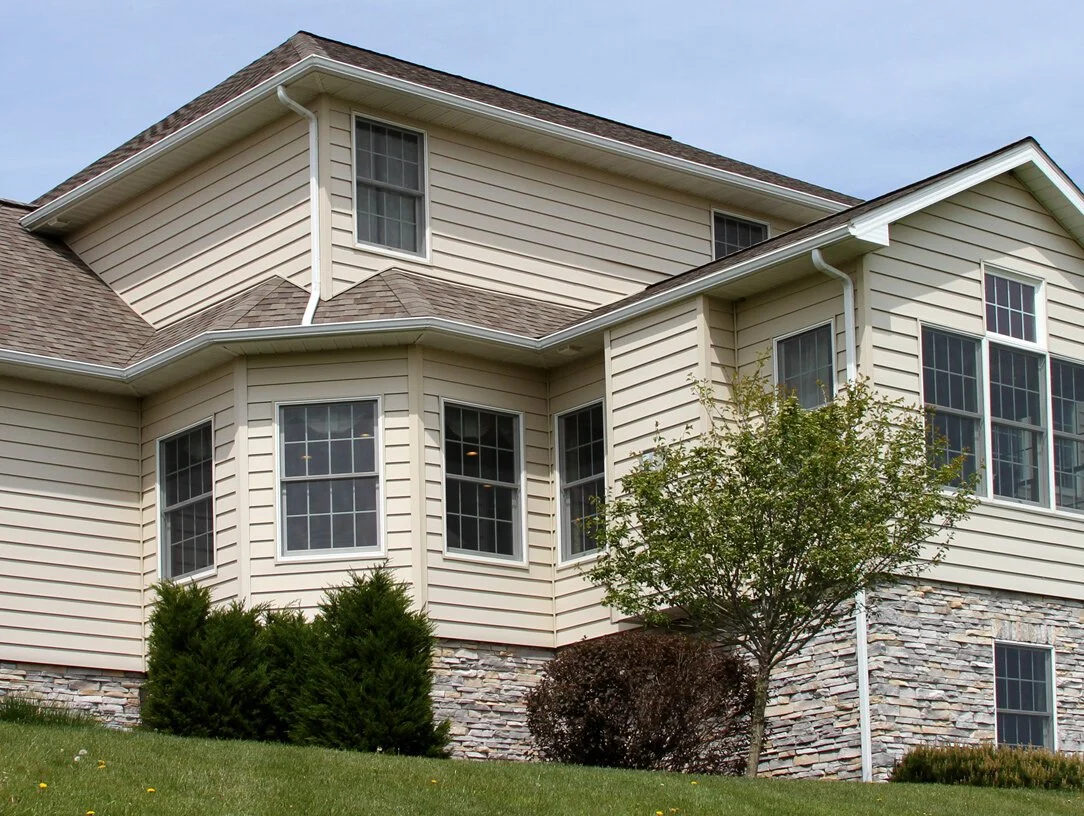
How Each Performs in Michigan's Climate
This is where theory meets reality. Michigan's weather is brutal on exterior materials: freeze-thaw cycles from November through March, summer humidity that can hit 80%, ice dams, lake-effect snow in some areas, and temperature swings of 60+ degrees in a single week.
Freeze-Thaw Cycles
Both products handle freeze-thaw well, but for different reasons.
James Hardie is essentially a masonry product. It doesn't absorb water the way wood does. When moisture does get into the substrate (through cut edges or fastener holes), it doesn't expand enough to cause cracking or warping. This is why fiber cement performs so well in coastal climates and northern regions.
LP SmartSide has a treated wood core that resists moisture absorption, but it's not immune. If water gets behind the factory finish — through a bad cut, a poorly sealed corner, or a damaged edge — the wood strands can swell slightly. In most cases, the zinc borate treatment prevents rot, but you can see minor edge swelling in poorly installed jobs after 10-15 years.
The key with LP SmartSide is proper installation: sealed cuts, correct fastener placement, and quality flashing. When installed correctly by an experienced Detroit siding company, it handles Michigan winters without issue.
Ice Dams and Roof Runoff
Ice dams are a Michigan reality, especially on homes with inadequate attic insulation in Metro Detroit. When ice builds up at the eaves and meltwater backs up under shingles, it often runs down behind the siding.
James Hardie's inert substrate means this water doesn't cause damage — it just drains through the wall cavity (assuming proper drainage plane and flashing). LP SmartSide handles this well too, as long as the factory finish is intact and the installation includes a quality weather-resistive barrier.
The real issue isn't the siding material — it's the installation details. We see more problems from missing kickout flashing and improper J-channel installation than we do from the siding itself.
Paint Retention and UV Exposure
Michigan summers bring intense UV exposure, and both products need a quality finish to protect them.
James Hardie ColorPlus (factory finish) is baked on in a controlled environment and comes with a 15-year warranty. It holds up exceptionally well — we've seen 12-year-old Hardie installations in Troy and Rochester Hills that still look sharp.
LP SmartSide SmartFinish (also factory-applied) has a 5-year finish warranty, which is shorter. That said, we've seen LP SmartFinish hold up well beyond the warranty period when the home isn't in direct, all-day sun exposure. South and west-facing walls see more fading over time.
If you're painting either product on-site, use a high-quality acrylic paint. We work exclusively with Sherwin-Williams painting contractor-grade products, and we typically recommend Duration or Emerald for siding applications.
Installation Differences That Matter
The material differences translate directly into installation complexity, labor costs, and long-term performance.
Cutting and Fastening
LP SmartSide cuts like wood. You can use a standard circular saw with a carbide blade. It accepts nails without pre-drilling (though you still need to follow the manufacturer's fastener schedule). Trimming corners, fitting around windows, and making adjustments on-site is straightforward.
James Hardie requires carbide-tipped blades and generates silica dust when cut, which means dust control measures (wet saws or HEPA vacuums) are required by OSHA. Fastening requires either hand-nailing with specific nail placement or pneumatic nailers set to the correct depth. It's more labor-intensive.
This isn't a knock on Hardie — it's just the reality of working with a cement-based product. Experienced crews handle it without issue, but it does add time to the job.
Flashing and Water Management
Both products require the same level of attention to flashing, drainage planes, and water management. This is where most siding failures happen — not because of the product, but because of poor installation.
Critical details:
- Kickout flashing at roof-to-wall transitions (prevents water from running behind siding)
- Window and door head flashing (properly integrated with the weather-resistive barrier)
- Corner boards and J-channel sealed with quality caulk (we use Sherwin-Williams Emerald Exterior Acrylic Latex Caulk)
- Proper fastener placement (both products specify nailing zones and spacing)
We've torn off siding jobs where the product was fine, but the installation was a disaster. The material doesn't matter if the fundamentals aren't right.
Cost Reality: Material, Labor, and Long-Term Value
Let's talk numbers. Both products are premium options, and both cost significantly more than vinyl siding. But there are cost differences between them, and those differences matter when you're budgeting for a siding installation in Southeast Michigan.
Material Costs
As of 2026, here's what we're seeing for material costs (this varies by distributor and order volume):
| Product | Cost per Square Foot (Material Only) |
|---|---|
| LP SmartSide (pre-primed) | $1.80 - $2.40 |
| LP SmartSide (SmartFinish pre-finished) | $2.60 - $3.20 |
| James Hardie (pre-primed) | $2.20 - $2.80 |
| James Hardie (ColorPlus pre-finished) | $3.00 - $3.80 |
LP SmartSide is generally 10-20% less expensive at the material level, especially when comparing pre-finished options.
Labor Costs
This is where the gap widens. James Hardie takes longer to install because of the cutting requirements, weight, and fastener precision. On a typical 2,000-square-foot siding job, we'll spend about 15-20% more labor hours on Hardie compared to LP SmartSide.
That translates to real dollars. If labor is $3.50-$4.50 per square foot installed (which is typical for quality work in Oakland and Macomb counties), the Hardie job will cost more.
Total Installed Cost (2026 Southeast Michigan Pricing)
For a typical 2,000-square-foot siding replacement on a two-story Colonial in Sterling Heights or Clinton Township:
| Product | Total Installed Cost |
|---|---|
| LP SmartSide (pre-primed, field-painted) | $14,000 - $18,000 |
| LP SmartSide (SmartFinish pre-finished) | $16,000 - $20,000 |
| James Hardie (pre-primed, field-painted) | $16,000 - $21,000 |
| James Hardie (ColorPlus pre-finished) | $18,000 - $24,000 |
These numbers include tear-off of existing siding, house wrap, trim, and installation. They don't include soffit/fascia replacement, which adds another $2,000-$4,000 depending on the home.
Budget Reality: If you're comparing pre-finished products (which most homeowners prefer), LP SmartSide typically comes in $2,000-$4,000 less than James Hardie on a full-house re-side. That's real money, and it's worth considering alongside performance and longevity.
Long-Term Value
Both products last 30+ years with proper maintenance. The difference is in the maintenance schedule:
- James Hardie ColorPlus: Minimal maintenance. Wash it once a year. Touch up any damaged areas. Expect to repaint in 20-25 years if you want to refresh the look.
- LP SmartSide SmartFinish: Same wash-and-inspect routine. You'll likely want to repaint in 12-15 years, especially on south and west exposures.
If you're planning to stay in the home for 20+ years, the Hardie finish holds up longer. If you're planning to sell in 10-15 years, the LP SmartSide finish will still look good and you'll have saved upfront.
Warranty and Longevity Comparison
Warranties tell you what the manufacturer is willing to stand behind. Here's the breakdown:
LP SmartSide Warranty
- Product warranty: 5-year limited warranty (covers defects in material and manufacturing), plus a 50-year prorated limited warranty (covers substrate integrity against rot and termite damage)
- Finish warranty: 5-year limited warranty on SmartFinish pre-finished products (covers excessive fading, peeling, and cracking)
The 50-year warranty sounds impressive, but it's prorated — meaning the coverage decreases over time. By year 20, you're getting a fraction of the original coverage value.
James Hardie Warranty
- Product warranty: 30-year non-prorated limited warranty (covers defects in material and manufacturing)
- Finish warranty: 15-year limited warranty on ColorPlus pre-finished products (covers excessive fading, peeling, and cracking)
The non-prorated structure means full coverage for 30 years, which is stronger than LP's prorated approach. The 15-year finish warranty is also significantly longer than LP's 5-year coverage.
That said, we rarely see warranty claims on either product when they're installed correctly. The real issue is usually installation errors — flashing failures, improper fastening, or water intrusion — and those aren't covered by product warranties.
When to Choose Which Product
So which one should you choose? It depends on your home, your budget, and your priorities.
Choose LP SmartSide If:
- You want the look and texture of real wood without the maintenance of cedar
- Budget is a primary concern and you want to save $2,000-$4,000 on the total project
- You're planning to sell in 10-15 years and want a quality product that delivers strong ROI without the premium cost
- Your home has complex architectural details (bay windows, gables, dormers) where LP's workability makes installation easier and cleaner
- You're okay with repainting in 12-15 years to keep the finish looking sharp
Choose James Hardie If:
- You're staying in the home long-term (20+ years) and want the absolute lowest maintenance option
- You live in a high-wind area or a location with significant hail risk (Hardie's impact resistance is superior)
- You want the longest finish warranty available (15 years with ColorPlus)
- Fire resistance is a priority (Hardie is non-combustible, which matters in certain insurance situations)
- You're willing to pay a premium for a product with a 30-year non-prorated warranty
Our Take: We install both products regularly, and we don't push one over the other. For most Michigan homeowners, LP SmartSide delivers excellent value — it performs well in our climate, looks great, and costs less. But if you're in a forever home and want the absolute longest-lasting finish, Hardie ColorPlus is worth the premium.
Signs It's Time to Replace Your Siding
Whether you're leaning toward LP SmartSide or James Hardie, the first question is whether you actually need new siding. Here's what we look for when evaluating a home in Macomb, Oakland, or St. Clair counties:
- Visible rot or soft spots: Press on the siding near corners, windows, and the foundation. If it feels soft or punky, moisture has compromised the substrate.
- Warping or buckling: Siding that's pulling away from the wall or warping at the seams indicates water intrusion or improper installation.
- Paint failure: If you're repainting every 5-6 years and the paint still peels, the siding substrate is likely failing.
- High energy bills: If your heating and cooling costs have crept up and your Detroit window experts have confirmed the windows are fine, the siding and insulation may be the issue.
- Mold or mildew behind the siding: Dark staining or mold growth visible through seams indicates trapped moisture.
- Cracked or missing panels: Storm damage, impact damage, or just age can cause cracks that let water in.
If you're seeing two or more of these signs, it's time to talk to a contractor. We offer free inspections and estimates — no pressure, just an honest assessment of what your home needs.
Other Services That Pair with Siding Replacement
When you're replacing siding, it's the perfect time to address other exterior issues. Here's what we typically recommend bundling:
Window replacement in Detroit: If your windows are 20+ years old, replacing them during a siding job saves on labor costs (we're already removing trim and working around openings). New windows also improve energy efficiency and curb appeal.
Seamless gutters in Detroit, MI: Old gutters often get damaged during siding removal. Installing new seamless gutters with proper downspout placement prevents water from running down your new siding.
Insulation upgrades: When the siding comes off, the wall cavities are exposed. Adding blown-in insulation or spray foam insulation at this stage is far cheaper than doing it as a separate project.
Roofing services: If your roof is approaching 15-20 years old and you're already investing in siding, consider replacing both. The scaffolding and site setup costs are shared, and you'll have a complete exterior refresh.
We handle all of these services in-house as part of our exterior services in Detroit and Southeast Michigan. That means one crew, one timeline, and one point of contact.
Ready to Get Started?
NEXT Exteriors has been protecting Michigan homes since 1988. We install both LP SmartSide and James Hardie, and we'll help you choose the right product for your home, your budget, and your goals. Get a free, no-pressure estimate from a team that shows up on time and does the job right.
Get Your Free QuoteOr call us: (844) 770-6398
Frequently Asked Questions
Yes, when installed correctly. LP SmartSide's treated wood core resists moisture and rot, and we've seen installations in Southeast Michigan that are 15+ years old with no issues. The key is proper flashing, sealed cuts, and quality installation. James Hardie has an edge in extreme moisture exposure because it's a cement-based product, but for typical Michigan conditions, both perform well.
LP SmartSide typically costs 10-20% less than James Hardie for a full siding replacement. On a 2,000-square-foot home in Sterling Heights or Troy, you're looking at roughly $2,000-$4,000 in savings with LP SmartSide (pre-finished) compared to James Hardie ColorPlus. The gap comes from both material costs and labor — Hardie is heavier and more time-intensive to install.
James Hardie ColorPlus (factory finish) holds paint longer — typically 15-20 years before you need to repaint. LP SmartSide SmartFinish (also factory-applied) holds up well for 10-12 years, but you'll see more fading on south and west exposures. If you're field-painting either product, use high-quality acrylic paint (we recommend Sherwin-Williams Duration or Emerald) and expect to repaint every 10-15 years regardless of substrate.
Properly installed LP SmartSide does not warp or swell. The zinc borate treatment and resin coating prevent moisture absorption. However, if water gets into unsealed cut edges or improperly flashed areas, you can see minor edge swelling over time. This is an installation issue, not a product defect. We seal all cut edges and follow LP's fastener schedule to prevent this.
We don't recommend it. Installing over existing siding traps moisture, hides structural issues, and voids most manufacturer warranties. The right approach is to remove the old siding, inspect the sheathing and framing for rot or damage, repair as needed, install a quality weather-resistive barrier, and then install the new siding. This adds cost upfront but prevents expensive problems down the road.
A typical full-house siding replacement on a 2,000-square-foot two-story home takes 5-7 days with a professional crew. That includes tear-off, prep, installation, and cleanup. James Hardie jobs tend to run slightly longer (6-8 days) because of the cutting and fastening requirements. Weather delays can add time — we don't install siding in rain or when temperatures drop below 40°F.
Late spring through early fall (May through October) is ideal. Temperatures are stable, rain is less frequent, and crews can work efficiently. We do install siding in winter when necessary, but cold temperatures slow down caulk curing and make handling materials more difficult. If you're planning a siding project, book it in early spring — summer and fall are our busiest seasons.