

Exterior Trim Services in Metro Detroit: A Homeowner's 2026 Guide

Most homeowners think of exterior trim as decoration—the white boards that frame windows and wrap corners. But in Michigan, trim is a frontline defense system. It's where water gets directed away from vulnerable wood framing, where siding systems terminate properly, and where your home's envelope stays sealed against our freeze-thaw cycles.
After 35 years installing and repairing trim across Southeast Michigan, we've seen what happens when it's done wrong. Water intrusion. Rot behind the siding. Ice dams that start at poorly ventilated soffits. Energy loss through gaps that shouldn't exist. And repair bills that dwarf what proper installation would have cost.
This guide explains what professional exterior services in Detroit include when it comes to trim work, which materials hold up in Michigan weather, and how to spot problems before they become expensive. Whether you're planning a house siding installation in Detroit or just noticed your fascia boards are rotting, this is what you need to know.
What Exterior Trim Actually Does (Beyond Curb Appeal)
Trim isn't cosmetic. It's functional architecture that protects your home's structure from Michigan's weather extremes. Here's what properly installed trim actually accomplishes:
Water Management
Trim boards create intentional pathways for water to move down and away from your home's framing. Fascia boards cap the ends of roof rafters, preventing water from wicking into exposed wood grain. Corner trim overlaps siding in a way that sheds water outward. Window and door trim, when flashed correctly, directs water away from vulnerable openings.
In Michigan, where we get 30-35 inches of precipitation annually plus snowmelt cycles, this water management function is critical. A single poorly installed trim board can funnel water behind your siding for years before you notice the damage inside.
Structural Integrity
Trim protects the most vulnerable parts of your home's structure—the places where different building materials meet. Roof edges. Wall corners. Window and door openings. These transitions are natural weak points where water can penetrate if not properly covered and sealed.
The fascia board, for example, isn't just decorative. It's the mounting surface for your seamless gutters in Detroit, MI, and it protects the tail ends of your roof rafters from rot. When fascia fails, you're not just looking at trim replacement—you're looking at structural carpentry to repair damaged rafter tails.

Energy Efficiency
Trim creates the final seal between your home's conditioned interior and the outside environment. Soffit systems, when properly vented, allow attic airflow that prevents ice dams and reduces cooling costs in summer. Window and door trim, when installed with proper flashing and air sealing, eliminates drafts that drive up heating bills.
We see this constantly when we're doing insulation services in Southeast Michigan—homeowners have spent thousands on attic insulation, but they're still losing conditioned air through gaps around poorly installed trim. The trim work has to be tight for the insulation to do its job.
Michigan-Specific Challenge: Our freeze-thaw cycles are particularly hard on trim. Water gets into small cracks, freezes, expands, and makes those cracks bigger. By spring, what was a hairline gap in October is now a quarter-inch opening. Materials and installation methods that work fine in Georgia or Arizona fail here within five years.
Types of Exterior Trim and What Works in Michigan
Not all trim is created equal, and not all materials hold up in Michigan's climate. Here's what we install most often and why:
Fascia Boards
Fascia runs horizontally along the roof edge, capping the ends of rafters. It's what your gutters attach to, and it's constantly exposed to water runoff, ice dams, and UV exposure. In Michigan, we see fascia failure more than any other trim component.
Material options:
- Wood (typically 1x6 or 1x8 pine or cedar): Traditional but requires regular painting and maintenance. Expect rot within 15-20 years even with good maintenance in Michigan's climate.
- Vinyl-wrapped wood: Better than bare wood, but the vinyl can crack in extreme cold, allowing moisture behind the wrap. We see this fail after 10-15 years.
- Aluminum: Durable and low-maintenance. Won't rot. Can dent from hail or ladder impacts, but holds up well to Michigan weather. Typical lifespan 30+ years.
- PVC trim boards: Cellular PVC (brands like Azek or Versatex) is our top recommendation for Michigan fascia. Won't rot, doesn't absorb water, expands and contracts minimally, and can be painted or left white. Lifespan 50+ years.
When we're doing Detroit roofing services, we always inspect fascia condition. If it's rotted or soft, we replace it before installing new gutters. There's no point mounting $2,000 worth of gutters to a fascia board that's going to fail in two years.
Soffit Systems
Soffit is the underside of your roof overhang. It serves two critical functions: it encloses the underside of your roof structure, and when vented, it provides intake airflow for attic ventilation.
Proper attic ventilation prevents ice dams, extends shingle life, and reduces cooling costs. We cover this in detail in our guide on diagnosing drafty rooms and air leaks, but the short version is this: your attic needs to breathe, and soffit vents are where that intake air enters.
Material options:
- Vinyl soffit: Most common. Available in solid or vented panels. Affordable, doesn't rot, minimal maintenance. Can become brittle in extreme cold after 20+ years.
- Aluminum soffit: More durable than vinyl, won't become brittle. Slightly more expensive but lasts longer. Typical lifespan 30-40 years.
- Wood soffit: Rare now, mostly seen on older homes or historic properties. Requires regular painting and is prone to rot in Michigan's humid summers.
Venting Math: Michigan building code requires 1 square foot of net free ventilation area for every 150 square feet of attic space (with proper vapor barrier) or 1:300 without. Soffit vents should provide about 60% of that intake, with the remainder exhausted through ridge vents or roof vents. Get this wrong, and you'll have ice dams and premature shingle failure.
Corner Trim and J-Channel
Corner trim covers the vertical edges where two walls meet. J-channel is the receiving channel that siding panels slide into around windows, doors, and at wall edges. Both are critical for proper siding installation.
When we're doing siding services in Metro Detroit, the quality of the trim installation determines how well the siding performs. Poorly installed J-channel allows water behind the siding. Corner trim that's not plumb makes the entire siding job look crooked.
Material options:
- Vinyl: Standard for vinyl siding installations. Color-matched to siding. Affordable and low-maintenance.
- Aluminum: Used with aluminum siding or as a premium upgrade for vinyl siding. More durable, won't warp.
- PVC trim boards: Used with fiber cement, engineered wood, or as a premium detail on vinyl siding jobs. Paintable, extremely durable. This is what we use on LP SmartSide and James Hardie installations.
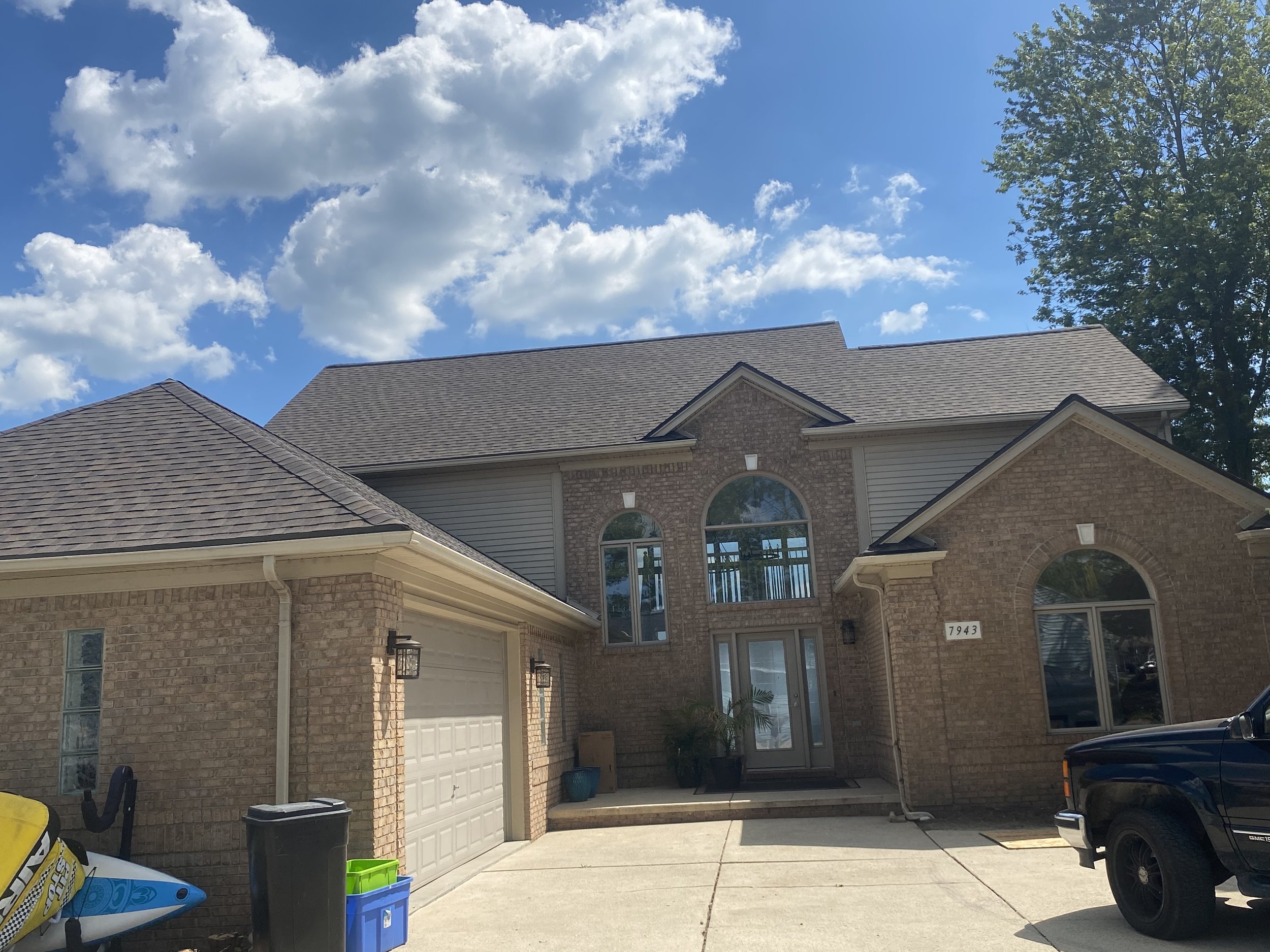
Window and Door Trim
This is the trim that frames window and door openings. It's not just decorative—it's the critical flashing layer that prevents water from getting into wall cavities around openings.
When we install windows in Detroit, the trim and flashing installation is where most contractors cut corners. They'll slap on some J-channel and call it done. Proper installation requires flashing tape at the sill, side flashing that overlaps the housewrap correctly, and head flashing that directs water out and away from the opening.
We see this done wrong constantly, especially on homes built or renovated in the 1990s and early 2000s. The windows themselves are fine, but water has been running into the wall cavity for 20 years because the trim wasn't flashed correctly. By the time the homeowner notices interior water stains, there's significant rot in the wall framing.
Rake Boards and Frieze Boards
Rake boards run along the sloped edge of a gable roof. Frieze boards run horizontally where the wall meets the roof overhang. Both protect the transition between roofing and siding.
These components take a beating in Michigan. They're fully exposed to weather, they're hard to access for maintenance, and they're often neglected until they fail. When we're doing roof repairs in Metro Detroit, we always inspect rake and frieze board condition. Rotted trim here often indicates water has been getting under the roof edge, which means sheathing damage.
Signs Your Trim Needs Attention
Here's what we look for when we're inspecting trim on Michigan homes. If you see any of these, it's time to call a contractor:
Visual Indicators
- Warping or cupping: Wood trim that's absorbed moisture will warp. You'll see boards that are no longer flat or straight. This is a sign of rot starting from the back side.
- Peeling paint: Paint failure on trim usually means moisture is getting behind the paint film. The wood underneath is likely compromised.
- Discoloration or staining: Dark streaks or black spots indicate water intrusion and possible mold or rot.
- Gaps or separation: Trim pulling away from the house means fasteners have failed, often because the substrate wood has rotted.
- Cracks or splits: Common in older wood trim after Michigan's freeze-thaw cycles. Water gets in, freezes, expands, and splits the board.
Water Damage Symptoms
- Soft spots: Press on trim boards with your thumb. They should feel solid. If they're soft or spongy, the wood is rotted.
- Water stains on interior walls or ceilings near trim: This means water is getting past the trim and into your wall or attic.
- Ice dams forming at specific roof sections: Often caused by inadequate soffit venting or damaged soffit that's blocking airflow.
- Fascia sagging or pulling away: Indicates the fascia board is rotted and can no longer support gutter weight.
Pest Intrusion Signs
- Carpenter bee holes: Round holes about 1/2 inch diameter, usually in fascia or corner trim. These bees bore into wood trim to nest.
- Woodpecker damage: Large holes or excavated areas. Woodpeckers go after trim that's already been damaged by carpenter bees or has rot.
- Sawdust piles below trim: Indicates active carpenter bee or carpenter ant activity.
- Mouse or bat entry points: Gaps in soffit or fascia are common entry points for rodents and bats into attics.
Spring Inspection Timing: We recommend inspecting trim in early spring, right after snowmelt. That's when water damage from winter shows up most clearly. Look for staining, soft spots, and separation. Catching problems in April means you can fix them before summer storm season. Our spring siding inspection checklist covers trim inspection in detail.
What Professional Trim Installation Looks Like
There's a right way and a wrong way to install exterior trim. The difference determines whether your trim lasts 10 years or 40 years. Here's what we do on every trim installation:
Proper Flashing and Waterproofing
Every trim board gets flashing behind it. Window and door trim gets flashing tape at the sill and head, with side flashing integrated into the housewrap. Fascia gets flashing behind it that extends up under the drip edge. Corner trim gets housewrap or building paper behind it that overlaps correctly to shed water.
This is the step that separates professional installation from hack work. Flashing is hidden—you can't see it once the job is done. But it's what keeps water out of your walls for the next 30 years.
When we're doing siding installations in Michigan, we document the flashing installation with photos. Homeowners should be able to see that it was done correctly, even though it'll be covered by siding.
Integration with Siding Systems
Trim isn't installed in isolation—it's part of a complete wall assembly. The sequence matters. Housewrap goes on first, then flashing, then trim, then siding. Each layer overlaps the one below it in a way that sheds water downward and outward.
J-channel around windows and doors has to be installed with the proper reveal so siding panels can expand and contract without binding. Corner trim has to be plumb so siding courses line up correctly. Soffit has to align with fascia so there are no gaps where insects or water can enter.
This is why trim work is best done as part of a complete siding replacement project. Trying to replace just the trim while leaving old siding in place often doesn't work—you can't properly flash new trim to old siding.

Ventilation Considerations
Soffit installation requires calculating proper vent area for your attic size, then ensuring that intake area isn't blocked. We see this done wrong constantly—contractors install vented soffit but don't cut openings in the soffit backing, so no air actually flows. Or they install solid soffit where code requires vented soffit.
Proper soffit venting works in conjunction with attic insulation in Metro Detroit to prevent ice dams and reduce energy costs. The soffit brings cool air into the attic, that air flows up and out through ridge vents, and the continuous airflow prevents heat buildup that causes ice dams in winter and drives up cooling costs in summer.
Code Compliance
Michigan's residential building code has specific requirements for trim installation, particularly around fire resistance in certain applications and structural attachment methods. Licensed contractors know these requirements. Unlicensed handymen often don't.
For example, PVC trim boards require specific fastening schedules because they expand and contract more than wood. Fascia boards have to be attached to rafter tails or a properly installed subfascia, not just nailed to shingle edges. Soffit systems require proper ventilation ratios.
When we do trim work, it's done to code. That matters if you ever sell your home—unpermitted, non-code-compliant work can kill a sale or force you to redo it at your expense.
Cost Reality: What Trim Services Actually Cost in Metro Detroit
Trim costs vary widely based on material choice, the extent of rot repair needed, and whether it's part of a larger project. Here's what we see in 2026 for Southeast Michigan:
Fascia Replacement
- Vinyl-wrapped wood fascia: $8-12 per linear foot installed
- Aluminum fascia: $12-16 per linear foot installed
- PVC trim board fascia: $14-18 per linear foot installed
A typical single-story ranch home in Sterling Heights or Warren has about 100-120 linear feet of fascia. That's $1,200-$2,200 for complete fascia replacement, depending on material. If rafter tails are rotted and need carpentry repair, add $500-$1,500 depending on extent of damage.
Soffit Replacement
- Vinyl soffit: $6-10 per linear foot installed
- Aluminum soffit: $9-13 per linear foot installed
Same house typically has 80-100 linear feet of soffit. That's $600-$1,300 for complete soffit replacement. If you're replacing both fascia and soffit together (which we recommend), most contractors will offer a package price that's 10-15% less than doing them separately.
Window and Door Trim
- Vinyl J-channel trim (basic): $75-125 per window
- PVC trim boards with proper flashing: $200-350 per window
- Door trim with PVC boards: $250-400 per door
This is where we see the biggest price variation. Basic J-channel installation is cheap but doesn't provide the same protection or aesthetics as PVC trim boards. For fiber cement or engineered wood siding, PVC trim is the right choice.
Complete Trim Package
For a typical Michigan Colonial (2,000-2,500 sq ft, 2-story), a complete trim replacement including fascia, soffit, corner trim, and window/door trim typically runs $4,500-$8,500 depending on materials and condition of existing trim.
If we're also doing siding replacement in Troy or Rochester Hills, the trim work is usually bundled into the siding contract at a lower per-foot price since we're already on site with equipment and crews.
When to Bundle Services: Trim replacement makes the most sense when done with siding or roofing projects. If we're already replacing your siding, adding trim replacement only adds material cost—the labor efficiency is already there. Doing trim separately later costs 25-35% more because of mobilization, setup, and smaller material orders.
Repair vs. Replacement
Small sections of damaged trim can sometimes be repaired rather than replaced:
- Spot fascia repair (one section): $200-400
- Soffit panel replacement (2-3 panels): $150-300
- Corner trim repair/replacement: $150-350 per corner
But here's the reality: if one section of trim is failing, adjacent sections are usually close behind. Wood fascia doesn't rot in isolation—if the south side is gone, the west side is probably compromised too. We often recommend complete replacement rather than piecemeal repairs that you'll be redoing in 2-3 years.
How to Choose a Trim Contractor in Southeast Michigan
Not all contractors handle trim work the same way. Here's what to look for when you're getting quotes in Macomb, Oakland, or St. Clair counties:
Licensing and Insurance
Michigan requires a Residential Builder's License for most exterior work. Verify the contractor is licensed, insured, and bonded. NEXT Exteriors holds a Michigan Residential Builder's License and maintains full liability and workers' compensation insurance.
Unlicensed contractors are cheaper for a reason—they cut corners, they don't pull permits when required, and they disappear when problems arise. We see their work constantly when we're fixing trim failures.
Experience with Michigan Weather
Trim installation methods that work in North Carolina don't work in Michigan. Our freeze-thaw cycles, ice dams, and humidity swings require specific material choices and installation techniques.
Ask how long the contractor has been working in Michigan. Ask what materials they recommend for fascia and why. Ask about their flashing methods. A contractor who's been doing this for 30+ Michigan winters will give you different answers than someone who moved here from Arizona two years ago.
Material Knowledge
Good contractors can explain the pros and cons of different trim materials for your specific situation. They should be able to discuss PVC vs. aluminum fascia, explain why vented soffit matters for your attic, and talk about proper flashing methods.
If a contractor just says "we use vinyl for everything" without discussing options, that's a red flag. Different homes need different solutions. A 1960s brick ranch in Grosse Pointe Farms has different trim needs than a 2005 vinyl-sided Colonial in Shelby Township.
Integration with Other Services
The best trim work happens when the contractor understands how trim integrates with roofing, siding, windows, and gutters. That's why we offer complete exterior services in Detroit—trim isn't a standalone component, it's part of a complete building envelope.
When we're replacing trim, we're thinking about how it affects gutter attachment, how it integrates with the existing or new siding, how it impacts attic ventilation, and how it affects the home's water management system. Contractors who only do trim work often miss these connections.

References and Portfolio
Ask to see recent trim work, particularly jobs similar to yours. If you have a two-story Colonial with complex rooflines, you want to see that the contractor has handled similar homes. Check their project gallery and read reviews from homeowners in your area.
We've completed 500+ exterior projects across Southeast Michigan since 1988. Our 5.0-star average rating from 87+ reviews reflects how we approach trim work—carefully, correctly, with attention to the details that matter for Michigan homes.
Ready to Get Started?
NEXT Exteriors has been protecting Michigan homes since 1988. Get a free, no-pressure estimate from a team that shows up on time and does the job right.
Get Your Free QuoteOr call us: (844) 770-6398
Frequently Asked Questions About Exterior Trim Services
It depends entirely on the material. Wood trim with regular painting lasts 15-20 years. Vinyl-wrapped wood lasts 10-15 years. Aluminum trim lasts 30-40 years. PVC trim boards last 50+ years. Michigan's freeze-thaw cycles are particularly hard on trim, so material choice matters more here than in milder climates. We typically recommend aluminum or PVC for fascia and aluminum or vinyl for soffit as the most cost-effective long-term solutions.
Sometimes, but it's complicated. If your siding is in good condition and was properly installed originally, we can often replace fascia and soffit without disturbing the siding. But replacing corner trim or window trim usually requires removing at least some siding to properly flash the new trim. If your siding is more than 20 years old or showing signs of failure, it usually makes more sense to replace both together. That way everything is flashed and integrated correctly, and you avoid the higher cost of doing them separately.
Vented soffit has perforations that allow air to flow into your attic. Solid soffit blocks airflow. Michigan building code requires proper attic ventilation to prevent ice dams and reduce energy costs. Most homes need vented soffit for intake air, which then exhausts through ridge vents or roof vents. The typical ratio is 1 square foot of net free ventilation area per 150 square feet of attic space, with about 60% of that coming from soffit vents. We calculate the required vent area for your specific home and install the appropriate mix of vented and solid soffit panels.
Fascia rot usually isn't caused by roof failure—it's caused by water running off the roof edge and wicking into the fascia board. This happens when there's no drip edge installed, when the drip edge is installed incorrectly, or when ice dams force water back under the shingles and into the fascia. Wood fascia is particularly vulnerable because water wicks into the end grain at the top edge. Even with a good roof, unprotected wood fascia in Michigan typically rots within 15-20 years. That's why we recommend aluminum or PVC fascia—they don't rot regardless of water exposure.
If the wood is still solid and you're just dealing with peeling paint, repainting can buy you another 5-7 years. But if there's any soft spots, warping, or rot, painting won't fix the underlying problem—you're just covering up damage that will continue to get worse. We test wood trim by pressing on it with a thumb. If it feels spongy or soft, it's compromised and should be replaced. Our Southeast Michigan painting professionals can assess whether painting makes sense or if replacement is the better long-term investment.
Ask to see photos of the flashing installation before it's covered by siding or trim. Reputable contractors document their flashing work because they know it's critical but hidden. You should see flashing tape at window sills, head flashing above windows and doors, and flashing behind fascia that extends up under the roof drip edge. The flashing should overlap in a way that sheds water downward and outward—each layer overlaps the one below it like roof shingles. If a contractor can't or won't show you the flashing, that's a red flag.
Late spring through early fall (May through October) is ideal. Some materials like PVC trim require specific temperature ranges for installation—they need to be fastened differently in cold weather to allow for expansion. Caulking and sealants also cure better in moderate temperatures. That said, we do trim work year-round when necessary, we just adjust our methods for temperature. If you're planning a project, spring is the best time to schedule—you'll have more contractor availability and better weather for installation. Our spring preparation guide covers optimal timing for exterior projects.