

Exterior House Painting in Mount Clemens: Spring 2026
NEXT Exteriors opens Spring 2026 painting schedules in Mount Clemens. Sherwin-Williams exclusive contractor. Book now—slots fill fast in Southeast Michigan.

We're opening our Spring 2026 painting schedule this week, and if the last three years are any indication, the calendar will fill fast. Homeowners in Mount Clemens and across Macomb County are already calling about exterior painting projects—some because their homes desperately need it, others because they know the best contractors book up months in advance.
Here's what you need to know about scheduling Southeast Michigan painting professionals for spring work, what makes our process different, and why timing matters more than most people realize when it comes to exterior painting in Michigan.
Why Spring 2026 Painting Schedules Are Opening Early in Mount Clemens
We've been doing this since 1988, and the pattern is consistent: homeowners who wait until April to call about painting usually end up waiting until June or July for an available crew. It's not because contractors are trying to create artificial scarcity—it's simple capacity math.
A typical exterior painting project in Mount Clemens takes 3-7 days depending on home size, surface condition, and weather cooperation. Michigan's ideal painting window runs from late April through mid-October. That's roughly 150 working days, minus rain delays, extreme heat, and the occasional surprise cold snap that still happens in May.
When you factor in proper surface prep time—and we'll get to why that matters in a minute—a skilled crew can complete maybe 20-25 full exterior paint jobs in a season. That's it. Not 50, not 100. Twenty-five homes, done right.
Mount Clemens Weather Reality: Our proximity to Lake St. Clair means we get lake-effect moisture and temperature swings that affect paint application windows. A contractor who doesn't understand this will either rush the job or leave you waiting weeks for the right conditions.
The homeowners who book in February and March get first choice of dates. They get the late April and May slots when temps are mild, humidity is manageable, and crews are fresh. By the time summer hits, we're often scheduling into September and October—which can work fine, but you're gambling on weather.
This year, we're seeing even earlier demand because more homeowners are treating exterior maintenance as preventive rather than reactive. They're not waiting for paint to peel off in sheets. They're scheduling repaints on a rational timeline, which is exactly how it should work. If you're also considering other exterior services in Detroit and surrounding areas, coordinating multiple projects during the spring season makes logistical sense.
What Makes NEXT Exteriors' Painting Process Different
We're a Sherwin-Williams exclusive contractor. That's not a marketing gimmick—it's a deliberate choice that affects everything from product selection to warranty coverage to how we price jobs.
When you work with a painting contractor who uses whatever paint is on sale that week, you're introducing variables that don't need to exist. Sherwin-Williams Duration, Emerald, SuperPaint—we know exactly how these products perform on Michigan wood siding, on fiber cement, on old aluminum, on brick. We know their dry times in 65-degree weather versus 80-degree weather. We know which primers bond to which substrates.

That consistency matters because the performance difference between a good paint job and a mediocre one usually comes down to prep work and product knowledge, not the actual application. Any decent painter can roll on a coat of paint. Not everyone will:
- Properly scrape and sand failing paint down to stable substrate
- Prime bare wood with an oil-based primer (not latex) before topcoating
- Caulk every joint, seam, and penetration that could let moisture behind the paint film
- Apply two full coats of finish paint, not one thick coat and a prayer
- Respect temperature and humidity windows for proper cure times
We don't do the "show up, spray everything, leave" approach. Our crews work methodically. Surface prep typically takes as long as the actual painting. We mask windows, protect landscaping, cover decks and walkways. We clean up at the end of every day because we're working at your home, not a construction site.
The other thing we don't do: high-pressure sales. When you call for an estimate, we'll schedule a time to visit your property, assess the scope of work, and provide a written quote. No four-hour presentations. No "sign today for a discount" games. You'll get a fair price based on the actual work required, and you can take whatever time you need to decide. Many homeowners who need painting also discover they need house siding in Detroit addressed first, especially if the substrate is compromised.
The Right Time to Paint Your Home's Exterior in Michigan
Paint manufacturers specify application temperatures between 50°F and 85°F for most exterior coatings. That's not a suggestion—it's chemistry. Below 50°F, latex paint doesn't cure properly. The film stays soft, doesn't bond correctly, and you'll see premature failure. Above 85°F, paint dries too fast, which can cause lap marks, poor leveling, and adhesion issues.
In Mount Clemens, we typically hit that window consistently starting in late April. March can work if we get a warm spell, but you're gambling. October can work too, but you're racing against the first hard freeze.
The ideal painting conditions in Southeast Michigan:
- Temperature: 60-75°F during application and for 24-48 hours after
- Humidity: Below 70% relative humidity (high humidity slows cure times)
- Wind: Calm to light breeze (strong wind causes overspray issues and uneven drying)
- Forecast: No rain for at least 24 hours after application
Spring offers the best combination of these factors. Summer can get too hot and humid, especially in July and August. Fall works until it doesn't—one early cold snap and you're done for the season.
Why We Don't Paint in Winter: Even if you get a 55-degree day in January, the substrate temperature (the actual surface of your siding) is often 10-15 degrees colder than the air temperature. Paint applied to a cold surface won't adhere properly, no matter what the thermometer says.
This is why spring scheduling matters. You're not just booking a contractor—you're reserving a weather window. The earlier you book, the more flexibility we have to shift your project a few days if conditions aren't ideal. Homeowners who wait until the schedule is packed lose that flexibility. If you're also thinking about seamless gutters in Detroit, MI, coordinating that work before or after painting prevents damage to fresh paint from gutter installation.
Sherwin-Williams Products We Use (And Why They Matter)
We primarily use three Sherwin-Williams product lines for exterior painting in Michigan, and the choice depends on substrate, budget, and performance expectations.
Sherwin-Williams Duration
This is our most common recommendation for wood siding, fiber cement, and previously painted surfaces in good condition. Duration is a self-priming acrylic latex with excellent adhesion, flexibility, and resistance to Michigan's freeze-thaw cycles.
Key specs: Lifetime limited warranty (when applied per specifications), mildew-resistant, advanced stain-blocking technology. It's formulated to expand and contract with temperature swings without cracking or peeling. On a typical wood-sided Colonial in Sterling Heights or Clinton Township, Duration will give you 10-15 years of solid performance if the prep work is done correctly.
Sherwin-Williams Emerald
Emerald is the premium option—higher price point, superior durability, and the best dirt and stain resistance in the Sherwin-Williams lineup. We recommend it for high-visibility homes, for homeowners planning to stay long-term, or for surfaces that take a beating (south and west exposures, areas near roads with road salt spray).
The technology difference: Emerald uses a proprietary resin system that creates a harder, more durable film than standard acrylics. It also has better moisture resistance, which matters in Michigan where you're dealing with rain, snow, ice, and humidity all in the same year.
Sherwin-Williams SuperPaint
SuperPaint sits between Duration and Emerald in terms of price and performance. It's a solid choice for budget-conscious projects where you still want quality but don't need the absolute top-tier product. We use it on rentals, on homes being prepped for sale, and on outbuildings or garages where longevity isn't the primary concern.

All three products perform well in Michigan's climate when applied correctly. The difference comes down to longevity, warranty coverage, and how much abuse the surface will take. During your estimate, we'll walk you through the options based on your specific situation—no upselling, just honest recommendations. Some homeowners discover during the painting estimate that their Detroit window experts should address failing window trim before painting to avoid wasted effort.
What an Exterior Painting Project Actually Costs in Macomb County
This is the question everyone wants answered up front, and the honest answer is: it depends on about a dozen variables. But we can give you realistic ranges based on what we're seeing in 2026.
Typical single-story ranch (1,200-1,500 sq ft): $4,500-$7,500
Two-story Colonial (2,000-2,500 sq ft): $7,500-$12,000
Larger two-story or complex architecture (2,500-3,500 sq ft): $12,000-$18,000
Those ranges assume:
- Moderate prep work (scraping, sanding, minor wood repair)
- Two coats of Sherwin-Williams Duration or Emerald
- Painting siding, trim, soffit, and fascia
- Standard color (not custom match)
- Accessible surfaces (no major ladder/scaffolding challenges)
What drives costs up:
- Extensive prep work: If we're stripping multiple layers of failing paint, replacing rotted wood, or dealing with severe substrate damage, prep can double the labor hours
- Height and access: Three-story homes, steep roofs, or homes with complex rooflines require more time and equipment
- Color changes: Going from dark to light (or vice versa) often requires an extra coat or tinted primer
- Detailed trim work: Historic homes with intricate millwork take longer to mask, cut in, and paint properly
What we don't do: We don't give you a "price per square foot" over the phone. Every home is different. A 2,000-square-foot ranch with vinyl siding in great shape is a completely different project than a 2,000-square-foot Victorian with wood clapboard that hasn't been painted in 15 years.
Budget Reality Check: If a contractor quotes you $3,000 to paint a 2,000-square-foot two-story home in Mount Clemens, they're either missing something, cutting corners on prep, or using bottom-tier materials. Quality exterior painting isn't cheap, but it's a lot less expensive than replacing rotted siding because bad paint let moisture in.
We provide detailed written estimates that break down labor, materials, and prep work. You'll know exactly what you're paying for before we start. And if you're dealing with other exterior issues—like compromised siding that needs replacement—we'll tell you that up front rather than painting over a problem. That's where our expertise in Detroit siding company services helps us provide comprehensive assessments.
Signs Your Home Needs Exterior Painting This Year
Not every home needs painting on a fixed schedule. Some paint jobs last 15 years, others start failing at 7. It depends on product quality, application quality, exposure, and substrate condition. Here's what we look for when assessing whether a home needs repainting:
Visible Paint Failure
This is the obvious one: peeling, cracking, blistering, or chalking paint. If you can run your hand across the siding and it comes away with a powdery residue, the paint film is breaking down. If paint is peeling in sheets or curling at the edges, moisture is getting behind the film.
These aren't cosmetic issues—they're performance failures. Once paint starts peeling, it accelerates. Water gets in, the substrate swells and contracts, and more paint lets go. You can't just touch up peeling paint. You have to strip it, prep the surface, and repaint.
Fading and Color Loss
All paint fades over time, especially on south and west exposures that take the most sun. Moderate fading is normal. But if your home looks noticeably washed out, or if there's significant color variation between shaded and exposed areas, it's time.
Fading isn't just aesthetic—it indicates UV degradation of the paint film, which means the protective qualities are diminishing.
Caulk and Sealant Failure
Check the caulk around windows, doors, corner boards, and trim joints. If it's cracked, shrunk, or pulling away from surfaces, moisture is getting in. Failed caulk often shows up before paint failure because it's the first line of defense against water intrusion.
We always re-caulk as part of exterior painting prep, but if your caulk is failing badly, it's a sign the whole paint system is near the end of its service life. Homeowners sometimes discover during this inspection that their window replacement in Detroit is overdue, which should be addressed before painting.
Wood Rot or Substrate Damage
Paint can't protect wood that's already rotting. If you see soft spots, discoloration, or visible decay on trim boards, fascia, or siding, that needs to be repaired or replaced before painting. Painting over rot just hides the problem temporarily.
This is common on older homes in Mount Clemens where original wood siding or trim has been in place for decades. We'll identify these issues during the estimate and include wood replacement in the quote if needed.
Mold and Mildew Growth
Dark staining on north-facing walls, under eaves, or in shaded areas is usually mold or mildew. It grows on the surface of paint, especially in damp, low-sunlight conditions. Modern paints like Sherwin-Williams Duration and Emerald have mildew-resistant additives, but older paint doesn't.
Mildew has to be cleaned before repainting or it'll grow right through the new paint. We use a bleach solution or specialized cleaner to kill and remove it as part of surface prep.

If you're seeing two or more of these signs, you're due for repainting. Waiting another year or two might save you money in the short term, but it often costs more in the long run because the prep work becomes more extensive. For related concerns, many homeowners also need to address siding damage after a Michigan winter before painting can proceed.
How to Book Your Spring 2026 Painting Project
The process is straightforward. Call us at (844) 770-6398 or submit a quote request through our website. We'll schedule a time to visit your property in Mount Clemens, Sterling Heights, Clinton Township, or wherever you're located in our service area.
During the site visit, we'll:
- Assess the current condition of your siding, trim, and paint
- Identify any substrate issues that need addressing
- Discuss color options and Sherwin-Williams product recommendations
- Measure the home and calculate square footage
- Provide a detailed written estimate, usually within 48 hours
If you approve the estimate, we'll lock in your spring date. Early bookings (February through March) get priority placement in late April and May. If you're booking later, we'll give you the earliest available slot and keep you updated if anything opens up sooner.
Before we start work, we'll confirm the final color selections, review the project timeline, and answer any last-minute questions. Our crew will arrive on the scheduled date, set up protection for your landscaping and property, and get to work.
Most exterior painting projects take 3-7 days depending on size and complexity. We'll give you a realistic timeline during the estimate—we don't overpromise and underdeliver.
What to Expect: Our crews show up on time, work efficiently, and minimize disruption. We're not the cheapest option in Macomb County, but we're the option that does the job right the first time. No callbacks, no touch-ups three months later, no excuses.
Once the project is complete, we'll do a final walkthrough with you. If there's anything that needs attention, we'll handle it before we consider the job done. That's been our standard since 1988, and it's why we maintain a 5.0-star average rating across 87+ reviews.
If you're also considering upgrades to other exterior elements, we offer comprehensive exterior services in Detroit and throughout Southeast Michigan, from Detroit roofing services to top-rated insulation contractor in Detroit work. Coordinating multiple projects during the same season often makes logistical and financial sense.
Ready to Get Started?
NEXT Exteriors has been protecting Michigan homes since 1988. Get a free, no-pressure estimate from a team that shows up on time and does the job right.
Get Your Free QuoteOr call us: (844) 770-6398
Frequently Asked Questions
Quality exterior paint applied correctly typically lasts 10-15 years in Michigan. Factors that affect longevity include product quality (Duration and Emerald outperform budget paints), surface prep quality, exposure to sun and weather, and substrate condition. South and west-facing walls fade faster due to UV exposure. Proper surface prep and using premium Sherwin-Williams products with mildew resistance extends paint life significantly in our climate.
No. Most exterior paints require application temperatures above 50°F, and the surface temperature (not just air temperature) needs to stay above 50°F for 24-48 hours after application for proper curing. In Michigan, this means the painting season runs from late April through mid-October. Painting in cold weather causes adhesion failure, poor film formation, and premature paint failure. We won't paint outside the safe temperature window, even if you get a warm day in winter.
It depends on the substrate and existing condition. Bare wood always needs primer—we use oil-based primer on bare wood for superior adhesion and stain blocking. Previously painted surfaces in good condition often don't need separate primer if you're using a self-priming product like Sherwin-Williams Duration. Surfaces with stains, severe chalking, or color changes (dark to light) benefit from a tinted primer coat. We assess this during the estimate and include primer in the quote when needed.
Typical costs range from $4,500-$7,500 for a single-story ranch (1,200-1,500 sq ft), $7,500-$12,000 for a two-story Colonial (2,000-2,500 sq ft), and $12,000-$18,000 for larger or more complex homes. These ranges assume moderate prep work, two coats of quality Sherwin-Williams paint, and standard access. Extensive prep work, wood replacement, or difficult access increases costs. We provide detailed written estimates with no hidden fees.
Both are premium Sherwin-Williams exterior paints, but Emerald is the higher-performance option. Emerald uses advanced resin technology for superior durability, dirt resistance, and moisture resistance. It's the better choice for high-visibility homes, harsh exposures, or homeowners planning to stay long-term. Duration offers excellent performance at a lower price point and is our most common recommendation for typical Michigan homes. Both handle freeze-thaw cycles well and carry lifetime limited warranties when applied per specifications.
Most exterior painting projects in Mount Clemens take 3-7 days depending on home size, surface condition, and weather. A typical single-story ranch might take 3-4 days. A two-story Colonial usually takes 5-7 days. Extensive prep work, wood replacement, or complex trim details add time. We provide a realistic timeline during the estimate and keep you updated if weather causes delays. Our crews work efficiently but never rush—proper dry time between coats is non-negotiable.
Book now if you want a late April or May slot. Our spring schedule typically fills by mid-March for the best weather windows. Homeowners who wait until April often get scheduled into June or July. Early booking gives you priority placement and more flexibility if we need to shift your project a few days due to weather. The ideal painting window in Southeast Michigan runs late April through mid-October, but spring offers the most consistent conditions before summer heat and humidity arrive.
Exterior Painting Contractor Macomb County: 2026 Pricing
What exterior painting actually costs in Macomb County in 2026. Real pricing, preparation details, and what to expect from licensed Michigan painting contractors.

If you're searching for an exterior painting contractor in Macomb County, you're probably wondering what this project is actually going to cost. The short answer: it depends. The longer answer — the one that'll help you budget and avoid surprises — is what we're covering here.
After 35 years working on Michigan homes, we've painted everything from 1960s brick ranches in Sterling Heights to two-story Colonials in Clinton Township. We've seen homeowners get wildly different quotes for the same house, and we've watched DIY paint jobs fail after one Michigan winter. This guide breaks down what exterior painting costs in 2026, what affects that number, and what you should actually expect from a licensed contractor.
At NEXT Exteriors, we're a Sherwin-Williams exclusive contractor. We don't cut corners, we don't upsell products you don't need, and we show up when we say we will. If you want real numbers and straight talk, keep reading.
2026 Pricing Breakdown for Macomb County Homes
Let's start with the numbers homeowners in Macomb County are seeing in 2026. These ranges reflect professional work — licensed contractors, quality paint systems, proper surface prep, and warranty-backed labor.
| Home Size | Typical Range | What's Included |
|---|---|---|
| 1,200–1,500 sq ft (ranch) | $4,500–$7,200 | Full scrape/prep, 2 coats premium paint, trim work |
| 1,800–2,200 sq ft (two-story) | $6,800–$10,500 | Full prep, scaffolding, 2 coats body + trim |
| 2,500–3,000 sq ft (Colonial) | $9,200–$14,000 | Extensive prep, multiple stories, detailed trim |
| 3,500+ sq ft (large homes) | $13,000–$20,000+ | Complex architecture, premium products, extended timeline |
These are ballpark figures. Your actual quote depends on condition, paint type, trim complexity, and how much repair work is needed before the first brush touches wood. A well-maintained home in Rochester Hills will cost less than a neglected one in Warren with rotted trim and peeling layers.
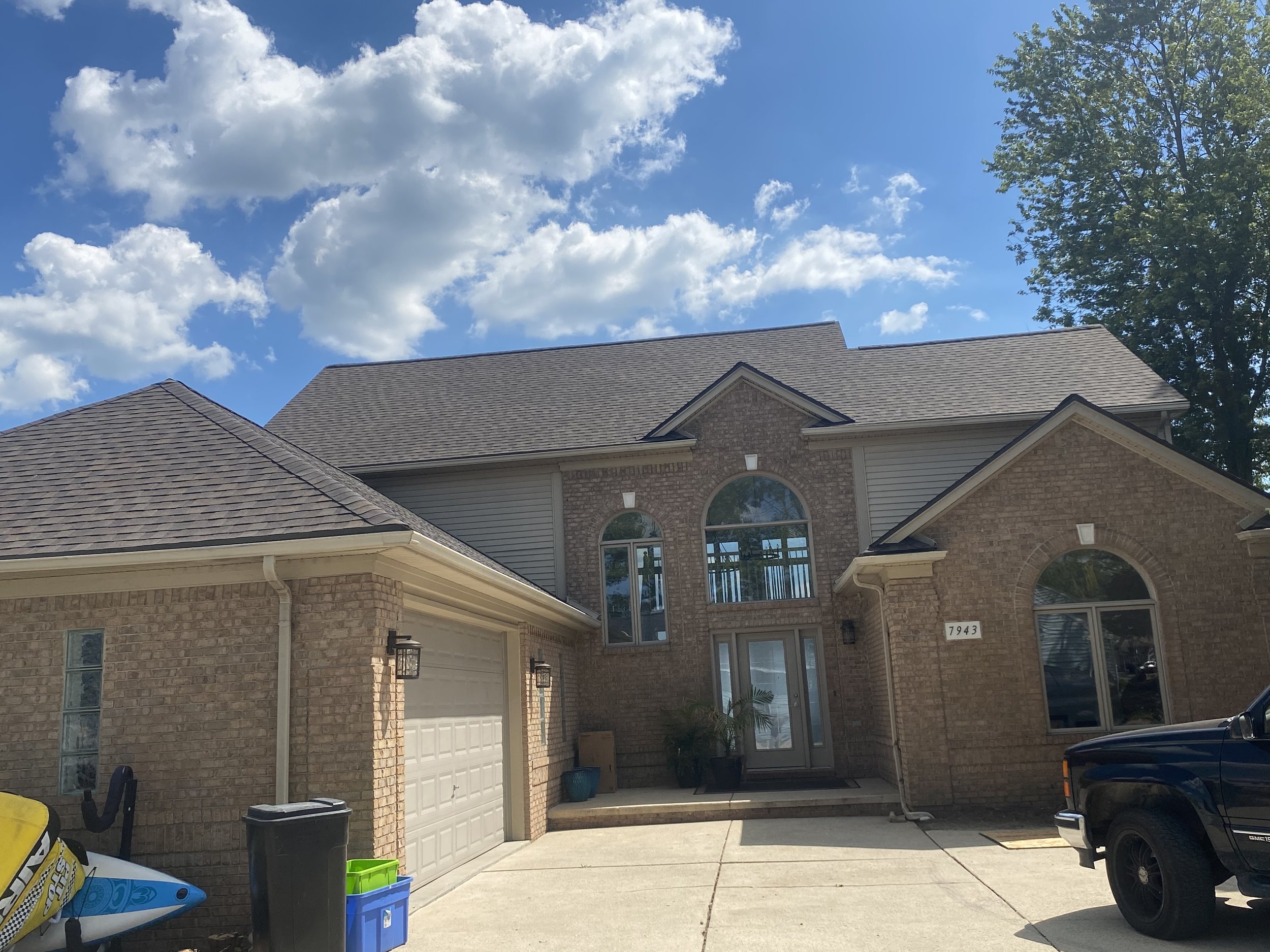
Michigan Reality Check: Homes with brick or stone don't need full exterior painting — just the wood trim, soffit, and fascia. That can drop your cost significantly compared to a full wood-sided house.
If you're also considering siding replacement instead of painting, it's worth comparing long-term costs. Fiber cement or vinyl siding eliminates the need for repainting every 7–10 years, which can save money over the life of your home.
What Affects Your Exterior Painting Quote
Not all painting jobs are created equal. Here's what drives the price up or down when you get a quote from a professional contractor in Southeast Michigan.
Surface Condition
If your home hasn't been painted in 15 years and the wood is bare in spots, we're looking at serious prep work. Scraping, sanding, priming bare wood, filling cracks — that labor adds up. A home that was painted five years ago with quality products? Much less prep, lower cost.
Number of Stories
Single-story ranches are straightforward. Two-story homes require scaffolding or extension ladders, which slows the crew down and increases labor hours. Three-story Victorians or homes with steep rooflines? That's specialty work, and it costs more.
Trim Complexity
Simple ranch with minimal trim: fast. Colonial with detailed window casings, shutters, and decorative brackets: slow. Every piece of trim gets individual attention — scraping, priming, two finish coats. The more detail, the more time.
Paint Quality
We use Sherwin-Williams exclusively, and even within their lineup, there's a range. Duration or Emerald exterior paints cost more per gallon than SuperPaint, but they last longer and perform better in Michigan's freeze-thaw cycles. We'll walk you through options, but skimping on paint to save $500 now usually costs you more in five years.
Repairs Before Painting
Rotted trim? Damaged siding boards? Those need to be replaced before we paint. We're not painting over problems — that's not how you get a job that lasts. If we find rot during prep, we'll let you know what needs fixing. Some contractors skip this conversation and just paint over it. We don't.
For homes needing more extensive work, our full range of exterior services includes trim replacement, siding repair, and structural fixes that ensure paint adheres properly and lasts.
Preparation Work: The Part That Actually Matters
Here's the truth about exterior painting: the finish coat is the easy part. The prep work is what separates a job that lasts 10 years from one that's peeling in two.
Michigan weather is brutal on paint. We get freeze-thaw cycles all winter, UV exposure all summer, and enough humidity to test any coating system. If the surface isn't prepped right, the paint won't stick. Period.
What Proper Prep Looks Like
- Power washing: Remove dirt, mildew, and chalky old paint. This gives the new paint a clean surface to bond to.
- Scraping and sanding: Any loose or peeling paint gets removed. We're not painting over it — we're taking it down to solid substrate.
- Priming bare wood: If wood is exposed after scraping, it gets primed. Bare wood soaks up finish paint unevenly and won't hold up without primer.
- Caulking gaps: Every joint, seam, and crack gets filled. This keeps water out and prevents the paint from cracking along edges.
- Repairing damaged surfaces: Rotted trim, split boards, or damaged siding gets replaced or repaired before painting.
We've seen plenty of jobs where a crew shows up, slaps two coats of paint on dirty siding, and calls it done. That paint will fail. The homeowner calls us two years later asking why it's peeling, and the answer is always the same: no prep.
Why This Matters in Macomb County: Homes near Lake St. Clair or along the Clinton River deal with higher moisture levels. Homes in Sterling Heights or Shelby Township see heavy sun exposure on south-facing walls. Prep work accounts for these conditions — it's not one-size-fits-all.
If you're dealing with moisture issues behind your siding, it might be worth checking your gutter system or attic ventilation before painting. Paint won't solve a water problem — it'll just hide it until it gets worse.
Paint Quality & Product Selection for Michigan Weather
We're a Sherwin-Williams exclusive contractor, and there's a reason for that. Their exterior paint systems are engineered for climates like ours — places where the temperature swings 80 degrees between January and July, where UV exposure fades cheap paint in three years, and where moisture is a constant threat.
Sherwin-Williams Exterior Paint Lines We Use
Duration: This is the workhorse. It's a self-priming acrylic latex with excellent adhesion and flexibility. It handles Michigan's freeze-thaw cycles without cracking, and it resists mildew growth in humid summers. Most of our projects use Duration on the main body of the house.
Emerald: This is the premium option. It offers better color retention, superior dirt resistance, and a smoother finish. If you're painting a high-visibility home in Grosse Pointe Farms or a historic property in Mount Clemens, Emerald is worth the upgrade.
SuperPaint: A solid mid-tier option for homeowners on a tighter budget. It's not as durable as Duration, but it's a legitimate paint system that'll give you 7–8 years in good conditions.
Why Paint Quality Matters
Cheap paint — the stuff you find at big-box stores for $25 a gallon — doesn't have the resin content or pigment load to survive Michigan weather. It'll fade faster, chalk more, and start peeling within a few years. You'll save $800 on materials and spend $6,000 repainting in five years instead of ten.
We've been using Sherwin-Williams since 1988. We've seen how their products perform over decades, not just seasons. When we say a paint system will last 10 years, we're basing that on 35 years of jobsite evidence, not marketing claims.
For homeowners comparing paint to other exterior upgrades, our guide on vinyl siding vs. fiber cement breaks down long-term maintenance costs. Sometimes painting makes sense; sometimes replacing the substrate does.
Timeline & What to Expect During Your Project
Most exterior painting projects in Macomb County take 5–10 business days, depending on size and weather. Here's what that timeline looks like in practice.
Day 1–2: Prep Work
We start with power washing, scraping, and sanding. This is the noisiest part of the job. If there's significant repair work — replacing trim boards, fixing siding — that happens now. We're not painting until the surface is ready.
Day 3–4: Priming and First Coat
Bare wood gets primed. Then we apply the first finish coat to the main body of the house. We work section by section, and we don't leave a section half-done overnight. If rain is in the forecast, we adjust the schedule — we're not applying paint in wet conditions.
Day 5–7: Second Coat and Trim Work
The second coat goes on after the first has cured (usually 24 hours). Trim work — windows, doors, fascia, shutters — gets individual attention. This is detail work, and it takes time. Rushing this part is how you get sloppy edges and paint on windows.
Day 8–10: Final Inspection and Cleanup
We walk the property with you, check for missed spots, touch up any areas that need it, and clean up. We're not leaving until you're satisfied with the work.
Weather Delays: Michigan weather is unpredictable. If we get a cold snap in May or a week of rain in September, the schedule shifts. We don't paint in temperatures below 50°F or when rain is expected within 24 hours. Quality work doesn't happen on a forced timeline.
If you're planning multiple exterior projects, coordinating roofing or window replacement with painting can save time and reduce disruption. We handle all of it, so you're not dealing with three different contractors.
Signs You Need to Repaint Your Home's Exterior
Most homeowners in Southeast Michigan repaint every 7–12 years, depending on paint quality and exposure. Here's how to know it's time.
Peeling or Flaking Paint
If paint is coming off in sheets or flakes, the coating has failed. This usually happens because of moisture intrusion, poor prep, or cheap paint. Once it starts, it accelerates. Don't wait — exposed wood rots fast in Michigan humidity.
Fading or Chalking
If you run your hand across the siding and it leaves a powdery residue, that's chalking. It means the paint's binder has broken down from UV exposure. The color will look washed out, especially on south- and west-facing walls.
Cracks or Gaps in Caulking
Caulk around windows, doors, and trim joints breaks down over time. If you see gaps, water is getting in. Re-caulking is part of a proper paint job, but if it's been 10+ years, you're due for a full repaint anyway.
Mildew or Mold Growth
Dark streaks or greenish patches on siding — especially on north-facing walls or shaded areas — indicate mildew. This grows on the paint surface, not under it, but it's a sign the coating is breaking down and holding moisture.
Rotted or Damaged Wood
If you see soft spots, crumbling edges, or visible rot on trim or siding, painting won't fix it. The damaged material needs to be replaced first. Painting over rot just hides the problem until it spreads.
For homes with ongoing issues, our post on best siding for Michigan freeze-thaw cycles explains when it makes more sense to replace rather than repaint.

Why NEXT Exteriors for Your Macomb County Painting Project
We've been doing this since 1988. We're licensed, we're insured, we're BBB A+ accredited, and we're Sherwin-Williams exclusive. We don't subcontract the work to the lowest bidder — our crews are trained, experienced, and accountable.
We show up when we say we will. We protect your landscaping. We don't leave a mess. And we don't disappear after the job — if something needs attention, we handle it.
If you want a contractor who treats your home like it's our own, call us. If you want the cheapest bid from a crew that'll ghost you after the deposit clears, we're not your guys.
Ready to Get Started?
NEXT Exteriors has been protecting Michigan homes since 1988. Get a free, no-pressure estimate from a team that shows up on time and does the job right.
Get Your Free QuoteOr call us: (844) 770-6398
Frequently Asked Questions
With quality paint (like Sherwin-Williams Duration or Emerald) and proper surface prep, you're looking at 10–12 years on most homes. South- and west-facing walls fade faster due to UV exposure, and homes near water may see slightly shorter lifespans due to humidity. Cheap paint or poor prep cuts that timeline in half.
Late spring through early fall — May through September — is ideal. You need temperatures consistently above 50°F and low humidity for paint to cure properly. We avoid painting in extreme heat (above 90°F) because it causes the paint to dry too fast and can lead to poor adhesion. Early fall is often the sweet spot: mild temperatures, lower humidity, and fewer rain delays.
Not necessarily. Most of the work happens outside, and we don't need interior access unless we're painting doors or doing trim work from the inside. We'll walk the property with you at the start and finish, but you don't need to be present during the daily work. We'll keep you updated on progress and any issues that come up.
For a typical brick Colonial in Macomb County — painting the wood trim, fascia, soffit, and shutters — you're looking at $2,500–$5,000 depending on the amount of trim and its condition. Brick doesn't need painting, so you're only paying for the wood elements. If the trim is in rough shape and needs repair or replacement, that'll add to the cost.
You can paint over old paint as long as it's in good condition — meaning it's still adhering well and isn't peeling or flaking. We scrape off any loose paint, sand the edges smooth, and prime bare spots. Full stripping is only necessary if the old paint is failing across large areas or if there are so many layers that the surface is uneven. Most jobs don't require stripping, just thorough prep.
Paint forms a protective film on the surface and completely covers the wood grain. Stain penetrates the wood and lets the grain show through. Paint lasts longer (10+ years vs. 3–5 for stain), but stain is easier to maintain — you can reapply it without scraping. For Michigan's climate, paint offers better protection against moisture and freeze-thaw damage, which is why most homes here are painted rather than stained.
Yes. We warranty our labor for 5 years, and Sherwin-Williams backs their paint products with manufacturer warranties ranging from 15 years (SuperPaint) to lifetime limited coverage (Duration and Emerald). If there's a product failure or application issue, we'll make it right. Normal wear from weather and UV exposure isn't covered, but premature peeling, cracking, or adhesion failure is.
How to Choose a Gutter Company in Metro Detroit: 7 Questions
Hiring a gutter company in Southeast Michigan? Ask these 7 questions before you sign. Learn what separates quality contractors from fly-by-night installers.

You've got three quotes for new gutters. One's half the price of the others. One guy showed up in a beat-up truck and eyeballed your roofline from the driveway. The third gave you a glossy brochure and talked about "premium systems" but couldn't explain what makes them premium.
Here's the truth: most homeowners hire a gutter company based on price alone, then spend years dealing with leaks, ice dams, and water in the basement. In Southeast Michigan—where we get lake-effect snow, spring downpours that dump two inches in an hour, and freeze-thaw cycles that wreck poorly installed systems—your gutters aren't decorative. They're the first line of defense for your foundation, basement, and landscaping.
I've been installing seamless gutters in Detroit, MI and surrounding communities since 1988. I've seen what happens when homeowners choose the wrong contractor: sagging gutters by the second winter, fascia boards rotting behind new aluminum, downspouts that dump water right against the foundation. And I've fixed hundreds of those jobs.
This guide walks you through the seven questions that separate legitimate gutter contractors from the fly-by-night installers who disappear after the check clears. Ask these before you sign anything.
Question 1: Are You Licensed and Insured in Michigan?
This should be the first thing out of your mouth. In Michigan, any contractor doing work over $600 must have a residential builder's license issued by the Department of Licensing and Regulatory Affairs (LARA). That license number should be on their truck, their business card, and their estimate.
What to ask for specifically:
- Michigan Residential Builder's License number (you can verify it online through LARA)
- General liability insurance certificate (minimum $1 million coverage)
- Workers' compensation insurance (protects you if someone gets hurt on your property)
If a contractor hesitates or says "we're working on renewing that" or "insurance is expensive, but we're careful," walk away. You're not just protecting yourself from liability—you're ensuring the contractor has the experience and accountability to do the job right. Licensed contractors have something to lose if they screw up. Unlicensed ones just move to the next town.
NEXT Exteriors has held a Michigan Residential Builder's License since 1988 and carries full liability and workers' comp coverage. We provide proof of insurance with every estimate, and our BBB A+ rating reflects 35+ years of accountable work in Macomb, Oakland, and St. Clair counties.
Question 2: What Type of Gutter System Do You Install?
Not all gutters are created equal, and in Michigan, the difference between a good system and a cheap one shows up fast. Here's what you need to know:
Seamless vs. Sectional Gutters
Seamless gutters are formed on-site from a single piece of aluminum (or copper, if you're fancy). They have no joints except at corners and downspouts, which means fewer places for leaks to develop. In Michigan, where freeze-thaw cycles put constant stress on joints, seamless systems last 20+ years with proper installation.
Sectional gutters are pre-cut lengths joined together with brackets and sealant. They're cheaper upfront, but those seams fail—usually within 5-10 years in Michigan weather. You'll spend more time on ladders resealing joints than you saved on the install.
Any reputable contractor in Southeast Michigan installs seamless gutters. If they're pushing sectional systems, they either don't have the equipment or don't plan to be around when the seams start leaking.
Material and Gauge
Most residential gutters are aluminum. Standard thickness is .027 gauge, but .032 gauge is more durable and handles Michigan snow loads better. Copper gutters are beautiful and last 50+ years, but they cost 3-4 times more than aluminum. Steel gutters are rare in residential work—they rust unless maintained religiously.
Ask what gauge aluminum they use and why. A good contractor will explain that thicker material costs more but reduces denting and sagging under ice and snow weight.
Sizing: 5-Inch vs. 6-Inch K-Style
Most homes in Metro Detroit use 5-inch K-style gutters. But if you have a steep roof, large roof area, or live in an area prone to heavy rain (like near Lake St. Clair), 6-inch gutters handle water volume better. A contractor who doesn't measure your roof pitch and square footage before recommending a size is guessing.

Question 3: How Do You Handle Fascia Inspection and Repair?
Here's where you separate pros from hacks: a quality gutter contractor inspects your fascia boards before installing anything.
Fascia is the vertical board that runs along your roofline—it's what gutters attach to. In Michigan, fascia rot is common, especially on older homes where gutters overflowed for years or where clogged gutters caused water backup. If you install new gutters over rotted fascia, the whole system will pull away within a year or two.
What a good contractor does:
- Walks the entire roofline and checks fascia condition with a screwdriver or by hand
- Points out soft spots, rot, or water damage
- Includes fascia repair in the quote or provides a separate line item with material and labor costs
Red flags:
- "Your fascia looks fine from here" (without getting on a ladder)
- "We'll deal with it if we find problems during install" (translation: surprise charges later)
- "We don't do fascia work—just gutters" (means they'll install over rotted wood and blame you when it fails)
At NEXT Exteriors, fascia inspection is part of every gutter estimate. If we find rot, we replace it with treated lumber or PVC trim before hanging gutters. It costs more upfront, but it's the only way to ensure the system stays attached for decades. And because we also handle house siding in Detroit and roofing services, we can address underlying moisture issues that caused the rot in the first place.
Question 4: What's Your Hanger Spacing and Attachment Method?
This is where most cheap gutter jobs fail. The hangers—the brackets that attach gutters to the fascia—determine whether your system holds up under Michigan's snow and ice loads or sags like a hammock by the second winter.
Industry Standard: 24 Inches or Less
Reputable contractors space hangers every 24 inches. In areas with heavy snowfall (like parts of Oakland County near Bloomfield Hills), spacing them every 18 inches is even better. The tighter the spacing, the better the system handles weight.
If a contractor says "we usually do 36 inches" or "it depends," they're cutting corners. Period.
Hidden Hangers vs. Spike-and-Ferrule
Hidden hangers (also called bracket hangers) are the modern standard. They're screwed directly into the fascia and hidden inside the gutter. They distribute weight evenly and don't work loose over time.
Spike-and-ferrule systems are old-school—a long nail (spike) driven through the gutter into the fascia, with a tube (ferrule) inside the gutter to keep it from collapsing. These were common 30 years ago, but they loosen over time as the wood around the spike compresses. You see them on older homes where gutters are sagging or pulling away.
If a contractor in 2026 is still using spikes and ferrules, they're either working with outdated equipment or don't care about longevity. Ask specifically: "Do you use hidden hangers, and what's your spacing?" If they can't answer clearly, keep looking.
Question 5: Do You Guarantee Proper Pitch and Drainage?
Gutters need to slope toward the downspouts—not much, but enough to keep water moving. The industry standard is 1/4 inch of drop per 10 feet of gutter run. Too flat, and water pools and breeds mosquitoes. Too steep, and water rushes past the downspout opening during heavy rain.
A good contractor uses a level and measures pitch during installation. They don't eyeball it. And they plan downspout placement based on your home's grading and drainage patterns—not just "wherever it's easiest to drill a hole."
Downspout Placement and Extensions
Here's what matters:
- Downspouts should be placed at low points where water naturally wants to flow, typically every 30-40 feet of gutter run
- Extensions should carry water at least 6 feet away from the foundation—farther if your yard slopes toward the house
- Downspouts should never dump onto driveways, sidewalks, or patios where ice will form in winter
In Metro Detroit, poor downspout placement is the leading cause of basement water problems. If your contractor doesn't ask about your basement history or look at how your yard drains, they're not thinking past the gutter install.
We've written extensively about how clogged gutters create basement problems—it's a chain reaction that starts with poor drainage planning.
Question 6: What Does Your Warranty Cover—and What Doesn't?
Every gutter contractor offers a warranty. The question is whether it's worth the paper it's printed on.
Material Warranty vs. Workmanship Warranty
Material warranty comes from the manufacturer—usually 20-30 years for aluminum gutters against defects like cracking or corroding. This is standard and doesn't tell you much about the contractor.
Workmanship warranty is what the contractor guarantees about their installation. This is where you see the difference between companies. A reputable contractor offers at least 5 years of workmanship coverage, sometimes 10. That means if gutters sag, hangers pull out, or seams leak due to installation errors, they fix it at no cost.
What typically voids a warranty:
- Damage from falling tree limbs or other "acts of God"
- Neglecting to clean gutters (debris buildup can cause overflow and stress)
- Modifications or repairs by another contractor
- Damage from ice dams caused by poor attic insulation (not the gutter's fault)
Ask for the warranty in writing before you sign. If a contractor says "we stand behind our work" but won't put it in the contract, that's a red flag. And check: is the warranty transferable if you sell the house? That adds value when you list the property.
NEXT Exteriors provides a written workmanship warranty with every gutter installation, and because we've been in business since 1988, we're not going anywhere. We also handle attic insulation in Metro Detroit, so if ice dams are contributing to gutter problems, we can address the root cause—not just the symptom.
Question 7: Can You Provide Local References and Photos?
This is your reality check. A contractor who's been doing quality work in Southeast Michigan should have no problem giving you contact info for three recent customers in your area—preferably within the last year.
What to Ask References
When you call past customers, ask:
- "Did the crew show up on time and finish when they said they would?"
- "How did they handle cleanup?" (Good contractors don't leave gutter scraps and aluminum shavings in your driveway)
- "Were there any surprises with the final cost?"
- "How have the gutters held up through a Michigan winter?"
- "Would you hire them again?"
What to Look for in Project Photos
Ask to see photos of completed jobs—not stock images from a website, but actual projects they've done. Pay attention to:
- Corner miters: Do they look clean and tight, or are there gaps where water could leak?
- Downspout outlets: Are they centered and sealed properly?
- Fascia condition: Is the wood clean and painted, or are there water stains and rot visible behind new gutters?
- Hanger visibility: Hidden hangers should be... hidden. If you see a bunch of screws or nails on the outside of the gutter, they're using outdated methods.
If a contractor can't show you recent local work or gets defensive when you ask for references, that tells you everything. We maintain a project gallery on our website with real homes in Sterling Heights, Troy, Grosse Pointe Farms, and across Southeast Michigan. And our 5.0-star average rating across 87+ reviews isn't an accident—it's the result of showing up on time, doing the work right, and treating people fairly.
What Gutter Problems Look Like in Southeast Michigan
Michigan weather is tough on gutters. Here's what happens when systems are poorly installed or maintained:
Ice Dams and Icicle Formation
Ice dams form when heat from your attic melts snow on the roof, and the water refreezes at the eaves where it's colder. This ice buildup blocks gutters and forces water under shingles, causing leaks. Icicles hanging from gutters are a symptom of poor attic insulation, not bad gutters—but clogged or improperly pitched gutters make the problem worse.
If you're dealing with recurring ice dams, the fix isn't just new gutters—it's addressing attic insulation and ventilation. We see this constantly in older homes in Clinton Township and Warren, where attic insulation hasn't been upgraded since the 1970s.
Basement Water Intrusion
When gutters overflow or downspouts dump water next to the foundation, that water seeps into the basement. In Southeast Michigan, where many homes sit on clay soil that doesn't drain well, this is a recipe for chronic moisture problems, mold, and foundation cracks.
We've written a detailed breakdown of how clogged gutters lead to basement problems—it's one of the most common issues we fix.
Fascia Rot and Soffit Damage
When gutters overflow consistently, water runs down the fascia and soaks into the wood. Over time, this causes rot—especially on homes with older wood fascia that isn't properly sealed or painted. Once rot starts, it spreads fast, and you're looking at fascia replacement before you can even install new gutters.
Foundation Settling and Landscape Erosion
Water pouring off a roof without gutters—or from gutters that dump right next to the foundation—erodes soil and can cause foundation settling. This is especially common in areas like Lake Orion and Rochester Hills, where homes are built on sloped lots. Proper gutter systems with extended downspouts prevent this entirely.
When to Replace vs. Repair Your Gutters
Not every gutter problem requires a full replacement. Here's how to decide:
Repair Makes Sense If:
- You have a single section that's damaged (e.g., a tree branch dented one area)
- Hangers have pulled out in a few spots but the gutters themselves are sound
- A seam or corner joint is leaking but the rest of the system is solid
- Your gutters are less than 10 years old and were properly installed
Replacement Makes Sense If:
- Gutters are sagging in multiple locations
- You see rust, corrosion, or holes in the metal
- Seams are leaking in multiple spots (common with sectional gutters)
- Fascia is rotted and needs to be replaced anyway
- You're already replacing the roof or siding (it's more cost-effective to do gutters at the same time)
- Your system is 20+ years old and showing wear
We're honest about this at NEXT Exteriors: if your gutters can be repaired, we'll tell you. We've been in business too long to push unnecessary replacements. But if the system is failing in multiple places, a full replacement with seamless gutters and proper installation will save you money and headaches in the long run.
And because we offer comprehensive exterior services in Detroit—from roofing to siding to windows—we can coordinate gutter work with other projects to minimize disruption and cost.
Why NEXT Exteriors Takes Gutters Seriously
We've been installing seamless gutters in Southeast Michigan since 1988. That's 35+ winters of ice dams, spring storms, and homeowners calling us to fix what the last guy screwed up.
Here's what we do differently:
- We inspect fascia before every install. If we find rot, we fix it. We don't hang gutters over bad wood and hope for the best.
- We use .032 gauge aluminum and hidden hangers spaced 24 inches or less. This isn't negotiable—it's how you build a system that lasts.
- We measure roof pitch, calculate water volume, and plan downspout placement based on your property's drainage. We're not just hanging gutters—we're solving water management problems.
- We provide written warranties and stand behind our work. If something fails due to our installation, we fix it. No excuses.
- We coordinate gutter work with roofing, siding, and insulation projects. If your gutters are failing because of poor attic ventilation or rotted trim, we address the whole system—not just the symptom.
We're also a CertainTeed Certified 5-Star Contractor, which means we meet the highest standards for installation quality and customer service. That certification applies to all our work—gutters included.
And because we handle window replacement in Detroit, exterior painting in Southeast Michigan, and every other aspect of home exteriors, we understand how all these systems work together. Gutters aren't a standalone project—they're part of your home's weather protection envelope.
Ready to Get Started?
NEXT Exteriors has been protecting Michigan homes since 1988. Get a free, no-pressure estimate from a team that shows up on time and does the job right.
Get Your Free QuoteOr call us: (844) 770-6398
Frequently Asked Questions About Choosing a Gutter Company
Seamless aluminum gutters typically cost $8-$12 per linear foot installed in Southeast Michigan, including hangers and downspouts. For an average 150-foot system (typical for a 1,500-square-foot ranch), expect to pay $1,200-$1,800. Prices increase if fascia repair is needed or if you choose 6-inch gutters or premium materials like copper. Get at least three quotes, but remember: the cheapest bid usually means shortcuts on materials, hanger spacing, or installation quality.
Most residential gutter installations take one day for an experienced crew. A typical single-story home (150-200 linear feet) takes 4-6 hours. Two-story homes or complex rooflines may take a full day or slightly longer. If fascia repair is required, add another half-day to a full day depending on the extent of damage. Weather delays are common in Michigan—spring and fall are the busiest seasons, so plan ahead.
It depends on your property. If you have a lot of mature trees (especially oaks or maples that drop leaves, seeds, and helicopters), gutter guards can reduce cleaning frequency. But they're not maintenance-free—debris still accumulates on top and needs to be brushed off. We've written a detailed guide on who benefits from gutter guards in Michigan. The short version: they're worth it if you have significant tree coverage and don't want to clean gutters 3-4 times a year. If your property has minimal trees, skip them and clean twice a year instead.
Most homes in Metro Detroit use 5-inch K-style gutters. But 6-inch gutters are better if you have a steep roof pitch (7/12 or steeper), a large roof area (2,500+ square feet), or live in an area with heavy rainfall. A contractor should calculate your roof's square footage and pitch before recommending a size. If they guess or default to 5-inch without measuring, they're not doing their job. Undersized gutters overflow during heavy rain, which defeats the entire purpose of having gutters.
Twice a year minimum: once in late fall after leaves drop, and once in spring after seeds and debris accumulate. If you have a lot of trees, add a mid-summer cleaning. Clogged gutters cause overflow, ice dams, and basement water problems—especially in Michigan where freeze-thaw cycles amplify every issue. If you're not comfortable on a ladder, hire a professional. It's cheaper than fixing water damage.
Yes. Aluminum gutters come in a wide range of factory-baked enamel colors to match your trim, siding, or roof. Common colors in Southeast Michigan include white, almond, bronze, black, and various shades of gray and brown. The color is baked on at the factory, so it won't peel or fade like paint. Most contractors stock white and a few popular colors; custom colors may require a special order and add 1-2 weeks to the timeline.
Three main causes: (1) hangers spaced too far apart (more than 24 inches), so the system can't handle snow and ice weight; (2) rotted fascia that can't hold screws anymore; (3) clogged gutters that filled with water and ice, creating excessive weight. In Michigan, all three issues are common. The fix depends on the cause: tighten or add hangers, replace fascia, or install a properly spaced system. If a contractor just screws the gutters back up without addressing the underlying problem, they'll pull away again within a year.
Gutter Replacement vs. Repair in Metro Detroit: When Each Makes Sense
Deciding between gutter replacement or repair in Southeast Michigan? Learn when each option makes sense, what factors matter, and how to make the right call for your home.
You're standing in your driveway in Sterling Heights on a Saturday morning, looking up at your gutters. There's a sag near the downspout. Water stains on the fascia. Maybe a section that pulled away during last winter's ice storm. And you're asking yourself the question every Michigan homeowner eventually faces: Do I repair these gutters, or is it time to replace the whole system?
It's not always an obvious call. A contractor who only wants to sell you the most expensive option will push replacement every time. A handyman looking for quick work might slap on a patch that fails in six months. After 35 years installing seamless gutters in Detroit, MI and across Southeast Michigan, we've learned that the honest answer depends on several specific factors — and those factors matter more in Michigan than almost anywhere else.
This guide walks you through the decision. We'll cover why gutters fail in our climate, when repair makes financial sense, when replacement is the smarter investment, and what you should actually expect to pay in 2026. No sales pitch. Just the straight information you need to make the right call for your home and your budget.
Why Gutters Fail in Southeast Michigan
Michigan's climate is brutal on gutter systems. We see failure patterns here that contractors in milder climates never encounter. Understanding why your gutters are failing helps you decide whether a targeted repair will hold or whether you're just delaying the inevitable.
Freeze-Thaw Cycles Do the Real Damage
Southeast Michigan experiences 40 to 60 freeze-thaw cycles every winter. Water gets into gutter seams, fastener holes, or small cracks. When temperatures drop below 32°F, that water expands as it freezes — putting tremendous pressure on joints, seams, and the metal itself. When it thaws, the water moves deeper into the compromised area. This cycle repeats dozens of times between November and March.
The result? Seams that were fine in September start leaking by February. Hangers pull away from the fascia as screw holes enlarge. Small cracks become gaping splits. This is why a gutter system that looks okay in fall can be a disaster by spring — and why understanding ice dam mechanics in Michigan is critical for any homeowner evaluating their gutter system.
Ice Dams Compound the Problem
When your attic is poorly insulated or improperly ventilated, heat escapes through the roof deck. This melts snow on the upper roof. The meltwater runs down to the cold eaves and refreezes — forming ice dams. These dams block proper drainage, causing water to back up under shingles and overflow gutters.
The weight of ice dams — often 50 to 100 pounds per linear foot — pulls gutters away from the fascia, bends hangers, and can even tear sections completely off the house. If your gutters are failing primarily at the roofline where ice dams form, the gutter damage is often a symptom of a larger roofing and insulation problem that needs addressing alongside any gutter work.

Leaf Debris and Clogging
Michigan's tree-lined neighborhoods — especially in cities like Rochester Hills, Bloomfield Hills, and Grosse Pointe Farms — mean constant leaf accumulation in gutters. When debris clogs a gutter, water can't flow to the downspouts. It sits in the gutter trough, adding weight and accelerating rust on steel gutters or corrosion on aluminum systems.
Standing water also creates perfect conditions for fascia rot. When we remove old gutters during replacement jobs, we often find fascia boards that look solid from the ground but are completely rotted behind the gutter — requiring fascia and soffit replacement before new gutters can even be installed.
Age and Material Degradation
Aluminum gutters typically last 20 to 25 years in Michigan if properly maintained. Steel gutters may last 15 to 20 years before rust becomes a systemic problem. Vinyl gutters — less common in our region due to brittleness in cold weather — often fail even sooner.
As gutters age, the metal fatigues. Fasteners corrode. Sealants dry out and crack. Even if your gutters don't show obvious damage, a system approaching or past its expected lifespan is living on borrowed time. One hard winter can push an aging system from "mostly functional" to "completely failed."
When Gutter Repair Makes Sense
Repair is the right call when damage is localized, your system is relatively young, and the underlying structure (fascia, hangers, downspouts) is still solid. Here's when we recommend repair over replacement:
Isolated Damage from a Specific Event
A tree branch fell during a summer storm and dented a 10-foot section of gutter. A ladder leaned against the gutter and bent it. Ice buildup pulled one corner loose but the rest of the system is fine. These are clear repair scenarios. The damage is contained, the cause is known, and the rest of the system isn't compromised.
We can typically replace a damaged section, re-hang pulled-away gutters with new hangers, or patch small holes and cracks. If your gutters are less than 10 years old and the damage is limited to one or two areas, repair is almost always more cost-effective than full replacement.
Repairable Problems: What We Can Fix
Leaking seams: On sectional gutters, seams can be resealed with high-quality gutter sealant. This works best on aluminum systems where the metal around the seam is still in good condition. If the seam has rusted through or the metal is corroded, resealing won't hold.
Loose or broken hangers: If gutters are sagging or pulling away from the fascia, we can install new hidden hangers or fascia brackets. This assumes the fascia board itself is solid. If the fascia is rotted, the repair becomes more complex and may require structural work before new hangers will hold.
Clogged or damaged downspouts: Downspouts can be cleared, straightened, or replaced individually without touching the rest of the gutter system. A crushed downspout from landscaping equipment or a clogged underground drain can usually be fixed for $150 to $400 depending on access and complexity.
Small holes or cracks: Tiny holes from rust or impact can be patched with metal flashing and sealant. This is a temporary fix — typically lasting 2 to 5 years — but it's appropriate if you're planning to replace the entire system in the near future and just need to get through another season or two.
When Repair Costs Make Sense
As a general rule, if repair costs are less than 30 to 40% of what full replacement would cost, and your gutters are less than halfway through their expected lifespan, repair is the smarter financial decision. For a typical Michigan home, that means repair costs under $600 to $800 usually justify the work if the rest of the system is sound.
But if you're facing multiple repair needs in different areas, or if your contractor is recommending a second or third repair on the same system within a few years, you're likely better off replacing the entire system and getting a fresh 20-year lifespan rather than continuing to patch an aging system.
When Full Gutter Replacement Is the Right Call
Replacement becomes the right answer when damage is widespread, the system is old, or the cost of ongoing repairs approaches the cost of a new system. Here are the clear indicators that it's time to replace rather than repair:
System-Wide Failure Signs
If you're seeing problems in multiple locations — sagging in three or four spots, leaking seams on multiple sides of the house, rust stains on several sections — the entire system is failing. Repairing one section doesn't address the underlying reality that the whole system is at the end of its service life.
We often see this on homes in Clinton Township, Warren, and St. Clair Shores where original builder-grade gutters from the 1990s or early 2000s are still in place. These systems were often installed with minimal hangers, thin-gauge aluminum, and sectional construction prone to leaks. By the time one section fails visibly, the rest of the system is usually compromised even if it's not leaking yet.
Age Thresholds: When Years Matter More Than Condition
If your gutters are 20+ years old, replacement almost always makes more sense than repair — even if the damage seems minor. Here's why: the labor cost to repair gutters is often 50 to 70% of the labor cost to replace them. You're paying a contractor to set up ladders, access the roofline, and work carefully around your landscaping and home exterior either way.
When you repair a 22-year-old gutter system, you get a repaired 22-year-old system. You might buy yourself another 3 to 5 years before the next failure. When you replace that same system, you get a brand-new 20 to 25 year lifespan. The incremental cost difference is often only $1,200 to $2,000 more than a significant repair — and you get decades more service life.
Fascia Damage Is a Red Flag
Water staining, soft spots, or visible rot on the fascia boards behind your gutters indicates long-term water intrusion. This usually means the gutters have been failing for years — allowing water to run behind them and soak the wood. Once fascia damage is present, you're looking at both gutter replacement and fascia board replacement.
Trying to repair gutters on damaged fascia is like putting new tires on a car with a broken axle. The underlying structure can't support the system properly. We see this frequently on older homes in Macomb County where original aluminum fascia covers are hiding rotted wood underneath. When we remove the gutters, the extent of the damage becomes clear — and the project expands from a simple gutter repair to a more comprehensive exterior restoration involving soffit and fascia work.

ROI Considerations for Home Value
If you're planning to sell your home within the next 2 to 5 years, new gutters are a smart investment. Buyers and home inspectors notice gutter condition. Sagging, rusted, or leaking gutters are red flags that suggest deferred maintenance and potential water damage issues.
New seamless gutters are a relatively affordable upgrade that improves curb appeal and removes a negotiating point from inspections. We've worked with realtors across Southeast Michigan who specifically recommend gutter replacement as one of the highest-return exterior improvements for homes preparing to list. The cost is typically $1,500 to $3,500 for a full-house replacement, and it can add $3,000 to $6,000 in perceived value — especially on homes where the gutters are visibly old or damaged.
Seamless Gutters vs. Sectional: What Works in Michigan
If you're replacing your gutters, you'll choose between seamless and sectional systems. In Southeast Michigan, seamless gutters are the clear winner for most residential applications. Here's why:
Seamless Gutters: The Michigan Standard
Seamless gutters are formed on-site from a continuous roll of aluminum. A specialized machine creates gutters in lengths matching your roofline — typically 30 to 60 feet or more — with no seams except at inside and outside corners and downspout outlets. This dramatically reduces leak points.
The benefits for Michigan homes are significant:
- Fewer leak points: Sectional gutters have seams every 10 feet. Each seam is a potential failure point during freeze-thaw cycles. Seamless gutters eliminate 80 to 90% of these vulnerable spots.
- Stronger structure: Continuous metal without seams is inherently stronger and better able to handle snow and ice loads common in Michigan winters.
- Better appearance: Seamless gutters have a cleaner, more finished look that improves curb appeal — especially important on homes in desirable neighborhoods like Rochester Hills or Grosse Pointe Farms.
- Longer lifespan: With fewer points of failure, seamless gutters typically outlast sectional systems by 5 to 10 years in our climate.
Seamless gutters require professional installation — they can't be DIY'd because the forming equipment isn't available to homeowners. This is actually an advantage: it ensures proper slope, correct hanger spacing, and integration with your roofline and fascia. When we install seamless gutters in Detroit and surrounding communities, we use hidden hangers spaced every 24 inches (not the 36-inch spacing common with cheaper installations) to handle Michigan snow loads.
Sectional Gutters: When They Make Sense
Sectional gutters — sold in 10-foot lengths at home improvement stores — can work for small repair jobs or outbuildings where longevity isn't critical. They're less expensive upfront and can be installed by a capable DIYer.
But for a primary residence in Michigan, sectional gutters are a false economy. The seams will leak. The joints will separate during freeze-thaw cycles. You'll spend more time and money on repairs over the system's lifespan than you saved on the initial installation. We rarely recommend sectional gutters for homes in Macomb, Oakland, or St. Clair counties unless budget constraints make seamless installation impossible.
Material Choices: Aluminum vs. Steel vs. Copper
Aluminum is the standard for residential seamless gutters in Michigan. It doesn't rust, it's lightweight (reducing stress on fascia), and it's available in a wide range of colors to match your home's exterior. We typically install .032-inch thick aluminum — heavier than the builder-grade .027-inch material but not so heavy that it requires additional structural support.
Steel gutters are stronger and better for homes with severe ice dam issues or very long gutter runs, but they're prone to rust in Michigan's wet climate. They also cost 30 to 50% more than aluminum. Unless you have a specific structural need for steel, aluminum is the better choice.
Copper gutters are beautiful, last 50+ years, and develop a distinctive patina over time. They're also expensive — typically $25 to $40 per linear foot installed compared to $8 to $15 for aluminum. We see copper gutters on high-end historic homes in areas like Grosse Pointe and Bloomfield Hills, but they're not necessary for most residential applications.
What Gutter Replacement Actually Costs in Metro Detroit (2026)
Let's talk real numbers. Gutter replacement costs vary based on home size, gutter material, accessibility, and whether fascia repair is needed. Here's what you should expect to pay in Southeast Michigan in 2026:
Typical Cost Ranges for Seamless Aluminum Gutters
Small to medium home (1,200-1,800 sq ft): $1,200 to $2,200 installed. This assumes a simple roofline with 120 to 150 linear feet of gutter, standard 5-inch K-style aluminum gutters, and 3 to 4 downspouts. If your home has good fascia and easy access, you'll be at the lower end of this range.
Medium to large home (1,800-2,800 sq ft): $2,200 to $3,800 installed. This covers 150 to 200 linear feet of gutter with 4 to 6 downspouts. Homes with multiple roof levels, dormers, or complex rooflines will be at the higher end due to additional labor and material complexity.
Large or complex home (2,800+ sq ft): $3,800 to $6,000+ installed. Large homes in areas like Bloomfield Hills or Lake Orion with multiple gables, steep pitches, or extensive rooflines require more material, more labor, and often specialized equipment for safe installation.
Variables That Affect Cost
Fascia repair or replacement: If your fascia boards are rotted or damaged, expect to add $8 to $15 per linear foot for fascia board replacement. On a home needing 60 feet of fascia work, that's an additional $480 to $900. This is common on homes where gutters have been leaking for years.
Gutter guards or covers: Adding gutter guards during installation costs $7 to $15 per linear foot depending on the type. For a home with 150 linear feet of gutter, that's $1,050 to $2,250 additional. Guards reduce maintenance and clogging but aren't essential — we'll discuss whether they make sense for your specific situation during the estimate.
Downspout extensions and underground drains: Properly directing water away from your foundation is critical in Michigan's clay-heavy soil. Underground drain systems cost $30 to $60 per downspout depending on distance and excavation requirements. This is money well spent if you're dealing with basement water issues or foundation settlement.
Accessibility and height: Two-story homes or homes with landscaping that limits ladder placement require more time and care. If we need to work around mature trees, tight spaces, or steep slopes, labor costs increase by 15 to 25%.
What's Included in Professional Installation
When you hire NEXT Exteriors for gutter replacement, here's what's included in our pricing:
- Complete removal and disposal of old gutters and downspouts
- Inspection of fascia and soffit for damage or rot (with recommendations for repair if needed)
- Custom-formed seamless aluminum gutters in your choice of color
- Hidden hangers installed every 24 inches for proper support
- Properly sized and positioned downspouts (we don't skimp on downspout count — more downspouts mean better drainage)
- Correct slope calculation and installation (1/4 inch drop per 10 feet of gutter run)
- Sealed end caps and outlets using professional-grade sealant
- Cleanup and final walkthrough
We don't charge extra for "unexpected" issues that should have been caught during the estimate. If we say it's going to cost $2,400, that's what you'll pay — unless you ask us to add something beyond the original scope.
Hidden Costs to Watch For
Some contractors lowball estimates and then add charges once work begins. Watch out for these red flags:
- "Fascia repair not included": A reputable contractor inspects fascia during the estimate and includes necessary repairs in the quote. If fascia damage is discovered after the old gutters are removed, it should have been visible during the initial inspection.
- Inadequate hanger spacing: Some installers use 36-inch or even 48-inch hanger spacing to save money. This leads to sagging and failure under snow loads. Proper spacing is 24 inches maximum in Michigan.
- Too few downspouts: Builders often install the minimum number of downspouts to save money. A properly designed gutter system should have one downspout for every 30 to 40 feet of gutter run. Fewer downspouts mean slower drainage and increased overflow risk during heavy rain.
Signs You Need to Call a Contractor (Not DIY)
Some gutter problems are DIY-friendly. Clearing leaves from gutters, tightening a loose downspout bracket, or resealing a small leak can be handled by a homeowner with a ladder and basic tools. But several situations require professional expertise — and attempting DIY repairs can make the problem worse or create safety hazards.
Fascia Rot or Structural Damage
If you see soft spots, water staining, or visible rot on fascia boards, stop. This isn't a gutter problem anymore — it's a structural issue. Fascia boards support your gutter system and protect the roof edge and attic space from water intrusion. Rotted fascia can't hold gutters securely, and installing new gutters on damaged fascia will fail within months.
Professional fascia repair requires removing the damaged section, inspecting the rafter tails behind it for rot, replacing the fascia board with properly treated lumber, and ensuring the new board is sealed and painted before gutters are reinstalled. This work integrates with your overall exterior services in Detroit and requires carpentry skills and an understanding of how the fascia, soffit, and roofline work together.
Foundation Water Pooling
If water is pooling against your foundation during or after rain, your gutters aren't doing their job — and the consequences can be serious. In Southeast Michigan's clay-heavy soil, water pooling near the foundation causes hydrostatic pressure that can crack foundation walls, seep into basements, and cause settlement issues over time.
Fixing this problem often requires more than just gutter repair. It may involve regrading soil around the foundation, installing underground drain systems, extending downspouts 6 to 10 feet from the house, or even addressing grading issues across the entire yard. A professional contractor can evaluate the whole drainage system and design a solution that protects your foundation long-term — often in coordination with roofing work if water intrusion is also affecting your roof deck or attic.
Repeated Pulling Away from Roofline
If your gutters keep pulling away from the fascia even after you've reattached them, something else is wrong. This usually indicates one of three problems:
- Insufficient or damaged hangers: Hidden hangers can corrode or break, especially on older systems. Fascia brackets can pull loose if the fascia is soft or if the screws aren't long enough to reach solid wood.
- Ice dam damage: Severe ice buildup creates weight and leverage that no hanger system can withstand indefinitely. If ice dams are the root cause, you need to address attic insulation and ventilation — not just reattach the gutters.
- Fascia failure: If the wood behind the gutter is rotted or deteriorated, hangers have nothing solid to grip. Reattaching them just creates new holes in already-compromised wood.
A professional inspection identifies the underlying cause and fixes it correctly the first time rather than creating a cycle of temporary repairs that fail repeatedly.

Overflow During Storms
If your gutters overflow during heavy rain even when they're not clogged, the system is undersized or improperly sloped. This is common on older homes where original builder-grade gutters were installed with minimal thought to drainage capacity.
Michigan summer storms can drop 1 to 2 inches of rain in an hour. Your gutter system needs to handle that flow rate without overflowing. Standard 5-inch K-style gutters work for most homes, but large roofs, steep pitches, or homes in areas with heavy tree cover may need 6-inch gutters or additional downspouts.
Calculating proper gutter size and slope requires understanding roof area, pitch, and local rainfall intensity. A professional contractor has the experience and tools to design a system that handles Michigan weather — not just looks good from the curb.
How NEXT Exteriors Evaluates Your Gutters
When you call us for a gutter evaluation, we're not showing up with a sales pitch. We're showing up to give you an honest assessment of what your home needs. Here's our process:
Complete System Inspection
We walk the entire perimeter of your home, examining every section of gutter, every downspout, and every connection point. We're looking at:
- Gutter condition: rust, corrosion, cracks, holes, or damage
- Fascia condition: water staining, soft spots, rot, or structural issues
- Hanger integrity: loose, missing, or corroded hangers
- Slope and drainage: whether water is flowing correctly to downspouts
- Downspout count and placement: whether you have adequate drainage capacity
- End caps and seams: signs of leaking or separation
- Overflow patterns: staining on siding or foundation that indicates past overflow issues
We take photos and notes. If we find problems, we'll show you exactly what we're seeing and explain why it matters. We're not trying to upsell you — we're giving you the information you need to make a smart decision.
Honest Repair vs. Replace Recommendation
After the inspection, we'll tell you whether repair makes sense or whether replacement is the smarter investment. We base this on:
- Age of the system: If your gutters are 15+ years old, we'll usually recommend replacement even if repairs are technically possible.
- Extent of damage: If problems are isolated to one or two areas and the rest of the system is solid, we'll recommend targeted repair and give you a realistic timeline for how long that repair should last.
- Cost comparison: If repair costs are approaching 40 to 50% of replacement costs, we'll recommend replacement because you get a new system with a full lifespan for only a modest additional investment.
- Underlying issues: If we see fascia damage, ice dam patterns, or drainage problems, we'll address those in our recommendation — not just patch the visible symptoms.
We've been doing this since 1988. We've seen every type of gutter failure Michigan weather can cause. We're not going to tell you to replace gutters that can be repaired, and we're not going to patch a system that's going to fail again in 18 months. We give you the straight answer because our reputation depends on it.
Integration with Other Exterior Work
Gutters don't exist in isolation. They're part of your home's complete exterior water management system. When we evaluate gutters, we're also looking at how they integrate with:
- Roofing: If you're planning a roof replacement in Metro Detroit, that's the ideal time to replace gutters too. We can coordinate the work, ensure proper flashing and drip edge installation, and give you a complete roof-to-foundation water management system.
- Siding: Water overflow from failed gutters often damages siding. If we see water staining or rot on your siding in Detroit, we'll let you know and can coordinate gutter and siding work together.
- Windows: Gutter overflow can cause water intrusion around windows, leading to rot in window frames and trim. If we see this pattern, we'll recommend addressing it as part of a comprehensive exterior upgrade that may include window replacement.
- Foundation and grading: Proper gutter function depends on correct downspout placement and extension. We'll evaluate whether your current downspout configuration is protecting your foundation or contributing to water intrusion issues.
This comprehensive approach is part of why homeowners across Macomb County, Oakland County, and St. Clair County trust us for exterior work. We don't just fix the immediate problem — we make sure your home's entire exterior system works together to protect your investment.
Ready to Get Started?
NEXT Exteriors has been protecting Michigan homes since 1988. Whether you need gutter repair, full replacement, or a comprehensive evaluation of your home's exterior water management system, we'll give you an honest assessment and a fair price. No pressure. No gimmicks. Just straight answers from a team that's been doing this work in Michigan winters for 35+ years.
Get Your Free QuoteOr call us: (844) 770-6398
Planning other exterior projects? We're a full-service contractor offering insulation services in Southeast Michigan to prevent ice dams, exterior painting with Sherwin-Williams products, and complete exterior renovations. If you're addressing gutter issues, it's often the right time to evaluate your home's overall exterior condition and tackle multiple projects together for better coordination and cost efficiency.
Frequently Asked Questions
Seamless aluminum gutters typically last 20 to 25 years in Southeast Michigan when properly installed and maintained. This lifespan assumes correct hanger spacing, proper slope, and regular cleaning to prevent debris buildup. Homes with severe ice dam issues or poor attic insulation may see shorter lifespans due to the additional stress from ice and snow loads. Steel gutters last 15 to 20 years before rust becomes a significant issue, while copper gutters can last 50+ years but cost significantly more upfront.
Simple maintenance like cleaning debris or resealing a small leak can be DIY projects if you're comfortable on a ladder and have basic tools. But structural repairs — rehanging sagging sections, replacing damaged fascia, addressing repeated pulling away from the roofline, or diagnosing drainage problems — require professional expertise. Improper DIY repairs often make problems worse, especially when fascia damage or ice dam issues are involved. If you're unsure, get a professional inspection. Most reputable contractors offer free evaluations and will tell you honestly whether the problem is something you can handle yourself or whether it requires professional work.
Gutters pull away in winter primarily due to ice dam weight and freeze-thaw expansion. When snow melts on your roof and refreezes at the eaves, ice dams form. These dams can weigh 50 to 100 pounds per linear foot, creating tremendous stress on gutter hangers and fascia. Additionally, water that gets into fastener holes or behind the gutter expands when it freezes, pushing the gutter away from the fascia. Inadequate hanger spacing (more than 24 inches apart) makes this problem worse. If your gutters repeatedly pull away in winter, you likely have both a gutter hanger issue and an attic insulation/ventilation problem contributing to ice dam formation.
For a typical 1,500 to 2,000 square foot home in Southeast Michigan, seamless aluminum gutter replacement costs $1,800 to $3,200 installed in 2026. This includes removal and disposal of old gutters, new seamless aluminum gutters in your choice of color, hidden hangers every 24 inches, properly sized downspouts, and professional installation with correct slope. Costs increase if fascia repair is needed ($8 to $15 per linear foot), if you add gutter guards ($7 to $15 per linear foot), or if your home has a complex roofline or difficult access. The best way to get an accurate price is to schedule a free on-site estimate where we can measure your specific home and assess any underlying issues.
Yes, if your gutters are 15+ years old or showing signs of wear. Replacing gutters during a roof replacement is more efficient because the roofing crew is already set up with scaffolding and equipment, the old gutters can be removed to allow proper installation of drip edge and flashing, and you avoid the risk of damaging new gutters during roofing work if you wait. Additionally, coordinating both projects ensures your roof and gutter system work together as an integrated water management system. Most roofing contractors (including NEXT Exteriors) offer package pricing for roof and gutter replacement done together, which typically saves 10 to 15% compared to doing the projects separately.
Good gutter guards reduce debris accumulation and can minimize clogging from leaves and seeds, but they're not a magic solution. In Michigan, gutter guards face challenges from ice formation, heavy snow loads, and small debris like pine needles that can still get through mesh systems. Micro-mesh guards and solid cover systems with surface tension work best in our climate, but they cost $10 to $15 per linear foot installed. Cheaper snap-on plastic guards often cause more problems than they solve by trapping debris and creating ice dams. If you have heavy tree cover, guards can be worth the investment. If you have minimal trees and don't mind cleaning gutters twice a year, you can skip them and save $1,500 to $2,500 on a typical home.
The difference is water capacity. Standard 5-inch K-style gutters handle most residential applications in Michigan, but 6-inch gutters move about 50% more water and are better for homes with large roof areas, steep pitches, or locations with heavy rainfall. We typically recommend 6-inch gutters for homes over 3,000 square feet, homes with roof pitches steeper than 8:12, or homes in heavily treed areas where leaf debris can reduce effective gutter capacity. The cost difference is modest — usually $1 to $2 more per linear foot — but the improved performance can prevent overflow issues during Michigan's intense summer thunderstorms. During your estimate, we'll evaluate your roof area and pitch to recommend the right size for your specific home.
Gutter Installation Costs in Metro Detroit: Real 2026 Pricing
What gutter installation actually costs in Metro Detroit, how long it takes, and what drives the price. Real numbers from 35+ years in Southeast Michigan.
You're getting quotes for new gutters, and the numbers are all over the place. One contractor says $1,200. Another says $3,500 for what looks like the same house. A third won't even give you a number until they "assess the fascia situation."
Here's what's actually happening: gutter installation pricing in Metro Detroit depends on a handful of specific, measurable factors — and most homeowners don't know what they are. After 35+ years installing seamless gutters in Detroit, MI, we can tell you exactly what drives the cost, how long the job takes, and what you should expect to pay in 2026.
This isn't a sales pitch. It's the math.
What Gutter Installation Actually Costs in Metro Detroit
Let's start with the baseline. In 2026, seamless aluminum gutter installation in Southeast Michigan runs $8 to $15 per linear foot, installed. That includes materials, labor, downspouts, and basic hangers.
For a typical single-story ranch home in Sterling Heights or Warren — about 1,400 square feet with a simple roofline — you're looking at 120 to 160 linear feet of gutter. Total cost: $1,600 to $2,400.
A two-story Colonial in Rochester Hills or Grosse Pointe Farms with more complex rooflines and multiple valleys? You'll need 180 to 220 linear feet. Total cost: $2,500 to $3,800.
Quick Reference: 2026 Gutter Installation Costs in Metro Detroit
- Small ranch (1,200-1,500 sq ft): $1,400–$2,200
- Medium Colonial (1,800-2,200 sq ft): $2,200–$3,200
- Large two-story (2,500+ sq ft): $3,200–$4,800
- Add gutter guards: +$3–$8 per linear foot
- Add fascia repair: +$6–$12 per linear foot
Those ranges account for standard 5-inch K-style aluminum gutters with 2×3-inch downspouts — the most common setup in Michigan. If you're upgrading to 6-inch gutters (better for heavy rain and snow melt), add 15-20% to the total. Copper gutters? Triple the material cost.
What Drives the Price (and What Doesn't)
Gutter pricing isn't arbitrary. It comes down to four main factors:
1. Linear Footage and Roofline Complexity
The more roofline perimeter you have, the more gutter you need. Simple math. But complexity matters too. A straightforward ranch with a basic gable roof is faster to measure, fabricate, and install than a multi-gable Colonial with dormers, valleys, and multiple roof planes.
Every inside or outside corner requires a miter cut. Every downspout requires an outlet drop and elbow fittings. More corners and downspouts = more labor and materials. That's why a 1,600-square-foot ranch might cost less than a 1,400-square-foot Cape Cod with a complicated roofline.
2. Material Selection
Aluminum is the default in Michigan for good reason: it doesn't rust, it's lightweight, and it's affordable. Standard .027-gauge aluminum costs $3–$5 per linear foot for materials alone. Upgrade to .032-gauge (thicker, more durable) and you're at $4–$6 per foot.
Copper is the premium option — beautiful, long-lasting, and expensive. Expect $20–$35 per linear foot installed. Steel gutters are durable but prone to rust in Michigan's wet climate, especially near Lake St. Clair or in areas with heavy road salt exposure. We don't recommend them for most residential applications.
3. Gutter Guards
Gutter guards keep leaves, pine needles, and debris out of your gutters, reducing maintenance. In wooded areas of Oakland County or near the Clinton River, they're often worth the investment. But they add cost: $3–$8 per linear foot depending on the type.
Mesh screens are the most affordable ($3–$5/ft). Micro-mesh systems like LeafFilter or Raptor are more effective but pricier ($6–$8/ft). We install them on about 60% of our gutter jobs, especially for homeowners who don't want to climb ladders twice a year.
4. Fascia Condition
This is the big wildcard. Gutters attach to the fascia board — the vertical trim board that runs along your roofline. If your fascia is rotted, warped, or damaged, it needs to be repaired or replaced before new gutters go up. Otherwise, the gutters won't stay attached.
Fascia repair adds $6 to $12 per linear foot depending on the extent of the damage. We see this a lot on homes in Macomb County where the old gutters pulled away from the fascia, allowing water to saturate the wood for years. It's frustrating for homeowners, but it's not optional — you can't hang new gutters on rotten wood.
If you're also dealing with roof issues, it's worth coordinating your gutter installation with a roof replacement in Michigan to address fascia and soffit repairs all at once. We handle both as part of our Detroit roofing services, which saves you time and keeps everything under one warranty.
Timeline: How Long Does Gutter Installation Take?
Most gutter installations in Metro Detroit take one day for a single-story home and one to two days for a two-story home with a complex roofline. Here's the typical schedule:
Day 1 (or Day of Installation):
- Remove old gutters and downspouts (if replacing existing system)
- Inspect fascia and make any necessary repairs
- Measure and fabricate seamless gutters on-site using our portable gutter machine
- Install gutters with proper pitch (1/4 inch per 10 feet toward downspouts)
- Install downspouts and extensions
- Test water flow and make adjustments
- Clean up debris and haul away old materials
Weather is the main variable. We don't install gutters in freezing temperatures (below 32°F) because the sealant won't cure properly. We also avoid installation during heavy rain or high winds. Spring and fall are the busiest seasons in Southeast Michigan, so if you're scheduling for April, May, September, or October, book at least 2-3 weeks out.
Michigan Timing Tip: Late summer (August) and early winter (November-December, before the freeze) are often the best times to get gutter work done. Demand is lower, and you're ahead of the spring storm season and fall leaf drop.

Signs You Need New Gutters (Not Just Repairs)
Not every gutter problem requires full replacement. Sometimes a section can be patched, a hanger can be tightened, or a downspout can be repositioned. But here are the signs that repair isn't enough:
Separation from the Fascia
If your gutters are pulling away from the house in multiple spots, the fasteners have failed. This usually means the fascia is damaged, the hangers are spaced too far apart, or the gutters are sagging from debris weight. Once separation starts, it accelerates — water pools, ice forms in winter, and the problem gets worse. Replacement is almost always the right call.
Rust, Holes, or Persistent Leaks
Aluminum gutters don't rust, but steel gutters do — and once rust starts, it spreads. Holes from rust or physical damage (falling branches, ladder impacts) can be patched temporarily, but if you're patching multiple spots, you're fighting a losing battle. Replace the system and be done with it.
Cracks at the Seams (Sectional Gutters)
Older sectional gutters (the kind that come in 10-foot sections and snap together) develop leaks at the seams over time. Sealant degrades, joints shift, and water escapes. Seamless gutters eliminate this problem entirely — they're fabricated in continuous lengths with no seams except at corners and downspouts.
Foundation Water Damage
If you're seeing water pooling near your foundation, basement seepage, or erosion along your home's perimeter, your gutters aren't doing their job. In Michigan's clay soil, poor drainage can lead to foundation settling and cracking. Gutters are your first line of defense. If they're failing, replace them before you're dealing with foundation repair bills.
We also see this issue when soffit and fascia systems are compromised, allowing water to wick into the wall cavities. It's all connected.
Choosing the Right Gutter System for Michigan Weather
Michigan weather is hard on gutters. Lake-effect snow dumps heavy, wet loads on your roof. Spring storms bring intense rainfall. Freeze-thaw cycles in March and April create ice dams that back water up into your gutters and under your shingles. Your gutter system needs to handle all of it.
Seamless vs. Sectional
We install seamless gutters almost exclusively. They're fabricated on-site to the exact length needed, which means fewer joints, fewer leaks, and a cleaner look. Sectional gutters (the kind you buy at a big-box store) are cheaper upfront, but they leak at the seams within a few years. Not worth it.
K-Style vs. Half-Round
K-style gutters (the ones with a flat back and decorative front) are the standard in Southeast Michigan. They hold more water than half-round gutters and attach flush to the fascia, which makes them more stable in high winds. Half-round gutters are traditional and aesthetically appealing on historic homes in Detroit or Grosse Pointe, but they're less efficient for Michigan's heavy precipitation.
5-Inch vs. 6-Inch Gutters
Standard 5-inch gutters work fine for most homes. But if you have a steep roof pitch, a large roof area, or you're in a zone that gets heavy lake-effect snow (like Lake Orion or St. Clair Shores), upgrading to 6-inch gutters is smart. They handle 40-50% more water volume, which reduces overflow during spring melt and summer downpours.
Downspout Sizing and Placement
Downspouts are just as important as the gutters themselves. Standard 2×3-inch downspouts are fine for most applications, but we often upgrade to 3×4-inch on larger homes or homes with steep roofs. More capacity = less overflow.
Placement matters too. Downspouts should discharge at least 6 feet away from your foundation using extensions or underground drains. In Michigan's clay soil, water needs to be directed away from the house, not just dumped at the foundation line.
If you're also upgrading your home's exterior, coordinating gutter work with siding replacement in Michigan or window replacement in Metro Detroit can save you money on staging and labor. We handle all of it as part of our exterior services in Detroit.
How NEXT Exteriors Handles Gutter Installation
We've been installing gutters in Metro Detroit since 1988, and we've refined the process to minimize disruption and maximize durability. Here's how it works:
1. Free On-Site Estimate
We measure your roofline, inspect your fascia, and assess any drainage issues. You get a written estimate with a line-item breakdown — no surprises, no "we'll figure it out when we get there." If fascia repair is needed, we tell you upfront and include it in the quote.
2. Custom Fabrication On-Site
We bring our portable seamless gutter machine to your home and fabricate gutters to the exact length needed. No seams, no joints, no leaks. We use .032-gauge aluminum for durability — thicker than the industry standard.
3. Proper Pitch and Slope
Gutters need to slope toward the downspouts at a rate of 1/4 inch per 10 feet. Too flat, and water pools. Too steep, and water rushes past the downspout outlet. We use a laser level to get the pitch right, every time.
4. Integration with Roofing and Siding
If we're also handling your roof replacement or working on your house siding in Detroit, we coordinate the work so everything ties together cleanly. Gutters get installed after the roof and siding are done, but before final trim work. That way, the drip edge, fascia, and gutter all align properly.
5. Cleanup and Final Inspection
We haul away your old gutters, clean up debris, and test the system with a hose to make sure water flows correctly. You get a walkthrough before we leave, and a written warranty covering materials and labor.
We also offer insulation services and exterior painting in Southeast Michigan if you're tackling a full exterior refresh. Everything under one roof, one crew, one warranty.
Ready to Get Started?
NEXT Exteriors has been protecting Michigan homes since 1988. Get a free, no-pressure estimate from a team that shows up on time and does the job right.
Get Your Free QuoteOr call us: (844) 770-6398
Frequently Asked Questions
Seamless aluminum gutters typically last 20-30 years in Michigan with proper maintenance. Copper gutters can last 50+ years. The key factors are gutter guards (to prevent debris buildup), proper pitch (to avoid standing water), and regular cleaning. Homes in wooded areas or near road salt exposure may see shorter lifespans due to increased debris and corrosion.
Most homes in Southeast Michigan do fine with 5-inch gutters. Upgrade to 6-inch if you have a steep roof pitch, a large roof area (2,500+ sq ft), or you're in a high-precipitation zone like Lake Orion or near Lake St. Clair. The 6-inch gutters handle 40-50% more water volume, which reduces overflow during heavy spring melt or summer storms.
Yes, especially if you have trees near your home. Gutter guards reduce the frequency of cleanings from 2-3 times per year to once every 2-3 years. In wooded areas of Oakland or Macomb County, they're a smart investment. Expect to pay $3-8 per linear foot installed. Micro-mesh systems are the most effective but also the most expensive.
Not below 32°F. The sealant used at joints and end caps won't cure properly in freezing temperatures, which leads to leaks. We can install gutters in late fall (November-early December) as long as daytime temps are above freezing. Late winter (late February-March) is also an option if the weather cooperates. Spring and fall are the busiest seasons.
Fascia repair adds $6-12 per linear foot depending on the extent of the damage. If the fascia is rotted in just a few spots, we can replace those sections. If the entire fascia board is compromised, we replace the full length. This is common on older homes in Macomb County where gutters pulled away and allowed water to saturate the wood for years. It's not optional — you can't hang new gutters on rotten wood.
No, but it helps. We'll need access to your exterior perimeter and an electrical outlet for our gutter machine. If you're not home, we'll call you when we arrive and again when we're done. You'll get a walkthrough of the completed work and a final invoice. Most installations are done in one day, so it's not a multi-day disruption.
Seamless gutters are fabricated on-site in continuous lengths with no seams except at corners and downspouts. Sectional gutters come in 10-foot sections that snap together. Seamless gutters last longer, leak less, and look cleaner. Sectional gutters are cheaper upfront but develop leaks at the seams within a few years. We install seamless gutters almost exclusively.