

Soffit and Fascia Installation Metro Detroit | NEXT Exteriors

Most homeowners don't think about soffit and fascia until something goes wrong — a gutter pulling away, water stains on the eaves, or squirrels chewing their way into the attic. By then, what started as a small problem has usually turned into rotted wood, compromised ventilation, and a repair bill that could've been avoided.
Here's what 35 Michigan winters have taught us: soffit and fascia aren't just trim. They're the first line of defense against water infiltration, ice dams, and pest entry. When they're installed correctly with the right materials, they protect your roof deck, attic insulation, and the structural integrity of your home. When they're done wrong — or when they're left to rot — the damage spreads fast.
This guide covers what proper soffit and fascia installation in Metro Detroit looks like, why Michigan's freeze-thaw cycles destroy bad work, and how to know when it's time to replace what you have. If you're in Sterling Heights, Troy, or anywhere across Macomb and Oakland counties, this is what you need to know before you hire a contractor.
What Are Soffit and Fascia? (And Why They Matter)
Let's start with the basics, because most homeowners confuse the two or don't realize they serve completely different functions.
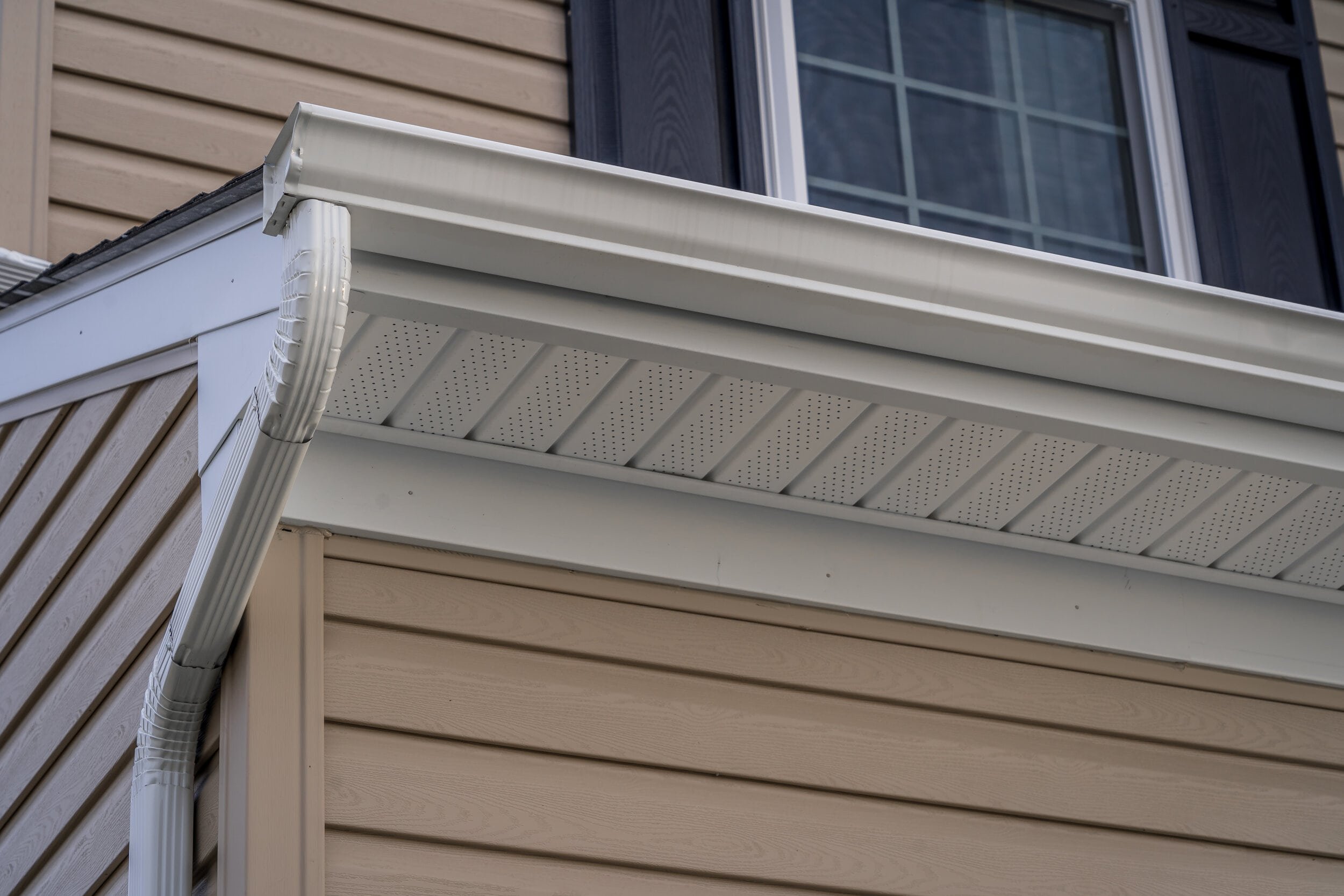
Fascia is the vertical board that runs along the edge of your roofline, right where the roof meets the outer walls of your house. It's what your gutters attach to. Fascia protects the ends of your roof rafters from weather exposure and provides a finished edge for your roofline. When fascia rots, your gutters sag or pull away, and water starts running behind your siding.
Soffit is the horizontal surface underneath the eaves — the part you see when you stand next to your house and look up. Soffit closes off the space between the fascia and the exterior wall, keeping pests out. But here's the critical part: soffit also provides ventilation for your attic. Those small perforations or vent strips aren't decorative — they allow air to flow into your attic, which prevents heat buildup in summer and moisture accumulation in winter.
Without proper soffit ventilation, your attic becomes a sweatbox in July and a condensation trap in January. That leads to mold, ice dams, and shortened shingle life. Michigan building code requires a minimum ventilation ratio of 1:150 (one square foot of vent area for every 150 square feet of attic space), and soffit vents are typically how you meet that requirement.
The Bottom Line: Fascia keeps water out. Soffit keeps pests out and air moving. Both are structural components, not cosmetic trim. When either fails, the damage spreads to your roof, insulation, and framing.
Why Michigan Weather Destroys Bad Installations
If you've lived in Southeast Michigan for more than one winter, you already know: our weather is brutal on exterior materials. The combination of freeze-thaw cycles, ice dams, summer humidity, and lake-effect snow creates conditions that expose every shortcut a contractor took.
Freeze-Thaw Cycles and Expansion
Michigan winters average 80-100 freeze-thaw cycles per season. Water gets into cracks, freezes, expands, and splits the material. Wood fascia that wasn't properly primed and painted will absorb moisture, freeze, and rot within a few years. Vinyl soffit that wasn't installed with expansion gaps will buckle and warp when temperatures swing from 10°F to 50°F in a single week.
We see this constantly in older homes around Royal Oak and Grosse Pointe Farms — fascia boards that were painted but never sealed at the ends. Water wicks into the grain, freezes, and the board splits vertically. By the time the homeowner notices, the rot has spread to the roof deck.
Ice Dams and Water Backup
Ice dams form when heat escapes through your attic, melts snow on the roof, and the water refreezes at the eaves. That ice buildup forces water under the shingles and behind the fascia. If your soffit ventilation is inadequate or blocked, you're creating the conditions for ice dams every winter.
Proper soffit and fascia installation includes continuous venting, proper insulation baffles in the attic, and flashing that directs water away from the fascia board. When contractors skip these steps, you get water damage, rotted fascia, and expensive Detroit roofing services repairs that could've been prevented.
Summer Humidity and Condensation
Michigan summers are humid. When your attic isn't properly ventilated, that humidity condenses on the underside of the roof deck and drips onto your insulation. Over time, this leads to mold, compressed insulation (which kills R-value), and rotted fascia from the inside out.
We've opened up soffits in Clinton Township homes where the wood was completely black with mold because the previous contractor installed solid soffit with no vents. The homeowner had no idea until they started smelling it through the ceiling.
Lake-Effect Snow and Wind Load
If you're near Lake St. Clair or in the northern parts of Macomb County, you know about lake-effect snow. Heavy, wet snow piles up on your eaves and puts serious weight on your fascia and gutters. If the fascia board is undersized, poorly fastened, or already weakened by rot, it'll sag or pull away from the house.
Proper installation uses 1x8 or 2x8 fascia boards (depending on rafter spacing and gutter size) and fastens them into solid blocking or rafter tails — not just into the old board. We see too many "repairs" where a contractor just nailed new fascia over rotted wood. That lasts about one winter.
Material Options for Southeast Michigan Homes
Not all soffit and fascia materials perform the same in Michigan's climate. Here's what we install, what we avoid, and why.
Vinyl Soffit and Fascia
Vinyl is the most common material for soffit and fascia in Metro Detroit, and for good reason: it's affordable, low-maintenance, and holds up well in freeze-thaw cycles when installed correctly. Quality vinyl won't rot, doesn't need painting, and resists moisture.
The key phrase is "when installed correctly." Vinyl expands and contracts with temperature changes. If a contractor doesn't leave proper expansion gaps (typically 1/4 inch), the panels will buckle in summer heat. If they over-fasten the panels (driving nails too tight), the vinyl can't move and will crack in winter cold.
We use CertainTeed and GAF vinyl soffit and fascia systems because they're engineered for thermal movement and come with vented options that meet Michigan code. The panels lock together, the vents are integrated, and the color goes all the way through — no fading or peeling.
Best for: Most residential applications, especially if you're also replacing siding and want a cohesive look. Works well with our house siding in Detroit projects.
Aluminum Soffit and Fascia
Aluminum is more durable than vinyl and doesn't expand or contract as much. It's also more expensive and harder to work with, which means installation costs are higher. Aluminum fascia is a good choice if you have wide eaves or need extra strength to support heavy gutters.
The downside: aluminum dents. If a ladder leans against it or a hailstorm comes through, you'll see the damage. It also requires proper painting or a factory finish — bare aluminum will oxidize and look chalky over time.
Best for: Commercial buildings, homes with wide overhangs, or situations where you need maximum durability and don't mind the higher cost.
Wood Fascia (And Why We Rarely Recommend It)
Traditional wood fascia — usually pine or cedar — was standard on older Michigan homes. It looks great when it's new, but it requires constant maintenance. You need to prime all six sides before installation, caulk every joint, and repaint every 5-7 years. Miss a step, and water gets in.
We still install wood fascia on historic homes in areas like Bloomfield Hills or Grosse Pointe where architectural guidelines require it. But for most homeowners, the maintenance burden isn't worth it. Wood rots, especially at the joints and where gutters attach. Once rot starts, it spreads fast.
If you're committed to wood, use a rot-resistant species like cedar or composite trim boards (like Azek or Versatex), which are cellular PVC and won't rot. They cost more upfront but eliminate the maintenance cycle. We often pair these with our Southeast Michigan painting professionals services for a complete exterior refresh.
Best for: Historic homes, high-end custom builds, or homeowners who don't mind ongoing maintenance and want a traditional look.

Signs Your Soffit and Fascia Need Replacement
Here's how to know if you're looking at a repair or a full replacement. Walk around your house and check for these warning signs:
1. Visible Rot or Water Damage
If you see dark stains, soft spots, or peeling paint on your fascia, you've got water infiltration. Press on the board with your finger — if it feels spongy or you can push into it, the wood is rotted and needs to be replaced. Don't just paint over it. The rot will continue spreading behind the paint.
2. Peeling Paint or Cracked Vinyl
Paint peeling off fascia boards is a sign that moisture is getting behind the finish. On vinyl, look for cracks, warping, or panels that have pulled loose. Both indicate the material has reached the end of its service life.
3. Pest Infiltration
If you're hearing scratching in your attic or seeing squirrels, bats, or birds around your roofline, check your soffit. Damaged soffit panels are a common entry point. Pests chew through rotted wood or push through loose vinyl to get into your attic. Once they're in, they damage insulation and wiring.
We've done soffit replacements in Lake Orion and Shelby Township where raccoons had torn through old wood soffit and built nests in the attic. The insulation was destroyed, and the homeowner had to deal with both the pest removal and the top-rated insulation contractor in Detroit repairs.
4. Gutters Pulling Away From the House
If your gutters are sagging or pulling away from the fascia, the fascia board is likely rotted and can't hold the fasteners anymore. This is especially common after heavy snow or ice buildup. Don't just reattach the gutters — you need to replace the fascia first, or it'll happen again. Our seamless gutters in Detroit, MI installations always include a fascia inspection first.
5. Poor Attic Ventilation
If your attic is hot and stuffy in summer or you're seeing condensation in winter, your soffit vents may be blocked or inadequate. Old soffit installations often used solid panels with no vents, or the vents were painted over. This creates moisture problems, shortens your roof's lifespan, and drives up cooling costs.
Pro Tip: If you're planning a roof replacement, that's the perfect time to upgrade your soffit and fascia. The roof deck is already exposed, and you can address any rot or ventilation issues before the new shingles go on. We coordinate this regularly on our Detroit roofing services projects.
What Proper Installation Looks Like
There's a right way and a fast way to install soffit and fascia. The fast way looks fine for a year or two. The right way lasts 20-30 years. Here's what proper installation includes:
Ventilation Calculations
Before we install soffit, we calculate your attic's ventilation requirements based on square footage. Michigan code requires 1:150 net free area (1 square foot of vent per 150 square feet of attic). We match soffit intake vents with ridge or gable exhaust vents to create continuous airflow. This prevents moisture buildup, reduces cooling costs, and extends your roof's lifespan.
If your attic doesn't have enough ridge vent, we'll recommend adding it during the roof replacement. Soffit vents alone don't work — you need both intake and exhaust for proper air circulation.
Fastening Methods for Michigan Wind
Vinyl soffit and fascia need to move with temperature changes, but they also need to stay put during windstorms. We use stainless steel or coated fasteners driven into solid blocking or rafter tails — never into old, rotted wood. Fasteners go in the center of the nailing slots (not the ends) and are left slightly loose so the panel can expand and contract.
Fascia boards get fastened every 16 inches into rafter tails or blocking. If the existing framing is rotted, we sister in new blocking before installing the fascia. This is the step most contractors skip because it takes time, but it's what keeps your gutters from pulling away three years later.
Flashing Integration
Proper installation includes drip edge flashing along the roof edge and behind the fascia. This directs water away from the fascia board and into the gutters, preventing water infiltration. If your roof has an ice and water shield membrane at the eaves (which it should), the flashing ties into that system.
We see a lot of installations where the drip edge was left off or installed incorrectly. Water runs behind the fascia, the wood rots, and the homeowner ends up with expensive repairs. Flashing is cheap. Rot repair is not.
Common Shortcuts Contractors Take
Here's what to watch out for when you're getting quotes:
- Installing new fascia over old, rotted boards. This hides the problem for a year, then everything fails again.
- Using solid soffit with no vents. Looks cleaner, creates moisture problems.
- Over-fastening vinyl panels. Causes cracking and buckling when temperatures change.
- Skipping the drip edge. Water runs behind the fascia and causes rot.
- Not sealing wood fascia ends. Water wicks into the grain and the board splits.
If a contractor's quote is significantly lower than others, ask what they're leaving out. We've been doing this since 1988, and the jobs we're called in to fix are almost always the result of someone taking shortcuts to hit a low price.

Cost Reality in Metro Detroit
Let's talk numbers. Soffit and fascia replacement costs vary based on material, linear footage, roof height, and the condition of the underlying structure. Here's what you can expect in Southeast Michigan in 2026:
Vinyl Soffit and Fascia
For a typical single-story home (1,500-2,000 sq ft), vinyl soffit and fascia replacement runs $3,500-$6,500, depending on the amount of trim, the number of corners, and whether we're replacing fascia boards or just covering them. Two-story homes or homes with complex rooflines (lots of gables, dormers, or bay windows) will be higher — typically $6,500-$10,000.
If the existing fascia boards are rotted and need full replacement (not just covering), add another $1,500-$3,000 for lumber, blocking, and labor. This is common on homes built before 1990 where the original fascia was never properly maintained.
Aluminum Soffit and Fascia
Aluminum runs about 20-30% more than vinyl. Expect $4,500-$8,000 for a single-story home, $8,000-$12,000 for a two-story. The material cost is higher, and installation takes longer because aluminum is less forgiving to work with.
Wood or Composite Fascia
If you're using real wood or composite trim boards (Azek, Versatex), material costs are significantly higher. Budget $6,000-$12,000 for a typical home, depending on the species and the amount of custom trim work. This is usually reserved for high-end homes or historic restorations.
What Affects the Cost?
- Roof height and pitch: Two-story homes and steep roofs require scaffolding or lift equipment, which increases labor costs.
- Extent of rot: If we need to replace fascia boards, blocking, or rafter tails, costs go up.
- Gutter removal and reinstallation: If your gutters are in good shape, we'll remove and reinstall them. If they're old or damaged, it's often more cost-effective to replace them at the same time.
- Custom colors or profiles: Standard white or almond vinyl is cheapest. Custom colors or specialty profiles cost more.
- Accessibility: Homes with landscaping, decks, or tight lot lines that limit access will take longer to work on.
When to Replace vs. Repair
If the damage is isolated to one section — say, a corner where a gutter leaked — you can often get away with a partial replacement for $800-$1,500. But if you're seeing rot or damage in multiple areas, it's usually more cost-effective to replace everything at once. Piecemeal repairs add up fast, and you'll end up with mismatched materials and colors.
We also recommend replacing soffit and fascia when you're doing other major exterior work — a roof replacement, new siding, or window upgrades. The scaffolding is already up, and you can coordinate materials and colors across the whole house. Our exterior services in Detroit often bundle these projects for efficiency and cost savings.
Real Talk: If a contractor quotes you $2,000 for a full soffit and fascia replacement on a two-story home, they're either skipping critical steps or using bottom-tier materials. Quality work costs what it costs. We're not the cheapest, but we're fair, and we do it right the first time.
Ready to Get Started?
NEXT Exteriors has been protecting Michigan homes since 1988. Whether you're dealing with rotted fascia, poor ventilation, or you just want to upgrade before the next storm season, we'll give you an honest assessment and a fair quote. No pressure, no gimmicks — just straight answers from a team that's been doing this for 35 years.
Get Your Free QuoteOr call us: (844) 770-6398
Other Ways NEXT Exteriors Protects Your Home
Soffit and fascia are just one part of your home's exterior system. If you're planning upgrades, here's how we can help with the rest:
Our Detroit window experts can replace drafty, inefficient windows that are costing you money every month. We install energy-efficient double-hung, casement, and bay windows that hold up in Michigan's climate and reduce your heating bills.
If your attic is under-insulated or you're dealing with ice dams, our insulation services in Southeast Michigan include blown-in cellulose, spray foam, and batt insulation that meet or exceed Michigan energy code. Proper insulation works hand-in-hand with soffit ventilation to keep your home comfortable year-round.
And if you're ready to refresh your home's curb appeal, our exterior painting professionals use Sherwin-Williams products exclusively — the best paint for Michigan weather. We handle surface prep, priming, and application so your paint job lasts 10-15 years, not 3-5.
We're a full-service exterior contractor, which means you work with one team, one point of contact, and one warranty. No subcontractors. No finger-pointing. Just honest work from a crew that's been doing this since 1988.
Frequently Asked Questions
Quality vinyl soffit and fascia should last 20-30 years in Michigan's climate when properly installed. Aluminum can last 30-40 years. Wood fascia requires repainting every 5-7 years and may need replacement after 15-20 years, depending on maintenance. The key is proper installation with ventilation, flashing, and expansion gaps. Cheap materials or poor installation will fail much sooner — we regularly replace soffit and fascia that's only 8-10 years old because it was done wrong the first time.
No. If the fascia is rotted or water-damaged, painting over it just hides the problem temporarily. Rot spreads behind the paint, and within a year or two, the damage will be worse. Paint also traps moisture in rotted wood, accelerating the decay. If the fascia is structurally sound but just needs a refresh, painting is fine — but it needs to be properly prepped, primed, and sealed. If there's any soft spots, spongy areas, or visible rot, replacement is the only real fix.
Not necessarily, but it's often the most cost-effective approach. We remove and reinstall gutters during soffit and fascia replacement, so if your gutters are old, leaking, or damaged, it makes sense to replace them at the same time. You'll save on labor costs since the crew is already there with scaffolding up. If your gutters are in good shape and less than 10 years old, we can work around them. But if they're showing rust, leaks, or sagging, bundling the replacement saves you money in the long run.
For most Michigan homeowners, vinyl is the best balance of cost, durability, and low maintenance. It handles freeze-thaw cycles well, doesn't rot, and never needs painting. We use CertainTeed and GAF vinyl systems because they're engineered for thermal expansion and come with integrated venting. Aluminum is more durable but costs more and can dent. Wood looks great but requires constant maintenance and is prone to rot. For high-end homes or historic properties, composite trim boards (Azek, Versatex) offer the look of wood without the rot risk, but they're expensive.
For a typical single-story home, installation takes 2-3 days. Two-story homes or homes with complex rooflines (multiple gables, dormers, or bay windows) can take 4-5 days. If we're replacing rotted fascia boards or dealing with extensive water damage, add another 1-2 days for structural repairs. Weather can also affect the timeline — we won't install in rain or freezing temperatures because materials need to acclimate and fasten properly. We'll give you a realistic timeline in your quote and keep you updated throughout the project.
Yes. Vinyl soffit and fascia come in a range of standard colors (white, almond, clay, gray), and we can usually match your existing trim or siding. If you're doing a partial replacement and need an exact match, we'll bring samples to compare. If you're replacing all the soffit and fascia, you can choose any color you want — we often coordinate with siding, shutters, and trim for a cohesive look. Custom colors cost a bit more, but the color goes all the way through the material, so it won't fade or peel like paint.
In most cases, no — soffit and fascia replacement is considered maintenance and doesn't require a permit in most Michigan municipalities. However, if we're doing structural repairs (replacing rafter tails, blocking, or roof framing), a permit may be required. We handle all permit applications and inspections as part of our service, so you don't have to deal with the township or county. We're licensed, insured, and familiar with building codes in Macomb, Oakland, and St. Clair counties, so you can trust the work will pass inspection if one is needed.