

Roof Ventilation Issues in Older Detroit Homes: Fixes

If you own a home built before 1980 in Metro Detroit, there's a good chance your roof ventilation system is either inadequate or completely missing. We see it on nearly every older home we inspect in Royal Oak, Grosse Pointe Farms, and throughout Macomb County: ice dams in winter, sweltering attics in summer, and shingles that fail years before they should.
The problem isn't always obvious from the curb. But climb into the attic on a February morning, and you'll see frost coating the underside of the roof sheathing. Or check your cooling bills in July — if your AC is running constantly and the upstairs still feels like a sauna, poor roof ventilation is likely the culprit.
After 35 years of Detroit roofing services, we've diagnosed and fixed hundreds of ventilation problems in older homes. This isn't about selling you unnecessary upgrades. It's about explaining what's actually happening in your attic, why it matters, and what fixes work in Michigan's climate.
Why Older Detroit Homes Have Ventilation Problems
Homes built in the 1950s, 60s, and 70s across Southeast Michigan were constructed under building codes that either didn't require attic ventilation or set standards far below what we know works today. The typical brick Colonial or ranch-style home from that era might have a single gable vent on each end of the attic — and that's it.
The building science was different back then. Contractors weren't thinking about balanced airflow or the freeze-thaw cycles that define Michigan winters. Insulation levels were minimal (if present at all), so heat loss from the living space into the attic wasn't as pronounced. But as homeowners added insulation over the decades — often without upgrading ventilation — the attic became a moisture trap.
Here's what happens: Warm, humid air from your home rises into the attic. In winter, that moisture condenses on cold roof sheathing and rafters, leading to frost buildup, wood rot, and eventually mold. In summer, that same attic turns into an oven, radiating heat back down into your home and cooking your shingles from below.
Michigan-specific challenge: Our temperature swings are extreme. A January day might start at 15°F and climb to 35°F by afternoon. That freeze-thaw cycle accelerates ice dam formation and shingle deterioration when ventilation is inadequate. Lake-effect snow adds another layer of complexity — heavy snow loads on the roof create insulation that traps even more heat in poorly ventilated attics.
Common architectural styles in Detroit-area neighborhoods compound the problem. Many brick Colonials have shallow roof pitches and limited soffit overhang, making it difficult to retrofit intake vents. Ranch homes often have low-slope roofs with minimal attic space, where even small ventilation deficiencies create big problems.
The bottom line: If your home was built before modern building codes required balanced ventilation (typically the 1980s), you're probably dealing with a system that was never designed to handle Michigan's climate or today's insulation standards.
Signs Your Roof Ventilation Is Failing
Ventilation problems announce themselves in specific ways. Here's what to look for, broken down by season and location:
Winter Warning Signs
Ice dams: These ridges of ice form along the roof edge when heat escaping through an under-ventilated attic melts snow on the upper roof. The water runs down, refreezes at the cold eaves, and creates a dam that forces water under shingles. If you've had attic moisture and ventilation problems, ice dams are often the visible result.
Frost in the attic: On cold mornings, climb into your attic with a flashlight. Look at the underside of the roof sheathing and the tips of roofing nails poking through. If you see frost, you have a moisture problem caused by inadequate ventilation. This is especially common in Sterling Heights and Clinton Township homes built in the 1960s.
Icicles along the eaves: A few small icicles are normal. But if you have thick icicles hanging continuously along the roof edge, or if they're paired with ice buildup on the roof itself, your attic is too warm.

Summer Warning Signs
Excessive attic heat: Your attic should be hot in summer — that's normal. But if it's 150°F or hotter up there (measure with an infrared thermometer), you don't have enough exhaust ventilation to let that heat escape. That heat radiates down into your living space, making your AC work overtime.
High cooling bills: If your energy costs spike in summer despite a functioning AC system, your attic might be acting as a giant heat battery. Proper ventilation reduces attic temperatures by 20-30°F, which directly impacts cooling costs.
Premature shingle failure: Asphalt shingles are designed to withstand heat, but sustained attic temperatures above 140°F accelerate aging. If your shingles are curling, cracking, or losing granules well before their rated lifespan, poor ventilation is often the cause. We see this frequently on south- and west-facing roof planes in Shelby Township and Macomb.
Year-Round Red Flags
Mold or mildew in the attic: Dark stains on wood framing, a musty smell, or visible mold growth indicate chronic moisture problems. This is a health issue and a structural issue.
Peeling paint on soffits or eaves: Moisture escaping through inadequate ventilation can cause exterior paint to blister and peel, especially on the soffits and fascia.
Rusted or corroded attic fasteners: The nails and metal straps holding your roof together shouldn't rust. If they are, moisture is present — and it's not leaving.
If you're seeing any combination of these signs, it's time for a proper diagnosis. Ignoring ventilation problems doesn't just shorten your roof's lifespan — it can lead to structural damage that costs far more to fix than the ventilation system itself.
How We Diagnose Ventilation Issues
When a homeowner calls us about suspected ventilation problems, we don't just eyeball the roof from the driveway. A proper diagnosis requires getting into the attic and doing the math. Here's our process:
Step 1: Attic Inspection
We start by accessing the attic (if possible) and looking for the telltale signs mentioned above: frost, moisture stains, mold, condensation on rafters, and wet or compressed insulation. We check the condition of the roof sheathing and framing. We also look for insulation blocking airflow at the eaves — a common problem when insulation was added after the home was built.
We measure attic temperature (in summer) or look for temperature differentials (in winter) using infrared thermography. A well-ventilated attic should be close to outdoor temperature, not 30-40°F warmer.
Step 2: Exterior Inspection
From outside, we identify all existing ventilation components:
- Soffit vents: Are there perforated soffits or vent strips under the roof overhang? Many older homes have solid soffits with zero intake ventilation.
- Ridge vents: Is there a continuous vent running along the roof peak? Ridge vents are the gold standard for exhaust, but they weren't common until the 1990s.
- Box vents (static vents): These are the square metal caps you see on many roofs. We count them and note their size.
- Gable vents: Triangular or rectangular vents on the gable ends. These can help, but they're not a substitute for soffit and ridge ventilation.
- Turbine vents: The spinning metal vents. They work, but they're prone to failure and aren't as effective as ridge vents.
We also look for roof flashing failures and other issues that might be contributing to moisture intrusion.
Step 3: Calculate Required Ventilation
Building code (International Residential Code, Section R806) requires a minimum of 1 square foot of net free ventilation area for every 150 square feet of attic floor space. That's the 1:150 ratio. And it must be balanced: half of that ventilation should be intake (soffits), and half should be exhaust (ridge, box, or gable vents).
For example, if your attic floor is 1,500 square feet, you need at least 10 square feet of net free ventilation area — 5 square feet of intake and 5 square feet of exhaust.
We measure your attic, calculate the requirement, and then compare it to what's actually installed. In most older Detroit homes, we find one of two scenarios:
- No intake ventilation: Solid soffits, meaning zero fresh air entering the attic. Exhaust vents are present but can't function properly without intake.
- Insufficient exhaust: A few small box vents that provide maybe 2-3 square feet of ventilation when the home needs 8-10.

Step 4: Check for Airflow Obstructions
Even if vents are present, airflow can be blocked by insulation, debris, or improper installation. We look for:
- Insulation stuffed into the eaves, blocking soffit vents
- Missing or damaged baffles (the channels that keep insulation away from the roof deck)
- Painted-over or clogged soffit vents
- Attic fans or powered vents that disrupt natural airflow (these often do more harm than good)
Proper insulation services in Southeast Michigan always include ensuring ventilation isn't compromised.
What We Provide After the Inspection
You get a written report with photos, measurements, and specific recommendations. We'll tell you:
- How much ventilation you have vs. how much you need
- Whether the problem is intake, exhaust, or both
- What fixes are necessary and what's optional
- Estimated costs for each option
No sales pitch. Just the facts and the fixes that make sense for your home and budget.
Effective Fixes for Poor Roof Ventilation
Once we've identified the problem, the solution usually falls into one of a few categories. The right fix depends on your home's architecture, existing ventilation, and whether you're planning a roof replacement.
Adding Soffit Intake Vents
This is the most common missing piece in older Detroit homes. If you have solid soffits, we retrofit perforated soffit vents or continuous soffit vent strips. This involves cutting openings in the soffit material and installing vent panels that allow air to enter the attic at the eaves.
For homes with narrow or no soffit overhang (common on some brick Colonials), we sometimes install edge vents or over-fascia vents that sit at the roof edge and provide intake without requiring soffit modification.
Cost: Adding soffit vents typically runs $800-$1,500 for an average-sized home, depending on accessibility and the amount of soffit area.
Installing Ridge Vents
Ridge vents are the most effective exhaust solution for most homes. They run continuously along the roof peak, allowing hot air to escape naturally without the need for power or moving parts. When paired with adequate soffit intake, ridge vents create a balanced airflow system that works year-round.
We install ridge vents from manufacturers like CertainTeed, GAF, and Owens Corning as part of our roof replacement in Metro Detroit projects. If your roof is newer and in good condition, ridge vents can sometimes be added without a full replacement, though this is less common.
Cost: Ridge vent installation during a roof replacement adds $300-$600 to the project. Retrofitting ridge vents on an existing roof costs $1,200-$2,000.
Adding or Upgrading Box Vents
If a ridge vent isn't feasible (due to roof design or homeowner preference), we add box vents strategically placed on the upper half of the roof. Each box vent provides 50-60 square inches of net free area, so you'll need several to meet code requirements.
We space them evenly and install them high on the roof plane to maximize exhaust efficiency. Box vents work, but they're not as effective as ridge vents and require more penetrations through the roof.
Cost: $150-$250 per box vent installed, including flashing and sealing.
Installing Rafter Baffles
Baffles (also called rafter vents or vent chutes) are rigid foam or cardboard channels that fit between rafters at the eaves. They create a clear airway from the soffit vents to the attic space, preventing insulation from blocking airflow.
If your home has blown-in insulation or batt insulation that's been stuffed into the eaves, baffles are essential. Without them, adding soffit vents won't help — the air has nowhere to go.
Cost: Baffles cost $2-$4 each and are usually installed during insulation upgrades or roof replacements. Labor to install them in an existing attic runs $500-$1,000 depending on attic accessibility.
Removing or Deactivating Gable Vents (Sometimes)
This surprises people, but gable vents can actually interfere with a balanced soffit-to-ridge ventilation system. If you have both gable vents and ridge vents, the gable vents can short-circuit airflow, pulling air from the ridge vent instead of from the soffits.
In some cases, we recommend sealing or covering gable vents from the inside after installing ridge and soffit ventilation. This forces air to flow the way it should: in through the soffits, up along the underside of the roof deck, and out through the ridge.
Cost: Sealing gable vents from the inside is a minor task, usually $100-$200.
What about powered attic fans? We generally don't recommend them. They consume energy, require maintenance, and can create negative pressure that pulls conditioned air from your living space into the attic. A properly designed passive ventilation system (soffit + ridge) works better and costs nothing to operate.
Real-World Cost Example
A typical 1,500-square-foot ranch home in Warren with no soffit vents and inadequate exhaust might need:
- Soffit vent installation: $1,200
- Ridge vent installation (during roof replacement): $400
- Rafter baffles (if insulation is present): $600
Total ventilation upgrade: $2,200, often rolled into a roof replacement project.
For context, siding replacement costs in Michigan and roofing costs are often budgeted together when homeowners are planning major exterior work.
When Ventilation Fixes Should Happen During Roof Replacement
If you're planning a roof replacement in the next year or two, that's the ideal time to address ventilation. Here's why:
Access is already there: When we're tearing off old shingles, we can install ridge vents, add box vents, and inspect the roof deck for moisture damage — all without additional tear-out or labor costs.
It's part of a quality installation: A new roof without proper ventilation is a roof that won't last. Shingle manufacturers like CertainTeed and GAF require adequate ventilation to honor their warranties. If your attic doesn't meet the 1:150 ratio, your warranty could be void.
You're already spending the money: Roof replacement is a significant investment. Adding $1,500-$2,000 for proper ventilation ensures that investment lasts 25-30 years instead of 15.
When we do a roof replacement in Chesterfield Township or anywhere in Southeast Michigan, ventilation is part of the conversation from day one. We measure your attic, calculate requirements, and include the necessary vents in the proposal — no surprises, no upselling.
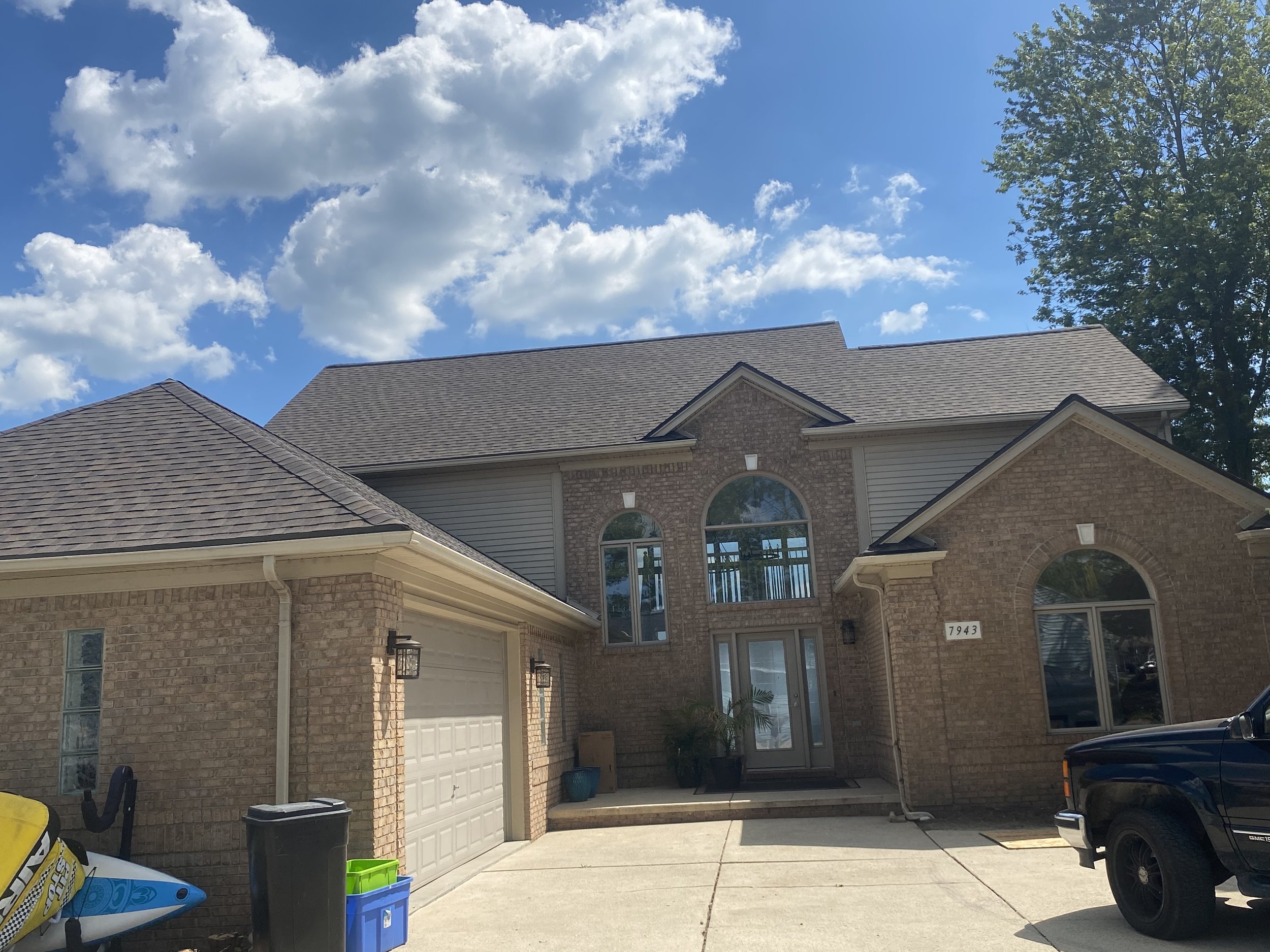
What Gets Included in a NEXT Exteriors Roof Replacement
When you hire us for a roof replacement, ventilation is baked into the process:
- Ridge vent installation: We install a continuous ridge vent along the entire peak using CertainTeed or GAF products that match your shingle system.
- Soffit vent assessment: We inspect your soffits and recommend intake vent installation if needed. This is quoted separately but coordinated with the roof work.
- Rafter baffles: If insulation is blocking airflow, we install baffles to maintain clear ventilation channels.
- Deck inspection: With the old shingles off, we inspect the roof sheathing for moisture damage, rot, or mold — all signs of past ventilation problems. Any damaged sheathing gets replaced before new shingles go on.
- Ice and water shield: We install ice and water shield along the eaves and valleys to protect against ice dams (which proper ventilation helps prevent).
This is standard practice for us. It's how roofing should be done in Michigan.
When to Address Ventilation Without a Full Roof Replacement
If your roof is relatively new (less than 10 years old) but you're experiencing ventilation problems, you don't necessarily need a full replacement. We can often add soffit vents, install baffles, and even retrofit ridge vents or box vents without tearing off the entire roof.
The decision depends on:
- The age and condition of your current roof
- The severity of the ventilation problem
- Whether moisture damage has already occurred
- Your budget and timeline
We'll walk you through the options and recommend the most cost-effective solution. Sometimes that's a targeted ventilation upgrade. Sometimes it's better to replace the roof and do it right.
Ready to Get Started?
NEXT Exteriors has been protecting Michigan homes since 1988. Get a free, no-pressure estimate from a team that shows up on time and does the job right.
Get Your Free QuoteOr call us: (844) 770-6398
Other Services from NEXT Exteriors
Beyond roofing and ventilation, we offer a full range of exterior services in Detroit and throughout Southeast Michigan. If you're planning exterior upgrades, consider coordinating multiple projects to save time and money:
Siding: Whether you're looking at vinyl, fiber cement, or engineered wood, our house siding services in Detroit include everything from material selection to installation. We're a CertainTeed 5-Star certified contractor, and we work with James Hardie and LP SmartSide as well.
Windows: Drafty windows waste energy year-round. Our Detroit window experts install energy-efficient double-hung, casement, and bay windows that stand up to Michigan weather. We often coordinate siding and window replacement together to streamline the project.
Gutters: Poor gutter performance contributes to ice dams and foundation problems. We install seamless gutters in Detroit, MI that are custom-fit to your home and designed to handle Michigan's heavy snow and rain.
Painting: As a Sherwin-Williams exclusive contractor, our Southeast Michigan painting professionals use premium products that hold up to freeze-thaw cycles and UV exposure. Exterior painting is often coordinated with siding or trim work for a complete refresh.
Frequently Asked Questions
Building code requires 1 square foot of net free ventilation area for every 150 square feet of attic floor space. So if your attic floor is 1,500 square feet, you need at least 10 square feet of ventilation total. Half of that (5 square feet) should be intake vents at the soffits, and half should be exhaust vents at or near the roof peak. This is the minimum — in Michigan's climate, more ventilation is often better, especially for homes with complex roof lines or heavy insulation.
Yes, in most cases. We can retrofit soffit vents by cutting openings in your existing soffits and installing vent panels. Box vents or even ridge vents can sometimes be added to an existing roof, though ridge vent installation is easier and more cost-effective during a roof replacement. The key is ensuring you don't create an imbalanced system — adding exhaust vents without adequate intake (or vice versa) won't solve the problem and can sometimes make it worse.
Proper ventilation is one of the three critical factors in preventing ice dams, along with adequate attic insulation and air sealing. Ventilation keeps your attic temperature close to the outdoor temperature, which prevents snow on the roof from melting unevenly. If your attic is 40°F when it's 20°F outside, heat is escaping and melting snow — that's when ice dams form. Balanced soffit-to-ridge ventilation, combined with proper insulation, dramatically reduces or eliminates ice dams in most cases. However, if your home has significant air leaks from the living space into the attic, those need to be sealed as well.
For a typical older home in Metro Detroit that needs soffit vents added and either a ridge vent or additional box vents installed, expect to spend $1,500-$3,000. If the work is done during a roof replacement, the cost is lower because we're already on the roof with materials and labor in place. Stand-alone ventilation upgrades cost more due to setup and the need to work around an existing roof. Homes with difficult attic access, complex roof lines, or structural issues (like damaged sheathing from past moisture problems) will be on the higher end of that range.
Not necessarily. If your roof is relatively new (less than 10-12 years old) and in good condition, we can often upgrade ventilation without replacing the shingles. However, if your roof is nearing the end of its lifespan or if poor ventilation has already caused shingle damage, moisture problems, or wood rot, a replacement makes more sense. We'll inspect your roof deck and shingles during the ventilation assessment and give you an honest recommendation. Sometimes the smartest move is to replace the roof and fix ventilation at the same time — you're getting maximum value for your investment.
Ridge vents run continuously along the peak of your roof and provide consistent exhaust ventilation across the entire roof plane. They're low-profile, require no moving parts, and work with natural convection — hot air rises and exits through the ridge. Box vents (also called static vents) are individual square or rectangular units installed on the roof surface. They work well but require multiple units to achieve the same ventilation as a ridge vent, and they create more roof penetrations. Ridge vents are generally the better choice for most homes, but box vents are sometimes necessary on hip roofs or roofs with limited ridge length.
Homes built before the 1980s were constructed under building codes that either didn't require attic ventilation or set much lower standards than we use today. Many older homes have solid soffits with no intake vents and only one or two gable vents for exhaust. The building science wasn't well understood back then, and Michigan's extreme climate — freeze-thaw cycles, heavy snow, high summer heat — wasn't fully accounted for. As homeowners added insulation over the years (a good thing for energy efficiency), it often blocked what little airflow existed, turning attics into moisture traps. The result: ice dams, mold, premature roof failure, and high energy bills.