

Wood Rot on Trim & Fascia: Metro Detroit Repair Guide

I was on a ladder in Sterling Heights last spring, screwdriver in hand, when the homeowner asked me the question I hear at least once a week: "Can't we just patch this and paint over it?"
I pressed the screwdriver into what looked like solid fascia board. It sank in like I was pushing into wet cardboard. The rot had spread six feet in both directions from where the gutter had been overflowing all winter.
Wood rot on trim and fascia isn't just an aesthetic problem. It's structural. It spreads. And in Michigan's freeze-thaw climate, it accelerates faster than most homeowners realize. The moisture gets in through failed caulking or a backed-up gutter, freezes overnight, expands, thaws the next afternoon, and repeats. Each cycle breaks down more wood fiber. Within two seasons, what started as a small soft spot becomes a replacement project.
This guide walks through what we see on hundreds of Michigan homes every year — how wood rot starts, how to spot it before it spreads, when repair makes sense versus full replacement, and what materials actually hold up in Southeast Michigan weather. No sales pitch. Just the information you need to make the right call for your home.
What Causes Wood Rot on Trim and Fascia in Southeast Michigan
Wood rot happens when three conditions meet: moisture, oxygen, and temperatures above 40°F. Michigan provides all three in abundance. The specific fungus that causes rot — usually brown rot or white rot — breaks down the cellulose and lignin in wood, turning solid boards into spongy, crumbly material that loses all structural integrity.
Here's where the moisture comes from on most homes we inspect:
Failed Caulking and Paint
Caulk joints around trim and fascia don't last forever. Sherwin-Williams and other quality manufacturers rate exterior caulk for 10-15 years, but Michigan's temperature swings — from below zero in January to 90°F in July — stress those joints. When caulk cracks or pulls away, water seeps behind the trim. It can't dry out because the paint film traps it. The wood stays damp for weeks. That's when rot starts.
We see this most often at corner joints, where trim meets siding, and around window and door casings. The homeowner doesn't notice until paint starts peeling or the wood feels soft.
Ice Dams and Gutter Overflow
Ice dams are a Southeast Michigan tradition nobody wants. When heat escapes through an under-insulated attic, it melts snow on the roof. The water runs down to the cold eaves and refreezes. Ice builds up behind the gutters in Detroit, MI, forcing water under shingles and over the fascia. The fascia board stays soaked for days or weeks during repeated freeze-thaw cycles.
Clogged gutters cause similar problems. When gutters overflow, water runs down the fascia instead of through downspouts. We wrote about this chain reaction in our article on clogged gutters and basement problems — the damage starts at the roofline and works its way down.
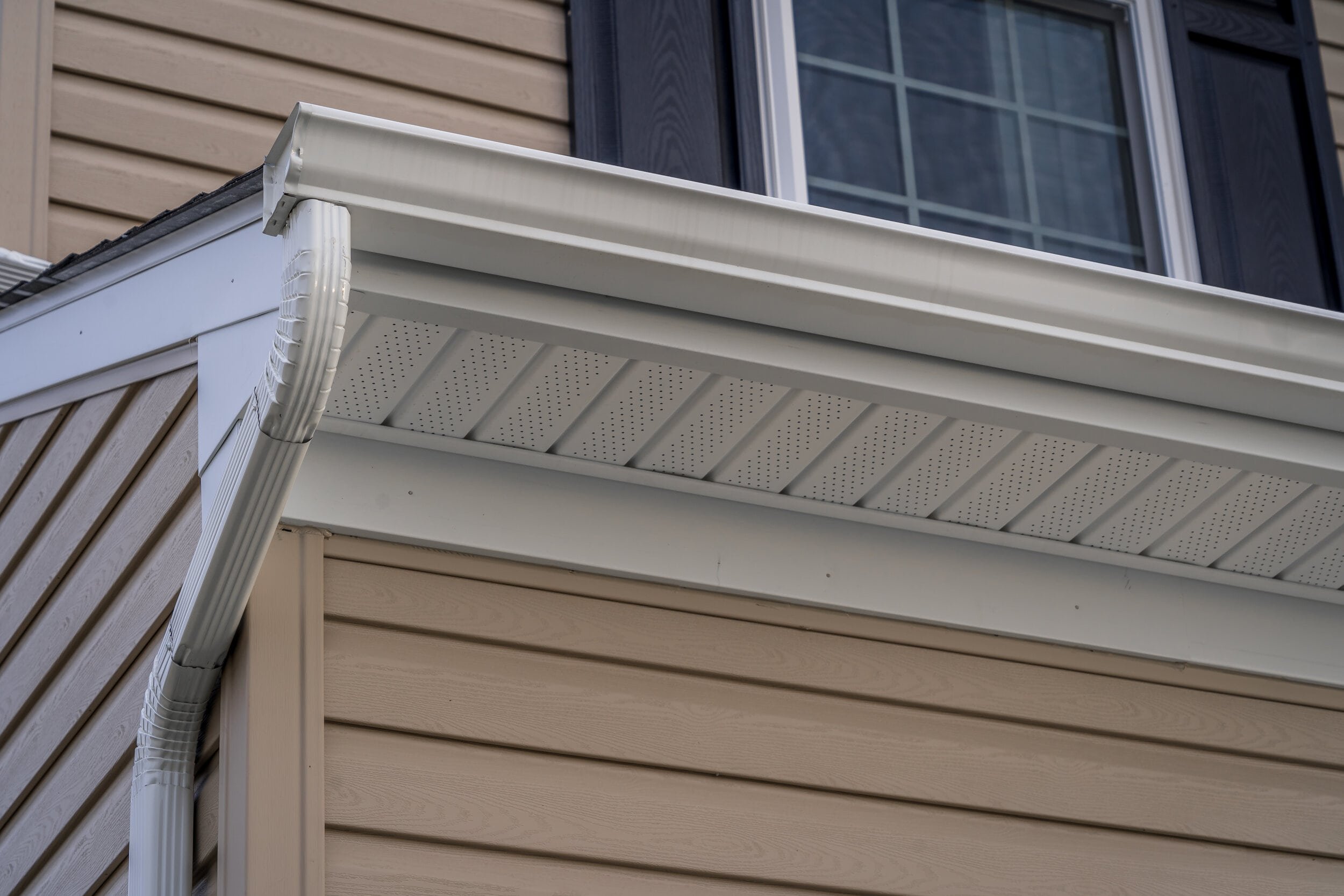
Poor Ventilation and Condensation
Attic ventilation problems don't just cause ice dams. They create condensation that drips onto fascia boards from the inside. When warm, humid air from your living space rises into a cold attic, moisture condenses on the underside of the roof deck and on the fascia. Over time, this internal moisture rots the wood just as effectively as external water.
This is especially common on 1960s and 1970s ranch homes in Macomb and Oakland counties, where original soffit vents were undersized or blocked during insulation upgrades. Our top-rated insulation contractor in Detroit team sees this regularly during attic assessments.
Material Quality and Installation Errors
Not all wood is created equal. Pine trim installed without proper priming and back-priming absorbs moisture like a sponge. We've replaced fascia boards that were installed with the bark side facing out — a rookie mistake that traps water in the wood grain.
Proper installation includes:
- Priming all six sides of trim boards before installation
- Using stainless steel or hot-dipped galvanized fasteners (regular nails rust and create water entry points)
- Maintaining proper drip edge flashing behind fascia
- Caulking joints immediately after installation, before moisture can enter
- Sloping horizontal trim to shed water rather than trap it
When we handle Detroit roofing services, we always inspect fascia condition before starting. A new roof on rotted fascia is a waste of money — the fascia needs to be addressed first.
How to Spot Wood Rot Before It Spreads
Early detection saves thousands of dollars. Wood rot spreads along the grain and through joints. What starts as a six-inch section of soft fascia can become a 20-foot replacement project in one Michigan winter if you don't catch it.
Here's how to inspect your trim and fascia:
Visual Inspection from Ground Level
Walk around your house twice a year — once in spring after snowmelt, once in fall before winter. Look for:
- Discoloration: Dark streaks, gray patches, or greenish staining indicate moisture and possible fungal growth
- Peeling or bubbling paint: Paint fails when moisture pushes it away from the wood surface
- Warped or sagging boards: Rotted wood loses structural strength and bends under its own weight
- Gaps or separation: Joints that used to be tight now show daylight because the wood has shrunk as it deteriorates
- Missing chunks: Advanced rot causes wood to crumble away, especially at corners and joints
Use binoculars to inspect high fascia and second-story trim. You don't need to climb a ladder for the initial assessment.
The Screwdriver Test
This is the definitive field test contractors use. Take a flathead screwdriver or awl and gently press it into suspect areas at a 45-degree angle. Healthy wood resists. You'll feel solid resistance and the screwdriver won't penetrate more than a fraction of an inch.
Rotted wood feels soft. The screwdriver sinks in easily, sometimes half an inch or more. The wood may crumble around the entry point. If you can push the screwdriver in easily, that section needs replacement.
Test these high-risk areas first:
- Corners where two trim boards meet
- Joints between fascia sections
- Areas directly below gutter seams or downspouts
- Horizontal trim pieces that can trap water (window sills, door headers)
- Any area with visible paint failure or discoloration
Safety note: Only test areas you can safely reach from the ground or a stable step ladder. Never overreach or work from an unstable position. High fascia and second-story trim should be tested by a professional with proper equipment.
Seasonal Timing for Inspections
Spring is the best time to catch rot damage. After Michigan's freeze-thaw cycles and snowmelt, any moisture problems show up clearly. Wood that stayed wet all winter will be soft, discolored, and possibly already crumbling.
Fall inspections help you identify problems before winter makes them worse. If you find soft spots in October, you can plan replacement before snow and ice accelerate the damage.
We recommend documenting what you find with photos. If you're not ready to replace immediately, photos let you track whether the damage is spreading. Take close-ups of suspect areas from multiple angles, including wide shots that show the location on the house.
Repair vs. Replace: Making the Right Call
Homeowners in Royal Oak and Grosse Pointe Farms ask us this question constantly: "Can we just fix the bad section, or does the whole thing need to go?"
The honest answer depends on three factors: extent of damage, accessibility, and long-term value.
When Spot Repairs Work
Spot repairs make sense when:
- Damage is isolated: One small section (under 2 feet) is soft, and surrounding areas test solid
- The cause is fixed: You've already repaired the gutter, fixed the ice dam problem, or addressed whatever caused the moisture intrusion
- Matching material is available: You can find trim or fascia that matches the existing profile and can blend the repair
- Budget is extremely tight: A $300 repair buys you time to save for a full replacement
The reality: spot repairs on trim and fascia rarely last more than 3-5 years. The wood around the repair continues aging. The new piece expands and contracts at a different rate than the old wood. Joints open up. Moisture gets in again.
We do spot repairs when homeowners ask for them, but we're upfront about the limitations. It's a temporary fix, not a permanent solution.
When Full Replacement Is the Right Move
Replace the full run of trim or fascia when:
- Multiple sections are damaged: If rot shows up in three or more spots along one side of the house, the entire run is compromised
- Damage extends into joints: Once rot reaches the joints, it spreads through the entire connected system
- The wood is old and brittle: Even the "good" sections may be dried out and ready to fail
- You're doing other exterior work: If you're replacing the house siding in Detroit or getting a roof replacement, do the trim and fascia at the same time. You save on mobilization and scaffolding costs
- You want to upgrade materials: Switching from wood to PVC or fiber cement eliminates future rot problems

Cost Comparison: Repair vs. Replace
Here's what we typically see in Metro Detroit:
| Scope | Cost Range | Longevity |
|---|---|---|
| Spot repair (2-4 feet) | $250-$500 | 3-5 years |
| Single-side fascia replacement (wood) | $800-$1,500 | 15-20 years |
| Single-side fascia replacement (PVC) | $1,200-$2,200 | 30+ years |
| Full house trim replacement (wood) | $3,500-$7,000 | 15-20 years |
| Full house trim replacement (PVC) | $5,500-$10,000 | 30+ years |
The math: spending $500 on repairs every 4 years for 20 years costs $2,500 and leaves you with aging wood. Spending $2,000 once for PVC fascia solves the problem permanently. For homeowners planning to stay in their house, replacement wins.
Material Options for Trim and Fascia Replacement
Material choice determines how long your repair lasts and whether you'll be back on a ladder in five years. Each option has specific performance characteristics in Michigan's climate.
Wood (Cedar, Pine, Treated Lumber)
Cedar: Naturally rot-resistant due to oils in the heartwood. Holds paint well. Beautiful grain. Expensive — expect to pay 40-60% more than pine. Even cedar rots if water sits on it constantly, but it resists decay better than other woods.
Pine: Affordable and easy to work with. Must be primed on all sides before installation. Requires repainting every 5-7 years. Rots quickly if moisture gets behind the paint film. This is what's on most homes built before 2000.
Pressure-treated lumber: Used occasionally for fascia in high-moisture areas. The chemical treatment resists rot, but treated lumber is prone to warping and twisting as it dries. It's also difficult to paint — the treatment interferes with paint adhesion. We rarely recommend it for visible trim.
Best for: Historic homes where matching original materials matters, or budget-conscious homeowners willing to maintain painted wood every few years.
PVC and Cellular PVC
PVC trim (brands like Azek, KOMA, Versatex) is extruded plastic with a cellular structure that looks and cuts like wood. It's completely impervious to moisture. It will never rot, no matter how long it stays wet.
Performance in Michigan weather:
- Moisture resistance: Perfect. Water can't penetrate the material
- Freeze-thaw durability: Excellent. No moisture absorption means no expansion damage
- Thermal expansion: This is the challenge. PVC expands and contracts significantly with temperature changes. A 16-foot board can move up to 3/8" between winter and summer. Proper installation requires expansion gaps and specific fastening patterns
- Paint retention: Good if you use 100% acrylic paint in lighter colors. Dark colors absorb heat and can cause warping on south and west exposures
PVC costs more upfront but eliminates rot maintenance forever. We install it on homes where the homeowner never wants to deal with trim problems again.
Fiber Cement
James Hardie and other manufacturers make fiber cement trim that's dimensionally stable, rot-proof, and holds paint exceptionally well. It's a mix of cement, sand, and cellulose fibers, formed into boards that look like painted wood.
Advantages for Michigan homes:
- Zero rot risk: No organic material for fungus to feed on
- Minimal thermal movement: Expands and contracts much less than PVC
- Excellent paint adhesion: James Hardie's ColorPlus finish is factory-baked and warranted for 15 years
- Impact resistance: Won't dent from hail or ladder contact
Disadvantages:
- Weight: Heavier than wood or PVC, which affects installation labor
- Cutting produces silica dust: Requires proper safety equipment
- Cost: Typically 20-30% more than PVC, 50-70% more than pine
We use fiber cement trim when coordinating with James Hardie siding installations. The materials work together perfectly and create a cohesive, low-maintenance exterior.
Aluminum-Wrapped Options
Aluminum coil stock wrapped over wood fascia was popular in the 1980s and 1990s. The idea: protect the wood with a waterproof metal skin. The reality: if moisture gets behind the aluminum (and it always does eventually), the wood rots invisibly. You don't know there's a problem until the fascia sags or the aluminum pulls loose.
We don't recommend aluminum-wrapped fascia anymore. When we remove it during exterior services in Detroit projects, we typically find extensive hidden rot underneath.
What Trim and Fascia Replacement Actually Costs in Metro Detroit
Pricing depends on material choice, linear footage, accessibility, and whether you're replacing just fascia or including soffit, frieze boards, and other trim components.
Here's what we see across Southeast Michigan in 2026:
Material Costs (per linear foot, installed)
| Material | Cost per Linear Foot | Notes |
|---|---|---|
| Pine trim (primed and painted) | $8-$12 | Most affordable, requires maintenance |
| Cedar trim (primed and painted) | $12-$18 | Better rot resistance than pine |
| PVC trim (painted) | $14-$22 | Zero maintenance, best long-term value |
| Fiber cement trim (painted) | $16-$24 | Premium option, excellent durability |
| Pine fascia board (1x6 or 1x8) | $6-$10 | Includes priming and painting |
| PVC fascia board | $10-$16 | Includes painting in lighter colors |
Labor Factors and Complexity
Labor accounts for 60-70% of trim replacement costs. Factors that increase labor time and cost:
- Height: Second-story work requires scaffolding or lift equipment. Add 30-50% to base labor costs
- Architectural complexity: Homes with multiple gables, dormers, or decorative trim details take longer. A simple ranch costs less per foot than a Victorian with ornate corner boards
- Access: Tight side yards, landscaping obstacles, or decks that block access slow down the work
- Rot extent: If underlying framing is damaged, we need to repair or replace subfascia and rafter tails before installing new trim
- Coordination with other work: Replacing trim during a siding installation project is more efficient than scheduling it separately
Hidden Costs to Anticipate
Trim and fascia replacement often uncovers additional issues:
- Soffit replacement: If fascia is rotted, soffit panels are often damaged too. Add $4-$8 per linear foot for aluminum or vinyl soffit
- Gutter removal and reinstallation: Gutters must come down to access fascia. If your gutters are old or damaged, replacement makes sense. Budget $8-$12 per linear foot for new seamless aluminum gutters
- Roof edge repairs: Rotted fascia sometimes indicates problems with drip edge flashing or the first course of shingles. Minor roof repairs might be necessary
- Painting: If you're replacing only some trim, you'll need to paint the entire house to blend the new and old. Full exterior painting in Southeast Michigan runs $3,500-$8,000 depending on house size. Our Southeast Michigan painting professionals can provide detailed estimates

ROI and Home Value Impact
Trim and fascia replacement isn't a high-ROI project in terms of resale value — you won't get $1.50 back for every dollar spent. But it prevents larger problems (roof damage, siding failure, interior water intrusion) that cost significantly more to fix.
For homes being prepared for sale, fresh trim and fascia improve curb appeal and prevent inspection issues. Buyers notice peeling paint and soft wood. They'll either negotiate the price down or walk away. Addressing trim problems before listing eliminates that negotiating point.
When to Call a Contractor vs. DIY
Trim and fascia work looks straightforward until you're 20 feet up a ladder with a board that won't fit right and no way to safely hold it in place while you nail.
DIY Makes Sense When:
- You're replacing ground-level trim: Window casings, door trim, or decorative boards you can reach from a 6-foot ladder
- The section is short: Replacing one 8-foot board is manageable. Replacing 60 feet of fascia around the whole house is not
- You have carpentry experience: Cutting precise miters, understanding expansion gaps, and knowing proper fastening techniques are critical
- You have the right tools: Miter saw, pneumatic nailer, safety equipment, and stable ladder setup
Skills required for quality trim work:
- Accurate measuring and layout
- Cutting tight miters that won't open up as materials expand and contract
- Understanding how to flash and seal joints to prevent future water intrusion
- Proper priming and painting technique
- Safe ladder work and fall protection
Call a Contractor When:
- Work is above first-floor height: Second-story fascia and gable trim require scaffolding or lift equipment. Rental costs and safety risks make professional installation the smarter choice
- Rot has compromised structural components: If subfascia, rafter tails, or roof framing is damaged, repairs require building code knowledge and inspection
- You're coordinating with other exterior work: Trim replacement during a roof or siding project needs to be sequenced properly
- The project involves complex architectural details: Decorative brackets, crown molding, or custom profiles require specialized tools and experience
- You don't have time for a multi-weekend project: Professional crews complete most trim replacements in 1-3 days
Permit Requirements in Michigan
Most trim and fascia replacement projects don't require permits in Michigan municipalities. You're replacing like-for-like components without altering the structure. However, if the work involves:
- Structural repairs to rafter tails or roof framing
- Changes to roof edge configuration
- Work valued over a certain dollar threshold (varies by municipality)
...then permits may be required. Check with your local building department. In Mount Clemens, Sterling Heights, and most Macomb County communities, simple trim replacement is permit-exempt. Oakland County cities like Troy and Rochester Hills have similar policies, but it's worth confirming before starting work.
How NEXT Exteriors Approaches Trim and Fascia Projects
When we take on a trim or fascia replacement, here's our process:
1. Thorough inspection: We test all trim and fascia with a moisture meter and probe tool. We document exactly what's damaged and what's still sound. You get photos and a written assessment.
2. Honest scope discussion: If spot repairs will work, we tell you. If you need full replacement, we explain why. We don't upsell unnecessary work.
3. Material recommendations based on your situation: Budget-conscious and planning to move in 5 years? Pine might work. Staying long-term and tired of maintenance? PVC or fiber cement makes sense. We match materials to your goals.
4. Coordinated scheduling: If you're doing other exterior work — roofing, siding, gutters, painting — we sequence everything efficiently to minimize disruption and cost.
5. Clean, careful installation: Our crews protect landscaping, clean up daily, and treat your property with respect. We've been doing this since 1988, and our 5.0-star rating across 87+ reviews reflects that consistency.
We're a Michigan-licensed residential builder with 35+ years of experience in Southeast Michigan's climate. We know what works and what doesn't because we've seen it age through decades of freeze-thaw cycles.
Ready to Get Started?
NEXT Exteriors has been protecting Michigan homes since 1988. Get a free, no-pressure estimate from a team that shows up on time and does the job right.
Get Your Free QuoteOr call us: (844) 770-6398
Frequently Asked Questions
Properly installed and maintained pine trim lasts 15-20 years in Michigan. Cedar can go 20-25 years. PVC and fiber cement trim last 30+ years with minimal maintenance. The key factors are quality of initial installation (proper priming, flashing, and caulking) and ongoing maintenance (repainting every 5-7 years for wood). Trim exposed to constant moisture — near downspouts, under roof valleys, or in areas with poor drainage — fails faster regardless of material.
No. Painting over rotted wood doesn't stop the decay — it just hides it temporarily. The fungus causing the rot continues breaking down the wood fibers underneath the paint. Within months, the paint will fail again as the wood continues deteriorating. You need to remove all rotted material, treat the surrounding wood with a wood hardener or preservative if it's marginally soft, and then prime and paint. If the rot is extensive, replacement is the only reliable solution.
Fascia is the vertical board that runs along the roof edge, where gutters attach. Soffit is the horizontal panel underneath the eaves, between the fascia and the house wall. They work together as a system. If fascia is rotted, soffit is often damaged too because water that gets behind the fascia also soaks the soffit. However, you don't always need to replace both. If only the fascia is damaged and the soffit is solid aluminum or vinyl, you can replace just the fascia. Wood soffit usually needs replacement when fascia does.
For most homeowners planning to stay in their house more than 10 years, yes. PVC costs 40-60% more upfront than pine, but it eliminates rot risk permanently and requires no maintenance beyond occasional washing. Over 20 years, you'll spend more on wood trim repairs and repainting than the initial cost difference. PVC also holds up better to Michigan's freeze-thaw cycles because it doesn't absorb moisture. The main consideration is thermal expansion — PVC needs to be installed with proper expansion gaps, especially on long runs.
Prevention comes down to keeping water away from the wood. Clean your gutters twice a year so water doesn't overflow onto fascia. Inspect and re-caulk joints every 3-4 years before cracks open up. Repaint wood trim every 5-7 years to maintain the protective barrier. Make sure your attic is properly insulated and ventilated to prevent ice dams. Fix any roof leaks immediately. Trim landscaping so bushes and trees don't trap moisture against trim boards. If you're tired of maintenance, upgrade to PVC or fiber cement trim that won't rot no matter how much moisture hits it.
Trim and fascia should be replaced before or during siding installation, not after. New siding needs to butt against solid, straight trim boards. If your trim is rotted or warped, the siding won't fit properly and you'll have gaps that leak. Most professional contractors inspect trim condition during the siding estimate and recommend replacing damaged sections first. Coordinating both projects saves money because the crew is already mobilized with scaffolding and equipment. We handle this regularly on siding installation projects in Michigan — addressing trim issues before the new siding goes up.
Usually not. Most homeowners insurance policies exclude damage from long-term maintenance issues, including wood rot from normal wear and weathering. Insurance typically covers sudden, accidental damage — like a tree falling on your fascia or storm damage that causes immediate water intrusion. Gradual deterioration from age, poor maintenance, or moisture exposure is considered a homeowner responsibility. If ice dam damage causes sudden fascia failure during a specific storm event, you might have coverage, but you'll need to document the timeline. Check your policy and talk to your agent about specific scenarios.