

LP SmartSide vs James Hardie Siding: Michigan Comparison
LP SmartSide vs James Hardie siding for Michigan homes. Compare costs, durability in freeze-thaw cycles, and installation from a licensed contractor serving Southeast Michigan since 1988.

If you're standing in a showroom in Sterling Heights or scrolling through siding options at 11 PM in Rochester Hills, you've probably landed on the same two names: LP SmartSide and James Hardie fiber cement. Both are marketed as premium, both promise decades of protection, and both cost significantly more than vinyl.
So which one actually holds up better when a Michigan winter dumps 18 inches of lake-effect snow on your roof, when spring runoff from ice dams soaks your walls, and when July humidity sits at 80% for a week straight?
We've been installing both products across Southeast Michigan since the early 2000s — on brick Colonials in Grosse Pointe, 1960s ranches in Warren, and new construction in Shelby Township. We've also been called back to fix installations done wrong by other contractors. Here's what 35 years of Detroit siding installation has taught us about these two materials, and which one makes sense for your home.
What LP SmartSide Actually Is (And What It Isn't)
LP SmartSide is engineered wood — not solid wood, not composite, not plastic. It's made from wood strands treated with zinc borate (for termite and fungal resistance), compressed under heat and pressure, then coated with a resin-saturated overlay. LP calls this the SmartGuard process.
The result is a substrate that looks and cuts like wood, holds paint well, and resists rot better than traditional wood siding. It comes in lap siding, panel siding, and trim profiles. Most homeowners choose the 7/16-inch lap siding with a smooth or cedar texture finish.
Here's what matters for Michigan:
- It's dimensionally stable. Engineered wood doesn't warp or split like solid cedar or pine. The resin treatment locks the strands in place.
- It absorbs less moisture than untreated wood. The zinc borate treatment and resin coating slow water penetration, but it's not waterproof. If water gets behind the siding through poor flashing or trim gaps, it can still cause swelling.
- It's lighter than fiber cement. A 16-foot piece of LP SmartSide weighs about 40% less than the same length of James Hardie. That makes installation faster and reduces structural load on older homes.
- It comes primed, not finished. You'll need to paint it after installation. LP recommends a 100% acrylic latex paint applied within 180 days of installation.
The warranty is a 5/50 structure: 5 years of coverage against manufacturing defects (full replacement), then 50 years of prorated coverage. That means if your siding fails in year 25, LP covers a percentage of the replacement cost, not the full amount.
Michigan Reality Check: We've seen LP SmartSide perform well on homes in Troy and Clinton Township when installed correctly — proper flashing, sealed cut ends, 1/8-inch gaps at butt joints. We've also seen it fail spectacularly when contractors skip the trim seal step or don't back-prime cut edges. Water intrusion at trim boards is the most common failure point.
What James Hardie Fiber Cement Brings to the Table
James Hardie is fiber cement — a mix of cement, sand, and cellulose fiber. It's extruded into planks, cured, and either primed or factory-finished with ColorPlus Technology (a baked-on acrylic coating).
Fiber cement has been around since the 1980s, but James Hardie dominates the market because of brand recognition and a strong warranty. HardiePlank lap siding is the most common product we install, typically in the 5/16-inch or 1/4-inch thickness.
Here's what you need to know:
- It's non-combustible. Fiber cement won't ignite. That's a selling point in wildfire zones, less relevant in Michigan, but it does earn you a small insurance discount in some cases.
- It's heavy. A 12-foot HardiePlank weighs about 2.3 pounds per square foot. That's roughly double the weight of LP SmartSide. Installation takes longer, and you need proper fastening into studs — not just sheathing.
- It doesn't absorb water like wood. Fiber cement is porous, but it doesn't swell or rot. Water passes through it without causing structural damage. The paint or ColorPlus finish is what protects the surface from staining and efflorescence (white mineral deposits).
- It can crack. If installed too tight, without expansion gaps, or if fastened incorrectly, fiber cement can crack under thermal expansion. We've seen this on south-facing walls in Royal Oak and Birmingham where summer heat causes the planks to expand.
James Hardie's warranty is 30 years, non-prorated for the product itself, and 15 years for ColorPlus finishes. That's a stronger warranty structure than LP SmartSide's prorated model.

How Each Performs in Michigan's Freeze-Thaw Cycles
This is where the rubber meets the road — or, more accurately, where ice meets your siding at 3 AM in January.
Michigan's freeze-thaw cycle is brutal. Temperatures swing from 15°F overnight to 38°F by noon. Snow melts, water runs down your walls, then refreezes in the evening. That cycle repeats 40-60 times per winter in Southeast Michigan. Any material that absorbs water and then freezes will eventually fail.
LP SmartSide in Freeze-Thaw Conditions
LP SmartSide's engineered wood substrate is treated to resist moisture, but it's not immune. If water gets behind the siding — through a poorly sealed trim joint, a missing kickout flashing at the roof-to-wall transition, or a cracked caulk line — the substrate can absorb moisture. When that moisture freezes, it expands. Over multiple freeze-thaw cycles, that expansion can cause delamination (the overlay separating from the wood core) or edge swelling.
We've seen this most often on north-facing walls in Macomb County, where snow accumulation is highest and sun exposure is lowest. The siding stays wet longer, giving moisture more time to penetrate.
The fix: Proper installation is everything. Every cut end must be sealed with paint or a compatible sealant. Every trim board needs a continuous bead of sealant behind it. Every window and door opening needs proper flashing integrated with the water-resistive barrier. When we install LP SmartSide as part of our exterior services in Detroit, we treat it like a rainscreen system — the siding is the first line of defense, but the flashing and drainage plane behind it are what keep water out of the wall assembly.
James Hardie in Freeze-Thaw Conditions
Fiber cement handles freeze-thaw cycles better than engineered wood because it doesn't absorb water in the same way. Water can pass through the porous cement matrix, but it doesn't cause swelling or structural damage. The paint or ColorPlus finish is what prevents surface degradation.
The failure mode for James Hardie in Michigan is cracking, not rot. If the planks are installed too tight (without the required 1/8-inch gaps at butt joints and end-to-end seams), thermal expansion in summer can cause compression stress. When winter hits and the material contracts, those stress points crack.
We've also seen cracking on homes where the contractor face-nailed the siding instead of blind-nailing it. Face nailing (driving nails through the face of the plank) locks the material in place and prevents natural expansion. Blind nailing (nailing through the top edge, hidden by the next course) allows the plank to move slightly.
The fix: Follow James Hardie's installation manual to the letter. Maintain 1/8-inch gaps, use blind nailing, and caulk all butt joints with a paintable, flexible sealant. If you're in an area with ice dam problems — like Lake Orion or Chesterfield, where attic insulation and ventilation are often substandard — make sure your contractor addresses the roof and attic issues before replacing the siding. Ice dams dump water down walls in volumes that no siding can handle without proper flashing.
Real-World Data: Over 35 years, we've seen fewer callbacks for water damage on James Hardie installations than LP SmartSide. That doesn't mean LP is a bad product — it means the margin for installation error is smaller. One missed seal at a trim board, and you're looking at swelling and delamination within 3-5 years.
Cost Reality: What You'll Actually Pay in Metro Detroit
Let's talk numbers. Homeowners in Southeast Michigan are practical — they want to know what this costs and whether it's worth it.
Material Costs
As of early 2026, here's what we're paying for materials (before markup):
- LP SmartSide lap siding: $1.80–$2.50 per square foot, depending on texture and profile.
- James Hardie HardiePlank (primed): $2.20–$3.00 per square foot.
- James Hardie HardiePlank (ColorPlus factory finish): $3.50–$4.50 per square foot.
So on material alone, LP SmartSide is 20-30% cheaper than primed James Hardie, and 40-50% cheaper than ColorPlus.
Labor Costs
LP SmartSide installs faster because it's lighter and cuts more easily. A typical 2,000-square-foot ranch in Warren takes about 4-5 days to side with LP SmartSide, versus 6-7 days for James Hardie. That translates to lower labor costs — usually $2.00–$3.00 per square foot for LP, versus $3.50–$4.50 per square foot for James Hardie.
But here's the catch: LP SmartSide requires painting after installation. If you're paying a professional to paint it (which we recommend — DIY paint jobs on siding rarely hold up), add another $1.50–$2.50 per square foot. Suddenly, the cost gap narrows.
Total Installed Cost (2,000 sq ft home)
- LP SmartSide (primed, then painted): $14,000–$18,000
- James Hardie HardiePlank (primed, then painted): $16,000–$21,000
- James Hardie ColorPlus (factory finish, no painting): $19,000–$25,000
These numbers include removal of old siding, installation of new water-resistive barrier, flashing, trim, and finish work. They don't include structural repairs (rotted sheathing, framing issues) or window replacement, which often come up during siding jobs on older homes.
Long-Term Costs
LP SmartSide will need repainting every 10-15 years, depending on sun exposure and paint quality. Figure $5,000–$8,000 per repaint for a 2,000-square-foot home.
James Hardie with a quality paint job will last 15-20 years before needing a repaint. ColorPlus finishes are warrantied for 15 years and typically last 20-25 years before showing significant fading.
Over a 30-year period, LP SmartSide will cost you 2-3 repaints. James Hardie will cost you 1-2. That's a difference of $5,000–$10,000 in maintenance costs, which closes the gap between the two products.

Installation Differences (And Why They Matter)
Here's where most contractors cut corners, and where most siding failures originate.
Fastening Requirements
LP SmartSide: Can be nailed or stapled. LP recommends stainless steel or hot-dip galvanized nails, 6-inch spacing along studs, 3/8-inch from edges. Staples are allowed in some applications, which speeds up installation but increases the risk of fastener corrosion over time.
James Hardie: Must be nailed, not stapled. Hardie requires blind nailing for lap siding (nails driven through the top edge, 1 inch from the top, 3/4 inch from ends). Face nailing is only allowed on trim and panel products. Fasteners must penetrate studs by at least 1 inch.
We've fixed dozens of Hardie jobs where contractors face-nailed the planks because it's faster. Those installations crack within 5 years.
Flashing and Trim Details
Both products require proper flashing at all penetrations — windows, doors, vents, light fixtures. But LP SmartSide is more sensitive to water intrusion at trim boards because the wood substrate can swell.
Every LP SmartSide trim board needs a continuous bead of sealant on the back side before installation. Every cut end needs to be sealed with paint or a compatible sealant. Miss one corner board, and you're looking at water damage within 2-3 years.
James Hardie trim is more forgiving because it doesn't swell, but it still needs proper flashing. We use a combination of peel-and-stick flashing tape at all openings, integrated with the water-resistive barrier (usually Tyvek or a similar product). That's standard practice for any house siding installation in Detroit.
Painting and Finishing
LP SmartSide comes primed. You can paint it any color, but LP recommends a 100% acrylic latex paint with a Light Reflective Value (LRV) of 55 or higher. Dark colors (LRV below 55) absorb more heat, which can cause the substrate to expand and contract more aggressively. We've seen edge swelling on LP SmartSide painted dark brown or navy blue on south-facing walls.
James Hardie primed siding also accepts any paint, but if you're going dark, you need to use a paint formulated for fiber cement (higher solids content, better adhesion). Or you can order ColorPlus, which comes pre-finished in 20+ colors. ColorPlus costs more upfront, but it's baked on in a controlled environment and carries a 15-year warranty. It's the best option if you want a dark color — ColorPlus can handle LRVs down to 30 without voiding the warranty.
We partner with Sherwin-Williams for exterior painting on all our siding jobs. Their Duration or Emerald lines hold up well on both LP SmartSide and James Hardie, and they offer a 15-year warranty when applied by a licensed contractor.
Which One We Recommend (And When)
After installing hundreds of homes with both products across Macomb, Oakland, and St. Clair counties, here's our honest take:
Choose LP SmartSide If:
- Budget is your primary concern. LP SmartSide costs 20-30% less than James Hardie upfront, and that gap matters if you're trying to stay under a certain number.
- You're planning to paint it yourself or hire a painter separately. LP SmartSide comes primed and accepts paint easily. If you've got a trusted painter or you're comfortable doing it yourself, you can save money.
- Your home has good roof drainage and no ice dam history. LP SmartSide performs well when water management is handled correctly. If your gutters are clean, your roof is in good shape, and your attic is properly insulated and ventilated, LP is a solid choice.
- You're working on a newer home (built after 2000) with modern flashing details. Newer construction in Shelby Township or Chesterfield typically has better water management built in. LP SmartSide is a good fit for these homes.
Choose James Hardie If:
- You want the longest-lasting, lowest-maintenance option. James Hardie with ColorPlus will outlast LP SmartSide by 5-10 years before needing a repaint, and it's less sensitive to installation errors.
- Your home has ice dam problems or poor roof drainage. Fiber cement handles moisture exposure better than engineered wood. If you're in Lake Orion, Sterling Heights, or another area with heavy snow and ice dam issues, James Hardie is the safer bet.
- You're in a historic district or high-end neighborhood. James Hardie has better brand recognition and perceived value. If you're in Grosse Pointe Farms or Bloomfield Hills, buyers expect to see Hardie on the listing.
- You want a dark color (LRV below 55). ColorPlus handles dark colors better than LP SmartSide. If you want charcoal, navy, or deep red, go with Hardie.
Homes Where Either Works
Most 1960s-1980s ranches and Colonials in Warren, Troy, or Clinton Township can take either product. The deciding factor is usually budget and how much you trust your contractor to install it correctly.
If you're getting quotes and one contractor is pushing LP SmartSide at $12,000 while another is pushing James Hardie at $22,000, ask why. The gap shouldn't be that wide unless one contractor is cutting corners or the other is overcharging.
Red Flag: If a contractor tells you LP SmartSide is "just as good" as James Hardie but doesn't explain the installation differences — flashing, trim sealing, cut-end treatment — walk away. LP SmartSide is a good product when installed correctly, but it requires more attention to detail than fiber cement.
What About Resale Value?
In Southeast Michigan, both LP SmartSide and James Hardie add resale value compared to vinyl siding. Buyers see "engineered wood" or "fiber cement" on the listing and know it's a step up.
James Hardie has slightly better brand recognition, especially in higher-end markets like Rochester Hills or Grosse Pointe. Realtors will mention "James Hardie siding" in the listing description. They're less likely to call out "LP SmartSide" by name.
But here's the truth: most buyers won't know the difference between the two once they're painted. What they'll notice is curb appeal, condition, and whether the siding looks new or tired. A well-installed LP SmartSide job with a quality paint finish will sell just as well as a James Hardie job.
If you're preparing a home for sale and need fast, reliable work, both products are good options. We've worked with realtors across Metro Detroit on pre-sale exterior upgrades, and the feedback is consistent: fresh siding (either product) is one of the highest-ROI improvements you can make.
Other Services to Consider
If you're replacing siding, this is the time to address other exterior issues. We often bundle siding jobs with window replacement in Detroit, insulation upgrades, or seamless gutter installation. Doing it all at once saves money on mobilization and ensures everything is integrated correctly — new windows flashed into new siding, new gutters matched to the new trim color, etc.
Ready to Get Started?
NEXT Exteriors has been protecting Michigan homes since 1988. We install both LP SmartSide and James Hardie siding across Southeast Michigan — and we'll tell you honestly which one makes sense for your home and budget. Get a free, no-pressure estimate from a team that shows up on time and does the job right.
Get Your Free QuoteOr call us: (844) 770-6398
Frequently Asked Questions
Yes, in most cases. LP SmartSide's engineered wood substrate accepts paint more readily than fiber cement because it has a slightly porous surface that allows for better mechanical adhesion. James Hardie requires a primer specifically formulated for fiber cement, and the paint needs higher solids content for proper adhesion. That said, both products hold paint well when the surface is properly prepped and the right paint is used. We use Sherwin-Williams Duration or Emerald on both, and we've seen excellent results. The bigger factor is surface prep — clean, dry, and properly primed.
Yes, if it's installed incorrectly. James Hardie fiber cement expands and contracts with temperature changes. If the planks are installed too tight (without the required 1/8-inch gaps at butt joints and seams), they can't move freely. That creates compression stress in summer and tension stress in winter, leading to cracks. We've seen this on south-facing walls in Royal Oak and Birmingham where summer heat causes maximum expansion. The fix is simple: follow Hardie's installation manual. Maintain gaps, use blind nailing, and caulk all joints with a flexible sealant. When installed correctly, James Hardie handles Michigan winters without cracking.
James Hardie typically lasts longer — 30-50 years versus 25-40 years for LP SmartSide. Fiber cement is more resistant to moisture damage, which is the primary failure mode for siding in Michigan. LP SmartSide can last just as long if it's installed perfectly and maintained well (repainted every 10-15 years, trim joints resealed as needed), but the margin for error is smaller. We've seen 20-year-old James Hardie installations in Clinton Township that still look great. We've also seen 10-year-old LP SmartSide jobs that failed because the contractor skipped the trim sealing step. The product matters, but installation quality matters more.
Yes, by about 20-30% on the installation side. LP SmartSide is lighter and cuts more easily, so labor costs are lower. A typical 2,000-square-foot home takes 4-5 days to side with LP versus 6-7 days for James Hardie. But LP SmartSide requires painting after installation, which adds $1.50–$2.50 per square foot if you hire a professional. James Hardie can be ordered with ColorPlus factory finish, which eliminates the painting step. When you factor in the painting cost, the gap between the two narrows to about 10-15% on total installed cost.
Yes, eventually. LP SmartSide will need repainting every 10-15 years, depending on sun exposure, paint quality, and how well the surface was prepped. James Hardie with a quality paint job lasts 15-20 years before needing a repaint. ColorPlus factory finishes are warrantied for 15 years and typically last 20-25 years before showing significant fading. The repainting process is the same for both products — clean the surface, spot-prime any bare areas, then apply two coats of 100% acrylic latex paint. If you're in a high-sun area (south-facing walls in Sterling Heights or Shelby Township), expect to repaint on the shorter end of those ranges.
James Hardie, for two reasons. First, fiber cement can be milled to match historic profiles — clapboard, shingle, board-and-batten — more accurately than LP SmartSide. Second, James Hardie has better brand recognition in high-end markets, which matters for resale value. If you're in a historic district with strict architectural guidelines, check with your local preservation commission before choosing a product. Some districts require wood siding, period. But if engineered products are allowed, James Hardie is the safer choice. We've worked on several historic homes in Grosse Pointe Farms and Birmingham, and Hardie's Artisan lap siding (which mimics traditional clapboard) gets approved more often than LP SmartSide.
A reputable contractor should offer a workmanship warranty separate from the manufacturer's product warranty. At NEXT Exteriors, we provide a 5-year workmanship warranty on all siding installations, covering installation defects, flashing failures, and trim issues. The manufacturer's warranty (5/50 for LP SmartSide, 30 years for James Hardie) covers product defects — warping, delamination, cracking due to manufacturing issues. But that warranty is void if the siding isn't installed per the manufacturer's specs. That's why contractor selection matters. A cheap installation with no workmanship warranty is a gamble. If something goes wrong in year 3, you're paying out of pocket to fix it.
Vinyl Siding vs Fiber Cement: Michigan Weather Test
After 35 Michigan winters, we break down how vinyl and fiber cement siding actually perform in freeze-thaw cycles, ice storms, and summer heat. Real contractor insight.
After 35 years installing siding across Southeast Michigan, we've seen both vinyl and fiber cement put through every test our climate can throw at them. Ice storms in Sterling Heights. Lake-effect snow in Lake Orion. Summer heat waves in Royal Oak. The question isn't which material is "better" — it's which one makes sense for your specific house, budget, and how long you plan to stay.
Most comparison articles give you manufacturer specs and move on. We're going to walk through what actually happens when Michigan weather hits these materials — the expansion, the cracking, the moisture issues we see every spring when homeowners call us to fix what the previous contractor got wrong.
This isn't theory. It's what we've learned from hundreds of house siding installations in Detroit and across Macomb, Oakland, and St. Clair counties. If you're trying to decide between vinyl and fiber cement for your Michigan home, here's what you actually need to know.
How Freeze-Thaw Cycles Test Both Materials
Michigan's freeze-thaw cycles are brutal. We'll hit 35°F in February, melt snow all day, then drop to 18°F overnight. That cycle can repeat 40-60 times per winter in Southeast Michigan. Water expands when it freezes — that's basic physics — and any material on your house has to handle that stress without cracking, warping, or pulling away from the fasteners.
Vinyl siding is engineered to move. Quality vinyl (like CertainTeed Monogram or Mastic Quest) has a thermal expansion coefficient around 3.0 x 10⁻⁵ per °F. In practical terms, a 12-foot piece of siding can expand or contract up to 1/2 inch between summer and winter temperatures. That's why proper installation requires leaving 1/4-inch gaps at J-channels and trim — the siding needs room to move without buckling.
When vinyl is installed correctly, freeze-thaw cycles don't damage it. The material flexes, contracts in the cold, expands in the heat, and goes right back to its original shape. We've removed 25-year-old vinyl siding in Clinton Township that still looked structurally sound — no cracks, no brittleness.
The problems start when it's installed wrong. Nails driven too tight, no expansion gaps, panels locked into corners — that's when you get buckled siding in July and cracked panels in January. Michigan's temperature swings expose bad installation faster than anywhere with a stable climate.
Contractor Reality: We've been called to fix more buckled vinyl siding in Shelby Township than we can count. In almost every case, the original installer nailed the panels tight to the sheathing instead of leaving the nail in the center of the slot with 1/32-inch play. Vinyl needs to float — lock it down, and Michigan weather will destroy it within five years.
Fiber cement siding (James Hardie, CertainTeed WeatherBoards, LP SmartSide Cement) doesn't expand and contract like vinyl. It's dimensionally stable — temperature changes don't move it much. That sounds like an advantage, and in some ways it is. You're not dealing with buckling or wavy walls.
But fiber cement absorbs moisture. Not a lot — quality products have moisture absorption rates under 10% — but enough that freeze-thaw cycles can cause problems if the siding isn't properly primed, painted, and sealed. Water gets into the edges (especially cut ends), freezes, expands, and can cause edge delamination or cracking over time.
We've seen this on older James Hardie installations where the cut ends weren't sealed with primer before installation. The bottom edges, where snow piles up against the foundation, start to swell and crack after 10-12 Michigan winters. Modern installation protocols require sealing all cut edges with primer — that's non-negotiable in our climate.
The other freeze-thaw issue with fiber cement is around fasteners. If the installer over-drives a nail and cracks the board, moisture can wick into that crack. Over multiple freeze-thaw cycles, that crack can propagate. It's rare with experienced crews, but it happens — especially on rushed jobs where the nail gun pressure isn't dialed in correctly.
Bottom line: Both materials handle Michigan freeze-thaw cycles well when installed correctly. Vinyl needs room to move. Fiber cement needs moisture protection at every cut edge and fastener point. Screw up either one, and you'll see failures within 5-10 years.
Summer Heat and Humidity Performance
Southeast Michigan summers aren't as brutal as the South, but we hit 90°F with 70-80% humidity regularly from June through August. That combination — heat plus moisture — tests siding differently than winter does.
Vinyl siding gets hot. Dark colors especially — a charcoal or navy vinyl panel in direct sun can hit 160-170°F on a 90°F day. At those temperatures, vinyl becomes more pliable. It won't melt (quality vinyl has a melting point around 350°F), but it can sag or distort if it's nailed too tight or if there's no ventilation behind it.
We've seen this on south-facing walls in Troy where homeowners chose dark vinyl without understanding the thermal load. The siding didn't fail, but it developed a slight wave pattern where the panels were locked too tight at the J-channels. Once vinyl distorts from heat stress, it doesn't go back — you're replacing those panels.
The solution is proper installation (again) and choosing lighter colors for walls that get full afternoon sun. Lighter vinyl reflects more heat, stays cooler, and experiences less thermal stress. We typically recommend staying in the lighter half of the color spectrum for Michigan homes — grays, tans, creams, soft blues.
Humidity doesn't affect vinyl directly. It's not porous, doesn't absorb water, and won't support mold or mildew growth on the surface. You might see algae or dirt accumulation on north-facing walls that don't get sun, but that's cosmetic — a pressure wash takes care of it.
Fiber cement siding handles summer heat better than vinyl in one specific way: it doesn't distort. A James Hardie board in direct sun might get warm, but it's not going to warp, sag, or wave. The material is dimensionally stable across a huge temperature range.
But humidity is where you need to pay attention. Fiber cement is porous — it breathes. That's good for moisture management (more on that below), but it means the paint finish is critical. Quality factory-primed fiber cement (like James Hardie ColorPlus or CertainTeed pre-finished) has a baked-on acrylic coating that seals the surface and prevents moisture intrusion.
Field-painted fiber cement (where the contractor paints after installation) is only as good as the paint job. We use Sherwin-Williams Duration or Emerald on every fiber cement project — premium acrylic paints that flex with the substrate and provide a moisture barrier. Cheap paint or a rushed job will lead to peeling, blistering, and moisture problems within 3-5 years in Michigan's humid summers.
One advantage fiber cement has in summer: it doesn't expand. You're not dealing with the movement issues that vinyl has. Trim stays tight, corners stay crisp, and there's no seasonal gap variation. For homeowners who want a clean, consistent look year-round, that's a real benefit.
Ice Storms and Impact Resistance
Ice storms hit Southeast Michigan every few years. We'll get freezing rain, accumulate 1/4 to 1/2 inch of ice on everything, and then the wind picks up. Tree branches snap. Ice sheets slide off roofs. Anything on your exterior gets pelted.
Vinyl siding is surprisingly tough against impact — but only if it's not brittle from cold. Quality vinyl (0.044-inch thickness or better) has good impact resistance at normal temperatures. Hit it with a baseball in July, and it'll flex and bounce back.
Hit it with a branch in January when the panel is 10°F, and it's a different story. Vinyl becomes brittle in extreme cold. We've seen panels crack from impacts that wouldn't have done anything in warmer weather. That's not a flaw — it's the nature of the material. PVC loses flexibility as temperature drops.
The good news: cracked vinyl panels are easy to replace. We keep common colors in stock and can swap out a damaged panel in 20 minutes. The repair is nearly invisible if the siding is less than 10 years old and the color hasn't faded much. For homeowners in areas with a lot of trees (like Bloomfield Hills or Lake Orion), that repairability is a real advantage.
Fiber cement siding is harder and more brittle than vinyl. It won't flex on impact — it either resists the hit or it cracks. The good news: it takes a significant impact to crack a properly installed fiber cement board. We're talking falling branches, not hail or ice.
James Hardie products are tested to ASTM D3746 for impact resistance, and they perform well. A 5/16-inch thick HardiePlank can take a lot of abuse. We've seen houses in Chesterfield hit by storm debris where the fiber cement had dents but no cracks — the board absorbed the impact without structural failure.
The downside: when fiber cement does crack, the repair is more involved than vinyl. You can't just pop out a panel. You're cutting out the damaged section, sistering in blocking behind it, and installing a new piece with careful caulking and paint matching. It's a half-day job, not a 20-minute swap.
For ice dams specifically — where ice builds up at the roof edge and water backs up behind the siding — both materials need proper gutter installation in Southeast Michigan and adequate attic insulation in Metro Detroit to prevent the problem in the first place. The siding itself isn't the issue — it's the water management system around it.

Moisture Management in Michigan Climate
Michigan's humidity swings from 30% in winter (when furnaces dry out indoor air) to 80% in summer. Managing moisture movement through your wall assembly is critical — not just for the siding, but for the sheathing, insulation, and framing behind it.
Vinyl siding is a moisture barrier on the outside, but it's not airtight. Water vapor can escape through the gaps at the panel overlaps and around trim. That's actually good — it allows the wall to dry to the exterior if moisture gets into the wall cavity from interior humidity or a roof leak.
The key with vinyl is proper installation of a weather-resistant barrier (WRB) behind it — typically Tyvek or a similar housewrap. The WRB sheds bulk water (rain that gets behind the siding) while allowing water vapor to pass through. We install WRB on every vinyl siding job, with taped seams and proper flashing at windows and doors.
Where vinyl can cause moisture problems: if there's no ventilation gap between the siding and the sheathing, and moisture gets trapped. This is rare with vinyl because the panel profile creates a natural air gap, but we've seen it on jobs where someone installed rigid foam directly behind vinyl with no drainage plane. Moisture can't escape, condensation builds up, and you get mold on the back of the sheathing.
Fiber cement siding is vapor-permeable — it breathes. That's a big advantage in Michigan's climate because it allows moisture to move through the wall assembly in both directions. If you have interior humidity in winter (from cooking, showers, etc.), water vapor can migrate through the drywall, insulation, and sheathing, and then pass through the fiber cement to the exterior.
But that permeability means you need to manage water carefully. Fiber cement must be installed over a WRB, with a drainage plane (typically 1/4-inch furring strips or a rainscreen system) to allow water to drain and air to circulate behind the siding. Without that gap, you're trapping water against the back of the boards, and that leads to rot in the sheathing.
We install fiber cement with a rainscreen on every job — it's part of James Hardie's best practices, and it's how you get a 30-year lifespan in Michigan. The drainage plane adds about 10% to the material cost but prevents thousands of dollars in future moisture damage.
One moisture issue we see with fiber cement: improper flashing at windows and doors. If the installer doesn't integrate the window flashing with the WRB and siding correctly, water can wick into the fiber cement at the corners and cause edge swelling. This is installer error, not a material flaw — but it happens enough that we check every window detail on our jobs twice.
Cost vs Longevity: The 20-Year View
Let's talk money. For a typical 2,000-square-foot Michigan home (1,800 sq ft of wall area after windows/doors), here's what you're looking at in 2026:
| Material | Installed Cost | Expected Lifespan | Maintenance |
|---|---|---|---|
| Quality Vinyl Siding (CertainTeed Monogram, 0.046" thick) |
$12,000 - $16,000 | 25-30 years | Minimal — wash every 2-3 years |
| Fiber Cement Siding (James Hardie HardiePlank, pre-primed) |
$22,000 - $28,000 | 30-50 years | Repaint every 10-15 years ($4,000-$6,000) |
| Fiber Cement Siding (James Hardie ColorPlus, factory-finished) |
$26,000 - $32,000 | 30-50 years | Minimal — finish warranty 15 years |
The upfront cost difference is significant — fiber cement is roughly 60-80% more expensive than quality vinyl. But the longevity and durability are also better. If you're planning to stay in your house for 20+ years, the math starts to favor fiber cement, especially if you go with a factory-finished product that doesn't need repainting.
If you're planning to sell in 5-10 years, vinyl makes more sense. You'll get most of your investment back in curb appeal and energy efficiency (when paired with energy-efficient windows in Southeast Michigan), and you won't be paying for longevity you won't use.
One cost factor people miss: trim and accessories. Fiber cement trim (corners, fascia, window surrounds) adds 15-20% to the material cost compared to vinyl or aluminum trim. But it's also more durable and looks better — no dents, no fading, no thermal distortion.
For a full breakdown of what siding replacement actually costs in Michigan, including labor, materials, and regional variations, check out our detailed guide on siding replacement costs in Michigan.
Installation Considerations for Michigan
Installation quality matters more than material choice. We've seen $30,000 fiber cement jobs fail in five years because the contractor didn't understand moisture management. We've also seen $12,000 vinyl jobs still looking great after 20 years because the installer did it right.
Vinyl siding installation in Michigan requires understanding thermal movement. Every panel needs to float in the nailing hem — nail in the center of the slot, leave 1/32-inch play, never nail tight. Expansion gaps at J-channels and trim: 1/4 inch in summer, 3/8 inch in winter (because the panels are contracted when cold).
We also insist on proper starter strip installation and level courses. If the first course isn't level, every course above it amplifies the error. By the time you get to the soffit, you're 1/2 inch out of level and the trim looks terrible. A good vinyl crew checks level every third course.
One Michigan-specific detail: we use stainless steel nails in coastal areas near Lake St. Clair (Grosse Pointe, St. Clair Shores) because the salt air accelerates corrosion on standard galvanized nails. It's a small detail, but it prevents rust stains and fastener failure 15 years down the road.
Fiber cement installation requires different skills. You're cutting cement boards with a shear or a saw (which creates silica dust — proper PPE is non-negotiable). Every cut end gets sealed with primer before installation. Fasteners are face-nailed or blind-nailed depending on the profile, and the nail gun pressure has to be dialed in perfectly — too much and you crack the board, too little and it's not secure.
We install fiber cement with a rainscreen — 1/4-inch furring strips over the WRB, then the siding over that. It adds a day to the job, but it's the difference between a 30-year installation and a 15-year installation in Michigan's wet climate.
Flashing is critical with fiber cement. Every window, every door, every penetration gets proper step flashing and sealant. We use Huber ZIP System flashing tape or similar — sticky, waterproof, and it bonds to the WRB permanently. Cheap flashing tape fails in Michigan's freeze-thaw cycles.

Both materials need proper integration with the rest of your exterior services in Detroit — the roof replacement in Metro Detroit, the gutter system, the window flashing. Siding doesn't exist in isolation. A good contractor thinks about the whole building envelope, not just the siding panels.
When to Choose Each Material
Here's the honest breakdown based on 35 years of Michigan installations:
Choose vinyl siding if:
- Your budget is $12,000-$18,000 for a typical home
- You're planning to sell within 10 years and want maximum ROI
- You want minimal maintenance (no painting, just occasional washing)
- Your home is a 1960s-1980s ranch or colonial — vinyl fits the aesthetic
- You're in an area with lots of trees and want easy panel replacement if storm damage occurs
- You prefer lighter colors (grays, tans, whites) that handle thermal stress better
Choose fiber cement siding if:
- Your budget is $22,000-$35,000 and you're planning to stay 15+ years
- You want the most durable option and don't mind higher upfront cost
- You're in a historic district or upscale neighborhood where fiber cement fits the aesthetic better
- You want the option for custom colors and a paint-like finish
- You're doing a whole-house exterior renovation (roof, siding, windows, trim) and want materials that last 30+ years together
- You're willing to invest in quality installation (rainscreen, proper flashing, sealed edges)
There's no wrong choice — just the right choice for your situation. We've installed both materials on everything from 1920s bungalows in Royal Oak to new construction in Shelby Township. The homeowners who are happiest are the ones who understood what they were getting and made an informed decision based on their budget, timeline, and priorities.
If you're still not sure which direction to go, we're happy to walk your property, look at your existing siding, talk about your goals, and give you an honest recommendation. No pressure, no sales pitch — just straight talk about what makes sense for your Michigan home. That's been our approach since 1988, and it's why we've completed 500+ projects with a 5.0-star average rating.
Ready to Get Started?
NEXT Exteriors has been protecting Michigan homes since 1988. Get a free, no-pressure estimate from a team that shows up on time and does the job right.
Get Your Free QuoteOr call us: (844) 770-6398
Beyond siding, we offer comprehensive exterior painting services in Southeast Michigan using Sherwin-Williams premium products — perfect for refreshing fiber cement or giving your trim a clean, updated look that complements your new siding.
Frequently Asked Questions
Quality vinyl siding (0.044-inch thickness or better) doesn't typically crack from cold alone — it's designed to handle Michigan's temperature swings. Cracking usually happens from impact when the vinyl is cold and brittle (like a tree branch hitting it in January) or from improper installation where the panels are nailed too tight and can't contract. Cheap, thin vinyl (under 0.040 inches) is more prone to cold-weather brittleness and should be avoided in Michigan.
Properly installed fiber cement siding (James Hardie, CertainTeed) can last 30-50 years in Michigan's climate. The key is correct installation: sealed cut edges, proper flashing, a drainage plane behind the siding, and quality paint or factory finish. We've seen 25-year-old James Hardie installations in Macomb County that still look and perform like new. The paint or finish typically needs refreshing every 10-15 years (or 15+ years with factory ColorPlus), but the substrate itself is incredibly durable.
Both materials improve resale value, but the ROI differs. Vinyl siding typically recoups 70-80% of its cost at resale and appeals to buyers looking for low maintenance. Fiber cement recoups 65-75% but attracts buyers willing to pay more for premium materials and durability. In upscale markets (Bloomfield Hills, Grosse Pointe), fiber cement may have an edge. In middle-market neighborhoods (Warren, Sterling Heights), quality vinyl performs just as well. The bigger factor is curb appeal and installation quality — a clean, well-executed job in either material will help your home sell faster.
Yes, but with limitations. Vinyl siding can be installed in cold weather, but you need to leave larger expansion gaps (3/8 inch instead of 1/4 inch) because the panels are contracted when cold. Fiber cement installation is more challenging below 40°F — caulks and sealants don't cure properly, and paint won't adhere well in freezing temperatures. We typically install vinyl year-round but schedule fiber cement projects for April-November when temperatures are consistently above 40°F. If you need winter siding work, vinyl is the more practical choice.
It depends on the finish. Factory-finished fiber cement (James Hardie ColorPlus, CertainTeed pre-finished) has a baked-on acrylic coating with a 15-year warranty — it won't need repainting for 15-20 years, and even then it's optional for appearance rather than protection. Field-painted fiber cement (where we paint after installation using Sherwin-Williams Duration or Emerald) typically needs repainting every 10-15 years depending on sun exposure and color choice. Darker colors fade faster. South and west-facing walls need attention sooner than north-facing walls. Budget $4,000-$6,000 for a quality repaint on a typical Michigan home.
For vinyl siding, stay in the lighter half of the color spectrum — grays, tans, creams, soft blues, sage greens. Lighter colors reflect heat, experience less thermal stress, and are less likely to distort on hot summer days. Dark vinyl (charcoal, navy, deep brown) looks great but can reach 160-170°F in direct sun, which increases the risk of warping if installation isn't perfect. For fiber cement, you have more flexibility because the material doesn't distort from heat — darker colors are fine, though they'll fade slightly faster and may need repainting sooner. The most popular colors in Southeast Michigan right now are light grays, warm grays, and greige tones that complement brick and stone.
Ask specific questions: Do they install a weather-resistant barrier (WRB) behind the siding? Do they use a rainscreen or drainage plane with fiber cement? How do they handle expansion gaps with vinyl in different seasons? Do they seal all cut edges on fiber cement with primer? A contractor who understands Michigan's freeze-thaw cycles, humidity swings, and moisture management will give you detailed answers. Also check their credentials — we're a CertainTeed Master Shingle Applicator, BBB A+ rated since 2006, and have a Michigan Residential Builder's License. Look for contractors with manufacturer certifications (James Hardie Preferred, CertainTeed SELECT ShingleMaster) and long-term local presence. Anyone who's been installing siding in Michigan for 10+ years has seen every weather-related failure mode and knows how to prevent them.
LP SmartSide vs James Hardie Siding in Michigan | NEXT Exteriors
LP SmartSide or James Hardie for Michigan homes? Compare costs, durability in freeze-thaw cycles, and real-world performance from a licensed contractor with 35+ years experience.
You've narrowed it down. After ruling out vinyl (because you want something that'll actually last), you're looking at two names that keep coming up: LP SmartSide and James Hardie. Both are premium siding products. Both claim to handle Michigan weather. Both cost more than vinyl—sometimes a lot more.
So which one makes sense for your home in Sterling Heights, Rochester Hills, or Grosse Pointe Farms?
We've been installing both as a Detroit siding company since the late 1990s. We've seen how they perform through 25+ Michigan winters, ice storms, summer humidity, and the relentless freeze-thaw cycles that destroy poorly installed materials. This isn't a sales pitch for one over the other—it's what we've learned on hundreds of jobs across Southeast Michigan.
What LP SmartSide Actually Is (And How It Performs in Michigan)
LP SmartSide is engineered wood—specifically, oriented strand board (OSB) treated with a zinc borate coating and sealed with a proprietary resin called SmartGuard. It's not the same as the old hardboard siding (Masonite) that rotted out on thousands of Michigan homes in the 1980s and 90s. The technology is fundamentally different.
The SmartGuard treatment is baked into the wood strands during manufacturing, not just applied to the surface. This gives it resistance to moisture, fungal decay, and termites—critical in Michigan, where we get everything from lake-effect snow in winter to 90% humidity in July.
How It Holds Up in Michigan Freeze-Thaw Cycles
Michigan's real test isn't just cold—it's the constant cycling between freezing and thawing. January might hit -5°F overnight, then climb to 38°F by noon. Water gets into cracks, freezes, expands, thaws, and repeats. This destroys materials that aren't properly sealed or installed.
LP SmartSide handles this reasonably well when installed correctly. The key is proper flashing, a weather-resistant barrier behind it, and maintaining the factory-applied finish. We've seen 15-year-old LP installations in Shelby Township that still look solid. We've also seen 8-year-old jobs where the painter didn't maintain the edges and moisture crept in.
Michigan-Specific Consideration: LP SmartSide comes pre-primed, but it must be painted within 180 days of installation, and cut edges need field priming before installation. Skip this step, and you're asking for moisture problems within five years. If you're working with Southeast Michigan painting professionals, make sure they understand this requirement.
Weight and Structural Impact
LP SmartSide is lighter than fiber cement—about 2.2 pounds per square foot for 7/16" lap siding. This makes it easier to handle during installation and puts less stress on your home's structure. For older homes in Detroit or Mount Clemens with questionable framing, this can matter.
What James Hardie Fiber Cement Brings to the Table
James Hardie is fiber cement—a mix of cement, sand, and cellulose fibers. It's been around since the 1980s and has become the benchmark for premium siding. HardiePlank (their lap siding product) is what most people think of when they hear "fiber cement."
The material is non-combustible, won't rot, and is impervious to termites and woodpeckers. In Michigan, where we have all four of those concerns (yes, woodpeckers love LP SmartSide and cedar—they largely ignore fiber cement), that's a real advantage.
ColorPlus Technology and Michigan's UV Exposure
James Hardie offers a factory-applied finish called ColorPlus. It's baked on in a controlled environment, which gives it better UV resistance and color retention than field-applied paint. Michigan summers are brutal on south- and west-facing walls—intense UV, high heat, and sudden thunderstorms. ColorPlus holds up better than most field finishes over 15+ years.
The catch? ColorPlus costs more upfront, and you're locked into Hardie's color palette (though it's expanded significantly in recent years). If you want a custom color, you'll need to go with primed HardiePlank and have it painted after installation.
Weight and Installation Complexity
Fiber cement is heavy—about 3.3 pounds per square foot for standard 5/16" lap siding. That's 50% heavier than LP SmartSide. It requires carbide-tipped saw blades, generates silica dust (which means respiratory protection during cutting), and takes longer to install.
For a typical 2,000-square-foot siding job, the labor cost difference can be $1,500 to $3,000 more for James Hardie compared to LP SmartSide, depending on the complexity of the home's architecture. If you're getting quotes from exterior services in Detroit, ask whether they're accounting for the additional labor and equipment needed for fiber cement.
Durability in Michigan Ice Storms
We've installed James Hardie on homes that have taken direct hits from falling tree limbs during ice storms. The siding cracked, but it didn't shatter or compromise the weather barrier behind it. LP SmartSide, in the same scenario, tends to dent or splinter. Neither is indestructible, but fiber cement has a higher impact resistance threshold.
The Real Cost Difference (And What You're Actually Paying For)
Let's talk numbers. These are real-world costs for Southeast Michigan as of early 2026, based on our projects in Macomb and Oakland counties.
| Material | Material Cost (per sq ft) | Labor Cost (per sq ft) | Total Installed Cost |
|---|---|---|---|
| LP SmartSide (primed) | $2.80 - $3.50 | $3.00 - $4.00 | $5.80 - $7.50 |
| LP SmartSide (pre-finished) | $4.00 - $5.00 | $3.00 - $4.00 | $7.00 - $9.00 |
| James Hardie (primed) | $3.50 - $4.50 | $4.00 - $5.50 | $7.50 - $10.00 |
| James Hardie (ColorPlus) | $5.00 - $6.50 | $4.00 - $5.50 | $9.00 - $12.00 |
For a 2,000-square-foot siding job (typical for a two-story Colonial in Troy or Warren), you're looking at:
- LP SmartSide (primed): $11,600 - $15,000
- LP SmartSide (pre-finished): $14,000 - $18,000
- James Hardie (primed): $15,000 - $20,000
- James Hardie (ColorPlus): $18,000 - $24,000
These numbers include tear-off of old siding, new weather-resistant barrier (usually Tyvek or similar), trim work, and basic flashing. They don't include window or door replacement, soffit and fascia work, or painting (for primed products).
What You're Actually Paying For: The price difference isn't just material—it's durability, warranty coverage, and maintenance intervals. LP SmartSide typically needs repainting every 10-12 years. James Hardie ColorPlus can go 15-20 years before needing attention. Factor that into your long-term cost analysis.
Durability Head-to-Head: Freeze-Thaw, Moisture, and Impact
Freeze-Thaw Performance
Both materials handle Michigan's freeze-thaw cycles, but they fail differently when installation goes wrong.
LP SmartSide: If water gets behind the siding (due to poor flashing around windows or missing drip edge), the OSB core can swell. Once it swells, the finish cracks, and you're on a fast track to rot. We've seen this happen on homes where the contractor skipped the step of sealing cut edges or didn't maintain proper clearance above grade.
James Hardie: Fiber cement doesn't absorb water the same way. It can wick moisture, but it won't swell or rot. The failure mode is usually cracking at fastener points or delamination of the finish if the siding wasn't properly back-primed. It's more forgiving of minor installation mistakes.
Ice Dam Resistance
Ice dams are a Michigan reality, especially on homes with poor attic insulation in Metro Detroit. When ice builds up at the eaves and water backs up under the shingles, it can run down behind the siding.
James Hardie's non-porous surface gives it an edge here. LP SmartSide will hold up if the flashing and weather barrier are done right, but fiber cement gives you more margin for error. If you've had ice dam issues in the past, address the root cause (attic insulation and ventilation) before worrying about siding—but if you're replacing siding anyway, Hardie is the safer bet.
Woodpecker and Pest Damage
This sounds minor until you've dealt with it. Woodpeckers love LP SmartSide. They'll peck holes looking for insects (or just because they can). We've seen homes in Lake Orion and Bloomfield Hills where homeowners had to install deterrents or repair sections every spring.
James Hardie? They ignore it. Fiber cement is too hard. If you live near wooded areas or have had woodpecker issues, this alone might tip the scale.

Installation Realities: What Michigan Contractors See on the Job
The quality of the installation matters more than the brand of siding. We've seen expensive James Hardie jobs fail because the contractor didn't follow the installation manual. We've seen budget LP SmartSide jobs last 20+ years because the crew did it right.
LP SmartSide Installation Musts
- Field prime all cut edges before installation. The factory primer doesn't cover cut ends, and moisture will wick in through exposed OSB.
- Maintain 6" clearance above grade and 1" above hard surfaces like decks or concrete. Closer than that, and you're inviting moisture problems.
- Use stainless steel or hot-dipped galvanized nails. Regular nails will rust and stain the siding within a few years.
- Paint within 180 days. The factory primer isn't a finish coat. If you leave it exposed through a Michigan winter, you'll have adhesion problems when you finally paint it.
James Hardie Installation Musts
- Cut with a carbide-tipped blade and proper dust control. Silica dust is a serious health hazard. OSHA has strict rules about this, and any contractor cutting fiber cement indoors or without ventilation is cutting corners.
- Back-prime all cut edges. Just like LP SmartSide, cut edges need sealing. Hardie provides touch-up paint for ColorPlus; use it.
- Use Hardie-approved fasteners. The warranty requires specific nail types and spacing. Deviation voids coverage.
- Leave expansion gaps. Fiber cement expands and contracts with temperature changes. Butt joints need a 1/8" gap, filled with approved caulk.
If you're comparing bids from contractors and one is significantly cheaper, ask what they're skipping. The most common shortcuts we see: no edge priming, wrong fasteners, inadequate flashing around windows and doors, and skipping the weather-resistant barrier. All of these will cost you more in repairs than you saved upfront.
Credential Check: Ask if your contractor is a James Hardie Elite Preferred installer or has manufacturer training for LP SmartSide. These certifications aren't just marketing—they mean the crew has been trained on proper installation techniques and the warranty will actually be honored if something goes wrong.
Which One Makes Sense for Your Michigan Home?
There's no universal answer. It depends on your home, your budget, and what you're optimizing for.
Choose LP SmartSide If:
- You want a premium product but need to keep costs closer to $12,000-$16,000 for a typical job
- Your home has complex architectural details (LP is easier to cut and shape for intricate trim work)
- You're planning to paint it a custom color anyway (primed LP is cheaper than primed Hardie, and the paint job will look the same)
- You're working with an older home where the lighter weight is an advantage
- You don't have woodpecker issues and you're committed to maintaining the finish every 10-12 years
Choose James Hardie If:
- You want the longest possible maintenance interval (15-20 years with ColorPlus)
- Fire resistance is a priority (fiber cement is non-combustible; LP is not)
- You've had woodpecker or termite problems in the past
- You're in an area prone to hail or ice storms (higher impact resistance)
- You want the best resale value—James Hardie has stronger brand recognition among buyers and appraisers
- You're willing to pay $18,000-$24,000 for a premium, low-maintenance solution
What We'd Do on Our Own Homes
Honestly? It depends on the house. For a 1960s ranch in Clinton Township that we're planning to keep for 20+ years, we'd go with James Hardie ColorPlus. The upfront cost hurts, but the maintenance savings and durability make sense for a long-term hold.
For a flip project or a home we're prepping for sale in the next 5 years, LP SmartSide makes more sense. The ROI on the extra $6,000-$8,000 for Hardie doesn't always show up in the sale price, especially in markets where buyers are focused on cosmetics over long-term durability.
For a historic home in Grosse Pointe Farms with intricate trim details, LP SmartSide is easier to work with. We can match existing profiles without custom milling, and the lighter weight is kinder to old framing.
Don't Forget the Rest of the System
Siding doesn't exist in isolation. The performance of LP SmartSide or James Hardie depends on what's behind it and around it:
- Weather-resistant barrier: Tyvek, Typar, or similar. This is your primary water defense. The siding is just the first line.
- Flashing: Properly installed flashing around windows, doors, and penetrations is more important than the siding material itself. We've seen $30,000 James Hardie jobs fail because of $200 worth of missing flashing.
- Ventilation: If your attic isn't properly vented and insulated, you'll have moisture problems regardless of siding choice. Fix the attic first.
- Gutters: Seamless gutters in Detroit, MI that actually work keep water away from your foundation and siding. Clogged or poorly sloped gutters will undermine even the best siding job.
If you're replacing siding, it's worth evaluating your windows, roofing, and insulation at the same time. The cost to add these services while scaffolding is already up is a fraction of what you'd pay to do them separately.
Ready to Get Started?
NEXT Exteriors has been protecting Michigan homes since 1988. We install both LP SmartSide and James Hardie, and we'll tell you honestly which one makes sense for your home—not which one gives us a better margin. Get a free, no-pressure estimate from a team that shows up on time and does the job right.
Get Your Free QuoteOr call us: (844) 770-6398
Frequently Asked Questions
Both handle Michigan winters well when installed correctly, but they fail differently. LP SmartSide is engineered wood with a moisture-resistant coating—it can swell and rot if water gets behind it due to poor flashing or unpainted cut edges. James Hardie is fiber cement and won't rot, but it can crack if not properly fastened or if the substrate shifts. In our 35+ years installing both in Southeast Michigan, Hardie has a slight edge in freeze-thaw durability, but LP performs fine if the installation follows manufacturer specs and the finish is maintained every 10-12 years.
For a typical 2,000-square-foot job in Macomb or Oakland County, expect James Hardie to cost $3,000-$8,000 more than LP SmartSide, depending on whether you choose primed or ColorPlus finish. The higher cost comes from both the material (fiber cement is more expensive to manufacture) and labor (it's heavier, harder to cut, and takes longer to install). Primed LP SmartSide runs about $5.80-$7.50 per square foot installed, while James Hardie ColorPlus is typically $9-$12 per square foot. The gap narrows if you're painting LP anyway, since you'll need to factor in the cost of a quality exterior paint job.
LP SmartSide (primed) must be painted within 180 days of installation, and you'll need to repaint every 10-12 years to maintain the warranty and prevent moisture intrusion. LP also offers a pre-finished option that lasts longer but still needs touch-ups on cut edges. James Hardie primed siding also requires painting after installation, with similar 10-12 year intervals. James Hardie ColorPlus (factory finish) is the exception—it typically lasts 15-20 years before needing repainting, and some sections may go 25+ years depending on sun exposure. In Michigan's UV-intense summers, south- and west-facing walls fade faster regardless of product.
James Hardie wins this one decisively. Fiber cement is too hard for woodpeckers to damage—they'll try once and move on. LP SmartSide, being engineered wood, is a woodpecker magnet. We've seen homes in Lake Orion, Bloomfield Hills, and other wooded areas of Oakland County where homeowners had to install visual deterrents or repair sections every spring. If you live near wooded areas or have had woodpecker issues with your current siding, that alone might justify the extra cost of James Hardie. LP SmartSide is also vulnerable to carpenter bees, though less so than natural cedar.
Technically possible, but we don't recommend it—and most manufacturers void the warranty if you do. Installing over old siding traps moisture, hides structural problems (rot, insect damage, failing sheathing), and creates an uneven substrate that leads to fastener issues and wavy walls. In Michigan, where moisture management is critical due to freeze-thaw cycles and ice dams, you want to inspect what's behind the old siding before covering it up. The cost to tear off and dispose of old siding is typically $1-$2 per square foot—worth it for the peace of mind and proper installation. If budget is tight, it's better to do a smaller section correctly than the whole house incorrectly.
James Hardie has stronger brand recognition among buyers, appraisers, and realtors, which can translate to a 1-3% higher resale value in competitive markets like Rochester Hills, Troy, or Grosse Pointe Farms. National data shows fiber cement siding recoups about 68-75% of its cost at resale, compared to 60-70% for engineered wood. That said, the difference often comes down to curb appeal and condition rather than brand. A well-maintained LP SmartSide home with great color choice and clean trim will sell better than a faded, poorly installed James Hardie job. If you're selling within 5 years, the ROI gap is minimal. If you're holding the home 15+ years, Hardie's lower maintenance costs and longer lifespan give it an edge.
LP SmartSide offers a 50-year prorated limited warranty on the substrate and a 5-year 100% labor and material coverage period (if installed by a certified contractor). The finish warranty varies—primed products get minimal coverage; pre-finished gets 15 years. James Hardie offers a 30-year non-prorated warranty on the product and a 15-year warranty on ColorPlus finish. Both warranties are void if installation doesn't follow manufacturer specs—and both require proof of proper maintenance (painting intervals, etc.). In practice, most warranty claims fail because homeowners can't prove the contractor followed the installation manual. This is why working with a certified installer matters more than the warranty length.
Vinyl Siding vs Fiber Cement in Michigan Weather | NEXT Exteriors
Which siding survives Michigan's freeze-thaw cycles, lake-effect snow, and summer storms? A licensed contractor's honest comparison of vinyl vs fiber cement for Southeast Michigan homes.
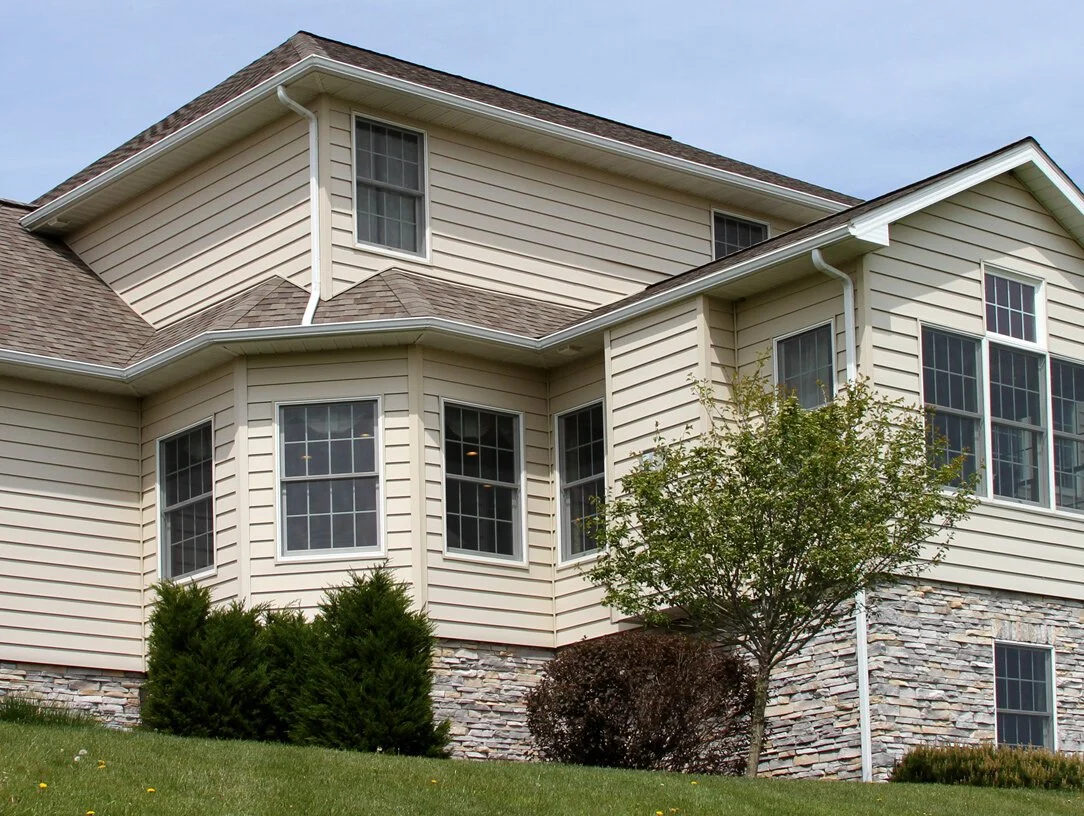
You're standing in your driveway in Sterling Heights, looking at the south side of your house. The vinyl siding you installed 15 years ago is starting to warp near the garage. A few panels cracked last winter when the temperature dropped to -8°F. Your neighbor just had James Hardie fiber cement installed, and they won't shut up about it. But it cost them nearly double what you paid for vinyl.
So which one actually holds up better in Michigan?
After 35 years installing house siding in Detroit and across Southeast Michigan, we've seen both materials tested by every weather condition this state can throw at them. Freeze-thaw cycles that crack foundations. Lake-effect snow that buries first-floor windows. Summer storms with 60 mph winds. We've repaired the failures, replaced the worn-out, and heard every homeowner regret story there is.
This isn't a sales pitch for one material over the other. It's an honest breakdown of how vinyl and fiber cement perform in Michigan's climate—what works, what fails, and what you need to know before you write a check to any Detroit siding company.
How Michigan Weather Tests Siding Materials
Michigan doesn't have weather—it has a stress test. If you want to know whether a siding material is actually durable, install it on a house in Macomb County and wait five years. The climate here exposes every weakness in a product.
Here's what siding faces in Southeast Michigan:
Freeze-Thaw Cycles (40-60 Per Winter)
This is the big one. When temperatures swing above and below 32°F—which happens constantly from November through March—moisture trapped in or behind siding expands as it freezes, then contracts as it thaws. Over and over. Most materials can handle a few cycles. Michigan throws 50+ at them every winter.
Vinyl becomes brittle in extreme cold. We've seen panels crack when a ladder leaned against them in January. Fiber cement, if not installed with proper clearances, can absorb moisture and experience edge swelling. Both materials need to be installed by someone who understands how they move.
Lake-Effect Snow and Ice Dam Pressure
Communities near Lake St. Clair—St. Clair Shores, Grosse Pointe Farms—get hammered with lake-effect snow. That means heavy snow loads sitting against siding for weeks, melting during the day, refreezing at night. Ice dams form along the roofline, and meltwater runs down behind the siding if the flashing isn't right.
This is where seamless gutters in Detroit, MI become critical. Properly functioning gutters prevent water from cascading down your siding and finding its way behind the material. We see rot behind both vinyl and fiber cement when gutters fail—it's not the siding's fault, it's poor water management.
Summer Heat, Humidity, and UV Exposure
July in Royal Oak can hit 95°F with 80% humidity. Dark-colored vinyl siding on a south-facing wall can reach 160°F in direct sun. At those temperatures, vinyl expands. If it's nailed too tight or doesn't have proper expansion gaps, it buckles. We've replaced entire walls of siding that looked like a washboard because the installer didn't account for thermal movement.
Fiber cement doesn't expand and contract nearly as much, but UV exposure will fade any paint finish over time. Quality paint systems—like the factory finishes on James Hardie ColorPlus or LP SmartSide FinishPro—hold up significantly better than field-applied paint.
Wind-Driven Rain and Storm Damage
Michigan gets severe thunderstorms with straight-line winds that can hit 70 mph. Wind-driven rain finds every gap in siding. Hail dents vinyl and can crack fiber cement if it's large enough. We've seen vinyl siding ripped off homes in Troy during summer storms because it wasn't fastened correctly.
Both materials need proper installation to resist wind. That means correct nailing patterns, proper overlap, and attention to corners, transitions, and penetrations. A good exterior services contractor in Detroit knows that the details matter more than the material.
Vinyl Siding: Performance in Michigan Conditions
Vinyl siding is polyvinyl chloride (PVC)—the same plastic used in plumbing pipes, but formed into thin panels with a textured finish. It's been the most popular siding in America for 40 years because it's affordable, low-maintenance, and comes in every color you can imagine.
But how does it actually hold up in Michigan?
Material Composition and Thermal Expansion
Vinyl expands and contracts with temperature changes more than almost any other siding material. A 12-foot panel can expand up to 1/2 inch between winter and summer. That's why vinyl has slotted nail holes and why you're supposed to leave a 1/4-inch gap at corners and trim.
Most vinyl siding failures we see aren't the material's fault—they're installation errors. Panels nailed too tight. No expansion gaps. Siding installed in cold weather when it's contracted, then buckling when summer heat expands it. A quality installer knows to nail in the center of the slot, not tight to the wall, and to leave room for movement.
Cold Weather Brittleness and Cracking
Here's the truth: vinyl gets brittle below 20°F. Not unusable, but brittle enough that impact can crack it. We've seen panels crack from:
- Ladders leaning against the house during winter roof work
- Snowblowers throwing chunks of ice against the foundation
- Kids throwing snowballs (seriously—it happens)
- Hail during a January ice storm
Higher-quality vinyl with thicker profiles and better impact modifiers holds up better. Cheap vinyl (0.040-inch thickness) cracks easier than premium vinyl (0.046-inch or thicker). If you're going with vinyl in Michigan, don't go with the cheapest option.
Wind Resistance and Attachment Methods
Vinyl siding is only as strong as its attachment to the house. The panels interlock, but they're not mechanically fastened to each other—they're nailed to the sheathing through a thin nailing hem. If the nails pull out or the hem tears, the panel comes off.
We've seen vinyl siding blow off during storms because:
- The installer used nails that were too short
- The sheathing was old and soft (common in 1960s ranch homes)
- The nailing pattern skipped studs
- The bottom course wasn't locked into the starter strip correctly
Quality vinyl from manufacturers like CertainTeed, GAF, or Mastic, installed correctly, can handle Michigan winds. But installation matters more than the brand name.
Realistic Lifespan in Southeast Michigan
Vinyl siding manufacturers will tell you their product lasts 30-40 years. In Michigan, here's what we actually see:
- Budget vinyl (builder-grade): 15-20 years before significant fading, cracking, or brittleness
- Mid-grade vinyl: 20-25 years with some color fade but still functional
- Premium vinyl (insulated, thicker profiles): 25-30 years if installed correctly
The first thing to go is usually the color. Dark colors fade faster. South and west-facing walls fade faster. By year 15, most vinyl has noticeably faded, even if it's still structurally sound.
Cost Analysis for Michigan Homes
As of 2026, here's what vinyl siding costs in Southeast Michigan for a typical 2,000-square-foot home (material and labor):
- Budget vinyl: $8,000-$12,000
- Mid-grade vinyl: $12,000-$16,000
- Premium insulated vinyl: $16,000-$22,000
That includes removal of old siding, new housewrap, trim, and installation. It doesn't include repairs to sheathing or framing if we find rot—which we do on about 30% of re-siding jobs.
Vinyl is the most affordable option upfront, and it requires almost no maintenance beyond occasional washing. No painting, no staining, no sealing. That's the appeal.
Michigan Reality Check: If you're planning to sell your home in 5-7 years and you're on a tight budget, vinyl makes sense. If you're staying in the house for 20+ years and you want something that holds its appearance longer, fiber cement is worth considering. We've had this conversation with homeowners in Clinton Township and Shelby Township a hundred times—it's about your timeline and your budget, not which material is "better."
Fiber Cement: How It Handles Michigan Extremes
Fiber cement siding—James Hardie, LP SmartSide, CertainTeed Weatherboards—is a composite material made of cement, sand, and cellulose fibers. It's denser, heavier, and more dimensionally stable than vinyl. It's also more expensive and requires more skill to install.
But in Michigan's climate, it has some real advantages.
Freeze-Thaw Resistance and Moisture Management
Fiber cement doesn't absorb water the way wood does, but it's not completely impervious either. Quality fiber cement (James Hardie, for example) is engineered to resist moisture penetration and handle freeze-thaw cycles without cracking or delaminating.
The key is proper installation. Fiber cement needs:
- A 6-inch clearance from grade (soil or concrete)
- A 2-inch clearance from rooflines and horizontal surfaces
- Sealed cut edges (field cuts need primer and paint)
- Proper flashing at windows, doors, and penetrations
When those details are ignored—and we see it ignored by contractors who don't specialize in fiber cement—moisture wicks into the material, and you get edge swelling, paint failure, and eventually rot in the sheathing behind it.
Installed correctly, fiber cement handles Michigan winters better than vinyl. We've seen 20-year-old James Hardie siding in Lake Orion that still looks tight and flat, with no warping or cracking.
Dimensional Stability Across Temperature Swings
Fiber cement expands and contracts about 1/10th as much as vinyl. That means fewer problems with buckling, fewer gaps at trim, and a more consistent appearance year-round. You don't see the wavy, rippled look that poorly installed vinyl gets after a few Michigan summers.
This stability also means fiber cement can be installed in cold weather (as long as the paint cures properly) without worrying about expansion issues when it warms up. Vinyl installed in January can buckle by July if the installer doesn't account for thermal movement.
Wind and Impact Resistance
Fiber cement is significantly more impact-resistant than vinyl. It won't crack from a ladder leaning against it. It won't dent from hail (though large hail can chip the paint). It's rated for higher wind speeds—James Hardie, for example, is rated up to 130 mph when installed per their specifications.
The trade-off is weight. Fiber cement weighs about 2.5 pounds per square foot, compared to 1 pound for vinyl. That means it requires more robust fastening—we use corrosion-resistant nails or screws driven into studs, not just sheathing. On older homes with questionable framing, that can be a consideration.
Long-Term Cost vs. Value
Fiber cement costs more upfront, but it holds its appearance longer and requires less frequent replacement. Here's the cost breakdown for a 2,000-square-foot home in Southeast Michigan (2026 pricing):
- James Hardie (primed, field-painted): $18,000-$24,000
- James Hardie ColorPlus (factory-finished): $22,000-$28,000
- LP SmartSide (primed or FinishPro): $16,000-$24,000
That's roughly 50-80% more than vinyl. But fiber cement typically lasts 30-50 years in Michigan with minimal maintenance. The factory-finished options (ColorPlus, FinishPro) come with 15-year warranties on the paint, compared to vinyl that starts fading in 10-12 years.
If you're planning to stay in the house long-term, the cost-per-year can actually be lower with fiber cement. If you're selling in a few years, vinyl makes more financial sense.
The Real Cost Comparison for Southeast Michigan
Let's break down what you're actually spending over the life of the siding, not just the initial installation. Michigan homeowners are practical—you want to know the total cost of ownership, not just the sticker price.
Material Costs (2026 Pricing)
For a typical 2,000-square-foot two-story home in Macomb or Oakland County:
| Material | Cost Range | Warranty |
|---|---|---|
| Budget vinyl | $8,000-$12,000 | Lifetime (prorated after 10 years) |
| Premium vinyl | $16,000-$22,000 | Lifetime (better fade protection) |
| Fiber cement (primed) | $18,000-$24,000 | 30-50 years (material) |
| Fiber cement (factory-finished) | $22,000-$28,000 | 30-50 years (material) + 15 years (finish) |
These prices include tear-off, disposal, new housewrap, trim, and installation by a licensed contractor. They don't include repairs to underlying structure—if we find rotted sheathing or framing (common in older homes), that's additional.
Installation Complexity and Labor
Vinyl is faster to install. An experienced crew can side a typical house in 3-5 days. Fiber cement takes 5-7 days because it's heavier, requires more precise cutting, and needs more attention to flashing and sealing.
That labor difference is baked into the cost, but it's worth understanding why fiber cement costs more—it's not just the material, it's the time and skill required to install it correctly. We've repaired fiber cement jobs from contractors who treated it like vinyl (no edge sealing, improper clearances, wrong fasteners), and the results are expensive to fix.
Maintenance Requirements Over 20 Years
Vinyl: Wash it once a year with a garden hose and mild detergent. That's it. No painting, no staining, no sealing. Total maintenance cost over 20 years: maybe $200 if you pay someone to pressure-wash it occasionally.
Fiber cement (primed, field-painted): You'll need to repaint every 10-15 years. For a 2,000-square-foot house, that's $4,000-$6,000 per paint job. Over 20 years, that's one repaint. Total maintenance cost: $4,000-$6,000.
Fiber cement (factory-finished): The factory finish (James Hardie ColorPlus, LP SmartSide FinishPro) lasts significantly longer—15-20 years before it needs repainting. You might get 20 years with no maintenance beyond washing. Total maintenance cost: $0-$4,000 depending on how long you wait to repaint.
Energy Efficiency and R-Value Reality
Let's be honest: neither vinyl nor fiber cement adds meaningful insulation to your home. Standard vinyl has an R-value of about 0.6. Fiber cement is around 0.4. Insulated vinyl (with foam backing) gets you to R-2 to R-3, which is better but still not significant compared to attic insulation in Metro Detroit (which should be R-49 to R-60).
If you want to improve your home's energy efficiency, invest in top-rated insulation services in Detroit, air-seal the attic and rim joists, and upgrade to energy-efficient windows in Southeast Michigan. Siding is about weather protection and curb appeal, not thermal performance.
Resale Value Impact in Metro Detroit Market
Both vinyl and fiber cement improve resale value compared to old, failing siding. But fiber cement typically adds slightly more value in higher-end markets—Bloomfield Hills, Rochester Hills, Grosse Pointe Farms—where buyers expect premium materials.
In more budget-conscious markets—Warren, Sterling Heights, parts of Macomb Township—vinyl is perfectly acceptable and won't hurt resale value. Buyers care more about condition and curb appeal than whether it's vinyl or fiber cement.
If you're prepping a house for sale, talk to your realtor. We work with realtors across Southeast Michigan, and the advice is usually the same: clean siding in good condition sells the house. The material matters less than the appearance.
Which Siding Works Best for Your Michigan Home?
There's no universal "best" answer. It depends on your house, your budget, your timeline, and what you value. Here's how we guide homeowners through the decision.
1960s Ranch Homes (Most Common in Macomb County)
These homes—single-story, 1,200-1,600 square feet, built with 2x4 framing and thin sheathing—are all over Clinton Township, Roseville, Warren, and Sterling Heights. They were built fast and cheap, and the sheathing is often soft or deteriorated.
Vinyl works well here because it's light, affordable, and doesn't stress the framing. We often find that the existing sheathing needs repair or replacement, and vinyl's lighter weight means we don't need to reinforce the structure.
If you go with fiber cement on a ranch, make sure the contractor checks the framing and sheathing first. We've had to add blocking or replace sheathing to handle the extra weight.
Brick Colonials (Oakland County Prevalence)
Two-story brick Colonials with siding on the upper level or gable ends are common in Troy, Rochester Hills, and Bloomfield Hills. The brick is typically in good shape, but the siding on the upper level takes a beating from sun and weather.
Fiber cement is a good match here because it complements the brick's durability and appearance. James Hardie's factory-finished options come in colors that pair well with brick, and the material's longevity matches the rest of the house.
Vinyl works too, especially premium insulated vinyl, but the color fade over 15-20 years can make the upper level look tired while the brick still looks solid.
Historic Districts and Architectural Considerations
If you're in a historic district—parts of Mount Clemens, downtown Royal Oak, older neighborhoods in Detroit—you may have restrictions on siding materials. Some districts require wood or fiber cement that mimics historic profiles. Vinyl, even high-quality vinyl, may not be allowed.
Fiber cement can be milled to match historic wood siding profiles (clapboard, shingle, board-and-batten), making it a good choice for historic homes where you want durability but need to maintain architectural character.
Budget-Conscious Decisions
If your budget is tight and you need to replace failing siding now, vinyl is the practical choice. It's affordable, it works, and it'll protect your home for 20+ years if installed correctly.
Don't let anyone shame you for choosing vinyl. It's the most popular siding in America for a reason—it delivers good value for the money. Just make sure you're working with a contractor who installs it right, not someone who's going to nail it tight and skip the expansion gaps.
When to Choose Vinyl vs. Fiber Cement
Choose vinyl if:
- Your budget is $8,000-$16,000 for a typical home
- You're planning to sell in 5-10 years
- You want zero maintenance beyond occasional washing
- Your home is a ranch or single-story with light framing
- You're in a neighborhood where vinyl is the norm
Choose fiber cement if:
- You're staying in the house 15+ years
- You want a material that holds its appearance longer
- You're willing to invest more upfront for lower long-term costs
- Your home is a Colonial, two-story, or has brick that you want to complement
- You're in a higher-end market where buyers expect premium materials
We install both. We're not here to push one over the other—we're here to help you make the right choice for your home and your situation. That's part of what it means to work with a trusted exterior contractor in Detroit.

Signs Your Current Siding Is Failing
How do you know when it's time to replace your siding? Here are the signs we look for during inspections across Macomb, Oakland, and St. Clair counties.
Warping, Buckling, or Loose Panels
If vinyl panels are warped, buckled, or pulling away from the house, that's a sign of improper installation (nailed too tight, no expansion gaps) or material failure. It won't get better—it'll get worse. Warped siding can't protect the sheathing underneath, and water will find its way in.
Fiber cement doesn't warp, but it can crack if it wasn't installed with proper clearances or if the house has settled and created stress points.
Moisture Intrusion and Rot Behind Siding
If you see water stains on interior walls, peeling paint inside the house, or soft spots when you push on the siding, you likely have moisture getting behind it. This is common around windows, doors, and where the siding meets the roofline.
Pull a piece of siding off (carefully) and look at the sheathing. If it's dark, soft, or crumbling, you have rot. That needs to be fixed before you install new siding, or you're just covering up a bigger problem.
Fading and Chalking
Vinyl fades. It's a fact of life in Michigan. If your siding has faded to the point where it looks washed out or chalky (run your hand across it—if white powder comes off, that's chalking), it's reached the end of its aesthetic life. It might still be functional, but it's not doing your home's curb appeal any favors.
Fiber cement with a quality factory finish fades much slower, but even it will eventually need repainting.
Increased Energy Bills
If your heating or cooling bills have crept up and you haven't changed your thermostat habits, failing siding could be part of the problem. Gaps, cracks, or loose panels let air infiltrate, making your HVAC system work harder.
That said, siding is only one piece of the energy efficiency puzzle. Before you blame the siding, check your attic insulation, air-seal the rim joists, and make sure your windows aren't leaking air.
When to Call a Contractor
If you're seeing any of these signs, it's time to get an inspection. We offer free, no-pressure estimates across Southeast Michigan. We'll look at your siding, check the sheathing, and give you an honest assessment of what needs to be done.
We're not going to tell you to replace your siding if it doesn't need replacing. We've been doing this since 1988—we don't need to scare you into a sale. If your siding is fine, we'll tell you. If it's failing, we'll explain why and give you options that fit your budget.
Beyond siding, we handle the full range of exterior services in Detroit—roofing, windows, gutters, insulation, and exterior painting. If your home needs more than just siding, we can handle it all in one project.
Ready to Get Started?
NEXT Exteriors has been protecting Michigan homes since 1988. Get a free, no-pressure estimate from a team that shows up on time and does the job right.
Get Your Free QuoteOr call us: (844) 770-6398
Frequently Asked Questions
Vinyl becomes more brittle below 20°F, which means it's more susceptible to cracking from impact—ladders, snowblowers, hail, or even kids throwing snowballs. Higher-quality vinyl with thicker profiles and better impact modifiers holds up better. Budget vinyl (0.040-inch thickness) is more prone to cracking than premium vinyl (0.046-inch or thicker). Proper installation also matters—panels nailed too tight or without expansion gaps are more likely to crack when temperatures swing.
Quality fiber cement (James Hardie, LP SmartSide) typically lasts 30-50 years in Michigan when installed correctly. The material itself is highly durable and resists freeze-thaw cycles, moisture, and impact better than vinyl. The factory-finished options (ColorPlus, FinishPro) come with 15-year paint warranties and can go 15-20 years before needing a repaint. Primed fiber cement that's field-painted will need repainting every 10-15 years. The key to longevity is proper installation—correct clearances, sealed edges, and proper flashing.
Insulated vinyl adds R-2 to R-3 of insulation value, which is a modest improvement but not a game-changer for energy efficiency. For context, your attic should have R-49 to R-60 of insulation in Michigan. The real benefits of insulated vinyl are improved impact resistance (the foam backing makes it less likely to dent or crack) and a flatter, more rigid appearance. If you're choosing between budget vinyl and insulated vinyl and the cost difference is reasonable, it's worth it. But don't expect dramatic energy savings—focus on attic insulation, air sealing, and windows for real efficiency gains.
Yes, but with some caveats. Fiber cement can be installed in cold weather as long as the temperature is above the paint manufacturer's minimum (usually 35-40°F) and the paint has time to cure properly. Vinyl is trickier—because it contracts in cold weather, it needs to be installed with extra attention to expansion gaps. If vinyl is installed when it's 20°F and contracted, it can buckle when it expands in summer heat. Experienced contractors know how to adjust for temperature, but many prefer to wait until spring. We install year-round, but we're selective about conditions and materials.
Lighter colors fade slower and absorb less heat, which means less thermal expansion and longer-lasting appearance. Dark colors—especially dark grays, blues, and browns—look great initially but will fade faster from UV exposure and can reach higher temperatures in summer sun, causing more expansion in vinyl. If you love dark colors, fiber cement with a factory finish (James Hardie ColorPlus, LP SmartSide FinishPro) holds color significantly better than vinyl. For vinyl, stick with mid-tones or lighter shades if you want the color to last 15+ years without noticeable fading.
Not necessarily, but it's a good time to evaluate it. If your siding is 15+ years old, faded, or showing signs of damage, it makes sense to do both projects together. You'll save on labor (the crew is already there with scaffolding and equipment), and you can coordinate the roof and siding colors for a cohesive look. We often recommend doing both if the siding is near the end of its life—it's more efficient than doing two separate projects a few years apart. If your siding is newer and in good shape, there's no need to replace it just because you're getting a new roof.
Both are excellent fiber cement products that perform well in Michigan. James Hardie is a cement-based product (cement, sand, cellulose fibers), while LP SmartSide is an engineered wood product with a moisture-resistant coating. James Hardie is denser and heavier, with slightly better fire resistance. LP SmartSide is lighter, easier to cut, and often costs a bit less. Both come with factory-finished options (ColorPlus for Hardie, FinishPro for LP) that carry 15-year paint warranties. The choice often comes down to installer preference and availability. We install both and recommend based on your home's specific needs and budget.
LP SmartSide vs James Hardie Siding in Michigan | NEXT Exteriors
Comparing LP SmartSide and James Hardie for Michigan homes. Cost, durability, warranties, and which siding survives freeze-thaw cycles. Real contractor insight.
If you're researching premium siding options for your Michigan home, you've probably narrowed it down to two names: LP SmartSide and James Hardie. Both show up in every "best siding" article online. Both claim superior durability. Both cost significantly more than vinyl.
But here's what those articles don't tell you: these two products perform very differently in Michigan's freeze-thaw cycles, ice dam zones, and humidity swings. After 35+ years installing both as a Detroit siding company, we've seen which one holds up better in Sterling Heights, which one works best on 1960s brick ranches in Royal Oak, and which one actually delivers on its warranty promises when something goes wrong.
This isn't a sales pitch for either brand. We install both. We're certified by both manufacturers. This is a straight comparison based on jobsite reality, not marketing brochures.
Material Science: What Each Product Actually Is
Let's start with what you're actually buying when you choose one over the other.
James Hardie: Fiber Cement
James Hardie siding is fiber cement — a mix of cement, sand, and cellulose fibers formed under high pressure. Think of it like engineered concrete formed into planks. It's heavy (about 2.3 pounds per square foot for HardiePlank), non-combustible, and dimensionally stable. It doesn't expand or contract much with temperature changes.
The ColorPlus finish is a baked-on coating applied at the factory in a controlled environment, designed to last 15 years before needing a repaint. The material itself is moisture-resistant but not waterproof — water can penetrate the edges if they're not properly sealed during installation.
LP SmartSide: Engineered Wood
LP SmartSide is engineered wood — oriented strand board (OSB) treated with zinc borate and sealed with their proprietary SmartGuard process. It's essentially wood strands compressed, bonded with resin, and treated to resist moisture, fungal decay, and termites.
It's lighter than fiber cement (about 1.4 pounds per square foot), which makes it easier to handle and install. It comes primed and ready for paint, or you can order it pre-finished. The wood substrate means it has some natural flex, which can be an advantage or disadvantage depending on your home's framing condition.

The Key Difference
Fiber cement is inorganic. Engineered wood is organic (treated, but still wood-based). That difference matters when you're dealing with Michigan's climate extremes.
Performance in Michigan's Climate
Michigan weather beats the hell out of siding. We're not talking about mild coastal climates or dry desert conditions. We're talking about 40-degree temperature swings in a single day, lake-effect snow dumps, ice dams forming on north-facing walls, and summer humidity that makes everything swell.
Freeze-Thaw Cycles
Southeast Michigan averages 40-60 freeze-thaw cycles per winter. Water gets into cracks, freezes, expands, thaws, and repeats. This is where fiber cement shines. James Hardie doesn't absorb much water (less than 6% by weight), and it doesn't expand or contract significantly with temperature changes. We've seen 20-year-old Hardie installations in Grosse Pointe Farms that still look tight.
LP SmartSide handles freeze-thaw reasonably well, but it's more vulnerable at the edges and fastener points. If water gets behind the SmartGuard coating — through a poorly caulked seam or a nail pop — the wood substrate can absorb moisture and start to swell. We've repaired LP installations in Clinton Township where edge swelling caused buckling after 8-10 years, usually on west-facing walls that take the brunt of winter storms.
Moisture Resistance and Humidity
Both products resist moisture when installed correctly, but "correctly" is doing a lot of work in that sentence.
James Hardie requires careful attention to flashing, caulking, and edge sealing. The material itself won't rot, but if water gets behind it and sits against your OSB sheathing, you've got a different problem. We always install a weather-resistant barrier and ensure proper drainage behind Hardie installations.
LP SmartSide's zinc borate treatment resists fungal decay and termites, but prolonged moisture exposure can still cause problems. Michigan's summer humidity — especially in basements and crawl spaces — can affect engineered wood products over time. If your home has poor ventilation or drainage issues, fiber cement is the safer bet.
Ice Dam Contact Zones
Ice dams are a Michigan reality, especially on older homes with inadequate attic insulation. When ice forms along the roofline and water backs up under shingles, it can run down behind the siding.
Fiber cement handles this better. It won't rot, warp, or delaminate from ice dam water exposure. LP SmartSide can survive it if the installation is perfect and the coating is intact, but we've seen edge damage on homes in Lake Orion where ice dams were a recurring issue.
Contractor Reality Check: No siding product will save you if your attic insulation is inadequate or your gutters are failing. Fix the root cause first. We've seen homeowners spend $30,000 on premium siding only to have ice dams destroy it within five years because they never addressed the gutter system or insulation problems.
Cost Reality: Installation and Long-Term Value
Let's talk money. This is where most homeowners make their decision, and it's where the marketing materials get vague.
Material Cost (2026 Southeast Michigan Pricing)
| Product | Material Cost per Sq Ft | Installed Cost per Sq Ft |
|---|---|---|
| LP SmartSide (primed) | $2.50 - $3.50 | $7.00 - $9.50 |
| LP SmartSide (pre-finished) | $3.50 - $4.50 | $8.00 - $10.50 |
| James Hardie (primed) | $3.00 - $4.00 | $8.50 - $11.00 |
| James Hardie ColorPlus | $4.50 - $5.50 | $10.00 - $13.00 |
These numbers assume a typical 2,000-square-foot home in Macomb County with average trim complexity. Your actual cost depends on home size, architectural details, current siding removal, and whether you're addressing sheathing or insulation issues during the project.
Labor Differences
James Hardie takes longer to install. It's heavier, requires carbide-tipped blades (which wear out faster), and generates silica dust that requires respiratory protection and careful cleanup. A crew that can side a house with LP in three days might need four or five days for Hardie.
LP SmartSide cuts like wood, goes up faster, and doesn't require specialized dust control. But it requires more attention to edge sealing and caulking. If your installer rushes through those details, you'll pay for it later.
Long-Term Maintenance Costs
James Hardie ColorPlus is supposed to last 15 years before repainting. In reality, we see south- and west-facing walls starting to fade or chalk after 10-12 years in Michigan. Repainting fiber cement costs about $4-6 per square foot for professional work using quality Sherwin-Williams paint.
LP SmartSide requires repainting every 10-15 years, depending on exposure and paint quality. The substrate holds paint well if it's properly primed and prepped. Budget $3.50-5.00 per square foot for repainting.
Over a 30-year period, the total cost difference between the two is smaller than most people think — maybe $2,000-4,000 on a typical home when you factor in repainting cycles.
ROI for Resale
In Metro Detroit's real estate market, premium siding adds value, but buyers don't distinguish much between LP and Hardie. What they notice is: Does it look good? Is it clean? Are there visible problems?
We work with realtors across Oakland and Macomb counties who prepare homes for sale. Both products sell well if they're in good condition. Vinyl siding is where you lose perceived value, not in the LP vs. Hardie debate.
Warranty Comparison
Warranties look impressive in the brochure. Here's what they actually cover.
James Hardie Warranty
James Hardie offers a 30-year non-prorated product warranty covering defects in materials and manufacturing. The ColorPlus finish has a 15-year warranty against peeling, cracking, and chipping.
What's covered: Manufacturing defects, material failure, finish failure (ColorPlus only).
What's not covered: Installation errors, improper flashing, damage from ice dams, normal weathering, fading beyond specified limits, damage from impact or settling.
Transferability: Yes, the warranty transfers to the next homeowner if you sell, which is a selling point for resale.
LP SmartSide Warranty
LP offers a 5-year 100% replacement warranty (labor and materials) and a 50-year prorated product warranty (the "5/50" structure).
What's covered: Defects in materials and manufacturing, fungal decay, termite damage (if the SmartGuard treatment fails).
What's not covered: Installation errors, edge swelling from moisture intrusion, normal weathering, damage from improper painting or maintenance.
Transferability: Yes, but the 5-year full coverage period doesn't reset — it's based on the original installation date.
The Reality
Both warranties are solid, but most claims we've seen over 35 years come down to installation quality, not product defects. If your installer doesn't follow the manufacturer's installation guidelines — proper fastening, edge clearances, flashing details — the warranty won't help you.
This is why choosing a contractor with manufacturer certifications matters. NEXT Exteriors is certified by both LP and James Hardie, which means we're trained on proper installation methods and our work is backed by the manufacturers.
Installation Differences That Matter
The quality of the installation determines how well either product performs. Here's what separates a good job from a mediocre one.
Weight Considerations
James Hardie is heavy — about 60% heavier than LP SmartSide. On older Michigan homes, especially 1960s ranches with brick veneer and aging framing, that weight matters. We always inspect the sheathing and framing condition before recommending Hardie on older homes. If the OSB sheathing is soft or the studs are compromised, we'll recommend LP or address the structural issues first.
Fastening and Thermal Movement
James Hardie requires specific fastening — blind nailing through the overlap zone, not face nailing. The planks need room to expand and contract (even though they don't move much), so you can't overdrive fasteners or cinch them down tight.
LP SmartSide is more forgiving with fastening, but it still requires attention to edge clearances and proper nail placement. Overdriven nails can compress the OSB substrate and create weak points where moisture can enter.
Trim Work and Corner Details
Both products require careful trim work. James Hardie trim boards are heavy and need to be properly supported. LP trim is lighter and easier to work with, but it requires more attention to caulking and edge sealing.
We see more problems with corner boards and trim joints than with the siding itself. If those details aren't caulked properly with a high-quality sealant, water gets behind the siding and you've got problems regardless of which product you chose.
Paint vs. Pre-Finished
James Hardie ColorPlus is factory-finished with a baked-on coating. It looks great out of the box and requires no painting. But if you ever need to repaint (after 15 years or if you want to change colors), you're painting over a very smooth, hard surface. It requires proper prep and the right primer.
LP SmartSide comes primed or pre-finished. The primed version requires two coats of quality paint. We use Sherwin-Williams Duration or Emerald for LP installations — the paint quality directly affects how long the finish lasts.
Installer Insight: We've seen $40,000 siding jobs fail because the homeowner hired the cheapest painter they could find for the finish coats. If you're going with primed LP, budget for professional painting. It's not the place to cut corners.
Which One We Recommend (And When)
After installing both products on hundreds of homes across Southeast Michigan, here's when we recommend each one.
Choose James Hardie If:
- Your home has chronic ice dam issues and you can't fully resolve them with insulation upgrades. Fiber cement is more forgiving of ice dam water exposure.
- You're in a high-wind area near the lake or on an exposed lot. Hardie's rigidity and weight make it more wind-resistant (it's rated for 130+ mph winds when properly installed).
- You want a factory finish and don't plan to repaint for 15+ years. ColorPlus is the best pre-finished option available.
- Your home has solid framing and good sheathing. Hardie's weight isn't an issue on newer construction or well-maintained older homes.
- Fire resistance matters. Fiber cement is non-combustible, which can lower insurance premiums in some cases.
Choose LP SmartSide If:
- Your budget is tighter and you want premium performance without the premium price. LP delivers 85-90% of Hardie's durability at 75-80% of the cost.
- Your home has older framing or questionable sheathing. LP's lighter weight is easier on aging structures.
- You want more color flexibility or plan to repaint in a different color down the road. LP takes paint beautifully and is easier to repaint than ColorPlus.
- You're working with a tight timeline. LP installs faster, which matters if you're preparing a home for sale or dealing with weather constraints.
- You're installing on a complex architectural style with lots of trim, gables, and detail work. LP trim boards are easier to work with than Hardie trim.
What We Install Most Often
In Southeast Michigan, we probably install LP SmartSide on 60% of our premium siding projects and James Hardie on 40%. LP wins on budget and versatility. Hardie wins when the homeowner prioritizes maximum durability and has the budget for it.
Both are excellent products. The "wrong" choice is usually vinyl siding on a home that deserves better, or choosing either LP or Hardie and pairing it with a low-bid installer who doesn't follow the manufacturer's guidelines.
Signs Your Current Siding Is Failing
Whether you have LP, Hardie, vinyl, or wood siding, here are the warning signs that it's time for a replacement or serious repair.
Moisture Infiltration
- Water stains on interior walls near exterior walls
- Peeling paint or wallpaper on interior walls
- Musty odors in rooms along exterior walls
- Visible mold or mildew on interior surfaces
Paint Failure Patterns
- Peeling, cracking, or bubbling paint on siding
- Excessive chalking (powdery residue when you touch it)
- Fading or color inconsistency, especially on south- and west-facing walls
- Paint failure near seams, corners, or trim joints
Warping, Buckling, or Separation
- Siding planks that are bowed, cupped, or wavy
- Gaps between planks or at corner boards
- Planks that are pulling away from the house
- Loose or missing trim boards
Edge Damage
- Swelling or delamination at plank edges (common with LP if moisture gets in)
- Cracking or chipping at corners or cut edges (common with Hardie)
- Soft spots or rot at the bottom edges near the foundation
Increased Energy Bills
If your heating or cooling costs have jumped and you haven't changed your thermostat habits, failing siding could be letting conditioned air escape. Combine siding replacement with energy-efficient windows and proper insulation for maximum savings.
If you're seeing any of these signs, get an inspection from a licensed contractor. Waiting too long can turn a siding replacement into a sheathing and framing repair, which costs a lot more.
When to Call: If you're not sure whether your siding needs replacement or just maintenance, we'll give you an honest assessment. We've been in business since 1988 because we don't sell people work they don't need. Call (844) 770-6398 or request a free inspection.
Other Services from NEXT Exteriors
Beyond siding, NEXT Exteriors provides comprehensive exterior services in Detroit and Southeast Michigan. Whether you need roof replacement, window installation, seamless gutter systems, or attic insulation upgrades, we handle it all with the same attention to detail and old-school work ethic. We're also the go-to exterior painting professionals in Southeast Michigan, using only Sherwin-Williams products for long-lasting results.
Ready to Get Started?
NEXT Exteriors has been protecting Michigan homes since 1988. Get a free, no-pressure estimate from a team that shows up on time and does the job right.
Get Your Free QuoteOr call us: (844) 770-6398
Frequently Asked Questions
LP SmartSide performs well in Michigan winters when properly installed, but James Hardie has a slight edge in extreme freeze-thaw conditions and ice dam zones. Hardie's fiber cement composition doesn't absorb water like engineered wood can, making it more forgiving in high-moisture situations. That said, LP's SmartGuard treatment and zinc borate protection handle Michigan weather very well — we've seen 15-20 year old LP installations in Macomb County that still look great. The key is installation quality and addressing underlying moisture issues (gutters, insulation, ventilation).
For a typical 2,000-square-foot home in Metro Detroit, expect to pay $14,000-19,000 for LP SmartSide (installed) and $17,000-26,000 for James Hardie ColorPlus (installed). These numbers include removal of old siding, installation of weather-resistant barrier, new siding, trim, and caulking. The range depends on architectural complexity, current siding condition, and whether you need sheathing repairs. Homes with lots of gables, dormers, or intricate trim work cost more. Always get at least three quotes from licensed contractors and make sure they're bidding the same scope of work.
LP SmartSide is often the better choice for older Michigan homes (1960s ranches, brick Colonials with aging framing) because it's lighter and puts less stress on the structure. James Hardie's weight can be an issue if the sheathing is soft or the framing is compromised. We always inspect the substrate before recommending Hardie on homes built before 1980. If the bones are solid, Hardie is fine. If there's any question about structural integrity, LP is the safer bet. Both products perform well on older homes when paired with proper flashing, a good weather barrier, and attention to ventilation.
Yes, eventually. James Hardie ColorPlus is designed to last 15 years before repainting, though we typically see fading or chalking on south- and west-facing walls after 10-12 years in Michigan. LP SmartSide (whether primed or pre-finished) needs repainting every 10-15 years depending on sun exposure and paint quality. Both products hold paint well if properly prepped. Budget $3.50-6.00 per square foot for professional repainting with quality Sherwin-Williams paint. The good news: both products are much easier to repaint than vinyl siding (which you can't repaint) or old wood siding (which requires extensive prep).
We don't recommend it. Both LP and James Hardie require a flat, solid substrate for proper installation. Installing over old siding (vinyl, aluminum, or wood) traps moisture, hides structural problems, and voids the manufacturer's warranty. The right way is to remove the old siding, inspect the sheathing, make any necessary repairs, install a weather-resistant barrier, and then install the new siding. Yes, it costs more upfront, but it's the only way to ensure the new siding performs as designed and lasts 30+ years. We've removed too many failed "over-siding" jobs where water damage went undetected for years.
James Hardie has a slight advantage in lake-effect snow areas (western Wayne County, parts of Macomb County near the lake) because fiber cement doesn't absorb moisture and won't swell or delaminate from prolonged snow contact. That said, LP SmartSide performs well in these conditions if the installation is done right — proper flashing, adequate clearance from the ground, and good drainage. The bigger issue in lake-effect areas is ice dams and roof drainage. Make sure your gutters are properly sized, your attic insulation is adequate, and your roof ventilation is correct. No siding will save you if water is cascading down your walls from ice dams every winter.
For a typical 2,000-square-foot home in Southeast Michigan, LP SmartSide takes 3-5 days to install (including old siding removal and trim work). James Hardie takes 4-6 days because it's heavier, requires more careful cutting (silica dust control), and takes longer to handle. Complex homes with lots of gables, dormers, or architectural details take longer. Weather delays are common in Michigan — we don't install siding in rain, and we avoid installation when temperatures drop below 40°F (adhesives and caulks don't cure properly in cold weather). A reputable contractor will give you a realistic timeline and communicate delays promptly.