

Exterior Siding Repair Metro Detroit | NEXT Exteriors MI
Expert exterior siding repair in Metro Detroit. NEXT Exteriors fixes cracks, warping, and storm damage across Southeast Michigan. Licensed, A+ rated, 35+ years experience.

Michigan weather doesn't play nice with siding. We've seen what 35 winters of freeze-thaw cycles, lake-effect snow, summer storms, and brutal wind can do to vinyl, fiber cement, and wood siding across Metro Detroit. A small crack in October becomes a water-damaged wall cavity by March. A loose panel after a summer storm turns into $3,000 worth of rotted sheathing by the time you notice the interior wall stain.
Here's the truth: most siding damage in Southeast Michigan doesn't announce itself. It starts small — a hairline crack near a window, a panel that's slightly buckled, a corner piece that's come loose. Homeowners in Sterling Heights, Rochester Hills, and Grosse Pointe Farms walk past these problems every day without realizing they're looking at the early stages of serious structural issues.
At NEXT Exteriors, we've handled house siding in Detroit and across the tri-county area since 1988. We've repaired everything from isolated woodpecker damage on LP SmartSide to full-wall replacements after hail storms destroyed vinyl siding. This guide covers what we've learned from 500+ projects: when repair makes sense, what it actually costs, and how to find a contractor who'll fix it right the first time.
Signs Your Siding Needs Repair in Metro Detroit
Most homeowners don't inspect their siding until they're getting ready to sell or they notice an obvious problem. By then, what could have been a $400 repair has often become a $2,500 replacement job. Here's what to look for during your twice-yearly walk around the house (we recommend spring after snowmelt and fall before the first freeze).
Visible Cracks and Holes
Any crack longer than 2 inches needs attention. In Michigan's freeze-thaw climate, water gets into small cracks, freezes overnight, expands, and makes the crack bigger. By spring, you've got a 6-inch split that's letting water behind your siding. Holes from impacts (hail, baseballs, falling branches) or woodpecker damage need immediate repair — they're direct pathways for water and insects.
Warping and Buckling
Vinyl siding warps when it's installed too tight or when it absorbs heat on south-facing walls during Michigan's humid summers. You'll see panels that bow out or have a wavy appearance. Fiber cement and engineered wood can buckle when moisture gets behind them and the substrate swells. Stand at an angle to your house — if panels aren't lying flat, that's a problem.
Loose or Missing Panels
Wind is the usual culprit here. A 50-mph gust during a summer thunderstorm can rip poorly fastened siding right off the wall. Sometimes the panel is still there but no longer locked into the piece below it. Sometimes it's gone entirely. Either way, you've got exposed house wrap or sheathing, and that's an emergency repair in our book.
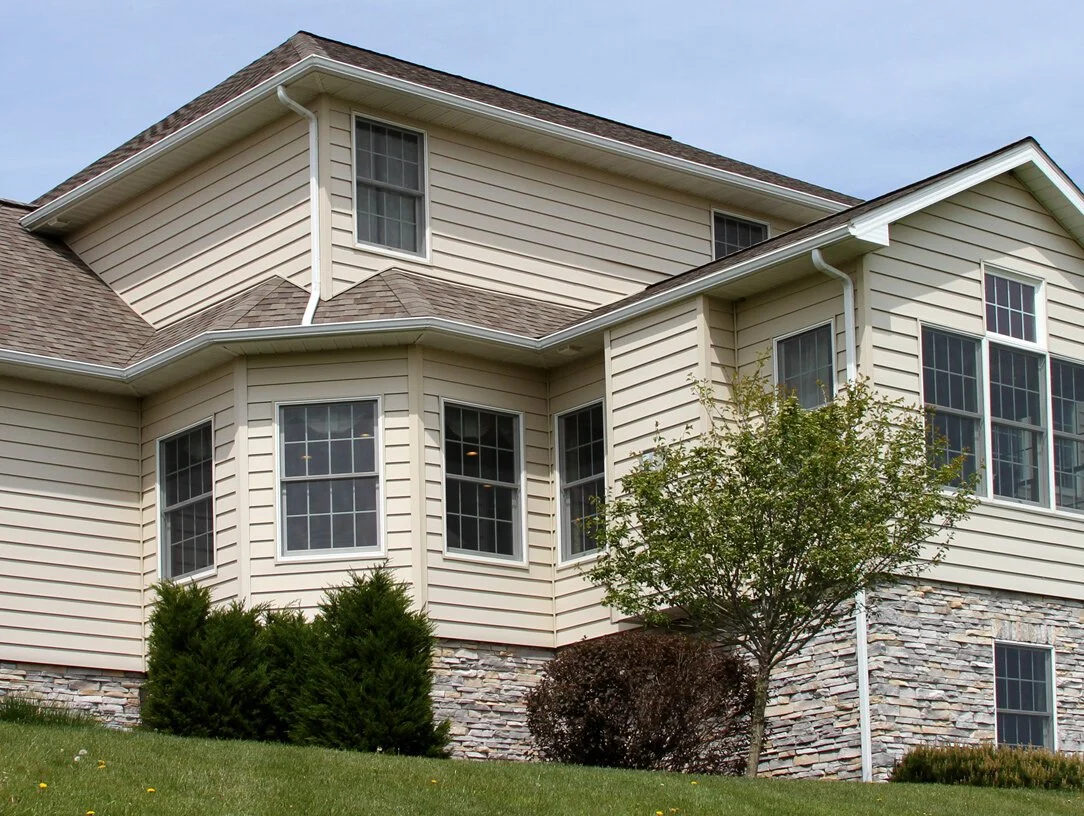
Water Stains and Mold Growth
Dark streaks below windows or at panel seams indicate water is getting behind your siding. Green or black spots are mold or mildew, which means persistent moisture. Check your basement and attic too — water stains on interior walls or insulation often trace back to failed siding above.
Fading and Discoloration
Severe fading isn't just cosmetic. UV degradation breaks down vinyl's plasticizers, making it brittle. Faded siding cracks more easily in cold weather and becomes more vulnerable to impact damage. If your siding has faded from navy blue to pale gray, it's telling you the material is at the end of its service life.
Rising Energy Bills
Damaged siding creates air leaks. If your heating bills have climbed noticeably over the past few winters and you haven't changed your thermostat habits, compromised siding could be the reason. We often find gaps at corner posts, J-channels around windows, and seams where panels have separated — all of which let cold air infiltrate your wall cavities. Pairing top-rated insulation contractor in Detroit services with siding repair can address both the exterior breach and the thermal performance issue.
Common Siding Problems We Fix Across Southeast Michigan
Every region has its own siding challenges based on climate and construction practices. Here's what we see most often in Macomb, Oakland, and St. Clair counties.
Freeze-Thaw Damage
This is the big one in Michigan. Water gets into a crack or behind a panel, freezes when the temperature drops, expands by about 9%, and forces the crack wider or pushes the panel away from the wall. Then it thaws, more water gets in, and the cycle repeats. We see this most on north-facing walls that stay shaded and cold, and on homes with seamless gutters in Detroit, MI that overflow or leak, sending water down the siding instead of away from the house.
Storm and Hail Damage
Michigan gets serious summer storms. Hail the size of quarters dents vinyl and aluminum siding, cracks fiber cement, and punches holes in older wood siding. Wind-driven rain can force water up under siding panels that were installed without proper overlap or flashing. After a major storm, walk your property and look for fresh dents, cracks, or displaced panels. Document everything with photos before calling your insurance company.
Woodpecker Holes
Woodpeckers love LP SmartSide and fiber cement because it sounds hollow when they drum on it. They're either looking for insects behind the siding or marking territory. Either way, you end up with nickel- to quarter-sized holes that need to be patched and painted. The repair itself is straightforward, but if you don't address the underlying insect problem or install deterrents, they'll just come back.
Michigan-Specific Insight: We see more woodpecker damage in wooded areas of Oakland County (Lake Orion, Bloomfield Hills) than in urban Detroit or Clinton Township. If you're backing up to woods, consider installing reflective tape or predator decoys near vulnerable wall sections.
Poor Original Installation
This is the most frustrating problem because it's completely preventable. Vinyl siding nailed too tight can't expand and contract with temperature changes, so it buckles. Panels installed without proper starter strips at the bottom pull away from the wall. Missing or improperly installed J-channel around windows lets water run behind the siding. We've torn off siding installed by cut-rate contractors and found no house wrap, missing flashing, and fasteners driven through the siding face instead of the nailing hem. When we encounter these situations, repair often isn't enough — you're looking at sections that need to be removed and reinstalled correctly.
Water Infiltration Behind Siding
Siding is a drainage plane, not a waterproof barrier. It's designed to shed most water, but some will get behind it. That's why proper house wrap, flashing, and weep holes are critical. When those elements are missing or fail, water accumulates behind your siding, rots the sheathing, and eventually finds its way into your wall cavities. You'll notice this as interior wall stains, peeling paint near baseboards, or a musty smell. By the time it's obvious inside, you've got significant damage outside.

When to Repair vs. When to Replace
This is the question we get on every estimate call. The honest answer depends on the extent of damage, the age of your siding, and whether you can match the existing material.
Repair Makes Sense When:
- Damage is isolated: A few cracked panels on one wall, a section damaged by a fallen branch, woodpecker holes in a 4-foot area — these are straightforward repairs if we can match your siding.
- Your siding is relatively new: If your siding is less than 15 years old and the damage is localized, repair is almost always more cost-effective than replacement.
- Material is still available: We can match most vinyl siding profiles and colors from the past 20 years through manufacturers like CertainTeed and GAF. Fiber cement from James Hardie is also readily available in standard profiles.
- The underlying structure is sound: If the house wrap, sheathing, and framing behind the damaged siding are in good shape, we can repair the exterior layer without tearing into the wall.
Replacement Makes More Sense When:
- Damage is widespread: If more than 40% of your siding shows cracks, warping, or water damage, you're better off replacing everything. The labor cost to repair that much area approaches the cost of new siding, and you'll have a patchwork appearance.
- Your siding is 25+ years old: Vinyl siding from the 1990s is at the end of its service life. It's brittle, faded, and likely to develop new problems even after we repair the current ones. Fiber cement and wood siding from that era often have moisture damage that isn't visible until we remove panels.
- You can't match the material: Discontinued colors and profiles are a real problem. We can sometimes find close matches, but if your siding is a custom color from a builder who went out of business 20 years ago, you might be looking at replacing an entire wall to avoid a mismatched appearance.
- There's structural damage: If water has rotted the sheathing or framing, we need to tear off the siding, replace the damaged structure, install new house wrap and flashing, and then install new siding. At that point, it makes sense to do the whole house.
We've been transparent about this decision for 35 years. If repair is the smart move, we'll tell you. If you're throwing good money after bad by patching up failing siding, we'll tell you that too. Our free quote process includes a thorough inspection so you understand exactly what you're dealing with.
How NEXT Exteriors Approaches Siding Repair
Siding repair isn't as simple as slapping a new panel over a damaged one. Done wrong, you create more problems than you solve. Here's how we handle it.
Assessment Process
We start by inspecting the damaged area and the surrounding siding. We're looking for the extent of visible damage, but also signs of hidden problems — water stains, soft spots in the sheathing, gaps in the house wrap, or improper flashing. We'll check inside your attic and basement if there's any indication of water intrusion. This assessment determines whether we're looking at a simple panel replacement or a more involved repair that addresses underlying issues.
Material Matching
For vinyl siding, we identify the profile (Dutch lap, clapboard, board and batten, etc.), the exposure width, and the color. Most manufacturers keep popular colors in production for decades, but custom colors can be a challenge. We work with CertainTeed, GAF, and other partners to source exact matches when possible. For James Hardie fiber cement, we match the profile and texture, then prime and paint to match your existing color using Southeast Michigan painting professionals who are Sherwin-Williams certified.
If we can't find an exact match, we discuss options: replacing a full wall section with new material, choosing the closest available match and blending it on a less visible wall, or in some cases, replacing all the siding. We show you samples and explain the visual impact before you commit to anything.
Proper Installation Techniques
Vinyl siding has to float — it's designed to expand and contract with temperature swings of 100°F or more between a Michigan winter night and a summer afternoon. We never nail it tight. Fasteners go in the center of the nailing slots, driven just snug enough to let the panel move. We overlap panels correctly, install J-channel and trim pieces with the right clearances, and make sure every seam is positioned to shed water away from the wall.
Fiber cement and engineered wood require different techniques. James Hardie and LP SmartSide get nailed or screwed directly through the face or the nailing strip (depending on the product), with specific fastener spacing and edge clearances. We follow manufacturer specs exactly — it's the only way to maintain warranty coverage and ensure long-term performance.
Addressing Underlying Issues
If we find damaged house wrap, we replace it. If flashing around a window is missing or improperly installed, we fix it. If the sheathing is soft or rotted, we remove the damaged section, replace it with new OSB or plywood, and make sure it's properly integrated with the existing structure. Siding is only as good as what's behind it. Covering up problems with new panels just delays the inevitable failure.
This is where working with a licensed contractor matters. NEXT Exteriors operates under a Michigan Residential Builder's License, which means we're qualified to handle structural repairs, not just cosmetic fixes. We've seen too many homeowners get burned by unlicensed "siding guys" who patch the surface and leave the rot to spread.

What Siding Repair Actually Costs in Metro Detroit
Pricing depends on the extent of damage, the type of siding, accessibility, and whether we're just replacing panels or also fixing structural issues. Here's what we typically see across Southeast Michigan.
Small Isolated Repairs: $300–$800
This covers replacing 3–8 damaged vinyl or fiber cement panels on an accessible wall (no scaffolding or ladder work above the second story). It includes material, labor, and disposal. If we can't match your siding and need to order a custom color or discontinued profile, add $100–$200 for sourcing.
Medium Repairs: $800–$2,500
This range covers larger damaged sections (half a wall, multiple areas around the house), repairs that require scaffolding or lift rental, or situations where we need to replace house wrap or flashing along with the siding. Woodpecker damage that's spread across multiple walls often falls here, as does hail damage that's affected 20–40 panels.
Extensive Repairs: $2,500–$6,000+
When we're replacing an entire wall, repairing structural damage to sheathing or framing, or dealing with widespread water infiltration that requires removing large sections of siding, costs climb into this range. At this point, we're often having a conversation about whether full replacement makes more sense from a cost and performance standpoint.
Factors That Affect Price
- Siding type: Vinyl is the least expensive to repair. Fiber cement costs more due to material cost and the need for painting. Wood siding (cedar, pine) is the most expensive because it often requires custom milling and finish work.
- Accessibility: First-floor repairs are straightforward. Second-story work requires extension ladders or scaffolding. Third-story or complex rooflines require lifts, which add $200–$500 to the job.
- Structural damage: If we're replacing sheathing, sistering studs, or rebuilding sections of wall framing, you're paying for carpentry labor in addition to siding work.
- Matching challenges: Discontinued colors or profiles can require sourcing from specialty suppliers or salvage yards, which adds time and cost.
- Permits: Most small siding repairs don't require permits in Michigan, but if we're doing structural work or replacing more than 50% of a wall, local building departments may require permits and inspections, which add $100–$300.
Cost Reality Check: We've been doing this since 1988, and we've learned that homeowners appreciate honest numbers up front. If you're calling around for estimates and one contractor is quoting half what everyone else is, ask why. Chances are they're not addressing underlying issues, they're using substandard materials, or they're not licensed and insured. You'll pay more later to fix their work.
Choosing the Right Siding Contractor in Southeast Michigan
Not all contractors are created equal, and siding repair is one of those jobs where cutting corners comes back to haunt you. Here's what to look for when you're vetting contractors in Metro Detroit.
License Verification
Michigan requires a Residential Builder's License for anyone doing structural work or projects over a certain dollar threshold. Ask for the license number and verify it with the Michigan Department of Licensing and Regulatory Affairs (LARA). Unlicensed contractors can't pull permits, can't legally do structural repairs, and leave you with zero recourse if something goes wrong. NEXT Exteriors operates under Premier Builder Inc.'s Michigan license — it's listed on our website and every estimate we provide.
Experience With Your Siding Type
Vinyl, fiber cement, wood, and engineered wood all require different installation techniques and tools. A contractor who specializes in vinyl might not know how to properly flash and paint James Hardie fiber cement. Ask about their experience with your specific siding material. Request references from jobs they've done with that material in the past two years, and follow up with those homeowners.
Material Sourcing and Partnerships
We're partnered with CertainTeed, GAF, James Hardie, and LP SmartSide because those relationships give us access to product inventory, technical support, and warranty coverage that benefits our customers. A contractor who buys random siding from a big-box store can't always match your existing material and can't offer manufacturer-backed warranties. Ask where they source their materials and whether they're an authorized installer for the brands they use.
Our broader range of exterior services in Detroit means we understand how siding integrates with roofing, windows, and other building envelope components — a perspective that matters when we're diagnosing why your siding failed in the first place.
Warranty Coverage
Manufacturer warranties on siding materials are only valid if the product is installed by an authorized contractor following the manufacturer's specs. Labor warranties are separate — they cover the contractor's workmanship. We offer both. Our labor warranty covers installation defects for a minimum of two years (longer on full replacements), and we make sure you're registered for the manufacturer's material warranty. Get everything in writing before the work starts.
Insurance and Liability
General liability insurance protects you if a contractor damages your property. Workers' compensation insurance protects you if a crew member gets injured on your property. Both are non-negotiable. Ask for certificates of insurance and verify them with the insurance company. If a contractor says they're insured but can't provide proof, walk away.
References and Reviews
We've maintained an A+ rating with the BBB since 2006 and a 5.0-star average across 87+ reviews. That didn't happen by accident — it's the result of showing up on time, doing the work we promised, and fixing any issues immediately. Check Google reviews, BBB, and local forums. Look for patterns in the feedback. One or two negative reviews among dozens of positive ones is normal. A pattern of complaints about missed deadlines, poor communication, or shoddy work is a red flag.
No-Pressure Estimates
We don't do high-pressure sales. We're not going to show up with a "one-day-only" discount or tell you your house is going to fall apart if you don't sign today. We'll inspect your siding, explain what we found, give you a detailed written estimate, and let you make the decision on your timeline. If a contractor is pushing you to commit on the spot, that's a sign they're more interested in closing a sale than doing right by you.
Whether you need Detroit roofing services, Detroit window experts, or comprehensive siding work, the same principles apply: license, experience, transparency, and a track record you can verify.
Ready to Get Started?
NEXT Exteriors has been protecting Michigan homes since 1988. Get a free, no-pressure estimate from a team that shows up on time and does the job right.
Get Your Free QuoteOr call us: (844) 770-6398
Frequently Asked Questions About Exterior Siding Repair in Metro Detroit
Small repairs (3–8 panels on an accessible wall) usually take half a day to a full day, including setup and cleanup. Medium repairs that involve scaffolding or multiple areas can take 1–3 days. Extensive repairs with structural work can take a week or more. Weather is a factor in Michigan — we can't install siding in freezing temperatures or during heavy rain, so winter and spring timelines can be longer than summer and fall.
If you're handy and the damage is limited to one or two vinyl panels on the first floor, DIY is possible. You'll need a zip tool to unlock the panels, replacement material that matches your existing siding, and an understanding of proper nailing techniques. That said, most homeowners underestimate the difficulty of matching materials and installing siding correctly. Mistakes lead to leaks, buckling, and voided warranties. For anything beyond a single panel, or for fiber cement and wood siding, hire a licensed contractor.
It depends on your policy and the cause of damage. Hail, wind, and falling trees are typically covered under standard homeowners insurance. Gradual wear and tear, poor maintenance, and installation defects are not. Document all damage with photos immediately after a storm, and contact your insurance company before making repairs. We work with insurance adjusters regularly and can provide detailed estimates that align with insurance requirements. Just make sure you understand your deductible and coverage limits before committing to a repair.
Late spring through early fall (May through October) is ideal. Vinyl siding should be installed when temperatures are above 40°F because it becomes brittle in the cold and can crack during installation. Fiber cement can be installed in colder weather, but caulking and painting require temperatures above 50°F. That said, if you have storm damage or a leak, don't wait for perfect weather — we can make temporary repairs to stop water intrusion and schedule the permanent fix for better conditions.
Cosmetic damage (fading, minor scratches, small dents) doesn't affect your home's weather resistance or structural integrity. Functional damage (cracks, holes, loose panels, water stains) compromises your home's ability to shed water and can lead to rot, mold, and insulation damage. If you're not sure, have a licensed contractor inspect it. We'll tell you if it's something you can live with or something that needs immediate attention. Interior signs like wall stains, peeling paint, or musty odors almost always indicate functional damage that requires repair.
In most cases, yes. Major manufacturers like CertainTeed and GAF keep popular colors in production for 20+ years, and we have access to their full product lines. For discontinued colors or custom profiles, we can sometimes source material from specialty suppliers or salvage yards. If an exact match isn't possible, we'll show you the closest available options and discuss strategies like replacing a full wall section or choosing a complementary color for a less visible area. We never install mismatched siding without your approval and a clear understanding of how it will look.
Repair means removing and replacing damaged panels or sections while leaving the rest of your siding in place. Replacement means removing all the old siding and installing new material on the entire house (or a full wall). Repair makes sense when damage is isolated and your siding is relatively new. Replacement makes sense when damage is widespread, your siding is near the end of its service life, or you can't match the existing material. We'll assess your situation and recommend the most cost-effective option based on the condition of your siding and your long-term plans for the home.
What Siding Warranties Cover Moisture and Rot in Michigan
Michigan siding warranties explained: what's covered for moisture, rot, and weather damage. Learn what manufacturers and contractors actually guarantee on your home.
You've just signed the contract for new siding. The salesperson handed you a warranty booklet thicker than a phone book, mentioned something about "lifetime coverage," and you felt reassured. Then, three years later, water's getting behind your siding after a winter ice dam, and you're reading that warranty for the first time — really reading it.
That's when most Michigan homeowners discover what their siding warranty actually covers versus what they thought it covered. And when it comes to moisture damage and rot — the two biggest threats to siding in our climate — the gap between expectation and reality can cost thousands.
After 35 years installing house siding in Detroit and across Southeast Michigan, we've seen every warranty scenario play out. We've helped homeowners navigate legitimate claims, and we've watched others get denied coverage because of fine print they never knew existed. This guide breaks down exactly what siding warranties cover for moisture and rot damage in Michigan, what exclusions you need to watch for, and how to protect your investment before problems start.
Understanding the Two Types of Siding Warranties
Every siding installation comes with two separate warranties, and understanding the distinction is critical when moisture or rot problems surface.
Manufacturer Product Warranty
This covers defects in the siding material itself — things like premature cracking, warping, fading beyond specified limits, or coating failures. James Hardie, LP SmartSide, CertainTeed, and other manufacturers each offer their own warranty terms, typically ranging from 30 years to "limited lifetime" coverage.
What catches homeowners off guard: manufacturer warranties almost never cover damage caused by improper installation, inadequate flashing, missing moisture barriers, or environmental factors. They're protecting you from manufacturing defects, not installation mistakes or weather-related failures.
Contractor Workmanship Warranty
This is where installation quality gets covered — and where moisture protection really matters. A good contractor warranty guarantees that the siding was installed according to manufacturer specifications and local building codes, including all the behind-the-scenes details: house wrap, flashing around windows and doors, proper fastening, and ventilation.
When we install exterior services in Detroit, our workmanship warranty specifically covers water intrusion caused by installation errors. That's the warranty that matters when ice dams force water behind your siding or when improper flashing lets moisture into your wall cavity.
Michigan Reality Check: In our climate, workmanship warranties matter more than manufacturer warranties for moisture protection. A perfectly manufactured siding panel installed without proper flashing will fail every time when freeze-thaw cycles hit.
What Manufacturer Warranties Actually Cover (and Don't)
Let's break down what you're actually getting with major siding manufacturers — and the exclusions that trip up Michigan homeowners.
James Hardie Fiber Cement
James Hardie offers a 30-year non-prorated warranty covering product defects, plus a separate 15-year warranty on their ColorPlus factory-applied finish. What's covered: manufacturing defects that cause the product to rot, split, or delaminate under normal conditions.
What's not covered: damage from "improper installation, improper building design, structural defects in the wall, or excessive moisture from other sources." Translation: if water gets behind your Hardie board because the installer didn't flash your windows correctly, that's not Hardie's problem — it's your contractor's problem.
LP SmartSide Engineered Wood
LP offers a 5/50 warranty: 5 years of coverage for substrate (the engineered wood itself) against hail damage, and 50 years against manufacturing defects including fungal decay and termite damage. Their SmartGuard process treats the wood to resist moisture and rot.
The exclusion that matters in Michigan: "damage caused by ice dams, condensation, or moisture infiltration due to improper installation or building design." Ice dams are a fact of life here — and LP's warranty won't cover rot that results from water backing up under your siding during a February thaw.
CertainTeed Vinyl Siding
CertainTeed's warranties vary by product line, but their premium lines offer limited lifetime coverage against manufacturing defects, including excessive fading, cracking, or warping. Some products include hail impact warranties.
What's excluded: "damage from improper installation, building settlement, structural defects, or acts of God." In practice, this means wind-driven rain that gets behind improperly installed J-channel isn't covered. Neither is moisture damage from missing or damaged house wrap.

Moisture and Rot Coverage: Reading the Fine Print
Here's where warranty language gets specific — and where Michigan's climate creates unique challenges.
What "Rot Resistance" Actually Means
When a manufacturer says their product is "rot-resistant," they're typically referring to the material's performance under normal exposure conditions. For fiber cement, that means the substrate won't rot when exposed to typical moisture levels. For engineered wood like LP SmartSide, it means the product has been treated to resist fungal decay.
What it doesn't mean: the product is immune to rot if water is constantly trapped behind it due to poor installation or missing moisture barriers. No siding material — not fiber cement, not vinyl, not engineered wood — can resist rot indefinitely if water has nowhere to drain.
The Installation Exclusion Trap
Nearly every manufacturer warranty includes language like this: "This warranty does not cover damage resulting from improper installation or failure to follow manufacturer installation instructions."
In practice, this means if moisture gets behind your siding and causes rot, the manufacturer will ask: Was the siding installed per our specifications? Was house wrap installed? Was flashing detailed correctly around all penetrations? Were fasteners placed at the correct intervals?
If the answer to any of those questions is no, your manufacturer warranty claim gets denied — even if the siding material itself performed exactly as designed.
What Constitutes "Excessive Moisture"
Most warranties exclude damage from "excessive moisture" or "abnormal exposure to water." In Michigan, this creates gray areas. Is water from an ice dam "excessive moisture"? What about condensation in wall cavities during extreme cold snaps? What about wind-driven rain during a severe thunderstorm?
The reality: manufacturers will evaluate these situations case-by-case. But in our experience, if the moisture intrusion was preventable through proper installation techniques — like installing ice and water shield under the bottom course of siding or using proper kickout flashing at roof-wall intersections — the claim gets denied.
What We Tell Homeowners: Manufacturer warranties protect you from defective products. Contractor warranties protect you from defective installation. In Michigan, proper installation matters more than premium materials when it comes to moisture protection.
Michigan-Specific Warranty Considerations
Our climate creates warranty scenarios that don't exist in Arizona or Florida. Here's what Michigan homeowners need to understand.
Freeze-Thaw Cycles and Material Expansion
Michigan siding goes through 40-60 freeze-thaw cycles every winter. Materials expand when wet, contract when frozen, expand again when thawed. Over time, this can cause fasteners to back out, panels to warp, or joints to separate.
Most manufacturer warranties cover "excessive warping" or "unusual expansion/contraction" — but only if it's caused by a manufacturing defect, not normal thermal cycling. The burden of proof is on you to demonstrate the product failed abnormally, not just experienced normal Michigan weather.
Ice Dam Damage
Ice dams form when heat escapes through your roof, melts snow, and creates ice buildup at the eaves. When that ice melts, water backs up under shingles and can infiltrate behind siding at roof-wall intersections.
Here's the warranty reality: ice dam damage is almost never covered by manufacturer warranties because it's considered an "external moisture source" or "building design issue." Your Detroit roofing services and attic insulation matter more than your siding warranty when it comes to ice dam prevention.
A good contractor warranty, however, should cover water intrusion at roof-wall intersections if the flashing was improperly installed. That's the difference between paying out of pocket and getting it fixed for free.
Lake-Effect Moisture and Wind-Driven Rain
Southeast Michigan gets hammered by lake-effect weather systems that drive rain horizontally into siding. This tests every seam, every J-channel joint, every window flashing detail.
Manufacturer warranties don't cover water intrusion from "severe weather events" or "abnormal wind conditions." But here's the thing: 40 mph winds aren't abnormal in Sterling Heights or Rochester Hills. They're Tuesday afternoon in November.
Proper installation — with sealed J-channel joints, correctly overlapped house wrap, and kickout flashing at every roof edge — prevents wind-driven rain from becoming interior water damage. That's workmanship, not material quality.

Workmanship Warranties: What Your Contractor Should Guarantee
This is where moisture protection gets real. A contractor's workmanship warranty should explicitly cover water intrusion caused by installation errors.
What a Strong Workmanship Warranty Covers
At minimum, your contractor warranty should guarantee:
- Proper moisture barrier installation: House wrap or building paper installed per manufacturer specs, with correct overlaps and sealed seams
- Flashing details: Metal flashing at all windows, doors, roof-wall intersections, and penetrations, installed to direct water away from the building
- Fastener placement: Nails or screws installed at correct intervals and depths to allow for thermal expansion without creating water entry points
- J-channel and trim work: All trim pieces sealed and overlapped correctly to prevent water infiltration
- Ventilation: Proper venting behind siding (where required by material type) to allow moisture to escape
When we install siding in Southeast Michigan, our workmanship warranty covers all of these installation elements. If water gets behind the siding because we missed a flashing detail or improperly overlapped the house wrap, we fix it — no questions, no deductible, no argument about "abnormal weather conditions."
Typical Workmanship Warranty Lengths
Most professional siding contractors offer workmanship warranties ranging from 2 to 10 years. Here's what's typical:
- 2-5 years: Standard for many contractors, covers obvious installation defects
- 5-10 years: Better contractors, covers installation defects and water intrusion issues
- 10+ years: Premium contractors, comprehensive coverage including moisture-related failures
NEXT Exteriors offers a 10-year workmanship warranty on all siding installations. That's long enough to see how the installation performs through multiple Michigan winters — the real test of whether flashing details and moisture barriers were done right.
What Voids a Workmanship Warranty
Even the best contractor warranty has limits. Common exclusions include:
- Damage from homeowner modifications (cutting into siding for new vents, lights, etc.)
- Impact damage from ladders, lawn equipment, or hail
- Failure to maintain caulking around penetrations
- Structural settling or foundation movement
- Damage from subsequent work by other contractors
The key difference between a good contractor and a marginal one: how they handle gray-area situations. If your gutters in Detroit, MI overflow during a storm and water gets behind your siding, is that a gutter problem or a siding installation problem? A good contractor investigates and takes responsibility if the siding installation contributed to the failure.
How to Protect Your Warranty Coverage
Warranties are only valuable if they're enforceable. Here's how to make sure you're covered when problems arise.
Documentation Requirements
Most manufacturer warranties require proof of purchase and professional installation. Keep these documents in a safe place:
- Original contract with material specifications
- Receipts showing product purchase dates
- Warranty registration (some manufacturers require this within 30-90 days)
- Installation photos showing moisture barriers, flashing details, and completed work
- Contractor license and insurance documentation
We photograph every siding installation at multiple stages — house wrap installation, flashing details, completed work — and provide these to homeowners. If a warranty claim arises five years later, you have proof the work was done correctly.
Maintenance Requirements
Most warranties require "reasonable maintenance" to remain valid. For siding, this typically includes:
- Annual inspection of caulking around windows, doors, and penetrations
- Cleaning to prevent mold, mildew, or dirt buildup (especially important for vinyl)
- Prompt repair of any damage from impacts or storms
- Maintaining proper drainage around the foundation
- Keeping gutters clean and functional
Failure to maintain your siding can void both manufacturer and contractor warranties. If you file a rot claim and the manufacturer finds photos showing you haven't cleaned mold off the siding in five years, expect a denial.
When to File a Claim
Don't wait. If you notice signs of moisture intrusion — water stains on interior walls, peeling paint behind siding, soft spots in sheathing, or visible rot — contact your contractor immediately.
Warranty claims get more complicated the longer you wait. If moisture has been infiltrating for two years before you report it, the manufacturer will argue you failed to mitigate damages. If you catch it within the first few months and report it promptly, you're in a much stronger position.
Pro Tip: File your claim with your contractor first, not the manufacturer. A good contractor will investigate, determine the cause, and handle the manufacturer claim if needed. Going directly to the manufacturer often results in finger-pointing between the contractor and the product supplier.
Cost Reality: Warranty Length vs. Material Investment
Longer warranties sound better, but they come with higher upfront costs. Here's how to think about the trade-offs for Michigan homes.
Vinyl Siding: Lifetime Warranties, Moderate Cost
Premium vinyl siding often comes with "limited lifetime" warranties covering manufacturing defects. In practice, this means 50+ years of coverage against cracking, warping, or excessive fading.
Cost in Southeast Michigan: $4-$8 per square foot installed, depending on profile and quality. For a typical 2,000-square-foot siding job, you're looking at $8,000-$16,000.
The warranty reality: vinyl siding rarely fails due to manufacturing defects. It fails because of improper installation — nails driven too tight, insufficient expansion gaps, missing J-channel backing. That's why contractor workmanship matters more than the manufacturer's lifetime guarantee.
Fiber Cement: 30-Year Warranties, Premium Cost
James Hardie and other fiber cement manufacturers typically offer 30-year product warranties. The material itself is extremely durable and rot-resistant when properly installed.
Cost in Southeast Michigan: $8-$14 per square foot installed. For that same 2,000-square-foot job, expect $16,000-$28,000.
The warranty value: fiber cement's warranty is more meaningful because the material can fail — though it's rare. Delamination, cracking from freeze-thaw cycles, or coating failures do happen. The 30-year coverage provides real protection, but only if installation was done correctly.
Engineered Wood: 50-Year Warranties, Mid-Range Cost
LP SmartSide offers 50-year coverage against manufacturing defects and fungal decay. The material is treated to resist moisture and rot, making it a good middle ground between vinyl and fiber cement.
Cost in Southeast Michigan: $6-$10 per square foot installed, or $12,000-$20,000 for a typical job.
The warranty consideration: engineered wood's moisture resistance depends heavily on proper installation. Edge sealing, correct fastening, and proper flashing are critical. The 50-year warranty is valuable, but only if your contractor follows LP's installation guidelines to the letter.
What We Recommend for Michigan Homeowners
Don't choose siding based solely on warranty length. Choose based on material performance in Michigan's climate, combined with a contractor who backs their installation work.
A 50-year warranty on poorly installed siding is worthless. A 10-year warranty on expertly installed siding with proper moisture protection is gold.
For most Michigan homes, we recommend fiber cement or engineered wood for maximum durability in our freeze-thaw climate, combined with a contractor offering at least a 10-year workmanship warranty. The material quality handles the weather; the installation quality keeps moisture out.

Beyond Siding: Protecting Your Entire Exterior
Siding warranties matter, but moisture protection is a whole-house issue. Your siding is only as good as the systems supporting it.
Proper insulation services in Southeast Michigan prevent condensation in wall cavities — a leading cause of rot that no siding warranty covers. Functional seamless gutters in Detroit keep water away from your foundation and siding. Quality window installation in Detroit ensures proper flashing integration with your siding moisture barrier.
We've installed thousands of siding jobs across Macomb County, Oakland County, and St. Clair County. The ones that perform flawlessly 10, 15, 20 years later? They're the ones where every detail was done right — not just the siding, but the entire building envelope.
That's why NEXT Exteriors offers comprehensive exterior services — because protecting your home from Michigan weather requires more than just good siding. It requires a systems approach, where every component works together to keep moisture out.
Ready to Get Started?
NEXT Exteriors has been protecting Michigan homes since 1988. Get a free, no-pressure estimate from a team that shows up on time and does the job right — with warranties that actually mean something.
Get Your Free QuoteOr call us: (844) 770-6398
Frequently Asked Questions About Siding Warranties in Michigan
Manufacturer siding warranties typically do not cover water damage from ice dams because they're considered an "external moisture source" or "building design issue." However, a comprehensive contractor workmanship warranty should cover water intrusion at roof-wall intersections if the flashing was improperly installed. Ice dam prevention is primarily a roofing and attic insulation issue, not a siding issue. Proper installation of kickout flashing, ice and water shield, and step flashing can minimize ice dam damage to siding, but the warranty coverage depends on whether the contractor guaranteed their installation work.
A non-prorated warranty provides full replacement value throughout the warranty period. If your siding fails in year 25 of a 30-year non-prorated warranty, the manufacturer replaces the defective material at no cost. A prorated warranty reduces coverage value over time — you might get 100% coverage in year 1, but only 50% coverage in year 15, meaning you pay half the replacement cost. For Michigan homeowners, non-prorated warranties provide better long-term value, especially for materials like fiber cement that may not show defects until 10-15 years after installation. Always check whether the warranty is prorated before making a material decision.
It depends on the specific warranty and whether the siding came pre-finished or primed. James Hardie's ColorPlus factory finish carries a 15-year warranty that is voided if you paint over it. However, primed fiber cement is designed to be painted, and painting it with quality exterior paint (like products from our partners at Southeast Michigan painting professionals) won't void the substrate warranty. The key is using compatible paint systems and following manufacturer guidelines. If you're repainting pre-finished siding, check your warranty documents first — you may be giving up remaining coverage on the factory finish.
Most manufacturers require warranty registration within 30 to 90 days of installation, though some offer longer grace periods. James Hardie requires registration within 60 days for their full warranty coverage. LP SmartSide allows 1 year for registration. CertainTeed's requirements vary by product line. Missing the registration deadline doesn't always void coverage entirely, but it can reduce your warranty term or limit coverage. Your contractor should handle warranty registration as part of the installation process, but verify this is included in your contract. Keep your registration confirmation and warranty documents in a safe place — you'll need them if you file a claim years later.
Standard homeowners insurance typically does not cover rot caused by long-term moisture exposure or lack of maintenance — these are considered "gradual deterioration" and are specifically excluded. However, insurance may cover sudden water damage from events like burst pipes, storm damage that allows water intrusion, or wind-driven rain during a severe weather event. The key distinction is sudden vs. gradual. If rot developed over months or years due to poor installation or deferred maintenance, insurance won't cover it. If a severe storm damaged your siding and water got in, causing immediate damage, you may have coverage. This is why contractor workmanship warranties are so important in Michigan — they cover the installation-related moisture failures that insurance doesn't.
Most manufacturer siding warranties are transferable, but the terms change when the home is sold. James Hardie warranties transfer to subsequent owners but may be reduced to a shorter term (often 30 years from installation becomes 10 years for the new owner). LP SmartSide and CertainTeed have similar transferability provisions. Contractor workmanship warranties are usually not transferable — they're specific to the original homeowner who contracted the work. When buying a home in Sterling Heights, Bloomfield Hills, or anywhere in Southeast Michigan, ask for documentation of siding warranties and check the transfer terms. Transferable warranties can add value to your home, but only if the paperwork is in order and the warranty hasn't expired.
To file a successful warranty claim, you'll need: (1) proof of purchase with product specifications and installation date, (2) warranty registration confirmation, (3) photos documenting the defect or damage, (4) contractor information including license number and contact details, (5) maintenance records showing you've performed required upkeep, and (6) any correspondence with the contractor about the issue. For moisture or rot claims specifically, be prepared to provide evidence that the damage wasn't caused by factors excluded from coverage (like deferred maintenance or structural issues). Start by contacting your contractor first — they can help determine whether the issue is a product defect or an installation problem, and they'll handle manufacturer claims if needed. Document everything in writing and keep copies of all communications.
What Siding Warranties Cover: Moisture & Rot Protection
Learn what siding warranties actually cover for moisture and rot damage in Michigan. NEXT Exteriors explains manufacturer coverage, labor warranties, and installation standards.
Here's a question we get at least twice a week: "If water gets behind my siding and rots out the sheathing, is that covered under warranty?"
The short answer: probably not — at least not under the manufacturer's material warranty. And that surprises a lot of homeowners in Sterling Heights, Troy, and across Metro Detroit who just spent $15,000 to $30,000 on new siding.
The longer answer gets into the difference between what the siding manufacturer covers (material defects) and what your house siding company in Detroit should cover (installation workmanship). In Michigan, where freeze-thaw cycles, ice dams, and summer humidity create constant moisture challenges, understanding what siding includes coverage against moisture and rot damage isn't just paperwork — it's the difference between a $200 caulk repair and a $5,000 sheathing replacement that you're paying for out of pocket.
We've been installing siding across Southeast Michigan since 1988 under Premier Builder Inc., and we've seen what happens when homeowners assume "lifetime warranty" means "lifetime protection against everything." It doesn't. This guide breaks down exactly what's covered, what's not, and how to protect your investment when Michigan weather does what Michigan weather does.
Understanding Siding Warranty Types
Before we talk about moisture and rot, you need to understand that every siding job comes with two separate warranties — and they cover completely different things.
Manufacturer Material Warranty
This is what CertainTeed, James Hardie, LP SmartSide, or whoever made your siding will stand behind. It covers defects in the product itself — things like:
- Manufacturing defects: If the vinyl compound breaks down prematurely, if fiber cement panels delaminate due to a production flaw, or if engineered wood swells because the resin coating failed
- Color fade and chalk: Most quality siding comes with fade resistance guarantees (typically 25-50 years, depending on the product line)
- Material integrity: Cracking, splitting, or warping that results from a defect in the material composition
Here's what it does not cover: damage caused by installation errors, extreme weather, impact, lack of maintenance, or moisture intrusion that results from improper flashing or WRB (weather-resistant barrier) installation.
Most manufacturer warranties are also prorated, meaning the coverage percentage decreases over time. A "50-year limited warranty" might offer 100% coverage for the first 10 years, then drop to 50% for years 11-25, and taper down from there. Always read the fine print.
Labor/Installation Warranty
This is the warranty from your contractor — and in Michigan, this is the one that actually matters for moisture protection. A reputable Detroit siding company will warranty their installation workmanship, which includes:
- Proper fastening (correct nails, correct spacing, not overdriven)
- Correct flashing around windows, doors, and penetrations
- Proper installation of house wrap or WRB
- Correct J-channel and trim work to shed water
- Proper sealing and caulking
At NEXT Exteriors, we back our installation work with a comprehensive labor warranty because we know that most siding failures in Michigan are installation failures, not material failures. If water gets behind your siding because we didn't flash a window correctly, that's on us. If your siding delaminates because James Hardie had a bad production run, that's on them.
Michigan Reality Check: We've done warranty inspections for homeowners who had siding installed by fly-by-night contractors who are long gone. The material warranty is still valid, but there's no one to honor the labor warranty — and the manufacturer won't cover water damage caused by improper installation. Choose your contractor carefully.
What Siding Warranties Actually Cover for Moisture & Rot
Let's get specific about what happens when moisture becomes a problem.
Manufacturer Coverage: Material Defects Only
If your fiber cement siding absorbs water and swells because the factory coating failed, that's a manufacturing defect. CertainTeed, James Hardie, or LP will typically replace the defective panels.
If your vinyl siding cracks in cold weather because the PVC compound became brittle due to a formulation error, that's covered.
But here's what's not covered under the material warranty:
- Water intrusion behind the siding: Even if it causes rot, mold, or structural damage, the manufacturer will say that's an installation or maintenance issue
- Ice dam damage: Water backing up under siding due to ice dams is considered a building design or maintenance problem, not a material defect
- Condensation damage: If moisture from inside your home condenses on the back of the siding due to inadequate insulation in Southeast Michigan, that's not the siding's fault
- Impact or storm damage: Hail, wind-blown debris, or falling branches void material warranties (this is what homeowner's insurance is for)
We've seen homeowners in Rochester Hills discover rot behind their siding five years after installation and assume the manufacturer will cover it. They won't — unless you can prove the siding itself failed due to a defect, not because water got in through a poorly sealed window or missing kickout flashing.
What "Moisture Resistance" Actually Means
When a manufacturer says their siding is "moisture resistant," they mean the material itself won't break down when exposed to normal environmental moisture — rain hitting the face, humidity in the air, occasional wetting and drying cycles.
They do not mean the siding will prevent water from getting behind it if it's installed incorrectly. Siding is the first line of defense, but it's not a waterproof membrane. That's the job of the WRB (house wrap) and proper flashing details.
The Installation Warranty: Your Real Protection Against Rot
This is where the rubber meets the road in Michigan. A strong installation warranty from a licensed, insured contractor who's been in business for decades is worth more than a 50-year manufacturer warranty from a company you'll never be able to get on the phone.
What a Good Installation Warranty Covers
When we install siding at NEXT Exteriors, our labor warranty covers any failure that results from our workmanship, including:
- Water intrusion due to improper flashing: If we didn't install step flashing, kickout flashing, or head flashing correctly and water gets behind the siding, we fix it
- WRB failures: If the house wrap tears, wasn't lapped correctly, or wasn't properly integrated with window and door flashing, we make it right
- Fastening issues: If siding panels come loose because nails were overdriven, underdriven, or spaced incorrectly, we re-install
- Trim and J-channel leaks: If water gets in through poorly cut or unsealed trim work, that's on us
This is why choosing a licensed exterior contractor in Detroit with a physical address, a Michigan Residential Builder's License, and decades of completed projects matters. We're not going anywhere. If there's a problem in year three or year seven, you know where to find us.
The Michigan Freeze-Thaw Factor
In Southeast Michigan, we go through 40 to 60 freeze-thaw cycles every winter. Water gets into small gaps, freezes, expands, and makes those gaps bigger. By spring, what was a hairline crack around a window is now a 1/4-inch gap that's letting water run down the inside of your wall cavity.
A proper installation accounts for this. We use the right sealants (polyurethane or tripolymer, not cheap latex caulk that cracks in cold weather). We leave expansion gaps where the siding needs to move. We make sure every penetration — lights, outlets, hose bibs, dryer vents — is flashed and sealed correctly.
We've seen siding jobs in Clinton Township and Shelby Township where the contractor used the cheapest caulk from the big box store and didn't flash the windows. Two winters later, there's rot. The homeowner calls the manufacturer, and the manufacturer says, "That's not our problem — your contractor didn't install it right." And the contractor is long gone.
NEXT Exteriors Standard: We've been protecting Michigan homes since 1988. Our installation warranty is backed by Premier Builder Inc., a Michigan-licensed builder with an A+ BBB rating since 2006. We use CertainTeed, James Hardie, and LP SmartSide products installed to manufacturer specs and Michigan building code. If something goes wrong because of our work, we fix it. Period.
Michigan-Specific Moisture Challenges
Let's talk about the moisture problems that are unique to our climate — and why they matter for warranty coverage.
Freeze-Thaw Cycles and Expansion
Every siding material expands and contracts with temperature changes. Vinyl moves the most (up to 1/2 inch over a 12-foot run), fiber cement moves less, and engineered wood falls somewhere in between.
If a contractor doesn't leave proper expansion gaps or uses the wrong fasteners, the siding will buckle, warp, or crack when it tries to expand. In winter, it contracts and pulls away from trim, creating gaps for water and ice to get in.
This is an installation issue, not a material defect — but it leads to moisture intrusion that can rot your sheathing and framing. Your installation warranty should cover this. The manufacturer warranty won't.
Ice Dams and Backup
Ice dams form when heat escaping through your attic melts snow on your roof. The water runs down to the cold eaves, refreezes, and creates a dam. Water backs up under shingles and can run down behind your siding at the roofline.
We see this every winter in Grosse Pointe Farms and Lake Orion — beautiful older homes with inadequate attic insulation. The siding itself isn't defective, but water is getting behind it because of an ice dam.
The solution isn't new siding — it's better attic insulation in Metro Detroit and proper roof edge protection. But if your siding wasn't installed with proper kickout flashing and drip edge integration, the problem gets worse. A good installation warranty covers fixing the flashing details. The manufacturer warranty doesn't cover the rot that resulted.
Summer Humidity and Condensation
Michigan summers are humid. When warm, moist air hits a cold surface (like the back of your siding on an air-conditioned exterior wall), you get condensation. Over time, that moisture can cause rot, mold, and paint failure on wood sheathing.
The fix is proper vapor management — the right type of house wrap that lets moisture escape while keeping bulk water out. If your contractor used the wrong WRB or installed it incorrectly, you can develop moisture problems even though the siding itself is fine.
This is why we pay attention to building science, not just aesthetics. We install the right house wrap for Michigan's climate, we lap it correctly, we integrate it with window and door flashing, and we make sure there's an air gap behind the siding (especially with fiber cement and engineered wood) to allow for drainage and drying.

What Voids Your Siding Warranty
Even a good warranty has limits. Here's what can void coverage — and what you need to watch out for.
Improper Installation by Unlicensed Contractors
Most manufacturer warranties require installation by a licensed, insured contractor following their installation instructions. If you hire someone without a Michigan builder's license or someone who cuts corners, the manufacturer can deny your claim.
We're a CertainTeed Master Shingle Applicator and work with James Hardie, LP SmartSide, and other premium manufacturers. We know their installation standards and follow them. That protects both the warranty and your home.
DIY Modifications
If you cut into your siding to add a vent, mount a light fixture, or install a deck ledger without proper flashing and sealing, you've created a potential leak point. If water gets in and causes damage, neither the manufacturer nor your contractor's installation warranty will cover it.
If you need to make modifications, call a professional. We can flash and seal new penetrations correctly so they don't become problems down the road.
Lack of Maintenance
Even the best siding needs periodic maintenance. Caulk around windows and doors needs to be inspected and refreshed every 5-7 years. Gutters in Detroit, MI need to be cleaned so they don't overflow and dump water behind your siding. Landscaping needs to be kept away from the siding to allow airflow.
If you neglect basic maintenance and water damage results, your warranty — both material and labor — can be voided.
Extreme Weather and Impact
Hail damage, wind-blown debris, falling tree limbs — these are covered by your homeowner's insurance, not your siding warranty. If a storm damages your siding and water gets in, file an insurance claim.
We work with insurance adjusters regularly on storm damage restoration. We'll document the damage, provide a detailed estimate, and work directly with your insurance company to get the repairs done right. Our Detroit roofing services and siding repair expertise means we can handle the entire exterior restoration in one project.
How to Protect Your Investment
Here's how to make sure your siding lasts and your warranties stay valid.
Annual Inspection Checklist
Once a year (we recommend spring, after Michigan's freeze-thaw season), walk around your house and check:
- Caulk and sealant: Look for cracks or gaps around windows, doors, corners, and trim. Recaulk as needed with a quality polyurethane or tripolymer sealant
- Siding panels: Check for loose, cracked, or warped panels. Look for any that have pulled away from the house
- Trim and J-channel: Make sure trim is tight and not pulling away. Check that J-channel isn't holding water
- Penetrations: Inspect around lights, outlets, vents, and any other openings. Make sure caulk and flashing are intact
- Ground clearance: Siding should be at least 6-8 inches above grade. If mulch or soil has built up against it, pull it back
When to Call a Professional
Call a licensed contractor if you see:
- Water stains on interior walls near exterior walls
- Soft or spongy spots on siding panels
- Visible rot or mold on trim or behind siding
- Large gaps or separations in siding or trim
- Persistent moisture or condensation in wall cavities
These are signs that water is getting where it shouldn't. The sooner you address it, the less damage you'll have and the more likely your warranty will cover the repair.
Work with Contractors Who Stand Behind Their Work
We've been in business since 1988. We're not going anywhere. When you work with NEXT Exteriors, you get:
- A Michigan Residential Builder's License (we're fully licensed and insured)
- An A+ BBB rating since 2006
- CertainTeed Master Shingle Applicator credentials (the highest level in roofing)
- Manufacturer partnerships with CertainTeed, GAF, Owens Corning, James Hardie, LP SmartSide, and Sherwin-Williams
- A 5.0-star average rating across 87+ reviews
- A comprehensive installation warranty backed by a company that's completed 500+ projects across Macomb, Oakland, and St. Clair counties
We also offer a full range of exterior services in Detroit, so if your siding project uncovers issues with your windows in Detroit, your gutters, or your roof, we can handle it all in one project with one warranty.
And if you're looking to refresh your home's curb appeal after a siding upgrade, our Southeast Michigan painting professionals use exclusively Sherwin-Williams products to give you a finish that lasts.
Ready to Get Started?
NEXT Exteriors has been protecting Michigan homes since 1988. Get a free, no-pressure estimate from a team that shows up on time and does the job right.
Get Your Free QuoteOr call us: (844) 770-6398
Frequently Asked Questions
No, not typically. A "lifetime" or "limited lifetime" manufacturer warranty covers defects in the siding material itself — things like premature cracking, warping, or delamination due to manufacturing flaws. It does not cover water damage, rot, or mold that results from improper installation, lack of maintenance, or external factors like ice dams. That's why your contractor's installation warranty is so important — it should cover workmanship issues that lead to moisture intrusion.
The manufacturer warranty covers defects in the product — the vinyl, fiber cement, or engineered wood itself. The labor (or installation) warranty covers the contractor's workmanship — proper flashing, correct fastening, house wrap installation, and all the details that keep water out. In Michigan, most siding failures are installation failures, not material failures. A strong labor warranty from a reputable, licensed contractor is often more valuable than the manufacturer's warranty.
Probably not. Ice dams are caused by heat loss through your attic, which is a building design and insulation issue, not a siding defect. However, if your contractor didn't install proper flashing and kickout details that would have prevented water from getting behind the siding, your installation warranty should cover fixing those details. The best solution is to address the root cause — improving attic insulation and ventilation — so ice dams don't form in the first place.
A reputable contractor should offer at least a 5-10 year labor warranty on siding installation. Some offer longer. At NEXT Exteriors, we stand behind our workmanship with a comprehensive installation warranty because we know Michigan's climate is tough on homes. Make sure the warranty is in writing and that the contractor is licensed, insured, and has a physical address — you want to know they'll be around if you need them in five or ten years.
Common things that void warranties include: installation by an unlicensed or unqualified contractor, DIY modifications (like cutting into the siding without proper flashing), lack of basic maintenance (not recaulking or cleaning gutters), and damage from extreme weather or impact. Always read your warranty documents carefully and follow the manufacturer's maintenance guidelines. If you need to make changes to your siding, hire a professional to do it correctly.
It depends. Most manufacturer warranties are transferable to a new homeowner, but there may be conditions (like notifying the manufacturer within a certain timeframe or paying a transfer fee). Labor warranties from the contractor may or may not be transferable — check your contract. Having a transferable warranty can be a selling point when you list your home, especially in Michigan where buyers are savvy about exterior durability and weather protection.
Call a licensed contractor immediately. Rot means water has been getting in for a while, and it's not going to fix itself. A professional can determine the source of the moisture intrusion, assess the extent of the damage, and recommend repairs. If the rot is due to improper installation, your contractor's labor warranty should cover it. If it's due to a material defect, the manufacturer may cover the siding replacement (but not the structural repairs). Document everything with photos and keep all communication in writing.
Siding Contractors Near Me Southeast Michigan | NEXT Exteriors
Looking for trusted siding contractors near you in Southeast Michigan? NEXT Exteriors serves Macomb, Oakland, and St. Clair counties with 35+ years of experience. Licensed, A+ rated, honest work.
You're standing in your driveway in Sterling Heights or Rochester Hills, looking at your home's siding. Maybe the color's faded to something that wasn't on the original paint chip. Maybe you've got cracks around the windows, or pieces that pulled loose after last winter's freeze-thaw cycle. You pull out your phone and type "siding contractors near me" into Google.
What comes back is overwhelming. Dozens of names. Some you've never heard of. A few with one-star reviews buried under five perfect ones that all sound like they were written by the same person. Prices that range from suspiciously cheap to "are they installing gold panels?" And everyone's got a badge or certification you've never heard of.
Here's what 35 years of running a Detroit siding company has taught us: finding a contractor in Southeast Michigan isn't hard because there aren't good ones. It's hard because the bad ones have gotten very good at looking legitimate. This guide walks you through what actually matters when you're vetting siding contractors in Macomb, Oakland, and St. Clair counties—and what's just noise.
What Actually Matters When Choosing a Siding Contractor
Let's start with the non-negotiables. These aren't "nice to have" items—they're the baseline for any contractor you should even consider.
Michigan Residential Builder License
In Michigan, anyone doing siding work over $600 must hold a Residential Builder License issued by the Department of Licensing and Regulatory Affairs (LARA). Not a business license. Not a contractor registration. A builder's license. You can verify this online in about 30 seconds. If they don't have one, or they dodge the question, you're done. Walk away.
NEXT Exteriors has held a Michigan Residential Builder License since 1988 under our parent company, Premier Builder Inc. It's not a marketing point—it's the law. And it exists because Michigan takes building seriously. Our winters destroy bad work. Our building codes reflect that.
Insurance That Actually Protects You
A contractor should carry two types of insurance: general liability and workers' compensation. General liability covers damage to your property. Workers' comp covers injuries to their crew. If they don't have workers' comp and someone gets hurt on your property, you could be liable. This isn't theoretical—we've seen it happen.
Ask for certificates of insurance. Not "we're insured"—actual proof. And check the dates. Expired coverage is the same as no coverage.
Experience With Michigan-Specific Conditions
Southeast Michigan isn't a generic climate. We get lake-effect snow dumps in Macomb County. We get freeze-thaw cycles that crack vinyl siding if it's not installed with proper expansion gaps. We get summer storms that test every fastener. A contractor who learned their trade in Arizona or Florida doesn't understand how moisture moves through a Michigan wall assembly in January.
When you're interviewing contractors, ask about their experience with Michigan weather. How do they handle ice dam prevention? What's their approach to moisture barriers in our humidity? How do they account for thermal expansion in vinyl siding during 80-degree temperature swings? If they look confused, that's your answer.
Why This Matters: We've repaired dozens of siding jobs in Troy and Bloomfield Hills where out-of-state contractors installed beautiful materials using techniques that don't work here. The siding looked great in October. By March, panels were buckling, trim was splitting, and water was getting behind the house wrap. Materials don't fail in Michigan—installations do.
Material Partnerships and Certifications
Major manufacturers like James Hardie, CertainTeed, and LP SmartSide don't certify just anyone. To become a certified installer, you have to prove you know their products, attend training, and maintain quality standards. NEXT Exteriors is a CertainTeed Master Shingle Applicator—the highest credential CertainTeed offers—and we're certified with James Hardie and LP SmartSide for siding installations.
Why does this matter? Because manufacturer certifications often unlock better warranties. A James Hardie contractor can offer a 30-year product warranty plus a 15-year labor warranty. A non-certified contractor installing the same product? You might get the product warranty, but you're on your own for labor. When a $15,000 siding job starts failing in year five, that distinction becomes expensive.

The Questions Most Homeowners Forget to Ask
You've found a contractor with a license, insurance, and good reviews. Now comes the part most people skip: the detailed questions. These separate professionals from people who just showed up.
What's Included in Your Warranty?
This is where things get murky. A contractor might say "50-year warranty" and you assume you're covered. But dig deeper: is that warranty on materials or labor? Who honors it—the manufacturer or the contractor? What voids it?
At NEXT Exteriors, we're transparent about this. Material warranties come from the manufacturer—CertainTeed, James Hardie, LP SmartSide. Labor warranties come from us. We spell out exactly what's covered, for how long, and what you need to do (usually just normal maintenance) to keep it valid. If a contractor can't explain their warranty structure in plain English, that's a problem.
Who's Actually Doing the Work?
Some contractors are project managers. They sell the job, then hire subcontractors to do the work. There's nothing inherently wrong with this, but it adds a layer of separation between you and the people on your roof. If something goes wrong, who do you call?
We run employee-based crews. The people who show up at your house in Shelby Township or Clinton Township work for NEXT Exteriors. They've been trained by us, they follow our quality standards, and if you have a question at 2 PM on a Tuesday, they can answer it. When we say "our crew," we mean it literally.
What's Your Timeline, and What Could Delay It?
A siding job on a typical ranch home in Macomb County takes 5-7 days in good weather. But "good weather" in Michigan is a moving target. Spring rains. Summer storms. Early snow. A professional contractor builds weather delays into their timeline and communicates proactively.
Ask how they handle delays. Do they have a system for keeping you updated? Will they store materials on-site or bring them as needed? What happens if they're halfway through and a storm rolls in? These aren't hypothetical questions in Michigan—they're planning questions.
How Do You Handle Payment?
This is where scams happen. A contractor asks for 50% upfront, does two days of work, then disappears. Or they finish the job poorly and demand full payment before you've had a chance to inspect it.
Standard practice in Michigan: a deposit to secure materials (usually 10-30%), a payment at the midpoint when significant progress is visible, and final payment upon completion and your approval. If someone wants the entire amount upfront, or insists on cash only, that's a red flag the size of a CertainTeed Landmark shingle.
We also offer financing options through our exterior services in Detroit and surrounding areas, because we understand that a $12,000 siding project isn't always in the monthly budget—even when it's necessary.
Siding Materials That Work in Southeast Michigan
Not all siding is created equal, and not all siding works equally well in our climate. Here's what we install most often in Southeast Michigan, and why.
Vinyl Siding: The Workhorse
Vinyl gets a bad reputation, but modern vinyl siding—especially premium products from CertainTeed—performs exceptionally well in Michigan. It doesn't rot, it doesn't need painting, and it handles freeze-thaw cycles better than wood-based products. The key is proper installation.
Vinyl expands and contracts with temperature changes. In Michigan, that's a 100-degree swing from summer to winter. If it's nailed too tight, it buckles. If expansion gaps aren't correct, panels pull apart. We see this constantly on DIY jobs and cut-rate contractor work. The material isn't the problem—the installation is.
Cost: $4-$8 per square foot installed, depending on profile and thickness. A 2,000-square-foot home runs $8,000-$16,000.
James Hardie Fiber Cement: The Upgrade
Fiber cement siding is engineered specifically for climates like ours. It's dimensionally stable (doesn't expand and contract like vinyl), it's non-combustible, it resists woodpeckers and insects, and it holds paint better than any wood product. James Hardie's ColorPlus technology bakes the finish on in a factory-controlled environment, giving you a finish that lasts 15+ years without repainting.
The tradeoff: it's heavier and more labor-intensive to install, which drives up cost. But for homeowners in Grosse Pointe Farms or Bloomfield Hills who want the look of wood without the maintenance, fiber cement is the answer. We've installed hundreds of James Hardie jobs across Oakland County, and the material simply performs.
Cost: $8-$12 per square foot installed. A 2,000-square-foot home runs $16,000-$24,000.
LP SmartSide Engineered Wood: The Middle Ground
LP SmartSide is treated wood with a resin overlay that resists moisture and insects. It's lighter than fiber cement, easier to work with than vinyl, and it takes paint beautifully. It's a good option for homeowners who want a wood-grain texture but don't want the cost of fiber cement.
In Michigan, we treat all wood-based siding with respect for moisture. Proper flashing, house wrap, and drainage details aren't optional—they're mandatory. LP SmartSide is a quality product, but it still needs to be installed correctly to last.
Cost: $6-$10 per square foot installed. A 2,000-square-foot home runs $12,000-$20,000.
Real Talk on Material Costs: Homeowners in Royal Oak and Sterling Heights often ask why prices vary so much. The answer is usually labor, not materials. A cheap bid often means rushed work, minimal prep, and shortcuts on flashing and moisture barriers. You'll save $3,000 now and spend $8,000 in five years fixing it. We've built our reputation on doing it right the first time, even when it costs a bit more upfront.
Red Flags: How to Spot a Bad Contractor
After 35 years in the business, we've seen every trick. Here's what should make you walk away immediately.
High-Pressure Sales Tactics
"This price is only good if you sign today." "We have a crew in your neighborhood right now." "I can give you a discount if you let us use your house as a model home." These are sales tactics designed to prevent you from thinking clearly or getting other bids. Legitimate contractors don't operate this way. We give you a detailed written estimate, we encourage you to get multiple quotes, and our pricing doesn't change based on how fast you decide.
No Physical Address or Local Presence
If a contractor's address is a P.O. box or their "office" is a cell phone, that's a problem. NEXT Exteriors has been at 233 Church Street in Mount Clemens since 1988. We're in the phone book. We're on Google Maps. If something goes wrong in year three, you know where to find us. Storm chasers and fly-by-night operators don't give you that security.
Unusually Low Bids
If one bid is 40% lower than the others, there's a reason. Maybe they're cutting corners on materials. Maybe they're skipping the house wrap. Maybe they're not pulling permits (yes, siding often requires permits in Michigan). Maybe they're not paying workers' comp and hoping nobody gets hurt. Low bids aren't deals—they're warnings.
Poor Communication
If a contractor is hard to reach before you've signed a contract, imagine how hard they'll be to reach when you have a problem. We return calls within 24 hours. We show up for estimates when we say we will. We communicate delays proactively. This isn't exceptional service—it's basic professionalism. If a contractor can't manage it before they have your money, they certainly won't after.
What a Professional Siding Installation Looks Like
Most homeowners have never seen a siding job done right from start to finish. Here's what should happen on a professional installation in Southeast Michigan.
Substrate Inspection and Repair
Before any new siding goes up, the old siding comes off and we inspect the sheathing underneath. On homes built in the 1960s and 70s—common in Warren, St. Clair Shores, and Lake Orion—we often find rotted OSB or water damage around windows. This gets repaired before new siding is installed. Covering up rot with new siding doesn't fix anything—it just hides the problem until it gets worse.
House Wrap and Moisture Barrier
Every wall gets wrapped with a weather-resistant barrier—usually Tyvek or a similar product. This is your second line of defense against water. Siding is the first line, but wind-driven rain in Michigan storms can get behind siding. The house wrap stops it from reaching the sheathing. Seams get taped. Penetrations get flashed. This step takes time, and it's invisible once the siding goes up, which is why cheap contractors skip it.
Proper Flashing Around Windows and Doors
Water doesn't flow uphill. It finds the path of least resistance, and in Michigan, that path is often around windows and doors. We install metal flashing above every window and door, integrated with the house wrap, to direct water away from the opening. This is building science, not guesswork. When we repair failed siding jobs, missing or improper flashing is the number one cause.
Ventilation Behind the Siding
Some siding products (like fiber cement and LP SmartSide) benefit from a ventilation gap between the siding and the house wrap. This allows any moisture that gets behind the siding to dry out instead of sitting against the sheathing. In Michigan's humid summers, this matters. We use furring strips or specialized house wrap products that create this gap automatically.
Attention to Trim and Details
The difference between a good siding job and a great one is in the trim work. Corner boards should be plumb. J-channel around windows should be tight and caulked. Soffit and fascia should integrate cleanly with the siding. This is where craftsmanship shows—or doesn't. Our crews take pride in this work because it's what you see every day when you pull into your driveway.
If you're also considering Detroit roofing services or need seamless gutters in Detroit, MI, coordinating these projects with your siding installation can save time and ensure all your exterior components work together properly—especially for water management.

Why Local Experience Matters in Michigan
You can hire a contractor from anywhere. But there's value in working with someone who understands Southeast Michigan specifically.
Local Building Codes and Permit Requirements
Building codes vary by municipality. What's required in Troy might differ slightly from what's required in Chesterfield Township. A local contractor knows these codes, knows which inspectors to expect, and knows how to navigate the permit process without delays. We've been pulling permits in Macomb, Oakland, and St. Clair counties for 35 years. It's routine for us. For an out-of-area contractor, it's a learning curve—on your project.
Material Availability and Supply Chains
We have relationships with local suppliers. When we need James Hardie siding in a specific color, we know who has it in stock. When a storm damages your home and you need materials fast, we can get them. National contractors ordering from out-of-state warehouses add days or weeks to the timeline. In Michigan, where weather windows are narrow, that matters.
Understanding Storm Damage and Insurance Claims
Michigan gets hit with severe storms—hail, wind, ice. When your siding gets damaged, you're often dealing with an insurance claim. We've worked with every major insurance company operating in Southeast Michigan. We know what documentation they need, how to write estimates they'll accept, and how to advocate for our customers when claims get disputed. This experience is worth thousands of dollars when you're navigating a claim after a storm hits Rochester Hills or Macomb.
Community Reputation and Accountability
We live here. Our kids go to school in these communities. We sponsor local Little League teams. We volunteer with Habitat for Humanity of Oakland County and LifeBUILDERS in Detroit. Our reputation isn't just online reviews—it's what people say about us at the hardware store in Mount Clemens or the coffee shop in Sterling Heights. That accountability keeps us honest in ways a national chain or out-of-state contractor will never experience.
We've also built strong relationships with other trades. If your siding project reveals an issue that needs a top-rated insulation contractor in Detroit or if you want to upgrade your Detroit window experts at the same time, we can coordinate that work seamlessly—or recommend trusted partners if it's outside our scope.
A Note on Reviews: We're proud of our 5.0-star average rating across 87+ reviews and our A+ BBB accreditation since 2006. But we also know that reviews can be gamed. When you're evaluating contractors, look for detailed reviews that mention specific crew members, describe the actual work process, and include photos. Generic five-star reviews that sound like ad copy are often fake. Real reviews—even the four-star ones that mention a minor hiccup that got resolved—are more trustworthy.
What Happens After You Choose a Contractor
You've done your research. You've asked the right questions. You've chosen a contractor. Here's what the process looks like with NEXT Exteriors—and what it should look like with any professional contractor.
Site Visit and Detailed Estimate: We come to your home, measure everything, discuss material options, and provide a written estimate that breaks down materials, labor, timeline, and warranty coverage. No surprises.
Contract and Permitting: Once you approve the estimate, we draft a contract that spells out the scope of work, payment schedule, and timeline. We handle all permit applications with your local building department.
Material Ordering: We order materials and schedule delivery to align with the installation timeline. If you're in Clinton Township and we're installing James Hardie, we'll coordinate delivery so materials aren't sitting in your driveway for two weeks.
Installation: Our crew shows up when we say they will, works efficiently, and cleans up at the end of each day. We protect your landscaping, your driveway, and your sanity. Siding installation is messy, but it doesn't have to be chaotic.
Final Inspection and Walkthrough: When the job is complete, we walk the property with you, answer any questions, and make sure you're satisfied before we ask for final payment. If there's a detail that needs adjustment, we handle it then—not six months later.
Warranty Documentation: We provide you with all warranty information—both manufacturer warranties for materials and our labor warranty—in writing. Keep this with your home maintenance records.
If you're planning a larger exterior renovation, consider bundling services. Our Southeast Michigan painting professionals can handle exterior painting with Sherwin-Williams products, and we can coordinate that work with your siding installation for a complete exterior refresh.
The Bottom Line on Finding Siding Contractors in Southeast Michigan
Finding the right siding contractor in Southeast Michigan isn't about who has the slickest website or the lowest bid. It's about finding someone who's licensed, insured, experienced with Michigan's climate, and accountable to the community. Someone who shows up on time, does the work right, and stands behind it when you call five years later with a question.
NEXT Exteriors has been that contractor since 1988. We're not the cheapest option in Macomb County, and we're okay with that. We're the option that's still here in ten years when you need a warranty repair or want to add exterior services in Detroit to another property. We're the option your neighbor recommends because we did their house right.
If you're ready to move forward with a siding project—or if you just have questions about what your home needs—we're here. No pressure. No gimmicks. Just honest answers from people who've been doing this work in Michigan winters for 35 years.
Ready to Get Started?
NEXT Exteriors has been protecting Michigan homes since 1988. Get a free, no-pressure estimate from a team that shows up on time and does the job right.
Get Your Free QuoteOr call us: (844) 770-6398
Frequently Asked Questions
For a typical 2,000-square-foot home in Metro Detroit, expect to pay $8,000-$16,000 for vinyl siding, $16,000-$24,000 for James Hardie fiber cement, or $12,000-$20,000 for LP SmartSide engineered wood. Costs vary based on material choice, home complexity (lots of corners, windows, and architectural details increase labor), and whether substrate repairs are needed. We provide detailed written estimates that break down materials and labor so you know exactly what you're paying for.
In most Michigan municipalities, yes. Siding replacement typically requires a building permit, especially if you're changing materials or making structural modifications. Permit requirements vary by city—Troy, Sterling Heights, and Warren each have slightly different processes. A licensed contractor handles permit applications as part of the project. Skipping permits might save $200 now, but it can create major problems when you sell your home or file an insurance claim.
A typical single-family home in Southeast Michigan takes 5-7 days for complete siding replacement in good weather. Larger homes, complex architecture, or extensive substrate repairs can extend this to 10-14 days. Weather is the wild card—spring rains and summer storms can add delays. Professional contractors build weather contingencies into their timeline and communicate proactively if delays occur. We don't rush jobs to meet arbitrary deadlines; we do them right.
There's no single "best" material—it depends on your priorities. Vinyl siding handles freeze-thaw cycles well, requires minimal maintenance, and costs less upfront. James Hardie fiber cement offers superior durability, fire resistance, and paint retention but costs more. LP SmartSide engineered wood provides a wood-grain aesthetic at a mid-range price point. All three perform well in Michigan when installed correctly. The key is proper installation: correct fastening, adequate expansion gaps, proper flashing, and weather-resistant barriers.
If your windows are also near the end of their lifespan (15-20 years for most windows in Michigan), replacing them before or during a siding project makes sense. New windows get properly flashed and integrated with the new house wrap and siding, creating a better moisture barrier. It also saves money on labor—scaffolding and site setup costs are shared between both projects. We coordinate window and siding installations regularly for homeowners in Oakland and Macomb counties who want a complete exterior refresh.
Visit the Michigan Department of Licensing and Regulatory Affairs (LARA) website and search their public database of licensed builders. You'll need the contractor's name or license number. The database shows license status, issue date, expiration date, and any disciplinary actions. NEXT Exteriors operates under Premier Builder Inc.'s Michigan Residential Builder License, active since 1988. This takes 30 seconds to verify and should be the first thing you do when evaluating any contractor in Southeast Michigan.
Ask about their Michigan builder's license and insurance coverage (request certificates). Ask who will actually do the work—employees or subcontractors. Ask about their warranty structure—what's covered by the manufacturer vs. the contractor, and for how long. Ask how they handle substrate damage discovered during tear-off. Ask about their timeline and how they communicate delays. Ask for local references from projects completed in the last year. And ask how they handle payment—be wary of large upfront deposits or cash-only requirements.
What Siding Warranties Cover: Moisture & Rot Protection
Learn what siding warranties actually cover for moisture and rot damage in Michigan. NEXT Exteriors explains manufacturer warranties, labor coverage, and what to expect.
You've invested thousands in new siding for your Michigan home. The sales rep promised a "50-year warranty" that covers everything. Then water gets behind a panel during a spring thaw, rot starts spreading through the sheathing, and you pull out the warranty paperwork only to discover the damage isn't covered.
This scenario plays out more often than it should across Southeast Michigan — from Sterling Heights to Rochester Hills to Grosse Pointe Farms. Homeowners assume their siding warranty protects them against moisture intrusion and rot damage, but the reality is more nuanced. Understanding what siding warranties actually cover for moisture and rot damage can save you thousands in unexpected repair costs and protect your home's structural integrity.
After 35+ years installing house siding in Detroit and across Macomb, Oakland, and St. Clair counties, we've seen every warranty scenario imaginable. Here's what Michigan homeowners need to know about siding warranty coverage for moisture and rot damage — and what you can do to protect your investment.
Understanding Siding Warranty Types
Before we dive into moisture and rot coverage specifics, you need to understand that "siding warranty" actually refers to multiple separate warranties working together — or sometimes not working together at all.
Manufacturer Material Warranty
This covers defects in the siding material itself. For vinyl siding, manufacturers like CertainTeed and Mastic typically offer 25-year to lifetime limited warranties against manufacturing defects, including warping, cracking, peeling, or excessive fading. For fiber cement products like James Hardie, you're looking at 30-year limited warranties on the product and 15-year limited warranties on finish.
The critical word here is "limited." Manufacturer warranties cover product failures — not installation failures, not substrate issues, and not damage from external sources. If your James Hardie board splits because of a manufacturing flaw in the cement formulation, that's covered. If it splits because the installer didn't leave proper expansion gaps for Michigan's freeze-thaw cycles, that's not covered under the material warranty.
Labor and Workmanship Warranty
This is where things get interesting — and where many homeowners discover gaps in coverage. The contractor who installs your siding should provide a separate workmanship warranty covering installation errors. At NEXT Exteriors, we provide comprehensive labor warranties on all our exterior services in Detroit and surrounding areas because we know proper installation is where moisture protection actually happens.
A quality workmanship warranty should cover installation-related moisture intrusion for at least 5-10 years. This includes issues like improperly flashed windows, missing J-channel sealant, or incorrectly installed moisture barriers that allow water penetration.
Transferability for Resale Value
Most manufacturer warranties are transferable to subsequent homeowners, which adds real value when you sell. However, transfer terms vary significantly. Some warranties transfer with full coverage, others transfer with reduced coverage (often dropping from a 50-year to a 25-year term), and nearly all require proper registration and transfer documentation.
If you're buying a home in Royal Oak or Bloomfield Hills with relatively new siding, ask the seller for warranty documentation and verify transfer eligibility before closing. If you're selling, having transferable warranty documentation ready can be a legitimate selling point.
What's Actually Covered: Moisture and Rot Damage
Now we get to the heart of the question: what siding warranty coverage actually includes for moisture and rot damage. The answer depends entirely on the cause of the moisture intrusion and where the rot occurs.
Manufacturing Defects That Allow Moisture
If the siding material itself has a manufacturing defect that allows moisture penetration — such as porous areas in fiber cement boards, cracks in vinyl panels that develop without external impact, or finish failures that allow water absorption — that's typically covered under the manufacturer warranty.
For example, if a James Hardie ColorPlus finish develops premature cracking that allows water to penetrate the substrate, and you can demonstrate this happened within the warranty period without impact damage or improper maintenance, James Hardie should replace the affected boards. Similarly, if vinyl siding develops stress cracks at the nail line due to material defects (not installation errors), the manufacturer should replace those panels.
Critical distinction: The manufacturer warranty covers the siding material replacement — not the underlying rot damage to your sheathing, studs, or insulation. If defective siding allowed water intrusion that rotted your wall cavity, you're replacing the siding panels under warranty but paying out of pocket for the structural repairs.
Installation Failures That Cause Moisture Intrusion
This is where workmanship warranties come into play. Proper siding installation in Michigan requires multiple moisture-management layers:
- House wrap or building paper installed as a weather-resistant barrier
- Properly integrated flashing around windows, doors, and penetrations
- Correct fastener placement that allows for thermal expansion without creating water entry points
- Sealed joints and transitions where different materials meet
- Proper drainage plane that allows moisture to escape if it gets behind the siding
If moisture gets behind your siding because the installer didn't flash your windows correctly, didn't overlap the house wrap properly, or installed panels too tightly without expansion gaps, that's an installation failure. A comprehensive workmanship warranty from a reputable Detroit siding company should cover the cost to correct the installation and repair resulting moisture damage.
The challenge? Proving causation. Was the moisture intrusion caused by installation error, or by a storm event that drove water past properly installed materials? This is where documentation, photos from the original installation, and working with an experienced contractor matters.
Substrate Protection and Rot Coverage
Here's what catches most homeowners off guard: virtually no siding warranty covers rot damage to the substrate (the sheathing, studs, and framing behind the siding). Warranties cover the siding material itself, not the structure it's attached to.
If you discover rot in your wall cavity during a siding replacement project, that repair is on you — even if the rot was caused by moisture that got past defective siding. The manufacturer might replace the defective siding panels, but they're not paying for the carpenter to sister new studs or replace rotted OSB sheathing.
This is exactly why proper installation matters so much in Michigan's climate. The siding is your first line of defense, but the moisture barrier system behind it is what actually protects your structure. When we install siding at NEXT Exteriors, we're not just thinking about the warranty — we're thinking about keeping water out of your walls for the next 30 years.
What's NOT Covered (The Fine Print)
Warranty exclusions are where homeowners get burned. Let's walk through the common scenarios that void or exclude coverage for moisture and rot damage.
Improper Installation (When It's Not the Original Installer)
If you hire a handyman to add a new outlet through your siding and they don't seal the penetration correctly, causing water intrusion and rot, that's not covered by any warranty. Modifications, additions, or repairs by non-authorized contractors typically void manufacturer warranties and aren't covered by the original installer's workmanship warranty.
This comes up frequently with window replacement in Detroit projects. If you replace windows after siding installation and the window installer doesn't properly integrate flashing with your existing siding, resulting moisture damage isn't the siding contractor's responsibility.
Lack of Maintenance
Most warranties require "reasonable maintenance" to remain valid. For vinyl siding, this typically means annual cleaning to prevent mildew and algae growth. For fiber cement, it means repainting within the specified timeframe (usually every 10-15 years) and keeping caulked joints maintained.
If you never clean your siding, mildew grows unchecked, and moisture gets trapped against the material causing degradation, the manufacturer can deny your warranty claim based on lack of maintenance. Similarly, if you don't repaint James Hardie on schedule and the exposed substrate absorbs moisture, that's on you.
Storm Damage and Acts of God
Warranties don't cover damage from external forces. If a tree branch punctures your siding during a summer storm, allowing water intrusion and rot, that's not a warranty issue — that's an insurance claim. Same goes for hail damage, impact from flying debris, or damage from ice dams that form due to inadequate attic insulation in Metro Detroit.
The distinction: if your siding fails under normal weather conditions it was designed to handle, that's potentially a warranty issue. If it fails because of extreme events or impacts, that's not.
Pre-Existing Substrate Issues
If rot was already present in your sheathing or framing before siding installation, that's not covered by any siding warranty. This is why reputable contractors inspect and address substrate issues before installing new siding.
We've done siding projects in Clinton Township and Shelby Township where we discovered existing rot during tear-off. We document it, discuss repair options with the homeowner, and make sure the substrate is sound before new siding goes up. If we just covered over rot with new siding, the homeowner would have zero recourse when that rot continued spreading.
How Michigan Weather Affects Warranty Claims
Michigan's climate creates specific challenges for siding warranty coverage. Our freeze-thaw cycles, lake-effect moisture, and temperature swings put stress on siding systems that homeowners in milder climates never experience.
Freeze-Thaw Cycles and Expansion/Contraction
Vinyl siding can expand and contract up to 1/2 inch over a 12-foot panel when temperatures swing from -10°F in January to 95°F in July. If installers don't account for this movement with proper fastening techniques and expansion gaps, panels can buckle, crack, or pull away from the structure — creating gaps where water intrudes.
The warranty question: Is the cracking due to a material defect, or due to improper installation that didn't account for thermal movement? Manufacturers will argue installation error. Installers might argue the material became brittle. This is where having a contractor who documents their installation process matters.
At NEXT Exteriors, we follow manufacturer specifications exactly for fastener placement, expansion gaps, and nailing techniques. We photograph key details during installation. If a warranty claim arises years later, we have documentation showing we installed to spec.
Ice Dam Water Intrusion
Ice dams are a fact of life in Southeast Michigan. When they form, water backs up under shingles and can run down behind siding, especially at roof-to-wall transitions. This moisture intrusion can cause rot in wall cavities, but it's not a siding warranty issue — it's a roofing and ventilation issue.
The solution isn't better siding — it's proper attic insulation and ventilation to prevent ice dam formation in the first place. We address this holistically when working on homes in Lake Orion or Rochester Hills, looking at the entire building envelope, not just the siding.
Humidity and Condensation Issues
Michigan's humidity — especially near the lakes — creates condensation challenges inside wall cavities. If moisture-laden interior air reaches cold exterior sheathing, condensation forms and rot can develop even with perfectly installed siding.
This isn't a siding warranty issue — it's a vapor barrier and ventilation issue. The siding isn't failing; the building envelope isn't managing moisture vapor correctly. Solutions involve proper interior vapor barriers, adequate wall cavity ventilation, and sometimes upgrading to spray foam insulation that acts as both insulation and air barrier.
Protecting Your Warranty Investment
Understanding what's covered is only half the battle. Here's how to maximize your warranty protection for moisture and rot issues.
Hire a Contractor Who Stands Behind Their Work
The best warranty protection is proper installation from the start. Look for contractors with:
- Michigan Residential Builder's License (required by law, but not all contractors bother)
- Manufacturer certifications (CertainTeed Master Shingle Applicator, James Hardie Preferred Contractor, etc.)
- Comprehensive workmanship warranties that specifically cover moisture intrusion
- Long track record in Michigan's climate (we've been doing this since 1988)
- BBB A+ rating and verifiable customer reviews
When you work with a contractor who's been serving the same communities for decades, they can't afford to do shoddy work. We still see homeowners in Warren and St. Clair Shores whose parents we worked for in the 1990s. That accountability matters.
Register Your Warranty Immediately
Most manufacturer warranties require registration within 30-90 days of installation. Miss that window, and your 50-year warranty might revert to a standard 10-year coverage. Set a calendar reminder, keep your installation paperwork, and register online as soon as the project is complete.
Keep copies of:
- Warranty registration confirmation
- Original contract and invoices
- Product specifications and color selections
- Installation photos (ask your contractor for these)
- Maintenance records
Document Everything
If you notice potential moisture issues — water stains inside, soft spots in siding, peeling paint, or musty odors — document them immediately with photos and dates. Contact your installer right away. Warranty claims are easier to process when issues are caught early and reported promptly.
Don't wait until rot has spread through half your wall cavity. If you see a problem, call a professional to investigate. Early intervention can mean the difference between a simple warranty repair and a multi-thousand-dollar structural fix.
Maintain Your Siding Properly
Follow manufacturer maintenance guidelines:
- Vinyl siding: Wash annually with mild detergent and water. Check caulked joints and reseal as needed.
- Fiber cement: Repaint per manufacturer schedule (typically 10-15 years). Inspect and touch up caulking around penetrations.
- Engineered wood (LP SmartSide): Repaint every 5-7 years. Keep vegetation trimmed back from siding to prevent moisture retention.
We also recommend annual inspections of your entire exterior envelope — siding, roofing, gutters, and windows — to catch small issues before they become expensive problems.
Cost Reality: Warranty Value Over Time
Let's talk about what warranties are actually worth in real-world scenarios, because the numbers matter when you're making a significant investment in your home's exterior.
Prorated vs. Non-Prorated Coverage
Many siding warranties are prorated, meaning coverage decreases over time. A "50-year warranty" might provide 100% material replacement for the first 10 years, then decrease by 2% per year after that. By year 30, you're getting 60% coverage — you're paying 40% of material costs plus 100% of labor.
Non-prorated warranties maintain full coverage for the entire term, but they're rarer and usually only available on premium products. Always read the warranty terms to understand the actual coverage schedule.
Labor Cost Considerations
Here's the expensive reality: most manufacturer warranties cover material replacement only, not labor. If defective siding needs replacement in year 15, the manufacturer sends you new panels, but you're paying the contractor's labor to remove the old siding, address any substrate damage, and install the replacement.
Labor typically represents 40-60% of siding project costs. On a $15,000 siding job, you might be looking at $6,000-9,000 in labor. Even with free replacement materials under warranty, you're still writing a substantial check.
This is why comprehensive workmanship warranties that include labor coverage for a reasonable period (5-10 years minimum) provide real value. They protect you during the window when installation-related failures are most likely to appear.
Real Replacement Scenarios
Let's walk through a realistic warranty scenario:
You installed James Hardie fiber cement siding in 2020. In 2026, you notice water stains inside your wall near a window. Investigation reveals the window wasn't properly flashed during installation, allowing water intrusion that's rotted the sheathing around the opening.
Material warranty: Doesn't apply — the James Hardie boards aren't defective.
Workmanship warranty: If you hired a reputable contractor with a comprehensive labor warranty, they should repair the flashing error and replace damaged materials at no cost. If you hired the low bidder with a 1-year warranty, you're paying out of pocket.
Actual cost: Proper repair involves removing siding around the window, replacing rotted sheathing, installing new flashing, and reinstalling siding. Material cost might be $300-500. Labor cost could be $1,500-2,500. Total: $2,000-3,000.
With a good workmanship warranty: $0. Without: $2,000-3,000 out of pocket.
This is why we emphasize warranty coverage when homeowners are comparing quotes. The cheapest bid often comes from contractors who won't be around in five years to honor their warranty — if they even offered a meaningful one.
When to Call a Contractor About Warranty Issues
Don't wait until rot is visible from the street. Call a professional if you notice:
- Water stains or discoloration on interior walls, especially near windows or corners
- Soft spots or flex when you press on siding panels
- Visible gaps or separation at joints, corners, or around penetrations
- Peeling or bubbling paint on fiber cement siding (indicates moisture underneath)
- Warped or buckled panels that weren't there originally
- Musty odors inside the home, especially in exterior walls
- Increased energy bills without explanation (could indicate air/moisture infiltration)
- Mold or mildew growth on siding that returns quickly after cleaning
Early detection saves money. A small flashing repair caught in year two costs hundreds. The same issue left unaddressed until year ten costs thousands because now you're dealing with structural rot.
If you're in Macomb, Oakland, or St. Clair County and notice any of these signs, contact NEXT Exteriors for a thorough inspection. We'll identify the source of moisture intrusion, determine whether it's a warranty issue, and provide honest recommendations for repair — whether that's a warranty claim or a paid repair.
Other services that protect your home's exterior: Proper moisture management isn't just about siding. We also provide professional roofing services, seamless gutter installation, energy-efficient window replacement, and exterior painting — all critical components of keeping water out of your walls.
Ready to Get Started?
NEXT Exteriors has been protecting Michigan homes since 1988. Get a free, no-pressure estimate from a team that shows up on time and does the job right — with comprehensive warranties that actually protect your investment.
Get Your Free QuoteOr call us: (844) 770-6398
Frequently Asked Questions About Siding Warranties and Moisture Damage
Siding warranties typically cover defects in the siding material itself, but not water damage to your home's structure (sheathing, framing, insulation). If defective siding allows water intrusion, the manufacturer may replace the siding panels, but you're responsible for repairing structural damage. A comprehensive workmanship warranty from your installer should cover moisture intrusion caused by installation errors, including related structural repairs.
A manufacturer warranty covers defects in the siding material — warping, cracking, fading, or manufacturing flaws. A workmanship (or labor) warranty covers installation errors — improper flashing, incorrect fastening, missing moisture barriers, or other installation mistakes that lead to problems. You need both for complete protection. The manufacturer warranty might last 30-50 years, while workmanship warranties typically run 5-10 years from reputable contractors.
No. Siding warranties cover the siding material, not the substrate behind it. If rot develops in your sheathing, studs, or wall cavity, that repair is your responsibility even if defective or improperly installed siding caused the moisture intrusion. This is why proper installation with comprehensive moisture barriers is critical in Michigan's climate — the warranty won't save you from structural rot damage.
Most manufacturer warranties are transferable to subsequent homeowners, but terms vary. Some transfer with full coverage, others with reduced terms (a 50-year warranty might become 25 years upon transfer). Warranties must typically be registered with the manufacturer, and transfer may require documentation and sometimes a fee. Check your specific warranty terms and keep all documentation organized for potential buyers.
Common warranty voids include: improper maintenance (not cleaning vinyl siding, not repainting fiber cement on schedule), modifications or repairs by unauthorized contractors, impact damage from storms or accidents, installation over defective substrate, painting or coating products not designed to be painted, and failure to register the warranty within the required timeframe. Always follow manufacturer maintenance guidelines and document your compliance.
Reputable contractors should offer workmanship warranties of at least 5-10 years, with some offering longer coverage on premium installations. Be wary of contractors offering only 1-year warranties or no written warranty at all. Installation-related failures (improper flashing, moisture barrier issues) typically appear within the first 5-7 years, so adequate workmanship warranty coverage during this period is essential for protecting your investment.
Ice dam damage is typically not covered by siding warranties because it's considered an external event, not a product or installation defect. However, it may be covered by your homeowner's insurance policy depending on your coverage. The real solution is preventing ice dams through proper attic insulation and ventilation. If ice dams repeatedly cause moisture intrusion behind your siding, address the root cause rather than relying on warranty or insurance coverage.