

Spring Gutter Cleaning After Michigan Snow Season | NEXT Exteriors
Expert spring gutter cleaning checklist for Southeast Michigan homes after winter snow and roof debris. Learn what to inspect, clean, and repair from licensed contractors.
By NEXT Exteriors
|
February 19, 2026
|
10 min read

If you've lived through a Michigan winter, you know what it does to your home's exterior. The freeze-thaw cycles, the lake-effect snow dumps, the ice dams creeping up from your eaves — it all takes a toll. And your gutters? They've been working overtime for months, channeling melting snow, catching shingle granules, and dealing with debris that's been frozen in place since November.
Now that spring is here, your gutters need attention. Not the "maybe I'll get to it" kind — the "this could cost me thousands if I ignore it" kind. After 35+ years installing and repairing seamless gutters in Detroit, MI and throughout Southeast Michigan, we've seen what happens when homeowners skip the spring gutter cleaning checklist. Foundation damage. Basement flooding. Rotted fascia boards. Landscape erosion.
This guide walks you through exactly what to check, clean, and repair after the snow and roof debris season. We're not talking about a quick leaf scoop — we're talking about a thorough inspection that protects your biggest investment.
What Michigan Winter Does to Your Gutters
Before we get into the spring gutter cleaning checklist, you need to understand what just happened to your drainage system over the past four months. Michigan winters are uniquely destructive to gutters — and it's not just the cold.
Ice Dam Formation and Gutter Stress
Ice dams form when heat escapes through your attic (usually because of poor insulation services in Southeast Michigan), melting snow on your roof. That meltwater runs down to the cold eaves and refreezes, creating a dam. As the ice builds up, it pushes under shingles and backs up into gutters.
The weight alone is a problem — a foot of ice in a 20-foot gutter section can weigh over 200 pounds. That's enough to pull gutters away from the fascia, bend hangers, and create sags that prevent proper drainage once the thaw comes.
Freeze-Thaw Expansion Damage
Water expands by about 9% when it freezes. In gutters, this means any trapped water — from poor pitch, clogged downspouts, or debris dams — becomes a destructive force. Small cracks become big cracks. Seams separate. Aluminum gutters can actually split along the back seam if water freezes repeatedly in the same spot.
We see this constantly in Sterling Heights and Clinton Township — homes where gutters looked fine in November but are leaking at every seam by March.
Shingle Granule Accumulation
Your Detroit roofing services include installing architectural shingles from CertainTeed, GAF, and Owens Corning. All of these shingles shed granules — it's normal. But winter accelerates it.
Freeze-thaw cycles loosen granules. Ice scraping across shingles during expansion pulls more off. By spring, your gutters are often filled with a gritty, sand-like layer that blocks proper drainage. Left in place, this material holds moisture against the gutter bottom, accelerating rust and corrosion.
Debris Compaction from Snow Weight
Fall leaves that you didn't quite get to? The snow compressed them into a dense, matted layer that doesn't wash away easily. Add in twigs, seed pods, and pine needles, and you've got a dam that blocks water flow even after the snow melts.
This is especially common in wooded areas of Rochester Hills and Bloomfield Hills, where mature trees drop debris year-round.

The Complete Spring Gutter Cleaning Checklist
Here's the step-by-step process we use on every gutter maintenance job. You can do most of this yourself if you're comfortable on a ladder — but know when to call in professionals.
Safety First: Ladder Setup on Thawing Ground
Michigan ground in March and April is unpredictable. The surface might look solid, but underneath it's often soft from frost heave and snowmelt. Before you climb:
Use a stable extension ladder — not a step ladder leaned against the house
Position on firm, level ground — avoid soft soil near downspouts where water pools
Use ladder stabilizers — these arms keep the ladder off the gutters and prevent damage
Extend 3 feet above the roofline — gives you a safe handhold when stepping on/off
Have a spotter if possible — especially on taller homes or when working alone
Pro tip: Never lean an aluminum ladder directly against gutters. The pressure from your body weight can bend the gutter lip or crack joints. Always use stabilizer arms or a standoff.
Step 1: Visual Inspection from the Ground
Before you climb, walk the perimeter of your home and look for obvious problems:
Gutters pulling away from the fascia board
Visible sags or sections that aren't level
Rust stains on siding below gutters (indicates overflow)
Peeling paint on fascia or soffit (water damage)
Downspouts that have separated or pulled loose
Standing water in gutters (means poor pitch)
Step 2: Remove Large Debris
Once you're safely positioned on the ladder:
Wear heavy-duty gloves — gutter debris contains sharp objects, decomposed organic matter, and often nails or roofing staples
Scoop out debris by hand — work in 3-4 foot sections, moving the ladder frequently
Use a gutter scoop or small garden trowel — makes the job faster and keeps your hands cleaner
Drop debris into a bucket — hook it to the ladder with an S-hook rather than throwing debris on the ground (you'll just have to pick it up later)
Pay special attention to valleys and areas near downspouts — these collect the most debris.
Step 3: Flush Gutters with Water
After removing the bulk of debris, use a garden hose to flush the gutters:
Start at the end farthest from the downspout — let water push remaining debris toward the outlet
Use moderate pressure — you want flow, not force that could damage gutter seams
Watch where the water goes — it should flow steadily toward downspouts without pooling
Check for leaks at seams and corners — mark any spots that drip for later repair
If water pools in sections, your gutters have lost their pitch. This is a common result of ice dam weight and needs professional correction.
Step 4: Clear Downspouts and Test Drainage
Clogged downspouts are the #1 cause of gutter overflow. Here's how to clear them:
Run water from the top — if it backs up, there's a blockage
Use a plumber's snake from the top — feed it down until you hit the clog, then twist and push
Flush from the bottom — sometimes easier to remove the elbow at ground level and push a hose up
Check underground drainage — if you have buried downspout extensions, make sure they're flowing freely
In Macomb and St. Clair counties, we often find downspouts clogged with compacted shingle granules — they form a cement-like plug that requires physical removal.
Step 5: Inspect Hangers and Fasteners
While you're up there, check the hardware that holds your gutters to the house:
Spike-and-ferrule systems — old-school fasteners that often pull out after ice dam stress. Look for loose spikes or missing ferrules.
Hidden hangers — modern systems that hook into the gutter lip and screw into the fascia. Check that screws are tight and hangers aren't bent.
Fascia condition — if hangers are pulling out, the fascia board may be rotted. Poke it with a screwdriver — if it sinks in easily, you've got wood rot that needs addressing before gutter repair.
Step 6: Check Pitch and Slope
Gutters should slope about 1/4 inch per 10 feet toward downspouts. After a Michigan winter, this pitch is often compromised. Here's how to check:
Pour a bucket of water in the high end — watch how it flows
Look for standing water after 10 minutes — any pooling means the pitch is wrong
Use a level if you want precision — but the water test is usually enough
Correcting pitch requires adjusting hangers — not a DIY job unless you're experienced. Improper pitch leads to mosquito breeding, ice formation, and premature gutter failure.

Signs Your Gutters Need Professional Repair
Some gutter problems you can handle yourself. Others require the tools, materials, and experience of a licensed contractor. Here's when to call NEXT Exteriors:
Persistent Sagging Despite Cleaning
If gutters still sag after you've removed all debris, the hangers are either failed or spaced too far apart. This is especially common on older homes where gutters were installed with spike-and-ferrule systems every 32 inches instead of the modern standard of 24 inches.
Sagging gutters don't drain properly, which means standing water, mosquitoes, and accelerated corrosion. We typically replace old fasteners with hidden hangers and add intermediate supports.
Separation from Fascia Board
When gutters pull away from the house, water runs behind them and soaks the fascia board. Over time, this causes wood rot that spreads to soffit and even roof decking.
Reattaching gutters without addressing the underlying fascia damage is a temporary fix at best. We often find that homes in Royal Oak and Grosse Pointe Farms with original 1960s gutters have significant hidden fascia rot that only becomes visible when we remove the gutters.
Rust Holes or Corrosion
Small rust spots can be patched temporarily, but once aluminum or steel gutters develop holes, they're near the end of their service life. Patch kits from the hardware store might buy you a season, but you're better off budgeting for replacement.
We install seamless aluminum gutters that won't rust — they're formed on-site to the exact length needed, eliminating the seams where corrosion typically starts.
Cracked or Split Seams
Sectional gutters (the kind you buy in 10-foot lengths at big-box stores) have seams every few feet. These seams are sealed with caulk or rivets, and Michigan's freeze-thaw cycles destroy them.
Once seams start leaking, you're fighting a losing battle. Recaulking works for a year or two, but the underlying problem — thermal expansion and contraction — keeps happening. Seamless gutters solve this permanently.
Foundation Pooling or Basement Leaks
If you're seeing water pooling next to your foundation after rainstorms, or if your basement suddenly started leaking this spring, gutters are the likely culprit.
Gutters exist to move water away from your foundation. When they fail — through clogs, poor pitch, or missing downspout extensions — thousands of gallons of water end up right where you don't want it. In Southeast Michigan's clay-heavy soil, this leads to foundation settlement, basement seepage, and crawl space flooding.
This is an emergency repair situation. The longer water sits against your foundation, the more damage it causes. We can usually get an emergency gutter repair crew out within 48 hours.
Gutter Maintenance Schedule for Michigan Homes
Spring cleaning is critical, but it's not the only time your gutters need attention. Here's the maintenance schedule we recommend for Southeast Michigan homeowners:
Spring (Late March to April)
Priority: Post-winter damage assessment and debris removal
Complete the full cleaning checklist outlined above
Repair any damage from ice dams or freeze-thaw cycles
Replace missing or damaged hangers
Seal any leaks at seams or corners
Extend downspouts if spring runoff reveals drainage problems
Late Fall (October to November)
Priority: Remove leaves before first freeze
Clean gutters after trees drop their leaves but before snow
Check that downspouts are clear and water flows freely
Inspect for any damage that developed over summer
Consider gutter guards if you're tired of twice-yearly cleaning (we'll discuss this in the FAQ)
Mid-Season Spot Checks (June and January)
Priority: Catch small problems before they become big ones
After major storms, do a visual inspection from the ground
In winter, check for ice dam formation — if you see it, you've got an attic insulation problem
Look for signs of overflow (rust stains, erosion below downspouts)
If you're not comfortable with heights or don't have time for this maintenance, we offer seasonal gutter cleaning contracts that handle everything. Many of our clients in Troy and Warren have been on our maintenance program for years — we show up twice a year, do the work, and send a condition report.
What Gutter Cleaning and Repair Actually Costs
Let's talk numbers. Michigan homeowners are practical people — you want to know what you're looking at before you pick up the phone.
DIY Spring Gutter Cleaning
If you're doing it yourself:
Time investment: 3-6 hours for an average single-story home, 6-10 hours for two stories
Equipment needed: Extension ladder ($150-$300 if you don't own one), ladder stabilizer ($30-$50), heavy-duty gloves ($10), gutter scoop ($8), bucket ($5)
Repair materials: Gutter sealant ($8-$12 per tube), replacement hangers ($3-$8 each), downspout extensions ($10-$30)
Total DIY cost: $50-$100 if you have basic equipment, $200-$400 if you're starting from scratch
Professional Gutter Cleaning
For professional service in Southeast Michigan:
Average single-story home: $125-$200
Two-story home: $175-$300
Large or complex homes: $300-$500+
This includes complete cleaning, flushing, minor adjustments, and a condition report. We also haul away the debris — you don't have to deal with 15 bags of wet leaves and shingle granules.
Gutter Repair Costs
Common spring repairs and typical costs:
Reattaching separated sections: $75-$150 per section
Replacing damaged hangers: $5-$12 per hanger installed
Sealing leaking seams: $50-$100 per seam
Adjusting pitch: $100-$250 per gutter run
Fascia board replacement: $15-$30 per linear foot (material and labor)
Downspout replacement: $75-$150 per downspout
Full Gutter Replacement
When repair costs start approaching 50% of replacement cost, it's time to consider new gutters:
Seamless aluminum gutters (5-inch): $8-$12 per linear foot installed
Seamless aluminum gutters (6-inch): $10-$15 per linear foot installed
Average home (150-200 linear feet): $1,200-$3,000 total
We form seamless gutters on-site using commercial-grade equipment, which eliminates the leak-prone seams found in sectional systems. They're available in over 20 colors to match your home's trim or house siding in Detroit.
Budget tip: Spring and fall are our busiest seasons for gutter work. If your gutters aren't in emergency condition, scheduling work in June or February often gets you faster service and sometimes better pricing.
When to Replace vs. Repair Your Gutters
This is the question we get most often after a spring inspection. Here's how we think about it:
Repair Makes Sense When:
Gutters are less than 15 years old
Damage is isolated to one or two sections
The fascia board is in good condition
Repair cost is less than 30% of replacement cost
You're planning to sell within 2-3 years (buyers just want functional gutters)
Replacement Makes Sense When:
Gutters are 20+ years old
You're repairing the same sections every year
Multiple seams are leaking
Fascia damage requires board replacement anyway (might as well upgrade gutters at the same time)
You're doing other exterior work — roof replacement in Metro Detroit, new siding, or window replacement in Detroit — and want everything to match
You're tired of constant maintenance and want a permanent solution
The Seamless Gutter Advantage
We install seamless gutters for about 80% of our replacement jobs. Here's why homeowners choose them:
No seams to leak: Formed in continuous runs up to 100+ feet
Custom fit: Made on-site to exact measurements, including custom corners
Cleaner appearance: No visible joints or fasteners on the front
Better performance: Smooth interior means debris flows out instead of catching on seam ridges
Longer lifespan: 25-30 years vs. 10-15 for sectional gutters
We use .032-inch aluminum (commercial grade, thicker than most residential gutters) and back it with a workmanship warranty. The gutter machine comes to your driveway — you can watch us form your gutters from coil stock.

Beyond Gutters: Related Spring Exterior Maintenance
While you're inspecting gutters, it's the perfect time to check other exterior systems that took a beating over winter:
Roof Inspection
Look for missing or damaged shingles, especially in valleys and along the ridge. Ice dams can lift shingles and break the seal. If you're seeing granules in your gutters, your roof is aging — plan for replacement in the next few years.
Our professional roofing in Southeast Michigan includes free roof inspections. We're CertainTeed Master Shingle Applicators — the highest credential in residential roofing — and we can spot problems before they become leaks.
Siding Check
Freeze-thaw cycles can crack vinyl siding, warp engineered wood, and loosen fiber cement boards. Walk your home's perimeter and look for:
Cracks or holes
Warped or buckled panels
Loose or missing pieces
Water stains or mold growth
We install James Hardie fiber cement and LP SmartSide engineered wood — both handle Michigan winters better than vinyl. If your siding is showing age, consider an upgrade. Modern materials offer better insulation, lower maintenance, and longer warranties.
Window and Door Seals
Check caulking around windows and doors. Michigan's temperature swings cause caulk to crack and fail. Drafty windows waste energy and make your HVAC system work harder.
If you're feeling drafts or seeing condensation between panes, it might be time for energy-efficient windows in Southeast Michigan. We install double-hung, casement, and bay windows with Low-E glass and argon fill — they pay for themselves through energy savings.
Foundation Drainage
Spring is when foundation problems reveal themselves. Check for:
Cracks in basement walls
Water seepage or damp spots
Efflorescence (white mineral deposits)
Soil settlement near the foundation
Most foundation water problems trace back to gutters and grading. Make sure downspouts extend at least 6 feet from the foundation, and the ground slopes away from the house.
Other Services from NEXT Exteriors
Gutters are just one part of your home's exterior protection system. NEXT Exteriors offers comprehensive exterior services in Detroit and throughout Southeast Michigan:
Attic and wall insulation: Our insulation services in Southeast Michigan include blown-in cellulose, spray foam, and batt insulation. Proper attic insulation prevents ice dams — the root cause of most winter gutter damage.
Exterior painting: We're Sherwin-Williams exclusive contractors. Our Southeast Michigan painting professionals handle everything from trim touch-ups to full exterior repaints.
Complete exterior renovations: Planning a whole-house update? We coordinate roofing, siding, windows, gutters, and painting as a single project with one point of contact.
We've been protecting Michigan homes since 1988. BBB A+ rated, 5.0-star average across 87+ reviews, and we're one of the few contractors in the state with CertainTeed Master Shingle Applicator certification. We show up on time, work clean, and do the job right.
Ready to Get Started?
NEXT Exteriors has been protecting Michigan homes since 1988. Get a free, no-pressure estimate from a team that shows up on time and does the job right.
Or call us: (844) 770-6398
Frequently Asked Questions
How often should Michigan homeowners clean their gutters?
+
At minimum, twice a year — late fall after leaves drop and spring after snowmelt. Homes with mature trees nearby may need quarterly cleaning. Pine trees and oak trees are especially problematic because they drop debris year-round. If you're seeing overflow during rainstorms or plants growing in your gutters, you're overdue.
We offer seasonal maintenance contracts that handle this automatically. We show up in April and November, clean everything, check for damage, and send you a condition report. No ladders, no mess, no remembering to schedule it.
Can I clean gutters myself or should I hire a professional?
+
DIY is fine for single-story homes if you're comfortable on ladders and have the right equipment. You'll save $150-$200 but invest 3-6 hours of work. Two-story homes are more dangerous — ladder work at 20+ feet requires experience and proper safety equipment.
Hire a pro if: you have a steep roof pitch, your home is two stories or taller, you have health conditions that make ladder work risky, or you just don't want to deal with it. Professional cleaning includes a damage inspection — we often catch small problems before they become expensive repairs.
What causes gutters to pull away from the house after winter?
+
Ice dam weight is the primary culprit. A foot of ice in a 20-foot gutter section weighs 200+ pounds — enough to bend hangers and pull fasteners out of the fascia board. Freeze-thaw expansion also stresses the attachment points.
Old spike-and-ferrule fastening systems are especially vulnerable. The spikes pull out of the fascia over time, and once one pulls out, the adjacent ones take more stress and fail faster. Modern hidden hanger systems distribute weight better and resist ice dam damage.
If gutters are pulling away, check the fascia board for rot. Soft or spongy wood won't hold fasteners — you'll need to replace the damaged section before reattaching gutters.
How much does gutter cleaning cost in Southeast Michigan?
+
Professional gutter cleaning in Metro Detroit typically runs $125-$200 for single-story homes and $175-$300 for two-story homes. Larger or complex homes (multiple roof lines, steep pitch, heavy tree coverage) can run $300-$500+.
This includes complete debris removal, flushing, downspout clearing, and a condition inspection. We haul away the debris — you don't have to bag 15 loads of wet leaves and shingle granules.
Spring pricing is sometimes higher due to demand. If your gutters aren't in emergency condition, scheduling in June or late winter can save you money and get faster service.
Should I install gutter guards to avoid cleaning?
+
Gutter guards reduce cleaning frequency but don't eliminate it. They work best in areas with large leaves (oak, maple) and struggle with pine needles, seed pods, and shingle granules — all common in Michigan.
Mesh and screen guards ($3-$8 per linear foot installed) block most debris but require occasional brushing. Reverse-curve guards ($15-$25 per linear foot) use surface tension but can ice over in winter, creating problems worse than the ones they solve.
Our honest take: if you have minimal tree coverage, guards aren't worth it. If you're surrounded by mature trees and hate ladder work, quality mesh guards can cut cleaning from twice yearly to once every 2-3 years. But you'll still need to clean them eventually — debris builds up on top and reduces water flow.
We install guards when clients request them, but we always explain the limitations. There's no such thing as maintenance-free gutters in Michigan.
What's the lifespan of gutters in Michigan's climate?
+
Aluminum gutters typically last 20-25 years in Michigan if properly maintained. Sectional gutters (the kind with seams every 10 feet) usually fail at 10-15 years because the seams leak. Seamless gutters last longer — 25-30 years — because there are no seams to fail.
Steel gutters rust out faster, especially in areas with road salt spray. Copper gutters last 50+ years but cost 3-4x more than aluminum. For most Michigan homes, seamless aluminum offers the best balance of cost, performance, and longevity.
Proper maintenance extends lifespan significantly. Gutters that are cleaned regularly, kept properly pitched, and have functional downspouts will outlast neglected systems by a decade or more.
How do I prevent ice dams and protect my gutters in winter?
+
Ice dams form because of heat loss through your attic, not because of gutter problems. Warm air escapes, melts snow on the roof, and the meltwater refreezes at the cold eaves. The solution is better attic insulation and ventilation.
We recommend R-49 to R-60 attic insulation for Michigan homes — that's 16-20 inches of blown-in cellulose or fiberglass. Combine that with proper soffit and ridge venting to keep the attic cold, and ice dams won't form.
Gutter heat cables are a band-aid solution. They melt channels through ice but don't address the root cause, and they cost $30-$50 per month to run all winter. Fix the attic insulation instead — it pays for itself in energy savings and eliminates the problem permanently.
Ice Dams Keep Coming Back? Your Gutters Are Part of the Problem
Learn why icicles and ice dams form on Michigan homes, how gutters contribute to overflow damage, and what actually prevents winter ice problems in Southeast Michigan.
📅 February 19, 2026
👤 NEXT Exteriors
⏱ 11 min read
Every winter, homeowners across Sterling Heights, Rochester Hills, and Grosse Pointe Farms watch icicles grow from their roof edges. They look picturesque hanging there against the snow — until water starts dripping behind your siding, gutters pull away from the fascia, or you notice a brown stain spreading across your living room ceiling.
Here's what 35 Michigan winters have taught us: those icicles aren't just ice. They're symptoms of a system failure involving your attic, your roof, and yes — your gutters. Most homeowners think the solution is cleaning their gutters more often or installing heat cables. Those are band-aids. The real problem is heat escaping through your roof deck, and your gutters are collecting the evidence.
Let's talk about what's actually happening on your roof, why your seamless gutters in Detroit, MI are part of the equation, and what it takes to fix this for good.
Why Ice Dams Form on Michigan Homes
Ice dams aren't caused by cold weather — they're caused by warm attics. Here's the building science:
When heat from your living space escapes into your attic (through inadequate insulation, air leaks around recessed lights, attic hatches, or ductwork), it warms the underside of your roof deck. Snow on the roof melts from the bottom up. The water runs down the roof until it reaches the overhang — the part of the roof that extends past your exterior walls.
That overhang isn't heated. It's the same temperature as the outside air. When the melted water hits that cold section, it refreezes. Over time, ice builds up at the roof edge, forming a dam. More water backs up behind it, and eventually, that water finds its way under your shingles and into your home.
This is why you see ice dams on homes with Detroit roofing services that look perfectly fine from the ground. The roof isn't the problem — the attic is. And when your gutters are clogged with leaves, ice, or debris, they create an additional collection point where water freezes, accelerating the whole cycle.

The Michigan Freeze-Thaw Factor
Southeast Michigan's weather makes this worse. We don't get consistent sub-zero temperatures all winter. Instead, we get freeze-thaw cycles — days in the 30s followed by nights in the teens. Every time the temperature crosses 32°F, you get another melt-and-refreeze event. That's why ice dams in Troy or Warren can be more severe than in northern Michigan, where it stays cold and snow stays frozen.
Lake-effect snow from Lake St. Clair and Lake Huron adds another layer. Heavy, wet snow insulates your roof, trapping even more heat and accelerating the melt cycle underneath.
How Gutters Contribute to Ice Dam Damage
Gutters don't cause ice dams, but they absolutely make them worse. Here's how:
Clogged Gutters Trap Water
When gutters are full of leaves, pine needles, or shingle granules, water can't flow to the downspouts. It sits in the gutter channel, freezes overnight, and expands. Ice is powerful — it can bend aluminum, crack seams, and pull gutter hangers right out of the fascia board.
We've seen gutters in Clinton Township completely detached from the house after a single bad winter, all because they weren't cleaned before the first freeze.
Poor Gutter Pitch Creates Ice Pockets
Gutters need to be pitched toward downspouts at 0.25 to 0.5 inches per 10 feet. If they're installed flat (or worse, pitched backward), water pools instead of draining. Those pools freeze solid, creating ice dams right in your gutter system.
Old sectional gutters — the kind with seams every 10 feet — are especially prone to this. Seams sag over time, creating low spots where water collects. That's why we install seamless gutters on every project: no seams, no weak points, consistent pitch.
Overflow Damage to Siding and Foundation
When ice blocks your gutters, water has nowhere to go but over the sides. It runs down your house siding in Detroit, seeps behind trim boards, and drips onto the ground right next to your foundation.
In the short term, that causes staining and rot on wood siding or trim. Long-term, it saturates the soil around your foundation, increasing hydrostatic pressure and the risk of basement leaks. We've seen homes in St. Clair Shores with foundation cracks that started as a gutter problem.
Real Talk: If you're seeing water stains on your fascia boards or soffit panels, your gutters are overflowing. That's not just cosmetic — it's a sign that water is getting where it shouldn't, and in Michigan winters, that water will freeze and cause more damage.
The Real Solution: A Three-Part System
Fixing ice dams requires addressing the root cause: heat loss through your roof. Gutters are part of the solution, but only if you fix the attic first. Here's the system that actually works:
Part 1: Proper Attic Insulation and Air Sealing
Michigan building code calls for R-49 to R-60 insulation in attics. Most homes built before 2000 have R-19 or less. That's not enough.
But here's the critical part most contractors skip: air sealing comes before insulation. You can pile R-60 fiberglass batts in your attic, but if warm air is leaking through gaps around recessed lights, plumbing penetrations, or the attic hatch, you're still heating your roof deck.
We use spray foam or canned foam to seal every penetration, then install blown-in cellulose or fiberglass to the target R-value. This is what our top-rated insulation contractor in Detroit team does on every attic job — and it's the single most effective way to stop ice dams.
Part 2: Adequate Attic Ventilation
A properly insulated attic still needs ventilation. The goal is to keep the attic temperature as close to the outside temperature as possible. That means balanced intake (soffit vents) and exhaust (ridge vents or gable vents).
The rule of thumb: 1 square foot of ventilation per 150 square feet of attic space, split evenly between intake and exhaust. On homes with CertainTeed Landmark or GAF Timberline shingles, we install ridge vents along the peak and ensure soffit vents aren't blocked by insulation.
Without ventilation, even a well-insulated attic can trap heat and moisture, leading to ice dams, mold, and premature shingle failure. This is non-negotiable for any professional roofing in Southeast Michigan.

Part 3: Clean, Properly Pitched Seamless Gutters
Once your attic is fixed, your gutters need to do their job: move water away from the house, fast.
That means:
Seamless aluminum gutters — no seams to leak or sag
Proper pitch — 0.25 to 0.5 inches per 10 feet toward downspouts
Secure mounting — hidden hangers every 24 inches, screwed into fascia (not just nailed)
Adequate downspouts — one downspout per 30-40 feet of gutter, with extensions that carry water at least 6 feet from the foundation
Regular cleaning — at minimum, clean gutters in late fall before the first freeze
We've installed thousands of feet of seamless gutters across Macomb County, Oakland County, and St. Clair County. When they're installed right and paired with a properly insulated attic, ice dams become rare.
Signs Your Home Has an Ice Dam Problem
Not sure if you're dealing with ice dams or just normal winter ice? Here are the warning signs:
Icicles longer than 6 inches hanging from your gutters or roof edge
Thick ice buildup at the edge of your roof, visible from the ground
Water stains on interior ceilings near exterior walls, especially in upstairs bedrooms or along the roofline
Sagging or detached gutters after a winter storm
Ice visible inside gutters during freezing weather
Peeling paint or rot on fascia boards or soffit panels
Damp insulation in the attic near the roof edge
If you're seeing any of these, it's time to call a contractor who understands building science — not just someone who'll install heat cables and call it good.
When to Call a Professional
If you're already dealing with active ice dams and water is leaking into your home, don't try to chip the ice off yourself. You can damage shingles, gutters, and hurt yourself in the process.
Call a licensed contractor who can safely remove the ice (usually with steam, not hammers) and assess the underlying problem. Then schedule an attic inspection for spring. That's when we can see the full extent of insulation and ventilation issues and plan the right fix.
NEXT Exteriors offers comprehensive exterior services in Detroit that address the whole system — not just the symptom.
What Michigan Homeowners Can Do Right Now
You don't have to wait for a contractor to take action. Here's what you can do this season:
Clean Your Gutters Before the First Freeze
Late October or early November — before the first hard freeze — get up there (safely) and clear out all leaves, twigs, and debris. Flush the gutters with a hose to make sure downspouts are clear. If you're not comfortable on a ladder, hire someone. It's cheaper than fixing water damage.
Check Your Attic Insulation
Go into your attic on a cold day and look at the underside of your roof deck. If you see frost or moisture, you have a heat loss problem. Check the depth of your insulation — if you can see the tops of your ceiling joists, you don't have enough.
Look for gaps around chimneys, plumbing vents, and the attic hatch. Those are the biggest sources of air leaks.
Inspect Your Roof After Every Storm
After heavy snow, look at your roof from the ground. If you see bare spots where snow has melted while the rest of the roof is still covered, that's a heat loss zone. Those are the areas where ice dams will form.
Why Heat Cables Are a Band-Aid
Heat cables (also called heat tape) are electric wires you install along the roof edge to melt ice. They work — sort of. They'll melt a channel through the ice so water can drain, but they don't stop ice dams from forming. You're just treating the symptom, and you're paying for electricity all winter.
Heat cables are a temporary measure for homes that can't get attic work done until spring. They're not a permanent solution.
Pro Tip: If you're planning to sell your home in the next few years, fixing ice dam problems now will prevent red flags during the buyer's inspection. Water stains on ceilings are deal-killers.
Cost Reality: Preventing Ice Dams in Southeast Michigan
Let's talk money. Homeowners want to know: what does it actually cost to fix this?
Attic Insulation and Air Sealing
For a typical 1,500-square-foot ranch home in Shelby Township or Chesterfield, upgrading attic insulation to R-49 or R-60 (including air sealing) runs $2,000 to $4,500, depending on access and existing conditions.
That includes sealing penetrations with spray foam, installing baffles to protect soffit vents, and blowing in cellulose or fiberglass insulation to code depth.
It's not cheap, but it pays for itself in lower heating bills (typically 15-25% reduction) and prevents thousands in water damage repairs. Plus, many utility companies offer rebates for insulation upgrades — DTE Energy and Consumers Energy both have programs.
Seamless Gutter Replacement
Seamless aluminum gutters cost $6 to $12 per linear foot installed, depending on the home's height, gutter size (5-inch or 6-inch), and downspout configuration.
For an average home with 150 linear feet of gutters, expect to pay $900 to $1,800. That includes hidden hangers, end caps, downspouts, and extensions.
If your fascia boards are rotted (common on older homes), add $500 to $1,500 for fascia replacement before the gutters go up.
Roof Ventilation Upgrades
Adding or upgrading ridge vents during a roof replacement adds $300 to $800 to the project. If you're not replacing the roof, retrofitting ridge vents costs $1,200 to $2,500, depending on roof complexity.
Soffit vent installation or repair runs $300 to $1,000, depending on how much soffit needs to be opened or replaced.
Long-Term Savings
Compare those costs to repairing ice dam damage:
Ceiling drywall repair: $500 to $2,000
Fascia and soffit replacement: $1,000 to $3,000
Roof deck repair from water infiltration: $1,500 to $5,000
Foundation repairs from chronic overflow: $3,000 to $10,000+
Preventing the problem is always cheaper than fixing the damage. And if you're already planning window replacement in Detroit or exterior painting in Southeast Michigan, bundling insulation and gutter work into the same project can save on labor costs.

Insurance Considerations
Most homeowners insurance policies cover sudden ice dam damage (like a ceiling leak), but they won't cover the cost of fixing the underlying insulation or ventilation problem. That's considered maintenance.
If you file a claim for ice dam damage, expect your insurance company to ask what you've done to prevent future occurrences. Documenting attic insulation upgrades and gutter maintenance can help if you ever need to file another claim.
Ready to Get Started?
NEXT Exteriors has been protecting Michigan homes since 1988. Get a free, no-pressure estimate from a team that shows up on time and does the job right.
Or call us: (844) 770-6398
Frequently Asked Questions
Do gutter guards prevent ice dams?
+
Gutter guards keep debris out, which helps water flow freely — but they don't prevent ice dams. Ice dams form because of heat escaping through your roof, not because of clogged gutters. Guards can reduce maintenance, but they won't solve the underlying attic insulation problem. We've seen plenty of homes with gutter guards that still get ice dams every winter.
Can I just remove the snow from my roof to prevent ice dams?
+
Yes, removing snow can help reduce ice dam formation — but it's dangerous, labor-intensive, and only a temporary fix. If you're going to do it, use a roof rake from the ground (never get on a snow-covered roof). The real solution is fixing your attic so the snow doesn't melt in the first place.
How much insulation should a Michigan attic have?
+
Michigan building code recommends R-49 to R-60 for attics. That's about 16 to 20 inches of blown-in fiberglass or cellulose insulation. Most homes built before 2000 have R-19 or less. Upgrading to code levels significantly reduces heat loss and prevents ice dams.
Will new gutters stop ice dams?
+
New gutters alone won't stop ice dams, but they'll prevent the secondary damage (overflow, detachment, fascia rot) that happens when ice blocks the gutter system. The key is pairing new seamless gutters with proper attic insulation and ventilation. That's the system that works.
Is it normal to have icicles on my house in winter?
+
Small icicles (2-3 inches) after a sunny day are normal — that's just snow melting and dripping off the edge. But icicles longer than 6 inches, or thick ice buildup along the entire roof edge, are signs of heat loss and potential ice dam problems. That's not normal, and it's worth investigating.
Can ice dams damage my roof?
+
Absolutely. When water backs up behind an ice dam, it can seep under shingles and soak the roof deck, causing rot, mold, and structural damage. It can also leak into your attic and down through ceilings. Ice dams can also rip gutters off the house and crack fascia boards. Left unchecked, they cause thousands in damage.
When should I call a contractor about ice dams?
+
Call immediately if you see water stains on your ceilings, active leaks, or gutters pulling away from the house. For prevention, schedule an attic inspection in spring or fall — before winter hits. A licensed contractor can assess your insulation, ventilation, and gutter system and recommend the right fixes before the next ice dam season.
Gutter Guards in Michigan: Who Benefits & Who Shouldn't Bother
Not every Michigan home needs gutter guards. Learn who benefits most from them—and who's better off skipping them—from a licensed contractor with 35+ years of experience.
By:
NEXT Exteriors
Published:
February 19, 2026
Read time:
11 minutes
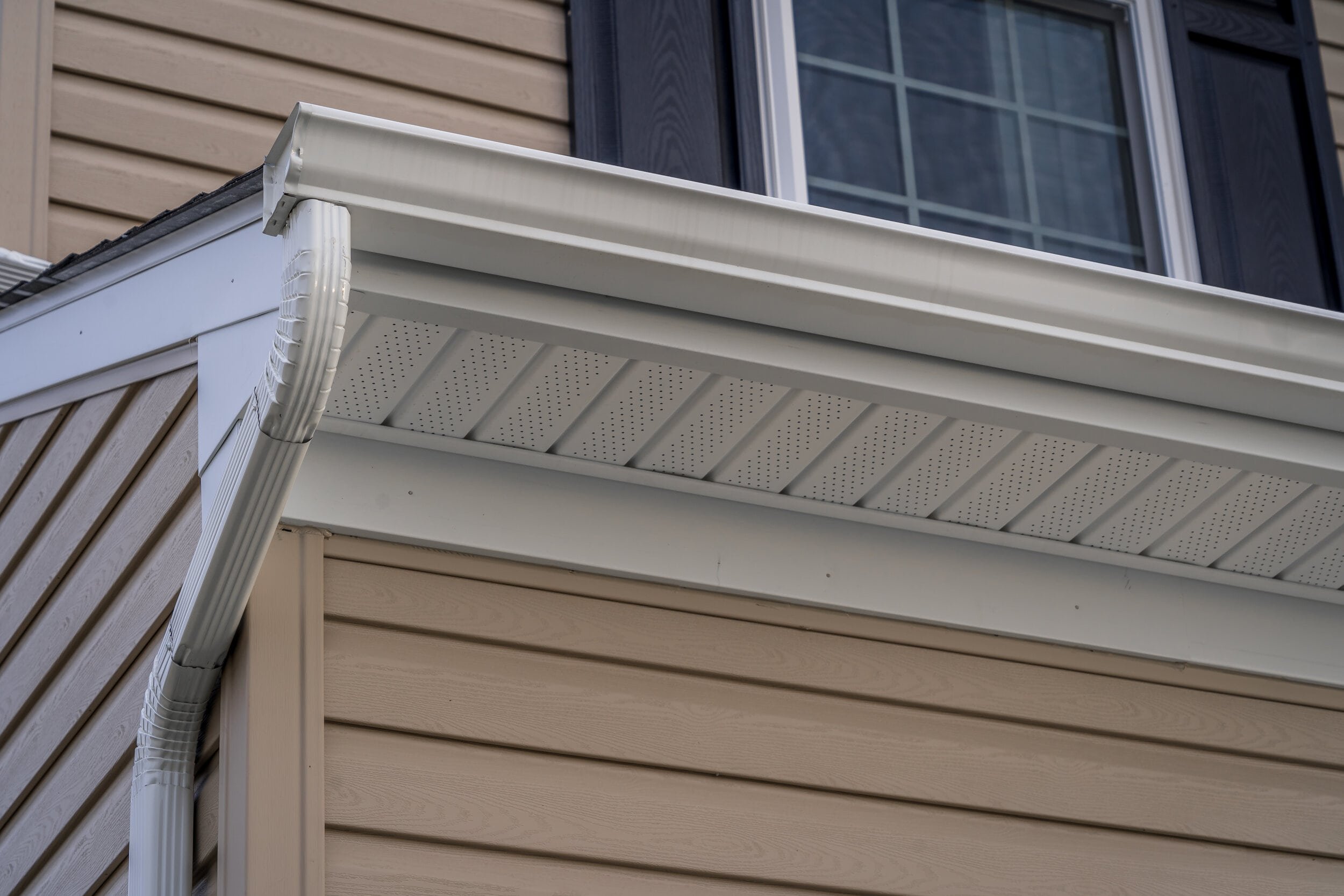
Here's the truth about gutter guards in Michigan: they're not a universal solution. After 35 years installing seamless gutters in Detroit, MI and throughout Southeast Michigan, I've seen homeowners spend thousands on gutter protection systems they didn't need—and I've seen others who absolutely should have installed them years ago.
The difference comes down to your specific situation: the trees around your home, your roof design, your physical ability to maintain gutters, and whether your existing gutter system is even healthy enough to warrant the investment. This isn't about upselling you on something—it's about helping you make the right call for your property in Macomb, Oakland, or St. Clair County.
Let's walk through who actually benefits from gutter guards in Michigan's climate, and who's better off saving their money.
What Gutter Guards Actually Do (And What They Don't)
Gutter guards—also called gutter covers, leaf guards, or gutter screens—are designed to keep debris out of your gutters while allowing water to flow through. The basic premise is simple: block the leaves, seeds, and twigs, but let rainwater and snowmelt pass.
But here's what most homeowners don't realize until after installation: gutter guards reduce maintenance, they don't eliminate it. You'll still need to clean them occasionally, especially in Michigan where we deal with pine needles, maple seeds (those helicopter things), oak tassels, and the fine silt that accumulates from our freeze-thaw cycles.
The Main Types You'll See in Southeast Michigan
Not all gutter guards perform the same, especially in our climate:
Mesh screens: Fine metal mesh that sits over the gutter opening. Good for most leaf types, but small debris can still get through. Affordable option for homes with moderate tree coverage.
Reverse-curve (surface tension) guards: These guide water around a curved surface into the gutter while debris falls off the edge. Work well in heavy rain, but can struggle with Michigan's slow, steady autumn drizzle when leaves stick to wet surfaces.
Foam inserts: Porous foam that fits inside the gutter. Inexpensive, but they can trap fine debris and break down over time, especially with our UV exposure in summer and freeze-thaw in winter.
Micro-mesh systems: The highest-performing (and most expensive) option. Surgical-grade stainless steel mesh that blocks even pine needles and roof grit. This is what we typically recommend for homes surrounded by mature trees in places like Rochester Hills or Bloomfield Hills.
Michigan Reality Check: Any gutter guard system will accumulate some debris on top. In fall, you'll still need to blow or brush off the guards themselves—but that's a 20-minute job from the ground with a leaf blower, not a dangerous ladder climb with a scoop and bucket.
The other thing gutter guards don't do? They don't fix existing problems. If your gutters are sagging, pulling away from the fascia, or improperly pitched, guards won't help. In fact, they'll make diagnosis harder because you can't see inside the gutter without removing the guards. That's why our team at NEXT Exteriors always inspects the entire gutter system before recommending guards—sometimes the better investment is new seamless gutters first.
Who Benefits Most from Gutter Guards in Southeast Michigan
Let's get specific. Here are the situations where gutter guards make genuine financial and practical sense in Michigan:
1. Homes Surrounded by Mature Trees
If your property in Troy, Sterling Heights, or Shelby Township has multiple large oaks, maples, or pines within 30 feet of your roofline, you're cleaning gutters at least three times a year—spring (oak tassels and seeds), fall (leaves), and possibly winter (pine needles and twigs from ice storms).
The math is straightforward: professional gutter cleaning runs $150-250 per visit in Southeast Michigan. Three cleanings a year = $450-750 annually. Quality micro-mesh gutter guards cost $8-12 per linear foot installed. For a typical 150-foot gutter system, you're looking at $1,200-1,800. That's a 2-3 year payback, and then you're ahead—plus you avoid the safety risk of repeated ladder work.
The specific trees matter, too. Pin oaks drop tassels and small leaves that slip through basic screens. White pines shed needles year-round. If you've got these species, micro-mesh is the only type worth considering.
2. Two-Story Homes and Difficult Rooflines
Many homes in Lake Orion, Rochester Hills, and Grosse Pointe Farms have steep rooflines, dormers, or second-story gutters that make DIY cleaning dangerous and professional cleaning expensive. If you need a 32-foot extension ladder and scaffolding just to reach your gutters safely, guards become a safety investment, not just a convenience.
We've seen too many homeowners fall from ladders trying to save $200 on gutter cleaning. If your home requires more than a standard 24-foot ladder to access gutters safely, factor that risk into your decision.
3. Aging Homeowners or Mobility Concerns
This is the most common reason we install gutter guards—and the most important. If you're in your 60s or 70s, or if you have any mobility limitations, climbing ladders to clean gutters isn't just inconvenient, it's a genuine fall risk. Gutter guards let you age in place safely without depending on others for routine maintenance.
We've installed guards for dozens of retired homeowners in Clinton Township and Macomb who want to maintain their homes independently. It's not about laziness—it's about safety and autonomy.
4. Homes with Specific Tree Species
Certain trees create gutter problems that guards solve particularly well:
Cottonwoods: The fluffy seeds clog gutters and downspouts completely. Micro-mesh guards block them effectively.
Willows: Fine, thin leaves that mat together and create slow-draining clogs. Guards prevent the initial accumulation.
Pines (white, red, or Scotch): Needles slip through most screens but get caught by micro-mesh systems.
If your property has these species and you're tired of cleaning gutters monthly, guards are worth it.

Who Should Skip Gutter Guards
Now let's talk about when gutter guards are a waste of money—because there are plenty of situations where they are.
1. Homes with Minimal Tree Coverage
If you've got a newer subdivision home in Chesterfield or St. Clair Shores with young trees or minimal landscaping, you're probably cleaning gutters once a year, if that. Spending $1,500+ on gutter guards to avoid a $150 annual cleaning doesn't make financial sense. You're 10+ years from payback, and by then the guards may need replacement anyway.
Save your money. Clean your gutters once a year in late fall after the leaves drop. Takes an hour with a ladder and a scoop.
2. Homes with Existing Gutter Problems
This is critical: gutter guards are not a Band-Aid for failing gutters. If your gutters are:
Sagging or pulling away from the fascia
Improperly pitched (standing water after rain)
Undersized for your roof area
Damaged or rusted through
Missing downspouts or extensions
...then guards won't help. In fact, they'll hide the problem and potentially make it worse. Water that can't enter a clogged or poorly functioning gutter system will overflow, and you won't see it happening under the guards until you've got foundation damage or rotted fascia.
We always inspect the full gutter system before quoting guards. Sometimes the honest recommendation is: "Your gutters need replacement first. Let's talk about that, and we can add guards during installation if you want them."
3. Budget-Conscious Homeowners with Accessible Rooflines
If you're comfortable on a ladder, your home is a single-story ranch, and you've got basic tree coverage, DIY gutter cleaning twice a year is perfectly reasonable. There's no shame in that. It's $50 in equipment (a scoop, gloves, and a bucket) and an hour of your time in spring and fall.
Gutter guards are a convenience product. If the convenience isn't worth $1,500-2,000 to you, skip them. Use that money toward other exterior services in Detroit that deliver more immediate value—like attic insulation or window replacement.
4. Homes with Ice Dam Issues
This surprises people, but it's important: if your home has recurring ice dams, gutter guards can make the problem worse.
Ice dams form when heat escapes through your attic, melts snow on the roof, and that water refreezes at the cold eave edge. The ice backs up under shingles and causes leaks. Gutter guards don't prevent ice dams—inadequate attic insulation and ventilation cause them.
When ice forms on top of gutter guards, it can create a thicker ice shelf that extends further up the roof, making the dam worse. We've removed gutter guards from homes in Royal Oak and Warren specifically because they were contributing to ice dam damage.
If you have ice dam problems, the solution is better attic insulation and ventilation—not gutter guards. Fix the root cause first.
Michigan-Specific Gutter Guard Considerations
Our climate creates unique challenges that national gutter guard companies don't always account for. Here's what 35 Michigan winters have taught us:
Freeze-Thaw Cycles and Ice Buildup
Southeast Michigan averages 30-40 freeze-thaw cycles per winter. Water gets under gutter guards, freezes, expands, and can pop guards loose or damage the gutter itself. Cheap snap-on guards fail within 2-3 winters. Quality systems with proper fastening (screwed into the fascia or gutter lip, not just clipped on) survive our climate. This is why we only install guards that we know will last through Michigan winters—we've seen too many failures with the big-box store options.
Lake-Effect Snow and Ice Loading
If you're in St. Clair County or near Lake St. Clair, you know about lake-effect snow. Heavy, wet snow loads can bend gutter guards, especially the thin aluminum varieties. Micro-mesh systems with reinforced frames handle snow weight better. We've replaced dozens of failed guards on lakefront properties in Grosse Pointe and St. Clair Shores—the cheap ones just don't hold up to the snow load.
Pine Needles vs. Maple Seeds vs. Oak Leaves
Different debris requires different guard types. In areas with heavy pine coverage (common in northern Macomb and Oakland counties), only micro-mesh stops needles effectively. In neighborhoods with mature maples, the helicopter seeds can slip through basic screens but get caught by finer mesh. Oak leaves are large and easier to block, but the tassels in spring are tiny and slip through everything except micro-mesh.
A good contractor will look at the actual trees around your home and recommend guards based on what they see—not just sell you whatever they have in the truck.
The Reality of Winter Maintenance
Here's what no one tells you: in Michigan, you may still need to knock ice and snow off your gutter guards in winter. If we get a heavy wet snow followed by a freeze, that snow can bridge across the guards and create an ice dam effect. A roof rake or a broom from the ground usually handles it, but it's still maintenance.
Gutter guards reduce maintenance. They don't eliminate it. Anyone who tells you otherwise is selling, not educating.
Contractor Tip: If you install gutter guards, make sure your roofing system has proper ice and water shield at the eaves and adequate attic ventilation. Guards don't prevent ice dams—proper building science does.
The Real Cost Analysis
Let's break down the actual numbers for Southeast Michigan in 2026:
Professional Gutter Cleaning Costs
Single cleaning: $150-250 depending on home size and accessibility
Annual contract (2-3 cleanings): $400-700
Emergency cleanings (overflowing gutters): $200-300
Gutter Guard Installation Costs
Basic mesh screens: $3-5 per linear foot installed
Mid-grade aluminum guards: $6-8 per linear foot installed
Premium micro-mesh systems: $8-12 per linear foot installed
For a typical 150-foot gutter system (average for a 2,000 sq ft home), you're looking at:
Basic: $450-750
Mid-grade: $900-1,200
Premium: $1,200-1,800
The Payback Calculation
If you're cleaning gutters professionally three times a year at $200 per cleaning, that's $600 annually. A $1,500 micro-mesh system pays for itself in 2.5 years. After that, you're saving $600 every year.
But if you're only cleaning once a year at $150, that same system takes 10 years to break even. That's a different calculation.
The honest answer? Gutter guards make financial sense if you're spending $400+ per year on cleaning, or if the safety benefit is worth the premium to you. If you're spending less, or if you DIY, the math gets harder to justify.
Hidden Costs to Consider
Quality gutter guards should last 15-20 years, but cheaper systems may need replacement in 5-7 years, especially in Michigan's climate. Factor that into your decision. Also consider:
If your fascia is rotted or damaged, it needs repair before guard installation (adds $500-1,500 depending on extent)
If your gutters are old or failing, replacement first is smarter (new seamless gutters: $6-10 per linear foot)
Some roofing warranties require accessible gutters for inspection—check before installing guards
At NEXT Exteriors, we're upfront about these costs during the estimate. If we think you're better off replacing gutters first, or skipping guards altogether, we'll tell you. That's part of changing contractor culture—no upselling, just honest advice based on what we see at your property.
When to Call a Professional
Whether you decide to install gutter guards or not, here are the signs your gutter system needs professional attention:
Immediate Red Flags
Water overflowing during rain: Means clogs, improper pitch, or undersized gutters
Gutters pulling away from the fascia: Indicates failed fasteners or rotted fascia board
Sagging sections: Usually from standing water (improper pitch) or inadequate hangers
Visible rust or holes: Time for replacement, not guards
Water stains on siding below gutters: Leaking seams or overflowing gutters
Foundation erosion or basement moisture: Gutters aren't directing water away from the house
Any of these issues needs fixing before you even consider gutter guards. Guards on failing gutters just hide the problem until it causes expensive damage to your fascia, soffit, or foundation.
Questions to Ask Any Contractor
If you're getting quotes for gutter guards in Southeast Michigan, ask these questions:
"Will you inspect my existing gutters first?" If they say no, walk away. Responsible contractors assess the system before recommending guards.
"What type of guards do you recommend for my specific trees?" If they don't look at your trees or give a generic answer, they're not tailoring the solution to your property.
"How are the guards fastened?" Snap-on systems fail in Michigan winters. Look for screwed or properly clipped systems that won't pop loose under ice and snow.
"What's the warranty, and what does it cover?" Quality systems come with 15-20 year warranties. Read the fine print—some only cover the product, not the installation.
"Do I still need to maintain them?" If they say "never," they're lying. Honest answer: minimal maintenance, but not zero.
What Quality Installation Looks Like
When we install gutter guards at NEXT Exteriors, here's what you should see:
Complete gutter cleaning and inspection before installation
Any necessary repairs to fascia, gutters, or hangers completed first
Guards installed with proper fastening (screwed into fascia or gutter lip, not just clipped)
Proper overlap and sealing at seams to prevent debris entry
Downspout guards or screens to prevent clogs at the outlet
Final water test to confirm proper flow
The installation should take most of a day for a typical home. If a crew claims they can do it in an hour, they're cutting corners.
Beyond Gutters: While we're talking about your home's exterior, it's worth considering how all your systems work together. Gutters are just one part of protecting your home from Michigan weather. Your siding, roofing, windows, and insulation all play a role in keeping water out and energy costs down. A comprehensive approach usually saves money in the long run.
If you're also considering exterior painting, coordinate it with gutter work—it's easier to paint fascia and soffit when gutters are temporarily down for guard installation or replacement.
Ready to Get Started?
NEXT Exteriors has been protecting Michigan homes since 1988. Whether you need new gutters, gutter guards, or a full exterior assessment, we'll give you honest advice based on what we actually see at your property—no pressure, no gimmicks. Get a free, no-obligation estimate from a team that shows up on time and does the job right.
Or call us: (844) 770-6398
Frequently Asked Questions About Gutter Guards in Michigan
Do gutter guards work in Michigan winters?
Yes, but with caveats. Quality micro-mesh systems work well in Michigan winters if properly installed. However, no gutter guard completely prevents ice buildup during freeze-thaw cycles. You may still need to knock snow and ice off the guards occasionally. The key is choosing a system designed for northern climates with proper fastening that won't pop loose under ice expansion. Cheap snap-on guards typically fail within 2-3 Michigan winters.
Will gutter guards prevent ice dams?
No. Ice dams are caused by heat escaping through your attic, melting snow on the roof, which then refreezes at the cold eave edge. Gutter guards don't address the root cause—inadequate attic insulation and ventilation. In some cases, ice forming on top of gutter guards can actually make ice dams worse by creating a thicker ice shelf. If you have ice dam problems, fix your attic insulation and ventilation first before considering gutter guards.
How much do gutter guards cost in Southeast Michigan?
Professional installation ranges from $3-12 per linear foot depending on the system quality. For a typical 150-foot gutter system, expect $450-750 for basic mesh screens, $900-1,200 for mid-grade aluminum guards, and $1,200-1,800 for premium micro-mesh systems. The higher-end systems last longer in Michigan's climate and require less maintenance. DIY options are cheaper upfront but often fail within a few years in our freeze-thaw cycles.
Do I still need to clean gutters with gutter guards?
Yes, but much less frequently. Gutter guards reduce maintenance by 80-90%, but they don't eliminate it. You'll still need to brush or blow debris off the top of the guards once or twice a year, and occasionally rinse them with a hose. The difference is you can usually do this from the ground with a leaf blower instead of climbing a ladder with a scoop. Fine debris like roof grit and pollen can still accumulate on top of guards and need removal.
What type of gutter guard works best for pine needles?
Micro-mesh systems are the only type that effectively blocks pine needles. Basic screens and foam inserts let needles slip through, and reverse-curve guards can't prevent needles from washing into the gutter during rain. Look for surgical-grade stainless steel micro-mesh with openings smaller than 50 microns. These systems cost more ($8-12 per linear foot installed) but are the only option that works for homes surrounded by white pines, red pines, or Scotch pines common in Southeast Michigan.
Should I install gutter guards myself or hire a professional?
It depends on your skill level and your home's specifics. DIY installation can work for simple ranch homes with basic mesh screens, but professional installation is worth it for two-story homes, complex rooflines, or premium systems. Professionals ensure proper fastening (critical in Michigan's freeze-thaw cycles), correct gutter pitch, and identify underlying gutter problems before installing guards. Poor DIY installation often leads to guards popping loose in winter or water overflow issues. If you're not comfortable on a ladder or your home requires more than a 24-foot ladder, hire a professional.
Are gutter guards worth it if I only have a few trees?
Probably not. If you're only cleaning gutters once a year and it's a simple job, the 10+ year payback period doesn't make financial sense. Save your money for other home improvements. Gutter guards make sense when you're surrounded by mature trees requiring 3+ cleanings per year, when you have a difficult-to-access roofline, or when safety concerns make ladder work risky. For minimal tree coverage, annual DIY cleaning is the smarter choice.
Clogged Gutters = Basement Problems: The Chain Reaction
Learn how clogged gutters trigger basement flooding in Michigan homes. A licensed contractor explains the chain reaction and how to protect your foundation.
By:
NEXT Exteriors
Published:
February 19, 2026
Reading time:
9 minutes
Why Your Gutters Matter More Than You Think
Last November, I got a call from a homeowner in Sterling Heights. She'd just discovered water seeping through her basement wall — right after the first big freeze-thaw cycle of the season. When I asked about her gutters, there was a pause. "I haven't cleaned them in... maybe three years?"
That's the conversation I have at least once a week during Michigan's wet seasons. Homeowners see gutters as an afterthought — until water shows up in their basement. By then, what started as a $200 gutter cleaning has turned into a multi-thousand-dollar foundation problem.
Here's what most people don't realize: your gutters aren't just there to keep water off your head when you walk out the front door. They're the first line of defense protecting your foundation from thousands of gallons of water every year. When they fail, the damage follows a predictable chain reaction — and it always ends in your basement.
I've been doing exterior services in Detroit and across Southeast Michigan since 1988. In that time, I've seen this same pattern play out hundreds of times. The good news? Once you understand how the chain reaction works, it's completely preventable.
How the Chain Reaction Starts: Water Has to Go Somewhere
Let's start with some basic physics. A typical Michigan home with 1,500 square feet of roof collects about 935 gallons of water during a one-inch rainstorm. That's roughly seven 125-gallon hot water tanks' worth of water. During a heavy spring thunderstorm that dumps two or three inches? You're looking at 2,000+ gallons hitting your roof in a couple of hours.
When your gutters are working properly, that water flows through the system, down the downspouts, and gets discharged 6-10 feet away from your foundation. The ground absorbs it, or it runs off toward the street. Your foundation stays dry.
But when your gutters are clogged with leaves, shingle granules, and decomposing organic matter — which is the reality for most Michigan homes by late fall — that water has nowhere to go except over the edge. And where does it land? Right at the base of your foundation.

I see this constantly on jobs in Troy and Rochester Hills, especially on homes with mature oak and maple trees. The gutters fill up with leaves in October and November. The homeowner doesn't notice because everything looks fine from the ground. Then winter hits, the debris freezes into a solid mass, and when the spring thaw comes, the gutters are completely useless.
Now you've got meltwater and spring rain — Michigan gets about 3-4 inches of precipitation in March and April combined — cascading directly onto the soil around your foundation. That's when the real problems start.
Michigan-specific problem: Our freeze-thaw cycles make clogged gutters even more destructive. Water trapped in debris freezes, expands, and can crack gutter seams or pull hangers loose. Come spring, you don't just have clogged gutters — you have damaged gutters that can't function even after cleaning.
The Foundation Assault: What Happens Underground
Once water starts pooling around your foundation, you're dealing with hydrostatic pressure. That's the force water exerts when it's trying to find the path of least resistance. And concrete, despite being strong in compression, is porous. It has microscopic channels that water can penetrate, especially as it ages and develops hairline cracks.
Here's where Southeast Michigan's clay soil makes everything worse. We've got heavy clay content in the soil throughout Macomb County, Oakland County, and St. Clair County. Clay absorbs water and expands — sometimes by 10% or more of its original volume. When it's pressed against your foundation wall, that expansion creates enormous lateral pressure. We're talking thousands of pounds per square foot.
I've seen foundation walls in Shelby Township and Clinton Township with visible bowing from years of this pressure. The homeowners had no idea it was happening because it's slow and gradual. But every spring, when the soil saturates and expands, it pushes a little harder. Every winter, when it freezes, it pushes even more.
Eventually, something gives. Usually it's a crack in the foundation wall — either a new crack or the widening of an existing one. And once you have a crack, water doesn't need hydrostatic pressure anymore. It just walks right in.
This is where our seamless gutters in Detroit, MI make a real difference. Traditional sectional gutters have seams every 10 feet where sections connect. Those seams leak over time, especially after Michigan winters. Seamless gutters eliminate 90% of potential leak points, so water actually makes it to the downspouts instead of dripping along your foundation line.
Inside Your Basement: The Visible Damage
By the time water shows up inside your basement, the chain reaction is complete. What you're seeing is the end result of months — sometimes years — of water assault from above.
The first sign is usually efflorescence: those white, chalky deposits on your foundation walls. That's mineral salts being pulled out of the concrete as water migrates through. It looks harmless, but it's proof that water is actively moving through your foundation.
Next comes actual seepage. You'll see damp spots on the wall, usually near the bottom where the wall meets the floor. In finished basements, this often shows up as water stains on drywall or carpet that feels damp in the corners. I've pulled back carpet in Grosse Pointe Farms basements and found black mold growing on the padding — all from gutter overflow that the homeowner never connected to the basement moisture.
If the problem continues, you get standing water. Your sump pump (if you have one) starts running constantly during wet weather. If you don't have a sump pump, water pools in low spots or along walls. This is when homeowners panic and call a basement waterproofing company — which is treating the symptom, not the cause.
The worst cases involve structural damage. I've been in basements in Warren and St. Clair Shores where horizontal cracks run the length of the foundation wall, with visible inward bowing. At that point, you're not just dealing with water intrusion — you're dealing with structural instability that requires engineering-level intervention.
And all of this — every bit of it — started with clogged gutters.
The Cost Reality: Gutters vs. Foundation Repair
Let's talk numbers, because this is where the chain reaction really stings.
Gutter cleaning: Professional gutter cleaning in Southeast Michigan runs $150-$300 for a typical single-family home, depending on house size and gutter condition. You should do this twice a year — late spring and late fall. Annual cost: $300-$600.
Gutter replacement: If your gutters are old, damaged, or poorly installed, a complete gutter installation in Southeast Michigan with seamless aluminum gutters typically runs $1,200-$2,500 for an average home. Add gutter guards, and you're looking at $2,000-$4,000 total. This is a one-time investment that lasts 20-30 years with minimal maintenance.
Foundation crack repair: Sealing a foundation crack from the outside (the proper way to fix it) costs $500-$1,500 per crack, depending on length and severity. Interior sealants are cheaper but don't address the root problem.
Interior basement waterproofing: A full interior waterproofing system — which includes a perimeter drain, sump pump, and vapor barrier — runs $5,000-$15,000 for a typical Michigan basement. This is what contractors install when water intrusion is already a chronic problem.
Foundation wall repair: If you've got bowing or structural damage, you're looking at $10,000-$30,000+ for carbon fiber reinforcement, wall anchors, or helical piers. This is major structural work that requires engineering analysis and permits.
Mold remediation: Professional mold removal in a basement runs $2,000-$6,000 depending on the extent of contamination. And if you have finished basement spaces with drywall, flooring, and insulation, you're adding demolition and reconstruction costs on top of that.
So we're comparing $300-$600 per year for gutter maintenance — or $2,000-$4,000 for a permanent gutter solution — against potential foundation and basement repair costs of $20,000, $30,000, or more.
The math isn't complicated. The gutters always win.
Insurance reality check: Most homeowner's insurance policies exclude water damage from "maintenance issues" — which includes clogged gutters. If your basement floods because you didn't maintain your gutters, you're paying out of pocket. Don't count on your insurance company to bail you out.
Prevention: Breaking the Chain Before It Starts
The good news is that preventing this entire chain reaction is straightforward. You just need to keep water moving where it's supposed to go.
Clean Your Gutters Twice a Year
This is non-negotiable in Michigan. Clean them in late spring after tree pollination (usually May) and again in late fall after the leaves drop (November). If you have a lot of trees — especially oaks, maples, or pines — you might need a mid-season cleaning too.
When you clean, don't just scoop out the big stuff. Flush the gutters and downspouts with a hose to make sure water flows freely all the way to the discharge point. Check for sagging sections, loose hangers, and leaks at seams or corners.
Extend Your Downspouts
Your downspouts need to discharge water at least 6-10 feet away from your foundation. I see too many homes in Lake Orion and Bloomfield Hills where downspouts dump water right at the foundation line. That defeats the entire purpose of the gutter system.
Use solid downspout extensions, not the flimsy corrugated ones that collapse or get kicked around. Bury them if you want a cleaner look, but make sure they slope away from the house and terminate in an area with good drainage.
Check Your Grading
The soil around your foundation should slope away from the house at a minimum of 6 inches over the first 10 feet. This ensures that even if some water does land near the foundation — from rain splash or minor gutter overflow — it runs away instead of pooling.
A lot of older Michigan homes have settled over the decades, creating low spots against the foundation. If that's your situation, add soil to re-establish proper grading. It's a simple fix that makes a huge difference.
Consider Gutter Guards
If you're tired of climbing ladders twice a year — or if you have a steep roof that makes gutter cleaning dangerous — invest in quality gutter guards. Not the cheap plastic screens from the hardware store; I'm talking about professionally installed systems with a proven track record in Michigan winters.
Good gutter guards reduce maintenance by about 80-90%. You'll still need to inspect and occasionally rinse them, but you won't be scooping out pounds of wet leaves every fall.

Inspect After Storms
Michigan's spring and summer storms can be intense. After a heavy rain or windstorm, take a quick walk around your house and look for signs of gutter overflow — water stains on siding, eroded soil near downspouts, or standing water around the foundation. Catching problems early prevents the chain reaction from starting.
While you're thinking about exterior maintenance, remember that your Detroit roofing services should include regular inspections too. Damaged shingles or flashing can contribute to water problems, especially where the roof meets the gutters.
When to Call a Professional
Some gutter and foundation problems are DIY-friendly. Others require professional expertise — and knowing the difference can save you from making an expensive mistake.
Call a Professional If You Notice:
Gutters sagging or pulling away from the fascia: This usually means the hangers are failing or the fascia board is rotting. Both require proper repair before the gutter tears completely loose.
Rust holes or cracks in gutters: Patching rarely works long-term. If your gutters are rusting through, it's time for replacement.
Water stains on siding below the gutter line: This indicates overflow or leaks that need to be traced and fixed.
Basement moisture that appears during or after rain: This is the chain reaction in action. A professional can assess both your gutters and your foundation to determine the source and proper fix.
Foundation cracks wider than 1/4 inch: Large cracks or cracks that are growing need professional evaluation. They may indicate structural movement that requires more than simple sealing.
Visible bowing in foundation walls: This is a structural emergency. Don't wait — get a licensed contractor or structural engineer out immediately.
At NEXT Exteriors, we've been handling these exact issues across Southeast Michigan for over 35 years. When we inspect a home for gutter services, we don't just look at the gutters themselves. We check the fascia, the roof edge, the downspout discharge points, and the grading around the foundation. We're looking at the whole water management system, because that's the only way to prevent the chain reaction.
We also coordinate with foundation specialists when needed. If you've got basement water problems that started with failed gutters, we can help you understand whether fixing the gutters alone will solve the issue, or if you need foundation work first. No upselling, no runaround — just honest assessment based on what we see.
What a proper gutter inspection includes: Checking gutter pitch and alignment, inspecting all seams and end caps for leaks, testing downspout flow, examining fascia and soffit for rot or damage, verifying proper downspout extensions, and assessing overall system capacity for your roof size. This takes 30-45 minutes for a thorough job — not the 5-minute drive-by estimate some companies offer.
The Bottom Line: An Ounce of Prevention
The chain reaction from clogged gutters to basement problems is predictable, preventable, and surprisingly common in Michigan. I've seen it play out in every city we serve — from Detroit to Mount Clemens, from Royal Oak to Chesterfield.
The homeowners who avoid this problem aren't lucky. They're just consistent about maintenance. They clean their gutters, they keep downspouts extended, and they pay attention to how water moves around their property. When they spot a problem, they fix it before it cascades into something bigger.
And when they need professional help — whether it's siding installation in Southeast Michigan, window replacement in Detroit, or comprehensive gutter work — they call someone who understands how all these systems work together.
Your home is a system. The roof sheds water to the gutters. The gutters move it away from the foundation. The foundation stays dry, and your basement stays livable. Break any link in that chain, and the whole system fails.
Don't let clogged gutters be the weak link. The basement you save will be your own.
Ready to Get Started?
NEXT Exteriors has been protecting Michigan homes since 1988. Get a free, no-pressure estimate from a team that shows up on time and does the job right. We'll inspect your gutters, assess your water management, and give you straight answers about what you need — not what we want to sell you.
Or call us: (844) 770-6398
More Resources from NEXT Exteriors
Looking for more information about protecting your Michigan home? Check out our comprehensive guides on insulation services in Southeast Michigan to improve energy efficiency, or learn about our exterior painting services using exclusive Sherwin-Williams products. For a complete overview of everything we offer, visit our services page.
Frequently Asked Questions
How often should I clean my gutters in Michigan?
+
Twice a year minimum: late spring (May) and late fall (November). If you have mature trees overhead — especially oaks, maples, or pines — consider adding a mid-season cleaning in July or August. Michigan's heavy leaf drop and spring pollen make regular cleaning essential to prevent overflow and ice dam formation in winter.
Can clogged gutters really cause foundation damage?
+
Absolutely. When gutters overflow, thousands of gallons of water saturate the soil around your foundation. In Southeast Michigan's clay soil, this creates hydrostatic pressure against foundation walls and can cause cracks, bowing, and water infiltration. Over time, this leads to basement flooding and structural problems that cost tens of thousands to repair.
How far should downspouts extend from my house?
+
At least 6-10 feet away from your foundation, discharging onto ground that slopes away from the house. Shorter extensions dump water too close to the foundation, defeating the purpose of your gutter system. Use solid extensions rather than corrugated ones, and consider burying them for a cleaner look while maintaining proper drainage.
Are seamless gutters worth the extra cost?
+
Yes, especially in Michigan. Seamless gutters eliminate 90% of the seams where traditional sectional gutters leak. After years of freeze-thaw cycles, sectional gutter seams fail and leak water along your foundation line. Seamless gutters last longer, require less maintenance, and provide better protection. The small upfront cost difference pays for itself in reliability.
What are the first signs of basement water problems from gutters?
+
Watch for efflorescence (white chalky deposits on foundation walls), damp spots near the wall-floor junction, musty odors, and increased sump pump activity during rain. Outside, look for eroded soil near downspouts, water stains on siding below gutters, and standing water around the foundation after storms. These are early warning signs that your gutter system isn't managing water properly.
Do gutter guards really work in Michigan winters?
+
Quality gutter guards work well, but avoid cheap plastic screens that ice over or collapse under snow load. Professional-grade systems with solid covers or fine mesh reduce debris by 80-90% while allowing water and melting snow to flow through. They won't eliminate all maintenance, but they significantly reduce the frequency of cleaning and help prevent ice dam formation along the gutter line.
When should I replace gutters instead of just cleaning them?
+
Replace gutters if you see rust holes, large cracks, sagging sections that can't be re-pitched, seams that leak even after resealing, or if they're pulling away from the fascia due to rotted mounting boards. Also consider replacement if your gutters are undersized for your roof area — many older Michigan homes have 4-inch gutters that should be upgraded to 5 or 6-inch for proper capacity during heavy storms.
Michigan Gutter Basics: Size, Pitch, Downspouts Explained
Learn what actually matters for gutter performance in Michigan: proper sizing for lake-effect snow, correct pitch for freeze-thaw cycles, and downspout placement from a licensed contractor.
NEXT Exteriors
•
February 19, 2026
•
9 min read
After 35 years installing seamless gutters in Detroit, MI and across Southeast Michigan, I can tell you this: most gutter problems don't come from the gutters themselves. They come from three fundamentals that got skipped during installation—size, pitch, and downspout placement.
Michigan's freeze-thaw cycles, lake-effect snow, and spring downpours create a perfect storm for gutter failure. A system that works fine in Georgia will fail here by March. The difference between a gutter that lasts 20 years and one that pulls away from your fascia in three winters comes down to understanding what actually matters in our climate.
This isn't about brand names or fancy coatings. It's about the building science fundamentals that keep water moving away from your foundation, prevent ice dams from tearing your fascia apart, and stop basement flooding before it starts.
Gutter Size—Why 5-Inch Is Standard (and When You Need 6-Inch)
Walk through any neighborhood in Sterling Heights or Rochester Hills and you'll see mostly 5-inch K-style gutters. That's the residential standard, and for most Michigan homes, it's the right choice. But "standard" doesn't mean it works for every situation.
Gutter sizing comes down to how much water your roof sheds during peak rainfall. In Southeast Michigan, we design for storms that dump 1.5 to 2 inches per hour—not uncommon during summer thunderstorms rolling off Lake St. Clair. Your gutter needs to handle that volume without overflowing.
The Math Behind Gutter Capacity
A 5-inch K-style gutter can handle approximately 1,200 square feet of roof area per downspout under typical Michigan rainfall conditions. That assumes proper pitch (we'll get to that) and adequate downspout spacing. If your roof has a steeper pitch—common on Colonial-style homes in Grosse Pointe Farms—water hits the gutter faster and harder, reducing effective capacity by 10-15%.
Here's when you need to consider 6-inch gutters:
Roof area exceeds 1,800 square feet per gutter run — Large ranch homes or homes with complex rooflines
Roof pitch is 8:12 or steeper — Water velocity overwhelms standard gutters
You have tall trees overhanging the roof — More debris volume requires larger capacity
Your home sits in a low spot — Poor drainage means gutters work harder
You're replacing old 6-inch gutters — The fascia is already sized for them
We installed 6-inch seamless gutters on a brick Colonial in Troy last spring. The homeowner had been dealing with overflow at the corners every storm. The problem wasn't the gutters—it was undersizing for a 2,400-square-foot roof with an 11:12 pitch. The upgrade solved it completely.
Michigan-Specific Consideration: Spring snowmelt can dump more water into your gutters than any rainstorm. A warm March day after heavy February snow creates runoff equivalent to 3-4 inches of rain in a few hours. If your gutters overflow during snowmelt, sizing is likely the issue.

Gutter Pitch—The Quarter-Inch Rule Everyone Gets Wrong
This is where most DIY installations fail and where plenty of contractors cut corners. Gutter pitch—the slope from the high end to the downspout—determines whether water flows or sits. Sitting water in Michigan winter? That's ice. Ice means weight. Weight means your gutters pull away from the fascia, and now you're calling someone like us to fix structural damage.
The Standard: Quarter-Inch Per 10 Feet
The building code standard is ¼ inch of slope for every 10 feet of gutter run. That's roughly 0.025 inches per foot—barely visible to the eye but critical for performance. Too little pitch and water pools. Too much and the gutter looks crooked, plus water moves so fast it overshoots the downspout opening.
Here's the problem: that quarter-inch rule assumes your fascia is perfectly level. On a 1960s ranch in Warren or Shelby Township, the fascia board has probably sagged a bit over 60 years. The roof sheathing might have settled. Your gutter installer needs to account for that, not just follow the fascia line.
How We Set Pitch Correctly
We use a laser level and chalk line to establish true pitch, independent of the fascia. Mark the high point, calculate drop to the downspout location, snap a line, and install to that line—not to the existing fascia curve. If the fascia is severely warped, we address that first as part of our Detroit roofing services, because you can't hang a proper gutter on bad substrate.
On longer runs—say 40 feet or more—we pitch from the center toward downspouts at both ends. This keeps pitch gradual and prevents the "ski slope" look some homeowners hate.
Winter Reality Check: When ice forms in a gutter with improper pitch, it doesn't just sit there. It expands. That expansion pushes against the fascia brackets, bending them outward. By spring, your gutters are sagging or detached. We see this every year in March and April across Macomb County.
Signs Your Pitch Is Wrong
Standing water visible in gutters after rain stops
Algae or moss growing inside the gutter channel
Overflow at corners or seams during moderate rain
Ice buildup in winter that doesn't drain during thaws
Gutters pulling away from fascia at the high end
Pitch problems don't fix themselves. If you're seeing these signs, the system needs adjustment or reinstallation. Trying to patch it with additional brackets just transfers stress to other weak points.
Downspout Placement and Sizing
A gutter is only as good as its ability to move water off the roof and away from the foundation. That's the downspout's job, and it's where we see the most shortcuts—both in placement and sizing.
The Downspout-to-Gutter Ratio
Standard residential practice: one downspout for every 30-40 feet of gutter, depending on roof area and rainfall intensity. In Southeast Michigan, we lean toward the conservative end—one downspout per 30 feet maximum, especially on homes with steep roofs or large overhangs.
Downspout size matters as much as quantity. Standard residential downspouts are 2x3 inches. For 5-inch gutters, that's adequate. For 6-inch gutters, you need 3x4-inch downspouts to match capacity. Undersized downspouts create a bottleneck—your gutters overflow even though they're properly sized and pitched.
Placement Strategy
Downspouts should discharge at least 6-10 feet away from the foundation. In Michigan's clay soil—common across Oakland and Macomb counties—water doesn't percolate quickly. It sits. It saturates. It finds its way into your basement through hydrostatic pressure against foundation walls.
We use solid extensions or underground drains to carry water to daylight or a dry well. Splash blocks alone don't cut it in Michigan. They work for the first season, then sink into the soil or get buried under mulch. Next spring, you've got water pooling at the foundation again.

Corner Downspouts vs. End Runs
Aesthetically, homeowners often prefer downspouts tucked into corners rather than running down the middle of a wall. We get it. But sometimes the roof geometry or gutter run length demands a mid-wall downspout for proper drainage. A competent installer will explain the trade-offs and give you options.
On homes where we're also handling house siding in Detroit, we can plan downspout placement to align with trim boards or corners, making them less visually intrusive. Coordination between trades matters—another reason to work with a full-service exterior contractor rather than a gutter-only crew.
Foundation Protection: More basement water problems in Southeast Michigan trace back to gutter and downspout failures than any other single cause. Proper gutter function isn't just about protecting your fascia—it's about protecting your foundation, your basement, and everything you've stored down there.
Material Choices That Hold Up in Michigan Weather
Material selection for gutters comes down to three factors: durability in freeze-thaw cycles, resistance to thermal expansion/contraction, and long-term maintenance requirements. Michigan weather tests all three harder than most climates.
Aluminum—The Residential Standard
Most residential gutters in Southeast Michigan are aluminum, and for good reason. It doesn't rust, it's lightweight (less stress on fascia), and it handles freeze-thaw cycles without cracking. Standard thickness is .027 or .032 inches—we use .032 for better rigidity and longer bracket spacing.
Aluminum's weakness is denting. Hail, falling branches, or a ladder leaned too hard can leave permanent dings. But for most homeowners, the trade-off is worth it. Aluminum gutters properly installed last 20-25 years in Michigan.
Steel—When You Need Extra Strength
Galvanized or galvalume steel gutters are stronger and more dent-resistant than aluminum. We use them on commercial projects or homes with heavy snow load concerns—think lake-effect snow zones near Lake St. Clair or homes with multiple roof valleys concentrating runoff.
Steel's downside: it's heavier (more stress on fascia and brackets) and it will eventually rust if the coating is compromised. Expect 15-20 years before corrosion becomes an issue, depending on maintenance.
Copper—The Premium Option
Copper gutters are beautiful, durable, and expensive. They develop a natural patina over time—green oxidation that protects the underlying metal. We've installed copper gutters on historic homes in Grosse Pointe Farms where aesthetics and longevity justify the cost. Expect 50+ years of service life.
Copper requires specialized soldering at seams and corners. It's not a DIY material, and not every gutter contractor has the skill set to work with it properly. If you're considering copper, make sure your installer has a portfolio of copper work—it's a different trade than aluminum.
Seamless vs. Sectional
Seamless gutters are formed on-site from a continuous coil, eliminating seams except at corners and downspout outlets. Fewer seams mean fewer leak points and cleaner appearance. Sectional gutters use pre-cut 10-foot lengths joined with connectors and sealant—more seams, more potential failure points.
In Michigan's freeze-thaw environment, seamless is the better choice. Ice expansion at seams is a common failure mode for sectional systems. Every spring we replace sectional gutters that have split at the seams after a tough winter. Seamless gutters in Detroit, MI and across Southeast Michigan simply perform better long-term.
Common Gutter Problems We Fix Every Spring
March and April are our busiest months for gutter repairs. Michigan winters reveal every installation shortcut and deferred maintenance issue. Here's what we see most often:
Ice Dam Damage
Ice dams form when heat escapes through your attic, melting snow on the roof. Meltwater runs down to the cold eaves, refreezes, and backs up under shingles. The ice also fills gutters, adding hundreds of pounds of weight. Brackets bend. Gutters pull away. Fascia boards rot.
The fix isn't better gutters—it's better attic insulation in Metro Detroit and proper ventilation. We address ice dams as part of a whole-house approach, because replacing gutters without fixing the attic just means you'll be replacing them again in five years.
Gutters Pulling Away From Fascia
This happens for three reasons: improper bracket spacing, bad fascia substrate, or ice/debris weight. Standard bracket spacing is 24 inches on center—we use 18 inches in Michigan for better snow load distribution.
If the fascia board itself is rotted or water-damaged, no amount of brackets will hold. We often discover fascia rot during gutter replacement, especially on homes with old roofing in Southeast Michigan where ice dams have been a chronic problem. The fascia gets replaced before new gutters go up.
Downspouts Draining at Foundation
Extensions get knocked off by lawnmowers, buried under mulch, or removed and never replaced. Water dumps right at the foundation. Clay soil saturates. Hydrostatic pressure builds. Basement walls crack or leak.
We install solid PVC extensions or bury 4-inch corrugated pipe to carry water at least 10 feet from the foundation. It's not glamorous work, but it prevents thousands in foundation and basement repairs down the road.
Clogs and Overflow
Leaves, shingle granules, and debris accumulate in gutters. When they clog, water overflows, defeating the entire purpose of the system. Gutter guards help but aren't foolproof—fine debris still gets through, and some guards create ice dam problems in winter.
We recommend twice-yearly cleaning—spring and fall—as the baseline. Homes with heavy tree coverage need more frequent attention. If you're not comfortable on a ladder, hire it out. Gutter cleaning is cheap compared to the water damage from a clogged system.
When to Call a Professional
Some gutter work is DIY-friendly—cleaning, minor bracket adjustments, resealing a small leak. But installation and major repairs require specialized tools, material knowledge, and an understanding of building science that most homeowners don't have.
Signs You Need Professional Help
Gutters are sagging or pulling away from the house — Structural issue requiring proper fastening and possibly fascia repair
Water overflows during moderate rain — Sizing, pitch, or downspout placement problem
Ice dams form every winter — Attic insulation and ventilation issue, not just a gutter problem
Basement floods after heavy rain — Downspout drainage inadequate or improperly placed
Gutters are 20+ years old — Likely nearing end of service life; replacement more cost-effective than repeated repairs
Visible rust, holes, or cracks — Material failure; patching is temporary at best
What a Proper Installation Includes
When you hire NEXT Exteriors for gutter work, here's what you're getting:
Site assessment including roof area calculation, pitch measurement, and drainage evaluation
Fascia inspection and repair if needed—we don't hang new gutters on bad substrate
Seamless gutter fabrication on-site for exact-fit runs with minimal seams
Proper pitch using laser level, not eyeballing or following sagging fascia
Hidden hangers or brackets at 18-inch spacing for Michigan snow loads
Downspouts sized to match gutter capacity with extensions to carry water away from foundation
Coordination with other exterior services in Detroit if you're doing roofing, siding, or trim work at the same time
We've been doing this since 1988. We know what works in Michigan weather and what fails. Our crews show up on time, work carefully around your landscaping, and clean up when the job's done. No drama. No surprises. Just solid work backed by our reputation and a real warranty.
Integrated Exterior Approach: Gutters don't exist in isolation. They interact with your roof, fascia, siding, and foundation drainage. That's why working with a full-service contractor like NEXT Exteriors—offering window replacement, exterior painting, and all other exterior services—makes sense. We see the whole system, not just one component.
Cost Reality for Southeast Michigan
Seamless aluminum gutter installation in Southeast Michigan typically runs $8-12 per linear foot installed, depending on home height, access difficulty, and downspout requirements. A typical 150-foot installation (average single-story ranch) costs $1,200-1,800.
Add $200-400 for fascia repairs if needed. Add $300-600 for underground drainage extensions. Premium materials like steel or copper cost significantly more—copper can run $25-40 per linear foot.
That's not cheap, but it's a fraction of what you'll spend fixing foundation damage, basement flooding, or rotted fascia and soffit from a failing gutter system. Done right, gutters are a 20-year investment. Done wrong, you're back at it in five years.
Ready to Get Started?
NEXT Exteriors has been protecting Michigan homes since 1988. Get a free, no-pressure estimate from a team that shows up on time and does the job right.
Or call us: (844) 770-6398
Frequently Asked Questions
How often should gutters be cleaned in Michigan?
+
Minimum twice per year—late spring after tree pollen and seed drop, and late fall after leaves come down. Homes with heavy tree coverage (especially oak, maple, or pine) should be cleaned 3-4 times annually. Neglecting cleaning leads to clogs, overflow, ice dam formation, and potential structural damage to fascia and soffit.
Do gutter guards really work in Michigan winters?
+
They reduce debris accumulation but aren't foolproof. Fine material like shingle granules and pine needles still get through most guards. Some mesh-style guards can trap ice and create mini ice dams in winter. Solid surface guards (where water flows over the edge) work better in freeze-thaw conditions but cost more. Guards reduce cleaning frequency but don't eliminate it entirely.
What causes gutters to pull away from the house?
+
Three main causes: improper bracket spacing (too far apart for Michigan snow loads), rotted fascia board that can't hold fasteners, or excessive weight from ice and debris. Standard 24-inch bracket spacing isn't enough in Michigan—we use 18 inches. If the fascia is compromised, it needs replacement before new gutters go up. Ice dams add hundreds of pounds of weight that no bracket system can handle indefinitely.
Should I replace gutters when I replace my roof?
+
If your gutters are 15+ years old or showing signs of failure (sagging, leaking, pulling away), yes—it's the most cost-effective time. The roof crew is already there with scaffolding and equipment. You avoid the risk of damaging old gutters during roof work. Plus, new drip edge and fascia flashing integrate better with new gutters. We coordinate gutter and roofing work all the time—it saves money and ensures proper integration between systems.
How do I know if my gutter pitch is correct?
+
After a rainstorm, check for standing water in the gutters within 15-20 minutes of rain stopping. Properly pitched gutters drain completely. If you see pools of water, algae growth, or debris accumulation in certain spots, the pitch is inadequate. You can also watch water flow during rain—it should move steadily toward downspouts without pooling or overflowing at seams.
Can I install gutters myself?
+
Sectional gutter installation is technically DIY-possible, but seamless gutters require specialized equipment (portable roll-forming machine) that contractors use. The bigger challenge is getting pitch, bracket spacing, and downspout placement correct. Mistakes lead to chronic problems—overflow, ice damage, foundation issues—that cost more to fix than professional installation would have cost upfront. For most homeowners, professional installation is the smarter investment.
Why do my gutters overflow only in certain spots?
+
Usually a localized clog (leaves, shingle granules, or a bird's nest) or a low spot in the gutter run where pitch reverses. Sometimes a downspout is partially blocked, causing backup. Check for debris first. If the gutter is clean, the pitch is wrong at that location—either the gutter has sagged or it was installed incorrectly. This requires re-pitching that section or adding a downspout to relieve the load.