

Siding Services Metro Detroit: What Michigan Homeowners Need to Know

If you're researching siding services in Metro Detroit, you're probably dealing with one of three situations: your current siding is failing, you're preparing to sell and need a refresh, or you're tired of repainting every few years. Whatever brought you here, you need straight answers about what works in Michigan and what doesn't.
I've been installing siding across Macomb, Oakland, and St. Clair counties since 1988. That's 35+ Michigan winters watching how different materials hold up against freeze-thaw cycles, ice dams backing up under siding edges, and summer storms that turn loose panels into projectiles. The siding that looks good in a showroom isn't always the siding that performs when January hits -5°F and your house is expanding and contracting like an accordion.
This isn't a sales pitch for one material over another. It's what we've learned from 500+ siding projects across Southeast Michigan — what fails, what lasts, and what homeowners wish they'd known before signing a contract. Whether you're in Sterling Heights, Rochester Hills, or Grosse Pointe Farms, the same physics apply to your exterior walls.
Why Michigan's Climate Makes Siding Choice Critical
Metro Detroit sits in a climate zone that punishes cheap siding installations. We're not talking about minor cosmetic issues — we're talking about structural moisture problems that cost thousands to fix.
Here's what happens to your siding over a typical Michigan year:
Winter (December-March): Temperatures swing from 10°F to 40°F repeatedly. Your siding expands when it warms, contracts when it freezes. Cheap vinyl cracks. Improperly installed fiber cement develops hairline fractures. Ice dams push water behind siding at eave lines, soaking the sheathing underneath.
Spring (April-May): Heavy rains test every seam, every J-channel, every window flashing detail. If your contractor didn't install a proper water-resistive barrier behind the siding, you're getting moisture into your wall cavities. You won't see it until the drywall inside starts bubbling or you smell mold in the basement.
Summer (June-August): UV radiation breaks down low-grade vinyl. Dark-colored siding on south and west exposures can reach 160°F on a July afternoon. Panels warp. Seams open up. Storm winds catch loose edges and tear sections off the house.
Fall (September-November): Temperature swings return. Moisture from morning dew gets trapped behind siding that doesn't breathe. Freeze-thaw cycles start again in November, and any water that got into cracks during summer now freezes, expands, and makes those cracks worse.
This is why material choice matters. A vinyl siding rated for Florida won't survive in Michigan. The wrong thickness, the wrong installation method, or skipping the moisture barrier will cost you — not this year, but in five years when you're dealing with rot behind the walls.
Michigan-Specific Reality: The number one siding failure we see in Metro Detroit isn't the siding itself — it's moisture getting behind it because the installer skipped proper flashing around windows and doors. A $12,000 siding job turns into a $25,000 repair when you have to tear everything off and replace rotted sheathing.

The Three Siding Materials That Actually Work in Metro Detroit
Walk into any big-box store and you'll see a dozen siding options. Walk onto job sites across Macomb and Oakland counties, and you'll see three materials that consistently perform: vinyl, fiber cement, and engineered wood. Here's what you need to know about each.
Vinyl Siding: The Workhorse (When Done Right)
Vinyl gets a bad reputation because people remember the thin, brittle stuff from the 1980s. Modern vinyl — specifically .044" to .046" thickness with a proper foam backer — performs well in Michigan if installed correctly.
What works:
- CertainTeed Monogram (.046" thickness) — this is what we install most often for vinyl projects
- Mastic Ovation (.044" with insulated foam backing)
- Dark colors are now stable in Michigan sun thanks to modern formulations with advanced UV inhibitors
What doesn't work:
- Builder-grade vinyl at .040" thickness or thinner — it warps, cracks, and looks cheap within 5 years
- Any vinyl installed in winter when temperatures are below 40°F — it needs to be nailed with expansion gaps, and cold vinyl is brittle
- Vinyl without a proper water-resistive barrier (Tyvek or equivalent) behind it
Realistic lifespan in Michigan: 20-30 years for quality vinyl, properly installed. The color will fade slightly (especially reds and dark blues), but the material itself holds up.
Cost range: $7,000-$12,000 for a typical 1,800 sq ft ranch in Sterling Heights, including removal of old siding, new moisture barrier, trim, and installation.
Fiber Cement: The Premium Standard
James Hardie fiber cement is the gold standard for house siding in Detroit and across Southeast Michigan. It's cement, sand, and cellulose fibers — essentially a wood-like product that doesn't rot, doesn't burn, and doesn't attract insects.
Why it works in Michigan:
- Engineered specifically for freeze-thaw cycles — HardiePlank has a 30-year non-prorated warranty
- Holds paint better than any other siding material — we use Sherwin-Williams Duration on all our fiber cement projects
- Doesn't expand and contract like vinyl, so seams stay tight
- Approved for historic districts in Grosse Pointe and Birmingham where vinyl isn't allowed
Installation requirements:
- Must be installed by a James Hardie-approved contractor (NEXT Exteriors is certified) or the warranty is void
- Requires 1" clearance from roofing, decks, and grade — moisture wicking is the enemy
- Needs to be back-primed (sealed on the back side) before installation in Michigan's humid climate
- Must be painted with 100% acrylic paint — we use Sherwin-Williams exclusively because the warranty requires it
Realistic lifespan: 50+ years. The material itself is nearly indestructible. Paint will need refreshing every 15-20 years, but that's a $5,000-$8,000 project, not a full siding replacement.
Cost range: $15,000-$24,000 for the same 1,800 sq ft home. Yes, it's double the cost of vinyl. It also lasts twice as long and adds more to resale value.
Engineered Wood: The Middle Ground
LP SmartSide is engineered wood treated with zinc borate (prevents rot and insects) and sealed with a proprietary SmartGuard process. It's real wood with the durability problems engineered out.
Why contractors like it:
- Looks like real wood — you can't tell the difference from 10 feet away
- Costs less than fiber cement but outperforms vinyl in wind and impact resistance
- Holds paint extremely well — 50-year limited warranty when installed with LP-approved methods
Michigan considerations:
- Must be painted within 180 days of installation — the factory primer isn't a finish coat
- Needs proper clearance from grade and moisture sources (same as fiber cement)
- Performs best when installed with LP's proprietary flashing and trim system
Realistic lifespan: 30-40 years with proper maintenance (repainting every 12-15 years).
Cost range: $11,000-$17,000 for our typical 1,800 sq ft project.
Beyond siding, many homeowners in Metro Detroit are also upgrading their energy-efficient windows in Southeast Michigan to improve insulation and reduce energy costs — especially when paired with new siding installation.
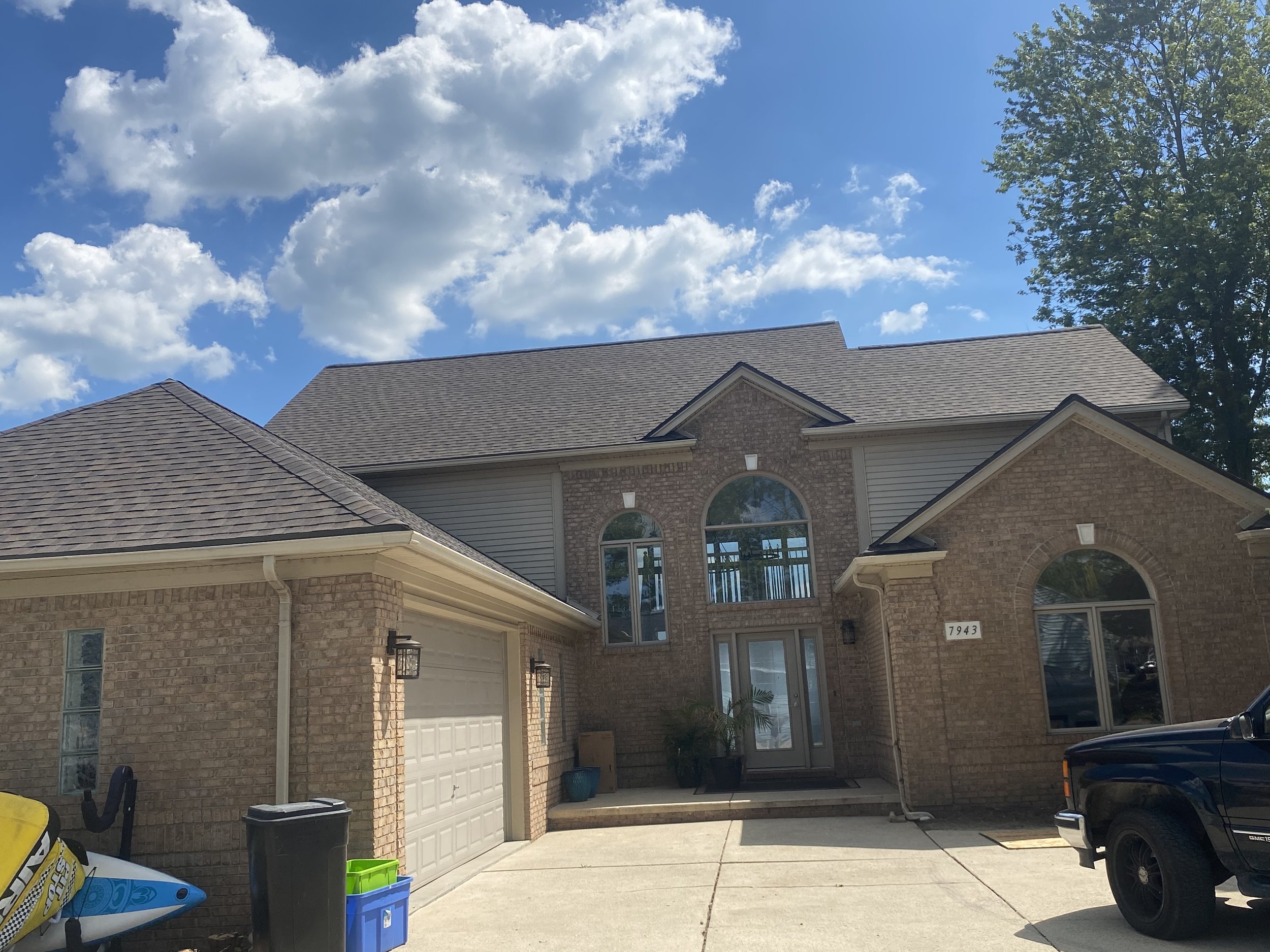
What Professional Siding Installation Looks Like
The material you choose matters. How it's installed matters more. I've seen $20,000 fiber cement jobs fail in three years because the contractor skipped steps. I've also seen $8,000 vinyl jobs still looking good after 15 years because every detail was done right.
Here's what happens on a proper siding installation in Michigan — not the shortcuts, the actual process:
Step 1: Tear-Off and Inspection
We remove all existing siding down to the sheathing. This isn't optional. You need to see what's underneath — rotted plywood, missing house wrap, improperly flashed windows. About 30% of the homes we work on in Clinton Township and Warren have some level of sheathing damage that needs repair before new siding goes on.
If the sheathing is rotted, we replace it with 7/16" OSB or plywood. If it's just the old tar paper that's deteriorated, we move to step 2.
Step 2: Water-Resistive Barrier (The Most Important Step)
We install Tyvek HomeWrap or equivalent over the entire house. This is your drainage plane — it lets moisture vapor escape from inside the wall cavity but keeps liquid water (rain, snow melt) from getting in.
Every seam gets taped with Tyvek tape. Every window and door gets flashed with peel-and-stick flashing membrane before the siding goes on. This is where most cheap contractors cut corners, and it's where most siding failures start.
Step 3: Flashing Details
Windows and doors get a specific flashing sequence:
- Sill flashing first (angled down and out so water drains away)
- Side flashing that overlaps the sill and extends up past the top of the window
- Head flashing at the top, tucked under the house wrap above and lapped over the side flashing
Roof-to-wall transitions get metal step flashing — not caulk, not tar, metal. Caulk fails. Metal lasts.
Step 4: Siding Installation
For vinyl: We start at the bottom and work up. Each panel overlaps the one below it by at least 1". Nails go in the center of the nail slots (not tight against the top or bottom) so the siding can expand and contract. We leave 1/4" gaps at all vertical seams and J-channels for the same reason.
For fiber cement: We snap chalk lines every 4 courses to keep everything level. Each plank gets face-nailed through the overlap zone (not the field of the board). Joints get caulked with Sherwin-Williams Emerald Exterior Acrylic Latex Caulk — it flexes with the material and lasts 25+ years.
For engineered wood: Similar to fiber cement, but we use LP's SmartFinish trim system at all corners and transitions. It's pre-primed and designed to work with the siding's expansion rate.
Step 5: Trim and Final Details
All corners, window surrounds, and door surrounds get trim. For vinyl jobs, this is usually color-matched vinyl trim. For fiber cement and engineered wood, we use either PVC trim boards (Azek or KOMA) or wood trim that gets primed and painted.
Every penetration — electrical outlets, dryer vents, hose bibs — gets sealed. We're not talking about a bead of caulk; we're talking about proper boots, flashing, and sealant rated for exterior use in freeze-thaw climates.
Proper installation also ties into other exterior systems. For example, when we replace siding, we often coordinate with seamless gutter installation in Detroit to ensure water management works as a complete system — siding, gutters, and drainage all working together to protect your home.
Red Flag: If a contractor quotes your siding job without looking at your windows, doors, and roof edge details, they're not planning to flash anything properly. A proper siding estimate requires looking at every transition point on your house.
Signs Your Home Needs New Siding
Most homeowners wait too long to replace siding. By the time it looks bad from the curb, there's often damage behind it. Here's what to look for — and when to call a contractor instead of trying to patch it yourself.
Obvious Visual Problems
- Warped or buckled panels: Usually means the siding was installed too tight (no room for expansion) or moisture got behind it and warped the sheathing. Either way, it's not fixable — you need new siding.
- Cracks or holes: One cracked panel can be replaced. Ten cracked panels means the material is failing and you're looking at full replacement within 2-3 years.
- Fading or chalking: Vinyl that's faded to the point where it looks two-tone (darker under the eaves, lighter on the south wall) is at the end of its UV-resistance life. It'll start cracking within a few years.
- Loose or missing panels: If you're finding siding panels in your yard after a windstorm, the nailing pattern is wrong or the material is brittle. This is a safety issue — loose siding becomes a projectile in 60 mph winds.
Moisture and Rot Indicators
- Peeling paint on interior walls near exterior walls: This means moisture is getting through the siding, through the sheathing, and into your wall cavities. The paint peeling inside is just the visible symptom.
- Mold or mildew on siding that won't wash off: Surface mold is normal in Michigan (we're humid). Mold that's embedded in the siding material means moisture is staying in the material — it's not drying out between rain events.
- Soft spots when you press on siding: Tap your siding with your knuckles around windows, doors, and corners. If it feels spongy or soft, the sheathing behind it is rotted. You need to tear off and inspect immediately.
- Increased heating or cooling bills: If your energy bills have crept up over the past 5 years and you haven't changed your thermostat habits, your siding (and the insulation behind it) is failing. Air is leaking through seams and cracks.
Age-Based Replacement
Even if your siding looks okay, age matters:
- Vinyl siding over 25 years old: It's brittle. It'll crack when you try to remove a panel to replace one section. Plan for full replacement.
- Wood siding over 20 years old: If it hasn't been repainted in the last 10 years, moisture has gotten in. You'll find rot when you start poking around.
- Aluminum siding from the 1970s-80s: It's dented, faded, and the baked-on finish is failing. Replacement is cheaper than trying to paint it (paint doesn't stick well to old aluminum).
If you're seeing multiple signs from this list, it's time to get an estimate. Waiting another year just means more expensive repairs when you finally pull the trigger.
And if you're addressing siding issues, it's worth evaluating your home's overall envelope. Many homeowners in Southeast Michigan discover that poor attic insulation in Metro Detroit is contributing to moisture problems and energy loss — problems that new siding alone won't solve.
Real Costs for Siding Projects in Southeast Michigan
Let's talk numbers. Not the "$3-$8 per square foot" vague ranges you see online, but what actual projects cost in Macomb, Oakland, and St. Clair counties in 2026.
Vinyl Siding (CertainTeed Monogram .046" or Equivalent)
1,200 sq ft ranch (Troy, Warren): $6,500-$9,500
1,800 sq ft ranch or small two-story (Sterling Heights, Clinton Township): $9,000-$13,000
2,500 sq ft two-story Colonial (Rochester Hills, Bloomfield Hills): $13,000-$18,000
These prices include tear-off of old siding, Tyvek house wrap, all trim, soffit and fascia if needed, and disposal. They assume the sheathing underneath is in good shape.
Add $2,000-$5,000 if: You have rotted sheathing that needs replacement, you're in a historic district with extra trim requirements, or your house has complex architectural details (bay windows, turrets, multiple roof lines).
Fiber Cement (James Hardie HardiePlank)
1,200 sq ft ranch: $12,000-$16,000
1,800 sq ft ranch or small two-story: $16,000-$22,000
2,500 sq ft two-story Colonial: $22,000-$30,000
These prices include factory-primed HardiePlank, Sherwin-Williams Duration paint (two coats), all trim in PVC or painted wood, proper flashing, and James Hardie's 30-year warranty.
Why is fiber cement more expensive? Material cost is higher, labor is slower (it's heavier and requires more precise cutting), and the paint process adds 3-5 days to the project timeline.
Engineered Wood (LP SmartSide)
1,200 sq ft ranch: $9,000-$13,000
1,800 sq ft ranch or small two-story: $12,000-$17,000
2,500 sq ft two-story Colonial: $17,000-$24,000
These prices include LP SmartSide panels or lap siding, LP SmartFinish trim, Sherwin-Williams paint (required for warranty), and proper installation per LP's guidelines.
What Affects Your Final Price
- Two-story vs. ranch: Two-story homes cost 20-30% more because of scaffolding, slower work pace at height, and safety requirements.
- Sheathing repairs: If we find rotted plywood or OSB when we tear off old siding, that's $3-$6 per square foot to replace, depending on how much needs to be done.
- Window and door trim: If you want upgraded trim (thicker profiles, decorative headers), add $1,500-$3,500 depending on how many openings you have.
- Color choice: Dark colors (navy, charcoal, deep red) cost slightly more in fiber cement and engineered wood because they require premium paint formulations that resist fading.
- Soffit and fascia: If your soffits and fascia are rotted or outdated, replacing them adds $2,000-$5,000 to the project. But if we're already scaffolded up for siding, it's the right time to do it.
Financing Reality: Most homeowners in Southeast Michigan finance siding projects. We work with several lenders that specialize in home improvement loans — typical terms are 5-7 years at 6-9% APR for qualified buyers. A $15,000 fiber cement project financed over 7 years is about $240/month.
For a detailed breakdown of what you'll pay for different siding materials and home sizes in Metro Detroit, see our full guide on siding cost in Metro Detroit.
How to Choose a Siding Contractor in Metro Detroit
There are 200+ contractors in Southeast Michigan who will install siding. Maybe 30 of them do it right. Here's how to separate the professionals from the guys with a truck and a nail gun.
Non-Negotiable Credentials
Michigan Residential Builder's License: Required by law for any project over $600. Ask for the license number and verify it at michigan.gov/lara. If they say "we're getting it" or "we work under someone else's license," walk away.
Liability Insurance and Workers' Comp: Ask for certificates of insurance. Call the insurance company to verify coverage is current. If someone gets hurt on your property and the contractor isn't insured, you're liable.
Manufacturer Certifications: For fiber cement, the contractor must be James Hardie-certified or your warranty is void. For LP SmartSide, they should be in LP's contractor network. For vinyl, look for CertainTeed or GAF certification — it means they've been trained on proper installation.
NEXT Exteriors holds all of these — we're a Michigan-licensed builder (since 1988), we're CertainTeed Master Shingle Applicators (the highest credential in roofing, which translates to exterior work), and we're James Hardie-certified. You can verify all of this before you call us.
Questions to Ask During the Estimate
- "What thickness vinyl are you quoting, and what's the warranty?" — If they say "standard vinyl" or can't tell you the thickness, they're using cheap material. You want .044" minimum, preferably .046".
- "What water-resistive barrier are you installing?" — The answer should be Tyvek, Typar, or an equivalent brand name. If they say "we use the black paper" or "we'll see what's there," that's a red flag.
- "How do you flash windows and doors?" — The correct answer involves peel-and-stick flashing membrane, specific sequencing (sill first, then sides, then head), and integration with the house wrap. If they say "we caulk everything real good," run.
- "What happens if you find rotted sheathing?" — A good contractor will say "we'll call you, show you the damage, and give you a price to replace it before we continue." A bad contractor will either hide it or surprise you with a bill at the end.
- "Can I see photos of recent jobs in my area?" — They should have a portfolio of work in Southeast Michigan. If all their photos are from out of state or look like stock images, they're not established locally.
- "What's your timeline, and how do you handle weather delays?" — A realistic timeline for a 1,800 sq ft siding job is 5-10 days depending on material and complexity. Anyone promising "done in 3 days" is either rushing or planning to have 8 guys on site at once (which creates quality issues).
Red Flags That Mean "No"
- Pressure to sign today: "This price is only good if you sign right now" is a sales tactic, not a legitimate business practice. A good contractor will give you time to think, compare estimates, and make an informed decision.
- No written estimate: Everything should be in writing — materials, labor, timeline, payment schedule, warranty terms. If they try to give you a verbal quote or a number scribbled on a business card, that's not a professional operation.
- Cash-only or huge deposit required: Standard practice is 30-50% down when materials are ordered, balance due on completion. Anyone asking for 75% up front or "cash only for a discount" is either avoiding taxes or planning to disappear.
- No local references: Ask for 3-5 references from projects in the last 12 months in your area. Call them. Ask if the crew showed up on time, if the project stayed on budget, if there were any issues. If the contractor can't provide local references, they're either new or they've burned bridges.
- Subcontracting everything: Some companies are just sales teams — they sell the job, then subcontract the actual work to whoever's available. Ask if the crew doing your job is employed by the company or subcontracted. Subcontractors aren't necessarily bad, but you want accountability.
NEXT Exteriors uses our own crews for all siding installations. We've been in business since 1988, we have an A+ BBB rating since 2006, and we have 87+ five-star reviews from homeowners across Metro Detroit. We're not the cheapest option, but we're the option that's still going to be here in 10 years when you need warranty service.
When evaluating contractors, it's also smart to consider their expertise across exterior services in Detroit — a company that specializes in multiple exterior systems (siding, roofing, windows, gutters) understands how everything works together, not just one isolated component.

Ready to Get Started?
NEXT Exteriors has been protecting Michigan homes since 1988. Get a free, no-pressure estimate from a team that shows up on time and does the job right.
Get Your Free QuoteOr call us: (844) 770-6398
Beyond siding, many homeowners also invest in complementary services. If you're upgrading your home's exterior, consider professional exterior painting in Detroit to protect and beautify your investment. And since many siding projects uncover underlying issues, a comprehensive roof replacement in Metro Detroit evaluation can ensure your entire building envelope is working as it should.
Frequently Asked Questions About Siding Services in Metro Detroit
A typical 1,800 sq ft home takes 5-10 days depending on material and complexity. Vinyl is fastest (5-7 days). Fiber cement takes longer (7-10 days) because of painting time. Weather delays can add 2-3 days in spring and fall when Michigan rain is unpredictable. Two-story homes or homes with complex architecture (bay windows, multiple roof lines) add time. We don't rush — proper flashing and moisture barrier installation can't be done in a hurry.
Yes, but with limitations. Fiber cement and engineered wood can be installed year-round as long as temperatures are above 40°F (paint won't cure properly below that). Vinyl should not be installed below 40°F — it's brittle when cold and will crack during cutting and nailing. We do winter siding projects, but we monitor weather closely and won't install vinyl on days when it's too cold. December through February is our slowest season for siding because of this.
In most cases, yes. If your existing house wrap (Tyvek or equivalent) is more than 15 years old, it's deteriorated — UV exposure, moisture, and Michigan's freeze-thaw cycles break down the material. We replace house wrap on 90% of our siding projects. The cost is minimal compared to the protection it provides. If we find the existing wrap is in good condition and properly installed, we'll tell you — but that's rare on homes built before 2010.
Yes, but not as much as you might think. Siding itself provides minimal insulation (R-value of 0.6 for vinyl, slightly higher for insulated vinyl). The real energy improvement comes from sealing air leaks during installation — new house wrap, properly flashed windows, sealed penetrations. If you want significant energy savings, add insulated vinyl (adds R-3 to R-4) or upgrade your wall cavity insulation while the siding is off. We often recommend a home energy audit before siding replacement so you can address insulation and air sealing at the same time.
Neutral colors sell best: light gray, beige, soft white, and warm taupe are safe choices that appeal to the widest range of buyers. In Southeast Michigan, we see strong resale performance with James Hardie's "Arctic White" and "Aged Pewter," and CertainTeed's "Sterling Grey" and "Natural Clay." Avoid trendy colors (bright blue, deep purple) unless you're planning to stay in the house for 15+ years. Dark colors (navy, charcoal) look great but show dirt and pollen more in Michigan's humid climate.
For a typical 1,500 sq ft ranch in Sterling Heights: $8,000-$11,000 for quality vinyl (CertainTeed Monogram), $14,000-$19,000 for fiber cement (James Hardie), or $11,000-$15,000 for engineered wood (LP SmartSide). These prices include tear-off, new house wrap, all trim, and disposal. Add $2,000-$4,000 if you have rotted sheathing that needs replacement or complex architectural details. Two-story homes cost 20-30% more because of scaffolding and slower work pace at height.
Yes. We work with several lenders that specialize in home improvement financing. Typical terms are 5-7 years at 6-9% APR for qualified buyers. Some homeowners also use home equity lines of credit (HELOCs) if they have available equity. We can provide financing options during your estimate appointment. A $15,000 siding project financed over 7 years is approximately $240/month depending on your credit and the current interest rate environment.