

Does Vinyl Siding Fade Over Time? Michigan Climate Reality
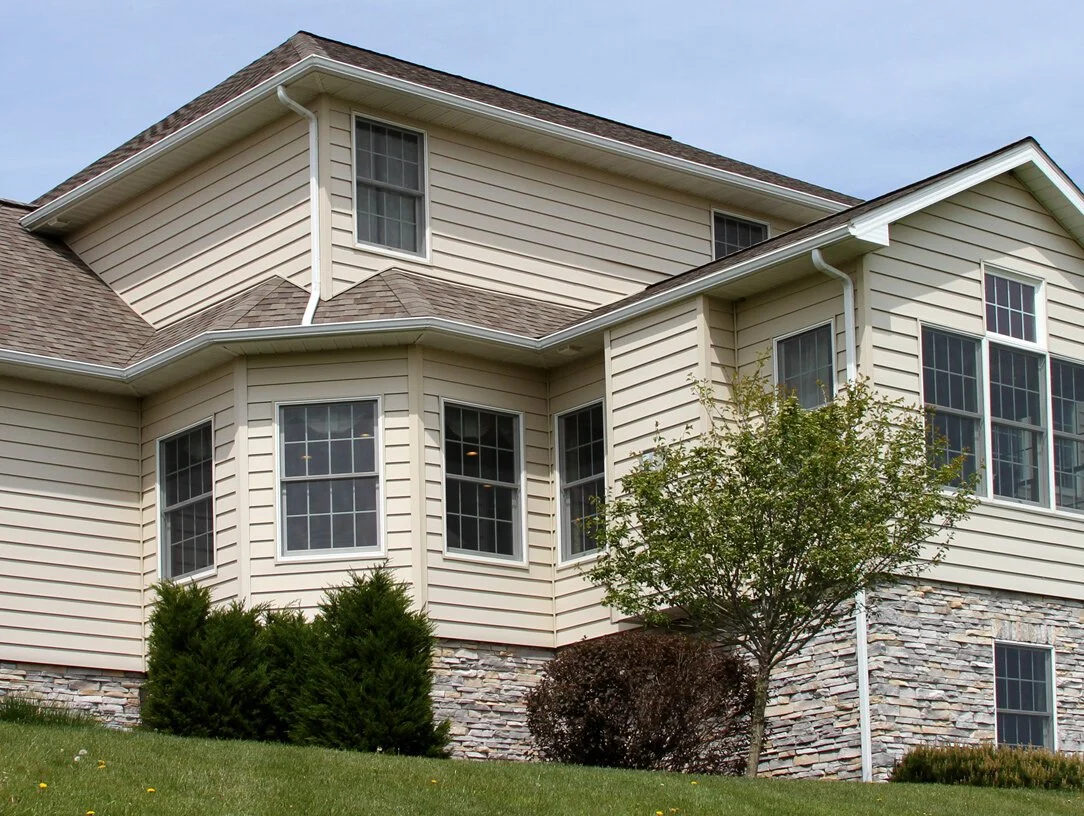
Let's cut straight to it: yes, vinyl siding does fade over time. Anyone who tells you otherwise is either selling you something or hasn't been in the business long enough to see it happen. But here's what matters more than the fact that it fades—how much it fades, how fast it fades, and whether you can do anything about it.
After 35 years installing house siding in Detroit and across Southeast Michigan, we've seen every kind of vinyl siding age in every kind of condition. Some homes still look sharp after 20 years. Others look washed out after 10. The difference isn't luck—it's material quality, color choice, installation technique, and understanding how Michigan's climate beats the hell out of exterior materials.
This isn't a sales pitch for one brand over another. It's a breakdown of what actually causes vinyl siding to fade, which products hold up better in Michigan's freeze-thaw cycles and summer sun, and what you should know before you spend thousands of dollars on new siding for your home in Sterling Heights, Troy, or anywhere else in Macomb or Oakland County.
The Honest Answer—Yes, All Vinyl Siding Fades (Eventually)
Vinyl siding is polyvinyl chloride (PVC) mixed with pigments, UV stabilizers, and impact modifiers. When you expose any plastic material to ultraviolet radiation from the sun, it breaks down the molecular structure. That breakdown shows up as fading, chalking (a powdery surface residue), and eventually brittleness.
This isn't a defect. It's physics. Every vinyl siding product on the market will fade to some degree over its lifespan. The question is how much and how fast.
What "fading" actually means: UV radiation breaks down the pigment molecules in the vinyl. Darker colors absorb more UV energy, so they fade faster. Lighter colors reflect more UV, so they fade slower. The vinyl itself doesn't disappear—it just loses color intensity and develops a chalky surface as the resin degrades.
The good news: modern vinyl siding—especially premium lines from manufacturers like CertainTeed, GAF, and Mastic—includes advanced UV inhibitors and capstock technology (a protective outer layer) that dramatically slow the fading process. Cheap vinyl from a big-box store? That's a different story.
When we're working with homeowners on exterior services in Detroit, we explain this upfront. You're not buying a product that will look factory-fresh forever. You're buying a product that will age gracefully if you choose the right material and color for Michigan's climate.
What Causes Vinyl Siding to Fade in Michigan
Michigan's climate is brutal on siding. We get intense summer sun, sub-zero winters, freeze-thaw cycles that run from November through April, high humidity, and lake-effect weather patterns that dump moisture and temperature swings on homes near the Great Lakes.
Here's what's working against your vinyl siding:
UV Radiation
The sun is the primary culprit. UV rays break down the chemical bonds in vinyl pigments. South-facing and west-facing walls get the most exposure, so they fade faster. If your home in Rochester Hills has a big south-facing wall with no tree cover, that's where you'll see fading first.
Heat Absorption
Darker siding colors absorb more heat. That heat accelerates the breakdown of UV stabilizers and pigments. A dark navy or charcoal gray panel can reach surface temperatures of 160°F or higher on a July afternoon. Lighter colors stay cooler and fade slower.
Freeze-Thaw Cycles
Michigan winters mean repeated expansion and contraction. Vinyl siding expands in heat and contracts in cold. Over time, this stress can cause micro-cracking in the surface, which makes the material more vulnerable to UV degradation and moisture intrusion. Proper installation—leaving expansion gaps at the ends of panels—is critical to prevent this.
Moisture and Humidity
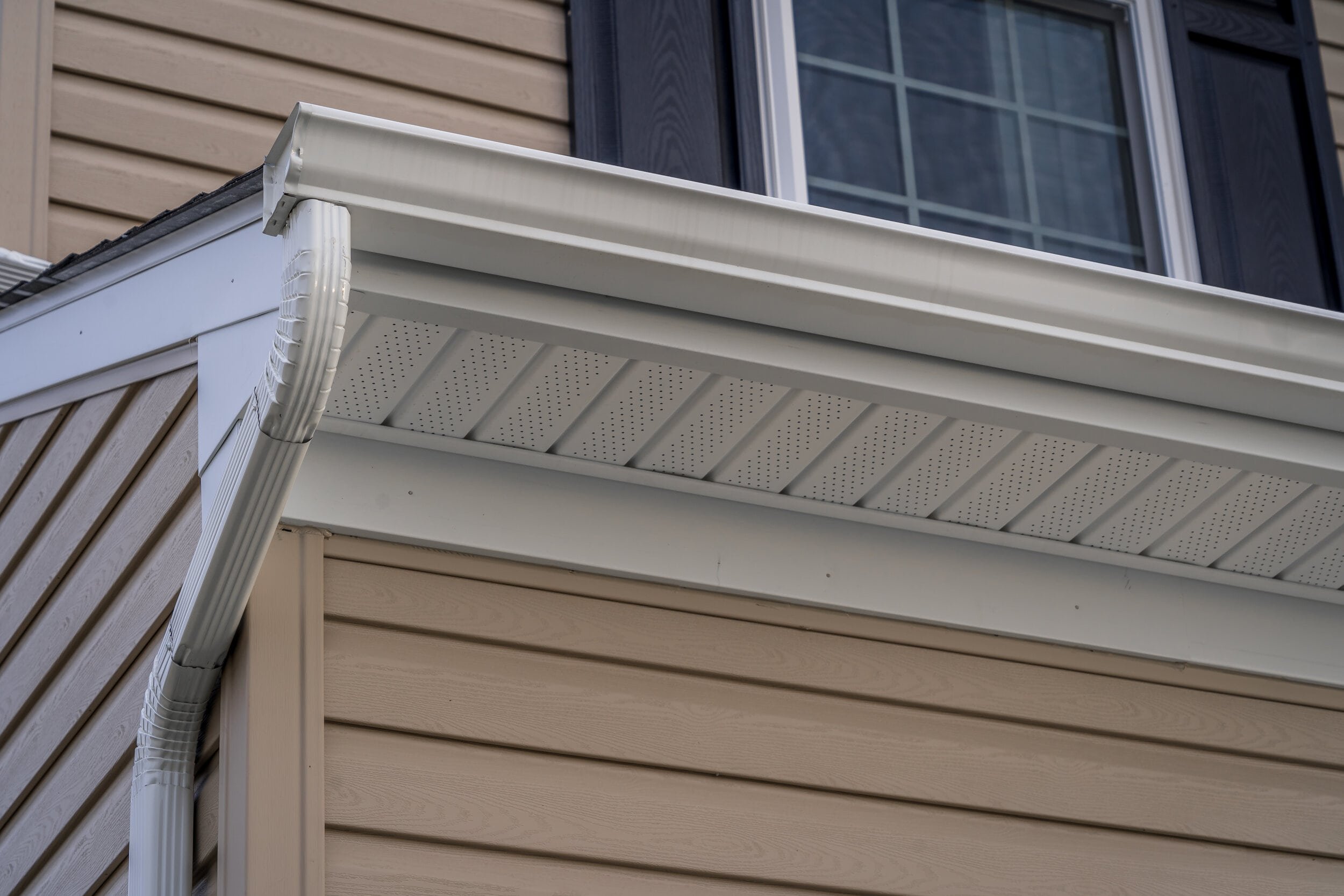
Michigan summers are humid. Moisture doesn't directly cause fading, but it accelerates the degradation of already-weakened vinyl. If water gets behind the siding due to poor installation or missing seamless gutters in Detroit, MI, you'll see faster deterioration on the back side of the panels, which can lead to warping and surface damage that makes fading more visible.
Airborne Pollutants
Homes near highways, industrial areas, or urban centers in Detroit and Warren are exposed to airborne pollutants—exhaust, industrial emissions, road salt spray in winter. These contaminants settle on siding and can react with the vinyl surface, accelerating fading and chalking.
The combination of these factors is why vinyl siding in Michigan doesn't age the same way it does in, say, Arizona or Florida. You're dealing with extreme temperature swings, high UV exposure in summer, and moisture stress year-round. That's why material quality and color choice matter so much.
Not All Vinyl Siding Fades at the Same Rate
Not all vinyl siding is created equal. The difference between builder-grade vinyl and premium vinyl is night and day when it comes to fade resistance.
Builder-Grade Vinyl
This is the stuff you see on new-construction subdivisions and big-box store shelves. It's thin (typically .040" to .042"), uses lower-quality pigments, and has minimal UV protection. It's cheap upfront, but it fades fast—often showing noticeable color loss within 5 to 7 years, especially on south- and west-facing walls.
Mid-Grade Vinyl
Thicker panels (.044" to .046"), better pigments, and some UV stabilizers. You'll see products like CertainTeed Monogram and Mastic Ovation in this category. These hold up better—typically 10 to 15 years before significant fading—but they're still susceptible to color loss over time, especially in darker shades.
Premium Vinyl with Capstock Technology
This is the top tier. Products like CertainTeed Cedar Impressions and Wolverine Palisades feature a co-extruded capstock layer—a protective outer shell that's engineered specifically for UV resistance. The pigment is embedded in this layer, and the formulation includes advanced UV inhibitors and heat reflectors.
These products come with fade warranties—often 25 years or more—and they actually deliver. We've seen premium vinyl siding installed in the late 1990s that still looks good today. The color has shifted slightly, but it's subtle. No chalking, no dramatic fading.
Warranty reality check: Most vinyl siding warranties cover "excessive" fading, which manufacturers define as more than a certain number of Delta E units (a measurement of color change). The threshold is usually high enough that normal fading doesn't qualify for a claim. Read the fine print. A "lifetime fade warranty" doesn't mean the siding won't fade—it means the manufacturer will replace it if it fades beyond their defined limit, which is rare with quality products.
Color Matters as Much as Quality
Even the best vinyl siding will fade faster if you choose a dark color. Dark blues, blacks, charcoals, and deep reds absorb more UV energy and heat. Lighter colors—whites, tans, grays, soft blues—reflect UV and stay cooler, which means they fade slower.
If you're set on a dark color, go with a premium product that's engineered for it. CertainTeed's ColorCoach technology and similar systems from other manufacturers use reflective pigments that reduce heat absorption. It's not magic, but it helps.
When we're working with homeowners on siding installation in Southeast Michigan, we walk through these trade-offs. You can have a dark color, but you need to understand what you're signing up for in terms of long-term appearance.
How Much Fading Should You Expect?
Here's what we've seen on real homes in Southeast Michigan over the past three decades:
- Builder-grade vinyl, dark colors: Noticeable fading within 5 to 7 years. Significant color loss and chalking by 10 to 12 years. South- and west-facing walls look washed out.
- Builder-grade vinyl, light colors: Minimal fading for 8 to 10 years. Noticeable color shift by 12 to 15 years. Still serviceable but clearly aged.
- Mid-grade vinyl, dark colors: Slight fading by 10 years. Noticeable by 15 years. Still looks decent but not new.
- Mid-grade vinyl, light colors: Minimal fading for 12 to 15 years. Slight color shift by 20 years. Holds up well.
- Premium vinyl, dark colors: Slight fading by 15 years. Noticeable but not dramatic by 20 years. Still looks good from the street.
- Premium vinyl, light colors: Minimal fading for 20+ years. Slight color shift but no chalking or dramatic change. Ages gracefully.
These are generalizations based on average exposure. A home in Grosse Pointe Farms with mature tree cover will fare better than a home in an open subdivision in Clinton Township with full southern exposure.

How to Minimize Fading When Choosing Vinyl Siding
If you're planning a siding replacement and you want to minimize fading, here's what we recommend:
1. Choose a Premium Product with Capstock Technology
Spend the extra money upfront. A premium vinyl siding product with a co-extruded capstock layer will cost 20% to 30% more than builder-grade, but it will look better longer. CertainTeed Cedar Impressions, Wolverine Palisades, and similar products are worth it.
2. Go Lighter on Color
If fade resistance is a priority, choose a lighter color. Whites, soft grays, tans, and light blues reflect UV and heat. They fade slower, and when they do fade, the shift is less noticeable. If you want a darker accent color, use it sparingly—on shutters, trim, or a single accent wall—not on the entire house.
3. Insist on Proper Installation
Vinyl siding needs room to expand and contract. If it's nailed too tight or the panels are butted up against J-channel with no gap, the material will buckle and warp in heat, which accelerates surface degradation. Hire a contractor who knows what they're doing. We've been installing Detroit siding since 1988, and we still see botched installations from fly-by-night crews who don't understand thermal expansion.
4. Consider Orientation and Landscaping
If possible, plant trees or shrubs on the south and west sides of your home to provide shade. This won't eliminate UV exposure, but it will reduce it. If you're building new or doing a major landscape overhaul, think about how sun exposure will affect your siding over time.
5. Maintain Your Gutters and Drainage
Water damage accelerates siding degradation. Make sure your seamless gutter systems in Metro Detroit are functioning properly, downspouts are directing water away from the foundation, and there's no standing water against the house. Moisture intrusion behind siding leads to warping, mold, and faster fading.
6. Clean Your Siding Periodically
Dirt, pollen, mold, and pollutants sitting on your siding accelerate degradation. Wash your siding once a year with a garden hose and a soft brush. Use a mild detergent if needed. Don't use a pressure washer—it can damage the surface and force water behind the panels.
When Faded Siding Means It's Time to Replace
Fading alone isn't necessarily a reason to replace siding. If the material is still structurally sound—no cracks, warping, or moisture damage—and you're okay with the appearance, you can leave it. But there are signs that faded siding has crossed the line from cosmetic issue to functional problem:
- Chalking: If you run your hand across the siding and it leaves a powdery residue, the vinyl is breaking down. This is a sign that UV degradation has compromised the material. It's still functional, but it's nearing the end of its lifespan.
- Cracking or brittleness: If panels crack when you press on them or if you see cracks forming around nails or seams, the vinyl has become brittle from UV exposure. This means it's no longer providing effective weather protection. Time to replace.
- Warping or buckling: If panels are pulling away from the wall, buckling, or warping, it's a sign of poor installation, moisture damage, or thermal stress. Faded, warped siding needs to come off.
- Moisture intrusion: If you see mold, rot, or water stains on the sheathing behind the siding, the system has failed. Fading is the least of your problems. You need a full siding replacement and possibly sheathing repair.
- Severe color mismatch: If you need to replace a few panels due to damage and the new panels don't match the faded originals, you're stuck with a patchwork look. At that point, many homeowners opt for a full replacement.
If you're seeing any of these signs on your home in Royal Oak, Shelby Township, or anywhere else in Southeast Michigan, it's worth getting a professional assessment. We offer free inspections and can tell you whether you're looking at a repair or a full replacement.
Cost Reality—Fade-Resistant Vinyl vs. Other Siding Options
Let's talk money. Vinyl siding is popular because it's affordable, low-maintenance, and performs well in Michigan's climate. But if fade resistance is your top priority, you need to weigh the cost of premium vinyl against other materials.
Vinyl Siding (Premium)
Cost: $8 to $12 per square foot installed, depending on product line and complexity of the job. For a typical 2,000-square-foot home, you're looking at $16,000 to $24,000 for a full siding replacement with a premium product like CertainTeed Cedar Impressions.
Pros: Good fade resistance with capstock technology, low maintenance, wide color selection, proven performance in Michigan climate.
Cons: Will still fade over time, especially in dark colors. Not as fade-resistant as fiber cement or engineered wood.
James Hardie Fiber Cement
Cost: $12 to $18 per square foot installed. For the same 2,000-square-foot home, you're looking at $24,000 to $36,000.
Pros: Excellent fade resistance. James Hardie's ColorPlus finish comes with a 15-year fade warranty and performs exceptionally well in UV exposure. The material itself is non-combustible, impact-resistant, and handles freeze-thaw cycles better than vinyl.
Cons: More expensive upfront. Requires periodic repainting (every 10 to 15 years) if you go with primed siding instead of ColorPlus. Heavier than vinyl, so installation takes longer.
LP SmartSide Engineered Wood
Cost: $10 to $15 per square foot installed. For a 2,000-square-foot home, you're looking at $20,000 to $30,000.
Pros: Excellent fade resistance with factory-applied finish. Looks like real wood. Handles Michigan weather well with proper installation and maintenance. More impact-resistant than vinyl.
Cons: Requires periodic repainting or restaining (every 8 to 12 years). More maintenance than vinyl. Vulnerable to moisture damage if not properly sealed and flashed.

Our Take
If you're budget-conscious and want good fade resistance, premium vinyl is the best value. If you want the absolute best fade resistance and you're willing to spend more, go with James Hardie fiber cement. LP SmartSide is a solid middle ground—better fade resistance than vinyl, less expensive than Hardie, but with more maintenance requirements.
We install all three at NEXT Exteriors, and we're honest about the trade-offs. If a homeowner in Lake Orion wants dark blue siding and doesn't want to worry about fading, we steer them toward Hardie. If they want something that looks great, requires zero maintenance, and costs less, we recommend premium vinyl in a lighter color.
For a full breakdown of material options and pricing, check out our guide on siding cost in Metro Detroit.
Beyond siding: While you're thinking about exterior upgrades, consider how other elements of your home's envelope affect performance and appearance. Proper insulation services in Southeast Michigan reduce energy costs and prevent ice dams that can damage siding. Upgrading to energy-efficient Detroit window experts can reduce UV exposure inside your home and improve curb appeal. And don't overlook your roof—if your Detroit roofing services include proper ventilation and ice-and-water shield, you're protecting the structure behind your siding from moisture damage that accelerates fading and deterioration.
We also work with homeowners on exterior painting in Southeast Michigan using Sherwin-Williams products. If you're looking to refresh the appearance of your home without a full siding replacement, a professional paint job on trim, shutters, and doors can make a big difference. And if your siding is structurally sound but faded, painting isn't an option for vinyl—but it is for fiber cement and engineered wood.
Ready to Get Started?
NEXT Exteriors has been protecting Michigan homes since 1988. Get a free, no-pressure estimate from a team that shows up on time and does the job right.
Get Your Free QuoteOr call us: (844) 770-6398
Frequently Asked Questions
Yes. Michigan's combination of high summer UV exposure, freeze-thaw cycles, and humidity accelerates vinyl siding degradation compared to more moderate climates. The freeze-thaw cycles cause micro-cracking in the surface, which makes the material more vulnerable to UV damage. Homes near the Great Lakes also deal with lake-effect moisture, which can accelerate fading and chalking.
Technically yes, but it's not a great solution. Vinyl siding expands and contracts with temperature changes, which causes paint to crack and peel over time. If you do paint it, you need to use a high-quality acrylic paint specifically formulated for vinyl, and you need to choose a color that's lighter than the original to avoid heat absorption issues. Most contractors, including us, recommend replacement over painting for faded vinyl siding.
Builder-grade vinyl siding typically lasts 15 to 20 years before it needs replacement. Premium vinyl with capstock technology can last 30 to 40 years or more. The lifespan depends on material quality, color choice, installation quality, and exposure to sun and weather. Fading is usually a cosmetic issue long before the siding fails structurally.
Lighter colors—whites, soft grays, tans, and light blues—fade slower because they reflect UV radiation and absorb less heat. If you want a darker color, choose a premium product with reflective pigments and capstock technology, and understand that it will fade faster than a light color. Neutral tones in the mid-range (light gray, beige) offer a good balance between aesthetics and fade resistance.
No. South-facing and west-facing walls get the most sun exposure and fade faster. North-facing walls and areas shaded by trees or overhangs fade slower. This can create a noticeable color mismatch over time, especially with darker colors. If you're replacing a few damaged panels, the new panels often don't match the faded originals, which is why many homeowners opt for a full replacement when they start seeing significant fading.
No. Once the pigment molecules in vinyl siding have degraded from UV exposure, the color loss is permanent. Cleaning the siding can remove dirt and chalking, which may make it look slightly better, but it won't restore the original color. The only way to get a like-new appearance is to replace the siding.
Most warranties cover "excessive" fading, which is defined as color change beyond a specific Delta E measurement (usually 5 to 7 units). Normal fading over time doesn't qualify for a warranty claim. Premium products from manufacturers like CertainTeed and GAF often include limited lifetime fade warranties, but the threshold for a claim is high. Always read the warranty fine print and understand what's actually covered.