

Siding Replacement Cost Michigan 2026: Real Pricing Breakdown

If you're researching siding replacement cost in Michigan for 2026, you're probably tired of seeing vague price ranges that don't actually help you budget. "It depends" isn't an answer when you're trying to figure out if you can afford to replace the rotting wood siding on your 1960s ranch in Royal Oak or whether fiber cement is worth the extra money for your brick Colonial in Grosse Pointe Farms.
We've been installing siding across Southeast Michigan since 1988. We've worked on everything from small Cape Cods in Mount Clemens to sprawling two-stories in Bloomfield Hills. And after 35+ years and 500+ projects, we can tell you exactly what siding replacement costs in Michigan right now — and why those costs vary so much from one home to the next.
This isn't a sales pitch. It's the pricing conversation we have with homeowners every week, laid out in detail so you can walk into estimates with realistic expectations and the right questions ready.
What Actually Goes Into Siding Replacement Cost
Before we get to the numbers, let's break down what you're actually paying for when you hire a house siding company in Detroit. Siding replacement isn't just slapping new panels over the old ones. Here's what a legitimate contractor includes in their estimate:
Material Costs
The siding itself — vinyl, fiber cement, or engineered wood — is the most visible line item. But it's not just the panels. You're also paying for:
- Starter strips (the foundation that holds the first course of siding)
- J-channel (trim around windows and doors)
- Corner posts (inside and outside corners)
- Soffit and fascia (if they're being replaced or wrapped)
- Trim boards (around windows, doors, and at the roofline)
- Flashing (critical for water management behind windows and doors)
- House wrap or moisture barrier (Tyvek, Typar, or similar — non-negotiable in Michigan's climate)
Quality matters here. CertainTeed vinyl siding performs differently than builder-grade vinyl from a big box store. James Hardie fiber cement comes with a 30-year non-prorated warranty because it's engineered to handle freeze-thaw cycles. LP SmartSide engineered wood has a proprietary treatment that resists moisture and fungal decay. These aren't marketing claims — they're material science differences that show up in how your siding performs after 10 Michigan winters.
Labor and Installation Complexity
Installation labor is the second-biggest cost driver, and it varies wildly based on your home's characteristics. A single-story ranch with minimal trim is straightforward. A two-story Victorian with decorative gables, bay windows, and intricate trim work? That's a different project entirely.
Labor costs also reflect skill level. A licensed Michigan contractor with decades of experience charges more than a handyman with a truck, but you're paying for proper installation techniques — overlapping panels correctly, maintaining consistent reveal, installing flashing that actually keeps water out, and knowing how to handle Michigan's temperature swings without creating buckling or gaps.
Removal and Disposal
Old siding has to come off before new siding goes on. That means:
- Carefully removing existing siding without damaging the substrate
- Disposing of old materials (vinyl, aluminum, wood, asbestos in older homes)
- Hauling debris to the appropriate disposal facility
Asbestos siding, common in homes built before the 1980s, requires special handling and disposal. That adds cost, but it's not optional — it's a legal and safety requirement.
Prep Work and Substrate Repairs
This is where honest contractors separate themselves from the lowballers. Once the old siding comes off, you see what's really going on underneath. In Michigan, that often means:
- Rotted sheathing from ice dam damage or failed flashing
- Water-damaged OSB or plywood around windows and doors
- Deteriorated house wrap or missing moisture barriers
- Structural issues with rim joists or wall framing
A legitimate contractor prices in reasonable substrate repair. A bad contractor gives you a low estimate, then hits you with change orders once the siding is off and you're committed. We've seen homeowners in Sterling Heights get quoted $12,000 for siding, only to end up paying $18,000 after "unexpected" repairs that any experienced contractor should have anticipated.

2026 Siding Costs in Southeast Michigan: By Material
Here's what siding installation in Southeast Michigan actually costs in 2026, broken down by material type. These are real numbers from projects we're bidding and completing right now, not national averages that don't account for Michigan labor rates or material availability.
Vinyl Siding
Cost range: $7,500–$15,000 for an average 1,500 sq ft home
Vinyl remains the most popular siding choice in Michigan, and for good reason — it's affordable, low-maintenance, and performs well in our climate when installed correctly. But not all vinyl is created equal.
Builder-grade vinyl (0.040"–0.042" thickness) runs $3.50–$5.00 per square foot installed. It'll last 15-20 years, but it fades faster, can become brittle in extreme cold, and doesn't hold up as well to hail or wind-driven debris. We don't recommend it unless budget is the absolute deciding factor.
Premium vinyl (0.044"–0.046" thickness) from manufacturers like CertainTeed or GAF runs $5.50–$8.00 per square foot installed. This is what we install on most projects. Thicker panels resist warping and impact damage better. Better color retention means your siding still looks good after 10 years. Enhanced wind ratings (110+ mph) matter when summer storms roll through Oakland County.
CertainTeed's Monogram line, for example, includes their ColorMax technology — a fade-resistant finish that actually holds up to Michigan's UV exposure and temperature swings. That's not marketing fluff. We've been back to homes we sided 15 years ago, and the difference between premium vinyl and builder-grade is obvious.
Michigan Reality Check: Vinyl siding expands and contracts with temperature changes. In Michigan, that means we see 100°F+ swings between summer heat and winter cold. Proper installation requires leaving expansion gaps at corners and trim. Contractors who don't understand this create buckling and warping issues within a few years.
Fiber Cement Siding (James Hardie)
Cost range: $14,000–$28,000 for an average 1,500 sq ft home
James Hardie fiber cement is the gold standard for durability in harsh climates. It's what we recommend for homeowners who want siding they'll never have to replace again. Installed cost runs $9.00–$15.00 per square foot, depending on profile and trim complexity.
Why does it cost nearly twice as much as vinyl? Several reasons:
- Material cost: Fiber cement is heavier, more expensive to manufacture, and costs more to ship
- Labor intensity: Each panel must be cut with a specialized saw, pre-drilled, and nailed precisely. Installation takes longer than vinyl
- Trim work: James Hardie trim boards (around windows, doors, corners) are part of the system and add to material costs
- Painting: While James Hardie comes pre-primed and factory-finished in most cases, some installations require field painting, which adds cost
But here's what you get for that investment: a 30-year non-prorated warranty, resistance to rot and insect damage, fire resistance (Class A rating), and siding that won't crack, warp, or deteriorate through Michigan's freeze-thaw cycles. We've installed James Hardie on homes in Lake Orion and Chesterfield that still look flawless 20 years later.
James Hardie also performs exceptionally well in Michigan's humidity. Unlike wood-based products, fiber cement doesn't absorb moisture, which means no swelling, no rot, and no substrate damage from trapped water vapor.
Engineered Wood Siding (LP SmartSide)
Cost range: $11,000–$22,000 for an average 1,500 sq ft home
LP SmartSide sits between vinyl and fiber cement in both cost and performance. Installed pricing runs $7.00–$12.00 per square foot. It's an engineered wood product — strand lumber treated with zinc borate (for termite and fungal resistance) and sealed with a proprietary SmartGuard process.
LP SmartSide gives you the look of real wood without the maintenance headaches. It's lighter than fiber cement, which makes installation faster (and slightly less expensive). It holds paint extremely well — better than natural wood — and comes pre-primed or factory-finished.
The trade-off? It's still a wood product. While the treatment process dramatically improves moisture resistance, it's not as impervious as fiber cement. In Michigan, that means proper installation — with flashing, drainage planes, and moisture barriers — is critical. Done right, LP SmartSide performs beautifully. Done wrong, you'll see edge swelling and paint failure within a few years.
We've installed LP SmartSide on dozens of homes in Shelby Township and Troy. Homeowners love the authentic wood grain texture and the fact that it's significantly more affordable than real cedar. The 5/50 warranty (5 years full coverage, 50 years prorated) reflects LP's confidence in the product.
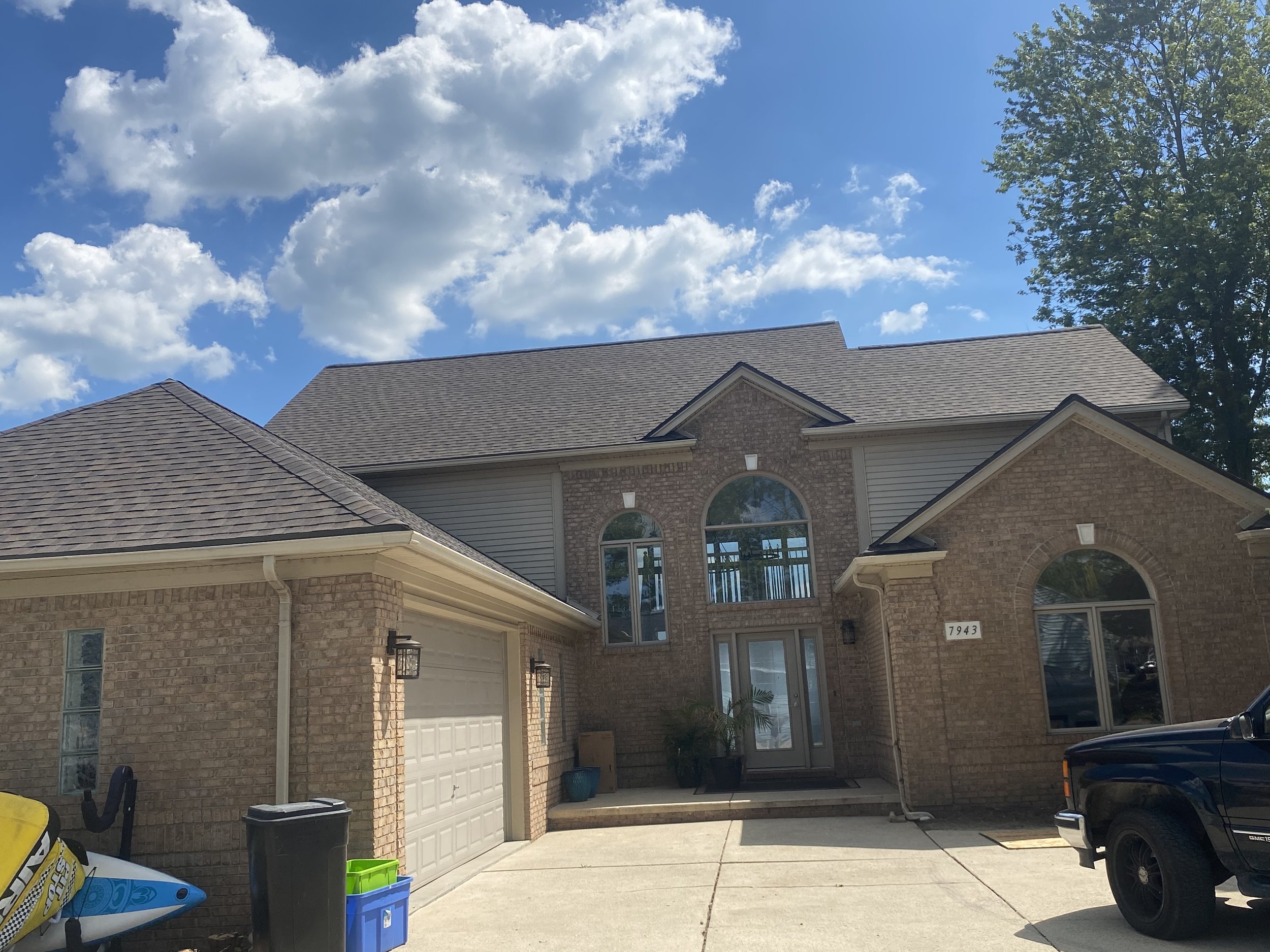
How Your Home Affects the Final Price
Two 1,500 square foot homes can have wildly different siding replacement costs. Here's why:
Square Footage and Stories
More square footage means more material and more labor. But height matters even more than area. A two-story home requires scaffolding or staging, which adds both equipment costs and labor time. A ranch with the same square footage is faster and cheaper to side.
Gable ends add complexity. A simple rectangular home is straightforward. A home with multiple gables, dormers, or complex rooflines requires more cuts, more flashing, and more time. That shows up in the estimate.
Architectural Complexity
Trim-heavy homes cost more to side. Bay windows, decorative shutters, ornamental trim around doors and windows, and intricate soffit and fascia details all require custom cutting and fitting. A Victorian in downtown Mount Clemens with original trim work might cost 30-40% more to side than a simple Colonial with the same square footage.
Brick accents also affect cost. Many Michigan homes have brick on the front facade and siding on the sides and back. Transitioning from brick to siding requires careful flashing and trim work to prevent water intrusion.
Existing Condition and Repairs
This is where the biggest cost surprises happen. If your existing siding is failing, there's often underlying damage. Common issues we encounter:
- Rotted sheathing: Especially around windows, doors, and at the roofline where ice dams cause water backup
- Failed house wrap: Older homes may not have a proper moisture barrier, or it may have deteriorated
- Insect damage: Carpenter ants and termites love Michigan's wood-frame homes
- Structural settling: Older homes shift over time, which can create gaps and alignment issues
Repairing sheathing runs $3–$6 per square foot. Installing new house wrap adds $0.50–$1.00 per square foot. These aren't optional repairs — they're part of doing the job right.
Michigan-Specific Factors
Our climate creates unique challenges that affect both installation and cost:
Freeze-thaw cycles: Michigan sees dozens of freeze-thaw cycles each winter. Water gets behind siding, freezes, expands, and causes damage. Proper flashing and drainage planes aren't optional here — they're the difference between siding that lasts 30 years and siding that fails in 10.
Ice dam damage: Homes with poor attic insulation develop ice dams, which force water under shingles and behind siding at the roofline. We often discover this damage when removing old siding. If your home has a history of ice dams, expect additional costs for sheathing repair and improved attic insulation in Metro Detroit.
Wind exposure: Homes near Lake St. Clair or in open areas face higher wind loads. That requires upgraded fastening schedules and wind-rated materials, which cost more but prevent blow-offs during storms.
What You're Actually Paying For (Beyond Materials)
The lowest bid isn't always the best value. Here's what separates a professional Detroit siding company from a guy with a truck:
Licensed Contractor Credentials
In Michigan, residential builders must be licensed. That license requires proof of insurance, a clean record, and ongoing education. It's not just a piece of paper — it's accountability. If something goes wrong, you have legal recourse. With an unlicensed contractor, you don't.
NEXT Exteriors operates under a Michigan Residential Builder's License through Premier Builder Inc. We carry general liability insurance and workers' compensation coverage. If a crew member is injured on your property, you're protected. If we damage your landscaping or your neighbor's fence, we fix it. That protection costs money, and it's reflected in our pricing.
Proper Installation Techniques
Siding installation looks simple. It's not. Proper installation in Michigan's climate requires:
- Correct fastening: Nails must be driven flush, not over-driven or under-driven. Over-driven nails create stress points that crack vinyl in cold weather. Under-driven nails allow panels to move and create noise in wind
- Expansion gaps: Vinyl siding must have room to expand and contract. Corners, trim, and J-channel all require specific gap measurements
- Water management: Every window and door opening needs proper flashing. Water must be directed away from the substrate, not trapped behind the siding
- Substrate preparation: The surface must be flat, clean, and structurally sound. Siding installed over rotted sheathing fails quickly
These details don't show in a finished photo, but they determine whether your siding lasts 15 years or 30.
Warranty Coverage
Material warranties are only as good as the installation. CertainTeed offers a lifetime limited warranty on their vinyl siding — but only when installed by a certified contractor following their specifications. James Hardie's 30-year warranty requires approved installation methods and specific fastening schedules.
We're a CertainTeed Master Shingle Applicator (their highest roofing credential) and a certified installer for James Hardie and LP SmartSide. That means our installations qualify for full manufacturer warranties. A handyman installing the same materials doesn't provide that protection.
We also warranty our labor. If a panel comes loose due to installation error, we fix it at no cost. If flashing fails because we didn't install it correctly, we make it right. That's part of what you're paying for.
Insurance and Liability Protection
Siding replacement involves working at height, using power tools, and removing heavy materials. Accidents happen. General liability insurance protects you if we damage your property. Workers' compensation protects you if a crew member is injured.
Unlicensed contractors often skip insurance to keep prices low. If someone gets hurt on your property, you could be liable. That risk isn't worth saving $2,000 on a siding job.
What We've Learned in 35+ Years: The homeowners who regret their siding choice aren't the ones who paid more for quality installation. They're the ones who went with the lowest bid and ended up with moisture problems, warranty issues, or callbacks that never got resolved. Siding is a 20-30 year investment. Treat it like one.
Signs Your Home Needs Siding Replacement
Not every siding issue requires full replacement. Sometimes repairs are sufficient. But here are the signs that tell us it's time for new siding:
Visible Damage
- Cracked or broken panels: A few damaged panels can be replaced. Widespread cracking means the siding is brittle and failing
- Warping or buckling: Panels that wave or buckle indicate moisture problems or improper installation
- Rot or soft spots: If you can push a screwdriver into the siding or substrate, you have rot. That means water is getting in
- Loose or missing panels: Siding that's pulling away from the house isn't protecting the structure underneath
Energy Efficiency Issues
Failing siding shows up on your energy bills. Signs include:
- Drafts around windows and doors
- Cold walls in winter
- Higher heating and cooling costs
- Difficulty maintaining consistent indoor temperatures
Old siding often lacks proper insulation and air sealing. Replacing it — especially with insulated vinyl or adding rigid foam behind new siding — can dramatically improve your home's energy performance. We often recommend pairing siding replacement with insulation services in Southeast Michigan for maximum efficiency gains.
Moisture and Rot Problems
Water intrusion is the enemy of any home. Signs of moisture problems behind siding:
- Peeling paint inside the home: Especially on exterior walls
- Water stains on interior walls or ceilings: Near windows, doors, or at the roofline
- Mold or mildew inside or outside: Indicates trapped moisture
- Soft or spongy spots: When you press on the siding or trim
In Michigan, moisture problems often start small — a failed flashing around a window, a gap at a corner — and escalate over years of freeze-thaw cycles. By the time you see interior damage, there's usually significant substrate deterioration.
Age Considerations
Siding has a lifespan. Here's what to expect:
- Vinyl siding: 20-30 years for premium products, 15-20 for builder-grade
- Fiber cement: 30-50 years with proper maintenance
- Engineered wood: 25-30 years if installed correctly
- Aluminum siding: 30-40 years, but prone to denting and fading
- Wood siding: 20-40 years depending on maintenance and species
If your siding is approaching the end of its expected lifespan and showing signs of wear, replacement is usually more cost-effective than ongoing repairs.

Getting an Accurate Quote in Michigan
Here's how to get a realistic estimate and avoid surprises:
What to Expect from a Professional Estimate
A legitimate contractor will:
- Conduct an on-site inspection: No one can give you an accurate quote from photos or over the phone. We need to see your home, measure it, assess the condition of existing siding and substrate, and understand the scope of work
- Provide a detailed written estimate: Line items for materials, labor, removal/disposal, trim work, and any anticipated repairs. Vague quotes like "siding replacement - $15,000" don't give you enough information
- Explain material options: We'll walk you through vinyl, fiber cement, and engineered wood options with real cost differences and performance characteristics for each
- Discuss timeline: How long the project will take, when we can start, and what weather considerations might affect scheduling
- Review warranty coverage: Both manufacturer warranties and our labor warranty
At NEXT Exteriors, we also provide references, show you photos of similar projects we've completed, and walk you through our process so you know exactly what to expect. No pressure, no gimmicks — just honest information so you can make the right decision for your home.
Red Flags in Contractor Pricing
Watch out for:
- Quotes that are significantly lower than others: If three contractors bid $14,000-$16,000 and one bids $9,000, something's missing from that low bid
- Pressure to sign immediately: "This price is only good today" is a sales tactic, not a legitimate business practice
- Cash-only discounts: Legitimate contractors don't avoid paper trails
- No written contract: Everything should be in writing — scope of work, materials, timeline, payment schedule, warranty
- Large upfront deposits: In Michigan, contractors can't require more than 1/3 down or $1,000, whichever is less, until work begins
- No license or insurance: Ask for proof. A Michigan builder's license number can be verified through the state
Questions to Ask Before Signing
Before you commit to a contractor, ask:
- "What's your Michigan builder's license number?" Verify it at michigan.gov/lara
- "Can I see proof of insurance?" Both general liability and workers' comp
- "What's included in the warranty?" Get specifics on both material and labor coverage
- "How do you handle substrate repairs?" Are they included in the estimate or charged separately?
- "What's your payment schedule?" Should be tied to project milestones, not arbitrary dates
- "Can you provide local references?" Talk to homeowners in Sterling Heights, Clinton Township, or Warren who've had similar work done
- "How long have you been working in Southeast Michigan?" Experience in our specific climate matters
We've been answering these questions for 35+ years. We're not offended when homeowners ask for proof of credentials or want to see past projects — we expect it. If a contractor gets defensive about basic due diligence questions, that's a red flag.
Our Recommendation: Get at least three estimates from licensed contractors. Compare not just price, but scope of work, materials specified, warranty coverage, and timeline. The middle bid is often the most realistic. And trust your gut — if something feels off about a contractor's approach or communication, move on.
Other Services from NEXT Exteriors
Siding replacement often goes hand-in-hand with other exterior improvements. While you've got scaffolding up and crews on site, it's the ideal time to address related projects. NEXT Exteriors offers comprehensive exterior services in Detroit and throughout Southeast Michigan, so you can tackle multiple projects with one trusted contractor.
Many homeowners pair siding replacement with window replacement in Detroit — new energy-efficient windows complement new siding and maximize your home's thermal performance. If your roof is showing its age, our Detroit roofing services include everything from minor repairs to complete tear-offs and replacements, all backed by our CertainTeed Master Shingle Applicator certification.
Gutters are another critical component of your home's water management system. Failing gutters can undermine even the best siding installation by directing water against your foundation or allowing overflow to saturate the substrate behind your siding. Our seamless gutters in Detroit, MI are custom-fabricated on site for a perfect fit and proper drainage.
Once your siding is installed, exterior painting professionals in Southeast Michigan can finish the job with Sherwin-Williams premium coatings. We're a Sherwin-Williams exclusive contractor, which means you get access to their best products and longest-lasting finishes. Whether you're painting fiber cement, engineered wood, or trim details, proper surface prep and quality paint make all the difference in longevity.
Ready to Get Started?
NEXT Exteriors has been protecting Michigan homes since 1988. Get a free, no-pressure estimate from a team that shows up on time and does the job right. We'll walk you through your options, give you honest pricing, and answer every question you have.
Get Your Free QuoteOr call us: (844) 770-6398
Frequently Asked Questions About Siding Replacement Cost in Michigan
For a typical 1,500 square foot home in Southeast Michigan, expect to pay $7,500-$15,000 for vinyl siding, $14,000-$28,000 for James Hardie fiber cement, or $11,000-$22,000 for LP SmartSide engineered wood. The final cost depends on the number of stories, architectural complexity, existing condition, and the level of substrate repair needed. Homes with extensive trim work, multiple gables, or significant rot damage will be at the higher end of these ranges.
Yes, if you're planning to stay in your home long-term. James Hardie fiber cement costs nearly twice as much as premium vinyl, but it lasts 30-50 years with minimal maintenance, resists Michigan's freeze-thaw cycles without cracking or warping, and won't rot or deteriorate from moisture exposure. It also increases resale value more than vinyl. If you're planning to sell within 5-10 years, premium vinyl makes more financial sense. If you're staying for 20+ years, fiber cement pays for itself in longevity and reduced maintenance.
Late spring through early fall (May through October) is ideal. Vinyl siding should be installed when temperatures are above 40°F — cold weather makes vinyl brittle and difficult to cut and nail properly. Fiber cement and engineered wood have more flexible temperature ranges, but extreme cold still makes installation challenging. We work year-round when weather permits, but scheduling is tightest in summer and early fall. Book early if you want a specific timeframe.
Most residential siding projects take 5-10 days from start to finish. A simple ranch might be done in 5-7 days. A two-story home with complex trim and gables could take 10-14 days. Weather delays, substrate repairs, and material availability can extend timelines. We'll give you a realistic schedule during the estimate and keep you updated if anything changes. The actual work is continuous once we start — we don't leave projects half-finished.
Technically yes, but we don't recommend it. Installing new siding over old hides existing problems — rot, moisture damage, insect infestation — and prevents proper inspection and repair of the substrate. It also creates a less stable nailing surface, which can lead to installation problems down the road. The only time we consider it is when the existing siding is in excellent condition, the substrate is confirmed sound, and the homeowner understands the risks. In most cases, proper removal and disposal of old siding is the right approach.
Yes. Siding replacement typically recoups 70-80% of its cost in increased home value, according to Remodeling Magazine's Cost vs. Value report. In Southeast Michigan's real estate market, homes with new siding sell faster and for higher prices than comparable homes with old, worn siding. Fiber cement and engineered wood siding add more value than vinyl, but even premium vinyl makes a significant difference in curb appeal and buyer perception. If you're preparing to sell, new siding is one of the best investments you can make.
Usually material quality, installation standards, and scope of work. A $10,000 job might use builder-grade vinyl, skip substrate repairs, and cut corners on flashing and moisture barriers. A $20,000 job uses premium materials (fiber cement or high-grade vinyl), includes proper substrate preparation and repair, installs house wrap and flashing correctly, and is backed by a licensed contractor with insurance and warranty coverage. The cheaper job might look fine for 5 years. The more expensive job will still look good in 20 years. You're not just paying for materials — you're paying for expertise, accountability, and long-term performance.