

How Resistant Is Siding to Fading in Michigan? The Truth
Learn how resistant siding is to fading in Michigan's harsh climate. NEXT Exteriors explains UV resistance, material performance, and what actually lasts.

If you've lived in Southeast Michigan for more than a decade, you've probably noticed it: the vinyl siding on your neighbor's 1990s Colonial isn't the same shade it was when it went up. Maybe your own siding on the south-facing wall has faded from a rich navy to a washed-out gray-blue. You're not imagining it, and it's not just dirt.
Siding fades. How much and how fast depends on the material, the color, the quality of the product, and — especially in Michigan — how well it holds up to UV exposure, freeze-thaw cycles, and the humidity we get from the Great Lakes. After 35 years of house siding installation in Detroit and across Macomb, Oakland, and St. Clair counties, we've seen every type of siding age. Some products look nearly new after 20 years. Others start showing color shift in five.
This guide explains how resistant siding is to fading, what causes it, which materials perform best in Michigan's climate, and when fading is a cosmetic annoyance versus a sign you need to replace your siding entirely.
What "Fade Resistance" Actually Means
When manufacturers talk about "fade resistance," they're referring to a material's ability to maintain its original color when exposed to ultraviolet (UV) radiation from the sun. UV rays break down the chemical bonds in pigments and binders, causing colors to lighten, shift, or become chalky over time.
The industry standard for measuring color retention is ASTM D4956, which tests how much a material's color changes after prolonged UV exposure in controlled conditions. Products are often rated on a scale where a Delta E value below 5 indicates minimal perceptible color change. High-quality siding products aim for Delta E values under 5 after 10 years of exposure.
But here's the catch: those tests are done in lab conditions, not in Michigan. They don't account for freeze-thaw cycles, ice, snow load, or the specific angle and intensity of UV exposure we get in the Great Lakes region. A product that performs well in Arizona might fade faster here because the combination of UV, moisture, and temperature swings accelerates degradation.
Warranty vs. Reality: Many siding manufacturers offer "lifetime" fade warranties, but read the fine print. Most cover only extreme fading — often defined as more than a specific number of Delta E units — and exclude certain colors (especially dark reds, blues, and blacks). They also prorate coverage, meaning you might get 50% reimbursement after 10 years, not a full replacement.
Understanding what fade resistance actually means helps you set realistic expectations when you're choosing siding for your home in Sterling Heights, Troy, or Rochester Hills. It's not about whether your siding will fade — it's about how much, how fast, and whether the product you choose can handle Michigan's weather without turning into a patchwork of mismatched colors.
How Different Siding Materials Handle Fading
Not all siding materials fade at the same rate. The composition of the material, the type of finish, and how color is applied all affect long-term color retention. Here's how the most common siding materials perform in Southeast Michigan.

Vinyl Siding
Standard vinyl siding is the most common material we install, and it's also the most vulnerable to fading — unless you choose a product with capstock technology. Traditional vinyl has color mixed throughout the material (called "through-body color"), which sounds good in theory but doesn't prevent UV degradation. The surface oxidizes, turns chalky, and lightens over time.
Modern premium vinyl products like CertainTeed Cedar Impressions or Mastic Ovation use a capstock layer — a co-extruded top layer with advanced UV inhibitors and fade-resistant pigments. This layer is engineered specifically to resist color change. We've seen capstock vinyl installed in the early 2000s that still looks sharp today, even on south-facing walls.
Budget vinyl without capstock? Expect noticeable fading in 7-10 years, especially on darker colors. If you're considering siding installation in Southeast Michigan, the upgrade to capstock vinyl is worth the cost if you plan to stay in your home long-term.
Fiber Cement (James Hardie)
James Hardie fiber cement siding is one of the most fade-resistant options available, but only if you choose their ColorPlus Technology factory finish. This is a baked-on finish applied in controlled factory conditions with multiple layers of UV-resistant coating. Hardie backs it with a 15-year fade warranty that actually covers perceptible color change — not just catastrophic fading.
We've installed Hardie ColorPlus in Grosse Pointe Farms, Bloomfield Hills, and Lake Orion, and the color retention after a decade is impressive. The finish resists chalking and maintains its depth even on high-UV exposure walls.
If you opt for primed Hardie siding and field-apply paint, fade resistance depends entirely on the quality of the paint and the skill of the painter. Even premium Sherwin-Williams exterior paints will fade faster than ColorPlus because they lack the multi-layer baked finish. If you go this route, plan to repaint every 10-12 years.
Engineered Wood (LP SmartSide)
LP SmartSide is treated wood strand siding with a factory-applied finish. LP's SmartFinish comes with a 5-year no-fade warranty, which is shorter than Hardie's but still better than field-painted products. The finish includes zinc borate for rot resistance and UV inhibitors for color retention.
In our experience, SmartSide performs well in Michigan's climate, but it's not quite as fade-resistant as Hardie ColorPlus. Expect minor color shift after 8-10 years, particularly on darker tones. The trade-off is cost — SmartSide is typically less expensive than Hardie, making it a solid middle-ground option for homeowners in Clinton Township or Shelby Township who want better performance than vinyl but don't want to pay Hardie prices.
Aluminum and Steel Siding
Aluminum siding was popular in the 1970s and 1980s, and we still see plenty of it in Metro Detroit. The factory-baked enamel finish is durable, but it does fade — especially on south-facing walls. Aluminum also oxidizes, creating a chalky surface that dulls the color over time.
Steel siding (less common) holds color better than aluminum but is prone to rust if the finish is scratched or compromised. We don't install much metal siding anymore because vinyl, fiber cement, and engineered wood offer better long-term performance and aesthetics.
Michigan-Specific Fading Factors
Michigan's climate isn't just about cold winters. The combination of UV exposure, freeze-thaw cycles, humidity, and temperature swings creates unique challenges for siding color retention.
UV Exposure in Southeast Michigan
Southeast Michigan gets an average of 180-200 sunny days per year, with peak UV intensity from May through August. South-facing walls receive the most UV exposure, followed by west-facing walls that get afternoon sun. North-facing walls see the least fading because they're mostly shaded.
If your home in Royal Oak or St. Clair Shores has a south-facing front elevation, expect that wall to fade faster than the rest of the house. This is why we often recommend lighter colors for high-UV walls or upgrading to premium fade-resistant products if you're set on a darker shade.
Freeze-Thaw Cycles and Color Stability
Michigan experiences 40-60 freeze-thaw cycles per winter. When moisture gets into micro-cracks in siding (especially vinyl and wood products), it expands when it freezes, creating stress on the material. Over time, this weakens the surface layer where pigments are concentrated, accelerating color degradation.
This is why proper installation matters. Siding that's installed too tightly or without adequate ventilation traps moisture, which speeds up both structural damage and fading. We've seen poorly installed vinyl siding fade unevenly because moisture got trapped behind it, creating localized UV damage and oxidation.
Lake-Effect Humidity and Oxidation
Proximity to the Great Lakes means higher humidity, especially in spring and fall. Humid air accelerates oxidation on aluminum siding and promotes mildew growth on vinyl and wood products. Mildew itself doesn't cause fading, but the cleaning required to remove it can wear down protective coatings over time.
Homes in Macomb County near Lake St. Clair or in Oakland County near lakes and rivers tend to show more oxidation and mildew staining than homes further inland. Regular cleaning helps, but choosing a material with built-in fade and mildew resistance is a better long-term solution.

Which Siding Colors Fade Faster in Michigan?
Color choice has a massive impact on how quickly your siding fades. Darker colors absorb more UV radiation and heat, which accelerates pigment breakdown. Certain pigments are also chemically less stable than others.
Dark Colors: Reds, Blues, and Blacks
Dark reds, navy blues, and blacks fade the fastest. Red pigments (especially organic reds) are notoriously unstable under UV exposure. We've seen dark red vinyl siding fade to a salmon-pink in less than 10 years on south-facing walls.
Dark blues shift toward gray or purple tones as UV breaks down the blue pigment. Blacks often fade to a charcoal gray, and because the color shift is gradual, homeowners don't always notice until they compare the faded section to a shaded area.
If you want a dark color, choose a premium product with capstock or ColorPlus technology, and understand that even the best products will show some fading over 15-20 years. Many manufacturers exclude dark colors from their fade warranties or offer shorter coverage periods.
Light Colors and Earth Tones
Light grays, beiges, tans, and whites fade much more slowly. Even when they do fade, the color shift is less noticeable because the contrast is lower. Earth tones — browns, greens, and muted grays — also perform well because the pigments used are typically more UV-stable.
This doesn't mean you have to choose boring colors. Modern siding lines offer dozens of sophisticated neutrals and earth tones that look great and age gracefully. We've installed plenty of warm grays and soft greens in Chesterfield and Warren that still look fresh after 15 years.
The "Safe Zone" for Michigan Homes
If long-term color retention is your priority, stick to light-to-medium tones in the gray, beige, or earth-tone family. Avoid anything labeled "bold," "vibrant," or "deep" unless you're willing to accept faster fading or plan to repaint or replace sooner.
How to Minimize Siding Fade Over Time
You can't stop siding from fading entirely, but you can slow it down significantly with the right choices and maintenance.
Choose Fade-Resistant Products
Start with a product engineered for UV resistance. For vinyl, that means capstock technology. For fiber cement, that means James Hardie ColorPlus. For engineered wood, choose LP SmartSide with SmartFinish. Don't assume all products within a material category perform the same — they don't.
Opt for Lighter or Earth-Tone Colors
As discussed, lighter colors and earth tones fade less visibly. If you're set on a darker color, at least choose a product with the best fade warranty available and understand you're trading longevity for aesthetics.
Ensure Proper Installation with Ventilation
Siding needs to breathe. Proper installation includes a weather-resistant barrier, adequate ventilation, and correct fastening that allows for thermal expansion and contraction. Trapped moisture and heat buildup accelerate fading, especially on south-facing walls.
This is one reason we emphasize installation quality at NEXT Exteriors. A premium product installed poorly will fade faster than a mid-grade product installed correctly. Our crews have been doing this work in Michigan for decades, and we know how to install siding that lasts. Learn more about our approach to exterior services in Detroit.
Clean Siding Annually
Dirt, mildew, and oxidation on the surface of your siding can trap moisture and accelerate UV damage. Gentle washing with a soft brush and mild detergent once a year removes these contaminants and helps maintain the protective finish.
Avoid pressure washing at high PSI — it can damage the finish on vinyl and strip paint from fiber cement. Use low pressure (under 1,500 PSI) and keep the nozzle at least 12 inches from the surface.
Inspect for Early Signs of UV Damage
Catch problems early. Look for chalking (a powdery residue when you rub the surface), color shifts, or brittleness in vinyl. On fiber cement and wood products, check for cracks, peeling, or areas where the finish is wearing thin. Addressing these issues early can extend the life of your siding.
When Fading Means It's Time to Replace Your Siding
Fading alone isn't always a reason to replace siding. If the material is structurally sound and the fading is uniform, you might live with it or repaint (for fiber cement and wood). But sometimes fading is a symptom of deeper problems.
Signs of UV Damage Beyond Cosmetics
If your vinyl siding is chalking heavily, cracking, or becoming brittle, UV damage has compromised the material's integrity. Brittle vinyl doesn't insulate as well, can crack in cold weather, and is more vulnerable to wind and impact damage. At that point, replacement makes more sense than trying to patch it.
For fiber cement, if the finish is peeling or the substrate is showing through, moisture can get in and cause rot or delamination. Repainting might buy you a few more years, but if the damage is widespread, replacement is the better long-term investment.
Structural Concerns with Aged Siding
Siding that's 20-30 years old and showing significant fading often has other issues: warped panels, loose fasteners, gaps around windows and doors, or moisture intrusion behind the siding. If you're seeing multiple problems, it's usually more cost-effective to replace the entire system than to keep patching it.
We've worked on plenty of homes in Mount Clemens and Detroit where the siding looked "okay" from the street but was failing in multiple ways once we got up close. Fading was just the visible symptom of a system that had reached the end of its useful life.

Cost-Benefit of Replacement vs. Painting
For fiber cement and wood siding, repainting is an option if the substrate is sound. A quality paint job with Sherwin-Williams Duration or Emerald exterior paint will cost $3-$6 per square foot in Southeast Michigan, depending on prep work and the condition of the siding.
Full siding replacement costs $8-$15 per square foot for vinyl or engineered wood, and $12-$20 per square foot for fiber cement. If your siding is more than 15 years old and showing multiple issues, replacement often makes more financial sense because you're not just fixing the cosmetics — you're upgrading the entire building envelope, improving energy efficiency, and resetting the clock on maintenance.
If you're considering replacement, our team can walk you through the options and help you understand what makes sense for your home and budget. We offer free quotes and honest assessments — no pressure, no gimmicks.
Related Services: Beyond siding, NEXT Exteriors offers comprehensive exterior services in Detroit and across Southeast Michigan, including roofing services, window replacement, seamless gutter installation, insulation upgrades, and exterior painting. Every project is backed by our 35+ years of experience and commitment to honest, high-quality work.
Ready to Upgrade Your Siding?
NEXT Exteriors has been protecting Michigan homes since 1988. Get a free, no-pressure estimate from a team that shows up on time and does the job right.
Get Your Free QuoteOr call us: (844) 770-6398
Frequently Asked Questions
Budget vinyl siding without capstock can show noticeable fading in 7-10 years, especially on south-facing walls. Premium vinyl with capstock, James Hardie ColorPlus, and LP SmartSide typically maintain color for 15-20 years before significant fading occurs. Darker colors fade faster than lighter colors regardless of material.
All siding materials fade to some degree when exposed to UV radiation. The rate and visibility of fading depend on the material, the quality of the finish, the color, and the level of UV exposure. Premium products with UV-resistant coatings (like James Hardie ColorPlus or capstock vinyl) fade much more slowly than budget materials.
You can repaint fiber cement and wood siding if the substrate is structurally sound. Vinyl siding cannot be effectively repainted — the paint won't adhere properly and will peel within a few years. If your vinyl siding has faded significantly, replacement is the only long-term solution. For fiber cement, repainting with premium exterior paint can restore appearance and add 10-15 years of life.
Light grays, beiges, tans, and earth tones (muted greens, browns, soft grays) last the longest because they reflect more UV radiation and use more stable pigments. Whites and very light colors show the least visible fading over time. Dark reds, blues, and blacks fade the fastest and most noticeably.
No. North-facing walls receive minimal direct sunlight and significantly less UV exposure, so they fade much more slowly than south-facing or west-facing walls. It's common to see noticeable color differences between the south and north sides of a home after 10-15 years, especially with darker siding colors.
Yes, if you choose James Hardie ColorPlus Technology. The factory-baked finish is one of the most fade-resistant options available, backed by a 15-year fade warranty. It significantly outperforms field-painted fiber cement and most vinyl products. The higher upfront cost is justified by the long-term color retention and reduced maintenance.
Wash a small section of your siding with mild detergent and a soft brush. If the color returns to its original shade, it was dirt, mildew, or oxidation. If the color remains lighter or shifted after cleaning, it's faded. You can also compare a high-UV area (south wall) to a shaded area (north wall or under an overhang) to see if there's a color difference.
How Resistant Is Siding to Fading in Michigan Weather?
Learn how resistant different siding materials are to fading in Michigan's harsh climate. Expert insights from a licensed contractor with 35+ years of experience.

I've been installing siding in Southeast Michigan since 1988, and I can tell you this: homeowners don't ask about fade resistance until they notice their neighbor's siding looking chalky and washed out after five years. By then, they're wondering if they made the wrong choice on their own home.
Here's the reality. How resistant siding is to fading depends on three things: the material itself, the pigment technology used in manufacturing, and how much UV exposure that wall gets. In Michigan, where we get intense summer sun on south-facing walls and brutal freeze-thaw cycles that accelerate degradation, fade resistance isn't just about curb appeal—it's about long-term value and whether you'll need to replace your house siding in Detroit sooner than you planned.
This isn't marketing talk. This is what we see on jobsites in Sterling Heights, Rochester Hills, and Grosse Pointe Farms—real homes, real fade patterns, and real conversations with homeowners who wish they'd known this information before they signed a contract.
Understanding UV Damage and Siding Fade
UV radiation breaks down the chemical bonds in siding pigments. It's not complicated science—sunlight hits the surface, photons disrupt the molecular structure of the colorants, and over time, the color literally degrades. What you see as "fading" is actually the destruction of pigment molecules at the surface level.
In Michigan, we get about 180 sunny days per year. That doesn't sound like a lot compared to Arizona, but here's what matters: our south and west-facing walls take a beating during summer months when the sun angle is high and UV intensity peaks. A home in Troy with a south-facing elevation gets hit with the same UV exposure as homes in much hotter climates—just compressed into fewer months.
What makes Michigan worse than other regions is the freeze-thaw cycle. When moisture penetrates even microscopic surface cracks (caused by UV degradation), then freezes and expands, it accelerates the breakdown of the siding surface. The result? Fading happens faster here than it would in a dry, sunny climate. We see this constantly on Detroit roofing services projects where we're replacing both roof and siding—the siding on the south side looks ten years older than the north side.

Michigan Reality Check: Lake-effect weather patterns in Macomb and St. Clair counties mean higher humidity levels, which can intensify UV damage when combined with moisture penetration. Homes near Lake St. Clair often show faster fade patterns on east-facing walls due to morning sun hitting damp surfaces.
Siding Material Fade Resistance Rankings
After 35 years and 500+ siding projects across Southeast Michigan, here's how different materials actually perform when it comes to fade resistance. This isn't marketing literature—this is what we observe on callbacks, inspections, and when we're bidding replacement jobs.
Fiber Cement (James Hardie): Best Overall Fade Resistance
James Hardie fiber cement siding uses ColorPlus Technology—a baked-on finish applied in a controlled factory environment. The pigment is integrated into multiple layers, not just sitting on the surface. In real-world Michigan conditions, we're seeing minimal fade even after 15 years on south-facing walls.
Hardie backs this up with a 15-year fade warranty that covers the entire color spectrum, including darker colors. That matters because dark colors fade faster on every material—but Hardie's process handles it better than any other product we install. On projects in Bloomfield Hills and Rochester Hills, where homeowners choose deep blues, charcoals, and forest greens, the fade resistance is legitimately impressive.
The downside? Cost. Fiber cement runs 30-50% more than quality vinyl. But if fade resistance is your priority and you're planning to stay in the home long-term, it's the best investment. We work with James Hardie extensively as part of our exterior services in Detroit, and the warranty claims for fade issues are nearly nonexistent.
Premium Vinyl Siding: Good to Excellent (Depending on Brand)
Here's where it gets tricky. Not all vinyl siding is created equal when it comes to fade resistance. Budget vinyl from big-box stores? You'll see noticeable fading within 5-7 years, especially on darker colors. Premium vinyl from CertainTeed or GAF with advanced UV inhibitors and capstock technology? Much better performance—often 10-15 years before any visible fade.
The key is capstock. This is a thin, protective layer on the surface of the vinyl that contains higher concentrations of UV stabilizers and fade-resistant pigments. CertainTeed's CedarBoards and Monogram siding lines use this technology, and we've seen excellent results on homes in Warren and St. Clair Shores where the siding is now 12+ years old with minimal color shift.
Vinyl warranties typically cover "excessive" fade, which manufacturers define as a color change exceeding a specific Delta E value (usually around 5 units on the color measurement scale). The warranty period for fade is usually 25 years to lifetime, but it's prorated—meaning coverage decreases over time. Read the fine print.
Engineered Wood (LP SmartSide): Moderate to Good Fade Resistance
LP SmartSide uses a factory-applied finish with UV inhibitors, and the performance is solid—better than field-painted wood, not quite as good as fiber cement. We're seeing good color retention at the 8-10 year mark on homes in Lake Orion and Shelby Township, but darker colors do show some fade on high-exposure walls.
LP offers a 5-year fade warranty on their pre-finished products, which is shorter than vinyl or fiber cement. That tells you something about expected performance. The material itself is durable and handles Michigan weather well, but if fade resistance is your top priority, fiber cement edges it out.
One advantage: LP SmartSide can be repainted if fade becomes an issue. That's not an option with vinyl, and it's expensive with fiber cement. If you're willing to repaint every 10-12 years, engineered wood gives you flexibility.
What Makes Siding Fade-Resistant
If you're comparing siding options and contractors start throwing around terms like "UV inhibitors" and "acrylic capstock," here's what actually matters—and what's just sales talk.
Pigment Technology: Organic vs. Inorganic
Inorganic pigments (titanium dioxide, iron oxides) are inherently more UV-stable than organic pigments. They don't break down as easily under sunlight. Premium siding manufacturers use higher concentrations of inorganic pigments, especially in lighter colors where fade is less noticeable anyway.
The challenge is darker colors. To achieve deep blues, greens, reds, and blacks, manufacturers have to use some organic pigments—which are more fade-prone. This is why darker colors always come with shorter fade warranties or higher Delta E thresholds. It's not a scam; it's chemistry.
UV Stabilizers and Inhibitors
These are additives mixed into the siding material (or applied as a surface coating) that absorb or reflect UV radiation before it can break down the pigment molecules. Think of them as sunscreen for your siding. Higher-end vinyl and fiber cement products use multiple types of UV stabilizers for broader-spectrum protection.
The effectiveness of UV stabilizers degrades over time—they're sacrificial by nature. That's why even the best siding will eventually show some fade. But quality products start with enough UV protection to last 15-20 years before visible degradation occurs.
Capstock and Coextruded Layers
Capstock is a protective outer layer applied during manufacturing. In vinyl siding, this is a coextruded layer (two layers bonded together during extrusion) that contains higher concentrations of UV stabilizers and fade-resistant pigments. The core layer provides structural strength; the capstock layer provides color stability and UV protection.
Fiber cement doesn't use capstock—it uses a multi-coat baked-on finish that's essentially the same concept but applied differently. The result is similar: a protective surface layer that shields the substrate and maintains color integrity.
If a vinyl siding product doesn't mention capstock or coextrusion, it's probably a single-layer product—which means the UV stabilizers are distributed throughout the material at lower concentrations. Those products fade faster.
Michigan-Specific Fade Factors
Michigan isn't Arizona, but we have our own set of conditions that accelerate siding fade—and most of them have nothing to do with how many sunny days we get per year.
Freeze-Thaw Cycles and Surface Degradation
We can go through 40-60 freeze-thaw cycles in a typical Michigan winter. When moisture penetrates microscopic cracks in the siding surface (caused by UV exposure), then freezes and expands, it physically breaks down the surface layer. This accelerates fade by exposing fresh material to UV radiation and creating more pathways for moisture intrusion.
This is why we see faster fade rates in Michigan compared to southern states with similar UV exposure but no freeze-thaw cycles. It's also why proper installation—with correct fastening, expansion gaps, and moisture management—matters for fade resistance. A poorly installed siding job will fade faster because moisture intrusion accelerates surface breakdown. This is something we emphasize when homeowners are evaluating our Detroit siding company services.
South and West Wall Exposure
In Southeast Michigan, south-facing walls get the most intense UV exposure during summer months when the sun is high in the sky. West-facing walls get afternoon sun, which is also intense but at a lower angle. These are the walls where you'll see fade first—usually 2-3 years before north-facing walls show any color change.
If you're choosing darker colors, expect the south and west walls to fade noticeably faster. We've seen homes in Clinton Township and Chesterfield where the south wall looks five years older than the north wall, even though the siding was installed at the same time.
Pollution and Airborne Contaminants
Metro Detroit has industrial areas, and airborne pollutants can contribute to siding degradation. Sulfur dioxide, nitrogen oxides, and particulate matter can settle on siding surfaces and, when combined with moisture, create mild acidic conditions that break down pigments and UV stabilizers.
This isn't a major factor compared to UV exposure and freeze-thaw cycles, but it's one more thing working against your siding. Homes near I-94, I-75, or industrial areas in Warren and Sterling Heights may see slightly faster fade rates than homes in more suburban or rural settings.

Cost Reality: Does Fade Resistance Cost More?
Yes. Premium fade-resistant siding costs more upfront. Here's what that actually looks like in Southeast Michigan pricing as of 2026.
Budget Vinyl Siding
$3-$5 per square foot installed. Minimal UV protection, single-layer construction, shorter warranties. You'll see noticeable fade within 5-7 years, especially on darker colors and high-exposure walls. This is what you get from low-bid contractors who source material from big-box stores.
Premium Vinyl Siding (CertainTeed, GAF)
$6-$9 per square foot installed. Capstock technology, advanced UV inhibitors, 25-year to lifetime fade warranties. Noticeably better performance—10-15 years before visible fade on most colors. This is the sweet spot for most Michigan homeowners who want good value without jumping to fiber cement pricing.
Fiber Cement (James Hardie)
$9-$13 per square foot installed. Best-in-class fade resistance, 15-year fade warranty covering all colors, factory-applied ColorPlus finish. Highest upfront cost, but if you're staying in the home 20+ years and want minimal maintenance, the math works out. We install a lot of Hardie in Bloomfield Hills, Grosse Pointe, and Rochester Hills where homeowners prioritize long-term performance.
Engineered Wood (LP SmartSide)
$7-$10 per square foot installed. Moderate fade resistance, 5-year fade warranty, can be repainted if needed. Good middle ground if you like the look of wood but want better durability than natural wood siding.
For a typical 2,000 square foot siding job (about 1,800 sq ft of actual siding after accounting for windows and doors), you're looking at $5,400-$9,000 for budget vinyl, $10,800-$16,200 for premium vinyl, $16,200-$23,400 for fiber cement, and $12,600-$18,000 for engineered wood.
Is the premium worth it? If you're planning to stay in the home 15+ years, yes. If you're flipping the house or planning to move within 5 years, budget vinyl will get you through. But if you're in Sterling Heights or Royal Oak and this is your long-term home, invest in fade resistance. You'll thank yourself in ten years when your neighbor's siding looks chalky and yours still looks sharp.
Real-World Example: We replaced vinyl siding on a home in Macomb last year—original siding was 18 years old, budget-grade product from the late 2000s. The south wall had faded so badly it looked almost white (original color was medium blue). The homeowner wished they'd spent an extra $3,000 upfront for premium vinyl. Over 18 years, that's $167 per year for better fade resistance. Worth it.
Signs Your Siding Is Fading (And What to Do)
Siding fade happens gradually, so homeowners often don't notice until it's severe. Here's what to look for—and when fading signals a bigger problem.
Uneven Color on Different Walls
If your south or west-facing walls look noticeably lighter or chalkier than your north-facing walls, that's UV fade. This is normal over time, but if it's happening within 5-7 years on premium siding, you may have a warranty claim. Check your paperwork.
Chalky Surface Residue
Run your hand along the siding. If you get a chalky, powdery residue on your fingers, that's the surface layer breaking down from UV exposure. This is common on older vinyl siding and is a sign that the UV stabilizers have been depleted. The siding is still functional, but it's past its prime for appearance.
Color Shift (Not Just Lightening)
Some siding doesn't just fade lighter—it shifts color entirely. Reds can turn pinkish, blues can turn grayish, greens can turn yellowish. This happens when different pigments in the color formula degrade at different rates. If you're seeing color shift, the siding is well into its degradation phase.
When Fading Means Bigger Problems
Fade itself is cosmetic, but it can signal underlying issues. If you're seeing rapid fade (within 3-5 years on premium siding), check for:
- Improper installation: If the siding was installed too tightly or without proper expansion gaps, thermal expansion and contraction can stress the material and accelerate surface breakdown.
- Moisture intrusion: If water is getting behind the siding due to poor flashing or missing housewrap, moisture can accelerate fade and cause substrate damage.
- Defective product: Occasionally, a bad batch of siding makes it through quality control. If your entire house is fading rapidly and your neighbors' homes (with different siding) aren't, you may have a product defect. Contact the manufacturer.
We've seen all of these scenarios on projects across Macomb, Oakland, and St. Clair counties. If you're concerned about fade patterns on your home, it's worth having a licensed contractor take a look. Sometimes it's just normal aging; sometimes it's a sign of a bigger issue that needs attention before it causes structural damage. This is part of what we evaluate during our exterior services in Detroit consultations.
Can You Fix Faded Siding?
For vinyl: No. You can clean it, but you can't restore the color. Some homeowners try vinyl siding paint, but it's a temporary fix that requires repainting every few years—and it voids most warranties.
For fiber cement and engineered wood: Yes. Both can be repainted. Fiber cement holds paint extremely well, and a quality exterior painting in Detroit job using Sherwin-Williams products can restore the appearance and add another 10-15 years of life. We handle this regularly as part of our painting services.
For most homeowners dealing with severe vinyl fade, replacement is the most practical option. If the siding is 15+ years old and showing significant fade, you're likely due for replacement anyway—and modern products will perform much better.
Ready to Get Started?
NEXT Exteriors has been protecting Michigan homes since 1988. Get a free, no-pressure estimate from a team that shows up on time and does the job right.
Get Your Free QuoteOr call us: (844) 770-6398
Other Services from NEXT Exteriors
Beyond siding, we offer a full range of exterior services to Michigan homeowners. Our Detroit window experts can help you choose energy-efficient windows that reduce heat loss and lower energy bills. If you're dealing with drafty rooms or high heating costs, our top-rated insulation contractor in Detroit services can make a measurable difference. We also install seamless gutters in Detroit, MI that handle Michigan's heavy rains and prevent foundation damage. Every project is backed by our 35+ years of experience and A+ BBB rating.
Frequently Asked Questions
Fade resistance depends on the material and quality. Premium vinyl with capstock technology shows minimal fade for 10-15 years. Fiber cement (James Hardie) offers the best fade resistance—15+ years even on dark colors and south-facing walls. Budget vinyl can show noticeable fade within 5-7 years. Michigan's freeze-thaw cycles accelerate fading compared to warmer climates with similar UV exposure.
Yes. Darker colors require organic pigments that are less UV-stable than the inorganic pigments used in lighter colors. Manufacturers typically offer shorter fade warranties on dark colors or allow higher Delta E values (color change measurements) before a warranty claim is valid. If you choose dark siding, invest in premium products with advanced UV protection.
Fiber cement (James Hardie) offers the best fade resistance, backed by a 15-year fade warranty covering all colors. Premium vinyl from CertainTeed or GAF with capstock technology is a close second at a lower price point. Engineered wood (LP SmartSide) performs well but has a shorter fade warranty. Budget vinyl is the most fade-prone and should be avoided if long-term appearance matters.
You can't prevent fade entirely—UV exposure will eventually degrade any material. But you can slow it down by choosing premium products with advanced UV protection, avoiding the darkest colors on high-exposure walls, and ensuring proper installation (which prevents moisture intrusion that accelerates fade). Regular cleaning also helps by removing pollutants that can degrade the surface.
Budget vinyl: 5-7 years. Premium vinyl: 10-15 years. Fiber cement: 15-20+ years. Engineered wood: 8-12 years before repainting is needed. These timelines assume south or west-facing wall exposure in Michigan conditions. North-facing walls typically last 30-50% longer before showing visible fade.
Most siding warranties cover "excessive" fade, defined as a color change exceeding a specific Delta E value (usually 5+ units). Warranties are typically prorated, meaning coverage decreases over time. Fiber cement offers the strongest fade coverage—15 years non-prorated on James Hardie ColorPlus products. Vinyl fade warranties are usually 25 years to lifetime but prorated after the first few years. Always read the fine print and understand what "excessive" means in your specific warranty.
For vinyl siding: Replacement is the only real option. Vinyl paint is a temporary fix that voids warranties and requires repainting every few years. For fiber cement or engineered wood: Repainting is a viable option if the substrate is still in good condition. A quality paint job using Sherwin-Williams products can restore appearance and add 10-15 years of life. If the siding is 15+ years old and showing fade plus other issues (cracks, warping, moisture damage), replacement makes more sense.
Vinyl Siding Installers Near Me Metro Detroit | NEXT Exteriors
Looking for trusted vinyl siding installers in Metro Detroit? NEXT Exteriors explains what to look for, what to avoid, and why experience matters in Michigan's climate.

When you search "vinyl siding installers near me" in Metro Detroit, you'll get dozens of results. Some are legitimate contractors with decades of experience. Others are out-of-state crews working under a local phone number, here today and gone tomorrow.
The difference matters more than you'd think. Vinyl siding installation isn't just about nailing panels to a wall. It's about understanding Michigan's brutal freeze-thaw cycles, knowing how much expansion gap to leave when it's 15°F in January and will be 95°F in July, and recognizing when the substrate underneath needs work before any siding goes up.
We've been installing house siding in Detroit and across Southeast Michigan since 1988. We've seen what happens when inexperienced crews cut corners — and we've fixed hundreds of those jobs. This guide will show you what to look for, what to avoid, and why choosing a local, experienced installer protects your investment.
Why Location Matters for Vinyl Siding Installation
A contractor from Tennessee might know how to install vinyl siding. But they don't know Michigan.
They don't know that the temperature swing between a January night and a July afternoon can be 110 degrees. They don't know that the freeze-thaw cycle here — where temperatures cross the freezing point 80+ times per winter — puts stress on fasteners and trim that doesn't happen in milder climates. They don't know that lake-effect moisture from the Great Lakes creates condensation issues that require proper vapor barriers and ventilation behind the siding.
And they definitely don't know Michigan's residential building codes, which have specific requirements for water-resistive barriers, flashing details around windows and doors, and fastening schedules in high-wind zones.
Michigan-Specific Challenges
Here's what matters for vinyl siding in Southeast Michigan:
- Thermal expansion and contraction: Vinyl moves. A 12-foot panel can expand or contract up to 3/8 inch between winter and summer. If installers don't leave proper expansion gaps at trim, corners, and J-channels, panels will buckle or ripple when temperatures rise.
- Wind exposure: Metro Detroit sees sustained winds of 20-30 mph regularly, with gusts over 50 mph during storms. Panels need to be fastened correctly — not too tight, not too loose — or wind will get behind them and cause blow-offs.
- Moisture management: Michigan's humidity swings require proper drainage planes and ventilation. Siding installed directly over old wood siding or against OSB sheathing without a moisture barrier will trap water, leading to rot and mold.
- Ice dam risk: Poor siding installation can contribute to ice dam problems, especially where siding meets the roofline. Proper flashing and air sealing are critical. (We wrote more about this in our guide on ice dams in Michigan.)
A local installer who's worked through 35 Michigan winters knows these issues instinctively. They've seen what fails and what lasts. They know which products hold up and which ones don't.
Local also means accountability. If something goes wrong two years from now, you can call a local contractor and they'll show up. An out-of-state crew? Good luck finding them.
What Separates Good Installers from Bad Ones
The difference between a quality vinyl siding job and a disaster often comes down to details most homeowners never see.
Substrate Preparation
Good installers inspect the substrate — the wall surface underneath — before any siding goes up. They look for:
- Rot or water damage in the sheathing
- Missing or inadequate moisture barriers
- Uneven surfaces that need furring strips
- Damaged or missing flashing around windows and doors
If they find problems, they fix them. Bad installers just cover them up. Six months later, you've got soft spots in your walls and mold growing behind brand-new siding.
This is where insulation services in Southeast Michigan often intersect with siding projects. If we're tearing off old siding, it's the perfect time to upgrade wall insulation and air sealing — improving comfort and energy efficiency before the new siding goes on.
Expansion Gaps
Vinyl siding manufacturers specify expansion gaps for a reason. CertainTeed, for example, requires 1/4 inch of clearance at all trim and accessories when installing in temperatures above 40°F. In colder weather, you need even more — up to 3/8 inch — because the panel will expand significantly when summer hits.
Bad installers ignore this. They butt panels tight against J-channel or corner posts because it looks cleaner. Then July comes, the siding expands, and panels buckle or warp. We've seen entire sides of houses ripple like a washboard because someone didn't leave proper gaps.
Fastening Technique
Here's what correct fastening looks like:
- Nails driven into the center of the nailing slot, not at the ends
- Nails driven straight, not at an angle
- Nails left slightly loose — about 1/32 inch of play — so panels can move
- Nails spaced 16 inches on center, closer in high-wind areas
Over-driven nails (pounded in too tight) are one of the most common installation mistakes. When the siding can't move, it cracks or splits. Under-driven nails let panels sag or blow off.
Flashing and Trim Details
Water gets in where siding meets windows, doors, and other penetrations. Good installers use proper flashing — metal or vinyl strips that direct water away from vulnerable areas. They also caulk selectively: sealing where water can get in, but leaving weep holes and drainage paths open.
Bad installers either skip flashing entirely or caulk everything shut, trapping moisture inside the wall cavity. Both approaches lead to rot.
If your project includes window replacement in Detroit, proper integration between new windows and new siding is critical. The flashing details around windows need to be done right, or you'll have water intrusion issues from day one.
Red Flags When Searching "Vinyl Siding Installers Near Me"
Some warning signs are obvious. Others are subtle. Here's what to watch for:
No Physical Address or Local Presence
If the contractor's website lists only a phone number and a vague "serving Metro Detroit" claim, be skeptical. Legitimate contractors have a physical office or shop. They're part of the community. They're not operating out of a truck with an out-of-state license plate.
We're based in Mount Clemens, and we've been at the same address since 1988. You can stop by, meet the team, and see our shop. That's how local contractors operate.
Pressure Tactics and "Today Only" Pricing
Storm chasers love this trick. They knock on your door after a windstorm, claim they're "in the neighborhood," and offer a special price if you sign today. The urgency is fake. The price isn't special — it's inflated so they can "discount" it.
Legitimate contractors give you time to think. They provide written estimates, answer questions, and don't pressure you. If someone's pushing you to decide on the spot, walk away.
No Manufacturer Certifications
Major siding manufacturers — CertainTeed, James Hardie, LP SmartSide — offer certification programs for installers. To get certified, contractors have to complete training, demonstrate proper installation techniques, and maintain quality standards.
If an installer can't show you manufacturer certifications, they're either too new or they haven't bothered to get trained. Either way, that's a risk you don't need to take.
NEXT Exteriors holds multiple certifications, including CertainTeed Master Shingle Applicator status — the highest credential in roofing. We apply the same attention to detail to every exterior service in Detroit we offer, from siding to windows to gutters.
Cash-Only Operations
Contractors who only accept cash are usually avoiding taxes, insurance requirements, or both. If they're not paying into workers' comp insurance and someone gets hurt on your property, you could be liable.
Reputable contractors accept checks, credit cards, and financing options. They provide detailed contracts and invoices. They operate above board.
Missing Insurance or Licensing
In Michigan, anyone doing residential construction work over $600 must have a Residential Builder License issued by the state. You can verify a license at Michigan LARA's website.
Contractors also need general liability insurance and workers' compensation coverage. Ask for a certificate of insurance. If they can't provide one, move on.
Pro tip: Don't just take their word for it. Call the insurance company listed on the certificate and verify the policy is active. It takes five minutes and could save you from a massive headache.
What to Ask Before You Hire
Here's a checklist of questions to ask every contractor you're considering:
Licensing and Insurance
- "Can I see your Michigan Residential Builder License?"
- "Do you carry general liability and workers' comp insurance?"
- "Can you provide a certificate of insurance?"
Experience and Certifications
- "How long have you been installing siding in Michigan?"
- "Do you have manufacturer certifications from CertainTeed, James Hardie, or other brands?"
- "Can you show me photos of recent projects in Macomb, Oakland, or St. Clair counties?"
References and Reviews
- "Can you provide references from recent projects in my area?"
- "Where can I read reviews from past customers?"
Check those references. Drive by completed projects if you can. Look at the trim work, the corners, the way siding meets windows and doors. Quality shows in the details.
Project Details
- "Will you remove the old siding or install over it?"
- "What type of moisture barrier will you use?"
- "How do you handle flashing around windows and doors?"
- "What's the timeline for this project?"
- "How big is your crew, and will they be here every day?"
If the contractor can't answer these questions clearly, they either don't know what they're doing or they're planning to cut corners.
Warranty
- "What warranty do you offer on labor?"
- "What's the manufacturer's warranty on the siding material?"
- "If something goes wrong in two years, how do I reach you?"
Material warranties are only as good as the installation. If siding fails because it was installed incorrectly, the manufacturer won't cover it. That's why labor warranties matter.
We back our work. If there's an issue with installation, we fix it. And because we've been serving Southeast Michigan for 35+ years, we'll still be here when you need us.
Vinyl Siding Cost Reality in Metro Detroit (2026)
Let's talk numbers. Vinyl siding costs in Southeast Michigan typically range from $4 to $8 per square foot installed, depending on several factors:
What Affects the Price
- Material quality: Basic vinyl siding starts around $1.50 per square foot (material only). Premium vinyl with better fade resistance, thicker profiles, and longer warranties can run $3+ per square foot.
- Home size and complexity: A simple ranch is cheaper per square foot than a two-story Colonial with dormers, bay windows, and multiple gables.
- Substrate condition: If we're tearing off old siding and finding rotted sheathing, that adds cost. Repairs need to happen before new siding goes up.
- Trim and accessories: Quality trim work — corners, J-channel, window surrounds, soffit, and fascia — adds up. But it's what makes the job look finished and protects against water intrusion.
- Labor: Experienced crews cost more per hour, but they work faster and get it right the first time. Cheap labor often means inexperienced installers who make expensive mistakes.
Why the Lowest Bid Often Costs More
If you get three quotes and one is 30% cheaper than the others, ask why. Common reasons:
- They're skipping substrate prep
- They're using the cheapest materials available
- They're planning to install over old siding instead of removing it
- They're not properly insured or licensed
- They're inexperienced and underestimating the scope of work
We've fixed dozens of "cheap" siding jobs. By the time homeowners call us, they've already paid for the bad installation. Now they're paying again to have it done right. That's not a bargain.
Budget tip: If cost is a concern, talk to your contractor about phasing the project. Maybe you do the most visible sides of the house this year and finish the rest next year. A good contractor will work with you to find a solution that fits your budget without compromising quality.
Siding projects often overlap with other exterior work. If your gutters in Detroit, MI are old or damaged, replacing them at the same time as siding makes sense — you're already working on the fascia and trim. Similarly, if your Detroit roofing is near the end of its life, coordinating both projects can save money and disruption.
Why NEXT Exteriors for Your Siding Project
We've been doing this since 1988. That's 35+ years of Michigan winters, 500+ completed projects, and an A+ BBB rating since 2006. We're not the cheapest option in Metro Detroit, and we don't try to be. We're the option that shows up on time, does the work right, and stands behind it.
What We Bring to Every Project
- Michigan Residential Builder License: Fully licensed, insured, and bonded.
- Manufacturer certifications: CertainTeed Master Shingle Applicator, plus certifications from GAF, Owens Corning, James Hardie, and LP SmartSide.
- Local presence: Based in Mount Clemens, serving Macomb, Oakland, and St. Clair counties. We're your neighbors.
- No-pressure estimates: We don't do the hard sell. We give you the information you need to make a decision, then we let you decide.
- Quality materials: We use products we trust — CertainTeed, James Hardie, LP SmartSide. We don't cut corners on materials, and we don't install junk.
- Experienced crews: Our installers have decades of combined experience. They know Michigan building codes, manufacturer specs, and what actually works in this climate.
Real Projects, Real Results
We've done siding projects in Sterling Heights, Rochester Hills, Grosse Pointe Farms, Shelby Township, Clinton Township, and across Southeast Michigan. Ranch homes, Colonials, bungalows, historic properties — we've worked on them all.
You can see examples in our project gallery, or read what customers say in our reviews. We're proud of the work we do, and we're proud of the relationships we build.
Beyond siding, we offer a full range of exterior services in Detroit — from exterior painting in Southeast Michigan using Sherwin-Williams products exclusively, to complete home exterior makeovers that address roofing, siding, windows, gutters, and insulation in one coordinated project.
Ready to Get Started?
NEXT Exteriors has been protecting Michigan homes since 1988. Get a free, no-pressure estimate from a team that shows up on time and does the job right.
Get Your Free QuoteOr call us: (844) 770-6398
Frequently Asked Questions
Visit the Michigan Department of Licensing and Regulatory Affairs (LARA) website and use their license search tool. Enter the contractor's name or license number to verify their status. An active license means they've met state requirements for insurance, bonding, and competency. If a contractor can't or won't provide their license number, that's a red flag.
In most cases, removing old siding is the better choice. It lets us inspect the substrate for rot or damage, upgrade moisture barriers, and ensure a flat surface for the new siding. Installing over old siding can trap moisture and hide problems. Some building codes prohibit installing over more than one layer of existing siding. We always recommend removal unless there's a specific reason not to.
Quality vinyl siding, properly installed, typically lasts 20-30 years in Michigan's climate. Factors that affect lifespan include material quality (thicker profiles and better UV resistance last longer), installation quality (proper fastening and expansion gaps prevent premature failure), and maintenance (keeping gutters clean and addressing damage promptly helps siding last longer). Cheap vinyl or poor installation might only last 10-15 years.
Spring through fall (April through October) is ideal. Vinyl siding can be installed in cold weather, but manufacturers recommend installing when temperatures are above 40°F. Below that, vinyl becomes brittle and more prone to cracking during cutting and handling. Installers also need to adjust expansion gaps based on temperature — cold-weather installations require larger gaps to accommodate summer expansion. We work year-round, but spring and fall offer the most predictable conditions.
In most Michigan municipalities, yes. Requirements vary by city and township, but most require a building permit for siding replacement. The contractor typically handles permit applications, but it's your responsibility as the homeowner to ensure permits are pulled. Working without permits can cause problems when you sell your home or file an insurance claim. We handle all permitting as part of our standard process.
Vinyl siding itself provides minimal insulation — typically R-0.6 or less. However, the siding replacement process is an excellent opportunity to upgrade wall insulation and air sealing. Insulated vinyl siding (with foam backing) adds some R-value, but the bigger gains come from addressing the wall cavity insulation and sealing air leaks around windows, doors, and penetrations. If energy efficiency is a priority, talk to your contractor about adding rigid foam insulation or upgrading cavity insulation during the siding project.
Vinyl siding is low-maintenance, but not no-maintenance. Wash it once or twice a year with a garden hose or soft brush and mild detergent to remove dirt, pollen, and mildew. Avoid pressure washers — high pressure can force water behind the siding or damage panels. Inspect annually for cracks, loose panels, or damaged trim. Keep gutters clean so water doesn't overflow and run down the siding. Trim trees and shrubs away from the house to prevent damage and allow air circulation.
Vinyl Siding Installers Near Me Metro Detroit | NEXT Exteriors
Looking for vinyl siding installers near me in Metro Detroit? NEXT Exteriors explains what separates quality installers from the rest—35+ years serving Southeast Michigan.
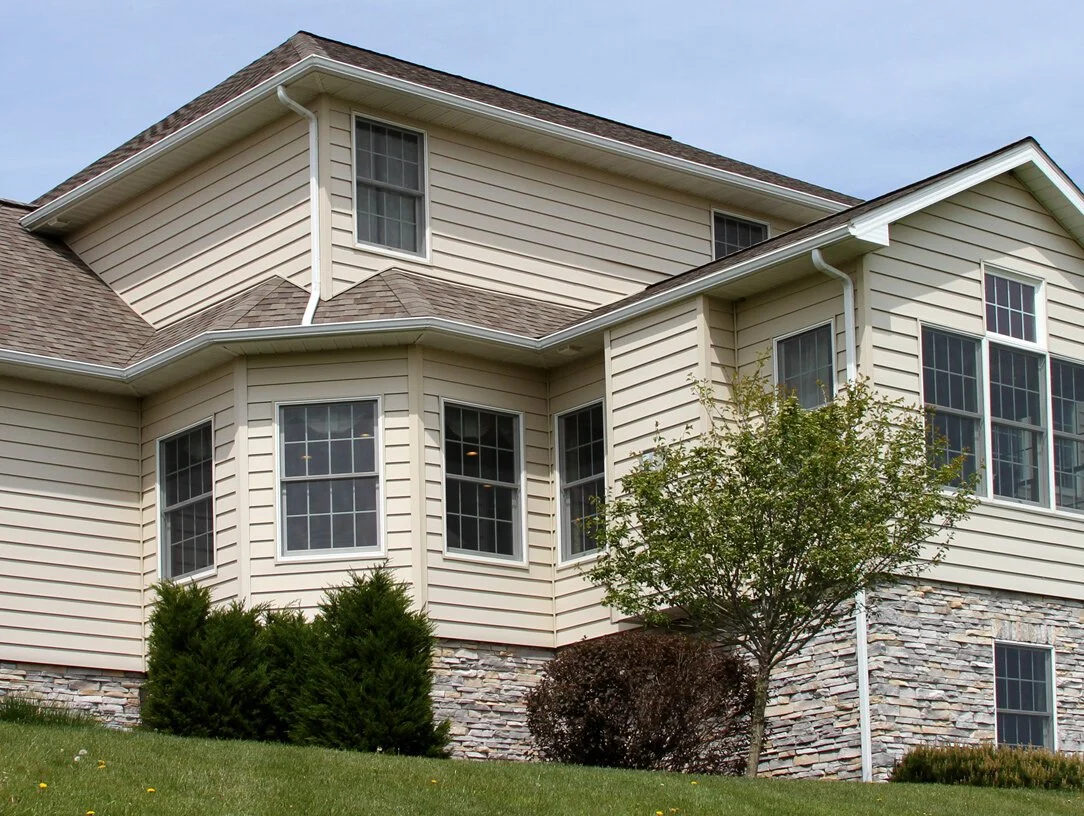
If you're searching "vinyl siding installers near me metro detroit," you're probably standing in your driveway looking at faded, cracked, or warped siding and wondering who you can trust to fix it. The search results give you dozens of options—national chains, one-truck operations, companies with five-star reviews and companies with none.
Here's what 35 years of house siding installation in Detroit has taught us: the quality of the installer matters more than the brand of vinyl you choose. A mediocre crew can ruin premium siding. A skilled crew can make mid-grade material perform beautifully for decades.
This isn't about steering you toward NEXT Exteriors specifically—though we've been doing this work since 1988 and have the track record to prove it. This is about helping you recognize the difference between contractors who know what they're doing and those who are winging it. Because in Michigan, where freeze-thaw cycles punish bad installation work, that difference shows up fast.
Why Installer Quality Matters More Than Material Choice
Vinyl siding is a forgiving material in some ways—it's flexible, relatively lightweight, and designed to expand and contract with temperature changes. But that flexibility is also why installation technique matters so much.
When temperatures swing from 90°F in July to -10°F in January—which happens regularly across Macomb County, Oakland County, and St. Clair County—vinyl siding expands and contracts. A 12-foot panel can move nearly half an inch. If the installer doesn't account for that movement, you get buckling in summer and cracking in winter.
Here's what goes wrong with poor installation:
- Overdriven nails: Nails driven too tight prevent the siding from moving. Panels buckle or crack when they can't expand.
- Nails in the wrong spot: Nails should be centered in the slot, not at the top or bottom. Off-center nailing restricts movement and creates stress points.
- No expansion gaps: Panels need a 1/4-inch gap at trim and corners to allow for expansion. Skip that gap and you'll see warping within a year.
- Poor flashing integration: Water gets behind the siding at windows, doors, and corners if flashing isn't layered correctly. This leads to rot in the sheathing and framing—damage you won't see until it's expensive.
We've torn off enough bad siding jobs in Sterling Heights, Troy, and Royal Oak to know the patterns. The material is usually fine. The installation is where things fall apart.
Michigan-Specific Challenge: Lake-effect moisture combined with freeze-thaw cycles means water intrusion doesn't just sit—it freezes, expands, and damages structural components. Poor flashing or improper J-channel installation becomes a bigger problem here than in drier climates.
What Separates Quality Vinyl Siding Installers in Michigan
When you're vetting contractors, here's what to look for—not in their sales pitch, but in their actual work practices and credentials.
They Hold a Michigan Residential Builder's License
This isn't optional. Any contractor doing siding work on your home in Michigan must hold a valid Residential Builder's License issued by the state. This requires passing exams, proving financial responsibility, and maintaining liability insurance.
Ask for the license number. Verify it with the state. If they dodge the question or say "we're working on it," walk away.
They Follow Manufacturer Installation Guidelines—Every Time
CertainTeed, Mastic, Alside, and other vinyl siding manufacturers publish detailed installation manuals. These aren't suggestions—they're requirements if you want the warranty to remain valid.
Quality installers know these guidelines by heart:
- Nails centered in slots, driven straight, leaving 1/32-inch gap between nail head and siding
- Proper overlap at horizontal seams (typically 1 inch minimum)
- Starter strip installed level and at the correct height
- J-channel and trim pieces installed with expansion gaps
- Flashing integrated at all penetrations—windows, doors, vents, lights
Ask your installer which manufacturer's guidelines they follow. If they can't answer, that's a problem.
They Prep the Substrate Correctly
Siding is only as good as what's underneath it. Before new siding goes up, the installer should:
- Inspect and repair damaged sheathing
- Replace rotted trim boards or fascia
- Install housewrap (Tyvek or equivalent) properly—overlapped correctly, taped at seams
- Flash around windows and doors before the siding goes on
We've seen too many jobs in Clinton Township and Shelby Township where crews just slapped new siding over rotted sheathing. It looks fine for six months. Then the rot spreads and the siding starts sagging.
They Use Quality Fasteners and Accessories
This sounds minor, but it matters. Cheap nails rust. Cheap trim pieces fade or crack faster than the siding itself.
Quality installers use:
- Hot-dipped galvanized or stainless steel nails (1.5-inch minimum for siding, 2-inch for trim)
- Trim and accessories from the same manufacturer as the siding (color-matched, same UV resistance)
- Proper caulking at penetrations—but not where the siding needs to move
They Explain What They're Doing—and Why
Good installers don't just show up and start nailing. They walk you through the process: what prep work is needed, how they'll handle problem areas (rotted trim, uneven walls, tricky corners), and what you should expect during the job.
If the crew can't explain why they're doing something a certain way, they probably don't know.
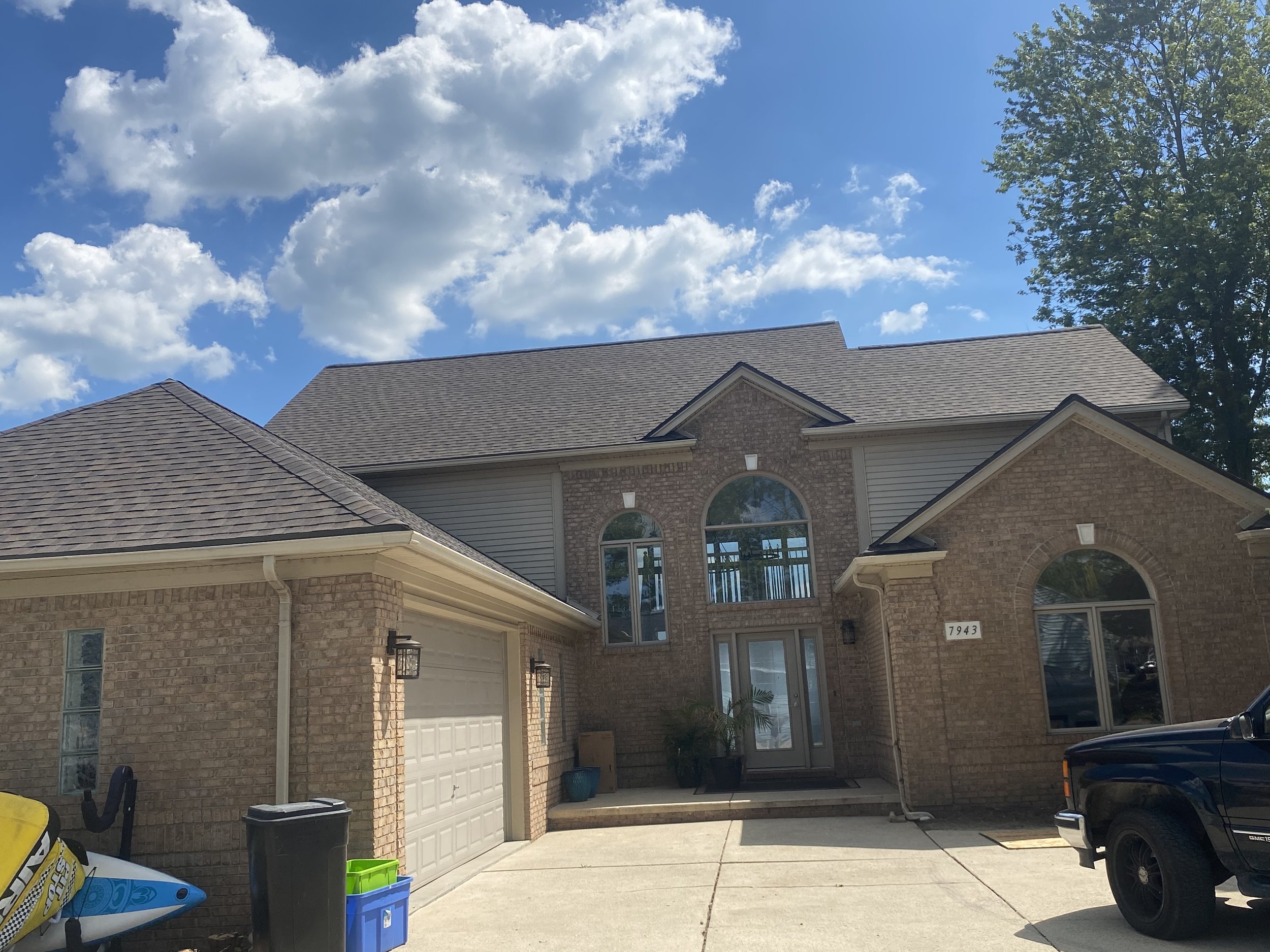
Red Flags When Searching for Vinyl Siding Installers Near Me
Some warning signs are obvious. Others take a little more attention to spot. Here's what should make you pause before signing a contract.
They Push You to Decide Today
High-pressure sales tactics—"this price is only good if you sign right now"—are a red flag. Legitimate contractors don't operate that way. They give you a written estimate, answer your questions, and let you think it over.
If they're rushing you, they're either desperate for work or planning to overcharge you. Neither is good.
The Estimate Is Vague or Incomplete
A quality estimate breaks down:
- Material specifications (brand, style, color, thickness)
- Scope of prep work (sheathing repair, housewrap installation, trim replacement)
- Labor costs
- Warranty coverage (both material and workmanship)
- Timeline
If the estimate just says "vinyl siding: $12,000," you have no idea what you're getting. That's intentional—it gives them room to cut corners or add charges later.
They Don't Carry Proper Insurance
Every contractor should carry general liability insurance and workers' compensation coverage. Ask for proof—a certificate of insurance from their carrier, not just a photocopy of a policy.
If someone gets hurt on your property and the contractor isn't insured, you could be liable. That's not a risk worth taking to save a few hundred dollars.
They Subcontract Everything
Some companies are just sales operations—they sell the job, then hire the cheapest subcontractor they can find to do the work. You have no idea who's actually showing up at your house or what their skill level is.
Ask who will be doing the work. If it's not the company's own crews, ask about the subcontractor's credentials and whether they're insured.
Online Reviews Are Suspiciously Perfect—or Nonexistent
A company with 50 five-star reviews and zero complaints is either brand new or buying reviews. Legitimate contractors have a few less-than-perfect reviews—because no one bats 1.000 over hundreds of jobs.
Look for patterns in reviews. Do multiple customers mention the same crew members by name? Do they talk about specific problems the company solved? That's more credible than generic "great job, highly recommend" reviews.
NEXT Exteriors has a 5.0-star average across 87+ reviews, but we've also had jobs where things didn't go perfectly the first time. What matters is how we handled it—we came back, fixed the issue, and made it right. That's what you should look for in reviews.
Material Choices: What Good Installers Recommend for Metro Detroit
Once you've found an installer you trust, you'll need to choose materials. Here's what we typically recommend for Southeast Michigan homes, based on 35 years of watching how different products hold up.
Vinyl Siding: The Workhorse Option
Vinyl siding is the most popular choice in Metro Detroit for good reason—it's affordable, low-maintenance, and performs well in Michigan's climate when installed correctly.
What to look for:
- Thickness: .044-inch to .046-inch is standard residential grade. Thicker is more rigid and resists impact better.
- Color technology: Look for through-color or capstock vinyl. These resist fading better than painted vinyl.
- Wind rating: Michigan gets summer storms with 60+ mph winds. Choose siding rated for at least 110 mph wind resistance.
- Warranty: Lifetime limited warranties are common, but read the fine print—some only cover material defects, not labor or fading.
Brands we install regularly: CertainTeed, Mastic, Alside. All three hold up well in Michigan weather and offer solid warranty coverage.
Fiber Cement: The Upgrade
If you're willing to spend more for better durability and fire resistance, fiber cement (James Hardie being the most recognized brand) is worth considering. It doesn't expand and contract like vinyl, so it holds paint better and resists warping.
The trade-off: higher upfront cost and more involved installation. It's heavier, requires specific cutting tools, and needs to be painted or comes pre-finished at a premium.
We see fiber cement most often on historic homes in Grosse Pointe Farms or Bloomfield Hills, where homeowners want the look of wood siding without the maintenance.
Engineered Wood: The Middle Ground
LP SmartSide offers a wood-like appearance with better moisture resistance than natural wood. It's a good option if you want the texture and grain of wood but don't want to repaint every few years.
It's more expensive than vinyl but less than fiber cement, and it performs well in Michigan's climate—especially with proper priming and painting.
For more details on how different siding materials compare in cost and performance, see our breakdown of siding cost in Metro Detroit.
Real Cost Expectations for Vinyl Siding in Southeast Michigan
Let's talk numbers, because this is usually the first question homeowners ask.
For a typical 1,800-square-foot ranch home in Macomb County or Oakland County, expect to pay:
- Mid-grade vinyl siding (Mastic, Alside): $8,000–$12,000 installed
- Premium vinyl siding (CertainTeed Monogram): $10,000–$15,000 installed
- Fiber cement (James Hardie): $15,000–$22,000 installed
- Engineered wood (LP SmartSide): $12,000–$18,000 installed
These ranges assume:
- Complete tear-off of old siding
- Housewrap installation
- Minor trim and sheathing repair (if major structural work is needed, costs go up)
- Standard two-story home with typical architectural details
Costs increase if you have:
- Extensive rotted trim or sheathing that needs replacement
- Complex architecture (multiple gables, bay windows, decorative trim)
- Difficult access (tight lot, tall home, landscaping obstacles)
- Asbestos siding that requires certified removal
Pricing Reality: If you get a quote that's significantly lower than these ranges, ask why. It usually means the crew is skipping prep work, using substandard materials, or planning to cut corners during installation. Cheap siding jobs cost more in the long run when you have to tear it all off and start over.
Beyond siding, many homeowners tackle multiple exterior services in Detroit at once—combining siding with new window replacement in Detroit or seamless gutters in Detroit, MI to maximize efficiency and reduce overall project costs.
How to Vet Installers Before Signing Anything
Here's a practical checklist for evaluating contractors when you're searching for vinyl siding installers near me in Metro Detroit.
Step 1: Verify Credentials
- Michigan Residential Builder's License (search the state database)
- BBB accreditation and rating (NEXT Exteriors has been BBB A+ accredited since 2006)
- Manufacturer certifications (CertainTeed, James Hardie, LP SmartSide, etc.)
- Insurance certificates (general liability and workers' comp)
Step 2: Check References and Past Work
- Ask for addresses of recent jobs in your area—then drive by and look at the work
- Request contact info for 3-5 recent customers and actually call them
- Look at the company's project gallery (our gallery shows real jobs, not stock photos)
Step 3: Get Multiple Written Estimates
Get at least three estimates. Compare them line by line—not just the bottom-line price. Look for:
- Detailed material specifications
- Clear scope of work
- Warranty terms (material and labor)
- Payment schedule (never pay the full amount upfront)
- Timeline and project milestones
Step 4: Ask About the Installation Process
During the estimate, ask:
- "Who will be doing the work—your crew or a subcontractor?"
- "How do you handle substrate prep and repairs?"
- "What happens if you find rotted sheathing or trim after you start?"
- "How do you handle change orders or unexpected issues?"
- "What's your cleanup process at the end of each day?"
How they answer tells you a lot. If they're vague or dismissive, move on.
Step 5: Review the Contract Carefully
Before you sign, make sure the contract includes:
- Detailed scope of work (what's included, what's not)
- Material specifications (brand, style, color, thickness)
- Start and completion dates
- Payment schedule (typically deposit, progress payments, final payment upon completion)
- Warranty terms and coverage
- Dispute resolution process
If the contractor balks at putting details in writing, that's a red flag.
Step 6: Trust Your Gut
This sounds soft, but it matters. If something feels off—if the sales pitch is too slick, if they're evasive about credentials, if they're pushing you to decide faster than you're comfortable with—listen to that instinct.
You're hiring someone to work on your home for days or weeks. You should feel confident in their competence and integrity. If you don't, keep looking.
What We've Learned in 35 Years: The best client relationships start with clear communication, realistic expectations, and mutual respect. We don't use high-pressure tactics. We don't promise things we can't deliver. We show up on time, do the work right, and clean up when we're done. That's the standard you should expect from any contractor you hire.
If you're also dealing with roof issues, many of the same vetting principles apply—check out our guide on architectural vs. 3-tab shingles for Michigan weather or learn more about our Detroit roofing services. And if your home needs better energy efficiency, our top-rated insulation contractor in Detroit team can help with attic, wall, and basement insulation upgrades.
For homes that need a fresh exterior finish, we also offer Southeast Michigan painting services using Sherwin-Williams products exclusively—because quality materials and quality installation go hand in hand.
Ready to Get Started?
NEXT Exteriors has been protecting Michigan homes since 1988. Get a free, no-pressure estimate from a team that shows up on time and does the job right.
Get Your Free QuoteOr call us: (844) 770-6398
Frequently Asked Questions
For a standard 1,800-square-foot ranch or two-story home in Southeast Michigan, expect 5-7 days from tear-off to completion. This assumes normal weather, minimal structural repairs, and a straightforward layout. Larger homes, complex architecture (multiple gables, bay windows, decorative trim), or extensive prep work can extend the timeline to 10-14 days. Weather delays are common in Michigan—rain, extreme heat, or high winds can pause work for safety and quality reasons.
In most cases, yes. Removing old siding allows the installer to inspect the sheathing for rot or damage, install proper housewrap, and ensure a flat, solid substrate. Installing over old siding can hide problems, create an uneven surface, and void manufacturer warranties. The only exception is if you have one layer of flat, well-adhered siding (like old aluminum) and the sheathing underneath is confirmed to be in good condition—but even then, removal is usually the better choice for long-term performance.
The main differences are thickness, color technology, and warranty coverage. Budget vinyl (.040-inch) is thinner, more prone to warping, and fades faster. Premium vinyl (.044–.046-inch) is more rigid, resists impact better, and uses advanced color technology (capstock or through-color) that holds up longer in UV exposure. Premium products also typically offer better wind resistance (important for Michigan storms) and stronger warranties. The upfront cost difference is $2,000–$4,000 for a typical home, but premium siding can last 10+ years longer with less fading and fewer repairs.
Vinyl siding itself provides minimal insulation—it's primarily a weather barrier. However, the installation process creates an opportunity to improve energy efficiency by adding insulated housewrap or foam-backed vinyl siding, which adds R-value. The bigger energy gains come from addressing what's underneath: replacing old, drafty windows, upgrading attic insulation, and sealing air leaks. If energy efficiency is a priority, talk to your contractor about combining siding replacement with insulation upgrades for maximum impact.
Look for these signs during installation: nails are centered in the slots and not overdriven (you should see a slight gap between the nail head and the siding), panels have 1/4-inch expansion gaps at trim and corners, housewrap is installed with proper overlap and taped seams, and flashing is integrated at all windows and doors before siding goes up. If you see panels being forced into place, nails driven at angles, or no housewrap, stop the work and ask questions. A quality installer will welcome your oversight and explain what they're doing.
Most vinyl siding manufacturers offer a lifetime limited warranty on the material itself, covering defects like cracking, peeling, or excessive fading. However, these warranties often don't cover labor, and they're only valid if the siding is installed according to manufacturer specifications. Your contractor should also provide a workmanship warranty—typically 1-5 years—covering installation errors. At NEXT Exteriors, we stand behind our work long-term, because we know proper installation is what makes the material warranty meaningful. Always get warranty terms in writing before signing a contract.
Yes, but with limitations. Vinyl becomes brittle below 40°F, which makes it more prone to cracking during cutting and installation. Some manufacturers require installers to store siding in a heated space before installation and to use special techniques (like leaving larger expansion gaps) when working in cold temperatures. Most professional crews in Southeast Michigan avoid siding installation in December through February unless it's an emergency repair. Spring and fall are ideal—moderate temperatures, lower humidity, and more predictable weather.
Vinyl Siding Installers Near Me Metro Detroit | NEXT Exteriors
Looking for vinyl siding installers near you in Metro Detroit? NEXT Exteriors has served Southeast Michigan since 1988. Licensed, A+ rated, honest pricing.
When you search "vinyl siding installers near me" in Metro Detroit, you'll get dozens of results. Some are legitimate contractors who've been doing this for decades. Others are crews who learned siding installation from YouTube and disappear when problems show up.
Here's what 35 years of house siding in Detroit has taught us: the installer matters more than the material. You can buy the best vinyl siding CertainTeed or Royal makes, but if the crew doesn't understand Michigan's freeze-thaw cycles, doesn't install proper moisture barriers, or rushes through trim work, you'll have problems within two winters.
We've been fixing bad siding jobs across Sterling Heights, Rochester Hills, and Grosse Pointe Farms since 1988. The same mistakes show up every spring when homeowners call us to repair work done by the low bidder the previous summer. This guide walks through what separates competent siding installation from the kind that causes callbacks.
What Makes a Good Siding Installer in Michigan
Michigan weather is brutal on exterior materials. We get lake-effect snow dumps in winter, summer storms with straight-line winds, and freeze-thaw cycles that crack concrete and warp wood. A siding installer who learned the trade in Arizona or Texas won't understand what happens when vinyl siding is nailed too tight in July and then contracts 40 degrees in January.
Understanding Expansion and Contraction
Vinyl siding expands and contracts with temperature changes. A 12-foot panel can move up to half an inch between summer heat and winter cold. That's why the nailing technique matters so much. The nail should go through the center of the slot, not tight against either edge. The panel needs to hang on the nails, not be locked down like you're framing a wall.
We see this mistake constantly: crews nail the siding tight because that's how they learned to install everything else. By the first hard freeze, the panels buckle and warp. By spring, you've got gaps where water gets behind the siding.
Moisture Barrier Installation
Before any siding goes up, there should be a weather-resistant barrier over the sheathing. This is typically housewrap like Tyvek or a similar product. It lets moisture vapor escape from inside the wall while blocking liquid water from getting in.
Bad installers skip this step or install it incorrectly. The housewrap needs to overlap properly (upper sheets over lower sheets, like roof shingles), and seams need to be taped. Every window and door needs proper flashing integrated with the housewrap. Miss any of this, and you're setting up for rot behind the siding.
On older homes in Detroit and Mount Clemens, we often find no housewrap at all under the original siding. When we remove old aluminum or wood siding, we're looking at bare wood sheathing from the 1950s. That's the first thing we address before new siding goes up.
Flashing Around Openings
Every window, door, and penetration through the siding needs proper flashing. This is where most water intrusion happens. A skilled installer knows how to integrate window flashing with the housewrap, how to flash above doors, and how to handle complicated areas like bay windows or where the roof meets a wall.
We use a combination of peel-and-stick flashing tape and metal flashing depending on the situation. The goal is to create a continuous drainage plane that directs water down and out, never letting it sit against the sheathing.
This attention to detail is what separates professional exterior services in Detroit from crews just trying to get the job done fast.
The 3 Siding Mistakes We Fix Every Spring
Every April and May, we get calls from homeowners in Troy, Warren, and Shelby Township who had siding installed the previous year. The snow has melted, and now they're seeing problems. These are the three most common issues we repair.
1. Improper Nailing Technique
We covered this above, but it's worth repeating because it's the most common mistake. Nails driven too tight lock the panel in place. When the siding contracts in cold weather, it can't move, so it buckles or cracks. Nails driven at an angle or through the face of the panel (instead of through the nailing hem) create stress points that fail.
The correct technique: center the nail in the slot, drive it until the head just touches the nailing hem, then back it off about 1/32 of an inch. You should be able to slide the panel side to side slightly. This lets the siding move with temperature changes.
We also see crews using nails that are too short or the wrong type. Galvanized roofing nails with a large head work. Finishing nails or staples don't. The nail needs to penetrate at least 3/4 inch into solid wood or other substrate.
2. Missing or Incorrect Housewrap
Some installers skip the housewrap entirely to save time and money. Others install it but don't overlap the seams correctly, don't tape them, or don't flash around windows and doors properly.
Without proper housewrap, moisture that gets behind the siding (and it will get back there—no siding is 100% waterproof) sits against the sheathing. In Michigan's humid summers, this creates perfect conditions for rot and mold.
When we tear off old siding to install new, we often find extensive rot in the sheathing and framing because the previous installer didn't use housewrap or installed it incorrectly. This turns a straightforward siding replacement into a more expensive project because we have to rebuild sections of the wall.
Proper installation of moisture barriers is fundamental to any quality Detroit roofing services or siding project. The same principles apply—keep water out, let vapor escape.
3. Poor Trim and J-Channel Work
The trim work around windows, doors, corners, and where the siding meets the soffit is where you see the quality of the installer. Good trim work looks clean, with tight miters and no gaps. Bad trim work has gaps, crooked cuts, and pieces that don't line up.
J-channel (the trim that receives the cut edge of siding panels) needs to be installed level and plumb. If it's crooked, the siding will be crooked. The J-channel also needs to be notched and folded properly at corners to shed water, not create pockets where water can collect.
We see a lot of rushed J-channel work where the installer just butted pieces together instead of properly mitering or overlapping them. Water gets in these gaps and runs down behind the siding.
Vinyl vs. Fiber Cement: Real Talk for Michigan Homes
When you're researching siding options, you'll see a lot of information about vinyl versus fiber cement (like James Hardie). Both work in Michigan. Both have advantages. Here's what we tell homeowners in Rochester Hills and Bloomfield Hills when they ask which to choose.
Vinyl Siding: Pros and Cons
Pros:
- Lower cost—typically $4-$7 per square foot installed for quality vinyl
- No painting required, color goes all the way through the material
- Lighter weight, which matters on older homes with questionable framing
- Faster installation, which means lower labor costs
- Wide range of colors and styles, including options that mimic wood grain
Cons:
- Can crack in extreme cold if impacted (a ladder leaning against the house in January, for example)
- Lower-quality vinyl can fade over 10-15 years, especially dark colors
- Less impact-resistant than fiber cement—hail can dent it
- Some homeowners associations in upscale neighborhoods don't allow vinyl
Quality matters with vinyl. Premium brands like CertainTeed Monogram or Royal Celect have thicker panels, better fade resistance, and stronger warranties than builder-grade vinyl. The difference in material cost is $1-2 per square foot, but the performance difference is significant.
Fiber Cement: Pros and Cons
Pros:
- Extremely durable—resistant to impact, rot, insects, and fire
- Holds paint well, with factory finishes lasting 15+ years
- Can mimic wood siding more convincingly than vinyl
- Higher perceived value for resale in upscale markets
- Better warranties—James Hardie offers 30-year non-prorated coverage
Cons:
- Higher cost—typically $8-12 per square foot installed
- Heavier, which can be an issue on older homes
- Requires painting every 10-15 years if you choose primed (not pre-finished)
- More labor-intensive to install, especially cutting (requires special blades and dust control)
- Edges need to be sealed and painted to prevent moisture absorption
We install a lot of James Hardie and LP SmartSide (engineered wood) in Grosse Pointe Farms and other upscale areas where homeowners want the look of traditional wood siding without the maintenance. For more detail on this comparison, see our guide on fiber cement siding in Metro Detroit.
Which Makes Sense for Your Home?
Vinyl makes sense if you want low maintenance, good performance, and don't want to spend more than necessary. It's what we install on most ranch homes, colonials, and newer construction in Macomb County.
Fiber cement makes sense if you're in a historic district, want the most durable option, or are selling a higher-end home and want maximum curb appeal. It's also the better choice if you're in an area prone to hail or wind-driven debris.
Both need to be installed correctly. A bad fiber cement installation will fail just as fast as a bad vinyl installation. The installer matters more than the material.
What a Siding Job Should Cost in Metro Detroit (2026)
Pricing for siding varies based on material, house size, complexity, and whether we're removing old siding or installing over existing. Here are realistic numbers for Southeast Michigan in 2026.
Vinyl Siding Costs
Builder-grade vinyl (0.040-0.042 thickness): $4-5 per square foot installed. This is what production builders use. It works, but it's the minimum. Expect a 20-year lifespan with some fading.
Premium vinyl (0.044-0.046 thickness): $6-8 per square foot installed. Brands like CertainTeed Monogram, Royal Celect, or Norandex Sagebrush. Better fade resistance, stronger panels, longer warranties. This is what we typically recommend.
Insulated vinyl: $8-10 per square foot installed. Has foam backing that adds some R-value and impact resistance. Worth it if energy efficiency is a priority. See our article on how much insulation new siding adds for more detail.
Fiber Cement Costs
James Hardie or LP SmartSide: $9-12 per square foot installed. More if you're doing a lot of trim work or architectural details. Factory-finished (ColorPlus or pre-primed) costs more than primed-only, but it's worth it for the warranty and finish quality.
What Drives Costs Up
- Two-story homes: Scaffolding and safety equipment add labor time
- Complex architecture: Bay windows, dormers, multiple roof lines, decorative trim
- Old siding removal: Removing and disposing of old siding adds $1-2 per square foot
- Sheathing repair: If we find rot when we remove old siding, that's additional carpentry work
- Window and door trim: Replacing or upgrading trim around openings
- Soffit and fascia: If you're replacing these at the same time (which makes sense)
For a typical 2,000-square-foot two-story colonial in Sterling Heights, expect to pay $12,000-16,000 for quality vinyl siding with removal of old siding, housewrap, trim, soffit, and fascia. The same house in fiber cement would be $18,000-24,000.
These numbers assume a straightforward job with no major repairs. If we find extensive rot or need to rebuild sections of wall, add 20-30% to the estimate.
Red Flag Pricing: If someone quotes you $6,000 to side a 2,000-square-foot house with "top-quality" vinyl, they're either using the cheapest material available, skipping critical steps like housewrap, or planning to disappear before warranty issues show up. Quality siding installation costs what it costs. There's no magic way to cut the price in half and still do it right.
For more context on pricing across different exterior projects, see our breakdown of siding costs in Metro Detroit.
How to Vet a Siding Contractor
When you search for vinyl siding installers near you in Metro Detroit, you'll get a mix of legitimate contractors, handyman services, and fly-by-night operations. Here's how to separate them.
Verify the License
In Michigan, anyone doing residential construction work over $600 needs a Residential Builder's License. You can verify this on the Michigan Department of Licensing and Regulatory Affairs (LARA) website. The license number should be on their website, truck, and business card.
NEXT Exteriors operates under Premier Builder Inc., Michigan license number 2102156536. That's been active since 1988. If a contractor can't or won't provide their license number, walk away.
Check Insurance
The contractor should have general liability insurance and workers' compensation coverage. Ask for certificates of insurance and verify they're current. If someone gets hurt on your property and the contractor doesn't have workers' comp, you could be liable.
Legitimate contractors will provide proof of insurance without hesitation. If they dodge the question or say "we're insured" without providing documentation, that's a red flag.
Look at Their Work
Ask to see recent projects in your area. Drive by and look at the work. Is the siding straight? Do the corners look clean? Is the trim work tight? You don't need to be an expert to spot sloppy work.
Better yet, ask for references from recent customers and actually call them. Ask about communication, cleanliness, whether the crew showed up on time, and if there were any issues after the job was done.
Check out our project gallery to see examples of our siding, roofing, and window work across Southeast Michigan.
Read the Contract Carefully
A good contract specifies:
- Exact materials being used (brand, style, color, thickness)
- Scope of work (removal of old siding, housewrap installation, trim, soffit, fascia)
- Timeline with start and completion dates
- Payment schedule (never pay everything upfront)
- Warranty terms for materials and labor
- Who's responsible for permits and inspections
- How change orders are handled
If the contract is vague or just says "install siding" without specifics, ask for more detail. You want everything in writing.
Check Online Reviews
Look at Google reviews, BBB rating, and any other platforms where the contractor has reviews. Don't just look at the star rating—read the actual reviews, especially the negative ones. How does the contractor respond to complaints?
NEXT Exteriors has maintained an A+ BBB rating since 2006 and averages 5.0 stars across 87+ reviews. We're proud of that record because it represents decades of showing up on time, doing quality work, and standing behind what we install.
Warning Signs to Watch For
- Pressure to sign immediately: "This price is only good today" is a classic high-pressure tactic
- Request for full payment upfront: Legitimate contractors ask for a deposit (typically 25-33%) and the balance on completion
- No physical address: Just a cell phone number and PO box
- Significantly lower price than other quotes: There's usually a reason
- Unwillingness to provide references or proof of insurance
- Vague contract terms or refusal to put agreements in writing
Trust your gut. If something feels off, it probably is.
Related Services to Consider
While you're upgrading your siding, it's worth thinking about other exterior improvements. Many homeowners in Lake Orion and St. Clair Shores bundle siding with other projects to save on mobilization costs and get a cohesive look.
Windows: If your windows are 15+ years old, replacing them at the same time as siding makes sense. We can integrate the new window flashing with the housewrap and siding for a watertight installation. Our Detroit window experts can help you choose energy-efficient options that match your new siding.
Gutters: New siding is a good time to upgrade to seamless gutters in Detroit, MI. We can match the gutter color to your new siding and make sure everything is properly integrated.
Insulation: If we're removing old siding and find inadequate wall insulation, we can add blown-in insulation before the new siding goes up. Our Detroit insulation contractor services include wall cavity insulation that significantly improves energy efficiency.
Painting: If you're keeping some existing trim or have areas that need paint, our Southeast Michigan painting professionals use exclusively Sherwin-Williams products for long-lasting results that coordinate with your new siding.
Ready to Get Started?
NEXT Exteriors has been protecting Michigan homes since 1988. Get a free, no-pressure estimate from a team that shows up on time and does the job right.
Get Your Free QuoteOr call us: (844) 770-6398
Frequently Asked Questions
Quality vinyl siding should last 25-30 years in Michigan if installed correctly. Premium brands with thicker panels and UV inhibitors can last 30-40 years. The key factors are proper installation (correct nailing, housewrap, flashing) and using quality materials. Builder-grade vinyl might only last 15-20 years before significant fading or brittleness. We've seen well-installed CertainTeed and Royal vinyl from the 1990s that still looks good today.
Technically yes, but we don't recommend it in most cases. Installing over old siding means you can't inspect the sheathing for rot, can't add proper housewrap, and create a lumpy surface if the old siding is warped. The only time it makes sense is if the existing siding is perfectly flat, the sheathing is known to be in good condition, and budget is extremely tight. In 90% of cases, it's worth removing the old siding to do the job right.
Late spring through early fall (May through October) is ideal. Vinyl siding can be installed in cold weather, but it's more brittle below 40°F and requires more careful handling. Extreme heat (above 90°F) can also be challenging because the siding is fully expanded, and you need to account for contraction. We install siding year-round, but late summer and early fall (August-October) is the sweet spot—moderate temperatures and typically drier weather.
For a typical 1,500-square-foot ranch or cape cod, expect $9,000-12,000 for quality vinyl siding including removal of old siding, housewrap, trim, soffit, and fascia. A two-story home with the same square footage will cost more ($11,000-14,000) due to the need for scaffolding. Fiber cement would be $13,500-18,000 for the same house. These are 2026 prices for quality materials and professional installation. Prices can go up if we find rot or structural issues when we remove the old siding.
It depends on your municipality. Most cities in Metro Detroit require a building permit for siding replacement. The permit ensures the work is inspected and meets code requirements. Your contractor should handle the permit application and schedule inspections. Permit costs are typically $100-300 depending on the city and project size. Never skip the permit—if you sell the house and unpermitted work is discovered, it can create problems with the sale.
Look for these signs: cracks or holes in the siding, warping or buckling panels, loose or missing pieces, fading or discoloration (especially uneven fading), moisture or rot in the walls, increasing heating/cooling bills (indicating poor insulation), or if the siding is 20+ years old. Also check inside—if you see water stains on interior walls or smell musty odors, water may be getting past the siding. Our article on how to spot siding damage after a Michigan winter covers this in more detail.
Neutral colors dominate in Southeast Michigan: various shades of gray, beige, tan, and white. Darker grays have become very popular in the last few years, especially charcoal and slate tones. For traditional brick colonials (common in Grosse Pointe and Birmingham), we see a lot of cream or light gray to complement the brick. Coastal blue and sage green are popular accent colors for shutters and trim. Dark colors look great but can fade faster in direct sun, so we recommend premium vinyl with strong UV inhibitors if you go dark. See our guide on siding colors that boost curb appeal in Metro Detroit for more ideas.