Next Service Group Next Service Group

Choosing a Roofing Contractor in Michigan: Questions to Ask

Ask these 12 questions before signing with any Michigan roofing contractor. Learn what credentials, warranties, and work practices separate pros from problems.

📅 February 19, 2026

⏱ 12 min read

✍️ NEXT Exteriors

NEXT Exteriors completed roof replacement project in Southeast Michigan showing quality craftsmanship

You've got three estimates sitting on your kitchen table. One's suspiciously cheap. One's loaded with technical jargon you don't understand. The third sounds reasonable, but you can't shake the feeling you're missing something important.

Here's the truth: choosing the wrong roofing contractor in Michigan isn't just expensive — it's dangerous. A roof that fails during a January ice storm or blows off in a summer squall isn't a minor inconvenience. It's a crisis that affects your family's safety, your home's structural integrity, and your financial security.

After 35 years installing roofs across Southeast Michigan — through lake-effect snow, brutal freeze-thaw cycles, and every weather pattern this state throws at us — we've seen what separates contractors who do it right from those who leave homeowners with problems that cost twice the original bid to fix.

This guide walks you through the exact questions to ask before signing any Detroit roofing services contract. These aren't generic questions pulled from a national checklist. They're Michigan-specific, based on what actually matters when your roof needs to survive our climate.

Licensing and Insurance: The Non-Negotiables

Before you discuss shingle colors or timeline, verify these credentials. If a contractor can't immediately provide this information, walk away. No exceptions.

Michigan Residential Builder's License

Question: "Can I see your Michigan Residential Builder's License, and can I verify it online?"

In Michigan, any roofing project over $600 requires a state-issued Residential Builder's License. This isn't optional. The license number should appear on all estimates, contracts, and advertising. You can verify it at Michigan's Department of Licensing and Regulatory Affairs (LARA) website.

Red flags: A contractor who says they're "working on getting licensed," uses someone else's license, or claims small jobs don't need one. All false. All illegal.

NEXT Exteriors holds a valid Michigan Residential Builder's License through our parent company, Premier Builder Inc. We've operated continuously since 1988 under the same license, completing 500+ projects across Macomb, Oakland, and St. Clair counties. You can verify our credentials before we ever set foot on your property.

General Liability and Workers' Compensation Insurance

Question: "Can you provide current certificates of insurance for both general liability and workers' compensation, and can I contact your insurance company to verify coverage?"

General liability insurance protects your property if the crew damages your home, landscaping, or vehicles. Workers' compensation protects you from liability if a crew member gets injured on your property.

Here's what homeowners in Sterling Heights and Rochester Hills often miss: you need to verify these certificates are current. Some contractors show expired certificates or ones from a different company they used to work for. Call the insurance company directly. It takes five minutes and could save you from a lawsuit.

Professional roof installation by NEXT Exteriors in Macomb County Michigan showing proper safety equipment and work practices

Experience and Credentials That Actually Matter

Not all roofing experience is equal. A contractor who spent 20 years installing roofs in Arizona doesn't understand Michigan's ice dam issues. A crew that's been in business for 30 years but has terrible reviews clearly isn't learning from experience.

Manufacturer Certifications

Question: "What manufacturer certifications do you hold, and what do they actually mean for my project?"

Legitimate certifications like CertainTeed Master Shingle Applicator, GAF Master Elite, or Owens Corning Platinum Preferred aren't just marketing badges. They require:

  • Proof of proper licensing and insurance

  • Years of proven installation experience

  • Passing manufacturer-specific training programs

  • Maintaining low complaint ratios

  • Meeting minimum annual installation volumes

CertainTeed's Master Shingle Applicator is the highest credential in roofing. Only contractors who consistently demonstrate superior installation quality, maintain excellent customer satisfaction, and meet strict business standards earn it. NEXT Exteriors holds this certification — we didn't just pass a test; we proved our work quality across hundreds of Michigan roofs.

These certifications also unlock extended warranty options that aren't available through standard installations. We'll cover warranty details in the next section.

BBB Accreditation and Online Reviews

Question: "Are you BBB accredited, what's your rating, and how do you handle complaints?"

Better Business Bureau accreditation requires background checks, complaint resolution processes, and adherence to ethical business practices. A BBB A+ rating (which NEXT Exteriors has maintained since 2006) means the company consistently resolves issues and maintains high customer satisfaction.

But don't stop there. Check Google reviews, Facebook, and Houzz. Look for patterns:

  • Good sign: Detailed reviews mentioning specific crew members, describing the actual work process, and noting how issues were handled

  • Red flag: Generic five-star reviews posted in clusters, all using similar language, or reviews that read like marketing copy

NEXT Exteriors maintains a 5.0-star average across 87+ reviews because we treat every project like it's our own home. When issues arise — weather delays, material back-orders, unexpected substrate problems — we communicate immediately and solve them without excuses.

Local Experience

Question: "How long have you been working specifically in Southeast Michigan, and can you describe projects similar to mine in my area?"

A contractor who's been working in Macomb County, Oakland County, and St. Clair County for decades understands:

  • How lake-effect snow from Lake St. Clair affects roof loads in communities like Grosse Pointe Farms and St. Clair Shores

  • Why brick Colonial homes built in the 1960s often have inadequate attic ventilation

  • How freeze-thaw cycles impact flashing details around chimneys

  • Which local building inspectors are strict about code compliance

This knowledge doesn't come from reading a manual. It comes from installing thousands of roofs through 35 Michigan winters.

Project-Specific Questions for Michigan Homes

Now we get into the details that separate a roof that lasts 25 years from one that fails in 10. These questions reveal whether a contractor understands building science or just knows how to nail shingles.

Material Recommendations

Question: "What specific shingle line do you recommend for my roof, and why is it the right choice for Michigan's climate?"

A good contractor doesn't just offer "architectural shingles." They recommend specific products with technical justification:

  • Wind rating: Michigan sees severe summer storms. Quality architectural shingles should have a 130 mph wind rating minimum.

  • Algae resistance: Our humidity breeds algae growth. Look for shingles with copper granules or algae-resistant technology.

  • Impact resistance: Hail damage is common. Class 4 impact-resistant shingles may qualify for insurance discounts.

  • Cold-weather performance: Some shingles seal poorly in cold weather. Ask how they handle fall and spring installations when temperatures fluctuate.

When we recommend CertainTeed Landmark or Landmark Pro shingles for a home in Troy or Warren, it's because these products deliver proven performance in Michigan's climate, come with strong warranties, and offer the aesthetic options homeowners want — all at a fair price point.

NEXT Exteriors exterior renovation project in Oakland County Michigan showing comprehensive roofing and siding work

Ventilation and Ice Dam Prevention

Question: "How will you assess and address my attic ventilation, and what measures prevent ice dams?"

This question is critical in Michigan. Ice dams form when heat escaping through an under-insulated or poorly ventilated attic melts snow on the roof. The water runs down to the cold eaves, refreezes, and creates ice buildup that forces water under shingles.

A contractor who just says "we'll install ice and water shield" is missing the point. Proper ice dam prevention requires:

  • Adequate soffit and ridge ventilation: Balanced intake and exhaust keeps the roof deck cold

  • Proper attic insulation: Often requires coordination with top-rated insulation contractor in Detroit services to address the root cause

  • Ice and water shield: Should extend at least 3 feet past the interior wall line (Michigan code minimum), but we often go further based on roof pitch and eave exposure

  • Drip edge: Properly installed under the ice and water shield at the eaves, over it at the rakes

We've fixed dozens of roofs in Bloomfield Hills and Lake Orion where the previous contractor installed beautiful shingles but ignored ventilation. Two winters later, the homeowner had ice dams, water damage, and a roof that needed to be partially rebuilt.

Timeline and Weather Contingencies

Question: "What's your realistic timeline, and how do you handle Michigan weather delays?"

Most residential roof replacements take 1-3 days in good weather. But "good weather" in Michigan is unpredictable. A contractor who promises "we'll be done Tuesday no matter what" is either lying or willing to install a roof in conditions that void the warranty.

Quality contractors:

  • Monitor weather forecasts and communicate proactively about delays

  • Won't tear off a roof if rain is forecast within 24 hours

  • Won't install shingles when temperatures are below manufacturer minimums (typically 40-45°F, depending on the product)

  • Have protocols for sudden weather — tarps, securing materials, protecting your home

We've rescheduled projects the morning of installation because radar showed storms moving in. Homeowners appreciate the inconvenience less than they'd appreciate water damage from rushing a job.

Warranty and Guarantee Details You Need in Writing

Warranties sound great until you need to use one. Then you discover the fine print excludes your specific problem, or the contractor who installed your roof is out of business.

Manufacturer Warranty vs. Workmanship Warranty

Question: "What's covered under the manufacturer's warranty versus your workmanship warranty, and can I see both in writing?"

These are two separate warranties:

Manufacturer warranty covers material defects — shingles that fail prematurely due to manufacturing issues. Standard coverage is typically 10-15 years for three-tab shingles, 25-50 years for architectural shingles. But read the fine print:

  • Many are prorated — after year 10, you might only get 50% credit toward replacement

  • They typically only cover materials, not labor to replace them

  • They're void if shingles weren't installed per manufacturer specs

Workmanship warranty covers installation errors — leaks from improper flashing, shingles that blow off due to inadequate nailing, ventilation issues. This is the contractor's guarantee that they did the job right.

NEXT Exteriors provides a comprehensive workmanship warranty on every installation. Because we're CertainTeed Master Shingle Applicators, we can also offer extended manufacturer warranties that include labor coverage — something most contractors can't provide.

What Voids a Warranty

Question: "What actions on my part would void either warranty?"

Common warranty-voiding mistakes homeowners make:

  • Pressure washing: High-pressure washing can damage shingles and void warranties

  • Walking on the roof: Especially in hot weather, foot traffic can damage shingles

  • Installing satellite dishes or solar panels: Penetrations through the roof can void coverage if not done properly

  • Hiring a different contractor for repairs: Some warranties require the original installer handle all repairs

We document these details in writing so there's no confusion five years from now.

Warranty Claim Process

Question: "If I have a problem, what's the actual process for filing a warranty claim, and what's your typical response time?"

A warranty is worthless if the contractor doesn't respond to claims. Ask for specifics:

  • Do you call a phone number, send an email, fill out a form?

  • What's the response time — same day, 48 hours, a week?

  • Who makes the determination if something is covered?

  • If it's a manufacturer defect, do they handle the claim or do you?

We provide a direct phone line for warranty issues and commit to responding within 24 hours. If it's an emergency leak, we're there same-day or next-day to protect your home, then sort out warranty coverage afterward.

Completed NEXT Exteriors roofing project in St. Clair County Michigan showing professional installation and attention to detail

Contract and Payment Terms That Protect You

The contract is your protection. If it's not in writing, it doesn't exist. Period.

What Must Be in the Contract

Question: "Can you walk me through exactly what's included in the written contract?"

A legitimate contract for exterior services in Detroit must include:

  • Detailed scope of work: Not "install new roof" but "remove existing asphalt shingles down to deck, inspect and repair deck as needed, install synthetic underlayment, install CertainTeed Landmark Pro shingles in Colonial Slate color, install new aluminum drip edge, install new ridge vent, etc."

  • Specific materials: Brand names, product lines, colors. "Architectural shingles" isn't specific enough.

  • Timeline: Start date and estimated completion, with weather contingency language

  • Total cost breakdown: Materials, labor, permits, disposal fees

  • Payment schedule: When payments are due and what triggers them

  • Warranty information: Both manufacturer and workmanship warranties

  • Cleanup and disposal: Who's responsible for what

  • Change order process: How additional work gets approved and priced

If a contractor resists putting details in writing, they're planning to cut corners or charge you for "extras" later.

Payment Schedule Red Flags

Question: "What's your payment schedule, and why is it structured that way?"

Reasonable payment schedules for roofing projects typically follow this pattern:

  • Deposit: 10-33% to order materials and schedule the crew

  • Progress payment: 30-50% when materials are delivered or tear-off is complete

  • Final payment: Remaining balance upon completion and your approval

Red flags:

  • Demanding 50% or more upfront

  • Requiring full payment before work starts

  • Asking for cash payments (legitimate businesses accept checks and credit cards for paper trails)

  • Pressure to "pay today to lock in this price"

We structure payments to protect both parties. You're never paying for work that hasn't been done, and we're not financing your project. Fair and transparent.

Change Orders

Question: "What happens if you discover rotted decking or other issues once you start? How are change orders priced and approved?"

Discovering problems during tear-off is common in Michigan. Homes in Clinton Township and Shelby Township often have hidden roof deck damage from ice dams or poor ventilation.

A good contractor:

  • Stops work and shows you the problem

  • Explains what needs to be fixed and why

  • Provides a written change order with specific pricing before proceeding

  • Gets your signature approving the additional work

We price deck repairs by the sheet (4'x8' OSB or plywood) with transparent labor rates. You see exactly what you're paying for, and you approve it before we proceed. No surprises on the final bill.

Work Practices and Communication Standards

The quality of the installation matters, but so does the experience of living through the project. A great roof installed by a crew that damages your landscaping, leaves nails everywhere, and never returns your calls isn't a success.

Daily Cleanup and Job Site Protection

Question: "What's your process for protecting my property and cleaning up daily?"

Professional contractors:

  • Use tarps to protect landscaping, AC units, and vehicles

  • Deploy magnetic rollers to pick up nails from driveways and lawns (roofing nails are a tire's worst enemy)

  • Remove debris and materials at the end of each day

  • Use dumpsters or trailers for disposal, not piling trash in your yard

  • Inspect the property with you at completion to ensure nothing was missed

We've seen contractors leave job sites looking like disaster zones — shingle wrappers blowing around, nails scattered everywhere, damaged gutters from careless material handling. That's not acceptable. Our crews treat your property like their own.

Communication and Project Management

Question: "Who's my point of contact during the project, and how do you handle questions or concerns?"

Frustration usually comes from poor communication, not poor work quality. You should know:

  • Who to contact: A dedicated project manager, the crew foreman, or the company owner?

  • How to reach them: Phone, text, email? What's the response time?

  • Daily updates: Will someone tell you when the crew is arriving, when they're leaving, what got done?

  • Problem escalation: If you're not satisfied with a response, who's the next level up?

At NEXT Exteriors, you get a project manager's direct contact information before work starts. We provide daily updates and address concerns immediately — not when it's convenient.

Crew Size and Subcontracting

Question: "How many people will be on my job, and are they your employees or subcontractors?"

This matters for several reasons:

Crew size: A typical residential roof needs 3-5 experienced installers. Too few means the job drags on. Too many can indicate inexperienced workers being supervised by one or two pros.

Employees vs. subcontractors: Companies that use subcontractors often have less control over quality and schedule. If something goes wrong, the sub might not be available to fix it. Employees are directly accountable to the company.

All NEXT Exteriors crew members work directly for us. We control quality, training, and accountability. When you call with a concern, we don't have to track down a subcontractor — our team is there.

References and Past Work: What to Actually Check

Every contractor can provide three happy customers. The question is whether those three represent the norm or the exception.

Contacting References

Question: "Can you provide three references from projects completed in the last year in my area?"

When you call references, ask:

  • "Did the crew show up on time and work full days?" — Reveals reliability

  • "How was communication during the project?" — Reveals responsiveness

  • "Were there any surprises in the final bill?" — Reveals honesty in pricing

  • "How did they handle cleanup?" — Reveals professionalism

  • "If you had a concern, how quickly did they address it?" — Reveals customer service

  • "Would you hire them again?" — The ultimate question

Recent references in your area matter because they reflect current crew quality and current business practices. A reference from five years ago or 100 miles away doesn't tell you much about what you'll experience.

Visiting Completed Projects

Question: "Can I see photos of completed projects similar to mine, and can I drive by any recent jobs in my neighborhood?"

Photos on a website can be stock images or cherry-picked best work. Driving by recent projects in Macomb or Sterling Heights lets you see:

  • How shingles look after a few months (do they lie flat or are edges lifting?)

  • How flashing details look around chimneys and vents

  • Whether the roof looks professionally installed or rushed

We maintain a gallery of completed projects and are happy to provide addresses of recent installations (with homeowner permission) so you can see our work firsthand.

Online Review Patterns

Question: "I see you have [X rating] on Google. Can you address any negative reviews?"

No contractor is perfect. What matters is how they respond to problems. Look for:

  • Response to negative reviews: Do they acknowledge issues and explain resolutions, or do they argue and blame customers?

  • Review consistency: Are recent reviews similar to older ones, or has quality declined?

  • Specific details: Do reviewers mention crew names, specific products, or actual project details? Generic reviews are often fake.

Our 5.0-star average across 87+ reviews reflects our commitment to doing the job right every time. When issues arise — and in 35 years, they occasionally do — we fix them immediately and make it right.

Beyond Roofing: Comprehensive Exterior Services

While this guide focuses on choosing a roofing contractor, many Michigan homeowners need multiple exterior services. Working with a contractor who handles roofing, siding, windows, and other exterior work can simplify project coordination and ensure consistent quality.

NEXT Exteriors offers comprehensive exterior services in Detroit and throughout Southeast Michigan. Whether you need house siding in Detroit, Detroit window experts for replacement windows, seamless gutters in Detroit, MI, or Southeast Michigan painting professionals for exterior painting, we bring the same standards of quality, communication, and craftsmanship to every service.

Our partnerships with industry-leading manufacturers — CertainTeed, GAF, Owens Corning for roofing; James Hardie and LP SmartSide for siding; Sherwin-Williams for painting — ensure you get premium materials installed by certified professionals who know how to handle Michigan's demanding climate.

Ready to Get Started?

NEXT Exteriors has been protecting Michigan homes since 1988. Get a free, no-pressure estimate from a team that shows up on time and does the job right.

Get Your Free Quote

Or call us: (844) 770-6398

Frequently Asked Questions

How much should I expect to pay for a roof replacement in Southeast Michigan?

+

Roof replacement costs in Southeast Michigan typically range from $5,000 to $15,000+ depending on size, pitch, material choice, and complexity. A standard 2,000 sq ft home with architectural shingles averages $8,000-$12,000. Factors that increase cost include steep pitch (harder to work on), multiple roof planes and valleys (more labor and waste), required deck repairs, upgraded materials like impact-resistant shingles, and additional features like new ventilation systems. The cheapest bid is rarely the best value — it usually means shortcuts on materials, underlayment, or installation quality that cost more to fix later. Get detailed written estimates that break down materials and labor so you can compare apples to apples.

What's the best time of year to replace a roof in Michigan?

+

Late spring through early fall (May through October) offers the most predictable weather for roof installations in Michigan. Shingles seal best in warm temperatures (70-85°F), and dry conditions make for safer, faster installation. However, quality contractors can install roofs year-round with proper precautions. Fall installations (September-October) are popular because temperatures are moderate and homeowners want roofs secured before winter. Winter installations are possible above 40°F with hand-sealing shingles, though we avoid them when possible. The worst time is actually spring (March-April) due to unpredictable weather, freeze-thaw cycles, and high demand causing scheduling delays. If you need emergency repairs in winter, temporary solutions can protect your home until proper installation weather arrives.

How long does a roof replacement take?

+

Most residential roof replacements in Southeast Michigan take 1-3 days in good weather. A straightforward ranch home (1,500-2,000 sq ft, simple roof lines) typically takes one full day with an experienced crew. Larger homes (2,500-3,500 sq ft) or complex roofs with multiple levels, valleys, and dormers take 2-3 days. Additional time is needed if we discover deck damage requiring repairs (common in Michigan due to ice dam damage). Weather delays are inevitable — we won't tear off your roof if rain is forecast within 24 hours. The project timeline includes: Day 1 (or morning of Day 1): Tear-off, deck inspection and repairs, underlayment and ice/water shield installation. Day 1-2: Shingle installation, ridge vent, flashing details. Final day: Cleanup, final inspection with homeowner, debris removal. We communicate daily about progress and any timeline changes.

Do I need to be home during the roof replacement?

+

You don't need to be home during the installation, but we recommend being available at the start and end of the project. At project start, we'll walk the property with you to discuss protection measures for landscaping, vehicles, and outdoor items. You can leave during installation — our crews work independently and don't need access to your home's interior (unless we're replacing skylights or doing attic work). At project completion, we conduct a final walkthrough with you to inspect the work, do a final nail sweep, and answer any questions. If you can't be present, we can document completion with photos and handle the walkthrough via phone/video. Many homeowners choose to be away during tear-off (the noisiest part) and return for completion inspection. We'll provide a direct contact number so you can check in anytime regardless of whether you're home.

What's the difference between architectural shingles and 3-tab shingles?

+

Architectural shingles (also called dimensional or laminate shingles) are thicker, heavier, and more durable than 3-tab shingles. Key differences: Appearance — Architectural shingles have a dimensional, textured look that mimics wood shake or slate. 3-tab shingles are flat with a uniform pattern. Durability — Architectural shingles typically last 25-30 years in Michigan's climate vs. 15-20 years for 3-tab. They're heavier (more wind-resistant) and more impact-resistant. Warranty — Most architectural shingles come with 30-50 year warranties vs. 20-25 years for 3-tab. Cost — Architectural shingles cost $1.50-$3.00 more per square foot, adding $2,000-$4,000 to a typical project. For Michigan homes, we almost always recommend architectural shingles. The extra cost is justified by longer lifespan, better wind and impact resistance, and significantly better curb appeal. 3-tab shingles are becoming rare except for rental properties or temporary solutions.

Will my homeowner's insurance cover roof replacement?

+

Homeowner's insurance typically covers roof replacement if damage resulted from a covered event — wind, hail, fire, or falling trees. Age-related wear and tear, poor maintenance, or gradual deterioration aren't covered. If you suspect storm damage, document it with photos and contact your insurance company to file a claim. An adjuster will inspect your roof and determine coverage. We work with insurance adjusters regularly and can provide detailed documentation to support legitimate claims. Important: Insurance pays "Actual Cash Value" (depreciated value) or "Replacement Cost Value" (full replacement) depending on your policy. Most policies have a deductible ($500-$2,500) you'll pay out of pocket. Be wary of contractors who offer to "waive your deductible" or "guarantee insurance approval" — these are often signs of inflated estimates or insurance fraud. We provide honest assessments and detailed documentation, but we can't guarantee insurance coverage.

How do I know if I need a full roof replacement or just repairs?

+

Repairs make sense for isolated damage on a relatively new roof (less than 15 years old) — a few missing shingles after a storm, localized leak around a chimney, or damaged flashing. Full replacement is necessary when: Your roof is 20+ years old (approaching end of lifespan). Shingles are curling, cracking, or losing significant granules across large areas. You have multiple leaks or widespread water stains in the attic. Daylight is visible through the roof deck in the attic. Shingles are consistently blowing off (indicates installation problems or end of life). Your neighbors with similar-aged homes are replacing roofs. A professional inspection provides the honest answer. We'll never recommend replacement if repairs will solve the problem — we'd rather earn your trust for future work than oversell today. However, patching a failing roof is often throwing money away. If you're facing $2,000-$3,000 in repairs on a 20-year-old roof, replacement is usually the smarter investment.

Read More
Next Service Group Next Service Group

How Long Should a Roof Last in Michigan? Material-by-Material

Real lifespan data for asphalt, metal, cedar, and tile roofs in Michigan's harsh climate. From a licensed contractor who's been doing this since 1988.

NEXT Exteriors roof replacement project in Sterling Heights Michigan showing quality asphalt shingle installation

📅 February 19, 2026

👤 NEXT Exteriors Team

⏱ 12 min read

The Real Question Michigan Homeowners Ask

Here's what happens when you Google "how long does a roof last": you get manufacturer warranties that promise 30, 40, even 50 years. Then you talk to your neighbor in Sterling Heights whose roof failed after 18 years. Or you're looking at a house in Royal Oak with a 22-year-old roof and the inspector says it's "near end of life."

So which is it?

After 35+ years installing roofs across Southeast Michigan — from brick Colonials in Grosse Pointe Farms to 1960s ranches in Clinton Township — we've learned that manufacturer warranties and real-world performance are two very different things. Especially in Michigan, where freeze-thaw cycles, ice dams, and lake-effect snow put roofing materials through hell.

This isn't a sales pitch. It's the honest breakdown of how long different roofing materials actually last in Michigan's climate, based on what we see on jobsites every week. We'll cover asphalt shingles (the most common), metal roofing (the most durable), and specialty materials like cedar and tile. We'll also explain what kills roofs early in Michigan and how to get the most years out of whatever you choose.

If you're evaluating your current roof or planning a replacement, our Detroit roofing services team can give you a straight answer about what you're actually looking at — no pressure, no upselling.

Asphalt Shingles: The Michigan Standard

Asphalt shingles cover about 80% of the homes we work on in Macomb, Oakland, and St. Clair counties. They're affordable, reliable, and when installed correctly, they perform well in Michigan's climate. But "how long they last" depends heavily on which type you choose and how they're installed.

3-Tab Shingles: 15-20 Years in Michigan

These are the basic, flat shingles you see on older homes and budget-conscious new construction. Manufacturer warranties often say 20-25 years, but in Michigan, we see them start failing around the 15-18 year mark. Why? They're thin (about 200-220 lbs per square), which means less protection against freeze-thaw cycles and wind-driven rain.

If you're buying a house with 3-tab shingles that are 15+ years old, budget for replacement within the next few years. If you're choosing materials for a new roof, we generally recommend stepping up to architectural shingles unless budget is extremely tight.

Architectural Shingles: 20-30 Years Realistic Lifespan

This is the sweet spot for most Michigan homeowners. Architectural (also called dimensional or laminated) shingles are thicker, heavier (300-400 lbs per square), and built with multiple layers. Brands like CertainTeed Landmark, GAF Timberline HDZ, and Owens Corning Duration perform well in our climate.

In real-world Michigan conditions — not lab tests — we see quality architectural shingles lasting 22-28 years when properly installed with adequate attic ventilation. The homes that hit 30+ years typically have excellent attic insulation, minimal ice dam history, and were installed by contractors who followed manufacturer specs (not shortcuts).

We're a CertainTeed Master Shingle Applicator — the highest credential in roofing — which means we're trained on the installation details that actually extend shingle life. Things like proper starter strip placement, nail placement (6 nails per shingle, not 4), and ice-and-water barrier coverage in valleys and eaves.
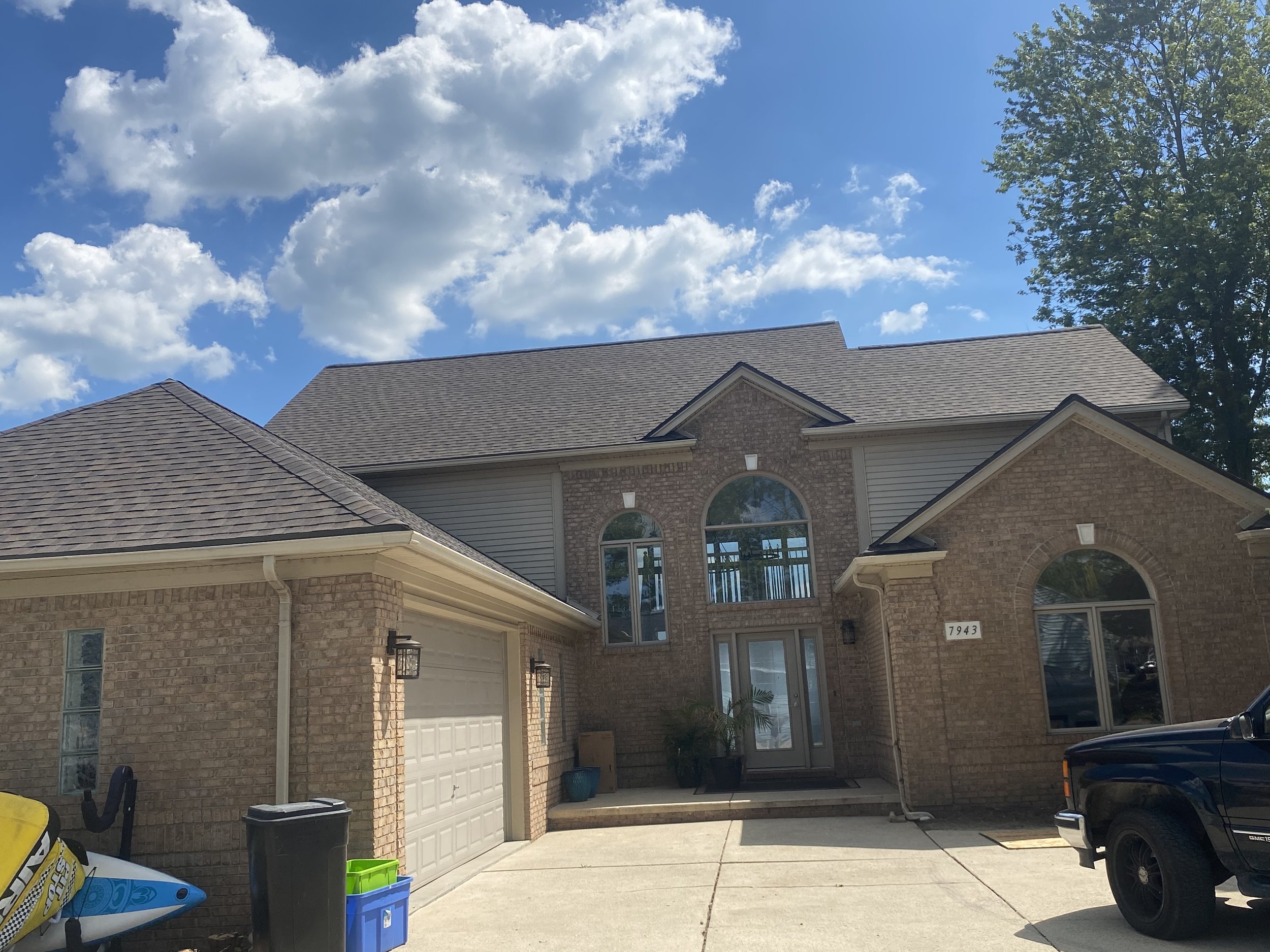
NEXT Exteriors architectural shingle roof installation in Macomb County Michigan

Designer/Premium Shingles: 30-40 Years

Premium lines like CertainTeed Grand Manor, GAF Camelot II, or Owens Corning Berkshire are built to last. They're heavier (400-500+ lbs per square), have better wind ratings (often 130+ mph), and use higher-quality asphalt formulations. In Michigan, these can realistically hit 35-40 years if everything else is right (ventilation, installation quality, minimal storm damage).

The catch? They cost 40-60% more than standard architectural shingles. For most Michigan homes, the ROI doesn't pencil out unless you're planning to stay in the house 25+ years or the home is high-end and needs the curb appeal.

Michigan Reality Check: Manufacturer warranties are prorated. That "50-year warranty" on premium shingles might cover 100% of material cost for the first 10 years, then drops to 50% by year 20, and almost nothing by year 30. Labor is rarely covered. Read the fine print.

Metal Roofing: Built for Michigan Weather

If you want a roof that outlasts you, metal is the answer. It's more expensive upfront, but the lifespan and performance in Michigan's climate make it a smart long-term investment — especially if you're staying in the house or want to eliminate ice dam problems.

Standing Seam Steel: 40-60 Years

Standing seam metal roofing (the kind with vertical ribs and hidden fasteners) is what we install most often for homeowners who want to be done with roofing. Galvalume-coated steel with a quality paint finish (like Kynar 500 or similar) will last 50+ years in Michigan with minimal maintenance.

Why it works here:

  • Snow slides off naturally — reduces ice dam risk and structural load

  • No granule loss — asphalt shingles shed granules over time; metal doesn't degrade the same way

  • Handles freeze-thaw — metal expands and contracts without cracking like brittle shingles

  • Wind resistance — properly installed standing seam can handle 140+ mph winds

The main drawback is cost. Metal roofing runs 2.5-3.5x the price of architectural shingles. But if you're planning to stay in your home in Lake Orion or Bloomfield Hills for 20+ years, the math starts to make sense — you'll replace asphalt shingles at least once in that time.

Aluminum and Other Metals: 50+ Years

Aluminum roofing is even more corrosion-resistant than steel (important in coastal areas, less critical in Michigan) and can last 60+ years. Copper and zinc are essentially lifetime materials (75-100+ years), but they're rare in residential applications due to cost.

We occasionally see metal roofing on mid-century modern homes in Birmingham or historic properties in Mount Clemens. If you're restoring a home or building new construction with a long-term mindset, metal is worth the conversation.

Cedar Shake and Tile: Specialty Materials

You don't see much cedar shake or tile in Southeast Michigan — our climate isn't ideal for either — but they do show up on older homes and high-end properties.

Cedar Shake: 20-30 Years (With Maintenance)

Cedar shake can look beautiful, especially on Cape Cod or Craftsman-style homes. In dry climates like Colorado, it can last 40+ years. In Michigan? 20-30 years is realistic, and that assumes regular maintenance: treating for moss and algae, replacing split shakes, ensuring proper ventilation.

The problem is moisture. Michigan's humidity, freeze-thaw cycles, and wet springs cause cedar to split, curl, and rot faster than in drier climates. If you have a cedar roof that's 25+ years old, budget for replacement soon — and consider switching to architectural shingles or metal unless you're committed to the aesthetic and the upkeep.

Concrete and Clay Tile: 40-100 Years

Tile roofing is rare in Michigan because it's heavy (requires structural reinforcement), expensive, and overkill for our climate. But if you have it — often on Mediterranean or Spanish-style homes — it's incredibly durable.

Concrete tile: 40-50 years in Michigan. Clay tile: 50-100+ years. The material itself outlasts almost everything, but the underlayment and flashing need replacement every 20-30 years, which requires lifting and resetting tiles. It's labor-intensive and costly.

What Actually Shortens Roof Life in Michigan

Here's what we see kill roofs early in Macomb County, Oakland County, and St. Clair County — and most of it has nothing to do with the shingles themselves.

Freeze-Thaw Cycles (The #1 Killer)

Michigan winters are brutal on roofs. It's not the cold — it's the constant freeze-thaw cycle. Water gets under shingles, into nail holes, or into tiny cracks. It freezes (expands), then thaws (contracts). Repeat 40-60 times per winter, and you get premature shingle failure, lifted edges, and leaks.

This is why proper ice-and-water barrier installation at eaves and valleys matters. It's also why attic ventilation is critical — it keeps the roof deck cold and prevents snowmelt-refreeze cycles that cause ice dams.

Ice Dams and Trapped Moisture

Ice dams form when heat escapes through your attic, melts snow on the upper roof, and the water refreezes at the cold eaves. The ice builds up, traps water behind it, and forces it under shingles. This is how you get water stains on ceilings and walls in the middle of winter.

Ice dams don't just cause leaks — they shorten roof life by keeping shingles wet for weeks at a time. The fix isn't better shingles. It's better attic insulation in Metro Detroit and proper ventilation. We see this constantly: homeowners replace the roof without fixing the attic, and the ice dams come right back.

Poor Attic Ventilation

Your attic should be cold in winter and well-ventilated in summer. If it's not, your roof deck stays too hot (bakes shingles from below in summer) or too warm (causes ice dams in winter). Either way, you're cutting years off the roof's life.

Proper ventilation means balanced intake (soffit vents) and exhaust (ridge vents or box vents). We've seen roofs in Troy and Warren fail at 15 years because the attic was poorly ventilated, even though the shingles were quality material.

Installation Quality Matters More Than Material

The best shingles in the world won't last if they're installed wrong. We re-roof homes every year where the previous contractor:

  • Used 4 nails per shingle instead of 6 (wind blows them off)

  • Didn't install drip edge or ice-and-water barrier (water gets behind shingles)

  • Nailed through the adhesive strip (breaks the seal)

  • Roofed over old shingles without fixing deck damage (hides problems)

This is why we're a CertainTeed Master Shingle Applicator and maintain an A+ BBB rating. Installation quality is the difference between a 20-year roof and a 30-year roof.
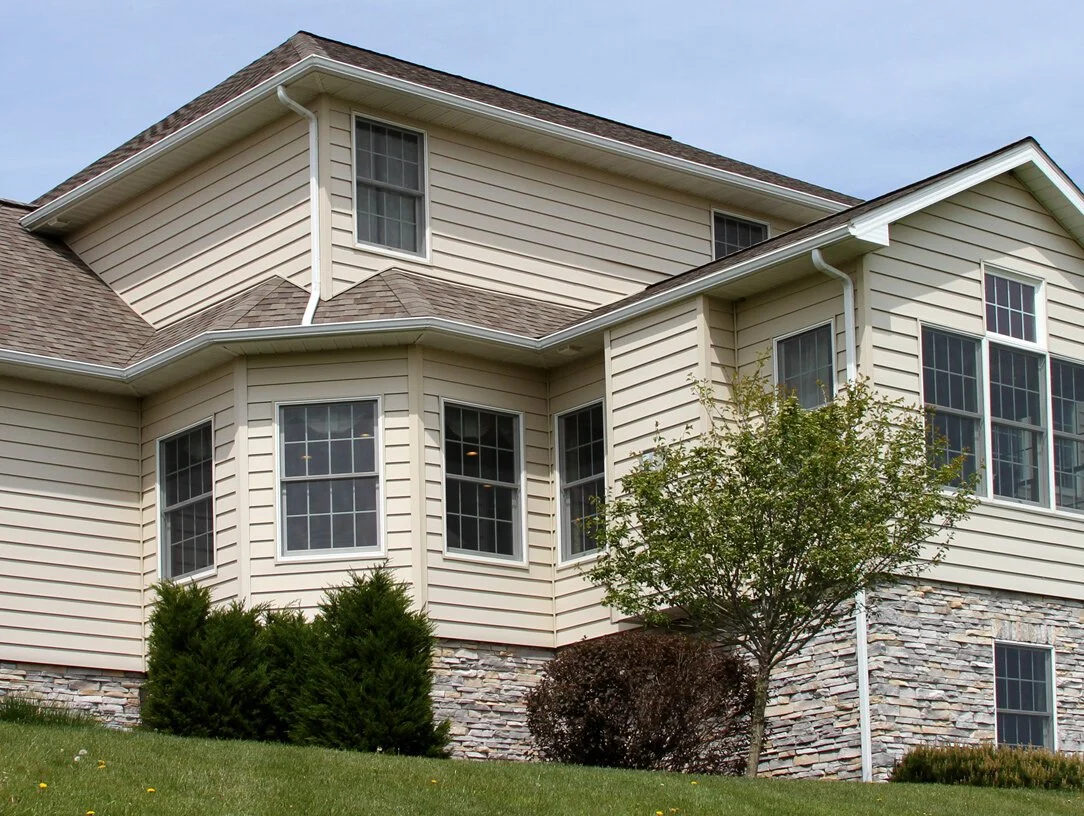
NEXT Exteriors crew performing exterior work in Southeast Michigan

Storm Damage: Hail, Wind, Falling Branches

Michigan gets severe summer storms — hail, high winds, falling tree limbs. A single hailstorm can take 5-10 years off a roof's life by bruising shingles and breaking the granule bond. Wind can lift shingles if they weren't sealed properly or if the adhesive has aged.

After major storms, we inspect hundreds of roofs in Shelby Township, Chesterfield, and St. Clair Shores. Many homeowners don't realize they have damage until they see a leak months later. If you've had a severe storm, get an inspection — your homeowner's insurance may cover replacement if there's documented damage.

Signs Your Michigan Roof Is Failing

Here's how to know when your roof is near the end, even if it hasn't hit the "expected" lifespan yet.

Granule Loss in Gutters

Asphalt shingles are coated with ceramic granules that protect the asphalt from UV damage. As shingles age, they shed granules. A little bit is normal, especially in the first year. A lot — like gritty sediment piling up in gutters and downspouts — means the shingles are deteriorating.

If your seamless gutters in Detroit, MI are full of granules, your roof is probably 75%+ through its lifespan.

Curling, Cupping, or Cracked Shingles

Shingles curl up at the edges (curling) or in the middle (cupping) as they dry out and lose flexibility. Cracking happens from freeze-thaw cycles and UV exposure. Once you see widespread curling or cracking — not just a few isolated shingles — replacement is usually 2-5 years away.

Daylight Visible in the Attic

Go up in your attic on a sunny day. If you see pinpricks of daylight coming through the roof deck, you have gaps where water can enter. This can be from lifted shingles, damaged flashing, or deteriorated underlayment.

Ice Dams Forming in the Same Spots Every Winter

Recurring ice dams mean your attic insulation and ventilation are inadequate. But they also signal that water is getting under shingles repeatedly, which accelerates wear. If you're dealing with ice dams every winter in Rochester Hills or Warren, it's time to address both the attic and the roof.

When to Call for Inspection vs. Replacement

If your roof is under 15 years old and you're seeing isolated damage (a few missing shingles after a storm, minor granule loss), a repair might be all you need. If it's 20+ years old and showing multiple symptoms — curling, granule loss, recurring leaks — replacement is the smarter move.

We offer free inspections across Southeast Michigan. We'll tell you honestly whether you need a repair, a replacement in the next year or two, or if you're fine for now. No pressure, no upselling — just straight answers from a team that's been doing this since 1988.

Cost Reality: What Roof Replacement Actually Costs

Let's talk numbers, because "how long will it last" only matters if you know what you're paying.

Asphalt Shingle Replacement: Typical Southeast Michigan Pricing

For a standard 2,000-square-foot ranch or Colonial in Macomb County with architectural shingles, you're looking at $8,500-$14,000 for a full replacement (tear-off, new underlayment, ice-and-water barrier, drip edge, ridge vent, shingles, cleanup).

Variables that affect price:

  • Roof pitch — steeper roofs cost more (safety equipment, slower work)

  • Number of layers — if we're tearing off two layers of old shingles, disposal costs go up

  • Roof complexity — multiple valleys, dormers, skylights add labor

  • Shingle quality — 3-tab is cheapest, designer shingles can add $3,000-$5,000

If someone quotes you $5,000 for a full roof replacement on a 2,000-square-foot home, they're either cutting corners (roofing over old shingles, skipping ice-and-water barrier, using 4 nails instead of 6) or they're not licensed and insured. Either way, you'll pay more in the long run.

Metal Roofing Investment

Standing seam metal roofing runs $18,000-$30,000+ for the same 2,000-square-foot home. Yes, it's 2-3x the cost of asphalt. But it lasts 2-3x as long, eliminates ice dam problems, and requires almost no maintenance.

If you're 50+ years old and planning to stay in your home in Grosse Pointe Farms or Bloomfield Hills, metal roofing means you'll never deal with roofing again. If you're younger or planning to sell in 10 years, asphalt shingles are the more practical choice.

Why the Cheapest Bid Usually Costs More Long-Term

We lose bids to cheaper contractors all the time. Then we get called back 3-5 years later to fix what they did wrong: shingles blowing off because they weren't nailed properly, leaks because they skipped ice-and-water barrier, ventilation problems because they didn't install ridge vents.

A quality roof installation costs more upfront because it includes details that extend the roof's life: proper underlayment, adequate ventilation, correct flashing, manufacturer-spec nailing patterns. Those details are invisible once the job is done, but they're the difference between a 20-year roof and a 30-year roof.

Insurance Claims and Storm Damage

If your roof was damaged by hail or wind, your homeowner's insurance may cover replacement. We work with insurance adjusters regularly in Sterling Heights, Clinton Township, and across Southeast Michigan. We'll document the damage, provide a detailed estimate, and help you navigate the claims process.

Important: Don't sign a contract with a storm-chaser contractor who shows up at your door after a hailstorm promising to "handle everything with insurance." Many are unlicensed, do poor work, and disappear after the check clears. Work with a local, licensed contractor with a track record — someone who'll still be here if there's a problem two years from now.

How to Maximize Your Roof's Lifespan

You can't control Michigan weather, but you can control the conditions that affect how long your roof lasts.

Proper Attic Insulation and Ventilation

This is the single biggest factor in roof longevity that most homeowners overlook. Your attic should have:

  • Adequate insulation — R-49 to R-60 for Michigan (about 16-20 inches of blown-in cellulose or fiberglass)

  • Balanced ventilation — 1 square foot of vent area per 150 square feet of attic space, split between intake (soffits) and exhaust (ridge or box vents)

  • No air leaks — seal gaps around chimneys, plumbing vents, recessed lights before adding insulation

We offer top-rated insulation contractor services in Detroit — often bundled with roof replacement — because fixing the attic is how you prevent ice dams and extend roof life. If you're replacing the roof but ignoring the attic, you're missing half the solution.

NEXT Exteriors insulation and roofing work in Oakland County Michigan

Regular Inspections (Spring and Fall)

Walk around your house twice a year — once after winter, once before winter. Look for:

  • Missing or damaged shingles

  • Granules in gutters

  • Lifted flashing around chimneys or vents

  • Moss or algae growth (common on north-facing slopes in shaded areas)

Catching small problems early — a few lifted shingles, a damaged flashing — can prevent leaks and extend the roof's life. A repair that costs $300 now can prevent a $3,000 leak repair later.

Gutter Maintenance

Clogged gutters cause water to back up under shingles at the eaves, which accelerates rot and wear. Clean your gutters twice a year (spring and fall), or install gutter guards if you have a lot of trees.

If your gutters are old, sagging, or pulling away from the fascia, consider replacing them when you replace the roof. Our seamless gutter installation in Detroit, MI integrates with new roofing to ensure proper water management from day one.

Address Small Repairs Immediately

A single missing shingle can let water into the underlayment and roof deck. Over months, that turns into rot, mold, and a much bigger repair. Don't wait. If you see damage, call a licensed contractor to fix it before it spreads.

Choosing the Right Contractor

This is where most homeowners get burned. A roof is only as good as the crew that installs it. Here's what to look for:

  • Michigan Residential Builder's License — required by law for roofing work over $600

  • Manufacturer certifications — CertainTeed Master Shingle Applicator, GAF Master Elite, Owens Corning Platinum Preferred (these mean the contractor has been trained and audited)

  • BBB rating and reviews — check Google, BBB, and local references

  • Local presence — not a storm-chaser from out of state who'll be gone in six months

  • Detailed written estimate — specifies materials, labor, ventilation, ice-and-water barrier, cleanup, warranty

We've been in business since 1988, hold a CertainTeed Master Shingle Applicator certification, and maintain an A+ BBB rating. Our crews show up on time, work carefully, and clean up like we were never there. That's not marketing — that's how we've stayed in business for 35+ years in the same community.

Beyond roofing, we offer a full range of exterior services in Detroit, including house siding installation, window replacement, and exterior painting with Sherwin-Williams products — all backed by the same no-pressure, quality-first approach.

Ready to Get Started?

NEXT Exteriors has been protecting Michigan homes since 1988. Get a free, no-pressure estimate from a team that shows up on time and does the job right.

Get Your Free Quote

Or call us: (844) 770-6398

Frequently Asked Questions

How long does a typical asphalt shingle roof last in Michigan?

+

Architectural asphalt shingles typically last 20-30 years in Michigan's climate when properly installed with adequate attic ventilation. Basic 3-tab shingles usually last 15-20 years. Premium designer shingles can reach 30-40 years. The key factors are installation quality, attic ventilation, and maintenance — not just the shingle warranty.

Is metal roofing worth the extra cost in Michigan?

+

Metal roofing costs 2.5-3x more than asphalt shingles upfront but lasts 40-60+ years with minimal maintenance. It's worth it if you're planning to stay in your home long-term (20+ years), want to eliminate ice dam problems, or prefer a "install once and forget it" solution. For homeowners planning to sell within 10 years, asphalt shingles are usually the more practical choice.

What shortens roof life most in Michigan?

+

Freeze-thaw cycles are the #1 roof killer in Michigan. Water gets under shingles, freezes (expands), then thaws (contracts) — repeating 40-60 times per winter. This causes premature shingle failure. Ice dams (caused by poor attic insulation) and inadequate ventilation are close seconds. Installation quality also matters more than material choice — a poorly installed premium shingle will fail faster than a properly installed mid-grade shingle.

How do I know if my roof needs replacement or just repairs?

+

If your roof is under 15 years old and showing isolated damage (a few missing shingles, minor granule loss), repairs are usually sufficient. If it's 20+ years old and showing multiple symptoms — widespread curling or cracking, heavy granule loss in gutters, recurring leaks, or daylight visible in the attic — replacement is the smarter investment. A licensed contractor can inspect and give you an honest assessment.

Does attic insulation really affect roof lifespan?

+

Absolutely. Proper attic insulation (R-49 to R-60 for Michigan) and ventilation keep your roof deck cold in winter, which prevents ice dams and reduces freeze-thaw damage. In summer, good ventilation keeps the attic cooler, which prevents shingles from baking from below. We regularly see roofs fail at 15 years due to poor attic conditions, even when the shingles were quality material. Fixing the attic when you replace the roof can add 5-10 years to the new roof's life.

What's the difference between a CertainTeed Master Shingle Applicator and a regular roofer?

+

CertainTeed Master Shingle Applicator is the highest roofing credential available. It requires ongoing training, quality audits, and adherence to strict installation standards (proper nailing patterns, ice-and-water barrier coverage, ventilation requirements, etc.). Regular roofers may or may not follow manufacturer specs. The difference shows up in roof longevity — a Master Shingle Applicator installation typically lasts 20-30% longer because the details are done right from day one.

Should I replace my roof before selling my house in Southeast Michigan?

+

If your roof is 20+ years old or showing visible wear (curling, granule loss, staining), replacing it before listing will increase buyer confidence and may raise your sale price. Buyers often negotiate $5,000-$10,000+ off the price if the roof is near end-of-life, and they'll factor in the hassle of dealing with it themselves. A new roof also helps with appraisal and can make your home show better. If the roof is 10-15 years old and in decent shape, you can usually sell as-is and let the buyer decide.

Read More
Next Service Group Next Service Group

Fall Roof Prep: Stop Leaks Before Snow Season Hits

Michigan winters are brutal on unprepared roofs. Learn how to inspect, repair, and weatherproof your roof this fall to prevent leaks, ice dams, and costly damage.

By:

NEXT Exteriors

Published:

February 19, 2026

Reading time:

12 minutes

NEXT Exteriors roof and gutter system installation in Sterling Heights Michigan showing proper fall preparation for winter weather

Every October, I get the same calls. A homeowner in Troy noticed a dark spot on their ceiling. Someone in Sterling Heights found water dripping into their garage after the first hard rain. A family in Clinton Township watched ice dams form along their eaves last winter and hoped the problem would magically disappear.

Here's what 35 years of Detroit roofing services has taught me: your roof doesn't fail in winter. It fails in the months leading up to winter when small problems go unnoticed, and then Michigan's freeze-thaw cycles turn those small problems into expensive disasters.

Fall is your last chance to catch those problems. Once snow starts accumulating and temperatures drop below freezing for good, your options shrink dramatically. Emergency repairs in January cost more, take longer to schedule, and often require temporary fixes that you'll need to address again in spring.

This isn't a scare tactic. It's just the reality of building science in a climate where we see 90-degree summers and sub-zero winters, where a single November storm can dump eight inches of wet snow on a roof that wasn't ready for it.

What Michigan Winters Do to Unprepared Roofs

Let's talk about what actually happens when snow hits a roof that isn't ready. It's not just about weight, though a cubic foot of wet snow weighs around 20 pounds and your roof needs to handle that load. The real damage comes from the freeze-thaw cycle that defines Michigan weather from November through March.

Here's the sequence: Daytime temperatures climb into the mid-30s. Snow on your roof melts. That water runs down toward the eaves. When the sun goes down, temperatures drop back below freezing. The water refreezes. This happens dozens of times each winter.

If your shingles have even minor damage—a small crack, a lifted edge, a missing granule layer—that freeze-thaw cycle forces water into places it shouldn't go. Water expands when it freezes. That expansion widens cracks, lifts shingles, and eventually penetrates through to your roof deck.
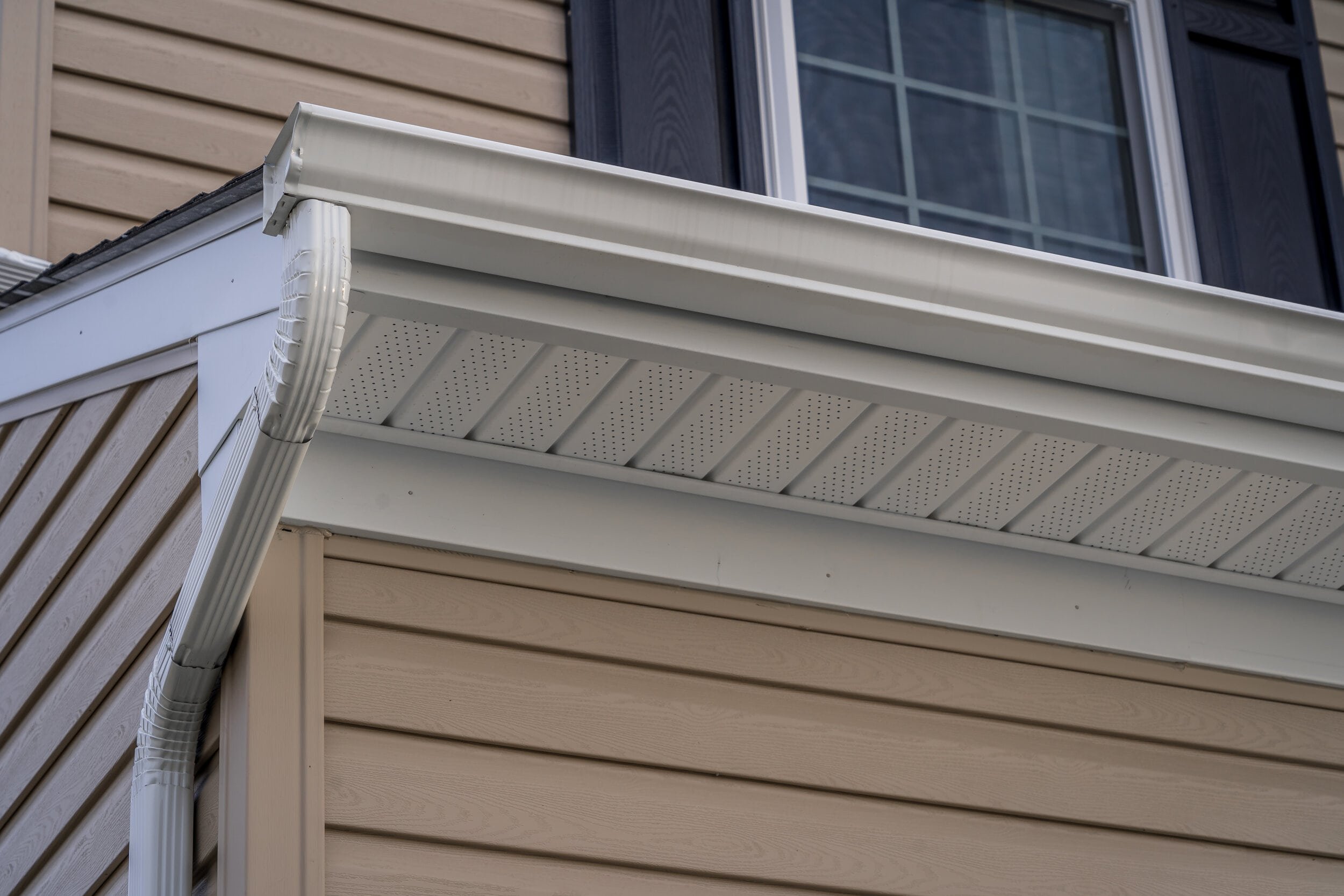
NEXT Exteriors gutter and siding installation in Macomb County Michigan demonstrating proper drainage for winter weather protection

Ice Dams: The Most Expensive Winter Roof Problem

Ice dams form when heat escaping from your attic melts snow on the upper portions of your roof. That melted water runs down to the eaves—the coldest part of your roof because they overhang the house and don't get attic heat. The water refreezes at the eaves, creating a dam. More water backs up behind it. Eventually, that backed-up water finds its way under your shingles.

I've seen ice dams cause tens of thousands of dollars in damage to homes in Rochester Hills and Bloomfield Hills. Water seeps through the roof deck, saturates insulation, runs down inside walls, damages ceilings, ruins drywall, and creates mold problems that persist long after the ice is gone.

The frustrating part? Ice dams are almost entirely preventable with proper attic insulation in Metro Detroit and ventilation. But you can't fix those problems once snow is already on your roof.

Wind Damage in Lake-Effect Snow Conditions

Southeast Michigan gets lake-effect snow from Lake Huron and, depending on wind patterns, Lake Erie. Those storms bring sustained winds of 25-35 mph with gusts up to 50 mph. If your shingles aren't properly sealed or if you have older three-tab shingles that have lost their flexibility, those winds will lift and tear them.

A single missing shingle creates a vulnerable spot. Wind-driven snow works its way under adjacent shingles. Water follows. By spring, what started as one missing shingle has become a section of compromised roof deck that needs replacement, not just a simple repair.

Real Example: Last November, we got a call from a homeowner in Shelby Township who'd lost several shingles during an early-season windstorm. They wanted to wait until spring to address it because the leak wasn't "that bad." By March, water damage had extended to the attic insulation and ceiling drywall in two rooms. A $600 repair became a $4,200 project.

The Fall Roof Inspection Checklist

You don't need to be a roofer to spot most of the warning signs that your roof isn't ready for winter. You do need to know what to look for and where to look. Here's the systematic approach we use when we assess a roof in fall, adapted for homeowners who want to do an initial inspection themselves.

Shingle Condition Assessment (From the Ground)

Start with binoculars and a walk around your house. You're looking for:

  • Missing shingles: Obvious gaps in the roof surface, especially along edges and ridges

  • Curling or cupping: Shingle edges that lift up or curl down, indicating age or poor installation

  • Cracked or broken shingles: Visible damage, often in a line pattern if caused by impact

  • Granule loss: Bare spots where the protective granule layer has worn away, leaving exposed asphalt

  • Dark streaks or discoloration: Can indicate algae growth, moisture problems, or granule loss

Pay extra attention to the south and west-facing slopes. These take the most sun exposure and weather the fastest. If you have architectural shingles from CertainTeed, GAF, or Owens Corning that are less than 15 years old, they should look relatively uniform. Significant variation in color or texture is a red flag.

Flashing Inspection Points

Flashing is the metal or composite material that seals joints where your roof meets vertical surfaces—chimneys, vent pipes, dormers, and walls. It's also one of the most common failure points because it relies on both proper installation and sealant that degrades over time.

Look for:

  • Gaps or separation: Visible space between flashing and the surface it's supposed to seal

  • Rust or corrosion: Especially on older galvanized steel flashing

  • Cracked or missing sealant: The caulk or roof cement that backs up the flashing

  • Bent or damaged flashing: Often caused by ice dams or improper snow removal

Chimney flashing is particularly vulnerable. We see more chimney leaks in winter than any other flashing-related problem. If your chimney flashing is more than 20 years old, have a professional inspect it even if it looks okay from the ground.

Ventilation and Soffit Checks

Proper attic ventilation prevents ice dams and extends your roof's lifespan. Michigan building code requires a balanced system: intake vents at the soffits and exhaust vents at or near the ridge.

Walk around your house and check:

  • Soffit vents: Are they clear of debris, paint, and insulation? Can you see through the perforations?

  • Ridge vents: Are they intact? Any visible damage or gaps?

  • Gable vents: If you have them, are they screened and clear?

A common problem in older Michigan homes: Someone finished the attic or added insulation and blocked the soffit vents. Your attic needs to breathe. If it can't, heat builds up, snow melts, ice dams form, and your shingles age prematurely.

NEXT Exteriors siding and exterior work in Oakland County Michigan showing proper installation and weatherproofing for Michigan climate

Attic Moisture Signs

Go into your attic on a sunny day. Bring a flashlight. Look up at the underside of your roof deck. You're checking for:

  • Light penetration: Any daylight coming through means a hole or gap that needs sealing

  • Water stains: Dark marks on the wood indicate current or past leaks

  • Mold or mildew: Visible growth means moisture problems

  • Frost accumulation: In winter, frost on the underside of the roof deck indicates poor ventilation and air leakage from the living space

  • Insulation condition: Is it compressed, wet, or unevenly distributed?

If you see any of these signs, you have a problem that needs professional attention before winter. These aren't cosmetic issues. They indicate active failure of your roof system or attic envelope.

Critical Repairs to Make Before the First Freeze

Not all roof problems require immediate attention, but some absolutely do if you want to avoid winter damage. Here's how to prioritize what needs to happen before snow flies versus what can wait until spring.

Priority 1: Active Leaks and Missing Shingles

If you have a leak—even a small one—it needs to be fixed now. Water doesn't get better on its own. It gets worse. Every rain event, every freeze-thaw cycle, every snow melt expands the damage.

Missing shingles are the same priority. An exposed roof deck will absorb water. That water will saturate the plywood or OSB sheathing. Once that happens, you're not just replacing shingles anymore. You're replacing decking, potentially dealing with mold remediation, and facing a much larger repair bill.

These repairs are straightforward for a professional crew and relatively inexpensive if caught early. NEXT Exteriors can typically handle missing shingle replacement and minor leak repairs in a few hours. Wait until spring, and you're looking at days of work and exponentially higher costs.

Priority 2: Compromised Flashing

Flashing problems are insidious because they often don't show symptoms until significant water has penetrated. By the time you see a stain on your ceiling near a chimney or dormer, water has been getting in for weeks or months.

Fall is the ideal time to address flashing because the work requires sealants that need moderate temperatures to cure properly. Once we're consistently below 40 degrees, many roofing sealants don't perform as specified. Some won't cure at all.

If your inspection revealed any flashing issues—gaps, rust, separation, or damaged sealant—get them repaired in October or early November. Don't wait.

Priority 3: Gutter and Downspout Issues

I'm putting this in the critical category because gutter problems directly cause roof problems. When seamless gutters in Detroit, MI clog or fail, water backs up under shingles at the eaves. That's exactly where ice dams form. You're creating a perfect storm of winter roof damage.

Before the first freeze:

  • Clean all gutters and downspouts thoroughly

  • Check for proper slope (gutters should pitch 1/4 inch per 10 feet toward downspouts)

  • Verify that gutters are securely attached to fascia boards

  • Ensure downspouts direct water at least 6 feet away from your foundation

  • Consider gutter guards if you have significant tree coverage

If your gutters are sagging, pulling away from the house, or showing rust-through, replacement is a better investment than repair. Modern seamless aluminum gutters will outlast your roof and require minimal maintenance.

Priority 4: Attic Insulation Gaps

This one surprises homeowners, but inadequate attic insulation is a roof problem, not just an energy efficiency issue. Heat escaping through your attic causes snow melt, which causes ice dams, which causes roof leaks.

Michigan code requires R-49 insulation in attics for our climate zone. That's roughly 14-16 inches of blown-in fiberglass or cellulose. Most homes built before 2000 have significantly less. Many 1960s and 1970s ranches in Macomb County have R-19 or less—barely a third of what's needed.

Adding attic insulation in fall is smart timing. The work can be done in a day for most homes. The cost is reasonable. And the benefits are immediate: lower heating bills, more comfortable rooms, and dramatically reduced ice dam risk.

Our top-rated insulation contractor in Detroit services include attic assessments and blown-in insulation installation. We can typically schedule this work within a week or two in fall, versus the multi-month wait you'll face if you call in January after ice dams have already formed.

The Attic Insulation Connection

Most homeowners think of their roof as the shingles they can see. But your roof is a system, and the most important part of that system for winter performance is your attic.

Here's the building science: Your living space generates heat. That heat rises. If your attic floor (the ceiling of your living space) isn't properly insulated and air-sealed, that heat escapes into the attic. The attic warms up. The underside of your roof deck warms up. Snow on your roof melts even when the outdoor temperature is well below freezing.

That's how ice dams start. It's not the snow. It's not the cold. It's heat escaping from your living space because your attic insulation is inadequate or improperly installed.

R-Value Requirements for Michigan

The 2021 Michigan Residential Code specifies R-49 for attic insulation in our climate zone (Zone 5). That's not a suggestion. It's the minimum standard for new construction and should be the target for existing homes.

What does R-49 actually mean in practical terms?

  • Blown-in fiberglass: Approximately 14-16 inches depth

  • Blown-in cellulose: Approximately 13-14 inches depth

  • Batt insulation: Multiple layers totaling R-49 (rarely practical in existing attics)

  • Spray foam: 7-8 inches of closed-cell foam (expensive but effective for cathedral ceilings)

If you go into your attic and can see the tops of your ceiling joists, you don't have enough insulation. Period. Most ceiling joists are 8-10 inches deep. R-49 insulation should completely cover them with several inches to spare.

Ventilation Balance

Insulation and ventilation work together. You need both. Adding insulation without proper ventilation can actually make problems worse by trapping moisture in your attic.

Michigan code requires 1 square foot of net free ventilation area for every 150 square feet of attic space (with a balanced intake/exhaust system). For a typical 1,500-square-foot ranch, that's 10 square feet of ventilation—split between soffit intake and ridge exhaust.

When we add attic insulation, we always verify that soffit vents aren't blocked and install baffles to maintain an air channel between the insulation and the roof deck. This allows cold air to enter at the soffits, flow up along the underside of the roof deck, and exit at the ridge. That air flow keeps your roof deck cold, prevents ice dams, and removes moisture.

NEXT Exteriors completed exterior renovation project in St. Clair County Michigan showing professional roof and siding installation

Air Sealing: The Missing Piece

Here's what most insulation jobs miss: air sealing. You can have R-60 insulation in your attic, but if there are gaps around recessed lights, plumbing penetrations, the attic hatch, or HVAC ducts, warm air will bypass that insulation and flow directly into the attic.

Before adding insulation, we seal all penetrations with expanding foam or caulk. We weatherstrip the attic access hatch. We seal around ductwork and chimney chases. This air sealing is often more important than the insulation itself for preventing ice dams.

A blower door test can identify exactly where air is leaking, but even without that diagnostic tool, sealing the obvious penetrations makes a measurable difference.

Gutter Prep: The Overlooked Roof Protection System

Gutters don't get the attention they deserve. Most homeowners think of them as something that catches leaves and needs occasional cleaning. But your gutter system is the first line of defense against water damage to your roof, siding, foundation, and basement.

When gutters fail—whether from clogs, improper slope, or inadequate capacity—water backs up at your roof eaves. In summer, that might cause minor fascia rot. In winter, that backed-up water freezes and contributes directly to ice dam formation.

Why Clean Gutters Matter for Roof Health

A clogged gutter acts like a dam. Water can't flow to the downspouts, so it sits in the gutter trough. In fall, that standing water is full of decomposing leaves and organic matter. When temperatures drop, that sludge freezes solid.

Once frozen, the gutter can't function at all. Any snow melt or rain has nowhere to go except back up under your shingles or over the gutter edge. Water that backs up under shingles at the eaves will find its way through to your roof deck and into your soffit and fascia boards.

I've seen fascia boards completely rotted out because homeowners went several years without cleaning gutters. The repair isn't just cleaning the gutters at that point. It's replacing rotted wood, potentially replacing damaged roof decking at the eaves, and then installing new gutters.

Downspout Extensions and Drainage

Your downspouts need to direct water at least 6 feet away from your foundation. Closer than that, and you're creating basement water problems, foundation settling issues, and landscaping erosion.

In winter, this becomes even more critical. Water that pools near your foundation will freeze and thaw repeatedly, potentially causing frost heave and foundation cracks. If you have a basement, that water will find its way in through any available crack or gap.

Simple downspout extensions are inexpensive and effective. We typically recommend rigid extensions rather than the flexible corrugated type, which trap debris and collapse under snow load.

Ice Dam Prevention at the Eaves

Even with perfect attic insulation and ventilation, the eaves of your roof are vulnerable to ice dams because they overhang the house and don't benefit from attic heat. This is by design—you want your eaves cold—but it means ice can form there even when the rest of your roof is performing correctly.

Properly functioning gutters help by channeling water away before it can freeze at the eaves. But if you have a history of ice dam problems, there are additional measures:

  • Ice and water shield: A self-adhering membrane installed under shingles at the eaves (required by code in Michigan for new roofs)

  • Heated cables: Installed along the eaves and in gutters to prevent ice formation (high energy cost but effective for problem areas)

  • Improved attic insulation: The best long-term solution

If you're getting a roof replacement, make sure your contractor installs ice and water shield at least 3 feet up from the eaves. This is code in Michigan but wasn't always, so older roofs may not have it. It's cheap insurance against ice dam damage.

When to Replace vs. Clean

Gutter cleaning is annual maintenance. Gutter replacement is a capital improvement. How do you know which you need?

Replace your gutters if:

  • They're sagging or pulling away from the fascia in multiple locations

  • You see rust-through holes or significant corrosion

  • Seams are separating (common with sectional gutters)

  • They're undersized for your roof area (5-inch gutters on a large roof should be upgraded to 6-inch)

  • They're more than 20 years old and showing multiple issues

Modern seamless aluminum gutters are a significant upgrade over older sectional systems. They have no seams to leak, they're custom-formed on-site to fit your exact roof dimensions, and they'll last 30+ years with minimal maintenance. When we install seamless gutters in Detroit, MI, we typically complete the job in a single day for most homes.

When to Call a Professional vs. DIY

I'm not going to tell you that every roof task requires a professional. Some don't. But I am going to be honest about what's safe and practical for a homeowner to do versus what should be left to someone with the right equipment, insurance, and experience.

What Homeowners Can Safely Do

From the ground or from a stable ladder that doesn't require getting on the roof:

  • Visual inspection with binoculars: You can spot most shingle damage, flashing issues, and obvious problems without ever leaving the ground

  • Gutter cleaning: If you're comfortable on a ladder and your gutters are accessible, this is reasonable DIY work (though many homeowners hire it out for convenience)

  • Attic inspection: Going into your attic to check insulation and look for signs of leaks is safe and informative

  • Clearing debris from roof valleys: If you can reach them safely from a ladder without getting on the roof

What Requires a Professional

Anything that involves getting on the roof or making repairs:

  • Shingle replacement: Even replacing a few shingles requires knowing how to break the seal strip, lift surrounding shingles without damaging them, and properly nail and seal the replacement

  • Flashing repair: This requires specialized tools, materials, and knowledge of proper water management details

  • Any work on a steep roof: Anything over a 6/12 pitch (6 inches of rise per 12 inches of run) is dangerous without proper safety equipment

  • Any work above a single story: Two-story homes require staging or scaffolding for safe access

  • Any work in questionable weather: Wet or icy roofs are deadly

The safety issue is real. Falls from roofs are one of the leading causes of construction-related deaths. Professional roofers have harness systems, proper footwear, experience reading roof conditions, and insurance that covers them if something goes wrong. You don't.

Red Flags That Require Immediate Professional Assessment

Call a professional immediately if you see:

  • Active water intrusion—dripping, staining, or visible water in your attic or living space

  • Sagging roof deck (visible from inside the attic or as a dip in the roof line from outside)

  • Large sections of missing or damaged shingles

  • Significant granule loss across large areas of the roof

  • Daylight visible through the roof deck from inside the attic

  • Evidence of animal intrusion (squirrels, raccoons, bats accessing your attic through roof damage)

These aren't problems that can wait until spring. They're actively causing damage every day they're not addressed. A professional assessment will tell you exactly what needs to happen and what it will cost. Our free quote process includes a thorough inspection and detailed explanation of any issues we find.

What to Expect: Cost and Timeline for Fall Roof Work

Let's talk numbers. Michigan homeowners are practical people who want to know what they're getting into before they pick up the phone. Here's what roof work actually costs in Southeast Michigan and how long it takes.

Typical Repair Costs

These are 2024 ranges for common fall roof repairs in Macomb, Oakland, and St. Clair counties:

  • Missing shingle replacement (5-10 shingles): $300-$600

  • Chimney flashing repair: $400-$800

  • Valley flashing replacement: $500-$1,200

  • Small leak repair (localized damage): $400-$1,000

  • Gutter cleaning (typical home): $150-$300

  • Seamless gutter replacement (per linear foot): $8-$15

  • Attic insulation upgrade (blown-in, typical 1,500 sq ft attic): $1,500-$2,500

These costs assume the damage is caught early. If water has penetrated to the roof deck or caused interior damage, costs escalate quickly. Replacing a section of rotted roof decking adds $500-$1,500 depending on the extent. Interior drywall and paint repair adds another $800-$2,000.

This is why fall maintenance is cost-effective. A $500 repair in October prevents a $3,000 emergency in February.

Full Replacement Considerations

Sometimes the inspection reveals that repairs aren't the right answer. If your roof is 20+ years old, has multiple problem areas, or has widespread granule loss, replacement is the better investment.

Full roof replacement costs in Southeast Michigan (2024):

  • Architectural shingles (CertainTeed, GAF, Owens Corning): $8,000-$15,000 for a typical 2,000 sq ft roof

  • Premium shingles (CertainTeed Landmark Pro, GAF Timberline HDZ): $10,000-$18,000

  • Designer shingles (high-end architectural): $15,000-$25,000

These prices include tear-off of existing shingles, ice and water shield at eaves and valleys, new ridge vent, all flashing, and proper disposal. They assume a standard gable or hip roof with moderate complexity. Steep roofs, multiple dormers, or difficult access increase costs.

As a CertainTeed Master Shingle Applicator, NEXT Exteriors can offer enhanced warranties that aren't available from standard installers. That credential means we've demonstrated the highest level of installation expertise and maintain specific training and quality standards.

Fall Scheduling Advantages

Fall is the best time to schedule roof work for several reasons:

  • Moderate temperatures: Shingles seal properly in 50-80°F weather. Too cold and they won't seal. Too hot and they're difficult to work with.

  • Lower humidity: Fall weather in Michigan is typically drier than spring or summer, which is better for roofing work.

  • Contractor availability: We're busy in fall, but not as slammed as we are in spring when everyone who waited is calling at once.

  • Material availability: Supply chains are more reliable in fall than in peak spring season.

For minor repairs, we can typically schedule work within 1-2 weeks of your call. For full replacements, expect 2-4 weeks from estimate to completion, depending on material selection and weather windows.

Wait until spring, and those timelines extend to 4-8 weeks because we're booked solid with emergency repairs and homeowners who didn't prepare in fall.

Insurance Claims and Storm Damage

If you have storm damage—wind-blown shingles, hail damage, or tree impact—your homeowner's insurance may cover the repair or replacement. Fall storms are common in Michigan, and we work with insurance adjusters regularly.

The process:

  1. Document the damage with photos

  2. Contact your insurance company to file a claim

  3. Get a professional inspection (we provide detailed reports for insurance purposes)

  4. Meet with the adjuster

  5. Receive approval and proceed with work

Insurance claims can take 2-4 weeks to process. If you have obvious damage and winter is approaching, ask your adjuster about emergency tarping or temporary repairs while the claim is pending. Most policies cover reasonable measures to prevent further damage.

NEXT Exteriors has worked with every major insurance carrier operating in Michigan. We know what documentation they need, how to write estimates in their format, and how to advocate for proper repairs rather than shortcuts.

Beyond Roofing: While you're addressing roof prep, consider a full exterior assessment. Our exterior services in Detroit include siding inspection and repair, window weatherization, and painting—all of which contribute to your home's winter performance. We often find that homeowners who call about one issue discover related problems that are worth addressing at the same time.

Ready to Get Your Roof Winter-Ready?

NEXT Exteriors has been protecting Michigan homes since 1988. We're CertainTeed Master Shingle Applicators with an A+ BBB rating and 5-star reviews. Get a free, no-pressure assessment from a team that shows up on time and does the job right.

Get Your Free Quote

Or call us: (844) 770-6398

Before we wrap up, here's what else NEXT Exteriors can help with as you prepare your home for winter. If your house siding in Detroit is showing cracks or gaps, that's another entry point for cold air and moisture. If your windows in Southeast Michigan are drafty, you're losing heat and money all winter long. And if you're planning any exterior painting in Detroit, fall is actually ideal—temperatures are moderate and humidity is low, which helps paint cure properly before winter hits.

Frequently Asked Questions

When should I schedule a fall roof inspection in Michigan?

Schedule your fall roof inspection in late September or early October, before the first hard freeze. This gives you time to complete any necessary repairs before winter weather arrives. In Southeast Michigan, we typically see the first sustained freezing temperatures in mid-to-late November, so you want repairs done by early November at the latest. Many roofing materials and sealants require temperatures above 40°F to install properly, which becomes increasingly difficult as we move into late fall.

Can I wait until spring if I don't see obvious damage?

Waiting until spring is risky. Many roof problems aren't obvious from the ground but will worsen significantly over winter. Small cracks in shingles become major leaks after freeze-thaw cycles. Minor flashing gaps allow water penetration that leads to interior damage. Inadequate attic insulation causes ice dams that can cost thousands to repair. A fall inspection costs nothing (we offer free assessments), but waiting until spring after damage has occurred can cost you 5-10 times more in repairs. The question isn't whether you can wait—it's whether you want to gamble with a much larger repair bill.

How do I know if my attic insulation is adequate for Michigan winters?

Go into your attic and look at your insulation depth. Michigan requires R-49 insulation, which translates to roughly 14-16 inches of blown-in fiberglass or cellulose. If you can see the tops of your ceiling joists (typically 8-10 inches tall), you don't have enough insulation. Other signs of inadequate insulation include: ice dams forming on your roof, uneven snow melt patterns (some areas clear while others stay covered), cold spots in upstairs rooms, and high heating bills. A professional assessment can measure your current R-value and recommend specific improvements. Most homes built before 2000 have significantly less than the current code requirement.

What's the difference between a roof repair and a roof replacement?

A roof repair addresses specific damage—replacing a few missing shingles, fixing flashing around a chimney, sealing a small leak. Repairs are appropriate when damage is localized and the rest of the roof is in good condition. A roof replacement removes all existing shingles and installs a completely new roof system. Replacement is necessary when your roof is near the end of its lifespan (20-25 years for architectural shingles), has widespread damage, or has multiple problem areas. The rule of thumb: if repairs would cost more than 30% of replacement cost, or if your roof is over 20 years old with multiple issues, replacement is the better investment. We provide honest assessments and will tell you if repairs are sufficient—we're not interested in selling you a new roof if your current one can be properly maintained.

Do gutters really affect my roof's lifespan?

Absolutely. Clogged or malfunctioning gutters cause water to back up at your roof eaves, which leads to rot in fascia boards and roof decking, and contributes directly to ice dam formation in winter. When water can't drain properly through gutters, it either flows over the edge (causing foundation problems and landscaping erosion) or backs up under shingles at the eaves (causing roof leaks). In winter, backed-up water freezes in the gutters and at the eaves, creating the perfect conditions for ice dams. Properly functioning gutters can add years to your roof's lifespan by preventing water damage at the most vulnerable areas. We consider gutter maintenance and replacement an essential part of roof system care, not an optional add-on.

How long does a typical fall roof repair take?

Most fall roof repairs can be completed in a single day, often in just a few hours. Replacing missing shingles, repairing flashing, or fixing a small leak are straightforward jobs for a professional crew. Gutter cleaning and minor repairs typically take 2-4 hours. More extensive work—like replacing a section of roof decking or addressing multiple problem areas—might take 1-2 days. Full roof replacements typically take 2-4 days depending on the size and complexity of your roof. Weather is the main variable. We don't work in rain or on wet roofs, so if we get a multi-day storm, the schedule extends. Fall weather in Michigan is generally cooperative, which is one reason we recommend scheduling repairs in October rather than waiting until late November when weather becomes less predictable.

Will my homeowner's insurance cover pre-winter roof repairs?

It depends on the cause of the damage. Insurance covers sudden, accidental damage—wind-blown shingles from a storm, hail damage, tree impact, or damage from a covered peril. Insurance does not cover normal wear and tear, aging, or maintenance issues. If you have storm damage from a recent weather event, file a claim immediately and

Read More
Next Service Group Next Service Group

Spring Roof Checklist for Michigan Homes After Winter

After Michigan's freeze-thaw cycles, your roof needs inspection. Use this spring checklist to spot damage early and prevent costly repairs in Southeast Michigan.

NEXT Exteriors completed roof replacement project in Southeast Michigan after winter freeze-thaw damage

NEXT Exteriors

📅 February 19, 2026

⏱ 12 min read

Every March, we get the same calls from homeowners across Sterling Heights, Troy, and Rochester Hills: "I just noticed shingles in my yard," or "There's a water stain on my bedroom ceiling." After 35 years of Detroit roofing services, we can tell you exactly what happened — Michigan's freeze-thaw cycle just spent four months testing every weak point on your roof.

Here's what most homeowners don't realize: the damage doesn't happen during the coldest part of winter. It happens during those 30-degree temperature swings we get from January through March, when your roof goes from 15°F at night to 45°F by noon. Water gets into small cracks, freezes, expands, thaws, and repeats. By the time spring arrives, what started as a hairline crack in October is now a missing shingle or a leak into your attic.

This checklist walks you through exactly what to inspect on your Southeast Michigan home after winter ends — what you can check yourself, what requires a professional, and when a repair becomes a replacement conversation. We're not here to sell you a new roof if you don't need one. We're here to help you catch problems before they turn into $8,000 insurance claims.

Why Spring Inspection Matters in Michigan

Timing matters. You want to inspect your roof in late March or early April — after the last hard freeze but before spring storms roll through. Wait too long, and a heavy April rain will find every weak spot that winter created. Inspect too early, and you might miss damage that's still hidden under snow or ice.

Michigan's climate is particularly hard on roofing materials. We don't just get cold — we get freeze-thaw cycles. A roof in Arizona might last 25 years. That same shingle in Macomb County? You're looking at 18 to 22 years if it's installed correctly, less if your attic ventilation isn't right. The constant expansion and contraction breaks down the asphalt binder in shingles, makes flashing brittle, and creates gaps where water can penetrate.

Quick Context: A freeze-thaw cycle happens when temperatures cross the freezing point (32°F) within a 24-hour period. Southeast Michigan typically experiences 40 to 60 freeze-thaw cycles between November and March. Each cycle puts stress on roofing materials, especially in areas where water can accumulate — valleys, eaves, and around penetrations like chimneys and vents.

The other reason spring inspection matters: most insurance policies have a one-year window for filing storm damage claims. If you had wind damage last April and didn't catch it until this June, you might be past your filing deadline. A spring inspection creates a documented baseline of your roof's condition, which can be critical if you need to file a claim later in the year.

What Freeze-Thaw Cycles Do to Your Roof

Let's talk about the science for a minute, because understanding why damage happens helps you know what to look for. When water freezes, it expands by about 9%. That doesn't sound like much until you consider what happens when that water is trapped inside a crack in a shingle or under a piece of flashing.

Here's the sequence: A small crack develops in a shingle — maybe from a tree branch, maybe from age-related brittleness, maybe from a manufacturing defect. Rain or snowmelt gets into that crack. Temperature drops overnight, water freezes and expands, making the crack bigger. Temperature rises the next day, ice melts, and more water flows into the now-larger crack. Repeat this 50 times over four months, and you've got a shingle that's curling, cracking, or completely blown off.

NEXT Exteriors roof inspection showing freeze-thaw damage on Michigan home

The most vulnerable areas on a Michigan roof are:

  • Valleys: Where two roof planes meet, water concentrates. If valley flashing is compromised or shingles aren't properly sealed, water infiltration is almost guaranteed.

  • Eaves and overhangs: These areas stay coldest longest, making them prime territory for ice dams. Once an ice dam forms, water backs up under shingles and into the roof deck.

  • Flashing around chimneys and vents: The seal between metal flashing and roofing material is a weak point. Freeze-thaw cycles break down caulk and create gaps.

  • North-facing slopes: These get the least sun exposure, meaning snow and ice linger longer and create more freeze-thaw cycles.

  • Shaded areas under trees: Less direct sunlight means slower melting and more opportunities for ice formation.

Different roofing materials respond differently to freeze-thaw stress. Architectural shingles (like CertainTeed Landmark or GAF Timberline HDZ) handle it better than three-tab shingles because they're thicker and have better adhesive strips. Metal roofing sheds snow and ice quickly, which is why we're seeing more homeowners in Lake Orion and Bloomfield Hills switch to standing seam metal. But even metal roofs aren't immune — the fasteners and seams can develop leaks if the roof wasn't installed with thermal expansion in mind.

Ground-Level Inspection Checklist

You don't need to get on your roof to spot most problems. In fact, we'd prefer you didn't — more homeowners get hurt falling off ladders than you'd think, and spring roofs are slippery from morning dew and lingering ice. Here's what you can check from the ground with a good pair of binoculars:

Shingle Condition

  • Missing shingles: Obvious, but worth stating. If you see black patches of underlayment or roof deck, you've got exposed areas that need immediate attention.

  • Curling or cupping: Shingle edges that curl upward or downward indicate either age-related deterioration or poor attic ventilation causing heat buildup.

  • Cracked or broken shingles: Look for visible cracks running across shingles, especially in valleys and along ridges.

  • Granule loss: Asphalt shingles are coated with ceramic granules that protect against UV damage. If you see large bare patches where the black asphalt is exposed, those shingles are at the end of their lifespan.

  • Shingles in your yard: If you're finding pieces of shingle on the ground after a windy day, that's a clear sign of adhesive failure or age-related brittleness.

Flashing Inspection

Flashing is the metal trim around chimneys, vents, skylights, and where your roof meets a wall. It's designed to direct water away from seams and joints. Check for:

  • Rust or corrosion: Especially on older galvanized steel flashing. Once rust starts, water infiltration isn't far behind.

  • Separated or lifted flashing: Flashing should lie flat against the roof and chimney. If you see gaps, water is getting in.

  • Cracked or missing caulk: The seal between flashing and masonry or siding breaks down over time. If caulk is cracked or missing, that joint is vulnerable.

Structural Issues

  • Sagging roof deck: Stand back and look at your roofline. It should be straight. If you see dips or sags, that indicates structural damage — possibly from prolonged water infiltration or inadequate roof framing.

  • Damaged soffit or fascia: The boards under your eaves should be intact and painted. Peeling paint, rot, or holes indicate water damage, often from clogged gutters or ice dams.

If you're seeing any of these issues, it's time to call a licensed contractor for a professional assessment. At NEXT Exteriors, our roof replacement in Metro Detroit projects often start with a free inspection where we document every problem area with photos and give you a written report — no pressure, no gimmicks, just honest information.

Attic Inspection: What to Look For

Your attic tells the story your roof can't. Even if everything looks fine from the outside, your attic will show you where water is getting in, where insulation is failing, and whether your ventilation system is working. Grab a flashlight and check these areas:

Water Infiltration Signs

  • Water stains on roof deck: Look at the underside of your roof sheathing (the plywood or OSB boards). Dark stains, especially near chimneys, vents, or valleys, indicate active or recent leaks.

  • Daylight through the roof: If you can see daylight coming through cracks or holes, water is definitely getting in.

  • Mold or mildew: Black or green spots on wood or insulation indicate prolonged moisture exposure. This is a health concern and a structural concern.

  • Wet or compressed insulation: Insulation should be dry and fluffy. If it's matted down or damp, you've got a moisture problem.

Ventilation Assessment

Proper attic ventilation is critical in Michigan. Without it, heat builds up in summer (cooking your shingles from below) and moisture accumulates in winter (creating ice dams and mold). Check for:

  • Soffit vents: These should be clear, not blocked by insulation. Air needs to flow in through the soffits and out through ridge or gable vents.

  • Ridge vents or gable vents: Make sure they're not blocked by debris or damaged.

  • Temperature differential: In winter, your attic should be close to outdoor temperature. If it's significantly warmer, you're losing heat through your ceiling — a recipe for ice dams.

Poor attic ventilation is one of the most common problems we see in older homes across Macomb County. Many 1960s and 1970s ranch homes were built with minimal ventilation, and homeowners later added insulation without addressing airflow. The result: shortened shingle lifespan, ice dams, and mold growth. If your attic feels stuffy or smells musty, you've got a ventilation problem that needs fixing before you invest in a new roof.

This is where top-rated insulation contractor in Detroit services overlap with roofing. Sometimes the best investment isn't new shingles — it's proper attic insulation and ventilation that protects the roof you already have.

Gutters, Downspouts, and Drainage

Gutters don't seem like a roof issue until you realize that clogged gutters are the leading cause of ice dams, fascia rot, and foundation problems. After a Michigan winter, your gutters are full of leaves, pine needles, shingle granules, and ice debris. Here's your spring gutter checklist:

Clean and Clear

Remove all debris from gutters and downspouts. Pay special attention to valleys and corners where debris accumulates. If you're seeing a lot of shingle granules in your gutters (they look like coarse sand), that's a sign your shingles are nearing the end of their lifespan. New shingles shed some granules in the first year, but if your roof is over 10 years old and you're seeing heavy granule loss, plan for a replacement in the next few years.

Check for Damage

  • Sagging sections: Gutters should be level or have a slight slope toward downspouts. Sagging indicates either improper installation or damage from ice and snow weight.

  • Separated seams: Sectional gutters have seams every 10 feet. Check for gaps or leaks. If you're constantly resealing seams, consider upgrading to seamless gutters in Detroit, MI — they eliminate 90% of potential leak points.

  • Loose or missing hangers: Gutter hangers should be spaced every 24 inches. If they're loose or missing, gutters will pull away from the fascia.

  • Rust or corrosion: Aluminum gutters don't rust, but older steel gutters do. Once rust starts, replacement is the only long-term solution.

Downspout and Drainage

Downspouts should extend at least 6 feet from your foundation. Water dumped near the foundation will find its way into your basement or crawl space. Check that downspout extensions are in place and directing water away from the house. If you're seeing erosion near downspouts or water pooling around your foundation, you've got a drainage problem that needs addressing.

NEXT Exteriors gutter and roofing system installation on Southeast Michigan home

Ice Dam Damage Assessment

Ice dams are the single most destructive winter phenomenon for Michigan roofs. They form when heat escaping through your attic melts snow on the upper part of your roof. That meltwater runs down to the eaves (which stay cold because they're not over heated living space), refreezes, and creates a dam. Water backs up behind the dam, gets under shingles, and leaks into your home.

Even if the ice dam is gone by spring, the damage remains. Here's what to look for:

Shingle Damage from Ice Dams

  • Lifted or displaced shingles along eaves: Ice dams can physically lift shingles, breaking the adhesive seal. Once that seal is broken, wind can get under shingles and blow them off.

  • Damaged underlayment: If water got under shingles, it may have damaged the underlayment (the waterproof barrier under shingles). This isn't visible from outside, but a professional inspector can check for it.

  • Water stains on soffits: If you see brown or yellow stains on the underside of your eaves, water infiltrated during ice dam formation.

Interior Damage

Ice dam leaks often show up on interior ceilings and walls near the eaves. Check for:

  • Water stains on ceilings in bedrooms or bathrooms near exterior walls

  • Peeling paint or bubbling drywall

  • Musty odors in upper-floor rooms

If you had ice dams this winter, the root cause isn't your roof — it's your attic. Fixing ice dams requires addressing attic insulation and ventilation. We often recommend air sealing the attic floor (to stop warm air from escaping into the attic), adding insulation to reach R-49 to R-60 (Michigan's recommended level), and improving ventilation with ridge vents and soffit vents. This is a whole-house problem that requires coordination between exterior services in Detroit — roofing, insulation, and sometimes siding if soffit vents need to be added or upgraded.

When to Call a Professional

There's a difference between a homeowner inspection and a professional roof inspection. You can spot obvious problems from the ground and in your attic. A licensed contractor brings expertise, safety equipment, and diagnostic tools you don't have. Here's when you need to call in a pro:

Red Flags That Require Immediate Attention

  • Active leaks: If you're seeing water stains that are growing or you've got dripping water in your attic or ceiling, that's an emergency. Temporary repairs can prevent further damage while you plan a permanent fix.

  • Multiple missing shingles: One or two missing shingles is a repair. Ten or twenty missing shingles indicates widespread adhesive failure or wind damage — likely a full replacement situation.

  • Sagging roof deck: This indicates structural damage. Don't wait — call a contractor immediately.

  • Roof over 15 years old: Even if you don't see obvious damage, a roof approaching the end of its expected lifespan should be professionally inspected. Catching problems early can save you thousands in water damage repairs.

What a Professional Roof Inspection Includes

When NEXT Exteriors inspects a roof, we're looking at the whole system — not just shingles. Our inspection includes:

  • Roof deck assessment: We check for soft spots, sagging, or rot that indicates structural damage.

  • Shingle condition: We document granule loss, cracking, curling, and missing shingles with photos.

  • Flashing inspection: We check every penetration — chimneys, vents, skylights — for proper sealing and condition.

  • Ventilation evaluation: We assess whether your attic has adequate intake and exhaust ventilation.

  • Gutter and drainage review: We look at how water is being directed off the roof and away from the foundation.

  • Interior inspection (if accessible): We check your attic for water stains, insulation condition, and ventilation.

You'll get a written report with photos and recommendations. If repairs are needed, we'll give you options — not a high-pressure sales pitch. If your roof is fine, we'll tell you that too. We've been doing this since 1988, and our reputation in communities like Royal Oak, Grosse Pointe Farms, and Chesterfield is built on honesty, not upselling.

Cost Considerations and ROI

Let's talk money, because that's what most homeowners want to know: What's this going to cost, and is it worth it?

Typical Spring Repair Costs in Southeast Michigan (2026)

  • Minor repairs (5-10 shingles, flashing reseal): $300 to $800

  • Moderate repairs (valley reflashing, 20-30 shingles, chimney flashing): $800 to $2,500

  • Major repairs (multiple areas, structural work, extensive flashing): $2,500 to $6,000

Here's the decision point: If you're looking at more than $3,000 in repairs on a roof that's over 15 years old, replacement usually makes more financial sense. You're paying for labor either way, and a new roof comes with a warranty (25 to 50 years on materials, 10 years on workmanship with a CertainTeed Master Shingle Applicator like NEXT Exteriors).

Full Roof Replacement Costs

For a typical 2,000-square-foot home in Macomb or Oakland County:

  • Architectural shingles (CertainTeed Landmark, GAF Timberline HDZ): $8,500 to $12,500

  • Premium shingles (CertainTeed Northgate, Owens Corning Duration Designer): $11,000 to $16,000

  • Luxury shingles (CertainTeed Grand Manor, GAF Camelot II): $15,000 to $22,000

These prices include tear-off of old shingles, new underlayment (we use synthetic underlayment, not felt paper — it's more durable and waterproof), ice and water shield in valleys and eaves, new flashing where needed, ridge vent installation, and cleanup. If your roof deck has damage, add $500 to $2,000 for sheathing replacement depending on extent.

ROI and Long-Term Value

A new roof isn't just about curb appeal — though that matters if you're selling. It's about protecting everything inside your home. A $12,000 roof replacement is a lot cheaper than a $30,000 mold remediation project or a $15,000 interior ceiling and wall repair from prolonged water damage.

According to Remodeling Magazine's 2025 Cost vs. Value Report, a roof replacement in the Detroit metro area recoups about 68% of its cost at resale. But that number doesn't account for the water damage you prevented or the insurance claim you avoided. From a pure financial standpoint, proactive roof replacement before failure is always cheaper than emergency replacement after a leak has damaged insulation, drywall, and framing.

Financing Options: NEXT Exteriors works with several financing partners to offer payment plans for roof replacement. We also help homeowners navigate insurance claims if storm damage is involved. Many policies cover wind and hail damage with just a deductible, making replacement more affordable than you'd expect.

Related Services That Add Value

When you're already investing in a roof replacement, consider these complementary projects that maximize your investment:

  • Attic insulation upgrade: If your attic is under-insulated (most Michigan homes built before 2000 are), adding insulation services in Southeast Michigan will improve energy efficiency, prevent ice dams, and extend your new roof's lifespan.

  • Seamless gutter replacement: Old sectional gutters leak. New seamless gutters eliminate 90% of potential leak points and improve water management.

  • Siding inspection and repair: If your fascia or soffit is damaged from water infiltration, address it during the roof project. Our house siding in Detroit services include fascia and soffit replacement.

  • Window replacement: If your windows are old and drafty, replacing them at the same time as your roof improves energy efficiency and curb appeal. Our Detroit window experts can coordinate with roofing work to minimize disruption.

We also offer Southeast Michigan painting professionals services if your home's exterior needs a refresh. Coordinating multiple exterior projects saves you time and often money, since we're already on-site with equipment and crews.

Ready to Get Started?

NEXT Exteriors has been protecting Michigan homes since 1988. Get a free, no-pressure estimate from a team that shows up on time and does the job right. We'll inspect your roof, document any issues with photos, and give you honest recommendations — not a sales pitch.

Get Your Free Quote

Or call us: (844) 770-6398

Frequently Asked Questions

How often should I inspect my roof in Michigan?

+

Inspect your roof twice a year — once in spring (after freeze-thaw season) and once in fall (before winter). Also inspect after major storms with high winds or hail. If your roof is over 15 years old, consider a professional inspection annually. Regular inspections catch small problems before they become expensive repairs.

Can I repair just part of my roof, or do I need full replacement?

+

It depends on the extent and location of damage, plus your roof's age. If damage is localized (one section from a fallen branch, for example) and your roof is under 12 years old, a repair makes sense. If you're seeing widespread shingle failure, multiple leak points, or your roof is over 15 years old, replacement is usually more cost-effective long-term. A professional inspection will give you an honest assessment.

What causes ice dams, and how do I prevent them?

+

Ice dams form when heat escaping through your attic melts snow on the upper roof. That meltwater runs down to the cold eaves, refreezes, and creates a dam. Water backs up behind the dam and leaks under shingles. Prevention requires three things: proper attic insulation (R-49 to R-60 in Michigan), air sealing to stop warm air from entering the attic, and adequate ventilation (soffit vents and ridge vents) to keep the attic cold. Fixing ice dams is an insulation and ventilation problem, not a roofing problem.

How long does a roof last in Michigan's climate?

+

Architectural shingles (the most common type) typically last 18 to 22 years in Southeast Michigan — shorter than the 25 to 30 years advertised because of our freeze-thaw cycles. Three-tab shingles last 12 to 18 years. Premium shingles (like CertainTeed Northgate or GAF Timberline Ultra HD) can reach 25 to 30 years with proper attic ventilation. Metal roofs last 40 to 50 years. Lifespan depends heavily on installation quality, attic ventilation, and maintenance.

Will insurance cover my roof damage?

+

It depends on the cause of damage. Most homeowners policies cover sudden, accidental damage — wind damage, hail damage, fallen trees, fire. They don't cover wear and tear, age-related deterioration, or damage from lack of maintenance. If you had storm damage, document it with photos and contact your insurance company promptly. Most policies have a one-year window for filing claims. NEXT Exteriors works with insurance adjusters regularly and can help you navigate the claims process.

What's the difference between architectural and three-tab shingles?

+

Three-tab shingles are flat, single-layer shingles with a uniform appearance. They're the cheapest option but also the least durable — 12 to 18 years in Michigan. Architectural shingles (also called dimensional or laminate shingles) have multiple layers, creating a textured, shadow-line appearance. They're thicker, more wind-resistant, and last longer — 18 to 22 years. Architectural shingles cost about 20% more than three-tab but offer better performance and curb appeal. We install architectural shingles on 90% of our projects because the ROI is worth it.

Should I replace my roof before selling my house?

+

If your roof is visibly worn (curling shingles, missing granules, stains), yes — it's one of the first things buyers and inspectors notice. A new roof can increase your home's value and make it sell faster. If your roof is in decent shape but over 15 years old, you might negotiate a credit with the buyer instead of replacing it yourself. Talk to your realtor and get a professional roof inspection before listing. Sometimes a $1,200 repair is enough to get you through the sale without a full $12,000 replacement.

Read More
Next Service Group Next Service Group

Roofing Costs in Michigan: What Drives the Price Up or Down

Michigan roofing contractor breaks down what actually affects roof replacement costs—from shingle quality to attic ventilation. Real numbers, no sales pitch.

NEXT Exteriors completed roof replacement project in Southeast Michigan showing quality architectural shingles

NEXT Exteriors

📅 February 19, 2026

⏱ 12 min read

You get three roofing quotes for your Sterling Heights home. One comes in at $8,500. Another at $12,200. The third is $16,800. Same house. Same shingles—supposedly. What gives?

After 35 years installing roofs across Southeast Michigan, I can tell you this: roofing costs aren't arbitrary. They're driven by specific, measurable factors that most homeowners never see explained clearly. Some contractors don't want you to understand the math. We do.

This breakdown covers what actually determines the cost of a Detroit roofing services project—from the shingles on top to the ventilation in your attic. No sales pitch. Just the straight story from someone who's torn off thousands of Michigan roofs and seen what works and what fails.

The Base Cost: What You're Actually Paying For

Let's start with the foundation. Every roof replacement in Michigan includes these core components, and understanding them helps you evaluate quotes intelligently.

Labor vs. Materials: The 60/40 Split

On a typical residential roof in Metro Detroit, labor accounts for roughly 60% of the total cost, materials about 40%. That ratio shifts based on complexity, but it's a useful baseline. When you're paying for labor, you're paying for:

  • Skilled installation crews who understand Michigan building codes and manufacturer specifications

  • Insurance and licensing that protect you if something goes wrong

  • Safety equipment and training that keeps workers off your homeowner's insurance

  • Project management that coordinates material delivery, permits, and inspections

The materials portion covers shingles, underlayment, starter strips, ridge cap, ice and water shield, drip edge, ventilation components, and fasteners. We'll break down shingle quality in the next section—it's where most price confusion happens.

Tearoff and Disposal: The Dirty Work Nobody Talks About

Removing your old roof isn't glamorous, but it's labor-intensive and expensive. A typical 2,000-square-foot roof generates 3-4 tons of waste. Dumpster rental, disposal fees, and the physical labor of tearing off and loading old shingles add $1,500-$2,500 to most jobs.

Some contractors offer "overlay" installations—installing new shingles over old ones to skip tearoff costs. We don't do overlays. Ever. Here's why: you can't inspect the decking for rot, you're adding weight to a structure that wasn't designed for it, and you're voiding most manufacturer warranties. It's a shortcut that costs homeowners more in the long run.

Permits and Inspections in Michigan

Most municipalities in Macomb, Oakland, and St. Clair counties require permits for roof replacements. Permit costs range from $75 to $300 depending on the jurisdiction. Some contractors skip permits to save money. That's not just illegal—it creates problems when you sell your home or file an insurance claim.

A licensed contractor like NEXT Exteriors pulls permits as part of the job. The inspection process ensures your roof meets Michigan building codes for wind resistance, fire rating, and structural integrity. It's not red tape. It's protection.

Professional roofing installation by NEXT Exteriors in Macomb County Michigan

Shingle Quality: The Biggest Variable Most Homeowners Misunderstand

This is where quotes diverge wildly. Two contractors can say they're using "architectural shingles," but the quality—and cost—difference between a builder-grade shingle and a premium line is substantial.

3-Tab vs. Architectural: Not Even Close

3-tab shingles are the economy option. Flat profile, thin construction, 20-25 year lifespan in Michigan's climate. They're lighter, cheaper, and frankly, not what we recommend for Southeast Michigan homes. Wind resistance is lower (typically 60 mph), and they don't hold up well to our freeze-thaw cycles.

Architectural shingles (also called dimensional or laminate shingles) are thicker, heavier, and built with multiple layers. They offer better wind resistance (110-130 mph ratings), longer warranties (30-50 years), and significantly better curb appeal. The cost difference is $1,500-$3,000 for an average home, but the performance difference is worth it.

Manufacturer Tiers: CertainTeed, GAF, and Owens Corning

As a CertainTeed Master Shingle Applicator—the highest credential in roofing—we install a lot of CertainTeed products. But we also work with GAF and Owens Corning. Each manufacturer offers multiple product lines at different price points:

  • Builder Grade: Entry-level architectural shingles. Solid performance, basic warranty. Examples: CertainTeed Landmark, GAF Timberline HDZ, Owens Corning Duration.

  • Mid-Tier: Enhanced wind resistance, better color options, longer warranties. Examples: CertainTeed Landmark Pro, GAF Timberline HDZ RS, Owens Corning Duration Flex.

  • Premium: Designer aesthetics, maximum wind resistance, lifetime warranties. Examples: CertainTeed Grand Manor, GAF Camelot II, Owens Corning Berkshire.

The price jump between tiers is real. Builder-grade shingles might run $90-$110 per square (100 sq ft). Premium shingles can hit $200-$300 per square. For a 2,000-square-foot roof (20 squares), that's a $2,200-$3,800 difference in materials alone.

Wind Ratings for Michigan Storms

Michigan gets serious wind. Lake-effect storms, summer derechos, and the occasional tornado mean your roof needs to handle more than just rain and snow. Wind ratings matter.

Most architectural shingles are rated for 110-130 mph winds when installed correctly. "Installed correctly" is the key phrase. That means proper nailing patterns (usually 6 nails per shingle), starter strips at eaves and rakes, and adequate sealing. Cheap installations skip these steps. Then the shingles blow off in a 70 mph storm, and the homeowner blames the product.

Warranty Differences That Actually Matter

Shingle warranties are confusing on purpose. Here's what you need to know:

  • Material-only warranties cover defects in the shingles themselves. They're usually long (30-50 years, sometimes "lifetime"), but they depreciate. After 10 years, you might get 60% coverage. After 20 years, maybe 20%. They don't cover labor.

  • System warranties cover the entire roofing system—shingles, underlayment, ventilation—and include labor for a set period (usually 10-25 years). These require certified installers and specific product combinations. As a CertainTeed Master Shingle Applicator, we can offer these enhanced warranties.

  • Workmanship warranties come from the contractor, not the manufacturer. Ours is 10 years on labor. That means if something fails due to installation error, we fix it at no cost.

When comparing quotes, ask specifically which warranties apply and what they actually cover. A "50-year warranty" that's prorated to 20% coverage after 15 years isn't as valuable as it sounds.

Your Roof's Complexity: Why Some Houses Cost More

Two homes with identical square footage can have vastly different roofing costs based on design complexity. Here's what drives labor costs up.

Pitch and Slope: The Steeper, The Pricier

Roof pitch is measured as rise over run—how many inches the roof rises for every 12 inches of horizontal distance. A 4/12 pitch (4 inches of rise per foot) is relatively low and easy to work on. An 8/12 or steeper pitch requires staging, safety harnesses, and slower work pace.

Steep roofs in Bloomfield Hills and Rochester Hills—common on Tudor and Colonial homes—can add 20-40% to labor costs compared to a low-slope ranch in Warren. It's not a markup. It's physics and safety requirements.

Penetrations: Vents, Chimneys, and Skylights

Every pipe vent, chimney, skylight, and roof penetration requires careful flashing and sealing. More penetrations mean more labor and more potential leak points. A simple ranch with 4-5 plumbing vents is straightforward. A two-story Colonial with two chimneys, eight vents, and three skylights takes significantly longer to flash correctly.

Chimneys are particularly labor-intensive. Proper chimney flashing involves step flashing, counter flashing, and sometimes cricket installation (a small ridge behind the chimney to divert water). Cutting corners here causes leaks. We don't cut corners.

Valleys and Hips: Where Water Concentrates

Valleys—where two roof planes meet at an angle—are high-stress areas. Water concentrates in valleys, so they require extra underlayment and careful shingle weaving or metal valley installation. More valleys mean more labor and materials.

Hips (exterior angles where roof planes meet) require ridge cap shingles and precise cutting. Complex roof designs with multiple hips and valleys—common in 1990s subdivisions across Macomb County—cost more to roof than simple gable designs.

Two-Story vs. Ranch: Access and Safety

Single-story ranch homes are faster and safer to roof. Two-story homes require more staging, longer ladders, and more careful material handling. The labor difference isn't huge—maybe 10-15%—but it's real.

Homes with difficult access (tight side yards, landscaping obstacles, steep driveways) also increase costs. If we can't get the dumpster close to the house, we're hand-carrying debris farther. That's more labor hours.

The Hidden Costs: What Gets Discovered During Tearoff

This is where honest contractors separate from the rest. You can't see what's under your shingles until you tear them off. Sometimes we find problems that need fixing before we can install a new roof. Here's what we commonly discover on Michigan homes.

Rotten Decking from Ice Dams

Ice dams are Michigan's roofing nemesis. When heat escapes through an under-insulated attic, it melts snow on the roof. The water runs down to the cold eaves, refreezes, and creates an ice dam. Water backs up under the shingles and rots the decking.

We find rotten decking on 30-40% of tear-offs in older homes. Replacing damaged plywood or OSB decking adds $75-$150 per sheet, plus labor. A badly damaged roof might need 10-20 sheets replaced. That's an unplanned $1,500-$3,000.

Honest contractors identify this during tearoff and get your approval before proceeding. Dishonest ones either ignore it (creating future problems) or surprise you with a massive bill at the end. We document damage with photos and provide a written change order before replacing any decking.

Inadequate Ventilation

Proper attic ventilation is critical in Michigan. You need balanced intake (soffit vents) and exhaust (ridge vents or box vents) to prevent moisture buildup and ice dams. Many older homes have inadequate or blocked ventilation.

Adding proper ventilation—cutting in ridge vents, installing baffles to maintain airflow from soffits—adds $500-$1,500 to a job. It's not optional. Without it, your new shingles will fail prematurely, and your energy bills will stay high. Our top-rated insulation contractor in Detroit services often work hand-in-hand with roofing to address these issues.

Missing or Damaged Drip Edge

Drip edge is a metal flashing installed along eaves and rakes to direct water away from fascia boards. It's required by building code, but many older roofs don't have it or have damaged drip edge.

Installing new drip edge adds $2-$4 per linear foot. For a typical home, that's $400-$800. It's a small cost that prevents big problems—rotten fascia and soffit boards that cost thousands to replace.

Fascia Rot from Failed Gutters

If your seamless gutters in Detroit, MI have been leaking or pulling away from the house, the fascia boards behind them are likely rotted. We can't install new drip edge or secure gutters to rotten wood.

Fascia replacement adds $8-$15 per linear foot, depending on material (wood vs. PVC-wrapped). For a home with 150 linear feet of fascia, partial replacement might add $1,200-$2,250 to the project.

This is why we inspect gutters and fascia during the estimate. We'd rather identify problems upfront than surprise you mid-project.

NEXT Exteriors gutter and roofing installation in Southeast Michigan

Michigan-Specific Factors That Affect Your Quote

Roofing in Michigan isn't the same as roofing in Arizona or Florida. Our climate demands specific materials and methods that contractors from warmer states might not understand. Here's what matters in Southeast Michigan.

Ice and Water Shield Requirements

Michigan building code requires ice and water shield—a self-sealing underlayment—along eaves to prevent ice dam damage. The minimum is 3-6 feet up from the eave edge, but we typically run it farther (sometimes the entire first course of shingles) for added protection.

Ice and water shield costs more than standard underlayment—roughly $80-$120 per roll vs. $30-$50. Using it properly adds $200-$500 to material costs, but it's non-negotiable in Michigan. Skipping it is a code violation and a recipe for leaks.

We also install ice and water shield in valleys and around penetrations (chimneys, vents, skylights). These are high-risk leak points that need extra protection.

Attic Ventilation for Freeze-Thaw Cycles

Michigan's freeze-thaw cycles are brutal. Daytime temperatures above freezing, nighttime temps below. Snow melts, refreezes, melts again. Without proper attic ventilation, you're creating the perfect conditions for ice dams and premature shingle failure.

Proper ventilation means:

  • Soffit vents for intake air (1 square foot of ventilation per 150 square feet of attic space)

  • Ridge vents or box vents for exhaust air

  • Baffles to maintain airflow from soffits to ridge, preventing insulation from blocking vents

Homes without adequate ventilation need upgrades during roof replacement. This ties directly to our insulation services in Southeast Michigan—proper attic insulation and ventilation work together to prevent ice dams and reduce energy costs.

Algae-Resistant Shingles for Humid Summers

Michigan summers are humid. That dark streaking you see on roofs? It's algae (Gloeocapsa magma). It doesn't damage shingles structurally, but it looks terrible and can reduce home value.

Most quality architectural shingles now include copper or zinc granules that inhibit algae growth. These "algae-resistant" or "Scotchgard-protected" shingles cost slightly more—$5-$10 per square—but they're worth it in Michigan's climate.

If you're in a neighborhood with mature trees and limited sun exposure (common in Grosse Pointe Farms and parts of Royal Oak), algae resistance is especially important.

Storm Damage Assessment and Insurance Claims

Michigan gets hammered by storms. Hail, high winds, falling tree limbs. If your roof has storm damage, your insurance policy likely covers replacement.

We work with homeowners and insurance adjusters regularly. We can document damage, provide detailed estimates that match insurance requirements, and handle the claim process. This doesn't cost you extra—it's part of our service.

Important: don't let a contractor offer to "eat your deductible" or promise to handle everything without you paying anything. That's insurance fraud. Legitimate contractors work within the system, not around it.

When Cheap Becomes Expensive: What Low Bids Actually Mean

That $8,500 quote we mentioned at the start? It's low for a reason. Here's what cheap roofing contractors typically cut to hit those numbers.

Skipped Steps That Cause Callbacks

Proper roofing installation follows a specific sequence. Cheap contractors skip steps:

  • No starter strip: The first course of shingles needs a starter strip to prevent wind uplift. Without it, shingles blow off.

  • Improper nailing: Shingles need 4-6 nails each, placed in the nailing zone. Overdriven nails (too deep) or underdriven nails (not flush) cause failures. Hand-nailing is more precise than nail guns, but it's slower and more expensive.

  • Poor flashing: Valleys, chimneys, and penetrations need careful flashing. Rushing this step causes leaks.

  • No ridge vent: Some contractors reuse old box vents or skip exhaust ventilation entirely to save money. Your attic suffers.

These shortcuts save the contractor 4-8 hours of labor. They cost you a failed roof in 5-10 years.

Material Substitutions

A contractor quotes "architectural shingles" but uses the cheapest builder-grade product they can find. Or they substitute off-brand underlayment that doesn't meet manufacturer specs, voiding your warranty.

Always ask for specific product names and model numbers in your contract. "CertainTeed Landmark" is clear. "Architectural shingles" is vague enough to allow substitutions.

Unlicensed Crews and No Insurance

Michigan requires residential builders to be licensed. Many roofing crews aren't. They're cheaper because they're not paying for licensing, insurance, or workers' comp.

If an unlicensed, uninsured roofer gets hurt on your property, you're liable. If they damage your home, you have no recourse. If they disappear mid-project, you're stuck.

Always verify:

  • Michigan Residential Builder's License

  • General liability insurance (minimum $1 million)

  • Workers' compensation insurance

Ask for proof. Legitimate contractors provide it immediately. Shady ones make excuses.

No Warranty Backup

A 10-year workmanship warranty is only valuable if the company is still in business in 10 years. Fly-by-night contractors offer big warranties, collect payment, and disappear.

NEXT Exteriors has been operating since 1988. We're not going anywhere. Our BBB A+ rating since 2006 and 500+ completed projects prove we stand behind our work.

What a Fair Price Looks Like in Southeast Michigan (2026)

Let's talk real numbers. These are typical ranges for quality roof replacements in Macomb, Oakland, and St. Clair counties as of 2026. Your actual cost depends on the factors we've covered—roof size, complexity, shingle quality, and any repairs discovered during tearoff.

Price Ranges by Home Size

  • 1,200-1,500 sq ft (ranch): $7,500-$11,500

  • 1,800-2,200 sq ft (ranch or two-story): $10,500-$16,500

  • 2,500-3,000 sq ft (two-story or complex design): $14,500-$22,000

  • 3,500+ sq ft (large Colonial or custom home): $20,000-$35,000+

These ranges assume mid-grade architectural shingles (CertainTeed Landmark, GAF Timberline HDZ), proper ventilation, ice and water shield, and no major repairs. Premium shingles or extensive decking replacement will push costs higher.

What's Included in a Quality Job

A fair price should include:

  • Complete tearoff and disposal of old roofing

  • Inspection and replacement of damaged decking

  • Ice and water shield at eaves, valleys, and penetrations

  • Synthetic underlayment over entire roof deck

  • Quality architectural shingles with wind resistance appropriate for Michigan

  • Starter strips at eaves and rakes

  • Proper flashing at chimneys, vents, and valleys

  • New drip edge

  • Ridge vent or adequate exhaust ventilation

  • Cleanup and magnetic sweep for nails

  • Permit and final inspection

  • Manufacturer and workmanship warranties

If a quote is significantly lower than these ranges, ask what's not included. The answer will tell you whether it's a good deal or a future problem.

Payment Structures

Typical payment terms for roof replacement:

  • Deposit: 10-30% upfront to secure materials and schedule the job

  • Progress payment: Sometimes requested when materials are delivered or tearoff is complete

  • Final payment: Due upon completion and your satisfaction

Never pay 100% upfront. Never pay cash. Use a payment method that provides documentation (check or credit card). Legitimate contractors don't demand full payment before starting work.

Financing Options

A quality roof replacement is a significant investment. Many homeowners finance through:

  • Home equity loans or HELOCs: Often the lowest interest rates

  • Contractor financing: We work with financing partners who offer competitive rates and terms

  • Credit cards: Useful for earning rewards, but watch interest rates

Don't let budget constraints push you toward the cheapest bid. A poorly installed roof costs more to fix than the upfront savings. Financing a quality job is smarter than paying cash for a cheap one.

Related Services: A roof replacement is often the right time to address other exterior needs. If your house siding in Detroit is aging, your windows in Detroit are drafty, or your exterior painting in Southeast Michigan is faded, bundling projects can save on staging and labor costs. We offer comprehensive exterior services in Detroit to help you protect and improve your entire home.

Signs You Need a Roof Replacement (Not Just Repairs)

How do you know if your roof needs full replacement or if repairs will do the job? Here are the indicators we look for during inspections across Sterling Heights, Troy, and Clinton Township.

Age: The 20-Year Mark

Architectural shingles last 25-30 years in ideal conditions. Michigan's climate isn't ideal. Freeze-thaw cycles, ice dams, and UV exposure take their toll. If your roof is 20+ years old, replacement is likely more cost-effective than ongoing repairs.

Check your records or ask the previous owner when the roof was last replaced. If you can't find documentation, an experienced contractor can estimate age based on shingle condition and style.

Granule Loss: Shingles Wearing Thin

Asphalt shingles are covered with ceramic granules that protect the asphalt from UV damage. As shingles age, they lose granules. You'll see them in gutters or downspouts—they look like coarse sand.

Minor granule loss is normal. Heavy granule loss—bare spots on shingles where the black asphalt shows through—means the shingles are at end of life. Once granules are gone, the asphalt deteriorates quickly.

Curling, Cupping, or Cracking

Shingles should lie flat. If edges are curling up (cupping) or curling down (curling), they're failing. Cracked shingles—especially multiple cracks across the roof—indicate age and brittleness.

A few damaged shingles can be replaced. Widespread curling or cracking means the entire roof is compromised. Wind will tear off curled shingles. Water will infiltrate cracks.

Missing Shingles After Every Storm

If you're calling for repairs after every windstorm, the problem isn't bad luck. It's a failing roof. Shingles that blow off easily have lost their seal or are too brittle to withstand wind.

Repeated repairs cost more than replacement. And every repair is temporary—the rest of the roof is the same age and condition as the shingles that just failed.

Interior Water Stains or Leaks

Water stains on ceilings or walls, especially after rain or snowmelt, indicate roof leaks. Sometimes the leak is localized (damaged flashing, missing shingle) and repairable. Often, it's a symptom of widespread failure.

Here's the thing about roof leaks: by the time you see water inside, the damage is already significant. Water travels along rafters and decking before it drips through your ceiling. The actual leak point might be 10 feet from the stain.

If you have multiple leaks or recurring leaks in the same area, replacement is the right call. Chasing leaks on an old roof is expensive and frustrating.

Sagging Roof Deck

Stand back and look at your roofline. It should be straight. If you see sagging or dips, you have structural problems—rotten decking, failed rafters, or inadequate support.

This is serious. Sagging indicates water damage or structural failure. It needs immediate attention from a licensed contractor. Don't wait. A failing roof deck can collapse.

Daylight Through the Attic

Go into your attic on a sunny day. Turn off the lights. If you see daylight coming through the roof deck, you have holes—from rot, animal damage, or failed shingles.

While you're up there, look for water stains on rafters or decking, mold growth, or damp insulation. These are all signs of roof failure that need addressing.

Ready to Get Started?

NEXT Exteriors has been protecting Michigan homes since 1988. We're not here to sell you the most expensive roof. We're here to give you an honest assessment, a fair price, and a roof that'll handle everything Michigan throws at it. Get a free, no-pressure estimate from a team that shows up on time and does the job right.

Get Your Free Quote

Or call us: (844) 770-6398

Frequently Asked Questions About Roofing Costs in Michigan

How much does a typical roof replacement cost in Southeast Michigan?

+

For a typical 1,800-2,200 square foot home in Macomb, Oakland, or St. Clair County, expect to pay $10,500-$16,500 for a quality roof replacement with mid-grade architectural shingles. Smaller ranch homes (1,200-1,500 sq ft) typically run $7,500-$11,500. Larger or more complex homes (2,500-3,000 sq ft) range from $14,500-$22,000. These prices include complete tearoff, proper ventilation, ice and water shield, and all necessary permits and inspections. Premium shingles or significant repairs discovered during tearoff will increase costs.

Why do roofing quotes vary so much for the same house?

+

Quote variations stem from differences in shingle quality, installation methods, and what's included in the scope of work. A low bid might use builder-grade shingles, skip proper ventilation, use unlicensed crews, or not include necessary components like ice and water shield or drip edge. Higher bids typically reflect premium materials, licensed and insured contractors, comprehensive warranties, and proper installation that meets manufacturer specs and Michigan building codes. The cheapest bid often becomes the most expensive when repairs are needed in 5-10 years.

What's the difference between 3-tab and architectural shingles?

+

3-tab shingles are flat, single-layer shingles with a 20-25 year lifespan and lower wind resistance (typically 60 mph). Architectural shingles are multi-layered, thicker, and offer better performance: 30-50 year warranties, 110-130 mph wind ratings, and superior aesthetics. In Michigan's climate with freeze-thaw cycles and severe storms, architectural shingles are worth the $1,500-$3,000 premium. They last longer, perform better, and add more curb appeal than 3-tab shingles.

Do I need to replace my roof if it's only 15 years old?

+

Not necessarily. Age alone doesn't determine replacement need. Look for these signs: widespread granule loss, curling or cracked shingles, frequent wind damage, interior water stains, or visible sagging. If your roof has isolated damage (a few missing shingles, localized leaks), repairs might suffice. However, if you're experiencing multiple issues or the damage is widespread, replacement is more cost-effective than ongoing repairs. A professional inspection can assess whether repairs will extend the roof's life or if you're throwing money at a failing system.

What's ice and water shield, and why does it matter in Michigan?

+

Ice and water shield is a self-sealing rubberized underlayment installed along eaves and in vulnerable areas to prevent water infiltration from ice dams—a major problem in Michigan. When snow melts and refreezes at roof edges, it creates ice dams that force water under shingles. Standard underlayment won't stop this water. Ice and water shield seals around nail penetrations and prevents leaks. Michigan building code requires it at eaves, but quality contractors extend coverage into valleys, around chimneys, and at other penetrations. It costs $200-$500 more than standard underlayment but prevents thousands in water damage repairs.

Should I get multiple roofing estimates?

+

Yes. Get 3-4 estimates from licensed, insured contractors with established reputations. But don't just compare bottom-line numbers. Compare what's included: shingle brand and model, warranty terms, ventilation upgrades, ice and water shield coverage, and whether permits and inspections are included. Ask for specific product names, not vague terms like "architectural shingles." Verify licensing, insurance, and references. The lowest bid is rarely the best value. Look for contractors who explain what you're paying for, identify potential issues upfront, and stand behind their work with comprehensive warranties.

How long does a roof replacement take?

+

Most residential roof replacements in Southeast Michigan take 1-3 days depending on size and complexity. A simple ranch home might be done in one day. A large two-story Colonial with multiple valleys and chimneys might take three days. Weather delays can extend the timeline—we won't install shingles in rain, extreme heat, or freezing temperatures. If we discover extensive rotten decking or structural issues during tearoff, repairs add time. A quality contractor provides a realistic timeline upfront and communicates promptly if delays occur.

Read More
Next Service Group Next Service Group

Roof Flashing Failures in Michigan: What Goes Wrong & Why

Learn how chimney flashing, valley flashing, and wall intersections fail on Michigan roofs—and what proper installation looks like from a licensed contractor.

By:

NEXT Exteriors

Published:

February 19, 2026

Reading Time:

12 minutes

NEXT Exteriors roof installation in Sterling Heights Michigan showing proper flashing detail

Here's something most Michigan homeowners don't realize until water starts dripping through their ceiling: the majority of roof leaks aren't caused by bad shingles. They're caused by failed flashing.

After 35 years installing roofs across Southeast Michigan—from brick Colonials in Grosse Pointe Farms to ranch homes in Sterling Heights—we've seen the same flashing failures over and over. And here's the frustrating part: most of them were preventable. They happen because someone took a shortcut, used the wrong material, or simply didn't understand how Michigan's freeze-thaw cycles punish sloppy work.

In this article, we're pulling back the curtain on the three most common flashing failure points: chimneys, valleys, and wall intersections. We'll show you what proper installation looks like, why these areas fail, and what to watch for on your own roof. This is the kind of information most Detroit roofing services won't take the time to explain—but you deserve to know what's happening above your head.

What Roof Flashing Actually Does

Let's start with the basics. Roof flashing is thin metal installed at vulnerable points on your roof to direct water away from seams and penetrations. Think of it as the waterproofing detail work that happens where shingles can't do the job alone.

Flashing is typically made from one of three materials:

  • Aluminum: Lightweight, rust-resistant, and affordable. The most common choice for residential roofing in Michigan.

  • Galvanized steel: Stronger and more durable than aluminum, but heavier and prone to rust if the coating wears through.

  • Copper: The premium option. Expensive upfront, but it lasts 50+ years and develops a distinctive green patina. Often used on historic homes or high-end projects.

Here's the critical point: flashing is more important than your shingles. A roof with mediocre shingles and excellent flashing will outlast a roof with premium shingles and sloppy flashing every single time. Water doesn't care about your shingle warranty—it finds the path of least resistance, and that path is almost always through failed flashing.

Why This Matters: When you're getting estimates for a roof replacement, ask the contractor to walk you through their flashing plan. If they gloss over it or say "we'll just reuse what's there," that's a red flag. Proper flashing installation takes time, skill, and attention to detail—and it's worth every penny.

Chimney Flashing: The Most Common Failure Point

If there's one place where we see roof leaks year after year, it's around chimneys. And it's not because chimneys are inherently problematic—it's because chimney flashing is the most complicated flashing detail on a residential roof, and a lot of roofers don't do it right.

Roof flashing detail at chimney intersection on NEXT Exteriors project in Macomb County Michigan

How Chimney Flashing Should Work

Proper chimney flashing involves two layers working together:

  1. Step flashing: Individual L-shaped pieces of metal that are woven into the shingle courses as they run up the sides of the chimney. Each piece overlaps the one below it, creating a shingled effect that directs water down and away from the chimney.

  2. Counter flashing: A second layer of metal that's embedded into the chimney mortar joints and hangs down over the step flashing. This protects the top edge of the step flashing from water infiltration and creates a finished, professional look.

On the uphill side of the chimney (the side facing the roof peak), you also need a cricket or saddle—a small peaked structure that diverts water around the chimney instead of letting it pool behind it. Without a cricket, debris accumulates, ice builds up, and water eventually finds a way in.

Why Chimney Flashing Fails

The most common mistake? Using caulk or roofing cement as a substitute for proper flashing. We see this constantly: a roofer skips the step flashing, slaps some tar around the base of the chimney, and calls it a day. It might hold for a year or two, but Michigan's freeze-thaw cycles will crack that sealant wide open. Once water gets behind it, you've got a leak—and often, you've got rot in the roof decking that won't be visible until the next roof replacement.

Another failure point: counter flashing that's not properly embedded in the mortar joints. Some roofers will surface-mount the counter flashing with caulk instead of cutting a reglet (a groove) into the mortar and sealing it correctly. This shortcut fails fast, especially when ice dams put pressure on the flashing during Michigan winters.

What to Watch For: If you can see caulk or tar around the base of your chimney, or if the metal flashing looks like it's pulling away from the brick, you've got a problem. Don't wait for a leak—get it inspected by a licensed contractor who understands proper flashing technique.

Valley Flashing: Where Two Roof Planes Meet

Roof valleys—the V-shaped channels where two roof planes intersect—are the superhighways of your roof's drainage system. All the water from both roof sections funnels into the valley, which means this area sees more water flow than anywhere else on your roof. It's also where snow and ice accumulate in winter, creating concentrated pressure points.

There are two main types of valley installations:

  • Open valleys: Metal flashing (usually aluminum or galvanized steel) is installed in the valley, and the shingles are cut to expose the metal. This is the superior method for Michigan homes because it allows water and ice to flow freely without obstruction.

  • Closed valleys (woven or cut): Shingles from both roof planes are woven together or cut to overlap in the valley, with no visible metal. This method is cheaper and faster, but it's more prone to failure in climates with heavy snow load and ice damming.

Why Valley Flashing Fails

The biggest culprit: inadequate underlayment. Michigan building code and manufacturer specifications (CertainTeed, GAF, Owens Corning) all require Ice & Water Shield—a self-adhering rubberized membrane—to be installed in valleys before the metal flashing or shingles go down. This creates a waterproof barrier that protects the roof deck even if the primary flashing fails.

But here's what we see on tear-offs all the time: valleys with nothing but standard felt paper underneath, or worse, no underlayment at all. When the shingles or metal flashing develop a leak (and they will, eventually), water goes straight through to the decking. By the time you notice a ceiling stain, you've often got significant rot that requires deck replacement—an expense that could have been avoided with proper underlayment.

Another common failure: debris accumulation. Valleys naturally collect leaves, pine needles, and dirt. If they're not kept clear, water backs up behind the debris dam, and the freeze-thaw cycle does the rest. This is especially true on homes with overhanging trees—a situation we see frequently in Oakland County neighborhoods like Bloomfield Hills and Rochester Hills.

Roof valley flashing installation by NEXT Exteriors showing Ice and Water Shield underlayment in Southeast Michigan

The Ice Dam Factor

Ice dams—those thick ridges of ice that form at roof edges in winter—put enormous pressure on valley flashing. When an ice dam blocks the normal drainage path, water backs up under the shingles and flashing. If your valley doesn't have proper Ice & Water Shield protection, that backed-up water will find its way into your home.

This is where top-rated insulation contractor services intersect with roofing. Ice dams are primarily caused by heat loss through your attic, which melts snow on the upper roof. That meltwater runs down and refreezes at the cold eaves, creating the dam. Proper attic insulation and ventilation eliminate the heat loss that causes ice dams in the first place—which means less stress on your valley flashing.

Wall Intersections: Dormers, Additions, and Kick-Outs

Anywhere your roof meets a vertical wall—dormers, second-story additions, shed roof extensions—you need flashing. And just like with chimneys, this flashing has to integrate properly with both the roofing material and the siding.

Step Flashing at Walls

The correct method is similar to chimney flashing: individual L-shaped pieces of step flashing are woven into the shingle courses as they run up the wall. The vertical leg of the flashing extends up behind the siding (or brick veneer), creating a water-shedding overlap.

When we install house siding in Detroit, we pay close attention to how the siding integrates with existing roof flashing. If the flashing isn't tall enough, or if the siding installer doesn't leave proper clearance, water can wick up behind the siding and cause rot. This is especially common with fiber cement siding (like James Hardie), which requires a minimum 2-inch clearance above roof surfaces.

The Critical Kick-Out Flashing

Here's a flashing detail that most roofers skip, and it costs homeowners thousands in water damage: the kick-out flashing at the bottom of a roof-to-wall intersection.

Picture this: you've got a two-story home with a first-floor addition. The main roof slopes down and meets the side wall of the addition. Without a kick-out flashing, water running down that roof-wall intersection will pour straight down the wall, soaking the siding and eventually rotting the sheathing and framing behind it.

A kick-out flashing is a small L-shaped piece of metal installed at the bottom of the step flashing run. It "kicks" the water out away from the wall and into the gutter system. It's a simple detail that takes about five minutes to install—but we've seen homes with $10,000+ in siding and framing damage because it was omitted.

Real Talk: If you're getting a roof replacement and your home has roof-to-wall intersections, ask your contractor specifically about kick-out flashing. If they don't know what you're talking about, find a different contractor. This is basic building science, and it's required by code.

Why Caulk Is Not a Flashing Solution

We need to address this head-on because it's so common: caulk is not flashing. It's a temporary seal that will fail—guaranteed—within a few years of Michigan weather exposure.

Caulk and sealants have their place in roofing (sealing nail heads, finishing trim details), but they should never be used as the primary water barrier at a roof-wall intersection. UV exposure breaks down the polymers, freeze-thaw cycles crack the seal, and thermal expansion pulls the caulk away from the substrate. When it fails, water gets in.

Proper step flashing, on the other hand, is a mechanical barrier. It doesn't rely on adhesion or sealants—it relies on overlapping metal layers that physically direct water away from vulnerable areas. That's why it lasts decades while caulk lasts months.

Why Flashing Fails in Southeast Michigan

Michigan's climate is uniquely hard on roofing systems. We get the freeze-thaw cycle punishment of the upper Midwest, the humidity and storms of the Great Lakes region, and the occasional ice storm that would make a Canadian wince. Flashing that works fine in Arizona will fail catastrophically here.

Freeze-Thaw Cycles

Southeast Michigan typically sees 50-60 freeze-thaw cycles per winter. Water gets into small gaps in the flashing, freezes (expanding by about 9%), and forces the gap wider. The next thaw allows more water in, which freezes again, widening the gap further. This cycle repeats dozens of times each winter, and it's why sloppy flashing work fails so quickly here.

Properly installed flashing accounts for this. Overlaps are generous (minimum 3 inches for step flashing, 4 inches for valley metal), fasteners are placed strategically to allow for thermal movement, and sealants (when used) are high-quality polyurethane or butyl products that remain flexible at low temperatures.

Ice Dam Pressure

When an ice dam forms, it's not just blocking water—it's creating a reservoir of standing water on your roof, often several inches deep. That water is under pressure, looking for any gap or seam to exploit. Flashing that's merely "good enough" won't hold up. You need flashing that's installed to manufacturer specifications, with proper underlayment backup, to handle ice dam conditions.

This is one reason why NEXT Exteriors' exterior services in Detroit include a comprehensive approach to roofing: we don't just replace shingles and flashing, we evaluate your attic insulation and ventilation to prevent the heat loss that causes ice dams in the first place.

UV Degradation of Sealants

Michigan summers might not be as intense as the Southwest, but we still get plenty of UV exposure—especially on south- and west-facing roof sections. UV radiation breaks down the polymers in roofing sealants, causing them to become brittle and crack. This is why relying on caulk for flashing is such a bad idea: even high-quality polyurethane sealants have a service life of 5-10 years in direct sun exposure.

Thermal Movement of Dissimilar Materials

Your roof is made of materials that expand and contract at different rates: asphalt shingles, metal flashing, wood decking, brick or vinyl siding. When temperatures swing from -10°F in January to 95°F in July (a 105-degree range), those materials are moving—sometimes by fractions of an inch, but that's enough to stress poorly installed flashing.

Proper flashing installation accounts for this movement. Fasteners aren't over-driven. Overlaps are generous enough to accommodate shifting. Sealants (when necessary) are applied in a way that allows for movement without tearing. It's the difference between a flashing system that lasts 30 years and one that fails in 5.

What Proper Flashing Installation Looks Like

So what does "done right" actually look like? Here's what we do on every roof replacement in Metro Detroit, following CertainTeed Master Shingle Applicator standards and Michigan building code:

Ice & Water Shield in All Valleys and Eaves

Before any flashing or shingles go down, we install Ice & Water Shield—a self-adhering rubberized membrane—in all valleys, at all eaves (minimum 36 inches up from the edge), and around all penetrations (chimneys, vent pipes, skylights). This creates a waterproof backup layer that protects the deck even if the primary roofing fails.

In areas prone to ice damming (which, in Michigan, is basically everywhere), we extend the Ice & Water Shield coverage to at least 24 inches past the interior wall line. This ensures that even if an ice dam forces water up under the shingles, it can't reach the living space below.

Step Flashing at Chimneys and Walls

Every chimney and roof-wall intersection gets individual step flashing pieces, minimum 8 inches long, with at least 3 inches of overlap between pieces. The flashing is woven into the shingle courses—not installed on top of them—so water flows over the flashing, not under it.

At chimneys, we cut reglets into the mortar joints and embed the counter flashing properly, sealing with high-quality polyurethane. We don't surface-mount with caulk. We don't skip the cricket on the uphill side. We do it right, because we know what happens when it's done wrong.

Kick-Out Flashing at Every Roof-Wall Termination

At the bottom of every roof-wall intersection, we install a kick-out flashing that directs water away from the wall and into the gutter system. This is a non-negotiable detail that prevents thousands in siding and framing damage.

Quality Control Checkpoints

Before we install shingles over any flashing, our crew chief inspects the work. We're looking for:

  • Proper overlap on all flashing pieces

  • Correct fastener placement (not too close to edges, not over-driven)

  • Ice & Water Shield fully adhered with no bubbles or wrinkles

  • Counter flashing properly embedded and sealed

  • Kick-out flashing in place at all terminations

This level of attention to detail is what separates a 10-year roof from a 30-year roof. It's also why we've maintained an A+ BBB rating since 2006 and a 5.0-star average across 87+ reviews—our customers don't have to call us back for leak repairs, because we do it right the first time.

NEXT Exteriors seamless gutter installation integrated with proper roof flashing in Clinton Township Michigan

Signs You Have a Flashing Problem

How do you know if your roof has flashing issues? Here are the warning signs we tell homeowners in Macomb County, Oakland County, and St. Clair County to watch for:

Interior Water Stains

Water stains on ceilings or walls near chimneys, dormers, or exterior walls are the most obvious sign. But here's the tricky part: the stain might not appear directly below the leak. Water can travel along rafters or sheathing for several feet before it drips through the ceiling. If you see staining, get your attic inspected—the leak source is often several feet away from where the water shows up inside.

Rust Stains on Siding

If you see rust streaks running down your siding below a roof line, that's water carrying oxidized metal from failed flashing. This is especially common below kick-out flashing locations (or where kick-out flashing should have been installed but wasn't).

Visible Flashing Separation

From the ground (or from a ladder if you're comfortable), look at your chimney flashing and roof-wall intersections. If you can see gaps between the flashing and the chimney or wall, or if the flashing appears to be pulling away, you've got a problem. Don't wait for a leak—get it repaired before water damage starts.

Recurring Leaks in the Same Location

If you've had the same leak "fixed" multiple times, the problem is almost certainly failed flashing that's being patched with caulk instead of being properly replaced. This is frustratingly common: a homeowner calls a handyman or a low-bid roofer, they slap some tar on the problem area, and the leak comes back the next spring. Proper flashing repair requires removing shingles, installing new flashing correctly, and reinstalling the shingles—it's more work than a caulk job, but it actually solves the problem.

Damp or Moldy Attic Insulation

If you're up in your attic and you notice damp insulation, water stains on the rafters, or a musty smell, you've got water intrusion—and flashing failure is the likely culprit. This is especially common near chimneys and along roof-wall intersections.

What to Do: If you spot any of these warning signs, don't panic—but don't ignore them either. Water damage gets exponentially worse the longer it goes unaddressed. Contact a licensed roofing contractor (like NEXT Exteriors) for an inspection. We'll identify the source of the leak, explain what needs to be repaired, and give you an honest assessment of whether you need a targeted repair or a full replacement.

Cost Reality: Flashing Repairs vs. Full Replacement

Let's talk numbers, because Michigan homeowners are practical people who want to know what they're looking at financially.

Isolated Flashing Repairs

If you catch a flashing problem early—say, you notice your chimney flashing starting to separate, but there's no interior damage yet—a targeted repair is usually in the $500-$1,500 range, depending on the complexity of the work. This typically involves:

  • Removing the shingles around the problem area

  • Installing new step flashing and counter flashing

  • Replacing Ice & Water Shield if necessary

  • Reinstalling shingles (we'll match your existing shingles as closely as possible)

For a simple kick-out flashing addition (which should have been done during the original roof installation), you're looking at $200-$400—a small investment that prevents thousands in future siding and framing repairs.

When Full Roof Replacement Makes More Sense

If your roof is 15+ years old and you're dealing with multiple flashing failures, it often makes more financial sense to replace the entire roof rather than chase leaks with piecemeal repairs. Here's why:

  • You're paying twice for labor: Removing shingles to access flashing, then reinstalling them, is almost as much labor as a full tear-off and replacement. If you're going to pay for that work, you might as well get a new roof out of it.

  • Old shingles are brittle: When we remove 15-year-old shingles to repair flashing, they often break. Replacing them with new shingles creates a patchwork that's visible from the street and doesn't match the weathered appearance of the rest of the roof.

  • You're addressing the whole system: A full replacement lets us install Ice & Water Shield everywhere it's needed, upgrade to better underlayment, and ensure all flashing is done to current code and manufacturer specs. You get a 25-30 year warranty instead of a band-aid repair.

For a typical Southeast Michigan home (1,800-2,200 square feet, standard architectural shingles), a full roof replacement with proper flashing runs $8,000-$14,000, depending on roof complexity, material choices, and whether deck repairs are needed. Yes, that's more than a $1,000 flashing repair—but if your roof is due for replacement anyway, it's the smarter long-term investment.

Insurance Considerations

If your flashing failure is due to storm damage (wind-lifted shingles that exposed flashing to the elements, hail damage to metal flashing), your homeowner's insurance may cover the repair or replacement. We work with insurance adjusters regularly and can help you document the damage and file a claim.

One note: insurance typically covers sudden damage, not gradual deterioration. If your chimney flashing failed because it was installed incorrectly 10 years ago, that's not covered. But if a windstorm tore off shingles and damaged the flashing, you've got a claim.

The Cost of Doing Nothing

Here's the reality: ignoring a flashing leak costs more than fixing it. Water damage compounds quickly. What starts as a $800 flashing repair can turn into a $5,000 project once you factor in:

  • Roof decking replacement (rotted OSB or plywood)

  • Rafter or truss repairs

  • Attic insulation replacement (wet insulation has to be removed)

  • Interior drywall and paint repairs

  • Mold remediation if the leak has been ongoing

We've seen homeowners in Warren and Troy put off chimney flashing repairs for "just one more winter," only to discover $8,000 in structural damage when they finally called us. Don't be that homeowner. Address flashing problems when they're small and manageable.

Related Services from NEXT Exteriors

While proper flashing is critical for roof performance, it's just one piece of your home's exterior system. At NEXT Exteriors, we take a comprehensive approach to protecting Michigan homes. Our Detroit window experts can help you upgrade to energy-efficient windows that reduce heat loss and prevent ice dam formation. Our seamless gutters in Detroit, MI work hand-in-hand with proper roof flashing to direct water safely away from your foundation. And when it's time to refresh your home's appearance, our Southeast Michigan painting professionals use Sherwin-Williams products exclusively for long-lasting, beautiful results.

Every service we offer is backed by the same old-school values: honest work, fair pricing, no gimmicks. We show up on time, we do the job right, and we don't try to sell you things you don't need. That's how we've stayed in business since 1988, and it's how we've earned a 5.0-star rating across 87+ reviews.

Ready to Get Started?

NEXT Exteriors has been protecting Michigan homes since 1988. Whether you need a flashing repair, a full roof replacement, or a comprehensive exterior upgrade, we'll give you an honest assessment and a fair price. No pushy sales tactics. No unnecessary upgrades. Just straight talk from a team that's been doing this work for 35 years.

Get Your Free Quote

Or call us: (844) 770-6398

Frequently Asked Questions About Roof Flashing Failures

How long should roof flashing last in Michigan?

Properly installed aluminum or galvanized steel flashing should last 20-30 years in Michigan—roughly the same lifespan as your shingles. Copper flashing can last 50+ years. However, flashing that's installed incorrectly or with inadequate underlayment can fail in as little as 5-10 years, especially in our freeze-thaw climate. The key is proper installation: generous overlaps, correct fastener placement, and Ice & Water Shield backup in vulnerable areas.

Can I repair flashing without replacing my entire roof?

Yes, in many cases. If you catch a flashing problem early and your shingles are still in good condition, we can remove the shingles around the problem area, install new flashing correctly, and reinstall the shingles. This is most common with chimney flashing and isolated wall intersections. However, if your roof is 15+ years old or you're dealing with multiple flashing failures, a full replacement often makes more financial sense—you're paying for much of the same labor either way, and you get a complete warranty with a new roof.

Why does my chimney leak even though I just had it sealed?

If someone "sealed" your chimney with caulk or roofing cement without installing proper step flashing and counter flashing, the seal will fail—usually within 1-2 Michigan winters. Caulk is not a substitute for mechanical flashing. It breaks down under UV exposure, cracks during freeze-thaw cycles, and pulls away from surfaces as materials expand and contract. Proper chimney flashing involves two layers of metal (step flashing and counter flashing) installed according to manufacturer specifications. It's more work than a caulk job, but it actually solves the problem instead of just postponing it.

What is kick-out flashing and why is it important?

Kick-out flashing is a small L-shaped piece of metal installed at the bottom of a roof-wall intersection. It "kicks" water out away from the wall and into the gutter system, preventing water from running down the siding and causing rot. It's a critical detail that many roofers skip, and it's the single most common cause of siding and framing damage we see on homes with additions or dormers. Installing kick-out flashing takes about five minutes and costs $200-$400—a tiny investment that prevents thousands in water damage.

Should I see metal flashing in my roof valleys?

In most cases, yes—especially in Michigan. Open valleys (where you can see the metal flashing) are the superior method for climates with heavy snow and ice. The exposed metal allows water and ice to flow freely without obstruction. Closed valleys (where shingles are woven together with no visible metal) are cheaper and faster to install, but they're more prone to failure under ice dam conditions. If your roof has closed valleys and you're experiencing leaks, converting to open metal valleys during your next replacement is a smart upgrade.

How much does chimney flashing repair cost?

For a typical residential chimney in Southeast Michigan, proper flashing repair (removing surrounding shingles, installing new step flashing and counter flashing, replacing Ice & Water Shield, and reinstalling shingles) runs $800-$1,500. If a cricket or saddle needs to be built on the uphill side of the chimney, add another $400-$800. This might seem expensive compared to a $200 caulk job, but it's a permanent solution that will last 20-30 years instead of failing in 2-3 years. And it prevents the $5,000+ in interior water damage that happens when cheap repairs fail.

Can ice dams cause flashing to fail?

Absolutely. Ice dams create standing water on your roof—sometimes several inches deep—under pressure. That water is looking for any gap or seam to exploit, and it will find weaknesses in poorly installed flashing. This is why proper underlayment (Ice & Water Shield) is so critical in Michigan: it provides a waterproof backup layer that protects your roof deck even when ice dams force water up under the shingles and flashing. The best long-term solution is preventing ice dams in the first place through proper attic insulation and ventilation—something we address on every roof replacement project.

Read More
Next Service Group Next Service Group

Attic Moisture & Ventilation: The Hidden Roof Problem

Poor attic ventilation causes moisture buildup that destroys roofs from the inside. Learn how Michigan contractors diagnose and fix this hidden problem.

NEXT Exteriors

February 19, 2026

12 min read

NEXT Exteriors roof replacement project in Sterling Heights Michigan showing proper attic ventilation installation

The Mysterious Roof Failure We See Every Week

Last month, we got a call from a homeowner in Rochester Hills. Her roof was only eight years old — decent architectural shingles, installed by a reputable contractor. But shingles were curling at the edges, and when she went into the attic during a cold snap, she found frost coating the underside of the roof decking.

The shingles weren't the problem. The installation wasn't the problem. The problem was invisible to anyone standing in the driveway: her attic had almost no functional ventilation, and moisture was destroying the roof from the inside out.

This is the most common "mysterious" roof issue we diagnose during inspections for Detroit roofing services. Homeowners see shingle damage and assume they need a new roof. Sometimes they do — but if you don't fix the ventilation problem at the same time, the new roof will fail just as fast.

After 35 years of roofing work in Michigan, we've learned this: moisture kills more roofs than age, storms, or cheap shingles combined. And in Southeast Michigan, where we get lake-effect snow, freeze-thaw cycles, and humid summers, attic moisture problems are practically guaranteed if your ventilation system isn't properly designed and maintained.

This article walks through what attic moisture actually does to your roof, how ventilation works (and fails), what signs to look for, and what we do during a roof replacement to fix the problem permanently. If you've ever wondered why your roof isn't lasting as long as it should, this is probably the answer.

What Attic Moisture Actually Does to Your Roof

Moisture in your attic doesn't just make things damp. It causes four specific types of damage that compound over time:

1. Roof Decking Rot

Your roof decking — the plywood or OSB layer that shingles are nailed to — is wood. When warm, humid air from your living space rises into the attic and hits cold roof decking in winter, condensation forms. That moisture soaks into the wood.

Over months and years, the decking softens, delaminates, and rots. We've torn off roofs in Macomb County where you could push your finger through the decking like cardboard. At that point, you're not just replacing shingles — you're replacing structural components, which dramatically increases the cost of a roof replacement in Metro Detroit.

2. Shingle Failure From Underneath

Shingles are designed to shed water from above. They're not designed to handle moisture coming from below. When roof decking stays damp, that moisture works its way up through the underlayment and into the back of the shingles.

The result: shingles curl, crack, lose granules prematurely, and fail long before their rated lifespan. A 30-year architectural shingle might last 12 years. Homeowners blame the shingle manufacturer or the installer, but the real culprit is trapped moisture.

3. Insulation Degradation

Attic insulation — whether it's fiberglass batts, blown-in cellulose, or spray foam — loses R-value when it gets wet. Fiberglass batts can lose up to 50% of their insulating power when saturated with moisture.

That means your heating and cooling costs go up, your HVAC system works harder, and you're less comfortable in your home. If you've noticed higher energy bills and uneven temperatures, poor attic ventilation might be why. Our top-rated insulation contractor in Detroit services often start with fixing ventilation before we even add new insulation.

4. Ice Dam Formation in Michigan Winters

This is the big one in Southeast Michigan. When your attic is too warm because of poor ventilation (and heat escaping from your living space), the snow on your roof melts. The meltwater runs down to the eaves, refreezes, and forms an ice dam.

Ice dams force water back up under the shingles, where it leaks into your home — staining ceilings, damaging drywall, and soaking insulation. We see this every winter in Sterling Heights, Troy, and Grosse Pointe Farms. Fixing ice dams permanently requires fixing attic ventilation and insulation together.

NEXT Exteriors completed roof replacement project in Oxford Michigan with proper ridge vent and soffit ventilation system

The Ventilation Science Michigan Contractors Use

Proper attic ventilation isn't complicated, but it requires understanding the physics. Air moves through your attic in a continuous loop: cool air enters at the eaves (intake), warms as it rises, and exits at the ridge (exhaust). This is called the "stack effect," and it works naturally without fans or power.

For this system to work, you need three things:

Balanced Intake and Exhaust

The Michigan Residential Code (and most shingle manufacturers) require a ventilation ratio of 1:300 — one square foot of net free ventilation area for every 300 square feet of attic floor space. That ventilation should be split roughly 50/50 between intake (at the soffits) and exhaust (at the ridge or gable).

If your intake is blocked — by insulation pushed too far into the eaves, by solid soffits with no vents, or by debris — the whole system fails. We see this constantly in older homes in Royal Oak and Bloomfield Hills, where original construction didn't include soffit vents.

Continuous Airflow Path

Air needs a clear path from soffit to ridge. If your attic insulation is blocking the soffit vents, or if you have a cathedral ceiling with no ventilation baffles, air can't move. We install rafter baffles (also called "wind baffles" or "vent chutes") during every roof replacement to maintain that airflow path.

The Right Type of Exhaust Vent

There are several types of exhaust vents, and not all of them work well in Michigan:

  • Ridge vents: Our preferred solution. Continuous ridge vents run the length of the roof peak and provide consistent exhaust across the entire attic. CertainTeed, GAF, and Owens Corning all make excellent ridge vent systems rated for Michigan wind and snow loads.

  • Gable vents: Work okay if you have good cross-ventilation, but they're less effective than ridge vents and can create dead zones in the attic.

  • Box vents (static vents): Small square vents installed near the ridge. They work, but you need a lot of them to match the ventilation capacity of a continuous ridge vent.

  • Power attic fans: We generally don't recommend these. They're expensive to run, they can pull conditioned air out of your living space if your attic floor isn't perfectly sealed, and they're unnecessary if your passive ventilation system is designed correctly.

When we handle a roof replacement as part of our exterior services in Detroit, we calculate the exact CFM (cubic feet per minute) of airflow your attic needs based on its square footage, then design the intake and exhaust system to meet that number.

Michigan Building Code Note: The Michigan Residential Code (based on the International Residential Code) requires attic ventilation for most roof types. If your home was built before modern code requirements, your ventilation system might not meet current standards — and that's a problem you'll want to fix during your next roof replacement.

Signs Your Attic Has a Moisture Problem

Most homeowners never go into their attic. That's a mistake, especially in Michigan. Here are the signs that moisture is building up and damaging your roof:

Winter Indicators

  • Frost or ice on the underside of the roof decking: This is the clearest sign. Go into your attic on a cold morning. If you see frost coating the underside of the roof, you have a ventilation problem.

  • Ice dams on the roof edges: Thick ridges of ice along the eaves, especially after a snowfall, mean your attic is too warm.

  • Icicles hanging from gutters: A few small icicles are normal. Large, thick icicles or continuous sheets of ice are not.

  • Water stains on ceilings near exterior walls: This is often the first sign homeowners notice — by which point the damage is already significant.

Summer Indicators

  • Attic temperature above 120°F: Your attic will always be hot in summer, but if it's dramatically hotter than outside air temperature, your ventilation isn't working.

  • Mold or mildew smell: Musty odors in the attic mean moisture is present and not evaporating.

  • Visible mold growth on roof decking or rafters: Black, green, or white patches on wood surfaces.

  • Rusted nails poking through the roof decking: Moisture causes the nails holding your shingles to rust from the inside.

Year-Round Indicators

  • Curling or buckling shingles: Especially if the roof is less than 15 years old.

  • Excessive granule loss: Check your gutters. Some granule loss is normal, but if your seamless gutters in Detroit, MI are filled with granules, your shingles are deteriorating prematurely.

  • Sagging roof deck: Visible from the ground. If your roofline looks wavy or sagging, the decking may be rotted from moisture damage.

  • Peeling paint on soffits or eaves: Moisture escaping through the soffits can cause exterior paint to peel. Our Southeast Michigan painting professionals often find ventilation issues when homeowners call about peeling paint.

If you're seeing any of these signs, it's time to call a contractor who understands building science — not just someone who nails on shingles. A proper inspection should include going into the attic, checking ventilation pathways, measuring insulation levels, and looking for moisture damage.

NEXT Exteriors attic ventilation installation in Macomb County Michigan home with proper soffit intake and ridge exhaust

What We Do During a Roof Replacement to Fix Ventilation

When we replace a roof, we don't just tear off the old shingles and nail on new ones. We treat it as a complete roofing system installation — and ventilation is a critical part of that system. Here's our step-by-step process:

Step 1: Inspect the Existing Attic and Ventilation System

Before we even give you a quote, we go into the attic. We're looking for:

  • Current ventilation type and capacity

  • Blocked or inadequate soffit vents

  • Insulation placement (is it blocking airflow?)

  • Signs of moisture damage (rot, mold, staining)

  • Attic square footage (to calculate required ventilation CFM)

We measure the attic floor area and calculate the required net free ventilation area. For example, a 1,500-square-foot attic needs 5 square feet of net free ventilation area (1,500 ÷ 300 = 5), split between intake and exhaust.

Step 2: Remove Old Roofing Materials and Inspect Decking

We strip the roof down to the decking. This is when we find the hidden damage: soft spots, rot, delaminated plywood, rusted nails, and water stains. If the decking is compromised, we replace it with new 7/16" or 1/2" OSB or plywood rated for Michigan's climate.

Replacing damaged decking adds to the project cost, but it's non-negotiable. You can't install a quality roof on rotted wood.

Step 3: Install or Upgrade Soffit Ventilation

If the home has solid soffits with no vents (common in older Michigan homes), we either install continuous soffit vents or add individual soffit vent panels. If existing soffit vents are blocked by insulation inside the attic, we clear them and install rafter baffles to maintain airflow.

Baffles are foam or cardboard channels that fit between the rafters, creating a clear path for air to flow from the soffit to the ridge. Without them, blown-in insulation or fiberglass batts can block the intake vents, killing your ventilation system.

Step 4: Cut Ridge Opening and Install Ridge Vent

If the home doesn't have a ridge vent (or has an inadequate one), we cut a continuous slot along the ridge and install a high-quality ridge vent system. We use products from CertainTeed, GAF, or Owens Corning — all rated for Michigan wind loads and designed to prevent rain and snow infiltration.

The ridge vent is covered by ridge cap shingles, so it's nearly invisible from the ground. But it provides consistent exhaust ventilation across the entire roof peak, which is far more effective than a few box vents or gable vents.

Step 5: Install New Roofing System

With ventilation fixed, we install the new roof:

  • Synthetic underlayment: We use synthetic underlayment (not felt paper) because it's more durable, won't tear in wind, and provides better moisture protection.

  • Ice and water shield: Installed at eaves, valleys, and around chimneys and skylights. This self-sealing membrane prevents ice dam leaks.

  • Architectural shingles: We install CertainTeed Landmark, GAF Timberline HDZ, or Owens Corning Duration shingles — all rated for Michigan's wind and weather. As a CertainTeed Master Shingle Applicator, we follow manufacturer specs exactly, which is required for warranty coverage.

  • Proper flashing: Around chimneys, skylights, and roof penetrations. Flashing failures cause more leaks than bad shingles.

Step 6: Final Inspection and Cleanup

We walk the roof and the property with a magnetic roller to pick up nails. We inspect every flashing detail, every shingle alignment, and every ridge cap. Then we take photos and walk you through what we did and why.

This process is standard for every roof replacement we do in Macomb County, Oakland County, and St. Clair County. It's not the fastest way to replace a roof, but it's the right way — and it's why our roofs last 25-30 years instead of 12.

Cost Reality: Ventilation Upgrades in Southeast Michigan

Let's talk numbers, because this is what homeowners actually want to know.

What's Included in a Standard Roof Replacement

Most quality roof replacements in Southeast Michigan include basic ventilation work as part of the base price:

  • Installing a continuous ridge vent (if the home doesn't have one)

  • Installing rafter baffles to maintain soffit airflow

  • Replacing damaged roof decking (charged per sheet, typically $75-$125 per 4x8 sheet installed)

If your home already has adequate soffit vents and we're just adding a ridge vent, there's usually no extra charge beyond the standard roof replacement cost.

What Costs Extra

Some ventilation upgrades do add to the project cost:

  • Installing new soffit vents: If your home has solid soffits with no vents, adding continuous soffit vents or individual vent panels costs $8-$15 per linear foot, depending on accessibility and soffit material.

  • Extensive decking replacement: If more than 10-15% of your roof decking is rotted, expect an additional $1,500-$4,000 depending on the size of the damaged area.

  • Attic insulation upgrades: If your attic insulation is inadequate or damaged by moisture, upgrading to R-49 or R-60 (Michigan's recommended levels) costs $1.50-$3.50 per square foot. Our insulation services in Southeast Michigan often pair with roof replacements for maximum energy efficiency.

  • Structural repairs: If moisture damage has affected rafters or trusses, structural repairs can add $2,000-$8,000+ depending on severity.

Typical Total Cost for Roof Replacement with Ventilation Upgrades

For a typical 2,000-square-foot home in Metro Detroit:

  • Standard roof replacement with ridge vent and baffles: $8,500-$12,500

  • Roof replacement + soffit vent installation: $9,500-$13,500

  • Roof replacement + soffit vents + moderate decking replacement: $10,500-$15,000

  • Roof replacement + full ventilation system + attic insulation upgrade: $12,000-$18,000

These are ballpark numbers. Every home is different. But here's the reality: fixing ventilation during a roof replacement is far cheaper than replacing the roof again in 10 years because moisture destroyed it.

We've seen homeowners spend $10,000 on a new roof, skip the ventilation upgrades to save $1,500, and then need another roof replacement 8 years later because moisture rotted the decking. That's not saving money — that's spending $20,000 instead of $11,500.

Why We Don't Do "Cheap" Roof Replacements: Some contractors will give you a rock-bottom price by skipping ventilation work, using one layer of felt paper instead of synthetic underlayment, and not replacing damaged decking. That roof will fail early, and you'll pay more in the long run. We price our work to last 25-30 years, not 10.

Other Services That Work Together with Roofing

Roof replacement often leads to other exterior improvements — either because we find related issues during the inspection, or because homeowners want to tackle multiple projects at once. Here's what we commonly pair with roofing work:

House siding in Detroit: If your siding is old or damaged, replacing it at the same time as your roof makes sense. We can coordinate colors, share scaffolding costs, and complete both projects in one mobilization. James Hardie fiber cement and LP SmartSide engineered wood are excellent choices for Michigan's climate.

Window replacement in Detroit: Old, drafty windows contribute to attic moisture problems by allowing humid air to escape into wall cavities and attics. Upgrading to energy-efficient double-hung or casement windows improves comfort and reduces the moisture load on your attic.

Gutter installation: New roof, new gutters — it's a natural pairing. Seamless aluminum gutters protect your foundation, prevent basement flooding, and keep water away from your home's exterior. We install 5" or 6" K-style gutters with hidden hangers for durability.

Exterior painting: Once the roof and siding are done, a fresh coat of Sherwin-Williams paint on trim, fascia, and soffits completes the transformation. We're a Sherwin-Williams exclusive contractor, so you get commercial-grade coatings that hold up to Michigan weather.

If you're planning a roof replacement, it's worth asking about these related services. Bundling projects often saves money on labor and logistics, and it ensures everything is done to the same quality standard by the same crew.

Ready to Fix Your Roof the Right Way?

NEXT Exteriors has been protecting Michigan homes since 1988. We're CertainTeed Master Shingle Applicators, BBB A+ accredited, and we've completed 500+ roofing projects across Southeast Michigan. Get a free, no-pressure estimate from a team that shows up on time and does the job right.

Get Your Free Quote

Or call us: (844) 770-6398

Frequently Asked Questions

How do I know if my attic has enough ventilation?

+

The general rule is 1 square foot of net free ventilation area for every 300 square feet of attic floor space, split 50/50 between intake (soffit vents) and exhaust (ridge or gable vents). You can measure your attic floor area and calculate the requirement, but the easiest way is to have a contractor inspect it. We do free attic inspections as part of every roof estimate in Southeast Michigan.

Can I add ventilation without replacing my roof?

+

Yes, but it's more difficult and more expensive. Adding soffit vents can be done anytime. Adding a ridge vent requires cutting the roof deck along the ridge, which is much easier when the shingles are already off during a roof replacement. If your roof is less than 10 years old and ventilation is the only issue, we can retrofit a ridge vent — but it costs more than doing it during a full replacement.

Will adding ventilation make my attic colder in winter?

+

Your attic should be cold in winter — that's the goal. Proper ventilation keeps the attic close to outside temperature, which prevents snow from melting on the roof and forming ice dams. Your living space stays warm because of insulation on the attic floor, not because the attic itself is warm. If your attic is warm in winter, that's a problem — it means heat is escaping from your living space, which wastes energy and damages your roof.

Do I need a ridge vent if I already have gable vents?

+

Ridge vents are more effective than gable vents because they provide consistent exhaust along the entire roof peak, eliminating dead zones. Gable vents work okay if you have good cross-ventilation and adequate soffit intake, but most Michigan homes benefit from upgrading to a ridge vent system. We can evaluate your specific situation during a free roof inspection.

How long does it take to replace a roof with ventilation upgrades?

+

Most residential roof replacements in Southeast Michigan take 2-4 days, depending on size, complexity, and weather. Adding ventilation (ridge vent, soffit vents, baffles) doesn't significantly extend the timeline — it's part of our standard process. If we're replacing extensive damaged decking or doing major attic insulation work, the project might take 5-7 days. We give you a detailed timeline in writing before we start.

What happens if moisture has already damaged my roof decking?

+

We replace it. During tear-off, we inspect every section of roof decking. Any soft, rotted, or delaminated panels get cut out and replaced with new OSB or plywood. We charge per sheet of decking replaced (typically $75-$125 per 4x8 sheet installed). Replacing damaged decking is essential — you can't install a quality roof on compromised structural material. The good news: once we fix the ventilation and install the new roof, the decking will stay dry and last for decades.

Do you offer financing for roof replacement and ventilation upgrades?

+

Yes. We work with several financing partners to offer flexible payment options for roof replacement, siding, windows, and other exterior projects. We can discuss financing during your free estimate. Our goal is to make quality roofing work accessible without compromising on materials or installation standards.

Read More
Next Service Group Next Service Group

Roof Repair vs. Replacement: What Michigan Homes Need

Learn when your Michigan roof needs repair versus full replacement. Expert guidance on shingle damage, age, and cost from a CertainTeed Master Applicator with 35+ years experience.

NEXT Exteriors

February 19, 2026

12 min read

Professional roof replacement by NEXT Exteriors showing quality shingle installation in Southeast Michigan

You're standing in your driveway in Sterling Heights, looking up at your roof after last night's storm. There's a missing shingle near the ridge, and you're wondering: is this a quick repair, or are you looking at a full replacement?

It's the question we hear most often from homeowners across Macomb County, Oakland County, and St. Clair County. And the answer isn't always straightforward — especially in Michigan, where our freeze-thaw cycles, lake-effect snow, and summer storms put roofs through conditions that shorten lifespans and accelerate wear patterns you won't see in warmer climates.

After 35+ years of Detroit roofing services and more than 500 completed projects, we've developed a systematic way to make this call. This isn't about upselling you to a replacement when a repair will do — it's about giving you the information to make the right decision for your home and your budget.

Here's what you need to know about how to tell if you need roof repair or full replacement, based on real-world experience with Michigan homes.

Age and Life Expectancy: When Years Matter More Than Damage

Let's start with the most straightforward factor: how old is your roof?

In Michigan's climate, asphalt shingles — which cover about 80% of residential roofs in Southeast Michigan — have predictable lifespans that are shorter than what manufacturers advertise for warmer regions. Here's what we've observed across hundreds of projects in Macomb and Oakland counties:

  • Three-tab shingles: 15-20 years in Michigan conditions (manufacturers claim 20-25)

  • Architectural/dimensional shingles: 25-30 years with proper installation and ventilation (manufacturers claim 30-50)

  • Premium architectural shingles (CertainTeed Landmark, GAF Timberline HDZ): 30-35 years under ideal conditions

Why the discrepancy? Michigan's freeze-thaw cycles. Every winter, moisture penetrates microscopic gaps in shingle material, freezes, expands, and creates stress fractures. Over 20-30 winters, this accelerates granule loss, reduces flexibility, and causes premature brittleness. A shingle rated for 30 years in Georgia might only give you 25 in Rochester Hills.

The Age Decision Point: If your roof is within 5 years of its expected lifespan and you're facing any significant damage, replacement almost always makes more financial sense than repair. You're throwing money at a system that's approaching failure anyway.

We see this scenario constantly in Troy and Warren — homeowners with 22-year-old architectural shingles who want to patch storm damage. The repair might cost $1,200, but they'll need a full replacement within 3-5 years regardless. That repair money is essentially lost when the tear-off happens.

If your roof is under 10 years old and was properly installed, repair is usually the right call unless damage is catastrophic. Between 10-20 years, it depends on the extent of damage and your long-term plans for the home.

Completed roof replacement project by NEXT Exteriors showing architectural shingles on Michigan home

Extent and Location of Damage: The 30% Rule

The second critical factor is how much of your roof is damaged and where that damage is located.

In the roofing industry, there's an informal guideline called the 30% rule: if damage affects more than 30% of your roof's surface area, replacement is typically more cost-effective than repair. But that's a simplification — location matters just as much as extent.

High-Risk Damage Zones

Some areas of your roof are more critical than others. Damage in these locations often signals systemic problems that justify full replacement:

  • Valleys: Where two roof planes meet, water flow is concentrated. Valley damage often indicates improper flashing or inadequate underlayment — problems that affect the entire valley system, not just the visible shingles.

  • Penetrations: Damage around chimneys, plumbing vents, or skylights usually means flashing failure. While these can be repaired, if you're seeing multiple penetration failures, it suggests the flashing system (which was all installed at once) is reaching end-of-life.

  • Eaves and rakes: Damage along roof edges, especially on the north side of homes in Lake Orion or Bloomfield Hills, often indicates ice dam problems. This points to ventilation or insulation issues that won't be solved by shingle replacement alone — you need attic insulation in Metro Detroit addressed simultaneously.

  • Ridge caps: The ridge is your roof's highest point and takes the most wind and weather exposure. Ridge damage on an older roof (15+ years) usually means the entire roof is near failure — the ridge just shows it first.

Isolated vs. Widespread Damage

Isolated damage — a few missing shingles on one section after a windstorm, a small leak around a single penetration — is usually repairable if the rest of the roof is in good condition. We handle these repairs regularly for homes in Clinton Township and Shelby Township.

Widespread damage is different. If you're seeing problems across multiple roof planes, on both north and south exposures, or in several different categories (missing shingles, cracked shingles, lifted tabs, exposed nails), that's a pattern indicating systemic failure. The roof isn't failing in one spot — it's failing everywhere, and you're just seeing the most visible symptoms first.

Storm Damage Exception: If you've had a severe hail or wind event and an insurance adjuster has documented widespread impact damage, this often justifies full replacement even on a relatively young roof. Insurance claims are one scenario where replacement makes sense outside the normal age/condition guidelines.

Shingle Condition Warning Signs You Can See From the Ground

You don't need to climb on your roof to spot many of the warning signs that indicate replacement over repair. Here's what to look for during a ground-level inspection:

Curling and Cupping

Shingle edges that curl upward or centers that cup downward indicate moisture infiltration and material breakdown. This happens when shingles lose their flexibility due to age and thermal cycling. Once curling starts, it accelerates — curled edges catch wind, allow water penetration, and create stress points for cracking.

If you see curling on multiple roof planes or across large sections, the shingles have reached the end of their service life. Spot repairs won't help because the underlying cause is material aging, not localized damage.

Granule Loss

Check your gutters after a rain. Some granule loss is normal — new shingles shed excess granules for the first year. But if your roof is 10+ years old and you're seeing significant granule accumulation in gutters or exposed black asphalt showing through on shingles, that's advanced deterioration.

Granules protect the asphalt layer from UV damage. Once they're gone, degradation accelerates rapidly. Widespread granule loss means you're in the final 2-3 years of roof life, and any repair is a temporary band-aid.

Cracked, Missing, or Broken Shingles

A few missing shingles after a windstorm? Repairable. But if you're seeing cracked shingles across large areas — especially horizontal cracks that run parallel to the roof edge — that indicates brittleness from aging. Shingles become brittle when the asphalt oxidizes and loses flexibility, typically after 20+ years in Michigan's climate.

Brittle shingles can't be effectively repaired. They'll continue cracking, and any repair work (walking on the roof, nailing new shingles) risks creating more damage.

Exposed Nail Heads and Lifted Tabs

Shingle tabs lifting away from the roof deck or exposed nail heads are signs of seal failure. Modern architectural shingles have adhesive strips that bond tabs to the layer below. In Michigan, thermal cycling (hot summer days, cold nights) can cause seal failure, especially on south and west-facing slopes.

Limited seal failure can be repaired with roofing cement. But if it's widespread, it indicates either improper installation (wrong nails, inadequate sealing) or age-related adhesive breakdown. Either way, you're looking at a systemic issue.

Algae, Moss, and Organic Growth

Here's a nuance many homeowners miss: algae stains (black streaks) are cosmetic and don't indicate structural problems. They're common on north-facing slopes in shaded areas of Grosse Pointe Farms and Royal Oak. Algae won't shorten your roof's life significantly.

Moss is different. Moss growth, especially thick moss that lifts shingle edges, traps moisture and accelerates deterioration. If moss coverage is extensive and the roof is 15+ years old, replacement is usually warranted. On a newer roof, moss can be cleaned and the underlying cause (shade, debris accumulation) addressed.

NEXT Exteriors crew performing professional roof inspection in Southeast Michigan

Interior Evidence: What Your Attic Reveals

Some of the most telling evidence for the repair vs. replacement decision isn't visible from outside — it's in your attic.

A proper roof assessment should always include an attic inspection. Here's what we look for when evaluating roofs across Macomb County:

Water Stains and Active Leaks

Water stains on roof decking or rafters show historical leak locations. A single, old stain near a penetration might indicate a past issue that was resolved. Multiple stains across different areas suggest ongoing problems.

Active leaks — wet insulation, water dripping during rain, damp wood — are obvious problems. But the key question is: how widespread is the moisture intrusion? A leak isolated to one valley or penetration can often be repaired. Evidence of water entry across multiple areas indicates roof system failure.

Daylight Penetration

If you can see daylight through your roof deck when standing in the attic, that's a clear failure point. Small pinholes of light around penetrations might just indicate gaps in flashing. But visible daylight through the field of the roof (the main surface area) means either deck damage or severe shingle deterioration.

Sagging or Damaged Decking

Roof decking (usually plywood or OSB) should be flat and firm. Sagging sections, soft spots, or visible rot indicate water damage that has compromised structural integrity. This almost always requires deck replacement during a roof replacement project.

If decking damage is localized to one small area, it can be repaired and the roof patched. But if you're seeing decking problems across multiple areas, you need full replacement — and you'll need to budget for deck replacement in addition to shingles, which adds $3-6 per square foot to project costs.

Insulation Condition

Wet, compressed, or moldy insulation indicates chronic moisture problems. This is common in Michigan homes with ice dam issues — melted snow refreezes at eaves, backs up under shingles, and saturates attic insulation.

If your insulation services in Southeast Michigan reveal significant moisture damage, you're dealing with a ventilation or air sealing problem in addition to roofing issues. This scenario often justifies full replacement because you need to address the entire roof-attic system, not just patch shingles.

Cost Analysis: When Repair Costs Approach Replacement Value

Let's talk numbers, because ultimately this decision comes down to value and long-term cost.

In Southeast Michigan in 2026, here are typical cost ranges for both scenarios:

Repair Costs

  • Minor repair (10-20 shingles, simple access): $400-800

  • Moderate repair (valley work, penetration flashing, 50-100 shingles): $1,200-2,500

  • Major repair (multiple areas, deck work, complex flashing): $3,000-6,000

Replacement Costs

  • Standard architectural shingles (1,500 sq ft roof): $8,000-12,000

  • Premium shingles (CertainTeed Landmark, GAF Timberline HDZ): $10,000-15,000

  • Designer shingles or complex roof geometry: $15,000-25,000+

The cost decision point: if repair costs exceed 30-40% of replacement cost, and your roof is more than halfway through its expected lifespan, replacement is usually the better investment.

Example scenario: You have a 20-year-old roof (architectural shingles, expected 30-year life). Storm damage requires $4,000 in repairs. Full replacement would cost $12,000. The repair is 33% of replacement cost, and your roof is 67% through its life. In this case, replacement makes more sense — you'll get 30 years of protection for $12,000, versus spending $4,000 now and another $12,000 in 5-7 years.

The Warranty Factor

Here's something many homeowners overlook: repairs don't come with the same warranty protection as replacement.

When NEXT Exteriors installs a new roof, you get:

  • Manufacturer's material warranty (typically 30-50 years, depending on shingle choice)

  • Our workmanship warranty (10 years on labor)

  • Potential for extended manufacturer warranties (CertainTeed SureStart PLUS coverage for qualifying installations)

Repairs typically come with a 1-2 year workmanship warranty, and manufacturer warranties don't apply to patch work. If you're spending significant money on repairs, you're not getting long-term protection.

Home Sale Considerations

If you're planning to sell within 5 years, the calculation changes. A new roof is one of the highest-ROI improvements for home sales in Southeast Michigan — you typically recoup 60-70% of replacement cost in increased home value and faster sale times.

Repairs don't add sale value. In fact, a roof with visible recent repairs can be a red flag to buyers and inspectors, suggesting deferred maintenance or underlying problems. For homeowners in markets like Birmingham, Rochester Hills, or Grosse Pointe, where home presentation matters for sale price, replacement often makes sense even when repair is technically viable.

Our team has worked with numerous realtors across Oakland County who specifically recommend our exterior services in Detroit to sellers preparing homes for market — a new roof removes a major buyer objection and can mean the difference between a quick sale at asking price and months on the market with price reductions.

The Michigan Factor: Climate-Specific Considerations

Michigan's climate creates roofing challenges you won't face in most other regions. These factors influence the repair vs. replacement decision in ways that surprise homeowners who've moved here from warmer states.

Ice Dam Damage Patterns

Ice dams are the most common cause of roof damage in Southeast Michigan. They form when heat loss from your attic melts snow on upper roof sections. Meltwater runs down to the cold eaves, refreezes, and creates an ice barrier that backs water under shingles.

If you're seeing water stains on ceilings near exterior walls, or icicles hanging from soffits, you have ice dam issues. The question is: how much damage has already occurred?

Early-stage ice dam damage might only affect shingles and underlayment at eaves — this can be repaired along with improved attic insulation and ventilation. But if ice dams have been recurring for years, you likely have deck damage, compromised flashing, and deteriorated underlayment across the entire lower section of your roof. That scenario requires replacement.

We see this constantly in older homes in St. Clair Shores and Warren — 1960s-era ranches with minimal attic insulation and poor ventilation. The homeowner has been dealing with ice dams for years, and by the time they call us, the damage is too extensive for repair. The roof replacement needs to be paired with top-rated insulation contractor in Detroit services to solve the root cause.

Wind Rating Requirements

Michigan building code requires shingles rated for 110 mph wind resistance (ASTM D3161 Class F or D7158 Class H). After replacement, your new roof will meet this standard. But if you're repairing an older roof installed before these requirements were updated, you're working with shingles that may only be rated for 60 mph winds.

This creates a mismatch: new shingles meeting modern standards attached to an old roof system that doesn't. In high-wind areas near Lake St. Clair or in exposed locations in Oakland County, this can lead to premature failure of the entire roof system.

Ventilation and Condensation

Michigan's temperature extremes create condensation problems in poorly ventilated attics. In winter, warm interior air that leaks into the attic meets cold roof decking, causing condensation that can rot decking and damage shingles from below.

If attic inspection reveals condensation problems — frost on nails penetrating through the deck, moisture on insulation, musty odors — you need to address ventilation. This is difficult to do with a repair approach but standard practice during replacement, when we install proper ridge venting, soffit venting, and baffles.

Homes built before 1990 often have inadequate ventilation by modern standards. If your roof is from this era and showing age-related wear, replacement gives you the opportunity to bring the entire system up to current best practices for Michigan's climate.

Professional roof installation by NEXT Exteriors showing proper ventilation and underlayment in Michigan climate

Making the Decision: Red Flags That Mean Replacement

After evaluating hundreds of roofs across Macomb, Oakland, and St. Clair counties, we've identified clear decision points that reliably indicate when replacement is the right call.

Automatic Replacement Indicators

These factors almost always mean you should replace rather than repair:

  • Roof age over 20 years (three-tab shingles) or over 25 years (architectural shingles), regardless of visible damage

  • Damage affecting more than 30% of roof surface area

  • Multiple roof layers — if your home has two or more layers of shingles, Michigan code requires complete tear-off before new installation. You can't repair over multiple layers.

  • Widespread granule loss with exposed asphalt visible on multiple roof planes

  • Sagging roof sections or compromised decking in multiple areas

  • Recurring leaks in multiple locations despite previous repairs

  • Chronic ice dam damage with evidence of long-term moisture intrusion

  • Failed or outdated ventilation system combined with shingles nearing end of life

Repair-Appropriate Scenarios

These situations typically justify repair over replacement:

  • Roof under 10 years old with isolated storm damage

  • Single penetration leak (chimney, vent pipe) on an otherwise sound roof

  • Localized wind damage affecting less than 20% of surface area

  • Flashing failure at one location with no other systemic issues

  • Minor valley damage on a relatively new roof with good overall condition

The Professional Inspection

Here's the reality: most homeowners can't accurately assess their own roof condition. You don't know what proper underlayment looks like, can't evaluate deck condition from the ground, and don't have experience distinguishing cosmetic issues from structural problems.

That's why a professional inspection is essential. At NEXT Exteriors, our inspections include:

  • Roof surface evaluation from all accessible angles

  • Attic inspection for moisture, ventilation, and structural issues

  • Documentation with photos of problem areas

  • Written assessment with clear repair vs. replacement recommendation

  • Cost estimates for both options when applicable

We don't charge for inspections, and we're not going to push you toward replacement if repair is the honest answer. As a CertainTeed Master Shingle Applicator — the highest credential in roofing — our reputation is built on accurate assessments and quality work, not maximizing project size.

Timeline Considerations

If your roof needs replacement, timing matters in Michigan. The ideal installation window is May through October, when temperatures are consistently above 50°F and weather is more predictable. Shingle adhesive requires warmth to seal properly.

Emergency repairs can be done year-round, but full replacement in winter (December-March) is challenging and may require special cold-weather installation procedures that add cost. If you're on the fence between repair and replacement in fall, consider that waiting until spring for replacement might mean dealing with leaks through a Michigan winter.

Beyond Roofing: Coordinated Exterior Projects

One often-overlooked advantage of roof replacement is the opportunity to address other exterior needs simultaneously. When we're already set up with scaffolding and crews on-site, it's cost-effective to handle:

Many homeowners in Bloomfield Hills, Troy, and Rochester Hills use roof replacement as the catalyst for a complete exterior refresh. It's more efficient and often more cost-effective than tackling projects separately over several years.

Ready to Get Started?

NEXT Exteriors has been protecting Michigan homes since 1988. Get a free, no-pressure inspection and honest assessment from a team that shows up on time and does the job right. We'll tell you exactly what you need — repair or replacement — and why.

Get Your Free Inspection

Or call us: (844) 770-6398

Frequently Asked Questions

How long does a typical roof last in Michigan?

+

In Michigan's climate, three-tab asphalt shingles typically last 15-20 years, while architectural shingles last 25-30 years. Premium architectural shingles can reach 30-35 years under ideal conditions. These lifespans are shorter than manufacturer ratings because Michigan's freeze-thaw cycles, ice dams, and temperature extremes accelerate wear. Proper attic ventilation and insulation can extend roof life by preventing ice dam damage and reducing thermal stress.

Can I just replace the damaged section of my roof?

+

It depends on your roof's age and the extent of damage. On roofs under 10 years old with isolated damage (less than 20% of surface area), partial replacement or repair is often viable. However, matching shingles can be challenging — even the same product line may have color variations between manufacturing batches. On roofs over 15 years old, partial replacement often doesn't make financial sense because the undamaged sections are nearing end-of-life anyway. You'll likely face another project within 5-7 years.

Will my homeowner's insurance cover roof replacement?

+

Insurance typically covers roof damage from sudden events like wind, hail, or falling trees — not gradual wear from age. If you've had storm damage, file a claim promptly and have a licensed contractor document the damage before repairs. Insurance adjusters will assess whether damage is widespread enough to justify full replacement versus repair. Keep in mind that most policies have depreciation clauses for roofs over 10-15 years old, meaning you'll receive less compensation for older roofs. We work with insurance adjusters regularly and can provide documentation to support legitimate claims.

What's the difference between repair and maintenance?

+

Maintenance is preventive work to extend roof life: cleaning gutters, removing debris, trimming overhanging branches, and annual inspections. Repair is fixing actual damage: replacing missing shingles, sealing leaks, or addressing flashing failures. Regular maintenance can prevent many repairs, but it won't extend the life of shingles beyond their material lifespan. A 20-year-old roof that's been meticulously maintained is still a 20-year-old roof approaching failure. Maintenance is valuable on roofs under 15 years old; beyond that, you're often just delaying inevitable replacement.

How do I know if I have ice dam damage?

+

Interior signs include water stains on ceilings near exterior walls, peeling paint in upper corners of rooms, and damp insulation in attic eaves. Exterior signs include icicles hanging from gutters or roof edges, ice buildup at eaves, and water stains on siding below the roofline. Ice dams form when inadequate attic insulation allows heat to escape, melting snow on upper roof sections. Meltwater refreezes at cold eaves, creating ice barriers that force water under shingles. If you're seeing these signs, you need both roofing and insulation work to solve the problem permanently.

Should I get multiple estimates for roof work?

+

Absolutely. Get at least three estimates from licensed Michigan contractors. But compare more than just price — look at material specifications (shingle brand and model, underlayment type, ventilation plan), warranty terms, project timeline, and contractor credentials. The lowest bid often uses lower-grade materials or cuts corners on installation details that matter for Michigan's climate. Ask about Michigan Residential Builder's License numbers, insurance coverage, and manufacturer certifications. NEXT Exteriors holds CertainTeed Master Shingle Applicator status and maintains BBB A+ rating — credentials that indicate commitment to quality beyond just competitive pricing.

Can roof problems affect my home's energy efficiency?

+

Yes, significantly. A failing roof often indicates ventilation problems that cause heat buildup in summer and ice dams in winter. Poor attic ventilation can increase cooling costs by 10-15% and heating costs even more due to ice dam-related heat loss. When we replace roofs, we always evaluate and upgrade ventilation — typically installing ridge vents, soffit vents, and proper baffles to maintain airflow. Combined with adequate attic insulation (R-49 to R-60 for Michigan), proper roof ventilation can reduce energy costs by 15-25% compared to homes with inadequate systems. This is why we often recommend coordinating roofing with insulation upgrades for maximum efficiency gains.

Read More
Next Service Group Next Service Group

Pipe Boots: The Small Part That Causes Big Roof Leaks

Pipe boots fail silently and leak big. Learn what they are, why they crack in Michigan winters, and when to replace them before water damage starts.

Home

Blog

Pipe Boots: The Small Part That Causes Big Roof Leaks

Don’t let small issues cost you big this spring

By NEXT Exteriors

|

February 19, 2026

|

8 min read

Professional roof installation by NEXT Exteriors showing proper pipe boot flashing in Southeast Michigan

You walk into your attic and see water stains around a plumbing vent. The shingles look fine. The flashing looks fine. But water's getting in somewhere, and it's been happening long enough to rot the wood around the pipe.

Nine times out of ten, the culprit is a cracked pipe boot — a $15 part that costs homeowners thousands in water damage every year across Southeast Michigan.

We've been replacing roofs in Michigan since 1988, and pipe boots are one of the most overlooked failure points on a roof. They're small, they're hidden under shingles, and they fail silently. By the time you notice the leak, the damage is already done.

This post explains what pipe boots are, why they fail in Michigan's freeze-thaw climate, how to spot problems before they leak, and when replacement makes sense. No fluff — just what you need to know to protect your home.

Table of Contents

What Are Pipe Boots?

A pipe boot (also called a plumbing vent boot or roof boot) is a flashing component that seals the gap between your roof and any pipe that penetrates through it — usually plumbing vents, but sometimes gas vents or HVAC exhaust pipes.

Every house has at least one. Most have three to five. They stick up through your roof deck, through the shingles, and out into the weather. The pipe boot's job is to create a watertight seal around that pipe so rain, snow, and ice melt can't get into your attic.

A typical pipe boot has two parts:

  • A metal base (usually aluminum or galvanized steel) that sits flat on the roof deck and slides under the shingles above it

  • A rubber or neoprene collar that wraps around the pipe itself and flexes to accommodate thermal expansion and contraction

The metal base doesn't usually fail. It's the rubber collar that cracks, splits, and lets water in. And in Michigan, that happens faster than most homeowners expect.

Why Pipe Boots Fail in Michigan

Pipe boots fail everywhere eventually, but Michigan's climate accelerates the process. Here's why:

Freeze-Thaw Cycles Crack Rubber

Southeast Michigan goes through 40 to 60 freeze-thaw cycles every winter. Water gets into tiny cracks in the rubber collar, freezes, expands, and makes those cracks bigger. Over the course of 10 to 15 years, that rubber goes from flexible to brittle. Once it's brittle, it splits.

We see this constantly in Sterling Heights, Warren, and Clinton Township — homes with 15-year-old roofs where the shingles still look great, but the pipe boots are cracked wide open.

UV Degradation

Rubber breaks down under UV exposure. The collar sits fully exposed to sunlight all summer, and Michigan gets plenty of UV radiation between May and September. After a decade, that rubber gets hard and loses its ability to flex. When it can't flex anymore, it cracks.

Thermal Expansion and Contraction

Plumbing vent pipes are typically PVC or ABS plastic. Those materials expand and contract with temperature changes. A 3-inch PVC pipe can move a quarter-inch over the course of a year. If the rubber collar has lost its flexibility, that movement creates gaps where water can seep through.

Ice Dams

Ice dams are a fact of life in Michigan, especially on homes with poor attic insulation. When an ice dam forms, water backs up under the shingles and sits against the pipe boot for days or weeks. Even a small crack in the rubber collar will let that water into your attic.

If you've dealt with ice dams and noticed water stains near a plumbing vent, the pipe boot is almost always the entry point. Fixing the ice dam problem (usually an attic insulation upgrade) is part of the solution, but you still need to replace the damaged boot.

NEXT Exteriors roofing project in Macomb County showing proper flashing and ventilation details

Signs Your Pipe Boots Are Failing

Most homeowners don't notice pipe boot problems until water is already leaking into the attic. But if you know what to look for, you can catch failures early. Here's what to check:

From the Roof (Safely — Don't Climb Up If You're Not Comfortable)

  • Cracks in the rubber collar: Look for visible splits or gaps where the rubber meets the pipe. Even hairline cracks are a problem.

  • Rubber that's hard or brittle: If you can safely touch the collar, it should feel flexible. If it's stiff or flakes when you press on it, it's degraded.

  • Gaps between the collar and the pipe: The rubber should fit snugly around the pipe with no visible daylight. If you see gaps, water's getting in.

  • Rust on the metal base: Galvanized steel bases will rust over time, especially if water's been sitting on them. Rust is a sign the flashing is compromised.

From the Attic

  • Water stains on the wood around the pipe: Look for dark discoloration, mold, or soft wood near where the pipe comes through the roof deck.

  • Daylight visible around the pipe: If you can see light coming in around the pipe from inside the attic, the seal is compromised.

  • Dripping or moisture during or after rain: This is the obvious one. If you see active leaking, the boot has failed.

Pro tip: Check your attic during or right after a heavy rain. Bring a flashlight and inspect every plumbing vent penetration. Water stains don't always show up immediately — sometimes you'll only see fresh moisture when it's actively raining.

When to Call a Contractor

If you're not comfortable getting on your roof or crawling around in your attic, call a licensed roofer for an inspection. At NEXT Exteriors, we include pipe boot inspection as part of every free roof assessment. We're not trying to sell you a new roof if you don't need one — we're looking for small problems before they become expensive ones.

Types of Pipe Boots and Which Last Longest

Not all pipe boots are created equal. The type of boot you choose (or that your roofer installs) has a big impact on how long it lasts. Here's what's available:

Standard Rubber Pipe Boots

Lifespan: 10-15 years in Michigan

Cost: $10-$20 per boot (material only)

This is what most roofers install by default. The base is aluminum or galvanized steel, and the collar is EPDM rubber or a similar synthetic material. They work fine for a decade, then they start to crack. If your roof is 15 years old and still has the original rubber boots, they're overdue for replacement.

All-Metal Pipe Boots (Lead or Copper)

Lifespan: 30+ years

Cost: $40-$80 per boot (material only)

Lead or copper pipe boots don't have a rubber collar — the metal itself is formed around the pipe and sealed with roofing cement or a compression fitting. They're more expensive upfront, but they last as long as the roof itself. We see 40-year-old lead boots that are still perfectly functional.

The downside: they're harder to install correctly, and not every roofer stocks them. If you're getting a new roof and want pipe boots that won't fail in 15 years, ask your contractor about all-metal boots. We install them on every job where the homeowner wants maximum longevity.

High-Temperature Silicone Boots

Lifespan: 20+ years

Cost: $25-$40 per boot (material only)

These are a newer option — silicone collars that resist UV degradation and thermal cycling better than standard rubber. They're a good middle ground between cheap rubber boots and expensive metal boots. We've been using them more often on homes in Rochester Hills and Bloomfield Hills where homeowners want better performance without the cost of lead boots.

What We Recommend

If you're replacing a roof, upgrade to all-metal or high-temp silicone boots. The cost difference is minimal when you're already doing the work, and you won't have to worry about leaks 10 years down the road.

If you're just replacing a failed boot on an existing roof, match what's already there unless you're planning to reroof in the next few years. No sense spending $80 on a lead boot if you're replacing the whole roof in three years anyway.

NEXT Exteriors gutter and roof installation in Southeast Michigan showing attention to detail

When to Replace Pipe Boots

Here's the short answer: replace pipe boots when you replace your roof, or replace them immediately if they're leaking.

During a Roof Replacement

If you're getting a new roof, replace every pipe boot on the house. Even if they look fine, they've been through the same UV exposure and freeze-thaw cycles as your old shingles. If your shingles are worn out, your pipe boots are too.

Any reputable roofer will include new pipe boots in their estimate. If a contractor tries to reuse old boots to save money, find a different contractor. We've seen too many callbacks for leaks six months after a roof replacement because the roofer skimped on $50 worth of pipe boots.

At NEXT Exteriors, new pipe boots are standard on every roof replacement we do — CertainTeed, GAF, or Owens Corning systems. It's part of doing the job right.

On an Existing Roof

If your roof is less than 15 years old and you notice a leak near a plumbing vent, you can replace just the failed boot. A licensed roofer can remove the shingles around the pipe, pull the old boot, install a new one, and reseal the shingles. It's a small job — usually takes an hour or two.

Cost for a standalone pipe boot replacement in Southeast Michigan typically runs $150-$300 per boot, depending on roof pitch and accessibility. That includes labor, materials, and a warranty on the work.

Preventive Replacement

If your roof is 12-15 years old and you're not planning to replace it for another 5-7 years, consider replacing the pipe boots proactively. It's cheaper to replace them before they leak than to deal with water damage after.

We do this fairly often for homeowners in Troy, Royal Oak, and Grosse Pointe Farms — homes with 15-year-old architectural shingle roofs that still have 5-10 years of life left, but the pipe boots are starting to crack. Replacing them now prevents a $2,000 attic repair bill later.

What Pipe Boot Replacement Actually Costs

Let's talk numbers. Here's what pipe boot replacement costs in Southeast Michigan as of 2026:

During a Roof Replacement

New pipe boots are included in the base cost of a roof replacement. If a contractor is charging extra for them, that's a red flag. The material cost is $10-$40 per boot depending on type, and the labor is already built into the tear-off and installation process.

Standalone Replacement (Existing Roof)

  • Single pipe boot replacement: $150-$300

  • Multiple boots (3-5 on one roof): $400-$800

  • Emergency repair (active leak): $250-$400

Prices vary based on roof pitch, accessibility, and whether the roofer needs to replace damaged shingles or decking around the pipe. A simple boot swap on a low-pitch ranch is cheaper than working on a steep Colonial with three stories.

What's Included

A proper pipe boot replacement includes:

  • Removing shingles around the old boot

  • Pulling the old boot and inspecting the roof deck for rot

  • Installing a new boot with proper overlap under the shingles above and over the shingles below

  • Resealing or replacing the surrounding shingles

  • Warranty on the work (we offer a 5-year labor warranty on all repairs)

When It Costs More

If water has been leaking for a while, you might need additional work:

  • Roof deck repair: $200-$500 if the plywood around the pipe is rotted

  • Attic insulation replacement: $150-$400 if wet insulation needs to be removed

  • Interior ceiling repair: $300-$800 if water stained or damaged drywall below

This is why catching pipe boot failures early matters. A $200 repair becomes a $1,500 repair if you wait too long.

Ready to Get Started?

NEXT Exteriors has been protecting Michigan homes since 1988. Get a free, no-pressure estimate from a team that shows up on time and does the job right.

Get Your Free Quote

Or call us: (844) 770-6398

Frequently Asked Questions

How long do pipe boots last in Michigan?

+

Standard rubber pipe boots last 10-15 years in Michigan's freeze-thaw climate. High-temperature silicone boots last 20+ years. All-metal boots (lead or copper) can last 30+ years or the life of the roof. UV exposure, thermal cycling, and ice dams accelerate failure. If your roof is 15 years old and still has original boots, they're overdue for replacement.

Can I replace a pipe boot myself?

+

Technically yes, but it's not recommended unless you have roofing experience. You need to carefully remove shingles without damaging them, ensure proper overlap and sealing, and match the existing roofing system. Improper installation can cause bigger leaks. A licensed roofer has the tools, materials, and warranty backing to do it right. For a $200-$300 repair, professional installation is worth it.

How do I know if my pipe boot is leaking or if it's something else?

+

Check your attic during or right after heavy rain. If you see water or fresh moisture on the wood directly around the plumbing vent pipe, the pipe boot is the likely culprit. If water stains are several feet away from any penetration, it could be shingle damage, valley flashing failure, or ice dam backup. A professional roof inspection can pinpoint the source. We offer free inspections across Southeast Michigan.

Should I replace all my pipe boots at once or just the leaking one?

+

If you're getting a full roof replacement, replace all of them — they're the same age and have been through the same conditions. If you're repairing an existing roof and only one boot is leaking, you can replace just that one. However, if your roof is 12-15 years old, consider replacing all the boots proactively. They'll likely fail within a few years of each other, and it's cheaper to do them all at once than pay for multiple service calls.

What's the difference between a $15 pipe boot and an $80 pipe boot?

+

The $15 boot is standard rubber (EPDM) with an aluminum base — lasts 10-15 years. The $80 boot is all-metal (lead or copper) with no rubber collar — lasts 30+ years. There are also mid-range options like high-temp silicone boots ($25-$40) that last 20+ years. For a new roof, upgrading to better boots is worth it. For a repair on an older roof, standard boots are fine unless you're planning to keep the roof for another 15+ years.

Will homeowners insurance cover pipe boot replacement?

+

It depends. If the pipe boot failed due to storm damage (like a fallen tree branch or hail impact), insurance may cover it. If it failed due to age and normal wear, insurance typically won't cover it — that's considered maintenance. If a failed pipe boot caused water damage to your attic or interior, insurance may cover the water damage repairs but not the pipe boot itself. Check your policy and document everything with photos before filing a claim.

How often should I inspect my pipe boots?

+

Inspect them annually if you're comfortable getting on your roof, or have a professional roofer inspect them every 2-3 years. Also check your attic for water stains or moisture after heavy rain or spring snowmelt. If your roof is 10+ years old, increase inspections to annually. Catching cracks early prevents water damage. We include pipe boot inspection in every free roof assessment — no obligation, just honest feedback on what needs attention.

// FAQ accordion functionality document.addEventListener('DOMContentLoaded', function() { const faqItems = document.querySelectorAll('.blog-post .faq-item'); faqItems.forEach(item => { const question = item.querySelector('.faq-question'); question.addEventListener('click', () => { const isActive = item.classList.contains('active'); // Close all items faqItems.forEach(i => i.classList.remove('active')); // Open clicked item if it wasn't active if (!isActive) { item.classList.add('active'); } }); }); });

Read More
Next Service Group Next Service Group

Ice Dams in Michigan: Why They Form + How to Stop Them

Ice dams damage thousands of Michigan homes every winter. Learn why they happen, how to prevent them, and when to call a contractor. Expert advice from NEXT Exteriors.

Michigan home with proper roofing and insulation preventing ice dams by NEXT Exteriors

Every winter, ice dams damage thousands of Michigan homes. You see the icicles hanging from the gutters and think they look picturesque. Then you notice water stains spreading across your ceiling, or worse — water dripping down your walls in the middle of January.

We've been fixing ice dam problems across Southeast Michigan since 1988, and here's the truth most contractors won't tell you: ice dams aren't a roofing problem. They're an insulation and ventilation problem. Your roof is just where the symptom shows up.

This guide explains exactly why ice dams form in Michigan homes, how to spot the warning signs before serious damage occurs, and what actually works to prevent them. No sales pitch — just building science and 35 years of experience working through Michigan winters.

What Ice Dams Are (And Why Michigan Gets Hit Hard)

An ice dam is a ridge of ice that forms at the edge of your roof and prevents melting snow from draining properly. Water backs up behind the dam, pools on your roof, and eventually finds its way under the shingles and into your home.

Here's the formation process:

  1. Heat escapes through your attic — Poor insulation or ventilation allows warm air from your living space to heat the attic.

  2. The roof deck warms up — That warm attic air heats the underside of your roof deck, warming the shingles above.

  3. Snow melts on the warm section — Snow on the upper portions of your roof (above the heated attic) melts, even when outdoor temperatures are below freezing.

  4. Water refreezes at the eaves — The melted snow runs down to the colder eaves (which extend beyond the heated space) and refreezes, forming a dam.

  5. Water backs up under shingles — As more snow melts, water pools behind the ice dam. It works its way under shingles, through nail holes, and into your home.

Why Michigan is ice dam territory: We have the perfect storm of conditions. Lake-effect snow dumps heavy accumulation on roofs. Temperatures hover right around freezing for extended periods — cold enough to freeze water at the eaves, warm enough (with a little attic heat) to melt snow on the upper roof. And our older housing stock — those brick Colonials in Grosse Pointe, 1960s ranches in Sterling Heights, historic homes in Mount Clemens — often has inadequate attic insulation by modern standards.

Michigan Reality Check: If you're seeing ice dams, your home is literally throwing heat away all winter. You're not just risking water damage — you're burning money on heating bills. Fixing the root cause saves you in multiple ways.

The Real Cause: Heat Loss Through Your Attic

Ice dams are a building science problem, not a weather problem. The root cause is always the same: heat escaping from your living space into the attic, warming the roof deck from below.

Three Ways Heat Escapes

1. Insufficient Insulation

Most Michigan homes built before 2000 have R-30 or less in the attic. Current Michigan building code calls for R-49 to R-60 in attic floors. That's not bureaucratic overkill — it's physics. Heat moves from warm to cold. Without enough insulation, your expensive furnace heat rises straight through the ceiling, heats the attic, and melts snow on your roof.

We see this constantly in Macomb County and Oakland County homes: 6 inches of old fiberglass batts (R-19 at best) when they need 16-20 inches of blown-in insulation to hit R-60.

2. Air Leaks

Insulation only works if air isn't bypassing it. Warm air finds every gap: around chimneys, plumbing stacks, recessed lights, attic hatches, and where walls meet the attic floor. These air leaks carry heat directly into the attic — and insulation alone won't stop it.

This is why you can have "enough" insulation and still get ice dams. If air is leaking through, you're heating the attic regardless of how much fiberglass you pile on top.

3. Poor Ventilation

Even with good insulation and air sealing, your attic needs ventilation to stay cold in winter. Proper ventilation means continuous airflow from soffit vents (at the eaves) to ridge vents (at the peak). This keeps the attic temperature close to outdoor temperature.

Many Michigan homes have blocked soffit vents (insulation pushed right against them), inadequate ridge venting, or old gable vents that don't move enough air. The result: a warm attic, even with decent insulation.

Properly installed roofing and gutter system preventing ice dam formation on Southeast Michigan home

Why Your 1960s Ranch Is Especially Vulnerable

If you own a ranch-style home built in the 1960s or 1970s in Sterling Heights, Warren, or Clinton Township, you're in the ice dam danger zone. These homes typically have:

  • Low-pitched roofs (less than 4:12 pitch) — snow accumulates more easily

  • Minimal attic insulation (R-19 or less was standard)

  • Recessed lighting penetrating the attic floor

  • Inadequate soffit and ridge ventilation

  • Complex roof lines with valleys where snow piles up

We see these homes every winter. The homeowner has lived there for years without issues, then suddenly — ice dams. What changed? Often nothing. The insulation has compressed over time, air leaks have worsened, and the roof is finally old enough that minor problems become major ones.

Warning Signs You Have an Ice Dam Problem

Catching ice dams early saves you thousands in water damage repair. Here's what to watch for during and after Michigan snowstorms:

Exterior Warning Signs

  • Large icicles hanging from gutters or eaves — A few small icicles after a thaw are normal. Thick, heavy icicles that persist for days indicate water is continuously melting and refreezing at the eaves.

  • Ice buildup visible at the roof edge — Walk around your house after a snowfall. If you see a ridge of ice forming along the eaves, you have an ice dam starting.

  • Snow melting unevenly on your roof — If the upper portions of your roof are clear while snow remains at the eaves, heat is escaping through the attic and melting snow from below.

  • Ice in gutters and downspouts — Gutters packed solid with ice mean water isn't draining. It's backing up somewhere — likely under your shingles.

Interior Warning Signs (More Serious)

  • Water stains on ceilings or walls — Brown or yellow stains near exterior walls or around skylights indicate water intrusion.

  • Peeling paint or wallpaper — Moisture behind walls causes paint and wallpaper to bubble and peel.

  • Damp insulation in the attic — If you can safely access your attic during winter, check the insulation near the eaves. Wet insulation means water is getting in.

  • Musty odors — Persistent moisture creates mold. If you smell mildew in upper-floor rooms or the attic, investigate immediately.

Act Fast: Once water is inside your home, damage accelerates quickly. Water-stained drywall, ruined insulation, and mold growth can happen in days. If you see interior signs, call a contractor immediately — don't wait for spring.

Prevention Strategies That Actually Work

Preventing ice dams means keeping your attic cold. That requires a three-part approach: insulation, ventilation, and air sealing. Here's what actually works in Michigan homes.

1. Upgrade Attic Insulation to R-60

Michigan building code recommends R-49 minimum for attic floors. We typically install R-60 using blown-in fiberglass or cellulose. That's roughly 16-20 inches of insulation, depending on the material.

Why blown-in? It fills gaps and irregular spaces that batts can't reach. It settles around joists, wiring, and penetrations, creating a continuous thermal barrier. And it's faster to install in existing homes — we don't have to tear out old insulation first unless it's damaged.

We use CertainTeed and Owens Corning insulation products — both meet or exceed Michigan energy code requirements and carry strong warranties.

2. Improve Attic Ventilation

Proper ventilation requires balanced intake (soffit vents) and exhaust (ridge vents). The goal: continuous airflow that keeps the attic temperature within a few degrees of outdoor temperature.

What we install:

  • Continuous soffit vents — Provide intake air along the entire eave length.

  • Ridge vents — Run the full length of the roof peak for exhaust. We prefer low-profile ridge vents that don't interrupt the roofline aesthetically.

  • Baffles — Installed between rafters to maintain an air channel from soffit to ridge, preventing insulation from blocking airflow.

We avoid power attic fans. They pull conditioned air out of your living space through leaks, increasing your heating and cooling costs. Passive ventilation works better and costs nothing to operate.

3. Seal Air Leaks

This is the step most contractors skip — and it's critical. Before adding insulation, we seal major air leak sources with spray foam or fire-rated caulk:

  • Around chimneys and flues (with fire-rated materials)

  • Plumbing and electrical penetrations

  • Attic hatches and pull-down stairs

  • Recessed lighting fixtures (or replace with IC-rated, airtight models)

  • Where interior walls meet the attic floor

Air sealing isn't glamorous, but it makes insulation actually work. Without it, you're just piling insulation on top of a leaky ceiling.

NEXT Exteriors completed roofing project in Macomb County Michigan with proper ventilation to prevent ice dams

4. Install Ice and Water Shield During Roof Replacement

If you're replacing your roof, this is the time to add extra protection. Ice and water shield is a self-adhering waterproof membrane installed under shingles along eaves, valleys, and other vulnerable areas.

Michigan building code requires it on the first 3 feet of eaves. We typically extend it 6 feet or more on homes with ice dam history. It's cheap insurance — if an ice dam does form, the membrane prevents water from penetrating the roof deck.

We install CertainTeed and GAF ice and water shield on every roof we build. It's standard practice, not an upsell.

Emergency Response: What to Do When Ice Dams Form

You walk outside after a snowstorm and see a massive ice dam forming on your roof. What do you do right now to minimize damage?

Safe Immediate Actions

1. Remove snow from the roof (carefully)

Use a roof rake with a long handle to pull snow off the lower 3-4 feet of the roof from the ground. This reduces the water source feeding the ice dam. Work carefully — don't damage shingles, and stay clear of falling ice.

2. Create channels through the ice dam

If you can safely reach the ice dam from a ladder (and we mean safely — icy roofs are deadly), you can carefully chip a channel through the ice to allow trapped water to drain. Use a blunt tool, not an ice pick or axe. You're trying to create drainage, not demolish the dam or puncture your roof.

3. Use calcium chloride ice melt (not rock salt)

Fill a nylon stocking or tube sock with calcium chloride ice melt. Lay it vertically across the ice dam. It will slowly melt a channel through the ice, allowing water to drain. Do not use rock salt — it damages shingles and gutters.

What NOT to Do

  • Don't use a hammer, axe, or sharp tools — You'll damage shingles, gutters, and flashing. The repair costs will exceed any benefit.

  • Don't use heat cables as a permanent solution — They're a temporary band-aid that costs money to operate and doesn't address the root cause.

  • Don't climb on an icy roof — Seriously. We see injuries every winter. If the situation is that bad, call a professional with proper equipment and insurance.

  • Don't ignore interior water damage — If water is coming through your ceiling, place buckets and call a contractor immediately. Water damage compounds fast.

When to Call a Professional

Call a licensed contractor if:

  • Water is actively leaking into your home

  • The ice dam is too large or dangerous to address yourself

  • You have a multi-story home or steep roof pitch

  • Ice dams form every winter (you need long-term solutions, not emergency fixes)

Professional ice dam removal uses low-pressure steam to melt ice without damaging shingles. It's not cheap, but it's safer and more effective than DIY methods on large dams.

Long-Term Solutions: Insulation, Ventilation, and Roofing

Emergency removal gets you through one winter. Long-term prevention means fixing the building science problems causing ice dams in the first place. Here's what a comprehensive solution looks like.

Comprehensive Attic Insulation and Air Sealing

This is the foundation of ice dam prevention. A proper attic insulation upgrade includes:

  • Air sealing all penetrations — Before insulation goes in, we seal every air leak with spray foam or fire-rated caulk.

  • Installing ventilation baffles — These maintain an air channel from soffit to ridge, even after insulation is added.

  • Blowing in R-60 insulation — We use blown-in fiberglass or cellulose to achieve R-60 across the entire attic floor.

  • Insulating and weatherstripping the attic hatch — A leaky attic hatch undermines everything else.

This work is typically done from inside the attic. It's not glamorous — it's hot in summer, cold in winter, and involves crawling through tight spaces. But it's the most effective ice dam prevention you can do.

Our insulation services cover attic floors, walls, basements, and crawl spaces. We've insulated hundreds of Michigan homes, and we know which products and methods work in this climate.

Ventilation System Upgrades

If your home has inadequate ventilation, we upgrade it during roof replacement or as a standalone project:

  • Install continuous soffit vents — If your home has solid soffits, we add ventilated soffit panels along the entire eave length.

  • Install ridge vents — We cut a slot along the roof peak and install low-profile ridge vents for exhaust.

  • Remove old gable vents or turbines — These interfere with soffit-to-ridge airflow. We typically close them off when installing ridge vents.

Proper ventilation keeps the attic cold in winter and reduces heat buildup in summer (which extends shingle life). It's a win in every season.

Roof Replacement with Ice Dam Protection

If your roof is nearing the end of its life and you have chronic ice dam problems, replacement is the time to add extra protection:

  • Extended ice and water shield — We install it 6+ feet up the roof, covering the entire area where ice dams typically form.

  • Upgraded shingles — We install CertainTeed Landmark or Landmark Pro shingles with a Class 4 impact rating and strong wind resistance — important for Michigan's severe weather.

  • Proper flashing and valley protection — Valleys are ice dam magnets. We use extra ice and water shield and metal flashing in all valleys.

  • Drip edge and starter shingles — These protect the roof edge and ensure the first course of shingles is properly sealed.

As a CertainTeed Master Shingle Applicator — the highest credential in roofing — we follow manufacturer specifications exactly. That's how you get a roof that performs for 30+ years in Michigan weather.

Professional gutter installation by NEXT Exteriors in Southeast Michigan to prevent ice dam damage

Gutter Considerations

Ice dams and gutters have a complicated relationship. Gutters don't cause ice dams, but they can make them worse by providing a place for ice to accumulate.

Our approach:

  • Properly sized gutters — 6-inch seamless gutters handle Michigan's heavy snow and rain better than standard 5-inch gutters.

  • Adequate downspouts — We size and position downspouts to move water away from the foundation quickly.

  • Gutter guards (with caveats) — Gutter guards keep leaves out, but they don't prevent ice dams. Some homeowners remove gutters entirely on ice dam-prone homes, allowing snow to slide off naturally. This works on some roof designs, but not all.

We install gutters on nearly every project, but we're honest about their limitations. If you have severe ice dam problems, fixing the attic is more important than upgrading gutters.

What Prevention Actually Costs in Southeast Michigan

Let's talk numbers. Ice dam prevention isn't free, but it's cheaper than repairing water damage — and it pays for itself in energy savings.

Attic Insulation and Air Sealing

Typical cost for a 1,500 sq ft ranch home: $2,000 - $4,000

This includes:

  • Air sealing all major penetrations

  • Installing ventilation baffles

  • Blowing in R-60 insulation (10-12 inches added to existing insulation)

  • Insulating and weatherstripping the attic hatch

Payback: Most homeowners see a 15-25% reduction in heating and cooling costs. At $200/month average energy bills, that's $30-50/month in savings. The project pays for itself in 4-7 years, then continues saving money for decades.

Ventilation Upgrades

Typical cost: $1,500 - $3,000 as a standalone project, or included in roof replacement

This includes:

  • Installing continuous soffit vents

  • Installing ridge vents

  • Closing off old gable vents or turbines

Ventilation is usually done during roof replacement, so the cost is rolled into the roofing project. Doing it separately is more expensive because we have to access the roof twice.

Roof Replacement with Ice Dam Protection

Typical cost for a 1,500 sq ft ranch home: $8,000 - $12,000

This includes:

  • Tear-off of old shingles and disposal

  • Ice and water shield on eaves, valleys, and penetrations (6+ feet at eaves)

  • CertainTeed Landmark or Landmark Pro architectural shingles

  • Proper flashing, drip edge, and starter shingles

  • Ridge vents and soffit vents (if not already present)

  • 10-year workmanship warranty plus manufacturer warranty

When to replace: If your roof is 20+ years old and you have ice dam problems, replacement makes sense. You're addressing two issues at once — an aging roof and inadequate ice dam protection.

Emergency Ice Dam Removal

Typical cost: $500 - $1,500 per incident

Professional steam removal is expensive, but it's safer and more effective than DIY methods on large ice dams. The cost depends on the size of the dam and accessibility.

The problem: Emergency removal is a band-aid. If you're paying for removal every winter, you're spending more than it would cost to fix the root cause permanently.

Cost Reality: A comprehensive solution — attic insulation, air sealing, and ventilation upgrades — costs $3,000 - $7,000 for most Michigan homes. That's less than repairing water damage from one major ice dam failure. And you're saving on energy bills every month.

Financing and Energy Rebates

Insulation upgrades may qualify for:

  • Federal energy tax credits — Up to 30% of insulation costs (check current IRS guidelines)

  • DTE Energy or Consumers Energy rebates — Michigan utilities offer rebates for insulation upgrades that meet efficiency standards

  • Financing options — We work with homeowners to find financing that fits their budget

Ask us about current rebates and incentives when you request a quote. Energy efficiency programs change, and we stay current on what's available.

Ready to Stop Ice Dams for Good?

NEXT Exteriors has been protecting Michigan homes since 1988. We'll evaluate your attic insulation, ventilation, and roof condition — and give you a clear, honest recommendation. No pressure, no gimmicks. Just straight answers from a team that's been doing this work through 35 Michigan winters.

Get Your Free Quote

Or call us: (844) 770-6398

Frequently Asked Questions About Ice Dams

Can gutters cause ice dams?

+

No. Gutters don't cause ice dams — heat loss through your attic causes ice dams. Gutters can make ice dams more visible (and more damaging) by providing a place for ice to build up, but they're not the root cause. Some homeowners with severe ice dam problems remove gutters entirely, allowing snow to slide off naturally. This works on some roof designs but not all. The real solution is fixing attic insulation and ventilation.

Do heat cables prevent ice dams?

+

Heat cables (also called heat tape) are a band-aid, not a solution. They melt channels through ice dams to allow drainage, but they don't prevent ice dams from forming. They also cost money to operate all winter and can fail without warning. We install them occasionally as a temporary measure, but we always recommend fixing the root cause — attic insulation and ventilation — for long-term prevention.

Will a metal roof prevent ice dams?

+

Not necessarily. Metal roofs allow snow to slide off more easily than asphalt shingles, which can reduce ice dam formation. But if your attic is still losing heat, ice dams can form at the eaves even with a metal roof. Metal roofing is a good choice for Michigan homes for other reasons (durability, longevity, wind resistance), but it's not a magic bullet for ice dams. You still need proper attic insulation and ventilation.

How much insulation do I need in my Michigan attic?

+

Michigan building code recommends R-49 to R-60 for attic floors. That's roughly 16-20 inches of blown-in fiberglass or cellulose insulation. Most homes built before 2000 have R-30 or less — often just 6-8 inches of old fiberglass batts. Upgrading to R-60 dramatically reduces heat loss, prevents ice dams, and cuts heating bills by 15-25%. It's the single most cost-effective energy upgrade you can make.

Can I add insulation myself to prevent ice dams?

+

You can, but it's harder than it looks. Blown-in insulation requires specialized equipment (a blowing machine). Batt insulation is easier to install yourself, but it doesn't fill gaps and irregular spaces as effectively. The bigger issue: air sealing must happen before insulation goes in, and that requires identifying and sealing dozens of penetrations with the right materials. Most homeowners miss critical air leaks, which undermines the insulation's effectiveness. A professional job costs more upfront but delivers better results and long-term performance.

Do I need to replace my roof if I have ice dams?

+

Not necessarily. Ice dams are caused by attic heat loss, not roof failure. If your roof is in good condition (less than 15-20 years old, no missing shingles or leaks), focus on fixing the attic first: upgrade insulation, improve ventilation, and seal air leaks. If your roof is nearing the end of its life anyway, replacement is a good opportunity to add extra ice dam protection (extended ice and water shield, better ventilation) while you're at it. We'll assess your roof condition and give you an honest recommendation.

How long does it take to fix ice dam problems permanently?

+

Attic insulation and air sealing typically takes 1-2 days for an average-sized Michigan home. Ventilation upgrades (if done separately from roofing) add another day. Roof replacement takes 1-3 days depending on size and complexity. Most homeowners see results the first winter after upgrades — no more ice dams, lower heating bills, and a more comfortable home. The work itself is fast; the results last decades.

Read More
Next Service Group Next Service Group

Roof Leaks in Winter: 7 Common Causes in Metro Detroit

Ice dams, flashing failures, and shingle damage cause most winter roof leaks in Michigan. Learn what to look for and when to call a contractor in Southeast Michigan.

📅 February 19, 2026

👤 NEXT Exteriors Team

⏱ 12 min read

Winter roof with snow and ice in Metro Detroit showing common leak areas - NEXT Exteriors roofing project

You walk into your upstairs bedroom on a February morning and notice a brown water stain spreading across the ceiling. Or you head up to the attic to grab something and find frost on the rafters and wet insulation. Winter roof leaks in Southeast Michigan aren't just inconvenient — they're a signal that something's gone wrong with your home's most important weather barrier.

After 35 years of roofing work across Metro Detroit, we've seen the same problems show up every winter. Ice dams in Sterling Heights. Failed flashing on brick Colonials in Grosse Pointe. Shingles cracking on older roofs in Royal Oak after one too many freeze-thaw cycles. Michigan winters are uniquely hard on roofs — not just because of the snow, but because of the constant temperature swings, the lake-effect moisture, and the way our homes are built.

This guide walks through the seven most common causes of winter roof leaks we see in Macomb, Oakland, and St. Clair counties. We'll explain what's happening, why it happens here, and what you should do about it. No fluff, no sales pitch — just what we'd tell a neighbor who asked us over coffee.

1. Ice Dams: Michigan's #1 Winter Roof Problem

If you've lived in Southeast Michigan for more than a few winters, you've probably seen ice dams — those thick ridges of ice that form along the edge of a roof, often with icicles hanging down. They look dramatic, and they cause real damage.

Here's what's happening: Heat escapes from your living space into the attic (usually because of inadequate insulation or air leaks). That heat warms the roof deck, which melts the snow sitting on top. The melted water runs down the roof until it reaches the eaves — the part of the roof that overhangs the exterior wall. That overhang isn't warmed by the house, so it's cold. The water refreezes there, forming a dam. More meltwater backs up behind the ice, and eventually it works its way under the shingles and into your home.

We see this constantly in older homes in Rochester Hills, Troy, and Bloomfield Hills — especially on the north-facing sides where snow stays longer. The damage shows up as water stains on ceilings near exterior walls, wet insulation in the attic, and sometimes peeling paint or mold in upstairs rooms.

Why ice dams are worse in Michigan: Our winters involve heavy snow followed by warming periods (thanks to lake-effect weather patterns), which creates the perfect cycle for ice dam formation. A roof in Arizona doesn't deal with this. A roof in northern Minnesota stays cold enough that the snow doesn't melt. Michigan gets the worst of both.

The real fix for ice dams isn't scraping ice off your roof every week. It's addressing the attic insulation and ventilation so your roof stays cold in winter. We'll talk more about that in the ventilation section below.

Completed roof replacement in Southeast Michigan by NEXT Exteriors showing proper ventilation to prevent ice dams

2. Failed or Missing Flashing

Flashing is the metal or rubberized material that seals the joints and transitions on your roof — around chimneys, in valleys where two roof planes meet, around plumbing vents, along skylights, and where the roof meets a vertical wall. It's one of the most important parts of a roof system, and it's often the first thing to fail.

In Michigan, the freeze-thaw cycle is brutal on flashing. Water gets into tiny cracks in the sealant, freezes, expands, and makes the crack bigger. Over time, the sealant degrades, the metal corrodes, or the flashing just pulls away from the roof deck. When that happens, water has a direct path into your home.

We see this a lot on older brick Colonials in Grosse Pointe and St. Clair Shores, where the original flashing around chimneys was installed 40 or 50 years ago. The brick and mortar shift slightly over the decades, the flashing doesn't flex with it, and eventually you get a gap. In winter, snow melt finds that gap immediately.

Valley flashing is another common failure point. Valleys channel a lot of water, and if the flashing is undersized, improperly installed, or just old, it will leak. We've replaced valley flashing on countless homes where the shingles still looked fine but water was pouring into the attic every time it rained or snowed.

The fix is straightforward: remove the old flashing, install new step flashing or continuous valley flashing (depending on the application), and seal it properly with high-quality sealants rated for Michigan's temperature extremes. When we do a roof replacement, we replace all the flashing as part of the job — it's not an area where you cut corners.

3. Shingle Damage from Freeze-Thaw Cycles

Asphalt shingles are designed to handle weather, but Michigan's freeze-thaw cycles test them harder than most climates. When temperatures swing from 15°F at night to 40°F during the day (which happens regularly from January through March), shingles expand and contract. Over time, that movement causes cracking, curling, and loss of the protective granules on the surface.

Once a shingle cracks or curls, it's no longer watertight. Wind-driven snow can get underneath. Rain can seep through. And because the damage often happens gradually, you might not notice until you see a water stain inside your home.

We see this most often on roofs that are 15 to 20 years old — right at the point where the shingles are starting to lose flexibility but haven't completely failed yet. A winter storm with high winds will lift the edges of those brittle shingles, and suddenly you've got a leak.

The quality of the shingles matters here. We install CertainTeed Landmark and GAF Timberline HDZ shingles on most of our projects because they're engineered to handle temperature extremes better than builder-grade three-tab shingles. CertainTeed's shingles, for example, use a proprietary sealant that stays flexible in cold weather, which reduces the risk of wind blow-offs and cracking.

If your roof is approaching 20 years old and you're starting to see curled or missing shingles, it's worth having a contractor take a look before winter. Replacing a few damaged shingles in November is a lot cheaper than dealing with interior water damage in February.

4. Clogged or Frozen Gutters

Gutters don't seem like they'd cause roof leaks, but they do — especially in winter. When gutters are clogged with leaves and debris (which happens every fall in Michigan), water can't drain properly. In winter, that trapped water freezes, creating a solid block of ice in the gutter. More snow melts, more water backs up, and eventually it finds its way under the shingles at the roof edge.

We see this constantly in wooded areas around Lake Orion, Bloomfield Hills, and Chesterfield, where oak and maple trees drop leaves all through October and November. Homeowners don't clean their gutters, the first snow comes, and by January they've got ice dams and water damage.

The solution is simple: clean your gutters in late fall, and make sure downspouts are clear and draining away from the foundation. If you're tired of cleaning gutters twice a year, consider installing seamless gutters with gutter guards. We install seamless aluminum gutters on most of our projects — they're custom-formed on-site to fit your roofline exactly, which eliminates the seams where leaks typically start.

Pro tip: If you already have ice in your gutters, don't try to chip it out with a hammer or ice pick. You'll damage the gutter and possibly the fascia board behind it. The better approach is to improve attic insulation and ventilation so less snow melts in the first place.

NEXT Exteriors completed roofing and siding project in Metro Detroit showing proper gutter installation

5. Inadequate Attic Ventilation

This is the root cause of a lot of winter roof problems, including ice dams and shingle damage. Your attic needs to breathe. In winter, it should be roughly the same temperature as the outside air. If it's warmer than that, you've got a problem — heat is escaping from your living space, warming the roof deck, and melting snow from the bottom up.

Proper attic ventilation requires two things: intake vents (usually in the soffits along the eaves) and exhaust vents (usually a ridge vent along the peak of the roof, or individual roof vents). Air flows in through the soffit vents, travels up under the roof deck, and exits through the ridge vent. This keeps the attic cold in winter and reduces heat buildup in summer.

A lot of older homes in Southeast Michigan — especially 1960s ranches and split-levels — don't have adequate ventilation. The soffits are blocked by insulation, or there's no ridge vent, or the attic is just poorly designed. We've opened up attics in Warren and Clinton Township and found frost on the rafters, wet insulation, and mold — all because there was no airflow.

When we do a roof replacement, we always assess the ventilation system. If it's inadequate, we'll recommend adding a ridge vent, installing baffles to keep insulation away from the soffit vents, and sometimes adding additional roof vents to balance the system. It's not glamorous work, but it's critical for preventing ice dams and extending the life of your roof.

The Michigan Residential Code (based on the International Residential Code) requires a minimum of 1 square foot of ventilation for every 150 square feet of attic space, with intake and exhaust balanced. Most homes we inspect don't meet that standard.

6. Roof Penetrations and Vent Boot Failures

Anything that penetrates your roof — plumbing vents, bathroom exhaust fans, kitchen range hoods — creates a potential leak point. These penetrations are sealed with rubber or neoprene boots that fit around the pipe or vent. Over time, especially in Michigan's temperature extremes, those boots crack and deteriorate.

We see this all the time: a 15-year-old roof that's otherwise in good shape, but the rubber boot around the plumbing vent has cracked from UV exposure and freeze-thaw cycles. Water runs down the pipe and into the attic. The homeowner sees a water stain on the ceiling near the bathroom and assumes it's a plumbing leak, but it's actually the roof.

The fix is simple — replace the boot. It's a $50 part and takes about 20 minutes to install. But if you don't catch it, that small leak can rot the roof deck and cause hundreds or thousands of dollars in damage.

When we inspect a roof, we always check the condition of vent boots, flashing around skylights, and any other penetrations. If they're cracked or deteriorated, we replace them as part of the repair or replacement.

7. Age and Wear (Compounded by Winter Stress)

Every roof has a lifespan. For architectural asphalt shingles (the most common type in Southeast Michigan), that's typically 20 to 30 years, depending on the quality of the shingles, the installation, and the climate. Michigan's climate is hard on roofs — harder than, say, North Carolina or Texas — because of the freeze-thaw cycles, the snow load, the summer heat, and the humidity.

As a roof ages, it loses its ability to shed water effectively. Shingles lose granules, which exposes the asphalt underneath to UV damage. The sealant strips that hold shingles down lose their adhesive strength. The roof deck can warp or rot if there's been any moisture intrusion over the years. All of this makes the roof more vulnerable to leaks, especially in winter when snow and ice add extra stress.

If your roof is 20 years old or older, and you're starting to see signs of wear — curling shingles, missing granules, dark streaks (which are algae growth), or any interior water stains — it's time to have a professional assess whether repair or replacement makes more sense.

We're honest with homeowners about this. If your roof is 22 years old and you've got a leak, we're not going to sell you a $1,500 repair when you're going to need a full replacement in two or three years anyway. We'll walk you through the cost comparison and help you make the decision that makes sense for your budget and your timeline.

CertainTeed Landmark shingles in Weathered Wood installed by NEXT Exteriors in Southeast Michigan

When to Call a Roofing Contractor

Not every roof issue requires an emergency call in the middle of a snowstorm. But some do. Here's how to tell:

Call immediately if:

  • You see water actively dripping from a ceiling or running down a wall

  • You notice a large section of shingles has blown off

  • There's a visible hole or damage to the roof deck (from a fallen tree branch, for example)

  • You see daylight through the roof when you're in the attic

Schedule an inspection soon if:

  • You see water stains on ceilings or walls, even if they're not actively wet

  • You notice ice dams forming along the roof edge

  • You find wet or compressed insulation in the attic

  • You see missing, curled, or cracked shingles

  • Your roof is 15+ years old and you haven't had it inspected recently

At NEXT Exteriors, we offer free roof inspections year-round. We'll come out, assess the condition of your roof, take photos, and give you an honest assessment of what needs to be done. If it's a simple repair, we'll tell you. If it's time for a replacement, we'll explain why and give you a detailed estimate with no pressure to sign anything on the spot.

What a Winter Roof Inspection Includes

When we inspect a roof in winter, we're looking at the whole system — not just the shingles. Here's what that includes:

Exterior inspection: We check the condition of the shingles, flashing, valleys, gutters, and any roof penetrations. We look for signs of wind damage, missing granules, cracked or curled shingles, and ice dam formation. We also check the condition of the fascia and soffit boards, which can rot if gutters have been overflowing.

Attic inspection: This is where we find the root causes of a lot of winter roof leaks. We look for signs of moisture intrusion (water stains on the roof deck, wet or compressed insulation, frost on the rafters). We assess the ventilation system — are there soffit vents? Is there a ridge vent? Is the airflow balanced? We also look for air leaks from the living space into the attic, which contribute to ice dam formation.

Interior inspection: If you've had water stains or leaks inside the home, we'll look at those areas to trace the source. Sometimes a stain on a second-floor ceiling is directly below a roof leak; other times, water is traveling along a rafter or through a wall cavity before it shows up inside.

After the inspection, we'll sit down with you and walk through what we found. We'll show you photos, explain what's causing the problem, and give you options for fixing it. If it's a repair, we'll give you a price on the spot. If it's a replacement, we'll provide a detailed written estimate within a day or two.

Cost Reality: Repair vs. Replacement in Southeast Michigan

Let's talk numbers, because this is what homeowners actually want to know.

Minor repairs (replacing a few shingles, resealing flashing, replacing a vent boot): $300 to $800, depending on the scope and accessibility.

Moderate repairs (replacing valley flashing, fixing a small section of damaged roof deck, addressing localized leak areas): $800 to $2,500.

Major repairs (extensive flashing replacement, multiple leak points, structural repairs): $2,500 to $5,000+. At this point, you're often better off replacing the roof, especially if it's older than 15 years.

Full roof replacement on a typical 2,000-square-foot home in Southeast Michigan: $8,000 to $15,000, depending on the pitch of the roof, the number of layers being removed, the type of shingles, and any structural repairs needed. A simple ranch with a low-pitch roof and one layer of shingles will be on the lower end. A two-story Colonial with a steep pitch, multiple valleys, and two layers of old shingles will be on the higher end.

We use CertainTeed Landmark shingles on most of our projects. They're a premium architectural shingle with excellent wind resistance (130 mph rating), a limited lifetime warranty, and they're made in the U.S. We're a CertainTeed Master Shingle Applicator, which is the highest credential a roofing contractor can earn — it means we've been trained and certified on proper installation techniques, and it allows us to offer extended warranties on both materials and labor.

We also work with GAF and Owens Corning shingles for homeowners who prefer those brands. All three are excellent products that perform well in Michigan's climate.

Financing and insurance claims: We work with homeowners on financing options for roof replacements, and we're experienced in working with insurance companies on storm damage claims. If you've had wind or hail damage, we can help you document the damage and work with your adjuster to make sure the claim is handled fairly.

Ready to Get Started?

NEXT Exteriors has been protecting Michigan homes since 1988. Get a free, no-pressure estimate from a team that shows up on time and does the job right.

Get Your Free Quote

Or call us: (844) 770-6398

Frequently Asked Questions About Winter Roof Leaks

Can you repair a roof in winter in Michigan?

+

Yes, but it depends on the temperature and the type of repair. Most asphalt shingles require temperatures above 40°F for proper sealing, so we can do repairs on warmer winter days or in early spring. Emergency repairs (like tarping a damaged section or sealing an active leak) can be done in colder weather. Full roof replacements are best done in spring, summer, or fall when temperatures are consistently above 40°F and the shingles will seal properly.

How much does it cost to fix a roof leak in Metro Detroit?

+

Minor repairs typically cost $300 to $800. This covers things like replacing a few damaged shingles, resealing flashing, or replacing a vent boot. Moderate repairs (valley flashing, localized deck damage) run $800 to $2,500. If the repair estimate is approaching $3,000 to $5,000 and your roof is older than 15 years, replacement is usually the better long-term investment.

Will my homeowner's insurance cover winter roof damage?

+

It depends on the cause. Insurance typically covers sudden damage from wind, hail, falling trees, or ice dams (if you have ice dam coverage in your policy). It usually doesn't cover damage from normal wear and tear, lack of maintenance, or an old roof that's reached the end of its lifespan. If you're not sure, call your insurance company and describe the damage. We can also help you document the damage and work with your adjuster if you file a claim.

How long does a roof last in Michigan?

+

Architectural asphalt shingles (the most common type) typically last 20 to 30 years in Michigan, depending on the quality of the shingles, the installation, and maintenance. Michigan's freeze-thaw cycles, snow load, and summer heat are harder on roofs than milder climates, so a roof here won't last as long as the same roof in, say, Georgia. Premium shingles like CertainTeed Landmark or GAF Timberline HDZ tend to last longer than builder-grade three-tab shingles.

What's the best roofing material for Michigan winters?

+

Architectural asphalt shingles are the most popular choice in Southeast Michigan because they offer a good balance of performance, cost, and appearance. Brands like CertainTeed, GAF, and Owens Corning make shingles specifically designed to handle freeze-thaw cycles and high winds. Metal roofing is also excellent for Michigan — it sheds snow easily, lasts 40+ years, and handles temperature extremes well, though it costs more upfront. We don't recommend three-tab shingles for Michigan — they're too thin and don't hold up as well in our climate.

How do I prevent ice dams on my roof?

+

The best prevention is improving your attic insulation and ventilation so your roof stays cold in winter. Add insulation to your attic floor (aim for R-49 to R-60 in Michigan), seal air leaks between your living space and the attic, and make sure you have balanced intake and exhaust ventilation. Keeping your gutters clean also helps. Heat cables along the roof edge are a band-aid solution — they can reduce ice buildup, but they don't address the root cause.

Should I remove snow from my roof?

+

Most residential roofs in Michigan are designed to handle typical snow loads (up to 2 feet or more of snow, depending on the roof structure). You don't need to remove snow after every storm. If you've had multiple heavy snowfalls without a melt period, or if you have an older home with a low-pitch roof, it may be worth having the snow removed. Use a roof rake from the ground if you can reach — never get on a snow-covered roof yourself. If you're concerned about snow load, call a professional.

Read More
Next Service Group Next Service Group

Architectural vs 3-Tab Shingles for Michigan Weather

CertainTeed Master Applicator explains which shingles handle Michigan's freeze-thaw cycles, wind, and snow loads. Real performance data from 35+ years in Southeast Michigan.

📅 February 19, 2026

⏱️ 11 min read

✍️ NEXT Exteriors Team

Architectural shingle roof installation by NEXT Exteriors in Southeast Michigan showing dimensional texture and wind resistance

After 35 years of replacing roofs across Southeast Michigan, I've seen both architectural and 3-tab shingles tested by everything our climate throws at them: 90+ mph summer storms, lake-effect snow dumps that pile two feet overnight, and those brutal freeze-thaw cycles that crack pavement and test every roofing material we install.

Here's what most homeowners don't realize until it's too late: the shingle type you choose isn't just about curb appeal or budget. In Michigan, it's about whether your roof survives the next decade of weather extremes without needing premature replacement. I've pulled off plenty of 3-tab roofs that were only 12 years old but looked 25, and I've inspected 20-year-old architectural shingle roofs in Troy and Sterling Heights that still had another decade of life left.

This isn't a sales pitch for the more expensive option. It's a breakdown of actual performance differences based on thousands of Michigan installations, manufacturer specs, and what holds up when the temperature swings 60 degrees in 48 hours.

What Makes Architectural and 3-Tab Shingles Different

The difference between these two shingle types isn't cosmetic—it's structural, and that matters when wind tries to rip them off your roof deck.

3-tab shingles are single-layer asphalt shingles with cutouts that create three tabs across each strip. They're flat, uniform, and weigh around 200-240 pounds per square (a square covers 100 square feet). The asphalt mat is thinner, typically 1/8 inch thick. They've been the budget standard for decades because they're straightforward to manufacture and install quickly.

Architectural shingles (also called dimensional or laminate shingles) use two or more layers of asphalt bonded together. No cutouts—instead, they're manufactured with varying tab sizes and shadow lines that create depth. They weigh 300-400 pounds per square, with a thickness ranging from 1/4 to nearly 1/2 inch depending on the product line. That extra weight and thickness isn't just for looks.

Close-up comparison of architectural shingle installation by NEXT Exteriors showing layered construction and dimensional profile

Material Composition That Actually Matters

Both types start with a fiberglass mat saturated with asphalt and covered with ceramic granules. But architectural shingles use a heavier fiberglass mat and more asphalt. The laminated construction means there's more material between the weather and your roof deck. When we're installing roofing systems in Macomb County, that extra material thickness becomes critical during hail storms and when ice dams form along the eaves.

The granules on both types protect against UV degradation, but architectural shingles typically use higher-quality granules with better adhesion. After 15 Michigan winters, that difference shows up clearly: 3-tab shingles often have noticeable granule loss in valleys and along rake edges, while architectural shingles maintain better granule coverage.

How Michigan Weather Tests Your Roof

Michigan doesn't have one roofing challenge—it has four distinct seasonal attacks that happen every year, plus random severe weather events that test everything at once.

Freeze-Thaw Cycles: The Silent Destroyer

Southeast Michigan averages 50-70 freeze-thaw cycles per winter. The temperature crosses 32°F multiple times per week from November through March. Every time that happens, any moisture trapped in or under your shingles expands when it freezes, contracts when it thaws. Over years, this cycling loosens granules, breaks down the asphalt binder, and creates microscopic cracks that grow into real problems.

Thicker shingles with more asphalt handle this cycling better. The additional mass provides thermal stability—they don't heat up and cool down as rapidly, which reduces the stress on the material. We see this difference clearly on older homes in Rochester Hills and Bloomfield Hills where architectural shingles from the early 2000s are still performing while neighboring 3-tab roofs needed replacement years ago.

Wind Load Requirements

Michigan building code requires roofs to withstand 90 mph wind speeds in most of Southeast Michigan, with higher requirements near the lakefront. But code minimums and real-world performance are different things. Summer storms regularly produce 70-80 mph gusts, and severe thunderstorms can hit 100+ mph in straight-line winds.

Wind doesn't just blow over your roof—it creates uplift pressure that tries to peel shingles off from the edges and ridge. The nail pattern, sealant strips, and shingle weight all matter. A 240-pound 3-tab shingle has less resistance to uplift than a 350-pound architectural shingle, even with identical installation methods.

Snow Load Reality

Southeast Michigan's design snow load ranges from 25-30 pounds per square foot depending on your exact location. That's the weight your roof structure must support, but it also affects your shingles. Heavy snow sits on your roof for weeks, trapping moisture underneath. When it melts during the day and refreezes at night, you get ice dams.

Ice dam formation: When heat escapes through your attic (usually due to inadequate insulation), it melts snow on your roof. That water runs down to the cold eaves and refreezes, creating a dam. Water backs up under the shingles. Thicker architectural shingles with better sealant provide more protection against this water intrusion than thin 3-tab shingles.

We address ice dams with proper attic insulation and ventilation, but shingle choice still matters when prevention fails.

Performance Comparison: Wind Resistance

Wind resistance is where the performance gap between 3-tab and architectural shingles becomes undeniable. This isn't marketing—it's physics and testing data from manufacturers we work with daily.

Wind Rating Specifications

Standard 3-tab shingles: Most carry a wind resistance rating of 60-70 mph. Some newer products claim up to 90 mph with proper installation and sealant activation. That sealant needs warm weather to activate properly—something Michigan doesn't always provide during installation season.

Architectural shingles: Entry-level products start at 110 mph wind resistance. Premium lines like CertainTeed's Landmark series (which we install frequently as a CertainTeed Master Shingle Applicator) are rated for 130 mph winds. GAF's Timberline HDZ shingles carry similar ratings. Owens Corning's Duration series hits 130 mph with their SureNail technology.

These aren't theoretical numbers. The testing involves actual wind tunnel studies with shingles installed per manufacturer specs, then subjected to sustained winds at the rated speed. The difference in how architectural shingles perform comes down to weight, thickness, and the laminated construction that prevents the tabs from lifting independently.

NEXT Exteriors roof and gutter installation in Sterling Heights showing proper wind-resistant installation methods

Real Storm Performance Data

After severe weather events in Southeast Michigan—like the August 2021 storms that hit Macomb County with 70+ mph winds—we get called out for dozens of inspections. The pattern is consistent: homes with architectural shingles typically have minimal damage (maybe a few ridge caps or edge shingles), while 3-tab roofs in the same neighborhoods often have multiple missing shingles, exposed underlayment, and water intrusion.

The 2023 ice storm that hit Oakland County provided another data point. Homes with architectural shingles and proper gutter systems had far fewer ice dam problems than those with older 3-tab installations. The thicker shingles provided better protection when water did back up under the ice.

Manufacturer Warranty Differences

Wind warranty coverage tells you what the manufacturer actually expects from their product:

  • 3-tab shingles: Typically 10-year wind warranty, sometimes with conditions about proper sealant activation

  • Architectural shingles: Lifetime wind warranty (meaning the life of the shingle, usually 25-30+ years) up to the rated wind speed

CertainTeed backs their Landmark series with a 15-year StreakFighter algae resistance warranty and lifetime wind warranty. GAF's Timberline HDZ comes with a lifetime limited warranty including wind coverage. These warranties reflect real confidence in the product's Michigan performance.

Performance Comparison: Longevity in Michigan Climate

Lifespan projections on shingle packaging assume ideal conditions. Michigan doesn't provide ideal conditions. Here's what we actually see after decades of installations across Southeast Michigan.

Expected Service Life

3-tab shingles in Michigan: 15-20 years is realistic. I've seen some make it to 22-23 years on homes with excellent attic ventilation and minimal sun exposure, but that's the exception. Most start showing significant wear around year 12-15: curling edges, granule loss in valleys, brittleness that leads to cracking.

Architectural shingles in Michigan: 25-30 years is a reasonable expectation, with premium products potentially reaching 35+ years. The oldest architectural shingle roofs we've replaced were installed in the mid-1990s and were still functional—homeowners replaced them for aesthetic updates or when selling, not because they'd failed.

That 10-15 year lifespan difference matters significantly when you calculate long-term costs and the disruption of roof replacement projects.

Granule Loss and UV Degradation

Granule loss is the most visible sign of shingle aging. Those ceramic granules protect the asphalt from UV radiation and provide fire resistance. When they wash off, the asphalt underneath degrades rapidly.

3-tab shingles lose granules faster because:

  • Thinner asphalt layer means less adhesive holding granules

  • Flat profile concentrates water flow in specific paths, accelerating granule wash-off

  • Single-layer construction provides no backup protection

Architectural shingles retain granules better due to:

  • Thicker asphalt provides stronger granule adhesion

  • Dimensional surface disperses water flow across varied paths

  • Laminated construction means even if the top layer loses granules, there's another layer underneath

Check your gutters after heavy rain. If you see significant granule accumulation and your roof is under 10 years old, that's a red flag. We see this often with 3-tab shingles but rarely with quality architectural shingles during their first 15 years.

Thermal Cycling Effects

Michigan's temperature swings are brutal on roofing materials. A typical spring or fall day might start at 28°F and hit 65°F by afternoon. Dark shingles can reach 150°F+ in summer sun, then drop to 40°F overnight. This constant expansion and contraction stresses the asphalt and fiberglass mat.

Thicker architectural shingles have more thermal mass, so they heat up and cool down more slowly. This reduces the stress cycles. The laminated construction also allows some independent movement between layers, which prevents the stress concentration that causes 3-tab shingles to crack along the cutouts.

Cost Reality: Initial Investment vs Long-Term Value

Let's talk actual numbers for a typical Southeast Michigan home—say, a 2,000 square-foot ranch in Clinton Township or Warren with 2,200 square feet of roof area (accounting for pitch and overhangs).

Typical Material and Installation Costs (2026)

3-tab shingle roof replacement: $7,500-$9,500 for a complete tear-off and replacement, including underlayment, ice and water shield, ventilation, and proper flashing. That's using quality 3-tab shingles from GAF or CertainTeed, not the cheapest big-box options.

Architectural shingle roof replacement: $9,500-$13,500 for the same scope using mid-grade architectural shingles (CertainTeed Landmark, GAF Timberline HDZ, Owens Corning Duration). Premium architectural products can add another $1,500-$2,500.

The difference: roughly $2,000-$4,000 upfront. That's real money, and for some homeowners facing unexpected roof failure, it's the deciding factor. I get that. But let's run the math over 20 years of homeownership.

20-Year Cost Comparison

3-tab scenario: Install at $8,500. Replace again in 17 years at $10,000 (accounting for inflation). Total cost over 20 years: $18,500.

Architectural scenario: Install at $11,500. No replacement needed in 20 years—roof still has 5-10 years of life left. Total cost: $11,500.

The architectural shingle roof saves $7,000 over 20 years, plus you avoid the disruption, contractor shopping, and stress of a second roof replacement. You also avoid the risk of interior damage if the 3-tab roof fails prematurely during a storm.

Insurance Premium Considerations

Some insurance companies in Michigan offer premium discounts for impact-resistant roofing, which includes many architectural shingle products rated Class 4 for impact resistance. The discount is typically 5-10% on the dwelling coverage portion of your premium. On a $300,000 home, that might save $75-150 per year—$1,500-$3,000 over 20 years.

Not all architectural shingles qualify, and not all insurers offer the discount, but it's worth asking your agent about. We can provide the documentation showing your shingles meet Class 4 impact resistance if they do.

Resale Value Impact

A new roof is one of the top ROI home improvements, but the type of roof matters. Real estate agents in Southeast Michigan consistently report that homes with architectural shingle roofs photograph better, show better, and command higher offers than comparable homes with 3-tab roofs.

A 2024 Remodeling Magazine Cost vs. Value report showed roof replacement recoups about 60% of its cost at resale nationally. In Michigan's competitive real estate markets—particularly in Oakland County communities like Royal Oak and Birmingham—a quality architectural shingle roof can be a deciding factor when buyers are comparing similar homes.

Completed architectural shingle roof installation by NEXT Exteriors with seamless gutters in Oakland County Michigan

When 3-Tab Shingles Make Sense (And When They Don't)

I'm not here to tell you that 3-tab shingles are always the wrong choice. There are legitimate scenarios where they make sense. But those scenarios are narrower than most homeowners realize.

Appropriate Applications for 3-Tab Shingles

Short-term ownership: If you're planning to sell within 3-5 years and your current roof is failing, a 3-tab replacement gets you through the sale without the full investment in architectural shingles. The new roof appeals to buyers, and you avoid the risk of selling with a visibly worn roof.

Rental properties with tight budgets: Investment properties where cash flow is critical and you're not holding long-term might justify 3-tab shingles. But factor in that you'll likely replace the roof again during your ownership period, and consider whether that disruption and cost is worth the initial savings.

Detached garages and outbuildings: For structures where longevity and wind resistance are less critical, 3-tab shingles can be a practical choice. Your garage roof failing in a windstorm is annoying but not catastrophic like your home roof failing.

HOA requirements for specific aesthetics: Some older subdivisions have covenants requiring 3-tab shingles to maintain uniform appearance. Check with your HOA—many have updated their rules to allow architectural shingles, but if yours hasn't, you might be stuck with 3-tab.

When 3-Tab Shingles Are the Wrong Choice

Long-term homeownership: If you're planning to stay in your home for 10+ years, the math favors architectural shingles overwhelmingly. You'll likely avoid a second replacement and deal with fewer maintenance issues.

Homes with previous wind damage: If your current roof failed due to wind damage, don't replace it with the same product that just failed. Upgrade to architectural shingles with higher wind ratings.

Homes with ice dam history: The thicker profile and better water resistance of architectural shingles provide more protection when ice dams form. Combine that with proper attic insulation to prevent ice dams in the first place.

High-visibility homes: If your home is in a prominent location or you care about curb appeal, architectural shingles look significantly better. The dimensional appearance mimics traditional wood shake or slate roofing in a way that flat 3-tab shingles never will.

Homes with complex roof lines: Hips, valleys, dormers, and multiple roof planes all create stress points where wind uplift and water flow concentrate. Architectural shingles handle these stress points better than 3-tab shingles.

Signs You Need a Roof Replacement

Whether you have 3-tab or architectural shingles, knowing when replacement is necessary prevents small problems from becoming expensive interior damage. Here's what we look for during inspections across Macomb, Oakland, and St. Clair counties.

Visible Shingle Damage

  • Curling or cupping: Edges lifting up (curling) or centers pushing up (cupping) indicate the shingle has reached the end of its life

  • Cracking or splitting: Visible cracks, especially along the tabs on 3-tab shingles, mean the asphalt has become brittle

  • Missing shingles: Obvious, but even a few missing shingles indicate the sealant has failed and more will follow

  • Bald spots: Areas where granules have worn completely away, exposing the black asphalt underneath

Granules in Gutters

Some granule loss is normal in the first year after installation as loose granules wash off. But if your roof is 8+ years old and you're seeing consistent heavy granule accumulation in gutters and downspouts, that's accelerated wear. Check after heavy rains—if the water running out of your downspouts looks like dark sand, your shingles are deteriorating.

Daylight Through Roof Boards

Go into your attic on a sunny day with the lights off. If you see daylight coming through the roof deck, you have gaps where shingles have failed or flashing has separated. This is an immediate concern—water is definitely getting in during rain.

Sagging Roof Deck

A sagging roofline indicates structural problems—either the decking has rotted from long-term water intrusion, or there's a framing issue. This requires immediate professional assessment. We see this occasionally on older homes in Detroit and Mount Clemens where roof maintenance was deferred for years.

Interior Water Stains

Brown stains on ceilings or walls, especially near exterior walls or in upper-floor rooms, indicate water intrusion. Even if the stains are old and dry, the problem that caused them likely still exists. Water takes the path of least resistance, so the stain location might not be directly under the roof leak.

Age Alone

If your 3-tab roof is 15+ years old, start planning for replacement even if you don't see obvious problems yet. Waiting for failure means you're replacing the roof during an emergency, possibly with interior damage already occurring. If your architectural shingle roof is 25+ years old, same advice applies—proactive replacement is cheaper and less stressful than emergency replacement.

Ready to Get Started?

NEXT Exteriors has been protecting Michigan homes since 1988. As a CertainTeed Master Shingle Applicator with an A+ BBB rating, we'll give you straight answers about what your roof needs—no pressure, no gimmicks. Get a free, detailed estimate from a team that shows up on time and does the job right.

Get Your Free Quote

Or call us: (844) 770-6398

Frequently Asked Questions

How much longer do architectural shingles last compared to 3-tab in Michigan?

+

In Michigan's climate, architectural shingles typically last 25-30 years compared to 15-20 years for 3-tab shingles. The difference comes from thicker construction, better granule retention, and superior resistance to freeze-thaw cycles and wind damage. Premium architectural products can reach 35+ years with proper installation and maintenance. The 10-15 year lifespan advantage means most homeowners avoid a second roof replacement during their ownership period.

Are architectural shingles worth the extra cost for a Michigan home?

+

For most Michigan homeowners planning to stay in their home more than 10 years, yes. The $2,000-$4,000 upfront premium for architectural shingles saves money over 20 years because you avoid a second replacement. They also provide better wind resistance (110-130 mph vs 60-70 mph), superior protection against ice dam damage, and potential insurance discounts. The main exception is if you're selling within 3-5 years and just need a functional roof to complete the sale.

What wind speed rating do I need for Southeast Michigan?

+

Michigan building code requires roofs to withstand 90 mph winds in most of Southeast Michigan. However, summer storms regularly produce 70-80 mph gusts, with severe thunderstorms reaching 100+ mph. We recommend architectural shingles rated for at least 110 mph, with 130 mph ratings preferred for homes in exposed locations or with previous wind damage. Standard 3-tab shingles at 60-70 mph ratings meet code but provide minimal safety margin for actual storm conditions.

Can I install architectural shingles over existing 3-tab shingles?

+

Michigan building code allows one layer of shingles over existing shingles, but we rarely recommend it. The dimensional profile of architectural shingles doesn't lay flat over the cutouts in 3-tab shingles, creating an uneven surface that reduces lifespan and voids most manufacturer warranties. More importantly, overlaying prevents inspection of the roof deck for rot or damage. Complete tear-off allows us to inspect and repair the deck, install proper underlayment and ice barrier, and ensure the new roof performs as designed for its full lifespan.

Do architectural shingles prevent ice dams better than 3-tab?

+

Architectural shingles don't prevent ice dams—proper attic insulation and ventilation prevent ice dams by keeping your roof cold so snow doesn't melt and refreeze. However, architectural shingles provide better protection when ice dams do form. Their thicker profile and improved sealant create better water resistance when water backs up under the ice. We see significantly less interior water damage on homes with architectural shingles compared to 3-tab when ice dams occur. The real solution is addressing the attic insulation and ventilation that causes ice dams in the first place.

Which shingle brands perform best in Michigan weather?

+

CertainTeed, GAF, and Owens Corning all manufacture architectural shingles that perform well in Michigan's climate. As a CertainTeed Master Shingle Applicator, we install their Landmark series frequently—it's rated for 130 mph winds and carries excellent warranties. GAF's Timberline HDZ and Owens Corning's Duration series offer comparable performance. The key isn't just the brand but proper installation: correct nail placement, adequate starter strips, proper valley treatments, and ice and water shield in vulnerable areas. A premium shingle installed poorly will fail faster than a mid-grade shingle installed correctly.

How soon after installation can I expect architectural shingles to seal down?

+

Architectural shingles have adhesive strips that seal down with heat activation, typically requiring several days of warm weather (70°F+) and direct sun exposure. In Michigan, spring and fall installations may take 2-4 weeks to fully seal, while summer installations seal within days. Winter installations won't seal until the following spring. This is why we're careful about installation timing and why we use additional mechanical fasteners in critical areas. The shingles are still wind-resistant before sealing due to proper nailing, but full wind rating performance requires complete sealant activation.

Read More
Next Service Group Next Service Group

Hail Damage in Michigan: What It Looks Like + When Insurance Helps

Learn how to spot hail damage on your Michigan roof, siding, and gutters—and when your homeowner's insurance will cover repairs. Expert advice from NEXT Exteriors.

By NEXT Exteriors | February 19, 2026 | 12 min read
Hail-damaged roof in Southeast Michigan showing granule loss and shingle bruising - NEXT Exteriors roofing inspection

Last July, a homeowner in Sterling Heights called us three months after a major hail storm. She'd noticed a few shingles in the yard but figured everything was fine. Her insurance company disagreed—by the time she filed, the claim window had nearly closed, and what started as fixable damage had turned into a full roof replacement after Michigan's freeze-thaw cycles got to work.

Here's the thing about hail damage in Michigan: it's rarely obvious from the ground. A roof can look fine from your driveway while hiding hundreds of impact points that'll leak within a year. Vinyl siding can show tiny stress fractures that won't crack open until the next cold snap. And most homeowners have no idea what their insurance actually covers—or how long they have to file.

We've been inspecting storm damage across Macomb, Oakland, and St. Clair counties since 1988. This guide walks you through exactly what hail damage looks like on different materials, when your homeowner's policy will cover repairs, and what to do in the first 48 hours after a storm hits Southeast Michigan.

What Hail Damage Actually Looks Like on Your Michigan Home

Most homeowners expect to see holes punched through their roof. That's not how hail damage works—especially on asphalt shingles, which make up about 80% of Michigan roofs.

Roof Damage: What We Look For During Inspections

Granule loss is the first sign. Asphalt shingles are covered in ceramic-coated granules that protect the underlying asphalt from UV damage. When hail hits, it knocks these granules loose. You'll see random dark spots on the roof where the black asphalt backing is exposed. Check your gutters—excessive granules washing down after a storm is a dead giveaway.

Shingle bruising looks like soft spots or indentations. Press gently on the impact area and it'll feel spongy compared to the surrounding shingle. This compromises the shingle's waterproofing integrity. On darker shingles, bruises show up as lighter circular marks. On lighter shingles, they're often darker.

Cracked or split shingles happen with larger hail (1.5 inches or bigger, which Michigan sees regularly during severe spring and summer storms). The impact creates a fracture that may not leak immediately but will absolutely fail once winter freeze-thaw cycles start working on it.

Damaged flashing and vents are often overlooked. Hail dents metal flashing around chimneys, skylights, and roof penetrations. Plastic vent caps crack. These are common leak points that insurance adjusters specifically check.

CertainTeed Master Shingle Applicator Insight: We hold CertainTeed's highest roofing credential, and here's what they teach us about hail damage assessment: any impact that exposes the fiberglass mat underneath the asphalt has compromised that shingle's lifespan. Even if it's not leaking today, it will fail prematurely. That's the standard insurance adjusters use when evaluating claims.

Siding Damage: Material Matters

Vinyl siding shows hail damage as circular dents or cracks. Small hail (under 1 inch) might just leave surface impressions. Larger hail punctures or cracks panels completely. The tricky part: vinyl becomes brittle in cold weather, so a dent from summer hail might not crack open until November. That's why timing your inspection matters.

Fiber cement siding (like James Hardie) is more hail-resistant but not invincible. Look for chips, cracks along panel edges, or spiderweb fracturing around impact points. Fiber cement is dense—if hail damaged it, the storm was severe and likely hit everything else too.

Engineered wood siding (LP SmartSide) shows impact damage as splintering, cracking, or delamination where the wood strands separate. Water infiltration through hail damage accelerates rot in wood products, making fast repairs critical.

Hail-damaged siding on Michigan home showing dents and cracks - NEXT Exteriors siding inspection

Gutters, Downspouts, and Trim

Aluminum gutters dent easily. Look for dings along the top edge and inside the trough. Dented gutters don't drain properly—water pools, backs up under shingles, and causes rot in fascia boards.

Downspouts show similar damage. Check where they attach to the house; hail can loosen mounting brackets.

Painted wood trim around windows and doors shows chipped paint and impact marks. This isn't just cosmetic—exposed wood absorbs moisture and rots.

Window and Screen Damage

Hail rarely breaks modern double-pane windows, but it destroys screens. Torn or punctured screens are often the most visible damage after a storm. Window frames—especially vinyl—can crack from large hail. Check the corners and meeting rails where the window sashes come together.

Why Michigan Hail Is Different (And More Damaging)

Michigan's climate makes hail damage worse than in most other states. It's not just the initial impact—it's what happens afterward.

Freeze-Thaw Cycles Accelerate Damage

Say hail cracks a shingle in June. By October, water seeps into that crack. When temperatures drop below freezing (which happens 100+ times per winter in Southeast Michigan), that water expands as ice, widening the crack. By spring, what was a small fracture is now a leak waiting to happen.

This is why insurance companies in Michigan take hail claims seriously—they know minor damage becomes major damage fast in our climate. It's also why you can't wait months to file. The adjuster needs to see the original hail damage, not the secondary damage from freeze-thaw.

Lake-Effect Weather Patterns

Southeast Michigan sits in a unique weather zone. We get severe thunderstorms rolling off Lake Huron and across the Detroit metro. These storms develop quickly, produce large hail, and hit narrow corridors. Your neighbor two streets over might have zero damage while your roof took a beating.

The National Weather Service Detroit/Pontiac office reports that Macomb and Oakland counties see significant hail events (1 inch or larger) multiple times per year, with the highest frequency from May through August.

Older Homes, Older Materials

Many homes in cities like Royal Oak, Grosse Pointe Farms, and Mount Clemens were built in the 1950s-1970s. Their roofs and siding have been through decades of Michigan weather. Hail damage on aged materials fails faster than on newer installations. A 15-year-old asphalt roof hit by hail might need full replacement, while a 5-year-old roof with identical damage might just need repairs.

Insurance adjusters factor in material age when determining coverage. This is where having a licensed Michigan roofing contractor who understands both building science and insurance protocols makes a difference.

When Your Homeowner's Insurance Covers Hail Damage

Most Michigan homeowner's policies cover hail damage under the "dwelling coverage" section. But there are conditions, exclusions, and fine print that trip up homeowners.

What Standard Policies Typically Cover

Roof damage: Covered if the hail caused "sudden and accidental" damage. This includes shingle replacement, underlayment, flashing, and related repairs. If your roof was already near end-of-life, expect depreciation adjustments (more on that below).

Siding damage: Covered under the same dwelling coverage. Insurance pays to repair or replace damaged panels. If your siding is discontinued, they'll pay for the closest match or, in some cases, re-side the entire elevation for aesthetic consistency.

Gutters and downspouts: Covered as part of the dwelling's exterior components.

Windows and screens: Covered, though screens might fall under a separate deductible or lower coverage limit depending on your policy.

Replacement Cost vs. Actual Cash Value

This is where homeowners get surprised. Replacement Cost Value (RCV) policies pay to replace damaged materials with new equivalents, minus your deductible. Actual Cash Value (ACV) policies factor in depreciation—you get paid based on the material's remaining useful life.

Example: Your 12-year-old roof (expected 20-year lifespan) suffers hail damage. An RCV policy pays for a full new roof. An ACV policy pays 40% of replacement cost because the roof was 60% through its life.

Most Michigan policies are RCV, but check yours. If you're on ACV, you'll pay more out-of-pocket.

Time Limits for Filing Claims

Michigan law requires homeowners to file claims within one year of discovering damage. But insurance companies prefer—and often incentivize—filing within 30-60 days of the storm event.

Why? Because the longer you wait, the harder it is to prove the damage came from hail and not from normal wear, subsequent storms, or poor maintenance. File fast.

Common Claim Denial Reasons

  • Pre-existing damage: If your roof was already failing, the insurer argues hail didn't cause the damage—age did.
  • Lack of documentation: No photos, no professional inspection, no proof the storm happened.
  • Maintenance neglect: If your roof was missing shingles or had obvious disrepair before the storm, they'll deny the claim.
  • Cosmetic damage only: Some policies exclude purely cosmetic damage (like siding dents that don't affect function). Read your policy.
Hail-damaged gutters and fascia in Southeast Michigan - NEXT Exteriors gutter inspection

How to Document Hail Damage for Your Insurance Claim

Insurance adjusters see hundreds of claims per year. The better your documentation, the smoother your claim process.

Step 1: Take Wide-Angle Photos First

Start with full exterior shots showing the entire roof, all siding elevations, and the overall property. These establish context. Use your phone's camera—modern smartphones have more than enough resolution. Include the house number or address in at least one photo to prove location.

Step 2: Document Specific Damage Close-Up

Photograph individual damaged shingles, dented siding panels, and impacted gutters. Get close enough that the damage is obvious. Use a measuring tape or a coin (quarter works well) in the frame for scale reference. Adjusters need to see impact size.

Step 3: Check All Exterior Surfaces

Don't just focus on the roof. Inspect and photograph:

  • All four sides of the house (siding)
  • Window screens and frames
  • Fascia boards and soffits
  • Downspouts and gutter guards
  • Air conditioning units (hail dents condenser fins)
  • Deck railings and trim
  • Garage doors

Step 4: Note the Storm Date and Conditions

Record the exact date of the hail storm. If you know approximate hail size, note that. Check the National Weather Service archives or local news reports—these are third-party documentation that the storm occurred. Save screenshots or links.

Step 5: Get a Professional Inspection Report

This is critical. A licensed contractor's written assessment carries significant weight. We provide detailed inspection reports that include:

  • Number of impact points per 10x10 roof section
  • Specific damage locations (quadrant maps)
  • Material condition assessment
  • Repair vs. replacement recommendations
  • Estimated costs

Insurance adjusters respect reports from CertainTeed Master Shingle Applicators and other credentialed contractors because we're trained to identify damage using the same standards they use.

Step 6: File Your Claim Promptly

Contact your insurance company within days of the storm. Most have 24/7 claims lines. Provide your documentation upfront. The adjuster will schedule an on-site inspection, usually within 7-10 days.

When the adjuster visits, have your contractor present if possible. We've been through hundreds of these inspections across Macomb County and Oakland County—we know what adjusters look for and can point out damage they might miss from the ground.

What to Do Immediately After a Hail Storm

The first 48 hours after a severe storm determine how smoothly your claim process goes.

Safety First: When to Inspect

Don't get on your roof. Seriously. Asphalt shingles are slippery, especially when wet. If the storm just passed, there's likely standing water and debris. Inspect from the ground using binoculars if you have them. Look for obvious damage—shingles in the yard, dented gutters, broken screens.

If you must check the roof closely, hire a professional. We carry liability insurance and use proper fall protection. You don't.

Temporary Protection Measures

If you spot obvious damage—like a punctured shingle or cracked siding that's letting water in—take temporary protective measures:

  • Tarp over exposed roof areas (secure it properly; wind will rip off a poorly anchored tarp)
  • Cover broken windows with plywood
  • Place buckets under active leaks
  • Move valuables away from leak areas

Document these temporary repairs with photos. Insurance policies require you to "mitigate further damage," and these steps prove you did.

Contact Your Insurance Company

Call your insurer's claims line as soon as it's safe to do so. Have your policy number ready. Describe the storm (date, hail size if known, damage you've observed). They'll assign a claim number and schedule an adjuster visit.

Get Contractor Estimates

Don't wait for the adjuster to tell you what's damaged. Get your own inspection and estimate from a licensed contractor. This gives you leverage if the adjuster's assessment seems low.

We offer free storm damage inspections across Southeast Michigan. We'll document everything, provide a written estimate, and explain what we found in terms you can share with your insurance company. No obligation, no pressure—just an honest assessment from a contractor who's been doing this since 1988.

Signs You Need a Professional Inspection

Some damage is obvious. Most isn't. Here's when to call a licensed contractor instead of relying on your own assessment.

Visible vs. Hidden Damage

Visible damage you can spot from the ground: shingles in the yard, dented gutters, cracked siding, torn screens. This is the tip of the iceberg.

Hidden damage requires a roof-level inspection: granule loss, shingle bruising, damaged flashing, compromised underlayment, stress fractures in siding that haven't cracked open yet. This is where most homeowners underestimate the problem.

When DIY Assessment Isn't Enough

If the storm was severe enough to make the news, get a professional inspection. Period. Even if you don't see obvious damage, hail large enough to warrant weather alerts likely damaged your roof.

If neighbors are getting their roofs replaced, your home probably took similar hits. Hail doesn't skip houses.

If your home is over 10 years old and hasn't had a roof inspection in the last 3-5 years, a post-storm inspection is smart regardless. Older materials hide damage better—until they leak.

What a Licensed Contractor Looks For

When we inspect for hail damage, we're checking:

  • Impact density: How many hits per 100 square feet? Insurance adjusters use an "8 in 10" rule—if there are 8+ impacts in a 10x10 area, replacement is typically justified.
  • Damage patterns: Is it random (hail) or concentrated in specific areas (wind, falling branches)? This matters for claims.
  • Material integrity: Can damaged shingles be repaired, or is the roof compromised enough to need replacement?
  • Secondary damage: Did hail dent flashing, crack pipe boots, or damage ridge vents? These are easy to miss but critical.
  • Collateral damage: We check siding, gutters, trim, and windows—not just the roof. Comprehensive documentation strengthens your claim.

Our inspections come with detailed written reports, photos, and a repair/replacement estimate. We've worked with every major insurance company operating in Michigan. We know their processes, their standards, and how to document damage in a way that supports your claim.

Cost Reality: What Hail Damage Repairs Actually Run in Southeast Michigan

Let's talk numbers. Costs vary based on damage extent, material type, and whether insurance is covering it.

Roof Repairs vs. Replacement

Minor hail damage repair (replacing a section of shingles, fixing flashing): $800-$2,500 depending on roof access, pitch, and material. If insurance is paying, you're only out your deductible (typically $500-$2,500 in Michigan).

Full roof replacement after severe hail damage: $8,000-$18,000 for a typical 2,000-square-foot Michigan home. Variables include:

  • Shingle quality (GAF Timberline vs. CertainTeed Landmark vs. Owens Corning Duration)
  • Roof complexity (multiple valleys, dormers, steep pitch)
  • Tear-off requirements (how many layers of old shingles)
  • Decking repairs (if hail or water damaged the plywood underneath)

With insurance covering replacement cost, you pay your deductible. The insurer pays the rest. If you're on an ACV policy, expect to cover 20-40% out-of-pocket on an older roof.

Siding Repair and Replacement Costs

Vinyl siding repair (replacing damaged panels on one elevation): $1,200-$3,500. If your siding is discontinued and they can't match it, insurance might pay to re-side the entire elevation or even the whole house for aesthetic consistency.

Full siding replacement:

  • Vinyl: $8,000-$14,000 for a typical Michigan home
  • James Hardie fiber cement: $18,000-$28,000
  • LP SmartSide engineered wood: $14,000-$22,000

Insurance typically covers "matching" costs if partial replacement isn't feasible. This is where having a knowledgeable contractor helps—we know how to document mismatch issues that justify full replacement coverage.

Gutter and Trim Repairs

Gutter replacement (seamless aluminum): $8-$12 per linear foot installed. Average Michigan home (150-200 linear feet): $1,200-$2,400.

Fascia and soffit repair: $15-$25 per linear foot if the boards are damaged. Hail rarely hits these directly, but water backup from damaged gutters can rot fascia fast.

Out-of-Pocket Costs with Insurance

Your deductible is the big number. Most Michigan homeowners carry $1,000-$2,500 deductibles. Some policies have percentage-based deductibles (1-2% of dwelling coverage)—on a $300,000 home, that's $3,000-$6,000.

If the adjuster's estimate is lower than your contractor's, you might pay the difference. This is why getting multiple estimates and having a detailed inspection report matters. We've successfully negotiated supplement claims (additional payments) dozens of times when initial adjuster estimates missed damage or undervalued repairs.

Depreciation on ACV policies is the other out-of-pocket hit. On a 15-year-old roof, expect to pay 40-60% of replacement cost yourself if you're not on an RCV policy.

Ready to Get Started?

NEXT Exteriors has been protecting Michigan homes since 1988. Get a free, no-pressure estimate from a team that shows up on time and does the job right.

Get Your Free Quote

Or call us: (844) 770-6398

Frequently Asked Questions

How long do I have to file a hail damage claim in Michigan? +
Michigan law requires claims within one year of discovering damage, but most insurance companies prefer filing within 30-60 days of the storm. The sooner you file, the easier it is to prove the damage came from hail and not from other causes. Waiting months allows secondary damage (from freeze-thaw cycles, water infiltration, etc.) to complicate the claim. File as soon as you've documented the damage and gotten a professional inspection.
Will my insurance cover a full roof replacement or just repairs? +
It depends on damage extent and your roof's age. Insurance adjusters use an "8 in 10" rule—if there are 8 or more hail impacts in a 10x10 foot section, and this pattern is consistent across the roof, they'll typically approve full replacement. If damage is isolated to one slope or section, they might only cover repairs. Roof age matters too: older roofs near end-of-life are more likely to get replacement approval because repairs won't extend the roof's useful lifespan significantly. A professional inspection report documenting impact density across the entire roof strengthens your case for full replacement coverage.
What size hail causes roof damage in Michigan? +
Hail 1 inch or larger (quarter-size) can damage standard asphalt shingles, especially on older roofs. Hail 1.5-2 inches (golf ball to baseball size) causes significant damage to most roofing materials, including impact-resistant shingles. Michigan sees hail in this range multiple times per year during severe spring and summer storms. Even smaller hail (pea to dime size) can damage aging shingles that have lost flexibility. The National Weather Service tracks hail size in storm reports—if your area had 1-inch or larger hail, get a professional roof inspection even if you don't see obvious damage from the ground.
Can I choose my own contractor, or does insurance assign one? +
You absolutely have the right to choose your own contractor. Insurance companies cannot require you to use a specific contractor, though they might suggest "preferred vendors." You're not obligated to use them. Choose a licensed Michigan contractor with storm damage experience, proper credentials (like CertainTeed Master Shingle Applicator status), and a solid reputation. Get multiple estimates, but focus on quality and thoroughness over the lowest price. A good contractor will work with your insurance company, provide detailed documentation, and advocate for complete repairs. We've worked with every major insurer in Southeast Michigan and know how to navigate their processes while protecting your interests.
What's the difference between Replacement Cost and Actual Cash Value coverage? +
Replacement Cost Value (RCV) policies pay to replace damaged materials with new equivalents, minus your deductible. If hail destroys your roof, you get a new roof at today's prices. Actual Cash Value (ACV) policies factor in depreciation based on the material's age and expected lifespan. A 12-year-old roof (expected 20-year life) would receive 40% of replacement cost under ACV because it was 60% through its useful life. You'd pay the remaining 60% out-of-pocket plus your deductible. Most Michigan homeowner policies are RCV, but check yours—especially if you have an older home or haven't reviewed your policy recently. The premium difference is usually small, but the claim payout difference is massive.
Should I get a roof inspection even if I don't see obvious damage? +
Yes, if your area experienced a severe hail storm (1 inch or larger hail). Most hail damage isn't visible from the ground—granule loss, shingle bruising, and stress fractures don't show up unless you're on the roof looking closely. If neighbors are filing claims or getting roofs replaced, your home likely took similar damage. Professional inspections are free from reputable contractors like NEXT Exteriors. We'll document any damage, provide photos and a written report, and explain your options with no obligation. It's worth 30 minutes of your time to know for certain, especially since Michigan's freeze-thaw cycles will turn minor damage into major leaks within a year.
How do I know if a contractor is qualified to assess hail damage? +
Look for these credentials: active Michigan Residential Builder's License (verify at michigan.gov/lara), manufacturer certifications (CertainTeed Master Shingle Applicator, GAF Master Elite, Owens Corning Platinum Preferred), BBB accreditation, and verifiable storm damage experience. Ask how many hail damage claims they've worked on in the past year. A qualified contractor will provide a detailed written inspection report with photos, impact counts, and specific damage locations—not just a verbal "yeah, you've got damage." They should be willing to meet with your insurance adjuster and provide documentation that supports your claim. Avoid contractors who knock on your door immediately after storms offering "free roof inspections" and pressure you to sign contracts before the adjuster visits. That's a red flag for storm chasers who won't be around for warranty work.
Read More