

What Blown-In Insulation Actually Costs in Detroit, MI
If you're researching blown-in insulation costs in Detroit, you've probably noticed the quotes vary wildly — anywhere from $1,200 to $4,500 for the same attic. Here's what we've learned after 35+ years of insulating homes across Macomb, Oakland, and St. Clair counties: the price depends less on square footage than most homeowners think, and more on the condition of what's already up there.
This guide breaks down exactly what you'll pay for materials, labor, and the prep work most contractors don't mention until they're in your attic. No sales pitch — just the real numbers from actual jobs we've completed in Sterling Heights, Royal Oak, and Grosse Pointe Farms.
Material Costs: Cellulose vs. Fiberglass
Blown-in insulation comes in two main types, and the material choice affects both your upfront cost and long-term performance in Michigan's freeze-thaw climate.
Cellulose Insulation
Cellulose is recycled newspaper treated with fire retardant. It's denser than fiberglass, settles into gaps better, and performs well in the temperature swings we get in Southeast Michigan. As a top-rated insulation contractor in Detroit, we install a lot of cellulose in older homes where air sealing is imperfect.
Material cost: $0.65–$1.10 per square foot to achieve R-38 (the minimum code requirement for Michigan attics). For a typical 1,200-square-foot ranch home attic, that's $780–$1,320 in material alone.
Cellulose absorbs moisture better than fiberglass without losing R-value, which matters when you're dealing with ice dams or attic condensation — common problems in Detroit's older brick Colonials and mid-century ranches.
Fiberglass Insulation
Fiberglass blown-in insulation is lighter, doesn't settle as much over time, and costs slightly less upfront. It's spun glass fibers that trap air pockets to slow heat transfer.
Material cost: $0.50–$0.90 per square foot to reach R-38. Same 1,200-square-foot attic runs $600–$1,080 in material.
Fiberglass works well in newer homes with good air sealing and proper ventilation. It's also a better choice if your attic has any history of moisture issues, since it won't absorb water the way cellulose can. We typically recommend fiberglass in homes built after 2000 where the building envelope is tighter.
Michigan Code Requirement: Attics in Southeast Michigan need a minimum of R-49 to meet current energy code. Most older homes have R-19 or less. Blown-in insulation is the fastest, most cost-effective way to hit that target without tearing out what's already there.
Labor Costs and Installation Factors
Material is only half the equation. Labor costs in Metro Detroit for blown-in insulation services in Southeast Michigan typically run $1.00–$2.50 per square foot, depending on access, attic configuration, and how much prep work is required.
Here's what drives labor costs up:
- Low attic clearance: Many 1960s ranches in Warren and St. Clair Shores have attics with less than 3 feet of headroom. Installers work on their knees or stomach, which slows the job and increases labor time.
- Complicated roof lines: Homes with dormers, multiple valleys, or cathedral ceilings require more time to blow insulation evenly and avoid cold spots.
- Limited access: If your attic hatch is in a closet or requires moving furniture, that adds time. Some older Detroit homes have no attic access at all — we've had to cut new hatches before we could even start.
- Existing insulation removal: If the old insulation is moldy, compressed, or contaminated (rodent droppings, water damage), it needs to come out first. That's an additional $1.50–$2.00 per square foot in labor.
A straightforward attic in a ranch home with good access takes 4–6 hours for a two-person crew. A complex job in a two-story Colonial with multiple roof planes can take 8–10 hours.
Total Project Cost Ranges for Detroit Homes
Here's what we see most often in Southeast Michigan, based on actual projects completed in 2025 and early 2026. These numbers include materials, labor, and basic prep work (air sealing around penetrations, installing baffles for ventilation).
| Home Type | Attic Size | Typical Cost Range |
|---|---|---|
| 1,200 sq ft Ranch | 1,200 sq ft | $1,800–$3,200 |
| 1,800 sq ft Colonial | 1,400 sq ft | $2,400–$4,200 |
| 2,400 sq ft Two-Story | 1,800 sq ft | $3,200–$5,500 |
These ranges assume you're starting with some existing insulation (R-19 to R-30) and adding blown-in material to reach R-49. If we're starting from bare joists, add 20–30% to the upper end of the range.
Real Project Example: Sterling Heights Ranch
Last fall, we insulated a 1,300-square-foot ranch in Sterling Heights. The home had original R-19 fiberglass batts from 1972, compressed in spots and missing entirely around the perimeter. The homeowner was getting ice dams every winter and their gas bill was running $320/month in January.
We air-sealed all the top plate penetrations, installed ventilation baffles along the eaves, and blew in 10 inches of cellulose to bring the attic to R-49. Total cost: $2,650. Their first winter heating bill dropped to $210/month — a $110 monthly savings that'll pay back the insulation in about two years.
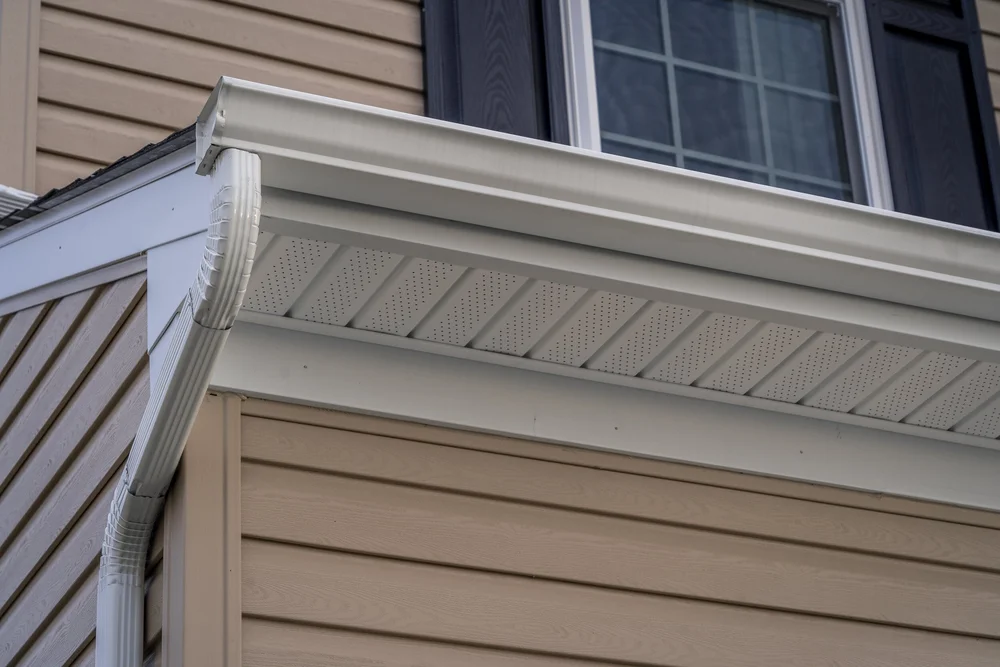
That same homeowner also needed seamless gutters in Detroit, MI to address water runoff that was contributing to foundation moisture — another common issue we see when homes lack proper exterior water management.
What Affects Your Final Quote
When you call for an estimate, here are the factors that determine whether you're closer to the low end or high end of the cost range.
Existing Insulation Condition
If your current insulation is dry, intact, and properly distributed, we can blow new material right over it. If it's wet, moldy, or compressed, it needs to come out first. Removal adds $600–$1,500 to most jobs, depending on attic size and disposal requirements.
Air Sealing Requirements
Blown-in insulation works best when the attic is properly air-sealed. We use spray foam or caulk to seal around electrical penetrations, plumbing vents, chimney chases, and recessed lights. This prevents warm air from leaking into the attic, which causes ice dams and reduces insulation effectiveness.
Air sealing typically adds $300–$800 to a project, but it's not optional if you want the insulation to perform. Skipping this step is like putting a wool sweater on over a mesh shirt — the insulation can't do its job if air is moving freely through the attic floor. If you're also considering signs your Detroit home needs more attic insulation, air sealing should be part of the conversation.
Ventilation Upgrades
Michigan building code requires 1 square foot of ventilation for every 150 square feet of attic space. Older homes often don't meet this standard. If your attic is under-ventilated, adding insulation without improving airflow can trap moisture and cause mold.
We install ventilation baffles (also called rafter vents) to keep air flowing from the soffit vents to the ridge vent, even after insulation is blown in. Baffles cost $2–$4 each; a typical attic needs 40–60 of them. Budget $150–$300 for this part of the job.
In some cases, we'll recommend adding a ridge vent or additional gable vents. That's a separate cost, usually $800–$1,500 depending on roof size and whether it ties into Detroit roofing services work.
Attic Prep Work
Before we blow insulation, the attic needs to be clear of debris, old boxes, and anything stored up there. If there's knob-and-tube wiring (common in Detroit homes built before 1950), it may need to be replaced or protected before insulation can be added — blown-in insulation can't touch active knob-and-tube wiring per code.
We also check for roof leaks, damaged sheathing, and signs of animal entry. Fixing these issues before insulating prevents bigger problems down the road.
Signs Your Detroit Home Needs More Insulation
Not sure if your attic insulation is adequate? Here are the symptoms we see most often in Southeast Michigan homes that need an upgrade:
- Ice dams and icicles: If you get icicles longer than 6 inches hanging from your gutters every winter, your attic is losing heat. Warm air melts snow on the roof, which refreezes at the eaves and backs up under the shingles. More insulation (and air sealing) solves this.
- Uneven temperatures between rooms: If your second-floor bedrooms are 5–8 degrees warmer than the first floor in summer, or colder in winter, your attic insulation isn't doing its job.
- High heating bills: If your gas or electric bill spikes in January and February, and your furnace runs constantly, you're losing heat through the attic. Most Detroit-area homes built before 1990 are under-insulated by today's standards.
- Visible gaps or compressed insulation: If you can see the tops of your ceiling joists when you look in the attic, or the insulation is matted down and thin, you're well below R-49.
- Drafts around light fixtures: Recessed lights in the ceiling that feel drafty are a sign of air leakage between the living space and attic. Air sealing and adding insulation will fix this.
We wrote a detailed guide on signs your Detroit home needs more attic insulation that covers these symptoms in more depth, including what to look for during a DIY attic inspection.
Why R-Value Matters in Southeast Michigan
R-value measures how well insulation resists heat flow. Higher R-value = better insulation. Michigan's energy code requires R-49 in attics for new construction and major renovations. Most homes built before 2000 have R-19 to R-30 at best.
Here's what that means in real terms for a 1,500-square-foot home in Royal Oak:
- R-19 attic: Loses approximately 35–40% of heating energy through the ceiling in winter. Monthly heating cost in January: $280–$320.
- R-38 attic: Loses approximately 18–22% of heating energy. Monthly heating cost: $200–$240.
- R-49 attic: Loses approximately 12–15% of heating energy. Monthly heating cost: $170–$210.
The difference between R-19 and R-49 is about $110/month in heating costs during peak winter months. Over a 5-month heating season, that's $550/year in savings. A $2,800 insulation upgrade pays for itself in 5 years, and keeps paying dividends for the next 30+ years.
For homeowners in Rochester Hills or Bloomfield Hills with larger homes, the savings are even more significant. We've seen 3,000-square-foot homes cut their heating bills by $200+/month after upgrading from R-19 to R-49.
Building Science Note: R-value isn't linear. Going from R-19 to R-30 makes a bigger difference than going from R-30 to R-49. But Michigan's climate — with winter lows around 10°F and summer highs in the 90s — means every additional R-point helps reduce HVAC load.
If you're also tackling other energy efficiency upgrades, consider pairing insulation work with Detroit window experts for replacement windows, or upgrading to house siding in Detroit with built-in foam backing for additional thermal performance. We've seen the best results when homeowners address the building envelope as a system rather than one component at a time.
How Blown-In Insulation Compares to Other Methods
Homeowners often ask whether blown-in insulation is better than spray foam or batt insulation. Here's the short answer: blown-in is the most cost-effective option for attics in existing homes, especially when you're adding to what's already there.
Spray foam costs 2–3 times more than blown-in insulation ($3–$7 per square foot installed). It air-seals and insulates in one step, which makes it ideal for rim joists, crawl spaces, and cathedral ceilings. But for a standard attic where you can access the floor, blown-in delivers 90% of the performance at 40% of the cost.
Batt insulation (the pink or yellow rolls) is cheaper upfront but harder to install properly in an existing attic. Batts leave gaps around joists, wiring, and ductwork, which reduces effectiveness. Blown-in insulation fills every crack and settles into irregular spaces, giving you better coverage.
We install all three types depending on the application, but for attic upgrades in Metro Detroit, blown-in cellulose or fiberglass is the right call 90% of the time. You can read more about attic insulation in Royal Oak and the math behind R-value and heating costs in our detailed breakdown.
Insulation and Other Exterior Services
Insulation is one piece of a larger puzzle. We often see homeowners who upgrade their attic insulation and then realize their Southeast Michigan painting professionals need to address peeling exterior paint caused by moisture escaping through the walls, or that their seamless gutters in Detroit, MI are dumping water against the foundation and causing basement humidity.
That's why we offer a full range of exterior services in Detroit — we can assess your home's building envelope as a system and prioritize the upgrades that'll give you the best return on investment. Sometimes that means insulation first. Sometimes it means fixing the roof or siding before you add insulation. Every home is different.
Ready to Get Started?
NEXT Exteriors has been protecting Michigan homes since 1988. Get a free, no-pressure estimate from a team that shows up on time and does the job right.
Get Your Free QuoteOr call us: (844) 770-6398
Frequently Asked Questions
Most attic insulation jobs take 4–8 hours depending on attic size, access, and prep work. A straightforward 1,200-square-foot ranch attic with good access can be done in half a day. Larger homes with complex roof lines or significant air sealing requirements may take a full day. We'll give you an accurate timeline during the estimate.
Yes, as long as the existing insulation is dry, intact, and free of mold or contamination. We blow new insulation directly over old fiberglass batts or existing blown-in material. If the old insulation is wet, compressed, or damaged, we'll recommend removing it first. Mixing insulation types (fiberglass over cellulose, or vice versa) is fine and doesn't affect performance.
Not if it's installed properly. We seal off the attic access during installation and use equipment with dust containment. You might notice a faint smell for a day or two (especially with cellulose), but there shouldn't be dust in your living spaces. If you have concerns about air quality, let us know during the estimate — we can take extra precautions.
Most Detroit-area homeowners see a 20–30% reduction in heating and cooling costs after upgrading from R-19 to R-49. For a typical 1,500-square-foot home, that's $400–$700/year in savings. Payback time is usually 4–6 years. Homes with worse starting insulation (R-11 or less) see even bigger savings — sometimes 40–50% reductions in heating costs.
Yes, both cellulose and fiberglass settle slightly over the first year. We account for this by over-blowing the initial installation by 10–15%. Cellulose settles more than fiberglass — it might compress from 12 inches to 10 inches over the first 12 months. After that, it stabilizes and maintains its R-value for decades. Quality installations from experienced contractors compensate for settling during the initial install.
You can, but you'll need a platform or walkway to avoid compressing the insulation. Walking directly on blown-in insulation compresses it and reduces R-value permanently. We can install plywood walkways over the joists if you need attic storage access. Just let us know during the estimate so we can plan for it. Most homeowners in Metro Detroit choose to keep the attic clear and maximize insulation coverage instead.
Both work well in Southeast Michigan. Cellulose is denser, settles into gaps better, and handles minor moisture better without losing R-value — good for older homes with less-than-perfect air sealing. Fiberglass is lighter, doesn't settle as much, and costs slightly less — better for newer homes with good ventilation. We'll recommend the best option based on your home's age, attic condition, and budget during the estimate.