

The Best Gutter Guards for Michigan's Leaves & Pine Needles

I've been installing and servicing gutters in Southeast Michigan since 1988, and I can tell you this: most gutter guards sold around here don't work the way homeowners expect. Not because they're poorly made, but because Michigan throws conditions at them that marketing brochures don't mention.
We've got massive oak trees dropping leaves the size of dinner plates. Maples that shed helicopter seeds by the thousands. Pine trees that drop needles year-round. And then there's the ice — 40+ freeze-thaw cycles every winter that turn any small design flaw into a catastrophic failure point.
The question isn't "Do gutter guards work?" It's "Which gutter guards work in Michigan, and under what conditions?" After installing, removing, and repairing every type of guard system on the market, I'm going to walk you through what actually performs in our climate — and what's a waste of money.
Why Michigan Is Brutal on Gutter Guards
Southeast Michigan is uniquely challenging for gutter protection systems. Here's why:
Freeze-thaw cycles destroy weak designs. The National Weather Service data for Detroit shows we average 40-50 freeze-thaw cycles between November and March. Water gets into any gap or seam in a gutter guard, freezes, expands, and pries the system apart. I've seen $3,000 gutter guard installations completely fail after one winter because the installer didn't account for this.
When we work on Detroit roofing services projects, we always inspect the gutter system at the same time. A roof is only as good as the drainage system below it, and gutter guards that create ice dams negate all the money you spent on proper attic ventilation and insulation.
Our trees drop everything. In Rochester Hills and Bloomfield Hills, where mature oak and maple canopies dominate, gutters can collect 6-8 inches of compacted leaves in a single autumn weekend. Pine trees in Lake Orion and Chesterfield drop needles constantly — not just in fall, but year-round. And those helicopter seeds from maples? They're small enough to slip through most screen-style guards and germinate inside your gutters, creating a root mat that blocks water flow.
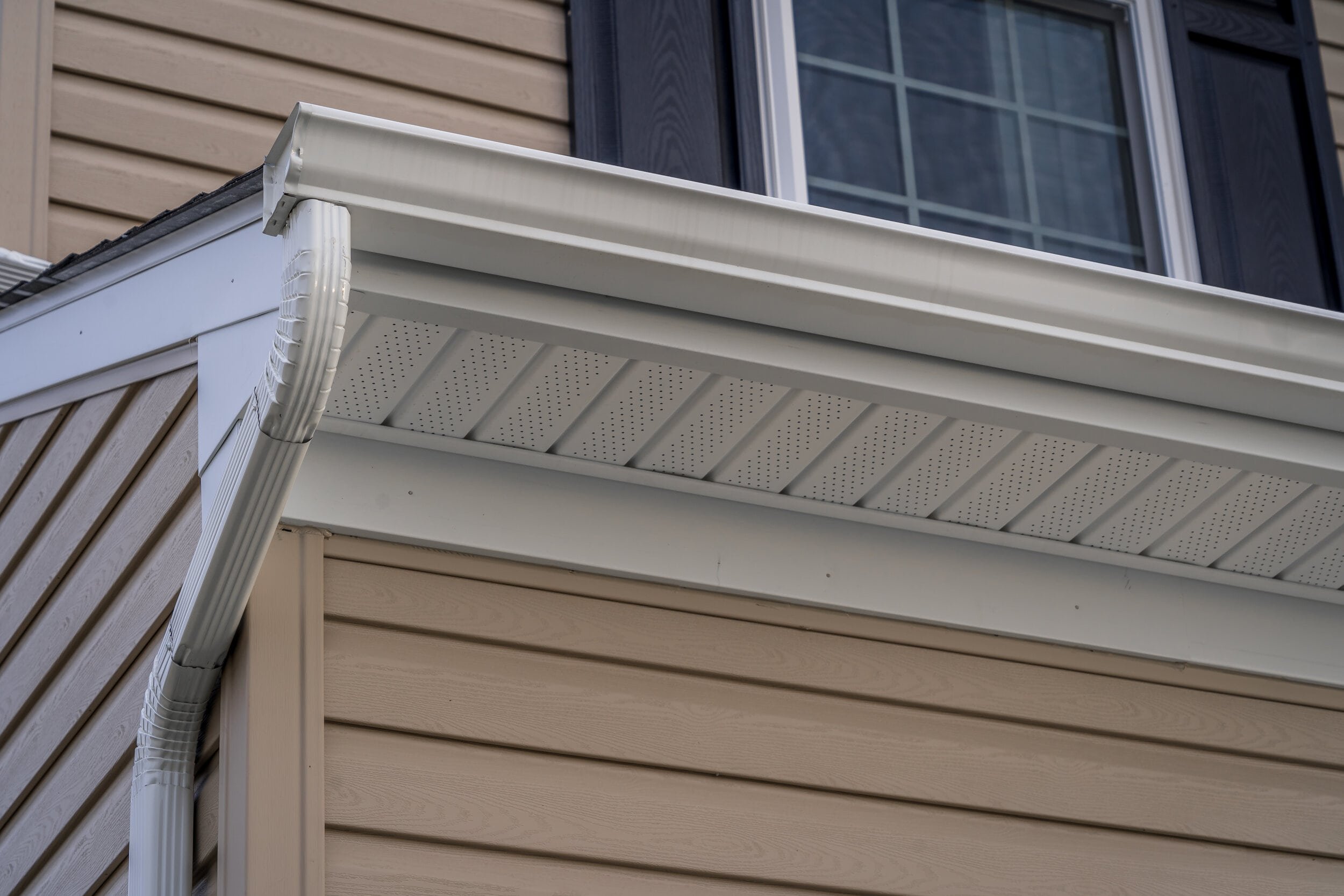
Ice dams are the silent killer. If you have ice dam problems and install the wrong type of gutter guard, you've just made the situation worse. Guards that create a solid surface over the gutter can trap heat rising from the house, accelerating snow melt on the lower roof and feeding the ice dam cycle. This is especially common on homes built in the 1960s and 1970s in Sterling Heights and Warren, where attic insulation was minimal by modern standards.
Real talk: If you have ice dams, gutter guards won't fix the problem. You need to address attic insulation and ventilation first. We've seen too many homeowners spend thousands on guards only to watch ice still destroy their fascia boards every February.
Wind-driven rain is underestimated. Michigan summer storms come with horizontal rain. If a gutter guard relies on surface tension to direct water into the gutter (reverse-curve designs), heavy wind can blow water right over the edge. I've stood on ladders during service calls in Troy and Shelby Township, watching $4,000 gutter guard systems completely fail during a thunderstorm.
Types of Gutter Guards (What Actually Works Here)
Let's break down the major categories and how they perform in real Michigan conditions. This isn't theory — this is based on thousands of installations and service calls across Macomb, Oakland, and St. Clair counties.
Micro-Mesh Guards (Best Overall for Michigan)
Micro-mesh guards use surgical-grade stainless steel mesh with holes smaller than a grain of sand. Water passes through via surface tension, while debris sits on top and blows off or washes away.
Performance in Michigan: This is the only system I've seen consistently handle pine needles, maple seeds, and oak leaves without clogging. The mesh is fine enough (around 50 microns) that even shingle grit — which destroys most other guards — can't penetrate.
Ice performance: Excellent, if installed correctly. The mesh doesn't create a solid ice dam surface. Water can still pass through even when snow is sitting on top. But — and this is critical — the frame must be installed under the shingles, not screwed to the fascia. Fascia-mounted micro-mesh will still ice up.
Cost: $15-25 per linear foot installed. For a typical 150-foot gutter system in Royal Oak or Grosse Pointe Farms, you're looking at $2,250-$3,750.
Brands we've had success with: LeafFilter, Raptor, and MasterShield all perform well when properly installed. The key is the installation method, not just the product.
Reverse-Curve (Surface Tension) Guards
These create a curved surface over the gutter. Water is supposed to follow the curve into the gutter while leaves blow off.
Performance in Michigan: Marginal. They work okay in light rain, but Michigan doesn't do light rain. During heavy downpours or wind-driven storms, water overshoots the gutter entirely. I've removed dozens of these systems from homes in Clinton Township and Mount Clemens after homeowners got tired of watching waterfalls pour off their roof edge.
Ice performance: Poor. The solid surface creates a perfect ice dam platform. Snow sits on the guard, melts from house heat, refreezes at the edge, and you've got a 6-inch ice ridge by January.
Cost: $10-18 per linear foot installed.
Verdict: Skip these in Michigan. They're designed for climates with gentler rain and no freeze-thaw cycles.
Foam Inserts
Triangular foam pieces that sit inside the gutter, allowing water to pass through while blocking debris.
Performance in Michigan: Terrible. Foam holds moisture, which means it freezes solid in winter. By spring, the foam is disintegrating, and you've got chunks of it washing down your downspouts. Plus, maple seeds and pine needles get embedded in the foam and sprout, creating a gutter garden.
Cost: $2-4 per linear foot (DIY installation).
Verdict: Don't waste your money. These are designed for warm, dry climates.
Screen Guards (Aluminum or Plastic)
Simple mesh screens that snap into the gutter or slide under the shingles.
Performance in Michigan: Depends entirely on mesh size. Coarse screens (1/4-inch holes) let everything through except large leaves. Fine screens (1/8-inch or smaller) work better but still struggle with pine needles and shingle grit.
Ice performance: Fair. They don't create solid ice surfaces, but ice can form between the screen and gutter, lifting the screen out of place. By spring, half the screens are hanging loose or missing.
Cost: $4-8 per linear foot installed.
Verdict: Budget option if you have minimal tree coverage and are willing to do annual maintenance. Not a long-term solution for heavily wooded properties.

The Pine Needle Problem
If you have pine trees, you know the struggle. Those needles are small, flexible, and designed by nature to slip through gaps. Here's what actually works:
Micro-mesh is the only reliable solution. The mesh needs to be fine enough (50 microns or less) that pine needles can't penetrate. They'll sit on top of the mesh and eventually blow off or wash away during rain. I've seen this work on properties in Chesterfield and St. Clair Shores with heavy pine coverage.
Standard mesh screens fail. Even 1/8-inch mesh is too coarse. Pine needles slip through, collect at the downspout outlet, and create a mat that blocks water flow. You end up with overflowing gutters anyway.
Reverse-curve guards are useless for pine needles. The needles are light enough that they don't blow off the curved surface. They accumulate, create a dam, and water backs up under your shingles. I've seen soffit rot on multiple homes in Lake Orion from this exact scenario.
Pro tip: If you have pine trees within 30 feet of your house, budget for micro-mesh guards or plan on cleaning your gutters 3-4 times per year. There's no middle ground that works long-term.
The relationship between clogged gutters and basement problems is real. Pine needle blockages cause water to overflow, saturate the soil around your foundation, and eventually find its way into your basement. It's a chain reaction that starts with a $50 gutter cleaning you skipped.
Ice, Snow, and Gutter Guards
This is where most gutter guard marketing falls apart. The photos show autumn leaves. The testimonials talk about "never cleaning gutters again." But nobody mentions what happens when 18 inches of snow sits on your roof for three months.
Ice formation is inevitable. Any gutter guard will accumulate some ice in Michigan winters. The question is whether the system still functions when that happens.
Micro-mesh handles ice best. Because water can still pass through the mesh even when snow is sitting on top, the system continues to drain. You'll get some icicle formation at the gutter edge, but it's minimal compared to other systems.
Solid-surface guards create ice dams. Reverse-curve and solid-top guards act like a shelf for snow and ice. Heat from the house melts the bottom layer, water runs to the gutter edge, and refreezes. By mid-winter, you've got a continuous ice ridge that can damage shingles, fascia, and even pull gutters off the house. We see this constantly on homes in Sterling Heights and Warren that have older attic insulation systems.
Installation method matters more than product type. If a micro-mesh guard is screwed to the fascia instead of slid under the shingles, it will still ice up. The guard needs to be positioned so the front edge is slightly lower than the back edge, allowing water to drain forward even when partially frozen.
When we're doing roof replacement projects in Metro Detroit, we always coordinate gutter guard installation with the roofing work. This ensures the guards are properly integrated under the shingles, which is critical for ice performance.
What About Heated Gutter Guards?
Some high-end systems include heating elements to prevent ice formation. Do they work? Yes. Are they worth it? Rarely.
Cost: $30-40 per linear foot installed, plus electrical work to power the heating elements. You're looking at $6,000-8,000 for a typical home.
Operating cost: Running the heating elements all winter adds $40-80 per month to your electric bill.
Verdict: Only makes sense if you have severe ice dam problems that can't be fixed with attic insulation and ventilation improvements. For most homeowners, that money is better spent on proper attic insulation and air sealing.
Cost Reality for Southeast Michigan Homes
Let's talk numbers. Gutter guard pricing varies wildly based on system type, installation complexity, and who's doing the work.
DIY vs. Professional Installation
DIY screen guards: $150-300 for materials to cover a typical 150-foot gutter system. Plan on 4-6 hours of ladder work. The challenge isn't the installation — it's getting them to stay in place during Michigan winters. Most DIY systems we see are half-destroyed by spring.
Professional micro-mesh installation: $2,250-$3,750 for the same 150-foot system. Includes proper integration under shingles, sealed end caps, and warranty. Installation takes 3-5 hours with a two-person crew.
Professional reverse-curve installation: $1,500-$2,700 for 150 feet. Cheaper than micro-mesh, but as I explained earlier, these don't perform well in Michigan conditions.
What Affects Price?
Roof pitch: Steeper roofs require more safety equipment and take longer to work on. Expect a 15-25% upcharge for pitches over 8/12.
Gutter condition: If your existing gutters are sagging, rusted, or improperly pitched, they need to be replaced or repaired before guards go on. We often find this on homes in Macomb and Clinton Township built in the 1970s-1980s. The original gutters are shot, and installing guards on them is throwing good money after bad.
Tree coverage: Heavily wooded properties require more frequent maintenance even with guards. Some companies charge a premium for properties with significant tree coverage because they know they'll be back for service calls.
Gutter size: 6-inch gutters cost more to protect than 5-inch gutters. The guards are larger, and there's more surface area to cover.
Real numbers from a recent project: Two-story Colonial in Rochester Hills, 180 linear feet of 6-inch gutters, 9/12 roof pitch, heavy oak coverage. Micro-mesh guard installation: $4,320. The homeowner had been spending $400-500 per year on professional gutter cleaning (3-4 cleanings annually). System will pay for itself in 8-9 years, and the gutters now drain properly year-round.
ROI and Maintenance Savings
Professional gutter cleaning in Southeast Michigan runs $150-250 per visit for a typical home. If you have heavy tree coverage, you need 3-4 cleanings per year. That's $450-1,000 annually.
A quality micro-mesh system costs $2,500-4,000 installed and should last 20+ years with minimal maintenance. Even accounting for occasional cleaning (yes, you'll still need to clean them every few years), the ROI is solid.
But here's the real value: preventing damage. Clogged gutters cause water to overflow, saturating fascia boards and soffit. We've replaced entire fascia systems on homes in Troy and Bloomfield Hills where gutters overflowed for years, causing $8,000-12,000 in rot damage. A $3,000 gutter guard investment would have prevented all of it.
Similarly, when we handle seamless gutter installations, we always discuss guard options with homeowners. The best time to add guards is during new gutter installation, when we can integrate them properly under the shingles without disturbing existing roofing.

When to Skip Gutter Guards (Honest Contractor Advice)
I install gutter guards for a living, but I'll tell you straight: they're not always the right solution. Here are situations where you should skip them or consider alternatives:
1. You Have Severe Ice Dam Problems
If ice dams are destroying your fascia and soffit every winter, gutter guards won't fix it. The problem is heat loss from your attic, not your gutters. Fix the insulation and ventilation first. We've done this work on dozens of homes in Sterling Heights and Warren, and the ice dam problems disappear once the attic is properly air-sealed and insulated.
Adding gutter guards before fixing the attic just gives you expensive guards with ice hanging off them.
2. Your Gutters Are Already Failing
If your gutters are sagging, pulling away from the fascia, or rusted through, don't put guards on them. Replace the gutters first with properly pitched seamless gutters in Detroit, MI, then add guards if needed.
I've seen too many homeowners spend $2,500 on guards for gutters that failed six months later. Now they're paying for new gutters and reinstallation of the guards.
3. You Have Minimal Tree Coverage
If you have one or two small trees and your gutters only need cleaning once a year, guards are overkill. Pay someone $150 to clean them annually and spend the $3,000 you would have spent on guards on something that delivers more value — like energy-efficient window replacement or new siding.
4. Your Roof Is Near End-of-Life
If your roof will need replacement in the next 3-5 years, wait on gutter guards. Quality guards should be installed under the shingles, which means they'll need to be removed and reinstalled during the roof replacement. That's an extra $500-800 in labor.
Better to replace the roof first, then add guards as part of the post-roofing cleanup and inspection process.
Alternative: Just Clean Your Gutters
Here's the reality: even with the best gutter guards, you'll need to clean them eventually. Micro-mesh guards accumulate shingle grit and fine debris over time. Every 3-5 years, you need to brush them off.
If you're physically able and comfortable on a ladder, cleaning gutters 2-3 times per year costs you nothing but time. If you're not comfortable with ladders or have a multi-story home, professional cleaning is still cheaper than guards for the first 5-7 years.
Guards make sense when:
- You have heavy tree coverage requiring 3+ cleanings per year
- You're physically unable to clean gutters yourself
- You have a multi-story home where professional cleaning is expensive and risky
- You've experienced fascia or soffit damage from overflowing gutters
What We Install (and Why)
At NEXT Exteriors, we install micro-mesh guards almost exclusively. After 35+ years in the Michigan exterior contracting business, we've tried everything, and micro-mesh is the only system that consistently performs in our climate.
Our installation process:
1. Gutter inspection and cleaning. We remove all existing debris and check gutter pitch, fascia condition, and downspout flow. If gutters are improperly pitched or damaged, we fix that first.
2. Shingle integration. We carefully lift the first course of shingles and slide the guard frame underneath. This creates a watertight seal and ensures water flows into the gutter rather than behind it. Guards screwed to the fascia will fail in Michigan winters — this is non-negotiable.
3. End caps and sealing. Every section gets sealed end caps to prevent debris from entering at the corners. We use a commercial-grade sealant that remains flexible in freeze-thaw cycles.
4. Downspout strainers. We install strainers at every downspout outlet to catch any debris that makes it past the guards. This prevents downspout clogs, which are the most common cause of overflow even with guards installed.
5. Flow testing. Before we leave, we run water through every section to verify proper flow and check for leaks.
Warranty: We offer a 20-year performance warranty on micro-mesh installations. If the guards clog or fail to perform as specified, we'll service or replace them at no charge. This warranty is only valid if we also install or service the gutters — we won't warranty guards installed on failing gutter systems.
Why we don't install reverse-curve or foam guards: Simple — they don't work in Michigan. I'm not going to sell you a system I know will fail in the first winter. Our reputation is built on doing the job right the first time, not maximizing profit on every sale.
We've built our reputation on comprehensive exterior services in Detroit and throughout Southeast Michigan. Whether it's roofing, gutters, siding, or exterior painting, we approach every project with the same philosophy: honest assessment, quality materials, and installation methods that account for Michigan's brutal climate.
Maintenance After Installation
Even the best gutter guards need occasional attention. Here's what we recommend:
Annual inspection: Once a year (usually spring), walk around your house and check for debris accumulation on top of the guards. In most cases, a leaf blower from the ground will clear everything off.
Every 3-5 years: Have the guards professionally cleaned. Shingle grit, fine dust, and pollen create a film on micro-mesh that reduces flow over time. We use a soft brush and low-pressure water to restore full flow capacity.
After major storms: Check for damage. High winds can lift guards if they weren't properly installed under the shingles. Hail can dent aluminum frames (though it won't affect performance).
This is significantly less maintenance than cleaning unprotected gutters 3-4 times per year, but it's not zero maintenance. Anyone who tells you otherwise is lying.
Ready to Get Started?
NEXT Exteriors has been protecting Michigan homes since 1988. Get a free, no-pressure estimate from a team that shows up on time and does the job right. We'll inspect your gutters, discuss your options honestly, and provide a detailed quote with no hidden fees.
Get Your Free QuoteOr call us: (844) 770-6398