

Storm Damage Roof Repair Metro Detroit | NEXT Exteriors

You hear the storm roll through overnight — heavy winds rattling windows, hail hammering the roof, branches snapping somewhere in the dark. By morning, your neighbor's got shingles scattered across their lawn. You walk outside and spot a few in your own yard. Maybe there's a dark spot on the ceiling in the hallway that wasn't there yesterday.
Now what?
If you're a homeowner in Metro Detroit, you know Michigan weather doesn't mess around. Summer storms bring straight-line winds that peel shingles like Post-it notes. Hailstorms punch divots into roofs across Sterling Heights and Troy in fifteen minutes flat. Winter ice buildup can crack flashing and tear gutters clean off the fascia. And when damage happens, the clock starts ticking — on leaks, on insurance claims, and on finding a contractor who isn't a fly-by-night outfit that showed up the day after the storm.
We've been doing Detroit roofing services since 1988. We've climbed onto roofs the morning after every major storm that's hit Southeast Michigan in the last 35 years. We've worked with hundreds of insurance adjusters, documented thousands of damage claims, and repaired everything from a single torn shingle to complete roof replacements after tornadoes ripped through Macomb County.
This guide walks you through exactly what to do after storm damage — how to assess what happened, what your insurance company needs, when emergency repairs make sense, and how to choose a contractor who won't disappear after cashing your check.
How to Assess Storm Damage to Your Roof (From the Ground)
First rule: Don't climb onto your roof. Seriously. We've seen homeowners slip on wet shingles, step through soft spots they didn't know were there, and fall off ladders while trying to get a closer look. Leave the roof access to professionals with fall protection equipment and insurance.
Here's what you can safely check from ground level:
Walk the Perimeter
Circle your house and look for shingles in the yard, flowerbeds, or driveway. Check gutters for pieces of roofing material. If you've got binoculars, use them to scan the roof surface for obvious gaps, lifted edges, or areas where the color looks different (that's often bare underlayment showing through).
Pay special attention to roof edges, valleys, and ridges — that's where wind damage typically starts. High winds create uplift pressure that peels shingles from the edges inward. If you see curled or missing shingles along the rake edge (the sloped edge running from eave to ridge), that's a red flag.
Check Your Gutters
Look inside gutters and downspouts for granule accumulation. Asphalt shingles are coated with ceramic granules that protect the asphalt layer underneath from UV damage. Hail impact knocks these granules loose. A little granule loss is normal over time, but if your gutters look like they're full of coarse sand after a storm, that's hail damage.
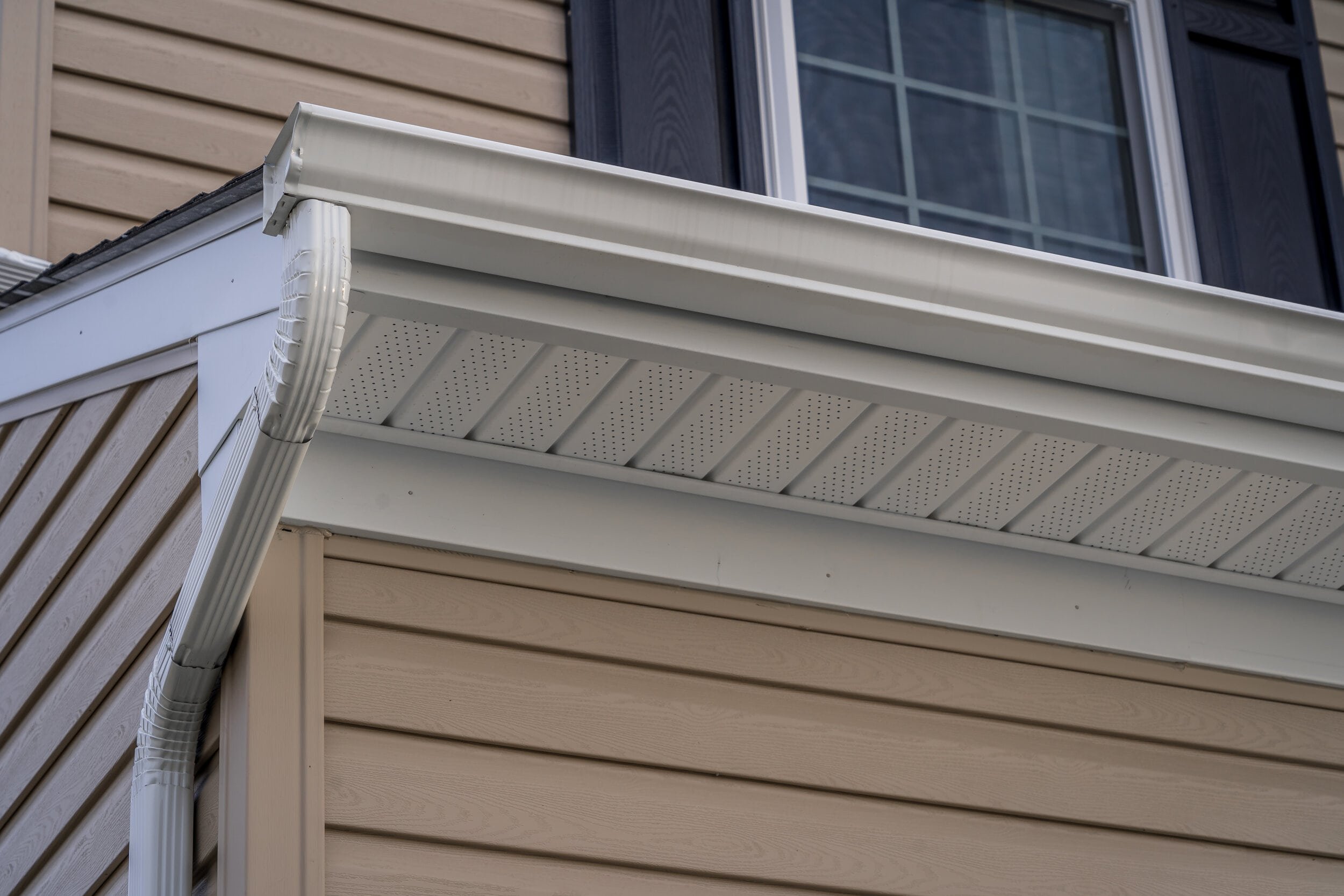
Also check for dents in metal gutters, downspouts, or aluminum fascia. If hail dented your gutters, it probably dented your shingles too. This is especially common after storms in Rochester Hills and Bloomfield Hills, where mature tree canopies don't provide much overhead protection.
Look for Debris Impact
Tree branches, fence panels, patio furniture — storms turn everything into projectiles. If a branch landed on your roof, even if it didn't puncture through, the impact may have cracked shingles or damaged the decking underneath. Dark spots or depressions on the roof surface often indicate impact damage.
Check Inside the Attic
If you've got attic access, grab a flashlight and take a look. You're checking for three things:
- Daylight coming through the roof: If you can see sky, you've got a hole.
- Water stains on rafters or decking: Brown streaks or dark patches mean water's getting in, even if you haven't seen drips inside the house yet.
- Wet or compressed insulation: Insulation acts like a sponge. If it's damp, water's been coming through.
Don't ignore small leaks. What starts as a damp spot on a rafter can turn into rotted decking, mold growth, and a $15,000 repair bill if you wait six months to address it. We've seen this play out in older homes across Warren and St. Clair Shores, where decades-old roofs finally give up after one too many storms.
Important: If you spot active leaking — water dripping into your home right now — place a bucket under the leak, move valuables out of the way, and call a contractor immediately for emergency tarping. Don't wait for your insurance company to send an adjuster. Tarping is a temporary fix that prevents further damage while you work through the claims process. Most reputable contractors, including NEXT Exteriors' full range of services, offer emergency tarping as part of storm damage response.
What Michigan Storms Do to Roofing Systems
Understanding how storms damage roofs helps you spot problems and explain them to your insurance adjuster. Different types of weather cause different types of damage.
Wind Damage
Michigan gets straight-line winds that hit 60-80 mph during severe thunderstorms. These winds don't just blow shingles off — they create uplift pressure that literally sucks shingles upward from the roof deck.
Here's the mechanics: Wind hits the leading edge of your roof (usually the side facing the storm) and flows up and over. As it accelerates over the peak, it creates negative pressure on the back side. This pressure difference pulls shingles up from underneath, breaking the adhesive seal and tearing nails through the shingle tabs.
The damage pattern is predictable: You'll see missing or lifted shingles starting at the edges and working inward. Corners and ridges get hit hardest. Older roofs with brittle, sun-damaged shingles are especially vulnerable. We see this constantly after summer storms in Clinton Township and Shelby Township, where 15-20 year old roofs finally reach the end of their service life.
Wind ratings matter. Standard three-tab shingles are rated for winds up to 60 mph. Architectural shingles with proper installation (six nails per shingle, not four) can handle 110-130 mph winds. If you're replacing a roof after storm damage, ask your contractor about wind-rated shingles and proper installation techniques. This is where working with a CertainTeed Master Shingle Applicator makes a difference — we install to manufacturer specs that maximize wind resistance.
Hail Damage
Hail is tricky because the damage isn't always obvious from the ground. A 1-inch hailstone traveling at 50 mph hits with enough force to bruise asphalt shingles, crack fiberglass mats, and knock granules loose. The shingles might still be attached to the roof, but they're compromised.
Hail damage shows up as:
- Granule loss: Dark spots where the protective granule layer has been knocked off, exposing the black asphalt underneath
- Bruising: Soft spots or divots in the shingle surface that feel spongy when pressed (don't press them yourself — let the adjuster do this)
- Cracked shingles: Especially on older, brittle shingles that have lost flexibility from UV exposure
- Fractured fiberglass mat: This happens underneath the asphalt layer and isn't visible, but it weakens the shingle's structural integrity
Insurance adjusters count hail hits per 10x10 square section. If they find a certain number of impacts (usually 8-10 hits in a test square), they'll approve a full roof replacement. This is why documentation matters — you want the adjuster to see the same damage you're seeing.
Ice and Freeze-Thaw Damage
Michigan winters are brutal on roofs. Ice dams form when heat escaping through your attic melts snow on the upper roof. That meltwater runs down to the colder eaves, refreezes, and creates a dam of ice. Water backs up behind the dam, gets under shingles, and leaks into your house.
We've written extensively about ice dams in Michigan and why they form, but the storm damage angle is this: Ice dams can lift shingles, tear off gutters, and damage flashing around chimneys and vents. If you've had ice dam problems all winter and then a spring storm hits, you might already have compromised shingles that blow off more easily.
Freeze-thaw cycles also wreak havoc on roof flashing. Metal flashing expands and contracts with temperature swings. Over time, this movement loosens nails, cracks sealant, and opens gaps where water can penetrate. A storm that wouldn't damage a new roof can cause serious leaks in a roof with compromised flashing.

Debris Impact
Falling branches are the most common debris damage we see. A 6-inch diameter oak branch falling 30 feet carries enough momentum to punch through shingles, crack decking, and sometimes penetrate into the attic space.
Even if the branch doesn't puncture through, the impact can crack shingles, compress insulation underneath, and create a weak spot that fails during the next storm. This is especially common in older neighborhoods around Royal Oak and Grosse Pointe Farms, where mature trees overhang roofs.
If a branch hit your roof, don't just remove it and assume everything's fine. Have a contractor inspect the impact area for hidden damage. We've found cracked rafters, split decking, and compressed insulation under seemingly minor branch strikes.
Working With Your Insurance Company
Insurance claims for storm damage roof repair in Metro Detroit follow a predictable process. Understanding what your insurer needs — and what they're looking for — helps you get a fair settlement.
Document Everything Immediately
Before you touch anything, document the damage. Take photos and videos from every angle. Get wide shots showing the whole roof and close-ups of specific damage. Include reference points (a ruler next to hail dents, a quarter next to granule loss) to show scale.
Photograph:
- Shingles in the yard or gutters
- Missing or damaged shingles on the roof (use binoculars or zoom lens)
- Dents in gutters, downspouts, or metal vents
- Interior water damage (ceiling stains, wall discoloration, attic leaks)
- Debris impact points
- The overall condition of the roof before and after (if you have older photos)
Time-stamp everything. Note the date and time of the storm, when you discovered the damage, and when you took the photos. This creates a timeline that supports your claim.
File Your Claim Quickly
Most homeowners policies require you to report damage "promptly" or "as soon as reasonably possible." That's intentionally vague, but in practice, you should file within a few days of discovering damage. Waiting weeks or months gives the insurance company grounds to question whether the damage is actually storm-related or just normal wear and tear.
When you call to file a claim, you'll get a claim number and an assigned adjuster. Write down the claim number, the adjuster's name and contact info, and the date you filed. Keep all this information in one place — you'll reference it constantly over the next few weeks.
What the Adjuster Is Looking For
Insurance adjusters aren't your enemy, but they work for the insurance company, not for you. Their job is to assess damage and determine what the policy covers. They're trained to spot legitimate storm damage and distinguish it from pre-existing wear, poor maintenance, or installation defects.
The adjuster will:
- Inspect the roof surface: They'll look for hail hits, wind damage, missing shingles, and overall condition. They're counting impacts, measuring granule loss, and checking for patterns consistent with storm damage.
- Check for pre-existing damage: They'll note any areas with obvious age-related deterioration, curled shingles, or previous repairs. If your roof was already near end-of-life, they might argue the storm just accelerated inevitable failure.
- Measure the roof: They'll calculate square footage to estimate replacement costs. This measurement determines your settlement amount.
- Review your policy: They'll check your coverage limits, deductible, and any exclusions. Not all policies cover the same things.
You have the right to be present during the inspection. We strongly recommend it. Point out damage you've found, show them your photos, and ask questions. If they miss something, speak up.
Should You Get Your Own Estimate?
Yes. Always get an independent estimate from a licensed contractor before the adjuster shows up. This gives you a baseline for comparison and ensures you're not leaving money on the table.
A good contractor will provide a detailed estimate that includes:
- Square footage of the roof
- Type and quantity of materials needed
- Labor costs
- Removal and disposal of old roofing
- Replacement of damaged decking, flashing, or underlayment
- Permits and inspection fees
If the adjuster's estimate comes in significantly lower than your contractor's, ask why. Sometimes it's a difference in material quality (the adjuster might spec three-tab shingles when you have architectural shingles). Sometimes it's missing line items (they forgot to include decking replacement or flashing repairs). A reputable contractor can help you negotiate with the insurance company to get a fair settlement.
We work with insurance companies on storm damage claims every week. We know what adjusters look for, how to document damage properly, and how to present estimates that insurance companies accept. When you work with NEXT Exteriors, we'll walk you through the entire claims process and advocate for a settlement that covers the full scope of necessary repairs.
Common Claim Denials (and How to Avoid Them)
Insurance companies deny storm damage claims for predictable reasons. Here's what triggers denials and how to prevent them:
Lack of maintenance: If your roof was already in poor condition before the storm, the insurer might argue the damage is due to neglect, not weather. Keep records of regular maintenance (gutter cleaning, minor repairs, inspections). If you've had the roof inspected within the last year, provide that report to the adjuster.
Pre-existing damage: If the adjuster finds old damage mixed with new storm damage, they might deny the entire claim or only cover the new damage. This is why documentation matters — photos showing your roof's condition before the storm prove what's new.
Wear and tear: Roofs don't last forever. If your 25-year-old roof fails during a storm, the insurance company might argue it failed due to age, not storm damage. This is a gray area that often requires negotiation.
Installation defects: If the adjuster determines damage was caused by improper installation (wrong nails, inadequate sealing, missing underlayment), they'll deny the claim. This is why hiring a licensed, insured contractor for the original installation matters. And why working with a CertainTeed Master Shingle Applicator provides extra protection — our installations meet manufacturer specs and come with extended warranties.
Policy exclusions: Read your policy. Some policies exclude certain types of damage (cosmetic damage, gradual deterioration, damage from insects or animals). Know what's covered before you file a claim.
Emergency Repairs vs. Full Replacement
Not all storm damage requires a full roof replacement. Sometimes emergency repairs or partial fixes are the right call — at least temporarily. Here's how to decide.
When Emergency Tarping Makes Sense
If you've got active leaking and can't get a contractor out for permanent repairs immediately, tarping prevents further damage while you work through the insurance process.
Emergency tarping involves covering the damaged area with heavy-duty polyethylene sheeting, securing it with wood battens, and weighting it down to prevent wind uplift. It's not pretty, but it keeps water out.
Tarping makes sense when:
- You've got a puncture or large section of missing shingles and it's actively raining
- The insurance adjuster can't come out for several days and you need to prevent water damage
- You're waiting for materials to arrive for permanent repairs
- The damage is extensive and you need time to decide between repair and replacement
Most insurance policies cover reasonable emergency repairs to prevent further damage. Keep receipts. Take photos of the tarping. Document everything.
Don't leave a tarp on for months. Tarps degrade in UV light, wind can tear them loose, and water can pool on top and seep through seams. A tarp is a stopgap, not a solution.
When Patching Makes Sense
If the damage is localized — a few missing shingles, a torn valley, a damaged vent boot — patching might be the right move, especially if your roof is relatively new and in otherwise good condition.
Patching works when:
- The damage affects less than 10% of the roof surface
- You can get matching shingles (same color, style, and manufacturer)
- The surrounding shingles are in good condition and not brittle or curled
- The decking underneath isn't damaged
Patching doesn't work when:
- The damage is widespread (multiple areas across the roof)
- You can't get matching shingles (discontinued colors or styles)
- The rest of the roof is near end-of-life and likely to fail soon
- The decking is damaged or rotted in multiple areas
Here's the practical reality: If your roof is 15+ years old and you're patching storm damage, you're probably throwing good money after bad. You'll patch the storm damage now, then deal with another failure in six months, then another. At some point, replacement becomes the smarter financial decision.
We've patched thousands of roofs over 35 years. We'll tell you honestly whether a patch makes sense or whether you're better off replacing the whole thing. We're not interested in upselling you on a full replacement if a $500 patch solves the problem. But we're also not going to patch a roof that's going to fail next winter and leave you with a bigger mess.
When Full Replacement Is Necessary
Full replacement is the right call when:
- The damage is widespread: Hail damage across the entire roof, wind damage affecting multiple sections, or extensive granule loss
- The roof is old: If your roof is 18-25 years old and showing signs of age (curled shingles, granule loss, brittle tabs), storm damage is often the final straw
- The decking is compromised: If the plywood or OSB decking is rotted, sagging, or cracked in multiple areas, you need more than shingle replacement
- You've got multiple leaks: If water's coming in from multiple points, the entire system is likely compromised
- The insurance company approves it: If your adjuster determines the damage warrants full replacement, take advantage of it. You're paying for that coverage.
Replacement timelines vary depending on weather, material availability, and contractor schedules. In Metro Detroit, expect 2-4 weeks from contract signing to completion during busy season (late spring through fall). Winter replacements take longer due to weather delays and temperature-dependent materials (shingle adhesive doesn't seal properly below 40°F).
Cost Reality for Michigan Homeowners
Storm damage repairs range from a few hundred dollars for minor patching to $8,000-$15,000+ for full replacement, depending on roof size, pitch, material choice, and extent of decking damage.
Insurance typically covers the cost of replacement minus your deductible. If your deductible is $1,000 and the replacement costs $12,000, you pay $1,000 and insurance covers $11,000. Some policies pay Actual Cash Value (ACV) initially, then Replacement Cost Value (RCV) after work is completed. Understand your policy before you start.
If you're paying out of pocket (no insurance claim or damage below your deductible), get multiple estimates. Prices vary, but the cheapest bid isn't always the best value. Look for licensed contractors with good reviews, proper insurance, and manufacturer certifications. We've written about roofing costs in Michigan and what drives the price up or down — it's worth understanding what you're paying for.
Choosing a Storm Damage Contractor in Metro Detroit
After every major storm, they show up: out-of-state contractors driving around neighborhoods, knocking on doors, offering "free inspections" and "insurance claim assistance." Some are legitimate. Many aren't.
Here's how to separate the pros from the storm chasers.
Red Flags to Watch For
They showed up at your door uninvited: Legitimate contractors don't need to cold-knock. They've got enough work from referrals and repeat customers. If someone's going door-to-door after a storm, they're probably not from around here and won't be around in six months when your roof starts leaking.
They offer to "waive your deductible": This is insurance fraud. Your deductible is your responsibility. A contractor who offers to waive it is either inflating the claim (fraud) or planning to cut corners to make up the difference (shoddy work). Either way, you lose.
They pressure you to sign immediately: "This price is only good today." "We've got a crew in the area right now." "Sign before the insurance adjuster gets here." These are sales tactics designed to prevent you from getting other estimates or thinking it through. A reputable contractor will give you time to make an informed decision.
They ask for full payment upfront: Never pay the full amount before work starts. Standard practice is a deposit (usually 10-30%) to order materials, then final payment upon completion. If they want 100% upfront, they're either desperate for cash flow or planning to disappear.
They don't have a local address or license: Ask for a physical business address (not a P.O. box). Check their Michigan Residential Builder's License. Verify their insurance. If they can't provide this information immediately, walk away.
They can't provide references: Any contractor who's been in business for more than a year should have a list of recent customers willing to vouch for their work. Ask for references in your area. Call them. Drive by the houses and look at the work.
What to Look For Instead
Local presence: A contractor based in Southeast Michigan has a reputation to protect. They're not leaving town after the storm. They'll be here when you need warranty work or have questions two years from now.
Proper licensing and insurance: Michigan requires a Residential Builder's License for roofing work. Verify the license at michigan.gov/lara. Confirm they carry general liability insurance and workers' compensation. If someone gets hurt on your property and the contractor doesn't have workers' comp, you could be liable.
Manufacturer certifications: CertainTeed Master Shingle Applicator, GAF Master Elite, Owens Corning Platinum Preferred — these aren't just marketing badges. They mean the contractor has met training requirements, maintains quality standards, and can offer extended warranties that regular contractors can't.
NEXT Exteriors holds CertainTeed Master Shingle Applicator status — the highest certification CertainTeed offers. We can provide warranties up to 50 years on materials and workmanship, which matters when you're investing $10,000+ in a roof replacement.
Clear, detailed estimates: A professional estimate breaks down materials, labor, disposal, permits, and timeline. It specifies shingle brand and model, underlayment type, flashing details, and ventilation requirements. If the estimate just says "roof replacement - $8,500," that's not enough detail to know what you're getting.
Good reviews and BBB rating: Check Google reviews, Better Business Bureau, and local contractor review sites. Look for patterns. One bad review isn't a dealbreaker (every contractor has an unhappy customer eventually), but multiple complaints about the same issue (poor communication, shoddy work, disappeared after payment) are red flags.
NEXT Exteriors has maintained an A+ BBB rating since 2006 and carries a 5.0-star average across 87+ reviews. We've completed 500+ projects in Southeast Michigan. We're not perfect, but we show up, do the work right, and stand behind it.
Transparent process: A good contractor explains what they're going to do, why they're doing it that way, and what you should expect at each stage. They answer questions without getting defensive. They provide written contracts with clear terms. They communicate proactively about delays, material changes, or unexpected issues.
Timeline Expectations
After a major storm, every roofing contractor in Metro Detroit is slammed. Expect delays. Here's a realistic timeline:
- Initial inspection: 1-3 days after you call (emergency tarping happens same-day or next-day)
- Estimate delivery: 2-5 days after inspection
- Insurance adjuster visit: 3-10 days after filing claim (varies by insurer and storm severity)
- Contract signing and material ordering: 1-2 days after insurance approval
- Material delivery: 1-2 weeks (can be longer after major storms when suppliers run low)
- Work completion: 1-3 days for typical residential roof, depending on size and complexity
Total timeline from initial call to finished roof: 3-6 weeks during busy season, 2-4 weeks during slower periods.
Materials That Hold Up to Michigan Weather
If you're replacing a roof after storm damage, this is your chance to upgrade to materials that'll handle the next storm better. Here's what actually matters in Southeast Michigan.
Wind Ratings
Shingles are tested for wind resistance using ASTM standards. The rating tells you how much wind the shingle can withstand when properly installed.
- Class D (60 mph): Minimum standard, typical for basic three-tab shingles
- Class G (90 mph): Mid-grade architectural shingles
- Class H (110-130 mph): High-performance architectural shingles with enhanced adhesive and reinforced construction
Metro Detroit sees straight-line winds of 60-80 mph a few times per year. Every 5-10 years, we get storms pushing 90+ mph. If you're replacing a roof, spec Class H shingles. The cost difference is minimal (maybe $500-$800 on a typical roof), and the performance difference is significant.
CertainTeed Landmark series, GAF Timberline HDZ, and Owens Corning Duration all offer Class H wind ratings with proper installation. We install all three brands and can help you choose based on color preference, warranty coverage, and budget.
Impact Resistance
Hail-resistant shingles are rated using UL 2218 impact testing, which drops steel balls of various sizes onto shingles to simulate hail strikes. Shingles are rated Class 1 through Class 4, with Class 4 being the most impact-resistant.
Class 4 shingles can withstand impacts from 2-inch steel balls (equivalent to 2-inch hail) without cracking or losing granules. They're built with reinforced asphalt formulations and impact-resistant mats.
Some insurance companies offer discounts (5-15%) for Class 4 shingles because they reduce the likelihood of future hail damage claims. Check with your insurer before specifying materials.
CertainTeed Northgate Class 4, GAF Timberline HDZ-RS, and Owens Corning Duration Storm are all solid Class 4 options we install regularly.
Underlayment Matters
Most homeowners focus on shingles and ignore underlayment, but underlayment is your roof's secondary water barrier. If shingles get damaged in a storm, good underlayment prevents leaks until repairs can be made.
Standard felt underlayment (15 lb or 30 lb) is cheap and meets code, but it tears easily and degrades in UV exposure. Synthetic underlayment (polypropylene or polyethylene-based) is stronger, lighter, and more durable. It won't tear during installation, resists UV damage for months if the roof installation gets delayed, and provides better water resistance.
We use synthetic underlayment on every roof we install. The cost difference is maybe $200-$300 on a typical residential roof, and the performance difference is worth it.
Proper Installation Techniques
The best shingles in the world won't perform if they're installed wrong. Here's what proper installation looks like:
- Six nails per shingle: Not four. Six nails (placed according to manufacturer specs) provide better wind resistance.
- Proper starter strip: A starter strip along the eaves and rakes provides a secure foundation for the first course of shingles and prevents wind uplift at the edges.
- Sealed shingles: Architectural shingles have an adhesive strip that bonds to the shingle below when heated by the sun. Proper installation ensures this bond forms correctly.
- Adequate ventilation: Ridge vents, soffit vents, and proper attic airflow prevent heat buildup that can prematurely age shingles and contribute to ice dam formation.
- Flashing details: Valleys, chimneys, vents, skylights — every penetration needs proper flashing to prevent leaks. We've covered roof flashing failures in Michigan extensively because it's one of the most common failure points.
This is why manufacturer certifications matter. A CertainTeed Master Shingle Applicator has been trained on proper installation techniques and is required to follow manufacturer specs. The result is a roof that performs as designed and qualifies for extended warranties.
Warranty Note: Manufacturer warranties cover defects in materials, not installation errors or storm damage. Workmanship warranties (provided by the contractor) cover installation defects. Extended warranties (available through certified contractors) often cover both materials and workmanship for 10-50 years. Read the fine print and understand what's covered.
Don't Forget the Rest of the Exterior
While you're dealing with storm damage to your roof, it's worth checking the rest of your home's exterior. Storms that damage roofs often damage siding, windows, and gutters too.
If your house siding in Detroit took a hit from flying debris, or if your windows cracked from hail, address it now while you're already working with insurance and contractors. Comprehensive exterior restoration — roof, siding, windows, and seamless gutters — done at the same time saves money and ensures everything is properly integrated.
We handle all of these services under one roof (no pun intended). When you work with NEXT Exteriors' full range of services, you get a single point of contact, coordinated scheduling, and a cohesive warranty that covers the entire exterior envelope. It's simpler, faster, and often more cost-effective than hiring separate contractors for each piece.
Need Storm Damage Roof Repair in Metro Detroit?
NEXT Exteriors has been handling storm damage restoration across Southeast Michigan since 1988. We work with your insurance company, provide detailed documentation, and deliver quality repairs backed by our A+ BBB rating and 5.0-star reviews. No pressure, no gimmicks — just honest work and fair pricing.
Get Your Free EstimateOr call us directly: (844) 770-6398
Frequently Asked Questions About Storm Damage Roof Repair
Most homeowners insurance policies require you to report damage "promptly" or "as soon as reasonably possible." While there's no hard deadline, insurance companies expect claims within days or weeks of the storm, not months. File as soon as you discover damage — ideally within 7-10 days. Waiting too long gives the insurer grounds to question whether the damage is actually storm-related or due to normal wear and tear. Document the damage immediately with photos and videos, even if you haven't filed the claim yet.
It depends on your policy and the extent of damage. If the adjuster determines the damage warrants full replacement, insurance typically covers the replacement cost minus your deductible. Some policies pay Actual Cash Value (ACV) initially — which factors in depreciation — then pay the remaining Replacement Cost Value (RCV) after work is completed. If your roof was very old or poorly maintained, the insurer might only cover partial replacement or apply significant depreciation. Review your policy and talk to your adjuster about coverage limits and depreciation schedules.
Not necessarily. If you didn't notice obvious damage (missing shingles, leaks, debris impact), a routine inspection after every minor storm isn't needed. However, after severe storms with high winds (60+ mph), large hail (1 inch or larger), or heavy debris, it's smart to have a professional inspection. Many contractors, including NEXT Exteriors, offer free storm damage inspections. Even if you don't see damage from the ground, a trained eye can spot issues like hail bruising, granule loss, or lifted shingles that will cause problems down the road.
Emergency tarping is a temporary fix to prevent further water damage while you arrange permanent repairs. A tarp covers the damaged area and is secured with wood battens and weights. It keeps rain out but isn't a long-term solution — tarps degrade in UV light, can tear loose in wind, and don't address underlying structural damage. Permanent repair involves replacing damaged shingles, repairing or replacing compromised decking, installing new underlayment and flashing, and restoring the roof to full functionality. Most insurance policies cover emergency tarping as part of preventing further damage, but it's just a stopgap until proper repairs can be completed.
Patching makes sense if the damage is localized (less than 10% of the roof), you can get matching shingles, and the rest of the roof is in good condition. Full replacement is necessary when damage is widespread (hail damage across the entire roof, multiple areas of wind damage), the roof is old (18-25 years) and showing signs of age, the decking is compromised in multiple areas, or you have multiple active leaks. A reputable contractor will assess the full scope of damage and give you an honest recommendation. If you're patching a roof that's near end-of-life, you're likely throwing money away — you'll be back in six months dealing with another failure.
In Metro Detroit, where hailstorms happen every few years, Class 4 impact-resistant shingles are worth considering. They cost about 10-15% more than standard architectural shingles but provide significantly better protection against hail damage. Many insurance companies offer premium