

Metal Roof vs. Asphalt Shingle in West Bloomfield, MI

If you're standing in your West Bloomfield driveway looking up at your roof and wondering whether to go with metal or stick with asphalt shingles, you're not alone. It's one of the most common questions we get at NEXT Exteriors, and for good reason — your roof is a 20- to 50-year decision, depending on which material you choose.
Here's the truth: both materials work in Southeast Michigan. We install plenty of each. But they're not interchangeable, and the right choice depends on your home, your budget, and what you actually care about. After 35+ years of Detroit roofing services and thousands of roofs installed across Oakland County, we've learned what works, what doesn't, and what homeowners wish they'd known before signing the contract.
This isn't a sales pitch for one material over the other. It's a breakdown of how metal and asphalt shingles perform in Michigan weather, what they cost in 2026, and how to decide which one makes sense for your home in West Bloomfield, Bloomfield Hills, or anywhere else in Southeast Michigan.
Lifespan and Durability in Michigan Weather
Let's start with the number that matters most to most homeowners: how long will it last?
Asphalt shingles — the architectural kind we install from CertainTeed, GAF, and Owens Corning — typically last 20 to 30 years in Southeast Michigan. That's with proper attic ventilation, correct installation, and no major storm damage. The shingles themselves are rated for longer, but Michigan's freeze-thaw cycles, ice dams, and summer heat take their toll. We've seen 25-year-old roofs that look great and 15-year-old roofs that need replacement — it depends on how well the attic breathes and whether the homeowner kept up with maintenance.
Metal roofing — standing seam or metal shingles — lasts 40 to 70 years, sometimes longer. The material doesn't degrade the way asphalt does. It doesn't absorb water, doesn't crack in freeze-thaw cycles, and doesn't lose granules. We've inspected 50-year-old metal roofs that still have decades of life left. The fasteners and underlayment might need attention eventually, but the metal itself is essentially permanent.
Michigan Reality Check: Asphalt shingles handle our winters just fine — if the attic is properly insulated and ventilated. Poor attic conditions cause ice dams, which back water under the shingles and shorten their life. Metal roofs shed snow and ice more easily, which reduces (but doesn't eliminate) ice dam risk. If your attic has ventilation problems, fixing that matters more than which roofing material you choose. Our top-rated insulation contractor services in Detroit can address those issues before or during your roof replacement.

Wind and Storm Performance
West Bloomfield doesn't get tornadoes often, but we get plenty of summer storms with straight-line winds. Both materials handle wind well when installed correctly:
- Asphalt shingles: Quality architectural shingles are rated for 110-130 mph winds. That's more than enough for Michigan. The key is proper nailing — six nails per shingle, not four, and hitting the nailing strip correctly. We see wind damage on DIY jobs and rushed contractor work, not on properly installed roofs.
- Metal roofing: Standing seam metal roofs have no exposed fasteners, so there's nothing for wind to grab. They're rated for 140+ mph winds. Metal shingle systems (which look like traditional shingles but are made of metal) have interlocking panels that resist uplift. Both perform exceptionally well in storms.
In 35 years, we've replaced plenty of asphalt roofs damaged by falling tree limbs. Metal roofs usually survive the same impact with a dent instead of a hole. That said, a big enough branch will damage anything.
Cost Comparison: Upfront Investment vs. Long-Term Value
Here's where the conversation gets real. Metal costs more upfront — significantly more. Whether that matters depends on how long you plan to stay in the house and what you value.
2026 Pricing for West Bloomfield Homes
For a typical 2,000-square-foot roof (about 22 squares) in West Bloomfield:
Asphalt shingles (architectural grade):
- CertainTeed Landmark or GAF Timberline HDZ: $8,500 - $12,000 installed
- Premium options (CertainTeed Grand Manor, GAF Camelot II): $12,000 - $16,000
- Includes tear-off, ice and water shield, ridge vent, new pipe boots
Metal roofing:
- Standing seam metal (aluminum or steel): $22,000 - $35,000 installed
- Metal shingle systems: $18,000 - $28,000
- Includes tear-off, synthetic underlayment, trim, fasteners
Yes, metal costs roughly twice as much. But if asphalt lasts 25 years and metal lasts 50+, you're buying one metal roof instead of two asphalt roofs. Over 50 years, metal often costs less per year of service — assuming you stay in the house long enough to realize that value.
The 10-Year Rule: If you're planning to sell within 10 years, asphalt makes more financial sense. You won't recoup the metal premium at resale. If you're staying 15+ years, metal starts to pencil out, especially if you factor in lower maintenance and insurance benefits (some carriers offer discounts for metal roofs).
What About Financing?
Most homeowners finance roof replacements. At current rates (7-9% for home improvement loans in early 2026), a $10,000 asphalt roof costs about $180/month over 60 months. A $25,000 metal roof costs about $450/month. That monthly difference matters if you're on a fixed budget. We work with several lenders who specialize in home improvement projects, and we're upfront about what the payments look like — no surprises at closing.
Energy Efficiency and Cooling Costs
Metal roofs reflect more solar heat than asphalt shingles, which can reduce cooling costs in summer. The question is: by how much, and does it matter in Michigan?
Asphalt shingles absorb heat. Dark-colored shingles can reach 160-180°F on a sunny July afternoon. That heat radiates into your attic, which makes your air conditioner work harder. Light-colored shingles help, but they still absorb more heat than metal.
Metal roofs — especially light colors with reflective coatings — stay 50-60°F cooler than asphalt on the same day. They're Energy Star rated for reflectivity. That means less heat transfer into the attic and lower cooling costs.
Real-World Savings in Southeast Michigan
Here's the catch: Michigan's cooling season is short. We run the AC hard for maybe 8-10 weeks a year. The energy savings from a metal roof in West Bloomfield might be $100-$200 annually, depending on your home's insulation, window quality, and thermostat habits. Over 30 years, that's $3,000-$6,000 in savings — meaningful, but not enough to justify the cost difference on its own.
Where metal really shines is in homes with poor attic insulation or cathedral ceilings where the roof deck is close to living space. In those cases, keeping heat out of the attic makes a noticeable difference in comfort and cooling costs. If your home fits that description, metal is worth considering for energy reasons. If your attic is well-insulated (R-49 or better) and properly ventilated, the energy difference is minimal.
For more on optimizing your home's energy performance, check out our guide on replacement windows in Michigan and real ROI on energy savings.

Aesthetic Considerations for West Bloomfield Homes
West Bloomfield has everything from mid-century ranches to brick Colonials to modern farmhouses. Not every roofing material fits every architectural style, and that matters if you care about curb appeal or resale value.
Asphalt Shingles: The Safe Choice
Asphalt shingles work on almost any home. They come in dozens of colors and profiles — from basic three-tab (which we don't recommend anymore) to dimensional architectural shingles to premium designer shingles that mimic slate or wood shake. You can match your siding, your trim, your neighbors, or stand out with a bold color. Most West Bloomfield subdivisions have asphalt roofs, so you won't look out of place.
The downside? Asphalt doesn't make a design statement. It's functional, not distinctive. If you're trying to elevate your home's curb appeal, asphalt won't hurt, but it won't help much either.
Metal Roofing: Modern or Traditional?
Metal roofs have a perception problem. Some people think "barn" or "industrial." But modern metal roofing comes in profiles that look traditional — metal shingles that mimic slate, shake, or tile. Standing seam metal has a clean, contemporary look that works beautifully on modern farmhouses, mid-century ranches, and even some Colonials.
We've installed standing seam metal on 1960s ranches in Birmingham and Bloomfield Hills, and the transformation is dramatic. The clean lines and bold color choices (charcoal gray, matte black, deep red) give the home a modern edge without looking out of place. On the other hand, we've also installed metal shingles on traditional Colonials where the homeowner wanted the durability of metal with the look of asphalt — and you can't tell it's metal from the street.
If you're in a neighborhood with strict HOA rules or a historic district, check before committing to metal. Some HOAs prohibit it. Some allow it if it matches the color and profile of surrounding homes. We've navigated plenty of HOA approvals, and we can help with that process.
Installation and Maintenance: What to Expect
Installation time, noise, and disruption differ between the two materials. So does long-term maintenance.
Asphalt Shingle Installation
A typical asphalt roof replacement takes 2-3 days for a crew of four. Day one is tear-off and prep (the loudest day). Day two is shingle installation. Day three is cleanup, flashing, and final inspection. You'll hear nail guns, but it's not unbearable. Most homeowners stay in the house during the project without major disruption.
Maintenance is minimal: inspect annually, clean gutters, replace any damaged shingles after storms. Expect to replace a few shingles over the roof's life due to wind or falling branches. That's normal and inexpensive.
Metal Roof Installation
Metal roofing takes 3-5 days, depending on complexity. The panels are custom-cut on site (for standing seam) or pre-formed (for metal shingles). Installation is quieter than asphalt — less hammering, more measuring and fastening. The trim work around chimneys, valleys, and edges takes longer because metal requires precision to prevent leaks.
Maintenance is even simpler: inspect every few years, check fasteners and sealants, clear debris from valleys. Metal doesn't need the same annual attention as asphalt. The biggest maintenance item is re-sealing fasteners after 20-30 years on screw-down metal panels (standing seam doesn't have exposed fasteners, so this isn't an issue).
One thing to know: metal roofs are loud in heavy rain or hail. It's not deafening, but you'll hear it more than with asphalt. Some people love the sound. Others find it annoying. If your attic is well-insulated, it dampens the noise significantly.
When to Choose Metal vs. Asphalt Shingles
So which one should you choose? Here's the decision framework we use with West Bloomfield homeowners:
Choose Asphalt Shingles If:
- You're planning to sell within 10 years and want to maximize ROI
- Your budget is $15,000 or less for the entire project
- You prefer a traditional look that blends with the neighborhood
- You're in an HOA that restricts metal roofing
- You want a proven, low-risk option with plenty of color choices
Choose Metal Roofing If:
- You're staying in the house 15+ years and want a permanent solution
- You value low maintenance and long-term durability over upfront cost
- You want a modern, distinctive look that sets your home apart
- You have a complex roof with multiple valleys or dormers (metal handles these better)
- You're concerned about fire resistance (metal is non-combustible)
The Hybrid Approach: Some homeowners use asphalt shingles on the main roof and metal on the garage or porch roof as a test. It's a way to see how you like metal without committing to the full cost. We've done this on several projects in Rochester Hills and Troy, and it works well if you're on the fence.
What About Resale Value?
Both materials add value, but differently. A new asphalt roof is a selling point — it checks the "new roof" box that buyers expect. A metal roof is a premium feature that appeals to a smaller segment of buyers who value durability and low maintenance. In West Bloomfield's higher-end market (homes $500K+), metal can be a differentiator. In the $300K-$400K range, asphalt is usually the safer bet for resale.
Real estate agents we work with in Oakland County say a new roof (either material) typically returns 60-70% of its cost at resale. Metal doesn't return more in the short term, but it does eliminate the "roof needs replacement in 10 years" objection that can kill a sale.
Other Services That Pair with Roof Replacement
While we're talking about your roof, it's worth mentioning that roof replacement is often the right time to address other exterior issues. If your seamless gutters in Detroit, MI are sagging or your fascia boards are rotting, replacing them during the roof project saves money on scaffolding and labor. Same goes for house siding in Detroit — if your siding is 20+ years old and showing wear, coordinating siding and roofing work makes sense.
We also handle Detroit window replacement and Southeast Michigan's go-to painting professionals for exterior work. Many homeowners bundle these projects to get a complete exterior refresh in one season. If you're curious about what else might need attention, our team can walk the property during the roof estimate and point out anything worth addressing. No pressure — just honest feedback from people who've seen thousands of Michigan homes.
For a full overview of what we offer, visit our exterior services in Detroit page.
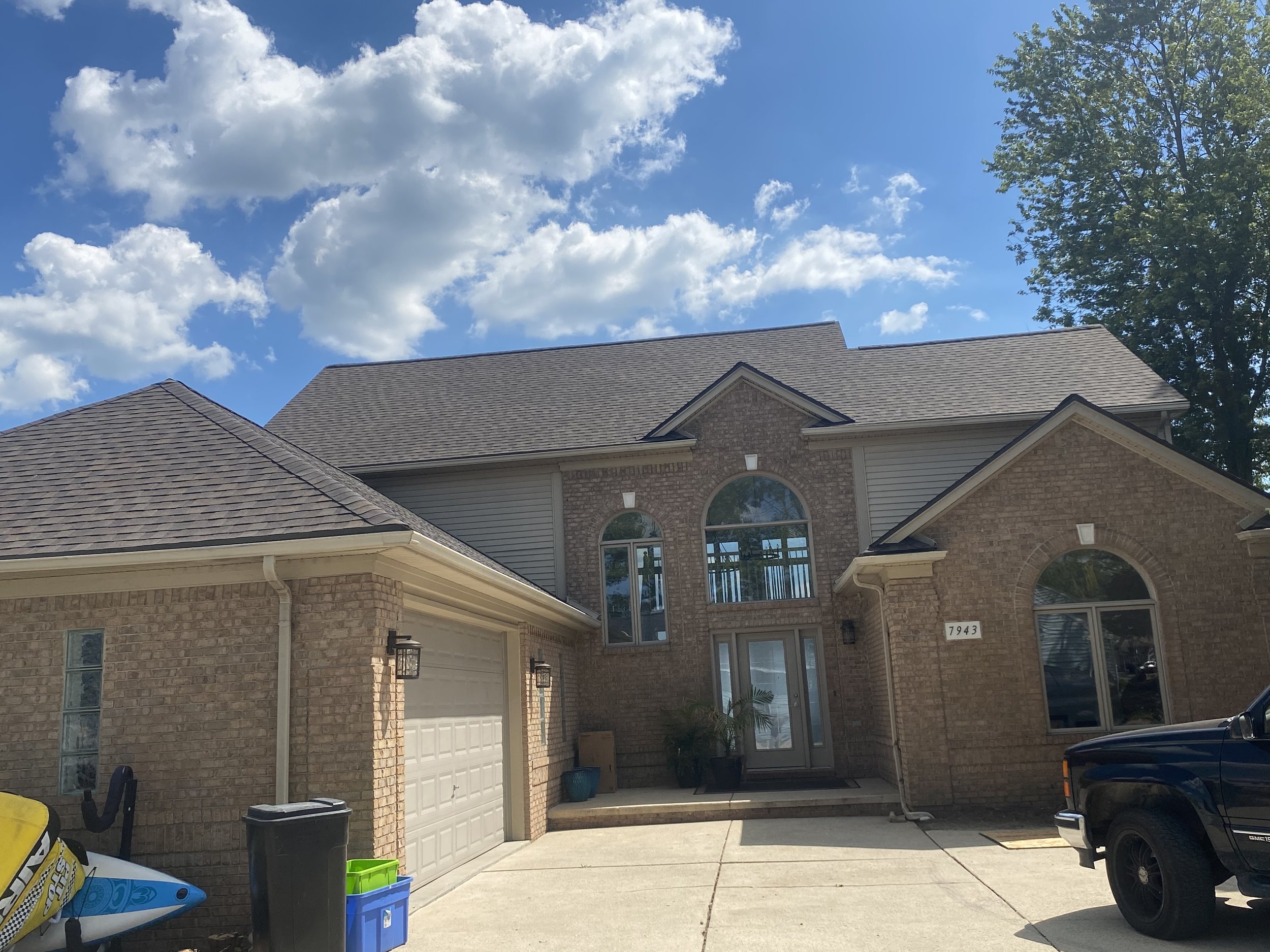
What to Expect from a NEXT Exteriors Roof Replacement
Whether you choose metal or asphalt, here's how we handle roof replacements in West Bloomfield and across Southeast Michigan:
- Free estimate: We measure your roof, inspect the attic ventilation, check for structural issues, and walk you through material options. No sales pitch — just information. You'll get a detailed written estimate with material specs, labor breakdown, and timeline.
- Permitting: We pull the building permit (required in most Oakland County municipalities) and schedule inspections. You don't have to deal with the township.
- Material delivery: Shingles or metal panels arrive 1-2 days before the project starts. We stage materials carefully to avoid damaging your lawn or landscaping.
- Installation: Our crews show up on time, work carefully, and clean up daily. We protect your landscaping, cover your deck furniture, and use tarps to catch debris.
- Final inspection: We walk the property with you, answer questions, and make sure you're satisfied before we consider the job complete.
We've been doing this since 1988. We're CertainTeed Master Shingle Applicators (the highest roofing credential you can earn), BBB A+ rated, and licensed in Michigan. We're not the cheapest option in Oakland County, but we're fair, and we do the work right. That's the old-school contractor culture we're trying to preserve.
Ready to Get Started?
NEXT Exteriors has been protecting Michigan homes since 1988. Get a free, no-pressure estimate from a team that shows up on time and does the job right.
Get Your Free QuoteOr call us: (844) 770-6398
Frequently Asked Questions
It depends on how long you're staying in the house. If you're planning to be there 15+ years, metal's durability (40-70 years vs. 20-30 for asphalt) and low maintenance make it a smart long-term investment. If you're selling within 10 years, asphalt offers better short-term ROI. Metal also performs better in Michigan's freeze-thaw cycles and sheds snow more effectively, reducing ice dam risk.
No — it's the opposite. Metal roofs with reflective coatings stay 50-60°F cooler than asphalt shingles on hot days, which reduces heat transfer into your attic and lowers cooling costs. In Michigan's relatively short cooling season, the savings are modest ($100-$200/year), but the comfort difference is noticeable if your attic insulation is marginal.
Technically yes, but we don't recommend it. Installing over old shingles traps moisture, hides roof deck damage, and voids most metal roofing warranties. The cost savings are minimal (maybe $1,500-$2,000), and you're building on a compromised foundation. We always tear off the old roof, inspect the deck, replace any damaged sheathing, and install new underlayment. That's the only way to guarantee a 50-year roof.
You'll hear rain on a metal roof more than on asphalt, but it's not as loud as most people expect. With proper attic insulation (R-38 or better), the sound is dampened significantly. Some homeowners love the sound of rain on metal. Others find it distracting. If noise is a concern, we can install additional sound-deadening underlayment during installation, though it adds to the cost.
It depends on your home's style and your neighborhood. Charcoal gray and matte black are popular on modern and mid-century homes. Bronze and dark red work well on traditional Colonials. Light colors (white, light gray, tan) maximize energy efficiency but show dirt more easily. We bring color samples to your home so you can see how they look against your siding and trim in natural light before deciding.
No. This is a common myth. Metal roofs don't attract lightning any more than asphalt shingles. Lightning strikes the highest point in an area, regardless of material. If lightning does strike a metal roof, the metal actually disperses the energy more safely than asphalt (which is flammable). Metal is non-combustible, so it's one of the safest roofing materials in a lightning strike.
Standing seam has a modern, clean-lined look with vertical panels and hidden fasteners. It's the most durable metal option and works best on simple roof planes. Metal shingles mimic traditional roofing (slate, shake, or tile) and work better on complex roofs with dormers and valleys. Standing seam costs slightly more but lasts longer because there are no exposed fasteners to maintain. We recommend standing seam for modern homes and metal shingles for traditional styles.