

How Metro Detroit Weather Should Change Your Exterior Choices

I've been doing exterior work in Southeast Michigan since 1988, and I can tell you this: Metro Detroit's weather doesn't just test your home's exterior—it punishes mistakes. The homeowner who picks materials based on what looks good in a showroom or what's cheapest at the big box store is going to pay for it. Not this year, maybe not next year, but they'll pay.
We see it every spring. Siding that's cracked and warped from freeze-thaw cycles. Roofs with ice dams that have destroyed gutters and sent water into the attic. Windows that are fogged up because the seals failed in the cold. These aren't random failures—they're predictable outcomes when you don't match your materials to Michigan's climate.
Southeast Michigan sits in a unique weather zone. We get lake-effect snow off Lake St. Clair and Lake Erie. We experience 40 to 60 freeze-thaw cycles every winter—meaning the temperature crosses the freezing point that many times between November and March. We get summer storms with straight-line winds that regularly hit 60 mph. And we have humidity levels that swing wildly between seasons.
This isn't just about durability. It's about energy costs, insurance claims, and whether your home holds its value when you go to sell. The right exterior services in Detroit start with understanding what actually works in this climate—not what works in Arizona or North Carolina.
Here's what 35 Michigan winters have taught us about choosing exterior materials that last.
Understanding Metro Detroit's Climate Challenges
Before we talk about specific materials, you need to understand what your home is up against. Metro Detroit's climate is classified as humid continental (Köppen Dfb), which is a technical way of saying we get cold, snowy winters and hot, humid summers with no dry season.
Here's what that means for your exterior:
Freeze-Thaw Cycles Are the Real Killer
The National Weather Service Detroit/Pontiac office tracks this data, and the numbers are stark: Southeast Michigan averages 40 to 60 freeze-thaw cycles per winter. That's 40 to 60 times the temperature crosses 32°F, causing any moisture in or on your materials to freeze, expand, thaw, and contract.
This is why cheap vinyl siding cracks after five years in Sterling Heights but lasts 15 years in Charlotte. This is why mortar joints in brick Colonials in Grosse Pointe Farms need repointing every 20 years. This is why concrete driveways in Rochester Hills develop spalling and why asphalt shingles in Royal Oak lose granules faster than the manufacturer predicted.
Any material that absorbs water and can't handle expansion and contraction will fail here. Period.
Lake-Effect Snow and Ice Dams
If you live anywhere near Lake St. Clair—from St. Clair Shores through Mount Clemens to Chesterfield—you know about lake-effect snow. When cold air moves over the relatively warm lake water in late fall and early winter, it picks up moisture and dumps it as snow on the downwind side.
This creates heavy snow loads on roofs and sets up perfect conditions for ice dams. An ice dam forms when heat from your attic melts snow on the upper part of your roof. The meltwater runs down to the cold eaves, refreezes, and creates a dam that backs water up under your shingles.
We see this constantly in older homes in Macomb and Clinton Township—homes with inadequate attic insulation and ventilation. The homeowner calls us because water is dripping into their living room, and when we get up there, we find six inches of ice at the eaves and shingles that have been compromised by water intrusion.
This isn't a roofing problem. It's an insulation and ventilation problem that shows up on your roof.
Summer Storms and Wind Damage
July and August bring severe thunderstorms with straight-line winds, hail, and occasionally tornadoes. The National Weather Service tracks wind speeds during these events, and it's not uncommon to see gusts of 60 to 70 mph across Macomb and Oakland counties.
Standard architectural shingles are rated for 110 mph winds when properly installed, but that assumes correct nailing patterns, adequate starter strips, and proper edge flashing. We've seen plenty of roofs in Warren and Troy that lost shingles at 50 mph because the installation was sloppy.
Wind-driven rain is another issue. During a summer storm, rain doesn't fall straight down—it's driven horizontally into siding seams, window frames, and any gap in your home's envelope. This is why proper flashing and sealant details matter so much in Michigan.
Humidity and Moisture Management
Southeast Michigan's humidity swings between 30% in winter (when furnaces dry out the air) and 80% in summer. This creates condensation problems, especially in poorly insulated walls and attics.
We see this in homes built in the 1960s and 1970s—the era of minimal insulation and no vapor barriers. Warm, humid air from inside the home migrates through the wall cavity in winter, hits the cold exterior sheathing, and condenses. Over time, this rots the sheathing and studs from the inside out.
Modern building science has solved this with proper air sealing and vapor control, but plenty of older homes in Detroit and the inner-ring suburbs are still dealing with these issues.
Roofing: Wind Ratings and Ice Dam Prevention Matter Here

Let's start with the roof, because it's the most expensive exterior component to replace and the one that causes the most damage when it fails. Our Detroit roofing services focus on three things that matter specifically in Southeast Michigan: impact resistance, wind ratings, and ice dam prevention.
Class 4 Impact Resistance Is Worth the Money
Michigan gets hail. Not every year, not every storm, but when it happens, it can total your roof. Class 4 impact-rated shingles (tested under UL 2218) can withstand a 2-inch steel ball dropped from 20 feet without cracking or splitting.
We install a lot of CertainTeed Landmark Impact shingles and GAF Timberline HDZ RS shingles—both are Class 4 rated. They cost about 15-20% more than standard architectural shingles, but many insurance companies in Michigan offer premium discounts that offset the cost over time.
More importantly, when a hailstorm hits Shelby Township or Lake Orion, you're not filing a claim and waiting six months for a roof replacement. You're cleaning up branches and going about your life.
Ice and Water Shield: Not Optional in Michigan
The Michigan Residential Code requires ice and water shield (a self-adhering waterproof membrane) at all eaves, valleys, and penetrations. The minimum is 24 inches up from the eave edge, but we typically run it 36 to 48 inches—sometimes all the way up to the ridge on low-slope sections.
This is your last line of defense against ice dams. When water backs up behind an ice dam, it can work its way under shingles and felt paper, but it can't penetrate a properly installed ice and water shield.
We use CertainTeed WinterGuard or Owens Corning WeatherLock on every job. It's not cheap—it adds $200 to $400 to a typical roof replacement—but it's a lot cheaper than replacing water-damaged ceilings and insulation.
Attic Ventilation and Insulation: The Real Ice Dam Solution
Here's the truth about ice dams: you can't stop them with better shingles or more ice and water shield. You stop them by keeping your attic cold.
An attic should be within a few degrees of the outdoor temperature in winter. If it's 25°F outside and your attic is 40°F, you're losing heat through your ceiling, and that heat is melting snow on your roof.
The solution is a combination of proper attic insulation in Metro Detroit (we'll cover that later) and adequate ventilation. The building code requires 1 square foot of net free ventilation area for every 150 square feet of attic space, with balanced intake (soffit vents) and exhaust (ridge vents or roof vents).
We see a lot of homes in Troy and Bloomfield Hills with ridge vents but no soffit vents, or vice versa. That doesn't work. Air needs a path in and a path out. Without both, you don't get airflow, and you don't get a cold attic.
Siding: Freeze-Thaw Resistance Is Non-Negotiable
Siding takes a beating in Michigan. It's exposed to freeze-thaw cycles, UV radiation, wind-driven rain, and impacts from hail and flying debris. The wrong material will crack, warp, fade, or rot—sometimes all four.
We install a lot of siding in Southeast Michigan, and the material choice conversation always comes down to this: how long do you want it to last, and how much maintenance are you willing to do?
Why Vinyl Siding Fails in Michigan Winters
Standard vinyl siding is the most popular choice nationwide because it's cheap and low-maintenance. But not all vinyl is created equal, and cheap vinyl doesn't survive Michigan winters.
Vinyl becomes brittle when it's cold. Below 20°F, it loses flexibility and can crack on impact—a branch falls on it, you bump it with a ladder, a kid throws a snowball, and it cracks. Once it cracks, moisture gets behind it, and you've got problems.
If you're going with vinyl, you need a product with a high impact resistance rating and a thickness of at least .044 inches. We install CertainTeed Monogram siding on homes where the homeowner wants vinyl—it's a premium product with better impact resistance and a lifetime warranty that actually means something.
But here's the reality: vinyl expands and contracts with temperature changes. In Michigan, that's a 100°F+ swing between summer and winter. Over time, the panels can warp, buckle, or pull away from the fasteners. We see this all the time on south-facing walls that get full sun exposure.
James Hardie Fiber Cement: The Michigan Gold Standard
If you want siding that will outlast you, James Hardie fiber cement is the answer. It's a composite of cement, sand, and cellulose fibers, and it's engineered specifically to handle freeze-thaw cycles.
James Hardie products are tested to ASTM C1185 standards, which include 100 freeze-thaw cycles. The material doesn't absorb water like wood, doesn't crack like vinyl, and doesn't rot or attract insects. It's as close to bulletproof as siding gets.
We install James Hardie on homes in Grosse Pointe Farms, Rochester Hills, and Bloomfield Hills—neighborhoods where homeowners are thinking 30-year timelines, not 10-year timelines. It costs about 2.5 to 3 times more than vinyl upfront, but it doesn't need to be replaced in 15 years.
The only maintenance is repainting every 10 to 15 years, and even that's optional with the ColorPlus baked-on finish, which James Hardie warrants for 15 years.
LP SmartSide: Engineered Wood That Works in Michigan
LP SmartSide is an engineered wood product—oriented strand board (OSB) treated with zinc borate and sealed with a resin overlay. It looks like real wood, because it is real wood, but it's engineered to resist moisture, rot, and insects.
We install a lot of LP SmartSide on homes where the homeowner wants the look of cedar shakes or board-and-batten but doesn't want the maintenance. It's priced between vinyl and fiber cement—about 1.5 to 2 times the cost of vinyl—and it comes with a 50-year limited warranty.
LP SmartSide performs well in freeze-thaw conditions because the resin overlay prevents water absorption. It's not as indestructible as fiber cement, but it's a solid choice for Michigan, and it's easier to work with on complex architectural details.
Our house siding services in Detroit include all three materials, and we'll walk you through the trade-offs based on your budget, your home's style, and how long you plan to stay in the house.
Windows: U-Factor and Condensation Resistance
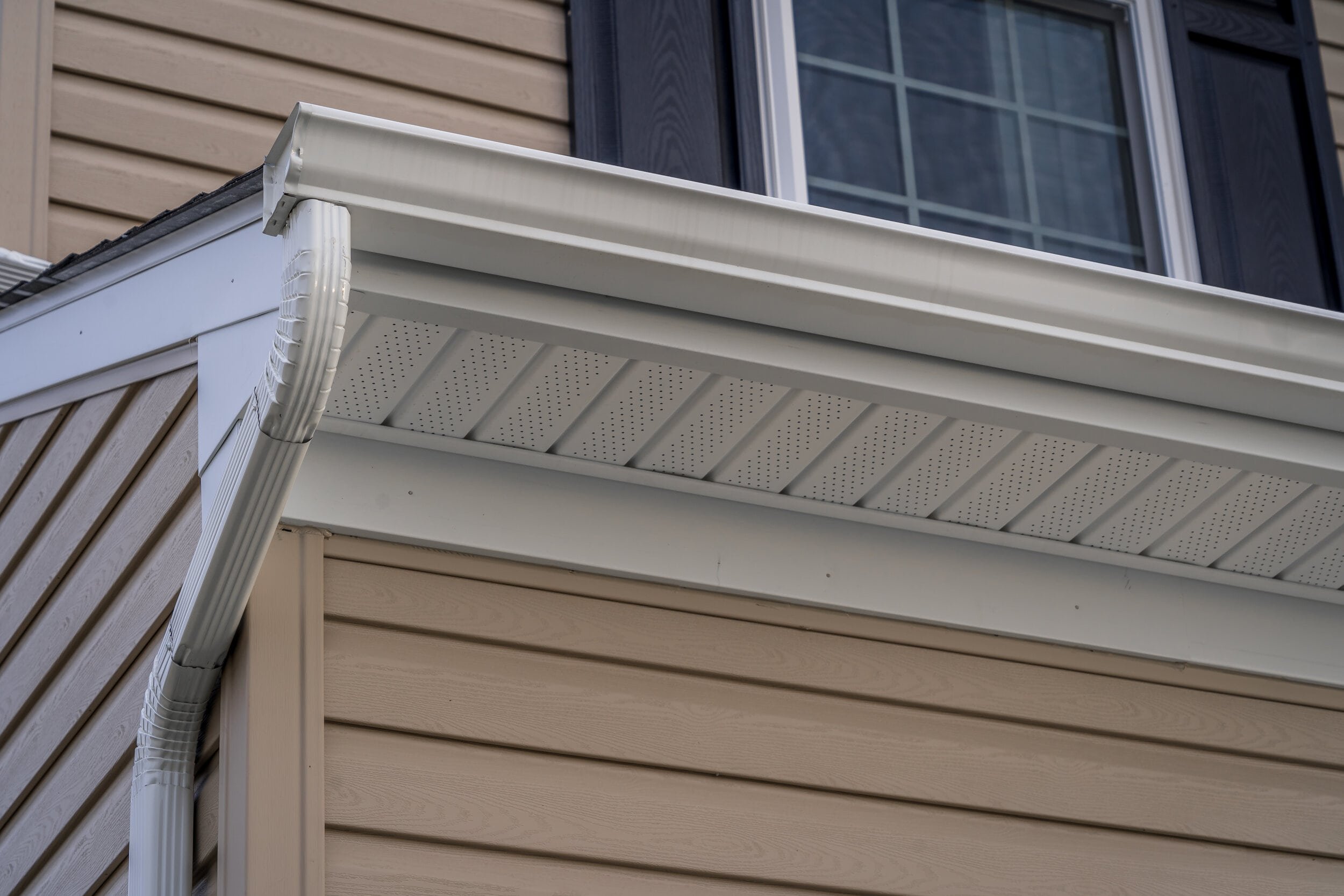
Windows are where most homeowners get confused by marketing. You'll hear about "energy-efficient" windows with "low-E glass" and "argon gas fills," and it all sounds like magic. It's not magic—it's building science, and it matters a lot in Michigan.
Our Detroit window experts focus on three specs: U-factor, condensation resistance, and air leakage. Everything else is secondary.
U-Factor: The Number That Actually Matters
U-factor measures how much heat passes through the window. Lower is better. ENERGY STAR requires a U-factor of 0.27 or lower for Michigan (Climate Zone 5).
A single-pane window has a U-factor around 1.0, which is terrible. A standard double-pane window with air between the panes is around 0.50, which is better but still not great. A quality double-pane window with low-E glass and argon gas fill gets you down to 0.25 to 0.30.
That difference—0.50 vs. 0.27—translates to real money on your heating bill. A typical Michigan home with 20 windows could save $200 to $400 per year by upgrading from standard double-pane to ENERGY STAR-rated windows.
We install a lot of Pella and Andersen windows—both offer products that meet or exceed ENERGY STAR requirements for Michigan. The key is making sure you're actually getting low-E glass (a microscopic metallic coating that reflects heat) and argon or krypton gas fill (which insulates better than air).
Condensation Resistance: Preventing Fogged Windows
Condensation resistance is rated on a scale of 0 to 100. Higher is better. A rating of 50 or above is good for Michigan.
This measures the window's ability to resist condensation on the interior glass surface when it's cold outside and humid inside. If you've ever seen frost or water droplets on the inside of your windows in winter, that's a condensation problem.
Condensation happens when the interior glass surface gets cold enough for water vapor in the air to condense. The solution is keeping the glass warmer, which means better insulation—hence the low-E coatings and gas fills.
The other issue is the spacer system between the panes. Old aluminum spacers conduct heat away from the edge of the glass, creating a cold spot where condensation forms. Modern warm-edge spacers (made of foam or composite materials) reduce this heat loss and keep the edges warmer.
We see a lot of fogged windows in homes built in the 1990s and early 2000s—double-pane windows with aluminum spacers and no low-E coatings. The seals fail, moisture gets between the panes, and the window fogs up permanently. At that point, you're replacing the glass or the whole window.
Air Leakage: The Hidden Energy Thief
Air leakage is measured in cubic feet per minute per square foot (CFM/ft²). Lower is better. ENERGY STAR requires 0.3 or lower.
This is how much air leaks through the window when it's closed. Even a small amount of air leakage adds up when you have 20 windows and it's 10°F outside.
Casement and awning windows (the kind that crank open) typically have lower air leakage than double-hung windows because they compress against the frame when closed. Double-hung windows rely on weatherstripping, which wears out over time.
We install a lot of casement windows in new construction and major renovations, but double-hung windows are still the most popular for replacements because they match the existing opening and don't require exterior trim work.
Insulation: R-Value Requirements for Southeast Michigan
Insulation is the single most cost-effective energy upgrade you can make, and it's also the most neglected. We see homes in Sterling Heights and Clinton Township with R-19 in the attic when they should have R-49. We see uninsulated rim joists, uninsulated walls, and crawl spaces that are open to the outside air.
The Michigan Residential Code (based on the 2021 International Energy Conservation Code) sets minimum R-values for different parts of the home. Here's what you need in Southeast Michigan:
- Attic: R-49 (about 14 inches of blown fiberglass or 12 inches of blown cellulose)
- Walls: R-20 or R-13 cavity + R-5 continuous (depending on construction type)
- Basement walls: R-10 continuous or R-13 cavity
- Crawl space walls: R-10 continuous
- Floors over unconditioned spaces: R-30
These are minimums. If you're upgrading insulation, we typically recommend exceeding code—going to R-60 in the attic, for example, or R-15 continuous on basement walls.
Attic Insulation and Ice Dam Prevention
We already talked about ice dams in the roofing section, but it's worth repeating: inadequate attic insulation is the root cause of most ice dam problems in Michigan.
If you have R-19 in your attic (common in homes built before 1990), you're losing heat through the ceiling, warming the attic, melting snow on the roof, and creating ice dams at the eaves.
The solution is adding insulation to get to R-49 or R-60. We typically use blown fiberglass or cellulose because it's fast to install and fills gaps around joists and penetrations.
Before we add insulation, we air-seal the attic floor—sealing gaps around plumbing stacks, electrical penetrations, recessed lights, and the top plates of walls. Air leakage carries more heat into the attic than conduction through the insulation, so air sealing is critical.
Air Sealing Before Insulating
This is the step most contractors skip, and it's the step that makes the biggest difference. Air sealing means closing all the gaps where air can move between the conditioned space (your living areas) and unconditioned spaces (attic, crawl space, rim joists).
Common air leakage points include:
- Gaps around plumbing stacks and vent pipes
- Recessed light fixtures (can lights) that aren't IC-rated and airtight
- Attic access hatches without weatherstripping
- Gaps at the top plates of interior and exterior walls
- Rim joists (the band of framing at the top of the foundation wall)
- Gaps around windows and doors
We use spray foam, caulk, and weatherstripping to seal these gaps before we add insulation. The result is a tighter building envelope, lower heating and cooling costs, and fewer ice dams.
Our top-rated insulation services in Detroit always include air sealing as part of the scope. It's not optional.
Gutters and Drainage: Handling Michigan's Snow Load

Gutters are the most underestimated part of your home's exterior system. Homeowners think of them as a convenience—something to keep water from splashing on the porch. In reality, they're a critical component of your home's drainage system and foundation protection.
In Michigan, gutters also have to handle snow and ice loads that would destroy undersized or poorly installed systems. Our seamless gutters in Detroit, MI are designed specifically for these conditions.
Why 5-Inch Gutters Are Minimum in Metro Detroit
Standard residential gutters come in two sizes: 5-inch and 6-inch (measured across the top opening). Most homes built before 2000 have 5-inch gutters, and many have 4-inch gutters, which are inadequate for Michigan.
A 5-inch gutter can handle about 1,200 square feet of roof area in moderate rainfall. A 6-inch gutter can handle about 1,900 square feet. In a heavy Michigan downpour—2 inches per hour, which we get several times a year—those numbers drop by about 30%.
We typically install 5-inch gutters on ranch homes and smaller Colonials, and 6-inch gutters on larger homes or homes with steep roofs that concentrate water flow.
The other consideration is snow load. When snow slides off your roof, it can rip gutters right off the fascia if they're not properly supported. This is especially common on south-facing roof sections that get full sun—the snow melts, slides, and takes the gutter with it.
Gutter Hanger Spacing for Snow and Ice
Standard gutter hangers are spaced 24 inches apart. In Michigan, we space them 16 inches apart, and sometimes 12 inches apart on sections prone to snow loads.
We use hidden hangers that screw into the fascia board (or into the rafter tails if the fascia is rotted). These are much stronger than the old spike-and-ferrule systems, which rely on a nail driven through the gutter into the fascia.
We also make sure the fascia board is solid before we hang gutters. A lot of homes in Macomb County have rotted fascia from years of gutter overflow or ice dams. If the fascia is soft, the hangers will pull out, and the gutters will fail. We replace the fascia first, then hang the gutters.
Downspout Extensions and Foundation Protection
Gutters are only half the system. The other half is getting the water away from your foundation. A downspout that dumps water right next to the foundation is worse than no gutter at all—it concentrates water in one spot and accelerates foundation settlement and basement leaks.
We install downspout extensions that carry water at least 6 feet away from the foundation, and preferably 10 feet. In areas with clay soil (common in Southeast Michigan), this is critical—clay expands when wet and shrinks when dry, which causes foundation movement.
If your yard slopes toward the house, we'll recommend a buried drain line that carries water to a lower spot in the yard or to the street. This costs more upfront, but it's the only way to prevent basement water problems in homes with poor grading.
Cost Reality: Paying Now vs. Paying Later
Let's talk about money, because that's what this comes down to for most homeowners. Premium materials cost more upfront. Sometimes a lot more. The question is whether the extra cost is worth it.
Here's how we think about it after 35 years of doing this work in Michigan:
Premium Materials vs. Replacement Costs
A standard architectural shingle roof costs about $5,000 to $7,000 on a typical 2,000-square-foot ranch in Macomb County. That roof will last 15 to 20 years if it's installed correctly and the attic is properly ventilated.
A Class 4 impact-rated roof costs about $6,000 to $8,500. That roof will last 20 to 25 years, and it's less likely to be damaged by hail, which means fewer insurance claims and lower premiums.
Over 25 years, you'll replace the standard roof at least once, maybe twice. Total cost: $10,000 to $14,000. The premium roof gets replaced once, maybe never. Total cost: $6,000 to $8,500.
The same math applies to siding. Cheap vinyl siding costs $8,000 to $12,000 on a typical home and lasts 15 to 20 years. James Hardie fiber cement costs $20,000 to $30,000 and lasts 50+ years. Over 50 years, you'll replace the vinyl siding two or three times. Total cost: $24,000 to $36,000. The fiber cement gets replaced never. Total cost: $20,000 to $30,000, plus maybe $3,000 to $5,000 in repainting.
Energy Savings from Proper Product Selection
Upgrading from standard double-pane windows to ENERGY STAR-rated windows saves about $200 to $400 per year on heating and cooling costs in a typical Michigan home. Over 20 years, that's $4,000 to $8,000 in savings.
Adding attic insulation from R-19 to R-49 saves about $300 to $600 per year, depending on the size of your home and your heating system. Over 20 years, that's $6,000 to $12,000 in savings.
Air sealing and insulating your rim joists saves about $100 to $200 per year. Over 20 years, that's $2,000 to $4,000.
These aren't theoretical numbers—they're based on energy modeling and real-world utility bill comparisons. The payback period on insulation is typically 3 to 7 years. The payback period on windows is 10 to 15 years. After that, it's all savings.
Insurance Considerations for Storm-Resistant Materials
Many insurance companies in Michigan offer premium discounts for impact-resistant roofing, storm-rated windows, and other fortified construction features. The discounts vary by carrier and by county, but they typically range from 5% to 20% on the dwelling coverage portion of your premium.
On a $300,000 home with a $1,500 annual premium, a 10% discount saves you $150 per year, or $3,000 over 20 years. That's real money, and it offsets some of the premium cost of better materials.
More importantly, storm-resistant materials reduce the likelihood of claims, which keeps your premiums from increasing and prevents the hassle of dealing with repairs after every storm.
Bottom line: Premium materials cost more upfront, but they save money over time through lower replacement costs, lower energy bills, and lower insurance premiums. If you're planning to stay in your home for 10+ years, the math almost always favors premium materials.
When to Call a Contractor
You should be evaluating your home's exterior every spring and fall. Here are the signs that it's time to call us:
- Roofing: Missing or damaged shingles, granules in the gutters, daylight visible through the attic, water stains on ceilings, or ice dams in winter
- Siding: Cracks, warping, loose panels, fading, or moisture behind the siding (visible from inside the wall cavity)
- Windows: Condensation between panes, drafts, difficulty opening or closing, or visible rot in the frames
- Insulation: High heating bills, uneven temperatures between rooms, ice dams, or condensation in the attic
- Gutters: Sagging, pulling away from the fascia, overflowing during rain, or rust holes
If you're seeing any of these signs, don't wait. Exterior problems don't get better on their own—they get worse, and they get more expensive.
Ready to Get Started?
NEXT Exteriors has been protecting Michigan homes since 1988. We understand Southeast Michigan's climate, and we know which materials actually work here. Get a free, no-pressure estimate from a team that shows up on time and does the job right.
Get Your Free QuoteOr call us: (844) 770-6398
We also offer comprehensive exterior painting services in Southeast Michigan using Sherwin-Williams products exclusively—another area where quality materials make a measurable difference in Michigan's climate. If you're planning multiple exterior projects, we can coordinate roofing, siding, windows, and painting in a single timeline to minimize disruption and maximize efficiency.
Frequently Asked Questions
Architectural shingles with Class 4 impact resistance are the best choice for most Michigan homes. Brands like CertainTeed Landmark Impact, GAF Timberline HDZ RS, and Owens Corning Duration Storm are all excellent options. They're rated for high winds, resist hail damage, and perform well in freeze-thaw cycles. Metal roofing is also a good choice if you're willing to pay more upfront—it sheds snow well and lasts 50+ years.
Ice dams are caused by heat loss from your attic melting snow on the roof. The solution is keeping your attic cold by adding insulation to R-49 or R-60, air sealing all penetrations in the attic floor, and ensuring proper ventilation (1 square foot of net free area per 150 square feet of attic space, balanced between soffit and ridge vents). Ice and water shield at the eaves is a backup, not a solution.
Yes, if you're planning to stay in your home for 15+ years. James Hardie fiber cement costs 2.5 to 3 times more than vinyl siding upfront, but it lasts 50+ years with minimal maintenance, doesn't crack in freeze-thaw cycles, and doesn't warp or fade. Over the life of the home, it's often cheaper than replacing vinyl siding multiple times. It also adds more resale value than vinyl.
ENERGY STAR requires a U-factor of 0.27 or lower for Michigan (Climate Zone 5). That means double-pane windows with low-E glass and argon or krypton gas fill. Look for windows with condensation resistance ratings of 50 or higher and air leakage of 0.3 CFM/ft² or lower. Brands like Pella, Andersen, and Marvin all offer products that meet these specs.
The Michigan Residential Code requires R-49 in attics, which is about 14 inches of blown fiberglass or 12 inches of blown cellulose. If you're upgrading insulation, we typically recommend going to R-60 (about 17 inches of blown fiberglass or 15 inches of cellulose) for better energy performance and ice dam prevention. Before adding insulation, air seal all penetrations in the attic floor—that's where most heat loss occurs.
Most likely your gutters are undersized for your roof area, or they're clogged with debris. Standard 5-inch gutters can handle about 1,200 square feet of roof in moderate rain, but only about 800 square feet in a heavy Michigan downpour. If you have a large roof or steep slopes, you may need 6-inch gutters. Also check that your gutter hangers are spaced 16 inches apart (not 24 inches) and that the gutters are pitched correctly toward the downspouts.
If more than 30% of your siding is damaged, cracked, warped, or rotted, replacement is usually more cost-effective than repairs. Also consider replacement if your siding is more than 20 years old (for vinyl) or if you're seeing moisture damage behind the siding. Signs of moisture damage include peeling interior paint, water stains on walls, or visible mold. At that point, you likely have sheathing damage that needs to be addressed during a full siding replacement.