

Best Window Materials for Michigan's Climate: A Comparison
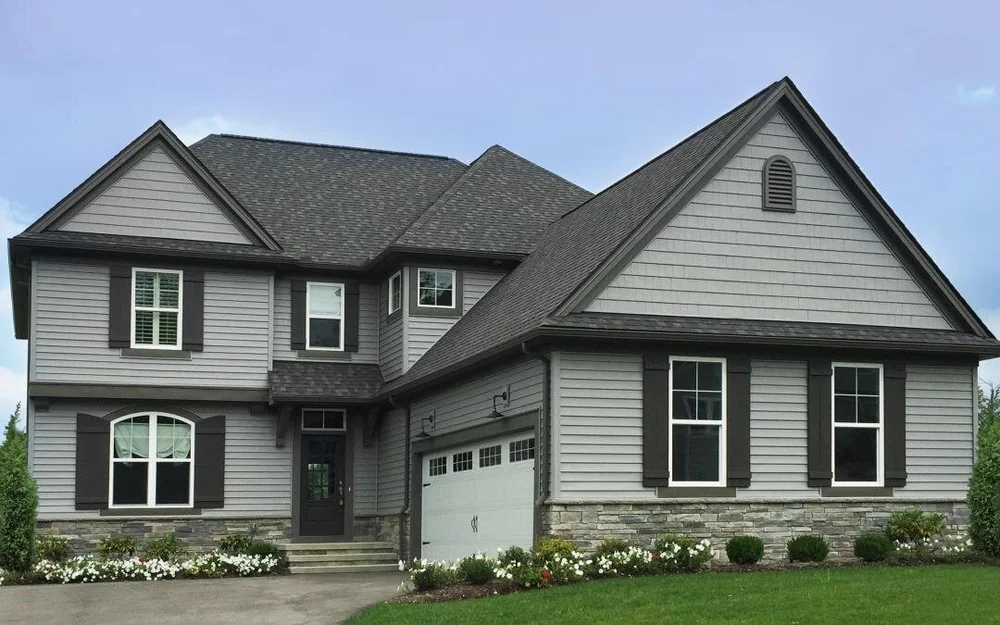
I've replaced windows in Michigan homes for over three decades, and I've seen what this climate does to every material on the market. We get freeze-thaw cycles that crack weak frames, lake-effect snow that tests every seal, summer humidity that warps wood, and ice dams that push water into places it shouldn't go. The window material you choose isn't just about looks or budget — it's about whether your windows will still open smoothly in year fifteen, whether they'll leak air when it's 12 degrees outside, and whether you'll be repainting or replacing them before your mortgage is paid off.
This isn't a sales pitch for one material over another. It's a comparison based on what I've installed, what I've torn out, and what holds up in Sterling Heights, Rochester Hills, and every other corner of Southeast Michigan. Let's break down vinyl, fiberglass, wood, and composite windows — the real performance data, the honest costs, and what actually matters when you're choosing Detroit window experts to handle your project.
Vinyl Windows: The Michigan Workhorse
Vinyl windows dominate the replacement market in Southeast Michigan, and there's a reason: they perform well in our climate without demanding constant maintenance. Modern vinyl formulations — especially from manufacturers we work with regularly — handle freeze-thaw cycles better than most homeowners expect.
The material itself is polyvinyl chloride (PVC), extruded into frames with multiple chambers for structural strength and insulation. Quality vinyl windows have fusion-welded corners (not mechanical fasteners), reinforced sashes, and UV inhibitors mixed into the resin to prevent chalking and color fade. In Michigan, where we see temperature swings from -10°F to 95°F within the same year, vinyl's thermal expansion rate matters. It expands and contracts about 3.5 times more than fiberglass, which sounds concerning until you realize that quality manufacturers engineer their frames to accommodate this movement without compromising the seal.
Performance in Freeze-Thaw Cycles
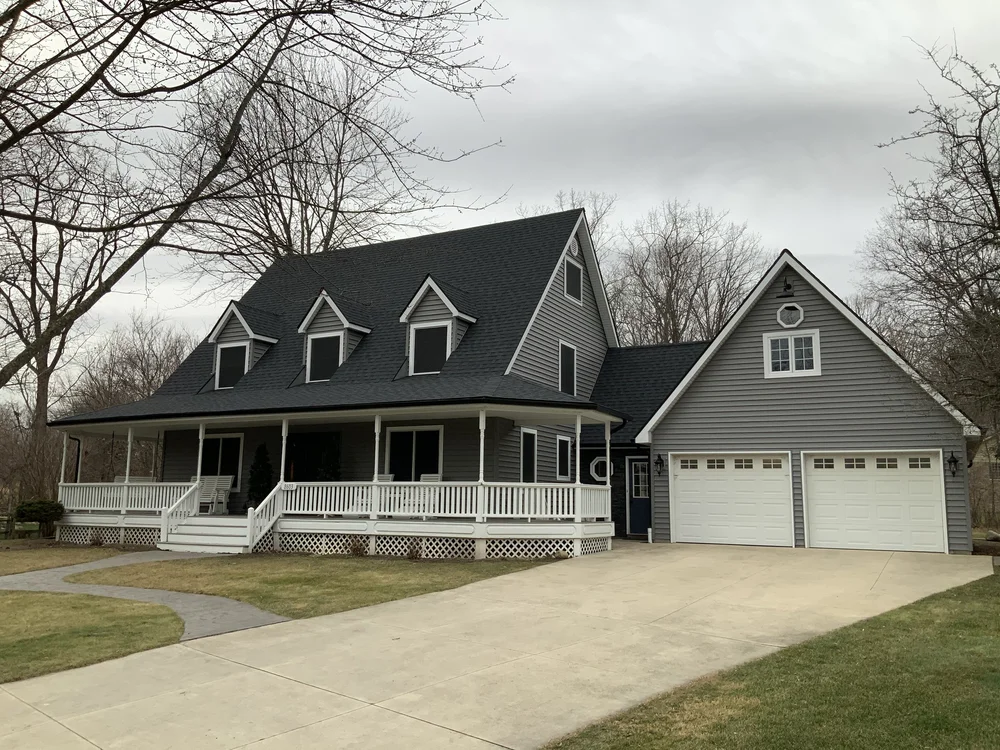
Michigan experiences an average of 60-80 freeze-thaw cycles per winter in Southeast counties. This is where vinyl proves itself. Unlike wood, it won't absorb moisture and rot. Unlike aluminum, it won't conduct cold and create condensation on the interior surface. The material remains dimensionally stable through these cycles — I've pulled out 20-year-old vinyl windows that still operated smoothly, with no warping or cracking in the frame.
The weak point isn't usually the vinyl itself; it's the installation. A poorly flashed window will leak regardless of frame material. That's why our team at NEXT Exteriors follows manufacturer specs to the letter — proper shimming, flashing tape integration with the weather-resistant barrier, and low-expansion foam that won't bow the frame. We've seen too many vinyl windows blamed for problems that were really installation failures.
Energy Efficiency and Insulation
Vinyl frames typically achieve U-factors between 0.20 and 0.30 when paired with quality insulated glass units. That's competitive with fiberglass and significantly better than aluminum. The multi-chamber design creates dead air spaces that slow heat transfer. For Michigan homeowners targeting ENERGY STAR certification (U-factor ≤ 0.27 in our climate zone), vinyl windows easily qualify.
Pair vinyl frames with low-E glass, argon fill, and warm-edge spacers, and you're looking at a window assembly that reduces heat loss by 30-50% compared to old single-pane units. That translates to real savings on heating bills during our long winters. If you're also upgrading your home's thermal envelope, consider how insulation services in Southeast Michigan work together with window replacement to maximize efficiency.
Cost Considerations
Vinyl is the most budget-friendly option for full-frame replacement windows. In 2026, expect to pay $450-$750 per window installed for quality vinyl double-hungs in standard sizes. Custom shapes, larger units, and premium features (triple glazing, impact resistance) push that higher, but you're still paying 30-40% less than fiberglass and 50-60% less than wood-clad windows of comparable size.
For homeowners in Troy or Warren replacing 12-15 windows, that cost difference is substantial — often $8,000-$12,000. The question becomes: does the performance gap justify the price premium? For most Michigan homes, the answer is no. Vinyl delivers excellent value.
Fiberglass Windows: Premium Performance
Fiberglass windows are the material I recommend when a homeowner wants the absolute best thermal performance and dimensional stability, and budget isn't the primary constraint. The frame material is glass fibers embedded in a resin matrix — essentially the same composite used in boat hulls and aerospace applications. It's engineered for strength and minimal thermal expansion.
Thermal Stability and Expansion Rates
Fiberglass expands and contracts at nearly the same rate as glass itself — about 9 times less than vinyl. This matters in Michigan because it means the seal between the frame and the insulated glass unit experiences less stress through temperature swings. Over 20-30 years, that reduced stress translates to fewer seal failures and longer-lasting gas fills (argon or krypton).
I've installed fiberglass windows in Bloomfield Hills homes where the architect specified them for this exact reason — the homeowner wanted windows that would still perform optimally in year 25, not just year 5. Fiberglass delivers on that expectation.
Durability in Michigan Weather Extremes
Fiberglass doesn't rot, warp, crack, or corrode. It's impervious to moisture, which makes it ideal for Michigan's humid summers and the condensation that forms on windows during cold snaps. The material won't support mold or mildew growth, and it requires zero maintenance beyond cleaning the glass.
The structural strength is notable too. Fiberglass frames can be engineered thinner than vinyl while maintaining the same or better strength, which means more glass area and better sightlines. For homeowners who care about aesthetics — especially in historic districts like Grosse Pointe Farms — fiberglass can replicate the narrow profiles of traditional wood windows without the maintenance burden.
Energy Efficiency Comparison
Fiberglass frames achieve U-factors as low as 0.15-0.20, depending on the design and glazing package. That's among the best available in residential windows. The low thermal conductivity of the composite material means less heat loss through the frame itself, and when combined with triple glazing and krypton fill, you're looking at a window assembly that approaches wall-level insulation performance.
For net-zero or high-performance home projects, fiberglass is often the only frame material that meets the specification. It's overkill for most Michigan homes, but if you're building or renovating to Passive House standards, it's worth the investment.
Price Point and ROI
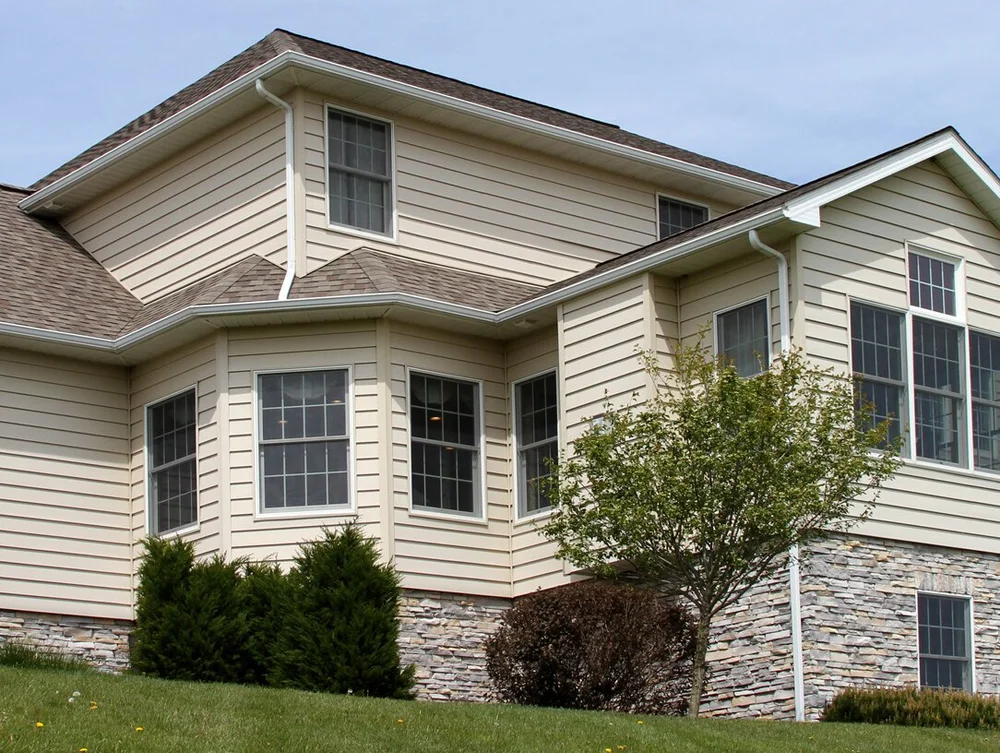
Fiberglass windows cost $650-$1,100 per unit installed for standard double-hungs. Custom sizes and specialty shapes push higher. That's a significant premium over vinyl, and the ROI calculation depends on how long you plan to stay in the home and how much you value low maintenance and long-term performance.
For a homeowner planning to stay 20+ years, fiberglass makes financial sense. For someone selling in 5-7 years, vinyl offers better value. There's no universal right answer — it depends on your priorities and budget.
Wood and Wood-Clad Windows: Traditional Choice
Wood windows are beautiful. They're also high-maintenance in Michigan's climate, and I say that as someone who's restored plenty of them in historic homes around Lake Orion and Royal Oak. If you're committed to the aesthetic and willing to do the upkeep, wood can work. But understand what you're signing up for.
Moisture Resistance Challenges
Wood is hygroscopic — it absorbs and releases moisture in response to humidity changes. In Michigan, where we swing from 30% relative humidity in winter (thanks to forced-air heating) to 70%+ in summer, wood frames expand and contract. Over time, this movement stresses paint and finish, leading to cracking, peeling, and eventually water infiltration.
Once water gets into bare wood, rot follows. I've replaced wood window sills that were completely punky after 15 years of exposure to ice dams and wind-driven rain. The bottom rail and sill are always the first to go — that's where water pools and where paint fails first.
Wood-clad windows — aluminum or vinyl exterior cladding over a wood interior frame — solve most of the moisture problem. The cladding protects the wood from weather exposure, while the interior wood provides the warmth and beauty homeowners want. It's a practical compromise, and it's what I recommend when someone wants wood but doesn't want to repaint every 5-7 years.
Maintenance Demands Through Four Seasons
Bare wood windows require repainting or refinishing every 5-8 years in Michigan. Miss that window (pun intended), and you're looking at wood replacement, not just a fresh coat of paint. Exterior-grade paint formulations have improved, but they still can't fully protect wood from our climate without regular maintenance.
Wood-clad windows reduce maintenance to cleaning the glass and occasionally lubricating hardware. The cladding is factory-finished and doesn't require repainting. That's a significant time and cost savings over the life of the window.
When Wood Windows Make Sense
If you're restoring a historic home and want period-correct windows, wood is often the only appropriate choice. Some historic districts in Detroit require wood windows for exterior renovations. In those cases, invest in the best wood species (mahogany, Douglas fir) and the best paint system you can afford, and plan for regular maintenance.
For new construction or non-historic renovations, I steer most homeowners toward wood-clad or away from wood entirely. The performance and maintenance trade-offs don't make sense for most people in our climate. If you're also considering exterior painting in Detroit, factor in the ongoing cost of maintaining wood window exteriors when making your decision.
Cost and Long-Term Value
Wood windows cost $800-$1,400 per unit installed. Wood-clad windows run $900-$1,600. That's premium pricing, and the long-term value depends entirely on maintenance. A well-maintained wood window can last 50+ years. A neglected one fails in 15-20.
Composite Windows: The Hybrid Option
Composite windows blend wood fibers with polymer resins to create a material that looks like wood but resists moisture and rot like vinyl. Different manufacturers use different formulations — some are more wood-like, others more plastic-like. The goal is to capture the aesthetic warmth of wood with the durability of synthetics.
Material Composition and Benefits
Most composite window frames are made from reclaimed wood fiber (sawdust, wood chips) mixed with thermoplastic resins and extruded into profiles. The resulting material can be milled, routed, and finished like wood, but it won't rot or absorb moisture. It's stable in humid conditions and resistant to insect damage.
The wood content gives composite frames a natural look and feel that vinyl can't replicate. You can stain them, paint them, or leave them with a factory finish. For homeowners who want the appearance of wood without the maintenance, composite is worth considering.
Performance in Michigan Conditions
Composite windows handle freeze-thaw cycles well — better than wood, comparable to vinyl. The polymer content prevents moisture absorption, so you don't get the expansion/contraction issues that plague solid wood. Thermal performance is good, with U-factors in the 0.25-0.30 range for most products.
The material is heavier than vinyl and slightly more prone to thermal expansion than fiberglass, but it's dimensionally stable enough for Michigan's climate. I haven't seen widespread failure issues with composite windows in our service area, which tells me the technology has matured.
Comparison to Vinyl and Fiberglass
Composite sits between vinyl and fiberglass in both performance and cost. It's more expensive than vinyl ($550-$850 installed per unit), less expensive than fiberglass. It offers better aesthetics than vinyl (if you care about that), but doesn't match fiberglass for thermal stability or long-term durability.
For most Michigan homeowners, composite is a niche choice. If you want wood aesthetics but not wood maintenance, and you're willing to pay a bit more than vinyl, it's a solid option. But it doesn't dominate the market the way vinyl does, and it doesn't offer the performance edge that fiberglass provides.
What Michigan's Climate Does to Window Materials
Understanding how our specific weather patterns stress window materials helps you make a smarter choice. Michigan isn't just "cold" — it's a combination of extreme temperature swings, high humidity, freeze-thaw cycling, and occasional severe weather that tests every component of a window assembly.
Freeze-Thaw Cycle Impacts
Every time water freezes, it expands by about 9%. In window assemblies, this means any trapped moisture — in the frame, behind the cladding, or in poorly sealed joints — exerts outward pressure as it freezes. Over dozens of freeze-thaw cycles each winter, this pressure cracks paint, opens joints, and degrades sealants.
Materials that don't absorb water (vinyl, fiberglass, aluminum-clad) resist this damage. Materials that do absorb water (bare wood, some composites) are vulnerable. The frame isn't the only concern — the glazing seal, the weatherstripping, and the installation details all experience freeze-thaw stress.
This is why proper flashing and drainage are critical in Michigan window installations. Water that can't drain away will freeze, expand, and cause problems. We see this constantly in homes where the previous installer skipped the head flashing or didn't slope the sill properly. For more on how freeze-thaw cycles affect other building components, see our article on ice dams in Michigan.
Lake-Effect Snow and Moisture Infiltration
Southeast Michigan gets lake-effect snow from Lake Huron and occasional systems off Lake Erie. This isn't the dry powder you see in the Rockies — it's wet, heavy snow that clings to vertical surfaces and melts during the day, refreezes at night. Windows on north and east exposures take the brunt of it.
The moisture from melting snow tests every seal. If your window isn't properly flashed, if the weatherstripping is worn, or if the frame-to-wall connection isn't airtight, water finds its way in. Over time, this leads to staining, mold, and structural damage to the rough opening.
This is where quality installation matters more than frame material. A cheap vinyl window installed correctly will outperform an expensive fiberglass window installed poorly. We've been doing window installation in Detroit long enough to know that the details — flashing, shimming, air sealing — make or break long-term performance.
Summer Humidity and UV Exposure
Michigan summers are humid — 70-80% relative humidity is common in July and August. This moisture challenges wood frames and promotes mold growth on any organic surface. It also tests the glazing seals; high humidity combined with air conditioning creates condensation potential on the interior glass surface if the window's U-factor is too high.
UV exposure fades finishes and degrades some plastics over time. Quality vinyl formulations include UV stabilizers to prevent chalking and color fade, but cheap vinyl will turn brittle and discolor after 10-15 years of sun exposure. South and west-facing windows get the most UV, so that's where you'll see degradation first.
Fiberglass and aluminum-clad windows resist UV damage better than vinyl. Wood-clad windows depend on the quality of the factory finish — good finishes hold up, cheap ones don't.
Ice Dam Formation and Window Frame Damage
Ice dams form when heat escaping through the roof melts snow, which then refreezes at the eaves. The ice backs up under shingles and can push water sideways into the wall cavity and around window openings. Upper-story windows in homes with poor attic insulation are especially vulnerable.
Water intrusion from ice dams can rot window frames (wood), stain walls, and damage insulation. The window material itself isn't usually the problem — it's the building envelope failure that allows water to reach the window. But if you're replacing windows in a home with chronic ice dam issues, address the attic insulation in Metro Detroit first. Otherwise, you're just installing new windows in a leaky building.
Making the Right Choice for Your Home
There's no single "best" window material for Michigan — the right choice depends on your home, your budget, how long you plan to stay, and what you value. Here's how to think through the decision.
Budget vs. Performance Trade-Offs
If you're working with a tight budget and need to replace 10-15 windows, quality vinyl delivers the best value. You'll get good energy performance, low maintenance, and a 20-25 year lifespan. Spend your money on quality glass (low-E, argon fill) and quality installation rather than upgrading to a premium frame material.
If budget allows and you want the best long-term performance, fiberglass is worth the premium. It'll outlast vinyl, maintain its appearance longer, and deliver better energy efficiency. For a homeowner staying 20+ years, the extra upfront cost pays off.
Wood and wood-clad windows make sense only if you need them for aesthetic or historic preservation reasons. They're beautiful, but they're expensive and (in the case of bare wood) high-maintenance. Don't choose wood for performance — choose it for looks, and be prepared to care for it.
Home Style Considerations
A 1960s brick ranch in Warren doesn't need wood windows. Vinyl or fiberglass double-hungs will look appropriate and perform well. A Colonial Revival in Grosse Pointe Farms might benefit from wood-clad or fiberglass windows with divided lites and traditional profiles. A modern build in Rochester Hills could go with large fiberglass casements for clean sightlines and maximum glass area.
Match the window material and style to the architecture. Don't put cheap vinyl double-hungs in a $800,000 historic home, and don't spec $1,500 mahogany windows for a builder-grade ranch. Context matters. If you're also considering how siding colors boost curb appeal, think about how your window choice complements the overall exterior palette.
Energy Efficiency Goals and Utility Savings
If reducing heating and cooling costs is a priority, focus on the glazing package first, frame material second. A vinyl window with triple glazing and low-E glass will outperform a fiberglass window with standard double glazing. The U-factor and solar heat gain coefficient (SHGC) of the entire window assembly matter more than the frame material alone.
For Michigan's climate (ENERGY STAR Zone 5), target U-factor ≤ 0.27 and SHGC ≤ 0.40 for south-facing windows, ≤ 0.50 for north-facing. Any frame material can hit these numbers with the right glass. The question is cost — vinyl hits them cheaply, fiberglass hits them with room to spare.
Utility savings from new windows depend on what you're replacing. Swapping out single-pane wood windows from the 1960s will cut heating costs by 25-35%. Replacing 1990s vinyl double-panes with new ones? Maybe 10-15% savings. Set realistic expectations.
When to Replace vs. Repair
Replace windows when the frames are rotted, the glass seals have failed (visible condensation between panes), the sashes no longer operate smoothly, or you're seeing air leakage around the frame. If the windows are structurally sound but just need new weatherstripping or hardware, repair is the smarter move.
For homes built before 1980, replacement usually makes sense from an energy standpoint. For homes built after 2000, evaluate on a case-by-case basis. Sometimes recaulking, new weatherstripping, and storm windows deliver 80% of the benefit at 20% of the cost.
If you're replacing windows as part of a larger exterior renovation — new siding installation in Southeast Michigan, roof replacement in Metro Detroit, or gutter installation in Detroit, MI — coordinate the projects. You'll save on labor and scaffolding, and you can ensure proper integration of all the components. For a full overview of how these services work together, check out our page on exterior services in Detroit.
Ready to Get Started?
NEXT Exteriors has been protecting Michigan homes since 1988. Get a free, no-pressure estimate from a team that shows up on time and does the job right.
Get Your Free QuoteOr call us: (844) 770-6398
Frequently Asked Questions
Fiberglass and quality vinyl both perform well in Michigan winters. Fiberglass has the lowest thermal expansion rate, which means better long-term seal integrity, but modern vinyl windows with fusion-welded corners and reinforced frames handle freeze-thaw cycles without issue. The key is proper installation with continuous flashing and low-expansion foam. For most homeowners, vinyl offers the best value; for those prioritizing long-term performance and willing to pay more, fiberglass is the premium choice.
Quality vinyl windows typically last 20-25 years in Michigan's climate. The frames themselves often last longer — 30+ years — but the glazing seals, weatherstripping, and hardware may need replacement around the 20-year mark. Cheap vinyl windows with thin walls and mechanically fastened corners fail sooner, sometimes in 12-15 years. Invest in quality products from reputable manufacturers, and you'll get two decades of reliable performance.
If you're staying in your home long-term (20+ years) and want the best energy efficiency and durability, yes. Fiberglass windows outlast vinyl, resist thermal expansion better, and achieve lower U-factors. For homeowners planning to sell in 5-10 years, the extra cost rarely pays off in resale value — buyers don't typically pay a premium for fiberglass over quality vinyl. It's a long-term performance investment, not a short-term financial one.
Wood-clad windows make sense if you want the warmth and aesthetics of wood on the interior without the exterior maintenance burden. The aluminum or vinyl cladding protects the wood from Michigan's weather, while the interior wood can be stained or painted to match your trim. They cost 40-60% more than vinyl, so it's a decision based on aesthetics and budget. For most homes, vinyl delivers better value; for upscale homes where interior aesthetics matter, wood-clad is worth considering.
Yes, but the glazing package (low-E coatings, argon fill, number of panes) affects energy bills more than the frame material. A vinyl window with triple glazing will outperform a fiberglass window with standard double glazing. That said, fiberglass frames conduct less heat than vinyl, so they contribute to better overall window performance. Focus on achieving a U-factor of 0.27 or lower and appropriate SHGC for your window orientation, regardless of frame material.
Window installation requires precise measurement, proper flashing, air sealing, and integration with the building's weather-resistant barrier. A poorly installed window — even an expensive one — will leak air and water, leading to energy loss and structural damage. Unless you have professional-level carpentry skills and understand building science, hire a licensed contractor. The labor cost is a small percentage of the total project cost, and proper installation is what makes the windows perform as designed.
We install windows from manufacturers with proven track records in cold climates: Pella, Andersen, Marvin, Milgard, and others that meet ENERGY STAR requirements for our zone. The specific brand matters less than the specs — U-factor, SHGC, air leakage rating, and warranty. We help homeowners choose based on their budget, performance goals, and aesthetic preferences. The best window is the one that's properly specified for your home and correctly installed, regardless of brand.